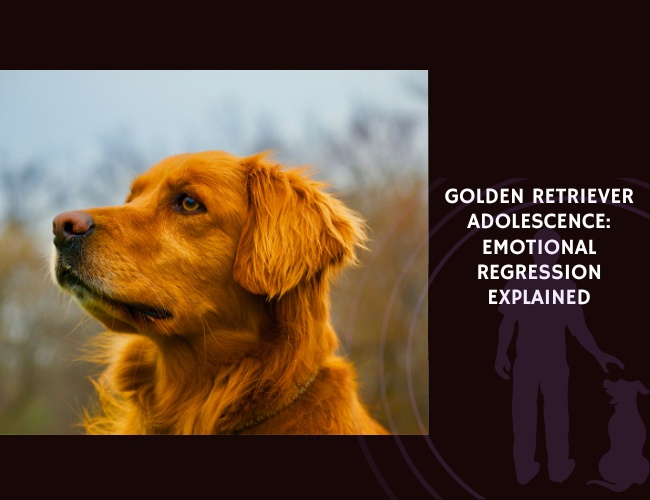
You notice it happening almost overnight. Your once-eager Golden Retriever puppy, who hung on your every word and mastered commands with ease, suddenly seems like a different dog. Commands are ignored, behaviors you thought were solidified vanish, and that confident little soul now appears anxious, clingy, or oddly distant. You might wonder if you did something wrong, if your training failed, or if this sudden shift signals something deeper. Let us guide you through one of the most misunderstood phases in a Golden Retriever’s life: adolescence, and the emotional regression that often accompanies it.
This period, typically occurring between six and eighteen months of age, represents far more than simple disobedience or selective hearing. What you’re witnessing is a profound neurobiological transformation, one that temporarily reshapes how your Golden experiences the world, processes emotions, and relates to you. Understanding this phase through the lens of neuroscience, attachment theory, and breed-specific sensitivity can transform frustration into compassion and help you guide your furry friend through this turbulent time with confidence and grace.
Understanding the Adolescent Brain: Why Your Golden Seems Like a Different Dog
The brain of an adolescent Golden Retriever undergoes remarkable reorganization, similar to what happens in human teenagers. This isn’t simply a matter of hormones running wild, though they certainly play a role. The prefrontal cortex, the command center responsible for impulse control, emotional regulation, and executive decision-making, is still developing during this phase. Meanwhile, other brain regions associated with seeking novelty, processing fear, and managing social connections are operating at full intensity.
This neurobiological imbalance creates what researchers call a temporary reduction in inhibitory control. Your Golden’s brain is flooded with drives to explore, investigate, and test boundaries, while the neural brakes that would normally modulate these impulses are still under construction. The result? A dog who appears to have forgotten everything you taught them, when in reality, they’re simply struggling to access those learned behaviors through the noise of their developing brain.
During this phase, you might notice your Golden reacting more intensely to stimuli that previously didn’t bother them. A doorbell that once prompted a calm response now triggers frantic barking. A walk past other dogs that was once smooth now involves pulling, whining, or anxious behavior. These aren’t signs of poor training or defiance; they’re manifestations of a brain temporarily overwhelmed by its own growth process.
The emotional volatility you observe reflects this neural turbulence. Your Golden might shift rapidly from boundless energy to apparent lethargy, from confident exploration to sudden insecurity. These mood swings aren’t manipulative or attention-seeking. They’re the external expression of internal chaos as your dog’s emotional regulation systems mature at their own pace, often lagging behind the intensity of the emotions themselves.
The Hormonal Cascade: Understanding Your Golden’s Chemical Transformation
While brain development provides the framework for adolescent changes, hormones supply the fuel that drives many of the behaviors you’re observing. Your Golden Retriever’s body is experiencing a profound chemical transformation during puberty, with hormonal surges that directly impact emotional stability, stress responses, and social sensitivity. Understanding these biological forces helps you recognize that your dog isn’t choosing to be difficult; they’re navigating a biochemical storm.
Testosterone levels in intact male Goldens surge dramatically during adolescence, typically beginning around six to nine months of age. This increase drives several observable changes:
- Heightened interest in scent marking and territory, with obsessive sniffing and marking behavior
- Increased tendency to roam or pull intensely toward areas where other dogs have been
- Potential reactivity toward other intact males, especially in competitive situations
- Greater environmental distractibility as scent-driven exploration intensifies
- Temporary decrease in handler focus as biological drives compete for attention
You might notice your previously focused male Golden becoming suddenly obsessed with marking every vertical surface or pulling intensely toward areas where other dogs have been. This isn’t defiance or poor training; it’s testosterone activating ancient drives related to reproductive fitness and social status.
Female Goldens experience estrogen fluctuations that can be equally disruptive, particularly during heat cycles. These hormonal waves can trigger mood swings, increased irritability, or heightened emotional sensitivity. Some females become clingy and anxious, while others display unusual independence or restlessness. The cyclical nature of these changes means you might see dramatic behavioral shifts that correlate with reproductive cycles, creating patterns of good weeks followed by challenging ones.
Both testosterone and estrogen contribute to overall increased arousal and decreased inhibitory control. Your Golden’s baseline state becomes more activated, making it harder for them to settle, focus, or regulate their responses to stimulation. The neural brakes provided by the still-developing prefrontal cortex are fighting against hormonal accelerators, creating the perfect conditions for impulsive behavior and apparent loss of training.
Cortisol, the primary stress hormone, plays a particularly significant role during adolescence. The hypothalamic-pituitary-adrenal axis, which governs stress responses, is still maturing during this phase. Hormonal fluctuations can make this system hyperreactive, creating two critical problems:
Lowered Stress Thresholds:
- Previously neutral situations now trigger stress responses
- Minor environmental changes create disproportionate reactions
- Cumulative small stressors build faster than your Golden can process
- Novelty becomes more threatening than exciting
- Recovery between stressful events feels incomplete
Prolonged Recovery Times:
- Cortisol levels remain elevated long after stressors end
- Your Golden struggles to return to calm baseline states
- Accumulated cortisol creates chronic stress conditions
- Sleep quality decreases, preventing adequate cortisol clearance
- Stress from one event bleeds into the next interaction
This cortisol sensitivity explains why adolescent Goldens can seem suddenly fragile or reactive. A trip to the vet that they handled calmly as puppies now creates visible anxiety that persists for hours. A loud noise that would have prompted brief startle now triggers prolonged stress signals. Their nervous system is essentially operating with a hair trigger, interpreting more situations as threatening and struggling to downregulate once activated. 🧠
Oxytocin, often called the bonding hormone, has a complex and sometimes contradictory role during adolescence. This neurochemical facilitates social bonding, reduces stress, and reinforces attachment behaviors. For Golden Retrievers, whose entire behavioral profile centers on social connection, oxytocin is particularly important. However, during adolescence, fluctuations in sex hormones can alter oxytocin receptor sensitivity, creating variability in how strongly your Golden responds to social connection.
This oxytocin instability may explain why your Golden seems to need constant reassurance during adolescence, why perceived social rejection hits them so hard, or why their attachment behaviors intensify. When their human seems frustrated or distant, the resulting drop in oxytocin-mediated bonding can activate the PANIC system, creating genuine distress. For a breed that relies so heavily on social harmony for emotional regulation, these oxytocin fluctuations represent a significant vulnerability.
The interaction between these hormonal systems creates what might be called a perfect storm of emotional instability. Increased testosterone or estrogen drives exploration and arousal, cortisol hypersensitivity makes the world feel more threatening, and oxytocin fluctuations amplify social insecurity. Your soft, affiliative Golden is experiencing all of these forces simultaneously while trying to navigate a world that expects consistent behavior and emotional control.
Gender-specific considerations matter during this phase. Intact males often display more overt behavioral changes, scent-driven behavior, and potential same-sex reactivity. Intact females face cyclical challenges tied to heat cycles, with behavioral changes that wax and wane predictably. Spayed or neutered Goldens still experience adolescence, though some hormonal influences may be reduced. However, early spaying or neutering before adolescence completes its course carries its own considerations that we’ll explore later in this article.
Understanding these hormonal realities doesn’t mean accepting chaos or abandoning training. Rather, it means adjusting your expectations and approach to account for biological forces your Golden cannot control through willpower alone. When you recognize that poor recall isn’t defiance but testosterone-driven scent obsession, when you understand that sudden fearfulness reflects cortisol hypersensitivity rather than weakness, when you appreciate that clinginess stems from oxytocin instability rather than manipulation, you can respond with appropriate support instead of correction.
The Amplification of Emotional Systems: When Sensitivity Becomes Overwhelming
Golden Retrievers are known for their soft, affiliative nature and their profound desire for social harmony. These aren’t just charming personality traits; they’re rooted in specific emotional systems hardwired into the canine brain. Research in affective neuroscience reveals that mammals possess primary emotional systems that govern core behaviors and responses. During adolescence, several of these systems become amplified, and for breeds like Goldens, this amplification can be particularly intense.
The SEEKING system drives curiosity, exploration, and the anticipation of rewards. In adolescence, this system kicks into overdrive. Your Golden becomes more driven to investigate every smell, chase every movement, and test every boundary. What might look like defiance is often simply an overwhelming urge to explore and discover, powered by neural circuits that haven’t yet learned moderation.
Simultaneously, the FEAR system becomes more sensitive. Adolescent Goldens often experience what behaviorists call secondary fear periods, windows of time where they become suddenly reactive to stimuli that previously seemed benign. A friendly stranger might now trigger wariness. A new environment that would have excited them as puppies now creates visible stress. This heightened fear response isn’t regression; it’s a developmental phase where the brain is recalibrating its threat assessment systems.
Perhaps most significant for Golden Retrievers is the PANIC/GRIEF system, which governs social distress and separation anxiety. Given this breed’s extraordinary need for connection and belonging, adolescence can magnify their emotional response to isolation or perceived rejection. When their humans become frustrated, inconsistent, or emotionally distant due to the challenges of this phase, sensitive Goldens may interpret this as abandonment or disapproval, triggering genuine distress.
Through the NeuroBond approach, we recognize that these amplified emotional systems require patient, consistent guidance rather than correction. The goal isn’t to suppress these natural drives but to help your Golden learn to navigate them within appropriate boundaries, building emotional regulation skills that will serve them throughout adulthood.
The Adolescent Timeline: What to Expect and When
Understanding the timeline of adolescent development helps you prepare for what’s coming and recognize that challenging phases are temporary. While every Golden develops at their own pace, most follow a predictable pattern through adolescence. Knowing where your dog is in this journey provides both realistic expectations and hope that this turbulence will pass.
Early adolescence typically begins between six and nine months of age. This is when you first notice the shift. Your previously biddable puppy starts testing boundaries, showing selective hearing, or displaying renewed interest in destructive chewing. The changes are often subtle at first:
- Gradual increase in environmental distractibility during walks or training
- Slight decrease in responsiveness to previously reliable commands
- Renewed interest in mouthing, chewing, or exploring with teeth
- First signs of scent-driven obsession, especially in intact males
- Testing of household rules that were previously accepted without question
- Emerging independence, wanting to explore rather than stay close
- First heat cycle in females, typically between six and twelve months
Males may begin lifting their legs to mark, while females may experience their first heat cycle. Many owners initially dismiss these signs as temporary quirks, not recognizing them as the beginning of a months-long developmental phase.
The peak turbulence period generally occurs between nine and fourteen months. This window represents the most challenging phase of adolescence, when hormonal surges are strongest, fear periods are most intense, and the gap between impulse and control is widest. During this phase, you might experience:
- Previously solid behaviors vanishing seemingly overnight
- Emotional volatility reaching its highest intensity
- Fear responses to previously neutral stimuli
- Maximum difficulty with recall and impulse control
- Inconsistent performance even in familiar environments
- Heightened sensitivity to correction or perceived disapproval
- Strongest testing of boundaries and household rules
- Peak distractibility during training or daily activities
You might feel like you’re living with a completely different dog than the puppy you raised. This is when owners most commonly seek professional help, convinced something has gone terribly wrong.
During peak adolescence, you can expect rapid fluctuations in behavior from day to day or even hour to hour. Your Golden might demonstrate perfect recall on Monday and completely ignore you on Tuesday in the same location. They might seem confident and settled during morning walks but anxious and reactive in the afternoon. These inconsistencies aren’t random; they reflect the ongoing reorganization of neural circuits and hormonal systems that simply haven’t stabilized yet.
The secondary fear period, which often occurs between eight and twelve months though it can appear later, deserves special attention. During this window, your Golden may suddenly become reactive to stimuli that never bothered them before:
Common Fear Period Triggers:
- Household objects like garbage cans, vacuum cleaners, or brooms
- People wearing unusual items like hats, sunglasses, or bulky coats
- Specific sounds including beeping, mechanical noises, or sudden loud bangs
- Novel objects or decorations that appear in familiar environments
- Certain floor surfaces or textures they previously walked on without concern
- Overhead structures like bridges, awnings, or low-hanging branches
- Moving objects such as skateboards, bicycles, or strollers
- Unfamiliar dogs or people, even if similar to ones they’ve met before
Appropriate Fear Period Responses:
- Avoid flooding or forcing interaction with feared stimuli
- Provide distance and allow your Golden to observe from safety
- Use counter-conditioning with high-value treats at sub-threshold distance
- Never punish fearful responses, which intensifies fear associations
- Maintain calm, reassuring presence without excessive coddling
- Allow your Golden to approach at their own pace if curious
- Reduce overall stress in other areas of life during fear periods
- Recognize this is temporary neurological recalibration, not permanent personality change
This isn’t regression or trauma; it’s a normal developmental phase where the brain is recalibrating threat assessment systems. The key is avoiding flooding or forced exposure during this sensitive period, as negative experiences can create lasting fears.
Late adolescence, from fourteen to eighteen months, typically brings gradual stabilization. The wild swings begin to moderate, responsiveness slowly returns, and you start seeing glimpses of the adult dog your Golden is becoming. Progress isn’t linear; you’ll still have difficult days or even weeks. But overall trajectory trends toward improvement. Behaviors that seemed lost begin reappearing with consistency, emotional regulation improves, and your Golden seems more capable of handling complex environments without overwhelm.
Full maturity for Golden Retrievers doesn’t arrive until around two to three years of age, with some individuals taking even longer to fully settle. The official end of adolescence around eighteen months doesn’t mean all challenges vanish overnight. Think of it as graduating from dramatic turbulence to mild choppiness. Your two-year-old Golden is generally much more stable, reliable, and emotionally regulated than your one-year-old, but continued brain maturation occurs well into the second and third years.
Month-by-month, here’s what you might observe: At six to seven months, initial signs appear—increased distractibility, renewed chewing, first attempts at boundary testing. By eight to ten months, behavioral changes become obvious—poor recall, fear period behaviors, increased arousal or reactivity. From eleven to thirteen months, peak challenges emerge—maximum hormonal influence, greatest training difficulties, most intense emotional swings. Around fourteen to sixteen months, early stabilization begins—occasional good days increase, some reliability returns, emotional regulation slowly improves. By seventeen to eighteen months, adolescence winds down—more consistent behavior, better impulse control, reduced reactivity.
Individual variation matters enormously. Some Goldens sail through adolescence with minimal disruption, while others experience profound struggles:
Factors Influencing Adolescent Trajectory:
- Genetics and inherited temperament from parents and bloodlines
- Quality and breadth of early socialization experiences (8-16 weeks)
- Consistency and appropriateness of human responses to challenges
- Overall household stability and stress levels
- Physical health, nutrition, and exercise during growth period
- Presence or absence of concurrent stressors (moves, new pets, family changes)
- Individual sensory processing sensitivity levels
- Quality of attachment bond formed during puppyhood
- Gender and intact versus altered status
- Litter experiences and breeder practices during critical early weeks
Your laid-back Golden might show subtle adolescent changes that barely disrupt daily life, while your sensitive, high-drive Golden might display dramatic shifts that test everyone’s patience.
Recognizing where your Golden falls on this timeline helps you maintain perspective during the worst moments. When you’re at month twelve feeling like progress is impossible, knowing that month fifteen typically brings noticeable improvement provides the motivation to continue with patient, consistent approaches. When you’re worried that your ten-month-old’s sudden fearfulness represents permanent personality change, understanding secondary fear periods prevents panic and inappropriate responses.
The timeline also helps you strategically plan training goals and environmental exposure. During peak turbulence, focus on maintaining basic skills in controlled environments rather than expecting new learning or reliable performance in challenging contexts. During stabilization phases, gradually reintroduce complexity and raise criteria. Working with your Golden’s developmental stage rather than against it dramatically improves outcomes and reduces frustration for both of you. 🧡

Common Adolescent Behaviors Decoded: What You’re Seeing and What to Do
Understanding specific behaviors helps you respond appropriately rather than reacting from frustration. Each of these common adolescent challenges has identifiable causes and practical management strategies that address root issues rather than suppressing symptoms.
Renewed chewing often catches owners off guard, especially when teething finished months ago. Your adolescent Golden suddenly targets furniture, shoes, or household items with renewed enthusiasm. This behavior serves multiple functions during adolescence:
Why Adolescents Chew:
- Stress relief through rhythmic, self-soothing action that releases endorphins
- Exploration driven by the amplified SEEKING system investigating textures and tastes
- Boredom from insufficient mental stimulation combined with high energy levels
- Arousal regulation when overwhelmed by environmental or emotional stimulation
- Jaw strength development as adult teeth settle and muscles mature
Effective Management Strategies:
- Environmental control: Remove or block access to valuable items using gates and closed doors
- Provide abundant appropriate options: Hard rubber toys, rope toys, frozen Kongs, natural chews
- Rotate toys regularly to maintain novelty and interest
- Increase mental enrichment through food puzzles, scent work, and training sessions
- Redirect calmly to appropriate items when catching inappropriate chewing
- Never punish after-the-fact; dogs cannot connect delayed consequences to earlier behavior
- Exercise your Golden’s brain to reduce the drive for destructive stimulation
Your Golden isn’t being destructive; they’re attempting to manage internal tension through one of the few coping strategies available to them.
Poor recall represents one of the most frustrating adolescent challenges. Your Golden, who came reliably as a puppy, now ignores you completely in certain contexts. This isn’t true forgetting or deliberate disobedience:
Why Recall Fails During Adolescence:
- Competing stimuli overwhelm limited processing capacity in arousing environments
- Reduced impulse control prevents the prefrontal cortex from overriding exploration drives
- Environmental rewards (smells, other dogs, wildlife) temporarily feel more valuable than returning
- Testosterone-driven scent obsession makes males particularly deaf to recalls
- The SEEKING system’s pull toward novelty overpowers learned behaviors
- Fear period insecurity makes your Golden reluctant to leave perceived safety zones
Rebuilding Reliable Recall:
- Return to basics in completely non-distracting environments without shame
- Use extremely high-value rewards reserved exclusively for recall practice
- Keep sessions very short (2 minutes) to prevent cognitive saturation
- Practice multiple times daily rather than extended single sessions
- Gradually increase distractions over weeks or months, not days
- Never call your Golden for anything they perceive as negative (baths, nail trims, end of play)
- Use a long line in unfenced areas to prevent self-rewarding of ignored recalls
- Celebrate every successful recall enthusiastically, building positive associations
- Practice recall from mildly interesting activities, not just boring situations
If you need to interrupt fun, go get them rather than calling. Every recall must predict something wonderful to rebuild the positive association that adolescence has temporarily weakened.
Clinginess and shadowing behavior often intensifies dramatically during adolescence. Your Golden follows you everywhere, whines when you leave the room, or becomes anxious when they cannot maintain visual contact. Understanding the causes helps you respond supportively:
Why Adolescents Become Clingy:
- Attachment reorganization creates genuine insecurity about your availability
- Amplified PANIC system magnifies distress when separated from secure base
- Oxytocin fluctuations make social connection feel less stable
- General overwhelm from adolescence makes your presence their primary emotional regulator
- Underdeveloped self-soothing skills leave them dependent on you for calming
- Fear period insecurity increases need for reassurance and safety
Managing Clinginess Constructively:
- Provide calm, consistent reassurance when your Golden seeks connection
- Practice very short separations (30 seconds) with high-value food puzzles
- Gradually extend separation duration as your Golden builds confidence
- Teach a specific “settle” location where they can relax while seeing you
- Ensure adequate physical and mental exercise so tiredness aids settling
- Reward calm independent behavior when it naturally occurs
- Avoid punishment or frustration, which increases insecurity
- Recognize this as temporary developmental phase requiring patience
View this phase as an opportunity to deepen your bond while gradually building your dog’s confidence in their ability to cope with brief separations.
Sleep pattern changes frequently occur during adolescence but often go unrecognized as developmental. Your Golden might seem more restless at night, wake frequently, or struggle to settle during previously calm periods. These changes reflect both the increased arousal baseline from hormonal surges and the mental exhaustion from navigating overwhelming daily experiences. Your Golden’s brain is working overtime to process new information, manage intense emotions, and cope with biological changes.
Supporting healthy sleep requires maintaining strict sleep routines with consistent bedtimes and wake times. Ensure your Golden receives adequate exercise earlier in the day, avoiding intense activity right before bed which can increase arousal. Create a calm pre-sleep ritual involving gentle activity like leash walking or gentle massage. Ensure the sleep environment is genuinely comfortable: appropriate temperature, comfortable bedding, and minimal disruptions. Consider whether your Golden needs more or less crate confinement based on their individual comfort level; some find crates soothing while others experience them as stressful during this sensitive phase.
Increased vocalization, including whining, barking, or unusual sounds, often accompanies adolescence. Your previously quiet Golden might become dramatically more verbal. This change serves multiple purposes: expressing frustration when impulse control fails, seeking attention or reassurance during insecure moments, reacting to stimuli with less filtering than before, or communicating stress or overwhelm when other coping mechanisms fail.
Address vocalization by first ensuring all physical needs are met: exercise, mental stimulation, food, water, and bathroom access. Teach an incompatible behavior like going to a mat or holding a toy. Reward quiet moments enthusiastically during times your Golden typically vocalizes. Evaluate whether the vocalization signals genuine distress versus simple excitement or demand, responding with support if it’s distress-based. Avoid accidentally reinforcing demand barking by giving attention when your Golden vocalizes for it; instead, wait for quiet before providing what they want.
Each of these behaviors represents your Golden’s attempt to cope with adolescent challenges using the limited strategies available to them. Responding with understanding and appropriate support rather than punishment or frustration helps them develop better coping mechanisms while maintaining your bond. Through moments of Soul Recall, you can recognize that beneath each challenging behavior lies a sensitive soul doing their best to navigate overwhelming circumstances.
Attachment Patterns Under Pressure: How Inconsistency Creates Insecurity
The bond between you and your Golden Retriever isn’t static; it’s a dynamic relationship that evolves throughout your dog’s life. During adolescence, attachment patterns undergo significant reorganization. While puppies are openly dependent, adolescents begin exploring independence, testing how far they can venture from their secure base before needing to return for reassurance.
For Golden Retrievers, with their profound orientation toward human approval and connection, this exploration of independence comes with unique challenges. They’re simultaneously driven to investigate the world on their own terms while desperately needing to know that their attachment figure remains stable, available, and approving. This creates an inherent tension that many adolescent Goldens struggle to navigate.
When human responses become inconsistent during this phase, when boundaries shift, when tone varies unpredictably, or when availability fluctuates, soft dogs like Goldens experience this as a fundamental threat to their security. They may develop what attachment theorists call anxious-ambivalent attachment, swinging between desperate seeking of closeness and resistant withdrawal. You might notice your Golden becoming clingy one moment and aloof the next, or performing behaviors that seem designed to test whether you’re still reliably present and responsive.
The Golden Retriever’s intense sensitivity to perceived disapproval makes them particularly vulnerable during adolescence. A slight edge in your voice, a frustrated sigh, or a moment of inattention can be interpreted as profound rejection. This isn’t weakness or overdependence; it’s a breed-specific trait shaped by generations of selection for cooperation and attunement to human emotion. Your Golden doesn’t just want to please you; they need to maintain emotional alignment with you for their own sense of safety and wellbeing.
Building secure attachment during this turbulent time requires what the Invisible Leash philosophy describes as awareness-based guidance. Your Golden needs to sense that even when you’re setting boundaries, even when you’re asking them to control their impulses, your emotional connection remains stable and unconditional. They need to know that their worth to you isn’t contingent on perfect performance, especially during a developmental phase when perfect performance is neurologically impossible.
The Regression Paradox: When Increased Pressure Meets Decreased Capacity
Here’s where many well-intentioned owners unknowingly create the very problems they’re trying to solve. As your Golden enters adolescence, displaying behaviors that seem like backsliding or defiance, the natural human response is often to increase training intensity, raise expectations, or apply more pressure to restore the previous level of performance.
But consider the mismatch this creates. Your adolescent Golden’s brain is experiencing reduced impulse control, heightened emotional reactivity, and amplified sensitivity to social feedback. Their capacity to focus, process complex information, and regulate their arousal levels is temporarily diminished. Yet at precisely this moment of reduced capacity, many owners increase demands, extend training sessions, introduce more complex environments, and express greater frustration when the dog struggles.
This inverse relationship between capacity and pressure creates a perfect storm for what appears as regression. The dog isn’t losing skills or choosing disobedience; they’re overwhelmed by demands that exceed their current processing ability. For soft, approval-seeking Goldens, this overwhelm often manifests not as overt rebellion but as shutdown, avoidance, or what trainers recognize as learned helplessness.
You might notice subtle signs of this overwhelm before they become obvious. Your Golden’s tail carriage drops slightly. Their gaze becomes unfocused or avoidant. They begin offering appeasement behaviors, licking their lips, yawning, or turning away. These aren’t signs of boredom or stubbornness; they’re stress signals indicating that your dog’s emotional bandwidth is saturated.
The tragedy is that many owners interpret these signs as resistance requiring more correction, when they’re actually pleas for reduced pressure and increased support. Each correction during this vulnerable phase activates the FEAR system, potentially creating associations between training, their handler, and anxiety. Over time, this can transform a naturally eager learner into a dog who performs out of apprehension rather than genuine willingness.
Golden. Growing. Overwhelmed.
Their brain is reorganizing.
Your once-attentive Golden hasn’t forgotten their training — their mind is simply under renovation. During adolescence, cognitive systems responsible for impulse control and emotional balance lag behind the arousal and novelty-seeking systems.
Their emotions surge, then collapse.
Hormonal changes amplify social sensitivity, stress reactivity, and attachment needs. Golden Retrievers — already genetically wired for harmony — experience this phase with heightened emotional vulnerability.



They need clarity, not correction.
In this fragile phase, leadership isn’t about control — it’s about emotional anchoring. Your calm presence regulates their chaos. Consistency provides safety.
Sensory Overwhelm: When the World Becomes Too Much
Many Golden Retrievers exhibit what researchers call high sensory processing sensitivity. They’re exquisitely attuned to subtle changes in their environment, from shifts in human emotional tone to variations in household energy to environmental stimuli that other dogs might barely notice. This sensitivity, which makes them such responsive and empathetic companions, becomes a vulnerability during adolescence when their emotional regulation systems are already stretched thin.
Your Golden doesn’t just hear the tension in your voice; they feel it resonate through their entire nervous system. They don’t just notice household conflict; they experience it as a direct threat to their social security. Environmental noise, busy settings, novel stimuli, all of these become amplified through the lens of adolescent hypersensitivity, potentially triggering stress responses that seem disproportionate to the actual stimulus.
During this phase, you might notice your previously confident Golden becoming reactive in situations that never bothered them before. A busy park that was once exciting now creates visible anxiety. The sound of children playing, which used to prompt joy, now triggers withdrawal. These shifts aren’t permanent personality changes; they’re temporary manifestations of a sensory system operating without adequate filtering mechanisms.
The adolescent brain’s reduced capacity for emotional regulation means that your Golden has fewer resources available to process and modulate sensory input. What would normally be manageable becomes overwhelming. What would typically trigger mild interest now creates arousal that spirals beyond the dog’s ability to self-soothe. Understanding this helps you recognize that your Golden isn’t being difficult; they’re genuinely struggling with an environment that has become neurologically intense.
Creating what we might call sensory sanctuary becomes essential during this phase. This doesn’t mean isolating your Golden or preventing all exposure to challenging stimuli. Rather, it means thoughtfully managing their environment to prevent consistent overwhelm while gradually building their capacity to process complexity. It means recognizing when your dog is approaching sensory saturation and providing breaks before they shut down completely. 🧠
🐾 Golden Retriever Adolescence Journey 🧠
Understanding the 6-18 Month Transformation: From Puppy to Adult
Phase 1: Early Adolescence
6-9 Months: The First Signs Appear
The prefrontal cortex begins reorganization while hormones start surging. Your Golden’s brain is literally rewiring itself, creating temporary gaps between impulse and control. This isn’t defiance—it’s neurobiology in action.
• Gradual increase in distractibility during walks
• Renewed interest in chewing household items
• Slight decrease in responsiveness to commands
• First signs of scent-driven obsession
• Testing of previously accepted boundaries
Maintain absolute consistency in routines and responses. Begin adjusting expectations to match current capacity rather than previous performance. Increase mental enrichment through puzzle toys and scent work to satisfy the emerging SEEKING system.
Phase 2: Peak Turbulence Begins
9-11 Months: Maximum Hormonal Surge
Testosterone (males) and estrogen (females) peak during this window. Cortisol sensitivity creates lowered stress thresholds and prolonged recovery times. Your Golden’s emotional systems are amplified while regulation capacity is reduced—creating the perfect storm.
• Previously solid behaviors vanish seemingly overnight
• Maximum difficulty with recall and impulse control
• Emotional volatility reaches highest intensity
• Secondary fear period may emerge
• Inconsistent performance even in familiar environments
Do NOT increase training pressure during this phase. Harsh corrections or flooding during peak turbulence can create lasting psychological damage. Your Golden needs reduced demands, not increased expectations.
Through calm leadership and emotional clarity, you become your Golden’s secure base during chaos. Practice 2-minute training sessions in low-distraction environments. Focus on maintaining relationship over performance. Trust the process—this turbulence is temporary.
Phase 3: Fear Period Navigation
8-12 Months: Threat Assessment Recalibration
The FEAR system becomes hypersensitive as the brain recalibrates threat assessment. Previously neutral stimuli may suddenly trigger wariness. This normal developmental phase lasts weeks to months and doesn’t indicate permanent personality change.
• Garbage cans, vacuum cleaners, household objects
• People wearing hats, sunglasses, or unusual clothing
• Specific sounds (beeping, mechanical noises)
• Novel objects in familiar environments
• Overhead structures or unfamiliar surfaces
Never force exposure or flood during fear periods. Provide distance and allow observation from safety. Use counter-conditioning with high-value treats at sub-threshold distance. Maintain calm presence without excessive coddling. Allow your Golden to approach at their own pace.
Phase 4: Deep Turbulence
11-14 Months: The Most Challenging Window
This is typically when owners seek professional help, convinced something is terribly wrong. The gap between impulse and control is widest. Emotional regulation systems are maximally challenged. You might feel like you’re living with a different dog—and neurologically, you are.
Learn to read stress signals: tail carriage drops, gaze aversion, lip licking, slow movements. Early intervention prevents shutdown. Watch for panting, yawning, and displacement behaviors signaling moderate stress. Severe stress shows as whale eye, trembling, and food refusal.
Guidance through awareness, not tension. Your Golden needs to sense that your emotional connection remains stable regardless of their struggles. Choose connection over correction. End sessions before stress appears. Build trust through predictable, calm responses to chaos.
Phase 5: Early Stabilization
14-16 Months: The Light Emerges
Occasional good days increase in frequency. Some reliability returns to previously lost behaviors. Emotional regulation slowly improves. Your Golden shows glimpses of the adult dog they’re becoming. Progress isn’t linear, but overall trajectory trends positive.
You’ll still have difficult days or weeks. Hormonal fluctuations continue. Environmental stressors can trigger temporary regression. The difference is recovery time shortens and baseline behavior improves. Celebrate small wins without expecting perfection.
Begin slowly reintroducing complexity to training. Practice reliable behaviors in slightly more challenging environments. Gradually extend duration and add mild distractions. Continue prioritizing relationship, but start asking for more as your Golden demonstrates capacity.
Phase 6: Late Adolescence
16-18 Months: Approaching Maturity
Wild behavioral swings moderate significantly. Responsiveness becomes more consistent. Emotional regulation shows marked improvement. The prefrontal cortex matures enough to provide better impulse control. Your Golden seems more “themselves” again.
Adolescence officially ends around 18 months, but full maturity arrives at 2-3 years. Continue consistent, calm leadership. Maintain the patterns that supported them through turbulence. Brain maturation continues well into the second and third years.
The bond forged through adolescent struggles creates deep, lasting trust. Your Golden remembers not just your training, but your unwavering presence during chaos. This emotional memory becomes the foundation for lifelong connection and willing cooperation.
Phase 7: Young Adulthood
18-24 Months: Emergence Complete
Your Golden displays the temperament they’ll carry through life. Behaviors are consistent and reliable. Emotional regulation is solid. The relationship you built during adolescence now shows its full depth—trust, cooperation, and genuine partnership.
Dogs supported through adolescence with patience and understanding become confident, resilient adults. Those subjected to harsh methods may appear obedient but often carry chronic anxiety. The difference lies not in training techniques but in emotional foundation.
Maintain the supportive framework that brought you here. Continue reading body language and adjusting demands. Your Golden will continue maturing emotionally and physically through year three. Enjoy the adult dog you helped create through patient, informed guidance.
📊 Adolescence Comparison Guide
Characteristics: High sensitivity, conflict-avoidant, people-pleasing
Adolescent Challenge: More vulnerable to shutdown, overwhelm, and learned helplessness
Needs: Extra patience, reduced pressure, calm leadership
Characteristics: Confident, quick recovery, stress-tolerant
Adolescent Challenge: May test boundaries more, higher energy expression
Needs: Consistent structure, appropriate outlets for energy
Hormonal Impact: Strong testosterone surge, peak scent-driven behavior
Common Behaviors: Marking, roaming tendencies, same-sex reactivity
Peak Period: 9-14 months for maximum hormonal influence
Hormonal Impact: Cyclical estrogen fluctuations during heat cycles
Common Behaviors: Mood swings, clinginess, restlessness during heat
Pattern: Behavioral changes correlate with reproductive cycles
Early (6-9 months): Reduces some sexually-driven behaviors but may affect emotional maturity
Delayed (12-18+ months): Allows hormonal role in development but requires behavior management
Impact: Adolescence occurs regardless of reproductive status
Supportive Outcome: Confident, resilient adults with secure attachment and genuine cooperation
Harsh Outcome: Anxious, over-compliant adults performing from fear rather than understanding
Long-term: Adolescent experiences shape lifelong emotional patterns
Training Session Length: Current attention span ÷ 2 = optimal duration (typically 2-5 minutes)
Distraction Increase: Only when achieving 80%+ success rate in current environment
Rest Requirements: 14-16 hours per day during peak adolescence
Recall Practice: 5-10 short sessions daily > 1 long session weekly
Intervention Point: Act on early stress signals (lip licking, tail drop) before moderate stress appears
Recovery Formula: For every 1 hour of stress, provide 2-3 hours of decompression time
Adolescence isn’t a problem to fix—it’s a transformation to support. Through NeuroBond, we recognize that emotional clarity and calm leadership provide the secure base your Golden needs during neurological chaos. The Invisible Leash reminds us that true guidance flows through awareness and connection, not tension and control. And through Soul Recall, we understand that the trust built during your Golden’s darkest struggles creates the deepest bonds—emotional memories that shape behavior far more powerfully than any command.
When you honor both the science of your Golden’s developing brain and the soul of your connection, you don’t just survive adolescence—you transform it into the foundation of lifelong partnership. That’s where neuroscience meets soul in dog training.
© Zoeta Dogsoul – Where neuroscience meets soul in dog training
Reading Your Golden’s Stress Signals: A Body Language Guide
Your adolescent Golden communicates their emotional state constantly through body language, but these signals often go unnoticed until stress reaches crisis levels. Learning to read early warning signs allows you to intervene before overwhelm triggers shutdown, building trust while preventing negative experiences that would require extended recovery time.
Early warning signs appear when your Golden first begins feeling uncomfortable or uncertain, before stress escalates to unmanageable levels. These subtle signals are easy to miss but provide your best opportunity for supportive intervention:
Subtle Early Stress Indicators:
- Tail carriage drops from normal position, losing relaxed curve or confident height
- Brief, rapid tongue flicks across nose or lips unrelated to food
- Eyes appear slightly glazed, unfocused, or look away during direct contact
- Frequent position shifts, adjusting weight between paws or repositioning body
- Slower response times to familiar cues they typically perform quickly
- Ear position changes, becoming less forward and alert
- Slight tension in facial muscles or jaw
- Brief moments of freezing or hesitation before responding
Watch for these signals during training sessions or environmental exposure. Multiple early warning signs appearing together indicate your Golden is approaching their processing limit and needs pressure reduced immediately.
Moderate stress signals indicate your Golden is actively struggling to cope and needs immediate environmental adjustment or support. These signs appear when early warnings went unaddressed or when stress increased rapidly:
Active Coping Stress Signals:
- Persistent panting with wide-open mouth despite cool temperature
- Breathing becomes noticeably faster or shallower than normal
- Repeated yawning in non-tired contexts, often wider than sleepy yawns
- Overall body posture lowers, appearing smaller by crouching or tucking
- Excessive ground sniffing unrelated to actual scent investigation
- Displacement behaviors like scratching, shaking off, or sudden grooming
- Slow, careful movements as if walking on eggshells
- Body tension visible in muscles, particularly shoulders and back
- Whale eye beginning to appear (whites of eyes showing)
- Ears pinned back or held in unusual positions
These signals communicate that your Golden’s emotional bandwidth is saturated and they’re using active coping strategies to manage overwhelm. Training should pause and environmental demands should decrease immediately.
Severe stress and shutdown indicators represent crisis-level communication that requires immediate intervention and extended recovery time. When you see these signals, training must stop, demands must be removed, and your Golden needs patient support to return to baseline:
Critical Shutdown Warning Signs:
- Complete unresponsiveness to environment, cues, or normal stimuli
- Lying down and refusing to move despite gentle encouragement
- Blank, distant eyes with no engagement or emotional presence
- No response to highly valued treats, toys, or favorite activities
- Appearing emotionally absent or dissociated from surroundings
- Whale eye prominent with whites showing around entire iris
- Head turns away while eyes remain fixed on stressor
- Frozen, stiff expression throughout body and face
- Tail tucked tightly against body or between legs
- Extreme cowering with body pressed low to ground
- Attempts to back away, hide, or escape the situation
- Trembling or shaking muscles unrelated to cold
- Complete refusal of food despite normal food motivation
- Takes treats but immediately drops them without eating
This level of distress indicates protective dissociation. Pushing through shutdown can create lasting psychological damage and severely erode trust in your relationship.
Observing patterns across contexts helps you understand your Golden’s individual stress language. Some dogs show primarily physical signs like panting and trembling, while others display more behavioral signals like displacement activities and avoidance. Learn your Golden’s personal stress signature so you can recognize when they’re approaching limits, even before obvious signals emerge.
The goal isn’t to prevent all stress, which would be impossible and undesirable. Mild stress is part of learning and growth. Rather, you want to prevent your Golden from being pushed repeatedly into moderate or severe stress states during adolescence, when their capacity for emotional regulation is already compromised. By reading these signals and responding with support rather than increased pressure, you teach your Golden that communication works, that you’re paying attention, and that they can trust you to keep demands within their capacity. This foundation of responsive leadership builds confidence and resilience that extends far beyond adolescence. 😊
Training Mismatches: How Methods Matter More During Vulnerability
Not all training approaches are created equal, and this truth becomes especially apparent during adolescence. Methods that might be tolerated by more resilient breeds or more neurologically mature dogs can create profound damage when applied to soft adolescent Golden Retrievers during this vulnerable developmental window.
High-volume repetitive drilling, while intended to solidify behaviors, can backfire spectacularly with adolescent Goldens. Their limited processing capacity means that excessive repetition doesn’t strengthen learning; it creates arousal overload and frustration. The dog’s brain simply cannot sustain the level of focus required for extended drilling sessions. Rather than building mastery, you build aversion to training itself, transforming what should be an enjoyable interaction into a chore to be endured.
Harsh corrections represent an even more serious mismatch. Physical corrections, intimidating body language, or loud verbal reprimands activate the FEAR system in ways that are particularly damaging for conflict-avoidant breeds. Your Golden doesn’t learn what to do; they learn what to avoid. More critically, they learn to associate you, their primary attachment figure, with unpredictable aversive experiences.
The long-term consequences of harsh methods during adolescence can be profound. Instead of building a confident dog who makes good choices because they understand and value the outcome, you build a dog who suppresses initiative to avoid punishment. Instead of fostering genuine learning, you create learned helplessness, where your Golden stops trying to figure things out because they’ve learned that their efforts to communicate or respond are futile or dangerous.
Trust, the foundation of the human-canine relationship, erodes under these conditions. For a breed as socially oriented as the Golden Retriever, damaged trust during adolescence can create patterns that persist into adulthood: chronic anxiety, hypervigilance to human mood, or emotional shutdown as a protective strategy. The very qualities that make Goldens such wonderful companions, their sensitivity and desire for harmony, become vulnerabilities when training methods don’t account for their soft nature.
The NeuroBond Alternative: Building Confidence Through Clarity and Calm
The principles of calm leadership, emotional clarity, and respectful pacing offer a dramatically different approach, one specifically suited to soft adolescent Golden Retrievers navigating this turbulent developmental phase. Rather than viewing adolescent challenges as problems requiring correction, this framework recognizes them as opportunities to build genuine confidence and emotional regulation.
Calm leadership provides what every adolescent Golden desperately needs: a secure base. When you remain emotionally stable, predictable, and consistent regardless of your dog’s temporary struggles, you communicate safety. Your Golden’s brain, already overwhelmed by internal turbulence, doesn’t have to also navigate the complexity of an unpredictable human response. This stability reduces activation of the FEAR and PANIC systems, allowing the SEEKING system to engage constructively in learning.
Emotional clarity cuts through the confusion that so often characterizes adolescence. Clear, unambiguous communication, delivered with consistent tone and body language, tells your Golden exactly what you expect without requiring them to interpret mixed signals. This isn’t about rigidity; it’s about reducing the cognitive load required to understand what you want, freeing up mental resources for actual learning rather than anxious interpretation.
Respectful pacing acknowledges the fundamental truth of adolescent neurobiology: your dog’s processing capacity is temporarily reduced. Introducing new concepts gradually, allowing ample time for information to integrate, and avoiding demands that exceed current capability prevents the overwhelm that triggers shutdown. Through moments of Soul Recall, you can observe how your Golden responds to pacing, reading their signals to adjust your approach in real time.
This approach prevents the collapse into avoidance or over-compliance that plagues so many soft dogs during adolescence. By reducing pressure while maintaining clear structure, you create conditions where your Golden can explore, make mistakes, and learn without fear of harsh consequences. They develop genuine self-regulation rather than behavior suppressed by anxiety. They learn to trust their own judgment while still valuing your guidance.
Perhaps most importantly, this framework builds resilience rather than mere obedience. Your Golden learns that uncertainty isn’t dangerous, that mistakes are information rather than failures, and that your relationship remains solid even when they struggle. These lessons create a foundation for confident adulthood that extends far beyond specific trained behaviors. 🧡
The Physical Foundation: Nutrition, Exercise, and Sleep
While much of adolescent behavior stems from neurological and hormonal factors, physical health profoundly influences your Golden’s capacity to cope with developmental challenges. Optimal nutrition, appropriate exercise, and adequate sleep don’t solve adolescent turbulence, but deficiencies in these areas can transform manageable struggles into overwhelming crises.
Diet quality affects emotional regulation in ways that many owners underestimate. Your Golden’s brain requires specific nutrients to produce neurotransmitters that govern mood, focus, and stress responses:
Essential Nutrients for Adolescent Brain Health:
- High-quality protein providing amino acids for serotonin and dopamine production
- Omega-3 fatty acids (especially DHA and EPA) supporting brain development and reducing inflammation
- B vitamins facilitating neurotransmitter synthesis and energy metabolism
- Complex carbohydrates providing steady glucose without spikes and crashes
- Antioxidants protecting developing brain tissue from oxidative stress
- Appropriate mineral balance including zinc, magnesium, and iron for neurological function
- Digestible ingredients that don’t trigger inflammatory responses
During adolescence, when your Golden’s brain is actively reorganizing and hormonal systems are in flux, nutritional deficiencies can exacerbate emotional volatility. A diet heavy in fillers, artificial additives, or low-quality ingredients may contribute to difficulty focusing, increased reactivity, and poor stress recovery. Conversely, a nutrient-dense diet appropriate for your Golden’s age and activity level supports optimal brain function during this demanding phase.
The gut-brain connection deserves particular attention. Research increasingly demonstrates that gut health influences mental health through the gut-brain axis, a bidirectional communication system between the gastrointestinal tract and central nervous system. Disrupted gut microbiome can contribute to anxiety, while chronic stress can create gastrointestinal issues, establishing a negative feedback loop. For sensitive adolescent Goldens already prone to stress, this connection means that digestive health directly impacts emotional wellbeing.
Supporting gut health through high-quality, easily digestible protein sources, appropriate fiber for healthy digestion, probiotics or fermented foods where appropriate, and avoiding ingredients your individual Golden doesn’t tolerate well can contribute to more stable mood and better stress resilience:
Gut Health Support Strategies:
- High-quality, easily digestible protein sources as primary ingredients
- Appropriate fiber levels supporting regular, healthy digestion
- Probiotics or fermented foods promoting beneficial gut bacteria
- Avoidance of common allergens or irritants for your individual dog
- Consistent feeding times supporting regular digestive rhythms
- Gradual diet transitions if changes are necessary
- Monitoring for digestive issues like loose stools, gas, or discomfort
- Consultation with veterinarian if chronic digestive problems appear
If your adolescent Golden experiences chronic digestive issues alongside behavioral challenges, addressing gut health may provide unexpected behavioral improvements.
Exercise needs during adolescence require careful calibration. Your growing Golden needs substantial physical activity to burn energy and maintain physical health, but the type, intensity, and timing of exercise matter enormously. Excessive high-impact exercise before growth plates close can create orthopedic problems, while inadequate exercise leaves your Golden with excess energy that manifests as destructive or hyperactive behavior.
The balance lies in providing sufficient low-to-moderate intensity exercise that fatigues muscles without damaging developing joints:
Adolescent-Appropriate Physical Activities:
- Long walks on varied terrain building endurance without joint impact
- Swimming providing full-body workout without stress on growth plates
- Gentle hiking on natural surfaces allowing exploration and conditioning
- Controlled fetch sessions with gradual distance increases, avoiding sudden stops
- Sniffing walks where your Golden sets pace, providing mental and physical engagement
- Play sessions with appropriate dog friends matching size and play style
- Tug games with rules preventing excessive twisting or jumping
Activities to Avoid or Limit:
- Repetitive jumping on hard surfaces stressing developing joints
- Hard running on pavement creating excessive impact
- Agility training with sharp turns before physical maturity
- Rough play with much larger or smaller dogs risking injury
- Extended jogging or running before growth plates close (typically 14-18 months)
- Forced exercise when your Golden shows signs of fatigue
Your veterinarian can provide guidance on appropriate exercise levels based on your individual dog’s growth and development.
Mental exercise often matters more than physical exertion during adolescence. Your Golden’s brain is in a particularly receptive state for learning, making this an ideal time for mental enrichment even when physical demands should be moderated:
Brain-Engaging Activities for Adolescents:
- Scent work and nose games building confidence through natural abilities
- Food puzzle toys requiring problem-solving for meal access
- Trick training teaching fun behaviors that engage cognitive processing
- “Find it” games hiding treats or toys for search practice
- Novel experiences in controlled settings expanding environmental confidence
- Training sessions focused on impulse control and self-regulation
- Gentle problem-solving challenges appropriate for skill level
- Enrichment activities like snuffle mats or cardboard box exploration
A mentally exhausted dog is often calmer and more manageable than one who is merely physically tired. Brain work fatigues adolescents effectively while building confidence and strengthening your bond.
Sleep requirements increase during adolescence as your Golden’s brain processes the enormous amount of information and emotional experience they’re navigating daily. Sleep deprivation impairs emotional regulation, reduces impulse control, and lowers stress thresholds:
Supporting Healthy Sleep Patterns:
- Maintain strict bedtimes and wake times creating circadian rhythm consistency
- Ensure 14-16 hours of sleep opportunity per day for adolescents
- Provide quiet, comfortable rest spaces away from household activity
- Create calm pre-sleep rituals involving gentle walks or massage
- Ensure appropriate temperature and comfortable bedding
- Consider whether crate confinement helps or hinders your individual Golden’s rest
- Recognize overtired behavior that looks like hyperactivity
- Enforce quiet time when your Golden won’t settle independently
- Reduce evening stimulation before bedtime
- Avoid intense exercise right before sleep that increases arousal
Just as overtired human toddlers become increasingly wild and difficult, overtired adolescent Goldens may display increased reactivity, reduced impulse control, and general difficulty settling.
The interaction between nutrition, exercise, and sleep creates either supportive conditions for navigating adolescence or additional stressors that compound developmental challenges. When these physical foundations are solid, your Golden has maximum resources available for emotional regulation, learning, and coping with hormonal and neurological changes. When they’re compromised, even minor adolescent challenges can feel insurmountable.
Evaluating your Golden’s physical foundation provides a practical starting point when behavioral challenges seem overwhelming. Before assuming complex behavioral interventions are needed, ensure your dog is receiving optimal nutrition for their individual needs, appropriate exercise that balances physical needs with developmental limitations, and adequate sleep in a supportive environment. Sometimes what appears as severe behavioral dysfunction actually reflects a dog whose basic physical needs aren’t fully met during a phase when their coping capacity is already stretched thin.
Spay and Neuter Timing: Making Informed Decisions
The decision about if and when to spay or neuter your Golden Retriever intersects directly with adolescent development, making this topic essential for owners navigating this phase. Traditional recommendations for early pediatric spay/neuter have evolved as research reveals potential impacts on physical and behavioral development, particularly for large breeds like Goldens.
Recent studies specifically examining Golden Retrievers found correlations between early spay/neuter and increased risk of certain cancers, joint disorders, and potentially some behavioral concerns. While these correlations don’t prove causation and individual factors vary enormously, they’ve prompted many veterinarians and breeders to recommend delayed spay/neuter for large breed dogs, often suggesting waiting until twelve to eighteen months or even later.
The behavioral implications of spay/neuter timing during adolescence deserve particular consideration. Sex hormones, while creating some of the challenging behaviors we’ve discussed, also play roles in confidence development, stress resilience, and overall emotional maturation. Removing these hormones before adolescence completes its natural course may impact how your Golden’s personality develops, though research in this area remains incomplete and sometimes contradictory.
Intact adolescent males face testosterone-driven challenges: marking behavior, roaming tendencies, potential same-sex aggression, and intense scent-driven distractibility. However, they may also benefit from testosterone’s role in confidence building and stress resilience during this formative period. Castration before social maturity is complete may influence how confidently your Golden approaches novel situations and how resilient they are in the face of stress.
Intact adolescent females experience heat cycle-related behavioral fluctuations, potential for unwanted pregnancy if not carefully managed, and the physiological stress of hormonal cycling. However, they similarly may benefit from estrogen’s role in development. Spaying before the first heat cycle significantly reduces certain cancer risks but may be associated with increased risk of other health and behavioral concerns.
The decision about spay/neuter timing requires weighing multiple factors:
Considerations for Timing Decisions:
- Your ability to manage an intact dog responsibly throughout adolescence
- Preventing unwanted breeding through vigilant supervision and containment
- Managing sexually-driven behaviors like marking, roaming, or reactivity
- Your Golden’s individual health risk factors based on family history
- Breed-specific research on cancer, joint disorders, and behavioral impacts
- Your lifestyle and household situation affecting management feasibility
- Importance of off-leash activities and how easily managed while intact
- Guidance from your veterinarian familiar with your specific dog
- Current research on spay/neuter timing for large breeds
- Your personal values and priorities regarding reproductive health
Factors Favoring Delayed Spay/Neuter:
- Family history free of reproductive cancers
- Ability to manage intact-dog behaviors throughout adolescence
- Interest in allowing complete physical maturity before hormonal removal
- Access to secure environments preventing unwanted breeding
- Willingness to limit some social opportunities temporarily
Factors Favoring Earlier Spay/Neuter:
- Difficulty managing intact-dog behaviors or preventing breeding
- Family history of reproductive cancers
- Multi-dog households with opposite-sex intact dogs
- Limited secure containment or high escape risk
- Household with young children where management is challenging
For adolescent behavior specifically, understand that spaying or neutering won’t solve adolescent challenges and may temporarily worsen some behaviors as your dog adjusts to hormonal changes. The neurological and developmental aspects of adolescence occur regardless of reproductive status. A neutered adolescent Golden will still experience prefrontal cortex development, emotional system amplification, and attachment reorganization. However, some sexually-driven behaviors like marking, roaming, or same-sex reactivity may decrease after neutering.
If you choose to delay spay/neuter until after adolescence, you’ll need to manage intact-dog behaviors throughout this already challenging phase. This requires commitment to preventing unwanted breeding, managing marking and scent-driven behaviors, potentially limiting some social opportunities to avoid conflicts or unwanted breeding, and accepting that some behavioral challenges may be intensified by intact status. For many owners, these trade-offs are worthwhile for potential long-term health and behavioral benefits, but they require honest assessment of your management capabilities.
If you spay or neuter during adolescence, be prepared for an adjustment period as hormones shift. Some dogs experience temporary behavioral changes as their bodies adapt. Maintain consistency in your approach, recognizing that adolescent challenges will continue but may shift in character. Focus on the same supportive strategies we’ve discussed throughout this article regardless of reproductive status.
There’s no universally correct answer to spay/neuter timing. The decision reflects your individual circumstances, your dog’s specific risk factors, and your personal values and capabilities. What matters most is making an informed decision based on current research, veterinary guidance specific to your dog, and honest assessment of your ability to manage the implications of your choice throughout adolescence and beyond.
Environmental Factors: The Invisible Pressures That Accumulate
While much focus falls on training methods and direct interaction, the broader environment surrounding your adolescent Golden Retriever exerts powerful influence on their emotional state during this vulnerable phase. Often, it’s not any single dramatic event but the accumulation of subtle, chronic stressors that tips a sensitive dog into apparent regression.
Household dynamics shift as the novelty of puppy-hood fades. The patience and celebration that accompanied early learning milestones often gives way to frustration when adolescent challenges emerge. Family members may disagree about handling strategies, creating inconsistent responses that confuse your Golden and destabilize their sense of predictable structure. Children who were gentle with a tiny puppy may now play more roughly with a larger adolescent, not recognizing that emotional sensitivity hasn’t decreased just because physical size has increased.
Your own stress and time pressures inevitably communicate to your Golden. Financial concerns, work demands, relationship tensions, all of these create emotional undercurrents that your sensory-sensitive dog detects and internalizes. They don’t understand the context of your stress, but they feel its energy and often interpret it as connected to their own behavior or worth, particularly during an already insecure developmental phase.
Social isolation compounds these pressures. Adolescent Goldens need positive social experiences with other dogs, but often this is precisely when nervous owners reduce off-leash play or dog park visits due to concerns about behavior. This well-intentioned caution can inadvertently deprive your Golden of exactly what they need: opportunities to practice social skills, burn energy constructively, and experience the joy of species-appropriate interaction.
Environmental unpredictability creates ongoing activation of stress systems. Inconsistent schedules, frequent changes in routine, or a chaotic household environment keep your Golden’s nervous system in a state of low-level arousal, constantly prepared for the unexpected. This chronic activation depletes the resources available for learning, emotional regulation, and resilient responses to challenges.
Even positive changes can create stress during adolescence. A move to a new home, the addition of a family member, a vacation that disrupts routine, these experiences require adaptation, and adaptation draws from the same limited pool of regulatory capacity that your adolescent Golden is already struggling to manage. What might be exciting or manageable at other life stages can become overwhelming during this neurologically vulnerable window.
When to Seek Professional Help: Red Flags That Require Intervention
While most adolescent challenges resolve with patient, informed support, certain signs indicate that professional help is necessary. Recognizing these red flags prevents minor issues from becoming entrenched patterns while ensuring your Golden receives appropriate intervention when struggling beyond normal developmental turbulence.
Aggression emerging during adolescence requires immediate professional attention, particularly for a typically soft breed like Golden Retrievers:
Concerning Aggression Indicators:
- Defensive aggression toward people, even in seemingly minor situations
- Resource guarding involving serious threats, snapping, or bites
- Same-sex aggression toward other dogs escalating beyond posturing
- Predatory behavior toward smaller animals appearing compulsive versus playful
- Redirected aggression when frustrated, stressed, or overwhelmed
- Aggressive responses to handling, grooming, or veterinary care
- Guarding spaces, objects, or people with escalating intensity
- Inability to calm down after aggressive displays
Aggression in a Golden typically signals that a soft dog has been pushed far beyond their coping capacity and is desperately attempting to create safety through the only means they feel remains available. Consult a qualified veterinary behaviorist or certified professional dog trainer immediately.
Severe separation anxiety that significantly impacts quality of life goes beyond normal adolescent clinginess:
Critical Separation Anxiety Signs:
- Destructive behavior when alone causing injury to dog or extensive property damage
- Extreme vocalizations lasting hours or disturbing neighbors consistently
- Self-harm attempts including breaking teeth on crates or injuring paws escaping
- House soiling despite being fully trained when alone, even briefly
- Complete inability to eat, drink, or settle when separated
- Pacing, panting, drooling excessively throughout separation
- Escape attempts resulting in injury or property destruction
- Panic-level responses to pre-departure cues (picking up keys, putting on shoes)
- No improvement despite gradual desensitization attempts
- Quality of life severely impaired for dog and family
This level of distress requires professional intervention, potentially including veterinary assessment for anti-anxiety medication alongside behavioral modification. Separation anxiety at this severity represents genuine psychological distress requiring specialized treatment.
Persistent shutdown despite supportive, pressure-free approaches indicates your Golden’s stress has moved beyond normal developmental challenges into chronic dysfunction:
Signs of Chronic Shutdown:
- Emotional absence or dissociation persisting across multiple contexts
- Refusal to engage with previously enjoyed activities for extended periods
- No improvement despite consistent reduction of demands and pressure
- Appearing chronically depressed, withdrawn, or emotionally flat
- Loss of interest in food, play, social interaction, or exploration
- Giving up trying to interact with environment or communicate needs
- Blank expression and body language lacking normal emotional range
- Failure to respond to gentle encouragement or favorite rewards
- Decreased responsiveness even in completely non-stressful situations
Professional assessment can help identify whether underlying medical issues, past trauma, or severe learned helplessness requires specialized intervention beyond standard adolescent support strategies.
Self-harm behaviors represent serious red flags:
Concerning Self-Harm Indicators:
- Compulsive licking creating wounds, hot spots, or raw areas on body
- Tail chasing or spinning that appears driven rather than playful
- Chewing or biting at own body to the point of injury
- Repetitive behaviors causing physical damage or trauma
- Obsessive scratching beyond normal grooming needs
- Paw licking or chewing resulting in lesions or infections
- Hair pulling or self-directed biting behaviors
- Any repetitive action that causes visible harm
These behaviors often indicate that your Golden’s stress or anxiety has overwhelmed their ability to self-regulate, requiring professional help to address underlying causes and develop appropriate coping mechanisms.
Extreme, persistent fearfulness that doesn’t improve with gradual exposure and patient support may indicate phobia development rather than normal fear periods. If your Golden shows panic-level responses to common stimuli, fear that generalizes rapidly to many triggers, complete inability to recover from fear responses even with extensive time and support, or fear so intense it prevents normal daily activities, professional help can prevent these fears from becoming permanent fixtures of your dog’s personality.
Physical symptoms accompanying behavioral changes warrant veterinary evaluation. Chronic digestive issues, unexplained pain or lameness, dramatic changes in appetite or thirst, seizures or neurological symptoms, or skin issues from stress-related immune suppression could all contribute to behavioral challenges. Sometimes what appears as purely behavioral dysfunction actually reflects medical issues that, once addressed, dramatically improve behavior.
Finding qualified professional help requires research and discernment:
Credentials to Look For:
- Veterinary behaviorists (DVM with board certification in behavior)
- Certified Professional Dog Trainers (CPDT-KA or CPDT-KSA)
- Certified Behavior Consultants (CBCC-KA or IAABC-CDBC)
- Fear Free Certified Professionals for anxiety-focused work
- Trainers with positive reinforcement focus and force-free certifications
Questions to Ask Potential Professionals:
- What is your specific experience with adolescent dogs?
- How do you work with soft, sensitive breeds like Golden Retrievers?
- What training philosophy and methods do you use?
- Can you explain your approach to behavioral challenges?
- Will you work collaboratively with my veterinarian if needed?
- What are your credentials and continuing education?
- Can you provide references from past clients?
- What does your typical treatment plan involve?
Red Flags in Professional Services:
- Guarantees of quick fixes or promises to “cure” your dog rapidly
- Heavy reliance on punishment, corrections, shock collars, or intimidation
- Unwillingness to explain methods or allow you to participate actively
- Resistance to providing credentials, references, or professional affiliations
- Dismissal of your concerns about emotional wellbeing or stress
- Pressure to commit to expensive packages before assessment
- Secrecy about training methods or insistence you cannot observe
Your adolescent Golden needs professionals who understand sensitive temperaments and developmental challenges, who prioritize emotional health alongside behavior modification.
Don’t wait until crisis to seek help. Early intervention for concerning patterns prevents them from becoming entrenched and often requires less intensive treatment than waiting until problems are severe. If you’re unsure whether professional help is warranted, consultation with a qualified professional can provide peace of mind even if extensive intervention isn’t needed. Most professionals offer initial assessments that help you understand whether ongoing support would benefit your specific situation.

Family Alignment: Getting Everyone on the Same Page
Inconsistency among household members represents one of the most common and damaging factors affecting adolescent Golden Retrievers. When different people apply different rules, use different training methods, or provide different emotional responses to the same behaviors, your sensitive Golden experiences this as chaotic unpredictability that amplifies insecurity and prevents learning. Creating household alignment transforms your Golden’s experience from navigating conflicting systems to learning within clear, consistent parameters.
Start with a family meeting dedicated specifically to your Golden’s adolescence. Present the neurobiological and hormonal information from this article, helping everyone understand that behavioral challenges stem from developmental reality rather than defiance. When family members understand the science behind adolescent struggles, they’re often more willing to adjust their approach and maintain patience. Discuss specific challenging behaviors you’re observing and agree on unified responses. If your Golden jumps on people, everyone must use the same management strategy. If they pull on leash, everyone must apply the same training approach.
Create a written household protocol documenting rules, boundaries, and responses to common situations. This prevents memory failures and provides a reference point when disagreements arise:
Essential Protocol Elements:
- Specific behaviors that are allowed versus prohibited in different contexts
- Exact responses to use when your Golden displays challenging behaviors
- Training cues and how each family member should deliver them consistently
- Who is responsible for specific aspects of daily care and training
- How to handle situations when someone makes a mistake or forgets protocol
- Acceptable interaction styles (no rough play, consistent calm energy)
- Boundaries for guests and extended family interactions
- Emergency protocols if your Golden shows severe stress or shutdown
- Daily schedule including feeding, exercise, training, and rest times
- Agreement on training tools and methods everyone will use
Consistency Guidelines:
- Same verbal cues for behaviors (choose “off” or “down” for jumping, not both)
- Consistent hand signals accompanying verbal cues
- Similar timing and delivery of rewards across family members
- Unified response to jumping, pulling, or attention-seeking behaviors
- Agreement on what furniture or spaces are allowed or prohibited
- Consistent boundaries around food, feeding times, and begging
- Same approach to greeting behaviors when arriving home
Having agreements in writing reduces ambiguity and creates accountability for maintaining the predictable environment your Golden desperately needs.
Address philosophical differences before they create inconsistency. If one family member believes in strict discipline while another advocates for purely positive methods, these differences will create exactly the unpredictability that damages your Golden most. Find evidence-based common ground, using the information about soft temperaments and adolescent neurobiology to build consensus around approaches that prioritize emotional wellbeing while still maintaining appropriate structure. Sometimes hiring a professional trainer to work with the entire family helps bridge philosophical gaps by providing expert third-party perspective.
Designate one primary person to coordinate training and behavior management during adolescence. This doesn’t mean only one person interacts with your Golden, but rather that one person ensures consistency, makes final decisions about approach, monitors progress, and serves as the point person for professional support if needed. This prevents diffusion of responsibility while ensuring someone is actively managing your Golden’s developmental needs.
Protect your Golden from well-meaning but harmful interference. Extended family, friends, or neighbors may offer advice based on outdated training methods, different breed experiences, or simple misunderstanding of developmental challenges. While you can’t prevent others from having opinions, you can establish boundaries about how they interact with your Golden. It’s acceptable to ask people to refrain from giving commands your dog hasn’t mastered, to avoid rough play that increases arousal, or to limit interaction if they can’t respect your training approach.
Children in the household require special consideration. Kids may struggle to maintain consistency, might inadvertently create stressful interactions, or may feel frustrated by behavioral changes:
Managing Children and Adolescent Dogs:
- Educate children about adolescent development using age-appropriate explanations
- Establish clear, simple rules about how to interact with your Golden
- Supervise all child-dog interactions during particularly challenging phases
- Teach children to recognize basic stress signals and respond appropriately
- Help kids understand your Golden is struggling, not being deliberately difficult
- Assign age-appropriate responsibilities that build empathy and connection
- Protect both child and dog from interactions when either is overwhelmed
- Model calm, patient responses for children to emulate
- Create safe spaces where your Golden can retreat from child energy
- Celebrate when children follow protocols correctly
What Children Should NOT Do:
- Tease, chase, or engage in overstimulating play
- Approach when your Golden is showing stress signals
- Attempt to train or correct behaviors without adult supervision
- Disturb your Golden during rest or sleep times
- Handle roughly or grab at body parts
- Feed without permission or share inappropriate foods
- Take toys or resources from your Golden
Teaching children to read stress signals and respond appropriately builds empathy while protecting both child and dog.
Monitor your own consistency honestly. It’s easy to maintain standards when you’re rested and patient but slip when you’re tired or stressed. Notice patterns in when you’re most likely to deviate from your approach and build in supports during those times. If evening walks consistently trigger your frustration, consider shifting them to morning when you have more patience, or asking another family member to handle them temporarily.
Regular family check-ins allow you to assess what’s working and what needs adjustment. Set aside time weekly or biweekly to discuss your Golden’s progress, challenges that have emerged, and how well household consistency is being maintained. These conversations help everyone feel involved, provide opportunities to solve problems collaboratively, and reinforce the importance of unified approach. Celebrate progress together, acknowledging that consistent teamwork is making a difference.
When mistakes happen, and they will, address them with curiosity rather than blame. If someone forgets the protocol or reverts to old patterns, discuss what made that difficult and how to prevent it in the future. Shame and criticism create defensiveness that undermines consistency going forward. Instead, frame mistakes as information that helps refine your systems. Perhaps the protocol was too complex, the situation was unusually stressful, or additional reminders would help. View consistency as a skill your entire household is developing together.
Remember that perfect consistency is impossible, and that’s okay. Your Golden doesn’t need robotic uniformity across all interactions; they need general predictability in how their household operates. Minor variations in implementation by different people won’t damage your dog as long as the overall approach remains aligned. What matters is preventing major contradictions, especially regarding emotional tone, boundaries, and responses to stress signals. When your Golden knows that all family members will respond to their shutdown with support rather than pressure, or will respect their stress signals rather than pushing through them, the foundation of security remains solid even if specific implementation details vary slightly.
Through the Invisible Leash principle, recognize that family alignment isn’t about control or rigidity; it’s about creating the calm, predictable environment where your sensitive adolescent Golden can trust that the world operates by comprehensible rules. This consistency provides the secure base from which exploration, learning, and emotional development can occur safely. When everyone in your household commits to unified, informed support during adolescence, you give your Golden the greatest possible gift: a stable foundation during their most turbulent developmental phase.
Reading the Signs: Distinguishing Normal Turbulence from Distress
Not all adolescent struggles signal serious problems requiring intervention, yet some behaviors do indicate that your Golden has moved beyond normal developmental turbulence into genuine distress. Learning to read these distinctions helps you respond appropriately, providing support when needed without creating unnecessary worry during typical maturation.
Normal adolescent turbulence includes periodic distractibility, where your Golden’s attention is captured by novelty despite solid previous training. This reflects the amplified SEEKING system rather than defiance. You’ll notice they can refocus when you make yourself interesting or when environmental stimulation decreases. Their eyes remain soft, their body language stays relatively loose, and they recover quickly from corrections or redirection.
Watch for selective “deafness” that varies by context. Your Golden might ignore a recall at the dog park while responding perfectly in your quiet backyard. This inconsistency reflects reduced impulse control in arousing environments rather than a fundamental loss of understanding. They know the behavior; they’re struggling with self-regulation in exciting contexts, which is precisely what adolescent neurobiology predicts.
Temporary insecurity around novel stimuli, particularly during fear periods, appears as wariness or hesitation rather than panic. Your Golden might freeze momentarily, look to you for reassurance, then cautiously investigate once they feel secure. This healthy checking-in demonstrates secure attachment and problem-solving, not pathological anxiety.
In contrast, signs of genuine distress include persistent shutdown where your Golden consistently avoids interaction, refuses food or play, or exhibits what trainers call “flat affect” – a lack of normal emotional responsiveness. This goes beyond temporary distractibility into withdrawal as a coping mechanism.
Chronic stress signals that don’t resolve with rest indicate overwhelm. If your Golden shows continuous panting without heat exposure, persistent lip-licking, excessive yawning, or stress-related digestive issues, their nervous system is communicating that current demands exceed capacity for prolonged periods. These aren’t momentary responses to specific stimuli but ongoing indicators of a dog struggling to maintain equilibrium.
Extreme fear responses that seem disproportionate to triggers, particularly if they’re intensifying rather than improving with exposure, suggest that sensitization is occurring rather than habituation. Your Golden might begin reacting to stimuli that are progressively more distant or subtle, indicating that their FEAR system is becoming increasingly activated rather than regulated. This requires immediate adjustment to reduce pressure and rebuild confidence.
Aggressive or defensive behaviors emerging during adolescence often signal that a soft dog has been pushed beyond their capacity to cope through avoidance or appeasement. For Goldens, who are naturally conflict-avoidant, any movement toward defensive aggression represents a significant breakdown in their sense of safety and should be taken seriously as a call for environmental adjustment and potentially professional support.
Long-Term Trajectories: How Adolescent Experience Shapes Adult Temperament
The experiences your Golden Retriever has during adolescence don’t simply pass through them without lasting impact. This developmental window represents a critical period where neural pathways are being established, emotional regulation strategies are forming, and fundamental beliefs about the world and relationships are crystallizing. The difference between a resilient, confident adult Golden and one who carries chronic anxiety or shutdown patterns often traces directly to how adolescence was navigated.
Adult Goldens who display confident resilience typically experienced adolescence with humans who provided what we might call supportive stability:
What Creates Resilient, Confident Adults:
- Consistent, calm, predictable leadership throughout adolescent turbulence
- Clear boundaries delivered without harshness or intimidation
- Maintained emotional stability even when dog struggled
- Appropriate socialization with gradual, positive exposure to varied experiences
- Training through positive reinforcement and choice rather than coercion
- Opportunities to develop self-soothing and emotion regulation skills
- Respectful pacing that honored developmental stages
- Understanding that regression was normal, adjusting expectations accordingly
- Strong, secure attachment with consistent human responsiveness
- Patient support during fear periods without flooding or forced exposure
- Adequate rest, nutrition, and physical care during growth
- Protection from overwhelming demands or chronic stress
Experiences That Build Lifelong Confidence:
- Learning that mistakes are safe and don’t result in rejection
- Discovering that exploration is encouraged within appropriate boundaries
- Experiencing consistent support during moments of uncertainty or fear
- Developing trust in human reliability and emotional availability
- Building internal resources for managing arousal and stress
- Forming positive associations with learning and new experiences
These dogs learned that they could safely explore, make mistakes, and trust that their secure base remained available regardless of temporary challenges.
Positive reinforcement approaches during this vulnerable phase build intrinsic motivation rather than fear-based compliance. Adult dogs who learned through reward and choice rather than correction show greater problem-solving ability, willingness to offer new behaviors, and recovery from setbacks. They approach novel situations with curiosity rather than apprehension because their adolescent brain learned that exploration is safe and valuable.
Development of emotional regulation skills during adolescence predicts adult capacity to handle stress, excitement, and uncertainty. Goldens who were taught self-soothing strategies, who had their arousal managed thoughtfully, and who learned that overwhelming feelings eventually subside become adults who can navigate complex environments without constant human intervention. They’ve developed internal resources for managing their emotional states.
Conversely, adult Goldens displaying chronic anxiety, over-compliance, or shutdown often experienced adolescence characterized by inconsistent leadership, harsh training methods, or chronic overwhelm:
What Creates Anxious or Shut-Down Adults:
- Frequent corrections, punishment, or intimidating training techniques
- Harsh methods applied during sensitive fear periods
- Chronic micro-pressure from constant demands without adequate support
- Repeated exposure to overwhelming environments without breaks
- Inconsistent human interaction with unpredictable emotional tone
- Unclear or fluctuating boundaries creating confusion
- Chaotic household environment without structure or predictability
- Failure to recognize and accommodate breed-specific sensitivities
- Treatment as a more resilient breed, ignoring soft temperament
- Punishment of natural adolescent behaviors rather than redirection
- Damaged trust from unpredictable aversive experiences
- Lack of understanding about normal developmental challenges
Long-Term Impacts of Poor Adolescent Experiences:
- Chronic hypervigilance to human mood and environmental changes
- Performance driven by fear rather than understanding or willingness
- Suppression of natural behaviors and emotional expression
- Learned helplessness where dog stops trying to communicate or problem-solve
- Anxious attachment patterns seeking constant reassurance
- Easy overwhelm from stress that mentally healthy dogs would manage
- Lack of genuine confidence despite appearing “well-behaved”
- Fearful obedience masking psychological insecurity
Their nervous systems learned that the world is unpredictable and potentially threatening, that mistakes carry serious consequences, and that their efforts to communicate or cope are ineffective or dangerous.
Dogs subjected to frequent corrections during adolescence may develop into adults who are hypervigilant to human mood, performing behaviors out of fear rather than understanding. They may suppress natural behaviors and emotional expression, appearing “well-behaved” while actually operating from a place of anxiety. These dogs often lack genuine confidence, instead displaying what might be called fearful obedience.
Chronic micro-pressure during adolescence, even without overt harshness, can create adults who are easily overwhelmed, who shut down quickly when challenged, or who lack resilience in the face of environmental changes. Their adolescent nervous system never learned to tolerate moderate stress because it was consistently operating near capacity, leaving no buffer for normal life fluctuations.
The relationship patterns established during adolescence tend to persist. Goldens who developed secure attachment, characterized by trust in their human’s reliability and emotional availability, become adults who can navigate independence while maintaining connection. Those who developed anxious or avoidant attachment may struggle throughout life with separation issues, demanding constant reassurance, or emotional distance as a protective strategy.
Understanding these trajectories emphasizes the profound responsibility that comes with shepherding a Golden Retriever through adolescence. The patience, consistency, and empathy you invest during these challenging months doesn’t just help you survive a difficult phase; it shapes the emotional foundation your dog will carry for their entire life. That balance between science and soul, between structure and compassion, that’s the essence of Zoeta Dogsoul.
Practical Strategies: Supporting Your Golden Through Adolescence
Armed with understanding of the neurobiological and emotional factors at play, you can implement specific strategies that support your adolescent Golden Retriever through this turbulent phase while building the foundation for confident adulthood:
Core Support Strategies:
- Adjust expectations to match current capacity rather than previous performance
- Simplify training sessions during obvious struggle periods
- Manage arousal levels proactively before overwhelm occurs
- Maintain absolute consistency in daily routines and responses
- Prioritize relationship over performance during this developmental phase
- Provide appropriate outlets for amplified SEEKING system energy
- Seek professional support from those understanding adolescent development
- Protect your own emotional wellbeing to remain your Golden’s secure base
Training Adjustments for Adolescence:
- Shorter sessions (2-5 minutes) with clearer, simpler criteria
- Practice in less distracting environments when rebuilding skills
- Return to basics without viewing it as failure or setback
- Use higher value rewards than you think necessary
- End sessions on success before your Golden shows stress
- Increase the reinforcement rate for previously mastered behaviors
- Build in more frequent breaks during training
- Focus on one skill at a time rather than multiple objectives
Environmental Management:
- Create predictable daily schedules for feeding, walks, training, rest
- Reduce unnecessary chaos or unpredictable household disruptions
- Provide quiet rest spaces where your Golden can decompress
- Limit exposure to overwhelming situations during peak turbulence
- Recognize early signs of sensory saturation and remove stimulation
- Balance novel experiences with familiar, comfortable routines
- Ensure adequate downtime between stimulating activities
Relationship Protection:
- Choose connection over correction when your Golden struggles
- Sometimes end training early to preserve positive associations
- Spend quality time together without demands or expectations
- Celebrate small wins and incremental progress
- Maintain affection and warmth even during challenging behaviors
- Remember your Golden’s worth isn’t defined by performance
- Model the calm, stable energy you want your dog to develop
Adjust your expectations to match current capacity rather than previous performance. This doesn’t mean abandoning training or accepting chaos; it means recognizing that temporary regression reflects developmental reality rather than defiance. When your Golden struggles with a previously mastered behavior, ask yourself whether the environment has become more challenging, whether they’re overstimulated, or whether you’re expecting sustained focus beyond their current capability.
Simplify training sessions during periods of obvious struggle. Shorter sessions with clearer criteria, conducted in less distracting environments, allow success experiences that build confidence rather than frustration. Return to basics when needed without viewing this as failure. A solid sit-stay in a quiet room provides more value than a failed recall in a chaotic park when your goal is rebuilding reliable response patterns.
Manage arousal levels proactively rather than waiting for overwhelm to occur. Learn to recognize early signs that your Golden is approaching sensory or emotional saturation, removing them from stimulating situations before shutdown or reactivity emerges. This teaches them that you’re aware of their limits and protective of their wellbeing, strengthening trust while preventing negative experiences that would require additional recovery time.
Maintain absolute consistency in daily routines, providing the predictability that reduces anxiety in already uncertain times. Regular feeding schedules, consistent wake and sleep times, predictable walk routes, all of these create structure that allows your Golden’s nervous system to relax rather than remaining vigilant for the unexpected. Within this structure, you can introduce novel elements gradually, building adaptability without creating chaos.
Prioritize relationship over performance during this phase. Your goal isn’t perfect obedience or impressive skills; it’s maintaining a secure attachment bond while navigating developmental challenges. Sometimes this means ending a training session early because your Golden is struggling, choosing connection over correction, or simply spending time together without demands, allowing your dog to feel valued beyond their utility or achievements.
Provide appropriate outlets for the amplified SEEKING system through structured exploration, puzzle toys, scent work, or other mentally engaging activities that allow investigation within safe parameters:
Constructive SEEKING System Outlets:
- Scent work and nose games utilizing natural tracking abilities
- Food puzzle toys requiring problem-solving and manipulation
- Hide-and-seek games with treats, toys, or family members
- Snuffle mats allowing extended sniffing and foraging behavior
- Cardboard box destruction (supervised) for safe shredding outlets
- Novel walking routes providing new smells and environmental sights
- Trick training teaching fun, engaging new behaviors
- “Find it” games hiding objects around house or yard
- Interactive toys that dispense treats through engagement
- Structured exploration time in safe, controlled environments
Adolescent energy and curiosity need expression; channeling these drives constructively prevents them from emerging in problematic ways while satisfying the neurological need for novelty and discovery.
Seek support from professionals who understand adolescent development and soft temperaments rather than struggling alone or applying generic advice that may not suit your Golden’s specific needs. A qualified trainer or behaviorist familiar with gentle methods can provide personalized strategies and emotional support during challenging moments, helping you distinguish between normal turbulence and concerns requiring intervention.
Protect your own emotional wellbeing, recognizing that your stress directly impacts your Golden. When you feel frustration building, take breaks rather than training through negative emotions. Your adolescent dog needs you to be their secure base, which requires that you maintain your own equilibrium. This isn’t selfish; it’s essential for providing the calm leadership your Golden depends upon. 😊
The Gift of Patience: What Adolescence Teaches Both of You
While it rarely feels this way in the moment, your Golden Retriever’s adolescence offers profound gifts if you’re willing to receive them. This challenging phase demands patience you didn’t know you possessed, empathy that requires you to see the world through another’s neurobiology, and unconditional love that persists when behavior tests your limits.
You learn to distinguish between what you want and what your dog can actually offer in this moment, developing the wisdom to adjust expectations based on developmental reality rather than idealized visions. This practice in meeting another being where they are, rather than where you wish they were, extends far beyond dog training into every relationship in your life.
Your adolescent Golden teaches you that setbacks don’t erase progress, that growth isn’t linear, and that support during struggle matters more than celebration during success. The behaviors you thought were lost aren’t actually gone; they’re temporarily inaccessible beneath the turbulence of a developing brain. Your willingness to believe in your dog’s fundamental goodness and capability, even when evidence seems scarce, builds a form of faith that transforms both of you.
You discover that relationship resilience isn’t built during easy times but through navigating difficulty together with commitment and compassion. The bond you forge with your Golden during adolescence, when continuing feels hard and giving up seems tempting, creates a depth of connection that smooth sailing could never achieve. You learn that loving another being means supporting them through their worst moments, not just enjoying their best.
Your Golden, meanwhile, learns lessons that will serve them throughout adulthood. They discover that making mistakes doesn’t result in rejection, that struggling is part of learning, and that their worth to you isn’t contingent on perfect performance. These lessons in unconditional positive regard build emotional security that allows confident exploration and genuine self-regulation.
They learn to trust your consistency even when their own experience feels chaotic, developing faith that your guidance is reliable even when their impulses pull in other directions. This trust in leadership, earned through your patience during their most difficult phase, creates willingness to follow that goes far deeper than trained compliance.
Most importantly, your adolescent Golden learns that emotional connection can withstand strain, that relationships can be repaired after conflict, and that vulnerability doesn’t lead to abandonment. For a breed as socially oriented as the Golden Retriever, these lessons about the resilience of attachment provide psychological security that influences every interaction they’ll have throughout their life.
Conclusion: Is This Journey Right for You?
Choosing to welcome a Golden Retriever into your life means committing to shepherd them through adolescence, arguably the most challenging phase of their development. This commitment requires more than affection and good intentions; it demands understanding, flexibility, and unwavering dedication to supporting your dog through neurobiological turbulence that temporarily transforms them into someone you barely recognize.
If you’re prepared to adjust expectations, educate yourself about canine development, seek support when needed, and maintain patience during setbacks, you can guide your Golden through adolescence into confident, resilient adulthood. If you can recognize regression as communication rather than defiance, if you can offer calm leadership when your dog provides chaos, if you can trust the process even when progress seems elusive, you have what it takes to navigate this journey successfully.
But if you need immediate results, if inconsistency in behavior triggers frustration you can’t manage, if you struggle to separate your dog’s temporary struggles from their fundamental worth, adolescence may test you beyond your current capacity. There’s no shame in recognizing this; it’s actually wisdom. Better to acknowledge limitations honestly than to proceed in ways that damage a sensitive dog during their most vulnerable developmental window.
For those who embrace this challenge, the rewards extend far beyond a well-trained adult dog. You gain a companion whose trust was forged through difficulty, whose confidence reflects your patience, and whose resilience demonstrates that love persists through struggle. You gain the knowledge that you helped shape a life, guiding a sensitive soul through their darkest confusion into their brightest potential.
The adolescent phase in Golden Retrievers represents a critical window where biology, psychology, and relationship converge. Understanding the interplay of neurological development, emotional amplification, and environmental influence allows you to respond with empathy rather than correction, with consistency rather than frustration. By recognizing that your Golden’s struggles reflect developmental reality rather than defiance, you transform this challenging period from a battle to be won into a journey to be shared.
Your adolescent Golden Retriever needs you to be their secure base, their calm leader, their unwavering source of safety in a world that has become neurologically overwhelming. They need you to see beneath the challenging behaviors to the sensitive soul struggling to navigate internal chaos. They need you to believe in who they’re becoming even when who they are right now tests your patience and resolve.
Can you offer this? Can you adjust your pace to match their capacity, your expectations to honor their developmental reality, your heart to hold space for their struggle? If so, you’re not just training a dog; you’re nurturing a being through transformation, building a relationship that will sustain both of you through decades of companionship.
The choice, as always, is yours. But know that every moment of patience you invest during these turbulent months, every instance of choosing understanding over frustration, every decision to support rather than correct, plants seeds that will blossom throughout your Golden’s lifetime. That profound responsibility, met with wisdom and love, represents the highest expression of the human-canine bond, the sacred trust between species that defines our shared journey.
That’s the promise of adolescence navigated well, the gift of seeing your Golden emerge from turbulence into the confident, joyful, deeply bonded adult they were always meant to become. And that transformation, hard-won through patience and understanding, becomes a testament to what’s possible when we honor both the science of development and the soul of connection.