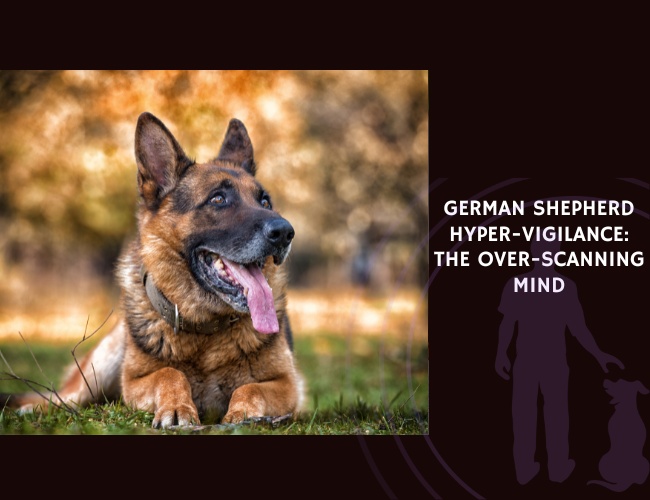
Have you ever watched your German Shepherd pause mid-walk, ears rotating like radar dishes, eyes scanning every corner of the horizon? That moment when time seems to freeze, and you can almost feel the intensity of their focus radiating through the leash? You are witnessing one of the most remarkable yet misunderstood aspects of this magnificent breed: hyper-vigilance. While many dog owners celebrate their Shepherd’s alertness as a sign of intelligence and protective instinct, few realize when this natural awareness crosses into chronic stress, transforming a functional skill into an exhausting burden.
Your German Shepherd is not simply watching the world. They are reading it, predicting it, and often carrying the weight of protecting it. Their minds work differently than many other breeds, constantly running scenarios, anticipating threats, and monitoring environmental changes with an intensity that can leave them emotionally drained. This is not a flaw in their character but a direct consequence of their heritage, sensory design, and deep relational dependency on you. Through the NeuroBond approach, we can begin to understand how this vigilance develops and, more importantly, how to guide it toward balance rather than burden.
The Working Heritage: Where Vigilance Was Born
Your German Shepherd carries within them the genetic legacy of Max von Stephanitz’s vision from the late 19th century. These dogs were not bred for companionship alone but for function, purpose, and unwavering dedication to duty. When you look into those intelligent eyes, you are seeing centuries of selective breeding for flock protection, territory detection, and follow-distance guarding.
From Flock Protection to Modern Living
Imagine a shepherd on the rolling hills of Germany, relying entirely on their dog to detect predators long before they reached the vulnerable flock. The dogs who survived and reproduced were those who could scan vast territories, detect subtle environmental changes, and maintain constant spatial awareness.
Historical roles that hardwired vigilance into German Shepherds:
- Perimeter monitoring of grazing flocks across extensive territories
- Early predator detection at distances of 100+ yards
- Independent threat assessment without handler direction
- Territorial boundary definition and patrol
- Follow-distance guarding while maintaining visual contact with both flock and shepherd
- Night watch duties requiring sustained attention in low-visibility conditions
They needed to monitor not just what was immediately before them but also the periphery, the distant movements, the changes in wind direction that might carry the scent of danger.
This broad spatial scanning became hardwired into their neural architecture. Your German Shepherd today, living in a suburban home or urban apartment, carries this same drive. When they position themselves near windows, when they patrol the fence line repeatedly, when they alert to sounds you cannot even hear, they are fulfilling an ancient purpose that their biology still demands.
The Weight of Responsibility
Working shepherds operated with a profound sense of responsibility. They did not wait for commands to protect. They made independent decisions about when to alert, when to intervene, and when to physically place themselves between danger and their charges. This proactive decision-making, while essential for their historical role, becomes problematic when a modern dog assumes responsibility for an entire household, neighborhood, or even the emotional state of their human family.
The pressure this creates is immense. Unlike many companion breeds who look to humans for all decisions, German Shepherds often believe they must shoulder the burden of environmental management. This is not rebellion or dominance but rather an expression of their bred purpose, now manifesting without appropriate outlets or clear guidance about when vigilance is truly needed.
Modern manifestations of their bred responsibility:
- Strategic positioning near doorways and windows for maximum territorial observation
- Choosing elevated resting spots that provide visual command of the environment
- Reluctance to fully relax even in familiar, safe environments
- Immediate response to any environmental change, no matter how minor
- Following family members from room to room to maintain awareness
- Intense focus on boundary lines (fences, property edges, doorways)
- Heightened alertness during transition times (arrivals, departures, nightfall)
Understanding this helps you recognize that your dog is not being neurotic but rather responding to genetic programming that no longer serves them well in modern domestic life. 🐾
The Sensory Experience: Living in a World Too Loud
To understand your German Shepherd’s hyper-vigilance, you must first understand how differently they experience the world. Their sensory processing is not simply sharper than yours but fundamentally more complex, more layered, and often overwhelming.
Low Filtering Thresholds and Environmental Overload
Most dogs process environmental stimuli through natural filters that allow them to dismiss irrelevant information. Your German Shepherd, however, often exhibits low filtering thresholds. This means their brain processes significantly more auditory, visual, and olfactory data than other breeds. They are not choosing to notice everything. They cannot help but notice everything.
Think of it like living in a room where all conversations happen simultaneously at equal volume. While you might focus on one voice and naturally tune out others, your German Shepherd hears them all with similar intensity. The neighbor closing a car door three houses away. The rustle of a plastic bag caught in a distant tree. The subtle change in your breathing pattern that suggests stress. All of this data floods their consciousness simultaneously.
This amplified sensory input creates what researchers call environmental overload. Your dog is not being difficult when they cannot settle in new environments or when they react to stimuli you never noticed. They are genuinely overwhelmed by the volume of information their brain is processing. Understanding this distinction transforms how we approach their behaviour, moving from correction to compassionate management.
Signs your German Shepherd is experiencing sensory overload:
- Inability to settle or lie down in new environments
- Constant head movement tracking multiple stimuli simultaneously
- Hyperventilation or rapid, shallow breathing patterns
- Dilated pupils even in bright light
- Refusal of food or treats in stimulating environments
- Excessive drinking immediately after trigger exposure
- Frantic sniffing or scanning without focus on any single element
- Whining or vocalization without clear trigger identification
- Physical trembling or tension through shoulders and neck
Predictive Processing: The Brain That Anticipates
Your German Shepherd’s brain is not simply reacting to stimuli but actively predicting them. Predictive Processing Theory reveals that their mind constantly generates scenarios about what might happen next, updating these predictions based on actual sensory input. This is why your dog often reacts before a threat fully materializes. They are not overreacting. They are responding to their brain’s predictive model that has identified a potential danger pattern.
This anticipatory mechanism explains the intense focus you observe when your Shepherd scans the environment. They are not just looking. They are running multiple “what-if” scenarios simultaneously, calculating probabilities, and preparing responses. This cognitive style, while impressive, becomes exhausting when applied continuously without rest or clear signals from you that such vigilance is unnecessary.
Common “what-if” scenarios your dog’s brain generates:
- Footsteps in hallway = potential intruder approaching our door
- Car door closing = stranger entering our territory
- Another dog visible at distance = possible confrontation requiring preparation
- Unfamiliar scent on wind = unknown threat approaching from unseen direction
- Your tension on leash = confirmed danger requiring immediate alertness
- Child’s sudden movement = unpredictable threat needing monitoring
- Delivery truck sound = territorial intrusion imminent
- Neighbor’s door opening = activity requiring assessment and potential response
The Emotional Drivers: Fear, Protection, and Relational Dependency
Hyper-vigilance in German Shepherds is never purely instinctual. It is deeply emotional, driven by complex internal states that intertwine fear, protective instinct, and an overwhelming need for emotional connection with their human handler.
The FEAR System and Anticipatory Stress
When your German Shepherd exhibits chronic scanning behaviour, their FEAR system, as described in Affective Neuroscience, is often operating in overdrive. This neural network drives anticipatory stress and defensive behaviours, causing your dog to perceive neutral stimuli as potential threats. A person walking by becomes a potential intruder. A door closing sounds like danger approaching. An unfamiliar smell triggers defensive positioning.
This is not paranoia in the human sense but rather a pessimistic cognitive bias that develops under chronic stress. Your dog’s brain begins to interpret ambiguous information negatively. That rustling leaf is not just a leaf. It could be something dangerous. That distant sound is not random noise. It could signal an approaching threat. This false threat identification feeds a vicious cycle where vigilance creates stress, which amplifies vigilance, which creates more stress.
Examples of false threat identification in hyper-vigilant German Shepherds:
- Plastic bags blowing in wind = potential animal or intruder
- Shadow movement from tree branches = approaching figure
- Neighbor’s routine lawn care = territorial invasion
- Familiar mail carrier in uniform = threatening stranger
- Children playing loudly = distress or conflict requiring intervention
- Bicycle or skateboard passing = high-speed threat
- Rain hitting windows = abnormal environmental change
- Own reflection in dark windows = unknown dog in territory
- Recycling bin moved to street = territorial boundary violation
Over-Responsible Protection and Handler Dependency
German Shepherds do not scan their environment only for danger. They scan for answers, for handler approval, and for emotional guidance. This relational dependency means your emotional state directly influences their vigilance level. When you are anxious, your dog interprets this as confirmation that danger exists. When you are uncertain, they assume greater responsibility for environmental management. When you lack directional clarity, they create their own rules for protection.
This is where the concept of the Invisible Leash becomes profoundly important. Your German Shepherd is always reading your energy, your body language, and your emotional composure. They are deciding, moment by moment, whether they can trust you to manage environmental safety or whether they must assume that burden themselves. This decision is not conscious or rebellious. It is instinctive, driven by their need for secure attachment and clear leadership.
Many handlers inadvertently reinforce over-monitoring through their own tension. When you tighten the leash as another dog approaches, your Shepherd reads this as “danger confirmed.” When you speak in a higher, nervous voice, they interpret it as your fear requiring their protection. When you avoid certain routes or situations, they learn that the world is indeed as threatening as their vigilance suggests. This emotional contagion creates a feedback loop where human stress elevates canine alertness, which increases human stress, perpetuating the cycle.
Handler behaviors that inadvertently confirm threat perception:
- Tightening or shortening the leash when seeing triggers
- Speaking in higher-pitched or faster tones during stressful moments
- Body stiffening or holding breath when approaching triggers
- Looking directly at triggers with concerned expression
- Quickening pace or changing direction abruptly
- Verbally reassuring dog (“It’s okay, it’s okay”) in anxious tone
- Positioning body between dog and trigger protectively
- Pulling dog away from situations with visible tension
- Scanning environment nervously yourself
- Apologizing to others for your dog’s behavior with embarrassment 🧠
Behavioural Manifestations: Reading the Language of Vigilance
Your German Shepherd communicates their internal state through a sophisticated language of behaviour. Learning to read these signals transforms your ability to support them before vigilance escalates into reactivity or panic.
Primary Vigilance Behaviours
Blocking behaviour is one of the most misunderstood manifestations of hyper-vigilance. When your dog positions themselves between you and an approaching person or animal, they are not necessarily being aggressive. They are fulfilling their bred purpose of protective interception. However, when this behaviour occurs constantly, even in safe environments, it reveals chronic stress rather than appropriate protection.
Barking in German Shepherds serves multiple functions simultaneously. They bark to alert you to changes. They bark to create distance from perceived threats. They bark to release internal tension. When you observe excessive barking, you are witnessing your dog’s overwhelmed state rather than simple territorial expression.
Staring and intense gaze-locking often precede more overt reactions. Your dog is not simply looking. They are assessing, calculating, and preparing. This fixed attention indicates their mind is fully engaged in threat evaluation, and their stress hormones are likely already elevated.
Pacing and the inability to settle reveal a dog who cannot emotionally disengage from environmental monitoring. They move through spaces repeatedly, checking sight lines, monitoring entry points, and ensuring territorial integrity. This behaviour is mentally exhausting and prevents genuine rest.
Shadowing behaviour, where your German Shepherd follows you from room to room, reflects their need to maintain constant awareness of your location and safety. While this can feel endearing, it often indicates separation anxiety intertwined with protective vigilance. 🐾
Early Warning Signs: The Predictive Observation Advantage
Before your German Shepherd exhibits full vigilance behaviours, they display subtle early markers that predict escalation. Learning to recognize these signals allows for intervention before their stress becomes overwhelming.
Slowed walking pace during walks often indicates your dog has entered heightened awareness. Their gait becomes deliberate, each step measured, as they allocate more cognitive resources to environmental scanning rather than movement.
Deliberate environmental scanning shows in the systematic way their head turns, how their ears rotate independently to capture sounds from different directions, and how their entire posture becomes more rigid and focused.
Head pops upward suggest they have detected something outside their normal sensory range. This sudden elevation of the head, accompanied by freezing, indicates they are processing distant stimuli and evaluating threat level.
Stiff posture throughout the body, particularly through the shoulders and neck, reveals muscle tension associated with preparing for action. This rigidity is your dog’s body readying itself for flight, fight, or protective intervention.
Gaze locking on specific locations or movements shows their attention has narrowed to focus on a perceived trigger. This tunnel vision state reduces their awareness of you and limits their ability to respond to redirective cues.

Micro-Signals of Overload
Beyond the obvious behaviours, your German Shepherd displays micro-signals that indicate they are approaching their coping threshold. These subtle movements are easily missed but provide the earliest opportunity for intervention.
Rapid ear flicks backward and forward reveal auditory processing stress. Your dog is trying to locate and identify multiple sound sources simultaneously, and their ears reflect this frantic information gathering.
Tongue flicks and nose licking are calming signals your dog uses to self-soothe. When you observe these repeatedly, your dog is telling you they are feeling stressed and attempting to manage their internal state.
Weight shifting between front paws indicates decision-making stress. Your dog is uncertain whether to approach, retreat, or maintain position, and this internal conflict manifests as physical restlessness.
Frozen stance with minimal breathing shows your dog has entered a state of intense focus where they are attempting to become invisible while gathering information. This stillness is deceptive, as internally they are experiencing high arousal.
Stress yawns that appear out of context are clear indicators your dog is overwhelmed. These yawns are not about tiredness but rather an attempt to release tension and calm themselves in a stressful situation. Recognizing these micro-signals gives you the power to intervene before your German Shepherd escalates into reactive guarding, intimidation, or panic. 🧡
The Handler Influence: How Your Energy Shapes Their Vigilance
Perhaps the most powerful factor in your German Shepherd’s hyper-vigilance is you. Your emotional state, your leadership clarity, and your ability to provide directional guidance determine whether their vigilance becomes functional awareness or chronic burden.
Emotional Contagion and the Relational Regulation Dynamic
Relational Regulation Theory reveals that your German Shepherd depends on you for emotional stability and guidance. They do not regulate their emotional state independently but rather through connection with you. This means your anxiety becomes their anxiety. Your uncertainty becomes their need to assume control. Your fear confirms their threat assessment.
This dynamic is not weakness in your dog but rather the profound depth of your bond. German Shepherds are exquisitely attuned to their handlers, reading micro-expressions, body tension, breathing patterns, and emotional tone with remarkable accuracy. When you tense before encountering a trigger, they feel it. When you hesitate in your decision-making, they notice it. When you lack confidence in your leadership, they step into that void.
Many handlers struggle with this reality because it requires honest self-examination. You might believe you are hiding your stress, but your dog reads it in ways you cannot mask. Your tight grip on the leash communicates fear. Your quickened pace signals avoidance. Your soothing voice in tense moments often confirms rather than calms, as the tonal quality reveals your own emotional state.
The Leadership Vacuum and Environmental Responsibility
German Shepherds need clear, consistent leadership about when vigilance is required and when it is not. Without this guidance, they assume responsibility by default. They begin making independent decisions about threat assessment, protection protocols, and environmental management. This is not dominance but rather their bred instinct manifesting without appropriate boundaries.
When you fail to claim space, your dog claims it. When you do not direct their attention, they decide what deserves focus. When you avoid managing triggers, they manage them according to their instincts. This creates dogs who feel burdened by responsibility they were never meant to carry alone in modern domestic environments.
Clear leadership does not mean harsh correction or force-based training. It means providing directional guidance, making decisions for the team, and communicating through calm body language that you have assumed responsibility for safety. It means being the emotional anchor rather than another source of anxiety. Through this approach, the principles of the Invisible Leash become lived reality, where your presence and energy guide your dog more powerfully than any physical restraint. 🐾
Recalibrating Vigilance: From Chronic Stress to Functional Awareness
The goal is never to eliminate your German Shepherd’s vigilance but rather to transform it from an exhausting burden into a functional skill they can engage and disengage appropriately. This recalibration requires structured approaches that honor their nature while providing emotional relief.
Structured Calm Walking and Pattern-Based Movement
Structured calm walking provides your German Shepherd with predictable patterns that reduce their need to independently scan and assess. When you walk with clear purpose, consistent pace, and minimal tension, you communicate that movement is under your direction. Your dog learns to focus on maintaining position beside you rather than monitoring every environmental detail.
This approach requires you to lead with your body, not just the leash. Your posture should be upright and relaxed. Your pace should be steady and purposeful. Your attention should be forward-focused rather than constantly checking your dog or scanning for triggers. This directional body language tells your German Shepherd that you are managing navigation and awareness, allowing them to relax their independent monitoring.
Pattern-based scanning offers a structured outlet for their natural vigilance drive while bringing it under handler control. Rather than allowing chaotic, anxiety-driven scanning, you teach your dog a controlled pattern: “Check left, check right, look at me.” This structured sequence acknowledges their need to observe while preventing compulsive over-monitoring. It transforms random surveillance into a handler-directed behaviour that satisfies their instinct without overwhelming their nervous system.
Zone-Based Leadership and Spatial Management
Zone-based leadership involves defining and managing different spatial zones around yourself and your dog. You actively communicate, through body language and positioning, which zones require monitoring and which do not. For example, you might establish a “working zone” where your dog maintains close focus on you, a “neutral zone” where they can observe calmly without intervening, and a “no-go zone” for potential triggers.
This spatial framework provides clear boundaries that reduce your dog’s perceived need to manage all environmental aspects independently. They learn that certain spaces are your responsibility, others are shared awareness, and some require their alert attention. This clarity prevents the constant state of readiness that characterizes chronic hyper-vigilance.
Implementing zone-based leadership requires consistency and clear communication. You cannot expect your dog to understand these boundaries if you only apply them occasionally or if your body language contradicts your intentions. Your spatial management must become automatic, a natural extension of your presence and movement.
Off-Duty Rituals: The Permission to Rest
Intentional off-duty rituals are perhaps the most profound gift you can give a hyper-vigilant German Shepherd. These rituals provide a clear, consistent emotional signal that vigilance is not required and that you have assumed full responsibility for environmental monitoring. Without such signals, many German Shepherds remain in perpetual readiness, unable to truly rest even in safe environments.
These rituals might include a specific command like “Relax” or “Break,” delivered in a calm, low tone. They might involve a particular location, such as a designated bed or crate that becomes associated with complete relaxation. They might incorporate a physical component, such as a gentle massage or calming touch that helps release muscle tension and signals emotional safety.
The key is consistency and emotional authenticity. Your dog must learn to trust that this ritual genuinely means they can disengage from monitoring. If you deliver the “relax” command but remain tense yourself, or if you interrupt their rest to check on noises, you undermine the ritual’s power. Your emotional composure during these moments directly influences whether your dog can truly let go of their vigilance. This is where Soul Recall becomes evident, as your German Shepherd’s emotional memory learns to associate these rituals with genuine safety and release from responsibility. 🧠
The NeuroBond Communication Framework: Calm Presence as Medicine
The NeuroBond Model integrates neuroscience and attachment theory to provide a comprehensive framework for recalibrating hyper-vigilance. This approach recognizes that your German Shepherd’s scanning behaviour is not simply a training problem but an emotional and relational challenge requiring deep communication.
Calm Presence: The Foundation of Security
Your calm, grounded emotional state is the most powerful tool for reducing your German Shepherd’s hyper-vigilance. As Relational Regulation Theory confirms, your dog calibrates their internal state based on yours. When you maintain genuine calm, not forced composure but authentic groundedness, you transmit security that allows your dog to relax their defensive monitoring.
This calm presence must be cultivated intentionally. It requires you to notice your own stress responses, to breathe deliberately in challenging situations, and to center yourself emotionally before addressing your dog’s behaviour. Your German Shepherd reads your nervous system state before they hear your words or see your actions. If your body is tense, your breathing shallow, and your energy scattered, no amount of verbal reassurance will convince them that safety exists.
Developing calm presence often requires personal work beyond dog training. You might need to address your own anxiety, practice mindfulness or meditation, or seek support for the stress that inevitably transfers to your dog. This is not weakness but rather recognition that the human-canine bond is bidirectional and that your emotional state is a fundamental training tool.
Directional Body Language: Leading Without Force
Clear, purposeful body language provides your German Shepherd with unambiguous signals about leadership and direction. This includes leading with your body rather than your voice, using clear hand signals, and maintaining an open but confident posture. When you embody directional clarity, your dog understands where attention should be focused and what actions are appropriate.
Leading with your body means your physical movement precedes commands. You turn before asking your dog to turn. You stop walking before giving a “wait” command. You claim space through your position rather than through verbal assertion. This body-first communication matches how dogs naturally communicate with each other and reduces confusion about leadership.
Your posture communicates volumes. Hunched shoulders suggest uncertainty or defeat. Rigid, tight posture suggests fear or aggression. Open, relaxed, and upright posture suggests calm confidence and leadership. Your German Shepherd reads these postural cues constantly and adjusts their own state accordingly.
Emotional Composure: The Anchor in the Storm
Maintaining emotional composure, even in challenging situations, prevents you from inadvertently reinforcing your dog’s anxiety. When you remain calm and steady during encounters with triggers, you act as an emotional anchor that helps your dog regulate their own state. You demonstrate through your being, not just your words, that the situation is manageable and does not require defensive action.
This composure is tested most severely when your dog reacts. Your instinct might be to tense, to correct verbally, or to remove them quickly from the situation. However, these reactions often confirm your dog’s threat assessment rather than calming it. Instead, maintaining steady breathing, relaxed shoulders, and calm energy while guiding them away from the trigger communicates that you are in control and that the situation, while requiring management, is not an emergency.
Emotional composure does not mean suppressing emotions but rather processing them without projecting them onto your dog. You can feel frustrated or concerned while maintaining an external state that provides stability for your German Shepherd. This emotional regulation is perhaps the most challenging aspect of working with hyper-vigilant dogs, yet it is also the most transformative. 🧡

Health Implications: When Vigilance Becomes Physical Burden
Chronic hyper-vigilance does not only affect your German Shepherd’s emotional state. It manifests in physical health consequences that demand attention and intervention.
Chronic Stress and Immune Function
When your dog maintains constant vigilance, their body remains in a sustained stress response. Cortisol and adrenaline levels stay elevated, which over time suppresses immune function and increases susceptibility to illness. You might notice your hyper-vigilant German Shepherd experiences more frequent skin issues, digestive problems, or takes longer to recover from minor illnesses.
Physical health consequences of chronic hyper-vigilance:
- Weakened immune response leading to frequent infections
- Chronic digestive issues (diarrhea, vomiting, reduced appetite)
- Skin problems including hot spots, excessive shedding, and allergic reactions
- Increased inflammatory markers throughout the body
- Accelerated aging and decreased lifespan
- Higher incidence of autoimmune conditions
- Poor coat quality and condition
- Weight fluctuations (both loss and stress-eating)
- Slower wound healing and recovery from illness or injury
- Increased risk of stress-related conditions like bloat
This chronic stress also affects inflammatory responses throughout the body. German Shepherds already carry genetic predisposition for certain inflammatory conditions, and chronic stress exacerbates these tendencies. The connection between mental state and physical health is undeniable, and addressing vigilance is not simply a behavioural concern but a health imperative.
Sleep Disruption and Recovery
Hyper-vigilant German Shepherds often struggle with quality sleep. They may appear to rest but never reach deep, restorative sleep stages because they maintain environmental monitoring even while lying down. You might notice your dog startles easily from sleep, wakes to investigate minor sounds, or seems tired despite adequate rest time.
Signs your dog is not achieving quality rest:
- Frequent position changes during rest periods (unable to stay settled)
- Ears remain mobile and responsive even during apparent sleep
- Startling awake at minor sounds (footsteps, doors, distant noises)
- Sleeping with eyes partially open or frequent eye opening
- Muscle twitching or tension visible even during rest
- Choosing rest locations with full environmental view rather than secure spots
- Sleeping in sphinx position rather than fully relaxed on side
- Waking when you leave room or shift position
- Appearing tired or lethargic despite hours of lying down
- Irritability or mood changes from chronic sleep deprivation
This sleep disruption prevents proper physical recovery, affects memory consolidation, and further elevates stress hormones. Sleep is when the body repairs itself, processes experiences, and restores energy reserves. When vigilance interferes with sleep, you create a compounding health crisis where lack of rest increases stress, which prevents quality sleep, which increases stress further.
Muscle Tension and Physical Pain
The constant state of readiness creates chronic muscle tension, particularly through the neck, shoulders, and back. Over time, this tension can lead to actual physical pain, which then increases stress and vigilance in a destructive feedback loop. You might notice your German Shepherd is reluctant to be touched in certain areas, shows stiffness in movement, or develops postural changes.
Addressing this physical component requires both behavioural intervention to reduce vigilance and physical therapy approaches such as massage, appropriate exercise, and possibly veterinary assessment for pain management. You cannot separate the physical manifestations from the emotional drivers, and comprehensive treatment must address both aspects simultaneously. 🐾
Training Approaches: Practical Strategies for Daily Life
Theory becomes valuable only when translated into practical strategies you can implement immediately. These approaches honor your German Shepherd’s nature while providing structure that reduces chronic stress.
The “Place” Command as Sanctuary
Teaching your German Shepherd a solid “place” command creates a physical location associated with relaxation and reduced responsibility. This becomes their sanctuary where environmental monitoring is explicitly not required. The place should be a comfortable bed or mat in a location with limited sight lines to triggers, allowing your dog to genuinely rest without feeling compelled to watch.
Building this command requires patience and positive association. Begin with short durations, rewarding your dog for remaining on the place without scanning or reacting. Gradually increase duration and add distractions at a pace your dog can handle. The goal is creating an emotional association where being on place means “I am off duty and safe.”
Engagement Training: Focus Over Scanning
Teaching your German Shepherd to focus on you provides an alternative to environmental scanning. Engagement training involves rewarding your dog for choosing to pay attention to you rather than to environmental stimuli. This is not forced attention but rather building a preference for handler focus through positive reinforcement.
Start in low-distraction environments and reward any voluntary attention. Gradually increase environmental challenges while maintaining high reward rates for choosing you over scanning. This builds a neural pathway that competes with the vigilance response, giving your dog an alternative behaviour pattern that is equally rewarding but less stressful.
Controlled Exposure: Building Confidence Through Success
While flooding, or overwhelming exposure to triggers, typically worsens hyper-vigilance, carefully controlled exposure builds confidence and reduces threat assessment. The key is maintaining distance and duration below your dog’s threshold, allowing them to observe potential triggers while remaining calm and successful.
This approach requires careful observation of your dog’s threshold distance from triggers. You work at distances where they can notice the trigger but not react, rewarding calm observation. Over time, as their nervous system learns that triggers do not materialize into actual threats, their vigilance intensity decreases. This is systematic desensitization applied with deep understanding of your dog’s sensory experience and emotional state.
Counter-Conditioning: Changing Emotional Associations
Counter-conditioning changes your dog’s emotional response to triggers by creating new, positive associations. When your German Shepherd sees another dog, rather than entering vigilant assessment mode, they learn to look to you for rewards. The trigger becomes a predictor of positive experiences rather than a signal requiring defensive action.
This process must occur below threshold. If your dog is already reactive or overly aroused, counter-conditioning cannot work because they are not in a learning state. You must find the distance or intensity level where they notice the trigger but can still accept treats and respond to you. At this threshold edge, you pair trigger exposure with high-value rewards, building new neural pathways that compete with the vigilance response. 🧠
Alert. Focused. Burdened.
They don’t just see — they scan.
Your German Shepherd wasn’t bred to simply notice the world, but to monitor it. What looks like alertness is often deep environmental processing — tracking movement, mapping space, and anticipating what might come next.
They don’t just react — they take responsibility.
Historically trusted to make independent decisions on open fields, German Shepherds developed a sense of duty rather than mere obedience. Today, lacking clear guidance, that inherited responsibility can become emotional weight.
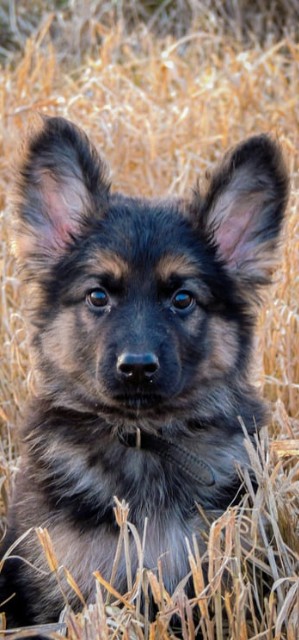
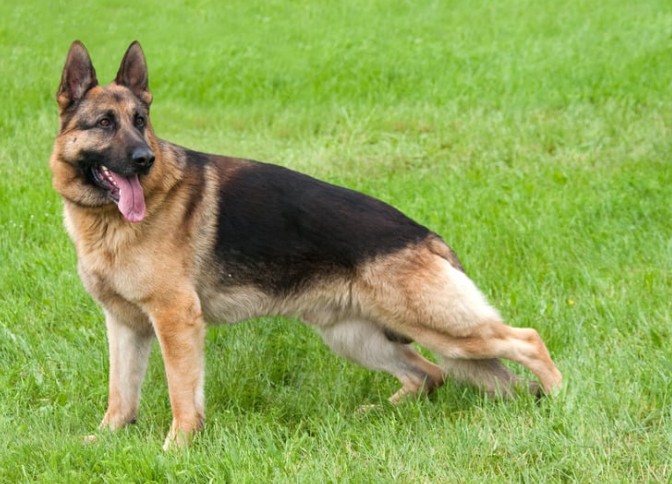
They don’t just need training — they need emotional permission to relax.
Hyper-vigilance isn’t solved by commands, but by leadership that signals safety. When you provide calm, structured guidance, you show your Shepherd that the world doesn’t always need watching.
Environmental Management: Creating Spaces That Support Calmness
Your German Shepherd’s physical environment profoundly influences their vigilance level. Strategic environmental management reduces unnecessary triggers and creates spaces that support relaxation rather than constant monitoring.
Window Management and Visual Triggers
Windows provide your German Shepherd with visual access to territorial boundaries, which can intensify vigilance behaviours. Consider managing window access through frosted film, strategic furniture placement, or training your dog to avoid window watching during high-traffic times.
This does not mean eliminating all visual access but rather controlling when and how your dog engages in environmental monitoring. You might allow supervised window time where you are present and can guide their responses, while restricting unsupervised access during times when trigger frequency is high, such as school drop-off hours or evening dog-walking times.
Sound Management and Auditory Sensitivity
Your German Shepherd’s acute hearing means they process sounds you never notice. White noise machines, calming music, or strategic sound dampening can reduce auditory triggers that contribute to vigilance. This is particularly important in apartments or homes with shared walls where outside noises are constant.
Creating an auditory environment that masks unpredictable sounds helps your dog relax. Predictable background noise prevents the startle response that unpredictable sounds trigger and reduces the cognitive load of processing every auditory input. This simple environmental modification can significantly impact your dog’s stress level.
Rest Spaces and Territorial Definition
Creating clearly defined rest spaces helps your German Shepherd understand where territorial monitoring is and is not required. If they have access to every room and window in your home, they often feel responsible for monitoring all spaces. Limiting access to certain areas or creating specific “on duty” versus “off duty” zones through baby gates or closed doors can reduce this burden.
Their primary rest space should be in a quieter area with limited visual and auditory access to outside triggers. This becomes their true sanctuary where environmental demands are minimal and they can achieve genuine rest rather than simply lying down while maintaining awareness. 🐾
🧠 German Shepherd Hyper-Vigilance Journey 👁️
Understanding and Managing Environmental Over-Scanning Through Life Stages
Phase 1: Puppy Foundation (8 Weeks – 6 Months)
Seeds of Vigilance – The Critical Window
🔍 What’s Happening in Their Brain
Neural pathways are extraordinarily plastic during this phase. Your puppy’s brain is forming connections that will influence their entire life. Genetic predisposition for environmental awareness is present, but how it develops depends entirely on early experiences and your guidance during the critical socialization window (closes around 12-14 weeks).
⚠️ Early Warning Signs to Watch
• Freezing at novel sounds rather than investigating curiously
• Positioning near doorways or windows even at young age
• Preference for elevated observation positions
• Excessive alertness to household sounds
• Difficulty settling after minor environmental changes
✅ Foundation Training Priorities
Expose to diverse environments below fear threshold. Build positive associations with environmental changes. Be their calm anchor during novelty exposure. Redirect attention to you when they alert rather than investigating together. Your emotional state during these experiences teaches whether new stimuli require vigilance or can be met with curiosity.
Phase 2: Adolescent Intensification (6-18 Months)
When Vigilance Explodes – The Challenge Period
🧬 Neurological Reorganization
The prefrontal cortex (impulse control, emotional regulation) is still developing while primitive brain regions driving fear and protection reach adult activation levels. Hormonal changes intensify environmental scanning. This creates the “different dog” phenomenon many handlers experience—dramatic increase in territorial awareness and protective behaviors.
📊 Behavioral Changes to Expect
• Sudden increase in barking at previously ignored stimuli
• More intense doorbell and arrival reactions
• Beginning fence line patrols and boundary monitoring
• Longer recovery time after arousal
• Fear periods around 6-8 months and 12-14 months
💪 Critical Management Strategy
Increase structure, not decrease expectations. Many handlers give more freedom when dogs need more guidance. Maintain consistent boundaries. Provide appropriate outlets for emerging protective drive through controlled activities. Navigate fear periods with patience—no flooding, no avoidance, just calm exposure at manageable levels.
🚫 Critical Mistakes to Avoid
Do not punish vigilance behaviors—this increases stress and confirms threats exist. Do not give more freedom due to exhaustion—this allows independent environmental management. Do not expect adolescent intensity to naturally diminish without intervention. Patterns solidified now become adult baseline.
Phase 3: Prime Adult Challenge (2-6 Years)
Peak Intensity – Intervention or Entrenchment
🔬 The Reality of Adult Vigilance
Full physical and mental maturity means vigilance serves perceived purpose with complete intensity. Years of practice have created deeply established neural pathways. Without intervention, constant environmental monitoring becomes default state regardless of actual threat level. Health consequences become apparent—immune suppression, digestive issues, chronic inflammation.
🎭 The Handler’s Dilemma
Most handlers realize during this phase that behaviors tolerated in puppyhood or hoped to diminish after adolescence have instead become entrenched adult patterns. The good news: cognitive maturity allows learning complex emotional regulation skills. The challenge: changing established patterns requires significantly more effort than early prevention would have.
🔄 Transformation Through NeuroBond
The NeuroBond approach becomes essential—calm presence, directional body language, emotional composure. Teach new neural pathways while old ones remain available. Implement off-duty rituals, structured calm walking, zone-based leadership. Extraordinary consistency required. The management strategies implemented now determine senior life quality.
Phase 4: Recognizing Early Warning Signals
Micro-Signals Before Escalation
👀 Primary Behavioral Markers
• Slowed walking pace with deliberate steps
• Systematic head turning and ear rotation
• Head pops upward (detecting distant stimuli)
• Stiff posture through shoulders and neck
• Gaze locking on specific locations
• Increased sniffing intensity at specific spots
⚡ Micro-Signals of Overload
• Rapid ear flicks (auditory processing stress)
• Tongue flicks and nose licking (calming signals)
• Weight shifting between front paws (decision stress)
• Frozen stance with minimal breathing
• Stress yawns appearing out of context
🎯 Predictive Observation Power
Recognizing these signals allows intervention before full arousal. Create distance proactively. Engage in calming exercises. Implement pattern interrupts. This prevents spiraling into reactive guarding or panic. Each successful de-escalation builds trust and reduces perceived burden of environmental responsibility.
Phase 5: Implementing Daily Structure
Creating Predictable Calm Through Routine
⏰ The Structured Day Framework
Morning decompression walk (sensory processing) → Mental enrichment feeding → Controlled window time or place training → Extended rest with off-duty ritual → Midday training session → Second feeding → Structured afternoon walk (training focus) → Appropriate work activity → Evening rest during high-trigger hours → Calm enrichment → Final brief walk → Bedtime routine.
🎯 Two Essential Walk Types
Decompression: Dog’s pace, extensive sniffing, minimal commands, quiet settings, stress relief focus. Structured: Handler’s pace, specific position, permission-based sniffing, moderate stimulation, building calm responsiveness. Both essential—alternate based on dog’s regulation state.
🧘 Off-Duty Rituals Are Non-Negotiable
Specific command, designated location, calming touch, or consistent routine that signals complete release from monitoring responsibility. Your emotional authenticity matters—if you remain tense, your dog cannot truly let go. This ritual teaches that extended relaxation is possible and expected.
Phase 6: Emergency De-Escalation Protocol
When Threshold is Breached – Immediate Response
⏱️ First 30 Seconds – Critical Actions
Stop all forward movement immediately. Regulate YOUR breathing (three deep breaths). Create physical distance without drama. Maintain loose leash pressure. Do NOT verbally correct. Your calm physiological state provides their anchor point. Move with controlled purpose, not panicked flight.
⏲️ Next 5 Minutes – Active Recovery
Find neutral location where trigger cannot be perceived. Stand or sit calmly without demands. Your regulated nervous system provides external regulation for theirs. After 1-2 minutes, assess readiness for gentle interaction. Offer simple known cues with generous rewards. Do not attempt to pass trigger location—better to end walk than flood.
⏳ Following Hour & 24 Hours
Provide low-stimulation environment (curtains closed, white noise, dim lights). Offer calming activities if receptive. Monitor displacement behaviors. Avoid additional triggers rest of day. Next day: lower expectations, easier routes, extra rest. Reflect on trigger and your response without self-judgment. Adjust management plan based on learning.
Phase 7: Understanding Progress Timelines
Realistic Expectations Prevent Burnout
🎯 Micro-Improvements to Celebrate
• Glances at trigger but returns attention without prompting
• Recovery time decreases from 30 to 15 minutes
• Sleeps 45 minutes straight vs. waking every 10 minutes
• Responds to redirection during low-level arousal
• Settles in rest space within 5 minutes vs. 20 minutes
📅 The Realistic Timeline
Weeks 1-2: Foundation building, no improvement expected. Weeks 3-4: Early response, fragile changes. Weeks 5-8: Emerging patterns, frequent bad days. Months 3-4: Obvious consistent improvements. Months 5-6: Stabilization plateau. Months 7-12: Integration into baseline. Beyond 1 year: Ongoing management, vulnerability to regression during stress.
✨ The Invisible Leash in Progress
Through the Invisible Leash principle, you learn that progress is measured not in your dog’s external compliance but in the depth of trust they develop in your leadership. Each micro-improvement reflects growing confidence that you will manage environmental safety, allowing them to release the exhausting burden they’ve carried.
Phase 8: Adapting to Your Environment
Urban, Suburban, or Rural – Tailored Strategies
🌆 Urban Hyper-Vigilance Management
Constant stimulation and close proximity create unique challenges. Block window access during unsupervised periods. Use white noise continuously. Train solid “watch me” for elevator encounters. Schedule walks during low-traffic hours. Maintain higher training consistency than suburban counterparts. Build place/settle command for apartment confines.
🏡 Suburban Territorial Challenges
Fence line patrolling and barrier frustration dominate. Supervise ALL yard time or install visual barriers. Manage window access strategically based on trigger views. Use predictable neighborhood patterns to build positive associations. Train place command for deliveries. Never allow unsupervised fence running—this builds barrier aggression.
🌾 Rural Isolation Considerations
Define specific patrol boundaries on property. Distinguish legitimate wildlife threats from general scanning. Maintain regular socialization despite isolation. Periodic trips to stimulating environments prevent habituation to quiet. Balance functional vigilance needs with preventing chronic over-monitoring of extensive territory.
🔍 Vigilance Expression Across Different Contexts
Show Line vs. Working Line
Show Lines: Moderate vigilance, higher trigger thresholds, 10-15 min recovery, 20-40 min daily training needs.
Working Lines: Intense constant monitoring, 30-60+ min recovery, notice stimuli show lines miss, 60-90+ min daily training essential.
Life Stage Intensity Curve
Puppy: Subtle signs, high neuroplasticity.
Adolescent: Dramatic spike, hormonal influence.
Prime Adult: Peak intensity, entrenchment risk.
Senior: Cognitive decline can increase anxiety despite physical decline.
Handler Mistakes: Impact Level
Highest Impact: Punishment during vigilance, inconsistent leadership.
High Impact: Over-reassurance, alert parties, complete avoidance.
Moderate Impact: Inconsistent boundaries, wrong walk types.
Decompression vs. Structured Walks
Decompression: Dog’s pace, extensive sniffing, minimal commands, stress relief focus.
Structured: Handler’s pace, permission sniffing, active training, building calm around triggers. Both essential for different purposes.
Multi-Dog Household Dynamics
Single GSD: Manage individual patterns directly.
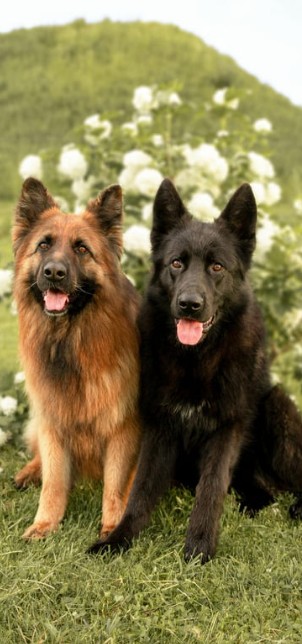
Multiple Dogs: Vigilance contagion, cascading arousal, exponential complexity.
With Calm Model: Opportunity for social learning and behavior reshaping through observation.
Health Consequences Timeline
Short-term: Sleep disruption, muscle tension, elevated cortisol.
Medium-term: Immune suppression, digestive issues, inflammatory conditions.
Long-term: Accelerated aging, chronic conditions, decreased lifespan, cognitive decline acceleration.
⚡ Quick Reference: The Vigilance Management Formula
Early Intervention = Life-Long Success
Critical socialization window closes at 12-14 weeks—maximize positive exposures before this.
The Recovery Time Rule
Cortisol remains elevated 60-90 minutes after trigger exposure—plan rest accordingly.
Progress Timeline Expectation
Micro-improvements: Weeks 3-4 | Consistent progress: Months 3-4 | Stable integration: Months 7-12
Daily Structure Balance
6-7 hours true rest + 1-1.5 hours structured activity + 15-16 hours managed downtime = Optimal regulation
The Distance-Success Correlation
Train at distances where dog notices trigger but doesn’t react—this is your learning zone.
🧡 The Zoeta Dogsoul Perspective on Hyper-Vigilance
Your German Shepherd’s hyper-vigilance is not a flaw to eliminate but rather a powerful expression of their deep nature requiring understanding and guidance. Through the NeuroBond approach, you learn that transformation occurs not through force but through the depth of connection you build—your calm presence becomes their anchor, your emotional composure guides their nervous system back to balance.
The Invisible Leash teaches us that the strongest guidance flows through energy and relationship, not physical restraint. When your dog learns to trust your environmental management, their exhausting burden of constant monitoring transforms into functional awareness. They discover that vigilance can be engaged appropriately and then released, that rest is not neglect of duty but trust in your leadership.
Soul Recall reminds us that every interaction creates emotional memory. Each moment of successful de-escalation, each off-duty ritual honored, each time you remain calm when they are stressed—these experiences accumulate in their emotional architecture, slowly reshaping their default response from chronic stress to regulated awareness. This is not quick-fix training but rather deep relational transformation.
The goal is never to create a German Shepherd who ignores their environment or loses their protective instinct. The goal is developing a dog who can engage their natural awareness as a skill rather than carry it as a burden—who trusts your leadership enough to rest, who experiences the balance between vigilance and peace. That transformation, when achieved, honors both their magnificent heritage and their need for genuine well-being. That is the essence of Zoeta Dogsoul.
© Zoeta Dogsoul – Where neuroscience meets soul in dog training
Nutrition and Supplementation: Supporting the Nervous System
Your German Shepherd’s diet influences their nervous system function and stress resilience. While nutrition cannot solve hyper-vigilance alone, strategic nutritional support enhances their ability to regulate their emotional state.
Protein Quality and Amino Acid Balance
High-quality protein sources provide amino acids necessary for neurotransmitter production. Tryptophan, found in proteins like turkey and salmon, is a precursor to serotonin, which influences mood regulation and stress response. Ensuring adequate tryptophan through diet can support your dog’s ability to maintain calm states.
However, balance is critical. Excessive protein, particularly in highly aroused or anxious dogs, can sometimes increase agitation. Working with a veterinary nutritionist to optimize protein levels and sources for your individual dog can be valuable, particularly for German Shepherds exhibiting significant hyper-vigilance.
Omega-3 Fatty Acids and Inflammation
Omega-3 fatty acids, particularly EPA and DHA from fish oils, support both cognitive function and anti-inflammatory processes. Chronic stress creates inflammatory conditions, and omega-3 supplementation can help mitigate these effects while supporting brain health and emotional regulation.
Quality matters significantly with omega-3 supplements. Rancid or low-quality fish oils can actually increase oxidative stress. Choose reputable brands that provide third-party testing for purity and potency, and store them properly to prevent degradation.
Adaptogenic Herbs and Calming Supplements
Certain supplements show promise in supporting stress resilience in dogs. L-theanine, an amino acid found in green tea, promotes relaxation without sedation. CBD oil, when sourced from reputable manufacturers and used at appropriate doses, may help some dogs manage anxiety. Adaptogenic herbs like ashwagandha or rhodiola can support adrenal function under chronic stress.
However, supplements should never replace behavioural intervention and should always be used under veterinary guidance. What works for one dog may not work for another, and some supplements can interact with medications or have contraindications for certain health conditions. View nutritional support as one component of a comprehensive approach rather than a standalone solution. 🧡
The Senior German Shepherd: Vigilance in Later Years
As your German Shepherd ages, their hyper-vigilance may change in expression but often does not diminish in intensity. Understanding these changes allows you to provide appropriate support through their senior years.
Cognitive Decline and Increased Anxiety
Senior German Shepherds may develop cognitive dysfunction syndrome, a condition similar to dementia in humans. This cognitive decline often intensifies anxiety and vigilance as your dog struggles to process environmental information accurately. They may become more reactive to familiar stimuli or develop new fears around situations that previously did not trigger concern.
Supporting cognitive function through enrichment, mental stimulation, and possibly medications or supplements recommended by your veterinarian becomes increasingly important. The structure and routine that always benefited your German Shepherd becomes even more critical as they age, as predictability helps compensate for cognitive decline.
Physical Limitations and Frustration
As physical abilities decline due to arthritis, hip dysplasia, or other age-related conditions, your German Shepherd may feel increasingly vulnerable, which can paradoxically increase protective vigilance. They may compensate for physical limitations with more intense vocal warnings or by positioning themselves strategically to avoid physical confrontation while maintaining territorial control.
Managing pain becomes crucial not only for physical comfort but also for emotional regulation. A dog in chronic pain exists in a constant stress state that amplifies vigilance behaviours. Working closely with your veterinarian to optimize pain management directly supports emotional well-being.
Sensory Changes and Disorientation
Declining vision and hearing can increase anxiety and vigilance in senior dogs. Unable to identify environmental changes as clearly, they may startle more easily or react more intensely to stimuli they cannot fully process. Your German Shepherd might become more dependent on your presence as their sensory confidence decreases.
Adapting your communication to accommodate sensory changes helps maintain your bond and reduce stress. Using more touch-based cues for a dog with hearing loss or approaching more obviously for a dog with vision decline prevents unnecessary startle responses that compound their anxiety. 🐾
Understanding Hyper-Vigilance Across Your Dog’s Lifetime
The expression of hyper-vigilance in German Shepherds is not static but rather evolves through distinct developmental phases. Understanding what to expect at each life stage empowers you to provide appropriate support and intervention before patterns become deeply ingrained.
The Puppy Phase: Seeds of Vigilance (8 Weeks – 6 Months)
Your German Shepherd puppy arrives in your home already carrying genetic predisposition for environmental awareness, but these early months represent the most critical window for shaping how that awareness develops. During this phase, their brain is extraordinarily plastic, forming neural pathways that will influence their entire life.
Early signs of emerging hyper-vigilance in puppies often appear subtle. You might notice your puppy freezing at novel sounds rather than investigating curiously. They may position themselves near doorways or windows even at this young age. Some puppies exhibit preference for elevated positions where they can observe more territory. These behaviors, while seemingly innocent, reveal an already-active scanning drive.
Early warning signs in puppies (8 weeks – 6 months):
- Freezing or stillness response to novel sounds rather than curiosity
- Preference for observing from elevated positions (furniture, stairs)
- Positioning near doorways, windows, or boundary areas during rest
- Excessive alertness to household sounds (doorbell, appliances, footsteps)
- Reluctance to engage in play when environmental changes occur
- Looking to you for confirmation before investigating new stimuli
- Difficulty settling after minor environmental changes
- Alert barking or whining at sounds you cannot identify
- Following you closely from room to room even in familiar home
- Startling more easily than littermates or other puppies
Recognizing these early signs allows for immediate intervention during the most neuroplastic phase of development.
The critical socialization window, which closes around 12-14 weeks, determines whether your puppy will interpret the world as generally safe with occasional threats or as fundamentally dangerous requiring constant monitoring. Under-socialization during this period creates dogs who lack reference points for normal environmental stimuli, leading to generalized anxiety and heightened vigilance. However, over-stimulation or traumatic experiences during socialization can be equally damaging, teaching the puppy that the world truly is overwhelming and dangerous.
Your approach during this phase sets the foundation for everything that follows. Expose your puppy to diverse environments, sounds, people, and situations, but always at their pace and below their fear threshold. Watch for signs of stress rather than pushing through fear. Build positive associations with environmental changes rather than forcing tolerance. Most importantly, be the calm anchor they need as they encounter novelty. Your emotional state during these experiences teaches them whether new stimuli require defensive vigilance or can be met with confident curiosity.
Avoid inadvertently rewarding scanning behaviors during this phase. When your puppy alerts to sounds, acknowledge calmly but redirect their attention back to you rather than investigating together or displaying concern. This teaches them that you are monitoring the environment and that their role is to trust your assessment rather than to independently determine threat level.
Adolescence: When Vigilance Intensifies (6-18 Months)
Adolescence represents perhaps the most challenging phase for managing hyper-vigilance in German Shepherds. Hormonal changes, continued brain development, and emerging adult instincts converge to create what many handlers describe as a completely different dog from the puppy they knew.
During this phase, you will likely observe a dramatic increase in environmental scanning, territorial awareness, and protective behaviors. Your adolescent German Shepherd’s brain is undergoing significant reorganization, particularly in areas governing impulse control, emotional regulation, and threat assessment. The prefrontal cortex, responsible for executive function and emotional modulation, is still developing while more primitive brain regions driving fear and protective instincts are reaching adult levels of activation.
Typical behavioral changes during adolescence (6-18 months):
- Sudden increase in barking at previously ignored stimuli
- More intense reactions to doorbell, knocks, or arrival sounds
- Heightened response to other dogs, especially same-sex individuals
- Beginning to “patrol” fence lines or property boundaries independently
- Increased physical positioning between you and perceived threats
- Longer recovery time after arousal compared to puppy phase
- Testing of boundaries and rules around vigilance behaviors
- More sustained focus on triggers (harder to redirect)
- Emerging territorial displays toward familiar people or dogs
- Resistance to commands during high arousal states
- Sleep disruption from increased environmental monitoring
Understanding these changes as neurological development rather than defiance helps you respond appropriately.
Testosterone in males and estrogen in females influence vigilance intensity differently. Male adolescents often exhibit more territorial scanning and same-sex reactivity, while females may show more targeted protective behaviors toward their human family. Both experience heightened sensitivity to environmental stimuli and reduced frustration tolerance.
This is when many handlers make critical mistakes that solidify hyper-vigilance patterns. Your adolescent dog begins barking at the fence, and you either punish the behavior (increasing stress and confirming threat perception) or ignore it entirely (allowing independent environmental management). Neither approach addresses the underlying need for clear leadership about when vigilance is appropriate.
The adolescent phase requires increased structure, not decreased expectations. Many handlers, exhausted by their dog’s intensity, inadvertently give them more freedom and less guidance precisely when they need the opposite. Maintain consistent boundaries, increase structured training time, and provide appropriate outlets for their emerging protective drive through controlled activities rather than allowing free expression.
This is also when fear periods occur, typically around 6-8 months and again around 12-14 months. During these periods, your dog may suddenly become reactive to previously neutral stimuli. Handle these fear periods with patience and calm exposure rather than flooding or avoidance. How you navigate these windows significantly impacts whether vigilance becomes manageable awareness or chronic anxiety.
Prime Adult Years: Peak Vigilance Challenges (2-6 Years)
Your German Shepherd reaches full physical and mental maturity between 2-3 years of age, and the patterns established during earlier phases now manifest in their adult form. This is when hyper-vigilance either stabilizes into manageable awareness or escalates into a chronic behavioral challenge that impacts quality of life.
During these prime years, your dog’s vigilance serves their perceived purpose with full intensity. They have the physical capability, mental focus, and emotional drive to maintain constant environmental monitoring. Without appropriate intervention, this becomes their default state, operating continuously regardless of actual threat level or your guidance.
Many handlers experience the most significant stress during this phase because they realize the puppy behaviors they tolerated or the adolescent intensity they hoped would diminish has instead become entrenched adult patterns. Your dog now has years of practice in hyper-vigilance, and neural pathways supporting these behaviors are deeply established.
However, this phase also represents opportunity. Your adult German Shepherd has the cognitive maturity to learn complex emotional regulation skills and to understand nuanced leadership communication. They can grasp the concept of on-duty versus off-duty states. They can learn to trust your environmental management rather than relying solely on their own assessment.
The challenge is that changing established patterns requires significantly more effort than prevention would have during earlier phases. You must essentially teach your dog new neural pathways while the old, well-practiced pathways remain available and tempting. This demands extraordinary consistency, patience, and commitment to the process.
This is also when the consequences of hyper-vigilance become more apparent in physical health. Chronic stress impacts immune function, digestive health, and inflammatory processes. You may notice your dog experiences more frequent health issues or takes longer to recover from illness or injury. Addressing vigilance during these years is not just behavioral work but health preservation.
Connection to senior years: The management strategies you implement during prime adult years directly determine the quality of your dog’s senior life. Dogs who learn emotional regulation and trust in handler leadership during these years transition into senior life with established coping mechanisms. Those who remain chronically hyper-vigilant often experience accelerated cognitive decline and increased anxiety as physical capabilities diminish. 🧠
Common Mistakes That Worsen Hyper-Vigilance
Even well-intentioned handlers often unknowingly reinforce the very behaviors they wish to change. Understanding these common pitfalls helps you avoid inadvertently intensifying your German Shepherd’s hyper-vigilance.
Over-Reassuring During Vigilance Episodes
When your German Shepherd alerts to a sound or fixates on movement outside, your instinct might be to comfort them with soothing words, gentle petting, or reassuring tones. This feels supportive and loving. However, your dog interprets this response as confirmation that their vigilance is appropriate and that concern is warranted.
From your dog’s perspective, your reassurance translates as: “Yes, you are right to be worried. I am also concerned about this stimulus, which is why I am comforting you.” This reinforces their threat assessment rather than helping them relax. Your soothing actually validates their anxiety and strengthens the neural pathway connecting environmental stimuli with stress responses.
Common reassurance phrases that inadvertently reinforce anxiety:
- “It’s okay, it’s okay” (repeated nervously)
- “You’re alright, baby” (in high-pitched, concerned tone)
- “Don’t worry, I’m here” (while tension visible in body)
- “It’s just the neighbor, you’re fine” (acknowledging threat)
- “Shh, shh, good boy” (soothing during reactive moment)
- “I know, I know, it’s scary” (confirming fear assessment)
- “You’re being such a good protector” (praising vigilance)
- “It’s nothing, calm down” (while clearly bothered yourself)
- “Mommy/Daddy’s got you” (protective rescue mode)
- Any comforting words delivered with anxious energy
The alternative is not to ignore your dog but rather to remain emotionally neutral or even slightly positive. A calm “I’ve got it” or simply redirecting their attention without emotional charge communicates that you have assessed the situation and determined it requires no defensive response. Your lack of concern provides the reassurance, not your words or touch.
This distinction is subtle but profound. You want your dog to learn that when something occurs in the environment, they can look to you for information rather than independently determining threat level. Your calm dismissal of stimuli teaches them to trust your assessment over their own reactive instincts.
Creating “Alert Parties” at the Door
Many households inadvertently create a ritual that maximizes vigilance and reactivity around doorbell rings and visitor arrivals. The doorbell rings, the dog barks, the handler rushes to the door while verbally correcting the dog or physically restraining them, family members move quickly, voices rise, and general chaos ensues. This creates what trainers call an “alert party” where everyone’s energy confirms that arrivals are indeed exciting, important events requiring maximum vigilance.
Elements of an “alert party” that reinforce doorbell reactivity:
- Multiple family members moving quickly toward the door simultaneously
- Raised voices calling out “Someone’s here!” or “Get the door!”
- Handler rushing to physically restrain or correct barking dog
- Verbal corrections delivered in elevated, stressed tone
- Children running or shouting with excitement
- Handler’s visible tension or frustration transmitted through leash/collar
- Immediate opening of door while dog is still aroused
- Allowing dog to greet visitor while in high arousal state
- Handler apologizing profusely, creating more verbal chaos
- Repeating commands that dog cannot process due to arousal level
- Overall household energy spike confirming this is a significant event
Your German Shepherd learns that doorbell equals high arousal equals appropriate barking and protective posturing. Even if you punish the barking, the overall environmental response reinforces that arrivals are significant events worthy of intense focus.
Breaking this pattern requires completely restructuring your response to arrivals. When the doorbell rings, your energy should remain calm and unchanged. Ideally, you have trained a “place” command where your dog goes to a designated spot during arrivals. You move slowly and deliberately to the door. Your voice remains at normal conversational volume. You convey through your entire being that arrivals are routine, predictable events requiring no protective response.
This may mean asking visitors to wait longer at the door while you calmly position your dog. It may mean not answering the door at all until your dog is in the correct emotional state. It definitely means changing your own activation level, as your dog reads your energy more than your words.
Inconsistent Boundaries Around Window Watching
Window watching is a common manifestation of hyper-vigilance that many handlers manage inconsistently. Sometimes they allow their dog to monitor the window because it seems harmless or keeps the dog entertained. Other times, when the dog becomes reactive or their barking becomes annoying, they correct or block access to windows. This inconsistency creates confusion and actually intensifies the behavior.
From your dog’s perspective, they are sometimes rewarded for vigilance (allowed to continue) and sometimes punished (corrected or blocked), but the underlying message about whether window monitoring is their responsibility remains unclear. This unpredictability increases stress and can lead to more intense vigilance during allowed periods as they attempt to “make up” for times when access is restricted.
Consistency is essential. Decide whether window access will be unrestricted, completely blocked, or allowed only with supervision and calm behavior. Then maintain that boundary regardless of your mood, schedule, or convenience. If you choose supervised access, you must actually supervise, redirecting scanning before it escalates into reactive barking.
Many handlers find that completely blocking visual access during high-trigger times (morning school bus, evening dog-walking hours) while allowing supervised observation during quieter periods provides the best balance. Window film, strategic furniture placement, or management through closed doors can facilitate this consistency.
Using Punishment for Vigilance Behaviors
Punishing your German Shepherd for vigilance behaviors—whether through verbal corrections, physical interventions, or aversive tools—is perhaps the most damaging mistake handlers make. While punishment may temporarily suppress the visible behavior (barking, lunging, positioning), it does nothing to address the underlying emotional state driving the vigilance and often significantly worsens it.
When you punish your dog for barking at a perceived threat, they learn that the threat is not only present but also causes bad things to happen to them (your punishment). This creates a compound negative association where the trigger plus your negative response creates even more stress and anxiety. Your dog’s internal state becomes more fearful and vigilant, even if external behaviors are temporarily suppressed.
Additionally, punishment during moments of vigilance damages your relationship and undermines your role as emotional anchor. Your dog needs to trust that you will manage environmental challenges calmly and fairly. When you respond to their stress with additional stress (your anger, frustration, or physical correction), you confirm that the world is indeed threatening and unpredictable—even their trusted handler becomes a source of stress.
The anxiety created by punishment often redirects into other behaviors. Your dog may stop barking at the window but develop compulsive pacing, destructive behavior, or redirected aggression toward other household members. The vigilance does not disappear; it simply finds new expression.
Addressing vigilance requires changing the emotional state, not suppressing the behavior. This happens through building trust, providing clear leadership, creating positive associations with triggers, and teaching alternative coping strategies—none of which are accomplished through punishment.
Avoiding Trigger Situations Entirely
While it might seem compassionate to avoid situations that trigger your dog’s hyper-vigilance, complete avoidance actually prevents them from learning that these situations can be safe and manageable. Avoidance reinforces your dog’s belief that the triggers are indeed threatening and confirms their vigilance is justified.
When you cross the street every time another dog approaches, when you avoid busy areas entirely, when you only walk during quiet times, you inadvertently communicate that your dog’s assessment is correct and that these situations are too dangerous to face. This creates a progressively smaller world as more triggers are identified and avoided.
The alternative is controlled, gradual exposure at sub-threshold levels where your dog can experience triggers while remaining calm enough to learn. This systematic desensitization requires finding the distance or intensity where your dog notices the trigger but does not react, then building positive associations at that level before gradually decreasing distance.
This is not forcing your dog into overwhelming situations but rather thoughtfully expanding their comfort zone through successful experiences. Each time they observe a trigger without reacting, they build evidence that the trigger is not actually dangerous, slowly reshaping their threat assessment.
Inconsistent Handler Energy and Leadership
Perhaps the most insidious mistake is inconsistency in your own emotional state and leadership presence. Your German Shepherd depends on you as their emotional regulator and guide. When your energy and guidance are unpredictable—sometimes confident and calm, other times anxious or absent—your dog cannot calibrate their own state or trust your environmental management.
This inconsistency forces your dog to remain constantly vigilant because they cannot predict when you will provide leadership and when they must assume responsibility themselves. It is like having a co-pilot who sometimes flies the plane competently but other times seems unaware they are even in the cockpit. The result is that you never relax, maintaining constant readiness to take over when needed.
Building consistent leadership requires personal work on your own emotional regulation, stress management, and self-awareness. You must notice when your own anxiety rises and consciously return to centered calm. You must recognize how your energy affects your dog and take responsibility for being their stable anchor regardless of external circumstances. This is perhaps the most challenging aspect of managing hyper-vigilance because it requires you to change before expecting change from your dog. 🐾
Multi-Dog Household Dynamics
Hyper-vigilance in German Shepherds becomes significantly more complex in multi-dog households, where social dynamics, contagion effects, and competing needs create additional layers of challenge and opportunity.
Vigilance Contagion Between Dogs
Emotional states transfer between dogs through a process researchers call social contagion. When one dog exhibits vigilance behaviors—alert posture, scanning, or defensive positioning—other dogs in the household often mirror these behaviors even if they did not independently perceive a trigger. This creates cascading arousal where one dog’s stress activates another’s, which reinforces the first dog’s response, creating an amplifying feedback loop.
In households with a hyper-vigilant German Shepherd, other dogs often develop secondary vigilance patterns they would not have exhibited independently. A previously relaxed dog may begin alert-barking at the door because the German Shepherd’s intensity suggests this is the appropriate household response. A younger dog learns from the German Shepherd that environmental monitoring is essential and adopts similar patterns as they mature.
Signs of vigilance contagion spreading through your household:
- Previously calm dogs now joining alert-barking sessions
- Multiple dogs rushing to windows when one dog alerts
- Dogs who were never vigilant now checking doorways and boundaries
- Escalating intensity as dogs feed off each other’s energy
- Younger dogs adopting the German Shepherd’s scanning patterns
- Increased difficulty settling all dogs simultaneously
- Chain reactions where one alert triggers household-wide arousal
- Dogs seeking each other out before responding to triggers
- Previously independent dogs now following the German Shepherd’s lead
- Entire pack mobilizing even for minor environmental changes
This contagion effect means you cannot address one dog’s hyper-vigilance in isolation. The entire household’s emotional climate requires management. When your German Shepherd alerts, other dogs must be prevented from joining the response. This might mean physically separating dogs during high-trigger times or training incompatible behaviors where other dogs have learned to remain in place or seek handler attention when the German Shepherd alerts.
Breaking contagion patterns requires interrupting the chain reaction before it fully activates. The moment your German Shepherd begins scanning, redirect other dogs away from windows or trigger areas. Reward calm, disengaged behavior in non-vigilant dogs, creating positive associations with remaining relaxed rather than joining the alert response.
Pack Hierarchy and Protective Responsibility
In multi-dog households, German Shepherds often assume the role of primary guardian regardless of their actual position in the social hierarchy. Their bred purpose and natural inclination toward protective vigilance means they may take responsibility for environmental monitoring even if other, older, or more dominant dogs are present.
This self-appointed guardianship can create tension and confusion in the social structure. Other dogs may perceive the German Shepherd’s constant vigilance as presumptuous or unnecessary, leading to social friction. Alternatively, some dogs readily relinquish all vigilance responsibility to the German Shepherd, which then increases the Shepherd’s burden and stress.
Your role as handler includes clearly defining each dog’s responsibilities within the household. You can communicate through management and training that the German Shepherd is not solely responsible for protection and that, in fact, no dog carries primary responsibility—you do. This might involve preventing your German Shepherd from always being first to investigate sounds, physically positioning other dogs between your Shepherd and triggers, or deliberately attending to other dogs first during potential threat situations.
Some handlers find success in assigning specific, limited “jobs” to their hyper-vigilant German Shepherd while restricting other forms of vigilance. For example, the dog might be responsible for alerting to doorbells (one bark only) but not for monitoring windows or investigating outdoor sounds. This provides an outlet for their drive while establishing clear boundaries about when vigilance is appropriate.
Using Calm Dogs as Models
If you have a naturally calm, confident dog in your household, they can serve as a powerful model for your hyper-vigilant German Shepherd. Dogs learn extensively through observation of other dogs, and a calm dog’s response to triggers can provide information that helps reshape the German Shepherd’s threat assessment.
For this to work effectively, the calm dog must genuinely be emotionally regulated, not simply non-reactive due to low drive or energy. Your German Shepherd will notice the difference between a dog who is unaware of stimuli and one who perceives stimuli but remains calm because they assess it as non-threatening. The latter provides the teaching moment.
Position both dogs where they can observe triggers, with the calm dog closer or in the German Shepherd’s line of sight. When the trigger appears, reward the calm dog’s relaxed response enthusiastically while the German Shepherd observes. Over time, the German Shepherd learns from the calm dog’s behavior and your reinforcement that relaxed responses are possible and rewarding.
This technique requires patience and may initially frustrate your German Shepherd, who cannot understand why they perceive threat while the other dog remains calm. Support them through this confusion with clear handler guidance rather than forcing proximity to triggers that overwhelm them.
Managing Multiple Hyper-Vigilant Dogs
In households with multiple hyper-vigilant German Shepherds or other vigilant breeds, the challenge intensifies exponentially. Each dog’s vigilance feeds and reinforces the others’, creating a household in constant high-alert status where genuine relaxation becomes nearly impossible for any dog.
This situation requires environmental management as the foundation. Reduce trigger exposure for the entire household by managing window access, using sound dampening, creating visual barriers, and establishing separate zones where dogs can rest without triggering each other. You cannot train your way out of environmental overload without first reducing the volume of stimuli.
Separate training becomes essential. Work with each dog individually on vigilance reduction strategies, as training in a group setting typically results in contagion and escalation. Each dog needs to learn emotional regulation skills without the influence of other dogs’ energy.
During high-trigger times, consider separating dogs entirely. If evening walks in your neighborhood trigger intense group vigilance, walk dogs individually or in carefully selected pairs. If doorbell arrivals create chaos, place dogs in separate areas before opening the door.
The goal is not to never have your dogs together but rather to prevent practice of group vigilance patterns while building individual calmness skills. As each dog develops better regulation, gradually reintroduce time together in controlled, low-trigger situations, rewarding calm coexistence without vigilance reinforcement.
You must also examine your own capacity honestly. Managing multiple hyper-vigilant dogs requires significant energy, consistency, and emotional bandwidth. If you find yourself overwhelmed, seeking professional support is not failure but rather recognition that the complexity exceeds what one person can manage alone without guidance. 🧡
Specific Exercise Protocols for Daily Management
Theory becomes valuable only when translated into practical, implementable daily strategies. These specific protocols provide structure for managing your German Shepherd’s hyper-vigilance through purposeful activity and routine.
Sample Daily Schedule for a Hyper-Vigilant German Shepherd
A thoughtfully structured day provides predictability, appropriate outlets for energy and mental focus, and clear periods of rest. This schedule represents an ideal framework that you can adjust based on your lifestyle and your dog’s specific needs.
Benefits of implementing a structured daily schedule:
- Reduces anticipatory anxiety through predictable routines
- Provides clear distinction between activity and rest periods
- Ensures adequate mental stimulation without overstimulation
- Creates automatic “off-duty” periods your dog learns to anticipate
- Balances different types of activities (exercise, training, enrichment)
- Prevents the boom-bust cycle of long boring periods followed by overwhelming stimulation
- Builds confidence through consistent expectations
- Allows you to identify patterns in vigilance intensity at different times
- Makes it easier to maintain consistency even during busy periods
- Provides framework for entire household to support dog’s needs
- Reduces handler decision fatigue about what activity comes next
The following schedule provides approximately 6-7 hours of true rest, 1-1.5 hours of structured activity, and 15-16 hours of downtime in a managed environment.
6:00 AM – Morning Decompression Walk (20-30 minutes) Begin the day with a calm, leash-connected walk in a quiet area. This is not exercise time but rather sensory exploration and emotional connection time. Allow your dog to sniff extensively, move at their pace, and process the environment without pressure. Your energy should be calm and centered. Minimal verbal interaction. This walk establishes your role as environmental guide and allows your dog to gather information about their world without defensive vigilance.
7:00 AM – Feeding with Mental Enrichment Feed breakfast in a puzzle feeder, snuffle mat, or frozen Kong rather than a bowl. This provides mental work and slow consumption, preventing the energy spike that comes from fast eating. The cognitive focus required for food puzzles temporarily redirects attention from environmental scanning.
7:30 AM – Controlled Window Time or Place Training (15 minutes) If you allow window access, this is supervised observation time where you reward calm watching and redirect before arousal escalates. Alternatively, this is place training time where your dog practices remaining on their designated bed in a low-distraction environment. This is active training time, not rest time, with frequent rewards for calm behavior.
8:00 AM – Rest Period with “Off Duty” Ritual After morning activities, initiate your off-duty ritual. This might be directing your dog to their rest space, providing a calming chew, using a specific verbal cue, or gentle massage. The environment should have minimal trigger exposure. Consider white noise or calming music. This rest period should last 2-3 hours, allowing genuine recovery and teaching your dog that extended relaxation is possible and expected.
11:00 AM – Midday Training Session (15-20 minutes) Brief, focused training on engagement and attention work. Practice eye contact, handler focus, and impulse control exercises. This might include “look at that” games where you reward calm observation of mild triggers, place work with increasing duration and distractions, or structured heel work in your home or yard. Keep this session successful and energizing rather than stressful.
12:00 PM – Feeding and Rest Second meal, again in puzzle format or scattered in the yard for scent work. Follow with return to rest space and off-duty status until afternoon activity.
3:00 PM – Structured Walk with Training Focus (30-40 minutes) This walk differs from the morning decompression walk. You are now working on structured heel position, handler focus, and environmental neutrality. Choose a route with moderate stimulation—not so quiet that your dog has no opportunities to practice calmness around triggers, but not so busy that they become overwhelmed. Practice stops, direction changes, and attention work throughout the walk. This builds the neural pathways for focus and handler-directed movement rather than independent scanning.
4:00 PM – Appropriate Play or Work Activity (20-30 minutes) Provide an outlet for your German Shepherd’s working drive through appropriate activities like fetch with obedience integration (sit before throw, wait for release), flirt pole work with impulse control, scent work, or trick training. This satisfies their need for purposeful activity while keeping them in a handler-focused state. Avoid activities that increase independent arousal or guarding behaviors like unsupervised yard time with fence running.
5:00 PM – Rest and Preparation for High-Trigger Evening Hours Evening typically brings increased neighborhood activity—people returning from work, children playing, dogs being walked. Before this trigger peak, ensure your dog is in their rest space with management preventing trigger access. This is not punishment but rather environmental protection during predictably difficult times.
7:00 PM – Feeding and Controlled Enrichment Final meal with cognitive challenge. Follow with calm time together—this might be gentle massage, body handling practice, or simply quiet coexistence while you read or watch television. Your dog should be near you but not actively training or playing. This teaches that companionship does not always equal activity.
9:00 PM – Final Brief Decompression Walk or Yard Break (10-15 minutes) Short, calm opportunity for elimination and brief sensory check-in with the environment before bedtime. Minimal interaction, maximum calmness.
9:30 PM – Bedtime Routine Clear ritual signaling end of day. This might include directed settle in a specific location, calming touch, white noise activation, and lights out. Your dog should learn that this routine means complete off-duty status until morning.
This schedule provides approximately 6-7 hours of true rest, 1-1.5 hours of structured activity, and 15-16 hours of downtime in a managed environment. This balance prevents both under-stimulation that increases scanning due to boredom and over-stimulation that increases vigilance due to environmental overload.
Specific Calming Exercises
Nose-to-Tail Body Scan Exercise (5-10 minutes daily) With your dog in a down or standing position, slowly run your hands along their entire body from nose to tail while breathing deeply and calmly. This serves multiple purposes: it identifies areas of tension or pain that might increase stress, it provides calming touch, it builds trust and connection, and it requires your dog to regulate their arousal while being touched. If your dog cannot settle for this exercise, it reveals significant arousal or trust issues requiring attention. Practice in a low-distraction environment initially, gradually building duration and your dog’s tolerance.
Controlled Breathing Together Exercise (3-5 minutes) Sit or lie with your dog in physical contact. Focus on slowing your breathing to approximately 5-6 breaths per minute—inhale for 4 counts, exhale for 6 counts. Your dog’s breathing will gradually synchronize with yours through proximity and mirror neurons. This physiologically lowers both your heart rates and activates parasympathetic nervous system response. Use this exercise during stressful times or as a regular evening wind-down practice.
Pattern Interrupt Game Teach your dog that when they begin scanning behavior, they can earn rewards by choosing to look at you instead. This creates a competing neural pathway where the urge to scan triggers handler-focus rather than environmental investigation. Start in low-distraction environments. When your dog glances toward a potential trigger, immediately mark and reward if they look back to you. Gradually work in more challenging environments. This builds a habit of “check with handler” rather than independent environmental assessment.
Settle on Mat with Progressive Relaxation Train your dog to settle on a specific mat, then gradually reward increasingly relaxed body positions. Begin by rewarding any down position. Then reward only downs where the hip is rolled to one side rather than sphinx position. Progress to rewarding visible muscle relaxation, soft eyes, and deep breathing. Take weeks or months to build through these stages. This teaches your dog that true relaxation is a trained behavior with clear criteria and that it earns rewards, making it a valuable state to access deliberately. 🧠
Mental Enrichment That Satisfies Vigilance Drive Constructively
Structured Scent Work Channel your German Shepherd’s searching and investigation drive into controlled scent games. Hide treats or a specific scent article in progressively more challenging locations. This satisfies their SEEKING system activation while keeping them in a handler-directed activity. Unlike independent environmental scanning, scent work has clear start and end points, specific rules, and requires handler guidance, all of which build appropriate working relationships.
“Find It” Walks During structured walks, randomly drop treats behind you and send your dog to “find it,” directing them to search specific areas. This provides mental engagement and allows for sniffing and investigation within a handler-controlled framework. It prevents the constant forward-scanning that builds anticipatory vigilance.
Food Puzzles with Increasing Complexity Invest in quality puzzle feeders and rotate through different difficulty levels and types. Each puzzle requires problem-solving and sustained focus, temporarily redirecting cognitive resources away from environmental monitoring. The success of solving the puzzle provides dopamine reward without the stress of vigilance.
Recommended enrichment tools for hyper-vigilant German Shepherds:
- Kong Wobbler or similar dispensing toys (adjustable difficulty)
- Snuffle mats for natural foraging behavior
- Puzzle boards with sliding compartments and hidden treats
- Slow-feeder bowls that require problem-solving
- Licki Mat or similar licking surfaces with spreadable treats
- Nina Ottosson puzzle games (various difficulty levels)
- Frozen Kongs with layered filling (longest-lasting option)
- Scatter feeding in grass or indoor snuffle areas
- Cardboard box puzzles you create and refresh regularly
- Treat-dispensing balls that require movement and persistence
- Hide-and-seek games with multiple food caches
Rotate tools every few days to maintain novelty and engagement. Store unused items away to preserve their interest value.
Direction and Distance Work Teach your dog directional cues (left, right, forward, back) and send them to specific locations on cue. This builds handler-directed environmental interaction rather than independent decision-making about where attention should focus. It channels their spatial awareness into a cooperative activity.
Decompression Walks vs. Structured Walks: Understanding the Difference
Many handlers believe all walks serve the same purpose, but decompression walks and structured walks meet fundamentally different needs and require distinct approaches.
Decompression Walks – Characteristics:
- Dog chooses the pace (within reason)
- Extensive sniffing encouraged and allowed
- Minimal obedience expectations or commands
- Quiet, natural settings preferred
- Handler is calm, connected presence
- Focus on sensory processing and stress relief
- May spend 5+ minutes investigating single spot
- No training or correction during walk
- Purpose: Lower arousal and allow nervous system regulation
Structured Walks – Characteristics:
- Handler sets and maintains the pace
- Dog maintains specific position (heel or close)
- Sniffing allowed only with permission
- Moderate stimulation environments chosen deliberately
- Active redirection from triggers with rewards
- Training behaviors practiced throughout (stops, turns, focus)
- Handler actively manages dog’s attention and responses
- Higher cognitive demand on the dog
- Purpose: Build skills for remaining calm around triggers
Both walk types are essential for hyper-vigilant German Shepherds. Decompression walks provide the necessary stress relief and sensory processing time. Structured walks build the skills and neural pathways for remaining calm around triggers. A balanced program includes both types, often alternating them or using decompression walks during low-stress times and structured walks during your dog’s most regulated states. 🐾
Breed Line Differences in Vigilance Expression
Not all German Shepherds exhibit hyper-vigilance with the same intensity or expression. Understanding how different breeding lines influence vigilance patterns helps you set realistic expectations and tailor your approach to your specific dog.
Show Lines vs. Working Lines: Fundamental Differences
Show line German Shepherds, bred primarily for conformation and appearance, typically exhibit moderate vigilance that is more manageable in family settings. Their temperament has been selectively bred toward approachability, stable nerve, and lower reactivity to environmental stimuli. This does not mean they lack protective instinct, but rather that their threshold for concern is typically higher and their recovery from arousal is often quicker.
Show Line Vigilance Characteristics:
- Moderate environmental awareness with higher trigger thresholds
- Quicker recovery from arousal episodes (typically 10-15 minutes)
- More forgiving of handler errors and inconsistencies
- Adaptable to varying environments and routines
- Social and approachable with strangers when properly socialized
- Can disengage from scanning more readily
- Generally comfortable in family settings without extensive structure
- Daily training needs: 20-40 minutes typically sufficient
Working Line Vigilance Characteristics:
- Intense, constant environmental monitoring as default state
- Extended recovery from arousal (30-60+ minutes common)
- Notice stimuli show lines completely miss
- React more quickly and with greater intensity
- Longer sustained attention on potential threats
- Require extensive mental and physical outlets daily
- Need clear working structure and purposeful activities
- Less forgiving of inconsistent handling or unclear leadership
- Daily training needs: 60-90+ minutes often necessary
- May struggle in typical family settings without specialized management
This means that management strategies must be adjusted for intensity and duration. What might require 20 minutes of daily training for a show line dog might demand 60-90 minutes for a working line dog. The level of handler skill, consistency, and energy management required scales with the dog’s drive and intensity.
Working line German Shepherds are not appropriate for all households. They require handlers who understand and can meet their needs for mental challenge, physical output, and clear working structure. Attempting to manage a working line dog as if they were a show line dog leads to frustration for both parties and often results in behavioral problems that appear unsolvable but are actually predictable consequences of unmet breed-specific needs.
European vs. American Breeding: Temperament Implications
European German Shepherd lines, whether show or working, typically maintain closer adherence to original breed standards regarding temperament. They often exhibit more confidence, environmental neutrality when properly bred, and stable nerve. European show lines tend to be more substantial and driven than American show lines, creating a middle ground between American show lines and true working dogs.
European working lines specifically bred for sport or protection work represent the highest intensity, with vigilance that is both acute and sustained. These dogs are selected for their ability to switch rapidly between calm environmental scanning and explosive action, a trait that makes them exceptional for professional work but challenging for inexperienced handlers in family settings.
American breeding has sometimes prioritized appearance in show lines to a degree that compromises temperament stability. While many American breeders maintain excellent temperament standards, some lines exhibit nervousness, fear-based reactivity, or instability that manifests as hypervigilance rooted in insecurity rather than functional awareness. These dogs may scan constantly not because they are confident assessors of threat but because they are anxious and uncertain, interpreting ambiguous stimuli as dangerous due to weak nerve.
Understanding your dog’s breeding origin helps you identify whether their vigilance stems from high drive and functional awareness (more common in European lines) or anxiety and fear (sometimes seen in poorly bred American lines). The training approach differs significantly. High-drive dogs need appropriate outlets and clear structure. Anxious dogs need confidence building, systematic desensitization, and often professional behavioral support.
Specific Bloodline Tendencies
Within both show and working lines, specific bloodlines carry distinct characteristics. Some bloodlines are known for extreme environmental sensitivity, while others exhibit more moderate responses. Some lines produce dogs with intense handler focus, while others create more independent thinkers who make their own threat assessments.
Researching your dog’s pedigree and understanding the characteristics of key ancestors can provide insight into their behavior. If multiple dogs in the pedigree were titled in protection sports, your dog likely carries strong protective drive and corresponding vigilance. If the pedigree shows primarily show championships, you can expect more moderate temperament barring other influences.
However, individual variation always exists. Not every dog from working lines exhibits extreme vigilance, and not every show line dog is inherently calm. Genetics loads the gun, but environment and experience pull the trigger. Your specific dog’s temperament results from the interaction between their genetic predisposition and their life experiences.
When selecting a German Shepherd puppy, understanding these breed line differences allows you to choose a dog whose genetic predisposition aligns with your lifestyle and capabilities. When working with an adult dog, understanding their likely breeding background helps you set realistic expectations and choose appropriate management strategies. 🧠
Environmental Influences: Urban, Suburban, and Rural Living
The environment where your German Shepherd lives profoundly shapes how their vigilance manifests and which specific management strategies prove most effective.
Urban Living: High Stimulation and Close Proximity
City dwelling with a hyper-vigilant German Shepherd presents unique challenges rooted in constant stimulation and limited personal space. Your dog experiences continual exposure to people, other dogs, vehicles, sirens, construction noise, and the compressed spatial dynamics of shared buildings.
In urban apartments, environmental management becomes critical. Window access in city apartments often provides views of constant activity—people walking by, other dogs, delivery trucks, and unpredictable movement. This creates nearly continuous opportunities for vigilance activation. Many urban German Shepherd owners find that completely blocking window access during unsupervised periods prevents practice of scanning behaviors and reduces overall stress.
Sound management in urban settings requires white noise or calming music to mask the unpredictable auditory stimuli that penetrate apartment walls and windows. Your dog cannot tune out sirens, arguments in hallways, or footsteps past your door any more than you can. Creating auditory masking reduces the startle responses and scanning behaviors these sounds trigger.
Elevator, hallway, and lobby interactions demand specific training. Your German Shepherd must learn to remain calm in confined spaces with strangers approaching directly—something their protective instincts find challenging. Training a solid “watch me” cue and practicing spatial pressure tolerance become essential skills. Consider taking stairs when possible to reduce elevator stress, and time trips outside during lower-traffic hours initially while building skills.
Urban walks require extraordinary handler presence. Your dog encounters triggers constantly with minimal distance buffer. They might pass a dozen dogs on a single block, navigate through crowds, and process overwhelming scent and sound information. Structured walks with high reward rates for handler focus become the norm rather than occasional training. Decompression walks might mean traveling to parks or quieter neighborhoods where your dog can actually decompress rather than simply accumulating stress.
The advantage of urban living is that your German Shepherd receives extensive exposure to diverse stimuli, which, when managed appropriately, can build confidence and frustration tolerance. The disadvantage is that this exposure is often overwhelming and the consequence of chronic stress in poorly managed urban dogs can be severe.
Essential management strategies for urban German Shepherds:
- Block or frost window access during unsupervised periods
- Use white noise machines or calming music continuously
- Train solid “watch me” cue for elevator and hallway encounters
- Schedule walks during lower-traffic hours initially (early morning, late evening)
- Identify and memorize quiet routes for decompression walks
- Practice calm lobby waiting before exiting building
- Use stairs instead of elevators when possible during training phase
- Establish relationship with building neighbors for controlled exposure
- Create high-value reward stations at trigger-prone locations
- Maintain higher training consistency than suburban/rural counterparts
- Consider indoor exercise options for high-trigger days
- Build strong place/settle command for apartment confines
- Travel to parks for true decompression away from constant stimulation
Suburban Living: Territorial Boundaries and Neighborhood Dynamics
Suburban environments present a different challenge profile focused on territorial monitoring of defined boundaries and managing neighborhood activity patterns. Your German Shepherd in a suburban home typically has a yard with a fence line to patrol, windows with views of neighboring properties, and predictable patterns of human and dog activity.
Fence line patrolling and fence fighting represent significant suburban challenges. Your dog can see, hear, and smell activity in neighboring yards and along the street, creating consistent opportunities for territorial display. Allowing unsupervised fence running builds and reinforces barrier frustration and territorial aggression. Management requires either supervising all yard time and interrupting patrol behaviors or creating visual barriers along fence lines that prevent your dog from monitoring the boundary.
Window management in suburban homes often requires more nuanced approaches than urban settings. You might have large windows providing extensive views or sliding doors where your dog can watch the entire backyard. Determine which views consistently trigger vigilance and which are usually calm. You might block front-facing windows while allowing backyard views, or vice versa depending on your specific trigger landscape.
Neighborhood walking patterns in suburbs often mean encountering the same dogs and people repeatedly on similar schedules. This predictability can be advantageous, allowing you to build positive associations with specific neighbors and their dogs through repeated calm exposures. However, it can also build anticipatory vigilance as your dog learns to expect certain triggers at specific locations or times.
Doorbell and delivery person management becomes more frequent in suburban settings with regular package deliveries, mail carriers, and neighborhood children. Training incompatible behaviors for doorbells and managing your own response to arrivals are essential suburban skills.
The suburban advantage is more space and the ability to control your dog’s immediate environment more than in urban settings. The challenge is that this control can make it tempting to avoid working on vigilance rather than actively managing it. Many suburban German Shepherds develop intense territorial behaviors because handlers allow yard patrol and window watching without intervention.
Suburban-specific vigilance challenges and solutions:
Challenge: Fence line patrolling and barrier frustration Solution: Supervise all yard time, interrupt patrol behaviors immediately, or install visual barriers along fence lines
Challenge: Large windows providing constant views of neighborhood activity Solution: Identify trigger windows, use frosted film or curtains strategically, allow only supervised window time
Challenge: Predictable neighborhood patterns creating anticipatory vigilance Solution: Vary walking times and routes, build positive associations with regular “triggers” like neighbor dogs
Challenge: Frequent deliveries and service people Solution: Train place command for doorbell, desensitize to delivery trucks, create positive associations
Challenge: Neighborhood children playing near property Solution: Controlled exposure at distance, reward calm observation, teach distinction between play and threat
Challenge: Multiple entry points to monitor (front door, back door, garage) Solution: Limit dog’s access during training, use management gates, train specific alert-then-dismiss protocol
Challenge: Temptation to allow free yard access without supervision Solution: Establish scheduled, supervised yard times only, no independent patrol opportunities
Rural Living: Large Territories and Wildlife Triggers
Rural German Shepherds face yet another distinct set of challenges related to managing large territories and responding to legitimate wildlife threats that urban and suburban dogs never encounter. Your dog living on acreage has significantly more territory they may feel responsible for monitoring and faces genuine encounters with predators or livestock threats.
The challenge of rural vigilance is distinguishing between appropriate awareness of actual threats (coyotes near livestock, unfamiliar vehicles on property) and over-generalized scanning that creates chronic stress. Your rural German Shepherd needs functional vigilance more than urban or suburban dogs, but they still require clear guidance about when their protective response is needed versus when you have assumed responsibility.
Establishing spatial boundaries on rural property prevents your dog from believing they must patrol entire acreage. Create defined areas where they have access and other areas that are off-limits. This might mean fenced yards within larger properties or training boundary lines they are not to cross. Without these boundaries, your dog may spend hours patrolling, constantly stressed by the impossibility of monitoring such extensive territory.
Wildlife scents and sounds create constant stimulation in rural settings. Deer passing through property, nocturnal predator activity, and livestock sounds from neighboring properties provide continuous sensory information. Differentiating between acknowledgment of these stimuli and obsessive focus requires training. Your dog should be able to notice wildlife activity without sustained vigilance or barrier frustration.
Rural walks often mean walking on private property or quiet roads where your dog might not encounter other dogs or people for weeks at a time. This limited socialization can make occasional encounters more intense. Periodic trips to more stimulating environments prevent your dog from becoming so habituated to quiet that normal stimulation becomes overwhelming.
The rural advantage is the ability to provide extensive exercise and exploration while maintaining lower density of social triggers. The challenge is that isolation can create dogs who are under-socialized and who view any arrival or change as highly significant, leading to intense vigilance around infrequent triggers. Rural German Shepherds benefit from regular exposure to diverse environments and continued socialization despite their quiet daily life. 🐾
Unique considerations for rural German Shepherds:
- Define specific patrol boundaries vs. off-limits areas on property
- Distinguish between legitimate wildlife threats and general scanning
- Maintain regular socialization despite geographic isolation
- Periodic trips to stimulating environments to prevent habituation to quiet
- Balance functional vigilance needs with preventing chronic over-monitoring
- Address potential livestock guarding instincts appropriately
- Manage nocturnal predator awareness without sleep disruption
- Train recall and boundary respect for large property management
- Address isolation-based reactivity to infrequent visitors or vehicles
- Prevent under-socialization that intensifies rare trigger responses
- Consider livestock guardian dog behavior vs. companion dog expectations
- Maintain training consistency despite fewer environmental demands
Emergency De-escalation Protocol
Despite your best preventive efforts, situations will arise where your German Shepherd becomes highly aroused and their vigilance escalates into reactivity or intense stress. Having a clear de-escalation protocol provides confidence and prevents panic responses that worsen the situation.
The First 30 Seconds: Immediate Response
The moment you recognize your dog has escalated beyond their threshold, your immediate priority is preventing further escalation and creating physical safety. Your response in these first critical seconds significantly influences whether the situation resolves quickly or spirals into prolonged reactivity.
Immediate action steps (first 30 seconds):
- Stop all forward movement – Halt immediately, do not continue toward trigger
- Regulate your breathing – Three deep breaths, drop shoulders, relax jaw
- Assess distance needed – Determine how far to move for your dog’s recovery
- Turn and move calmly – Controlled retreat, not panicked flight
- Maintain loose leash – Avoid adding tension through leash pressure
- Remain silent initially – No verbal corrections or anxious chatter
- Create adequate distance – Move until dog can process your presence
- Offer simple redirect if possible – “Touch” or ground treats if dog can respond
- Do not repeat ignored cues – If dog cannot respond, just continue moving away
- Monitor your body language – Stay upright, confident, and purposeful
Remember: Your dog is in a reactive state driven by their FEAR or RAGE systems. Punishment at this moment adds threat rather than calming them. Your corrections become additional stressors confirming that the situation is indeed dangerous.
The Next 5 Minutes: De-escalation Techniques
Once you have created initial distance and prevented continued escalation, your focus shifts to actively lowering your dog’s arousal level before attempting to continue your activity or return home.
De-escalation techniques (5-minute recovery window):
- Find neutral location – Move to area where dog cannot perceive trigger
- Stand or sit calmly – Be still and present, no interaction initially
- Monitor breathing – Yours and your dog’s, aim for synchronized calm
- Wait 1-2 minutes – Allow initial physiological response to begin settling
- Assess readiness – Check if dog can make eye contact or respond to name
- Offer simple known cues – Sit, down, touch with generous rewards if ready
- Use calming touch if accepted – Slow, firm pressure along body (not head/face)
- Keep criteria extremely low – Any response to you is success
- Avoid trigger re-exposure – Do not attempt to pass trigger location
- Plan alternate route home – Prevent forcing continued exposure
- Accept walk may need to end – Better to stop than to flood your dog
- Remember: This is circuit-breaking – Not training, just emotional reset
Your dog’s nervous system cannot regulate while they remain activated by ongoing stimulation. Patience during this phase prevents turning a single incident into lasting sensitization.
The Following Hour: Recovery Strategies
After returning home or to a safe environment, your dog requires support for physiological recovery from the arousal episode. Cortisol and adrenaline remain elevated in their system for 60-90 minutes after trigger exposure, meaning they are still stressed even if external behaviors have calmed.
Recovery protocol checklist (following hour):
- ☐ Direct dog to designated rest space immediately upon arrival
- ☐ Close curtains/blinds to reduce visual stimulation
- ☐ Activate white noise or calming music
- ☐ Dim lights if possible to create calm atmosphere
- ☐ Avoid other household activities (no children playing nearby, no cooking chaos)
- ☐ Separate from other pets temporarily
- ☐ Offer long-lasting chew or frozen Kong if dog is receptive
- ☐ Do not force food/enrichment if dog too aroused to engage
- ☐ Monitor for displacement behaviors (excessive drinking, panting, pacing)
- ☐ Gently redirect restlessness to rest space without correction
- ☐ Cancel any planned training, play, or stimulating activities
- ☐ Plan low-key evening with early bedtime
- ☐ Consider calming supplement if episodes are frequent
- ☐ Note trigger details in journal for pattern analysis
- ☐ Resist temptation to “test” recovery with another walk
Remember: Cortisol remains elevated for 60-90 minutes even after visible calm returns. Your dog needs genuine rest, not just the appearance of it.
The Next 24 Hours: Preventing Fallout
The period following a significant arousal episode requires careful management to prevent the experience from creating lasting sensitization or increased vigilance going forward.
Lower expectations and increase management. The day following a reactive episode is not the time to challenge your dog with difficult exposures. Keep activities calm and predictable. Take easier walking routes. Avoid known triggers. Your dog’s threshold is likely lower than normal, and what would usually be manageable might trigger another response.
Provide extra rest and recovery time. Increase sleep opportunity and reduce overall stimulation. Think of your dog as recovering from an intense physical workout—they need time to restore emotional and physical resources depleted by the stress response.
Return to basics in training. Spend time on simple, highly rewarded behaviors in easy environments. This rebuilds confidence and reinforces your positive relationship after the stressful experience. Keep sessions short and success-oriented.
Reflect on the trigger and your response. Without self-judgment, analyze what led to the escalation. Was the distance too close? Did you miss early warning signs? Was your own stress elevated before the trigger appeared? Understanding these factors allows you to prevent similar situations. Write down your observations to identify patterns over time.
Post-incident reflection questions to ask yourself:
- What was the specific trigger that caused escalation?
- What was the distance/intensity level when reaction occurred?
- Did I notice any early warning signs before full reaction?
- What was my emotional state before encountering the trigger?
- Was my body language calm and confident or tense?
- Did I inadvertently communicate concern through leash tension?
- What time of day was it? (Pattern related to time/routine?)
- How much rest/exercise had my dog received that day?
- Were there other stressors earlier in the day?
- What worked well in my de-escalation response?
- What could I have done differently?
- What threshold distance should I maintain in future for this trigger type?
- Do I need to adjust my management plan?
- Is this trigger avoidable or do I need systematic desensitization?
- Am I seeing a pattern emerging across multiple incidents?
Recording these observations creates valuable data for understanding your dog’s patterns and your own response effectiveness.
Adjust your management plan based on what you learned. If a specific trigger caused the escalation, develop a plan for managing that trigger differently in the future. This might mean avoiding that particular route, walking at different times, or implementing new training protocols specific to that trigger type.
Do not avoid all triggers going forward. While you adjust management in the immediate aftermath, do not allow one incident to create permanent avoidance of all similar situations. Once your dog has recovered, return to systematic exposure at appropriate distances and intensity levels. The goal is learning from the incident while preventing it from creating lasting fear generalization. 🧡
Measuring Progress: Success Metrics and Realistic Timelines
Working with hyper-vigilance requires sustained effort over extended periods. Understanding what improvement looks like and when to expect changes prevents discouragement and helps you maintain consistency in your approach.
What Improvement Actually Looks Like
Improvement in hyper-vigilance is often subtle and incremental rather than dramatic and obvious. Handlers expecting sudden transformation frequently miss the genuine progress occurring in small, daily changes.
Micro-improvements to celebrate:
- Your dog glances at a trigger but returns attention to you without prompting (previously they would fixate)
- Recovery time after arousal decreases from 30 minutes to 15 minutes
- Your dog sleeps for 45 minutes straight instead of waking every 10 minutes to check the environment
- The distance at which they react to other dogs increases from 20 feet to 30 feet
- They exhibit calming signals like yawning or shaking off during stress instead of escalating immediately
- They respond to redirection cues during low-level arousal (previously only responded when completely calm)
- They can settle in their designated rest space within 5 minutes instead of 20 minutes
These small changes represent significant neural pathway development and nervous system regulation improvement. Celebrate them genuinely, as they indicate your approach is working even though your dog is not yet fully regulated.
Intermediate progress markers:
- Your dog can walk past calm triggers at threshold distance without reacting
- They demonstrate clear differentiation between on-duty and off-duty states
- Sleep quality improves with longer periods of deep rest
- Recovery from threshold triggers occurs within 10 minutes
- They seek handler guidance when uncertain rather than making independent defensive decisions
- Barking at the door decreases in frequency and intensity
- They can disengage from windows when redirected
Advanced progress indicators:
- Your dog can pass moderate triggers at reasonable distances while maintaining handler focus
- They proactively offer calming behaviors when they notice their own arousal rising
- Extended periods (hours) of genuine relaxation occur regularly
- They tolerate environmental changes without scanning increase
- Recovery from significant triggers occurs within 5 minutes
- Independent decision to rest rather than patrol when in yard or home
- Ability to be “off duty” even in moderately stimulating environments
Realistic Timelines for Change
Handler expectations for timeline significantly influence their consistency and success. Unrealistic expectations lead to frustration and premature abandonment of effective strategies.
Weeks 1-2: Foundation Building You are implementing new management strategies, establishing routines, and gathering baseline data about your dog’s current state. You should not expect behavioral improvement yet. You are changing your own responses and creating environmental structures. Your dog is likely confused by the changes and might even show temporary increase in vigilance as they adjust to new patterns. This is normal and not a sign of failure.
Weeks 3-4: Early Response You might notice your dog beginning to respond to new patterns. They might show slight reduction in vigilance intensity or brief periods of improved calmness. These changes are fragile and easily disrupted by stressors. Maintain consistency without expecting sustained improvement yet. Your dog’s nervous system is beginning to respond to the new framework but has not yet reorganized around it.
Weeks 5-8: Emerging Patterns More consistent micro-improvements should be visible. Your dog demonstrates better response to management strategies and shows clear understanding of new routines. However, they still rely heavily on environmental management and have limited independent regulation ability. Bad days still occur frequently, especially during stressful periods. This phase requires patience as progress feels slow despite genuine changes occurring neurologically.
Months 3-4: Consolidation Improvements become more obvious and consistent. Your dog shows emerging ability to regulate their own state with your guidance. Recovery times improve measurably. The frequency of high arousal episodes decreases. You see clear evidence that your efforts are creating lasting change. However, they still need substantial management and cannot generalize their improved regulation to new environments without support.
Months 5-6: Stabilization Progress stabilizes into reliable patterns. Your dog consistently demonstrates improved behaviors in familiar environments. They begin generalizing calm responses to similar but not identical situations. You can reduce the intensity of management slightly in some areas while maintaining it in others. This phase often includes a plateau where visible progress slows despite continued neurological reorganization.
Months 7-12: Integration Improved regulation becomes integrated into your dog’s baseline functioning. They demonstrate genuine calm in previously challenging situations. They can recover quickly from triggers and show proactive stress management behaviors. Management is still important but less intensive. Your dog has developed new default responses that replaced hyper-vigilant patterns in many contexts.
Beyond One Year: Ongoing Management Even after substantial improvement, hyper-vigilant German Shepherds typically require ongoing management and are vulnerable to regression during stressful periods. However, their baseline functioning is dramatically improved, recovery from setbacks is quicker, and the quality of life for both dog and handler is significantly enhanced. View this as successful management of a predisposition rather than complete cure.
When to Adjust Strategies
Knowing when your approach is not working prevents wasted time on ineffective strategies and guides you toward more appropriate interventions.
Warning signs your approach needs adjustment:
- No micro-improvements visible after 6-8 weeks of consistent implementation
- Your dog’s stress levels are visibly increasing rather than stable or decreasing
- You are experiencing burnout or cannot maintain consistency with current plan
- Your dog is showing new problematic behaviors (aggression, severe anxiety, destructive behavior)
- Physical health is declining (weight loss, digestive issues, skin problems)
- The relationship between you and your dog is deteriorating despite your efforts
Indicators you need professional support:
- You have implemented appropriate strategies consistently for 3+ months without any improvement
- Your dog’s behavior creates safety concerns for people or other animals
- You are unable to maintain the emotional regulation your dog needs from you
- The situation is affecting your mental health, relationships, or quality of life significantly
- Your dog exhibits behaviors suggesting medical issues (sudden onset changes, pain responses, neurological symptoms)
When to intensify rather than change approach: Sometimes lack of progress indicates insufficient implementation rather than wrong strategy. If you are seeing micro-improvements but want faster progress, consider whether you can increase:
- Time devoted to training and structured activities
- Consistency of environmental management
- Your own emotional regulation work
- Support systems (dog walker, dog sitter to provide breaks, training classes)
The goal is finding the sustainable approach that produces genuine, lasting improvement while maintaining reasonable quality of life for both you and your dog. This balance differs for every handler and dog combination. 🧠
When to Seek Professional Support
While the strategies outlined provide substantial support for managing hyper-vigilance, some situations require professional intervention from veterinary behaviourists, certified trainers, or veterinarians specializing in behaviour.
Signs Professional Help is Needed
If your German Shepherd’s hyper-vigilance prevents normal daily functioning, if they cannot relax even in familiar environments, if their stress manifests in aggressive behaviour that creates safety concerns, or if you have implemented appropriate strategies without improvement, professional support becomes necessary.
Questions to determine if professional support is needed:
- Has your dog’s quality of life significantly declined due to chronic stress?
- Can your dog achieve genuine relaxation for extended periods (1+ hours)?
- Are you able to safely walk your dog in your neighborhood?
- Does your dog’s behavior create safety concerns for people or other animals?
- Have you implemented appropriate strategies consistently for 3+ months without improvement?
- Are new problematic behaviors emerging (aggression, destructive behavior, extreme anxiety)?
- Is your dog’s physical health declining (weight changes, digestive issues, skin problems)?
- Are you experiencing burnout, anxiety, or depression related to your dog’s behavior?
- Is your relationship with your dog deteriorating despite your efforts?
- Are family relationships strained due to the dog’s behavior?
- Do you feel confident in your ability to read your dog’s stress signals?
- Can you maintain the emotional regulation your dog needs from you?
- Are you avoiding activities, guests, or situations due to your dog’s reactivity?
- Has your dog’s behavior resulted in complaints, incidents, or legal concerns?
- Do you feel isolated or unsupported in managing your dog’s challenges?
If you answered “yes” to three or more of these questions, professional support will likely accelerate progress and provide essential guidance.
Additionally, if your own stress or anxiety about your dog’s behaviour is increasing, working with a professional provides both practical strategies and emotional support. The human-canine stress cycle often requires intervention for both parties to break effectively.
Medication as a Tool, Not a Failure
In some cases, anti-anxiety medication or other pharmaceutical interventions provide necessary support while implementing behavioural modification. Medication is not a failure or a shortcut but rather a tool that can reduce your dog’s suffering and create a mental state where learning is possible.
German Shepherds with severe hyper-vigilance may exist in such constant arousal that they cannot engage with training or respond to environmental management. Appropriate medication, prescribed and monitored by a veterinarian, can lower their baseline anxiety enough to allow other interventions to work effectively. This is not sedation but rather creating a physiological state compatible with learning and behaviour change.
Finding the Right Professional
Not all trainers or behaviourists have experience with hyper-vigilance in working breeds. Seek professionals who understand the specific challenges of German Shepherds, who work with positive reinforcement and relationship-based methods, and who view behaviour as communication rather than disobedience.
Ask potential professionals about their experience with hyper-vigilant dogs, their approach to handler involvement, and their willingness to work collaboratively with your veterinarian if medication becomes appropriate. The right professional should empower you as a handler while providing expert guidance and support. 🧠
Living With Purpose: Honoring the Shepherd’s Soul
Your German Shepherd’s hyper-vigilance is not a defect to be eliminated but rather an expression of their deep nature that requires understanding and guidance. They carry within them the legacy of dogs who protected flocks, served in military and police work, and formed profound bonds with their handlers. This heritage deserves respect even as you work to transform chronic stress into functional awareness.
The goal is not to create a German Shepherd who ignores their environment or who loses their protective instinct. The goal is to develop a dog who can engage their vigilance appropriately and then release it, who trusts your leadership enough to rest, and who experiences their natural awareness as a skill rather than a burden.
This transformation requires patience, consistency, and deep self-examination. You must become the calm, grounded presence your dog needs. You must provide clear leadership without force. You must honor their nature while establishing boundaries that protect their well-being. Through the NeuroBond communication framework, you create a relationship where awareness flows between you naturally, where your emotional composure guides their nervous system, and where the Invisible Leash becomes a felt reality rather than a training concept.
Your German Shepherd is asking you to be worthy of their loyalty, their intelligence, and their profound capacity for relationship. They are not being difficult. They are being German Shepherds, carrying the weight of purpose without clear guidance about how to fulfill it in the modern world. When you provide that guidance with calm presence, directional clarity, and emotional composure, you witness the transformation from over-scanning mind to balanced awareness.
That is the essence of Zoeta Dogsoul: recognizing that behaviour is never just behaviour but rather communication, that training is never just technique but rather relationship, and that the deepest changes occur not through force but through connection. Your hyper-vigilant German Shepherd is not broken. They are simply waiting for you to provide the leadership that allows them to rest, the structure that channels their purpose, and the calm presence that tells them they are safe. 🧡
Is This Dog Right for You?
German Shepherds are not for everyone, and their propensity for hyper-vigilance means they require handlers who can provide specific support and leadership. Before choosing this breed, honestly assess whether you can meet their needs.
Can you maintain calm emotional composure under stress? German Shepherds need handlers who can regulate their own anxiety and provide steady leadership. If you struggle with anxiety yourself or become easily overwhelmed, the intensity of a hyper-vigilant Shepherd may compound rather than complement your life.
Do you have the time for structured training and daily mental work? German Shepherds require consistent engagement, training, and structured activities. They cannot be left to entertain themselves or to independently navigate a complex world without guidance. If your lifestyle involves long work hours with limited active time for your dog, a German Shepherd’s needs may exceed what you can provide.
Can you provide appropriate physical and mental stimulation? These dogs need purposeful activity that engages both body and mind. Simple walks are rarely sufficient. They thrive on training, problem-solving activities, and tasks that fulfill their working heritage. If you seek a companion for occasional outings rather than an active partner, other breeds may be more suitable.
Are you willing to do personal work on your own emotional state and leadership skills? Working with a hyper-vigilant German Shepherd often requires examining your own stress patterns, communication style, and ability to provide clear direction. If you are not open to this level of personal involvement and growth, the relationship may become frustrating for both of you.
When matched with the right handler, German Shepherds offer unparalleled loyalty, intelligence, and devotion. They bond deeply, work willingly, and provide a level of companionship that is profound and transformative. But this bond requires reciprocity. You must be as committed to understanding them as they are to protecting and serving you. That balance, when achieved, creates one of the most remarkable human-canine partnerships possible. 🐾