
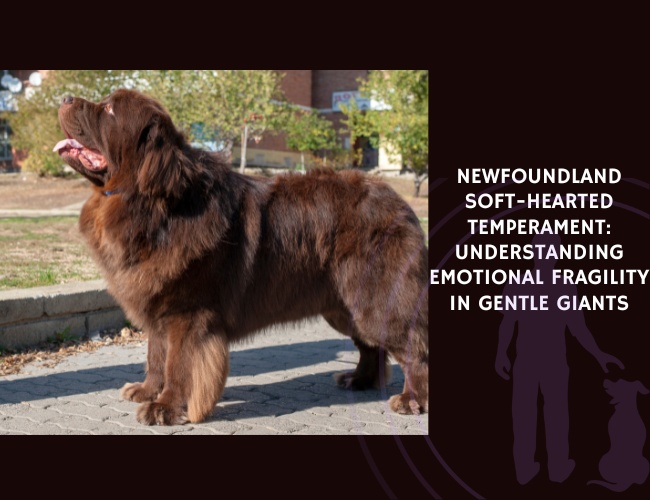
When you look into the soulful eyes of a Newfoundland, you’re witnessing centuries of selective breeding for one extraordinary purpose: to save lives with both strength and gentleness. These magnificent “gentle giants” carry within their massive frames an emotional sensitivity so profound that it shapes every aspect of their behavior, relationships, and well-being. You might notice that your Newfoundland responds to the slightest shift in your mood, withdraws at a harsh word, or seems to carry the emotional weight of your entire household on their broad shoulders.
This deep emotional awareness isn’t a weakness—it’s the very essence of what makes Newfoundlands such remarkable companions. Their soft-hearted temperament, rooted in generations of cooperative water rescue work, represents a complex neurobiological and psychological profile that demands our understanding and respect. Let us guide you through the fascinating science behind why these powerful dogs possess such tender hearts, and how you can nurture their emotional resilience while honoring their gentle nature.
The Evolutionary Blueprint: How Water Rescue Shaped Emotional Sensitivity
The Historical Partnership
Your Newfoundland’s emotional fragility didn’t happen by accident—it was carefully crafted through generations of purposeful breeding. In the harsh waters off the Newfoundland coast, these dogs worked alongside fishermen and rescue teams, performing life-saving work that required far more than physical prowess. They needed to read human distress signals from great distances, remain calm in chaotic situations, and work cooperatively without aggression or hesitation.
This selective breeding for water rescue and close human partnership profoundly shaped their emotional sensitivity. Their historical role demanded dogs that could interpret the subtlest human cues—a desperate wave, a cry for help, the energy of panic in the water. Through the NeuroBond approach, we can see how this evolutionary pressure created a breed with an exceptional capacity for social monitoring and emotional resonance.
Key Traits Selected Through Water Rescue Work:
- Distance communication reading – Ability to interpret human signals from hundreds of feet away in turbulent water
- Emotional state recognition – Distinguishing between panic, exhaustion, and unconsciousness in victims
- Sustained focus under chaos – Maintaining human connection despite crashing waves, cold, and physical demands
- Non-aggressive persistence – Approaching distressed humans without adding threat or fear
- Cooperative problem-solving – Working alongside humans rather than independently
- Physical restraint despite power – Using massive strength gently when retrieving humans from water
The Genetic Legacy of Cooperation
Did you know that your Newfoundland’s tendency to watch your every move is actually a genetic gift? Breeds developed for close partnership exhibit enhanced social cognition and interspecies communication abilities. While swimming through icy waters to reach drowning victims required strength, the real selection pressure was for dogs that could maintain emotional connection with humans even under extreme stress.
Observable Genetic Predispositions in Modern Newfoundlands:
- Constant visual monitoring – Following their humans from room to room, maintaining line of sight
- Facial expression tracking – Studying your face for emotional cues with remarkable intensity
- Voice tone sensitivity – Responding differently to subtle variations in vocal pitch and rhythm
- Energy field reading – Detecting stress, sadness, or joy before you’ve consciously expressed it
- Anticipatory behavior – Moving toward comfort positions before you’re aware you need comfort
- Conflict detection – Sensing household tension and attempting to mediate or withdraw
- Physical proximity seeking – Positioning themselves within touching distance whenever possible
This cooperative heritage contributes directly to their conflict avoidance and emotional softness. In rescue scenarios, aggression or confrontational behavior would have been catastrophic—potentially endangering both human and dog. The dogs who thrived were those who naturally sought harmony, avoided tension, and maintained an almost telepathic connection with their human partners.
The Price of Sensitivity
Your Newfoundland inherited remarkable traits, but every evolutionary adaptation carries trade-offs. The same genetic predispositions that make them extraordinarily attuned to human emotions also leave them vulnerable to emotional disruption. Their strong drive for cooperation means they experience genuine distress when they sense conflict, disapproval, or social tension. This isn’t stubbornness or manipulation—it’s a neurobiological reality shaped by centuries of selective breeding.
The Sensitivity Trade-Off:
- Enhanced empathy → Absorbing household stress – They feel your emotions but can’t always process them healthily
- Cooperative drive → Conflict avoidance at personal cost – May surrender resources or tolerate discomfort to maintain harmony
- Deep attachment capacity → Separation anxiety vulnerability – The flip side of loyalty is dependence
- Social monitoring skills → Hypervigilance to emotional shifts – Constant scanning creates mental fatigue
- Gentle temperament → Reduced stress resilience – Calm baseline but rapid overwhelm under pressure
- Human attunement → Environmental sensitivity – Notice and react to subtle changes others might miss 🧡
Neurobiology: The Science Behind the Gentle Giant
Parasympathetic Dominance and Emotional Vulnerability
When you observe your Newfoundland lounging calmly in the living room, you’re seeing their parasympathetic nervous system at work. This “rest and digest” system gives Newfoundlands their characteristic placid temperament and low-key baseline. Research into autonomic nervous system function reveals that baseline parasympathetic tone emerges from complex neural interactions between brain regions that regulate emotional states.
Signs of Strong Parasympathetic Dominance in Your Newfoundland:
- Default to resting positions – Settling quickly after activity rather than remaining aroused
- Slow, deep breathing patterns – Even respiratory rate during calm periods
- Relaxed muscle tone – Soft body posture without tension
- Lower heart rate baseline – Calm cardiovascular function at rest
- Easy digestive function – Regular appetite and elimination patterns
- Quick recovery from excitement – Returning to calm after play or greeting
- Preference for quiet activities – Choosing peaceful environments over stimulating ones
- Long, restorative sleep cycles – Spending significant portions of day in deep rest
But here’s the crucial insight: a strong parasympathetic bias creates a calm baseline but may also indicate weaker resilience to emotional disruption. Think of it like a pendulum at rest—stable and peaceful, but when disturbed, it swings more dramatically. Your Newfoundland’s nervous system, while typically stable, can shift rapidly into a “shutdown” state when confronted with threat cues, even mild ones.
This aligns with Polyvagal Theory, which explains how the vagus nerve regulates autonomic states. While safety cues quickly help your Newfoundland regulate and return to calm, threat cues—a raised voice, sudden movement, or tense household energy—can trigger a rapid withdrawal response. The Invisible Leash reminds us that awareness, not tension, guides the path, because forcing a Newfoundland through stress only deepens their emotional fragility.
The Neurochemical Symphony
Your Newfoundland’s gentle temperament emerges from a delicate balance of neurochemicals that shape their emotional experience:
Oxytocin: The Bonding Molecule
Often called the “love hormone,” oxytocin plays a central role in social bonding, trust, and empathy. Your Newfoundland likely has elevated oxytocin levels that support their intense attachment behaviors and deep desire for human connection. This neurochemical foundation explains why they want to be near you constantly, why they lean against your legs, and why separation feels genuinely painful to them.
Research demonstrates clear relationships between oxytocin levels and socio-emotional functioning across species. For Newfoundlands, this translates into an overactive CARE system—that fundamental emotional circuit associated with nurturing, maternal behavior, and social bonding. When their oxytocin-driven need for connection goes unmet, they experience genuine emotional distress.
Serotonin: The Mood Stabilizer
This neurotransmitter regulates mood, impulse control, and feelings of well-being. A well-balanced serotonin system contributes to your Newfoundland’s calm disposition and patient nature. However, stress, social tension, or disrupted routines can affect serotonin levels, potentially leading to anxiety, restlessness, or behavioral changes.
The hormonal background—including sex hormones, cortisol, and oxytocin—influences neurotransmitter systems like serotonin, dopamine, and GABA, affecting cognitive and socio-emotional functioning. This interconnected system means that emotional stress doesn’t just affect mood; it cascades through multiple neurochemical pathways.
Cortisol: The Stress Indicator
As the primary stress hormone, cortisol levels reveal how your Newfoundland responds to challenges. While their gentle temperament suggests lower baseline cortisol, their emotional fragility means cortisol spikes dramatically in response to perceived threats or social tension—and takes longer to return to baseline.
During separation, social tension, or unexpected environmental changes, cortisol levels surge rapidly. Even subtle cues of human displeasure can trigger behavioral stress signs like lip-licking, yawning, or withdrawal. This heightened and prolonged stress response contributes significantly to their emotional vulnerability. 🧠
Recognizing Neurochemical Imbalance in Your Newfoundland:
- Persistent restlessness or inability to settle – May indicate elevated cortisol or disrupted serotonin
- Loss of appetite or stress-related digestive issues – Suggests autonomic dysregulation
- Excessive attention-seeking or “clinginess” – Could reflect oxytocin system overdrive
- Reduced interest in previously enjoyed activities – May point to dopamine or serotonin disruption
- Overreaction to minor stressors – Indicates compromised stress hormone regulation
- Difficulty learning new behaviors – Suggests stress hormones interfering with cognitive function
- Sleep disturbances or hypervigilance – Reflects autonomic nervous system imbalance
- Repetitive behaviors or self-soothing patterns – May indicate attempts to self-regulate disrupted neurochemistry
Attachment Patterns: The Double-Edged Sword of Deep Bonding
Hyper-Attachment Tendencies
Are Newfoundlands more prone to hyper-attachment than other breeds? Absolutely. Their historical need for constant proximity to humans—whether on fishing boats, at dockside, or during rescue missions—has hardwired them for intense bonding. This isn’t simply preference; it’s a neurobiological imperative shaped by selective breeding.
You might notice your Newfoundland following you from room to room, positioning themselves to maintain visual contact, or showing distress when separated by even a closed door. This behavior stems from generations of dogs who needed to maintain constant awareness of their human partners to coordinate rescue efforts and respond instantly to commands.
Common Hyper-Attachment Behaviors:
- Shadow following – Moving with you throughout the house, even to the bathroom
- Door waiting – Positioning themselves at closed doors, monitoring for your emergence
- Physical contact seeking – Leaning, pressing, or resting body parts against you constantly
- Anxiety when you prepare to leave – Recognizing pre-departure cues (keys, shoes, coat) and showing stress
- Barrier frustration – Distress when visual or physical barriers separate you
- Preferential bonding – Extreme attachment to one person with distress when that person is unavailable
- Refusal to engage without you present – Won’t eat, play, or relax when alone
- Vigilant monitoring – Constant checking of your location and emotional state
The Neuroscience of Separation Distress
When you leave, your Newfoundland doesn’t just miss you—they experience genuine physiological distress. Their autonomic nervous system shifts into a stress state, cortisol levels rise, and they may pace, vocalize, or engage in destructive behaviors as outlets for their anxiety.
This intense separation response emerges from their overactive CARE system, which creates fragility when social needs are unmet. Unlike breeds developed for independent work, Newfoundlands were never meant to function autonomously. Their purpose was collaborative partnership, making solitude feel fundamentally wrong at a neurobiological level.
Dependency and Emotional Regulation
Your Newfoundland’s emotional regulation is significantly influenced by your presence and emotional state. Through co-regulation—where one individual’s nervous system helps stabilize another’s—your calm presence can literally shift your dog’s autonomic tone from stress to safety.
This dependency creates both opportunity and responsibility. When you maintain emotional predictability and calm energy, you help stabilize your Newfoundland’s nervous system. Conversely, when you’re stressed, anxious, or angry, your dog’s sensitive social monitoring system picks up these cues, triggering their own stress response. Moments of Soul Recall reveal how memory and emotion intertwine in behavior, particularly in a breed so attuned to relational history.
Building Secure Attachment
Not all attachment is unhealthy. The goal isn’t to create emotional distance but to foster secure attachment—where your Newfoundland trusts that separation is temporary and connection will be restored.
Secure Attachment Building Protocol:
- Gradual desensitization – Start with 10-second separations, building progressively to minutes then hours
- Departure ritual neutrality – Keep comings and goings calm and matter-of-fact without excessive emotion
- Independence rewards – Reinforce calm alone behavior with treats and praise
- Environmental enrichment – Provide puzzle toys, scent work, or long-lasting chews during short absences
- Practice departures without leaving – Put on coat and shoes, then sit down, teaching that cues don’t always mean departure
- Quality time investment – Ensure emotional needs are thoroughly met during together time
- Predictable schedules – Maintain consistent patterns so your dog can anticipate reunion
- Safe space creation – Establish comfortable areas where they can retreat and feel secure
- Co-regulation practice – Strengthen their ability to self-soothe by teaching relaxation skills when you’re present
Through consistent practice, you can help your Newfoundland develop confidence in your return, reducing their anxiety without diminishing their loving nature.
Behavioral Expression: Reading Your Newfoundland’s Emotional Language
Stress and Anxiety Signals
Your Newfoundland communicates their emotional state through subtle behavioral cues that you might initially miss. Learning to read these signals allows you to intervene before stress escalates:
Early Warning Signs:
- Excessive lip-licking or yawning (not related to tiredness)
- Turning their head away or averting eye contact
- Lowered body posture with tail tucked
- Seeking physical contact or hiding behind you
- Increased vocalization (whining, groaning)
- Restlessness or inability to settle
Escalated Stress Indicators:
- Panting when not hot or exercised
- Trembling or shaking
- Dilated pupils with “whale eye” (showing whites)
- Drooling or hypersalivation
- Destructive behavior focused on exit points
- House soiling in previously trained dogs
These behaviors aren’t misbehavior—they’re communication. Your Newfoundland is telling you their emotional state has shifted into overwhelm, and they need help returning to safety.

The Shutdown Response
Unlike more assertive breeds that might react to stress with aggression or intense flight responses, Newfoundlands often exhibit what Polyvagal Theory describes as the “shutdown” state. When overwhelmed, they may:
- Become unusually still or “frozen”
- Refuse food or treats they normally love
- Seem disconnected or unresponsive
- Show learned helplessness behaviors
- Withdraw to isolated spaces
This shutdown represents their nervous system’s attempt to cope with perceived threat by essentially “playing dead”—an ancient survival mechanism. Recognizing this state is crucial because pushing a dog in shutdown only deepens their distress.
Emotional Mirroring
You might notice your Newfoundland seems to absorb your emotions like a sponge. When you’re happy, they’re content. When you’re stressed, they become anxious. This emotional mirroring is a direct result of their heightened social monitoring abilities.
Their genetic predisposition for reading human emotional states means they constantly scan your facial expressions, body language, vocal tones, and energy levels. This isn’t anthropomorphizing—research confirms that dogs, particularly those bred for close human cooperation, possess sophisticated social cognition abilities that allow genuine emotional resonance.
This sensitivity makes them exceptional emotional support animals but also means you must actively manage your own emotional state around them. That balance between science and soul—that’s the essence of Zoeta Dogsoul. 🧡
Training Approaches: Nurturing Without Breaking
Why Traditional Methods Fail
If you’ve tried traditional obedience training with your Newfoundland and felt like something wasn’t right, trust that instinct. Methods based on dominance, corrections, or punishment are particularly harmful for emotionally sensitive breeds. Here’s why:
Neurobiological Mismatch:
Newfoundlands’ nervous systems are wired for cooperation through connection, not compliance through fear. When exposed to harsh corrections, their parasympathetic bias shifts rapidly into shutdown rather than learning. Their cortisol levels spike, their capacity for learning diminishes, and their trust in you erodes.
Attachment Disruption:
For a breed whose entire evolutionary purpose centered on human partnership, training methods that position you as an adversary create profound internal conflict. They want desperately to please you but cannot reconcile harsh treatment with their need for secure attachment.
Long-Term Emotional Damage:
While a more resilient breed might recover from occasional harsh handling, Newfoundlands often develop lasting emotional fragility. Single traumatic training experiences can create persistent anxiety, learned helplessness, or generalized fear responses that take months or years to resolve.
Positive Reinforcement: Working With Their Nature
Positive reinforcement training aligns perfectly with your Newfoundland’s neurobiological profile:
Building Confidence Through Success:
Reward-based training allows your Newfoundland to experiment, make choices, and experience success. Each correctly performed behavior followed by genuine praise or treats releases dopamine, creating positive emotional associations with learning.
Strengthening the Bond:
Training becomes a collaborative game rather than a test of will. This approach deepens your connection while teaching practical skills, satisfying both their need to work and their need for positive social interaction.
Practical Implementation:
- Use high-value food rewards for new behaviors
- Mark desired behaviors with a clicker or verbal marker (“yes!”)
- Keep training sessions short (5-10 minutes) to prevent mental fatigue
- End each session on a successful note
- Incorporate training into daily life rather than formal sessions only
- Celebrate small victories with genuine enthusiasm
The Power of Emotional Regulation Training
Beyond teaching commands, your Newfoundland needs explicit training in emotional regulation:
Capturing Calm:
Throughout the day, whenever you notice your Newfoundland resting quietly, mark and reward that behavior. This teaches them that calmness itself is valuable, not just action. Over time, they learn to default to calm states rather than arousal.
Mat Work and Place Training:
Teaching your Newfoundland to go to a designated mat or bed and settle provides them with a concrete strategy for self-regulation. This becomes their “safe spot” where they can retreat when feeling overwhelmed.
Impulse Control Games:
Activities like “wait” before meals, “leave it” with toys, and “stay” during exciting moments build their capacity to manage emotional arousal. These aren’t just obedience exercises—they’re emotional resilience training.
Duration Work:
Gradually extending the time your Newfoundland maintains calm behaviors builds emotional stamina. Start with seconds and progressively increase duration, always rewarding successful completion. 🧠
Gentle. Sensitive. Deep.
Softness carries history.
Your Newfoundland’s tender reactions reflect generations of selection for cooperative rescue work, where reading human emotion meant survival and shaped their profound emotional awareness.
Calm masks vulnerability.
A strong parasympathetic baseline gives them serenity, yet makes them more susceptible to sudden shutdown when faced with tension, conflict, or harsh energy in the home.



Connection builds resilience.
When guided with patience, warmth, and emotional clarity, their sensitivity becomes strength—transforming fragility into trust through steady, compassionate presence.
Environmental Management: Creating Emotional Safety
The Foundation of Predictability
Your Newfoundland’s emotional well-being depends heavily on environmental predictability. Their sensitive nervous system finds security in consistent routines, familiar patterns, and reliable responses from you.
Daily Routine Structure:
- Consistent feeding times
- Predictable exercise schedules
- Regular rest periods
- Established bedtime routines
- Reliable social interaction patterns
This predictability allows your Newfoundland’s nervous system to remain in a regulated state rather than constantly scanning for potential threats or changes. When they know what to expect, their baseline stress levels decrease significantly.
Physical Environment Considerations
Your home environment profoundly impacts your Newfoundland’s emotional state:
Safe Spaces:
Create dedicated areas where your Newfoundland can retreat when overwhelmed. This might be a quiet bedroom corner, a crate with the door left open, or a space under furniture. These zones should be off-limits to children and free from disturbance.
Sensory Management:
- Use white noise machines to buffer sudden sounds
- Provide comfortable, supportive bedding for their large frames
- Maintain consistent lighting patterns
- Minimize strong chemical odors from cleaning products
- Consider diffusing calming scents like lavender (with veterinary approval)
Climate Control:
With their thick double coats, Newfoundlands are particularly sensitive to heat. Overheating creates physical stress that compounds emotional sensitivity. Ensure cool resting areas, access to fresh water, and air conditioning during warm months.
🐾 Understanding Newfoundland Emotional Fragility 🧠
A Journey Through the Gentle Giant’s Sensitive Heart – From Evolutionary Roots to Daily Care
Phase 1: Evolutionary Blueprint
Understanding the Water Rescue Heritage
Historical Selection Pressures
Newfoundlands were bred for cooperative water rescue, requiring dogs who could read human distress signals from great distances while maintaining emotional connection under extreme stress. This created exceptional social monitoring abilities but also heightened emotional vulnerability.
What You’ll Notice
• Your Newfoundland watches your every move with intense focus
• They detect emotional shifts before you’re consciously aware
• They position themselves to maintain constant visual contact
• They show distress at household tension or conflict
Foundation Principle
Work with their cooperative heritage, not against it. Their sensitivity isn’t weakness—it’s the very trait that made them legendary rescue dogs. Honor it through partnership-based training.
Phase 2: Neurobiological Profile
The Science Behind the Gentle Heart
Parasympathetic Dominance
Their nervous system defaults to “rest and digest” mode, creating that characteristic calm baseline. However, this same system shifts rapidly into shutdown when confronted with threat cues—even mild ones like raised voices or tense energy.
Neurochemical Balance Signs
• Healthy: Consistent appetite, seeks proximity without panic, recovers from stress within hours
• Imbalanced: Persistent restlessness, loss of appetite, excessive clinginess, overreaction to minor stressors
Critical Warning
Stress hormones spike dramatically during separation or social tension and take longer to return to baseline than other breeds. Chronic stress creates lasting neurochemical imbalances that compound emotional fragility.
Phase 3: Hyper-Attachment Dynamics
The Double-Edged Sword of Deep Bonding
Why Separation Hurts
Elevated oxytocin levels drive intense bonding, while their overactive CARE system creates genuine physiological distress during separation. When you leave, their autonomic nervous system shifts into stress mode, cortisol rises, and they experience real emotional pain.
Hyper-Attachment Behaviors
• Shadow following throughout the house
• Door waiting and barrier frustration
• Anxiety when recognizing pre-departure cues
• Refusal to eat or relax when alone
• Preferential bonding to one person
Building Secure Attachment
Start with 10-second separations and build gradually. Practice departure cues without leaving. Create positive alone-time associations with special treats. Keep arrivals and departures calm and neutral. The goal is confidence in your return, not emotional distance.
Phase 4: Behavioral Communication
Learning to Read Your Newfoundland’s Emotional Language
Early Warning Signs
• Excessive lip-licking or yawning
• Turning head away or averting eye contact
• Lowered body posture with tucked tail
• Seeking physical contact or hiding
• Increased vocalization (whining, groaning)
Escalated Stress (Intervene Immediately)
• Panting when not hot or exercised
• Trembling or shaking
• Dilated pupils with “whale eye”
• Shutdown response (frozen, unresponsive)
• House soiling in previously trained dogs
Response Protocol
Remove the stressor if possible. Provide physical distance. Use calm, low-toned verbal reassurance. Avoid overly animated comfort that increases arousal. Model regulated breathing and stillness. Allow them to approach when ready.
Phase 5: Training Philosophy
Working With Their Sensitive Nature
Why Traditional Methods Fail
Correction-based training triggers rapid shutdown rather than learning. Their parasympathetic nervous system can’t process harsh feedback constructively. Single traumatic experiences create lasting anxiety that takes months or years to resolve.
Positive Reinforcement Protocol
• Use high-value food rewards for new behaviors
• Keep sessions short (5-10 minutes) to prevent mental fatigue
• Mark desired behaviors with clicker or verbal marker
• End on successful notes
• Celebrate small victories with genuine enthusiasm
Capture calm by rewarding rest throughout the day. Teach mat work for self-regulation. Practice impulse control games. Build duration work gradually. These aren’t just obedience exercises—they’re emotional resilience training that strengthens their capacity to manage arousal.
Phase 6: Creating Emotional Safety
Environmental Optimization for Sensitive Souls
Predictability Foundation
Consistent feeding times, predictable exercise schedules, regular rest periods, established bedtime routines, and reliable social interaction patterns allow their nervous system to remain regulated rather than constantly scanning for potential threats.
Physical Environment Setup
• Designated safe spaces for retreat
• White noise machines for sound buffering
• Comfortable, supportive bedding
• Climate control (especially cooling for thick coats)
• Minimized chemical odors from cleaning products
Social Environment Harmony
Newfoundlands are exquisitely attuned to human conflict. Household arguments, tension, or passive-aggressive interactions trigger stress responses. Maintaining household calm isn’t just good for humans—it’s essential for your dog’s emotional well-being.
Phase 7: Advanced Support Strategies
Building Emotional Resilience Through Therapeutic Practice
Co-Regulation Technique
Sit beside your Newfoundland during calm moments and consciously slow your breathing. Place your hand gently on their chest or side. Your regulated nervous system helps stabilize their emotional state through shared rhythm and presence.
Scent Anchoring Protocol
Associate calming scents (lavender, chamomile) with deliberately created calm periods over several weeks. Once established, the scent becomes a conditioned relaxation cue you can use during stressful situations like vet visits or storms.
Therapeutic Grooming Sessions
Slow, rhythmic brushing activates the parasympathetic nervous system. Set aside dedicated time when you’re calm and unhurried. Use long strokes following hair growth direction. Watch for deep relaxation signs—heavy breathing, drooping eyelids, muscle release.
Phase 8: Lifecycle Support
From Puppyhood Through Senior Years
Critical Socialization Window (3-14 Weeks)
Introduce diverse experiences positively at low intensities. Quality over quantity—a single frightening experience outweighs dozens of positive ones. Always prioritize emotional state over checking socialization boxes. Build confidence within their gentle temperament.
Adolescent Vulnerability (6-18 Months)
Neurological remodeling and hormonal fluctuations temporarily increase emotional fragility. Maintain routines, increase patience, avoid adding pressure. Previously mastered behaviors may deteriorate—this isn’t defiance, it’s neurodevelopment. This phase will pass.
Senior Care Adaptations (6+ Years)
Physical aging compounds emotional fragility. Joint pain increases stress baseline. Provide orthopedic bedding, ramps for access, pain management, enhanced emotional support. Senior Newfoundlands often become more dependent as vulnerability increases. Honor their lifetime of loyalty with gentle, patient care.
🔍 Emotional Sensitivity Across Contexts
Newfoundland vs. Other Giants
Newfoundland: High emotional sensitivity, rapid shutdown response, deep attachment dependency
Mastiff: Moderate sensitivity, stable but less monitoring
Great Dane: Lower sensitivity, more emotional independence
Stress Response Patterns
Shutdown (Newfoundland): Freeze, withdrawal, unresponsive
Flight Response: Escape attempts, pacing, hiding
Fight Response: Aggression, barking, defensive posturing
Attachment Styles
Secure: Confident in separations, greets calmly
Anxious (Common in Newfies): Distress at separation, over-monitoring
Avoidant: Indifferent to presence/absence
Training Approach Impact
Positive Reinforcement: Builds confidence, strengthens bond, enhances learning
Balanced/Correction: Triggers shutdown, erodes trust, creates lasting anxiety
Force-Free: Optimal for sensitive temperaments
Environmental Needs
High Sensitivity (Newfoundland): Requires predictable routines, calm household, minimal conflict
Moderate: Adapts to some chaos
Low: Thrives in varied environments
Recovery Timelines
Stress Event: 2-6 hours for cortisol normalization
Minor Trauma: Days to weeks with support
Severe Trauma: Months to years, may require professional intervention
⚡ Quick Reference: Emotional Support Formula
Daily Regulation = Predictable Routine + Physical Comfort + Emotional Connection + Minimal Stress Exposure
Crisis Management = Remove Stressor + Calm Presence + Co-Regulation + Time + Space
Building Resilience = Positive Experiences + Gradual Exposure + Consistent Support + Emotional Safety
Remember: Your emotional state directly influences theirs. Regulate yourself to help regulate them.
🧡 The Zoeta Dogsoul Perspective
Understanding Newfoundland emotional fragility through the NeuroBond lens reveals profound truth: their sensitivity isn’t a flaw to correct but a gift to honor. Through calm co-regulation, we stabilize their autonomic tone, transforming vulnerability into resilience. The Invisible Leash reminds us that true guidance emerges not from force but from awareness and emotional connection. In moments of Soul Recall—when your Newfoundland gazes into your eyes with complete trust—you witness the depth of partnership possible when emotional sensitivity meets informed understanding.
These gentle giants teach us that strength and softness aren’t opposites but complements. Their emotional fragility, properly supported through science-based care and heart-centered connection, becomes their greatest asset—a reminder that vulnerability requires courage, that deep feeling enables profound bonding, and that the strongest partnerships are built on mutual respect and emotional safety.
© Zoeta Dogsoul – Where neuroscience meets soul in dog training
Social Environment Optimization
The social dynamics in your household significantly affect your Newfoundland’s emotional state:
Household Harmony:
Newfoundlands are exquisitely attuned to human conflict. Arguments, tension, or even passive-aggressive interactions register on their sensitive emotional radar and trigger stress responses. Maintaining household calm isn’t just good for humans—it’s essential for your dog’s well-being.
Visitor Protocols:
While Newfoundlands are generally friendly, unexpected visitors or chaotic social situations can overwhelm them. Establish protocols where guests enter calmly, allow the dog to approach on their terms, and respect signs that they need space.
Multi-Pet Dynamics:
In multi-dog households, ensure your Newfoundland has access to resources without competition stress. Their conflict-avoidant nature means they may surrender resources to more assertive animals, potentially creating anxiety around food, toys, or resting spots.
Physical Health and Emotional Fragility: The Mind-Body Connection
How Physical Discomfort Amplifies Emotional Sensitivity
Pain, illness, or physical discomfort significantly lowers your Newfoundland’s threshold for emotional stress. When they’re physically uncomfortable, their capacity for emotional regulation diminishes, making them more reactive to stressors they would normally handle well.
Common Physical Issues in Newfoundlands:
- Hip and elbow dysplasia causing chronic pain
- Cruciate ligament problems affecting mobility
- Heart conditions (dilated cardiomyopathy)
- Hypothyroidism affecting energy and mood
- Skin conditions and hot spots causing irritation
- Ear infections from their floppy ears
- Bloat risk due to deep chest conformation
Each of these conditions creates physical stress that cascades into emotional vulnerability. Regular veterinary care, proactive health monitoring, and prompt treatment of any issues are essential components of emotional wellness management.
The Gut-Brain Axis
Emerging research highlights the profound connection between gastrointestinal health and emotional regulation. The vagus nerve, central to Polyvagal Theory, creates a direct communication pathway between the gut and brain. Dysregulation of hypothalamic-vagal neurocircuits can lead to altered brain-gut responses to stress.
For your Newfoundland, this means:
- Digestive issues may manifest as anxiety or behavioral changes
- Stress can trigger gastrointestinal symptoms
- Diet quality affects not just physical but emotional health
- Probiotic supplementation may support emotional regulation
Nutritional Considerations for Emotional Wellness:
- High-quality proteins supporting neurotransmitter production
- Omega-3 fatty acids for brain health and inflammation reduction
- Complex carbohydrates providing steady energy without blood sugar spikes
- Appropriate portion control preventing obesity-related stress
- Consistent feeding schedules supporting routine and predictability
Exercise Balance: The Goldilocks Principle
Your Newfoundland needs exercise, but the amount and intensity must be carefully calibrated. Too little exercise leads to pent-up energy that manifests as anxiety or destructive behavior. Too much exercise, particularly in young dogs with developing joints, creates physical stress that amplifies emotional fragility.
Optimal Exercise Approach:
- Moderate daily walks (20-40 minutes for adults)
- Swimming sessions when available (low-impact, highly enjoyable)
- Gentle play sessions that don’t involve high-impact jumping
- Mental enrichment activities that satisfy working drive
- Avoid forced exercise in hot weather
- Watch for signs of fatigue and respect their limits
Exercise should leave your Newfoundland pleasantly tired, not exhausted. That satisfied, relaxed state after appropriate activity supports emotional regulation and quality sleep. 🧡
Therapeutic Interventions: Advanced Strategies for Emotional Resilience
Co-Regulation: Becoming Your Dog’s Emotional Anchor
Co-regulation represents one of the most powerful tools for managing your Newfoundland’s emotional fragility. This practice involves consciously using your own regulated nervous system to help stabilize your dog’s emotional state.
Practical Co-Regulation Techniques:
Synchronized Breathing:
Sit beside your Newfoundland during calm moments and consciously slow your breathing. Place your hand on their chest or side, maintaining gentle contact. Many dogs will naturally begin matching your respiratory rate, triggering their parasympathetic nervous system.
Calm Presence Protocol:
When your Newfoundland shows stress signals, resist the urge to become animated or overly comforting. Instead, model calm confidence. Sit or stand in a relaxed posture, breathe normally, and use soft, low-toned verbal reassurance. Your regulated state provides them with safety cues.
Touch as Regulation:
Slow, rhythmic petting activates the parasympathetic nervous system. Use long, gentle strokes along their body, avoiding overstimulating areas like the head or face during stress. This tactile regulation can shift their autonomic tone from threat response to safety.
Through the NeuroBond approach, we understand that calm co-regulation doesn’t just soothe momentarily—it actually strengthens your Newfoundland’s capacity for self-regulation over time. Each successful co-regulation experience becomes a template their nervous system can access independently.
Scent Anchoring for Emotional Stability
Scent anchoring creates powerful emotional associations that help your Newfoundland self-regulate during stressful situations.
Implementation Protocol:
- Choose a distinctive, calming scent (lavender, chamomile, or specific essential oils approved by your veterinarian)
- During deliberately created calm periods—after exercise, during massage, or when your dog is naturally relaxed—introduce the scent
- Consistently pair the scent with positive, calm experiences over several weeks
- Once established, the scent becomes a conditioned relaxation cue you can use during stressful situations (vet visits, storms, travel)
This technique works because the olfactory system has direct connections to the limbic system—the emotional center of the brain. Scent triggers emotional responses more rapidly than other sensory inputs, making it a powerful tool for emotional regulation.
Therapeutic Grooming Sessions
Beyond hygiene, grooming becomes therapeutic intervention when approached mindfully:
Slow Tactile Grooming Protocol:
- Set aside dedicated time when you’re calm and unhurried
- Create a quiet environment free from distractions
- Use slow, rhythmic brush strokes following hair growth direction
- Pay particular attention to areas where they hold tension (shoulders, hindquarters)
- Incorporate gentle massage of muscle groups
- Maintain soft verbal communication throughout
- Watch for signs they’re entering deep relaxation (heavy breathing, drooping eyelids, muscle release)
These sessions provide multiple benefits: tactile stimulation activates the parasympathetic nervous system, physical touch strengthens bonding, the predictable routine provides security, and the focused attention satisfies their social needs. Regular therapeutic grooming reduces baseline stress levels and builds positive associations with handling.
Enrichment Activities That Calm Rather Than Excite
Not all enrichment is created equal. For your emotionally fragile Newfoundland, activities should engage their mind without triggering over-arousal:
Scent Work:
Hide treats or toys around your home or yard, encouraging your dog to use their nose to locate them. This engages their natural seeking drive in a mentally stimulating but inherently calming activity. Unlike chase games, scent work requires focus and methodical searching, promoting calm concentration.
Puzzle Feeders:
Interactive feeding toys transform mealtime into mental exercise. Start with simple puzzles and gradually increase complexity. The cognitive engagement satisfies their working breed drive while the food reward creates positive associations. Successful problem-solving releases dopamine without the stress of competition or failure.
Snuffle Mats:
These textured mats hide kibble or treats within fabric layers, encouraging dogs to forage by scent. The activity mimics natural foraging behaviors, is inherently calming, and can occupy your Newfoundland for extended periods without overstimulation.
Gentle Trick Training:
Teaching calm tricks like “chin rest,” “touch,” or “find it” provides mental stimulation within low-arousal contexts. Focus on behaviors that promote stillness and focus rather than high-energy performances.
Each of these activities fulfills the Affective Neuroscience concept of engaging the CARE and SEEKING systems in healthy, regulated ways. 🧠
Early Development: Building Resilience From Puppyhood
The Critical Socialization Window
Your Newfoundland’s emotional resilience is significantly shaped during the critical socialization period (approximately 3-14 weeks of age). During this window, puppies are neurologically primed to form positive associations with novel experiences, but they’re also highly vulnerable to negative impressions that can create lasting fear responses.
Optimal Socialization Principles:
Positive Exposure Protocol:
Introduce puppies to diverse experiences—various surfaces, sounds, people of different ages and appearances, other animals, car rides, and handling—but always ensure these exposures are positive. Watch for stress signals and stop before the puppy becomes overwhelmed.
The Rule of Gradual Introduction:
Present new stimuli at low intensities first. For sound exposure, play recordings quietly before gradually increasing volume. For meeting people, start with calm, gentle individuals before introducing more energetic interactions.
Quality Over Quantity:
A single frightening experience can outweigh dozens of positive ones. Better to have ten genuinely positive exposures than fifty that include three scary moments. Always prioritize your puppy’s emotional state over checking socialization boxes.
Puppy Class Selection:
Choose programs that emphasize positive experiences over forced interactions. Avoid facilities where puppies are overwhelmed, corrections are used, or stress signals are ignored. The best programs allow puppies to approach new experiences at their own pace with plenty of breaks.
Building Confidence Without Compromising Gentleness
The goal of early development isn’t to create boldness or diminish your Newfoundland’s gentle nature—it’s to build secure confidence within their natural temperament:
Confidence-Building Activities:
- Allow puppies to explore novel objects independently, approaching when ready
- Provide stable surfaces of different textures to navigate (wood, carpet, grass, concrete)
- Create small obstacles to navigate (low steps, tunnels made from boxes)
- Practice gentle handling of all body parts (ears, paws, tail, mouth)
- Reward brave behavior (approaching new objects, greeting strangers) without forcing
Preserving Gentleness:
- Never punish sensitivity or fearful responses
- Avoid rough play that teaches arousal over calm
- Model and reward gentle interactions with all living beings
- Use soft verbal communication rather than loud, excited tones
- Teach “soft mouth” when taking treats or toys
Establishing Healthy Independence:
While Newfoundlands are naturally attached, early experiences can either exacerbate hyper-attachment or support secure attachment:
- Practice short separations during puppyhood (leaving room for seconds, then minutes)
- Create positive alone-time associations (special treats available only when alone)
- Avoid excessive attention during every waking moment
- Teach “place” or “mat” behaviors that create physical distance while maintaining connection
- Ensure puppies experience brief periods with trusted others, not exclusively one person
The Impact of First Experiences
Your Newfoundland puppy’s first experiences with grooming, veterinary care, and training set templates for future encounters:
First Veterinary Visit:
Request a “happy visit” where the puppy enters the clinic, receives treats, gets gentle attention from staff, and leaves—no procedures. Subsequent visits should include extensive positive reinforcement, treats throughout examinations, and breaks if stress escalates.
First Grooming Experience:
Begin nail trims, ear cleaning, and brushing at home with minimal restraint, high-value treats, and brief sessions. Never force puppies to tolerate grooming—build duration gradually. Consider professional groomers who specialize in sensitive dogs and allow extra time.
First Training Class:
The first structured training experience shapes your puppy’s attitude toward learning. Select instructors who use exclusively positive methods, allow puppies to work at their own pace, and understand breed-specific sensitivities.
Every positive first experience builds a foundation for resilience. Every negative one creates an obstacle that requires significantly more effort to overcome.
The Adolescent Challenge: Supporting Emotional Development During Maturity
Understanding Adolescent Vulnerability
Between approximately 6-18 months, your Newfoundland enters adolescence—a period of dramatic physical, neurological, and hormonal changes that can temporarily increase emotional fragility:
Neurological Remodeling:
The adolescent brain undergoes significant restructuring, particularly in areas governing emotional regulation and impulse control. This makes previously confident puppies suddenly more reactive, sensitive, or anxious.
Hormonal Fluctuations:
Sexual maturation brings surges of hormones that affect neurotransmitter systems. These changes can temporarily destabilize the neurochemical patterns supporting their gentle temperament, potentially increasing reactivity, anxiety, or stress responses.
Physical Discomfort:
Rapid growth can create joint discomfort or growing pains. Remember—physical discomfort amplifies emotional sensitivity. An adolescent who seems suddenly more anxious might actually be experiencing physical pain.
Social Awareness Development:
Adolescent dogs become more aware of social hierarchies, potential threats, and environmental dangers. This adaptive developmental stage can manifest as new fears or anxieties about previously tolerated situations.
Supporting Adolescent Newfoundlands
During this challenging period, consistency becomes more important than ever:
Maintain Routines:
When internal experiences feel chaotic, external predictability provides essential stability. Keep feeding, exercise, and sleep schedules consistent.
Increase Patience:
Behaviors your Newfoundland mastered as a puppy may temporarily deteriorate. This isn’t defiance—it’s neurodevelopment. Respond with patience, returning to foundational training if necessary.
Provide Extra Reassurance:
Your adolescent Newfoundland needs additional emotional support during this vulnerable period. Increase co-regulation time, maintain calm leadership, and offer reassurance when they show uncertainty.
Avoid Adding Pressure:
Resist the temptation to push through fears or regression with “tough love.” Pressure during neurological remodeling can create lasting anxiety patterns. Allow them to progress at their own pace.
Monitor Physical Health:
Schedule veterinary checkups to rule out pain or discomfort contributing to behavioral changes. Address any physical issues promptly.
Consider Temporary Management:
If your adolescent becomes suddenly fearful of specific situations (crowded places, new dogs, loud noises), temporarily avoid these triggers while working on building confidence through graduated exposure in controlled settings.
This phase will pass. The neurobiological changes stabilizing during adolescence will eventually support greater emotional maturity—if we support rather than force our dogs through this developmental stage. 🧡
Living With a Soft-Hearted Giant: Lifestyle Considerations
Is a Newfoundland Right for Your Household?
Before welcoming a Newfoundland or if you’re evaluating your current situation, consider whether your lifestyle supports their emotional needs:
Ideal Newfoundland Households:
- Calm, predictable home environments
- Families committed to daily interaction and companionship
- Homes where someone is present most of the time
- Patient owners willing to work with sensitivity rather than against it
- Space for a very large dog (both physically and emotionally)
- Financial resources for veterinary care, quality food, and grooming
- Understanding that emotional support goes both directions
Challenging Newfoundland Situations:
- Chaotic households with constant activity and noise
- Families with aggressive communication styles or frequent conflict
- Homes where the dog must be alone 8+ hours daily
- First-time dog owners unprepared for specialized needs
- Apartments without adequate cool space or outdoor access
- Households with very young children (due to size, not temperament)
- Owners expecting a “tough” working dog rather than a gentle companion
The Commitment of Emotional Caretaking
Owning a Newfoundland means accepting responsibility for another being’s emotional well-being. This goes beyond providing food, shelter, and exercise:
Daily Emotional Needs:
- Quality time involving physical contact and attention
- Opportunities for cooperative activities
- Monitoring for stress signs and responding appropriately
- Maintaining your own emotional regulation
- Creating predictable routines and environments
- Providing reassurance during stressful situations
Long-Term Considerations:
- Newfoundlands live approximately 8-10 years
- Their size and health issues often require significant veterinary expenses
- Joint problems may limit activities as they age
- Their emotional sensitivity persists throughout life
- Commitment to positive training and management never ends
The Rewards of Understanding
When you honor your Newfoundland’s emotional sensitivity rather than fighting against it, something remarkable emerges. These gentle giants become not just pets but genuine emotional partners—beings who share your joys and sorrows, who anchor you in difficult times, and who remind you daily that strength and gentleness aren’t opposites but complements.
The relationship you build through NeuroBond principles—based on emotional resonance, calm co-regulation, and mutual respect—creates a profound connection that transcends typical pet ownership. Your Newfoundland’s soft heart, properly understood and supported, becomes their greatest gift to you. 🧠
Senior Care: Supporting Aging Newfoundlands Emotionally
How Aging Affects Emotional Sensitivity
As your Newfoundland enters their senior years (typically around 6-7 years old), physical aging compounds their emotional fragility:
Physical Changes Impact Emotions:
- Joint pain from arthritis increases stress baseline
- Decreased mobility creates frustration and anxiety
- Sensory decline (vision, hearing) reduces environmental awareness
- Cognitive decline may affect emotional regulation
- Reduced stamina means less capacity to cope with stress
Increased Dependence:
Senior Newfoundlands often become more emotionally dependent as physical limitations make them more vulnerable. They may show increased separation anxiety, greater need for reassurance, or heightened sensitivity to household changes.
Adapting Your Approach
Supporting your senior Newfoundland’s emotional wellness requires thoughtful adaptations:
Physical Comfort Management:
- Orthopedic bedding supporting large, heavy frames
- Ramps or steps for accessing furniture or vehicles
- Non-slip flooring to prevent falls that increase anxiety
- Climate control ensuring coolness without cold that aggravates joints
- Regular pain management as prescribed by your veterinarian
Environmental Modifications:
- Increased lighting to compensate for vision decline
- Consistent placement of food, water, and bedding
- Removal of obstacles that might be difficult to navigate
- Creating multiple resting areas so they don’t need to travel far
Activity Adjustments:
- Shorter, more frequent walks rather than long outings
- Swimming or hydrotherapy for low-impact exercise
- Mental stimulation through scent work or gentle training
- Allowing more rest time without guilt
Enhanced Emotional Support:
- More frequent check-ins and reassurance
- Patience with slowing responses or confusion
- Maintaining routines with extra consistency
- Physical contact through gentle massage or grooming
- Co-regulation sessions to manage age-related anxiety
End-of-Life Considerations
Perhaps the most difficult aspect of loving a Newfoundland is their relatively short lifespan. As their physical decline accelerates, you face challenging decisions about quality of life:
Quality of Life Assessment:
- Are they still experiencing joy in activities they love?
- Is pain adequately managed?
- Can they stand, walk, and eliminate without excessive difficulty?
- Do they still seek social interaction and show interest in surroundings?
- Are more good days than bad days?
Emotional Preparation:
Your Newfoundland’s emotional sensitivity means they likely sense when their time is near. Maintaining your calm presence, even through your own grief, provides them final comfort. The emotional regulation you practiced throughout their life becomes your final gift—holding space for their peaceful transition.
These gentle giants teach us profound lessons about love, vulnerability, and the strength found in gentleness. Honoring their soft hearts through their final days completes the sacred partnership you built together. 🧡
Conclusion: The Gift of Understanding
Your Newfoundland’s soft-hearted temperament represents not a flaw to be corrected but a profound evolutionary adaptation to be honored and understood. These gentle giants carry within their DNA the legacy of countless generations bred for cooperative partnership, emotional attunement, and life-saving compassion.
Their emotional fragility emerges from the same neurobiological foundations that make them extraordinary companions—heightened oxytocin driving deep attachment, sensitive stress response systems attuned to human emotions, and parasympathetic dominance creating their characteristic calm. Understanding these mechanisms allows you to work with their nature rather than against it.
Through NeuroBond principles emphasizing calm co-regulation, emotional predictability, and secure attachment, you can nurture your Newfoundland’s resilience while preserving their gentle essence. The Invisible Leash reminds us that true guidance comes through awareness and connection, not force. Moments of Soul Recall—when your Newfoundland gazes into your eyes with complete trust—reveal the depth of connection possible when emotional sensitivity is met with informed understanding.
These magnificent dogs ask for our patience, consistency, and emotional presence. In return, they offer unwavering loyalty, profound empathy, and a reminder that strength can be gentle and power can be soft. They teach us that vulnerability isn’t weakness but courage—the courage to feel deeply, connect authentically, and love completely.
By understanding the science behind their soft hearts, implementing training approaches aligned with their neurobiology, creating environments that support their emotional wellness, and committing to their specialized needs, you honor the evolutionary gift these dogs represent. That balance between science and soul, between strength and gentleness, between power and compassion—that’s the essence of Zoeta Dogsoul.
Your Newfoundland’s gentle heart is their greatest strength. When you understand, respect, and nurture that tenderness, you unlock a relationship of profound depth—a partnership built not on dominance but on mutual respect, not on compliance but on cooperation, not on control but on connection.
That’s what these gentle giants have taught humans for generations. That’s what they’ll continue teaching anyone wise enough to listen with both head and heart. 🧡
That’s what these gentle giants have taught humans for generations. That’s what they’ll continue teaching anyone wise enough to listen with both head and heart. 🧡
The journey with a soft-hearted Newfoundland isn’t always easy, but it’s always meaningful. Their emotional sensitivity, properly understood and supported, transforms from challenge into gift—reminding us daily that the strongest connections are built on gentleness, patience, and profound mutual understanding.
Every tail wag tells a story. Every soulful gaze carries meaning. Every gentle lean against your leg speaks volumes about trust, attachment, and the remarkable emotional depth these magnificent dogs possess. Listen with your heart, respond with understanding, and together you’ll build something extraordinary.










