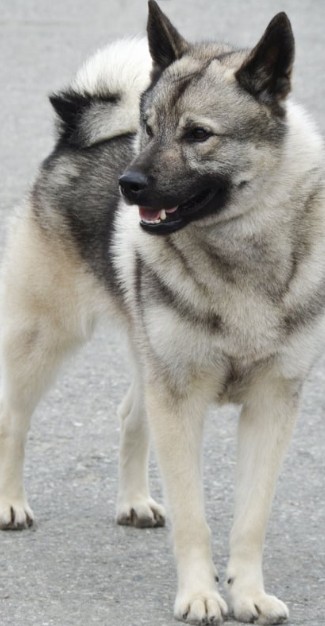
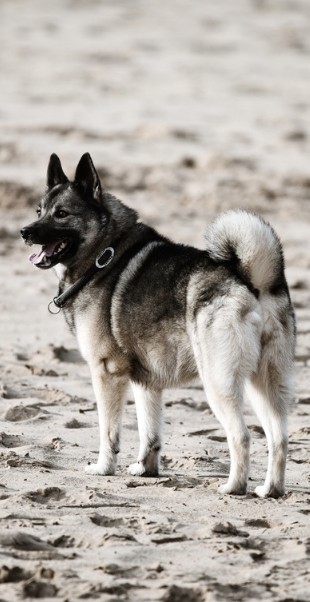
When your Norwegian Elkhound announces every passing car, neighborhood dog, or rustling leaf, you might wonder if you’ve welcomed a furry alarm system into your home. But here’s what most owners don’t realize: that persistent barking isn’t stubbornness or bad behavior—it’s centuries of genetic programming speaking through your companion. Your Elkhound is doing exactly what generations of breeding designed them to do: alert, protect, and communicate with unwavering dedication.
Understanding the Norwegian Elkhound’s vocal nature and boundary-focused behavior requires us to look beyond surface-level training fixes. We need to explore the fascinating intersection of ancient hunting heritage, neurobiological wiring, and the emotional landscape that shapes every bark, every perimeter check, and every moment of vigilant watching. This isn’t about silencing your dog—it’s about understanding their language and creating harmony between their ancestral drives and your modern lifestyle.
Let’s journey together through the remarkable world of Elkhound behavior, where science meets instinct, and where your partnership can transform challenge into profound connection 🧡
The Ancient Blueprint: Breed Heritage and Genetic Predispositions
Historical Function and Baseline Vocality
Picture the Norwegian forests of centuries past: thick snow, towering pines, and the silent pursuit of moose through terrain where visibility drops to mere meters. In this environment, the Norwegian Elkhound developed a remarkable skill—constant vocal communication with hunters during pursuit. This wasn’t occasional barking; it was sustained, purposeful vocalization that could last for hours as the dog tracked and held game at bay.
Your Elkhound’s tendency to bark isn’t a behavioral flaw—it’s a deeply ingrained functional trait that served as a lifeline between hunter and hound. When your dog vocalizes at seemingly minor triggers, they’re expressing a genetic imperative that’s been refined over countless generations. This endurance alerting shaped not just their vocal repertoire, but their entire approach to communication and environmental monitoring.
The historical selection process favored dogs who could:
- Maintain vocal communication over extended periods without fatigue
- Adjust bark intensity and pattern based on the urgency of the situation
- Alert to movement, scent changes, and potential threats with precision
- Work independently while remaining emotionally connected to their handler
Understanding this heritage helps you recognize that your Elkhound’s vocal nature exists on a different baseline than most companion breeds. Through the NeuroBond approach, you can honor this heritage while establishing communication patterns that work for modern life.
Genetic Predisposition to Perimeter Awareness
Beyond vocality, Elkhounds carry another powerful genetic signature: heightened perimeter awareness. In their ancestral role, these dogs didn’t just track game—they monitored vast territories, assessed boundaries, and maintained constant vigilance over their domain. This wasn’t learned behavior; it was instinctive spatial cognition that kept both dog and hunter safe in unforgiving wilderness.
Modern Elkhounds inherit this same drive for boundary-checking and perimeter monitoring. When your dog patrols the fence line, checks windows repeatedly, or positions themselves where they can survey the entire yard, they’re engaging in ancient sentinel behavior. Their brain is wired to map zones of responsibility and monitor them with remarkable consistency.
This genetic predisposition manifests in several distinctive ways:
- Preference for elevated positions or locations with wide visual fields
- Systematic checking of boundaries, often following the same patrol routes
- Heightened response to changes in familiar territory
- Difficulty relaxing when perimeter access is unclear or ambiguous
The neurobiological foundation of this behavior involves sophisticated cognitive mapping—your Elkhound isn’t just seeing their environment, they’re maintaining a detailed mental map of “normal” versus “noteworthy” within their perceived territory.
Neurobiological Pathways in Alert Behavior
The Elkhound’s remarkable alertness isn’t simply enthusiasm or anxiety—it’s rooted in specific neurobiological pathways that process threat, novelty, and territorial information differently than in non-sentinel breeds. Research suggests that heightened vigilance and boundary mapping link to stronger amygdala activation and accelerated threat appraisal mechanisms.
The amygdala, your dog’s emotional processing center, acts as a constant scanner for potentially significant stimuli. In Elkhounds, this system appears calibrated for lower thresholds and faster responses. A sound that might register as background noise to a Labrador can trigger immediate alert protocols in an Elkhound brain.
Equally important is the dopamine SEEKING system—the neurological pathway that drives exploration, investigation, and motivated behavior. When your Elkhound detects something novel in their territory, dopamine release creates a powerful drive to investigate and respond. This isn’t anxiety; it’s motivated vigilance, and it feels inherently rewarding to your dog.
The interplay between these systems creates what we observe as characteristic Elkhound alertness:
- Fast processing speed for novel stimuli
- Strong motivation to investigate and respond
- Difficulty disengaging once alert protocols activate
- Emotional arousal that builds with sustained stimulation
Understanding these pathways helps explain why simple suppression techniques often fail. You’re not addressing learned behavior—you’re working with fundamental neurological architecture that requires thoughtful channeling rather than blanket inhibition 🧠
The Language of Alert: Vocalization Mechanisms
Triggers for Barking
Your Elkhound’s barking doesn’t happen randomly—it follows predictable patterns driven by specific triggers that their ancestral role primed them to notice. Identifying these triggers is the first step toward understanding and managing vocal behavior effectively.
Movement-Based Triggers
Movement captures Elkhound attention with remarkable consistency. Whether it’s a person walking past your property, a squirrel darting across the yard, or even wind-blown debris, motion activates ancient tracking instincts. Their visual system evolved to detect subtle movement across significant distances, meaning they often notice motion you haven’t consciously registered.
Scent Changes
The olfactory world that Elkhounds inhabit far exceeds human perception. Scent changes—a new dog in the neighborhood, unfamiliar human visitors lingering near your property, or even weather pattern shifts—can trigger vocalization. They’re not barking at nothing; they’re responding to olfactory information you simply cannot access.
Distant Noises
Elkhounds possess acute hearing calibrated for detecting sounds across Norwegian wilderness. In suburban environments, this translates to responding to noises several houses away, through walls, or at frequencies humans barely perceive. The dog three streets over barking, distant sirens, or construction noise can all register as territory-relevant information.
Perceived Boundary Breaches
Perhaps most significant are perceived boundary breaches—moments when someone or something crosses an invisible line your Elkhound has established as the perimeter of their responsibility zone. This might be the sidewalk adjacent to your property, the driveway entrance, or even the visual boundary they can see from a window.
The Invisible Leash principle applies powerfully here: your Elkhound is constantly monitoring whether their territory remains secure, guided not by physical boundaries alone but by emotional and perceptual boundaries that may not align with your property lines.
Function of Vocality
Understanding why your Elkhound barks—the functional purpose behind the behavior—transforms how you approach management strategies. Vocality in this breed serves multiple interconnected functions.
Communication
At its core, barking functions as communication—information sharing between dog and handler. Your Elkhound is telling you something important has entered their awareness, and they expect acknowledgment or collaborative response. In their ancestral role, this communication was essential; hunters depended on bark patterns to understand game location and behavior without visual contact.
Vigilance Expression
Barking also serves as vigilance expression—a motor output for the cognitive and emotional processes of monitoring and assessing territory. The act of vocalizing helps organize and release the arousal generated by constant environmental scanning.
Frustration Relief
When your Elkhound cannot access something they’ve detected—a dog walking past the fence, sounds from behind closed doors, movement they can see but not investigate—vocalization provides frustration relief. This is particularly pronounced in dogs with strong working drives who lack appropriate outlets.
Arousal Discharge
In breeds selected for endurance alerting, barking frequently functions as arousal discharge—a way to release accumulated emotional and physical energy. This is why vocal intensity often escalates during periods of under-stimulation or when multiple triggers occur in succession.
The key insight: your Elkhound’s barking isn’t one-dimensional. A single vocalization episode might serve all four functions simultaneously, which explains why simple “stop barking” commands often prove ineffective. You’re asking your dog to suppress a complex, multi-purpose behavior without offering alternative pathways for those same functions.

Emotional Modulation of Vocal Intensity
The emotional landscape underlying your Elkhound’s vocal behavior significantly influences both intensity and frequency. Recognizing these emotional modulators helps you identify when barking signals excitement versus stress, and when intervention should focus on emotional regulation rather than vocal suppression.
Excitement and Anticipatory Arousal
High-energy positive emotions amplify vocal behavior dramatically. The mail carrier’s predictable arrival, preparation for walks, or reunion after absence can trigger intense vocalization driven by excitement and anticipatory arousal. The barking sounds different here—higher pitched, more rapid, often accompanied by bouncing and tail wagging.
Stress and Anxiety
Chronic stress or situational anxiety alters vocal patterns toward sustained, lower-pitched vocalizations. If your Elkhound experiences ongoing uncertainty about their territory, inadequate mental stimulation, or prolonged separation from their bonded humans, stress-driven barking may develop. This often manifests as excessive alerting to minor stimuli or difficulty settling even when obvious triggers are absent.
Tension and Frustration
Barrier frustration—the inability to access detected stimuli—creates tension that directly fuels vocal intensity. This is particularly evident in Elkhounds with fence line access or window views of busy streets. The emotional experience of “there’s something important happening and I cannot engage with it properly” generates significant frustration that seeks release through vocalization.
Research demonstrates that emotional states powerfully modulate motor outputs, including vocalization. When excitement and tension run high, vocal behavior intensifies; during focused activity or calm engagement, vocalization naturally attenuates.
This understanding reveals a crucial training insight: managing your Elkhound’s emotional baseline often proves more effective than addressing barking directly. Through Soul Recall—those moments when emotional memory and present experience align—you can help your dog access calmer states that naturally reduce vocal over-arousal.
Mapping the Territory: Boundary Awareness and Spatial Processing
Enhanced Spatial Mapping and Zone-Monitoring
Norwegian Elkhounds demonstrate spatial cognition that extends well beyond typical companion breeds. Their cognitive mapping abilities allow them to maintain detailed mental representations of their territory, including normal patterns, regular visitors, typical sound profiles, and acceptable versus unacceptable boundary approaches.
Cognitive Mapping Complexity
Your Elkhound’s brain constructs and constantly updates a multi-sensory map of their environment. This map includes:
- Visual boundaries and key observation points
- Auditory expectations for different times and locations
- Olfactory profiles of regular versus novel scents
- Temporal patterns of typical activity in their zone
This sophisticated mapping enables them to detect subtle deviations from normal with remarkable precision. What appears like random barking often represents your dog noticing something that violates their established territorial map—a car parked in an unusual location, the neighbor’s routine altered by 30 minutes, or the absence of expected sounds.
Zone-Monitoring Behavior
True sentinel breeds don’t just react to immediate stimuli; they engage in active zone-monitoring—systematic patrol and surveillance of perceived responsibility areas. You might notice your Elkhound following predictable patrol routes, checking the same locations in sequence, or positioning themselves strategically to maximize surveillance potential.
This behavior manifests as:
- Regular perimeter checks without obvious external triggers
- Preference for locations offering maximum territorial visibility
- Resistance to being confined away from monitoring positions
- Immediate investigation of any zone-area changes
The drive for zone-monitoring exists independently of external reinforcement. Your Elkhound monitors because their genetic programming compels them to maintain territorial awareness, not because they’ve learned it brings rewards.

Environmental Predictability and Boundary Reactivity
The predictability or unpredictability of your home environment dramatically influences boundary reactivity levels. Elkhounds in highly variable environments—busy urban streets, homes with frequent unexpected visitors, or properties adjacent to unpredictable activity—often display elevated boundary reactivity compared to those in stable, predictable settings.
Impact of Visual Access
Windows, glass doors, and fence designs that permit unrestricted visual monitoring create constant stimulation for sentinel-minded dogs. Every passing pedestrian, delivery vehicle, or neighborhood dog becomes a potential boundary event requiring assessment and response. While visual access satisfies curiosity, it simultaneously increases trigger exposure exponentially.
Neighborhood Noise Dynamics
Acoustic environments shape your Elkhound’s reactivity patterns. Consistent background noise can habituate over time, but irregular, unpredictable sounds—construction one day but not the next, varying delivery schedules, or sporadic neighborhood gatherings—maintain heightened vigilance. Your dog cannot relax into a predictable pattern when the environment refuses to establish one.
Open Yard Versus Structured Space
Interestingly, completely open yards sometimes generate more boundary anxiety than well-structured spaces. Without clear perimeter definition, your Elkhound may extend their perceived responsibility zone uncomfortably far, attempting to monitor areas beyond reasonable control. This creates chronic low-grade stress as they try to manage an impossibly large territory.
The relationship between environmental predictability and reactivity follows a clear pattern: stable, somewhat predictable environments with reasonable perimeter definition support calmer boundary behavior; chaotic, highly variable environments with ambiguous boundaries maintain chronic vigilance.
Differentiation of Alert-Worthy Stimuli
A critical question in understanding Elkhound behavior: do they differentiate between genuinely alert-worthy stimuli and benign, non-threatening events, or do they tend toward generalization that treats all novel occurrences as requiring response?
Initial Learning Capacity
Young Elkhounds demonstrate clear capacity to learn discrimination between relevant and irrelevant stimuli. With consistent, patient guidance, they can recognize that regular mail delivery, neighborhood children playing at predictable times, or familiar maintenance vehicles represent non-threatening elements of their environment’s normal pattern.
Tendency Toward Generalization
However, sentinel breeds show pronounced tendency toward generalization under certain conditions. When arousal runs high, when they lack adequate mental engagement, or when their alert behavior has been unintentionally reinforced, discrimination narrows. Suddenly, everything becomes potentially alert-worthy—the threshold for response drops dramatically.
This generalization serves an ancestral function: in wilderness settings, false negatives (missing a genuine threat) carried far greater risk than false positives (alerting to something ultimately harmless). Natural selection favored dogs who erred toward over-alerting rather than under-alerting.
Factors Influencing Discrimination
Several factors influence whether your Elkhound maintains good discrimination or slides toward generalized reactivity:
- Adequate physical and mental stimulation reducing baseline arousal
- Consistent owner response patterns that validate or dismiss alerts
- Emotional regulation capacity and stress management
- Early socialization to diverse, benign environmental variations
- The presence of predictable routines that establish environmental norms
The good news: discrimination can be actively developed and maintained through thoughtful management and training approaches that respect your dog’s vigilance while channeling it appropriately 🧡
The Human Factor: Environmental, Contextual and Social Influences
Household Layout and Vocal Load
Your home’s physical design significantly impacts your Elkhound’s vocal behavior patterns. Understanding this relationship allows you to make strategic environmental modifications that support calmer responses without suppressing natural drives.
Visual Access Points
Floor-to-ceiling windows, glass doors positioned at dog eye level, and furniture that facilitates window watching create constant trigger exposure. Each visual access point functions as a monitoring station that your Elkhound feels compelled to check and respond to when activity occurs.
Consider these factors:
- Front-facing windows expose your dog to maximum street traffic and pedestrian movement
- Multiple visual access points across different walls create surveillance demands in multiple directions simultaneously
- Elevated furniture near windows provides perfect monitoring perches that encourage sustained observation
- Glass doors blur the boundary between inside and outside territory, creating ambiguity
Strategic management might involve window film that maintains light while reducing clear views, rearranging furniture to make constant window watching less comfortable, or creating alternative enrichment locations that compete with window-watching behavior.
Acoustic Environment
Sound travels unpredictably through homes, and your Elkhound’s acute hearing detects noises you barely register. Hard flooring amplifies sounds from neighbors; thin walls transmit voices and activity; ventilation systems can carry sounds from unexpected directions.
Dogs living in apartments often develop higher vocal loads simply because they’re exposed to more frequent, unpredictable human activity in shared walls, hallways, and common areas. Even detached homes in close proximity to neighbors experience increased trigger density compared to rural properties with significant distance between dwellings.
Yard Configuration
Outdoor space design influences boundary behavior profoundly. Solid fencing with limited visibility often promotes calmer responses than chain link that provides constant visual monitoring. However, completely blocked views can increase frustration for dogs with strong surveillance drives, creating a delicate balance.
The ideal configuration typically provides:
- Clear perimeter definition with some strategic visual blocking
- Designated observation areas rather than 360-degree visibility
- Enrichment features that compete with fence-line patrol behavior
- Distance buffering between active areas and boundary lines
Your household layout isn’t destiny—it’s a variable you can actively manage to support your Elkhound’s emotional regulation.
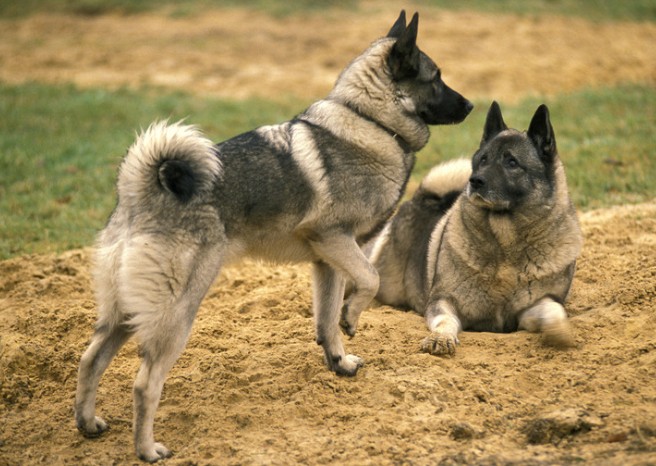
Vocal. Vigilant. Wired.
Ancestry drives expression.
Your Elkhound’s persistent alerts reflect generations of selection for sustained communication and environmental monitoring, making their vocality a functional trait rather than misbehaviour.
Instinct builds boundaries.
Their heightened perimeter awareness comes from ancestral roles that demanded constant spatial vigilance, shaping modern patterns of patrolling, checking, and sentry-like positioning.
Understanding creates harmony.
When you honour their heritage with structure, guidance, and emotional connection, their intense alerting transforms from household tension into balanced, purposeful partnership.
Owner Reinforcement of Alert Barking
Many Elkhound owners unintentionally strengthen the very behavior they wish to reduce. Understanding subtle reinforcement patterns helps you identify and modify responses that accidentally validate excessive alerting.
Approach and Investigation
When your Elkhound barks at the door or window, your natural response might involve approaching to investigate what triggered the alert. From your dog’s perspective, this sequence looks like: “I alerted → human came to help assess → we addressed the situation together.” This is powerful reinforcement that validates their alert behavior and encourages future similar responses.
First-time owners particularly tend toward this pattern because it feels intuitive and protective. You want to know what your dog is alerting to, so you look. But each repetition strengthens the alert-and-human-responds cycle.
Emotional Transmission
Your emotional state during alert episodes transmits directly to your Elkhound. If you approach with tension, speak in urgent tones, or exhibit your own arousal when checking triggers, you’re confirming that the situation indeed warrants concern. Dogs are remarkably attuned to human emotional tone, body language, and physiological arousal indicators.
Consider these unintentional messages:
- Rushing to the door tells your dog this is urgent and important
- Speaking in sharp, elevated tones signals that the trigger is threatening
- Physical tension and quickened movement validate your dog’s aroused state
- Repeatedly checking the same trigger location suggests ongoing monitoring is appropriate
Inconsistent Response Patterns
Perhaps most challenging: inconsistent responses create variable reinforcement schedules that dramatically strengthen behavior. If you sometimes respond to alerts with investigation and sometimes ignore them without clear criteria your dog can understand, the unpredictability actually increases alert frequency and intensity. Your Elkhound learns they must alert more persistently to ensure a response.
Breaking unintentional reinforcement patterns requires conscious consistency and an understanding that how you respond teaches your dog whether their alert behavior is achieving its intended purpose.
🐺 Understanding Your Norwegian Elkhound’s Vocal Nature 🔔
Ancient sentinel instincts meet modern home life—discover how to honor your Elkhound’s heritage while creating household harmony through science-based understanding and emotional connection
🧬 Genetic Heritage: Why They Alert
Centuries of Breeding Purpose
Norwegian Elkhounds were selected for constant vocal communication with hunters during moose pursuit. This isn’t stubborn barking—it’s endurance alerting hardwired into their DNA. Their vocal baseline differs fundamentally from companion breeds, requiring understanding rather than suppression.
Neurobiological Wiring
Heightened amygdala activation creates faster threat appraisal, while the dopamine SEEKING system drives investigation motivation. Your Elkhound’s brain processes boundary information differently—lower thresholds, quicker responses, stronger motivation to monitor and alert.
Spatial Mapping Abilities
These dogs maintain sophisticated mental maps of their territory—visual boundaries, auditory expectations, olfactory profiles, and temporal patterns. They detect subtle deviations from “normal” with remarkable precision, alerting to changes you haven’t consciously registered.
🏠 Environmental Management Strategies
Household Layout Modifications
- • Use window film to maintain light while reducing clear views of street traffic
- • Rearrange furniture to make constant window-watching less comfortable
- • Create alternative enrichment locations that compete with surveillance behavior
- • Strategic visual blocking with solid fencing rather than complete chain-link exposure
Reducing Trigger Density
Environmental predictability significantly influences boundary reactivity. Stable, somewhat predictable settings with reasonable perimeter definition support calmer responses. Manage acoustic environments, control visual access points, and provide clear boundary structures that don’t overwhelm your dog’s monitoring capacity.
Breaking Unintentional Reinforcement
Stop rushing to investigate when your dog alerts. Avoid approaching with tension or speaking in urgent tones. Your emotional transmission and physical response patterns teach your Elkhound whether alerts warrant concern—maintain calm, acknowledge briefly, then return to settled activity.
🎯 Structured Alert Routines & Enrichment
The Alert-Acknowledge-Settle Framework
Create a collaborative protocol that satisfies communication needs without escalation:
- • Alert: Your dog barks briefly (1-3 barks) to notify you
- • Acknowledge: You respond with calm recognition—”thank you, I’ve got this”
- • Check-In: Invite eye contact or physical positioning with you
- • Settle: Brief investigation together or request settle behavior, then release
Drive-Satisfying Enrichment
- • Tracking games: Create scent trails your dog follows to find rewards
- • Nosework activities: Container searches and environmental scent detection
- • “Guard the Scent Line” play: Structured boundary games on your cue
- • Controlled exploration: 30-45 minutes daily of investigation-focused walks
NeuroBond Emotional Anchoring
Become the calm baseline your Elkhound references when processing triggers. Through genuine emotional regulation on your part, your dog learns to match your settled presence rather than escalating arousal. This emotional synchronization naturally moderates over-alerting without suppression.
⚠️ Welfare Considerations & Red Flags
Chronic Stress Indicators
Excessive alerting carries physiological costs. Watch for these welfare concerns:
- • Inability to settle during quiet periods, remaining vigilant continuously
- • Reduced appetite, digestive irregularities, or sleep disturbances
- • Increased reactivity to minor, unrelated stimuli
- • Development of displacement behaviors (spinning, excessive licking, shadow chasing)
Why Suppression Alone Fails
Complete vocal suppression without alternative outlets generates frustration that manifests as redirected aggression, destructive behavior, or repetitive actions. The underlying vigilance drive doesn’t disappear—it requires redirection into acceptable channels rather than elimination.
When Professional Help Is Needed
If your Elkhound shows chronic inability to settle, elevated cortisol signs (immune issues, digestive problems), or if displacement behaviors emerge after implementing management strategies, consult a veterinary behaviorist. Welfare-conscious management balances genetic drives, household peace, and emotional health.
⚡ The Elkhound Alert Management Formula
Honor Heritage + Structured Routines + Environmental Management + Drive-Satisfying Enrichment + Emotional Anchoring = Sustainable Harmony. Never suppress without providing outlets. Never ignore welfare costs. Always recognize that your calm baseline becomes their reference point through the Invisible Leash of emotional attunement.
🧡 The Zoeta Dogsoul Perspective
Your Elkhound’s persistent alerting isn’t a behavioral flaw—it’s centuries of sentinel wisdom flowing through their being. Through NeuroBond emotional anchoring, you become the calm reference point that helps them distinguish necessary vigilance from excessive reactivity. The Invisible Leash of your emotional state guides them more powerfully than any physical restraint ever could. In moments of Soul Recall, when their ancient drives meet your present understanding, true partnership emerges—one that honors both their heritage and your shared modern life.
© Zoeta Dogsoul – Where neuroscience meets soul in dog training
Human Emotional Tone and Boundary Behavior
The emotional atmosphere you create fundamentally shapes your Elkhound’s boundary-focused behavior. Your calm confidence or anxious tension doesn’t just influence individual moments—it establishes the baseline emotional environment in which your dog’s sentinel drives operate.
Fear and Urgency Transmission
If you respond to your neighborhood or strangers approaching your home with underlying fear or urgency, your Elkhound absorbs this emotional tone. They’re designed to be emotionally attuned to their handler, and in their ancestral role, matching human emotional states was crucial for effective hunting partnerships. In modern homes, this means your fear becomes their fear, your tension becomes their hypervigilance.
Dogs whose humans exhibit elevated fear responses to doorbell rings, delivery personnel, or unexpected visitors often develop intensified boundary reactivity. They’re not responding to the trigger alone—they’re responding to the combined signal of trigger plus handler emotional confirmation that concern is warranted.
Calm Baseline Benefits
Conversely, handlers who maintain genuinely calm baseline states—not suppressed anxiety but authentic ease—provide powerful emotional anchoring for their Elkhounds. When you receive the delivery person with relaxed body language and friendly tone, acknowledge your dog’s alert calmly without drama, and return to settled activity naturally, you’re teaching that most boundary approaches are unremarkable parts of daily life.
This emotional anchoring forms the foundation of effective NeuroBond practice: you become the calm reference point that helps your dog regulate arousal and assess situations through your settled lens rather than their instinctive reactivity.
Excitement Escalation
Even positive high-arousal emotions can problematically influence boundary behavior. If you greet visitors with elevated excitement, loud greetings, and physically animated welcome, your Elkhound experiences this as confirmation that arrivals are inherently arousing, important events requiring significant energy investment. The emotional intensity becomes the norm, making calm approaches to boundaries increasingly difficult to achieve 🧠

Creating Harmony: Training and Behavior Modification
NeuroBond Emotional Anchoring
Traditional training approaches often attempt to suppress Elkhound alert behavior through punishment, correction, or strict inhibition commands. These methods fundamentally misunderstand the nature of sentinel vocality and boundary awareness—you cannot simply eliminate behaviors rooted in core genetic drives without causing frustration and potential displacement issues.
The NeuroBond emotional anchoring framework offers a different approach: rather than suppressing alert responses, you establish emotional synchronization that naturally moderates over-arousal. This means becoming the calm baseline your Elkhound can reference when processing boundary triggers.
Establishing Calm State Recognition
Begin by teaching your dog to recognize and value your calm state as information worth attending to. This requires genuine emotional regulation on your part—dogs detect false calm immediately through subtle physiological cues. When you achieve authentic settled presence, your Elkhound can begin learning to match it.
Practice calm-state engagement during non-triggering moments:
- Settle beside your dog during quiet evening hours, maintaining relaxed breathing and loose body language
- Reward naturally settled behavior with gentle touch and soft praise
- Create association between your calm presence and positive emotional experiences
- Allow your dog to observe you remaining calm during mild everyday stimuli
Applying Anchoring During Alerts
Once your dog recognizes your calm state as valuable information, you can apply it during boundary alerts. When your Elkhound begins vocalizing at a trigger:
- Maintain your calm baseline without tension or urgency
- Acknowledge the alert briefly with a neutral phrase like “thank you, I see it”
- Model the response you want—brief attention to trigger, then return to calm activity
- Invite your dog to check in with you rather than continuing sustained alerting
This approach honors their sentinel nature—you’re not saying their alert was wrong, you’re providing information about appropriate response duration and intensity through your emotional demonstration. Over time, your calm anchoring helps lower their arousal threshold, making moderation more accessible.
Consistency and Patience
NeuroBond emotional anchoring doesn’t produce instant results because you’re shaping fundamental emotional responses, not training discrete behaviors. Consistency matters enormously: every alert episode where you maintain calm anchoring strengthens the pattern, while reverting to tension or drama undermines progress.
The Invisible Leash principle applies powerfully here—your emotional state becomes the guidance system that helps your Elkhound navigate between necessary vigilance and excessive reactivity, connected not by physical constraint but by emotional attunement.
Structured Alert Routines Versus Suppression Protocols
Many Elkhound owners face a critical choice: attempt to suppress alert barking entirely, or establish structured alert routines that channel the behavior into acceptable parameters. Research and practical experience strongly suggest that structured routines produce better long-term outcomes for sentinel breeds.
Why Suppression Often Fails
Complete suppression of alert behavior in Elkhounds fights against powerful genetic drives. When you demand absolute silence in response to boundary triggers, several problems emerge:
- Frustration builds as natural drives lack appropriate outlet
- Displacement behaviors may develop—destructive chewing, pacing, or self-directed repetitive behaviors
- The dog becomes uncertain about their role, potentially developing anxiety about whether they’re adequately protecting their territory
- Compliance becomes effortful and stressful rather than natural and cooperative
Suppression protocols might achieve temporary quiet, but often at the cost of your dog’s emotional wellbeing and your relationship quality.
Structured Alert Routine Framework
A structured alert routine acknowledges your Elkhound’s need to alert while establishing acceptable parameters. The framework typically includes:
Alert Acknowledgment: Your dog barks briefly (1-3 barks) to alert you to the trigger
Handler Recognition: You acknowledge with consistent phrase and calm approach—”thank you, I’ve got this”
Check-In Request: You invite your dog to check in with you through eye contact or physical positioning
Release or Settle: You either investigate the trigger together briefly, then release back to normal activity, or request a settle behavior if no investigation is needed
Reinforcement: Calm check-in and settling receive genuine praise and occasional rewards
This structure satisfies your Elkhound’s core need to communicate boundary information while preventing escalation into sustained, intense alerting. You’re working with their nature, not against it.
Teaching the Routine
Implementation requires systematic training during controlled scenarios:
- Start with low-level triggers your dog can alert to without overwhelming arousal
- Consistently apply the acknowledgment-recognition-check-in-settle sequence
- Gradually increase trigger intensity as your dog learns the pattern
- Maintain absolute consistency so your dog learns the routine is predictable and reliable
Over time, structured alert routines become self-reinforcing because they satisfy your Elkhound’s communication need while preventing the frustration of either suppression or uncontrolled escalation. You’ve created a collaborative protocol that respects both your dog’s heritage and your household’s needs.
Enrichment for Boundary Behavior
Providing appropriate outlets for your Elkhound’s sentinel drives dramatically reduces inappropriate boundary behavior. When their needs for tracking, investigating, and territorial management receive legitimate expression, the compulsive, over-aroused manifestations naturally diminish.
Tracking and Nosework Activities
Your Elkhound’s nose carries ancestral memories of moose trails through Norwegian forests. Tracking and nosework activities engage these deep drives in controlled, productive ways. Consider implementing:
Trail tracking games: Create scent trails in your yard or on walks that your dog can follow to find rewards or toys
Container searches: Hide scents in various containers and reward your dog for identifying the correct one
Environmental search: Place treats or toys at various heights and locations in your yard, encouraging systematic area coverage
Scent line games: Create a “property line” scent using a specific smell and teach your dog to track and alert to this line specifically
These activities provide the cognitive engagement and drive satisfaction that reduce pressure on fence-line patrol and window watching behaviors.
“Guard the Scent Line” Structured Play
Create a game that channels boundary awareness into cooperative play. Establish a specific scent marker that defines a play-version of territory boundary. Teach your dog to patrol and alert to this marked line on cue, then release and reward. This provides controlled outlet for boundary-monitoring drives while teaching that the behavior occurs on your initiation, not as constant self-directed activity.
Mental Stimulation and Problem-Solving
Elkhounds possess considerable intelligence that requires regular challenge. Under-stimulated dogs often redirect mental energy into excessive environmental monitoring. Provide diverse cognitive challenges:
- Puzzle feeders and interactive toys that require problem-solving
- Training sessions that teach new behaviors or tricks
- Games that require memory, patience, and strategic thinking
- Novel experiences that engage curiosity without triggering threat assessment
When your Elkhound’s mind receives adequate engagement throughout the day, their need to create “work” through excessive boundary monitoring decreases naturally.
Physical Exercise with Purpose
Raw physical exercise matters, but purposeful activity matters more. A 30-minute tracking walk where your dog engages nose, mind, and body provides far greater satisfaction than an hour of simple leash walking. Structure exercise to include:
- Varied terrain that requires attention and adjustment
- Opportunities for investigation and exploration within safe parameters
- Activities that mimic ancestral functions—pulling, climbing, balancing, tracking
- Social engagement with appropriate canine playmates
The goal isn’t exhaustion; it’s fulfillment. An Elkhound whose deep drives receive appropriate expression approaches boundary situations from a satisfied baseline rather than a depleted, over-aroused state.
Protecting Their Wellbeing: Welfare Considerations
Chronic Alert Barking and Physiological Stress
While alert barking serves natural functions for Elkhounds, chronic excessive alerting carries genuine physiological and emotional welfare costs. Understanding these costs helps you recognize when management strategies become welfare imperatives rather than mere convenience issues.
Cortisol and Chronic Stress
Sustained elevated alertness, particularly when accompanied by frustration or arousal that cannot find resolution, correlates with elevated cortisol levels—your dog’s primary stress hormone. While brief cortisol spikes represent normal adaptive responses, chronically elevated cortisol indicates problematic stress that affects multiple body systems:
- Immune function suppression increasing illness susceptibility
- Digestive disturbances and reduced nutrient absorption
- Impaired cognitive function and learning capacity
- Increased anxiety and reduced stress resilience over time
If your Elkhound spends hours daily in high-arousal alert states, unable to settle even when obvious triggers are absent, chronic stress may be accumulating with genuine health implications.
Heart Rate Variability and Autonomic Balance
Heart rate variability—the variation in time between heartbeats—provides insight into autonomic nervous system balance and stress regulation capacity. Lower HRV indicates reduced adaptability and higher stress load. Dogs in chronic alert states often show reduced HRV, suggesting compromised ability to shift between arousal and relaxation states.
This manifests as difficulty settling after alerts, sustained elevated heart rate even during rest periods, and reduced capacity to recover from stressful events. Your Elkhound’s body remains in a perpetual state of readiness that prevents true rest and recovery.
Behavioral Indicators of Stress Overload
Beyond physiological measures, behavioral changes signal that chronic alerting has exceeded welfare-sustainable levels:
- Inability to settle during quiet periods, remaining vigilant continuously
- Reduced appetite or digestive irregularities
- Sleep disturbances or restless sleeping
- Increased reactivity to minor stimuli unrelated to territory
- Decreased interest in previously enjoyed activities
- Development of displacement behaviors or repetitive actions
When you observe these patterns, your dog’s alert behavior has moved beyond genetic expression into welfare-compromising territory requiring intervention for their physical and emotional health.
Vocal Suppression and Behavioral Displacement
While excessive alerting carries welfare costs, complete vocal suppression without providing alternative outlets creates its own set of problems. Natural, functional behaviors don’t simply disappear when suppressed—the underlying drive seeks expression through alternative channels.
Frustration and Its Manifestations
Suppressing alert barking without addressing the underlying vigilance drive generates frustration that can manifest in multiple problematic ways:
Redirected aggression: Unable to bark at boundary triggers, some dogs redirect arousal into aggression toward household members, other pets, or objects
Destructive behavior: Pent-up vigilance energy may express through destructive chewing, digging, or property damage
Repetitive behaviors: Spinning, tail chasing, shadow chasing, or other self-directed repetitive actions may emerge as displacement outlets
Increased overall anxiety: When natural stress-relief mechanisms are blocked, generalized anxiety often increases, affecting quality of life across all contexts
The key insight: the drive to monitor, alert, and protect doesn’t vanish when you suppress vocalization—it requires redirection into acceptable channels rather than simple elimination.
Displacement Behavior Recognition
Understanding displacement behaviors helps you recognize when suppression approaches are causing welfare problems. Displacement occurs when a blocked primary drive manifests through seemingly unrelated behaviors. In suppressed Elkhounds, watch for:
- Sudden onset of previously absent compulsive behaviors
- Increased intensity of pre-existing minor habits
- Unusual reactivity in contexts unrelated to boundaries
- Self-directed behaviors like excessive licking or chewing body parts
If these emerge after implementing strict vocal suppression protocols, the approach requires adjustment to provide legitimate outlets for sentinel drives while managing excessive expression.
Balanced Approach to Management
Welfare-conscious management balances three priorities: honoring genetic drives, maintaining household peace, and protecting your dog’s emotional health. This typically means:
- Providing structured alert routines rather than complete suppression
- Offering abundant alternative outlets through enrichment and purposeful activity
- Managing environment to reduce trigger density to reasonable levels
- Maintaining your dog’s sense of meaningful role through controlled territorial work
The goal isn’t perfect quiet—it’s sustainable harmony where your Elkhound can express core aspects of their nature without compromising their welfare or your household function.
Controlled Outdoor Exploration
Sentinel breeds require adequate controlled outdoor exploration to regulate their vigilance drives and maintain emotional balance. Understanding these needs helps you provide appropriate opportunities that support natural drive satisfaction.
Territory Expansion Needs
Elkhounds confined exclusively to limited indoor spaces or small yards often develop intensified boundary reactivity as their need for territorial information gathering remains unsatisfied. Their genetic programming expects regular opportunities to:
- Explore beyond immediate home territory, gathering olfactory and environmental information
- Engage in extended tracking and investigation of natural scents and trails
- Exercise over varied terrain that challenges physical capabilities and provides diverse sensory input
- Experience novel environments that satisfy curiosity and investigation drives
Without these opportunities, sentinel drives have no outlet beyond intensified monitoring of their limited available space, creating the canine equivalent of cabin fever.
Structured Exploration Guidelines
Controlled outdoor exploration differs from simple exercise—it prioritizes environmental engagement over mere physical activity:
Varied locations: Explore different environments regularly rather than repeating the same route exclusively
Investigation time: Allow adequate time for sniffing, investigating, and processing environmental information
Moderate challenge: Include terrain that requires attention and adjustment—hills, varied surfaces, safe obstacle navigation
Social opportunities: Facilitate appropriate interactions with other dogs when your Elkhound demonstrates social comfort
Decompression walks: Implement long-line walking in appropriate spaces where your dog can range more freely while maintaining safety
Frequency Recommendations
Most Elkhounds benefit from daily outdoor exploration beyond basic exercise needs. This might include:
- 30-45 minutes of investigation-focused walking or hiking daily
- Weekly longer exploration sessions in novel environments
- Regular opportunities for off-leash or long-line work in safe spaces
- Seasonal variations that provide exposure to different environmental conditions
These experiences provide the territorial information gathering and drive satisfaction that help your Elkhound maintain emotional regulation when confined to home territory.
Safety and Recall Considerations
The Elkhound’s strong hunting drives and independent nature require careful safety management during outdoor exploration:
- Build solid recall through positive training before attempting off-leash work
- Use long-lines (20-30 feet) initially to provide freedom while maintaining control
- Choose exploration locations thoughtfully, avoiding areas with significant wildlife that might trigger intense pursuit drives
- Remain attentive to your dog’s arousal levels, intervening before over-stimulation occurs
Controlled outdoor exploration serves as critical preventive welfare support—dogs whose territorial and investigation drives receive regular, appropriate satisfaction develop significantly better emotional regulation around home boundaries 🧡
The Elkhound Journey: Understanding the Complete Picture
Your Norwegian Elkhound’s vocal nature and boundary awareness aren’t behavioral problems to be fixed—they’re core expressions of genetic heritage that require understanding, respect, and thoughtful channeling. When you recognize that your dog is doing exactly what centuries of breeding designed them to do, you can shift from frustration to appreciation, from suppression to harmony.
The path forward requires balance. You honor their sentinel nature by providing legitimate outlets for vigilance drives while establishing clear structures that prevent excessive expression. You become their emotional anchor through the NeuroBond framework, offering calm baseline states that help them regulate arousal. You implement structured alert routines that satisfy their need to communicate while preventing escalation. You provide enrichment that engages tracking, investigation, and territorial drives in productive ways.
Most importantly, you recognize that your Elkhound’s welfare depends on this balance. Neither chronic excessive alerting nor rigid suppression serves their wellbeing—both create stress, frustration, and potential health consequences. The middle path, where natural drives receive appropriate expression within structures that serve modern life, protects both your peace and your dog’s emotional health.
Through Soul Recall—those profound moments when emotional memory aligns with present experience—you and your Elkhound can build a relationship where their ancient heritage and your modern life coexist in genuine partnership. Their barks become meaningful communication rather than constant noise. Their boundary awareness becomes confident monitoring rather than frantic vigilance. And together, you discover that the qualities that make them challenging also make them remarkable 🧠
That balance between honoring genetic truth and creating household harmony—that’s the essence of Zoeta Dogsoul.
Is the Norwegian Elkhound Right for You?
Before welcoming an Elkhound into your life, honestly assess whether you can provide what this remarkable breed requires:
Essential Considerations
Can you provide daily mental stimulation through tracking, nosework, and problem-solving activities? Elkhounds need meaningful cognitive engagement, not just physical exercise.
Can you commit to consistent, patient training that works with their nature rather than against it? They require handlers who understand sentinel breeds and can implement balanced management strategies.
Can you maintain genuinely calm emotional baseline states? Your Elkhound will absorb and reflect your emotional tone—anxious handlers often create anxious dogs.
Are you prepared for moderate to high vocality as a permanent aspect of daily life? Even well-managed Elkhounds vocalize more than most breeds.
Can your living situation accommodate their boundary awareness needs? Apartments with thin walls, homes with extensive window exposure to busy streets, or shared walls with sound-sensitive neighbors present challenges.
Do you have time for daily controlled outdoor exploration beyond basic walks? Territory expansion and environmental investigation aren’t optional luxuries—they’re welfare necessities.
When Elkhounds Thrive
Norwegian Elkhounds flourish with:
- Active individuals or families who appreciate their independence and intelligence
- Handlers experienced with working breeds who understand drive management
- Living situations offering reasonable space and controlled boundary access
- Commitment to ongoing training and enrichment throughout their lifetime
- Appreciation for their vocal nature and sentinel personality
- Rural or suburban settings with opportunities for exploration and tracking work
When to Reconsider
Think carefully if:
- You require a quiet household or have noise restrictions
- You lack experience with independent, strong-willed working breeds
- Your schedule cannot accommodate their significant exercise and mental stimulation needs
- You live in urban high-density housing with minimal outdoor access
- You expect a dog who naturally seeks constant permission and direction
- You’re drawn to their appearance but unprepared for their behavioral intensity
The Norwegian Elkhound offers a remarkable partnership for the right human—one who understands, respects, and can appropriately channel their powerful genetic drives. For those prepared to meet their needs, these dogs provide loyalty, intelligence, and authentic connection rooted in mutual respect and understanding.
For those willing to walk this path, the journey transforms both human and dog, creating bonds that honor the ancient partnership between sentinel and trusted companion.