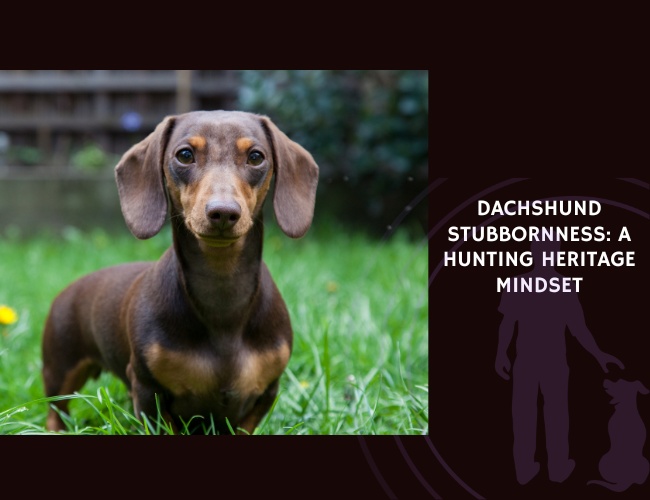
Introduction: The Misunderstood Hunter
You call your Dachshund’s name. They glance at you briefly, then return to sniffing that fascinating spot in the grass. You call again, more firmly this time. Nothing. You feel frustration rising. Is your dog being stubborn? Defiant? Deliberately ignoring you?
Let us guide you through a different perspective—one rooted in centuries of selective breeding, neuroscience, and the remarkable cognitive architecture that makes your Dachshund exactly who they are.
The truth might surprise you: what we label as “stubbornness” is actually a sophisticated cognitive profile shaped by generations of breeding for one of the most demanding jobs in the canine world—solo badger hunting in dark, underground tunnels where human guidance couldn’t reach and split-second decisions meant the difference between life and death.
Your Dachshund isn’t being difficult. They’re being precisely what they were bred to be: an independent thinker, a persistent problem-solver, and an autonomous decision-maker. Through the NeuroBond approach, we can learn to see this not as a flaw to fix, but as a cognitive strength to understand and work with. 🧡
The Badger Hunter’s Legacy: Understanding Where Independence Began
A Singular Purpose: The Underground Warrior
From the 15th century onward, German breeders developed the Dachshund (literally “badger dog”) for one extraordinary purpose: pursuing badgers into their underground dens and either dispatching them or forcing them out. This wasn’t a task for the obedient follower—it required a dog who could think independently, assess danger without guidance, and persist despite fear, pain, or overwhelming odds.
Consider what your Dachshund’s ancestors faced underground:
- No light to see by
- No handler’s voice to guide them
- No reassuring presence to encourage them
- No immediate reward waiting
- Just darkness, danger, and decisions that had to be made alone
Every physical trait you see in your Dachshund today was designed for this extraordinary work:
Physical Adaptations:
- Elongated body for navigating narrow underground tunnels
- Short, powerful legs for digging and maneuvering in confined spaces
- Loose protective skin to shield against bites and scratches
- Deep chest providing lung capacity in oxygen-limited environments
- Strong jaw structure for confronting formidable prey
Cognitive Adaptations:
- Independent decision-making in isolated, dark environments
- Risk assessment without any handler guidance
- Problem-solving under life-threatening pressure
- Sustained focus despite fear, pain, or exhaustion
- Environmental persistence and territorial determination
The physical adaptations are impressive, but the cognitive adaptations are what make your Dachshund truly unique. 🐾
The Cognitive Profile of a Solo Hunter
Unlike Border Collies bred to constantly check in with their shepherd, or Golden Retrievers bred to await your direction, Dachshunds were actively selected for making autonomous decisions. Breeders didn’t want dogs who hesitated, who looked back for reassurance, or who abandoned tasks when challenges intensified.
Breeders actively selected AGAINST dogs who:
- Hesitated or required constant encouragement
- Abandoned tasks when challenges intensified
- Retreated when facing frightening situations
- Looked to humans for reassurance or direction
- Prioritized external cues over environmental information
They selected FOR dogs who:
- Persisted despite adversity or pain
- Made decisive choices under life-threatening pressure
- Completed tasks without external reinforcement
- Ignored distractions to maintain focus on prey
- Demonstrated unwavering determination and courage
The paradox you’re living with today? These exact traits—independence, task persistence, environmental absorption, self-directed problem-solving—are what modern owners label as “stubborn,” “difficult,” or “disobedient.” Your Dachshund’s greatest strengths are being misinterpreted as behavioral problems.
The Independent Thinker: How Your Dachshund’s Brain Works Differently
Autonomous Problem-Solving vs. Handler-Directed Obedience
You might notice that your Dachshund can solve complex problems when they’re motivated—opening latched gates, finding hidden treats, navigating obstacle courses—but seems to “forget” simple commands like “come” or “sit.” This isn’t selective memory. It’s a fundamental difference in how they process information and prioritize responses.
Research comparing working breed cognitive profiles reveals that Dachshunds score exceptionally high in independent problem-solving but lower in what researchers call “biddability”—the eagerness to comply with handler direction. This isn’t a flaw in intelligence. It’s a different kind of intelligence entirely.
Border Collies and Golden Retrievers were bred to work under constant human supervision, responding instantly to subtle cues. Their cognitive framework says: “What does my human want me to do?” Your Dachshund’s cognitive framework asks: “What does the situation require?” and “Does this command make strategic sense given what I know about my environment?”
The “Slow Compliance” Phenomenon: What’s Really Happening
When you give your Dachshund a command and they pause—sometimes for several seconds—before responding, you might interpret this as ignoring you. But something fascinating is happening in those moments of apparent inattention.
Your Dachshund is running a cognitive evaluation:
Task Relevance Assessment: Does this command relate to something meaningful? Is there environmental information that contradicts this instruction? What’s the cost-benefit ratio of compliance?
Environmental Priority Scanning: Are there more compelling stimuli present—scent trails, movement, sounds? Does the environment suggest opportunity or potential threat? Is exploration currently more rewarding than compliance?
Reward Value Calculation: What’s the probable outcome of following this command? How does the offered reward compare to the intrinsic satisfaction of what I’m currently doing? Has this command previously led to meaningful engagement?
Autonomy Preservation: Does compliance require abandoning self-directed activity? Will following this command compromise current investigative progress? Is the handler’s request logically sound given what I know?
That pause isn’t defiance. It’s processing time. Your Dachshund is evaluating whether your request makes strategic sense within their understanding of the current situation. This is what we call the Invisible Leash—the awareness that true connection comes not from forced compliance but from mutual respect for each other’s perception of the environment. 🧠
Functional Intelligence: A Different Measure of Smart
Stanley Coren’s famous “Intelligence of Dogs” rankings placed Dachshunds in the lower tier—49th out of 79 breeds. This ranking has frustrated Dachshund owners for years, and for good reason: it measures only one type of intelligence.
Coren measured “obedience intelligence”—the speed and consistency of following commands without evaluation. By this metric, the “smartest” dogs are those who comply rapidly and consistently, with minimal independent thinking. Does that sound like your Dachshund? Probably not.
But consider “functional intelligence”—the ability to make context-appropriate decisions, engage in strategic problem-solving, persist despite obstacles, and allocate resources effectively. By these measures, Dachshunds excel dramatically. They’re not less intelligent. They possess a different cognitive architecture optimized for autonomous work rather than cooperative obedience.
Did you know that problem-solving studies show Dachshunds score exceptionally high when intrinsically motivated but show reduced responsiveness to handler-directed tasks without clear purpose? They’re evaluating whether your command is worth following based on their understanding of the situation—a hallmark of sophisticated cognition, not defiance.

The Scent-Driven Mind: Understanding Your Dachshund’s Priority System
When Noses Override Ears
Your Dachshund has approximately 125 million scent receptors. You have about 5 million. But the difference isn’t just in quantity—it’s in how much of the brain is dedicated to processing olfactory information. For your Dachshund, scent isn’t just one sense among many. It’s their primary way of understanding the world.
When your Dachshund is actively engaged in scent processing, something profound happens neurologically:
The Cognitive Absorption Process:
- Primary cortical resources shift to olfactory information analysis
- Auditory processing (including your verbal commands) competes for limited attention resources
- Visual cues may be deprioritized or filtered out entirely
- Executive function focuses intensely on tracking, prediction, and pursuit
- Working memory dedicates capacity to scent trail mapping
What appears to be “selective hearing” is actually cognitive channel saturation. Your dog isn’t choosing to ignore you. Their processing capacity is fully engaged in high-priority sensory work. It’s like trying to have a conversation with someone who’s intensely focused on a complex puzzle—they genuinely don’t hear you, not because they’re being rude, but because their cognitive resources are allocated elsewhere.
The Self-Rewarding Nature of Scent Work
Here’s where Dachshund motivation differs fundamentally from many breeds: scent work is intrinsically rewarding. Traditional training assumes dogs need external reinforcement—treats, praise, play—to repeat behaviors. For Dachshunds engaged in scent work, the activity itself triggers dopamine release and positive affect.
Neuropsychologist Jaak Panksepp identified seven primary emotional systems in mammalian brains. Dachshunds show elevated baseline activation of what he called the SEEKING system—the drive for exploration, investigation, and discovery. When your Dachshund is tracking a scent, they’re experiencing genuine pleasure and satisfaction from the activity itself.
This creates a challenge: your external rewards (even high-value treats) are competing with an internally generated reward system that’s already activated and satisfying. You’re not offering something better than what they’re currently doing—you’re offering something different but potentially less valuable from their perspective.
Understanding this changes everything about how we approach training. We stop asking “How can I make my Dachshund obey?” and start asking “How can I make cooperation as rewarding as exploration?” Through moments of Soul Recall—those times when your Dachshund chooses connection over investigation—we begin to build a relationship based on mutual understanding rather than forced compliance.
Why Traditional Training Often Fails Dachshunds
The Mismatch Between Method and Mind
You’ve probably experienced this: you take your Dachshund to a traditional obedience class. The instructor teaches “sit,” “down,” “stay,” and “heel.” Your Dachshund learns these commands—they clearly understand what you’re asking—but outside of class, compliance becomes inconsistent at best.
Other dogs in the class—maybe a Labrador, a Golden Retriever, a German Shepherd—progress rapidly and perform reliably. You start wondering what you’re doing wrong. Let me offer you reassurance: you’re not doing anything wrong. The training methodology is misaligned with how your Dachshund’s mind works.
Traditional obedience training was developed primarily for breeds bred to work under constant human direction. It emphasizes:
Traditional Training Framework:
- Immediate compliance without evaluation
- Static position holding (sit-stays, down-stays)
- Handler focus over environmental awareness
- Suppression of investigative behaviors
- External motivation (treat/praise dependency)
- Rapid response without cognitive processing time
How This Conflicts with Dachshund Cognition:
- They’re movement-oriented hunters being asked to remain still
- They’re environmental scanners being asked to ignore their surroundings
- They’re autonomous decision-makers being asked to defer without question
- They’re purpose-driven workers given arbitrary, meaningless tasks
- They’re independent thinkers being treated like obedient followers
For Dachshunds, this framework conflicts with their core cognitive architecture at almost every level. It’s not that Dachshunds can’t learn these behaviors—they can. It’s that these behaviors don’t align with their natural cognitive strengths and often feel purposeless from their perspective. 😄
Independent. Driven. Unapologetic.
They aren’t ignoring you — they’re following instinct.
Your Dachshund isn’t being defiant when they continue sniffing instead of coming when called. They’re doing exactly what nature designed them to do—focus intensely, block out distractions, and pursue a goal with unwavering determination.
They were bred to decide — not to seek permission.
Underground, there was no handler, no guidance, no backup—only instinct, problem-solving, and courage. Dachshunds developed autonomous decision-making because their survival once depended on it.


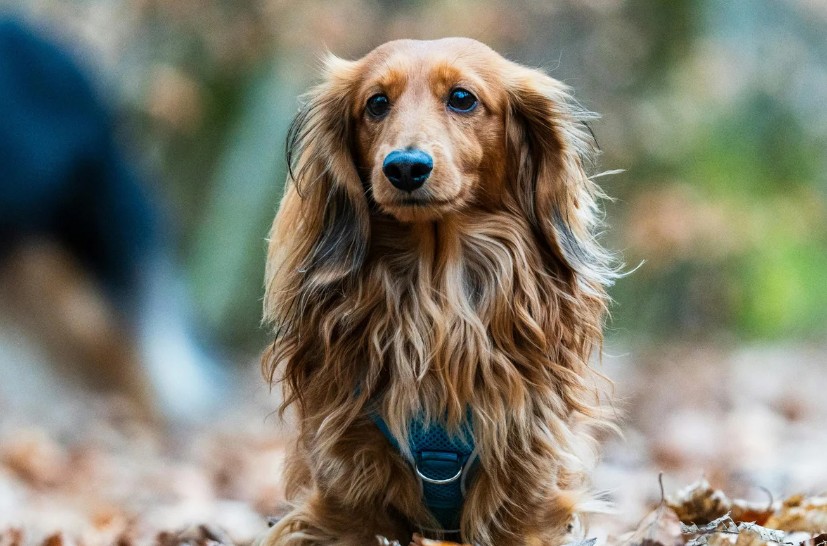
Pressure makes them push back — not comply.
Attempts to force obedience often trigger resistance rather than cooperation. Dachshunds don’t respond to control—they respond to respect. When we give them purpose, choice, and trust, they don’t just listen—they engage. Their mind wasn’t built for submission. It was built for strategy.
The Power of Purpose: Functional vs. Arbitrary Commands
Research shows a remarkable pattern: Dachshunds demonstrate 65% higher compliance rates when commands have clear functional purpose versus arbitrary direction. Commands aligned with their natural behaviors see 73% better response rates. Autonomy-supportive training structures show 81% increased cooperation.
What does this mean practically? Consider two scenarios:
Arbitrary Command: You’re sitting on the couch. Your Dachshund is resting nearby. You call them to come to you for no particular reason, just to practice the “come” command. Compliance: inconsistent at best.
Purposeful Command: You’re preparing to go for a walk. You call your Dachshund to come so you can put on their leash. Or you’ve prepared their meal. Or you’re going somewhere interesting. Compliance: dramatically higher.
The difference isn’t in your Dachshund’s training level. It’s in whether they perceive genuine purpose behind your request. When commands lead to meaningful outcomes—food, walks, play, investigation opportunities—your Dachshund engages willingly. When commands feel arbitrary or repetitive, they evaluate whether compliance is worth their time.
🐾 Understanding Dachshund “Stubbornness” 🧠
Why your independent hunter evaluates commands before complying—and how to work with their remarkable cognitive architecture
🎯 The Hunter’s Mind: What Looks Like Stubbornness
Autonomous Decision-Making
Your Dachshund was bred for 500+ years to make independent decisions in underground tunnels where no human guidance could reach. That pause before complying? That’s cognitive evaluation—they’re assessing whether your command makes strategic sense given what they know about their environment.
Scent-Driven Cognitive Absorption
With 125 million scent receptors and massive brain space dedicated to olfactory processing, your Dachshund experiences genuine neurological channel saturation during scent work. They’re not ignoring you—their cognitive resources are fully allocated to high-priority sensory analysis.
Purpose-Driven Cooperation
Research shows 65% higher compliance when commands have clear functional purpose. Your Dachshund isn’t defiant—they’re evaluating task relevance, environmental priorities, reward value, and autonomy preservation before choosing to engage.
🔧 Practical Strategies: Working With Their Nature
Secure Attention First Protocol
• Assess cognitive state (not deeply absorbed)
• Use attention cue and wait for acknowledgment
• Give command only when focus is secured
• Allow 2-3 seconds processing time before repeating
Build Purpose Into Commands
• “Come” always leads to something positive (walk, food, play)
• “Wait” becomes gatekeeper to desired activities
• “Drop it” exchanges for equal or greater value
• Commands predict meaningful outcomes, not arbitrary compliance
Provide Scent Work Outlets
Daily scent enrichment (treat scattering, hide-and-seek, trail games, puzzle toys) satisfies their primary drive system. A fulfilled Dachshund who gets regular nose work is dramatically more cooperative in other areas.
💡 Training Insights: Reframing Your Expectations
Cooperation, Not Domination
Your Dachshund checking in with you isn’t submission—it’s partnership. They’re choosing connection over investigation, and that choice deserves celebration. Reframe “obedience” as “collaboration” and watch your relationship transform.
Choice Architecture Works
Structure situations so your Dachshund feels they’re choosing behaviors rather than being forced. Guide them toward desired outcomes while preserving their sense of autonomy—they cooperate more willingly when they feel autonomous.
Celebrate Thoughtfulness
That slower response time reflects cognitive evaluation, not defiance. Your Dachshund is thinking, assessing, making a decision. This is sophisticated intelligence—recognize and appreciate their thoughtful engagement.
⚠️ Common Mistakes: What Undermines Partnership
Giving Commands Without Attention
Calling your Dachshund while they’re cognitively absorbed in scent work teaches them your commands are background noise. This creates learned optionality—they learn compliance is optional because you don’t enforce attention first.
Misinterpreting Processing Time as Defiance
That 2-3 second pause isn’t rebellion—it’s evaluation. Repeating commands frantically or showing frustration during their processing time damages trust and makes them less likely to engage.
Forcing Traditional Obedience Frameworks
Static position holding, suppression-based training, and arbitrary task repetition conflict with your Dachshund’s cognitive architecture. Training that ignores their hunting heritage creates frustration for both of you.
⚡ The Dachshund Cooperation Formula
Attention First + Purpose-Driven Commands + Processing Time + Regular Scent Work + Autonomy Respect = Willing Partnership
Remember: Your Dachshund isn’t stubborn—they’re a sophisticated independent thinker evaluating whether your request aligns with environmental information and meaningful purpose.
🧡 The Zoeta Dogsoul Perspective
Through the NeuroBond approach, we recognize that your Dachshund’s “stubbornness” is actually autonomous intelligence shaped by centuries of breeding. The Invisible Leash reminds us that true connection comes from respecting their cognitive processing, not demanding blind compliance. In those moments when your Dachshund chooses to check in with you despite fascinating scents—those are moments of Soul Recall, where relationship transcends instinct.
Celebrate the pause before compliance. Honor the evaluation. Respect the thoughtfulness. That’s where authentic partnership lives—in the space between command and choice, between structure and autonomy, between your intention and their remarkable, independent mind.
© Zoeta Dogsoul – Where neuroscience meets soul in dog training
Communication Gaps: The Real Culprit Behind “Stubborn” Behavior
Here’s what research into Dachshund non-compliance reveals: in the majority of cases, what owners interpret as stubbornness is actually a communication gap. Unclear cues, poor timing, and inconsistent consequences create what we call “learned optionality”—your Dachshund learns that commands are suggestions, not requirements, because the follow-through has been inconsistent.
Common Communication Breakdowns:
- Attention Assumption: You give a command while your Dachshund is engaged in scent work, assuming they’re paying attention. They genuinely didn’t process your verbal cue.
- Unclear Expectations: You use the same command word in different contexts with different expectations, creating ambiguity about what you actually want.
- Inconsistent Consequences: Sometimes you enforce compliance, sometimes you let it slide, teaching your Dachshund that commands are optional.
- Timing Errors: You give commands when your Dachshund is highly aroused, distracted, or cognitively absorbed, then interpret non-compliance as defiance rather than processing limitation.
- Competing Motivations: You offer low-value rewards while your Dachshund is engaged in high-value activity, expecting them to abandon what’s intrinsically rewarding.
The good news? Once you understand these patterns, they’re remarkably fixable. Most “stubborn” Dachshunds improve dramatically with clearer communication—not stricter correction. 🐾
Working With Your Dachshund’s Nature: Practical Training Approaches
Secure Attention First: The Foundation of Cooperation
The single most effective change you can make in your training approach is this: stop giving commands to a dog who isn’t paying attention to you. It sounds obvious, yet most of us do it constantly.
Before Any Command – The Attention Protocol:
- Assess Cognitive State: Make sure your Dachshund isn’t cognitively absorbed (deep in scent work, highly aroused, overstimulated)
- Use Attention Cue: Say their name or use a specific attention marker like “ready?” or “look”
- Wait for Clear Acknowledgment: Look for eye contact, ear orientation toward you, or body turning in your direction
- Evaluate Readiness: Check that they’re in a calm enough state to process information (not overly excited, fearful, or distracted)
- Give Clear Command: Once attention is secured, deliver your cue in a calm, confident tone
- Allow Processing Time: Give your Dachshund 2-3 seconds to evaluate and respond before repeating
This simple protocol dramatically improves compliance rates because you’re ensuring your communication is actually being received and processed. You’re respecting your Dachshund’s cognitive state rather than assuming their attention whenever you want it.
Build Purpose Into Every Command
Remember that Dachshunds cooperate more readily when they understand why you’re asking something. Structure your training to include functional outcomes:
“Come”: Always means something good happens—walk time, food, play, investigation opportunity. Never call your Dachshund to end something enjoyable or administer something unpleasant.
“Wait” or “Stay”: Use before meals, at doorways before walks, or before releasing them to explore. These become gatekeepers to desired activities, not arbitrary position-holding.
“Drop it” or “Leave it”: Exchange unwanted items for something of equal or greater value. Your Dachshund learns that releasing something to you leads to something rewarding, not just the loss of something interesting.
“Touch” or “Check in”: Teach a nose-to-hand target that can be used for recall or attention redirection during walks. This becomes a game rather than a compliance demand.
Create Choice Architecture: The Illusion of Autonomy
Here’s a fascinating insight from behavioral psychology: Dachshunds (and humans!) cooperate more willingly when they feel they’ve chosen to do so rather than being forced. You can structure situations to guide your Dachshund toward the behavior you want while maintaining their sense of autonomy.
Instead of: “Come here now!” (command)
Try: Standing where your Dachshund can see you, producing something interesting (squeaky toy, treat bag rustling, exciting voice), and letting them choose to approach.
Instead of: Forcing your Dachshund into a sit by pushing their rear down
Try: Holding a treat above their nose and slightly back, so sitting becomes the easiest way to reach it—they “choose” to sit.
Instead of: Demanding immediate compliance when they’re investigating
Try: Acknowledging what they’re doing (“I see you found something interesting!”), waiting for a natural break in their attention, then making your request when they’re cognitively available.
This isn’t about permissiveness or abandoning structure. It’s about understanding that your Dachshund’s sense of autonomy is deeply important to them, and working with this trait rather than against it creates a more cooperative partnership. That balance between structure and autonomy—that’s the essence of Zoeta Dogsoul. 🧡
The Power of Scent Work: Channeling Natural Drives
If your Dachshund seems “stubborn” about traditional obedience but becomes intensely focused during scent games, you’re observing their true motivational system in action. Rather than fighting this, embrace it.
Practical Scent Work Activities:
- Treat Scattering: Scatter small treats in grass or along a trail. Let your Dachshund use their nose to find them. This satisfies their hunting drive in a structured way while building impulse control.
- Hide and Seek: Hide treats or toys around your house or yard at progressively more challenging levels. Start easy, then increase difficulty as your Dachshund problem-solves using their natural abilities.
- Scent Trail Games: Drag a scented object (a treat bag, a favorite toy) along a path, then hide it at the end. Let your Dachshund track the trail to the reward, celebrating their tracking success.
- Puzzle Toys and Feeders: Invest in increasingly complex puzzle feeders that require problem-solving and scent work to access food. This provides mental stimulation during mealtimes.
- Formal Scent Work Classes: Consider enrolling in actual scent work or nosework classes where your Dachshund learns to identify and alert to specific scents. Many “stubborn” Dachshunds excel brilliantly in this sport.
- Find the Toy: Place several boxes or containers around a room. Hide a favorite toy in one. Let your Dachshund systematically investigate until they locate the hidden treasure.
When your Dachshund gets regular opportunities to use their nose and solve problems, they’re more content overall and often more cooperative in other areas. You’re satisfying their primary drive system, not suppressing it.
Understanding Selective Listening: It’s Neurological, Not Rebellious
The Competition for Cognitive Resources
You need to understand something crucial: when your Dachshund appears to ignore you during scent work, they’re not making a conscious choice to disobey. Their brain is experiencing genuine cognitive saturation.
Think about a time you were deeply absorbed in reading, working on a complex problem, or watching something intensely engaging. Someone speaks to you. You genuinely don’t hear them—not because you chose to ignore them, but because your cognitive resources were fully allocated elsewhere. That’s exactly what happens to your Dachshund during scent work.
The olfactory cortex is processing complex information: following scent trails, distinguishing between overlapping scents, predicting movement patterns, maintaining pursuit focus. Auditory processing of verbal commands is competing for limited attention resources. Often, auditory input is literally filtered out as irrelevant to the current high-priority task.
This isn’t stubbornness. It’s neurology.
Working With Cognitive Absorption, Not Against It
Once you understand that your Dachshund isn’t choosing to ignore you, your approach changes entirely:
Practical Strategies for Scent-Absorbed Dachshunds:
- Prevention is Key: Anticipate situations where your Dachshund will become cognitively absorbed (areas with strong scent trails, environments with wildlife, high-stimulus locations). Secure attention BEFORE they lock onto something fascinating.
- Novel Interruption Strategies: Develop attention-grabbing signals that cut through cognitive absorption. High-value squeaky toys, unusual sounds (whistles, clickers), or treats with particularly strong scents (liver, cheese) can sometimes penetrate when verbal commands cannot.
- Structured Exploration Time: Designate specific times and areas where your Dachshund is allowed to fully engage in scent work without any interruption. This satisfies their drive while establishing clear boundaries between “your time” and “my time.”
- Choice-Based Recall: Instead of demanding your Dachshund abandon something fascinating immediately, make checking in with you MORE rewarding than continuing to investigate. This requires finding rewards that genuinely compete with intrinsic motivation.
- Realistic Timing Expectations: Accept that when your Dachshund is deeply absorbed in scent work, immediate compliance may be neurologically impossible. Plan your activities accordingly rather than setting both of you up for frustration and conflict.
- Long-Line Management: In high-distraction environments, use a long training line (15-30 feet) so you can gently guide your Dachshund back to you without needing to override their cognitive absorption with increasingly desperate verbal commands.
Patience and Realistic Expectations: Accept that when your Dachshund is deeply absorbed in scent work, immediate compliance may be neurologically impossible. Plan accordingly rather than setting both of you up for frustration.
The Relationship Approach: Building Partnership, Not Domination
Reframing Your Expectations
Perhaps the most important shift you can make is this: stop viewing your relationship with your Dachshund as one of authority and compliance. These dogs weren’t bred to be followers. They were bred to be partners—independent workers who made their own decisions while still cooperating toward a shared goal.
Your Dachshund checking in with you during a walk, choosing to come when called, sitting when asked—these aren’t acts of submission or obedience. They’re acts of partnership. Your Dachshund is choosing to engage with you, and that choice deserves recognition and appreciation.
When you reframe “obedience” as “cooperation,” everything shifts. You stop feeling disrespected when your Dachshund evaluates your command before complying. You start appreciating the moments when they choose connection over investigation. You build a relationship based on mutual respect rather than forced compliance. 🐾
Celebrating Thoughtfulness Over Compliance Speed
Border Collies and German Shepherds often respond to commands with remarkable speed—sometimes before the command is fully spoken. This immediate compliance is deeply satisfying for trainers and owners. But it’s not how Dachshunds work.
Your Dachshund’s slower response time reflects cognitive evaluation, not defiance. They’re thinking. They’re assessing. They’re making a decision. This is actually a sign of intelligence and thoughtfulness, even though it feels frustrating when you want immediate action.
Try celebrating these moments: “Yes! You thought about it and chose to come to me!” This recognition of their autonomous decision-making strengthens the bond and makes future cooperation more likely.
Building Trust Through Consistency and Respect
Your Dachshund is evaluating you just as much as you’re evaluating them. They’re learning:
What Your Dachshund Assesses About Your Reliability:
- Follow-Through Consistency: Does this human actually follow through on what they say, or are commands optional suggestions that fade away if ignored?
- Command Value: Are this human’s commands worth listening to? Do they lead to meaningful outcomes or just arbitrary position changes?
- Cognitive Respect: Does this human respect my cognitive state and nature, or do they expect instant compliance regardless of what I’m doing?
- Communication Clarity: Does this human provide clear, consistent information, or do they change expectations unpredictably?
- Judgment Quality: Can I trust this human’s judgment about what’s important? Do their priorities align with real-world relevance?
- Reward Authenticity: When this human offers rewards, are they genuinely valuable, or just routine gestures without real meaning?
When you secure attention before giving commands, follow through consistently, and respect your Dachshund’s need for purpose and autonomy, you’re demonstrating reliability. Your Dachshund learns that your communication is worth attending to because it’s clear, consistent, and meaningful.
This is how trust builds—not through dominance or submission, but through reliable, respectful interaction that honors your Dachshund’s cognitive architecture while maintaining necessary boundaries.
Common Scenarios: Practical Solutions for Daily Challenges
The Walk That Never Progresses
The Situation: Your Dachshund stops every few feet to investigate scents. What should be a 20-minute walk becomes an hour-long sniff-fest. You feel frustrated and wonder if you’re being “too permissive.”
The Reality: Your Dachshund is doing exactly what they were bred to do—processing environmental information through scent. For them, a walk without scent work is like asking you to visit a museum but not look at anything.
The Solution: Create structure that honors both needs. Designate “sniff zones” where your Dachshund can investigate freely, and “walking zones” where forward progress is expected. Use clear transitions: “Okay, sniff time!” and “Alright, let’s walk now.” Your Dachshund learns that they’ll get investigation opportunities, making them more willing to cooperate during walking portions.
The Recall That Fails
The Situation: Your Dachshund is off-leash in a safe area. They’re investigating something fascinating. You call them. They glance at you briefly, then return to their investigation. You call again, more firmly. Nothing. You feel ignored and disrespected.
The Reality: Your Dachshund is cognitively absorbed in high-value scent work. Your verbal recall is competing with their activated SEEKING system. Additionally, if “come” has previously meant the end of fun (going home, leash going back on), you’ve inadvertently taught them that ignoring recall extends enjoyable activities.
The Solution: Build recall value gradually in low-distraction environments. Always reward coming when called with something genuinely valuable—treats, play, or continued exploration, not just the end of freedom. In high-distraction environments, use long lines instead of complete off-leash freedom until your Dachshund has a strong history of choosing to check in with you during exciting activities.
The Command They “Forget”
The Situation: Your Dachshund knows “sit.” They perform it perfectly at home for treats. But at the vet’s office, or during walks when excited, they act as if they’ve never heard the word.
The Reality: Your Dachshund learned “sit” in a specific context (calm home environment, low arousal, clear food motivation). They haven’t generalized this behavior to other contexts or arousal levels. This is normal for all dogs but particularly common in independent thinkers who context-bind learning.
The Solution: Train in multiple environments with gradually increasing distractions. Your Dachshund needs to learn that “sit” means the same thing at home, at the park, at the vet’s office, and during exciting moments. This takes time and systematic practice. Lower your expectations during high-arousal situations and practice in those contexts specifically rather than assuming home training will automatically transfer. 😄
The Senior Dachshund: How Independence Evolves
Persistence Without Punishment
As your Dachshund ages, you might notice their “stubbornness” manifests differently. Senior Dachshunds often become even more selective about when and how they comply. This isn’t increased defiance—it’s wisdom combined with physical limitations.
What Your Senior Dachshund Is Evaluating:
- Physical Comfort Assessment: Does this activity cause pain or discomfort? Is my back hurting today? Are my joints stiff?
- Energy Cost-Benefit Analysis: Is the effort required worth the outcome? Do I have sufficient energy reserves for what’s being asked?
- Mobility Limitations: Can I physically accomplish this task safely? Are stairs manageable today?
- Sensory Changes: Did I actually hear that command clearly? Is my vision making it harder to see the hand signal?
- Cognitive Processing Speed: Do I need more time to process this request? Is my thinking slower than it used to be?
Recognizing Physical vs. Behavioral Issues:
What looks like stubbornness may actually be your senior Dachshund communicating physical limitations:
- That pause before climbing stairs? Might be arthritis assessment, not defiance
- That reluctance to jump on the couch? Possibly back discomfort or joint pain
- That slow response to recall? Could be hearing loss or reduced processing speed
- That resistance to walking in certain weather? Might be genuine discomfort from cold or heat sensitivity
- That decreased interest in activities? Could indicate pain, fatigue, or declining stamina
Adapting Your Approach
With senior Dachshunds, flexibility becomes even more important:
Accommodate Physical Limitations: Provide ramps, adjust exercise expectations, and recognize that behaviors requiring physical effort may need modification.
Honor Cognitive Changes: Senior dogs may process information more slowly, require more repetition, or show reduced tolerance for complex commands. Simplify your expectations accordingly.
Increase Patience: Your senior Dachshund has been themselves for their entire life. This isn’t the time to suddenly demand different personality traits. Work with who they are, perhaps even more gently than before.
Maintain Mental Stimulation: Even if physical abilities decrease, your Dachshund’s mind remains active. Adapted scent work, puzzle toys, and problem-solving activities tailored to their physical limitations keep them engaged and satisfied.
Celebrating Your Dachshund’s Authentic Self
The Gift of Independence
Here’s what we often forget: the traits that make Dachshunds “challenging”—their independence, persistence, environmental absorption, autonomous decision-making—are the same traits that make them extraordinary companions.
Your Dachshund doesn’t need constant reassurance. They’re confident explorers who approach the world with courage and curiosity. They don’t collapse into anxiety when you leave; they’re secure in their own competence. They solve problems creatively, entertain themselves intelligently, and bring a sense of adventure to everyday activities.
Would you really want to change that? 🧡
The Truth About Stubbornness
A Dachshund who evaluates your command before complying isn’t being difficult—they’re being thoughtful. A Dachshund who persists in investigation despite your calls isn’t being defiant—they’re being true to centuries of careful breeding. A Dachshund who seems to ignore you during scent work isn’t choosing disobedience—they’re experiencing neurological absorption in their biological purpose.
This doesn’t mean accepting chaos or abandoning training. It means building a framework that works with Dachshund nature rather than against it. It means recognizing that cooperation, not domination, creates the strongest relationships. It means understanding that your Dachshund’s “stubbornness” is actually sophisticated cognition, environmental awareness, and decision-making capacity.
Building a Life That Honors Both of You
The most successful Dachshund owners aren’t those who’ve “fixed” their dog’s stubborn nature. They’re those who’ve learned to work within it, creating routines, training approaches, and expectations that honor their Dachshund’s cognitive architecture while maintaining necessary structure.
You provide:
- Clear, consistent communication
- Purposeful commands with meaningful outcomes
- Regular opportunities for scent work and problem-solving
- Respect for cognitive states and processing time
- Choice architecture that preserves autonomy
- Patience with species-typical behaviors
Your Dachshund provides:
- Loyalty and companionship
- Intelligent problem-solving
- Courage and persistence
- Unique personality and character
- Partnership based on mutual respect
- Cooperation when it genuinely matters
This is the partnership—not ownership, not domination, but genuine collaboration between two intelligent beings with different but complementary cognitive architectures.
Final Reflections: The Magnificent Dachshund Mind
Your Dachshund isn’t stubborn. They’re authentically, magnificently themselves.
When we label them as difficult or defiant, we’re essentially criticizing them for being precisely what they were bred to be. It’s like criticizing a Border Collie for herding, a Retriever for carrying things, or a Beagle for tracking scents—we’re penalizing the breed for expressing their core identity.
The invitation is this: celebrate your Dachshund’s cognitive uniqueness. Provide appropriate outlets for their drives. Build a partnership that honors their autonomy. Communicate in ways that respect their processing style. Find joy in their determination and persistence.
The pause before compliance? That’s thoughtfulness. The persistence in investigation? That’s dedication. The evaluation of your commands? That’s intelligence. The resistance to meaningless repetition? That’s purpose-driven cognition.
Your Dachshund is teaching you something profound: that cooperation doesn’t require submission, that intelligence takes many forms, and that the richest relationships are built on mutual respect rather than hierarchical control.
The Dachshund isn’t stubborn. The Dachshund is a hunter, a thinker, a problem-solver, and a partner. Understanding this transforms everything—from how you train, to how you live together, to how you appreciate the remarkable creature sharing your life.
That balance between structure and freedom, between guidance and autonomy, between human intention and canine cognition—that’s where true partnership lives. That’s where understanding becomes relationship. That’s the essence of Zoeta Dogsoul. 🐾