
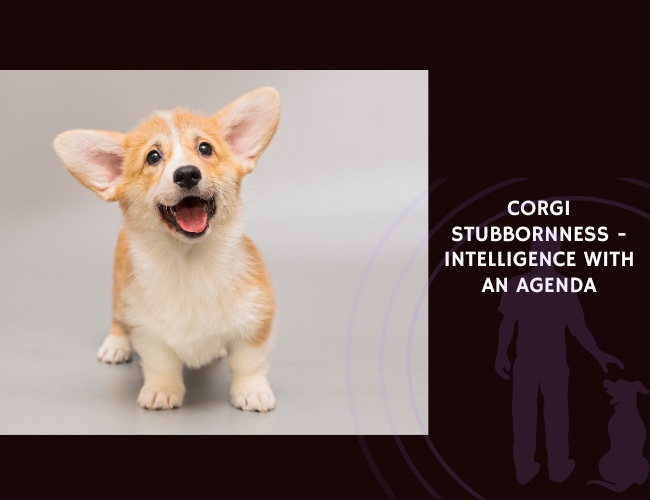
Introduction: When Your Corgi Has Other Plans
Picture this: you’re standing in your living room, treat in hand, calling your Corgi for the third time. Your voice is clear, your tone is friendly, and you know—absolutely know—that your furry companion heard you. Those satellite-dish ears don’t miss a sound. Yet there they sit, ten feet away, looking at you with those intelligent eyes, head slightly tilted, as if calculating whether your request is worth their time.
You might wonder, “Why does my loving companion do this?”
The answer lies centuries deep in your Corgi’s DNA. Pembroke and Cardigan Welsh Corgis weren’t just bred to be charming companions. They were crafted, generation after generation, to be fearless cattle herders who worked in close quarters with animals many times their size. Their signature move? A quick, precise nip to the heels of livestock to guide them forward.
This ancient instinct doesn’t simply disappear when your Corgi trades pastures for living rooms. Instead, it transforms itself, manifesting in a mind that doesn’t blindly follow—it evaluates, it questions, it decides. Understanding this behavior isn’t about blaming your furry friend or feeling like a failed guardian. It’s about recognizing the powerful heritage living inside that compact body and learning how to honor it while keeping everyone safe.
Through the NeuroBond approach, we recognize that what looks like stubbornness is often sophisticated decision-making—a working dog’s brain doing exactly what it was designed to do. Let us guide you through the fascinating intersection of instinct, neuroscience, and practical training. By the end of this exploration, you’ll understand not just what your Corgi is doing, but why—and more importantly, how to channel that remarkable herding drive into something beautiful and harmonious. 🧡
The Herding Heritage: Where It All Begins
Understanding Your Corgi’s Original Purpose
Your Corgi’s ancestors didn’t herd from a distance like Border Collies, using intense stares and strategic positioning. No, Corgis were bred for something far more direct and daring. They worked as “heelers”—dogs who darted in close to nip at the hocks and heels of cattle to move them along.
Think about the skill this required. A Corgi had to be:
- Bold enough to approach animals weighing over a thousand pounds without hesitation or fear
- Quick enough to dodge powerful kicks that could seriously injure or kill them instantly
- Precise enough to deliver a startling nip without causing serious injury to valuable livestock
- Smart enough to read livestock behavior, anticipate movement patterns, and react instantly to changing situations
- Strategic enough to know when to apply pressure and when to back off to avoid escalating the animal’s stress
Their low-to-the-ground stature wasn’t just adorable—it was tactical. Those short legs allowed them to duck under cattle kicks while maintaining the agility to dart in, nip, and retreat before danger struck.
But here’s what matters most for understanding your Corgi today: this work required independent judgment. A herding dog working cattle couldn’t constantly look back to their human for approval. They had to assess the situation, make split-second decisions, and act autonomously. They had to think.
This cognitive independence was deliberately bred into them. For generations, the Corgis who succeeded were those who could problem-solve in real-time, read behavioral cues from livestock, and make strategic decisions without waiting for commands. These weren’t dogs selected for blind obedience—they were selected for intelligent cooperation.
When Cattle Become Children
In your modern home, there are no cattle. But that powerful herding instinct doesn’t simply vanish. Instead, it redirects itself, often toward the moving ankles of family members, joggers, or playing children. You might notice the behavior intensifies when:
- Children run energetically across the living room or yard, triggering the chase-and-redirect instinct your Corgi was bred for
- Family members move quickly during busy mornings or evening routines, activating the drive to control and direct movement
- Joggers or cyclists pass by on walks, stimulating the urge to chase and nip at fast-moving targets
- Chaotic mealtimes occur when everyone moves in different directions, overwhelming your Corgi’s need to keep the “herd” together
- Visitors arrive or leave, creating unpredictable movement patterns that demand management in your Corgi’s mind
- Playing children become loud and their energy escalates, triggering your Corgi’s instinct to calm and control the situation
Each of these scenarios triggers the same neurological cascade that would have activated when cows tried to wander from the herd. Through the ancient programming still alive in your Corgi’s brain, movement equals something that needs guidance, redirection, management.
But here’s the critical insight: your Corgi isn’t being naughty—they’re being precisely what centuries of breeding designed them to be. Their brain is doing exactly what it evolved to do. The challenge isn’t changing who they are; it’s channeling that drive appropriately.
The Brain Science Behind Independent Decision-Making
Let’s explore what’s happening inside that furry head when your Corgi decides whether to respond to your call. Modern affective neuroscience, particularly the groundbreaking work of Jaak Panksepp, reveals that dogs possess primary emotional systems that drive behavior. One of the most powerful is the SEEKING system—a dopamine-driven circuit that fuels curiosity, exploration, and the drive to investigate.
In herding breeds like Corgis, this SEEKING system runs particularly hot. It’s what gave their ancestors the motivation to work independently, to investigate livestock behavior, to problem-solve in the field. When activated, this system doesn’t just make your Corgi curious—it makes them prioritize their own investigation over external commands.
Think of it this way: when your Corgi is sniffing an interesting scent in the yard and you call them, two neural pathways compete. One pathway processes your voice, the social bond, the potential reward. The other pathway is flooded with dopamine from the SEEKING system, making that scent trail feel irresistibly important. The Corgi’s brain then engages in what researchers call executive function—weighing costs and benefits before deciding to act.
This isn’t defiance. It’s sophisticated cognitive processing. Your Corgi is literally calculating: “Is what my human wants more rewarding than what I’m currently investigating?” The answer determines their response.
Cognitive Architecture: The Brilliant Mind That Questions
Problem-Solving vs. Biddability
Here’s where Corgis diverge fascinatingly from breeds like Golden Retrievers or Border Collies. If you ranked dog breeds on two separate scales—independent problem-solving and biddability (willingness to comply with human commands)—Corgis would score remarkably high on problem-solving but notably lower on biddability.
Border Collies, by contrast, score high on both. They’re brilliant problem-solvers who also possess an intense desire to work with humans. Golden Retrievers score extremely high on biddability even if their problem-solving is less sophisticated. But Corgis? They’re the independent consultants of the dog world—highly capable, deeply intelligent, but they want to understand why before they comply.
This isn’t a flaw. It’s a feature. Their breeding history required them to work semi-independently, making judgment calls without constant human input. A Corgi herding cattle needed to decide when to press forward, when to back off, when to nip, when to simply hold pressure with their presence.
That same cognitive architecture now manifests when you ask your Corgi to come inside from the backyard. They’re not ignoring you—they’re evaluating whether your request aligns with their current goal (investigating that interesting hole by the fence) and whether the reward for compliance (praise, treats) outweighs the cost of abandoning their mission.
How Corgis Weigh Their Options
Recent research in canine cognition suggests that dogs with high cognitive independence engage in a sophisticated internal calculus before responding to cues. Your Corgi’s brain processes multiple competing motivations simultaneously:
- The intrinsic reward of their current activity—curiosity satisfaction, SEEKING drive fulfillment, or the pleasure of investigation
- The extrinsic reward you’re offering—treats, praise, play, or physical affection
- The strength of your relationship bond—do they trust and respect you enough to prioritize your request?
- Their current emotional state—are they excited, frustrated, calm, overstimulated, or bored?
- The consistency of your reinforcement history—do your commands actually matter, or have you trained selective listening through inconsistent follow-through?
This processing happens rapidly, often in seconds, but it’s genuine decision-making. And here’s what makes it more complex: Corgis have excellent memories. They remember every time you gave a command without following through. They remember when the treats were stale and uninteresting. They remember patterns—if “come” usually precedes something unpleasant like nail trimming, that command loses value.
This memory-driven evaluation explains why your Corgi might respond perfectly at home but ignore you completely at the park. The variables have changed. At home, distractions are low, their arousal is manageable, and your reinforcement history is strong. At the park, their SEEKING system is overwhelmed with stimuli, their arousal is elevated, and whatever you’re offering can’t compete with the dopamine flood of new scents, sights, and potential playmates.
Self-Directed Intelligence Explained
What we label as “stubbornness” might be more accurately described as self-directed intelligence—the capacity to apply cognitive abilities to achieve one’s own goals, even when those goals diverge from human expectations. This isn’t limited to dogs. We see similar patterns in highly intelligent, independent animals across species.
Your Corgi possesses what researchers call “functional independence”—intelligence that serves their own agenda. When they pause before responding to a command, they’re not being slow or obstinate. They’re thinking. They’re running an internal cost-benefit analysis. They’re considering context, motivation, and outcomes.
This is actually a sign of cognitive sophistication. Dogs who respond instantly to every command without evaluation might be highly biddable, but they’re not necessarily engaging in complex thought. Your Corgi’s pause—that moment when they look at you with those knowing eyes—represents active cognition.
The key to working successfully with this intelligence is understanding that you’re not dealing with a dog who needs to be broken into obedience. You’re dealing with a partner who needs to understand why cooperation benefits them. That’s the essence of Zoeta Dogsoul—respecting the complete being in front of you, biology and brilliance intertwined.

The Motivation Matrix: What Actually Drives Cooperation
Dopamine, SEEKING, and the Novelty Factor
Let’s dive deeper into the neurochemistry driving your Corgi’s behavior. Dopamine isn’t just a “pleasure chemical”—it’s the neurotransmitter of motivation, anticipation, and wanting. When your Corgi’s SEEKING system activates, dopamine surges through neural pathways, creating an intense drive to investigate, explore, and engage with novel stimuli.
For herding breeds, this system evolved to be particularly responsive. Their ancestors needed high motivation to work independently, to stay engaged with livestock for hours, to find satisfaction in the work itself. That translates into modern Corgis who are powerfully driven by novelty and exploration.
Here’s where training often breaks down: repetitive tasks cause dopamine to plateau. The first time you practice “sit,” it’s novel—dopamine flows, engagement is high. By the twentieth repetition, the novelty has vanished. Dopamine drops. Motivation crashes. Your Corgi’s brain literally finds the task less rewarding.
This explains why your Corgi might perform perfectly during the first few minutes of training, then suddenly seem “stubborn.” They’re not being difficult—they’re experiencing a predictable neurochemical shift. Their brain is telling them: “We’ve solved this puzzle. Time to find something new.”
When Rewards Lose Their Power
Not all rewards are created equal in your Corgi’s mind. And critically, reward value isn’t static—it changes based on context, timing, and predictability. A treat that’s highly motivating at home might be completely ignored at the dog park where the environment itself is massively rewarding.
Corgis demonstrate sophisticated reward evaluation. They assess treats based on:
- Value—is this high-quality cheese or boring kibble they eat every day?
- Timing—did the reward arrive immediately after the behavior or several seconds later when the connection is weakened?
- Predictability—do they always get this treat, making it expected rather than exciting?
- Opportunity cost—is this treat worth abandoning what they’re currently doing, or is their current activity more rewarding?
This is where many training protocols fail with Corgis. If you use the same treat repeatedly, offer it inconsistently, or deliver it with poor timing, your Corgi learns that your rewards are optional, low-value, or unreliable. Their sophisticated cost-benefit calculator determines that compliance isn’t worth it.
The Invisible Leash principle reminds us that true control comes not from physical restraint but from making cooperation more rewarding than independence. When your Corgi chooses to come to you despite distractions, they’re not being controlled—they’re making an informed decision that staying connected serves them.
Why Predictability Kills Engagement
Here’s a counterintuitive truth: complete predictability can actually reduce cooperation in intelligent, novelty-seeking breeds. While consistency in rules and boundaries is essential, making every training session identical can lead to what behaviorists call “learned irrelevance.”
Your Corgi’s brilliant brain starts to tune out when:
- Every training session follows the exact same pattern and sequence
- You use the same rewards in the same order without variation
- Practice always happens in the same location at the same time of day
- The challenges never increase in difficulty or complexity
- There are no puzzle elements or problem-solving opportunities
Your Corgi’s brain evolved to thrive on variation. Modern training that ignores this need for novelty will always struggle with Corgis. This doesn’t mean you should be random with rules—boundaries must remain consistent. But it means varying how you practice skills, rotating high-value rewards unpredictably, changing locations and contexts frequently, and introducing puzzle elements and choices whenever possible.
Stubborn. Smart. Strategic.
Working Instincts Behind Every Pause
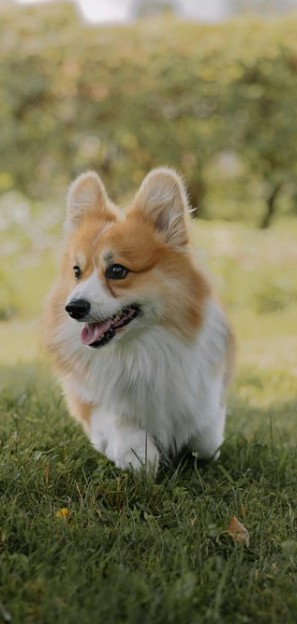
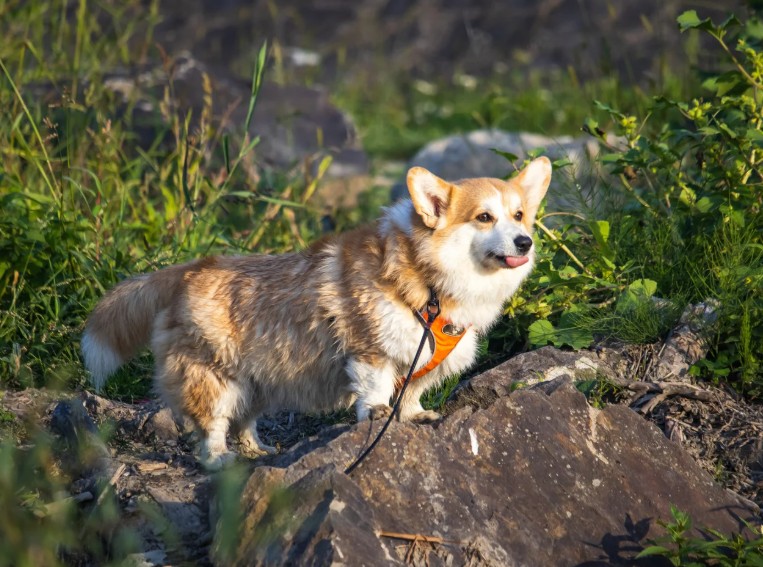
Your Corgi’s stillness isn’t defiance—it’s analysis. Generations of herding cattle built a mind that evaluates before acting, weighing your request against instinctive priorities.
Independence Bred Into the Bone
Their ancestors couldn’t afford blind obedience—they had to think fast, act alone, and make decisions without waiting for human approval.

Decision-Making, Not Disobedience
Every ignored cue, every delayed response, every thoughtful head tilt reflects a dog trained by evolution to strategize. Your Corgi isn’t challenging you—they’re honoring the intelligent, independent nature that once moved thousand-pound cattle with precision and courage.
Emotional Factors: The Hidden Influence
Arousal, Frustration, and Responsiveness
Your Corgi’s emotional state profoundly impacts their ability and willingness to respond to cues. When arousal levels are optimal—calm but alert—their cognitive processing is sharp, and they can evaluate your requests rationally. But when arousal spikes too high or drops too low, decision-making deteriorates.
High arousal manifests as overstimulation, excitement, or agitation. In this state, your Corgi’s prefrontal cortex (responsible for impulse control and executive function) essentially goes offline. The limbic system takes over, driving reactive, emotion-based behavior. Commands that your Corgi would normally follow become neurologically inaccessible because the thinking brain has been hijacked by the emotional brain.
You’ve likely experienced this: your Corgi is perfect at home but becomes a “completely different dog” when visitors arrive, at the dog park, or when they spot a squirrel. This isn’t willful disobedience—it’s neurological overwhelm. Their arousal has exceeded their capacity for cognitive control.
Similarly, low arousal—boredom, fatigue, or depression—also reduces responsiveness. When your Corgi is mentally understimulated, they lack the motivational energy to engage with your requests. They’re not being stubborn; they’re emotionally flat.
🧠 Corgi Stubbornness – Intelligence With an Agenda
Understanding why your brilliant Corgi evaluates every request before deciding to cooperate—and how to work with their independent working-dog mind instead of against it.
🐕 The Working-Dog Heritage Behind the “Stubbornness”
Why Corgis Were Bred to Think Independently
Your Corgi’s ancestors worked as cattle heelers—darting in close to nip at the heels of animals weighing over a thousand pounds. This required split-second decision-making without human input. They weren’t selected for blind obedience; they were bred for intelligent, autonomous problem-solving.
What Your Corgi Is Actually Doing
When your Corgi pauses before responding to your command, they’re not being defiant—they’re engaging in sophisticated cognitive processing. Their brain is evaluating: Is this request worth abandoning my current goal? Does this human’s reinforcement history suggest their commands actually matter? What’s the cost-benefit ratio of compliance right now?
The SEEKING System Connection
Corgis possess an exceptionally active SEEKING system—a dopamine-driven circuit that fuels curiosity and exploration. When this system is activated by an interesting scent or sight, it literally floods their brain with dopamine, making their own investigation feel more rewarding than your command. This isn’t defiance; it’s neurochemistry.
🎯 What Drives Cooperation (And What Kills It)
The Motivation Matrix Your Corgi Uses
Before responding to any cue, your Corgi’s brain processes multiple competing factors:
• The intrinsic reward of their current activity (novelty, curiosity satisfaction)
• The quality and timing of your offered reward
• Your reinforcement history (do your commands consistently matter?)
• Their current emotional state (calm, frustrated, overstimulated)
• The strength of your relationship bond
Why Predictability Kills Engagement
Repetitive training causes dopamine to plateau. By the twentieth “sit” repetition, novelty has vanished and motivation crashes. Your Corgi’s brain literally finds the task less rewarding—not because they’re stubborn, but because they’re experiencing a predictable neurochemical shift. Their working-dog heritage thrived on variation, not endless repetition.
When Rewards Lose Their Power
A treat that’s highly motivating at home might be completely ignored at the dog park. Corgis evaluate rewards based on value (cheese vs. boring kibble), timing (immediate vs. delayed), predictability (expected vs. surprising), and opportunity cost (is this worth abandoning what I’m doing?). Poor reward management trains selective listening.
✅ Training Strategies That Actually Work With Corgi Intelligence
Short Bursts, High Engagement
Effective Corgi training sessions should be:
• Brief: 5-10 minutes maximum to maintain peak dopamine levels
• Frequent: Multiple short sessions throughout the day
• Varied: Different skills practiced rather than endless repetition
• Puzzle-focused: Incorporating problem-solving elements
• Reward-rich: High rates of reinforcement
• Contextually diverse: Practicing in different locations
Task-Based Challenges Over Repetitive Drills
Corgis respond dramatically better to activities that engage their working-dog cognition:
• Scent work: Using their nose to locate hidden objects
• Agility courses: Requiring strategy and problem-solving
• Mini-herding games: With exercise balls or toys
• Trick training: Building complex behavior chains
• Puzzle feeders: Making mealtime mentally stimulating
Autonomy-Supportive Training
Offer choices within structure: “Do you want to go left or right?” Allow them to perform behaviors their way: “Show me a down however you’d like.” Provide mini-jobs: “Please carry this toy to the other room.” When your Corgi has appropriate autonomy, apparent stubbornness often dissolves because they feel like a partner, not a subordinate.
⚠️ Communication Mistakes That Create “Stubbornness”
How We Accidentally Train Selective Listening
Many owners inadvertently create the problem they’re trying to solve:
• Using the same word for different behaviors (confusing your Corgi)
• Giving commands without ensuring follow-through (teaching cues are optional)
• Offering variable consequences (sometimes enforcing, sometimes ignoring)
• Calling multiple times without moving toward them (training them to ignore you)
• Using emotional tones inconsistently (creating communication incongruence)
The Inconsistency Trap
When “come” sometimes means “come immediately,” sometimes means “come when you’re ready,” and sometimes is just background noise with no expectation, your Corgi learns the word is unreliable. They’re not being stubborn—they genuinely don’t know if you mean it this time. Corgis excel at detecting these patterns precisely because they’re so intelligent.
Emotional State Matters
When your Corgi is overstimulated, frustrated, or bored, their prefrontal cortex goes offline and the emotional brain takes over. Commands they’d normally follow become neurologically inaccessible. This isn’t willful disobedience—it’s neurological overwhelm. Pushing for compliance in these states escalates stress and damages trust.
⚡ The Corgi Cooperation Formula
High-Value Rewards + Consistent Follow-Through + Novel Challenges + Appropriate Autonomy + Emotional Clarity = Willing Cooperation
Remember: Your Corgi isn’t refusing to obey—they’re deciding whether cooperation serves them. Make cooperation genuinely rewarding, maintain clear communication, honor their need for mental stimulation, and watch “stubbornness” transform into engaged partnership.
🧡 The NeuroBond Understanding
Through the NeuroBond approach, we recognize that what others label as stubbornness is actually sophisticated decision-making—a working dog’s brain doing exactly what centuries of breeding designed it to do. When you honor your Corgi’s cognitive independence, provide the mental challenges their brilliant mind craves, and communicate with emotional clarity, cooperation emerges naturally.
The Invisible Leash reminds us that true connection comes not from forcing compliance, but from making cooperation more rewarding than independence. Your Corgi chooses to walk beside you not because they must, but because they want to—because you’ve become someone who understands their nature, respects their intelligence, and makes partnership genuinely fulfilling.
That balance between respecting their working heritage and meeting them where they are—that’s the essence of living harmoniously with these remarkable dogs. Your Corgi’s “stubbornness” isn’t something to fix. It’s something to understand, honor, and channel into a relationship that celebrates exactly who they are.
© Zoeta Dogsoul – Where neuroscience meets soul in dog training
How Boredom Breeds “Stubbornness”
Corgis are working dogs whose ancestors had jobs that engaged their minds and bodies for hours. Modern pet life, while comfortable, often fails to provide adequate mental stimulation. When boredom becomes chronic, it manifests as what owners perceive as stubbornness but is actually profound disengagement.
Signs your Corgi’s “stubbornness” might actually be boredom:
- They seem less responsive on days with minimal exercise or mental enrichment
- They ignore basic commands they normally follow perfectly
- They create their own “entertainment” through destructive behaviors
- They appear lethargic or uninterested in activities they usually enjoy
- They respond immediately to novel activities but ignore familiar requests
- Their energy seems low despite adequate physical rest
A bored Corgi’s SEEKING system is starving for activation. They become less responsive to training not because they don’t understand but because nothing feels rewarding enough to break through their mental fog. Basic obedience feels pointless when their intelligent mind is desperate for real challenges.
The solution isn’t necessarily more exercise (though physical activity helps). It’s more mental engagement. Puzzle feeders, scent work, learning new tricks, exploring new environments—these activities feed the SEEKING system and restore your Corgi’s willingness to engage with you.
Reading Your Corgi’s Emotional State
Learning to accurately read your Corgi’s emotional state is foundational to understanding their behavior. Before labeling a response as “stubborn,” assess what their body language reveals about their internal experience.
A frustrated Corgi shows:
- Tense body posture with muscles visibly tight
- Rapid panting even when not overheated
- Excessive licking of lips or nose
- Yawning frequently despite not being tired
- Turning their head away from you or the task
- Stiff, jerky movements rather than fluid motion
An overstimulated Corgi displays:
- Dilated pupils even in normal lighting
- Inability to settle or remain still
- Frantic, unfocused movement patterns
- Excessive vocalization—barking, whining, or howling
- Jumping or spinning repeatedly
- Mouthing or nipping more than usual
A bored Corgi shows:
- Low energy and minimal enthusiasm
- Disinterest in usual activities or toys
- Excessive sleeping beyond normal rest needs
- Minimal response to environmental stimuli
- Slow, lethargic movements
- Lack of engagement even with novel items
When you recognize these emotional states, you can adjust your approach accordingly. Pushing a frustrated or overstimulated Corgi to “just obey” escalates their stress and damages trust. Instead, you lower arousal first—through calm movement, brief breaks, or environmental changes—then re-engage when they’re neurologically capable of cooperation.
This emotional attunement is central to the NeuroBond approach. When you honor your Corgi’s emotional reality rather than demanding compliance regardless of their state, cooperation emerges naturally. You become someone who understands, not someone who forces. That distinction transforms everything. 🧡
Communication Gaps: When Humans Miss the Mark
Unclear Cues and Inconsistent Follow-Through
Here’s an uncomfortable truth: much of what we perceive as Corgi stubbornness originates from human communication errors. Dogs are brilliant at reading patterns, but they can only respond to what we actually communicate—not what we think we’re communicating.
Common communication mistakes that create “stubbornness”:
- Using the same word for different behaviors—”down” means both lie down and get off the furniture
- Giving commands without ensuring follow-through, teaching your Corgi that cues are optional suggestions
- Changing your body language while using the same verbal cue, creating confusion about what you actually want
- Offering variable consequences—sometimes enforcing a command, sometimes ignoring non-compliance
- Using emotional tones inconsistently—sometimes frustrated, sometimes cheerful for the same request
- Giving multiple commands in rapid succession without allowing time for processing and response
Each of these patterns creates ambiguity. When “come” sometimes means “come immediately,” sometimes means “come when you’re ready,” and sometimes is just ambient noise with no real expectation, your Corgi learns that the word is unreliable. They’re not being stubborn when they don’t respond—they genuinely don’t know if you mean it this time.
How We Accidentally Train Selective Listening
Many owners inadvertently create the very problem they’re trying to solve. Consider this common pattern: you call your Corgi. No response. You call again, maybe a bit louder. Nothing. You call a third time, now with frustration creeping into your voice. Still nothing. Finally, you walk over, leash them, and bring them inside.
What did your Corgi just learn? That the first three “comes” don’t matter. Only when you physically approach do they actually have to move. You’ve unintentionally trained them to ignore your voice until you take physical action.
Other ways we accidentally reinforce selective listening:
- Practicing “stay” but allowing your Corgi to break position without consequences, then just repeating the command
- Calling your Corgi multiple times without moving toward them or changing your strategy
- Using commands as background noise—saying “sit” while your Corgi is already engaged in something else
- Failing to reward compliance when it does occur, making cooperation feel unrewarding
- Only giving commands when you’re prepared to enforce them some of the time, creating unpredictability
Corgis excel at detecting these patterns precisely because they’re so intelligent. They’re not being manipulative—they’re responding to what you’ve actually taught them through your behavioral patterns. The solution isn’t getting frustrated with your Corgi. It’s becoming more aware and consistent with your own behavior.
The NeuroBond Approach to Clarity
The NeuroBond model offers a different framework: emotional clarity, calm leadership, and predictable communication create the foundation for genuine cooperation. This isn’t about dominance or strict obedience training. It’s about becoming someone your Corgi can understand and trust.
Key principles of NeuroBond communication:
- Emotional clarity—your internal state matches your external communication, creating authentic congruence your Corgi can trust
- Calm leadership—providing clear boundaries and consistent expectations without emotional reactivity or frustration
- Predictable patterns—your cues always mean the same thing, creating reliability your Corgi can depend on
- Immediate follow-through—every command you give receives follow-through, teaching that your words matter
- Reward-based cooperation—compliance is met with genuine rewards that make cooperation intrinsically valuable
- Respectful pressure—when enforcement is needed, it’s calm, clear, and minimal rather than harsh or emotional
When your Corgi learns that your cues always mean the same thing, that boundaries are consistent, and that cooperation genuinely benefits them, selective listening dissolves. They’re not choosing to obey—they’re choosing to engage with a partner who makes sense.
This is where Soul Recall operates—those moments when your Corgi’s emotional memory recognizes you as a source of clarity, safety, and reward. They remember how cooperation feels, not just what it earns. The relationship itself becomes reinforcing.
Training Dynamics: Working With the Corgi Mind
Short Bursts, Puzzles, and Variation
Traditional training often assumes that longer sessions equal better learning. For Corgis, this is precisely backward. Their working heritage involved short, intense bursts of focused activity followed by rest—darting in to move cattle, then backing off to assess. Their attention span is optimized for this pattern.
Effective Corgi training sessions should be:
- Brief—five to ten minutes maximum to maintain peak dopamine and engagement levels
- Frequent—multiple short sessions throughout the day rather than one long session
- Varied—different skills practiced in each session rather than endless repetition of one behavior
- Puzzle-focused—incorporating problem-solving elements that engage their working-dog cognition
- Reward-rich—high rates of reinforcement to maintain motivation and positive associations
- Contextually diverse—practicing in different locations to build generalization of skills
Within those sessions, variation is key. Instead of twenty repetitions of “sit,” you might practice three sits, two downs, a brief stay, recall, and a trick. Keep their brain guessing, their SEEKING system engaged, their dopamine flowing through novelty.
Task-Based Challenges vs. Repetitive Drills
Imagine asking your Corgi to practice the same skill twenty times in a row—sit, sit, sit, sit. Now imagine giving them a task: “Find the treat I hid behind one of these boxes.” Which scenario engages their working-dog brain more effectively?
Corgis respond dramatically better to task-based challenges that mimic their working heritage:
- Scent work—using their nose to locate hidden objects, toys, or treats in increasingly complex environments
- Agility courses—requiring strategy, problem-solving, and body awareness to navigate obstacles successfully
- Mini-herding games—using exercise balls, toys, or even RC cars to satisfy the herding drive appropriately
- Trick training—building complex behavior chains that require memory, sequencing, and problem-solving
- Hide and seek—combining recall with search behaviors, engaging both cooperation and independence
- Puzzle feeders—making mealtime mentally stimulating rather than just physically satisfying
These aren’t just fun alternatives to obedience—they’re neurologically more effective for building engagement and cooperation. When your Corgi’s brain is satisfied through meaningful work, their willingness to cooperate in other contexts increases. They’re mentally fulfilled, which reduces the frustration and boredom that often manifest as stubbornness.
Autonomy-Supportive Training Strategies
Here’s where we get truly innovative: what if, instead of demanding compliance, you offered your Corgi choices? Autonomy-supportive training acknowledges your Corgi’s need for self-direction while still maintaining boundaries and achieving training goals.
Practical autonomy-supportive strategies include:
- Offering two acceptable options—”Do you want to go left or right on our walk?” letting them choose the direction
- Allowing choice in how they perform behaviors—”Show me a down however you’d like—belly down, on your side, doesn’t matter”
- Providing “mini-jobs”—”Please carry this toy to the other room for me” that satisfy their working drive
- Using “permission release” training—they must check in with you before pursuing something interesting, but then get released to investigate
- Creating choice-based recalls—calling your Corgi, then letting them choose their reward from several options
- Building “work menus”—showing multiple tasks and letting them indicate which they’d prefer to practice first
These strategies honor your Corgi’s need for agency—that deep, bred-in-the-bone expectation that they should have some say in how tasks unfold. When you provide appropriate autonomy, apparent stubbornness often dissolves. Your Corgi isn’t fighting you for control; they’re cooperating within a framework that respects their intelligence.
This doesn’t mean no rules or boundaries. It means providing structure that includes choice wherever possible. The result is a Corgi who engages willingly because they feel like a partner, not a subordinate. That’s the heart of the Invisible Leash—connection without coercion, guidance without force.
Conclusion: Is This Breed Right for You?
Embracing the Brilliant, Independent Spirit
Living with a Corgi means living with a working dog’s mind in a compact, adorable package. It means accepting that you’re not getting a dog who blindly obeys—you’re getting an intelligent partner who will question, evaluate, and sometimes challenge your requests.
This isn’t a flaw. It’s precisely what makes Corgis so captivating. Their independence, their problem-solving ability, their expressive personality—these all stem from the same genetic heritage that created their “stubbornness.”
The question isn’t whether you can train away this independence. You can’t, and you shouldn’t want to. The question is whether you can embrace it, work with it, and build a relationship that honors both your needs and your Corgi’s nature.
What Successful Corgi Guardianship Requires
Thriving with a Corgi requires:
- Patience to work with an independent mind that evaluates rather than automatically complies
- Creativity in training approaches that engage their problem-solving abilities and working-dog heritage
- Consistency in communication, boundaries, and follow-through so your Corgi understands what you actually mean
- Appreciation for intelligence and autonomy rather than expecting blind obedience
- Willingness to provide adequate mental stimulation through varied activities, challenges, and novel experiences
- Humor to appreciate their selective cooperation and independent decision-making
- Commitment to becoming a skilled communicator rather than demanding your Corgi simply understand unclear cues
If you’re looking for a dog who automatically complies, who never questions your requests, who is content with simple routines, a Corgi probably isn’t your match. But if you’re excited by the challenge of partnering with an intelligent being, if you appreciate the humor in their selective cooperation, if you’re willing to become a more skilled communicator and trainer, then a Corgi can be an extraordinary companion.
The Beautiful Balance
There’s something remarkable that happens when you stop fighting your Corgi’s independent nature and start working with it. Training becomes collaborative rather than combative. Your Corgi’s compliance emerges not from submission but from genuine cooperation. The relationship deepens into something beyond owner and pet—it becomes partnership.
This is what Zoeta Dogsoul has always recognized: dogs are complete beings with biological drives, emotional needs, and cognitive capabilities that deserve respect. When you honor your Corgi’s herding heritage, when you provide the mental stimulation their brain craves, when you communicate with clarity and consistency, that apparent stubbornness transforms.
It doesn’t disappear—your Corgi will always maintain their independent streak, will always evaluate your requests, will always bring their brilliant mind to every interaction. But now you understand why. You see the working dog beneath the behavior. You recognize the sophisticated decision-making that others might label as defiance.
And in that understanding, something beautiful emerges: not obedience through force, but cooperation through connection. Not dominance, but mutual respect. Not a pet who simply follows, but a partner who chooses to walk beside you—connected not by a leash, but by something far stronger. 🧡
That balance between science and soul, between respecting their working heritage and meeting them where they are—that’s the essence of living harmoniously with these remarkable dogs. Your Corgi’s stubbornness isn’t something to fix. It’s something to understand, honor, and channel into a relationship that celebrates exactly who they are.










