
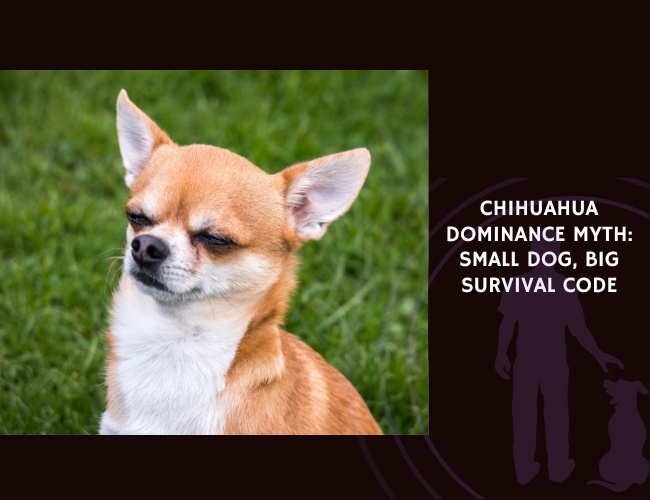
Introduction: Rethinking the “Tiny Tyrant” Label
You’ve probably heard it before—the little Chihuahua who rules the household with an iron paw. The one who growls at strangers, guards the couch like a dragon hoards gold, and barks at dogs ten times their size. Popular culture loves to paint these tiny companions as pint-sized dictators suffering from “Napoleon complex,” convinced they’re Great Danes trapped in four-pound bodies.
But what if everything you’ve been told about Chihuahua dominance is wrong?
The truth is far more fascinating—and far more heartbreaking. Behind that fierce little facade isn’t a power-hungry tyrant, but a profoundly vulnerable creature running sophisticated survival software developed over thousands of years. When we understand this, we don’t just become better Chihuahua owners. We become partners in helping them feel safe in a world that, from their perspective, is filled with giants.
In this comprehensive guide, you’ll discover:
- Why human perception systematically misreads small dog behavior
- The survival code driving your Chihuahua’s “dominant” displays
- How fear masquerades as aggression and control
- Why your well-meaning protection might be making things worse
- The NeuroBond approach to replacing myths with genuine safety
Let’s begin by examining the lens through which humans view small dog behavior—and why that lens is fundamentally distorted.
Understanding Human Bias: Why We Get It Wrong
The Perception Problem
When a German Shepherd growls, we often interpret it as a warning worth respecting. When a Chihuahua growls, we laugh, call it “feisty,” and maybe post a video online. This difference in reaction reveals something important: human perception of dog behavior is heavily filtered through size bias.
Research in perception psychology shows that humans tend to interpret the same behavior differently based on the size of the creature displaying it. When a small dog exhibits assertive behaviors—growling, barking, snapping—these actions are disproportionately labeled as “dominance” compared to identical displays from larger breeds. A Labrador resource-guarding its food bowl is concerning. A Chihuahua doing the same thing is “trying to be the boss.”
Common size-bias misinterpretations include:
- Growling labeled as “attitude” rather than warning communication
- Barking dismissed as “yappy” rather than alarm signaling
- Resource guarding seen as “bossy” rather than security-seeking
- Snapping interpreted as “aggression” rather than desperate boundary-setting
- Trembling mistaken for “cold” rather than chronic stress response
This misinterpretation stems from a perception phenomenon where we view a small creature’s strong display as somehow “bigger” than it actually is—disproportionate to their physical capabilities. Our brains fill in a narrative: this tiny dog thinks it’s bigger than it is. It must have an inflated ego. It’s trying to dominate.
But that narrative says more about human psychology than canine behavior.
Anthropomorphism and the Dominance Story
Humans are natural storytellers. We project complex social narratives onto animal behavior, often unconsciously. The story of a small dog “acting big” fits perfectly into our cultural mythology about power, compensation, and hierarchy. We have a ready-made framework—dominance theory—that seems to explain everything.
The problem? That framework was developed by observing wolves in captivity, a context so artificial that even the original researcher later disavowed his own conclusions. Applying dominance theory to companion dogs—especially to a breed as unique as the Chihuahua—creates more confusion than clarity.
Why dominance theory fails for Chihuahuas:
- Wolves in captivity behave differently than wild family units
- Dog-human relationships aren’t equivalent to wolf pack dynamics
- Small dogs face unique survival pressures large dogs don’t experience
- Fear and vulnerability create behaviors that mimic dominance displays
- The “alpha” concept has been scientifically abandoned by wolf researchers
When your Chihuahua growls at an approaching stranger, they’re not thinking “I am the alpha, and I must establish my rank.” They’re thinking something much more primal: “That giant is getting too close, and I need to make it stop.”
Misreading Defensive Signals
Here’s where things get particularly problematic. Behaviors that are actually fear-driven control strategies are frequently confused with dominance attempts. Studies on human-robot interaction have found something illuminating: when a robot exhibits “leaning back” behavior in response to personal space intrusion, humans correctly identify it as defensive—but still perceive it as “unfriendly.”
The same pattern applies to Chihuahuas. We might recognize, intellectually, that our dog is reacting to a perceived threat. But emotionally, we still interpret it through a social hierarchy lens. “Why is my dog being so unfriendly? Why does it think it’s in charge?”
The answer is: it doesn’t. Your Chihuahua isn’t trying to be in charge. It’s trying to survive.
Vulnerability and Strategic Assertiveness
Living Life at Ankle Height
To understand Chihuahua behavior, you need to understand what it means to be the smallest dog in the canine world. Imagine walking through your daily life where every person you encounter is the size of a three-story building. Every other dog is at least the size of a horse, and many are closer to elephants. The furniture in your home is scaled for giants. Even the family cat outweighs you.
This isn’t fantasy for a Chihuahua. It’s Tuesday.
Their extreme small size—typically between two and six pounds—fundamentally shapes every aspect of their survival instinct and behavioral repertoire. Physical vulnerability isn’t just a characteristic; it’s the defining feature of their existence.
Physical realities that shape Chihuahua psychology:
- Cannot rely on physical strength for defense against any threat
- Unable to outrun most predators or perceived dangers
- A fall from furniture height could cause serious injury or death
- Easily stepped on, sat on, or crushed accidentally
- Temperature regulation challenges requiring constant energy management
- Delicate skeletal structure vulnerable to rough handling
- Limited physical stamina compared to larger breeds
Evolution has given them one tool: their behavior.
Micro-Boundary Enforcement
Given their delicate bodies, Chihuahuas have developed what behavioral scientists call “micro-boundary enforcement.” This involves establishing and vigorously defending personal space and perceived safe zones—not because they want to control resources, but because proximity to larger creatures represents genuine danger.
Think about it from your dog’s perspective. When a stranger reaches down toward a Chihuahua, that hand is enormous. It’s descending from above, like a predator strike. The dog doesn’t know if this hand brings treats or harm. What the dog does know is that its only real protection is to make that hand go away before finding out.
Key micro-boundary enforcement behaviors:
- Growling when approached too quickly
- Barking at unfamiliar people or animals entering their space
- Positioning themselves in corners or elevated spots
- Stiffening body posture when personal space is invaded
- Lip curling or showing teeth as distance-increasing signals
- Strategic placement near trusted humans or escape routes
This creates a behavioral pattern that looks aggressive but is actually profoundly defensive. The goal isn’t to establish rank. The goal is to create space.
Preemptive Defense Mechanisms
Chihuahua behaviors like growling, barking, guarding, or stiffening are often better understood as preemptive defense mechanisms rather than attempts at hierarchy establishment. These are early warning signals designed to deter potential threats before physical confrontation becomes necessary.
This strategy makes perfect sense from an evolutionary standpoint. Animals in unpredictable environments develop specific survival strategies, and for a creature as vulnerable as a Chihuahua, the best confrontation is the one that never happens. By issuing warnings early and emphatically, the dog hopes to avoid the physical encounter it cannot win.
Research on competition in the animal kingdom shows that communication signals are used to assess opponents and adjust behavior, potentially avoiding costly fights. For Chihuahuas, vocal and spatial assertion serve exactly this purpose: managing interactions without physical escalation that could prove fatal.
Signal Amplification
Because physical confrontation isn’t a viable option, Chihuahuas rely heavily on vocalizations and spatial assertion. And here’s the crucial point: these signals are amplified to compensate for their physical disadvantage.
A Great Dane can afford a subtle warning growl. Its size speaks for itself. A Chihuahua must communicate its boundaries much more emphatically because, without amplification, those boundaries might not be taken seriously.
Signal amplification strategies in Chihuahuas:
- Higher-pitched, more frequent barking than larger breeds
- Exaggerated body language (hackles raised, stiff posture)
- Intense eye contact and direct facing toward threats
- Rapid escalation from warning to snapping
- Louder growling relative to body size
- Repeated warning signals rather than single cues
The result is behavior that humans perceive as “over the top” or “disproportionate”—when in reality, it’s precisely calibrated to the dog’s actual situation. Your Chihuahua isn’t overreacting. From their perspective, they’re reacting appropriately to genuinely threatening situations that you, as a giant, simply don’t perceive as threatening.
Fear-Based Control vs. Social Dominance
The Critical Distinction
Understanding the difference between fear-driven control strategies and genuine social dominance is crucial for anyone living with a Chihuahua. These behaviors can look identical on the surface but stem from completely different psychological states—and require completely different responses.
Fear-driven control strategies emerge when a dog feels vulnerable and attempts to manage its immediate environment to reduce perceived threats. Social dominance, in contrast, involves confident resource acquisition within an established social hierarchy. The behaviors might look similar, but the emotional state behind them is entirely different.
How to distinguish fear from dominance:
| Behavioral Indicator | 😰 Fear-Based Behavior | 👑 True Dominance |
|---|---|---|
| Body Language | Tension visible, tucked tail, trembling | Relaxed, confident posture throughout |
| When Cornered | Escalates faster, panic response | No change—doesn’t need escape routes |
| Response to Space | Calms significantly when given distance | Space doesn’t change behavior |
| Environment Effect | Worse in unfamiliar environments | Consistent across all contexts |
| Safety Measures | Improves with security and routine | Doesn’t respond to safety cues |
| Stress Indicators | Trembling, lip licking, whale eye | No stress indicators present |
| Owner Presence | Clings to owner, hides behind them | Acts independently of owner |
| Solution Approach | Create safety & build confidence | Structure & clear leadership |
Many “dominant-like” behaviors in Chihuahuas—resource guarding food, toys, or their owner’s lap; snapping at approaching people or dogs; hiding behind their owner while barking—are manifestations of fear and insecurity. These are attempts to control an environment that feels overwhelming and dangerous.
Why Escape Matters
One telltale sign that distinguishes fear-based behavior from dominance: Chihuahuas often escalate faster in confined or tight spaces. Why? Because their ability to retreat—their primary coping mechanism for fear—is physically restricted.
A confident, socially dominant dog doesn’t need to escalate in tight spaces because they’re not trying to escape. They’re comfortable. But a fearful dog relies on the option of retreat as a psychological safety valve. When that option disappears, the only remaining strategy is confrontation.
Questions to assess your Chihuahua’s fear response:
- Does your dog seem calmer when they have clear escape routes?
- Do they escalate more quickly when cornered or constrained?
- Are they more reactive in small rooms versus open spaces?
- Do they relax when you move away or create distance?
- Are they worse at the vet, groomer, or other confined settings?
- Do they seek elevated positions with good visibility?
These patterns reveal that fear, not dominance, drives their behavior.

Displacement Signals and “Bossy” Behavior
What appears as “bossy” behavior in Chihuahuas can often be traced to displacement signals—behaviors that emerge when a dog is experiencing internal conflict, insecurity, anxiety, or sensory overload. These behaviors aren’t about asserting higher rank; they’re about managing overwhelming internal states.
When your Chihuahua suddenly demands to be picked up, refuses to move from a certain spot, or seems to “order” you around, consider what might be happening inside them. Are they experiencing anxiety? Have they been over-stimulated? Is there something in the environment triggering their survival instincts?
Common displacement signals mistaken for dominance:
- Excessive licking (lips, nose, or humans)
- Yawning when not tired
- Scratching when not itchy
- Sudden intense sniffing of the ground
- Shaking off when not wet
- Averted gaze or whale eye
- Freezing in place
- Pacing or circling
Understanding this distinction transforms how we respond. Instead of “correcting” dominance, we address the underlying emotional state. Instead of power struggles, we provide safety.
Attachment, Overprotection, and Learned Helplessness
The Paradox of Protection
Here’s where Chihuahua behavior gets particularly complex: the way humans interact with these dogs often inadvertently creates the very problems we’re trying to prevent. Our natural impulse to protect something so small and vulnerable can backfire dramatically.
Being constantly carried, shielded from normal dog-dog interactions, and removed from challenging situations can prevent Chihuahuas from developing crucial social skills and confidence. This overprotection can actually amplify their inherent fear responses by confirming, in the dog’s mind, that the world truly is dangerous.
Signs you may be overprotecting your Chihuahua:
- Carrying them whenever other dogs are present
- Picking them up at the first sign of discomfort
- Never allowing them to walk on their own in public
- Avoiding all situations that might challenge them
- Speaking in anxious tones when potential threats appear
- Shielding them from all normal household activities
- Never letting them problem-solve minor challenges
Think about it from the dog’s perspective. Every time you pick them up when another dog approaches, you’re communicating: “Yes, you’re right to be afraid. This is a threat. I’m rescuing you.” The dog learns that their fear is justified, that they cannot handle normal situations, and that escalation is the appropriate response when you’re not there to intervene.
Numbed Self-Regulation
Perhaps more damaging is how overprotective handling can numb a dog’s ability to self-regulate. When humans consistently intervene or remove the dog from challenging situations, the Chihuahua never learns to cope on their own.
Research on early-life adversity in animals shows that unpredictable or adverse experiences can impair an animal’s ability to respond adaptively to its environment. Paradoxically, over-protecting a dog creates a form of adversity: the adversity of never developing coping skills.
Consequences of numbed self-regulation:
- Inability to calm down without human intervention
- Exaggerated responses to minor stressors
- Lack of graduated response (goes from 0 to 100 instantly)
- Dependency on being held or carried for comfort
- Panic when separated from protective human
- No repertoire of self-soothing behaviors
- Chronic baseline anxiety
The result? When these dogs do face perceived threats—and eventually they will—they respond with exaggerated behaviors. They’ve never learned to grade their responses because they’ve never had the chance to work through mild challenges successfully.
Small. Fierce. Misread.
Dominance is not the driver.
Your Chihuahua isn’t acting like a ruler—they’re running survival code in a world that feels overwhelmingly large and unpredictable.
Big displays mask bigger fear.
What looks like attitude is often alarm, and what looks like control is pure compensation for chronic vulnerability in a giant-sized environment.

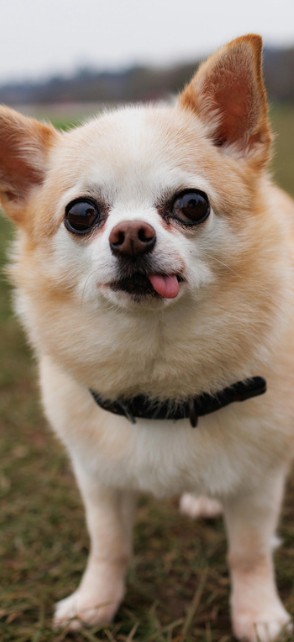
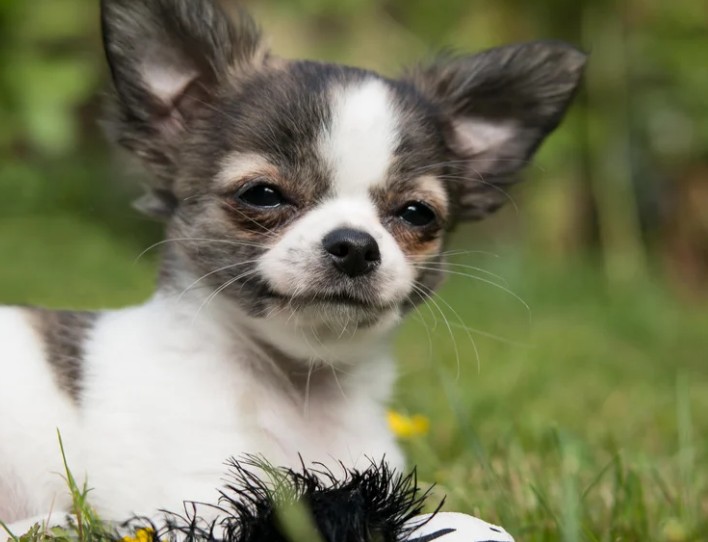
Reframing changes everything.
When you replace dominance myths with survival logic, their behavior stops feeling oppositional and becomes understandable, workable, and deeply human.
Role Confusion and Compensatory Control
Excessive attachment and overprotection can create a troubling dynamic: the Chihuahua begins to feel responsible for managing its world and even its human. This isn’t dominance—it’s anxiety-driven responsibility born from insecurity.
When a dog feels that its human isn’t capable of managing the environment safely, the dog may attempt to take on that role themselves. Not because they want power, but because someone has to do it, and clearly, the giant human isn’t handling things.
Role confusion behaviors that mimic dominance:
- “Demanding” specific positions or locations
- “Refusing” to let certain people near the owner
- “Insisting” on specific routines or sequences
- Barking orders when the human doesn’t respond quickly
- Patrolling and checking on household activities
- Alerting to every sound or movement
- Inability to relax unless actively monitoring
But underneath these behaviors is a dog desperately trying to create order in what feels like a chaotic, threatening world. Through the NeuroBond approach, trust becomes the foundation of learning—and crucially, it releases the dog from this burden of hypervigilance. When a Chihuahua trusts that their human has the situation under control, they can finally relax.
🐕 Chihuahua Dominance Myth: Decoded 🐕
Understanding the survival code behind your tiny companion’s big behaviors.
When we see fear instead of dominance, everything changes. 💜
🧠 The Truth About “Dominance”
Why Small Dogs Act Big
Your Chihuahua isn’t trying to rule your home—they’re trying to survive in a world of giants. What looks like aggression is actually sophisticated survival software:
• Micro-boundary enforcement for safety
• Signal amplification to compensate for size
• Preemptive defense to avoid confrontation
• Fear-driven control, not social hierarchy
🏠 Creating Safety Daily
Environmental Adjustments
Transform your home into a sanctuary where defensive behaviors become unnecessary:
• Create dedicated safety islands they control
• Ensure clear escape routes in every room
• Reduce sensory overload and chaos
• Provide elevated spots for security
• Respect their retreat spaces unconditionally
✅ Building Confidence
The NeuroBond Approach
Replace dominance myths with safety architecture through calm, consistent leadership:
• Move deliberately, never suddenly
• Establish predictable routines
• Read and respect early warning signals
• Celebrate small confidence wins
• Reduce your own emotional noise
⚠️ Avoid These Mistakes
Common Human Triggers
These well-meaning behaviors actually create the “dominance” problems we complain about:
• Overprotecting and constant carrying
• Looming gestures and fast movements
• Ignoring early signals until they escalate
• Inconsistent boundaries that create anxiety
• Punishing fear instead of addressing it
⚡ The Fear vs. Dominance Quick Check
Ask yourself: Does my dog escalate faster when cornered? Calm down when given more space? Show tension in their body? React worse in unfamiliar places?
If YES → It’s fear, not dominance. The solution isn’t correction—it’s creating safety. When threats disappear, defensive behaviors become unnecessary. Your Chihuahua isn’t trying to control you; they’re trying to feel safe with you.
🧡 The Zoeta Dogsoul Philosophy
Through the NeuroBond approach, trust becomes the foundation of learning—releasing your Chihuahua from the burden of hypervigilance. The Invisible Leash reminds us that awareness, not tension, guides the path. When we provide genuine safety, defensive behaviors dissolve because there’s nothing left to defend against.
Your Chihuahua isn’t a tiny tyrant. They’re a small creature with a big survival code, waiting for someone who understands. Now that someone is you.
© Zoeta Dogsoul – Where neuroscience meets soul in dog training
Resource and Space Micro-Guarding
Safety Islands, Not Power Plays
Chihuahuas frequently guard resources and spaces—the couch, the bed, their owner’s lap, a particular bag or blanket. This behavior is almost universally misinterpreted as dominance: “My dog thinks it owns the couch!”
In reality, this guarding behavior is typically a defense of what we might call “safety islands.” These are perceived secure zones where the Chihuahua feels protected from potential threats. Their small size makes them acutely aware of their vulnerability in open spaces, and they develop strong attachments to locations that provide security.
Commonly guarded “safety islands”:
- Owner’s lap (warmth, elevation, protection)
- Couches and beds (elevation, soft landing)
- Specific blankets or beds (familiar scent, enclosure)
- Bags and carriers (enclosed, portable safety)
- Under furniture (hidden, protected overhead)
- Corners of rooms (reduced approach angles)
- Near doorways (escape route access)
Consider what these “guarded” locations have in common. They’re often elevated (laps, couches, beds), enclosed (bags, blankets), or positioned near their human. These aren’t random power grabs—they’re strategic selections of defensible positions where a small, vulnerable creature can feel safe.
The Elevation Factor
Spatial elevation plays a fascinating role in Chihuahua behavior. Being in an elevated position—on a lap, couch, or bed—can alter a dog’s threat perception in two ways.
First, elevation provides a better vantage point. The dog can see approaching threats earlier and from farther away, giving them more time to respond. This reduces the surprise factor that makes close encounters so frightening.
Second, elevation can make a Chihuahua feel temporarily less vulnerable. From a higher position, they’re not as dramatically dwarfed by everything around them. This can make them feel more emboldened to issue warnings to approaching perceived threats.
Why elevation changes behavior:
- Improved sight lines for threat detection
- More time to assess and respond to approaches
- Reduced size differential with humans
- Better positioning for communication signals
- Psychological comfort from high ground
- Access to human for backup if needed
This explains why many Chihuahuas seem “more aggressive” when on furniture or being held. It’s not that elevation gives them delusions of grandeur—it’s that elevation reduces their baseline fear enough to allow them to communicate more assertively.
Understanding this reframes the entire behavior. Your dog isn’t “being dominant” on the couch. Your dog has found a place where it feels safe enough to actually defend itself instead of just cowering.
Human Handling and Trigger Creation
How We Create the Problems We Complain About
Much of what we label as “Chihuahua dominance” is actually behavior that humans inadvertently create through our handling. Understanding these patterns is essential for anyone wanting to help their small dog feel safer.
Looming gestures represent one of the most common triggers. When humans bend over a small dog—to pet it, pick it up, or simply say hello—they’re creating a deeply threatening visual stimulus. From the dog’s perspective, a massive shape is suddenly descending from above, blocking out light and escape routes. This triggers deep predator-response instincts.
Common human triggers for defensive behavior:
- Bending directly over the dog (looming)
- Reaching hands toward face or head
- Fast, sudden movements
- Direct, prolonged eye contact
- High-pitched excited voices
- Grabbing or restraining without warning
- Approaching when the dog is cornered
- Invading space during rest or sleep
Reaching hands pose similar problems. A hand moving toward a Chihuahua covers a significant portion of their visual field. It’s large, it’s unpredictable, and it’s entering their personal space. Without careful conditioning, this can easily trigger defensive responses.
Fast movements amplify everything. Quick gestures that seem normal to humans—reaching, turning, standing up—can appear startlingly sudden to a small dog already primed for threat detection.
The Ignored Signal Escalation
When a Chihuahua’s early, subtle signals of discomfort are repeatedly ignored, the dog learns something unfortunate: subtle signals don’t work. To be understood, they must escalate.
Those early signals—lip licks, averted gaze, slight stiffening, turning away—are the dog’s first attempt at communication. They’re saying, “I’m uncomfortable. Please give me space.” If humans consistently miss or ignore these signals, the dog has no choice but to communicate more dramatically.
The escalation ladder (early to late signals):
- Lip licking or nose licking
- Yawning
- Averting gaze or turning head away
- Whale eye (showing whites of eyes)
- Slight body stiffening
- Moving away or leaning back
- Low growl
- Showing teeth
- Air snap (deliberate miss)
- Bite
Over time, this creates dogs who skip the subtle warnings entirely and go straight to growling, snapping, or biting. These aren’t “dominant” dogs—they’re dogs who have learned, through experience, that nothing less than extreme signals gets their message across.
The Invisible Leash reminds us that awareness, not tension, guides the path. When we learn to read and respect our dog’s early signals, we prevent this escalation cycle from developing in the first place.
The Chaos of Inconsistency
Inconsistent boundaries may be the most damaging human behavior of all. When certain actions are sometimes allowed and sometimes corrected—when the rules seem to change randomly—dogs experience significant psychological stress.
For a creature already primed for hypervigilance, unpredictability is profoundly disturbing. The dog cannot build a reliable mental model of what to expect, so they remain in a state of constant alertness.
Examples of damaging inconsistency:
- Sometimes allowing on furniture, sometimes scolding for it
- Feeding from the table occasionally but not always
- Some family members enforcing rules, others ignoring them
- Rules changing based on human mood
- Excitement sometimes welcomed, sometimes punished
- Varying responses to the same behavior
This chronic stress expresses itself through increased defensive behaviors as the dog attempts to establish their own sense of order in an unpredictable environment. What looks like “dominance” or “stubbornness”—the dog insisting on certain routines, refusing to accept changes—is often an attempt to create stability that the human environment isn’t providing.
Social Mismatch and Environmental Pressure
When the Environment Creates the Problem
The environment in which a Chihuahua lives significantly impacts their behavior, often pushing them toward defensive control strategies that get mislabeled as dominance.
Chaotic homes create chaotic dogs. Environments with frequent visitors, unpredictable schedules, loud noises, or general disorder increase stress levels dramatically for small, vulnerable animals. Multi-dog households can be particularly challenging, especially when the other dogs are significantly larger.
High-stress environmental factors:
- Frequent visitors or changing household members
- Unpredictable daily schedules
- Loud television, music, or household noise
- Multiple large dogs in the home
- Young children with unpredictable movements
- Construction or renovation activity
- Frequent moves or environment changes
- High-traffic living areas with no retreat options
In these settings, the Chihuahua’s perceived need for self-protection increases substantially. They’re not trying to dominate—they’re trying to survive what feels like constant bombardment.
Chronic Sensory Overload
Consider the sensory environment from a Chihuahua’s perspective. Constant noise, the presence of children (who often move unpredictably and may not respect the dog’s space), rapid movements, and interactions with large dogs can create chronic sensory overload.
This pushes Chihuahuas into what behaviorists call “hyper-arousal states”—conditions of chronic, elevated stress response. In this state, controlling their immediate space and interactions becomes a primary coping strategy. It’s not about dominance; it’s about managing overwhelming stimuli.
Signs of chronic sensory overload:
- Constant vigilance and scanning
- Inability to settle or relax
- Reactive to minor sounds or movements
- Frequent startle responses
- Excessive barking at normal household events
- Trembling without obvious cause
- Difficulty sleeping soundly
- Loss of appetite or digestive issues
Dogs in chronic hyper-arousal often show what appears to be aggressive behavior, but it’s actually defensive behavior that’s stuck in the “on” position. Their stress system never gets a chance to reset.
The Human-Scale World
Perhaps the most fundamental environmental challenge for Chihuahuas is simply living in a human-scale world. Everything—furniture, doorways, other beings—is designed for creatures many times their size.
This constant size mismatch intensifies the felt need to manage proximity and safety. Every interaction requires navigating a world of giants. Every piece of furniture is a potential fall hazard. Every threshold could hide a threat.
Daily challenges in a human-scale world:
- Stairs that are climbing walls from their perspective
- Furniture that requires jumping or assistance to access
- Door thresholds that must be navigated carefully
- Human feet that could crush them with one wrong step
- Household items that dwarf them completely
- Other pets that outweigh them significantly
- Children at unpredictable eye level
Humans rarely consider this reality. We design our homes for our own comfort and expect our tiny dogs to simply adapt. But adaptation comes at a cost—the cost of constant vigilance, chronic stress, and behaviors that we then mislabel as dominance.
The NeuroBond Approach: Replacing Dominance Myths With Safety Architecture
A New Framework for Understanding
The NeuroBond interpretation offers an alternative framework for understanding and addressing Chihuahua behavior. Instead of viewing these dogs through the lens of dominance and hierarchy, we focus on relational safety and emotional clarity.
This approach recognizes that “dominance” behaviors in Chihuahuas are actually survival strategies triggered by perceived threats. The solution isn’t to establish dominance over the dog—it’s to remove the conditions that activate their survival code.
Core principles of the NeuroBond approach:
- Safety precedes obedience in the hierarchy of needs
- Trust is built through predictability, not control
- Emotional clarity from humans creates calm in dogs
- Defensive behaviors resolve when threats are removed
- Relationship quality determines behavioral outcomes
- The human’s emotional state directly affects the dog
When we provide genuine safety, the defensive behaviors become unnecessary. The dog doesn’t need to guard, growl, or snap because there’s nothing to guard against. This isn’t training through suppression; it’s transformation through security.
Calm Leadership, Not Confrontation
Calm, consistent leadership—rather than confrontational dominance—is key to reducing a Chihuahua’s defensive boundary behaviors. This involves providing clear expectations and a predictable environment that helps the dog feel secure.
What calm leadership looks like in practice:
- Moving deliberately rather than suddenly
- Establishing consistent daily routines
- Handling challenges without emotional reactivity
- Providing clear, consistent boundaries
- Responding to stress with composure, not anxiety
- Making decisions so the dog doesn’t have to
- Creating predictable patterns the dog can rely on
When a Chihuahua trusts that their human will handle situations calmly and competently, they can release the burden of constant vigilance. They don’t need to manage threats because someone else—someone capable—is already doing it.
Invisible Leash Principles
Applying Invisible Leash principles—characterized by clarity, predictability, and the absence of emotional noise from the human—can stabilize a Chihuahua’s internal safety model.
Emotional noise is particularly important to understand. Dogs are remarkably sensitive to human emotional states. When we’re anxious about how our Chihuahua will behave, that anxiety transmits to the dog and confirms their sense that there’s something to be anxious about. When we’re frustrated with their “dominance,” that frustration creates more stress, triggering more defensive behavior.
Reducing emotional noise:
- Monitor your own stress levels during interactions
- Breathe calmly before approaching your dog
- Avoid projecting anxiety about potential problems
- Don’t telegraph worry through body language
- Maintain neutral, confident energy
- Let go of frustration before engaging
- Trust your dog’s capacity to handle manageable challenges
The Invisible Leash isn’t about control—it’s about connection. It’s about creating a relationship where the dog can relax because they trust their human’s calm, clear presence.
Rebuilding From the Ground Up
Transforming a defensive Chihuahua requires actively reducing trigger density, respecting their personal space, and systematically rebuilding their confidence through positive experiences.
Steps for rebuilding confidence:
- Create dedicated safe spaces the dog controls
- Introduce challenges gradually at the dog’s pace
- Celebrate small victories in confidence
- Never force interactions the dog isn’t ready for
- Build positive associations with previously frightening stimuli
- Allow the dog to approach new things on their terms
- Reward brave choices with calm acknowledgment
Moments of Soul Recall reveal how memory and emotion intertwine in behavior. Past experiences of fear create present defensive reactions. But new experiences of safety can gradually rewrite those associations, allowing the dog to approach the world with curiosity rather than fear.
Theoretical Foundations
Why This Approach Works
This comprehensive understanding of Chihuahua behavior draws upon several well-established theoretical frameworks that support the safety-based approach over dominance models.
Affective Neuroscience (Panksepp, 1998) demonstrates that high FEAR system activation in micro-breeds leads to defensive patterns that may resemble dominance but are fundamentally rooted in survival instincts. The brain’s primal emotional systems drive these behaviors as a response to perceived threats—not as bids for social status.
Vulnerability Theory explains why small-bodied animals adopt “signal amplification” strategies. They must make their presence and intentions known more emphatically to compensate for their lack of physical imposingness. What we perceive as “disproportionate” behavior is actually proportionate to the animal’s actual vulnerability.
Stress and Coping Models demonstrate that hyper-vigilant dogs, especially those in perceived high-threat environments, will rely on vocal or spatial control mechanisms when they cannot cope through more natural escape or avoidance behaviors. This is a direct response to chronic stress, not a personality trait or dominance tendency.
Attachment and Overprotection Framework highlights how human-induced dependency can distort a dog’s normal confidence-building processes and inflate defensive responses. Our well-meaning protection can become the problem it’s trying to prevent.
Cross-Species Miscommunication Theory emphasizes that humans frequently misread protective, fear-driven, or proximity-based behaviors in animals as attempts at social hierarchy. This leads to significant misunderstandings and inappropriate responses that often make the problem worse.
Practical Application: Living With Your Chihuahua
Creating Safety in Daily Life
Understanding the theory is valuable, but what does this mean for day-to-day life with your Chihuahua?
Start by auditing your dog’s environment for stressors. Where are the high-traffic areas they can’t escape? What sounds startle them regularly? Who approaches them in ways that trigger defensive responses? Once identified, work systematically to reduce these triggers.
Environmental audit checklist:
- ☐ Identify all high-traffic areas your dog can’t avoid
- ☐ Note sounds that consistently trigger reactions
- ☐ List people whose approach causes defensive behavior
- ☐ Map escape routes (or lack thereof) in each room
- ☐ Assess furniture accessibility and safety
- ☐ Evaluate other pets’ impact on stress levels
- ☐ Consider noise levels at different times of day
- ☐ Check for adequate retreat spaces
Create genuine safe spaces—areas where your dog can retreat and decompress without being followed, picked up, or bothered. These might be crates (left open), covered beds, or quiet rooms. The key is that the dog chooses when to use them and feels secure that these spaces will be respected.
Practice calm, predictable handling. Announce your intentions before approaching. Move at a pace your dog can track. Give them time to process and respond before escalating your approach. Never corner them or remove escape routes.
Rethinking “Problem Behaviors”
When your Chihuahua displays “dominant” behavior, resist the urge to correct or punish. Instead, ask: what is my dog feeling right now? What threat are they responding to? How can I help them feel safe?
Questions to ask before correcting behavior:
- What triggered this response?
- Is my dog feeling cornered or trapped?
- Have I been respecting their early warning signals?
- Is there environmental stress I haven’t addressed?
- Am I contributing emotional noise to the situation?
- What would help my dog feel safer right now?
- Is this about dominance or about fear?
If your dog guards the couch, consider whether they have other safe spaces available. If they growl at visitors, examine how visitors are approaching and whether your dog has adequate distance. If they snap when handled, review your handling techniques and your dog’s history with touch.
Often, simply adjusting our own behavior resolves the dog’s “problem” behavior—because the problem was never dominance. The problem was fear, and our behavior was triggering it.
Building Confidence Over Time
True behavior change comes from building genuine confidence, not suppressing defensive responses. This is gradual work that requires patience and consistency.
Start with small wins. Every time your dog handles a mild challenge without escalating—every time they choose to observe rather than react—acknowledge it. These small moments of confidence compound over time.
Confidence-building milestones to celebrate:
- Looking at a trigger without barking
- Remaining on the ground when another dog passes
- Accepting handling without stiffening
- Choosing to retreat rather than escalate
- Self-soothing after minor stress
- Approaching something new with curiosity
- Relaxing in previously stressful environments
Introduce new experiences at a pace your dog can handle. Push gently against their comfort zone, but never so hard that you trigger full defensive mode. The goal is to expand what feels safe, one small step at a time.
Most importantly, trust the process. Dogs who have lived with chronic fear don’t transform overnight. But with consistent application of these principles, transformation is absolutely possible.
Conclusion: Beyond the Dominance Myth
The “Chihuahua Dominance Myth” is more than just a misunderstanding—it’s a barrier between humans and their small companions that prevents genuine connection and effective support.
When we label a Chihuahua as “dominant,” we frame them as adversaries to be conquered rather than vulnerable creatures needing our help. We choose confrontation over compassion. We address symptoms while ignoring causes. And often, we make everything worse.
Key takeaways to remember:
- “Dominance” in Chihuahuas is almost always fear in disguise
- Small size creates real vulnerability requiring real coping strategies
- Human perception systematically misreads small dog communication
- Overprotection prevents confidence development
- Inconsistency creates anxiety that looks like control-seeking
- Environmental stress amplifies defensive behaviors
- Safety-based approaches resolve what punishment cannot
- Your emotional state directly affects your dog’s behavior
The truth is both simpler and more profound. Chihuahuas aren’t trying to rule your household. They’re trying to survive in a world of giants, using the only tools evolution gave them: their voice, their vigilance, and their defensive displays.
When we understand this, everything changes. Instead of power struggles, we create safety. Instead of corrections, we offer clarity. Instead of dominance, we provide what they actually need: the profound relief of knowing someone larger and more capable has things under control.
That balance between science and soul—that’s the essence of Zoeta Dogsoul. 🧡
Your Chihuahua isn’t a tiny tyrant. They’re a small creature with a big survival code, waiting for someone who understands. Now that someone is you.










