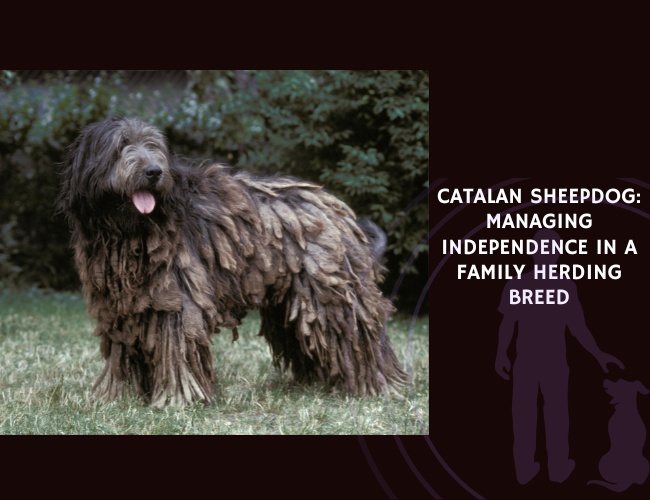
Picture this: a shaggy, intelligent guardian watching your family with calm intensity, processing every movement and emotion with remarkable precision. The Catalan Sheepdog brings centuries of mountain wisdom into your modern home, carrying an extraordinary gift that can feel both magical and challenging. This breed doesn’t just follow—it thinks, assesses, and decides. Understanding this distinction transforms everything about living with these remarkable companions.
The Catalan Sheepdog emerged from the rugged Pyrenees, where sheep needed protection and guidance across terrain that would challenge even the most experienced shepherds. Here, these dogs learned to make split-second decisions about flock safety, predator threats, and terrain navigation—often miles away from their human partners. This heritage created something remarkable: a dog that thinks independently while remaining profoundly connected to its family. But in your living room, this ancient wisdom can manifest in unexpected ways. Your Catalan might position itself between arguing family members, or hesitate at a command that seems illogical given the context. This isn’t stubbornness—it’s intelligence seeking partnership.
Understanding the Mountain Heritage: Where Independence Began
The Pyrenees Mountains shaped more than just the Catalan Sheepdog’s coat. These peaks demanded a specific kind of canine intelligence—one that could function autonomously while maintaining deep emotional bonds with both flock and shepherd.
Traditional herding in these mountains meant your dog might spend hours managing livestock across rocky terrain, navigating threats from predators to sudden weather changes, all without immediate human direction. Picture a shepherd tending several hundred sheep across vast mountain meadows. The dog couldn’t wait for every instruction. They needed to master independent decision-making across multiple domains:
- Flock energy reading — detecting when sheep were becoming scattered or stressed
- Predator threat assessment — distinguishing between benign wildlife and genuine dangers
- Terrain navigation — choosing safe paths across rocky, uneven mountain landscapes
- Weather prediction — recognizing when conditions required moving livestock to shelter
- Distance work — making critical decisions while miles from their shepherd
- Conflict resolution — managing disputes between individual animals without escalation
This requirement created a cognitive architecture fundamentally different from breeds developed for close-quarter, command-based work.
Your Catalan Sheepdog carries this legacy in its neural wiring. When it pauses before responding to your recall command, it’s not being defiant—it’s running a rapid risk assessment. Is there something in the environment that requires attention first? Does the command align with its understanding of the situation’s priorities? This contextual processing served its ancestors well when a predator’s scent might override even the most insistent human call.
Did you know that mountain herding breeds often show what researchers call “situational intelligence”? They weigh multiple variables before acting, creating what looks like hesitation but is actually sophisticated processing. You’ll see this in everyday situations:
- The pause before recall — assessing whether your call is urgent or routine
- Selective response timing — coming immediately when it matters, delayed when it doesn’t
- Environmental prioritization — finishing investigation of an unusual sound before responding to commands
- Context-aware obedience — sitting readily in training class but questioning the same command during active play
- Threat evaluation — distinguishing between mailman (routine) and unknown person at unusual hours (concerning)
- Energy matching — adjusting their response intensity based on your emotional state
Your Catalan does this same complex calculation when deciding whether to come when called or continue monitoring that suspicious noise in the backyard.
The result is a dog that assesses situations independently before responding to human cues. This doesn’t mean they ignore you. It means they’re collaborating with you, bringing their own judgment to the partnership. Understanding this changes how you train, communicate, and build trust with your Catalan companion. 🧠
The Family Herding Duality: Independent Mind, Devoted Heart
Here’s where the Catalan Sheepdog becomes truly fascinating. Despite their strong independent streak, they exhibit profound attachment to their human family. This isn’t contradiction—it’s sophisticated social intelligence.
Your Catalan views your family as its flock. This perspective drives behavior that might initially seem confusing. They want to be close to you, follow family activities, and remain aware of everyone’s location and emotional state. Yet they resist micromanagement and may ignore repeated commands they perceive as unnecessary. Through the NeuroBond approach, you’ll discover this duality isn’t a problem to fix but a feature to understand and channel.
Why do they show such strong attachment while resisting minute-by-minute direction? Because in their original role, attachment and autonomy weren’t opposing forces—they were complementary. The shepherd and dog shared a working relationship built on trust, not constant instruction. The dog remained emotionally connected to its human partner while operating independently to serve shared goals.
In your home, this manifests in beautiful and sometimes challenging ways. Your Catalan displays attachment through:
- Room-to-room following — maintaining awareness of family location and activities
- Strategic positioning — placing themselves where they can observe all household members
- Greeting rituals — enthusiastic welcomes that show genuine connection
- Physical proximity seeking — resting near you while maintaining their own space
- Emotional responsiveness — noticing and reacting to your mood changes
- Protective alerting — informing you of anything unusual in their territory
But they demonstrate autonomy through:
- Command evaluation — assessing whether requests make contextual sense before complying
- Independent problem-solving — working through challenges without waiting for your input
- Selective engagement — choosing when and how to interact rather than constant attention-seeking
- Self-directed activities — finding constructive ways to occupy themselves
- Boundary maintenance — appreciating connection but also valuing personal space
- Purposeful resistance — questioning arbitrary or repetitive commands that lack clear goals
They’re asking: “What’s the goal here? What are we accomplishing together?” This isn’t disrespect—it’s a thinking partner questioning the task’s purpose.
Their emotional attunement to family members runs remarkably deep. They monitor your stress levels, notice relationship tensions, and respond to household emotional shifts with surprising sensitivity. You might notice your Catalan becoming more vigilant during family disagreements, or positioning itself strategically when guests arrive. This reflects their flock-management instinct translating to domestic life.
The herding response to family “chaos” deserves special attention. What you consider normal family activity might trigger management instinct. Common chaos triggers include:
- Children’s high-energy play — running, shrieking, wrestling, chase games
- Visitor arrivals — enthusiastic greetings, multiple people entering at once, unfamiliar voices
- Family disagreements — raised voices, tense body language, emotional intensity
- Household transitions — everyone leaving for school/work simultaneously, bedtime routines with kids
- Meal preparation — multiple family members moving around kitchen, high activity energy
- Celebrations or parties — sustained noise, numerous people, disrupted routines
- Pet interactions — other household animals playing roughly or moving rapidly
Children running and screaming, family members arguing, visitors entering enthusiastically—these situations often trigger your Catalan’s management instinct. You might see:
Body blocking — positioning themselves in front of moving family members Nudging and herding — physically directing people toward calmer areas Alert barking — vocalizing to gain attention and restore order Strategic positioning — placing themselves at key transition points to monitor movement
These aren’t dominance behaviors or aggression. They’re your dog attempting to gather and protect its perceived flock. The Invisible Leash principle becomes invaluable here—teaching your Catalan that you’re managing the “flock” effectively, allowing them to relax this self-appointed responsibility. 🧡
Cognitive Architecture: How Your Catalan Processes Information
Understanding how your Catalan Sheepdog thinks transforms training from frustrating to fascinating. These dogs don’t process commands like sequential computer instructions. They think contextually, weaving together environmental information, emotional data, and learned patterns before deciding how to act.
Traditional obedience training assumes dogs respond to commands in isolation. Say “sit,” dog sits. With Catalan Sheepdogs, the process looks more like this: you say “sit,” and your dog rapidly assesses the context through internal questions:
- “Why are we sitting right now? What purpose does this serve?”
- “Is there something more important requiring my attention in the environment?”
- “Does this request align with our usual patterns and routines?”
- “What’s my human’s emotional state? Are they calm or stressed?”
- “Have similar situations in the past required this behavior?”
- “Does sitting now make logical sense given current circumstances?”
Only after this cognitive processing does the response emerge.
This contextual thinking explains what many owners mistake for “selective listening.” Your Catalan hears you perfectly. They’re simply filtering and prioritizing based on their sophisticated understanding of the situation. When they ignore your call to come inside but immediately respond to your cue that dinner is ready, they’re not being difficult. They’re demonstrating high-level cognitive filtering—distinguishing between routine requests and genuinely important cues.
Environmental cues, human emotion, and learned routines form an interconnected decision-making matrix for your Catalan. Picture your dog’s mind as constantly running calculations:
Environmental factors — open gates, presence of other animals, unusual sounds, weather changes Human emotional signals — stress in your voice, relaxed body language, excitement, concern Routine patterns — usual walk times, meal schedules, family activity rhythms Historical outcomes — what happened last time in similar situations
They integrate all these inputs simultaneously, creating a response that reflects their holistic understanding rather than blind obedience to a single command. This cognitive style served them brilliantly in mountain herding, where rigid command-following could mean disaster if conditions changed suddenly.
For modern families, this means adjusting your expectations and communication style. Your Catalan isn’t “stubborn”—they’re thinking. Effective communication with thinking breeds includes:
- Clear purpose communication — explain through energy and context why something matters
- Single, confident cues — deliver commands once with certainty rather than repeated escalation
- Calm body language — let your physical presence reinforce your verbal requests
- Contextual consistency — apply commands in situations where they make logical sense
- Patience for processing — allow a few seconds for cognitive assessment before repeating
- Reinforcement of good choices — reward their decision to comply, not just the action itself
- Purposeful practice — training sessions with clear goals rather than arbitrary repetition
Commands delivered with calm confidence and clear purpose get far better responses than repeated, escalating demands. They respond to leadership that makes sense within their contextual framework.
You might notice your Catalan “checking in” with you before acting, reading your body language and emotional state to inform their choices. This emotional intelligence reflects their heritage as partners who needed to stay attuned to their shepherd’s state while managing complex situations independently.
When Initiative Becomes Over-Control: Reading the Signals
Every Catalan Sheepdog owner eventually faces this question: when does my dog’s helpful initiative cross into problematic over-control? Understanding this distinction prevents behavioral issues and preserves the partnership you both need.
Healthy initiative looks like your Catalan alerting you to unusual activity, positioning themselves protectively when strangers approach, or gently gathering children playing too roughly. These behaviors serve the family without dictating human movement or creating household tension.
Healthy initiative includes:
- Calm alerting — one or two barks to notify you of arrivals or unusual sounds
- Strategic positioning — placing themselves between family and perceived threats without aggression
- Gentle gathering — soft nudges or body language encouraging calmer activity
- Protective watching — monitoring situations with relaxed vigilance
- Responsive disengagement — stepping back when you indicate you’re handling the situation
Over-control emerges when your dog attempts to manage human behavior through physical intervention, persistent vocalization, or constant monitoring that restricts normal activity. Problem behaviors include:
- Demanding barking — sustained, intense vocalization that escalates until they get compliance
- Forceful blocking — physically preventing movement with rigid body language
- Persistent herding — repeatedly attempting to control human movement despite redirection
- Separation distress — panic or intense protest when family members separate
- Resource controlling — guarding doorways, furniture, or access to family members
- Constant shadowing — inability to let family members move freely without following
Watch for these escalating control behaviors:
Body blocking becomes directional — your dog doesn’t just position defensively but actively prevents movement between rooms or toward doors Nudging becomes insistent — gentle herding touches escalate to persistent pushing or nipping at clothing Alert barking becomes demanding — informational barks transform into sustained vocalization aimed at controlling human activity Shadowing becomes restrictive — following you evolves into blocking access or showing distress when you move away
These behaviors share a common origin: your Catalan perceiving a leadership vacuum. In the absence of clear, consistent human guidance, their herding instinct compels them to self-assign management responsibilities. This isn’t dominance or aggression—it’s cognitive problem-solving. Your dog sees chaos or uncertainty and applies the only solution they know: take charge and restore order.
How does lack of clear leadership increase self-assigned responsibility? Think about it from your dog’s perspective. In their genetic memory, flocks without leadership scatter, face predator threats, and fall into danger. Your Catalan perceives a leadership vacuum when they observe:
- Inconsistent rule enforcement — behaviors sometimes allowed, sometimes corrected with no clear pattern
- Emotional chaos — family members showing sustained stress, conflict, or instability
- Indecisive movement — humans hesitating at doorways, showing uncertainty in their actions
- Conflicting directions — different family members giving contradictory instructions
- Lack of routine structure — unpredictable schedules that create uncertainty
- Permissive boundary crossing — behaviors that escalate without clear consequence
- Absence of calm authority — no one demonstrating confident, composed leadership
If human family members seem inconsistent, emotionally chaotic, or fail to provide clear structure, your Catalan’s instinct screams that someone must manage the situation. Since you’re not doing it effectively (from their perspective), they step up.
This creates a stress cycle. Your dog takes on management duties, becoming increasingly vigilant and controlling. This vigilance creates tension in the household, which your dog perceives as confirming their leadership role is necessary. The cycle intensifies unless you interrupt it with clear, calm authority.
Breaking the stress cycle requires:
- Establishing predictable routines — consistent daily schedules that reduce uncertainty
- Demonstrating calm confidence — your emotional neutrality signals competence
- Clear boundary enforcement — consistent consequences for crossing established lines
- Purposeful leadership moments — taking charge of situations before your dog feels compelled to
- Stress reduction techniques — managing household emotional climate proactively
- Adequate mental stimulation — preventing boredom that intensifies vigilance
- Physical exercise outlets — releasing energy that might fuel control behaviors
Are these behaviors more cognitive than emotional? Primarily, yes. While anxiety can certainly amplify control behaviors, their root is cognitive—your Catalan assessing the situation and concluding that leadership is needed. They feel compelled to fulfill what they perceive as a necessary “job.” This distinction matters because it shapes your response. Treating control behaviors as purely anxiety-driven might lead to coddling that reinforces the problem. Recognizing the cognitive component means providing clear structure that allows your dog to relax their self-appointed responsibilities.
The solution isn’t suppressing your Catalan’s initiative—that would waste their remarkable intelligence. Instead, channel that initiative through clear boundaries, consistent routines, and confident guidance. Show them you’ve got the flock management handled, allowing them to be brilliant partners rather than overwhelmed managers.
Emotional Attunement: Your Catalan as a Family Barometer
The Catalan Sheepdog’s sensitivity to human emotion reaches a level that can surprise even experienced dog owners. This isn’t simple companionship—it’s sophisticated emotional monitoring that shapes their entire behavioral repertoire.
Your Catalan reads emotional shifts within the family system with remarkable precision. Stress between partners, children’s excitement before school, tension during difficult conversations—all register in your dog’s awareness and influence their behavior. This sensitivity stems from their herding heritage, where reading subtle cues from livestock meant the difference between calm management and scattered chaos.
In modern homes, this emotional attunement manifests in specific ways. You might notice your Catalan:
Increasing vigilance during conflicts — positioning strategically, maintaining eye contact with both parties, preparing to intervene if energy escalates Seeking physical closeness during stress — not for comfort themselves, but to monitor and potentially calm the situation Showing behavioral changes with routine disruptions — becoming more alert or unsettled when normal schedules shift unexpectedly Responding to emotional states before visible cues — detecting stress in family members before other humans notice
This sensitivity creates a feedback loop. Household stress triggers increased vigilance in your Catalan. Their increased monitoring and potential intervention behaviors can add to household tension, confirming their perception that management is needed. Understanding this dynamic helps break the cycle.
Moments of Soul Recall reveal how memory and emotion intertwine in behavior. Your Catalan doesn’t just remember events—they remember emotional contexts. If previous household arguments led to family members separating or raising voices, your dog will anticipate and attempt to prevent similar patterns. This emotional memory explains why some Catalan Sheepdogs become particularly reactive to specific situations that mirror past family tension.
The household rhythm matters enormously to this breed. Consistent schedules, predictable routines, and stable emotional baselines provide the structure that allows your Catalan to relax. Chaos, unpredictability, or sustained emotional tension keeps them in a state of heightened readiness, always prepared to step in and restore order. 😊
For families with children, this sensitivity offers both opportunities and challenges. Your Catalan might become an remarkable emotional support for kids, sensing their moods and offering comfort. But they might also interpret enthusiastic play as chaos requiring intervention, leading to herding behaviors that frustrate both children and parents.
Managing this sensitivity doesn’t mean suppressing it—that would diminish one of the breed’s most beautiful qualities. Instead, create emotional stability and predictability in your household. Your Catalan will respond to calm, consistent energy far more effectively than attempts to train away their natural attunement.
Training Philosophy: Collaboration Over Command
Traditional dog training emphasizes obedience—dog learns commands, performs them reliably regardless of context. This approach struggles spectacularly with Catalan Sheepdogs. These dogs need training that respects their cognitive sophistication and channels their independence rather than suppressing it.
Collaborative training reframes the entire relationship. Instead of “I command, you obey,” the mindset shifts to “we’re solving problems together.” This isn’t permissiveness or lack of leadership. It’s recognizing that your Catalan brings valuable judgment to situations and teaching them to trust your judgment while applying their own intelligence.
Why do dominance-based or purely repetitive methods often backfire with this breed? Because they violate the collaborative dynamic your Catalan expects. Harsh corrections or mindless repetition signal that you don’t trust their intelligence or value their partnership. This creates one of two responses: shutdown (compliance without engagement) or increased independent action (since you’re clearly not a competent leader worth following).
Effective training for Catalan Sheepdogs incorporates several key principles:
Task-based learning — frame training as solving problems together rather than performing tricks. “Help me check the perimeter” gets better engagement than “walk in a perfect heel position for no reason”
Contextual commands — teach your dog that commands make sense within situations. Coming when called during free play versus coming when they’ve detected something unusual should look different, and acknowledging this difference builds trust
Low-verbal communication — reduce verbal repetition and rely more on body language, spatial positioning, and energy. Your Catalan reads these cues naturally and respects the calm authority they convey
Variable reinforcement — pure treat-training can feel transactional to this breed. Include play, task completion, and relational harmony as rewards alongside food
Clear boundaries with choice — establish non-negotiable rules (no jumping on guests, no herding children aggressively) while allowing your dog autonomy within those boundaries
The Invisible Leash reminds us that awareness, not tension, guides the path. Your Catalan responds to calm spatial leadership far more reliably than pulling, verbal corrections, or escalating commands. Position yourself as the steady, confident presence who moves through space with purpose, and your dog will naturally align with your direction.
What drives motivation beyond food rewards? Task resolution stands out for this breed. Completing a job—whether finding a hidden toy, checking the property perimeter, or successfully navigating a training challenge—provides deep satisfaction. Problem-solving exercises engage their herding intelligence in constructive ways.
Relational harmony motivates your Catalan powerfully. These dogs genuinely care about your approval and the family’s emotional state. Training sessions that end with everyone feeling calm and connected provide stronger reinforcement than any treat. This doesn’t mean using withdrawal of affection as punishment—that damages the bond. It means recognizing that your Catalan works for partnership and emotional resonance, not just food. 🧠
Adolescence brings particular challenges with this breed. Between 6-18 months, your Catalan’s independence intensifies as they test boundaries and assert judgment. Maintaining leadership through consistent guidance (not suppression) during this period determines whether you’ll have a balanced adult dog or an over-responsible, stressed manager.
Modern Life Challenges: When Ancient Instincts Meet Urban Reality
The Catalan Sheepdog evolved for work that filled their days with purpose—managing flocks, making decisions, solving problems across vast terrain. Modern urban life rarely provides equivalent mental and physical stimulation. This mismatch creates specific behavioral challenges that many owners misinterpret.
Cognitive underload becomes a primary issue. Your Catalan’s brain was designed to process complex environmental information, make strategic decisions, and solve problems continuously. In many modern homes, they receive perhaps an hour of exercise and minimal cognitive challenges daily. This leaves enormous mental capacity unused, and your dog will find ways to use it.
The result? Self-generated “jobs” that rarely align with human preferences:
Perimeter guarding intensifies — your dog assigns itself security responsibilities, alerting to every passing dog, person, or vehicle Resource monitoring — tracking and controlling access to food, toys, or favorite family members Schedule enforcement — becoming anxious or demanding when routines deviate from expected patterns Family member herding — managing human movement within the home, especially with children
These behaviors aren’t misbehavior in the traditional sense. They’re your Catalan doing what they were bred to do—manage, protect, and maintain order. Without appropriate outlets, their herding drive finds domestic applications that create household friction.
Urban environments add environmental complexity. Constant noise, frequent passersby, close neighbor proximity, and limited space challenge your Catalan’s ability to assess and manage their territory effectively. This sustained stimulation without purpose creates chronic low-level stress that amplifies control behaviors.
Small living spaces present particular difficulties. Your Catalan evolved to cover miles daily, making independent decisions across vast terrain. Apartment living requires suppressing movement instincts and tolerating confinement—significant challenges for this breed. Without adequate outlets, they may develop obsessive behaviors, hyper-vigilance, or destructive tendencies.
The solution requires providing work that engages their herding intelligence constructively:
Effective mental and physical outlets for Catalans:
- Nosework and scent detection — taps into natural tracking abilities while providing cognitive challenges
- Herding trials with livestock — allows authentic expression of bred-in instincts under guidance
- Agility training — combines decision-making with physical challenge and handler cooperation
- Advanced obedience work — complex skill chains requiring focus and problem-solving
- Treibball (push ball herding) — herding-style game using large balls instead of livestock
- Rally obedience — navigation courses combining obedience with decision-making
- Trick training progression — learning increasingly complex behaviors keeps minds engaged
- Structured territory patrols — channeling guarding instinct into purposeful property checks with you
- Hide-and-seek games — family members hiding for dog to find combines tracking and family bonding
- Puzzle toy rotations — different cognitive challenges throughout the week prevent boredom
- Urban agility — using everyday obstacles (benches, stairs) for informal training
Physical exercise alone won’t satisfy this breed. A tired Catalan Sheepdog is still a thinking Catalan Sheepdog. They need cognitive challenges that allow them to use their judgment, solve problems, and feel purposeful. A two-hour hike provides great physical exercise, but adding elements requiring decision-making (navigating obstacles, responding to environmental changes, working together to solve challenges) multiplies the mental benefit.
Consider your Catalan’s daily life honestly. Are they spending most of their time waiting—waiting for you to come home, waiting for the next meal, waiting for something to manage? This passive existence contradicts everything their genetics expect. Creating daily opportunities for purposeful work transforms behavior dramatically.

Family Consistency: The Foundation of Stability
Few things destabilize a Catalan Sheepdog faster than inconsistent handling between family members. These dogs read and respond to patterns, building their understanding of household rules and expectations through consistent repetition. When family members apply different standards or communication styles, the resulting confusion triggers anxiety and increased control behaviors.
Imagine your Catalan’s perspective: one parent allows jumping on the couch, another punishes it. One family member feeds from the table, another forbids it. Children play rough without consequences, but adults correct similar energy. Your dog can’t build reliable behavioral patterns because the rules constantly shift depending on who’s present.
This inconsistency affects behavior reliability severely. Your Catalan might respond beautifully to one family member’s commands while ignoring another’s. This isn’t favoritism or dominance—it’s learned discrimination. They’ve discovered that different humans mean different rules, so they adjust behavior accordingly. The result looks like an unpredictable, poorly-trained dog, but the issue lies in inconsistent human leadership.
When one leadership logic is shared by all humans, your Catalan experiences dramatic stability. Shared leadership doesn’t mean everyone trains the dog or gives commands constantly. It means all family members understand and apply the same:
Household rules — what behaviors are acceptable, what crosses boundaries Communication style — similar energy levels, command delivery, and body language Response to behaviors — consistent consequences for both desirable and undesirable actions Daily routines — aligned schedules for meals, walks, rest periods
This consistency allows your Catalan to relax. They don’t need to constantly assess which rules apply based on who’s present. They can predict outcomes, trust the environment, and release their self-appointed management responsibilities.
Role ambiguity increases both anxiety and controlling behaviors substantially. When your Catalan can’t determine who leads the household, they often conclude they must. This isn’t dominance—it’s problem-solving. Someone needs to manage the flock, and if humans aren’t doing it clearly, the job falls to the dog.
Creating family consistency requires communication between humans, not just dog training:
Family meetings about dog rules — ensure everyone understands expectations and consequences Shared command vocabulary — use identical words and hand signals for common requests Unified response protocols — decide together how to handle jumping, barking, herding behaviors Clear human hierarchy — your dog should understand which humans make final decisions
Children present particular challenges. They often lack the physical presence and consistent authority that your Catalan respects. Teaching children how to interact with your dog safely—without undermining established rules—requires explicit instruction and supervision.
The NeuroBond framework offers a highly compatible approach here. When all family members adopt calm authority, predictable structure, and respectful cooperation, your Catalan experiences the clear, consistent leadership they need. This shared approach transforms the household from a collection of individuals with different expectations into a cohesive unit with unified direction. 🧡
The NeuroBond Framework: Cooperative Leadership in Action
The NeuroBond framework provides a structured approach to managing the Catalan Sheepdog’s unique combination of independence and social sensitivity. Rather than suppressing their natural instincts, this framework channels them through calm, consistent leadership that respects their intelligence.
Three core principles stabilize independence without conflict:
Invisible Leash spatial leadership provides clear, non-confrontational guidance through body language, positioning, and energy rather than verbal commands or physical correction. Your Catalan reads spatial cues naturally—where you stand, how you move through space, your body orientation—and responds to this information more readily than repeated verbal directions. This approach acknowledges their need for partnership while establishing your role as the calm, competent leader.
Emotional neutrality reduces your dog’s perceived need to intervene in human emotional “chaos.” When you maintain calm, steady energy regardless of household stress, your Catalan learns they don’t need to manage family emotions. This doesn’t mean suppressing genuine feelings, but rather not projecting anxiety, frustration, or tension onto your dog through your interactions with them. Your emotional state becomes a consistent, reliable baseline rather than something requiring their regulatory intervention.
Predictable structure provides the consistency and clarity that reduces anxiety and the impulse to self-manage. Established routines for meals, exercise, rest, and training create an environment where your Catalan can predict outcomes and trust that their needs will be met. This predictability allows them to release vigilance and relax into partnership rather than management.
Does reducing verbal micromanagement increase trust and follow-through? Absolutely. For a thinking breed like the Catalan Sheepdog, constant verbal instruction signals either uncertainty (you’re not confident in your leadership) or disrespect (you don’t trust their intelligence). Reducing verbal repetition and relying on calm, purposeful communication demonstrates confidence and competence—qualities your Catalan instinctively respects and follows.
Consider the difference:
Micromanagement approach — “Sit. Sit! SIT! Good sit. Stay. Stay! I said stay! Come. Come here! Come! No, over here. Sit again!”
Calm leadership approach — Brief, clear cue delivered once with confident body language. Wait for response. Acknowledge compliance. Move forward.
The first approach creates noise and anxiety. The second creates clarity and trust.
Reframing leadership as guidance rather than control allows your Catalan Sheepdog to relax self-appointed responsibilities fundamentally. When they perceive you as a competent guide—someone who makes good decisions, maintains calm authority, and provides clear direction—they can release the burden of managing everything themselves. This reframing transforms the relationship from potential power struggle into cooperative partnership.
This shift shows practically in everyday situations:
Doorbell reactivity — instead of your dog rushing to manage the “threat,” they look to you for assessment because they trust your judgment about who enters their territory
Family conflicts — rather than intervening physically, they remain present but calm, recognizing you’re handling the situation
New environments — they explore confidently while checking in with you, trusting you’ll indicate if something requires their attention
Training sessions — they engage enthusiastically because commands make sense within a broader context of cooperation
The NeuroBond model recognizes that your Catalan’s independence and loyalty aren’t opposing forces requiring balance—they’re complementary qualities that thrive together under calm, consistent leadership. By providing clear structure without micromanagement, emotional neutrality without detachment, and purposeful guidance without domination, you create the environment where your dog’s remarkable intelligence serves your partnership rather than creating household conflict.
That balance between science and soul—understanding the cognitive architecture while honoring the emotional connection—that’s the essence of Zoeta Dogsoul. Your Catalan Sheepdog brings both brilliant intelligence and devoted heart to your family. The framework simply provides a structure where both can flourish. 🧠
Theoretical Foundations: Understanding the Why Behind the Behavior
The Catalan Sheepdog’s unique behavioral profile makes sense when viewed through several complementary theoretical lenses. Understanding these frameworks helps you move from reactive problem-solving to proactive partnership building.
Herding Dog Cognitive Ecology examines how selective breeding for autonomous flock management shaped cognitive processing. These dogs weren’t bred for obedience in the traditional sense—they were bred for judgment. They needed advanced pattern recognition to predict flock movement, sophisticated memory to navigate territory and recognize individual animals, and remarkable adaptability to respond to rapidly changing conditions. This cognitive architecture prioritizes observation, prediction, and strategic intervention over waiting for instructions. Your Catalan’s tendency toward situational logic rather than blind compliance directly reflects this heritage.
Affective Neuroscience and the work of Jaak Panksepp illuminates the role of primary emotional systems in shaping behavior. Panksepp identified the SEEKING system as a fundamental emotional drive—the motivation to explore, investigate, and solve problems. In intelligent, active breeds like the Catalan Sheepdog, this drive runs particularly strong. When their agency is blocked through excessive restriction or unclear leadership, the SEEKING drive manifests as frustration and increased attempts to “seek” solutions through control behaviors. Understanding this helps explain why suppressive training backfires—it doesn’t address the underlying drive, just redirects it into potentially problematic channels.
Executive Function and Anticipation Theory suggests that Catalan Sheepdogs possess high working memory capacity and strong pattern detection abilities. This enables them to anticipate events and outcomes based on subtle environmental cues. While beneficial for herding work, these abilities can lead to premature action or intervention in domestic settings. Their “selective listening” reflects executive function in action—they’re constantly evaluating and prioritizing perceived threats or tasks based on their predictive models. This isn’t defiance but sophisticated cognitive processing.
Family Systems Theory, adapted for canine behavior, recognizes that socially sensitive herders respond profoundly to household emotional dynamics. Your Catalan doesn’t just live in your home—they’re embedded in your family system, responding to and attempting to regulate emotional patterns. They often try to restore stability during conflicts or perceived chaos, reflecting their innate drive to maintain flock cohesion. This explains their vigilance during family stress and their intervention behaviors during high-energy situations.
Under-Stimulation and Role Substitution Models propose that intelligent working breeds, deprived of meaningful mental and physical engagement, will self-generate “jobs” to fill the cognitive and behavioral gap. For the Catalan Sheepdog, this often means substituting traditional herding roles with domestic control behaviors. Guarding, alerting, managing family member movement—these become proxy activities for the complex work their genetics expect. Understanding this model shifts the focus from correcting “problem behaviors” to providing appropriate outlets for natural drives.
These theoretical frameworks aren’t just academic—they provide practical insight into your daily interactions with your Catalan. When your dog hesitates at a command, you understand they’re engaging executive function and pattern recognition, not being stubborn. When they attempt to herd excited children, you recognize family systems dynamics at play rather than aggression. When they become increasingly vigilant without clear work, you see role substitution rather than anxiety disorder.
This knowledge transforms your approach from trying to fix a “broken” dog to partnering with a sophisticated intelligence that simply needs appropriate channeling.
Thoughtful. Independent. Protective.
Thinking Shapes Response
Catalan Sheepdogs evaluate context before acting. Their pauses signal situational intelligence, not defiance.
Mountains Built Autonomy
Pyrenean herding demanded independent judgement across distance and terrain. This heritage still guides their decision-making today.


Family Becomes Flock
They extend herding awareness to household dynamics. With respectful guidance, their independence strengthens harmony rather than tension.
Living Successfully with Catalan Independence
Creating a harmonious life with your Catalan Sheepdog requires accepting their fundamental nature rather than fighting it. These dogs bring remarkable gifts—intelligence, loyalty, emotional sensitivity, and protective instinct. They also bring challenges that stem directly from those same qualities.
Your Catalan will always think before blindly obeying. This isn’t a training failure—it’s breed characteristic. Accept this, and you’ll find ways to communicate that respect their cognitive process rather than trying to override it. They’ll assess situations contextually, weighing your commands against their understanding of the environment. Frame this as partnership rather than disobedience.
They’ll remain emotionally attuned to your household dynamics. This sensitivity serves your family beautifully when channeled appropriately. Your Catalan notices when children feel anxious, when partners experience stress, when household energy shifts. Rather than viewing this attunement as making your dog “reactive,” recognize it as sophisticated emotional intelligence that can support family wellbeing when you provide clear guidance about when intervention is needed versus when calm presence suffices.
Their herding instinct won’t disappear, but it can be directed. Instead of trying to eliminate their desire to gather and protect, give them appropriate outlets. Structure their natural vigilance into useful behaviors. Their territorial awareness becomes property security when you establish clear boundaries about what requires alerting and what doesn’t. Their movement monitoring becomes helpful when channeled into playing with children appropriately rather than controlling them.
The independence that drew you to this breed flourishes best within clear structure. This might seem contradictory—how can independence exist within boundaries? But for your Catalan, structure provides the foundation that allows them to exercise judgment safely. They need to know the non-negotiable rules and the areas where their decision-making is valued. This clarity reduces anxiety and allows their intelligence to serve your partnership.
Practical daily life with your Catalan Sheepdog might include:
Morning routine — structured wake time, feeding, and property perimeter walk that channels territorial awareness productively
Mental enrichment — puzzle toys, scent work, training sessions that provide problem-solving opportunities
Physical exercise — activity that includes decision-making elements, not just physical exertion
Family time — clear expectations about their role during meals, guests, children’s play
Evening routine — predictable wind-down that signals their “shift” has ended and they can rest
Consistent boundaries — non-negotiable rules applied by all family members about jumping, barking, herding behaviors
This structure doesn’t restrict your dog—it liberates them. They can relax their self-appointed management responsibilities because you’ve demonstrated competent leadership. They can exercise their intelligence within boundaries that keep everyone safe and harmonious.
Remember that your Catalan is always observing, processing, and learning. Every interaction teaches them something about how your household operates and where they fit within it. Inconsistency confuses them. Harsh corrections damage the partnership they need. Permissiveness creates the leadership vacuum that compels them to self-manage. The middle path—clear, calm, consistent guidance that respects their intelligence—builds the relationship both of you deserve.
🏔️ Mastering Independence: The Catalan Sheepdog Journey 🐕
From Mountain Herder to Modern Family Partner – Understanding the Thinking Dog
Phase 1: Mountain Heritage Foundation
Weeks 1-4 | Understanding Independent Intelligence
Core Understanding
Your Catalan was bred to make split-second decisions miles from their shepherd. They assess situations independently, weighing environmental cues against your commands. This isn’t defiance—it’s situational intelligence developed over centuries of autonomous flock management in the Pyrenees Mountains.
What to Expect
• Pausing before responding to commands while assessing context
• Strategic positioning to monitor family members
• Questioning commands that seem illogical in the moment
• Strong attachment combined with resistance to micromanagement
Your First Steps
Accept their need to think before acting. Frame commands with clear purpose and calm confidence. Allow 2-3 seconds for cognitive processing before repeating. Begin establishing yourself as the calm, competent leader they’re searching for.
Phase 2: Identifying Healthy vs. Problematic Behaviors
Weeks 2-6 | Learning to Read the Signs
Healthy Initiative Looks Like
Calm alerting (1-2 barks), strategic protective positioning without aggression, gentle gathering of family members during rough play, monitoring situations with relaxed body language, and responsive disengagement when you take charge.
Warning Signs of Over-Control
• Body blocking that prevents family movement
• Persistent herding despite redirection
• Sustained demanding barking
• Inability to let family members separate
• Constant shadowing with distress when you move
Intervention Strategy
Through the Invisible Leash approach, demonstrate calm spatial leadership. Use body positioning and calm energy to show you’re managing the “flock.” Redirect over-control immediately but without emotional escalation—your neutrality signals competence.
Phase 3: Building Cooperative Leadership
Weeks 4-12 | Establishing Your Authority
Leadership Vacuum Signs
Your Catalan self-assigns management responsibility when they observe: inconsistent rule enforcement, emotional household chaos, indecisive human movement, conflicting directions from family members, lack of routine structure, or absence of calm authority.
NeuroBond Framework Application
• Predictable structure: Consistent routines reduce uncertainty
• Emotional neutrality: Your calm signals competence
• Spatial leadership: Clear boundaries through positioning
• Reduced verbal noise: One confident cue beats repeated demands
Family Consistency Protocol
All family members must apply identical rules, use shared command vocabulary, maintain similar communication styles, and respond to behaviors consistently. This unified approach allows your Catalan to relax their self-appointed responsibilities.
Phase 4: Life Stage Navigation
Ongoing | Adapting to Developmental Changes
Puppyhood Focus (8 weeks – 6 months)
Quality socialization over quantity. Build independence through brief separations. Emphasize cooperative foundation skills. Prevent over-attachment from day one. Keep training playful, varied, and brief—multiple 5-minute sessions beat one long drill.
Adolescence Challenge (6-18 months)
Independence surges intensify—they’re testing whether your leadership remains consistent. Maintain ALL boundaries without exception. Increase mental stimulation substantially. Stay emotionally neutral during testing. This phase determines your adult dog’s behavior patterns.
Adult & Senior Adjustments
Adults (2-7 years) need continued mental challenges to prevent complacency. Seniors (7+ years) require adapted exercise, pain management awareness, and maintained routines as cognitive function changes. Their independence often mellows beautifully with proper leadership foundation.
Phase 5: Confident Socialization Without Reactivity
Weeks 8-24 | Building Assessment Skills
The Independent Thinker’s Approach
Quality over quantity. Allow observation periods before expecting engagement. Respect their natural wariness—it’s breed characteristic, not a flaw. Never punish hesitation. Let them choose engagement level. Your Catalan needs to learn new experiences are opportunities for assessment, not threats.
Dog & People Introductions
Start with distance, watch their body language closely, keep greetings brief (5-10 seconds), never force interaction, reward calm observation. Reserved selectivity is normal—inability to regulate response to any dog or person signals problems requiring professional help.
Multi-Dog Household Success
Catalunya integrate well with dogs showing clear communication, space respect, and matched energy. They struggle with very rough players, pushy personalities, or poor social skills. Their “flock management” instinct means they’ll monitor household dogs—channel this carefully.
Phase 6: Health Foundation for Behavioral Balance
Ongoing | Body-Mind Connection
High-quality protein supports neurotransmitter production for mood regulation and impulse control. Omega-3 fatty acids maintain cognitive function. Complex carbohydrates provide steady energy preventing behavioral spikes and crashes. Poor diet compromises the mental capabilities that define this breed.
Breed-Specific Health Monitoring
Watch for hip dysplasia (reluctance to jump, altered gait), progressive retinal atrophy (night blindness), and patellar luxation (intermittent lameness). Pain directly impacts behavior—a Catalan in discomfort cannot maintain the emotional balance you’ve built together.
Exercise Requirements
60-90 minutes daily of purposeful activity—not just running but exercise engaging their decision-making abilities. Puppies need short varied sessions. Adolescents require substantial outlets. Adults maintain high needs. Seniors need adapted low-impact activities. Physical exercise without mental engagement won’t satisfy them.
Phase 7: Reading & Being Read
Ongoing | Two-Way Understanding
Subtle Stress Signals to Watch
Whale eye (showing whites), lip licking unrelated to food, context-inappropriate yawning, ears drawn back, tail lowering, jaw tension, body stiffening, weight shifting backward, paw lifting, shake-off behavior when dry. These early warnings require immediate attention before escalation.
What Your Body Language Tells Them
Your tension reads as environmental concern. Confident purposeful movement signals competent leadership. Hesitation communicates insecurity. Direct sustained eye contact creates pressure. Your spatial positioning tells them who’s managing what. They read your genuine emotional state—you can’t fake calm confidence.
Soul Recall in Communication
Your Catalan doesn’t just remember events—they remember emotional contexts. Past household arguments create anticipatory patterns. Moments of Soul Recall show how memory and emotion intertwine in behavior, explaining why some situations trigger intense responses while others don’t.
Phase 8: Troubleshooting Common Challenges
As Needed | Practical Solutions
Herding Children Aggressively
Why: Toddler’s unpredictable movement triggers flock-gathering instinct. Immediate: Separate during high-energy play, interrupt at first sign of interest. Long-term: Train “go to mat” during play, provide legitimate herding outlets, teach child to “be a tree” when herded.
Window Barking at Passersby
Why: Self-assigned security detail, self-reinforcing because people always leave. Immediate: Block visual access, redirect with calm authority. Long-term: Train alert-and-dismiss sequence (2-3 barks then recall), teach “quiet” cue, increase overall mental stimulation.
Won’t Come at Dog Park
Why: Cost-benefit analysis favors current activity over arbitrary recall. Immediate: Stop calling repeatedly, create interest by moving away. Long-term: Build 90%+ reliability before park exposure, practice recall-reward-release pattern, implement check-in system, consider if parks suit their selective social style.
🔍 Catalan Sheepdog vs. Other Herding Breeds
vs. Border Collie
More independent in decision-making, less handler-focused. Border Collies live to work for you; Catalans work with you. Catalans question more, comply less automatically, need more contextual communication.
vs. Australian Shepherd
Less velcro-like attachment, more comfortable with autonomous work. Aussies demand more constant engagement; Catalans appreciate connection but value independent problem-solving equally. Both are thinking breeds but Catalans show stronger situational logic.
vs. German Shepherd
Similar intelligence and loyalty but different working style. GSDs excel at structured obedience; Catalans excel at autonomous judgment. GSDs want clear hierarchy; Catalans want collaborative partnership where their assessment is valued.
vs. Old English Sheepdog
More intense and driven. OES are generally more laid-back and easygoing. Catalans maintain higher vigilance, stronger territorial instinct, and more active flock management. Both are family-oriented but Catalans show sharper assessment skills.
Puppy vs. Adult Adoption
Puppies: Shape from foundation but navigate challenging adolescence. Adults: Established personality but may carry previous leadership confusion. Both succeed with consistent NeuroBond principles—adults often surprise with rapid transformation.
Urban vs. Rural Living
Rural: Natural outlets for territory monitoring and space management. Urban: Requires creative cognitive engagement, structured “jobs,” and careful under-stimulation prevention. Both work with adequate mental challenges—location matters less than mental engagement quality.
⚡ Quick Reference Formula
Daily Success = Predictable Structure + Calm Authority + Mental Stimulation + Physical Exercise + Family Consistency
Leadership Equation: Clear Boundaries + Purposeful Commands + Emotional Neutrality = Relaxed Catalan
Exercise Rule: 60-90 minutes daily where Physical Activity + Decision-Making Challenges > Pure Running
Training Formula: 1 Confident Cue + 2-3 Second Processing Time + Immediate Reward > 5 Repeated Commands
Problem Prevention: Early Intervention (at first signs) × Consistent Response = Avoided Escalation
🧡 The Zoeta Dogsoul Path with Your Catalan
Your Catalan Sheepdog’s journey from mountain herder to modern family partner embodies the essence of what we teach at Zoeta Dogsoul. Through the NeuroBond framework, you transform their independent intelligence from a challenge into your greatest asset. The Invisible Leash principle shows them that calm, spatial leadership respects their need to think while providing the guidance they’re searching for. Every moment of Soul Recall—when their emotional memory shapes present behavior—reminds you that this partnership runs deeper than commands and compliance.
This breed demands what all dogs deserve but few owners provide: leadership that earns respect through competence, not dominance. They ask you to be worthy of their partnership, to think as deeply as they do, to value their judgment while providing the structure that allows their brilliance to flourish. When you meet them at this level—when you balance science and soul, autonomy and connection, independence and loyalty—you discover a relationship unlike any other.
That’s not just training. That’s the dance between neuroscience and emotion, between ancient instinct and modern understanding. That’s where your Catalan Sheepdog becomes not just a well-managed dog, but a true partner whose intelligence and devotion enrich every moment of your shared life.
© Zoeta Dogsoul – Where neuroscience meets soul in dog training
Age-Specific Guidance: Growing with Your Catalan
Your Catalan Sheepdog’s needs, behaviors, and capabilities shift dramatically throughout their life. Understanding these developmental stages helps you provide appropriate guidance at each phase, building the foundation for a balanced adult dog.
Puppyhood: Building Foundation Without Over-Dependence (8 Weeks – 6 Months)
The early months with your Catalan puppy shape everything that follows. These weeks offer a critical window for establishing healthy patterns while respecting their emerging personality.
Early socialization priorities for this breed differ from generic puppy advice. Your Catalan needs exposure to diverse experiences, but the quality of these experiences matters more than quantity. Rushing socialization or forcing interactions creates the opposite of your goal—a dog who learns to be wary or reactive rather than confident and discerning.
Focus your socialization efforts on quality experiences rather than quantity:
Essential socialization priorities for Catalan puppies:
- Controlled chaos exposure — supervised experiences with children playing, household activity, varying noise levels
- Independent exploration opportunities — allowing puppy-paced investigation of new environments without interference
- Calm adult dog interactions — meetings with balanced dogs who model appropriate responses to stimuli
- Diverse human experiences — various ages, sizes, ethnicities, wearing different clothing and accessories
- Environmental variety — different surfaces (grass, gravel, wood, tile), weather conditions, indoor and outdoor spaces
- Novel object exposure — unusual items like umbrellas, wheelchairs, bicycles, vacuum cleaners
- Positive handling experiences — gentle touching of paws, ears, mouth to prepare for grooming and veterinary care
- Sound desensitization — recordings of thunderstorms, fireworks, traffic, babies crying at low volumes initially
- Location diversity — different neighborhoods, parks, buildings to build general confidence
Preventing over-attachment starts immediately. Yes, your puppy needs bonding time and security, but Catalan Sheepdogs can develop problematic dependency if they never learn to be comfortable alone. Practice brief separations from the first week—literally just stepping into another room for thirty seconds, then returning calmly. Gradually extend these periods, teaching your puppy that your departure always means your return.
Crate training serves Catalan puppies particularly well. It provides a space where they learn to settle independently, preventing the constant monitoring behavior that can develop into adult hyper-vigilance. Never use the crate for punishment, only for positive rest periods and safe confinement.
Foundation skills during puppyhood should emphasize cooperation over obedience:
Critical foundation skills to build:
- Name recognition — teaching that their name means “pay attention to me” not “perform an action”
- Voluntary check-ins — rewarding when puppy looks to you for guidance unprompted
- Impulse control foundations — “wait” before eating, passing through doorways, or taking treats
- Body handling comfort — gentle touching of paws, ears, mouth, tail prepares for grooming and vet visits
- Loose leash walking basics — teaching that walking near you brings good things without punishing pulling
- Crate comfort — positive associations with their safe space for independent settling
- “Leave it” basics — relinquishing items without resource guarding
- Sit and down for cooperation — teaching these positions as collaborative communication not commands
- Settlement behaviors — learning to relax on a mat or bed on cue
Avoid repetitive formal obedience during these months. Your Catalan puppy’s brain is developing rapidly, and long training sessions with multiple command repetitions create boredom and resistance. Keep training playful, varied, and brief—three to five minutes several times daily beats a grueling twenty-minute session.
Watch for early signs of their herding instinct emerging. Puppies as young as 10-12 weeks might start positioning themselves to “manage” household movement or attempting to gather family members. Redirect this energy into appropriate games and activities rather than allowing it to become a self-reinforcing pattern. 🐾
Adolescence: The Independence Surge (6-18 Months)
Adolescence brings the most challenging period for Catalan Sheepdog owners. Your previously responsive puppy suddenly seems to have forgotten everything they knew. They test boundaries, question authority, and assert their own judgment with increasing confidence. This isn’t defiance—it’s developmental necessity.
During adolescence, your Catalan’s brain is maturing in ways that fundamentally alter their behavior. They’re transitioning from puppy who accepts your leadership unquestioningly to thinking adult who needs to understand why your leadership makes sense. This phase mirrors human adolescence—necessary for development but exhausting to navigate.
Independence surges manifest in specific ways during adolescence:
Common adolescent behavior changes:
- Increased environmental scanning — paying more attention to surroundings than to you during walks
- Selective command response — clearly understanding but pausing to assess compliance value
- Boundary testing behaviors — challenging previously accepted rules to verify they still apply
- Heightened territorial reactivity — increased barking at stimuli, more intense responses to passersby
- Stronger herding impulses — more assertive attempts to control family member movement
- Physical confidence assertion — using growing size and strength more boldly
- Reduced impulse control — struggling with behaviors they previously managed well
- Increased distraction level — environmental stimuli becoming more compelling than your direction
- Social selectivity — showing stronger preferences about which dogs they’ll interact with
- Independence seeking — wanting more distance or autonomy during activities
Maintaining leadership during this phase requires patience and unwavering consistency. Your adolescent Catalan is watching to see if you’ll maintain calm authority when challenged or if you’ll escalate into frustration and anger. Every time you react emotionally to their testing, you confirm their suspicion that you’re not a reliable leader.
Strategies for navigating adolescence successfully:
Effective adolescent management approaches:
- Significantly increase mental stimulation — adolescent brains need massive cognitive engagement daily
- Maintain all boundaries without exception — consistency matters more during testing than any other time
- Reduce verbal commands — rely more on body language, positioning, and calm energy
- Increase physical exercise substantially — 60-90 minutes of purposeful activity prevents behavior problems
- Stay emotionally neutral during challenges — your calm through their testing builds their trust
- Continue socialization actively — exposure to new experiences shouldn’t stop after puppyhood
- Enroll in advanced training activities — nosework, agility, herding trials provide purpose and structure
- Implement earned privileges — good choices earn freedom, poor choices result in temporary restriction
- Practice patience and consistency — remember this phase is temporary but your response has lasting impact
- Seek professional help if needed — trainer support during adolescence prevents long-term problems
Remember that adolescence is temporary. The testing you’re experiencing isn’t permanent personality change—it’s developmental process. Dogs who receive clear, consistent guidance through adolescence typically emerge as remarkably balanced adults around 18-24 months.
Never resort to harsh corrections or dominance-based methods during this sensitive period. Your adolescent Catalan needs to learn that thinking before responding is valued, not punished. They need to develop trust that your leadership serves both of you, not fear that challenges bring punishment. 😊
Adult Years: Maintaining Excellence (2-7 Years)
Adult Catalan Sheepdogs in their prime years offer extraordinary partnership when their intelligence stays engaged and their purpose remains clear. The biggest risk during these years isn’t regression but complacency—both yours and theirs.
Many owners relax training once their dog reaches maturity, assuming the work is done. For Catalan Sheepdogs, this creates problems. These dogs need ongoing mental stimulation and purposeful activity throughout their lives. Without it, they’ll find their own purposes, which rarely align with human preferences.
Maintaining mental stimulation during adult years requires creativity and commitment:
Rotate enrichment activities — what excited them last month might bore them this month
Increase difficulty progressively — easy puzzles become boring; they need advancing challenges
Provide real work — consider therapy dog certification, advanced obedience titles, herding trials, or nosework competitions
Train new skills regularly — learning itself provides cognitive benefits beyond the specific skill
Create household “jobs” — give them legitimate responsibilities like retrieving items, checking property perimeters with you, or alerting to specific sounds
Preventing complacency means avoiding routine for routine’s sake. Yes, Catalan Sheepdogs appreciate predictable structure, but within that structure, vary the details. Walk different routes. Practice commands in new locations. Introduce novel challenges within familiar frameworks.
Adult Catalans also need continued socialization. Regular exposure to new experiences, people, and dogs prevents them from becoming overly territorial or suspicious. Their natural wariness of strangers should remain manageable discernment, not reactivity.
Physical exercise requirements remain substantial throughout adult years. Most Catalans need 60-90 minutes of purposeful activity daily. “Purposeful” means activity that engages their mind alongside their body—not just running in the backyard but hiking with environmental challenges, playing games that require decision-making, or participating in dog sports.
Watch for subtle shifts in behavior that might indicate under-stimulation:
Warning signs of insufficient mental/physical engagement:
- Increased territorial intensity — more aggressive responses to passersby, longer bark durations
- Obsessive pattern development — fixating on shadows, light reflections, or specific objects repeatedly
- Attention-demanding escalation — increasingly persistent or intense efforts to engage you
- Destructive tendency emergence — chewing furniture, digging, or destroying household items
- Hypervigilance manifestation — inability to settle, constant environmental monitoring, restless pacing
- Self-generated “jobs” — creating tasks like excessive patrolling, resource guarding, family herding
- Sleep disruption — difficulty settling for rest periods, waking frequently
- Reactivity increases — showing stronger responses to previously manageable stimuli
- Impulse control degradation — struggling with previously mastered self-control behaviors
Address these signals immediately by increasing both mental and physical engagement. Your adult Catalan is telling you they need more from life than they’re currently receiving.
The adult years also offer opportunity to refine your partnership. With adolescence behind you, your Catalan’s personality is fully developed. You can now work with their individual quirks and preferences rather than general breed guidelines. Some adults love water work, others prefer land-based activities. Some thrive in group classes, others work better one-on-one. Honor their individuality while maintaining the structure they need. 🧠
Senior Care: Adjusting for the Wisdom Years (7+ Years)
As your Catalan Sheepdog moves into senior years, their independence and intensity often mellow, but their cognitive and emotional needs remain significant. Understanding how aging affects this breed helps you adjust expectations while maintaining their quality of life.
Independence changes with age in interesting ways. Many senior Catalans become less driven to control their environment and more content to observe from a comfortable spot. This doesn’t mean they stop thinking or caring—it means they’ve developed confidence that their humans will manage situations appropriately. This is actually the goal you’ve been working toward throughout their life.
However, some seniors show increased anxiety or control behaviors as age brings physical limitations. A dog who can no longer hear approaching visitors as well might compensate with increased visual vigilance. One experiencing pain might become less tolerant of household chaos. These changes require compassionate adjustment rather than frustration.
Physical health considerations significantly impact behavior in senior Catalans:
Age-related changes affecting temperament and capability:
- Joint deterioration — arthritis limiting their ability to position strategically for flock management
- Hearing loss progression — missing auditory cues they previously relied on for assessment
- Vision changes — cataracts or reduced acuity increasing startle responses and wariness
- Cognitive decline signs — confusion about routines, increased anxiety, reduced problem-solving
- Dental issues — pain affecting mood and willingness to engage with toys or food
- Reduced stamina — tiring more quickly during activities they previously enjoyed
- Temperature sensitivity — struggling more with extreme heat or cold
- Muscle mass loss — weakness affecting mobility and confidence
- Incontinence concerns — stress about bathroom control potentially affecting behavior
Regular veterinary care becomes even more critical. Pain management, appropriate nutrition, and addressing age-related conditions directly support behavioral stability. A senior Catalan who’s uncomfortable or confused cannot maintain the calm balance you’ve built together.
Adapt exercise and mental stimulation to their changing capabilities:
Senior-appropriate activity modifications:
- Shorter, more frequent outings — three 20-minute walks instead of one 60-minute session
- Lower-impact activities — swimming or gentle hiking rather than rough play or agility
- Adjusted puzzle difficulty — maintain challenges but allow more time for solving
- Maintained routine importance — predictability becomes even more critical as cognitive function changes
- Continued gentle training — “use it or lose it” applies to cognitive function throughout life
- Joint-friendly surfaces — avoiding excessive concrete or stairs when possible
- Temperature considerations — exercising during comfortable weather conditions
- Pacing adjustments — slower walks allowing for frequent sniffing and investigation
- Rest period increases — ensuring adequate recovery time between activities
- Pain assessment — monitoring for signs of discomfort during and after exercise
Senior Catalans often show increased attachment to family and decreased tolerance for change. Respect this by maintaining stable routines and providing extra support during necessary disruptions. If you must travel or make household changes, prepare them gradually when possible.
The emotional connection you’ve built throughout their life becomes most evident in senior years. Your aging Catalan knows you deeply, reads you effortlessly, and trusts you completely. This trust allows them to relax their vigilance in ways that weren’t possible in younger years. Honor this by providing the security, comfort, and dignity they deserve.
End-of-life decisions with Catalan Sheepdogs can be particularly challenging because their mental acuity often remains sharp even as their body fails. A dog who still thinks clearly and wants to engage with life but struggles physically deserves your most compassionate assessment of their quality of life. 🧡
Nutrition and Physical Health: The Foundation of Behavioral Balance
The connection between physical wellness and behavioral stability in Catalan Sheepdogs runs deeper than many owners realize. What you feed your dog and how you maintain their physical health directly impacts their cognitive function, energy levels, and emotional regulation.
Diet’s Impact on Energy and Cognition
Your Catalan’s brain consumes roughly 20% of their metabolic energy despite being only about 2% of body weight. Cognitive function—the constant processing, assessing, and decision-making that defines this breed—requires substantial nutritional support. Poor diet doesn’t just affect physical health; it compromises the mental capabilities that make your Catalan who they are.
High-quality protein sources provide amino acids essential for neurotransmitter production. These neurotransmitters regulate mood, impulse control, and cognitive processing. A diet deficient in quality protein can contribute to increased reactivity, reduced impulse control, and difficulty maintaining emotional balance. For a breed that relies on sophisticated judgment and emotional regulation, this nutritional deficit creates behavioral challenges that training alone cannot address.
Omega-3 fatty acids, particularly DHA and EPA, support brain health and cognitive function throughout life. These essential fats influence everything from learning ability to emotional stability. Adult and senior Catalans particularly benefit from adequate omega-3 supplementation, as it supports cognitive function during aging and may help prevent or slow cognitive decline.
Complex carbohydrates provide steady energy release rather than the spikes and crashes that come from simple carbohydrates or high-sugar foods. For a working breed that needs sustained mental and physical energy throughout the day, stable blood sugar levels support behavioral stability. You might notice your Catalan becomes more reactive, restless, or difficult to settle when their diet creates energy fluctuations.
Avoid foods that commonly trigger sensitivities in herding breeds:
Dietary components to minimize or eliminate:
- Excessive grain content — can contribute to inflammation affecting energy and focus
- Artificial colors and dyes — linked to hyperactivity and reduced concentration in some dogs
- Artificial preservatives — BHA, BHT, ethoxyquin may affect behavior and health
- High simple sugar content — creates energy spikes and crashes affecting behavioral stability
- Excessive fat levels — may provide too much energy for sedentary urban Catalans
- Common allergens — corn, wheat, soy can trigger sensitivities affecting mood and energy
- Inconsistent protein sources — sudden diet changes can disrupt digestion and behavior
- Irregular feeding schedules — unpredictable meal times create anxiety in routine-dependent breeds
- Table scraps and human food — inconsistent nutrition and potential toxins
Consider working with a veterinary nutritionist to optimize your Catalan’s diet based on their individual needs, activity level, and any health concerns. What works beautifully for one dog might not suit another, even within the same breed.
Breed-Specific Health Concerns
Catalan Sheepdogs are generally hardy, but like all breeds, they’re predisposed to certain health conditions. Understanding these helps you maintain preventive care and recognize early warning signs.
Hip dysplasia affects many medium-to-large herding breeds. This developmental condition causes hip joint malformation, leading to arthritis and pain. Early signs to watch for include:
- Reluctance to jump — hesitating before jumping into cars or onto furniture
- Difficulty rising — struggling to stand from lying position, especially after rest
- Altered gait — bunny-hopping, swaying hips, or shortened stride
- Exercise intolerance — tiring more quickly or showing reluctance for activities they previously enjoyed
- “Sitting pretty” — sitting with legs to one side rather than squarely
- Muscle atrophy — reduced muscle mass in hips and rear legs
- Pain responses — vocalizing, pulling away, or showing aggression when hips are touched
Pain from hip issues can manifest behaviorally as increased irritability, reduced activity, or reluctance to engage in previously enjoyed activities. A Catalan in pain cannot maintain the emotional balance you’ve worked to establish.
Progressive Retinal Atrophy (PRA) is an inherited condition causing gradual vision loss. Early signs include night blindness and increased clumsiness in dim lighting. As vision deteriorates, your previously confident Catalan might become more anxious, startle more easily, or show increased territorial behavior to compensate for reduced visual information.
Patellar luxation involves kneecap displacement and can range from mild to severe. Watch for intermittent lameness, limping, or holding a rear leg up while moving. Like hip dysplasia, this condition causes discomfort that influences behavior and temperament.
Eye conditions including cataracts and other ocular issues occur with some frequency. Regular veterinary eye examinations help catch these conditions early when treatment options are most effective.
Genetic health testing before breeding helps reduce the incidence of hereditary conditions. If you’re acquiring a Catalan puppy, ensure the breeder has conducted appropriate health clearances on parent dogs.
Exercise Requirements: More Than Physical Release
Exercise needs for Catalan Sheepdogs vary by age, season, and individual temperament, but all share the common need for purposeful activity that engages both body and mind.
Puppies (8 weeks – 6 months) need multiple short activity periods rather than long sessions. Follow the “five minutes per month of age” guideline to avoid over-exercising developing joints. Focus on varied terrain, surfaces, and experiences rather than distance. Mental stimulation through training and exploration matters more than physical exhaustion.
Adolescents (6-18 months) require substantial exercise to manage their surging energy. Sixty to ninety minutes daily of varied activity helps prevent behavior problems. Include activities requiring decision-making: hiking trails with obstacles, retrieving games with problem-solving elements, or beginning dog sports training. Pure physical exercise without mental engagement doesn’t adequately tire an adolescent Catalan.
Adults (2-7 years) maintain high exercise needs throughout their prime years. Most require 60-90 minutes of purposeful activity daily, though highly energetic individuals might need more. Break this into multiple sessions rather than one long outing. Morning walks, midday mental enrichment, and evening play provide better behavioral results than a single two-hour hike.
Seniors (7+ years) need adjusted exercise that respects changing physical capabilities while maintaining mental engagement. Shorter, more frequent outings prevent overtiring while providing necessary stimulation. Swimming offers excellent low-impact exercise for aging joints. Continue mental challenges even if physical activity decreases.
Seasonal adjustments matter significantly. Summer heat requires exercise during cooler hours—early morning or evening. Their thick coat makes Catalans vulnerable to overheating. Provide water access during activity and watch for signs of heat stress. Winter exercise might need extending as colder temperatures suit their coat and energy levels. Icy conditions require caution to protect aging joints and paws.
The Physical-Behavioral Connection
Physical wellness directly supports behavioral stability in measurable ways. A Catalan experiencing pain, discomfort, or inadequate exercise cannot maintain the emotional regulation and cognitive function their genetics promise.
Unmanaged pain increases reactivity, reduces frustration tolerance, and can trigger apparent aggression when previously tolerant dogs snap at approaches that hurt them. What looks like sudden behavioral change is often pain-driven response. Your veterinarian can assess whether recent behavioral shifts might have physical origins.
Inadequate exercise creates a pressure-cooker effect. Energy that needs release finds outlets—often ones you don’t appreciate. Destructive behavior, excessive barking, obsessive patterns, and hypervigilance all increase when exercise needs aren’t met. Before addressing these behaviors through training, ensure your Catalan receives adequate physical and mental stimulation.
Obesity compounds multiple health issues while reducing your dog’s ability to engage in activities they need for behavioral wellness. Maintaining healthy weight through appropriate diet and exercise prevents joint stress, reduces disease risk, and supports the active lifestyle Catalans require. An overweight Catalan cannot participate fully in the work and activity that keeps them mentally balanced.
Regular veterinary care, appropriate nutrition, adequate exercise, and attention to physical comfort create the foundation on which behavioral training builds. You cannot train away problems rooted in physical needs or health issues. Starting with wellness allows your Catalan’s intelligence and temperament to flourish. 🧠

Socialization: Building Confidence Without Creating Reactivity
Socializing an independent-thinking breed like the Catalan Sheepdog requires different approaches than those used with more naturally gregarious dogs. Your goal isn’t creating a dog who loves everyone and everything—it’s building a confident dog who assesses situations accurately and responds appropriately.
The Independent Thinker’s Socialization Needs
Traditional socialization advice emphasizes maximum exposure: expose your puppy to as many people, dogs, places, and experiences as possible during their critical developmental period. While exposure matters, quality trumps quantity for Catalan Sheepdogs. Forcing interactions or overwhelming them with stimulation can create the exact reactivity you’re trying to prevent.
Your Catalan needs to learn that new experiences are opportunities for assessment, not threats requiring defensive action. This means allowing them to observe, process, and choose their engagement level rather than forcing interaction. A puppy who learns they have control over their personal space develops confidence. One repeatedly overwhelmed by forced interaction learns that new experiences mean loss of control, creating anxiety and potentially reactivity.
Successful socialization for this breed includes:
Observation periods — let your Catalan watch new situations from a comfortable distance before expecting engagement
Choice-based interaction — allow them to approach new people or dogs when ready rather than forcing contact
Positive reinforcement for calm assessment — reward them for watching stimuli calmly, not just for interaction
Respect for their wariness — natural caution isn’t a flaw to fix but a breed characteristic to support
Varied environments without overwhelm — regular exposure to different settings builds confidence without creating stress
Never punish wariness or hesitation during socialization. Your Catalan puppy showing caution around a novel situation is using their bred-in judgment. Forcing them forward or correcting their hesitation teaches them to distrust their own assessment, which undermines the very characteristic that makes them remarkable. Instead, give them time and space to work through their caution at their own pace.
Meeting Other Dogs: What’s Normal, What’s Concerning
Catalan Sheepdogs typically show reserved but appropriate social behavior with unfamiliar dogs. They’re not usually the social butterflies who want to greet every dog they meet, and that’s perfectly normal. Understanding what’s typical for the breed versus signs of concerning reactivity helps you socialize effectively.
Normal Catalan behavior with other dogs includes:
- Initial wariness and assessment — hanging back to observe before deciding whether to engage
- Selective friendship formation — choosing specific dogs they enjoy while remaining neutral toward others
- Brief, polite greetings — quick sniff exchange and move on rather than sustained interaction
- Calm indifference to most dogs — acknowledging presence without needing to engage
- Play preference for known companions — saving energetic play for familiar, trusted dogs
- Comfortable coexistence — sharing space peacefully without constant interaction required
- Appropriate boundary setting — communicating clearly when other dogs cross their comfort zone
- Age-appropriate tolerance — accepting puppies’ social awkwardness while maintaining boundaries
- Context-dependent engagement — more social during structured activities than chaotic dog parks
- Protective distance maintenance — preferring parallel walking over nose-to-nose greetings with strangers
Concerning behaviors requiring attention include:
- Intense, rigid fixation — hard staring with frozen body, inability to disengage from other dogs
- Barrier frustration explosions — lunging, spinning, excessive vocalization when unable to reach dogs
- Sustained aggression — attacks continuing beyond initial warning or defensive response
- Panic-based avoidance — attempting to flee, hiding, shutdown responses around all dogs
- Obsessive mounting or herding — persistent, unrelenting attempts to control other dogs’ movement
- Zero social tolerance — inability to coexist calmly with any dog in any context
- Escalating reactivity — responses becoming more intense over time rather than improving
- Predatory fixation — stalking behaviors, intense focus on small or fast-moving dogs
- Resource guarding aggression — fighting over toys, food, space, or handler attention
- Unpredictable snapping — sudden attacks without clear warning signals
The difference between reserved selectivity and problematic reactivity lies in your dog’s ability to regulate their response. A socially appropriate Catalan might not want to play with every dog they meet but can walk past others calmly. A reactive one cannot disengage or modulate their response, showing intense emotional arousal that they struggle to control.
When introducing your Catalan to new dogs, follow protocols that respect their processing style:
Step-by-step introduction protocol:
- Start with sufficient distance — allow observation from far enough that both dogs remain calm and focused
- Watch body language continuously — monitor for tension, interest, or stress in both dogs
- Keep initial greetings brief — 5-10 seconds of sniffing, then separate before tension builds
- Use parallel walking — walk dogs side-by-side at distance before allowing direct interaction
- Don’t force interaction — if your Catalan prefers distance, respect that choice
- Reward calm observation — reinforce their choice to watch without reacting
- Choose appropriate playmates — match energy levels, play styles, and social skills
- Control the environment — neutral territory, minimal distractions, adequate space for movement
- Have an exit strategy — be prepared to separate if either dog shows stress
- Build gradually — multiple short, positive meetings better than one extended session
Introducing New People: Assessment-Respecting Protocols
Your Catalan’s natural wariness of strangers serves a protective function. Rather than trying to eliminate this characteristic, channel it into appropriate assessment behavior. They should be able to evaluate new people without showing aggression, fear, or excessive territorial response.
Effective protocols for introducing new people respect your dog’s need to assess while preventing the development of problematic guarding or reactivity:
Assessment-respecting visitor protocols:
- Prepare environment before arrival — remove your dog’s high-value items, create calm atmosphere
- Brief visitors beforehand — explain your dog needs time to assess before interaction
- Calm, indirect entry — visitors enter without direct approach or eye contact with dog
- Allow 2-5 minute observation period — your Catalan watches from comfortable distance without pressure
- No forced greetings — visitors shouldn’t reach for, lean over, or attempt petting immediately
- Reward calm observation — reinforce watching visitors calmly rather than barking or lunging
- Handler confidence signals — demonstrate through your calm that you’ve assessed and approved visitor
- Let dog initiate contact — if interested, they approach on their terms for sniffing
- Keep initial interactions brief — 10-15 seconds of contact, then redirect dog’s attention elsewhere
- Treats from distance — visitors can toss treats without direct interaction, building positive association
- Ignore attention-seeking — visitors shouldn’t reward jumping, barking, or demanding behavior
- Gradual trust building — regular visitors earn more interaction privilege over multiple visits
Teach visitors how to interact appropriately with your Catalan. Many people’s instinctive behavior—direct approach, reaching toward the dog’s head, leaning over, excited voice—triggers wariness in reserved breeds. Brief visitor education prevents negative experiences that could create lasting reactivity.
For children visitors, maintain especially careful supervision. Kids’ unpredictable movements and high energy can trigger herding responses. Teach children to remain relatively calm around your dog, avoid direct approach, and let the dog come to them if interested.
Multi-Dog Households: Integration Dynamics
Catalans can thrive in multi-dog households when proper introductions and management occur. Their interaction style with other household dogs differs from their behavior with unfamiliar dogs, as they incorporate household pets into their “flock.”
Introducing a new dog into your Catalan’s established household:
Begin introductions in neutral territory—a park or unfamiliar location where neither dog feels territorial. Allow them to walk parallel at a distance, gradually closing the gap as both remain calm. Watch for loose body language, play bows, or friendly curiosity as positive signs.
Once both dogs show comfort, allow brief, on-leash interaction with plenty of space to move away. Keep this first meeting short—five to ten minutes—ending before either dog shows stress. Multiple short, positive meetings build better foundations than one long session.
When bringing both dogs home, manage the environment carefully. Remove high-value resources (toys, bones, favorite resting spots) that might trigger conflict. Maintain your Catalan’s routines to provide stability amid change. Feed dogs separately initially, gradually working toward comfortable proximity if both show relaxed behavior.
Bringing a Catalan into an established dog household:
Your incoming Catalan needs time to assess the existing dogs and household dynamics before relaxing. Expect 2-4 weeks of adjustment before natural behavior patterns emerge. During this period, maintain structure, prevent overwhelming situations, and supervise all interactions.
Established dogs might find your Catalan’s herding instinct challenging. A Catalan attempting to manage or control resident dogs’ movement can create conflict. Redirect herding attempts toward appropriate outlets rather than allowing your new dog to “manage” household pets.
Breed compatibility considerations:
Catalans often integrate well with dogs who demonstrate:
- Clear communication skills — appropriate use of body language and social signals
- Space respect — understanding when the Catalan wants distance and honoring it
- Matched activity levels — similar energy for play without overwhelming or boring either dog
- Appropriate play style — moderately physical play without excessive roughness
- Social confidence — comfortable dogs who don’t require constant reassurance
- Independent tendencies — dogs who can coexist without demanding constant interaction
- Calm baseline energy — not hyper-aroused or constantly seeking engagement
They may struggle with dogs who display:
- Very rough play styles — body-slamming, excessive mouthing, overwhelming physical contact
- Poor social skills — ignoring calming signals, pushing boundaries repeatedly
- Extreme energy demands — constantly pestering for interaction, unable to settle
- Pushy personalities — dogs who don’t respect space or accept “no” signals
- Anxiety-driven behaviors — clinginess, panic, or instability affecting household calm
- Resource guarding tendencies — competing for food, toys, space, or human attention
- Challenge behaviors — consistently testing the Catalan’s patience or boundaries
The “flock management” instinct affects multi-dog households significantly. Your Catalan might position themselves to monitor all household dogs, intervene in conflicts between other dogs, or attempt to control movement during excitement. This isn’t dominance but their bred-in drive to maintain group cohesion. Channel this carefully—prevent it from becoming problematic control but allow appropriate monitoring that doesn’t create household tension. 🐾
Troubleshooting Real Scenarios: Practical Problem-Solving
Theory matters, but practical application determines your success with a Catalan Sheepdog. These common scenarios plague many owners. Understanding why they happen, how to manage them immediately, and what long-term solutions work transforms frustrating problems into manageable challenges.
“My Catalan Won’t Come When Called at the Dog Park”
Why this happens:
Your Catalan is running a cost-benefit analysis that doesn’t favor your recall. They’re assessing whether coming to you offers more value than continuing their current activity. At the dog park, environmental stimulation typically wins—interesting smells, potential play partners, space to explore. Additionally, their independent judgment means they’re evaluating whether your recall makes contextual sense. If they don’t perceive danger or urgency, the command seems arbitrary.
Their herding heritage complicates this. They might be monitoring other dogs, processing the environment, or maintaining awareness of the space. Interrupting this assessment feels counterproductive from their perspective.
Immediate management:
Stop calling repeatedly. Multiple recalls that go unanswered train your dog to ignore you. Instead, create urgency or interest that makes coming valuable. Move away from your dog—increasing distance often triggers them to follow. Sit down suddenly or show interest in something on the ground. Use different cues they haven’t learned to ignore.
Make yourself the most interesting thing in the environment through unpredictable movement, interesting sounds, or irresistible rewards. Keep your energy calm but engaging—desperation or frustration reads as weakness to a Catalan.
Long-term solution:
Build recall foundation before ever visiting a dog park through progressive training:
Recall development progression:
- Home practice with zero distraction — reliable response in familiar environment first
- Backyard training with mild distraction — squirrels, leaves, interesting smells present
- Leashed park practice — on long line in park setting, rewarding attention and check-ins
- Controlled off-leash with friend’s dog — one familiar dog in fenced area before group settings
- Emergency recall establishment — distinct cue that means “come NOW, everything stops”
- High-value reward system — use special treats reserved only for recall success
- Recall = reward + release — call them, reward heavily, send back to play immediately
- Random recall practice — unpredictable timing prevents them learning to ignore until end of fun
- Check-in reward system — reward voluntary attention without formal recall
- Distance progression — start close, gradually increase distance only with consistent success
- Distraction ladder — systematically increase difficulty level of distractions present
Consider whether dog parks suit your Catalan’s needs. Many do better with parallel walking with one or two known dog friends than chaotic park environments. Their selective social style might mean they find dog parks overwhelming or uninteresting.
Train an intermediate step: a “look” or “check in” command that doesn’t require them to abandon their current activity but does require brief attention. This respects their desire to monitor their environment while maintaining your connection.
“They’re Herding My Toddler Aggressively”
Why this happens:
Your toddler’s unpredictable movement patterns, high-pitched sounds, and chaotic energy trigger every herding instinct your Catalan possesses. To them, your child looks exactly like a straying member of the flock who needs gathering. The nipping, body blocking, or circling isn’t aggression—it’s herding behavior directed at an inappropriate target.
Young children’s developmental stage creates perfect conditions for this problem. They toddle unsteadily, fall frequently, shriek during play, and move unpredictably. All of these behaviors signal to your Catalan that “management” is needed.
Immediate management:
Separate child and dog during high-energy play or when your toddler is overtired and more likely to stumble. Use baby gates or closed doors to create physical barriers that prevent your dog from “herding.”
When they’re together, maintain active supervision—not background awareness but focused attention. The moment your Catalan shows interest in your child’s movement (staring, head lowering, starting to circle), interrupt immediately. Call your dog to you, redirect to an appropriate activity, or remove them from the situation.
Teach your child to “be a tree” if the dog starts herding—stand still, arms down, quiet. Movement and noise escalate herding behavior, while stillness removes the trigger.
Long-term solution:
Train incompatible behaviors and provide legitimate outlets:
Effective herding management strategies:
- Designated observation spots — teach “go to your mat/bed” when children play, rewarding heavily for staying
- Incompatible behavior training — sitting or lying down prevents active herding
- Appropriate herding outlets — herding balls, treibball, or actual livestock work with trainer
- Structured play protocols — teach appropriate ways to engage with children during calm activities
- Child behavior management — reduce running games and chase play when dog is present
- Early intervention cues — redirect before herding starts rather than after it’s established
- Energy preemptive release — exercise dog before high-child-energy times
- Separation during high risk — baby gates or closed doors during toddler play sessions
- Positive child-dog activities — gentle training sessions, calm feeding routines, quiet petting time
- Clear “off duty” signals — teaching when they’re responsible for monitoring vs. when they can relax
- Professional evaluation — trainer assessment if herding intensity creates safety concerns
Never punish herding behavior harshly. This creates conflict without addressing the underlying drive. Instead, redirect and provide alternatives. Your Catalan needs to learn that children aren’t part of their management responsibility, not that herding is “bad.”
As your child ages, involve them in calm activities with your dog—gentle training sessions, feeding routines, or quiet petting time. This builds relationship beyond the herding dynamic.
Consider whether your household can safely manage this breed with very young children. Some family situations require waiting until children are older before bringing home a Catalan Sheepdog. Honest assessment of your capacity to manage both protects everyone involved. 😊
“They Bark at Every Passerby Through the Window”
Why this happens:
Your Catalan has assigned themselves security detail for your territory. Windows provide surveillance points where they can monitor threats. From their perspective, they’re doing exactly what their genetics demand—alerting you to potential intruders and attempting to drive them from the territory.
The behavior self-reinforces because “it works”—the passerby always leaves. Your dog barks, the person moves away, confirming that their alert and threat display successfully protected the home. This reinforcement happens hundreds of times, making the behavior extremely resistant to extinction.
Immediate management:
Block visual access to windows where territorial barking occurs. Close curtains, use frosted window film, or arrange furniture to prevent your dog from posting at surveillance points. You can’t modify behavior you can’t control, and eliminating the trigger provides immediate relief.
When barking begins, avoid yelling corrections. Your raised voice sounds like you’re joining the alarm, confirming to your dog that this situation requires intense response. Instead, use your calm leadership to signal that you’ve assessed and dismissed the “threat.”
Interrupt barking with a redirect. Call your dog away from the window and reward heavily for disengaging. This teaches that when they alert you to something, your response is to acknowledge their information and take over assessment.
Long-term solution:
Systematic training transforms problematic alerting into manageable behavior:
Complete window barking protocol:
- Alert-and-dismiss sequence training — allow 2-3 alert barks, then call away and reward heavily
- “Quiet” cue development — mark and reward the moment barking stops, gradually extend quiet duration
- Alternative behavior teaching — train them to come find you instead of sustained window barking
- Desensitization to specific triggers — work with mail carriers, delivery people to create positive associations
- Counter-conditioning common stimuli — reward calm observation of dogs walking past, people approaching
- Overall stimulation increase — adequate daily mental engagement reduces boredom-driven surveillance
- Window management flexibility — curtains open during low-traffic times as privilege earned through calm
- Positive stranger associations — visitors occasionally toss treats, delivery people drop goodies
- Interrupt and redirect pattern — consistent response every time teaches what you expect
- Handler emotional neutrality — your calm during triggers helps them relax their response
- Realistic expectations — some alert barking serves household, focus on modulation not elimination
“They Won’t Let Family Members Leave Rooms”
Why this happens:
Your Catalan is experiencing separation distress or attempting to keep the “flock” together. They view family members leaving as potential flock fragmentation—something their genetics scream must be prevented. This behavior often intensifies when household stress is high or routines are disrupted, as these factors increase your dog’s perception that management is needed.
Body blocking doorways, following persistently, showing distress when doors close, or attempting to physically prevent leaving all stem from this flock-management drive combined with attachment anxiety.
Immediate management:
Practice brief, non-emotional departures. Leave the room for just seconds, return before your dog escalates to distress. Gradually extend duration. Keep all departures and returns low-key—no big goodbye or excited reunion.
Don’t physically battle your dog over doorways. This creates conflict and confirms their concern that departures are problematic. Instead, use treats or toys to move them from the doorway, then pass through quickly and calmly.
If your dog shows severe distress (panting, pacing, destructive behavior), consult a veterinary behaviorist. Separation anxiety requires professional intervention, not just training adjustments.
Long-term solution:
Build independence systematically through structured training:
Separation tolerance development protocol:
- Brief departures with immediate return — start with 10-second absences before dog shows distress
- Visual barriers with proximity — baby gates creating see-through separation while you’re nearby
- Gradual duration increases — extend time only when current level shows zero stress
- “Go to place” command mastery — dog stays on mat while you move around house
- Predictable departure routines — same sequence reducing uncertainty about your leaving
- Non-emotional exits and returns — calm, matter-of-fact departures and arrivals
- High-value alone-time activities — special puzzle toys only available during separations
- Practice throughout day — multiple micro-separations better than one long session
- Anxiety vs. flock management distinction — address underlying cause appropriately
- Exercise before alone time — tired dog settles more easily during separation
- Professional help for severe cases — separation anxiety requires veterinary behaviorist intervention
“They’re Stressed During Family Gatherings”
Why this happens:
Family gatherings create multiple stress triggers simultaneously. Lots of people, disrupted routines, emotional intensity, chaotic energy, unfamiliar visitors, and household stress all activate your Catalan’s monitoring instinct. They perceive the situation as requiring management but feel overwhelmed by the complexity.
Their behavior during gatherings—excessive barking, inability to settle, attempting to herd guests, or showing stress signals—reflects cognitive overload combined with heightened responsibility to manage the chaos.
Immediate management:
Provide a quiet space away from the gathering where your dog can decompress. A bedroom or crate in a low-traffic area gives them escape from overwhelming stimulation. Don’t feel guilty about excluding them—forced participation in situations that overwhelm them creates worse stress than missing the party.
If they do participate, keep them on leash initially. This prevents them from practicing problematic behaviors (herding guests, door rushing) while giving you control to remove them if needed.
Take frequent breaks. Every 30-45 minutes, remove your dog from the gathering for a brief quiet period. This prevents stress accumulation that leads to explosive behavior.
Long-term solution:
Create systematic preparation and management for social events:
Complete gathering management protocol:
- Pre-event exercise routine — long walk or play session 1-2 hours before guests arrive
- Gradual stimulation exposure — practice doorbell rings, enthusiastic greetings, multiple voices
- “Stay on mat” training progression — start with quiet dinners, build to actual gatherings
- Clear signals for dog — pre-gathering routine tells them you’re managing the situation
- Quiet space establishment — designated retreat area with comfortable bed, water, familiar items
- Leash tethering during participation — prevents practicing unwanted behaviors while allowing observation
- Frequent decompression breaks — remove dog every 30-45 minutes for quiet rest period
- Alternative behaviors rewarding — heavy reinforcement for calm mat behavior during stimulation
- Guest education provision — brief visitors on appropriate dog interaction protocols
- Positive association building — guests occasionally offer treats from distance
- Realistic role assessment — determine if participation or retreat better serves your dog
- Handler stress management — your calm before and during gathering helps dog stay calm
- Professional protocol development — trainer can create customized plan for your specific situation
Communication Skills: Reading and Being Read
The communication exchange between you and your Catalan Sheepdog flows both directions. Understanding how they communicate their internal state and recognizing what your body language conveys to them creates the foundation for effective partnership.
Reading Your Catalan’s Body Language
Catalan Sheepdogs show relatively subtle communication signals compared to some more demonstrative breeds. Their herding heritage required them to work with minimal obvious display—dramatic body language could scatter livestock. This means you need to watch carefully for the signals they do show.
Subtle signals indicating calm comfort:
Soft eyes with relaxed lids — not wide and staring but gentle and blinking normally
Loose, wiggly body — movement flows naturally without tension
Natural tail carriage — held in their breed-typical position without tension at the base
Ears in neutral position — not pinned back or rigidly forward
Relaxed mouth — slight opening with tongue possibly visible
Weight evenly distributed — not leaning away or forward
Breathing steady and unlabored — no panting unless exercising or warm
Subtle stress signals requiring attention:
- Whale eye showing — white of eye visible as they track stimuli without turning head
- Rapid lip or nose licking — quick tongue flicks unrelated to food or eating
- Context-inappropriate yawning — yawning during training, visitor arrivals, or tense situations
- Ears drawn backward — not fully pinned but pulled back from neutral forward position
- Tail position lowering — dropping below natural carriage or beginning to tuck
- Jaw muscle tension — mouth closed tightly with visible muscle rigidity
- Body stiffening — movement becomes more rigid and less fluid than normal
- Weight shifting backward — leaning away from whatever concerns them
- Single paw lifting — holding one front paw slightly off ground in freeze position
- Shake-off behavior — shaking body as if wet when completely dry (stress release)
- Increased blinking — rapid blinking or squinting unrelated to light conditions
- Avoidance behaviors — turning head away, sniffing ground, looking elsewhere
- Displacement activities — suddenly scratching, grooming, or engaging with environment when tense
Obvious warnings you must never ignore:
Hard, fixed stare — locked eye contact without blinking
Tense body moving forward — weight shifted forward with rigid muscles
Lips pulled back — exposing teeth with tense mouth
Deep, sustained growling — low rumble that continues
Snapping or air biting — teeth making contact with air near target
Raised hackles — fur along spine and shoulders standing up
Rigid, high tail — tail held stiff and high with no wag
The critical skill lies in recognizing early warning signals and responding appropriately before they escalate. Many bites come from dogs who showed multiple subtle signals that went unnoticed or ignored. Your Catalan might tolerate uncomfortable situations briefly, but they will eventually communicate clearly if their earlier signals don’t create change.
Stress Signals Specific to This Breed
Beyond general canine body language, Catalans show some stress responses particularly common to their herding background and cognitive style.
Obsessive environmental scanning indicates cognitive overload. When your Catalan can’t settle but constantly checks windows, doors, or watches family members intensely, they’re in hypervigilance mode. This signals they feel responsible for managing more than they can process effectively.
Increased herding attempts during stress show them defaulting to their core coping mechanism—imposing order on chaos. If your normally manageable dog suddenly intensifies efforts to control family movement, assess what’s changed in the household that’s triggering this response.
Displacement behaviors like excessive grooming, pacing specific paths repeatedly, or focusing intensely on irrelevant objects help them self-soothe during stress. Don’t punish these behaviors—they’re symptoms, not the problem. Address the underlying stress instead.
Vocal escalation from normal alert barks to sustained, frantic barking indicates they’ve exceeded their capacity to handle the situation. Catalans who feel secure in their human’s leadership rarely show this level of vocal intensity.
Body blocking that becomes frantic rather than calm positioning shows anxiety rather than confident management. A stressed Catalan trying to control family movement shows more intensity and less discrimination than one calmly managing their perceived flock.
How Catalans Communicate Differently
Your Catalan’s communication style reflects their working heritage and cognitive approach. Understanding these breed-specific patterns prevents misinterpretation.
They use distance and positioning as primary communication. Rather than vocalizing first, Catalans often communicate through where they place themselves spatially. Positioning between you and a perceived threat, blocking a doorway, or maintaining specific proximity to family members all convey information about their assessment and intentions.
Their intensity level indicates assessment of threat or chaos. A Catalan showing mild interest versus high arousal tells you how they’ve evaluated the situation. This intensity barometer helps you gauge whether intervention is needed.
They communicate expectations through repetition. If your Catalan repeatedly brings you their leash at the same time daily or consistently sits at the door before scheduled walks, they’re communicating their understanding of routine and expectation it will be met.
They show subtle anticipation based on pattern recognition. Your Catalan might begin preparing for your departure long before you actively start leaving—they’ve learned the sequence of behaviors that precede your exit. This prediction ability means they’re constantly reading and responding to subtle cues.
Their herding behavior IS communication. When they attempt to gather family members or control movement, they’re telling you they perceive chaos or fragmentation that needs management. Rather than viewing this as misbehavior, read it as their assessment of the situation.
Your Body Language: What Your Catalan Reads
Your Catalan processes your body language with remarkable sophistication, often reading intentions before you consciously express them. Understanding what they see helps you communicate more effectively.
Your tension and stress read as concern about the environment. When you tighten up during walks because you see another dog approaching, your Catalan interprets this as you identifying a threat. Your tension becomes their cue to also be concerned, potentially creating or worsening leash reactivity.
Confident, purposeful movement reads as competent leadership. When you move through space with clear intention—walking with normal pace and relaxed body—your Catalan sees someone who knows what they’re doing and where they’re going. This builds their confidence in your leadership.
Hesitation and uncertainty communicate insecurity. If you waffle at doorways, hesitate before making decisions, or show indecision through your movement, your Catalan interprets this as weak leadership requiring them to take charge.
Direct eye contact intensity matters. Soft, brief eye contact builds connection. Hard, sustained staring creates pressure or challenge. Your Catalan is very sensitive to eye contact meaning and duration.
Your spatial relationship communicates volumes. Standing between your dog and something concerning tells them you’re handling the situation. Hanging back behind them suggests they need to assess and respond. Your positioning communicates who’s managing what.
Body blocking from you is powerful communication. When you calmly step between your dog and something they’re reacting to, you’re clearly stating “I’ve got this, stand down.” This spatial leadership often works faster than verbal commands.
Your emotional state bleeds through regardless of attempts to hide it. Catalans read micro-expressions, breathing patterns, muscle tension, and energy shifts. You can’t fake calm confidence with a dog this observant. They know your real emotional state, so working on genuine emotional regulation matters more than performing calmness.
The communication exchange with your Catalan happens constantly, mostly below your conscious awareness. They’re always reading, processing, and responding to your signals. Becoming more aware of what you’re unconsciously communicating allows you to send clearer messages that support the partnership you’re building. 🧠
Is the Catalan Sheepdog Right for Your Family?
The Catalan Sheepdog offers extraordinary partnership to the right family. But this breed demands more than good intentions and basic dog knowledge. Understanding whether this match works requires honest self-assessment about your lifestyle, expectations, and commitment.
You might thrive with a Catalan Sheepdog if:
You value canine intelligence and enjoy a thinking partner rather than a blindly obedient follower. You’re willing to provide daily mental stimulation beyond basic exercise. Your household maintains relatively consistent routines and emotional stability. You can commit to ongoing training that respects their cognitive sophistication. You have space and opportunity for them to exercise their herding instinct constructively. You appreciate a dog that remains deeply bonded while maintaining independent judgment.
This breed might challenge you if:
You expect immediate, unquestioning obedience regardless of context. Your household operates with high chaos, frequent schedule changes, or intense emotional volatility. You want a low-maintenance companion requiring minimal mental engagement. You live in a small apartment without access to adequate exercise and enrichment opportunities. You expect all family members to interact with the dog differently without consistency. You become frustrated by dogs who think before responding to commands.
Key questions to consider:
Can you provide 60-90 minutes daily of combined physical exercise and mental stimulation? Will you commit to ongoing training throughout your dog’s life, not just basic puppy classes? Does your household maintain relatively predictable routines and emotional baseline? Can all family members agree on and consistently apply the same rules and expectations? Do you have patience for a dog that assesses situations before responding rather than immediately obeying? Are you prepared for a dog that monitors your emotional state and may attempt to intervene during family stress?
The Catalan Sheepdog brings both profound gifts and significant responsibility. Their intelligence means they’ll find ways to use their mind—constructively with your guidance or problematically without it. Their emotional sensitivity makes them responsive partners but also means they absorb and react to household tension. Their independence makes them fascinating companions but requires leadership that earns their respect through competence rather than demanding it through dominance.
For families who understand and embrace these qualities, the Catalan Sheepdog becomes an irreplaceable family member. They offer loyalty that runs bone-deep, intelligence that continually impresses, and protective instinct that provides genuine security. They bond intensely with their people while maintaining the dignity of their own judgment. They work with you rather than simply for you, bringing their problem-solving abilities to your partnership.
But they’re not for everyone, and that’s okay. Honest recognition of whether this breed matches your lifestyle serves both you and the dog. A Catalan Sheepdog in the wrong environment becomes stressed, over-controlling, and difficult. The same dog in an appropriate home becomes the remarkable partner their heritage promises. 🧡
The decision to bring a Catalan Sheepdog into your life means committing to understanding their unique cognitive and emotional architecture. It means providing leadership that respects their intelligence rather than suppressing it. It means channeling their herding drive into constructive outlets rather than fighting their fundamental nature. When you can meet these needs, you’ll discover a partnership unlike any other—where independence and devotion, thinking and loyalty, autonomy and connection coexist in remarkable harmony. That’s the magic of living with this extraordinary breed.