
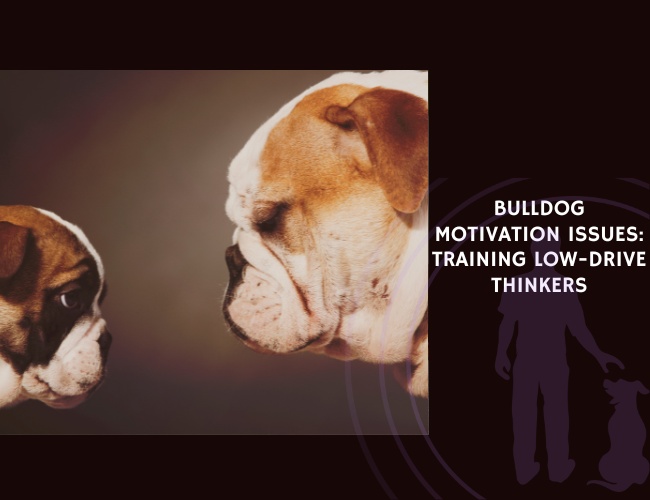
Have you ever watched your Bulldog carefully consider your training request, only to decide it’s simply not worth the effort? Perhaps you’ve felt the frustration of calling your beloved companion, knowing they understand perfectly well what you’re asking, yet they choose to remain comfortably planted on the cool tile floor. You’re not alone, and more importantly, you’re not dealing with a stubborn or lazy dog.
What you’re witnessing is something far more fascinating: a highly intelligent breed making calculated decisions about energy expenditure, task value, and comfort alignment. Bulldogs aren’t unmotivated—they’re selectively motivated, and understanding this distinction changes everything about how we approach training, connection, and cooperation with these remarkable thinkers.
Let us guide you through the science behind Bulldog motivation, exploring why these dogs think differently, what drives their selective engagement, and how you can transform what appears as resistance into willing partnership. This isn’t about forcing compliance or finding the “right” treat. It’s about understanding a completely different motivational architecture.
From Bull-Baiting Warriors to Couch Philosophers: Understanding Motivational Evolution
The Bulldog sitting beside you shares little motivational DNA with their medieval ancestors. This transformation isn’t accidental—it’s the result of nearly two centuries of deliberate selective breeding that fundamentally rewired their behavioral drives.
The Great Motivational Shift
In medieval England, Bulldogs were bred for bull-baiting, requiring explosive power, relentless tenacity, and the ability to ignore pain while maintaining singular focus on their task. These dogs needed what neuroscientists call a highly active SEEKING system—the neural circuitry driving exploration, pursuit, and goal-directed behavior that refuses to quit.
Then came 1835. With the ban on blood sports, everything changed. Breeders began selecting for entirely different traits: calm companionship over work drive, emotional stability over high arousal states, and selective engagement over indiscriminate responsiveness. Within just a few generations, the Bulldog’s motivational architecture underwent a profound transformation.
This wasn’t a loss of drive—it was a complete redesign. Modern Bulldogs were optimized for a different purpose entirely: being present, emotionally stable companions who conserve energy and engage thoughtfully rather than reactively. Understanding this history helps you recognize that your Bulldog’s selective participation isn’t defiance. It’s genetic design.
What Changed in the Bulldog Brain:
- SEEKING system activation: Reduced from high-intensity pursuit to selective engagement
- Arousal threshold: Shifted from high-energy reactivity to calm responsiveness
- Work persistence: Decreased from relentless task completion to strategic effort allocation
- Handler focus: Changed from constant vigilance to comfortable companionship
- Energy expenditure: Moved from sustained output to intelligent conservation
Selective Motivation: The Intelligent Evaluator
Unlike Border Collies or German Shepherds who often engage reflexively with any opportunity for activity, Bulldogs operate through what researchers call context-dependent engagement. Before committing to any behavior, your Bulldog is running a sophisticated evaluation:
Task value: Does this activity serve a meaningful purpose, or is it arbitrary repetition?
Energy cost: What’s the physiological demand relative to my available resources right now?
Emotional coherence: Does my human’s emotional state align with what they’re asking, or are they sending mixed signals?
Comfort alignment: Are the environmental conditions—temperature, breathing ease, physical comfort—supportive of this activity?
This evaluation process happens rapidly, often in the split second between when you give a cue and when your Bulldog decides whether to respond. It’s not conscious defiance. It’s intelligent resource allocation, and it reflects a breed that was selected to think before acting rather than act reflexively. 🧠
Signs Your Bulldog Is Evaluating (Not Ignoring):
- The pause: A moment of stillness before responding—this is assessment time, not defiance
- Head tilt or ear position change: Processing information and considering options
- Brief eye contact check: Looking to you for emotional cues about the request
- Body position adjustment: Shifting weight or posture while deciding whether to commit energy
- Environmental scan: Quick glance around assessing conditions before engaging
- Delayed but accurate response: Eventually performing the behavior perfectly after deliberation
Energy-Saving Intelligence vs. Low Drive
Here’s where we need to make a critical distinction. When trainers label Bulldogs as “low drive,” they’re often misunderstanding what’s actually happening. Your Bulldog isn’t lacking motivation—they’re demonstrating energy-saving intelligence, and there’s a profound difference.
Consider the physiological reality your Bulldog navigates daily. Approximately 90% of extremely brachycephalic dogs experience Brachycephalic Obstructive Airway Syndrome (BOAS), which means your companion is managing chronic respiratory compromise. Every breath requires more effort than it does for longer-nosed breeds. Add to this heat intolerance, reduced oxygen uptake capacity, and potential sleep apnea affecting overnight recovery, and you begin to understand the context of their decision-making.
Given these constraints, Bulldogs have evolved sophisticated self-regulation mechanisms:
Adaptive Self-Regulation Strategies:
- Preemptive disengagement from activities likely to cause respiratory distress (they know before you do what will trigger breathing problems)
- Strategic energy conservation for activities they deem essential or particularly meaningful
- Selective participation in low-cost, high-value interactions that strengthen connection without depleting resources
- Temperature-seeking behavior: Moving to cooler surfaces or shaded areas before overheating becomes critical
- Pacing adjustments: Self-limiting activity intensity and duration based on real-time respiratory feedback
- Recovery prioritization: Choosing rest when energy reserves are depleted rather than pushing through to collapse
This represents adaptive intelligence—the ability to assess and proactively manage physiological limitations rather than push through until collapse. When your Bulldog chooses not to chase a ball for the fifteenth time, they’re not being lazy. They’re being smart about oxygen management.
The Oxygen-Motivation Connection: Why Breathing Matters for Training
Most people understand that respiratory challenges affect a Bulldog’s physical capabilities. What’s less recognized but equally significant is how these challenges impact motivational availability—the actual cognitive and emotional resources your dog has available for learning and cooperation.
Understanding Motivational Availability
Think about the last time you had a bad cold or tried to exercise at high altitude. Did you feel motivated to tackle complex problems or learn new skills? Probably not, because your body was allocating resources to the fundamental task of getting enough oxygen. Your Bulldog experiences a milder version of this daily.
The relationship works like this: Motivational Availability equals Baseline Energy multiplied by Respiratory Efficiency, divided by Environmental Stressors. In practical terms, even a Bulldog with naturally good energy will have reduced motivation if their breathing is compromised or the environment is hot and humid.
How Respiratory Compromise Reduces Mental Resources:
- Chronic oxygen debt: Continuous mild hypoxia reduces neural energy available for cognitive processing and emotional regulation. Your dog’s brain is working harder just to maintain basic function.
- Respiratory effort taxation: The work of breathing itself consumes cognitive and emotional resources that might otherwise go toward training engagement. It’s not just physical—it’s mentally exhausting.
- Stress hormone elevation: Chronic respiratory compromise elevates cortisol, which reduces behavioral flexibility. A stressed dog is a less adaptable dog.
- Sleep deprivation effects: Many Bulldogs experience sleep apnea, which impairs memory consolidation and emotional regulation. Training the next day becomes harder when last night’s sleep was constantly interrupted.
- Reduced neurotransmitter efficiency: Hypoxia affects dopamine and serotonin systems involved in motivation, mood, and reward processing
- Attentional fatigue: The constant need to monitor breathing status depletes executive function resources
This explains something you’ve probably noticed: your Bulldog might be willing to train in the morning when it’s cool but becomes completely “unmotivated” by afternoon when the temperature has risen. Their motivation didn’t disappear—their available resources shifted based on respiratory efficiency.
When Panting Becomes Cognitive Load
Here’s something that changes how you’ll view training sessions: panting isn’t just a physical response. It’s a cognitive load that directly competes with learning and cooperation.
When your Bulldog is panting, several things happen neurologically:
The Neurological Impact of Respiratory Distress:
- Attentional narrowing: Respiratory distress focuses attention on breathing rather than handler cues. Your dog isn’t ignoring you—they literally have less attentional capacity to allocate to your voice.
- Working memory impairment: Oxygen debt reduces the brain’s capacity to hold and manipulate information. That three-step sequence you’re teaching? It’s harder to remember when cognitive resources are limited.
- Decision-making degradation: Stress hormones shift processing from the prefrontal cortex (deliberative thinking) to the amygdala (reactive survival responses). Your Bulldog becomes less capable of thoughtful cooperation.
- Reward processing disruption: Hypoxia affects dopaminergic systems involved in motivation and pleasure. That treat you’re offering becomes less appealing when the brain’s reward circuits are compromised.
- Impulse control reduction: Executive function deteriorates under oxygen stress, making self-regulation more difficult
- Learning consolidation interference: New information doesn’t transfer to long-term memory as effectively during respiratory distress
This is why your Bulldog may clearly understand a cue but fail to respond. It’s not stubbornness—their cognitive resources are allocated to survival functions rather than voluntary cooperation. Through the NeuroBond approach, we recognize that training must work within these physiological boundaries rather than against them. 🧡
Recognizing Protective Withdrawal
When Bulldogs experience respiratory discomfort, they exhibit behaviors that are frequently misinterpreted. What looks like stubbornness is actually protective disengagement from activities causing distress. What appears as laziness is energy conservation in response to physiological strain. What seems like defiance is often stress-induced behavioral shutdown.
Watch for these behavioral indicators that your Bulldog is managing discomfort rather than being difficult:
Sitting or lying down during training: This reduces metabolic demand and is your dog’s way of managing breathing difficulty.
Looking away or “going limp”: These are stress-induced freeze responses, not acts of rebellion.
Increased panting or open-mouth breathing: Your dog is telling you they’re working too hard, even if the activity seems mild to you.
Seeking cooler surfaces or shade: They’re attempting to manage their core temperature to reduce respiratory load.
Reduced responsiveness to previously effective rewards: When breathing is hard, even favorite treats become less motivating because eating requires effort too.
These behaviors represent adaptive coping strategies. Your Bulldog is communicating their physical state, and respecting these signals builds trust while ignoring them erodes it.
The Bulldog Decision Matrix: How Your Dog Evaluates Every Request
Unlike high-drive working breeds that engage reflexively with handler cues, Bulldogs demonstrate deliberative task evaluation. Before responding to any request, your dog is conducting a sophisticated cost-benefit analysis.
Understanding the Evaluation Process
Think of it this way: Engagement Likelihood equals Perceived Value times Clarity times Comfort, divided by Energy Cost times Stress Level. Every factor in this equation matters, and changing any one of them can shift your Bulldog from disengaged to cooperative.
Perceived value is influenced by multiple factors:
Relational meaning: Does this activity strengthen our bond, or is it just arbitrary obedience? Bulldogs are highly attuned to whether tasks serve connection or submission.
Novelty versus repetition: Is this interesting or tediously familiar? Your Bulldog may refuse the fiftieth repetition of “sit” not because they don’t understand, but because they find it boring.
Outcome predictability: Is the reward consistent and worthwhile? Inconsistent reinforcement reduces perceived value quickly.
Autonomy preservation: Does this task allow choice or demand submission? Bulldogs strongly prefer activities that preserve some sense of agency.
This evaluation process reflects executive function—the ability to assess, plan, and make decisions based on multiple factors. It’s the same cognitive capacity humans use when deciding whether to take on a new project at work. Your Bulldog is thinking, and that’s something to celebrate rather than fight against.
Relational vs. Performance-Based Framing
Here’s where training approaches diverge dramatically in effectiveness. Research on canine engagement reveals that framing matters profoundly—dogs engage more readily when tasks are presented as cooperative activities rather than obedience demands.
Consider the difference in framing:
Relational approach: “We’re going to work together on this, and it’ll strengthen our connection.” The focus is on shared purpose, mutual benefit, emotional connection, and flexible participation. Both you and your dog are getting something meaningful from the interaction.
Performance-based approach: “I command, you obey.” The focus is on hierarchical demand, unilateral benefit (only your goals matter), emotional pressure about correctness, and rigid compliance with no room for individual variation.
Bulldogs, bred specifically for companionship rather than servitude, respond dramatically better to relational framing. This explains a common pattern you may have noticed: your Bulldog “refuses” formal obedience exercises but readily participates in cooperative activities like “helping” carry something light or “guarding” a position while you work nearby.
The same behavior—holding a position, carrying an object—becomes more motivating when framed as partnership rather than submission. The Invisible Leash reminds us that true guidance comes from connection, not control. Your Bulldog knows the difference, and they respond accordingly.
Cognitive Disengagement vs. Comprehension Failure
A critical distinction exists between two very different situations:
Comprehension failure: Your dog genuinely doesn’t understand what you’re asking. They need more training or clearer communication.
Cognitive disengagement: Your dog perfectly understands but chooses not to participate based on their evaluation of the situation.
How do you tell the difference? Watch for these indicators of cognitive disengagement rather than confusion:
Selective responsiveness: Your Bulldog responds to some cues but not others in the same session. They understand—they’re just not interested in all of them.
Context-dependent performance: They perform the behavior perfectly in preferred contexts (cool living room, after dinner) but refuse in others (hot park, when already tired).
Delayed compliance: They eventually comply but after a deliberation period. That pause isn’t confusion—it’s decision-making time.
Alternative behavior offering: They offer different behaviors as if negotiating. “You want sit? How about I give you down instead?”
This represents autonomous decision-making. Your Bulldog is making a choice based on their evaluation of the situation rather than failing to comprehend. Understanding this distinction transforms frustration into respect for your dog’s intelligence.
Emotional Clarity: The Foundation of Bulldog Cooperation
Bulldogs demonstrate heightened sensitivity to emotional clarity in handler communication. Research on engagement training emphasizes that dogs must be in the right frame of mind to cooperate, and this requires clear, consistent, and emotionally congruent communication from you.
When Communication Creates Confusion
Your Bulldog is constantly reading multiple channels of information: your words, your tone, your body language, your emotional state, and the overall context. When these channels don’t align, confusion and disengagement follow.
Cue ambiguity happens when you use inconsistent signals or mixed messages. Maybe you say “come” while your body language says “I’m busy.” Your Bulldog receives contradictory information and chooses to wait for clarity.
Emotional incongruence occurs when your emotional state doesn’t match your verbal cues. You say “good boy” in a flat or frustrated tone. Your Bulldog trusts the emotion more than the words and becomes uncertain about whether they’re actually doing well.
Tension transmission means your anxiety or frustration gets communicated through body language even when you’re trying to sound cheerful. Bulldogs are expert readers of human tension, and it makes them cautious.
Pressure escalation happens when you increase demands while your dog is already stressed. This creates a spiral: your frustration increases their stress, which decreases their motivation, which increases your frustration further.
When these factors are present, Bulldogs strategically withdraw rather than risk making errors or experiencing conflict. They’re choosing emotional safety over participation, and from their perspective, that’s the intelligent choice.
Strategic Withdrawal Under Stress
What trainers often label as “stubbornness” is frequently a stress-coping strategy. Under stress or uncertainty, Bulldogs may exhibit what’s called the freeze-flight-flop response:
Common Stress-Coping Behaviors (Not Stubbornness):
- Sitting or freezing: This looks like defiance but is actually immobility as a stress response. Your dog is effectively saying, “I don’t know what to do, so I’m doing nothing until things become clearer.”
- Looking away: This is a calming signal indicating discomfort. Your Bulldog is trying to de-escalate tension, not ignore you.
- Going limp or refusing to move: This passive resistance is conflict avoidance. Your dog would rather become dead weight than engage in an interaction that feels overwhelming.
- Slow movement or “heavy feet”: Moving reluctantly with exaggerated slowness communicates reluctance without outright refusal
- Lip licking or yawning: Classic stress signals that indicate internal discomfort with the situation
- Body turning or curving away: Subtle repositioning to create distance without leaving entirely
- Sudden scratching or sniffing: Displacement behaviors that relieve tension during stressful interactions
These behaviors emerge when emotional pressure exceeds your Bulldog’s capacity to process it. The solution isn’t more pressure—it’s reducing the stress load and providing clarity. When you recognize withdrawal as communication rather than defiance, you can respond with support rather than frustration.
Building Emotional Coherence
The path to consistent cooperation runs through emotional clarity. Your Bulldog needs to feel secure in understanding what you want, what will happen if they comply, and that the interaction is safe and positive.
Building Blocks of Emotional Clarity:
- Consistency in cues: Use the same word, gesture, and context each time. Your Bulldog learns patterns, and variation creates uncertainty.
- Emotional alignment: Your feelings should match your words. If you’re frustrated, your dog knows it—better to pause training than pretend you’re not.
- Clear success criteria: Your Bulldog should know exactly what constitutes “correct” so they can succeed reliably. Ambiguous standards create anxiety.
- Predictable outcomes: When your dog does what you ask, the same good thing happens every time. This predictability builds confidence.
- Low-pressure environment: Training should feel safe to make mistakes in. Pressure creates avoidance; safety creates exploration.
- Patient timing: Allow your dog to process information rather than rapid-fire repeating cues
- Body language congruence: Ensure your physical posture matches your verbal message
When emotional coherence is present, you’ll notice something remarkable: your Bulldog’s decision-making shifts from “Is this safe?” to “Is this interesting?” That shift in baseline security transforms motivation. Through the essence of Zoeta Dogsoul, we understand that connection precedes cooperation—always.
Reward Processing: Why Traditional Treats Often Fail
The conventional wisdom in dog training suggests that you simply need to find the “right” reward—something motivating enough that your Bulldog will work for it. But this assumes all dogs process rewards similarly, and that’s where the approach fails with Bulldogs.
Low-Arousal vs. High-Arousal Motivation
Most training methods are designed around high-drive breeds that respond well to excitement, fast-paced repetition, and high-arousal rewards. These dogs get motivated by energy and enthusiasm. Bulldogs? They often find high-arousal training overwhelming rather than motivating.
The difference lies in how arousal affects the nervous system:
High-arousal states: Increased heart rate, faster breathing, elevated energy, and reactive decision-making. For breeds with efficient respiratory systems, this feels energizing. For Bulldogs, it quickly becomes physiologically taxing and cognitively overwhelming.
Low-arousal states: Calm baseline, steady breathing, thoughtful decision-making, and sustained attention. This state preserves respiratory resources and allows for better information processing.
When training feels like a frenetic game, your Bulldog may disengage not because they’re uninterested, but because the arousal level exceeds their comfort zone. They’re choosing calm over chaos, which is actually the state where they learn best.
Calm. Calculated. Selective.
Not stubborn—strategic. Bulldogs don’t resist commands; they evaluate them. They weigh effort, comfort, and purpose before they move, showing thoughtfulness rather than defiance.
Motivation redesigned by history. Once bred for relentless pursuit, they are now wired for presence over performance—choosing engagement only when it aligns with emotional and physical coherence.


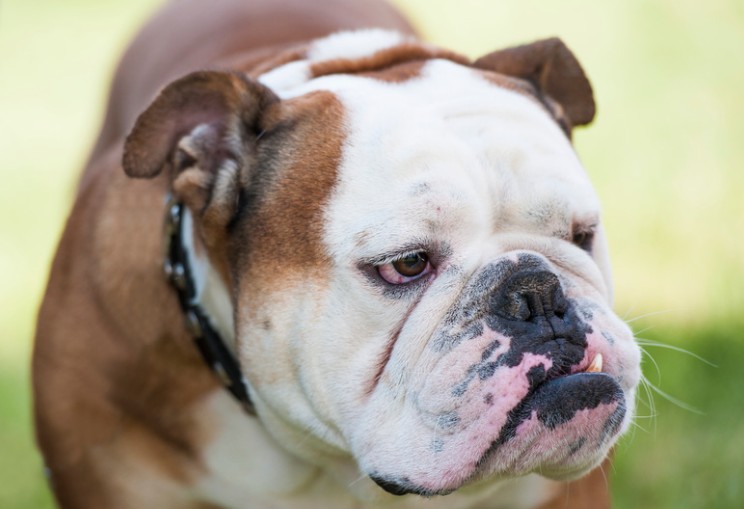
Effort follows meaning. When value, comfort, and trust align, the Bulldog responds—not out of compliance, but out of chosen cooperation.
The Social Reward Advantage
Here’s something that surprises many trainers: Bulldogs often respond better to calm social rewards than to food or toys. This makes perfect sense when you remember their breeding history—they were selected for companionship and emotional connection with humans.
Effective Social Rewards for Bulldogs:
- Calm verbal praise in a warm, genuine tone that communicates satisfaction without excitement
- Gentle physical contact like slow chest rubs, ear scratches, or leaning against you—physical connection that feels grounding rather than stimulating
- Eye contact and presence—your full attention and approval, communicated through soft eye contact and relaxed body language
- Collaborative satisfaction—the sense that you both accomplished something together, acknowledged with a quiet “we did it”
- Proximity permission: Allowing your dog to sit close or rest against you as reward for cooperation
- Quiet celebration: A soft smile and gentle “yes” that validates without overstimulating
- Shared stillness: Simply being together in calm contentment after successful work
These rewards work because they strengthen the relational bond without elevating arousal. Your Bulldog gets what they actually want: connection with you and acknowledgment of shared success. Food is nice, but for a breed designed for companionship, social connection often matters more.
🐕 Understanding Bulldog Motivation 🧠
From Selective Engagement to Cooperative Partnership: A Science-Based Journey
Phase 1: Understanding the Foundation
Recognizing Evolutionary Design
The Historical Shift
Bulldogs were transformed from bull-baiting warriors (requiring explosive drive) to companionship specialists after 1835. This wasn’t a loss of motivation—it was a complete redesign of their behavioral architecture for calm partnership rather than relentless work.
What You’ll Notice
Your Bulldog pauses before responding, evaluates task value, and makes calculated decisions about energy expenditure. This isn’t defiance—it’s intelligent resource allocation based on genetic design.
Your First Step
Shift your mindset from “my dog is stubborn” to “my dog is selectively motivated.” Recognize that thoughtful evaluation is intelligence, not resistance. Celebrate their deliberative nature rather than fighting against it.
Phase 2: Respiratory Reality
Understanding Physiological Constraints
The Oxygen-Motivation Connection
Approximately 90% of Bulldogs experience BOAS (Brachycephalic Obstructive Airway Syndrome). The work of breathing consumes cognitive resources that could go toward training. This affects motivation availability, not just physical performance.
Critical Warning Signs
When panting: • Attentional capacity decreases • Working memory impairs • Decision-making degrades • Reward processing disrupts. What looks like stubbornness is actually oxygen management.
Temperature Management Protocol
Train only in temperatures below 70°F, provide cooling surfaces, schedule sessions for early morning or evening, and monitor breathing continuously. Stop immediately if panting increases—this is your dog protecting themselves.
Phase 3: The Decision Matrix
How Your Bulldog Evaluates Every Request
The Evaluation Formula
Engagement Likelihood = (Perceived Value × Clarity × Comfort) ÷ (Energy Cost × Stress Level). Every factor matters. Your Bulldog assesses: task value, energy cost, emotional coherence, and comfort alignment before responding.
Cognitive Disengagement vs. Confusion
Watch for: • Selective responsiveness (responds to some cues, not others) • Context-dependent performance • Delayed compliance after deliberation • Alternative behavior offering. This is decision-making, not misunderstanding.
Increase Perceived Value
Frame tasks as cooperation not commands. Use relational language: “Let’s do this together” vs. “You must obey.” Emphasize shared purpose, mutual benefit, and connection. Bulldogs respond to partnership, not hierarchy.
Phase 4: Emotional Clarity
Building Communication Coherence
Why Clarity Matters
Bulldogs are highly sensitive to emotional coherence. They read: your words, tone, body language, emotional state, and context simultaneously. Mixed signals create confusion and strategic withdrawal, not defiance.
Common Clarity Breakers
• Cue ambiguity (inconsistent signals) • Emotional incongruence (saying “good” in frustrated tone) • Tension transmission (body language betrays stress) • Pressure escalation when dog is already stressed. These trigger freeze-flight-flop responses.
Building Coherence
Use consistent cues with aligned emotions. If frustrated, pause rather than pretend. Establish clear success criteria. Ensure predictable outcomes. Create low-pressure environments where mistakes feel safe. Through NeuroBond, clarity becomes connection.
Phase 5: Reward Redesign
Low-Arousal Motivation Strategies
The Arousal Paradox
High-arousal rewards (excitement, fast-paced games) often overwhelm Bulldogs rather than motivate them. High arousal increases respiratory demand and cognitive load. Low-arousal states preserve resources and support better learning.
Social Reward Advantage
Bulldogs often prefer: • Calm verbal praise (warm, genuine tone) • Gentle physical contact (chest rubs, ear scratches) • Eye contact and presence • Collaborative satisfaction (“we did it together”). Connection often motivates more than food.
Discover Individual Preferences
Observe what your Bulldog naturally seeks: Touch? Food? Activity? Social connection? Systematically test different reward types in calm conditions. Match rewards to actual preferences, not training theory assumptions.
Phase 6: Structured Autonomy
Choice Within Boundaries
Why Autonomy Transforms Motivation
When dogs feel they have agency, they show increased engagement and reduced stress. Autonomy allows respiratory self-management, respects cognitive capacity, enhances emotional security, and builds partnership rather than submission.
The Question Shift
Without autonomy: “Do I have to?” With autonomy: “What interests me here?” This internal question change is the foundation of sustainable motivation. The Invisible Leash emerges through mutual understanding, not control.
Practical Implementation
Offer two-option choices (“sit or down first?”). Allow self-paced learning. Let your dog indicate activity preferences. Watch for rest signals rather than imposing session lengths. Honor location preferences when safe.
Phase 7: Baseline Security
Creating the Foundation for Cooperation
The Cortisol Connection
Chronic stress elevates cortisol, reducing cognitive flexibility, impairing memory, heightening reactivity, and suppressing curiosity. Security lowers baseline cortisol, freeing cognitive resources for cooperation rather than vigilance.
What Security Looks Like
• Environmental predictability (consistent routines) • Relationship stability (predictable responses) • Clear boundaries • Reliable resource access • Trustworthy guidance. Security shifts nervous system from vigilance to receptivity.
Building Security Through Consistency
Maintain consistency in: daily routines, communication cues, emotional responses, boundaries, and resource availability. Predictability creates safety. Safety creates availability for learning. Through Soul Recall, positive experiences build trust foundations.
Phase 8: Partnership Integration
From Compliance to Cooperation
The Five Pillars Integration
Success requires addressing: (1) Physiological reality (temperature, breathing) (2) Cognitive architecture (task value) (3) Emotional needs (clarity, security) (4) Reward processing (low-arousal) (5) Autonomy preservation (choice). All pillars interact continuously.
The Transformation Journey
Understanding → Alignment → Cooperation → Partnership. You’re at understanding now. Next: align training with Bulldog strengths. Then: frame tasks as collaboration. Finally: your Bulldog chooses participation willingly because engagement strengthens your bond.
Your Daily Practice
Train in cool conditions (below 70°F). Use calm, consistent communication. Offer relational rewards. Provide meaningful choices. Maintain predictable routines. Prioritize bond over perfection. Celebrate thoughtful decision-making. This is partnership.
🔄 Training Approach Comparisons
High-Drive Breeds vs. Bulldogs
Working Breeds: Reflexive engagement, excitement-driven, high-arousal motivation, continuous activity tolerance
Bulldogs: Deliberative evaluation, calm-driven, low-arousal effectiveness, strategic energy conservation
Pressure vs. Partnership Methods
Pressure-Based: Commands, corrections, escalating demands, hierarchical submission, creates withdrawal in Bulldogs
Partnership-Based: Cooperation, choices, clear communication, relational framing, creates willing engagement
Reward Type Effectiveness
High-Energy Rewards: Exciting play, fast-paced games, loud praise—often overwhelming for Bulldogs, increases arousal beyond optimal
Low-Arousal Rewards: Calm praise, gentle touch, presence, shared satisfaction—matches Bulldog preferences, supports sustained engagement
Training Environment Impact
Warm Conditions (80°F+): Reduced cognitive availability, increased respiratory effort, strategic disengagement, protective withdrawal
Cool Conditions (below 70°F): Full cognitive resources, easier breathing, higher energy, willing participation
Communication Styles
Mixed Signals: Inconsistent cues, emotional incongruence, tension transmission—creates confusion and withdrawal responses
Emotional Clarity: Consistent cues, aligned emotions, calm tone, predictable outcomes—builds confidence and engagement
Autonomy vs. Control
Zero Choice: All commands, no agency, rigid compliance expected—Bulldogs ask “Do I have to?” and often choose not to
Structured Autonomy: Meaningful choices within boundaries—Bulldogs ask “What interests me?” and engage willingly
⚡ Quick Reference: The Bulldog Motivation Formula
Engagement Likelihood = (Perceived Value × Clarity × Comfort) ÷ (Energy Cost × Stress Level)
Motivational Availability = Baseline Energy × Respiratory Efficiency ÷ Environmental Stressors
Optimal Training Temperature: Below 70°F
Session Length: 5-10 minutes with rest breaks
Success Rate Target: 80% (challenging but achievable)
Processing Time: Allow 2-3 seconds for deliberation before repeating cues
🧡 The Zoeta Dogsoul Perspective
Understanding Bulldog motivation isn’t about fixing deficiencies—it’s about honoring difference. Through the NeuroBond approach, we recognize that emotional connection precedes cooperation. Your Bulldog’s selective engagement reflects intelligence, not resistance. The Invisible Leash emerges not through control but through mutual understanding—awareness and respect creating guidance more powerful than any physical restraint.
When you align training with your Bulldog’s physiological reality, cognitive architecture, and emotional needs, something remarkable happens: resistance transforms into willing participation. Through moments of Soul Recall, your dog remembers positive experiences, building trust that makes future cooperation easier. This is training as relationship-building, where thoughtful decision-making is celebrated and partnership replaces submission.
Your Bulldog has always been intelligent, always been motivated, always been communicating. Now you have the understanding to hear what they’ve been saying. That balance between science and soul—that’s the essence of Zoeta Dogsoul.
© Zoeta Dogsoul – Where neuroscience meets soul in dog training
Matching Rewards to Individual Preferences
Even within the Bulldog breed, individual differences matter enormously. Some Bulldogs do respond enthusiastically to certain food rewards, particularly if they’re offered calmly rather than used to generate excitement. Others prefer physical affection. Still others are most motivated by activities like short walks or interactive play.
The key is systematic observation. Notice what your Bulldog seeks out naturally:
Identifying Your Bulldog’s Primary Motivators:
- Touch motivation signals: They repeatedly bring you toys or nudge your hand for pets, lean against you, seek physical contact, present themselves for rubbing
- Food motivation signals: They position themselves near you during meals, perk up at specific food prep sounds, track food movement intently, remain alert in the kitchen
- Activity motivation signals: They become more alert when you pick up a leash or move toward the door, wait by exits, show interest in departure preparations
- Social connection motivation signals: They maintain eye contact, follow you room to room, position themselves to watch you, seek your attention through quiet presence
- Environmental exploration signals: They investigate new items, show curiosity about changes, prefer variety in walking routes
- Play motivation signals: They initiate games, bring toys repeatedly, show sustained interest in interactive activities
Once you identify your individual Bulldog’s preference pattern, you can structure training around rewards they genuinely value rather than rewards training theory says they should want. This alignment between offered rewards and actual desires dramatically increases motivation. 🧡
Temperature, Comfort, and Environmental Design for Success
If you’ve noticed that your Bulldog is more cooperative in certain conditions and less responsive in others, you’re observing something crucial: environmental factors profoundly impact Bulldog motivation through their direct effect on respiratory function and physical comfort.
The Temperature-Motivation Connection
Temperature isn’t just about comfort for Bulldogs—it’s about cognitive availability. As temperatures rise, respiratory efficiency decreases, which means less oxygen reaches the brain, which means reduced cognitive resources for training.
Consider the dramatic difference in your Bulldog’s responsiveness:
Cool morning training (65-70°F): Full cognitive availability, easier breathing, higher baseline energy, more willingness to engage
Warm afternoon training (80+°F): Reduced cognitive availability, increased respiratory effort, lower baseline energy, strategic conservation of resources
This isn’t a preference—it’s a physiological reality. Your Bulldog isn’t being difficult when they refuse to train in the afternoon heat. They’re managing limited resources intelligently.
Creating the Optimal Training Environment:
- Climate control: Air-conditioned spaces or naturally cool areas, maintaining temperatures below 70°F when possible
- Timing considerations: Early morning or evening training when temperatures are lowest and your dog is well-rested
- Cooling surfaces: Access to tile, concrete, or cooling mats where your dog can regulate temperature between exercises
- Hydration availability: Fresh water always accessible, with breaks encouraged for drinking without interrupting flow
- Shade and airflow: If training must happen outdoors, full shade and natural or artificial breeze are essential
- Low-humidity conditions: Even moderate temperatures become challenging when combined with high humidity
- Comfortable flooring: Non-slip surfaces that provide secure footing without joint stress
When you align training timing and location with your Bulldog’s respiratory needs, you’re not accommodating weakness—you’re designing for success.

Physical Comfort as Cognitive Foundation
Beyond temperature, general physical comfort influences motivation significantly. Your Bulldog’s ability to focus on training depends partly on whether their body feels good.
Physical Comfort Factors Affecting Training Success:
- Respiratory ease: If your dog is already panting or breathing hard before training begins, they’re starting with a cognitive deficit. Wait until breathing normalizes.
- Joint comfort: Bulldogs are prone to hip and elbow issues. Training on soft surfaces and avoiding high-impact activities protects joints while maintaining engagement.
- Digestive state: Training on a full stomach can be uncomfortable given their tendency toward digestive issues. Wait at least 90 minutes after meals.
- Rest adequacy: Sleep-deprived Bulldogs (which many are, due to sleep apnea) have reduced frustration tolerance and learning capacity. Ensure adequate rest before expecting focused work.
- Collar pressure: Traditional collars can increase respiratory restriction. Harnesses that don’t put pressure on the throat support better breathing and reduce training-associated discomfort.
- Skin condition: Skin fold irritation or dermatitis creates background discomfort that reduces available cognitive resources
- Paw pad health: Rough or hot surfaces affect focus and willingness to move during training
Small adjustments in physical comfort can yield disproportionate improvements in cooperation. Your Bulldog isn’t being precious—they’re responding to legitimate physical factors that affect their capacity to learn.
Autonomy and Choice: The Cooperation Catalyst
One of the most powerful but underutilized approaches to Bulldog motivation involves structured autonomy—providing meaningful choices within appropriate boundaries. This approach respects your dog’s intelligence while maintaining the guidance structure necessary for safety and social functioning.
Why Autonomy Matters
Research increasingly demonstrates that perceived control and choice-making capability positively influence motivation across species. When animals feel they have agency in their environment and activities, they show increased engagement, reduced stress, and better learning outcomes.
Why Autonomy Transforms Bulldog Motivation:
- Breed history alignment: They weren’t bred for servile obedience but for partnership with humans in challenging work, which required independent decision-making.
- Cognitive capacity respect: Bulldogs are thoughtful decision-makers. Denying them any choice feels cognitively restrictive and creates resistance.
- Respiratory self-management: Autonomy allows your dog to self-regulate energy expenditure based on real-time assessment of their physical state.
- Emotional security enhancement: Knowing they have some control reduces anxiety and increases willingness to participate in directed activities.
- Reduced learned helplessness: Choice prevents the passive resignation that develops when animals feel they have no influence over outcomes
- Intrinsic motivation development: Dogs who choose participation develop internal drive rather than depending solely on external pressure
- Relationship quality improvement: Autonomy within structure builds partnership rather than submission-based dynamics
The goal isn’t permissive chaos—it’s structured choice within clear boundaries. Your Bulldog doesn’t get to choose whether to come when called near a busy street, but they might get to choose which toy to bring back or which route to take on a walk.
Implementing Structured Autonomy
Practical autonomy looks different in different contexts, but the underlying principle remains consistent: offer meaningful choices whenever safety and essential boundaries aren’t compromised.
Practical Ways to Offer Structured Autonomy:
- Two-option choices: “Do you want to practice ‘sit’ or ‘down’ first?” Both outcomes are productive, but your dog chooses the order.
- Self-paced learning: Allow your Bulldog to move through training progressions at their own speed rather than imposing arbitrary timelines.
- Activity selection: Offer several training activities and let your dog indicate preference through enthusiasm and engagement.
- Break timing: Watch for signs your dog needs rest rather than imposing rigid session durations. Let them tell you when they’re ready to continue.
- Location preferences: If your Bulldog consistently performs better in certain locations, honor that preference when possible.
- Route choices on walks: Allow your dog to choose direction at intersections (within safe boundaries)
- Toy or reward selection: Present multiple options and let your dog indicate which they prefer that session
- Position choice: Allow your dog to choose where to settle during training breaks rather than directing them
When your Bulldog experiences structured autonomy, something shifts in their approach to training. Instead of evaluating whether to comply with demands, they’re evaluating which opportunities to engage with. The internal question changes from “Do I have to?” to “What interests me here?” That’s the foundation of sustainable motivation.
The Cooperation Contract
Think of training as an ongoing negotiation rather than a series of commands. You’re offering opportunities for positive engagement, and your Bulldog is choosing participation based on whether those opportunities align with their needs and interests.
The Elements of a Successful Cooperation Contract:
- Clear communication: You provide unambiguous information about what you’re asking and what the outcome will be.
- Meaningful rewards: You offer reinforcement your dog actually values, not what training manuals say they should value.
- Respect for limitations: You recognize when physical or cognitive resources are depleted and adjust accordingly.
- Autonomy within structure: You provide choices that respect your dog’s agency while maintaining necessary boundaries.
- Relationship focus: You prioritize connection over perfection, understanding that the bond is the foundation of all cooperation.
- Consistency and fairness: Rules and expectations remain stable so your dog can predict outcomes
- Mutual benefit acknowledgment: Both parties gain something meaningful from the interaction
- Flexibility within framework: Ability to adapt to individual needs while maintaining core principles
When this contract is honored consistently, your Bulldog’s selective engagement transforms into willing participation. The Invisible Leash emerges not through control but through mutual understanding and respect.
Creating Baseline Security: The Motivation Foundation
Something remarkable happens when Bulldogs feel truly secure: their cognitive resources shift from environmental monitoring and self-protection to curiosity and cooperation. Baseline security isn’t just about physical safety—it’s about emotional predictability, clear boundaries, and trustworthy guidance.
Understanding Baseline Security
Security represents the foundation from which all exploration and learning emerge. Without it, your Bulldog’s nervous system remains in a heightened state of environmental monitoring, always asking “Am I safe? Is everything okay? What might happen next?”
That constant monitoring consumes cognitive resources. It’s like trying to learn a new skill while simultaneously worrying about your physical safety—possible, but much harder than learning in a secure environment.
What Baseline Security Looks Like for Bulldogs:
- Environmental predictability: The daily routine follows consistent patterns, so your dog knows what to expect and when.
- Relationship stability: Your responses to their behavior remain consistent, so they can predict how you’ll react.
- Clear boundaries: Rules and expectations are consistent and clearly communicated, eliminating ambiguity about what’s acceptable.
- Reliable resource access: Basic needs like food, water, rest, and comfortable temperature are consistently met without competition or uncertainty.
- Trustworthy guidance: When you guide them away from something or toward something, your judgment proves consistently reliable and in their best interest.
- Safe social environment: Interactions with people and other animals remain predictable and positive
- Consistent physical comfort: Living conditions support rather than compromise respiratory and joint health
- Emotional safety: Making mistakes doesn’t result in punishment or emotional withdrawal from you
When these elements are present consistently, your Bulldog’s nervous system can down-regulate from vigilance to receptivity.
The Cortisol-Motivation Connection
Security isn’t just a psychological concept—it has direct neurochemical effects. Chronic stress elevates cortisol, which has multiple impacts on behavior and learning:
How Elevated Cortisol Undermines Motivation:
- Reduced cognitive flexibility: High cortisol makes it harder to learn new behaviors or adapt to changing situations.
- Impaired memory consolidation: Stress hormones interfere with the process of transferring learning from short-term to long-term memory.
- Heightened emotional reactivity: Elevated baseline stress means smaller triggers cause bigger reactions.
- Decreased frustration tolerance: What your dog might handle easily when calm becomes overwhelming when stressed.
- Suppressed curiosity and exploration: The nervous system prioritizes safety over learning when threat-detection systems are active.
- Weakened immune function: Chronic stress compromises physical health, creating additional discomfort
- Sleep disruption: Elevated cortisol interferes with restorative sleep, perpetuating the stress cycle
- Digestive dysfunction: Stress affects gut health, another source of background discomfort
By contrast, secure Bulldogs have lower baseline cortisol, which means:
The Motivational Benefits of Security:
- They allocate less energy to vigilance and anxiety, leaving more resources for cooperation.
- They have more cognitive resources available for processing information and solving problems.
- They experience lower baseline stress, which improves respiratory function (stress-related tension worsens breathing).
- They trust handler guidance more readily, reducing the need for extensive evaluation before complying.
- They choose participation more willingly because engagement feels safe rather than risky.
- They recover from setbacks more quickly because their nervous system isn’t already overwhelmed
- They show better learning retention because memory consolidation proceeds normally
- They demonstrate more behavioral flexibility and creativity in problem-solving
This represents motivation through security rather than motivation through excitement or pressure. For Bulldogs, feeling safe is more motivating than feeling stimulated. Through moments of Soul Recall, your dog remembers positive experiences and emotional safety, building a foundation of trust that makes future cooperation easier.
Building Security Through Consistency
The path to baseline security runs through consistency in several domains:
Building Security Through Multi-Domain Consistency:
- Daily routine consistency: Feeding, walking, resting, and interaction times follow predictable patterns. Your Bulldog’s circadian rhythms align with expectations.
- Communication consistency: The same cues mean the same things, delivered in the same tone and context. No guessing games about what you want.
- Emotional consistency: Your responses to behavior remain stable regardless of your mood. Your dog can predict how you’ll react.
- Boundary consistency: Rules don’t change based on convenience. What’s not allowed on Tuesday isn’t suddenly allowed on Thursday.
- Resource consistency: Basic needs are met reliably without your dog needing to compete, guard, or worry about availability.
- Handler consistency: If multiple people interact with your dog, they follow the same guidelines and use the same cues
- Location consistency: Certain places have consistent meaning (e.g., this spot is always safe for rest)
- Consequence consistency: Behaviors produce predictable outcomes every time they occur
This doesn’t mean rigidity—it means predictability within flexibility. Your Bulldog knows the general structure but understands that occasional variations are communicated clearly and aren’t threats to security.
When consistency creates security, you’ll notice your Bulldog becomes simultaneously more relaxed and more engaged. Paradoxically, they need less from you (in terms of constant reassurance) while being more available for cooperation. That’s the power of baseline security. 🧠
Bringing It All Together: The Integrated Approach
Understanding Bulldog motivation requires seeing the complete picture rather than isolated factors. Your dog’s selective engagement emerges from the intersection of physiology, cognition, emotion, reward processing, and environmental context.
The Five Pillars of Bulldog Motivation
Think of these five elements as interconnected pillars supporting your Bulldog’s capacity and willingness to engage:
Physiological reality: Respiratory constraints and energy limitations create genuine boundaries around what’s possible and comfortable. Training that ignores these boundaries fails not because your dog is unmotivated, but because you’re asking for cooperation while they’re managing physical strain.
Cognitive architecture: Deliberative decision-making and task evaluation mean your Bulldog is always assessing whether activities are worth the investment. Training that provides clear value, autonomy, and purpose works with this architecture rather than against it.
Emotional needs: Clarity, security, and relational connection form the emotional foundation for cooperation. Training that creates emotional pressure or ambiguity triggers withdrawal rather than engagement.
Reward processing: Low-arousal, relationally meaningful reinforcement resonates with Bulldog preferences. Training that uses high-excitement rewards often creates overwhelm rather than motivation.
Autonomy preservation: Choice within structured boundaries respects your dog’s intelligence and agency. Training that honors autonomy transforms compliance into cooperation.
These pillars don’t function independently—they interact continuously. Reduced respiratory function (pillar one) decreases cognitive resources (pillar two), which increases reliance on emotional security (pillar three), which changes reward effectiveness (pillar four), which heightens the need for autonomy (pillar five).
Understanding these interactions helps you identify where intervention is most needed. Sometimes improving motivation requires addressing temperature (physiological). Sometimes it requires clearer communication (emotional). Sometimes it requires better reward selection (reward processing). Often it requires adjustments across multiple pillars simultaneously.
The Transformation Process
Moving from “unmotivated” to engaged follows a predictable progression when you address the right factors:
Phase One—Understanding: This is where you are right now, recognizing that selective engagement is intelligent adaptation rather than defiance. You’re identifying the physiological and emotional constraints your individual Bulldog faces, and you’re ready to abandon pressure-based methods that worked against their nature rather than with it.
Phase Two—Alignment: Now you structure training around Bulldog strengths rather than trying to force them into approaches designed for different breeds. You use low-arousal, relational rewards. You provide clear, calm communication. You train in cool, comfortable environments at times when your dog has adequate respiratory resources.
Phase Three—Cooperation: Here, you frame tasks as meaningful collaboration. You respect autonomy within boundaries. You build on relational connection. Your Bulldog begins engaging not because they must, but because the activities strengthen your bond and feel meaningful.
Phase Four—Partnership: This is the goal state where your Bulldog chooses participation willingly. Training becomes relationship-building rather than obedience drilling. Engagement becomes self-sustaining because it feels good to both of you. The work isn’t work anymore—it’s shared time doing things together.
This progression doesn’t happen overnight, and it’s not always linear. You may move forward and occasionally step back when circumstances change (health issues, environmental stressors, routine disruptions). That’s normal. The key is maintaining the alignment principles even when facing temporary setbacks.
Practical Implementation Guidelines
Theory becomes useful only when translated into concrete action. Here’s how to apply these insights in daily life with your Bulldog:
Environmental management creates the physical foundation:
Train in cool, comfortable spaces, ideally with air conditioning or fans when temperatures are even moderately warm.
Provide frequent rest breaks, watching your dog’s breathing rather than following arbitrary time schedules.
Monitor breathing and stress signals continuously, ending sessions if respiratory effort increases noticeably.
Avoid high-temperature or high-humidity conditions completely for training. Save those conditions for gentle, self-paced activities only.
Ensure your dog has access to water and cooling surfaces throughout any training session.
Additional Environmental Considerations:
- Visual distractions: Minimize overwhelming stimuli during early learning phases
- Noise levels: Keep environments relatively quiet to support focus
- Surface texture: Ensure non-slip footing that provides confidence
- Space availability: Provide adequate room for movement without crowding
- Lighting quality: Natural or soft lighting reduces stress compared to harsh artificial light
- Familiar scents: Training in spaces with familiar smells increases comfort
- Escape routes: Ensure your dog doesn’t feel trapped or cornered during training
Communication style provides the emotional foundation:
Use a calm, neutral tone even when you’re pleased with performance. Enthusiasm is fine, but keep arousal levels appropriate.
Give clear, consistent cues without variation in wording or gesture. Your dog learns patterns, so maintain them.
Allow processing time between cue and expected response. Bulldogs need a moment to evaluate and decide.
Avoid emotional pressure, including frustrated repetition of cues or physical manipulation into position.
Watch your body language, ensuring it matches your verbal communication. Mixed signals create confusion.
Advanced Communication Techniques:
- Marker precision: Use a consistent “yes” or click at the exact moment of correct behavior
- Silence as communication: Sometimes saying nothing allows your dog to think
- Spatial pressure awareness: Notice how your body position affects your dog’s comfort
- Energy matching: Adjust your energy level to match your dog’s current state
- Micro-expression awareness: Notice your own facial expressions and how they affect your dog
- Breathing synchronization: Your calm breathing patterns can help regulate your dog’s state
- Touch communication: Use gentle physical guidance only when absolutely necessary
Reward strategy reinforces behavior effectively:
Identify individual preferences through observation rather than assumption. What does your specific dog seek out naturally?
Use variable reinforcement schedules once behaviors are established, but maintain high frequency during initial learning.
Incorporate relational rewards—praise, touch, presence—alongside or instead of food rewards.
Keep arousal low during reward delivery. Calm happiness works better than excited celebration.
Match reward magnitude to effort, reserving your best reinforcers for your dog’s hardest work.
Reward Delivery Best Practices:
- Timing precision: Deliver rewards within 1-2 seconds of the desired behavior
- Location awareness: Reward in position to encourage the behavior you want repeated
- Variety within preference: Rotate among your dog’s preferred reward types to maintain interest
- Jackpot moments: Occasionally offer exceptional rewards for breakthrough performances
- Life rewards: Incorporate environmental rewards (going outside, seeing a friend) alongside training rewards
- Gradual reward reduction: Fade treat frequency while maintaining social rewards
- Context-appropriate rewards: Match reward type to the difficulty and importance of the task
Task design respects cognitive and physical capacity:
Keep sessions short and purposeful, typically 5-10 minutes for focused work with rest periods between.
Structure meaningful, cooperative activities that have clear purpose rather than arbitrary repetition.
Choose low physical demand activities that don’t challenge respiratory capacity unnecessarily.
Establish clear success criteria so your dog knows exactly what constitutes correct performance.
Progress gradually through difficulty levels, ensuring your dog experiences success at each stage.
Task Design Principles:
- Single-element focus: Teach one component at a time before combining elements
- Progressive difficulty: Increase challenge in small increments, not dramatic jumps
- Success rate targeting: Aim for 80% success rate—challenging but achievable
- Contextual variation: Practice in different locations once behavior is solid in one context
- Distraction graduation: Add distractions gradually from minimal to moderate to significant
- Duration building: Extend behavior duration slowly, using the 80% rule
- Natural behavior integration: Leverage behaviors your dog already offers naturally
- Functional training: Focus on behaviors that serve practical purposes in daily life
Relationship building provides the foundation for everything else:
Prioritize bond over performance. If you must choose between getting a behavior and maintaining trust, choose trust every time.
Respect autonomy by providing choices whenever possible within safety boundaries.
Provide structured security through consistent routines, clear boundaries, and reliable guidance.
Celebrate small successes quietly rather than explosively. Your pride should feel grounding, not overwhelming.
Spend non-training time together simply being present, reinforcing that your relationship exists beyond performance expectations. 🧡
Deepening the Bond Beyond Training:
- Calm parallel activities: Simply existing together without demands strengthens connection
- Observation time: Watch your dog’s natural behaviors and preferences without intervening
- Gentle grooming: Regular care sessions build trust and physical comfort
- Predictable routines: Daily rituals create relationship anchors
- Respect for rest: Honor your dog’s downtime needs without guilt
- Play on their terms: Follow your dog’s play preferences rather than imposing your ideas
- Shared exploration: Experience new environments together at your dog’s pace
- Physical proximity: Allow your dog to choose closeness without forcing interaction
Beyond Training: Implications for Bulldog Wellbeing
Understanding motivation reveals insights that extend far beyond training sessions into broader questions of Bulldog welfare, breeding practices, and owner education.
The Welfare Connection
When we recognize that Bulldog “laziness” is actually intelligent management of respiratory constraints, we must acknowledge uncomfortable truths about extreme brachycephaly breeding. If a dog must constantly evaluate whether activities are safe based on breathing difficulty, we’ve created a welfare issue through selective breeding.
Current Bulldog breeding trends have prioritized appearance over function, creating dogs whose daily existence requires constant self-monitoring and protective disengagement. That’s not quality of life—that’s chronic management of discomfort.
What Health-Focused Breeding Requires:
- Health-focused breeding: Selecting for more functional airway anatomy, even if it means faces become slightly longer.
- Respiratory assessment: Making airway function testing standard practice before breeding decisions.
- Owner education: Ensuring prospective Bulldog owners understand respiratory challenges before committing to the breed.
- Veterinary intervention: Providing airway surgery (when appropriate) early in life rather than waiting for crisis.
- Ethical reflection: Questioning whether continued breeding of extreme brachycephaly can be justified given welfare implications.
- Genetic diversity prioritization: Expanding gene pools to reduce inherited health problems
- Performance testing: Requiring basic functional health tests (walking without distress, comfortable breathing)
- Breeding standard revision: Updating breed standards to prioritize health metrics alongside appearance
- Breeder accountability: Establishing consequences for producing dogs with predictable suffering
These aren’t easy conversations, but they’re necessary ones. Understanding motivation helps us see that behavioral “problems” often stem from physiological compromises we’ve bred into these dogs.
Preparing Owners for Reality
Many people choose Bulldogs expecting a relaxed companion who doesn’t require much effort. That’s partly true, but it oversimplifies reality. Bulldogs do require specific understanding and accommodation of their needs.
What Prospective Bulldog Owners Must Understand:
- Training requires patience: Bulldogs won’t respond to methods designed for high-drive breeds. Success requires understanding their unique motivational architecture.
- Health management is essential: Respiratory challenges, skin care, joint support, and temperature regulation require consistent attention and financial resources.
- Exercise must be modified: Short, cool-condition walks and gentle play—not extended runs or high-intensity activities.
- Environmental control matters: Air conditioning isn’t a luxury for Bulldogs; it’s a welfare necessity in many climates.
- Veterinary costs are significant: Breed-specific health issues often require specialized care and intervention.
- Lifespan considerations: Health challenges may affect both length and quality of life
- Daily maintenance: Skin fold cleaning, eye care, and other regular grooming tasks are non-negotiable
- Activity limitations: Many dog activities (long hikes, beach days, dog parks) may be unsuitable
- Insurance requirements: Many require breed-specific insurance or may be prohibited in certain housing
When owners enter Bulldog guardianship with accurate expectations, they’re prepared to work with their dog’s nature rather than against it. That preparation improves outcomes for both human and dog.
The Path Forward: From Pressure to Partnership
Traditional dog training evolved primarily around working breeds with high drive, efficient respiratory systems, and strong handler focus. Those methods don’t transfer seamlessly to Bulldogs, and insisting they should creates frustration for both ends of the leash.
Challenging Training Paradigms
This comprehensive understanding of Bulldog motivation reveals fundamental limitations in one-size-fits-all training approaches:
Why Traditional Methods Fail Bulldogs:
- High-drive assumptions are inappropriate: When training advice assumes all dogs are motivated by excitement and activity, it fails Bulldogs who find those states physiologically taxing.
- Pressure-based methods are counterproductive: Correction-focused training that works through avoidance motivation creates withdrawal in Bulldogs rather than cooperation.
- Arousal isn’t always motivating: The assumption that increasing excitement increases motivation doesn’t hold for breeds that function better at lower arousal levels.
- Breed-specific adaptations are essential: Training methodology must account for breed differences in physiology, cognition, and motivation.
- Performance metrics need revision: Speed and precision aren’t appropriate goals when respiratory function varies
- Session length assumptions fail: Standard 15-20 minute sessions exceed many Bulldogs’ optimal engagement window
- Repetition strategies backfire: What builds muscle memory in working breeds creates disengagement in thoughtful evaluators
The broader training community needs to recognize that effective methods for one breed may be actively harmful for another. Bulldogs don’t need to be “fixed”—training approaches need to be adapted.
For Trainers and Owners
If you’re working with Bulldogs, your path forward includes:
Action Steps for Trainers and Owners:
- Abandoning pressure-based methods: Release any training approach built on corrections, escalating demands, or creating discomfort to motivate compliance.
- Embracing breed-specific approaches: Recognize that Bulldogs require different methods than Border Collies or German Shepherds, and that’s okay.
- Prioritizing relationship over performance: The bond you build matters more than perfect obedience. Connection creates cooperation.
- Respecting physiological limitations: Temperature, respiratory function, and energy availability are real constraints, not excuses.
- Celebrating thoughtful decision-making: Your Bulldog’s pause before responding isn’t slowness—it’s intelligence. Honor it.
- Educating others: Share breed-specific understanding with other Bulldog owners and trainers
- Patience cultivation: Develop your own capacity to wait for willing cooperation rather than demanding immediate compliance
- Self-awareness development: Notice when your own frustration is affecting training outcomes
When you approach training this way, something remarkable happens: your Bulldog becomes more engaged, not less. By removing pressure and respecting their nature, you create space for genuine cooperation to emerge.
For the Broader Community
Beyond individual training, the community of Bulldog enthusiasts, breeders, and veterinarians must address:
Community-Level Actions Required:
- Increased awareness of brachycephalic health issues: These aren’t cosmetic concerns—they’re welfare issues affecting daily quality of life and behavioral capacity.
- Support for ethical breeding practices: Prioritizing function over extreme appearance features, even when that means Bulldogs look somewhat different from current breed standards.
- Advocacy for breed-specific training education: Ensuring trainers understand that methods effective for one breed may fail or harm another.
- Promotion of welfare-centered approaches: Training, care, and breeding decisions should prioritize dog wellbeing over human preferences for appearance or performance.
- Research funding: Supporting studies on brachycephalic health, behavior, and welfare
- Breed standard evolution: Working with kennel clubs to revise standards prioritizing health
- Public education campaigns: Helping prospective owners make informed decisions
- Veterinary collaboration: Encouraging early intervention and preventive care approaches
- Legislative awareness: Supporting regulations that protect brachycephalic welfare without banning breeds
This requires difficult conversations about whether current breeding practices serve dogs’ interests and whether breed standards should evolve to prioritize health and function. That balance between science and soul—that’s the essence of Zoeta Dogsoul.
Conclusion: Selective Motivation as Intelligence
We’ve journeyed through the science of Bulldog motivation, exploring how physiology shapes behavior, how cognition influences engagement, and how emotional needs drive cooperation. The central insight remains clear: Bulldogs aren’t unmotivated—they’re selectively motivated, thoughtfully engaged, and intelligently adaptive.
The Paradigm Shift
Understanding Bulldog “motivation issues” requires moving from a deficiency model to a difference model. Your Bulldog isn’t broken or lazy or stubborn. They’re operating according to a different motivational architecture—one optimized for companionship rather than servitude, for energy conservation rather than tireless work, for thoughtful decision-making rather than reflexive compliance.
Core Insights from the Paradigm Shift:
- Selective engagement as intelligence: Bulldogs evaluate tasks based on value, clarity, comfort, and energy cost. This evaluation process demonstrates executive function and resource management.
- Physiological constraints shaping motivation: Respiratory limitations reduce motivational availability, not just physical capacity. The work of breathing consumes cognitive and emotional resources.
- Autonomy as engagement prerequisite: Bulldogs respond better to cooperative framing than hierarchical demands. Partnership motivates where pressure creates withdrawal.
- Emotional clarity as foundation: Calm, coherent communication increases engagement. Ambiguity and pressure decrease it.
- Low-arousal effectiveness: Relational, calm reinforcement outperforms high-energy excitement. Security motivates more powerfully than stimulation.
- Misinterpretation patterns: Withdrawal behaviors are commonly mislabeled as stubbornness or laziness when they’re actually adaptive coping strategies.
- Context-dependent performance: What appears as inconsistency is actually intelligent adjustment to changing conditions
- Relationship primacy: The bond matters more than the behavior—connection enables cooperation
When these elements are understood and respected, training transforms from a struggle into a collaborative process that strengthens your bond while developing practical skills.
The Journey from Resistance to Partnership
The transformation from “stubborn Bulldog” to “cooperative companion” requires not changing your dog, but changing your understanding. Different breeds require different approaches, and true motivation emerges not from pressure or excitement, but from alignment, respect, and relational meaning.
Your Bulldog is offering you an opportunity: to slow down, to think more carefully about what you’re asking and why, to prioritize connection over compliance, and to recognize intelligence in forms that look different from traditional working-breed drive.
When you accept that invitation, you’ll find that your Bulldog’s selective engagement isn’t a problem to be fixed but a perspective to be honored. They’re teaching you that not everything worth doing requires high energy, that thoughtful consideration isn’t the same as refusal, and that the strongest cooperation emerges from mutual respect rather than unilateral control.
That’s the journey we invite you to take—from seeing motivation as something you impose to recognizing it as something you cultivate together. From training your dog to partnering with your companion. From demanding compliance to earning cooperation. 🧡
Your Bulldog has always been intelligent, always been motivated, always been communicating. Now you have the understanding to hear what they’ve been saying all along. The path forward is clear, calm, and centered on connection. That’s not just training—that’s the essence of Zoeta Dogsoul.










