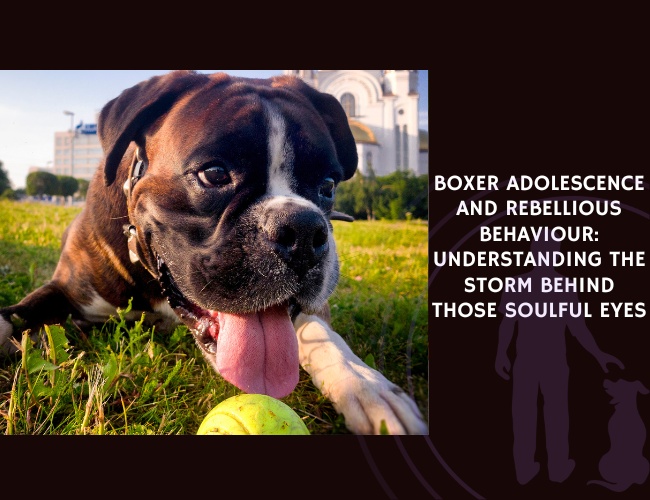
If you’ve ever watched your sweet, obedient Boxer puppy transform seemingly overnight into a bouncing, barking, boundary-pushing whirlwind, you’re not alone. Boxer adolescence represents one of the most dramatic behavioral transformations you’ll witness in the canine world. But here’s what most traditional training won’t tell you: what looks like rebellion might actually be something completely different.
Between 6 and 18 months, your Boxer enters a neurological and hormonal upheaval that rivals any human teenager’s mood swings. The difference? Your Boxer can’t hide it. Where other breeds might internalize their developmental stress, Boxers wear their hearts on their sleeves—or rather, display them through their entire exuberant, powerful bodies. Understanding this phase isn’t just about surviving it; it’s about supporting your dog through one of the most vulnerable periods of their development.
Let us guide you through the science, the signals, and the strategies that will help you recognize that your adolescent Boxer isn’t trying to challenge you. They’re trying to understand their rapidly changing world, and they need your calm leadership more than ever.
The Adolescent Challenge: What’s Really Happening
Defining the Transformation
Your Boxer’s adolescence isn’t simply a training setback. It’s a complete neurological reconstruction happening in real-time. During this critical window, you might notice behaviors that seem to come out of nowhere:
Physical expressiveness intensifies dramatically:
- Boxing and pawing that once seemed playful now feels forceful
- Body-slamming during greetings that can knock you off balance
- Spatial confidence that has them blocking doorways and controlling movement
- Full-body communication that broadcasts every emotional shift
Vocal communication amplifies beyond recognition:
- Barking that echoes through your entire home
- Growling during play that sounds genuinely alarming
- “Talking” vocalizations that seem to comment on everything
- Protest sounds when they don’t get their way
Boundary-testing becomes a daily occurrence:
- Door hesitations where they pause to see if rules still apply
- Leash-pulling that tests your physical strength and patience
- Selective listening that makes you wonder if they’ve forgotten their name
- Spatial boldness as they claim furniture, doorways, and your personal space
This creates what appears to be outright rebellion. But neurodevelopmental evidence tells a different story—one of regulatory collapse under developmental pressure that your Boxer has no conscious control over.
The Misinterpretation Problem
Traditional dog training approaches often frame your adolescent Boxer’s behavior through a lens that fundamentally misunderstands what’s happening:
The old interpretation: Dominance-seeking behavior that requires suppression through firm corrections and establishing “alpha” status.
The reality: Impulse control deficits caused by an immature prefrontal cortex that literally cannot stop unwanted behaviors yet.
The old interpretation: Disobedience that needs correction through increasingly harsh methods.
The reality: Emotional dysregulation driven by a hyperactive amygdala responding to developmental stress.
The old interpretation: Aggression that demands punishment to prevent dangerous escalation.
The reality: Frustration intolerance as blocked drive systems create emotional overflow with nowhere else to go.
The old interpretation: Willful defiance of known commands.
The reality: Communication amplification inherent to breed-specific expressiveness meeting adolescent hormonal surges.
The distinction matters profoundly. Treating regulation breakdown as behavioral rebellion creates conflict, damages trust, and often intensifies the very behaviors you’re trying to change. Through the NeuroBond approach, we recognize that trust becomes the foundation of learning—especially during this vulnerable developmental window.
Adolescent Biology: The Science Behind the Storm
Hormonal Surges and Emotional Volatility
Your Boxer’s dramatic behavioral shifts aren’t happening in a vacuum. Beneath the surface, powerful biological forces are reshaping their entire emotional landscape.
Testosterone effects in both sexes:
During adolescence, testosterone levels surge dramatically, particularly in males but also significantly in females. This hormonal flood doesn’t create aggression—it creates confidence, exploration drive, and social assertiveness. In your Boxer, this manifests through:
- Increased boldness: Testing physical and social boundaries that previously felt fixed and certain
- Heightened arousal: Lower threshold for excitement and frustration, meaning they tip into intense emotional states faster
- Risk-taking behavior: Reduced fear of novelty or consequences that made them naturally cautious as puppies
- Social assertiveness: More direct communication and less automatic deference to your cues
You might notice your Boxer pushing through doorways first, pulling harder on the leash, initiating play more forcefully, and testing your responses to “no” with a persistence that feels exhausting. This isn’t dominance—it’s dopamine-driven exploration asking, “What happens if I…?”
Cortisol fluctuations creating stress sensitivity:
Simultaneously, your adolescent Boxer’s stress hormone regulation becomes unstable. Their baseline cortisol levels may be elevated, recovery from stress takes significantly longer, and their threshold for triggering a stress response drops dramatically. The result? Your Boxer appears “overreactive” because their stress system is genuinely more sensitive during this developmental phase.
This explains why the same doorbell that once prompted mild interest now triggers a full-body, barking explosion. It’s not that your dog is being dramatic—their neurological stress response is literally firing more easily and more intensely than it did just weeks ago.
Breed-Specific Communication Amplification
Here’s where understanding your Boxer specifically becomes essential. Not all breeds experience adolescence the same way, and Boxers were purpose-bred for traits that make this phase particularly visible:
Physical expressiveness: Bred for boxing, pawing, and body contact as working behaviors Vocal communication: Selected for guard dog alerting and vocal confidence High arousal tolerance: Developed to maintain working drive under stimulation Social boldness: Encouraged for confident human engagement without fear
During adolescence, these breed-specific traits amplify every normal developmental behavior. Let’s look at how this creates the illusion of worse behavior than other breeds:
| Behavior Type | Other Breeds Display | Boxers Display |
|---|---|---|
| Frustration | Whining, pacing quietly | Loud barking, jumping, mouthing |
| Excitement | Tail wagging, slight bounce | Full-body wiggling, boxing, spinning |
| Uncertainty | Avoidance, backing away | Vocal protest, spatial blocking |
| Play solicitation | Play bow, gentle nudge | Body-slam, paw strikes, face-pawing |
The key insight that changes everything: Boxers aren’t more aggressive during adolescence—they’re simply more visible in their emotional states. Where a Labrador might internalize frustration and show only subtle signs of stress, your Boxer broadcasts every feeling through their entire expressive body. This transparency is actually a gift, though it might not feel that way when you’re being body-slammed at 6 AM. 🧡
Testosterone and Boundary-Testing Without Hostility
Your adolescent Boxer’s constant testing doesn’t mean they’re trying to dominate you. The neuroscience reveals something far more nuanced and actually quite reassuring:
The testing behaviors you’re seeing:
- Pausing at doorways to see if spatial control rules still apply
- Pulling on the leash to test restraint tolerance limits
- Mouthing hands during play to test bite inhibition boundaries
- Ignoring recalls to test consequence predictability
The neurological drivers behind them:
- Dopamine-driven exploration creating irresistible curiosity about cause and effect
- Prefrontal cortex immaturity providing poor impulse inhibition capacity
- Social learning systems actively mapping relational boundaries for security
These behaviors seek information about structure, not control over you. Your Boxer is asking questions through behavior: “Is this rule still enforced? How much freedom do I have? Are you paying attention? Where’s the limit?” The Invisible Leash reminds us that awareness, not tension, guides the path—and during adolescence, your Boxer is learning what awareness means through experimentation.
Understanding “Rebellion” as Regulation Breakdown
Disorganization vs. Disobedience
When your Boxer ignores your “sit” command at the front door while visitors arrive, traditional training sees disobedience. But understanding the cognitive overload model reveals what’s actually happening:
The scenario from the outside: Your dog completely ignores a command they know perfectly well in calm situations.
The scenario from the inside: Multiple stimuli compete simultaneously—doorbell sound, visitor excitement, your own elevated arousal. Your Boxer’s arousal level exceeds their processing threshold. Frustration at being asked to sit when every cell wants to greet blocks cognitive function entirely.
The evidence: The same dog performs “sit” perfectly in calm environments, proving they know the command.
The reality: Your Boxer’s arousal level prevents processing verbal cues in high-stimulation moments. This isn’t choice—it’s neurological incapacity.
The adolescent brain lacks three critical regulatory capacities:
Inhibitory control: The ability to stop unwanted behavior once it starts Emotional modulation: The capacity to dampen excitement or frustration to functional levels Delayed gratification: The tolerance to accept blocked goals and wait
Behaviors that look like “choice” are actually neurological incapacity. This distinction matters tremendously for how you respond. Punishing neurological incapacity doesn’t build capacity—it creates fear, damages trust, and often intensifies the dysregulation.
Boundary-Testing as Security-Seeking
Here’s one of the most counterintuitive insights about your adolescent Boxer: they push boundaries to find them, not eliminate them.
What testing behaviors look like:
- Door hesitations asking, “Is this rule still enforced?”
- Leash pulling questioning, “How much freedom do I have?”
- Selective listening wondering, “Are you paying attention?”
- Play escalation testing, “Where’s the limit?”
What they actually need: Predictable structure that reduces anxiety in high-arousal breeds. The paradox is profound—adolescent Boxers often relax after clear, calm boundary enforcement, suggesting relief rather than resentment.
Think about it from your dog’s perspective. Their entire world is changing. Hormones are flooding their system with unfamiliar drives and emotions. Their body is growing and changing. Their relationship to you and their environment feels unstable. In this chaos, consistent boundaries become emotional anchors—secure points in an otherwise turbulent experience.
Evidence supports this interpretation. Boxers with clear structure show lower cortisol levels, reduced anxiety behaviors, better impulse control, and more relaxed body language compared to Boxers in unpredictable environments where rules shift based on human mood or convenience.
Mixed Emotional Signals Triggering Conflict
Your Boxer reads emotional tone far more accurately than verbal content. This creates a hidden source of adolescent conflict that most owners never recognize:
| Human Signal | Boxer Interpretation | Behavioral Result |
|---|---|---|
| Laughing at jumping | “This is play!” | Behavior increases with enthusiasm |
| Yelling “no” excitedly | “You’re aroused too!” | Arousal escalates, command is ignored |
| Inconsistent rules | “Boundaries are unpredictable” | Testing intensifies to find stability |
| Physical wrestling | “Rough play is approved” | Mouthing and jumping continue as play |
The critical point: mixed signals create confusion, not defiance. When you laugh while saying “no,” your Boxer hears the laughter’s emotional content and responds to that. When you yell excitedly during corrections, your arousal matches theirs, which they interpret as joining their emotional state rather than guiding them out of it.
Moments of Soul Recall reveal how memory and emotion intertwine in behavior—your Boxer remembers how you felt during past interactions more clearly than what you said. If past wrestling created joyful emotional memories, your current attempts to stop similar behavior will be confusing and frustrating for both of you.
Social Testing and Emotional Containment
The Function of “Annoying” Behaviors
Those behaviors that drive you to distraction? They serve specific communication functions that reveal your adolescent Boxer’s underlying needs:
Pawing repeatedly at your leg: “Are you engaged with me? Do I exist to you right now?”
Blocking your path through doorways: “Do you control this space, or am I responsible for spatial decisions?”
Selective listening to familiar commands: “Is this rule consistent, or does it depend on your mood?”
Hesitating at doorways you’ve walked through: “Who decides when and how we move through space?”
These behaviors map the relational hierarchy for emotional security. Your Boxer isn’t seeking dominance—they’re seeking clarity about who’s responsible for decision-making in various contexts. In the unstable chaos of adolescence, this clarity becomes an emotional lifeline.
Testing for Safety, Not Dominance
During this tumultuous developmental phase, your Boxer needs specific things from you that traditional dominance-based training misses entirely:
Predictable leadership that reduces decision-making stress: When you consistently make spatial and social decisions, your Boxer can relax into following rather than constantly evaluating whether they need to take charge.
Clear boundaries that provide a behavioral framework: Like guardrails on a mountain road, consistent boundaries let your Boxer move freely within safe parameters without constant vigilance.
Calm authority that models emotional regulation: Your steady emotional state becomes a template your Boxer’s developing nervous system can reference and eventually internalize.
The evidence is compelling. Boxers with clear structure consistently show lower cortisol levels, reduced anxiety behaviors, better impulse control, and more relaxed body language than Boxers in unpredictable or permissive environments. This isn’t about dominance hierarchies—it’s about nervous system development requiring external regulation before internal regulation becomes possible.
Emotional “Leaks” vs. Aggression
Understanding the difference between emotional overflow and genuine aggression is essential for responding appropriately to your adolescent Boxer. Most of what you’re seeing falls into the “emotional leaks” category:
Emotional leaks (common in adolescent Boxers):
- Barking and whining when frustrated or excited
- Bouncing and spinning when arousal exceeds regulation capacity
- Soft mouthing during play or greeting
- Leash-tugging when drive is blocked
- Paw-striking to initiate interaction or express frustration
Genuine aggression (rare in adolescent Boxers):
- Hard staring with stiff body posture
- Snarling with teeth display and no play signals
- Hard biting intended to cause pain or damage
- Sustained attack behavior with intent to harm
- Predatory stalking or resource guarding with threat displays
The distinction matters profoundly. Emotional leaks need regulation support—helping your Boxer find more functional ways to express and manage their feelings. Aggression needs professional behavioral intervention. Confusing the two leads to either over-reacting to normal adolescent expression or under-reacting to genuine behavioral problems.
Your Boxer’s emotional transparency means you’ll see every frustration, excitement, uncertainty, and joy displayed physically. This visibility is actually an advantage—you can read your dog clearly and respond to their emotional needs before small frustrations escalate into major meltdowns. 🐾

Frustration, Impulsivity and Threshold Crashes
Frustration-Based Escalation
Your Boxer was bred with high SEEKING drive—a neurological system identified by affective neuroscience researcher Jaak Panksepp that creates strong motivation to explore, play, and interact with the environment. This drive system creates some of their most endearing qualities: curiosity, playfulness, enthusiasm for life. During adolescence, it also creates significant challenges.
The blocked drive problem manifests as:
- Low tolerance for restraint when they want to move forward
- Rapid arousal when goals are blocked or delayed
- Intense expression of frustration that can seem disproportionate
Adolescent vulnerability amplifies these tendencies:
- Shorter frustration window—they can’t wait as long for desired outcomes
- Faster escalation—they move from calm to explosive in seconds
- Louder expression—barking, lunging, and mouthing intensify
Common frustration triggers include:
- Leash restraint when seeing another dog across the street
- Door blocking when they want to greet arriving visitors
- Toy removal during intense play sessions
- Delayed meals or walks when they’re anticipating them
- Being asked to wait when every cell wants to move
Understanding this helps you recognize that your Boxer’s explosive reaction to a five-minute delay isn’t manipulation—it’s genuine frustration tolerance collapse driven by neurological immaturity combined with breed-specific high drive.
Restraint Interpretation Changes
One of the most confusing aspects of Boxer adolescence is how dramatically their relationship to restraint shifts:
Puppy phase (2-6 months):
- Restraint equals safety and comfort
- Accepts limits easily and even seeks them
- Actively looks to you for guidance
- Finds structure reassuring
Adolescent phase (6-18 months):
- Restraint equals frustration and limitation
- Challenges limits consistently
- Tests independence and autonomy
- Finds structure constraining
The neurological basis for this shift:
- Increased dopamine creating stronger drive to explore and interact
- Decreased serotonin reducing impulse control capacity
- Immature prefrontal cortex limiting planning and inhibition
The same gentle restraint that felt comforting at five months now feels intolerable at ten months. This isn’t your Boxer being difficult—it’s a normal developmental shift that creates real distress when they encounter limits to their newfound drive and confidence.
Shrinking Frustration Windows
If it feels like your adolescent Boxer has less patience than they did as a puppy, you’re observing accurately. Tolerance collapse is a hallmark of this developmental phase:
Reduced delay tolerance: Your Boxer can’t wait as long for rewards, meals, walks, or attention without showing frustration.
Faster arousal: Excitement builds rapidly with less ability to modulate the rise toward peak arousal.
Slower recovery: Once aroused or frustrated, it takes significantly longer for your Boxer to return to a calm baseline state.
Practical implications for daily life:
- Training sessions must be shorter and more frequent rather than long and intensive
- Rewards must be more immediate—delayed gratification capacity is limited
- Breaks must be more frequent to prevent arousal buildup
- Arousal management becomes more critical than command compliance
This temporary regression in frustration tolerance isn’t permanent. As your Boxer’s prefrontal cortex matures and hormones stabilize, their capacity to wait, modulate arousal, and recover from frustration will return and often exceed their puppy-phase abilities. But during adolescence, working within their current capacity rather than demanding they demonstrate skills they don’t yet possess prevents unnecessary conflict and supports healthy development.
Storm. Growth. Misread.
Adolescence isn’t rebellion. In Boxers, developing brains turn feelings into movement, impulse into motion, and uncertainty into expression—not defiance, but overflow.
Regulation lags behind feeling. Their bodies surge with energy while their control systems are still wiring. What looks bold is often just unfiltered becoming.
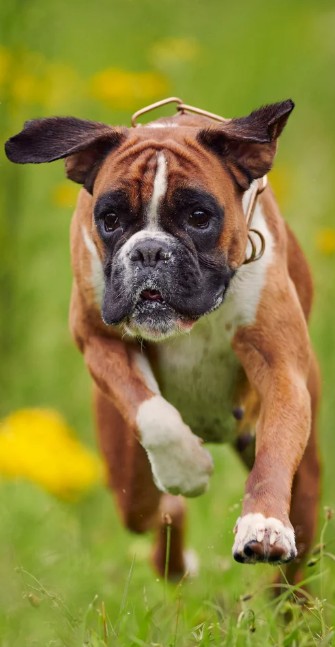


They don’t need correction—they need clarity. When your calm meets their chaos, the storm doesn’t submit—it settles.
Why Boxers Look More Rebellious Than Other Breeds
Labradors vs. Boxers: Different Stress Responses
Understanding breed-specific stress responses reveals why Boxers appear to have more challenging adolescences than many other popular breeds:
Labrador stress response (internalization):
- Stress manifests as avoidance or withdrawal
- Anxiety shows through reduced activity and appetite
- Frustration expressed through pacing or displacement behaviors
- Owner often doesn’t recognize the depth of internal distress
Boxer stress response (externalization):
- Stress manifests as increased activity and vocalization
- Anxiety shows through jumping, mouthing, and barking
- Frustration expressed through visible, dramatic behaviors
- Owner immediately recognizes distress but may misinterpret as defiance
The paradox: Labradors experiencing severe internal stress may appear “calmer” during adolescence than Boxers experiencing mild frustration. The visibility of Boxer emotional states creates the illusion of worse behavior when it’s actually more transparent communication.
🐕 The 6 Phases of Boxer Adolescence 🌪️
Understanding Your Boxer’s Developmental Journey From Puppy to Adult
Phase 1: Early Onset (6-9 Months)
The Storm Begins to Gather
Testosterone begins its initial surge, affecting both males and females. The prefrontal cortex starts its dramatic reconstruction while the amygdala becomes increasingly reactive. Your Boxer’s brain is literally rewiring itself, creating temporary disconnections in impulse control pathways.
• Testing begins subtly – door hesitations, delayed responses
• Energy levels noticeably increase
• First signs of selective hearing emerge
• Physical expressiveness amplifies during greetings
• Some regression in previously solid skills
Maintain consistency in all boundaries. Lower environmental arousal triggers proactively. Increase structure in daily routines. Begin implementing calm reward delivery systems. This is prevention phase – set the foundation before peak challenges arrive.
Phase 2: Peak Intensity (9-12 Months)
The Eye of the Storm
Testosterone reaches maximum levels. Cortisol regulation becomes highly unstable with elevated baselines and prolonged recovery times. The gap between arousal threshold and regulation capacity is at its widest point. Your Boxer’s nervous system is experiencing maximum developmental stress.
• Maximum boundary testing – every rule questioned daily
• Highest arousal levels with fastest escalation
• Leash pulling reaches peak intensity
• Door-charging and greeting explosiveness maximal
• Frustration tolerance at absolute minimum
• Selective hearing seems complete
Reduce expectations temporarily – this is management phase, not training phase. Shorten all activities. Increase calm-down breaks between stimulation. Use environmental barriers extensively. Practice extreme patience with yourself and your dog. Through the NeuroBond approach, focus on emotional connection over behavioral perfection.
This is when most owners make relationship-damaging mistakes by increasing punishment or harsh corrections. Your Boxer needs support most when they seem to deserve it least. Escalating force during peak dysregulation creates fear and damages trust permanently.
Phase 3: Plateauing (12-15 Months)
The Holding Pattern
Hormones begin gradual stabilization though levels remain elevated. Prefrontal cortex development accelerates. Brief windows of better regulation capacity appear. The nervous system starts building sustainable patterns, though inconsistency remains the norm.
• Some behaviors spontaneously improve
• Others remain stubbornly challenging
• Good days and terrible days alternate unpredictably
• Skills learned earlier start consolidating
• Testing continues but with less intensity
• Recovery from arousal begins to shorten
Celebrate small victories extensively. Slowly increase training duration and complexity. Begin reintroducing challenges in controlled settings. Maintain consistent structure while testing capacity edges. This is where patience pays dividends – resist rushing progress.
Phase 4: Early Improvement (15-18 Months)
Dawn Breaking Through
Prefrontal cortex function improves dramatically. Hormonal levels approaching adult baseline. Stress response system gaining efficiency. The neurological chaos is organizing into functional patterns. Your Boxer’s brain is finally catching up to their body.
• More good days than difficult ones
• Frustration tolerance visibly increasing
• Impulse control emerging reliably
• Training feels productive again
• The dog you hoped for starts appearing
• Relationship feels collaborative rather than combative
Gradually increase complexity and challenge. Reintroduce previously difficult situations. Build advanced skills on the foundation you’ve maintained. The Invisible Leash reminds us that awareness emerges naturally when the nervous system is ready – and your Boxer’s is finally ready.
Phase 5: Consolidation (18-21 Months)
Skills Solidifying
Regulation patterns learned during adolescence become automatic. Emotional modulation systems functioning reliably. Stress response approaching mature efficiency. The brain architecture is finalizing its adult configuration.
• Consistent responses in familiar situations
• Handling novelty with better composure
• Training retention strong and reliable
• Testing behaviors rare and mild
• Adult temperament clearly visible
• Relationship feels deeply connected
Introduce advanced training goals. Explore sport or working activities. Build complex behavior chains. Your Boxer now has the neurological capacity to excel. Moments of Soul Recall reveal how the emotional foundation you built during chaos now supports sophisticated learning.
Phase 6: Adult Maturity (21-24 Months)
The Butterfly Emerges
Adult hormone levels achieved and stable. Prefrontal cortex functioning at full capacity. Emotional regulation systems mature and efficient. The developmental transformation is complete – your Boxer’s brain has reached adult configuration.
• Stable, predictable temperament
• Excellent impulse control in most situations
• Expressive communication without explosiveness
• Confident but not pushy
• Responsive and engaged
• The remarkable companion you worked toward
The challenging traits that tested your patience are now strengths. Expressiveness enables clear communication. High drive fuels enthusiasm for activities. Boldness creates confidence. Physical power supports athleticism. You weathered the storm and emerged with an extraordinary bond.
📊 Breed Comparison: Adolescent Expression Styles
Expression Style: Externalized, vocal, physical
Peak Intensity: 9-12 months
Challenge Level: Very High Visibility
Recovery: Fast with clear structure
Expression Style: Internalized, subtle
Peak Intensity: 8-10 months
Challenge Level: Low Visibility, High Internal Stress
Recovery: Moderate with consistency
Expression Style: Redirected into activity
Peak Intensity: 10-14 months
Challenge Level: Obsessive Behaviors
Recovery: Needs mental outlets
Expression Style: Strategic, calculated testing
Peak Intensity: 9-13 months
Challenge Level: Moderate, Thoughtful
Recovery: Good with clear leadership
Expression Style: Enthusiastic but people-pleasing
Peak Intensity: 7-10 months
Challenge Level: Moderate Visibility
Recovery: Excellent with positive methods
Expression Style: Intense, driven, focused
Peak Intensity: 8-12 months
Challenge Level: Very High Energy
Recovery: Needs structured outlets
6-9 months: Testing begins, energy increases
9-12 months: Peak intensity – maximum challenge period
12-15 months: Plateau – inconsistent progress
15-18 months: Noticeable improvement emerging
18-21 months: Skills consolidating reliably
21-24 months: Adult maturity achieved
Adolescence reveals the profound truth of the NeuroBond approach: emotional connection survives behavioral chaos. When you respond to dysregulation with calm support rather than punishment, you build trust that becomes unshakeable. The Invisible Leash isn’t about physical control—it’s about the awareness you cultivate together during the storm. And through moments of Soul Recall, your Boxer remembers not the mistakes of adolescence, but the steadiness of your presence. That balance between supporting the developing brain and honoring the emerging soul—that’s the essence of Zoeta Dogsoul. Your patience during this phase doesn’t just shape behavior; it shapes the relationship that will sustain you both for a lifetime.
© Zoeta Dogsoul – Where neuroscience meets soul in dog training
Border Collies vs. Boxers: Different Frustration Expression
Border Collies and Boxers both have high drive systems, but express frustration completely differently:
Border Collie frustration (displacement into activity):
- Channels frustration into obsessive behaviors like ball-chasing
- Redirects blocked drive into herding movements or circling
- May appear “busy” or hyperactive but not necessarily loud
- Frustration tolerance issues may manifest as compulsive behaviors
Boxer frustration (direct vocal and physical expression):
- Channels frustration into barking, jumping, and mouthing
- Redirects blocked drive into social pressure on handler
- Appears loud, pushy, and demanding
- Frustration tolerance issues immediately obvious to everyone
Neither approach is inherently better or worse—they’re different communication styles shaped by breed function. Understanding your Boxer’s direct expression style helps you recognize it as communication rather than defiance.
German Shepherds vs. Boxers: Different Testing Styles
Both breeds test boundaries during adolescence, but with notably different flavors:
German Shepherd testing (subtle and strategic):
- Tests through selective attention rather than physical pushiness
- May appear to “think about” compliance before acting
- Testing feels more calculated and thoughtful
- Owner may not immediately recognize testing behavior
Boxer testing (obvious and physical):
- Tests through body position, spatial pressure, and vocalization
- Reacts impulsively in the moment with less apparent calculation
- Testing is immediately obvious to everyone present
- Owner clearly recognizes testing but may feel overwhelmed
The Boxer’s obvious testing style actually offers advantages—you always know where you stand, what’s working, and what needs adjustment. The transparency that feels challenging during adolescence becomes a valuable communication asset in adulthood.

Practical Management Strategies
Environmental Modification for Arousal Control
One of the most powerful tools for supporting your adolescent Boxer is environmental management that reduces unnecessary arousal triggers:
Reduce visual stimulation:
- Close blinds or curtains during high-traffic times to reduce window reactivity
- Create “calm zones” in your home where your Boxer can decompress
- Limit access to front windows and doors during delivery times
- Use baby gates to manage spatial access and reduce arousal-triggering movement
Manage social interactions strategically:
- Reduce chaotic greetings by having visitors ignore your dog initially
- Schedule playdates during lower-arousal times of day
- Limit interaction duration with high-energy dogs during this phase
- Create calm greeting rituals that your Boxer can succeed with
Control auditory triggers:
- Use white noise machines to mask street sounds
- Lower doorbell volume or switch to visual alerts
- Minimize sudden loud noises during training or rest periods
- Create predictable soundscapes that signal different activities
Optimize exercise timing and type:
- Exercise before high-arousal events (visitors, meal times, departures)
- Include mental enrichment activities that tire the brain, not just the body
- Avoid over-exercise that can actually increase arousal in some Boxers
- Build in decompression time after high-energy activities
Environmental modification isn’t avoiding the “problem”—it’s supporting your Boxer’s developing nervous system by reducing the regulation demands placed on it. As maturity develops, you can gradually reintroduce complexity.
Structure Protocols vs. Command Drilling
Traditional training often focuses on command compliance through repetitive drilling. For adolescent Boxers, structure protocols prove far more effective:
Traditional command drilling approach:
- Repeat “sit” 50 times per session
- Increase correction intensity for non-compliance
- Focus on obedience to verbal cues
- Success measured by immediate compliance
Structure protocol approach:
- Establish predictable movement patterns through spaces
- Create consistent routines for arousal-triggering events
- Use spatial management to guide behavior
- Success measured by calm decision-making
Example structure protocols:
Doorway protocol:
- You always go through doorways first
- Dog waits calmly for release word
- Pattern becomes automatic through consistency
- No emotional reaction to testing, just calm pause and reset
Greeting protocol:
- Visitor enters, dog goes to designated spot
- Release happens only when calm
- Greeting allowed only with four feet on floor
- Calm behavior earns continued interaction
Feeding protocol:
- Food prepared while dog waits in specific location
- Bowl placed only when dog is calm
- No food released until settled state achieved
- Creates daily regulation practice
These protocols build emotional regulation capacity rather than just behavioral compliance. They work with your Boxer’s need for clear structure while developing their ability to manage their own arousal states.
Reward Timing and Arousal Management
For adolescent Boxers, reward timing can either support regulation or inadvertently increase arousal:
Arousal-building reward delivery (avoid):
- High-pitched excited praise during learning
- Throwing treats that trigger chase drive
- Extended play sessions immediately after compliance
- Physical roughhousing as reward
Regulation-supporting reward delivery (use):
- Calm verbal praise in normal speaking voice
- Treats delivered calmly at chest level
- Brief, controlled play with clear start/stop signals
- Physical affection that calms rather than excites
The key principle: Rewards should reinforce the emotional state you want to see more of. If you want calm compliance, reward calmly. If you want focused attention, reward in ways that maintain focus rather than breaking it.
This doesn’t mean training should be joyless—it means being strategic about when and how you introduce excitement. During initial learning and with an adolescent nervous system, calm rewards support better outcomes than high-arousal celebrations. 🧠
Handler Energy and Emotional Contagion
Your Boxer mirrors your emotional state more accurately than you might realize. During adolescence, this emotional contagion becomes even more pronounced:
Your anxiety creates their anxiety:
- Tension in your body telegraphs through the leash
- Worried anticipation before triggering events raises their baseline arousal
- Nervousness about their behavior creates a self-fulfilling prophecy
Your calm creates their capacity for calm:
- Relaxed breathing and body language provides a regulation template
- Confident movement through space gives them security
- Emotional steadiness during their outbursts shows them recovery is possible
Practical applications:
- Take three deep breaths before any training or triggering event
- Consciously relax your shoulders and jaw during leash walks
- Speak in your normal voice rather than “dog training voice”
- Move through your environment with calm confidence regardless of their behavior
This isn’t about perfection—your Boxer won’t fall apart if you occasionally get frustrated. It’s about the overall pattern of emotional regulation you provide. Through the NeuroBond approach, your emotional state becomes the foundation your Boxer’s developing nervous system builds upon.
The Invisible Leash Approach to Adolescence
Spatial Awareness Without Physical Force
The Invisible Leash concept becomes particularly powerful during Boxer adolescence, when physical corrections often escalate arousal rather than reducing it:
Traditional leash corrections approach:
- Pull or jerk leash when dog pulls
- Use increasingly strong physical force
- Focus on suppressing pulling behavior
- Often increases frustration and arousal
Invisible Leash approach:
- Stop walking the moment tension appears in leash
- Stand calmly without verbal or physical correction
- Wait silently for dog to check in or create slack
- Resume walking only when tension releases
What your Boxer learns:
- “Pulling stops my progress completely”
- “Checking in with my handler creates forward movement”
- “I’m responsible for monitoring leash tension”
- “Calm awareness works better than forceful pulling”
The power of this approach lies in what it develops: your Boxer learns to self-regulate through understanding rather than comply through fear. The awareness becomes internalized, creating true behavioral change rather than suppressed behavior waiting to resurface.
Energy Reading and Response
Part of the Invisible Leash philosophy involves learning to read your Boxer’s energy states and respond appropriately:
Under-aroused (too calm for the situation):
- Appears disengaged or lethargic
- Doesn’t respond to environmental stimuli
- May indicate illness or stress
- Response: Gentle encouragement, check for health issues
Optimal arousal (learning zone):
- Alert but able to focus
- Responsive to cues
- Can handle mild distractions
- Response: This is your training sweet spot
Over-aroused (past learning threshold):
- Can’t focus on handler
- Explosive reactions to stimuli
- Impulsive behavior increases
- Response: Remove from situation, support recovery
Beyond regulation (complete dysregulation):
- No response to familiar cues
- May show stress signals or excessive activity
- Past the point of learning anything positive
- Response: Safe space, calm presence, no demands
Learning to recognize these states and adjust your expectations accordingly prevents the frustration of trying to train a Boxer who’s neurologically incapable of learning in that moment.
Calm Containment During Outbursts
When your adolescent Boxer has a complete meltdown—barking, jumping, spinning, seemingly unable to hear you at all—calm containment becomes essential:
What calm containment looks like:
- Remove them from triggering stimulation if possible
- Use minimal verbal communication
- Avoid eye contact or physical engagement during peak arousal
- Create physical space for them to decompress
- Wait patiently for arousal to decrease
- Calmly acknowledge when regulation returns
What calm containment is NOT:
- Punishment or angry isolation
- Yelling or physical corrections
- Attempting to train or demand compliance
- Emotional withdrawal or cold rejection
The message you’re sending: “Your big feelings are safe with me. I can handle them without getting upset. When you’re ready, I’m here. We don’t need to fight about this.”
This approach teaches your Boxer that dysregulation doesn’t damage the relationship, that recovery is always possible, and that you’re a safe haven even when they’re struggling. These lessons become the foundation for emotional resilience in adulthood.
Common Adolescent Scenarios and Solutions
The Door-Charging Disaster
The scenario: Someone rings the doorbell. Your Boxer explodes into a barking, jumping frenzy, charging the door with such force you fear they’ll break through it. Visitors are terrified. You’re embarrassed and frustrated.
What’s actually happening: Multiple triggers converge—sound stimulus (doorbell), social anticipation (visitor), spatial territory (door boundary), and guardian drive (alert behavior). Your Boxer’s arousal exceeds their regulation capacity within seconds.
The solution framework:
Before the doorbell:
- Practice doorbell sound when no visitor is actually present
- Establish a “doorbell spot” where your Boxer goes automatically
- Reward calm waiting at the spot extensively
- Build positive associations with doorbell sound equals treat party
During the event:
- Use baby gate to create physical boundary they cannot cross
- Allow barking to release initial arousal (it’s communication, not defiance)
- Wait for even a two-second pause in barking
- Reward the pause, not the barking
- Have visitor wait until your Boxer shows some calm before entry
The long-term build:
- Slowly increase duration of calm required before door opens
- Practice with helpers who can repeat the scenario multiple times
- Celebrate small successes—three seconds of quiet is progress
- Lower expectations during high-arousal times of day
The Leash-Pulling Power Struggle
The scenario: Walks have become exhausting battles. Your adolescent Boxer pulls with such force your shoulder aches. They lunge toward other dogs, squirrels, interesting smells. The peaceful walks you enjoyed as a puppy feel like a distant memory.
What’s actually happening: SEEKING drive is at an all-time high. Every stimulus triggers the exploratory system. Restraint creates intense frustration. The opposition reflex means pulling back makes them pull harder.
The solution framework:
Change your walk structure:
- Shorter, more frequent walks during peak adolescence
- Choose lower-stimulation routes during this phase
- Walk during calmer times of day
- Consider walking two shorter routes instead of one long one
Implement the Invisible Leash principle:
- Become a tree the instant leash tension appears
- No verbal cues, no physical corrections
- Simply stop and breathe
- Wait for your Boxer to create slack or check in
- The moment slack appears, immediately resume walking
- Repeat 100 times per walk if necessary
Build the skill progressively:
- Start in low-distraction environments
- Gradually increase difficulty
- Celebrate any check-in behavior extensively
- Accept that progress will be slower during adolescence
The mindset shift: This isn’t about getting somewhere quickly. This is about building neural pathways for self-regulation that will last a lifetime. Every pause-and-wait teaches your Boxer that they control the outcome through their choices.
The Selective Hearing Mystery
The scenario: You call your Boxer’s name. They look directly at you, then deliberately turn away and continue whatever they were doing. You know they heard you. They know you know they heard you. The disrespect feels intentional and infuriating.
What’s actually happening: This isn’t disrespect—it’s a combination of impulse control failure, arousal-driven behavior, and testing for consequence predictability. Your Boxer’s prefrontal cortex literally cannot override their current drive state to comply with your request.
The solution framework:
Stop repeating commands that won’t be followed:
- Each ignored command teaches them that compliance is optional
- If you’re not in position to ensure follow-through, don’t give the command
- This preserves the power of your cues for when you can follow through
Build a stellar recall in low-distraction environments first:
- Practice recalls when success is almost guaranteed
- Use extremely high-value rewards initially
- Keep training sessions short and successful
- Gradually increase distractions over months, not days
Use long lines instead of hoping for off-leash compliance:
- During adolescence, long lines provide freedom with safety
- They allow you to gently guide when needed
- They prevent the pattern of ignore-recall-run-away from establishing
- They reduce your stress, which reduces your Boxer’s arousal
The principle: Set up situations where your Boxer can succeed rather than repeatedly proving they can’t yet handle challenging scenarios. Build capacity gradually rather than demanding it prematurely.
The Play-Biting Escalation
The scenario: Play starts innocently, but within seconds your Boxer is mouthing your hands, arms, clothes. The pressure increases. You’re not sure if it’s still play or if something has shifted. You pull away, which seems to increase their intensity.
What’s actually happening: Arousal is building faster than your Boxer can regulate it. Mouthing is both communication and a way to discharge excitement. Your pulling away triggers prey drive and opposition reflex, increasing their intensity. They haven’t developed the off-switch for this behavior pattern yet.
The solution framework:
Prevent arousal buildup:
- Keep play sessions shorter during adolescence
- Watch for early arousal signs and end before mouthing starts
- Introduce calm breaks every 1-2 minutes during play
- Teach a “settle” cue that signals end of play
Respond to mouthing effectively:
- The instant teeth touch skin or clothes, freeze completely
- Become utterly boring—no movement, no sound, no eye contact
- Wait for release
- Calmly redirect to appropriate toy
- If mouthing continues, calmly leave the space entirely
Teach an alternative:
- Heavily reward gentle mouth contact with toys
- Practice “give” and “take it” with appropriate items
- Build the concept that mouth control equals continued play
- Rough mouth contact equals instant end of fun
Never:
- Yell or physically punish mouthing (increases arousal)
- Continue play while being mouthed (rewards the behavior)
- Engage in wrestling that encourages rough physical contact
- Use hands as toys (creates confusion about appropriate targets)
Health, Nutrition and Behavioral Stability
Nutritional Impacts on Adolescent Behavior
Your Boxer’s diet significantly influences their behavioral regulation capacity during adolescence:
Protein quality and quantity matter:
- High-quality animal proteins provide amino acids for neurotransmitter production
- Appropriate protein levels support muscle development without excess energy
- Poor-quality protein can contribute to behavioral instability
Fat content affects brain development:
- Omega-3 fatty acids (EPA and DHA) support brain development and emotional regulation
- Balanced fat ratios reduce inflammation that can affect mood and reactivity
- Too little fat can impair cognitive function
Carbohydrate quality influences energy patterns:
- Complex carbohydrates provide steady energy without spikes and crashes
- Simple carbohydrates can create energy volatility that mirrors behavioral volatility
- Appropriate carb levels support sustained activity without hyperactivity
Additives and preservatives can affect behavior:
- Some dogs show behavioral sensitivity to artificial colors, flavors, or preservatives
- Elimination trials can help identify food-behavior connections
- Whole food diets often support better behavioral stability
Consider feeding strategies:
- Multiple smaller meals rather than one or two large ones
- Feeding at consistent times to support predictable energy patterns
- Using portions of daily food for training rewards
- Puzzle feeders to provide mental enrichment while eating
Exercise Requirements During Adolescence
Adolescent Boxers need appropriate exercise, but more isn’t always better:
Physical exercise needs:
- 60-90 minutes of appropriate exercise daily
- Mix of leash walks, controlled play, and appropriate running
- Avoid repetitive impact on developing joints
- Include recovery days with lower intensity
Mental exercise is equally important:
- Scent work and nose games
- Puzzle toys and food dispensing toys
- Training sessions that engage their brain
- Novel experiences in safe contexts
Warning signs of inappropriate exercise:
- Increased behavioral problems after exercise (over-arousal)
- Limping or reluctance to move (physical stress)
- Excessive panting or slow recovery (pushing too hard)
- Heightened reactivity after exercise (arousal not regulation)
The balance: Exercise should tire your Boxer appropriately while building regulation capacity, not exhaust them into behavioral collapse or amp them into sustained high arousal. Quality and timing matter more than quantity.
Sleep and Recovery Needs
Adolescent Boxers need more sleep than many owners realize:
Sleep requirements:
- 12-16 hours of sleep per 24-hour period
- Includes both deep sleep and quiet rest
- More sleep needed during growth spurts
- Quality sleep essential for neurological development
Supporting good sleep:
- Establish consistent sleep schedules
- Create calm, dark sleeping environments
- Reduce stimulation before bedtime
- Provide comfortable sleeping surfaces
Signs of insufficient sleep:
- Increased behavioral problems
- Poor impulse control
- Heightened reactivity
- Difficulty learning new skills
- Increased mouthing and jumpiness
Think of sleep as when the real learning happens—when your Boxer’s brain consolidates the day’s experiences and builds neural pathways for better regulation. Cutting sleep short by keeping them engaged in constant activity actually impairs the very development you’re trying to support. 🐾
When to Seek Professional Help
Normal Adolescence vs. Behavioral Problems
Understanding the distinction helps you respond appropriately:
Normal adolescent challenges:
- Increased energy and difficulty settling
- More frequent boundary testing
- Temporary regression in known skills
- Increased vocalization and physical expressiveness
- Frustration intolerance and impulsivity
- These behaviors should respond to consistent management over weeks and months
Concerning behavioral problems:
- Genuine aggression toward people or dogs (not play escalation)
- Fear responses that generalize and worsen over time
- Complete inability to calm down even in low-stimulation environments
- Self-injurious behaviors like excessive licking or tail-chasing
- Resource guarding that includes hard biting
- These behaviors often worsen without professional intervention
When to consult a professional:
- You feel unsafe or genuinely frightened of your dog
- Your dog has injured a person or animal
- Behaviors are getting worse despite consistent management
- Your stress level is affecting your well-being or relationships
- You need help distinguishing normal from concerning behaviors
- You want guidance on training approaches for your specific situation
Finding the Right Support
Not all trainers understand adolescent Boxer neurodevelopment:
Look for professionals who:
- Understand breed-specific behavioral traits
- Use regulation-focused approaches, not just command compliance
- Can explain the neuroscience behind behaviors
- Work collaboratively with you rather than just “fixing” your dog
- Address underlying arousal and emotional states
- Modify environments and management, not just behaviors
Red flags to avoid:
- Guaranteed quick fixes or transformation promises
- Dominance-based language and approaches
- Heavy reliance on punishment or corrections
- One-size-fits-all methods regardless of breed
- Unwillingness to explain their methodology
- Making you feel like a failure as an owner
The right professional should help you understand your Boxer better, feel more confident in your approach, and develop realistic expectations for this developmental phase. That balance between science and soul—that’s the essence of Zoeta Dogsoul, and it’s what effective adolescent support should provide.
The Light at the End of the Tunnel
Developmental Timeline and Expectations
Understanding the timeline helps maintain perspective during challenging moments:
6-9 months:
- Onset of adolescent behaviors
- Testing begins to increase
- Energy levels rise significantly
- Frustration tolerance decreases
- Some regression in known skills
9-12 months:
- Often the most challenging period
- Peak hormonal effects
- Maximum boundary testing
- Highest arousal levels
- Greatest impulse control challenges
12-15 months:
- Gradual stabilization begins
- Some behaviors start improving
- Brief windows of better regulation
- Growth begins to slow
- More good days among difficult ones
15-18 months:
- Noticeable improvement in most dogs
- Hormones beginning to stabilize
- Better frustration tolerance returning
- Skills learned during adolescence starting to consolidate
- The dog you’ve been working toward starts emerging
18-24 months:
- Mature behavior patterns establishing
- Regulation capacity approaching adult levels
- Training becomes easier and more reliable
- The reward for your patience becomes visible
The variability: Some Boxers mature earlier, some later. Males often take longer than females. Individual temperament matters. But the endpoint is consistent—the vast majority of Boxers emerge from adolescence as stable, wonderful companions.
What Emerges After Adolescence
The traits that made adolescence challenging often become strengths in adulthood:
The expressiveness that felt overwhelming: Becomes clear, easy-to-read communication that strengthens your bond
The boundary testing that felt exhausting: Becomes confident decision-making and environmental awareness
The high drive that created frustration: Becomes enthusiasm for activities and trainability in sports
The vocal nature that drove neighbors crazy: Becomes excellent alerting and expressive communication
The physical boldness that made walks difficult: Becomes athletic capability and joyful movement
Your adolescent Boxer isn’t broken. They’re not defective. They’re developing into the remarkable adult companion you’re working toward. Every patient response, every calm boundary, every moment you choose understanding over punishment builds the foundation for that future relationship.
Celebrating Small Victories
During the storm of adolescence, recognizing progress matters:
Celebrate when your Boxer:
- Waits even two seconds before door-charging
- Checks in with you once during a walk
- Recovers from arousal 30 seconds faster than last week
- Accepts a boundary without extensive testing
- Shows any improvement in any skill, no matter how small
These aren’t just training victories—they’re neurological development milestones. Each success represents new neural pathways forming, regulation capacity building, and your relationship strengthening through collaborative learning rather than conflict.
You’re not just surviving adolescence. You’re actively supporting your Boxer’s development into a mature, stable, beautifully expressive adult dog. That work matters profoundly, even when progress feels invisible day to day. 🧡
Conclusion: Understanding Creates Compassion
Your adolescent Boxer isn’t trying to make your life difficult. They’re experiencing a profound neurological and hormonal transformation that they don’t understand and can’t control. What looks like rebellion is actually regulation breakdown. What feels like defiance is actually developmental incapacity. What appears as aggression is actually emotional overflow seeking expression.
The Boxer’s greatest challenge—their emotional transparency—is also their greatest gift. They show you clearly what they’re experiencing, what they need, what’s working and what isn’t. Where other breeds hide their struggles behind stoic facades, your Boxer broadcasts every feeling through their expressive body and voice. This visibility, while exhausting during adolescence, allows you to truly know your dog in ways that build extraordinary connection.
Through understanding the neuroscience behind adolescent behavior, you can respond with compassion instead of frustration, structure instead of suppression, support instead of punishment. You can recognize that your Boxer needs your calm leadership most when they appear to deserve it least. You can see testing as security-seeking rather than dominance, arousal as regulation failure rather than defiance, and expressiveness as communication rather than aggression.
The skills you build during this challenging phase create the foundation for your entire future relationship. The patience you develop, the regulation you model, the consistent boundaries you maintain, the calm presence you offer during meltdowns—all of these become the template your Boxer’s developing brain uses to build adult behavioral patterns.
Your adolescent Boxer is asking important questions through their behavior: “Can you handle my big feelings? Will you stay calm when I can’t? Are you strong enough to lead when I’m too confused to follow? Will you understand what I’m really saying beneath these overwhelming behaviors?” Your answers to these questions, delivered through your daily responses and management choices, shape not just their behavior but their fundamental sense of security and trust.
This phase will pass. The sweet, eager puppy you remember will reemerge, now with the confidence, stability, and maturity of adulthood. The wild, frustrating adolescent will transform into a responsive, expressive, deeply bonded adult companion. And you’ll have the satisfaction of knowing you supported that development with understanding rather than fought against it with frustration.
Your adolescent Boxer isn’t defiant. They’re developing. And they need your help navigating this turbulent phase with patience, structure, and unwavering calm leadership. You can do this. You are doing this. And the remarkable dog waiting on the other side of adolescence will be worth every challenging moment of the journey.