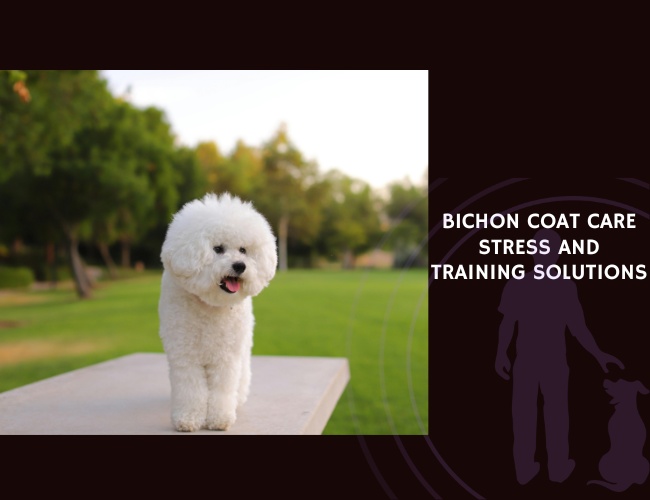
You brush gently through your Bichon’s cloud-soft coat, and suddenly your furry friend trembles, pulls away, or snaps at the brush. Your heart sinks. This isn’t the joyful companion you know—this is a dog in distress. If grooming time has become a battle rather than a bonding moment, you’re not alone. Despite their gentle, people-loving nature, Bichon Frisés often experience profound stress during coat care, and understanding why can transform both your dog’s wellbeing and your relationship.
Let us guide you through the emotional, sensory, and neurological world of your Bichon during grooming. This isn’t just about managing behavior—it’s about honoring your dog’s experience and building trust through every brush stroke. 🧡
The Bichon’s Unique Coat: Beauty with Hidden Challenges
Why That Fluffy Cloud Coat Creates Vulnerability
Your Bichon’s stunning double coat—that cotton-candy texture that makes strangers stop and smile—comes with physical realities that directly affect their comfort during grooming. The dense, curly coat grows continuously, creating a thick barrier that easily mats and tangles. When you brush through these tangles, even gently, you’re creating what researchers call “micro-tug pain”—tiny pulls on the skin that might seem minor to you but feel significant to your dog.
Think of it this way: imagine someone brushing your hair when it’s full of small knots. Each tiny pull registers in your nervous system, and after several minutes, the cumulative discomfort becomes genuinely distressing. For your Bichon, whose coat requires extensive daily maintenance, this experience can happen repeatedly, creating a negative emotional association that builds over time.
Tactile Sensitivity: Every Dog Experiences Touch Differently
Not all Bichons react the same way to grooming, and tactile sensitivity plays a crucial role. Some dogs have naturally lower thresholds for touch sensitivity, meaning they feel sensations more intensely. This sensitivity can be influenced by genetics, early life experiences, and even how their coat was managed during those critical first months of life.
You might notice your Bichon reacting more strongly to grooming around certain areas—the paws, ears, tail, or rear legs. These are regions where the skin is more delicate, the coat mats more easily, or where your dog feels more vulnerable. Recognizing these individual differences helps you approach grooming with greater empathy and patience. 🐾
Next, we’ll explore the fascinating neurobiological responses happening inside your Bichon’s brain and body during grooming.
What Happens Inside Your Bichon’s Brain During Grooming
The Stress Response: When the HPA Axis Activates
When your Bichon experiences discomfort or fear during grooming, their hypothalamic-pituitary-adrenal (HPA) axis springs into action. This is the body’s central stress response system, releasing cortisol and other stress hormones that prepare the body for “fight or flight.” In the moment, this might look like pulling away, trembling, or defensive snapping.
Here’s what makes this particularly important for grooming: if these stressful experiences happen repeatedly without relief, your Bichon’s HPA axis remains chronically activated. Elevated cortisol levels over time don’t just create emotional distress—they can impact immune function, digestive health, and overall wellbeing. This means that grooming stress isn’t just a behavioral inconvenience; it’s a genuine welfare concern that affects your dog’s physical health.
The Power of Oxytocin: When Touch Heals Instead of Hurts
The beautiful counterpoint to stress hormones is oxytocin, often called the “love hormone.” When you touch your Bichon calmly, predictably, and gently, you’re actually influencing their neurochemistry in positive ways. Slow, deliberate strokes paired with your calm presence can trigger oxytocin release, promoting feelings of safety and bonding.
This is where the NeuroBond approach becomes transformative. By consciously regulating your own emotional state—slowing your breathing, softening your energy, moving with intention—you create the conditions for your dog’s nervous system to shift from defense to connection. Your Bichon reads your emotional clarity, and when you’re genuinely calm, their brain receives the message: “This is safe.” 🧠
Auditory Overload: Why Dryers and Clippers Trigger Fear
Smaller dogs like Bichons may experience auditory stimulation differently than larger breeds. The high-pitched whine of electric clippers or the roar of a blow dryer can be genuinely overwhelming. These sounds activate fear circuits in the brain, especially when paired with the already-uncomfortable sensations of brushing through tangles or having water sprayed on sensitive areas.
Did you know that your Bichon can hear frequencies far beyond human range? What sounds tolerable to you might be piercing to them. This sensory amplification means that even “quiet” grooming tools can feel invasive, particularly when your dog is already in a heightened state of alertness or stress.
Reading Your Bichon’s Emotional Language During Grooming
The Subtle Signals: Stress Shows Up Before Aggression
Your Bichon tells you they’re uncomfortable long before they snap or bite. The challenge is that many of these signals are subtle, easily missed when you’re focused on the task of grooming. Learning to read these early warning signs allows you to pause, reassure, and adjust before stress escalates.
Common stress indicators include:
- Lip licking when not near food or water
- Yawning during grooming, especially repetitive yawning
- Whale eye (showing the whites of their eyes while looking away)
- Trembling or muscle tension, particularly in the shoulders and back
- Tucked tail or tail held rigidly still
- Freezing in place, becoming very still
- Avoidance behaviors like turning their head away or trying to back up
- Whining or low vocalizations
- Panting when not hot or exercised
When you see these signals, your Bichon is communicating clearly: “This is too much right now.” Honoring that communication builds trust.
When Grooming Stress Spills Over Into Daily Life
Perhaps you’ve noticed something concerning: your Bichon’s grooming anxiety doesn’t stay confined to grooming sessions. They might become generally more defensive about being touched, even in non-grooming contexts. They might startle more easily when you reach for them. This spillover effect happens because repeated negative experiences create generalized tactile defensiveness.
The emotional memory of grooming stress can become associated with similar contexts—the bathroom where grooming happens, the sight of the brush, even your approach when you’re holding grooming tools. Through Soul Recall, your dog’s emotional memory system connects all these elements, creating anticipatory anxiety that surfaces before grooming even begins. This is your dog’s nervous system trying to protect them from a perceived threat.
How Your Energy Shapes Their Response
Here’s a truth that might surprise you: your Bichon is reading your emotional state with extraordinary accuracy. When you approach grooming feeling rushed, frustrated, or tense about the potential battle ahead, your dog picks up on these subtle cues—your breathing pattern, your muscle tension, the energy you carry. This primes their nervous system for defensiveness before you’ve even touched them.
Conversely, when you approach with genuine calm, patience, and emotional clarity, you create what researchers call “social safety pathways.” Your Bichon’s polyvagal system—the part of their nervous system that governs social connection—recognizes that you’re in a calm, safe state, which helps them access their own calm. This co-regulation is the foundation of cooperative care. 🧡
Why Force-Based Grooming Creates Lasting Problems
The Erosion of Trust Through Restraint
You might think that simply holding your Bichon firmly and “getting it done” would teach them to accept grooming. Unfortunately, the neuroscience tells a different story. When dogs are physically restrained without choice or control, their nervous system interprets this as a genuine threat. The FEAR and RAGE circuits in the brain activate, not because your dog is “being difficult,” but because their fundamental need for autonomy and safety is being violated.
Force-based restraint teaches your Bichon that they have no control over what happens to their body, which is profoundly traumatic for a social animal. Rather than learning to tolerate grooming, they learn that grooming is something to be endured—or escaped from at all costs. This creates a cycle where each grooming session requires more force, which creates more fear, which requires more restraint.
The Long-Term Cost of Rushed Grooming
When you rush through grooming to “just get it over with,” you might complete the physical task, but you’re building a deeper problem. Each rushed session adds another negative memory to your Bichon’s emotional database. Over time, these accumulate, and what began as mild discomfort becomes genuine phobia.
Dogs who’ve experienced repeatedly rushed or forced grooming can develop grooming-related aggression that persists for years. Even if you later adopt gentler methods, you’re working against a history of negative associations that takes patience and systematic retraining to overcome.
Building Cooperation Instead of Compliance
The alternative to force isn’t permissiveness—it’s cooperation. Cooperative care means giving your Bichon choices within the grooming process, teaching them to signal when they’re ready to continue and when they need a break. This might sound like it would take forever, but here’s what happens: when dogs feel they have some control, their stress decreases dramatically, making them far more willing to participate.
Through the NeuroBond framework, you learn to read your dog’s subtle consent signals—the moment they lean into your touch instead of pulling away, the soft sigh that indicates relaxation, the choice to remain on the grooming table rather than attempting to leave. These signals become your guide, creating a grooming experience built on trust rather than compliance. 🐾
Gentle. Sensitive. Overwhelmed.
Touch carries emotion.
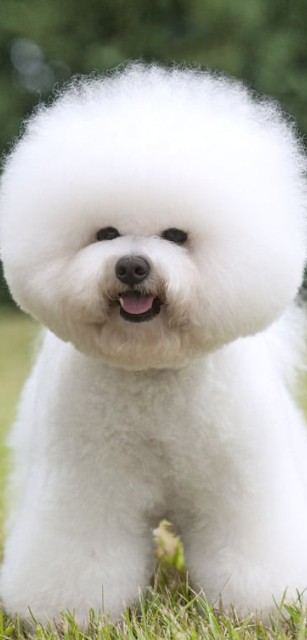
Your Bichon’s fluffy coat hides micro-tug discomfort and tactile vulnerability, turning routine brushing into a sensory challenge that quickly overwhelms their nervous system.
Stress shapes reaction.
Repeated grooming discomfort activates the HPA axis, raising cortisol and creating defensive behaviours—not defiance, but a body trying to escape accumulated tension.

Calm restores cooperation.
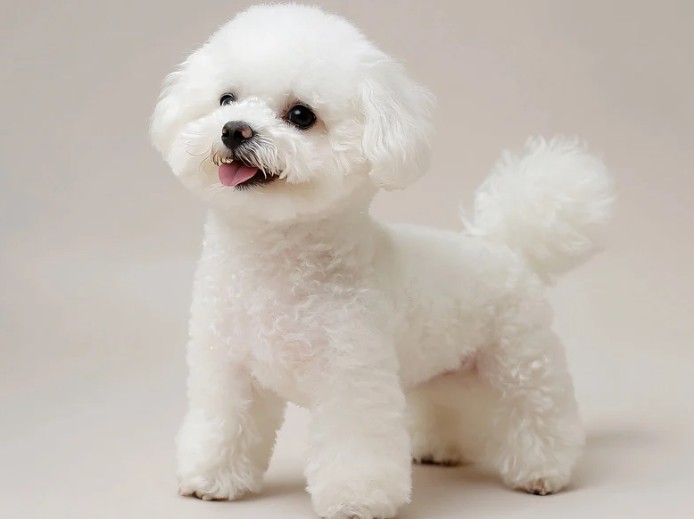
When your presence slows, your touch softens, and oxytocin rises, grooming shifts from threat to connection—proving that emotional clarity is the key to cooperative care.
Creating an Emotionally Safe Grooming Environment
The Power of Sensory Design
Your Bichon’s stress level is influenced by far more than just the brush touching their coat. The entire grooming environment sends signals to their nervous system about whether this space is safe or threatening. Let’s explore how you can design a grooming space that promotes calm.
Environmental factors that reduce stress:
- Non-slip surfaces: A secure footing prevents the anxiety that comes from feeling unstable. Use a rubber mat on your grooming table or bathroom floor.
- Comfortable height: Grooming at a height that doesn’t require your Bichon to be lifted high into the air reduces their sense of vulnerability.
- Soft, natural lighting: Harsh overhead lights can increase arousal and stress. Indirect, warm lighting creates a calmer atmosphere.
- Familiar scent cues: Place a blanket or towel that smells like home in the grooming area. You might even use a few drops of calming lavender (diluted and diffused, never applied directly).
- Temperature regulation: Many Bichons become stressed when they’re too warm. Ensure good air circulation, especially during blow-drying.
- Quiet equipment: Invest in low-noise clippers and blow dryers designed for sound-sensitive dogs. The difference in stress levels is measurable.
Tools That Honor Sensitivity
Not all grooming tools are created equal when it comes to your Bichon’s comfort. The right tools can transform grooming from painful to pleasant, while the wrong ones perpetuate stress regardless of your technique.
Consider these tool modifications:
- Slicker brushes with rounded pins that glide through the coat without scratching skin
- Wide-toothed combs for initial detangling before using finer tools
- Detangling sprays that reduce friction and micro-tug pain
- Low-vibration clippers that minimize the unsettling sensation against skin
- Adjustable-speed dryers allowing you to start low and increase only if your dog remains comfortable
The investment in quality, dog-friendly tools pays dividends in reduced stress and improved cooperation. Your Bichon will notice the difference immediately.
Systematic Desensitization: Retraining the Emotional Response
Understanding Counter-Conditioning for Grooming
If your Bichon already has negative associations with grooming, you’ll need to systematically change their emotional response. This process, called counter-conditioning, pairs grooming-related stimuli with positive experiences until your dog’s brain creates new, pleasant associations.
Here’s how the process works: You expose your Bichon to a very mild version of a grooming stimulus (perhaps just showing them the brush from across the room) and immediately pair it with something wonderful—high-value treats, play, or gentle petting they love. You repeat this pairing at a level where your dog shows no stress, gradually increasing proximity and duration over many sessions.
The key is patience. You’re literally rewiring neural pathways in your dog’s brain, and this takes time—sometimes weeks or months depending on the severity of their fear. Rushing the process undermines the entire effort.
The Cooperative Care Training Protocol
Cooperative care goes beyond desensitization by actively teaching your Bichon to participate in their own grooming through consent-based signals. This approach has shown remarkable success in reducing stress and improving long-term grooming tolerance.
Foundation behaviors to teach:
- Chin rest: Your Bichon learns to rest their chin on your hand or a designated surface, signaling they’re ready. If they lift their chin, you immediately stop and give them space.
- Station training: Your dog learns to stand on a specific mat or platform, understanding this is the grooming space. They learn they can step off if overwhelmed.
- Start button behaviors: Your Bichon performs a specific action (like touching a target with their nose) to signal “I’m ready to begin.”
- Duration signals: You teach your dog that grooming happens for short, predictable intervals with clear breaks. They learn the pattern: 30 seconds of brushing, then a treat and reset.
These techniques might seem elaborate, but they create dogs who actively participate in their care rather than enduring it. The Invisible Leash principle applies beautifully here—true cooperation comes not from physical control but from emotional connection and clear communication. 🧡
Progressive Exposure: Building Confidence Layer by Layer
Let’s walk through what a desensitization program might look like for a Bichon who fears the blow dryer:
Week 1-2: The dryer sits in the grooming room while you play with your dog and offer treats. It never turns on. Your Bichon learns: dryer presence = good things happen.
Week 3-4: The dryer is turned on in another room while you engage your dog in pleasant activities in the grooming room. They hear it from a distance without seeing it.
Week 5-6: The dryer is on in the grooming room but pointed away from your dog, on the lowest setting. You reward calm behavior generously.
Week 7-8: Brief, gentle air flow directed near (but not at) your dog’s body, paired with constant treats and praise.
Week 9-10: Gradually increase duration and proximity, always staying below your dog’s stress threshold.
This timeline might seem slow, but compare it to years of grooming battles. The investment in proper desensitization pays off in a dog who remains calm and cooperative for life.
The Critical Role of Early Life Experiences
Puppy Grooming: Building a Foundation of Trust
If you have a Bichon puppy, you have a precious window of opportunity. The experiences your puppy has with grooming during their first few months will shape their relationship with coat care for life. This doesn’t mean intensive grooming sessions—it means brief, positive exposures that build positive associations.
Early grooming socialization includes:
- Gentle handling of paws, ears, tail, and mouth from the first days home
- Brief brushing sessions (just a few strokes) paired with treats and play
- Positive experiences with grooming sounds (clippers, dryers running at a distance)
- Fun bath time with warm water, gentle handling, and lots of reassurance
- Regular, positive visits to a groomer who uses cooperative care methods
Each positive experience deposits emotional capital in your puppy’s memory bank. By the time they’re adults, grooming feels normal, predictable, and safe—not something to fear.
Healing Adult Dogs with Grooming Trauma
What if your Bichon is already an adult with established fear? You’re not starting from zero—you’re working with a dog who has strong emotional memories that need to be gently reshaped. This requires even more patience than puppy training because you’re not just building new associations; you’re actively working against existing negative ones.
The principles remain the same: desensitization, counter-conditioning, cooperative care, and above all, respect for your dog’s emotional state. Some dogs will progress quickly; others need months of careful work. Through Soul Recall, you acknowledge that your dog’s fearful responses aren’t stubbornness—they’re legitimate emotional reactions based on real past experiences that hurt or frightened them.
You might need professional help. A certified professional dog trainer (CPDT) or veterinary behaviorist experienced in cooperative care can guide you through this process, especially if your dog’s fear has escalated to aggression. There’s no shame in asking for help—it’s an act of love for your Bichon. 🐾
Practical Grooming Routines That Build Trust
The Daily Maintenance Ritual
For Bichons, daily coat maintenance isn’t optional—it’s necessary to prevent the painful mats that cause grooming stress in the first place. But daily grooming can become your most powerful bonding tool if approached correctly.
Create a predictable routine:
Morning touch (5 minutes): A few gentle brush strokes while your Bichon is relaxed, perhaps while they’re getting morning attention. This isn’t thorough grooming—it’s connection through touch.
Evening coat check (10-15 minutes): Your main daily session, done when you’re both calm. Work systematically through the coat, using treats and praise at regular intervals. If you find a mat, don’t force through it—use detangling spray and work gently, or note it for professional help.
Weekly deep grooming (30-45 minutes): More thorough brushing, nail trimming, ear cleaning. Break this into multiple short sessions if needed. Your Bichon doesn’t need to be perfectly groomed in one sitting.
The key is consistency and predictability. Your dog learns the rhythm, knows what to expect, and can emotionally prepare. This predictability activates those social safety pathways we discussed earlier. 🧠
The Professional Groomer Partnership
Most Bichons need professional grooming every 4-6 weeks for trimming and shaping. Finding a groomer who practices cooperative care methods is absolutely essential. Not all groomers work this way, so you’ll need to ask specific questions.
Questions for potential groomers:
- Do you use force-free methods, or do you restrain dogs who are anxious?
- How do you handle a dog who shows stress signals during grooming?
- Will you allow me to observe the grooming process, at least initially?
- What’s your policy if my dog becomes too stressed to continue?
- Do you offer desensitization sessions for fearful dogs?
- What grooming tools do you use, and why?
A groomer who respects your Bichon’s emotional state is worth their weight in gold. They become part of your dog’s care team, reinforcing the positive associations you’ve built at home rather than undoing them with rushed, forced handling.
When to Seek Professional Behavioral Support
Recognizing When Grooming Fear Requires Expert Help
Sometimes, despite your best efforts, grooming stress escalates beyond what you can address alone. Recognizing when you need professional support isn’t a failure—it’s wise advocacy for your dog’s wellbeing.
Seek professional help if:
- Your Bichon has bitten or attempted to bite during grooming
- Grooming fear is generalizing to other contexts (vet visits, car rides, handling)
- Your dog shows intense panic responses (urination, defecation, extreme trembling)
- You feel unsafe or overwhelmed trying to groom your dog
- Home desensitization efforts haven’t shown progress after several weeks
- Your dog requires sedation for basic grooming tasks
A veterinary behaviorist can assess whether anxiety medication might help reduce your dog’s arousal enough to make training possible. A certified behavior consultant can design a systematic behavior modification plan tailored to your specific situation. These professionals work with you, not in place of you, to create lasting change. 🧡
The Science Behind Cooperative Care Success
Why Consent-Based Grooming Works: The Research
The evidence supporting cooperative care over force-based methods is compelling. Research shows that dogs given choices during handling procedures show lower cortisol levels, fewer stress behaviors, and improved trust in their handlers over time. When dogs learn they can say “not right now” and have that communication respected, they paradoxically become more willing to participate because the interaction feels safe.
This connects directly to polyvagal theory, which explains how our nervous system has different states—a social engagement state where learning and connection happen, and defensive states where all the brain can do is protect itself. Force-based grooming keeps your Bichon in a defensive state; cooperative care allows them to access that social engagement state where true learning occurs.
The Long-Term Benefits: Beyond Just Easier Grooming
When you invest in cooperative care grooming, you’re not just making coat care easier—you’re teaching your Bichon fundamental emotional regulation skills that benefit every aspect of their life. They learn that uncomfortable things can be managed, that they have some control over their environment, and that you’re a trustworthy partner who respects their communication.
Dogs trained through cooperative care methods show greater resilience to stress in other contexts. They’re more confident in new situations, more willing to try new experiences, and more emotionally flexible when facing challenges. The skills you build during grooming generalize to the entire relationship. 🐾
Living the Zoeta Dogsoul Philosophy in Daily Coat Care
Bringing It All Together: Science Meets Soul
Everything we’ve explored—the neurobiology of stress, the importance of consent, the power of environmental design, the patience of desensitization—comes together in a philosophy that honors both the science of behavior and the soul of relationship. That balance between understanding what’s happening in your Bichon’s nervous system and responding to it with empathy and emotional intelligence: that’s the essence of Zoeta Dogsoul.
Your Bichon’s grooming journey isn’t separate from your journey together. It’s one of the most intimate aspects of care you provide, involving touch, trust, and the ongoing negotiation of comfort and cooperation. When approached with awareness and compassion, grooming becomes less about coat maintenance and more about deepening your bond.
Your Next Steps: Creating Positive Change
You don’t need to overhaul everything overnight. Start with one change, one shift in perspective, one moment of pausing when you see a stress signal instead of pushing through. Notice how your dog responds. Build from there.
This week, try:
- Observing your own emotional state before grooming and consciously calming yourself first
- Recognizing one early stress signal you might have previously missed
- Ending a grooming session before your Bichon shows distress, not after
- Introducing one environmental change that promotes calm
- Celebrating small moments of cooperation with genuine praise
Every brush stroke can be an opportunity for connection. Every grooming session can be a conversation between you and your furry friend—a conversation where both voices matter, where both needs are considered, where trust grows deeper with each interaction. 🧡
Your Bichon’s cloud-soft coat isn’t just beautiful—it’s an invitation to practice patience, presence, and partnership. Through understanding their emotional experience and honoring their sensory reality, you transform grooming from a source of stress into a ritual of trust. That’s the journey, and you’ve already taken the first step by seeking to understand.