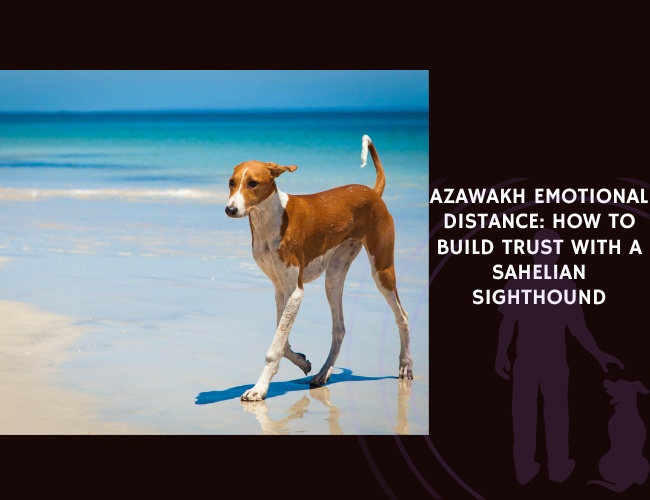
When you first meet an Azawakh, you might notice something that feels different from other breeds. There’s a measured stillness, a watchful presence that doesn’t rush toward connection. This elegant sighthound stands at a respectful distance, observing with quiet intensity, while their body remains soft and their gaze clear. You’re not being rejected—you’re being assessed. For centuries, this ancient breed has perfected the art of discernment, a survival skill forged in the vast Sahelian desert alongside nomadic Tuareg peoples. Understanding this emotional distance isn’t about fixing what appears broken; it’s about respecting what evolution has refined into a sophisticated social intelligence.
The Azawakh carries within their lean frame a profound wisdom about trust, boundaries, and selective connection. Their apparent aloofness tells a story of environmental adaptation, survival logic, and a deeply specialized approach to bonding that prioritizes quality over quantity. If you’ve chosen to share your life with an Azawakh, or you’re considering welcoming one into your home, this guide will help you navigate their unique emotional landscape with patience, understanding, and the gentle respect this magnificent breed deserves. 🧡
The Sahelian Legacy: Understanding Where Reserve Becomes Wisdom
The harsh beauty of the Sahel region created more than just a breed—it shaped an entire philosophy of social interaction. In the vast, open landscapes where resources were scarce and survival depended on careful observation, the Azawakh’s ancestors learned that discernment wasn’t optional; it was essential.
Living alongside nomadic Tuareg communities, these dogs developed a survival model built on fierce loyalty to their immediate family unit while maintaining vigilant distance from outsiders. This wasn’t antisocial behavior—it was practical intelligence. When your role is to guard precious resources in an environment where every calorie matters, you don’t waste energy on indiscriminate sociability.
Key Sahelian Survival Traits That Shaped Emotional Distance:
- Energy conservation: Every calorie mattered in scarce desert conditions—wasting energy on indiscriminate socializing was evolutionarily costly
- Visual scanning priority: Reading threats and opportunities from great distances took precedence over close-contact social engagement
- Inner circle loyalty: Deep bonds with 5-10 individuals (family unit) rather than superficial connections with many
- Stranger wariness: Outsiders represented potential threats to precious resources, making discernment a survival skill
- Emotional filtering: Restraint and controlled responses prevented impulsive, potentially dangerous decisions
- Distance as safety: Maintaining space allowed assessment before commitment, reducing vulnerability
You observe first, assess thoroughly, and commit only when the situation warrants trust.
This evolutionary history manifests today in what we recognize as emotional distance. Your Azawakh’s tendency to hold back, to watch from a few feet away rather than rush into your lap, reflects thousands of years of genetic refinement. The desert rewarded dogs who could read situations from a distance, who understood that space provided safety and assessment time, who knew that premature engagement could mean danger.
What makes this particularly fascinating is how this reserve differs from fear. A fearful dog shows tension, avoidance, physiological stress markers. An Azawakh maintaining healthy reserve displays something entirely different—calm observation, controlled positioning, and a soft body that speaks of choice rather than anxiety. They’re not avoiding you; they’re being exactly what their heritage demands: thoughtful, discerning, and deliberate in forming connections.
Decoding Distance: When Space Signals Safety, Not Fear
One of the most common misunderstandings with Azawakhs involves misreading their emotional distance as shyness or anxiety. This misinterpretation can lead to well-meaning but damaging interventions that violate the very boundaries these dogs need to feel secure.
Healthy Reserve vs. Genuine Anxiety
When your Azawakh maintains distance, look closely at their entire body language.
Healthy Reserve Body Language:
- Soft, relaxed musculature: Ready but not rigid, fluid movement capability maintained
- Natural tail carriage: Hanging naturally or slightly tucked for efficiency, not clamped against body
- Mobile ears: Oriented toward you but not pinned flat, moving to track sounds
- Neutral or interested gaze: Observing calmly, making brief eye contact without stress
- Controlled distance: Maintaining chosen space while remaining engaged with environment
- Clear exit awareness: Positioning near pathways but not actively fleeing
- Relaxed breathing: Normal respiratory rate, no stress panting
- Soft mouth: Jaw relaxed, no lip tension or stress licking
The dog also maintains clear exit options, positioning themselves where they can move if needed. This isn’t escape behavior; it’s environmental management, a sign they’re comfortable enough to stay but wise enough to keep their options open.
Genuine Anxiety or Fear Markers:
- Rigid body tension: Muscles locked, movement becomes stiff or frozen
- Tightly tucked tail: Clamped against body or between legs
- Flattened ears: Pinned back against skull, minimal movement
- Averted or wide eyes: Whale eye (showing whites), refusing eye contact entirely
- Stress signals: Lip licking, yawning when not tired, excessive panting
- Trembling or shaking: Visible body tremors from stress
- Active escape attempts: Pulling away, hiding, refusing to move forward
- Startle responses: Overreaction to normal sounds or movements
Contrast this with genuine anxiety or fear, which presents through entirely different markers. A truly anxious Azawakh shows tension rippling through their entire frame. Their body becomes rigid, their tail tucks tightly, and their ears flatten against their skull. You’ll see stress signals like lip licking, yawning when not tired, excessive panting despite cool temperatures, or trembling. Their eyes may widen with visible whites, or they actively avert their gaze while trying to create distance or find escape routes.
The Misdiagnosis Problem
Labeling an Azawakh’s natural reserve as “shyness” or treating it as a behavioral problem can create actual anxiety where none existed. When handlers respond to healthy distance-keeping by forcing interaction—pushing for affection, insisting on proximity, or using excessive verbal encouragement—they communicate that the dog’s boundaries don’t matter. This violates the fundamental trust these dogs need.
Through the NeuroBond approach, we understand that respecting this distance is how you earn the right to eventually close it. The paradox of working with Azawakhs is that the more you honor their need for space, the more likely they are to choose proximity on their own terms. 🧠
Selective Bonding: Understanding the Azawakh’s Attachment Specialization
If you’re accustomed to breeds that spread their affection widely, the Azawakh’s selective bonding pattern might surprise you. These dogs don’t just prefer one or two people—they neurologically prioritize this pattern in ways that shape everything about how they form relationships.
The Quality Over Quantity Principle
Azawakhs typically form intense, profound bonds with one or two primary caregivers while maintaining polite neutrality toward others. This isn’t snobbery; it’s attachment specialization, a neurological bias toward investing deeply but narrowly. Think of it as the difference between having a hundred acquaintances and having one or two soul-deep friendships. The Azawakh chooses the latter every time.
Within Their Chosen Bonds, Azawakhs Exhibit:
- Unwavering loyalty: Consistent preference for their person across all situations
- Subtle attunement: Reading micro-expressions and emotional shifts with precision
- Proximity seeking: Choosing to rest near their person, following through daily routines
- Soft communication: Quiet vocalizations, gentle nose touches, brief leaning reserved for chosen few
- Protective vigilance: Heightened awareness when their person is present, relaxed when reunited
- Emotional mirroring: Reflecting their person’s calm or matching their energy level
- Trust indicators: Soft eye contact, voluntary physical contact, bringing their body parallel during rest
- Selective vulnerability: Showing soft belly, relaxed sleep, or play behavior only with trusted individuals
This selective pattern means your Azawakh channels their emotional resources with precision. They’re not emotionally available to everyone because they’re reserving that availability for relationships that matter most. Within those chosen bonds, they exhibit unwavering loyalty, subtle attunement to your emotional states, and a desire for proximity that outsiders might never witness.
What Accelerates Bond Formation
The speed at which an Azawakh chooses to bond with you depends heavily on three factors: your consistency, your predictability, and your emotional calm.
The Three Pillars of Trust-Building:
- Consistency: Your core emotional tone remains stable day to day, responses to situations follow recognizable patterns, expectations stay clear and reasonable, and daily routines maintain predictable structure
- Predictability: Your behavior signals what comes next, your reactions to their signals remain reliable, environmental changes are introduced gradually with your calm presence, and your emotional availability follows consistent patterns
- Emotional Calm: You maintain centered, grounded energy regardless of external circumstances, process your emotions privately rather than projecting onto your dog, regulate frustration before it becomes visible, and provide stable emotional backdrop against which they can relax
These dogs are exquisitely sensitive to pattern disruption. If your behavior changes unpredictably—sometimes warm, sometimes distant; sometimes patient, sometimes irritable—they struggle to build the secure foundation trust requires.
Consistency doesn’t mean rigidity. It means that your core emotional tone remains stable, that your responses to situations follow recognizable patterns, and that your expectations of them stay clear and reasonable. An Azawakh needs to know what version of you they’re getting each day, not because they’re inflexible, but because predictability signals safety.
Emotional calm acts as a powerful accelerant for trust. When you maintain emotional neutrality—not coldness, but a centered, grounded presence—you provide the stable backdrop against which they can relax. Your calm tells them there’s nothing to worry about, no threat to manage, no emotional volatility to navigate. In this environment, their natural wariness softens, and connection becomes possible.
The Vulnerability of Deep Investment
Here’s what makes Azawakh bonds both beautiful and fragile: because they invest so completely in their chosen relationships, they become highly vulnerable to trust ruptures within those bonds. A betrayal, inconsistency, or violation from someone in their inner circle cuts far deeper than similar behavior from a stranger would.
This is where Soul Recall becomes relevant—these dogs have exceptional memory for emotional experiences, particularly negative ones. A single significant trust violation can echo through your relationship for months or even years. They don’t forget when boundaries are crossed, when promises (implicit or explicit) are broken, or when they’re pushed beyond their emotional capacity. This isn’t grudge-holding; it’s protective memory, a survival mechanism that prevents repeated harm. 🧡
Reading the Emotional Atmosphere: Azawakh Sensitivity to Human Energy
One of the most remarkable—and sometimes challenging—aspects of living with an Azawakh is their extraordinary sensitivity to subtle shifts in human emotion and energy. These dogs read you with a precision that can feel almost uncanny, responding to emotional changes you might not even consciously recognize in yourself.
Energy Sensitivity as a Survival Trait
In their original context as guardians in nomadic camps, Azawakhs needed to detect subtle changes in the emotional atmosphere. A barely perceptible shift in their human’s tension level might signal approaching danger. The ability to read micro-expressions, postural changes, and energetic shifts provided crucial survival information.
Subtle Human Cues Your Azawakh Reads:
- Breathing patterns: Shallow, rapid breathing signals stress; deep, slow breathing signals calm
- Muscle tension: Tight shoulders, clenched jaw, or rigid posture communicate anxiety
- Micro-expressions: Fleeting facial expressions lasting milliseconds that betray true emotions
- Voice tone shifts: Pitch changes, tension in vocal quality, or pace variations
- Movement quality: Jerky, rushed movement vs. fluid, deliberate motion
- Energetic presence: The overall “feel” of your emotional state—agitated vs. centered
- Eye expression: Soft vs. hard gaze, tension around eyes, frequency of blinking
- Spatial behavior: How you occupy space—expansive when confident, contracted when anxious
Today, this translates into a dog who knows when you’re stressed before you do, who reacts to your frustration even when you think you’re hiding it well, and who withdraws when your energy becomes chaotic or intense. You might notice your Azawakh creating distance on days when you’re anxious or upset, not because they’re unsupportive, but because your emotional state feels unpredictable or destabilizing.
Emotional Inconsistency vs. Environmental Novelty
Interestingly, research and observation suggest that Azawakhs are more destabilized by emotional inconsistency in their trusted humans than by environmental novelty. A new setting with you in a calm, grounded state is far less stressful than a familiar environment where your emotions are all over the map.
This has practical implications for handling. If you’re having a rough day emotionally, your Azawakh may become more distant or cautious—not as judgment, but as self-protection. They’re managing the unpredictability of your emotional state by creating buffer space. The Invisible Leash reminds us that leadership isn’t about force; it’s about providing emotional stability that allows your dog to relax into trust.
Handler Neutrality as a Trust Accelerant
Maintaining emotional neutrality—a calm, centered presence regardless of external circumstances—accelerates trust-building with Azawakhs dramatically. This doesn’t mean suppressing your emotions or becoming robotic. It means developing the capacity to process your emotions without dumping them into the shared space with your dog.
When you practice emotional regulation, you become a safe haven. Your Azawakh learns that regardless of what’s happening externally, you remain stable, predictable, and trustworthy. This reliability creates the foundation for them to soften their natural reserve and choose connection.
Boundary Violations: How Social Pressure Damages Trust
Perhaps nothing erodes Azawakh trust faster than boundary violations, particularly those that come from social pressure or intrusive handling. What might seem like harmless affection or enthusiastic interaction with other breeds can register as profound disrespect to an Azawakh.
Forms of Social Pressure
Common Boundary Violations That Damage Azawakh Trust:
Physical Intrusions:
- Insisting on petting when dog displays distance-keeping signals
- Picking them up without warning or consent
- Requiring physical closeness before trust is established
- Restraining them for grooming or veterinary care without preparation
- Blocking exit routes or cornering them in spaces
- Forced hugging or prolonged physical contact
Emotional/Energetic Intrusions:
- Loud, enthusiastic verbal praise that overwhelms
- High-energy excitement or celebration of behaviors
- Emotional intensity directed at them (frustration, disappointment, excessive joy)
- Rapid-fire verbal commands or constant talking
- Exuberant greetings that invade their space
- Projecting anxiety or stress onto them during activities
Social Intrusions:
- Allowing strangers to approach without permission
- Persisting with interaction despite clear discomfort signals
- Expecting them to tolerate handling from visitors
- Social event attendance without retreat options
- Forced proximity to unfamiliar dogs or people
- Ignoring their communication that interaction should stop
Forced affection represents one of the most common boundary violations. This includes insisting on petting when the dog clearly wants distance, picking them up against their will, or requiring physical closeness before trust has been established. You might think you’re helping them “get over” their reserve, but you’re actually teaching them that their signals don’t matter and that proximity isn’t safe.
Excessive verbal praise or high-energy excitement can also feel invasive. While many breeds thrive on enthusiastic encouragement, Azawakhs often find it overwhelming. Loud voices, rapid-fire praise, or exuberant celebration of achievements can create anxiety rather than reinforcement. They prefer acknowledgment that’s calm, measured, and proportionate.
Intrusive handling from strangers compounds the problem. Well-meaning people who approach your Azawakh directly, reach for them without invitation, or persist despite clear distance-keeping behaviors teach your dog that the world doesn’t respect their boundaries. If you fail to intervene and protect them from these interactions, you damage your role as their trusted advocate.
Early Signals of Trust Fracture
Subtle Warning Signs That Trust Is Beginning to Erode:
Distance and Positioning Changes:
- Positioning farther from you than usual in familiar settings
- Choosing to settle in adjacent rooms rather than same space
- Avoiding passing close to you, taking wider routes
- No longer seeking proximity during routine activities
- Increased time spent in retreat spaces or hidden locations
Response and Engagement Shifts:
- Delayed responses to cues they previously performed readily
- Slower approach when called, hesitation before compliance
- Reduced enthusiasm for activities previously enjoyed
- Less frequent voluntary check-ins or visual contact
- Decreased interest in treats or rewards from you
Communication Pattern Changes:
- Quiet refusal—soft, persistent choosing not to engage
- Head turning when you approach
- Breaking eye contact more quickly than before
- Reduced vocalizations or communication directed at you
- Overall less responsive to your presence
Body Language Indicators:
- More tension in body when you’re near
- Ears more frequently in neutral or back position around you
- Tail carriage slightly lower or more tucked
- Reduced soft, relaxed moments in your presence
- Stress signals appearing during previously comfortable interactions
Azawakhs give subtle but consistent signals when trust is beginning to fracture. Watch for increased distance-keeping, where they position themselves farther from you than usual even in familiar settings. You might notice delayed responses to cues they previously performed readily, not from stubbornness but from a recalculation of whether cooperation feels safe.
Quiet refusal becomes more common—not dramatic defiance, but a soft, persistent choosing to not engage. They might turn their head away when you approach, take a circular route to avoid passing close to you, or simply become less responsive overall. These aren’t acts of rebellion; they’re protective measures, ways of managing a relationship that no longer feels emotionally safe.
If you observe these patterns, resist the urge to push harder for connection. Increased pressure at this point deepens the rupture. Instead, step back, reduce demands, increase predictability, and give them space to recalibrate their trust in you.
The Long-Term Cost
Trust violations with Azawakhs rarely resolve quickly. Their deep investment in selective bonds means that damage to those bonds requires significant time and consistent behavioral change to repair. You might need weeks or months of careful boundary respect, emotional neutrality, and patient presence before the relationship returns to its previous depth.
This isn’t punishment from your dog—it’s adaptive caution. They’re protecting themselves from repeated harm by remaining reserved until you demonstrate, through consistent action, that you’ve changed your approach. Through the lens of Zoeta Dogsoul, we understand that respecting this timeline is how you earn the privilege of their trust return. 🧠
Your First 90 Days: A Realistic Timeline for Trust Building
One of the most anxiety-inducing aspects of bringing home an Azawakh is not knowing whether you’re on track or failing. This timeline provides realistic expectations for what “normal” looks like during the critical first three months, helping you distinguish between patience-worthy reserve and concerning withdrawal.
Days 1-7: The Observation Period
Your Azawakh will likely spend the first week primarily observing. This is completely normal and healthy.
Normal Behaviors Week One:
- Maintaining significant physical distance (6-10+ feet)
- Settling in rooms adjacent to yours rather than with you
- Accepting food but only when alone or at great distance
- Showing minimal interest in toys, play, or exploration
- Refusing to make direct eye contact
- Startling at normal household sounds
- Choosing one safe spot and remaining there for hours
- Soft body language even while distant
Concerning Behaviors Week One:
- Rigid body tension, trembling, or constant stress panting
- Refusing to eat for more than 24 hours
- Complete shutdown—lying motionless with no environmental response
- Panic responses when humans enter the space
- Self-harm behaviors (excessive licking, biting self)
- Continuous hiding with no brief emergence periods
- Severe startle responses to minimal stimuli
- Signs of illness (vomiting, diarrhea, lethargy beyond stress)
Expect them to maintain significant distance, possibly choosing to settle in rooms adjacent to where you are rather than with you. They may accept food but show little interest in interaction, toys, or exploration.
What’s normal: Refusing to make eye contact, eating only when alone, remaining in one chosen safe spot for hours, showing no interest in affection, startling at household sounds. Their body should remain soft even while distant—tension, trembling, or refusal to eat for more than 24 hours warrants concern.
Your Essential Actions During Week One:
- Establish immediate routine predictability: Feed at exact same times, walk same routes, maintain consistent schedule
- Minimize verbal interaction: Speak only when necessary, keep voice low and calm, avoid constant narration
- Move deliberately through spaces: No sudden movements, announce your presence softly, give wide berth
- Resist “help them warm up” urges: No forced interaction, no coaxing, no attempts to pet or engage
- Set up optimal environment: Clear exit routes from all spaces, elevated observation points, quiet retreat areas
- Provide choice in everything: Multiple water sources, food location options, several resting spots
- Practice calm coexistence: Be present without engaging, read or work quietly nearby, offer non-demanding company
Your role: Provide predictable routines immediately. Feed at the same times, keep verbal interaction minimal and calm, move slowly and deliberately through shared spaces, and resist all urges to “help them warm up” through forced interaction. Set up their space with clear exit routes and elevated observation points. This week is about proving you’re safe through predictable absence of pressure, not through active engagement.
Days 8-21: Testing the Waters
Around the second week, you might notice subtle shifts. Your Azawakh may follow you at a distance, watching your patterns. They might accept treats from your hand with careful approach, or settle in the same room while maintaining their chosen distance. These are significant trust indicators, even if they seem minimal compared to more effusive breeds.
What’s normal: Brief eye contact followed by looking away, accepting food from your hand while maintaining body distance, following you between rooms but staying several feet back, showing mild curiosity about your activities without participating. They may start eating with you in the room but positioned where they can see the exit.
Red flags: Complete avoidance even after two weeks, hiding continuously, refusing food entirely, showing signs of learned helplessness (lying motionless with no response to environment), or escalating stress signals like panting, drooling, or self-harm behaviors.
Your role: Begin establishing yourself as a reliable presence. Maintain the same calm predictability, but add gentle opportunities for them to choose interaction. Sit quietly in their space reading or working on a laptop, toss treats that land several feet away rather than expecting them to take from your hand, and reward any movement toward you with calm acknowledgment and spatial freedom. Never follow or pursue them.
Days 22-30: Voluntary Proximity Emerges
By the end of the first month, most Azawakhs begin showing signs of voluntary proximity with their primary person. This might look like settling in the same room without as much distance, brief approaches for treats that now involve slight body relaxation, or watching you with soft eyes rather than intense vigilance.
What’s normal: Choosing to be in your presence more often, showing interest when you prepare their food, brief tail movement when you enter a room, accepting treats without the tension of earlier weeks, allowing you to move closer without immediately retreating. The distance between you should be noticeably less than week one.
Milestones Worth Celebrating (First Month):
- The first voluntary proximity: Settling within arm’s reach even without touching
- The first soft tail wag: Brief, genuine tail movement in response to your presence
- The first approach: Coming to you rather than waiting for you to approach them
- Sustained relaxed eye contact: Soft eyes that linger on yours without tension
- The first lean: Brief body contact initiated by them
- Eating with you present: Comfortable consuming food while you’re in the room
- Following through doorways: Choosing to move with you from space to space
- Soft vocalization: Quiet sounds directed specifically at you
Milestones to celebrate: The first time they choose to settle within arm’s reach (even if they don’t want touching), the first soft tail wag, the first time they approach you rather than waiting for you to come to them, or the first moment of sustained relaxed eye contact.
Your role: Respond to their overtures with calm acknowledgment rather than enthusiasm. When they approach, remain still and allow them to investigate. Resist reaching for them. Continue building trust through predictable care, spatial respect, and emotional neutrality. Begin short, purposeful training sessions using high-value rewards—focus on simple behaviors that give them choice and control.
Days 31-60: Relationship Foundations Solidify
The second month typically brings noticeable deepening of the primary bond. Your Azawakh may seek proximity more actively, show clear preference for their chosen person, and begin demonstrating subtle affection behaviors like leaning briefly, nose touches, or soft vocalizations directed at you.
Normal Progress Indicators (Days 31-60):
- Greeting you when you return home (even if quietly and subtly)
- Choosing to rest near you rather than in complete isolation
- Accepting brief calm petting on their terms without tension
- Showing more curiosity about activities when you’re present
- Beginning to respond reliably to their name
- Displaying more relaxed body language overall in familiar settings
- Participating in short training sessions willingly
- Showing mild distress when you leave (followed by settling)
Deepening Bond Trust Indicators:
- Gift-giving behavior: Bringing you a toy or object
- Play initiation: Brief bursts of play behavior directed at you
- Routine following: Tracking you closely during daily activities
- Visible relaxation: Sighing, stretching, soft body specifically in your presence
- First unprompted contact: Nose to your hand, lean against your leg initiated by them
- Soft belly display: Rolling to show belly in vulnerable moments (ultimate trust signal)
- Proximity during rest: Choosing to sleep or settle in same space consistently
- Visual tracking: Soft eyes following your movements throughout the day
What’s normal: Greeting you when you return home (even if quietly), choosing to rest near you rather than in isolation, accepting brief calm petting on their terms, showing more curiosity about activities and environments when you’re present, beginning to respond reliably to their name, and displaying more relaxed body language overall.
Trust indicators: They may bring you a toy, initiate play in brief bursts, follow you more closely during routines, or show visible relaxation (sighing, stretching, soft body) in your presence. You might receive the first unprompted physical contact—a nose to your hand, a lean against your leg—which represents enormous trust for this breed.
Your role: Honor every boundary still in place while celebrating voluntary connection. Never assume that progress means they’re “over” their need for space. Continue offering choice in all interactions. Begin slightly expanding their world—short car rides to calm locations, brief walks in low-stimulation environments, introduction to basic handling for veterinary care (done in tiny increments with high reward).
Days 61-90: Personality Emerges
By the third month, you should see your Azawakh’s true personality beginning to emerge. The guardedness softens enough that you can observe their individual quirks, preferences, and communication style. This is when many guardians first feel they’re getting to truly know their dog.
What’s normal: Clear communication about their needs and preferences, more confident movement through your home and familiar environments, reliable response to basic cues, seeking interaction for specific purposes (play, food, outdoor access), showing distinct preferences for certain activities or rewards, and displaying more emotional range including play behavior, contentment signals, and even mild frustration when wants aren’t immediately met.
The bond manifests through: Choosing to be physically close, following you through daily routines, soft vocalizations specific to you, bringing their body parallel to yours during rest, sustained eye contact that feels like connection rather than wariness, and visible distress when you leave (though they should be able to settle).
Your role: Build on the foundation without rushing. Azawakhs often plateau in trust-building, then make sudden leaps. Maintain consistency even as their engagement increases. Begin establishing boundaries and expectations now that trust is established—they need structure as much as freedom. Continue respecting their need for decompression even as they seek more interaction.
When to Worry vs. When to Be Patient
Patience Is Warranted When You See:
- Slow but steady progress: Each week shows slight improvement over the previous
- Soft body language maintained: Even while distant, body remains relaxed
- Normal biological functions: Eating, drinking, sleeping, eliminating normally
- Decreasing stress signals: Fewer lip licks, yawns, or tense moments over time
- Small trust indicators present: Brief eye contact, accepting treats, allowing closer proximity
- Engagement with environment: Exploring space, interested in surroundings even if cautious
- Baseline happiness visible: Play behaviors, zoomies, or contentment signals emerging
Concern Is Warranted When You Observe:
- No progress after 6-8 weeks: Distance and wariness remain exactly as week one
- Intensifying stress signals: More stress behaviors appearing rather than fewer
- Shutdown signs: Lack of response to anything, learned helplessness behaviors
- Extended food refusal: Not eating for multiple days despite various offerings
- Self-harm behaviors: Excessive licking, biting self, over-grooming
- Increasing avoidance: More hiding, greater distance, less environmental engagement
- Health deterioration: Weight loss, dull coat, physical decline beyond expected adjustment stress
Professional Help Needed When:
- Aggression appears toward household members after initial adjustment period
- Panic responses persist or intensify beyond 8-10 weeks
- Severe separation anxiety develops (destruction, self-harm when alone)
- Your emotional capacity to maintain calm consistency feels exhausted
- Physical health concerns emerge alongside behavioral issues
- Previous trauma history suggests need for specialized behavior modification
- Multiple warning signs from “concern” category persist simultaneously
Patience is warranted when: Progress is slow but steady, your Azawakh shows soft body language even while distant, they’re eating and sleeping normally, stress signals decrease over time rather than increase, and they demonstrate small trust indicators even if dramatic affection remains absent.
Concern is warranted when: No progress occurs after 6-8 weeks despite consistent gentle handling, stress signals intensify rather than decrease, they show signs of shutdown (lack of response to anything), refuse food for extended periods, demonstrate self-harm behaviors, or show signs of learned helplessness.
Professional help is needed when: Aggression appears toward household members, panic responses don’t decrease with time, severe separation anxiety develops, or your own emotional capacity to maintain calm consistency feels exhausted. Finding a behaviorist with sighthound experience becomes crucial at this point. 🧡
Reserved. Loyal. Deliberate.
Distance Signals Safety
Azawakhs maintain space as a form of assessment, not avoidance. Their stillness reflects choice and control rather than fear.
Desert Shaped Discernment
Sahelian survival rewarded energy conservation and selective bonding. This heritage forged dogs who observe first and commit carefully.



Trust Builds Slowly
Connection forms through patience and respect for boundaries. When honoured, their loyalty becomes deep, steady, and quietly devoted.
Trust Repair Protocol: Healing After Boundary Violations
Mistakes happen. Understanding how to repair trust ruptures can mean the difference between a permanently damaged relationship and one that recovers even stronger through your demonstrated ability to acknowledge and correct course.
Immediate Actions After a Boundary Violation
Your Step-by-Step Response When You Realize You’ve Crossed a Boundary:
- Stop immediately: Cease the violating behavior the instant you recognize it—no “one more second”
- Create distance: Step back physically, giving generous space for rest of interaction
- Regulate your own emotions: Process guilt, frustration, or anxiety privately—don’t project it
- Reduce all demands: No requests, cues, or expectations for at least several hours
- Increase predictability: Return to absolute routine consistency, no variations
- Provide decompression: Offer access to their preferred regulation spaces and activities
- Demonstrate through action: Show boundary respect through behavior, not verbal apologies
What NOT to Do After a Violation:
- Don’t try to “fix it” through increased affection or treats
- Don’t verbally apologize repeatedly (creates more emotional noise)
- Don’t push for interaction to prove relationship is “okay”
- Don’t project anxiety or guilt onto them through your energy
- Don’t continue the violating behavior “just to finish”
- Don’t attempt to re-engage before they’ve fully decompressed
- Don’t ignore that it happened and continue as if nothing occurred
The moment you realize you’ve crossed a boundary—whether through forced interaction, emotional overwhelm directed at your dog, allowing intrusive handling from others, or any other breach—stop immediately. Don’t try to “fix it” through increased affection or treats. These well-meaning gestures often compound the violation by continuing to ignore their need for space.
Create immediate distance and reduce all demands. If the violation involved forced proximity, give them generous physical space for the rest of the day. If it involved emotional intensity (anger, frustration, excitement), regulate yourself completely before any further interaction. If it involved failure to protect them from others, demonstrate through action that you’ll prevent similar situations.
Acknowledge what happened through your behavior, not words. Azawakhs read actions, not verbal apologies. Your calm acceptance of increased distance, your immediate shift to respecting boundaries you violated, and your emotional regulation demonstrate accountability far more than apologetic words or attempts to “make up” through treats.
The 48-Hour Reset Period
Your Protocol for the Critical First 48 Hours:
Essential Care Only:
- Feed at usual times without interaction beyond placing bowl
- Provide necessary outdoor access with minimal verbal engagement
- Basic routine maintenance (water refills, brief potty breaks)
- All other interaction must be initiated by them
Environmental Support:
- Increase access to preferred regulation activities
- Longer visual scanning opportunities from safe spots
- More time in quiet outdoor spaces if possible
- Additional controlled movement opportunities
- Remove any novel stressors or environmental changes
Your Emotional State Management:
- Maintain absolute emotional neutrality—centered and calm
- Process guilt, anxiety, or frustration completely away from them
- Present as reliably available but non-demanding
- No energetic attempts to “win them back”
- Practice patience without projecting worry
What Success Looks Like:
- They begin eating normally within 24-48 hours
- Stress signals diminish rather than intensify
- They emerge from retreat spaces for basic needs
- Body language softens slightly by end of 48 hours
- They show brief moments of curiosity about your presence
After a significant boundary violation, implement a 48-hour reset period. During this time, reduce interaction to only essential care—feeding, necessary outdoor access, and basic routine maintenance. All interaction should be initiated by them, not you. Position yourself as reliably calm and present but completely non-demanding.
During these 48 hours, maintain absolute emotional neutrality. Your dog is recalibrating whether you’re safe, and your emotional state during this assessment period matters enormously. Anxiety, guilt, or excessive attempts to regain their favor communicate that you’re emotionally unpredictable, reinforcing their need for distance.
Provide extra decompression opportunities. If possible, increase access to their preferred regulation activities—longer periods of visual scanning from safe vantage points, more time in quiet outdoor spaces, additional opportunities for controlled movement. These activities help them process the stress of the violation and return to baseline.
Week One Post-Violation: Rebuilding Foundation
After the initial 48-hour reset, begin slowly rebuilding interaction, but expect to return to trust-building behaviors from much earlier in your relationship. They may need distance they’d previously outgrown. Honor this completely—it’s not permanent regression; it’s appropriate caution.
Focus exclusively on predictability and consistency. Maintain rigid routines, keep your emotional state exceptionally calm and level, and ensure every interaction is positive or neutral. No corrections, no demands beyond basic necessary cooperation, and generous reward for any voluntary engagement they offer.
Watch for early positive indicators: relaxed body language in your presence even if distant, eating normally, accepting treats from your hand even if they immediately retreat, or brief approaches to investigate you. These suggest repair is beginning. Absence of these indicators after a full week means the violation was more severe than initially assessed, and you may need professional guidance.
Weeks 2-4: Gradual Re-engagement
Most trust repairs require two to four weeks of consistent boundary respect before relationship quality returns to pre-violation status. Some violations—particularly repeated boundary breaches or those involving physical force—may require months.
Positive Indicators That Repair Is Working:
Week-by-Week Progress:
- Week 1-2: Stress signals decrease, normal eating/sleeping resumes, brief relaxed moments appear
- Week 2-3: Distance gradually decreases, soft eye contact returns, accepts treats from hand again
- Week 3-4: Voluntary approaches increase, previously established behaviors resume, affection returns
Specific Trust Recovery Signs:
- Decreased physical distance over time (measurable week to week)
- Return of relaxed body language in your presence
- Resumption of previously enjoyed activities and interactions
- Willingness to engage in training or cooperation
- Decreasing latency (time delay) in responses to you
- Soft vocalizations or communication directed at you returning
- Seeking proximity during previously preferred times (morning, evening)
- Play behaviors or contentment signals reappearing
Signs Repair Isn’t Working:
After 3-4 Weeks, Concern Warranted If:
- Distance increases or remains exactly static
- Stress signals remain elevated or intensify
- They begin refusing food again
- New avoidance behaviors appear that weren’t present before
- No moments of relaxation occur in your presence
- Responses become slower or less reliable than immediately post-violation
- They show increasing withdrawal rather than gradual opening
Track specific indicators of recovery: decreased distance over time, return of relaxed body language, resumption of previously established affection behaviors, willingness to engage in activities they’d enjoyed before, and decreasing latency (time delay) in their responses to you.
Repair is working when you see these patterns progressing week over week. The distance between you should gradually decrease, their body language should soften, and voluntary approaches should increase in frequency and duration. Progress won’t be linear—expect occasional setbacks, especially if minor stressors occur.
Repair isn’t working if distance increases or remains static after 3-4 weeks, stress signals remain elevated or intensify, they begin refusing food again, or new avoidance behaviors appear. At this point, consultation with a behavior professional experienced with sensitive breeds becomes essential.
Long-Term Trust Restoration
Even after surface-level relationship repair, understand that Azawakhs remember. The violation remains in their emotional history, creating a slight reduction in their trust ceiling—they may never trust quite as deeply as they would have without the breach. This isn’t vindictiveness; it’s adaptive memory protection.
Future boundary respect becomes even more critical. Once an Azawakh has learned that you’re capable of violations, they remain more vigilant for signs of similar breaches. Your consistency must be impeccable going forward. Additional violations compound exponentially rather than additively—the third breach does far more damage than three times the first breach.
Some trust violations create permanent relationship changes. If the breach was severe enough—sustained force, repeated boundary violations despite their clear signals, or failure to protect them in genuinely threatening situations—they may never fully return to the openness they’d shown previously. In these cases, accepting the relationship they’re willing to offer, rather than mourning what was lost, becomes the path forward.
The goal isn’t to erase what happened but to prove through sustained action that it was aberrant rather than representative of who you are as their guardian. Through the NeuroBond framework, we understand that this proof comes only through time, consistency, and absolute respect for their reassessment timeline. 🧠
🏜️ Azawakh Trust-Building Timeline 🤝
From Watchful Observer to Devoted Companion: Your 90-Day Journey with the Sahelian Sighthound
Phase 1: The Observation Period
Days 1-7: Establishing Safety Through Predictability
Your Azawakh is reading every detail—your movement patterns, energy fluctuations, and spatial boundaries. This isn’t fear; it’s their desert-refined intelligence gathering information before committing emotional resources. They’re asking: “Is this person predictable enough to trust?”
Healthy signs: Maintaining 6-10 feet distance, settling in adjacent rooms, soft body language, accepting food when alone, choosing one safe spot
Concerning signs: Rigid tension, refusing food 24+ hours, continuous hiding, severe startle responses
• Establish rigid routine (same feeding times, walking routes)
• Move slowly and deliberately—no sudden movements
• Minimal verbal interaction—speak only when necessary
• Set up environment with clear exits and elevated observation points
• Resist all urges to “help them warm up”
Phase 2: Testing the Waters
Days 8-21: First Tentative Approaches
Through the NeuroBond lens, your Azawakh’s SEEKING system is beginning to activate. Your predictability has created enough safety that curiosity can emerge. They’re starting to map your patterns and test whether approach carries risk or reward.
• Following you at distance between rooms
• Brief eye contact followed by looking away
• Accepting treats from hand while maintaining body distance
• Eating with you in room but near exit
• Showing mild curiosity about your activities
Begin gentle opportunities for them to choose interaction. Sit quietly in their space reading, toss treats that land several feet away, reward any movement toward you with calm acknowledgment and spatial freedom. The Invisible Leash principle applies: lead through presence, not pressure.
Phase 3: Voluntary Proximity Emerges
Days 22-30: The First Signs of Chosen Connection
The first voluntary proximity: Settling within arm’s reach
The first soft tail wag: Genuine response to your presence
The first approach: Coming to you rather than waiting
Sustained eye contact: Soft eyes that linger without tension
Every positive interaction becomes an emotional memory that shapes future behavior. Your calm responses to their approaches are creating neural pathways that associate proximity with safety. These moments of chosen connection—though brief—are building the foundation for lifelong trust.
Respond to overtures with calm acknowledgment, not enthusiasm. When they approach, remain still and allow investigation. Begin short training sessions using high-value rewards, focusing on behaviors that give them choice and control. Never reach for them first.
Phase 4: Relationship Foundations Solidify
Days 31-60: The Primary Bond Deepens
Their selective bonding pattern is now visible. You’ll notice clear preference for their chosen person, with other household members receiving polite neutrality. This isn’t rejection—it’s their neurological bias toward deep but narrow attachment fully expressing itself.
• Greeting you upon return (even quietly)
• Seeking proximity during routines
• Accepting brief petting on their terms
• Bringing you toys or initiating play
• Following you more closely
• Visible relaxation (sighing, stretching) in your presence
• First unprompted physical contact
Begin slightly expanding experiences: short car rides to calm locations, brief walks in low-stimulation environments, gentle handling preparation for veterinary care done in tiny increments. Continue offering choice in all interactions—progress doesn’t mean boundaries disappear.
Phase 5: Personality Emerges
Days 61-90: True Partnership Begins
Guardedness softens enough to reveal their unique personality. You’ll observe individual quirks, distinct preferences, and their specific communication style. This is when you truly begin knowing your dog—not just managing their reserve, but appreciating their authentic self.
Clear communication about needs and preferences, confident movement through home, reliable response to basic cues, seeking interaction for specific purposes, distinct activity preferences, more emotional range including play and mild frustration, choosing physical closeness regularly.
Trust is established—now you can begin establishing boundaries and expectations. They need structure as much as freedom. Continue respecting decompression needs even as interaction increases. Azawakhs often plateau then make sudden trust leaps, so maintain consistency during quiet periods.
Phase 6: Trust Repair Protocol
When Mistakes Happen: The Path to Healing
The moment you realize you’ve crossed a boundary: Stop immediately, create distance, regulate your emotions privately, reduce all demands. Don’t try to “fix it” with treats or affection—these compound the violation by continuing to ignore their need for space.
Reduce interaction to essential care only. All engagement must be initiated by them. Maintain absolute emotional neutrality—they’re recalibrating whether you’re safe. Provide extra decompression opportunities. This isn’t punishment for you; it’s necessary space for them.
Week 1: Return to earliest trust-building behaviors
Weeks 2-4: Gradual re-engagement if stress signals decrease
Severe violations: May require months of consistent boundary respect
Soul Recall means they remember—rebuild through action, not words
Phase 7: Critical Mistakes to Prevent
Common Trust-Damaging Scenarios
• Strangers approaching without permission
• Dog parks before 6-12 months of solid relationship
• Forced crating without extensive conditioning
• Social events without retreat options
• Correction-based training classes
• Punishment for maintaining distance
Children must follow absolute rules: dog chooses all interaction, quiet voices always, gentle brief touching only, respect retreat spaces completely. Constant supervision required for all child-dog interactions. Many Azawakhs tolerate but never bond warmly with children—accept this reality.
Position yourself between dog and strangers, use clear verbal boundaries, create distance before greetings occur. Choose private socialization over public dog parks. Condition crate gradually over 9+ weeks if needed. Prioritize relationship over obedience performance.
Phase 8: Lifelong Partnership
Beyond 90 Days: Sustaining Deep Trust
True partnership means leading through spatial clarity and calm energy, not physical constraint. Your Azawakh follows your body position, movement patterns, and energetic boundaries because trust makes cooperation voluntary. This is the essence of Invisible Leash—connection through choice.
Even with deep trust established, continue providing: regular decompression in nature (2-3x weekly), open-field running opportunities (weekly), visual scanning time (daily), spatial choice in all activities, emotional neutrality during stress, respect for their communication signals.
Years into your relationship, you’ll witness subtle gestures outsiders never see—the soft lean into you, the way they track your movements with content eyes, the choice to rest their elegant head on your lap. These moments carry profound meaning precisely because they’re earned through unwavering respect.
📊 Trust-Building Timeline Comparisons
Azawakh: 3-6 months for basic trust, years for full bond depth. Reserve is temperament, not fear.
Golden Retriever: Days to weeks for enthusiastic affection. Bonds broadly rather than deeply.
Urban: Longer adjustment, requires committed decompression practices, increased stress management.
Rural: Faster trust-building, natural environment matches evolutionary template, lower baseline stress.
Breed Reserve: Soft body, neutral gaze, controlled distance, steady progress over weeks.
Trauma Response: Rigid tension, active avoidance, stress signals, no improvement after 6-8 weeks requires professional help.
Puppy (8-16 weeks): More malleable, requires extensive early socialization, foundation-building critical.
Adult: Established personality, may require trust repair, but often bonds deeply once committed.
Single/Couple: Ideal scenario, clearer bonding, easier boundary management, faster trust development.
Family with Kids: Requires exceptional management, may tolerate but not bond with children, constant supervision needed.
First Month: Assessment phase, minimal affection, distance normal, patience essential.
After 90 Days: Personality visible, voluntary proximity, clear preferences, reliable responses, deeper emotional expression.
Week 1: 100% predictability + 0% pressure = Safety foundation
Week 2-3: Maintain routine + Gentle opportunities = First approaches
Week 4: Calm acknowledgment + Spatial freedom = Voluntary proximity
Month 2: Consistent respect + Choice always = Bond deepens
Month 3+: Boundaries + Structure + Decompression = Partnership blooms
Core Equation: Patience × Consistency × Emotional Neutrality = Azawakh Trust
The Azawakh’s journey from observer to companion mirrors the core principles of Zoeta Dogsoul: that genuine connection cannot be forced, only invited through NeuroBond—the understanding that emotional safety precedes behavioral cooperation. Through the Invisible Leash, we learn that true leadership means creating conditions where following feels safer than fleeing, where proximity becomes choice rather than demand. And through Soul Recall, we honor that every interaction creates lasting emotional memory, that patience today builds trust for years to come. This breed teaches us what all our work affirms: that the connections requiring greatest respect to build endure with the deepest loyalty. The Azawakh doesn’t need us to fix their reserve—they need us to respect the wisdom it represents.
© Zoeta Dogsoul – Where neuroscience meets soul in dog training
Red Flag Scenarios: Critical Mistakes to Avoid
Prevention is exponentially easier than repair. These scenarios represent the most common trust-damaging situations for Azawakhs. Consider this your “never do this” checklist—patterns that, while tolerable for many breeds, fundamentally violate Azawakh social needs.
Stranger Approach Management
Red flag behavior: Allowing strangers—friends, family, or well-meaning passersby—to approach, reach for, or interact with your Azawakh without explicit management and clear signals from your dog that they’re comfortable.
Why it damages trust: Every time someone violates your dog’s space and you don’t intervene, you communicate that boundaries don’t exist and that you won’t protect them. Your Azawakh begins managing these situations themselves, typically through increased distance from you (since you’re not functioning as a reliable guardian) or through defensive behavior toward strangers.
What to Do Instead – Stranger Management Protocol:
- Position yourself physically between your dog and approaching people
- Use clear verbal boundaries: “They’re not comfortable with strangers—please give us space”
- Create physical distance before greetings could occur (cross street, turn away)
- Never allow head-on approaches—require people to approach from side if at all
- No reaching over them, no direct eye contact from strangers, no prolonged interaction
- Wait for clear invitation signals from your dog before allowing any contact
- Keep permitted interactions minimal (one brief stroke maximum)
- Thank and dismiss people quickly, even if they seem disappointed
- Practice this protocol with friends and family first to build confidence
What to do instead: Position yourself between your dog and approaching people. Use clear verbal boundaries: “They’re not comfortable with strangers—please give us space.” Create physical distance before greetings could occur. Never allow anyone to approach your Azawakh head-on, reach over them, or persist after initial distance-keeping signals from your dog. Wait for clear invitation signals from your dog (soft body, voluntary approach, relaxed tail) before allowing any contact, and even then, keep it minimal.
Dog Park Disasters
Red flag behavior: Taking your Azawakh to off-leash dog parks, particularly before extensive trust-building, without careful assessment of the environment and other dogs present, or staying when rude, intrusive dogs are present.
Why it damages trust: Dog parks are boundary-violation factories. Rude dogs rush into space, jump, mount, and stare—all behaviors that violate Azawakh social norms. In crowded, chaotic environments, you can’t effectively protect your dog or control interactions. Your Azawakh learns either that socializing is threatening or that they must handle intrusions defensively.
What to Do Instead – Safe Socialization Alternatives:
Structured Environments:
- Private playgroups with 2-3 known, respectful dogs maximum
- Sighthound-specific meetups where social language is similar
- Private fenced property where you control all interactions
- Organized lure coursing or running events with distance respect
- Parallel walks with calm, well-mannered dogs at distance
Selection Criteria for Playmates:
- Dogs who respect distance and read body language well
- Calm, older dogs past rude adolescent behaviors
- Other sighthounds or similar reserved breeds
- Dogs whose owners understand and respect Azawakh needs
- Individuals your dog has shown interest in, not forced matches
Interaction Management Rules:
- Always maintain ability to create distance immediately
- Ample space for all dogs (minimum 20×20 feet per dog)
- Exit at first signs of stress, not after
- Keep initial meetings brief (5-10 minutes maximum)
- Allow observation periods before participation
- One positive encounter better than ten mediocre ones
What to do instead: Skip dog parks entirely for the first 6-12 months. When your relationship is solid and you want to provide dog socialization, choose: structured playgroups with known, respectful dogs; private property where you can control all interactions; or sighthound-specific meetups where social language is similar. Always maintain ability to create distance and exit immediately. Quality over quantity—one positive encounter with a respectful dog builds confidence; ten encounters with one rude dog damages it.
Forced Crating and Confinement
Red flag behavior: Crating your Azawakh immediately upon arrival, for long hours, or without extensive positive conditioning. Using the crate punitively or forcing them into confined spaces when they’re displaying stress.
Why it damages trust: Azawakhs need spatial autonomy for emotional regulation. Forced confinement, especially in their early days with you when trust is fragile, creates panic in dogs whose primary coping mechanism is distance management. If confinement becomes associated with stress or punishment, the crate transforms from haven to trap.
What to Do Instead – Gradual Crate Conditioning Protocol:
Phase 1: Positive Association (Weeks 1-2):
- Leave crate door permanently open in quiet, accessible location
- Feed all meals just outside crate, gradually moving bowl closer
- Toss high-value treats near and into open crate randomly
- Place favorite bed or blanket inside
- No pressure, no closing door, pure voluntary investigation
- Reward any glances, sniffing, or proximity to crate heavily
Phase 2: Voluntary Entry (Weeks 3-4):
- Feed meals inside open crate if they’re comfortable
- Create positive activities near crate (chew toys, puzzle feeders)
- Reward voluntary entries with immediate jackpot treats
- Practice “in and out” game—toss treat in, they retrieve, come out, repeat
- Still never close door—building association that crate = good things
Phase 3: Brief Door Closure (Weeks 5-8):
- Close door for 1-2 seconds while they’re eating, immediately open
- Gradually extend to 5 seconds, then 10, then 30 over many sessions
- Always open before any stress signals appear
- Never leave them to “cry it out”—this creates panic, not acceptance
- Continue heavy rewards for calm behavior with door closed briefly
Phase 4: Duration Building (Weeks 9+):
- Extend closed-door time by 30-second increments
- Vary duration to prevent pattern expectation
- Practice departures—close door, step away briefly, return
- Build to longer periods only when they show complete relaxation
- If regression occurs, return to previous successful phase
Critical Rules for Azawakh Crating:
- Never use crate punitively or when dog is already stressed
- Always provide alternative safe spaces that aren’t enclosed
- Duration shouldn’t exceed bladder capacity or comfort threshold
- Young Azawakhs may need months of conditioning before reliable crating
- Some may never fully accept crating—respect this limitation
What to do instead: Create safe spaces with exits rather than enclosed crates initially. If crate training is necessary (for travel, veterinary stays, or safety), proceed at glacial pace with extensive positive conditioning. Start with crate door permanently open, feed all meals near but not inside the crate, reward voluntary investigation heavily, and only close the door for seconds at first, building duration over weeks. Never use confinement as punishment or force them in when stressed.
Social Event Pressure
Red flag behavior: Bringing your Azawakh to parties, gatherings, or social events where multiple strangers will be present, particularly in spaces without retreat options, or keeping them present when they’re displaying stress.
Why it damages trust: These environments require constant boundary management in close quarters with no escape options. Your Azawakh must remain in defensive, vigilant mode for extended periods, burning through stress tolerance. If you’re socially engaged, you’re less able to monitor and protect them, leaving them to manage overwhelming situations independently.
What to do instead: Leave your Azawakh home during social events for at least the first year. Their bond with you matters far more than socializing them to parties. When you eventually include them, provide a completely separate, quiet space with familiar items where they can retreat and not be approached. Keep visits brief. Exit at the first signs of stress rather than hoping they’ll “adapt.” Your willingness to prioritize their comfort over social convenience builds enormous trust.
Wrong Training Class Choices
Red flag behavior: Enrolling in group obedience classes with correction-based methods, high-energy positive-but-pushy trainers, or classes that don’t allow space between dogs. Persisting in classes where your dog shows increasing stress rather than improving confidence.
Why it damages trust: Group classes often emphasize compliance over relationship, use verbal intensity that overwhelms Azawakhs, and create unavoidable proximity with strange dogs. Correction-based methods directly violate their boundaries. High-pressure positive training that requires constant cookie-pushing and enthusiasm feels intrusive. If the class environment increases stress week over week, you’re practicing feeling unsafe rather than building skills.
What to Do Instead – Finding the Right Training Environment:
Ideal Training Class Characteristics:
- Small class size (maximum 4 dogs, 2-3 preferred)
- Generous space between working areas (minimum 10-15 feet)
- Force-free, relationship-based methodology exclusively
- Low verbal, calm energy from instructor
- Instructor experience with sighthounds specifically
- Focus on building confidence and choice, not compliance
- Individual attention and customization for each dog
- Permission to exit if dog shows stress
- Emphasis on handler skills and reading canine communication
Red Flags to Avoid:
- Large classes with 8+ dogs in limited space
- High-energy, loud instructor style
- Any use of corrections, prong collars, or aversives
- “One size fits all” training approach
- Pressure to keep up with class pace regardless of dog comfort
- Dismissal of breed-specific needs
- Focus on competition preparation over partnership
- No accommodation for sensitive or reserved dogs
- Instructor irritation if dog doesn’t perform immediately
Private Training Benefits for Azawakhs:
- Complete environmental control and stress management
- Pace set entirely by individual dog’s comfort level
- No forced proximity to strange dogs
- Instructor full attention on your specific needs
- Ability to practice in locations relevant to your life
- Build foundation before any group exposure
- Address specific challenges without audience pressure
Questions to Ask Before Enrolling:
- “What experience do you have with sensitive or reserved breeds?”
- “How do you handle dogs who need more space or time?”
- “What’s your approach if a dog shows stress during class?”
- “Can we observe a class before committing?”
- “What’s your refund policy if the environment doesn’t suit our dog?”
What to do instead: Choose private training with professionals experienced in sighthounds and force-free methods. If group classes, select specifically those with: small class size (4 dogs maximum), generous space between working areas, relationship-based low-verbal methods, and instructors who understand breed differences. Exit any class where your dog shows increasing stress. Training should build confidence and deepen your bond, not create tolerance of uncomfortable situations.
Forced Affection From Family Members
Red flag behavior: Allowing household children or visitors to pursue your Azawakh for affection, pick them up, hug them, or persist in interaction when your dog is signaling discomfort. Teaching children that they can “win over” the dog through persistence.
Why it damages trust: This teaches your Azawakh that their signals are meaningless and that even their home isn’t safe from boundary violations. When family members who share the space daily don’t respect boundaries, your dog has nowhere to relax. The constant vigilance required creates chronic stress and increasingly defensive behavior.
What to do instead: Establish absolute rules: the dog initiates all contact, no following or cornering the dog, children must ask permission before any interaction and accept “no” immediately, and the dog’s retreat spaces are completely off-limits to everyone. Teach family members to read and respect distance-keeping signals. Make it clear that earning this dog’s trust is a privilege that comes through respect, not persistence.
Punishment for Distance-Keeping
Red flag behavior: Showing frustration, disappointment, or using corrections when your Azawakh maintains distance, avoids interaction, or doesn’t show affection on your timeline. Treating their reserve as stubbornness or disobedience requiring correction.
Why it damages trust: This is perhaps the most insidious violation because it punishes their core temperament. Your emotional disappointment about their reserve becomes pressure they must manage, adding stress to the relationship. If you correct distance-keeping, you communicate that their most fundamental coping mechanism is wrong, creating impossible conflict—they can’t be what their genetics demand while also meeting your expectations.
What to do instead: Accept that Azawakh affection operates on their timeline, not yours. Celebrate every small gesture of voluntary connection without demanding more. Recognize that their subtle trust indicators—choosing your proximity, soft eye contact, bringing you their body for brief moments—represent profound affection in Azawakh language. Reframe your expectations to value quality and choice over constant availability. Through the Invisible Leash understanding, leadership means creating safety that invites connection, not demanding connection regardless of their readiness.

Children and Azawakhs: Realistic Assessment and Safety Guidelines
The question of whether Azawakhs belong in families with children deserves honest, nuanced examination. The answer isn’t a simple yes or no—it depends entirely on the children’s ages, temperaments, training, and your commitment to vigilant management.
Fundamental Compatibility Considerations
Azawakhs and young children (under 8-10 years) represent a challenging combination that requires exceptional management. Young children naturally operate in ways that violate Azawakh boundaries: unpredictable movement, high vocal volume, impulsive touching, and difficulty reading subtle signals. A breed whose psychological wellbeing depends on predictability and spatial respect struggles in environments where these elements are inconsistent.
This doesn’t mean it’s impossible, but it means that households with young children must commit to: constant supervision of all interactions, extensive child training in dog body language and respect, absolute enforcement of boundary rules, and realistic acceptance that the dog may never bond warmly with the children despite perfect management.
Older children and teens (10+ years) who can learn and consistently follow rules, read body language accurately, and regulate their own energy and proximity create far more compatible dynamics. These children can participate meaningfully in care routines, understand and respect the dog’s need for space, and potentially develop the kind of calm, patient relationship that Azawakhs appreciate.
Are They Suitable for Families With Kids?
The honest answer: Azawakhs are not ideal family dogs in the traditional sense, particularly for families with multiple young children or chaotic household energy. They excel in quieter households with predictable routines and minimal intrusion, which doesn’t describe most families with young children.
Best-case scenarios include: families with one mature, calm child who can follow complex rules consistently; households where the dog has extensive retreat spaces completely off-limits to children; families committed to prioritizing the dog’s needs over children’s desire for affection; and situations where at least one adult is home most of the time to manage all interactions.
Poor-fit scenarios include: families with multiple children under 10; households with frequent child visitors or parties; families where children are taught that persistence wins over animals; high-activity households with constant noise and movement; and families unable to provide extensive adult supervision of all dog-child interactions.
Teaching Children to Respect Azawakh Boundaries
If you proceed with an Azawakh in a household with children, education becomes non-negotiable.
Non-Negotiable Rules Children Must Follow:
Physical Interaction Rules:
- The dog chooses all interaction—children never approach, call, or pursue the dog
- No direct eye contact when dog is at distance—teach soft, brief glances only
- Quiet voices always—no shrieking, yelling, or running near the dog
- Gentle, brief touching only—light strokes on side or shoulder for 3-5 seconds maximum
- No hugging, grabbing, or restraining—hands off immediately when dog shifts away
- Respect retreat spaces absolutely—invisible walls around dog’s designated safe zones
- Remain still during approach—if dog comes to them, children freeze and allow investigation
- No pursuing when dog leaves—accept when dog moves away without attempting re-engagement
Behavioral Expectations:
- Never block exits or position themselves between dog and escape routes
- No sharing food with dog or eating near dog’s food areas
- Never wake sleeping dog or disturb dog during rest times
- No playing near dog with high-energy toys or rough games
- Report to adults immediately if dog seems uncomfortable
- Ask permission before any interaction and accept “no” without argument
- Respect dog’s body language signals they’ve been taught to recognize
Understanding Why These Rules Matter:
- Explain that Azawakhs communicate differently than other dogs
- Teach that space = respect, not rejection
- Frame following rules as “helping keep everyone safe”
- Make them “dog advocates” responsible for protecting the dog’s needs
- Celebrate when they notice and respect dog’s boundaries
Children must learn and follow these rules absolutely, with zero exceptions:
The dog chooses all interaction. Children never approach, call, or pursue the dog. If the dog comes to them, they remain still and allow brief investigation without grabbing or prolonged touching. The child must accept when the dog moves away without attempting to re-engage.
No direct eye contact, especially when the dog is at a distance. Teach children that staring feels threatening, and they should look at the dog with soft, brief glances rather than sustained focus. When interacting, they look at the dog’s shoulder or body, not their face.
Quiet voices always. No shrieking, yelling, or running near the dog. Teach children that their excitement level must stay consistently low around the dog, even when excited about other things. The Azawakh’s environment should remain calm regardless of household activity.
Respect retreat spaces absolutely. Identify areas where the dog can go that are completely off-limits to children. These might include specific rooms, crates with open doors, or elevated resting spots. Children must treat these boundaries as invisible walls—never reaching in, never attempting to lure the dog out, never positioning themselves to block exits.
Gentle, brief touching only when the dog initiates. Teach children that even when the dog approaches, touching should be light strokes on the side or shoulder for just a few seconds. No hugging, no grabbing, no restraining, no roughhousing. The moment the dog shifts away, hands come off immediately.
Supervision Requirements
Adult supervision of all dog-child interactions is non-negotiable for the life of the dog, not just the adjustment period. “Supervision” doesn’t mean being in the house—it means being in the same room with visual contact, actively watching the interaction, and positioned to intervene within one second.
Age-Specific Supervision Guidelines:
Young Children (Under 8 Years):
- Never alone with dog for even brief moments—not in yard, house, or “just for a second”
- Adult within arm’s reach during any interaction
- No unsupervised room-sharing—even if both are calm
- Constant visual monitoring of both child and dog body language
- Immediate intervention at first sign of boundary violation
- No exceptions for “well-behaved” children—impulse control insufficient at this age
Middle Childhood (8-12 Years):
- Direct supervision for all interactions initially
- Brief supervised independence only after months of perfect boundary respect
- Adult nearby and checking frequently (every 2-3 minutes)
- Limited to low-key activities—both quietly occupying same room calmly
- No rougher activities (running, playing, training) without direct adult presence
- Can graduate to adjacent room supervision if child demonstrates mature understanding
Teens (13+ Years):
- Initial months still require close supervision to establish patterns
- More independent relationship possible after proven understanding and respect
- Unsupervised activities permitted if teen has shown months of appropriate interaction
- Training and walking allowed in low-stimulation environments with proper instruction
- Adult check-ins still important especially during adjustment period
- Teens can become trusted partners if naturally calm and genuinely interested
What Active Supervision Looks Like:
- Eyes on both dog and child continuously
- Reading dog’s subtle stress signals in real-time
- Positioned to physically intervene within one second
- Prepared to remove child or dog immediately if needed
- Not multitasking—supervision is the primary task
- Watching for early warning signs, not waiting for obvious problems
- Teaching in the moment about body language and appropriate interaction
Young children (under 8): Never alone with the dog for even brief moments. Not in the yard, not in the house, not “just for a second.” Children this age lack the impulse control and risk assessment needed for safe unsupervised time with a breed this sensitive.
Older children (8-12): May have brief supervised independence once they’ve demonstrated months of perfect boundary respect, but an adult should still be nearby and checking frequently. Unsupervised time should be limited to low-key activities like both occupying the same room calmly.
Teens (13+): May develop more independent relationship if they’ve proven understanding and respect, though initial months still require close supervision. Mature teens who embrace the challenge of earning this breed’s trust can develop rewarding relationships.
Age-Appropriate Child Interactions
Young Children (3-7 Years) – Minimal Direct Interaction:
- Observing calmly from distance during training or feeding
- Helping prepare food bowls without approaching dog
- Dropping treats from distance (3+ feet away) as reward
- Drawing pictures of the dog as quiet parallel activity
- Learning dog body language through observation only
- Practicing “dog safety rules” with stuffed animals
- Celebrating dog’s achievements from across room
Teaching Framework for Young Children:
- Frame as “helping keep the dog safe” by staying calm
- Explain dog needs space like they need quiet time
- Make it positive—”You’re being such a good dog helper!”
- Never frame dog’s distance as rejection of child
- Reward child heavily for following rules
Middle Childhood (8-12 Years) – Supervised Participation:
- Learning basic training with extensive adult guidance
- Participating in food preparation and meal routines
- Allowed brief, dog-initiated contact with adult present
- Practicing loose-leash walking in quiet areas (with adult)
- Reading books about dog behavior and body language
- Helping with grooming if dog is comfortable (holding tools, not touching)
- Observing and reporting dog’s stress signals to adults
Teaching Framework for Middle Childhood:
- Focus on reading and respecting body language
- Make them “junior boundary protectors” for younger siblings
- Teach subtle communication signals dogs use
- Explain why Azawakhs are different from other breeds
- Practice recognizing when dog needs space
- Build empathy through understanding dog’s perspective
Teens (13+ Years) – Potential Partnership:
- Participating meaningfully in training with proper instruction
- Walking in low-stimulation environments independently
- Engaging in routine care (feeding, basic grooming) with oversight
- Learning to recognize subtle trust indicators
- Reading about breed-specific training and behavior
- Practicing calm presence and emotional regulation
- Potentially developing substantial trust-based relationship
Teaching Framework for Teens:
- Emphasize what makes this breed special vs. limitation
- Teach patience and delayed gratification in relationship-building
- Provide reading materials on force-free training
- Involve in problem-solving dog’s needs
- Celebrate when dog shows trust signals toward them
- Build confidence in their ability to read and respond appropriately
Young children (3-7): Should have almost no direct interaction. Their role can be observing calmly, helping prepare food bowls, or dropping treats from a distance. Teach them they’re “helping keep the dog safe” by staying calm and giving space. Frame the dog’s need for distance positively rather than as rejection.
Middle childhood (8-12): Can begin learning basic training with extensive adult guidance, can participate in food preparation and care routines, and may be allowed brief, dog-initiated contact. Focus teaching on reading body language and recognizing the dog’s subtle communication. Make them “junior boundary protectors” responsible for helping younger siblings follow rules.
Teens (13+): Can potentially develop more substantial relationships if they’re naturally calm, patient, and genuinely interested. May participate in training, walking (in low-stimulation environments), and routine care. Can learn to recognize and respond to subtle trust indicators. The teen years offer the emotional maturity needed to appreciate what makes this breed special rather than feeling rejected by their reserve.
Warning Signs That Interactions Should Stop
Immediately end any interaction if you observe these signs from your Azawakh:
Critical Stop Signals – Immediate Intervention Required:
Physical Tension Indicators:
- Body freezing: Dog goes completely still while child is present—muscle tension rising
- Rigid posture: Muscles visibly tight, movement becomes stiff or mechanical
- Whale eye: Showing whites of eyes, wide-eyed expression of stress
- Tight closed mouth: Jaw clenched, lips pulled back or tension around muzzle
- Trembling or shaking: Visible body tremors indicating high stress
- Panting despite cool temperature: Stress breathing that’s rapid and shallow
Avoidance Escalation:
- Increased distance-keeping from children beyond previous patterns
- Leaving rooms immediately when children enter
- Hiding behaviors intensifying—spending more time in retreat spaces
- Refusing to enter common areas when children are present
- Taking longer routes to avoid passing near children
- Positioning barriers between self and children (furniture, adults)
Stress Signal Clustering:
- Multiple stress signals appearing simultaneously (lip lick + yawn + ear back)
- Frequency increasing of stress signals during child interactions
- Stress appearing earlier in interactions than previously
- Recovery time lengthening after child interactions end
- Baseline stress increasing even when children not actively interacting
Communication Breakdown Signs:
- Ignoring all signals—children’s presence means dog gives up communicating
- Shut down appearance—dog becomes motionless, unresponsive
- Eyes dull or glazed—loss of engagement with environment
- No seeking comfort—won’t approach adults even when children leave
Defensive Behaviors – Require Professional Intervention:
- Growling, teeth showing, or air snapping at children
- Lunging or charging (even without contact)
- Stiff-legged approach toward child
- Stalking behaviors or intense staring
- Resource guarding intensifying around children specifically
- Any bite, nip, or mouthing directed at child
Body tension or freezing—the dog’s muscles tighten, movement becomes rigid, or they hold completely still while the child is present. This is stress tolerance reaching capacity, and continuing risks either shutdown or defensive response.
Increased distance-keeping—if your dog begins positioning themselves farther from children than they did previously, or starts leaving rooms when children enter, they’re communicating that interactions have become aversive. Respect this immediately by reducing all child interactions substantially.
Stress signals appearing—lip licking, yawning, whale eye (showing whites of eyes), pinned ears, low tail, or turning head away all indicate discomfort. If these appear during child interactions regularly, the current interaction level is too high.
Avoidance behaviors intensifying—if your dog develops new avoidance patterns like hiding when children are active, refusing to enter common areas, or showing visible relief when children leave, they’re chronically stressed by the child presence.
Any defensive behaviors—growling, teeth showing, air snapping, or other warning signals should result in immediate cessation of all child-dog interactions and consultation with a behavior professional. These signals mean your dog feels they have no other option to create safety, and pushing forward risks serious incidents.
The Hard Truth About Children and Azawakhs
Many families enter Azawakh guardianship hoping the dog will become a companion for their children, warming up over time and eventually participating actively in family life. The difficult reality is that for most Azawakhs, this hope won’t be realized. They may tolerate children with proper management, but genuine affection and voluntary interaction with kids remains rare.
This doesn’t mean children can’t be present—it means expectations must shift dramatically. Your Azawakh may become deeply bonded with you while remaining politely distant with your children throughout their life. This isn’t failure; it’s the breed operating within its natural parameters in a less-than-ideal environment for their temperament.
If children are heartbroken by the dog’s distance, if you find yourself resenting the extensive management required, or if maintaining vigilant supervision feels overwhelming, it’s worth honestly reassessing whether this match serves everyone’s wellbeing. There’s no shame in acknowledging that your family’s needs and this breed’s requirements don’t align—that awareness prevents both family stress and potential safety incidents.
For families who proceed successfully, the reward is teaching children profound lessons about consent, respect for boundaries, earning trust rather than demanding affection, and appreciating that different beings have different comfort levels. These are valuable lessons, but they require parents willing to prioritize the dog’s welfare over children’s desire for a more interactive companion. That balance between family needs and breed requirements—that’s where careful assessment through Zoeta Dogsoul principles helps families make informed decisions that honor everyone involved. 🧡
Movement, Space, and Emotional Regulation
For Azawakhs, emotional regulation is deeply connected to physical freedom and spatial autonomy. Understanding this connection helps you create environments and routines that support their emotional wellbeing rather than inadvertently undermining it.
The Importance of Controlled Movement
Movement Activities That Support Emotional Regulation:
- Distance walking: Long, steady walks where they can scan environment while moving
- Parallel motion: Walking or running alongside you without tight leash constraint
- Visual scanning: Stopping on elevated points to observe surroundings calmly
- Open-field running: Free movement across distance where they can reach full stride
- Lure coursing: Structured chase activity that satisfies hunting drive
- Decompression sniffing: Allowing them to investigate scents at their own pace
- Stretching opportunities: Space to fully extend their body without obstacles
- Controlled pacing: Ability to choose their movement speed within safe boundaries
Signs Your Azawakh Needs More Movement:
- Increased restlessness or pacing in home
- Difficulty settling or relaxed rest periods
- More reactive or tense on leash walks
- Increased stress signals during handling
- More withdrawal or distance-seeking behaviors
- Reduced cooperation with training or daily routines
- Visible tension in body even during calm moments
Controlled movement—the ability to move at will within clear boundaries—serves as a primary emotional regulation tool for Azawakhs. When they can walk, trot, or shift position as needed, they maintain internal equilibrium. Confinement, whether physical (being held, crated in small spaces without choice) or spatial (being required to hold a position when they need movement), increases internal tension and can trigger emotional withdrawal.
This doesn’t mean Azawakhs can’t learn to settle or accept necessary confinement. It means that training for stillness requires exceptional patience and must always balance periods of required stillness with generous opportunities for free movement. A dog who’s been asked to hold a down-stay for training should immediately receive release into movement options afterward.
Spatial Choice as a Security Foundation
Providing spatial choice—allowing your Azawakh to position themselves where they feel most comfortable—communicates respect for their judgment and supports their need for environmental control.
Ways to Provide Meaningful Spatial Choice:
In the Home:
- Multiple resting options: Several beds/surfaces in different rooms at varying heights
- Elevated vantage points: Window seats, platforms, or furniture access for scanning
- Retreat spaces: Quiet areas in low-traffic zones they can access anytime
- Temperature zones: Options for warmer and cooler areas based on preference
- Visual access: Positions where they can observe household activity without participating
- Doorway positioning: Ability to settle in thresholds to monitor both spaces
During Activities:
- Choose walking routes: Occasionally let them select direction at intersections
- Pick resting spots: On hikes or outings, allow them to choose where to settle
- Select play location: If initiating play, let them determine the space
- Training location choices: Practice cues in various spots they feel comfortable
- Greeting distance: Allow them to determine how close to approach visitors
Environmental Setup Principles:
- Never corner or block all exit routes from any space
- Ensure visibility to escape paths from all resting locations
- Avoid dead-end configurations where they could feel trapped
- Provide options in every primary living area
- Respect their chosen positions—don’t force relocation without necessity
- Create gradation of privacy (open spaces → semi-private → completely private)
This might mean they choose to lie across the room rather than at your feet, to watch from a doorway rather than enter a crowded space, or to remain in an adjoining area rather than the center of household activity.
Honor these choices. Your Azawakh’s spatial positioning reflects their current comfort level and processing capacity. By allowing them to manage their proximity, you demonstrate that their boundaries matter, which paradoxically makes them more likely to choose closer proximity over time.
Clear Exit Options as Trust Builders
Never cornering or trapping an Azawakh, even unintentionally. These dogs need visible, accessible exit routes to feel secure. Whether in your home, during training, or in social situations, ensure they can see and access ways to remove themselves if needed.
This doesn’t mean they’ll use these exits constantly. Often, simply knowing escape is possible allows them to relax and remain. The Invisible Leash concept applies here: when you lead with spatial clarity and respect, providing clear structure while honoring their autonomy, you create the conditions for voluntary cooperation rather than coerced compliance. 🧡
Training Philosophies: Why Relationship Beats Repetition
Traditional obedience training approaches, particularly those emphasizing repetitive drill work and command precision, often fail spectacularly with Azawakhs. Understanding why requires grasping how these dogs process cooperation, learning, and their relationship with humans.
The Limitation of Repetition-Heavy Methods
Repetition-based training assumes that motivation comes from either reward anticipation or correction avoidance, and that increasing repetitions strengthens behavioral patterns. For Azawakhs, this approach fundamentally misreads their psychology. They don’t find inherent value in performing behaviors repeatedly just for treats or praise. The lack of authentic purpose makes the exercise feel meaningless, and their cooperation wanes rather than strengthens.
These dogs are extraordinarily intelligent but selectively engaged. They need to understand not just what you’re asking, but why it matters. A recall that exists purely as a trained behavior receives halfhearted compliance. A recall that means “return to safety” or “let’s go together” receives their full attention and commitment.
Purpose-Based, Low-Verbal Training Structures
Azawakhs respond best to training that emphasizes clear purpose, minimal verbal noise, and relationship-led cooperation.
Connecting Behaviors to Genuine Outcomes:
Functional Life Skills with Clear Purpose:
- Sit = door access: Sitting earns opening of doors to outside, car, desired rooms
- Down-stay = meal time: Calm settling earns food bowl placement
- Recall = return to safety: Coming when called means escape from uncomfortable situations
- Wait = movement permission: Pausing before thresholds earns clearance to proceed
- Touch/target = direction: Nose touching your hand indicates where to move next
- Mat/place = rest zone: Going to designated spot means interaction pressure ends
How to Present Training as Partnership:
- Frame each behavior as solving a shared problem
- Demonstrate the outcome immediately after compliance
- Connect cues to activities they already want
- Let them see the logical connection: behavior → outcome they value
- Reduce repetition—once they understand, trust they remember
- Build on previous understanding rather than drilling endlessly
Low-Verbal Communication Principles:
What Minimal Verbal Looks Like:
- Single cue words spoken once clearly, not repeated
- Silence during behavior execution —let them process and perform
- Calm marker word (“yes” or “good”) said once at completion
- Long pauses between repetitions —30+ seconds of processing time
- Body language primary —position, gesture, movement pattern over words
- Tone consistency —same calm pitch every time, no emotional variance
- No verbal chatter —resist narrating, encouraging, or commenting constantly
Why Less Verbal Works Better:
- Reduces auditory overwhelm in already sensitive dogs
- Honors their visual orientation and distance-reading abilities
- Creates clearer signal-to-noise ratio—cues stand out
- Decreases energetic pressure in communication
- Allows their natural observation skills to function
- Respects that they’re thinking, not ignoring
Instead of drilling “sit” repeatedly, demonstrate how sitting earns door access, food bowls, or outdoor time. Connect behaviors to genuine outcomes they care about, and watch their engagement transform.
Low verbal communication matters enormously. Excessive talking, repeated cues, or constant verbal encouragement creates noise that these dogs filter out. They’re visual creatures, evolved to read subtle body language and spatial positioning across vast distances. A slight shift in your posture, a clear hand signal, or a deliberate spatial movement communicates far more effectively than repeated verbal commands.
Through NeuroBond training philosophy, we understand that Azawakhs learn best when the training itself strengthens your relationship rather than existing separate from it. Each training interaction should build trust, demonstrate your reliability, and deepen their voluntary cooperation.
The Danger of Pressure and Correction
Pressure or correction-based methods severely alter an Azawakh’s long-term willingness to cooperate. These dogs have long memories for negative experiences, and harsh corrections create lasting associations between training contexts and emotional discomfort. The result isn’t just reduced performance in the moment—it’s a fundamental recalculation of whether you’re trustworthy as a leader and partner.
Physical corrections (leash pops, collar corrections, physical manipulation) violate their spatial boundaries and create defensive associations. Verbal corrections delivered with harsh tone trigger their sensitivity to emotional atmosphere and destabilize the calm environment they need. Even excessive repetition can function as a form of pressure, grinding down their willingness to engage.
If you’ve used pressure-based methods and notice your Azawakh becoming more distant or less responsive, the path forward requires patience. Shift entirely to relationship-based, choice-oriented training. Reduce demands dramatically while increasing predictability and emotional neutrality. Rebuild their trust in training contexts by making every interaction optional, rewarding, and purposeful.
Urban Living: Managing Environmental Mismatch
Adapting an Azawakh to dense urban living represents one of the most significant challenges for this breed. The mismatch between their evolutionary template and modern city life can create chronic stress that manifests as increased emotional distance.
The Urban Challenge
Dense urban environments present everything an Azawakh’s heritage didn’t prepare them for: constant proximity to strangers, unavoidable noise, limited visual distance, restricted movement spaces, and continuous novel stimuli without decompression opportunities. Where their ancestors could scan vast horizons and see potential threats from great distances, your urban Azawakh navigates crowded sidewalks where sudden encounters are constant and personal space is consistently violated.
This creates what researchers might call “environmental mismatch stress”—the ongoing physiological and psychological cost of living in conditions fundamentally incompatible with genetic expectations. Your dog can adapt, but adaptation requires tremendous energy and specific support strategies.
Emotional Distancing as Coping Strategy
When environmental overwhelm becomes chronic, you might notice your Azawakh increasing their emotional distance as a coping strategy. They withdraw not from you specifically, but from the overall overstimulation. By creating psychological buffer space, they attempt to manage the constant sensory assault and maintain internal equilibrium.
This coping-based distance differs from their natural reserve. It carries subtle tension, reduced engagement even with trusted people, and less behavioral flexibility. Your once-responsive Azawakh might become more rigid in routines, more reactive to unexpected changes, or more selective about when and how they engage.
Essential Decompression Practices
Supporting an urban Azawakh requires committed decompression practices that address their specific needs:
Decompression Activities for Urban Azawakhs:
Regular Quiet Exits (2-3 Times Weekly Minimum):
- Parks with open fields away from heavy dog traffic
- Nature trails with visual distance and minimal encounters
- Beach areas during off-peak hours
- Open grasslands or meadows accessible by car
- Cemetery walks (often quiet with good sightlines)
- School fields or sports complexes when empty
- Any space offering 50+ feet of unobstructed visual range
Open-Field Running Opportunities (Weekly):
- Safely fenced dog parks during empty hours (early morning)
- Private property access arrangements with friends
- Long-line work (30-50 feet) in open spaces
- Lure coursing clubs or practice sessions
- Sighthound-specific running groups
- Rented private dog exercise areas
- Training facilities with large outdoor spaces
Visual Scanning Time (Daily):
- Elevated home locations: Window seats on upper floors, balconies, rooftop access
- Protected vantage points: Observation spots where approach from behind isn’t possible
- Park bench sessions: Sitting on benches in parks, allowing dog to observe without participating
- Parking lot observation: Safe spots to watch activity from car or distance
- Overlook locations: Hills, raised areas with panoramic views
- 20-30 minute minimum of pure observation without expectation to interact
Home Sanctuary Spaces (Always Accessible):
- Designated off-limit zones where family doesn’t approach
- Quiet rooms away from main household traffic
- Crate with open door if they’ve chosen it as retreat (never forced)
- Under-furniture hideaways left accessible, not blocked
- Elevated perches (cat trees, platforms) they can access
- Environmental control: Ability to dim lights, reduce sound in their space
Implementing Decompression Schedule:
- Daily: Minimum 20-30 minutes visual scanning time
- 2-3x weekly: Quiet exits to natural environments (30-60 minutes)
- Weekly: Open-field running opportunities (45+ minutes)
- After stressful events: Immediate decompression session regardless of schedule
- Seasonal adjustment: Increase frequency during high-stimulation seasons (holidays, summer)
Regular quiet exits to natural environments provide crucial recovery time. Even 20-30 minutes in a park or open space where they can see distance, move freely, and experience lower stimulation density helps reset their nervous system. Prioritize these outings especially after particularly stimulating days or weeks.
Open-field running opportunities allow them to express their sighthound nature—the pure joy of speed, the satisfaction of scanning while moving, the relief of stretching their incredible stride across distance. Whether through safely fenced areas, long-line training in open spaces, or lure coursing, this movement isn’t recreational luxury; it’s psychological necessity.
Visual scanning time from elevated or protected vantage points lets them observe without engagement pressure. This might be a window seat where they can watch street activity safely, a raised spot in a quiet park, or even a rooftop or balcony space. The opportunity to observe, assess, and process visual information without having to participate provides significant stress relief.
Creating home sanctuary spaces where they control all interaction supports their autonomy and provides reliable decompression. Ensure they have areas where family members know not to approach, where they can retreat completely, and where the environment remains consistently calm and predictable. That balance between engagement and retreat—that’s the essence of Zoeta Dogsoul urban adaptability. 🧠
Canine Social Dynamics: Distance as Polite Society
Understanding how Azawakhs interact with other dogs requires setting aside assumptions based on more gregarious breeds. Their canine social style reflects the same distance-respecting logic that shapes their human interactions.
Parallel Coexistence Over Interactive Play
Azawakh-Preferred Social Activities:
- Parallel running: Running same direction at similar pace without touching
- Visual tracking: Watching other dogs from distance without approaching
- Scent investigation: Sniffing where another dog has been, not direct nose-to-nose contact
- Side-by-side resting: Sharing space 3-6 feet apart during calm moments
- Brief chase games: Pursuing or being pursued with clear rules and natural breaks
- Synchronized movement: Walking or moving together while maintaining distance
- Turn-taking activities: One dog performs, other observes, then switch
Social Styles Azawakhs Typically Avoid:
- Wrestle-heavy play with body contact and pinning
- Face-to-face intense interaction or sustained direct staring
- Mounting or body slamming during play
- Constant close-proximity engagement without breaks
- Group pile-ups or multi-dog chaos
- Toy-centered competitive play
- High-contact sports like tug with unknown dogs
Many Azawakhs prefer parallel coexistence to highly interactive play. They might enjoy running alongside other sighthounds, sharing space in calm proximity, or engaging in chase games with clear structure. But wrestle-heavy play, face-to-face interaction, or highly physical engagement often feels invasive rather than fun.
This doesn’t mean they’re antisocial. It means their social language emphasizes respect for personal space and subtle communication. They read other dogs’ intentions through body language at distance, position shifts, and movement patterns rather than close-contact investigation. Two Azawakhs might play beautifully by running parallel courses, occasionally intersecting but never tackling or mounting. They’re engaging fully—just differently than breeds who measure friendship through physical intensity.
Impact of Rude or Intrusive Dogs
Rude dogs—those who rush directly into another dog’s space, jump on them, mount, or stare intensely—significantly impact Azawakh stress levels and trust. If your dog experiences repeated boundary violations from other dogs and you fail to intervene, they learn several concerning lessons:
First, that their signals don’t matter. Azawakhs give clear distance-increasing signals: they turn their head away, curve their approach, freeze, or create space. When rude dogs ignore these signals and you don’t intervene, your Azawakh learns that even clear communication won’t protect their boundaries.
Second, that you won’t protect them. Your role as trusted guardian includes managing social interactions so your dog isn’t repeatedly overwhelmed or violated. When you allow intrusive dogs to push past your Azawakh’s clearly communicated limits, you damage your protective credibility.
Third, that they must manage these situations themselves. This often leads to defensive escalation—what begins as avoidance might progress to warning snaps or reactive displays. This isn’t aggression; it’s self-protection when environmental management fails.
Structured, Distance-Respecting Socialization
Effective socialization for Azawakhs requires careful structure that honors their need for distance and choice:
Selecting Appropriate Playmates:
- Other sighthounds: Similar social language and movement style
- Calm, mature dogs: Past rude adolescent behaviors, gentle approach style
- Dogs with good communication: Clear, polite body language signals
- Similar energy levels: Matched intensity—not overly exuberant or pushy
- Respectful breeds: Those known for spatial awareness (herding breeds often good)
- Proven individuals: Dogs your Azawakh has shown interest in or comfort around
- Handler-controlled dogs: Whose owners can manage and recall them reliably
Environmental Setup for Success:
- Ample space minimum: 30×30 foot area minimum for two dogs
- Clear exit routes: No dead ends or corners where dogs could feel trapped
- Neutral territory: Not your dog’s home turf initially
- Low stimulation: Quiet areas without crowds, traffic, or noise
- Visual barriers option: Benches, bushes allowing brief line-of-sight breaks
- Flat, open terrain: Good footing, no obstacles creating collision risks
- Shade and water: Ability to self-regulate temperature and hydration
Interaction Management Protocol:
- Observation period first: 5-10 minutes watching from distance before introduction
- Parallel walking: Walk same direction 10-15 feet apart before closer interaction
- Brief initial meetings: 3-5 minutes maximum for first encounter
- Watch for stress signals: End at first sign of discomfort, not after
- Build duration gradually: Increase time only if both dogs remain relaxed
- Quality over quantity: One 10-minute positive interaction beats five mediocre ones
- End on high note: Always finish while both dogs still comfortable and engaged
- Recovery time between: Don’t schedule multiple new dog meetings same day
Choose playmates thoughtfully, prioritizing dogs who also communicate clearly and respect distance signals. Other sighthounds often make excellent companions because they share similar social languages. Calm, older dogs who’ve outgrown rude adolescent behaviors can also work well.
Ensure ample space for all interactions. Cramped environments where dogs can’t create distance if needed increase stress and the likelihood of conflict. Open areas where dogs can approach, interact, and retreat freely support positive experiences.
Allow observation before participation. Your Azawakh might need to watch other dogs playing from a distance before deciding to join. Honor this observation period rather than forcing interaction.
Exit before stress appears, not after. End all social interactions while your dog is still comfortable and engaged. This ensures every experience ends positively, building confidence rather than teaching that dog interactions inevitably become overwhelming. 🧡
Building Trust Through NeuroBond Principles
The NeuroBond framework offers an exceptionally well-matched approach for building deep trust with Azawakhs. Its emphasis on emotional clarity, spatial respect, and voluntary cooperation aligns perfectly with everything we understand about Azawakh psychology and social needs.
Invisible Leash: Spatial Leadership Without Force
The Invisible Leash concept—leading through clear spatial positioning and energy rather than physical constraint—resonates deeply with Azawakh social logic. These dogs evolved to work alongside humans while maintaining individual agency. They understand spatial leadership instinctively: subtle shifts in your body position, deliberate movement patterns, and energetic boundaries communicate direction far more effectively than leash pressure or verbal commands.
Practice leading your Azawakh through space with minimal physical connection. Use your body position to suggest direction, your movement pace to set rhythm, and your spatial awareness to create clear boundaries. When they choose to follow your lead without compulsion, you’re building the voluntary cooperation that defines true partnership.
Emotional Clarity as Foundation
Emotional clarity—maintaining a calm, centered, predictable emotional presence—provides the foundation Azawakhs need to relax into trust. This doesn’t mean emotional flatness. It means your emotions remain transparent, appropriate to situations, and regulated so they don’t destabilize the shared space.
When you practice emotional clarity, your Azawakh can read you accurately. They know what to expect, can predict your responses, and don’t waste energy managing your emotional volatility. This predictability creates safety, and safety creates the conditions for connection.
Low Verbal Noise, High Physical Clarity
Reducing verbal communication while increasing physical clarity transforms training and daily interaction with Azawakhs. Instead of repeated cues, teach them to read your body language. Instead of verbal praise, offer calm acknowledgment and spatial freedom as reward. Instead of talking through situations, demonstrate through positioning and energy what you need.
This shift honors their visual orientation and distance-reading abilities. It also reduces the background noise that makes communication unclear, allowing your actual signals to stand out with precision.
Inviting Voluntary Engagement
Perhaps the most powerful NeuroBond principle for Azawakhs is creating conditions that invite voluntary engagement rather than demanding compliance.
Practical Implementation Strategies:
Reducing Performance Pressure:
- Make training sessions optional—if they walk away, session ends without consequence
- Reward choice heavily—bigger rewards for voluntary participation than cued behaviors
- Never punish withdrawal—allow them to opt out without negative emotional response
- Keep sessions brief (3-5 minutes) to prevent fatigue or overwhelm
- End before they want to stop, creating desire for more
- Practice in low-stress environments initially
Providing Choice in Daily Routines:
- Door selection: Which exit to use for outside time
- Walking routes: Occasionally let them select direction
- Resting locations: Multiple bed/surface options
- Greeting style: Sniff hand or just eye contact—both acceptable
- Training timing: Offer at different times, note engagement peaks
- Activity selection: Present options (walk, training, play), honor choice
Waiting for Their Initiation:
- Never reach for them first—wait for approach
- Store toys until they show interest
- Notice when they’re offering attention, use those moments
- Speak to them when they’ve made eye contact with you
- Acknowledge heavily when they lean, nose-bump, or seek touch
- Their seeking you out is the behavior to reward most
This means: Reducing performance pressure so they can choose cooperation without coercion. Make training optional, reward choice heavily, and never punish withdrawal.
Providing choice in daily routines where possible. Can they choose which door to exit? Which path to take on walks? Where to settle in the house? Each choice you offer builds their trust in your respect for their autonomy.
Waiting for their initiation of contact rather than always approaching them. When your Azawakh seeks you out, acknowledge it richly. When they maintain distance, respect it completely.
Over time, this approach transforms their emotional distance from protective necessity into voluntary choice. When they know they can always create space if needed, they more readily choose proximity. When they trust that cooperation won’t be exploited, they offer it more freely. That transformation from cautious reserve to willing partnership—that’s where Soul Recall becomes the foundation of your bond, where shared positive experiences create emotional memories that deepen connection exponentially.
Health Considerations and Emotional Distance
Physical health and emotional wellbeing exist in constant dialogue, and for Azawakhs, certain health considerations can significantly impact their already present emotional reserve.
Pain and Increased Distance
Azawakhs, like many sighthounds, often mask pain remarkably well. Their stoic nature and high pain tolerance mean that by the time they show obvious pain signals, discomfort has usually been significant for some time. However, before obvious lameness or distress appears, you might notice increased emotional distance as an early indicator.
A dog experiencing chronic low-grade pain might withdraw more, show less enthusiasm for interaction, or become more selective about touch and handling. They’re not being difficult—they’re protecting painful areas and managing discomfort by reducing stimulation and activity.
Common pain sources in Azawakhs include dental issues, which can be particularly problematic given their sensitive nature about facial handling; musculoskeletal problems from their high-performance physical structure; and gastrointestinal discomfort, which these lean dogs seem particularly susceptible to experiencing.
Sensory Sensitivity and Stress
Azawakhs may also experience heightened sensory sensitivity that contributes to their emotional distance. Sounds that barely register for less sensitive breeds can trigger stress responses. Particular frequencies, sudden noises, or chaotic auditory environments can create cumulative stress that manifests as withdrawal.
Visual sensitivity is also notable. These sight-oriented dogs process visual information intensely, and visually busy or chaotic environments can be overstimulating. Flickering lights, busy patterns, or constant movement in their visual field can contribute to stress-based distancing.
Supporting Physical Wellness
Regular veterinary care that accounts for breed-specific needs helps ensure that physical discomfort isn’t compounding emotional reserve. Work with veterinarians who understand sighthound physiology, including their unique response to anesthesia, their low body fat impacting medication dosing, and their tendency to mask pain.
Create physically comfortable home environments with appropriate surfaces for their lean frames, temperature control for their minimal coat, and visual calm that reduces overstimulation. These physical supports create conditions where emotional connection becomes easier, removing barriers that physical discomfort might create. 🧠
Senior Azawakhs: Distance Evolution Through Life Stages
As Azawakhs age, their relationship with emotional distance often evolves, sometimes softening as security deepens, sometimes increasing as vulnerability grows. Understanding these shifts helps you support them through their senior years with appropriate sensitivity.
The Deepening of Established Bonds
Many Azawakhs become more openly affectionate with their chosen people as they age, particularly if those bonds have been built on consistent respect and trust. The reserve that defined their young adult years may soften into relaxed proximity, voluntary contact, and clear pleasure in their person’s company.
This softening reflects accumulated trust—years of boundary respect, predictable care, and emotional safety that prove their initial caution was unnecessary within this specific relationship. It’s one of the most rewarding aspects of long-term Azawakh guardianship: earning access to depths of affection they rarely show the wider world.
Increased Vulnerability and Protective Distance
Conversely, some senior Azawakhs increase their emotional distance as physical vulnerabilities grow. Declining vision or hearing can make them more cautious about approach, since they can’t assess situations as quickly. Cognitive changes might make them less flexible about routine changes or new experiences. Joint pain or general physical discomfort can make them more selective about interaction.
This protective increase in distance deserves respect, not correction. Your aging Azawakh is managing increased vulnerability through proven coping strategies. Support them by increasing environmental predictability, reducing novel stimulation, and honoring their need for more space or particular interaction patterns.
Adaptation Strategies for Senior Years
Maintain consistent routines even more carefully with senior Azawakhs. The predictability that always mattered to them becomes even more crucial as cognitive flexibility decreases.
Provide easier access to preferred spaces through ramps, steps, or lower furniture options. Physical limitations shouldn’t prevent them from accessing the vantage points or retreat spaces that support their emotional regulation.
Reduce social demands while maintaining connection availability. They may not want prolonged interaction, but knowing you’re reliably available provides security. Brief, calm contact that they can end when ready often works better than extended interaction sessions.
Adjust exercise to match changing capacity while still honoring their need for movement and visual scanning. Shorter but more frequent outings, gentler terrain, and focus on their preferred activities maintain quality of life without overtaxing aging bodies. 🧡
Is the Azawakh Right for You? Honest Assessment
Before we close, let’s address honestly whether the Azawakh’s unique emotional landscape matches your lifestyle, expectations, and capacity for adaptation.
The Azawakh Thrives With Guardians Who:
Value quality of connection over quantity of interaction. If you measure a dog’s love by constant proximity and effusive affection, you’ll misread and be frustrated by Azawakh communication. If you appreciate the profound loyalty shown through subtle choices—the soft lean after careful approach, the choice to settle nearby, the way they track your movement even from distance—you’ll find their reserve deeply rewarding.
Possess exceptional patience and emotional self-regulation. These dogs need guardians who can maintain calm consistency through months or years of trust-building, who don’t take their reserve personally, and who regulate their own emotions rather than expecting their dog to adapt to emotional volatility.
Respect boundaries as sacred and provide extensive spatial autonomy. If you need a dog who accepts handling from anyone, tolerates crowding, or remains comfortable in chaotic environments, choose another breed. Azawakhs require guardians who will fiercely protect their boundaries and provide the space they need to feel secure.
Prioritize relationship over obedience and understand that cooperation flows from trust rather than submission. If you measure success by competition obedience scores or expect immediate compliance regardless of context, you’ll clash with Azawakh psychology. If you value a thinking partner who chooses cooperation because the relationship matters, they can be extraordinary.
The Azawakh Struggles With Guardians Who:
Expect immediate affection or feel rejected by natural reserve. If a dog maintaining physical distance feels like personal rejection, or if you need constant reassurance of your dog’s love, their reserve will hurt rather than enrich your relationship.
Use pressure-based training or struggle with emotional consistency. These methods fundamentally damage Azawakh trust and create the very distance you’re trying to bridge. If you can’t commit to force-free, relationship-based approaches or if your emotional state varies dramatically day to day, they’ll never feel secure enough to fully trust you.
Live in dense urban environments without committed decompression strategies. Urban Azawakh guardianship is possible but demands serious commitment to regular escape from city density, appropriate exercise opportunities, and careful environmental management.
Need a social, gregarious dog who enjoys interaction with strangers or other dogs readily. If you want a dog for social occasions, who’ll warmly greet your friends, or who’ll play enthusiastically at dog parks, the Azawakh will disappoint you. Their social selectivity is fundamental, not trainable.
Conclusion: The Privilege of Chosen Connection
The Azawakh’s emotional distance isn’t a flaw to fix—it’s a sophisticated social intelligence to respect and understand. These ancient dogs carry within them thousands of years of environmental wisdom, survival logic refined in harsh conditions where discernment meant the difference between thriving and perishing. Their reserve reflects not fear or deficit, but an evolved approach to relationship that values depth over breadth, quality over quantity, and chosen connection over obligatory sociability.
Building trust with an Azawakh requires a fundamental shift from traditional dog training paradigms. It demands that you slow down, respect boundaries as sacred, maintain emotional clarity even when their distance feels like rejection, and trust that patience will be rewarded with a loyalty so deep it transcends what more effusive breeds often offer. The journey from their initial watchful assessment to the moment they choose to lean into you, to rest their elegant head on your lap, to track your movements with soft eyes that say “I chose you”—that journey is profound precisely because it’s earned through consistent respect rather than demanded through pressure.
Through the principles of Zoeta Dogsoul—whether you’re creating space through the Invisible Leash, building emotional connection through NeuroBond, or honoring their capacity for Soul Recall—you’re not training away their nature. You’re creating conditions where their nature can relax into trust, where their inherent caution can soften into voluntary partnership, and where their selective loyalty can bloom fully.
If you’re willing to meet them in their emotional landscape rather than demanding they conform to yours, if you can find beauty in subtle communication and profound meaning in carefully chosen proximity, the Azawakh offers a relationship unlike any other. Their reserve becomes the canvas against which every chosen gesture of affection gains extraordinary significance. Their emotional distance transforms into the foundation for the deepest trust, proving that sometimes the connections that take longest to build endure with the greatest strength.
That transformation from careful observer to devoted companion—that’s the gift of patience, the reward for respecting what thousands of years of evolution created, and the profound privilege of being chosen by one of the world’s most discerning, dignified, and deeply loyal breeds.