
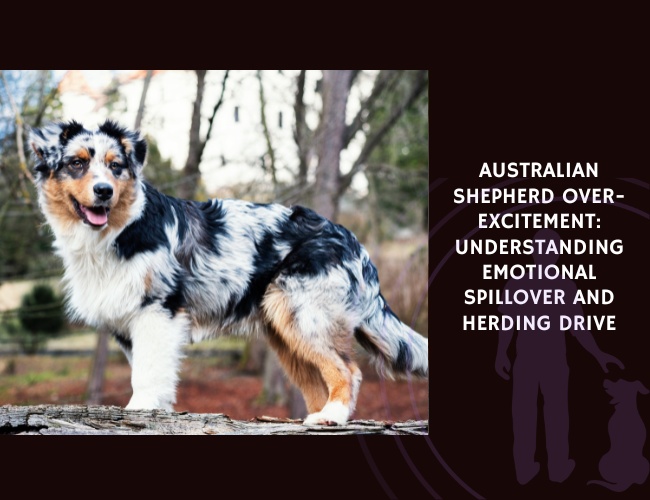
When your Australian Shepherd bounces off the walls, spins in circles, or nips at passing children, what looks like pure joy might actually be something much deeper. That explosive energy, that frantic intensity—it is not always celebration. Sometimes, it is overwhelm wearing the mask of excitement.
Let us guide you through the intricate world of Aussie emotional regulation, where herding instincts, neurological hardwiring, and modern life collide. Understanding the difference between genuine enthusiasm and emotional spillover can transform your relationship with your dog, turning chaos into clarity and restless energy into purposeful partnership.
The Neurological Foundation: Why Aussies Are Built Different
Your Australian Shepherd’s brain operates on a different frequency than many other breeds. To truly understand their over-excitement, you need to understand the emotional systems driving their behavior from deep within the mammalian brain.
Research in affective neuroscience reveals that all mammals share primary emotional systems that drive fundamental behaviors and shape how animals experience and respond to their world. For Australian Shepherds, specific systems run extraordinarily hot:
Primary Emotional Systems in Aussies:
- SEEKING – The drive for exploration, curiosity, and engagement (perpetually active in Aussies)
- PLAY – Enthusiastic, joyful interaction and social engagement
- FEAR – Threat detection and avoidance responses
- RAGE – Frustration and defensive aggression when blocked or threatened
- PANIC/GRIEF – Separation distress and attachment needs
- CARE – Nurturing and protective behaviors
The SEEKING System: Always On, Always Active
The SEEKING system drives curiosity, exploration, and engagement with the environment. Think of it as the brain’s motivational engine. In Aussies, this system runs at maximum capacity. They were bred to work tirelessly, scanning horizons for livestock, anticipating movement patterns, and maintaining constant vigilance. This means your dog’s brain is perpetually searching for something to engage with, something to control, something to organize.
When that powerful SEEKING drive finds no appropriate outlet, the resulting arousal does not simply disappear. It builds, intensifies, and eventually spills over into behaviors we label as over-excitement. Your Aussie is not choosing to be “too much”—their brain is desperately seeking fulfillment for drives that evolution embedded across generations.
The PLAY System and Its Rapid Transitions
Australian Shepherds also possess a robust PLAY system, which fuels their enthusiastic, joyful engagement. But here is where things become complicated: these emotional systems do not operate in isolation. They interact, overlap, and can shift rapidly.
A dog engaged in joyful PLAY can transition almost instantly to frustrated RAGE or anxious FEAR when their intentions are blocked or their environment becomes unpredictable. This rapid emotional shifting is what creates the “spillover” effect—one moment your dog seems happy, the next they are reactive, snappy, or frantically out of control. They have not become aggressive; they have simply crossed a threshold where one emotional system overwhelmed another.
Signs of Emotional Spillover:
- Sudden shift from playful to snappy or reactive
- Rapid escalation from excitement to aggression
- Inability to “turn off” once aroused
- Frantic, out-of-control energy that feels different from joy
- Quick transitions between emotional states with no obvious trigger
- Over-the-top responses that seem disproportionate to the situation
The NeuroBond approach recognizes these neurological realities and works with them rather than against them. Through calm, clear emotional guidance, you can help your dog navigate between these powerful systems without becoming overwhelmed.
The Herding Blueprint: Understanding Modified Predatory Drive
To understand your Australian Shepherd’s behavior, you must understand their heritage. Herding breeds like Aussies possess a modified predatory sequence—the same basic drive that wolves use to hunt, but selectively bred and refined over hundreds of years.
The Predatory Sequence Reshaped
Understanding how herding breeds differ from true predators helps explain their behavior:
Natural Predatory Sequence (Wolves):
- Search and orient to prey
- Stalk and approach
- Chase and pursue
- Grab-bite to stop movement
- Kill-bite to subdue
- Consume
Modified Herding Sequence (Aussies):
- Search and orient (INTENSE – the “eye”)
- Stalk and approach (INTENSE – stalking posture)
- Chase and gather (INTENSE – flanking, circling)
- Controlled nip (SOFTENED – to redirect, not harm)
- Kill-bite (INHIBITED – essentially removed)
- Consume (NON-EXISTENT)
This means your Aussie has all the drive and intensity of a predator focused on controlling movement, but the final outlet for that drive has been removed by design.
What Happens to All That Drive?
When a dog is bred to intensely pursue and control movement but denied the natural completion of that sequence, where does all that energy go? It must find alternative expressions. This is why frustrated Aussies engage in what owners often describe as problematic behaviors:
- Nipping at heels, hands, or clothing
- Body slamming or bumping into people or other dogs
- Intense circling or “herding” family members
- Grabbing leashes, toys, or anything they can control
- Frantic barking when unable to organize movement around them
These are not behaviors chosen out of spite or poor training. They represent a dog trying desperately to complete an incomplete neurological circuit, attempting to fulfill drives that have no appropriate outlet in suburban backyards and city parks.
The Intelligence Factor
Australian Shepherds were bred not just for herding, but for intelligent, independent herding. Unlike breeds that simply follow commands, Aussies were expected to read livestock behavior, anticipate problems, make split-second decisions, and solve complex spatial challenges without human direction. This high intelligence becomes a double-edged sword.
An intelligent dog without meaningful work becomes a problem-solver looking for problems. Their cognitive abilities, left unchanneled, focus on micro-managing their environment—tracking every movement, anticipating every change, trying to control outcomes they cannot influence. This constant mental pressure feeds directly into over-excitement and reactivity.
Signs Your Aussie’s Intelligence Needs Direction:
- Obsessive monitoring of windows, doors, or specific areas
- Creating their own “jobs” (herding children, managing pet interactions)
- Hyper-vigilance to household routines and any deviations
- Difficulty disengaging from minor stimuli once noticed
- Anxiety when unable to predict or control situations
- Restlessness even after physical exercise
- Problem behaviors that seem clever or elaborate
Sensory Processing: The Hidden Overwhelm
Your Australian Shepherd does not experience the world the same way you do. Their sensory processing operates at a fundamentally different level, and understanding this difference is crucial for managing over-excitement.
Heightened Sensory Awareness
Australian Shepherds were bred to detect subtle cues—a sheep’s ear position, a slight change in flock movement, a handler’s quiet whistle across a field. This selective breeding created dogs with extraordinary sensory sensitivity.
What Your Aussie Notices That You Might Miss:
- The neighbor’s cat three houses away
- Subtle pitch changes in your voice indicating emotion
- Slight tension in your body before you consciously feel stressed
- Pattern shifts in traffic sounds on your street
- Shadows and light changes through windows
- The specific sound of a particular person’s car approaching
- Micro-expressions and body language in other dogs at distance
- Environmental changes (furniture moved, new objects, missing items)
This heightened awareness served them brilliantly in working environments where relevant stimuli were relatively predictable and manageable. But in modern life, filled with constant motion, unpredictable sounds, flashing lights, and chaotic social interactions, this same sensitivity becomes a liability.
Sensory Overload and the Threshold
Every dog has a threshold—the point at which incoming stimulation exceeds their ability to process and regulate. For Australian Shepherds, this threshold is often lower than owners expect because their sensory system picks up so much more information. What seems like a moderately stimulating environment to you might be absolutely overwhelming to your dog.
Picture yourself at a crowded shopping mall during the holiday season. Now imagine that every sound is twice as loud, every movement in your peripheral vision draws your attention, you can smell every food court restaurant simultaneously, and you feel compelled to track and organize the movement of every shopper. That is closer to what your Aussie experiences in a moderately stimulating dog park.
When they cross that threshold, you see what appears to be over-excitement. But it is often sensory overwhelm manifesting as frantic, desperate attempts to impose control on chaos their brain cannot organize.
The Motion Sensitivity Factor: Movement as a Trigger
For Australian Shepherds, movement is not just interesting—it is neurologically compelling. Their brains are wired to respond to motion with intensity that other breeds simply do not experience.
Lower Activation Thresholds
Research into herding breed behavior reveals that these dogs have significantly lower activation thresholds for moving stimuli. A ball rolling across the floor, a child running past, a car driving by, another dog walking in the distance—these trigger immediate, intense focus in Aussies at distances and intensities that would barely register for many other breeds.
This is not a training issue. This is neurology. Their visual processing systems prioritize motion detection and tracking because sheep survival once depended on it. That same system now responds to every leaf blowing in the wind.
Movement Patterns That Amplify Response
Not all movement affects your Aussie equally. Specific patterns trigger particularly intense reactions:
High-Trigger Movement Patterns:
- Erratic, unpredictable movement – Children playing, dogs wrestling, bicycles weaving through obstacles
- Fast, linear movement – Cars, joggers, skateboarders, anything moving quickly in straight lines
- Multiple moving targets – Busy dog parks, crowds, multiple people or animals moving simultaneously
- Quick directional changes – Squirrels, rabbits, or birds that start-stop-pivot rapidly
- Low, ground-level movement – Small animals, rolling balls, leaves or debris blowing across the ground
- Parallel movement – Objects moving alongside your dog (vehicles passing while walking)
- Approaching movement – Anything moving directly toward your dog or household
The Invisible Leash concept becomes especially relevant here. When your Aussie learns to check in with you rather than react to every moving stimulus, they develop an internal guidance system that reduces the compulsive need to control external movement. This connection, built through calm leadership and clear communication, provides the security they need to exist in a world of constant motion.
Frustration, Arousal, and the Aggression Link
One of the most misunderstood aspects of Aussie over-excitement is its relationship to frustration and aggression. Many owners are shocked when their “excited” dog suddenly snaps, lunges, or becomes reactive. But understanding the frustration-aggression connection makes these transitions predictable and manageable.
Blocked Intentions Create Frustration
Imagine you are sprinting toward an important goal when someone suddenly grabs your arm and holds you back. That surge of frustration, that desperate need to break free and complete your intention—that is what your leashed Aussie experiences when they spot something they feel compelled to control but cannot reach.
For herding dogs, having their instinctive responses repeatedly prevented creates significant internal pressure. When already in a state of high arousal, this frustration lowers the threshold for reactive behaviors. The energy intended for herding or controlling movement must go somewhere, and it often transforms into barking, lunging, nipping, or frantic escape attempts.
Excitement to Reactivity: The Seamless Transition
Many owners describe a pattern: their dog seems excited and happy, then suddenly “snaps” into aggressive behavior. But from the dog’s perspective, this is not a sudden change. It is a gradual escalation that humans miss until it reaches obvious reactivity.
High arousal, regardless of its emotional flavor, reduces impulse control and increases reactive potential. A dog in a state of intense excitement is neurologically closer to aggression than a calm dog, even if the initial arousal felt positive. This is why play at the dog park can turn into fights, why excited greetings become mounting or snapping, and why “happy” zoomies sometimes include nipping behaviors.
The Drive Frustration Cycle
For Australian Shepherds living in environments without appropriate outlets, a chronic cycle develops:
The Drive Frustration Cycle:
- Strong herding drive emerges naturally
- Environment provides no appropriate outlet for the drive
- Drive builds and intensifies without release
- Dog attempts to fulfill drive through inappropriate behaviors (nipping, circling, barking)
- Handler blocks or punishes these attempts
- Frustration increases significantly
- Arousal escalates beyond regulation capacity
- Behavioral spillover occurs (reactivity, aggression, frantic behavior)
- Cycle repeats and intensifies with each iteration
Breaking this cycle requires not just managing symptoms but addressing the fundamental drive frustration at its root. This means providing structured, appropriate outlets for herding instincts while teaching emotional regulation skills.
Predictive Processing: The Need to Control and Organize
Your Australian Shepherd’s brain is constantly running predictions about the world. This cognitive process, called predictive processing, is particularly intense in herding breeds and plays a central role in over-excitement.
The Prediction Machine
The brain does not passively receive sensory information. Instead, it actively generates predictions about what it expects to sense, then compares those predictions to actual sensory input. When predictions match reality, the brain feels confident and calm. When predictions fail—when the world does not behave as expected—the brain generates “prediction error” signals that drive learning but also create arousal and distress.
Australian Shepherds, bred to anticipate and influence livestock movement patterns, have brains deeply invested in prediction and control. They are constantly trying to forecast where a moving object will go next and how they can direct it. This worked beautifully in fields with predictable livestock. It fails catastrophically in chaotic modern environments.
Unpredictability as a Trigger
When your Aussie cannot predict or influence patterns, their distress escalates rapidly. Consider these common scenarios:
Situations That Generate High Prediction Error:
- Child behavior – A child runs toward your dog, suddenly stops, changes direction, and runs away. Your dog predicted one pattern and prepared one response, but reality shifted.
- Dog park chaos – Other dogs play with no apparent pattern, switching partners, changing speeds, moving erratically. Your Aussie tries to organize this but cannot.
- Traffic patterns – Cars on a busy street move too quickly and unpredictably for your dog to track effectively. They feel compelled to control this movement but fail repeatedly.
- Household routines disrupted – Your normal schedule changes unexpectedly, creating uncertainty about what happens next.
- Multiple people moving – Family members or visitors moving around the house in unpredictable ways.
- Novel environments – New locations where your dog has no established patterns to reference.
The Control Paradox
Herding dogs need to feel they can influence their environment. But modern life constantly presents situations beyond their control. This creates a painful paradox: the stronger their drive to control, the more distressed they become when they cannot.
Through Soul Recall principles, you can help your dog develop emotional resilience around unpredictability. By building trust-based bonds and teaching that not everything requires their management, you reduce their compulsive need to control every moving element around them.
Handler Influence: The Hidden Accelerant
Your behavior, energy, and emotional state profoundly impact your Australian Shepherd’s arousal levels. Many cases of chronic over-excitement trace directly to handler behaviors that inadvertently fuel the problem.
Emotional Contagion: Mirror Neurons at Work
Dogs possess mirror neurons—brain cells that activate both when performing an action and when observing another perform that same action. These neurons enable emotional contagion, the phenomenon where emotions transfer between individuals.
Australian Shepherds, bred for close partnership with humans and exceptional sensitivity to handler cues, are particularly susceptible to emotional contagion. When you feel anxious, excited, frustrated, or stressed, your dog does not just observe these emotions—they experience them.
Common Handler Behaviors That Fuel Arousal
Many well-intentioned handler behaviors inadvertently increase arousal rather than calming it:
Handler Behaviors That Accidentally Fuel Over-Excitement:
- High-pitched, excited voices – “Good boy! Who’s a good boy?!” in squeaky tones triggers excitement circuits
- Rapid, repetitive cueing – “Sit, sit, sit, come, come, no, sit” creates cognitive stress and urgency
- Constant unstructured play – Every interaction involves throwing balls or wrestling, teaching that intensity is the norm
- Tense body language – Tight shoulders, rigid posture, tense facial expressions signal threat
- Tight leash pressure – Constant tension on the leash communicates anxiety and restriction
- Anxious anticipation – Tensing up before encountering triggers (other dogs, people, situations)
- Rushed movements – Quick, jerky motions that communicate urgency or stress
- Inconsistent responses – Reacting differently to the same behavior depending on your mood
- Lack of calm transitions – Moving directly from high-arousal activities to demanding calm without buffer time
The Performance Pressure Effect
Australian Shepherds are incredibly attuned to handler expectations and emotional states. If you feel anxious about how your dog will behave—worried they will pull, react, or embarrass you—they feel that anxiety and interpret it as confirmation that the situation warrants concern. Your worry becomes their worry, layered onto whatever arousal they already felt about the environment.
This creates a feedback loop: You worry about your dog’s behavior → Your dog senses your anxiety → Their arousal increases → Their behavior worsens → Your worry intensifies → The cycle continues.
Calm Leadership as the Foundation
The solution is not complicated, though implementing it requires consistency. Your Aussie needs you to be their emotional anchor, not their emotional mirror. When you remain calm, clear, and confident, you provide the regulation their nervous system needs.
This does not mean being cold or disconnected. It means offering steady, warm presence without adding urgency or anxiety to their experience. Through the NeuroBond approach, you learn to be the calm center around which your dog’s energy can organize rather than another source of stimulation they must process.

Environmental Factors: When the World Becomes Too Much
The environment in which you ask your Australian Shepherd to exist significantly impacts their ability to regulate arousal. Some settings almost guarantee over-excitement, not because of training failures but because they exceed your dog’s processing capacity.
High-Social, High-Stimulus Environments
Dog parks, pet stores, outdoor festivals, busy veterinary clinics—these environments combine multiple arousal triggers simultaneously:
Environmental Factors That Combine to Create Overwhelm:
- Numerous moving targets (people, dogs, vehicles, children)
- Unpredictable social interactions without clear patterns
- High sound intensity and variety (barking, talking, traffic, music)
- Novel smells and concentrated sensory input
- Lack of structure or predictability in the environment
- Limited personal space and constant proximity to triggers
- Multiple competing demands on attention
- No clear escape routes or quiet zones
- Continuous stimulation without breaks
- Conflicting social signals from multiple sources
For many Australian Shepherds, these environments create immediate sensory overload. Their heightened sensitivity picks up every stimulus, their herding drive activates for every moving element, their intelligence tries to predict an unpredictable chaos, and their nervous system overwhelms.
The Sound-Motion Interaction
Research shows that sound intensity interacts with visual motion to amplify arousal beyond additive levels. This means that a busy environment with both high sound levels and high movement density does not just double the challenge—it exponentially increases the difficulty your dog faces.
Consider a child’s birthday party: children running and screaming, dogs playing and barking, adults talking loudly, music playing, doors opening and closing. Each stimulus individually might be manageable. Combined, they create a perfect storm of sensory overwhelm that pushes most Aussies past their regulation threshold.
Encoding the “Go Big” Default
Repeated exposure to overwhelming environments teaches your dog a problematic lesson: when uncertain or aroused, the appropriate response is maximum intensity. They learn to “go big” as their primary coping strategy because that is what their nervous system consistently experiences.
This encoded pattern becomes self-perpetuating. Your dog enters a stimulating environment, immediately ramps to high arousal because that is their learned response, and then the high arousal makes calm regulation even more difficult. They have learned to create their own over-excitement.
Strategic Environment Management
You cannot always control the environment, but you can make strategic choices about which environments you expose your dog to and when. During the critical learning period, prioritizing calmer, more structured settings allows your Aussie to build regulation skills before facing chaotic challenges.
This does not mean avoiding all stimulation. It means scaffolding their learning so they develop coping strategies in manageable environments before testing those skills in overwhelming ones. Think of it as teaching someone to swim in a pool before taking them into ocean surf.
The Suburban Life Trap: Drive with No Job
Australian Shepherds were bred for intense, structured work. Modern suburban life, despite its comforts, often creates a perfect storm of drive frustration that predisposes these dogs to chronic over-excitement.
The Working Dog Identity Crisis
Your Aussie’s genetic programming expects a job. Not just physical exercise—a meaningful task that requires focus, problem-solving, and the use of their herding instincts. When that job does not exist, their powerful drives seek outlets anyway, often inappropriately.
This is not about insufficient exercise. You can run your Aussie for miles, throw balls until your arm aches, and attend agility classes weekly, yet still have an over-excited, restless dog. Why? Because exercise alone does not fulfill the psychological need for purposeful work.
Chronic, Low-Grade Frustration
Living without meaningful outlets creates chronic, low-grade drive frustration—a constant background pressure that keeps baseline arousal elevated. Your dog never fully relaxes because their brain remains perpetually scanning for something to organize, control, or manage.
This chronic state means they start each day closer to their threshold than a fulfilled dog would. Any additional stimulation—the doorbell, a dog walking past the window, family members moving around—more easily pushes them into over-excitement because they have less buffer capacity.
The Intelligence Factor Revisited
High intelligence without direction becomes destructive. Your Aussie will use their considerable cognitive abilities to find “work,” which might involve:
Self-Created “Jobs” From Unchanneled Intelligence:
- Obsessively tracking and barking at every movement outside windows
- Creating elaborate games involving household items you didn’t intend as toys
- Developing compulsive behaviors (spinning, tail chasing, shadow/light chasing)
- Micro-managing family activities (herding children from room to room, controlling pet interactions)
- Finding creative escape routes from yards or homes in search of something meaningful
- Reorganizing items around the house (moving shoes, toys, or household objects)
- Monitoring and “alerting” to routine events that don’t actually require attention
- Creating complex cause-and-effect games to manipulate your behavior
These are not behaviors that need punishment. They are symptoms of a dog desperately trying to fulfill drives that modern life provides no outlet for.
The Solution: Structured, Meaningful Engagement
The solution lies in providing structured outlets that satisfy herding instincts and challenge intelligence without creating chaos:
Structured Activities That Fulfill Drive Appropriately:
- Treibball or herding ball work – Allows controlled movement organization with clear rules
- Scent work and nose games – Engages the SEEKING system productively through mental challenge
- Complex problem-solving puzzles – Satisfies intelligence needs through figuring out multi-step solutions
- Structured obedience training – Provides mental engagement and clear communication patterns
- Calm, purposeful walks – With specific jobs like heel work, check-ins, and environmental awareness tasks
- Target training and shaping exercises – Builds focus and offers clear criteria for success
- Rally obedience or trick training – Combines thinking, movement, and partnership
- Platform work and place training – Teaches impulse control while providing a “job” (stay on the platform)
- Pattern games – Predictable sequences that satisfy the need for routine while engaging the brain
These activities satisfy the psychological need for purposeful work, not just the physical need for exercise. They give your dog’s brain something meaningful to do, reducing the drive frustration that feeds over-excitement.
Reading the Signs: Behavioral Markers and Early Intervention
The key to managing over-excitement lies not in responding after it happens but in recognizing the early warning signs and intervening before your dog crosses the threshold. Australian Shepherds telegraph their rising arousal through subtle micro-signals that many owners miss.
The Early Warning System
Your dog’s body communicates their internal state constantly. Learning to read these signals gives you a critical window for intervention before full over-excitement develops:
Eye changes offer your first clue. Watch for subtle pupil dilation, even in consistent lighting. The “eye” might become more intense and fixed, with a harder, more focused quality. Your dog might stare at triggers with unblinking attention, or their gaze might begin darting rapidly between multiple stimuli as they struggle to track everything.
Breathing patterns shift noticeably. Respiration becomes shallower and faster, sometimes before overt panting begins. You might notice a brief breath hold when your dog spots a trigger, or a sudden, sharp exhale. These subtle changes indicate physiological arousal increasing.
Body tension and weight shifts reveal internal preparation. Your dog’s muscles become slightly stiffer, losing their relaxed fluidity. They might lean forward, shifting weight to their front legs in readiness. The overall looseness that characterizes calm behavior disappears, replaced by coiled tension.
Scanning and hypervigilance indicate overwhelmed attention. Your dog’s head moves rapidly, scanning for triggers. Their focus cannot settle on any single thing, or conversely, they fixate intensely on one trigger while remaining obviously aware of others.
Vocal leaks precede obvious barking. Small, involuntary sounds—a soft whine, a huff, a low rumble, a quick “woof” that is not quite a full bark. These sounds escape as internal pressure builds, like steam releasing before the whistle blows.
Displacement behaviors signal internal conflict. Quick paw flicks, brief ground scratching, lip licking in contexts unrelated to food, yawning when not tired, shaking off when not wet—these seemingly random behaviors indicate your dog is trying to self-regulate rising arousal.
Tail and ear communication becomes more urgent. The tail might stiffen, raise slightly, or wag in tight, rapid arcs rather than loose, full-body sweeps. Ears might pin forward in intense focus or flatten slightly if anxiety accompanies the arousal. These subtle position changes reveal emotional shifts.
Mouth tension appears in the facial muscles. The corners of the mouth tighten, pulling back slightly. The relaxed, open-mouthed “smile” of a calm dog disappears, replaced by tension through the jaw and lip area.
Joy. Tension. Overflow.v
Excitement isn’t always happiness. In Australian Shepherds, intense energy can be a signal of emotional overload—a mind built for control struggling to find calm in chaos.
Their drive runs hot. A constantly active SEEKING system fuels scanning, organizing, and movement. When it finds no clear outlet, arousal doesn’t fade—it spills.


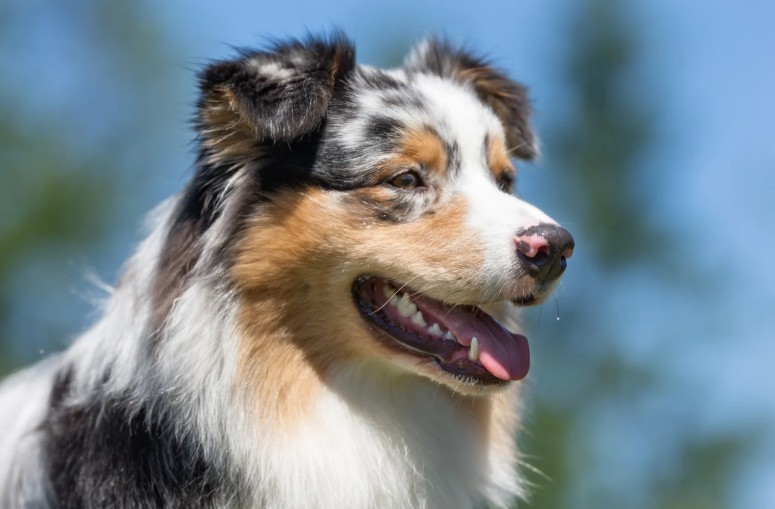
Emotion moves fast. Play can turn to frustration in a heartbeat. When instinct collides with uncertainty, behavior becomes more than energy—it becomes expression.
Proactive Management: Three Steps to Prevention
Recognizing micro-signals means nothing without effective intervention strategies. The goal is not to eliminate arousal entirely—that is neither possible nor healthy—but to keep your dog within their regulation window where they can think, learn, and respond appropriately.
Step One: Observe with Intention
Effective intervention starts with observation. You must be present and attentive to your dog, especially in potentially stimulating environments. This means putting your phone away, staying aware of your surroundings, and maintaining focus on your dog’s communication.
Develop a mental checklist of your individual dog’s signals. While general patterns exist, each Aussie has unique expressions of rising arousal. Learn your dog’s specific “tells”—the particular ear position, the specific tail carriage, the exact breathing change that indicates they are approaching threshold.
Step Two: Interpret Accurately
Understanding what these signals mean requires moving beyond surface observations. When you see micro-signals, interpret them as your dog communicating: “I am moving toward my threshold. I need help managing this.”
This interpretation shifts your perspective from judgment (“my dog is being bad”) to partnership (“my dog needs support”). It transforms training from correction-based to cooperation-based, aligning perfectly with the Zoeta Dogsoul philosophy of emotional connection and mutual understanding.
Step Three: Act Strategically
Once you have observed and interpreted correctly, immediate action prevents escalation:
Increase distance serves as your most powerful tool. The moment you see early warning signals, create space between your dog and the trigger. Cross the street, move to the park’s edge, step away from the crowd. Distance reduces stimulus intensity, buying your dog’s nervous system time to process and regulate.
Change the environment entirely when needed. If the current setting overwhelms your dog’s capacity, remove them. There is no shame in leaving the dog park, cutting a walk short, or skipping the pet store visit. Your dog’s emotional wellbeing matters more than completing planned activities.
Redirect to calm engagement by offering known, low-arousal behaviors. A simple “touch” cue, a calm “sit,” a brief “find it” game with treats scattered on the ground—these redirect attention and engage your dog’s brain in manageable ways. The key is keeping the redirection calm, not exciting.
Use pattern games that teach your dog to observe triggers calmly then re-engage with you. “Look at that” and “engage-disengage” exercises build your dog’s confidence that they can notice stimuli without reacting. This reduces prediction error and builds a sense of control through partnership rather than frustration.
Provide calming touch when appropriate. Some dogs respond beautifully to slow, deliberate strokes or gentle massage when arousal begins rising. This tactile input can help activate the parasympathetic nervous system, promoting physiological calming.
Manage your own state through intentional breathing. Remember emotional contagion—your dog reads and mirrors your emotional state. When you notice rising tension in yourself or your dog, take a slow, deep breath. Your calm presence provides the regulation their nervous system needs.
Offer structured tasks that channel drive productively. Rather than allowing scattered energy, give your dog a specific, calm job: structured heeling, a stay with duration, a simple problem-solving task. This converts raw drive into focused engagement.
Reinforce calm actively by rewarding even brief moments of regulation, especially in challenging environments. Many handlers inadvertently reinforce excitement by only engaging their dog during high-arousal moments. Teaching your dog that calmness earns attention and rewards transforms their default operating mode.
🧠 Understanding Australian Shepherd Over-Excitement
A Step-by-Step Journey from Emotional Spillover to Calm Regulation
Phase 1: Recognition
Understanding What You’re Really Seeing
The Neurological Reality
Your Aussie’s brain operates with intensified SEEKING and PLAY systems running perpetually hot. What appears as excitement is often emotional spillover—rapid transitions between joy, frustration, and anxiety when their powerful drives find no appropriate outlet.
Early Warning Signals
• Pupil dilation and intense “eye” focus
• Shallow, rapid breathing or breath holding
• Weight shifts forward with muscle tension
• Small vocal leaks—huffs, whines, quiet woofs
• Quick paw flicks or ground scratching
Your First Step
Begin observing your dog with intention. Develop a mental checklist of their unique micro-signals. Recognition is not judgment—it’s partnership. When you see these signs, interpret them as your dog communicating: “I’m approaching my threshold and need help.”
Phase 2: Understanding the Drives
Herding Heritage and Modified Predatory Sequence
The Incomplete Circuit
Your Aussie possesses intense search, stalk, and chase drives but the final release (bite completion) has been intentionally inhibited through breeding. This creates a powerful drive with no natural endpoint—energy that must find alternative expressions or spill over into problematic behaviors.
What This Looks Like Daily
• Nipping at heels, hands, clothing
• Body slamming or bumping during play
• Intense circling or “herding” family members
• Grabbing and controlling leashes or toys
• Frantic barking when unable to organize movement
• Obsessive window watching and alerting
Reframing Your Perspective
These behaviors are not defiance or poor training—they’re your dog attempting to complete an incomplete neurological circuit. Understanding this shifts your response from correction to providing appropriate outlets through NeuroBond principles of purposeful engagement.
Phase 3: Environmental Assessment
Identifying Triggers and Thresholds
Sensory Processing Sensitivity
Your Aussie notices everything—the neighbor’s cat three houses away, pitch changes in your voice, subtle body tension, traffic pattern shifts. Their sensory threshold is lower than most breeds, meaning “moderate” stimulation for you may be overwhelming for them.
High-Risk Environments
• Busy dog parks with chaotic play
• Pet stores with multiple moving stimuli
• Streets with heavy traffic and fast movement
• Outdoor events with crowds and unpredictability
• Any space combining high sound + high movement density
Strategic Management
Prioritize calmer, structured settings during the learning phase. This doesn’t mean avoiding all stimulation—it means scaffolding exposure so your dog builds regulation skills in manageable environments before facing overwhelming ones. Quality of environment matters more than quantity of socialization.
Phase 4: Handler Awareness
Recognizing Your Role in the Arousal Cycle
Emotional Contagion
Your Aussie doesn’t just observe your emotions—they experience them through mirror neurons. When you feel anxious, excited, frustrated, or stressed, your dog absorbs and amplifies these states. You are their emotional thermostat, not just their trainer.
Behaviors That Accidentally Fuel Arousal
• High-pitched, excited voices during interaction
• Rapid, repetitive cueing (“sit, sit, sit, come, come”)
• Constant unstructured play without calm transitions
• Tight leash pressure and tense body language
• Anxious anticipation before encountering triggers
Becoming the Calm Center
Through the Invisible Leash concept, you become your dog’s emotional anchor. Practice intentional breathing, maintain loose leash handling, use calm voice tones, and provide clear boundaries without urgency. Your steady presence provides the regulation their nervous system needs but cannot self-impose.
Phase 5: Building Daily Structure
Routines That Support Regulation
The Power of Predictability
Consistency in routine provides the predictability your Aussie’s brain craves. A structured day prevents energy dam-ups, builds regulation into everyday life, and teaches that arousal doesn’t require constant discharge. Structure is freedom for an Aussie’s mind.
Essential Daily Components
• Calm morning routine setting regulation tone
• Decompression walks for sensory processing
• Enforced rest periods (12-16 hours daily)
• Structured mental enrichment activities
• Evening wind-down protocol (60-90 min before bed)
• Consistent meal and sleep schedules
The Decompression Walk Difference
Use a 15-30 foot long line in quiet environments, allowing extensive sniffing at your dog’s pace. This isn’t exercise—it’s mental and emotional processing. Twenty minutes of genuine decompression outweighs an hour of high-arousal activity for regulation building.
Phase 6: Providing Appropriate Outlets
Fulfilling Drive Without Creating Chaos
The Exercise Paradox
More intense exercise doesn’t tire an Aussie—it creates a canine athlete conditioned for high arousal. Repetitive ball chasing or frisbee actually trains arousal patterns. A well-regulated dog should rest appropriately without requiring physical exhaustion.
Activities That Build Regulation
• Treibball or herding ball work with clear rules
• Scent work engaging the SEEKING system productively
• Complex problem-solving puzzles
• Structured obedience requiring focus and thinking
• Platform work teaching impulse control
• Calm, purposeful walks with specific jobs
Mental Work Over Physical Output
Your Aussie needs purposeful work, not just exercise. Fifteen minutes of focused scent work or problem-solving can satisfy their brain more effectively than an hour of running. Quality of engagement matters more than quantity of physical activity.
Phase 7: Intervention Strategies
Proactive Management and De-escalation
The Three-Step Protocol
Observe: Monitor body language constantly, especially in stimulating environments. Interpret: Understand micro-signals as your dog communicating threshold approach. Act: Implement strategic interventions before escalation occurs.
Immediate Intervention Tools
• Increase distance from triggers immediately
• Change environment when current setting overwhelms
• Redirect to calm engagement with known low-arousal behaviors
• Use pattern games teaching calm observation then re-engagement
• Provide calming touch activating parasympathetic system
• Manage your own state through intentional breathing
The Goal: Keeping Within Regulation Window
You’re not eliminating arousal—that’s impossible and unhealthy. You’re keeping your dog within their regulation window where they can think, learn, and respond appropriately. This window expands with consistent practice and appropriate support.
Phase 8: Long-Term Transformation
Building True Emotional Regulation
Realistic Expectations
Transformation takes months, not weeks. You’re working with genetic predispositions shaped by hundreds of years of selective breeding. Progress isn’t linear—expect good days and challenging days. Measure success in your dog’s growing capacity to self-regulate, not elimination of all arousal.
What Success Looks Like
• Your dog can notice triggers without reacting
• Recovery time from arousal decreases significantly
• Natural settling occurs without enforced rest
• Check-ins with you become voluntary and frequent
• Threshold increases—more stimulation needed for overwhelm
• Your dog chooses calm over chaos more often
The Partnership Journey
Through Soul Recall moments—those instances where your dog looks to you for guidance rather than reacting independently—you’ll witness the depth of trust you’re building. This isn’t obedience training; it’s relationship transformation founded on mutual understanding and respect.
🔄 Age-Specific Considerations
Puppyhood (8 weeks – 6 months)
Focus: Building foundation regulation skills
Warning Signs: Inability to disengage, persistent arousal, frantic play escalation
Priority: Teach settling, enforce rest, reward calm behavior over excitement
Adolescence (6-18 months)
Challenge: Intensified drives + hormonal surges + poor impulse control
What Changes: Sudden reactivity, boundary testing, skill regression
Approach: More structure, calmer activities, patience through regressions
Adult (2-7 years)
Reality: Without intervention, patterns become deeply ingrained
Opportunity: Cognitive maturity allows significant change
Timeline: Slower progress than puppyhood but profound transformation possible
Senior (7+ years)
Shift: Some natural calming, others maintain intense patterns
Adaptation: Reduce physical demands, maintain mental engagement
Watch For: Pain, cognitive decline, sensory changes affecting behavior
High-Arousal Environment
Characteristics: Dog parks, festivals, busy streets
Effect: Exponential overwhelm from combined stimuli
Strategy: Avoid during training, build foundation in calm settings first
Controlled Environment
Characteristics: Quiet parks, empty fields, structured training spaces
Effect: Allows skill building within regulation window
Strategy: Start here, gradually increase difficulty as dog succeeds
⚡ Quick Reference: The Over-Excitement Formula
Genetic Drive + Environmental Triggers + Handler Energy – Appropriate Outlets = Over-Excitement Level
The Regulation Equation: Recognition + Structure + Appropriate Outlets + Calm Leadership = Expanding Regulation Window
Remember: You’re not reducing your Aussie’s intensity—you’re directing it. The same drives that create chaos in suburban settings created history’s most capable working partners. Your role is providing the structure and understanding that allows their gifts to shine rather than overwhelm.
🧡 The Zoeta Dogsoul Approach to Australian Shepherd Over-Excitement
Through NeuroBond principles, we recognize that your Aussie’s over-excitement isn’t a training problem—it’s a relationship opportunity. By understanding their neurological reality and providing calm, clear emotional guidance, we transform raw drive into focused partnership.
The Invisible Leash reminds us that true connection transcends physical restraint. When your dog learns to check in with you rather than react to every stimulus, they develop an internal compass guided by trust rather than tension.
In moments of Soul Recall—when your Aussie looks to you amidst chaos, choosing partnership over independent reaction—you witness the depth of connection this work creates. This is not obedience. This is transformation.
That balance between science and soul, between respecting your dog’s nature while guiding their behavior, between honoring their drives while teaching regulation—that is the essence of Zoeta Dogsoul.
© Zoeta Dogsoul – Where neuroscience meets soul in dog training
Age-Specific Guidance: Understanding Your Aussie’s Developmental Journey
Australian Shepherd over-excitement manifests differently across life stages. Understanding these developmental patterns allows you to set realistic expectations and apply age-appropriate interventions rather than expecting a six-month-old puppy to regulate like a mature adult.
Puppyhood: Building the Foundation (8 Weeks – 6 Months)
The puppy months represent your most critical window for shaping emotional regulation patterns. What might look like adorable puppy enthusiasm can already signal the early stages of chronic over-excitement if not properly guided.
During this phase, your Aussie puppy is experiencing explosive brain development while simultaneously grappling with limited impulse control. Their herding instincts begin emerging, often around 10-14 weeks, manifesting as intense focus on movement, chase behaviors, and those first experimental nips at ankles and hands.
Early warning signs of developing over-excitement patterns include persistent mounting arousal that never seems to settle, inability to disengage from stimuli once focused, frantic play that quickly escalates beyond control, constant motion even when tired, and resistance to settling or napping despite obvious fatigue.
Early Warning Signs in Puppies (8 Weeks – 6 Months):
- Cannot settle for more than a few minutes even when exhausted
- Play escalates rapidly from gentle to frantic within seconds
- Persistent inability to disengage from windows, doors, or movement
- Mounting arousal throughout the day with no natural calming periods
- Resistance to naps despite obvious tiredness (yawning, clumsiness)
- Nipping that intensifies rather than softens with redirection
- Hypervigilance to household sounds and movements
- Difficulty being handled or restrained, even gently
- Explosive reactions to novel stimuli
The critical socialization window—roughly 8 to 16 weeks—requires careful navigation. While exposure to varied experiences is essential, quality matters more than quantity. An over-stimulated puppy who visits ten locations in a week but never learns to regulate in any of them gains nothing beneficial and potentially learns that chaos is normal.
Focus instead on teaching your puppy that calm behavior earns reinforcement, that settling is a valuable skill, and that the world does not require their constant management.
Foundation Skills to Build During Puppyhood:
- Settle on a mat – The ability to lie calmly on a designated surface for increasing durations
- Disengagement from triggers – Looking away from exciting stimuli on cue
- Voluntary check-ins – Choosing to look at you without being called
- Accepting gentle restraint – Tolerating handling, grooming, and being held calmly
- Self-soothing with chew items – Using appropriate objects for calm oral satisfaction
- Pattern games – Learning predictable sequences that build security
- Calm greetings – Four paws on floor before receiving attention
- Off-switch training – Transitioning from play to calm on cue
- Crate or place as a safe zone – Viewing designated rest areas as secure, positive spaces
Your puppy needs structured rest periods throughout the day. Aussie puppies chronically under-sleep when allowed to self-regulate, and sleep deprivation directly feeds over-excitement. Enforce naps in a quiet, low-stimulus environment every two hours. A tired puppy is not necessarily a good puppy—an over-tired puppy becomes a dysregulated puppy.
Adolescence: Navigating the Storm (6-18 Months)
If puppyhood feels challenging, adolescence often proves more so. This developmental phase brings intensified drives, hormonal surges, and the perfect storm of increasing physical capability combined with still-developing impulse control.
Around six to eight months, you might notice your previously manageable puppy suddenly becomes reactive, overly aroused by stimuli they previously ignored, and significantly more difficult to redirect. This is normal adolescent development, not training failure. Their herding drives strengthen considerably during this period, often creating sudden escalations in reactivity to movement.
Adolescent Changes to Expect (6-18 Months):
- Sudden reactivity to triggers previously ignored
- Intensified herding behaviors (nipping, circling, stalking)
- Increased independence and testing of boundaries
- Shortened attention span despite previous progress
- Heightened sensitivity to movement and sound
- Regression in previously mastered skills
- Increased frustration tolerance issues
- Stronger emotional responses (faster escalation)
- Greater physical capability combined with poor judgment
- Hormonal mood fluctuations
Hormonal influences on arousal cannot be understated. Testosterone in males and estrus cycles in females create periods of heightened baseline arousal, lowering thresholds for over-excitement. Even spayed and neutered dogs experience adolescent hormonal shifts that impact emotional regulation.
During adolescence, maintain consistency rather than increasing intensity. Many owners mistakenly believe their adolescent dog needs more stimulation or harder exercise. The opposite often proves true—your adolescent Aussie needs more structure, clearer boundaries, and increased emphasis on calm, focused activities rather than chaotic play.
What Adolescent Aussies Actually Need (Not What You Think):
- More structure – Clearer routines and predictable daily patterns
- Calmer activities – Focused training over chaotic play
- Clearer boundaries – Consistent rules about what is/isn’t acceptable
- More rest – Enforced downtime despite apparent energy
- Mental challenge – Complex problem-solving, not just physical output
- Patience and consistency – Staying the course through regressions
- Shorter training sessions – Brief, successful interactions over long, frustrating ones
- Reduced stimulation – Fewer overwhelming environments during this vulnerable phase
- Decompression opportunities – Low-key sniffing walks over high-energy outings
This phase tests every foundation you built during puppyhood. Your dog will test boundaries, experiment with behaviors, and likely regress in skills they previously mastered. Patience and consistency during adolescence determine whether over-excitement becomes a chronic pattern or a manageable phase.
Continue enforcing rest periods, as adolescent Aussies often resist sleep while desperately needing it. Increase the complexity of mental enrichment to satisfy their developing intelligence. Prioritize calm, structured activities over high-arousal play. Remember that your adolescent dog’s brain is still developing—full impulse control does not emerge until roughly 18-24 months.
Adult and Senior Years: Evolution of Patterns
Many owners hope their Aussie will “grow out of” over-excitement, but without intervention, the opposite often occurs. Chronic over-excitement in adulthood becomes an engrained behavioral pattern, a default operating mode that feels normal to your dog.
Adult Aussies (roughly 2-7 years) who have not learned emotional regulation often show refined over-excitement patterns. Their reactivity becomes faster, their triggers more numerous, and their recovery time longer. Years of practicing over-excitement strengthen those neural pathways, making them increasingly automatic.
However, adult dogs also possess the cognitive maturity for significant change. An adult Aussie learning regulation for the first time may progress more slowly than a puppy building skills from the start, but their improved impulse control and learning capacity create opportunities for profound transformation.
As Aussies enter their senior years (typically 7+ years, though this varies), you might notice shifts in over-excitement patterns. Some senior dogs naturally calm, their drives softening with age and reduced physical capability. Others maintain intense arousal patterns but with decreased physical resilience, creating increased frustration as their mind writes checks their body cannot cash.
Senior Aussies benefit from continued mental engagement but with adjusted physical demands. Their need for purposeful work does not disappear, but the form it takes should evolve.
Appropriate Activities for Senior Aussies (7+ Years):
- Scent work – Low physical impact, high mental engagement
- Puzzle toys and feeders – Cognitive challenge without physical strain
- Calm training sessions – Short, focused work on familiar or new skills
- Gentle nose work games – Hide-and-seek with treats in easy locations
- Platform work – Controlled movement with clear start/stop points
- Slow, focused walks – Emphasizing sniffing and exploration over distance
- Touch and body awareness exercises – Gentle proprioception work
- Simple problem-solving – Age-appropriate challenges that build confidence
- Calm socialization – Interactions with familiar, gentle dogs or people
Watch for physical health changes that impact arousal in senior dogs. Pain, cognitive decline, sensory changes (vision or hearing loss), and hormonal shifts can all influence emotional regulation. What appears as behavioral regression might actually signal underlying health issues requiring veterinary attention.

Practical Daily Routines: Structure That Supports Regulation
Theory without application remains abstract. Let us translate understanding into practical daily structure that supports your Australian Shepherd’s emotional regulation. Consistency in routine provides the predictability their brains crave while building regulation into the fabric of everyday life.
Morning: Setting the Regulation Tone
How you start the day significantly impacts your Aussie’s baseline arousal for the hours that follow. A chaotic, high-energy morning primes your dog for a dysregulated day. A calm, structured morning establishes regulation as the default.
Calm Morning Routine Checklist:
- Ignore initial excitement – Wait for four paws on floor before acknowledgment
- Calm outdoor elimination – On leash, purposeful, no play time yet
- Brief settling period – 5-10 minutes of calm before breakfast
- Structured feeding – Use puzzle feeders or scatter feeding to slow consumption
- Post-meal rest – 20-30 minutes on place/mat while you prepare for your day
- Focused morning activity – 10-15 minute training session or calm enrichment
- Decompression walk – Only after settling, using long line for sniffing
- Return to calm – Brief settling before leaving or transitioning to daytime routine
The Decompression Walk: Essential Daily Practice
Not all walks serve the same purpose, and understanding this distinction transforms how you use walking as a regulation tool. Aussies need both decompression walks and structured training walks, but they serve different functions.
Decompression Walk vs. Structured Training Walk:
Decompression Walk Characteristics:
- Long line (15-30 feet) for freedom of movement
- Quiet, low-traffic environment (empty parks, fields, nature trails)
- Dog-led sniffing and exploration at their pace
- Minimal cueing or training demands
- Goal: Sensory processing and emotional regulation
- Duration: Quality over distance (20-30 minutes ideal)
- Frequency: Daily, preferably morning or early evening
Structured Training Walk Characteristics:
- Shorter leash (4-6 feet) for closer proximity
- More stimulating environment acceptable
- Handler-led with specific focus and engagement
- Active training of heel, check-ins, specific skills
- Goal: Building focus, impulse control, partnership
- Duration: Shorter sessions with clear goals (15-20 minutes)
- Frequency: 2-4 times weekly as formal training
Midday: Preventing the Energy Build-Up
Many over-excitement issues stem from too-long gaps between meaningful engagement. Aussies left alone for eight hours with nothing to occupy their minds emerge desperate for stimulation, making calm interaction nearly impossible.
If your schedule allows midday interaction, focus on brief, focused activities rather than intense play. A five-minute training session, a puzzle feeder, or a short decompression walk prevents the energy dam from building while avoiding over-stimulation that leaves your dog aroused for hours.
For Aussies home alone during work hours, environmental enrichment becomes crucial.
Midday Enrichment Options for Home-Alone Aussies:
- Rotation of puzzle toys – Maintain novelty by swapping toys every few days
- Long-lasting chews – Bully sticks, filled Kongs, raw bones (if appropriate)
- Frozen treats – Frozen Kongs or lick mats that provide extended engagement
- Scent work setups – Hide treats around a dog-safe room before leaving
- Automatic treat dispensers – Timed releases throughout the day
- Calming music or white noise – Auditory environment that masks triggering sounds
- Window management – Block views of high-trigger areas, allow views of calm areas
- Comfortable rest areas – Multiple cozy spots in quiet zones
- Safe chew toy variety – Different textures and types to maintain interest
Critically, ensure your dog has genuine rest opportunity during alone time. A comfortable, quiet space away from windows where they can see constant triggering movement allows actual rest rather than vigilant monitoring. Many Aussies benefit from covered crates or dedicated quiet rooms that reduce visual stimulation.
Evening: The Wind-Down Protocol
Evening routines require particular attention because they set up overnight rest quality. A dog who goes to bed still aroused often sleeps poorly, perpetuating the regulation struggle. Implementing an intentional wind-down protocol teaches your Aussie’s nervous system that evening means transitioning toward rest.
Evening Wind-Down Protocol (60-90 Minutes Before Bed):
- Final calm walk or elimination (30-60 min before bed) – Decompression style, not stimulating
- Light training or puzzle work (20-30 min before bed) – Brief, successful, low-arousal engagement
- Chew time or gentle massage (15-20 min before bed) – Passive calming activities
- Lower environmental stimulation – Dim lights, reduce noise, minimize household activity
- Calm coexistence – Dog settles near you while you engage in quiet activities
- Final 15-minute buffer – Dog on bed/in crate, all toys removed, minimal stimulation
- Consistent bedtime – Same time each night to establish circadian rhythm
The Sleep Factor: Rest as Regulation Foundation
Australian Shepherds chronically under-sleep when left to self-regulate, and inadequate sleep directly undermines every other regulation effort. Adult dogs need 12-16 hours of sleep per day, with puppies requiring even more. Yet many Aussies get significantly less, maintaining constant vigilance that prevents genuine rest.
Sleep deprivation in dogs manifests similarly to humans: increased irritability, reduced impulse control, heightened reactivity, impaired learning, and difficulty regulating emotions. Your over-excited Aussie might be partially over-tired, trapped in a cycle where inadequate rest prevents the regulation needed to achieve quality rest.
Signs Your Aussie Is Sleep-Deprived:
- Increased irritability and shorter fuse with triggers
- More reactive behavior than usual baseline
- Difficulty learning or retaining new information
- Increased impulsivity and poorer decision-making
- Eye rubbing, excessive yawning at odd times
- Clumsiness or decreased coordination
- Hyperactivity that seems frantic rather than joyful
- Inability to settle even when physically exhausted
- Increased attention-seeking or neediness
- More frequent stress signals (lip licking, yawning, panting)
Create an environment that promotes genuine sleep. A quiet, comfortable space away from stimulation allows your dog to fully relax rather than maintaining vigilance. Many Aussies benefit from covered crates that create den-like security and block visual stimulation.
Enforce rest periods throughout the day, especially for puppies and adolescents. If your dog will not settle voluntarily, use crate time or place training to ensure adequate rest. This is not punishment—it is providing the structure their brain needs but cannot self-impose.
Monitor sleep quality, not just quantity. A dog lying down but remaining alert, ears pricked and eyes open, is resting but not sleeping. True sleep involves physical relaxation, closed eyes, and eventual REM cycles where you might see twitching, running movements, or soft vocalizations.
Sample Daily Structure for a Balanced Aussie
Here is a practical framework adaptable to your specific schedule:
6:30 AM – Calm greeting, outdoor elimination (on leash, no play)
7:00 AM – Breakfast via puzzle feeder, followed by 30-minute settling period
7:30 AM – Structured training session (10-15 minutes) or calm enrichment activity
8:00 AM – Decompression walk (20-30 minutes with long line)
9:00 AM – Rest period (enforced if necessary via crate or place)
12:00 PM – Brief midday interaction: short training, puzzle toy, or outdoor break
12:30 PM – Rest period continues
4:00 PM – Mental enrichment: scent work, puzzle toys, or calm training
5:30 PM – Evening decompression walk or structured activity
6:30 PM – Dinner, followed by brief settling
7:00 PM – Calm family interaction, light training, or gentle play
8:00 PM – Wind-down begins: progressively calmer activities
9:00 PM – Final elimination, then settling in sleep area
9:30 PM – Sleep through night (with puppy elimination breaks as needed)
This structure provides multiple engagement points preventing energy dam-ups while building in essential rest periods and emphasizing calm transitions throughout the day.
Troubleshooting Common Scenarios: Practical Solutions for Real Challenges
Understanding theory matters, but you also need specific protocols for the daily challenges that test your Aussie’s regulation. Let us address the most common triggering scenarios with step-by-step management strategies.
The Doorbell Trigger: Breaking the Chaos Cycle
Few things spike Aussie arousal faster than the doorbell. That sudden sound combined with the anticipation of movement, potential threat assessment, and excitement about visitors creates a perfect arousal storm. Breaking this pattern requires systematic retraining.
Immediate Management Protocol:
Before retraining begins, manage the situation to prevent practicing the explosive response. When expecting visitors, take your dog to a separate room with a puzzle toy or long-lasting chew before the doorbell rings. Allow them to calm completely before any greeting occurs—this might mean 10-15 minutes after the visitor arrives.
Alternatively, bypass the doorbell entirely by asking visitors to text upon arrival so you can greet them outside or bring your dog to the door already calm and on leash before they knock.
Systematic Retraining Protocol:
Phase 1: Sound Desensitization (1-2 weeks)
- Record doorbell sound or use doorbell app
- Play at very low volume randomly throughout day
- No reaction from you – continue normal activities
- Gradually increase volume over days
- Progress only when dog shows zero reaction
Phase 2: Movement Pattern (1-2 weeks)
- Play doorbell at normal volume
- You calmly walk to door
- Open door, look outside briefly
- Close door, return to activity
- No acknowledgment of dog’s reaction
- Repeat until sequence becomes boring
Phase 3: Actual Visitors (2-4 weeks)
- Recruit patient helpers for controlled setups
- Visitor rings bell and immediately steps back
- You calmly cue dog to predetermined “place”
- Reward calm behavior in place
- Greet visitor while dog remains in place
- Dog earns greeting only after sustained calm
- Practice with multiple different people
Greeting Visitors: Managing the Intensity
Even with doorbell training, greeting visitors challenges Aussie regulation. Their excitement at new people, desire to control the interaction, and reading of visitor energy all contribute to potential overwhelm.
Structured Visitor Greeting Protocol:
- Dog in designated place before visitor enters (mat, bed, or crate)
- Wait for calm – May take several minutes of visitor being present but ignoring dog
- Brief leashed approach – Handler maintains control, visitor remains calm
- Quiet petting – 10-15 seconds of gentle interaction
- Return to place – Dog goes back to designated spot
- Repeat if calm – Can have 2-3 brief interactions if dog maintains regulation
- Remove if over-threshold – Any excitement ends interaction immediately
- Provide alternative activity – Puzzle toy or chew if visitor is staying longer
Multi-Dog Households: Managing Arousal Contagion
If you have multiple dogs, your Aussie’s over-excitement rarely exists in isolation. Emotional contagion works between dogs just as it does between dogs and humans, and Aussies often serve as arousal amplifiers in multi-dog homes.
Multi-Dog Household Management Strategies:
- Separate during high-arousal events – Meal prep, visitor arrivals, wildlife sightings
- Individual enrichment time – Each dog gets solo puzzle toys, training, attention
- Separate feeding stations – Eliminate competition and allow individual pacing
- One-on-one training sessions – Build skills without interference from other dogs
- Assess walking combinations – Determine if together or separately promotes better regulation
- Create multiple rest spaces – Each dog has their own quiet zone
- Interrupt arousal chains – Separate before one dog triggers another
- Identify and manage triggers – Know which dog initiates reactivity and manage accordingly
- Reward calm coexistence – Actively reinforce peaceful parallel behavior
- Rotate high-value items – Prevent resource guarding that spikes arousal
Car Reactivity: When Movement Becomes Overwhelming
Moving vehicles represent one of the most challenging triggers for Australian Shepherds. Cars combine rapid, linear movement with size, sound, and unpredictability—everything that activates herding drive while frustrating control attempts.
Car Reactivity Training Progression:
Phase 1: Distance Work (2-4 weeks)
- Start 100+ feet from road (or distance where dog notices but doesn’t react)
- Practice engagement-disengagement: dog notices car → calm observation → check in with you → reward
- Gradually decrease distance by 5-10 feet as dog succeeds
- Some days require greater distance based on baseline arousal
Phase 2: Closer Proximity (2-4 weeks)
- Continue decreasing distance as dog maintains calm
- Position yourself between dog and road initially
- Practice focus exercises with cars passing in background
- Reward orientation to you over fixation on vehicles
Phase 3: Road-Side Walking (Ongoing)
- Begin walking on road side only after strong foundation
- Start during low-traffic times
- Maintain high rate of reinforcement for calm behavior
- Ready to increase distance again if needed
Management Throughout:
- Avoid busy roads during initial retraining
- Use parks, fields, quiet neighborhoods for exercise
- Time walks for lower traffic periods
- Progress based on dog’s response, not timeline
Veterinary Visits: Preparing for High-Stress Appointments
Veterinary clinics combine nearly every arousal trigger: unfamiliar smells, other anxious animals, restraint, physical discomfort, and unpredictable handling. Preparation significantly impacts how your Aussie manages these visits.
Veterinary Visit Preparation Checklist:
Before the Appointment:
- Schedule “happy visits” to clinic (just visit, treats, leave) monthly
- Keep dog calm on appointment morning – no vigorous exercise
- Provide decompression walk before departure
- Bring extremely high-value treats (cheese, chicken, peanut butter)
- Pack favorite toy or comfort item
- Arrive 10-15 minutes early to allow settling in car first
During the Visit:
- Request quieter exam room if available
- Communicate your dog’s needs to veterinary staff
- Advocate for fear-free handling techniques
- Use treats continuously if dog can eat
- Take breaks if dog shows significant stress
- Allow dog to approach equipment voluntarily when possible
After the Visit:
- Provide immediate high-value reward after leaving
- Go directly home or to very calm environment
- Allow 24-48 hours for full decompression
- Avoid other stressful activities same day
- Provide comfort items and quiet rest time
- Monitor for behavioral changes indicating lingering stress
For Severe Anxiety:
- Discuss anti-anxiety medication with veterinarian
- Consider veterinarians who make house calls
- Request first appointment of day (less accumulated stress in clinic)
- Ask about sedation for necessary procedures
Nutrition and Physical Health: The Hidden Regulation Factors
While training and behavior modification form the obvious focus of over-excitement management, physical health and nutrition create the foundation that determines how effectively your interventions work. An Aussie struggling with thyroid issues or dietary imbalances faces regulation challenges no amount of training fully overcomes.
Diet Composition and Arousal Levels
What you feed your Australian Shepherd directly impacts their neurological function and arousal regulation. While individual variation exists, certain dietary patterns commonly influence excitability in herding breeds.
Protein levels and sources generate significant discussion in working dog communities. Some Aussies show increased arousal on very high-protein diets (30%+), particularly when protein derives from highly stimulating sources like beef. Others show no such sensitivity and require higher protein to maintain energy for their activity levels.
Dietary Factors That May Influence Arousal:
Protein Considerations:
- Very high protein (30%+) may increase arousal in sensitive individuals
- Protein source matters: beef vs. chicken vs. fish vs. novel proteins
- Tryptophan-rich sources (turkey, chicken) may support calming neurotransmitters
- Individual variation is significant – what affects one Aussie may not affect another
Additives and Ingredients:
- Artificial colors, flavors, and preservatives may contribute to hyperactivity in sensitive dogs
- High simple carbohydrate content can create energy spikes and crashes
- Grain-free formulas may affect different dogs differently
- Novel protein diets can rule out sensitivity to common proteins
Meal Timing Effects:
- Single large meals create significant energy spikes followed by crashes
- Two to three smaller meals provide more stable energy throughout day
- Feeding larger meal in evening may support better overnight settling
- Avoid feeding immediately before vigorous activity (bloat risk)
Trial Period Requirements:
- Any dietary change requires 4-6 weeks minimum to assess true impact
- Initial changes may reflect digestive adjustment rather than neurological effect
- Work with veterinary nutritionist for systematic elimination trials
- Keep detailed behavior logs to correlate diet with arousal patterns
The Thyroid Connection: When Health Mimics Behavior
Thyroid dysfunction, particularly hypothyroidism, affects Australian Shepherds with notable frequency and can manifest as behavioral symptoms that perfectly mimic over-excitement and reactivity. Many dogs diagnosed with behavior problems actually suffer from undiagnosed thyroid issues.
Hypothyroidism—insufficient thyroid hormone production—creates a complex symptom picture that often includes increased reactivity, anxiety, difficulty calming, impulsivity, and explosive responses to triggers. The thyroid hormones regulate metabolism, but they also significantly influence neurological function and emotional regulation.
Behavioral Symptoms That May Indicate Thyroid Dysfunction:
- Unexplained increase in reactivity or aggression
- Sudden onset of anxiety or fearfulness
- Difficulty calming down after arousal
- Increased impulsivity and reduced impulse control
- Explosive responses to previously manageable triggers
- Behavioral regression despite appropriate training
- Mood changes or personality shifts
- Increased sensitivity to stress
- Compulsive behaviors developing or intensifying
- Weight gain despite normal diet and exercise
Physical Symptoms Often Accompanying Behavioral Changes:
- Lethargy or reduced energy (though some dogs paradoxically seem more aroused)
- Coat changes (thinning, dullness, excessive shedding)
- Skin issues (dryness, infections, darkening)
- Weight gain or difficulty losing weight
- Cold intolerance
- Muscle weakness
When to Request Full Thyroid Panel:
- Severe over-excitement that doesn’t respond to appropriate training
- Sudden behavioral changes without clear environmental cause
- Regression in previously solid behaviors
- Combination of physical and behavioral symptoms
- Family history of thyroid issues in bloodline
The mechanism involves multiple pathways. Thyroid hormones influence serotonin production and receptor function, impact stress hormone regulation, and affect overall nervous system stability. A dog with thyroid dysfunction essentially operates with compromised neurological regulation capacity regardless of training or management.
Standard thyroid panels often miss subtle dysfunction. If your Aussie shows severe over-excitement, unexplained behavioral regression, or fails to respond to appropriate training interventions, request a full thyroid panel including Free T4, Total T4, T3, and thyroid antibodies. Work with a veterinarian familiar with thyroid-related behavioral issues, as interpretation requires understanding that optimal levels for behavior differ from minimum “normal” ranges.
Thyroid supplementation, when genuinely indicated, can create dramatic behavioral improvement within weeks. However, thyroid medication requires careful monitoring and should never be implemented without proper diagnosis and veterinary supervision.
Hormonal Influences Beyond Thyroid
Other hormonal factors impact arousal and excitability in Australian Shepherds. Sex hormones—testosterone in males and estrogen/progesterone in females—significantly influence behavior, particularly during adolescence and reproductive cycles.
Intact males typically show higher baseline arousal and increased reactivity than neutered males, though individual variation exists. The timing of neutering influences long-term behavioral outcomes, with current research suggesting delayed neutering (12-18+ months) might support better emotional regulation than early neutering, though this remains an area of ongoing study.
Intact females experience hormonal fluctuations during estrus cycles that can dramatically impact arousal and emotional regulation. Many owners report increased reactivity, reduced impulse control, and difficulty calming during specific cycle phases.
The spay/neuter decision involves multiple health and behavioral considerations beyond this article’s scope. Discuss with your veterinarian how reproductive status might influence your individual dog’s over-excitement patterns and what timing might best support their long-term behavioral health.
Sleep Quality: The Recovery Foundation
We have discussed sleep quantity, but sleep quality equally impacts regulation. Dogs, like humans, require sufficient REM sleep for neurological recovery and emotional processing. Chronic poor sleep quality—even if quantity seems adequate—undermines emotional regulation.
Environmental factors significantly influence sleep quality. Temperature extremes, uncomfortable sleeping surfaces, excessive noise, and frequent disruptions all fragment sleep and prevent the deep, restorative stages necessary for neurological health.
Create sleeping environments that support quality rest. Comfortable bedding appropriate to your dog’s size and age, temperature control, darkness or dim lighting, and minimal disruptions allow genuine recovery during sleep hours.
Some Aussies show improved sleep quality with white noise or soft classical music that masks environmental sounds without creating additional stimulation. Others sleep better in covered crates that create den-like security and block visual stimulation. Experiment to determine what supports your individual dog’s sleep quality.
Pain and physical discomfort prevent quality sleep and directly increase arousal and reactivity. A dog aching from joint issues, dental pain, or digestive discomfort cannot fully relax and faces compromised emotional regulation. Regular veterinary assessment ensures physical comfort that supports behavioral health.
The Exercise Paradox: Why More Is Not Always Better
Perhaps counterintuitively, insufficient exercise rarely explains over-excitement in Australian Shepherds, and excessive intense exercise often worsens the problem. This paradox confuses many owners who believe their over-excited dog simply needs “more exercise.”
Australian Shepherds possess extraordinary physical stamina. You can run them for miles, play fetch for hours, and attend multiple agility sessions weekly, yet they will still bounce off the walls. Why? Because physical fatigue and mental regulation are not the same thing.
Intense, repetitive exercise—particularly high-arousal activities like ball chasing or frisbee—actually trains arousal. Your dog becomes a better athlete, more efficient at physical activity, and conditioned to maintain high arousal for extended periods. You have not tired them out; you have created a canine athlete who expects and seeks intense stimulation.
Exercise That Supports Regulation vs. Exercise That Trains Arousal:
Activities That Build Calm Regulation:
- Decompression walks with extensive sniffing time
- Slow, focused heel work with frequent check-ins
- Scent work and nose games requiring concentration
- Problem-solving exercises (puzzle toys, novel object interaction)
- Swimming (low-impact, naturally calming for many dogs)
- Platform work and body awareness exercises
- Gentle hiking on trails with natural obstacles
- Structured training sessions requiring thinking
Activities That Often Train High Arousal:
- Repetitive ball or frisbee throwing
- High-speed running with no structure or purpose
- Dog park free-for-all play sessions
- Chasing/being chased games with no off-switch
- Prolonged tug-of-war that escalates intensity
- Agility practiced at maximum speed without calm transitions
- Fetch games that never end until dog exhausts
- Bike riding alongside fast-moving human
The Key Difference:
- Regulation-building activities engage brain, require focus, include natural pauses
- Arousal-training activities are repetitive, fast-paced, create anticipation for intensity
- Goal should be a dog who can rest appropriately without requiring exhaustion
- Quality of engagement matters more than quantity of physical output
This is not to suggest Aussies need minimal exercise. They require physical activity for health and wellbeing. But the type, intensity, and structure of exercise matter more than duration. A 20-minute decompression walk where your dog sniffs extensively, processes environmental information, and engages their brain provides more regulation benefit than a 90-minute ball-chasing session that trains frantic, repetitive arousal.
Focus exercise on activities that build calm engagement rather than frantic intensity. Structured training walks, scent work, problem-solving games, and purposeful tasks that require thinking and focus develop the regulation skills you want. Save high-intensity play for occasional fun, not daily routine.
If your Aussie seems to need endless exercise to “tire out,” that pattern itself indicates a problem. A well-regulated dog should be able to rest appropriately without requiring hours of physical exhaustion. Working on genuine emotional regulation addresses the root issue where simply adding more exercise often perpetuates the cycle.
The Long View: Building Regulation Over Time
Managing Australian Shepherd over-excitement is not a quick fix. It requires understanding deep drives, respecting neurological realities, and consistently applying principles that support emotional regulation rather than suppressing symptoms.
Your Aussie came to you with genetic predispositions shaped by hundreds of years of selective breeding. Those predispositions—the intense focus, the drive to control movement, the sensitivity to stimuli, the rapid emotional shifts—are not flaws to be corrected but characteristics to be understood and channeled.
The path forward combines multiple elements: providing meaningful outlets for herding drive, managing environmental exposure strategically, maintaining calm leadership, recognizing early warning signals, and implementing proactive interventions. Most importantly, it requires shifting your perspective from seeing your dog’s intensity as a problem to be solved and instead viewing it as energy to be directed.
Through consistent application of these principles, you can help your Australian Shepherd develop true emotional regulation—not just the ability to comply under pressure, but the internal capacity to modulate their own arousal, engage thoughtfully with their environment, and partner with you through challenges rather than react to them.
Your dog’s intelligence, sensitivity, and intensity are gifts when properly understood and supported. The same drives that can create chaos in suburban settings created some of history’s most capable working partners. Your role is not to diminish those qualities but to provide the structure, leadership, and understanding that allows them to shine rather than overwhelm.
That balance between science and soul, between respecting your dog’s nature while guiding their behavior, between honoring their drives while teaching regulation—that is the essence of Zoeta Dogsoul. It is the recognition that training is not something you do to your dog but something you build together, founded on trust, clear communication, and mutual respect. 🧡
When you approach your over-excited Australian Shepherd with this understanding—seeing beneath the frenetic behavior to the frustrated drives, the overwhelmed senses, and the brilliant mind seeking purpose—you stop fighting your dog and start partnering with them. And in that partnership, you will find not just a calmer dog, but a deeper connection than you imagined possible.










