
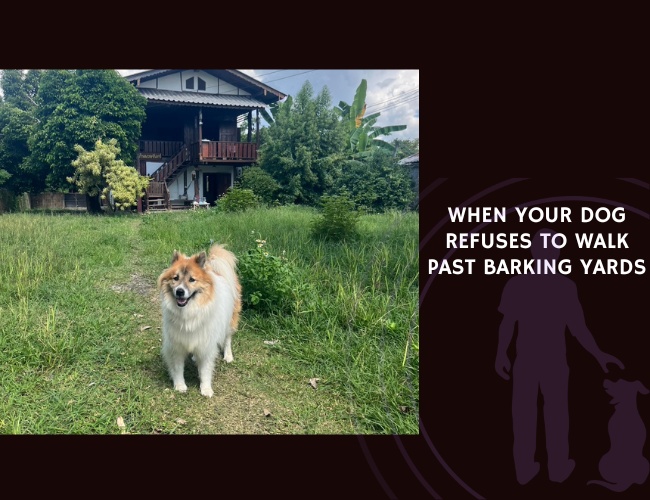
Introduction: A Daily Challenge Many Dog Owners Face
You know that moment. Your walk is going beautifully until you approach that house. Before you even see the fence, your dog’s body language shifts. Their ears flatten, their tail tucks, and suddenly they’re pulling in the opposite direction with surprising determination. The yard ahead has a barking dog, and your furry friend has decided they’re not going anywhere near it.
This isn’t stubbornness or disobedience. What you’re witnessing is a complex interplay of memory, emotion, and survival instinct that’s deeply wired into your dog’s brain. When a dog refuses to walk past a barking yard, they’re experiencing what scientists call spatial avoidance learning—a sophisticated form of fear conditioning that transforms a simple stretch of pavement into a no-go zone in your dog’s mental map.
Understanding why this happens isn’t just academically interesting. It’s the first step toward helping your dog reclaim their confidence and restore the joy of walking together. Through the lens of affective neuroscience and behavioral psychology, we can decode what’s happening in your dog’s mind and discover compassionate, effective strategies to guide them back to calm navigation.
Let us guide you through the fascinating science behind this common challenge, and more importantly, show you the path forward.
The Neuroscience of Fear: How Your Dog’s Brain Creates Danger Zones
When a Place Becomes a Threat
Your dog’s brain is an extraordinary prediction machine, constantly scanning the environment for patterns that signal safety or danger. When your dog encounters a barking yard repeatedly, their brain doesn’t just register the event—it creates a powerful association between the location itself and the threatening experience.
This process, known as classical fear conditioning, happens through a sophisticated neural network primarily involving two key brain regions:
The Brain Regions Behind Spatial Fear:
- The Amygdala: Your dog’s emotional alarm system that processes threats and triggers immediate fear responses
- The Hippocampus: A spatial mapmaker that encodes where threats occur and creates detailed mental maps of dangerous locations
- The Prefrontal Cortex: Manages emotional regulation and decision-making (becomes impaired under high stress)
- The Stress Response System: Releases cortisol and other hormones that prepare the body for threat responses
Here’s what makes this so powerful: after just a few encounters with an aggressive, barking dog behind a fence, your dog’s hippocampus begins to “remap” that specific location. The neutral stretch of sidewalk becomes tagged with emotional significance—danger lives here. Research shows that hippocampal neurons actually alter their firing patterns in response to contextual fear conditioning, essentially rewriting the spatial map to highlight threat zones.
The Single Traumatic Incident
You might wonder: could one really bad experience create this kind of lasting fear? The answer, unfortunately, is yes. A single intense exposure—perhaps a fence fight where dogs lunged aggressively at each other, or a particularly aggressive barking episode—can form what scientists call a long-lasting spatial aversion memory.
Studies demonstrate that even witnessing another dog in distress can create enhanced fear learning. Early-life exposures or singular traumatic events have been shown to impart consequences that can last a lifetime, affecting both memory formation and the physical structure of fear-processing brain regions. Your dog’s brain is designed to remember danger vividly because, in evolutionary terms, forgetting a threat could mean not surviving to learn from the experience again.
The Invisible Triggers
What makes this even more challenging is that your dog doesn’t need to see the barking dog to experience fear. Long before you reach the problematic yard, your dog’s brain is processing anticipatory cues—subtle sensory signals that predict danger is ahead.
Common Anticipatory Fear Triggers:
- Auditory cues: The specific frequency of that particular dog’s bark, gate rattling, wind chimes, or ambient sounds associated with the location
- Visual patterns: The silhouette of the fence line, distinctive landscaping, the angle of the street approaching the yard, or shadows
- Olfactory traces: Scent markers left by the aggressive dog that your dog can detect from remarkable distances
- Spatial recognition: Simply recognizing the route itself activates hippocampal ensembles that have encoded this location as dangerous
- Tactile memory: The feel of the pavement or ground texture in that specific area
- Temporal patterns: The time of day when previous encounters occurred
Research reveals that hippocampal neurons encode space at an even finer scale following fear memory acquisition, with this effect enhanced by proximity to the threat. This means your dog’s fear response can actually intensify as you get closer to the barking yard, creating a gradient of anxiety that builds with each step forward.
Reading the Signs: Your Dog’s Fear Language
Before You Even Approach
Understanding your dog’s communication during these moments is essential for responsive, compassionate handling. Through the NeuroBond approach, we recognize that dogs are constantly communicating their emotional state through multiple channels—you just need to know what to look for.
Subtle Early Warning Signs (50-100 feet from the yard):
- Increased ground sniffing: More intensive sniffing as a self-soothing behavior
- Slowed walking pace: Gradual decrease in forward momentum
- Frequent check-ins: Repeatedly looking back at you, signaling uncertainty
- Muscle stiffness: Tension appearing through shoulders and hindquarters
- Backward ear rotation: Ears begin moving away from forward position
- Tail position changes: From relaxed mid-position to partial tucking
- Rapid panting: Even in cool weather, or intermittent breath-holding
- Whale eye: Showing the whites of their eyes while fixating on the threat direction
- Lip licking: Stress signal indicating internal discomfort
- Yawning: Not tiredness, but anxiety release behavior
The Refusal Point
When you reach the distance where your dog flat-out refuses to continue, their communication becomes unmistakable:
Critical Threshold Behaviors:
- Planting: Four paws firmly on the ground, weight shifted backward, no amount of leash pressure convincing them to move
- Active redirection: Attempts to change direction, pulling toward home or crossing the street
- Displacement behaviors: Sudden intense sniffing, scratching, or lip licking indicating internal conflict
- Freezing: Complete stillness—a polyvagal response where the nervous system downshifts into immobilization
- Trembling: Visible shaking through the body
- Excessive drooling: Stress-induced salivation
- Lowered body posture: Crouching or attempting to make themselves smaller
- Escape attempts: Trying to back out of harness or collar
- Vocalization: Whining, whimpering, or stress barking
Recognizing these signals isn’t just about understanding your dog—it’s about respecting their communication. When your dog plants their feet and refuses to walk forward, they’re not being difficult. They’re telling you, in the clearest language they have, that they perceive genuine danger ahead. 🐾
The Owner Connection: How Your Response Shapes Their Fear
Your Energy Speaks Louder Than Words
Here’s something that might surprise you: your dog is reading you just as intently as you’re reading them. In fact, research within the NeuroBond framework suggests that emotional synchrony between human and dog serves as a powerful safety signal—potentially even overriding conditioned fear responses.
What does this mean practically? Your body language, leash tension, breathing pattern, and even your heart rate are broadcasting information to your dog about how you perceive the situation. When you tense up anticipating the difficult moment, your dog registers that tension as confirmation that danger is real.
Common Owner Responses That Accidentally Reinforce Fear:
- Tightening the leash: Shortening and tensing the leash signals “Something bad is about to happen”
- Worried vocal reassurance: High-pitched “It’s okay, it’s okay” tells your dog you’re worried too
- Rushing past: Speeding up your pace signals urgency and validates the need for rapid escape
- Crossing the street to avoid: Provides immediate relief but teaches avoidance as the correct response
- Stopping and staring: Fixating on the yard confirms it as noteworthy and threatening
- Becoming rigid: Your body tension transfers directly to your dog through the leash
- Anticipatory anxiety: Worrying blocks before reaching the yard broadcasts threat prediction
- Over-comforting: Excessive petting and soothing can actually validate and reward the fearful state
The Reinforcement Trap
This last point deserves special attention. When you help your dog avoid the feared location, you might feel like you’re being kind and protective. In reality, you’re caught in what behaviorists call the negative reinforcement trap.
Here’s how it works: Your dog feels anxious approaching the yard. You cross the street or turn around. Your dog feels immediate relief. That relief reinforces the behavior of resisting and refusing to approach the yard. Over time, this makes the avoidance stronger, not weaker—and the area your dog wants to avoid may actually expand as the fear generalizes to a broader zone.

Becoming Your Dog’s Safe Harbor
The good news? You can be part of the solution. Through conscious co-regulation, you can actually help shift your dog’s emotional state.
Co-Regulation Techniques to Project Calm Confidence:
- Deep breathing: Take several slow, deep breaths before approaching the difficult area to ground your nervous system
- Loose leash maintenance: Keep a relaxed J-curve in the leash, requiring practice but communicating trust over tension
- Tall, relaxed posture: Stand tall with shoulders back and relaxed, moving with purpose but not urgency
- Steady walking rhythm: Maintain consistent pace—neither rushing nor hesitating
- Neutral vocal tone: If speaking, use a calm, matter-of-fact tone like you’re in a completely safe environment
- Soft eyes: Keep your gaze forward and relaxed rather than fixating on the threat
- Centered energy: Project the feeling of walking through your favorite peaceful park
- Genuine calm: Cultivate authentic confidence rather than forced cheerfulness
This concept—that awareness, not tension, guides the path—is sometimes called the Invisible Leash principle. The physical leash is just nylon or leather. The real connection is energetic and emotional, and it flows both directions. When you embody safety and confidence, you give your dog an alternative narrative to their fear story. 🧡
Why This Matters: The Bigger Picture of Fear and Quality of Life
Beyond a Single Yard
You might think, “It’s just one house. I can take a different route.” While that’s technically true, the implications of unaddressed spatial fear extend far beyond a single barking yard.
The Cascading Effects of Unaddressed Spatial Fear:
- Fear generalization: Anxiety spreads from one specific yard to all houses with fences, then to any yard with barking, eventually to unfamiliar neighborhoods
- Restricted exercise routes: Walking options become increasingly limited, reducing environmental variety
- Reduced mental stimulation: Fewer opportunities for novel experiences and confidence-building exploration
- Relationship strain: Tense walks create frustration for owners and stress for dogs, eroding bonding time
- Physical health impacts: Limited route options may reduce overall exercise quantity and quality
- Chronic stress activation: Persistent fear affects immune function, digestion, and overall wellbeing
- SEEKING system suppression: Natural curiosity and exploratory drive become dampened by chronic fear activation
- Social isolation: Avoiding certain areas may limit positive interactions with other dogs and people
- Owner lifestyle limitation: Your own freedom and enjoyment of walks becomes constrained
The Seeking System Shutdown
Affective neuroscientist Jaak Panksepp identified several primary emotional systems in mammalian brains, including the SEEKING system—that joyful, curious drive that motivates exploration and engagement with the world. When the FEAR system is chronically activated, it suppresses SEEKING behaviors.
You might notice your dog, who was once curious and interested in exploring the neighborhood, becomes more withdrawn and hesitant overall. They’re not just avoiding the barking yard anymore; they’re experiencing a broader dampening of their natural enthusiasm for life. This is the cascading effect of unaddressed fear—it doesn’t stay contained.
The Path Forward: Science-Based Strategies for Rebuilding Confidence
Understanding Desensitization and Counterconditioning
The most effective approach to helping your dog overcome spatial fear involves two complementary processes: desensitization and counterconditioning. These aren’t just buzzwords—they’re proven therapeutic techniques with strong research backing, originally developed for treating human phobias and anxiety disorders.
Desensitization means gradually exposing your dog to the feared stimulus at such a low intensity that they don’t experience a full fear response. You’re teaching their nervous system that they can be near this stimulus and remain calm.
Counterconditioning means pairing the previously feared stimulus with something highly positive, creating a new emotional association. Instead of “barking yard = danger,” you’re building “barking yard = amazing treats and good things happen.”
When used together, these approaches can fundamentally rewire your dog’s emotional response to the feared location.
Creating Your Exposure Hierarchy
The key to success is starting below your dog’s fear threshold and progressing systematically. This is where many well-intentioned attempts fail—moving too quickly or starting too close to the fear trigger.
Building Your Exposure Hierarchy – Step by Step:
Step 1: Identify threshold distance
- Walk toward the barking yard and note exactly where your dog first shows signs of stress
- This might be 50 feet away, or 150 feet—every dog is different
- Mark this as your “red zone” distance
Step 2: Start well below threshold
- Begin training at least double your threshold distance
- If your dog showed stress at 50 feet, start at 100+ feet away
- This is your “green zone” where your dog can remain calm
Step 3: Create graduated steps
- Plan to decrease distance in small increments—5-10 feet at a time
- Each step should be small enough that your dog barely notices the change
- Document each distance level for consistent tracking
Step 4: Add variable factors
- Consider distance, visibility of the dog, whether they’re barking, time of day, weather conditions
- Create your hierarchy across multiple dimensions, not just proximity
- Map out easier and harder versions of each distance
Step 5: Document progress
- Keep detailed notes about what distances and conditions your dog handles comfortably
- Track body language, treat response, and recovery time
- Use this data to prevent accidentally pushing too far too fast
Research on exposure therapies confirms that acute dosing of cognitive enhancers like D-cycloserine can facilitate extinction of fear in therapeutic settings, but for most dogs, the systematic, graduated approach alone produces excellent results without pharmaceutical intervention.
The Training Protocol: Step by Step
Phase 1: Creating positive associations at distance
Start at your safe distance from the barking yard. When your dog is calm and notices the general direction of the yard (but hasn’t reacted fearfully), immediately deliver high-value rewards. Use whatever motivates your dog most—small pieces of chicken, cheese, special treats, favorite toys, or enthusiastic praise.
The timing is crucial: you want to pair the presence of the general environment with good things before any stress response occurs. Practice this over multiple sessions until your dog is relaxed and happy at this distance.
Phase 2: Gradual distance reduction
Over days or weeks (patience is essential), slowly decrease your distance to the yard. Only progress when your dog is consistently relaxed and positive at the current distance.
Signs Your Dog Is Ready to Move Closer:
- Tail in relaxed position or wagging softly
- Soft, loose body posture with no visible tension
- Willing and eager to take treats
- Looking to you expectantly for rewards
- Showing interest in the environment rather than vigilant scanning
- Responding quickly to cues like sits or touches
- Recovery is immediate if briefly distracted
- Able to walk at normal pace without hesitation
- No stress signals (lip licking, yawning, whale eye) for multiple sessions
If your dog shows stress at any new distance, you’ve moved too fast. Return to the previous distance and spend more time there.
Phase 3: Adding complexity
Once you can walk past the yard at a close distance when the other dog isn’t present or barking, begin practicing when more challenging conditions exist—but return to a greater distance first. For example, if the dog is barking, practice from farther away again, gradually working your distance back down.
Phase 4: Variable reinforcement
As your dog becomes consistently comfortable, begin varying when treats appear. Eventually, you want walking calmly past the yard to become the new normal, with treats as occasional bonuses rather than constant bribes.
The Safe Passage Protocol
One particularly effective approach is what trainers call the “safe passage” protocol. This involves creating a predictable, structured routine for passing the feared location:
Before the yard: Establish a calm baseline. Practice some simple behaviors your dog knows well—sits, touches, or eye contact. Reward generously. This centers both of you and creates emotional momentum.
Approaching the yard: Maintain a steady, relaxed pace. Breathe naturally. Continue offering intermittent rewards for calm walking. Your body language should project confident, casual movement—like you’re walking through the most boring, unremarkable stretch of sidewalk in the world.
Passing the yard: Keep moving. Don’t stop, don’t rush, don’t tighten the leash. Maintain the same energy and pace. If your dog glances toward the yard briefly but continues walking, immediately reward with praise or treats.
After the yard: Once you’re well past (maybe 20-30 feet beyond), have a little celebration. This is where you can be more enthusiastic in your praise and maybe do a play session or extra special treat. This creates a positive “landing” after passing through the challenging zone.
The concept here is that with repeated, predictable experiences where nothing bad happens and good things do happen, your dog’s brain gradually updates its spatial map. The danger zone becomes a neutral zone, then eventually a positive zone.
Research on extinction memory formation confirms that learning to disassociate trauma with specific contexts—essentially, exposure therapy—can create lasting behavioral change when implemented correctly. The key is consistency and ensuring exposures remain sub-threshold. 🐾
Differentiating Fear Types: Not All Barking Yards Create Equal Anxiety
Auditory-Sensory Fear vs. Social Fear
When designing a behavior modification plan, it’s essential to understand what’s actually driving your dog’s fear response. While the presenting symptom is the same—refusing to walk past the yard—the underlying cause might be quite different.
Auditory-sensory fear is primarily a response to sound itself. Some dogs are particularly sensitive to certain sound frequencies, volumes, or acoustic patterns. For these dogs, the barking triggers an acoustic startle reflex that, with repeated exposure, has sensitized rather than habituated. They might react similarly to other loud or sudden noises like fireworks, thunderstorms, or trucks backfiring.
Signs your dog’s fear is primarily auditory:
- Reacting to barking from any dog, even if the dog isn’t visible or directing aggression toward your dog
- Similar reactions to other loud or sudden sounds
- Seeming to track and listen for sounds as you approach
- Calming significantly if the auditory stimulus is muffled or absent
Social fear is a response to the perceived threat from another dog. This is about social cognition—your dog interpreting the barking, body language, and presence of the other dog as threatening or aggressive. For these dogs, the fear isn’t about the sound itself but about what the sound represents: a potentially dangerous social encounter.
Signs your dog’s fear is primarily social:
- Calm around recorded barking but reactive to dogs who are visible
- Different reactions depending on the other dog’s body language (more fearful of lunging, fence-fighting dogs than dogs who bark while remaining stationary)
- History of negative social experiences with other dogs
- Generally cautious or fearful around unknown dogs in various contexts
Why This Distinction Matters
Your training approach should differ based on the fear type:
For auditory-sensory fear:
- Sound desensitization using recordings at gradually increasing volumes
- Counterconditioning to the specific sound of barking
- Building positive associations with various dog vocalizations
- Considering whether sound-anxiety reducing tools (like pressure wraps or calming music) might support your training
For social fear:
- Careful, controlled exposure to calm, well-behaved dogs at distance
- Building confidence through positive social experiences
- Counterconditioning to the presence and behavior of other dogs
- Potentially working with a professional to arrange controlled meetings with appropriate helper dogs
Of course, many dogs experience a combination—the bark is both startling and interpreted as threatening. In these cases, address both components in your training plan, perhaps starting with sound desensitization before progressing to visual-social exposure.
Through moments of Soul Recall—those instances when we really tune into our dog’s unique emotional landscape—we can better understand which aspects of the experience are most threatening to them and tailor our approach accordingly.
When Individual Differences Matter: Why Some Dogs Are More Vulnerable
Temperament, Resilience, and Fear Susceptibility
Not every dog who encounters an aggressive barking yard develops spatial avoidance. Some dogs seem to brush off the experience with minimal impact, while others form intense, lasting fears. Why?
Research into individual differences in fear conditioning reveals that certain temperamental and biological factors influence susceptibility to forming context-dependent fear memories:
Baseline neuroticism and anxiety: Dogs who are generally more anxious or sensitive—what temperament researchers might describe as high in neuroticism—tend to form fear associations more readily and strongly. These dogs show heightened reactivity in the fear/anxiety neural circuits, with different patterns of amygdala and hippocampal activation compared to more resilient dogs.
Early life experiences: The developing brain is particularly sensitive to both positive and negative experiences. Puppies who experience trauma, inadequate socialization, or chronic stress during critical developmental periods may develop lasting changes in their stress response systems. Research shows that early life stress can irreversibly affect hippocampal structure and increase vulnerability to developing fear-related issues throughout life.
Previous traumatic experiences: A dog who has been attacked by another dog, even years ago, may be primed to form rapid, intense fear associations when encountering aggressive displays from other dogs. Their nervous system is already sensitized to potential dog-related threats.
Genetic predisposition: Some breeds and individual bloodlines show greater tendency toward anxious temperament. While any dog can develop situational fears, some arrive in the world with nervous systems that are naturally more reactive to perceived threats.
The Good News About Neuroplasticity
Here’s what offers hope: brains are remarkably capable of change. The concept of neuroplasticity—the brain’s ability to form new neural connections and modify existing ones—means that even dogs with high baseline anxiety or previous trauma can learn new, healthier responses to feared situations.
Environmental enrichment has been shown to facilitate the extinction of conditioned fear in research settings. This means that providing your dog with a rich, varied, stimulating life—with appropriate challenges, novel experiences, positive social interactions, and problem-solving opportunities—actually supports their brain’s capacity to overcome fears.
Your dog’s vulnerability to fear isn’t a life sentence. It’s simply information that helps you understand they may need more patient, gradual, thoughtfully designed intervention than a naturally bold, resilient dog would require. 🧡
Age-Specific Considerations: How Life Stage Shapes Fear Responses
Puppies: The Critical Window of Opportunity
If you’re reading this article with a young puppy, you have a remarkable opportunity for prevention. The period between approximately 3 and 14 weeks of age represents a critical socialization window when puppies are neurologically primed to learn that novel experiences are safe rather than threatening.
During this developmental stage, the puppy brain is exceptionally plastic—forming neural connections at an extraordinary rate. Positive exposures to a wide variety of sounds, sights, surfaces, people, and other dogs during this window can provide a buffer against future fear development.
Comprehensive Puppy Prevention Strategies:
- Controlled barking exposure: Arrange for your puppy to observe calm, friendly dogs and occasionally hear barking from safe distances
- Sound desensitization at home: Play recordings of dog barking at very low volumes during positive experiences like mealtimes
- Gradual volume increases: Slowly increase sound volume over weeks, ensuring your puppy remains relaxed and happy
- Multiple positive experiences: Provide repeated, varied positive encounters—not just a single exposure
- Pair with high-value rewards: Association barking sounds with treats, play, and affection
- Safe observation opportunities: Let puppy watch other dogs from behind barriers or at dog parks from outside the fence
- Avoid flooding: Never force a puppy into overwhelming situations with aggressive barking dogs
- Build general confidence: Provide problem-solving games, novel environment exploration, and positive training
- Socialization classes: Enroll in puppy kindergarten for structured, safe social experiences
- Document progress: Keep a socialization log to ensure diverse, positive experiences
The investment you make in thoughtful socialization during puppyhood pays dividends throughout your dog’s entire life. A well-socialized puppy is far less likely to develop spatial avoidance behaviors as an adult.
Adolescent Dogs: The Teenage Brain Challenge
If your dog is between 6 and 18 months old and suddenly developing fears they didn’t have before, you’re not imagining things. Adolescence brings significant neurological changes that can affect fear responses.
During adolescence, the canine brain undergoes substantial reorganization, particularly in areas related to emotional regulation and impulse control. The prefrontal cortex—responsible for executive function and emotional control—is still developing, while emotional centers like the amygdala are highly active. This creates what neuroscientists sometimes call an “emotional imbalance” where feelings are intense but regulation is underdeveloped.
What this means for barking yard fears:
New fears can emerge: An adolescent dog who previously walked past barking yards without concern might suddenly develop intense fear. This isn’t regression—it’s a normal part of brain development during a period of heightened emotional reactivity.
Responses may be more intense: The same stimulus that would have caused mild concern at 5 months might trigger dramatic fear responses at 9 months due to heightened amygdala activity.
Inconsistency is normal: Your adolescent dog might be fine passing the yard on Tuesday but refuse on Wednesday. This variability reflects the ongoing neural reorganization happening in their brain.
Training approaches for adolescents:
Maintain consistency in your training approach even when progress seems erratic. The neural pathways you’re building will stabilize as your dog matures.
Be patient with seemingly illogical fears. Remember, their emotional brain is temporarily outpacing their rational brain.
Continue socialization despite the challenges. Adolescence is sometimes called a “second fear period,” but continued positive exposures (at appropriate intensities) remain important.
Increase management during this phase. If your adolescent dog is going through an especially fearful period, it’s okay to temporarily avoid the most challenging situations while continuing training at easier levels.
The good news? Most adolescent fear sensitivities moderate as the brain matures. The patient, consistent training you do during this challenging period will pay off once your dog reaches full neurological maturity around 2-3 years of age.
Senior Dogs: When Aging Changes Fear Responses
Senior dogs may develop new sensitivities to barking yards or show intensified reactions to previously manageable situations. These changes aren’t simply behavioral—they reflect genuine age-related neurological and sensory changes.
Age-Related Factors That Amplify Senior Dog Fears:
- Hearing loss: Partial and frequency-specific hearing changes make some sounds more startling and harder to localize
- Vision decline: Reduced visual acuity, especially in low light, makes threat assessment more difficult
- Cognitive dysfunction: Canine dementia leads to increased anxiety, confusion, and difficulty with familiar situations
- Reduced mobility: Arthritis and muscle loss make dogs feel more vulnerable and less able to flee if needed
- Increased startle response: Aging nervous system shows heightened reactions and slower recovery from arousal
- Pain-related irritability: Chronic discomfort reduces emotional resilience and increases anxiety
- Medication side effects: Some senior dog medications can affect mood and anxiety levels
- Sleep disruption: Poor sleep quality in older dogs reduces stress tolerance
- Social confidence decline: Loss of physical prowess may reduce confidence in dog-to-dog encounters
- Environmental disorientation: Reduced sensory input makes familiar routes feel unfamiliar
Training modifications for senior dogs:
Work at even gentler progressions than you would with younger dogs. Their nervous system recovers more slowly from stress and forms new learning more gradually.
Accommodate sensory changes. Practice during optimal conditions—good lighting, times when your senior dog seems most alert and comfortable.
Prioritize comfort over progress. For some senior dogs, the goal might shift from “overcoming the fear” to “managing the situation with minimal stress.” Complete avoidance of the most difficult yards might be the kindest choice for an elderly dog.
Consider pain management. Uncontrolled pain increases anxiety and reduces emotional resilience. Work with your veterinarian to ensure your senior dog’s comfort is optimized before intensive behavior work.
Celebrate whatever progress is possible. A senior dog who learns to feel calmer during walks—even if they never become completely comfortable passing barking yards—has still gained significant quality of life improvement.
Senior dogs deserve our deepest patience and respect. They’ve given us years of companionship; adapting our expectations to their changing needs is part of honoring that relationship. 🐾
Alert. Anchored. Afraid.
Fear rewires geography. When a barking yard erupts, your dog’s brain doesn’t hear noise—it maps danger. Each bark imprints coordinates of threat onto memory, turning sidewalks into emotional minefields.
Memory fuels avoidance. The amygdala fires alarms while the hippocampus redraws the map, pairing sound, scent, and sight with fear. Even silence later can trigger echoes of the same alarm.


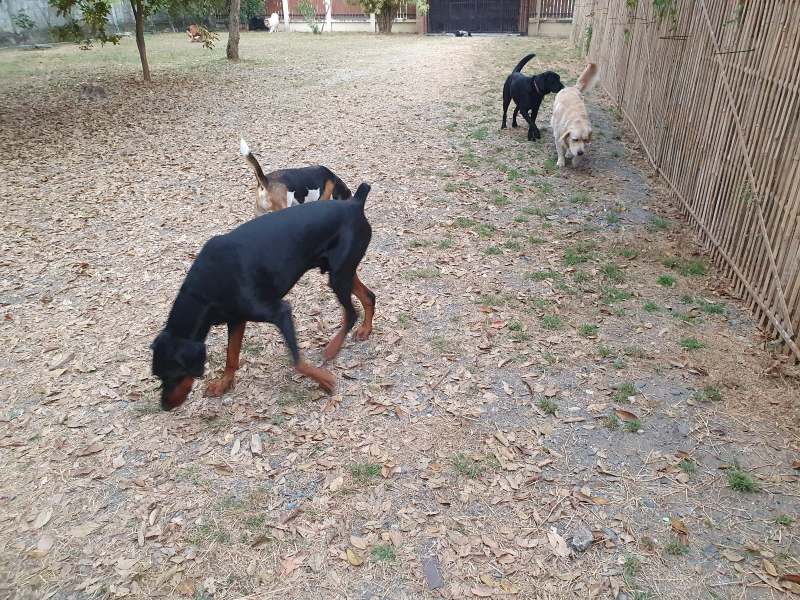
Confidence grows through safety. Gentle distance, calm repetition, and your grounded presence teach the brain to remap peace over panic. Step by step, the danger zone becomes walkable again.
Rescue and Adopted Dogs: Navigating Unknown History
When you adopt an adult dog, you’re often working with incomplete information about their early experiences and previous trauma. This creates unique challenges when addressing spatial fears related to barking yards.
Special Considerations for Rescue and Adopted Dogs:
- Unknown trauma history: Past dog attacks, abuse, or chronic stress you’re unaware of may underlie their fears
- Cumulative stress load: Loss of previous home, shelter time, and new environment adjustment lower fear thresholds
- Missed socialization windows: Uncertain backgrounds often mean inadequate early socialization during critical periods
- Deeply ingrained avoidance patterns: Longer reinforcement history of avoidance behaviors takes more time to modify
- Trust deficit: Haven’t yet established the deep bond that allows your presence to serve as a safety signal
- Trigger sensitivity: May react to trigger combinations that remind them of past trauma you can’t identify
- Slower trust building: Need more time to believe you’ll keep them safe in scary situations
- Previous training history: Unknown prior experiences with training (positive or aversive) affect current responses
- Health uncertainties: Undiagnosed pain or medical issues may complicate behavioral responses
- Attachment timeline: Bonding takes time—some rescues need months to fully trust their new person
Approach for rescue and adopted dogs:
Give adequate settling time. Don’t rush into intensive behavior modification work until your dog has had at least several weeks to decompress and begin bonding with you.
Prioritize relationship building. The strength of your bond directly impacts your dog’s willingness to trust your guidance through scary situations. Invest heavily in positive interactions, play, training fun behaviors, and creating positive associations with your presence.
Start with lower expectations. A rescue dog might need to work at greater distances from barking yards for longer periods than a dog with known positive history.
Watch for triggers you might not anticipate. Sometimes rescue dogs show fear responses that seem disproportionate because they’re triggered by combinations of stimuli that remind them of past trauma. Stay observant and responsive.
Celebrate trust as the primary victory. Every moment your rescue dog looks to you for guidance near a feared stimulus, every time they choose to stay near you rather than flee, every instance of accepting comfort from you—these are profound wins that speak to deepening trust and healing.
Remember that adoption is an act of compassion. You didn’t create your rescue dog’s fears, and healing them takes time, patience, and unconditional positive regard. The journey itself—your consistent, gentle presence through their fears—builds the bond that will sustain you both for years to come.
🐕 When Your Dog Refuses to Walk Past Barking Yards
A Neuroscience-Based Journey from Fear to Confidence 🧠💫
Phase 1: Understanding the Neuroscience
What’s happening in your dog’s brain
Your dog’s hippocampus creates detailed spatial maps of their environment. When a barking yard becomes associated with threat, the amygdala tags that location as dangerous. This isn’t stubbornness—it’s sophisticated neural encoding that transforms a simple stretch of sidewalk into a no-go zone.
• Stress signals appearing 50-100 feet before reaching the yard
• Increased ground sniffing and frequent check-ins with you
• Muscle tension, backward ears, and tail tucking
• Your dog’s fear intensifying as you get closer—creating a gradient of anxiety
A single traumatic incident can create lasting spatial aversion memories. Even witnessing another dog in distress can trigger enhanced fear learning that persists for years.
Phase 2: Reading Your Dog’s Fear Language
Recognizing communication before crisis
• Slowed walking pace and increased sniffing
• Whale eye (showing whites of eyes)
• Lip licking and yawning (stress signals)
• Frequent backward glances at you
• Subtle muscle stiffness through shoulders
• Planting: Four paws locked, weight shifted back
• Freezing: Complete immobilization—a polyvagal shutdown response
• Escape attempts: Trying to back out of harness
• Trembling, drooling, or stress vocalization
Through the NeuroBond framework, we understand that recognizing these signals isn’t just about reading behavior—it’s about respecting your dog’s communication. When your dog plants their feet, they’re telling you in the clearest language they have that they perceive genuine danger ahead.
Phase 3: The Owner’s Hidden Influence
How your energy shapes their experience
• Tightening the leash signals “danger ahead
• Worried vocal tone validates their fear
• Rushing past confirms urgency and threat
• Crossing the street provides relief but teaches avoidance
• Anticipatory anxiety blocks before the yard broadcasts threat
• Practice deep breathing to ground your nervous system
• Maintain loose leash with gentle J-curve
• Project tall, relaxed posture—move with purpose not urgency
• Use calm, matter-of-fact tone like walking through a peaceful park
• Cultivate genuine confidence rather than forced cheerfulness
The physical leash is just nylon or leather. The real connection is energetic and emotional, flowing both directions. Through conscious co-regulation, your calm presence becomes a safety signal that can actually override conditioned fear responses.
Phase 4: Assessment & Preparation
Before beginning training
About the Fear: Where exactly does it begin? Is it getting worse over time?
About Your Dog: How resilient are they generally? Other fears present?
About the Trigger: Primarily sound-based, visual, or social threat?
About Your Response: How’s your body language and emotional state?
• Practice during times when the yard dog is least active
• Bring highest-value treats (chicken, cheese—not kibble)
• Ensure appropriate exercise beforehand (tired but not exhausted)
• Keep sessions short: 5-10 minutes of quality beats 30 with mistakes
• Only train when you’re genuinely calm and patient
Walk toward the barking yard and note exactly where your dog first shows stress. If that’s 50 feet, your starting training distance is 100+ feet away. This “green zone” is where your dog can remain calm and learn effectively.
Phase 5: Systematic Desensitization Protocol
The science-based retraining process
Start at double your threshold distance. When your dog calmly notices the general direction of the yard, immediately deliver high-value rewards. Practice sits, touches, and eye contact in this area. Build positive associations before any stress appears.
Decrease distance in 5-10 foot increments only when your dog shows: tail wagging, loose body posture, willingness to take treats, and looking to you expectantly. If stress appears at any new distance, return to the previous successful level.
Begin walking past the yard at whatever distance you’ve comfortably reached. Maintain steady pace (don’t rush or stop), loose leash, and confident body language. Celebrate 20-30 feet after passing with extra special rewards and brief play.
You’re not just reducing fear—you’re building new neural pathways. Instead of “barking yard = danger,” your dog’s brain is learning “barking yard = amazing treats and good things happen.” This fundamental rewiring requires patience but creates lasting change.
Phase 6: Progressive Challenge Building
Weeks 7-10 and beyond
Once comfortable at close distance with the yard dog absent, practice during times when mild barking might occur—but start at greater distance again. Work your way back to close passage even with auditory stimuli present. Add one variable at a time.
As your dog becomes consistently comfortable, begin varying when treats appear. Eventually, calm passage becomes the new normal with treats as occasional bonuses rather than constant bribes. This creates sustainable, lasting behavior change.
Success with one barking yard doesn’t automatically transfer to all barking yards. Practice the same systematic approach at 2-3 other locations. With each successful generalization, your dog’s overall confidence around barking dogs strengthens.
Phase 7: Sustaining Success & Preventing Setbacks
Long-term maintenance strategies
• Your dog notices the yard but continues walking with loose body
• Ears remain in natural position rather than flattened
• Can take treats even when near the previously feared location
• Immediate recovery after passing rather than prolonged stress
• Natural check-ins with you showing trust in your guidance
• Never “test” progress by forcing exposure beyond threshold
• During life stress or illness, temporarily return to easier distances
• Avoid forced exposure during fear periods (thunderstorms, fireworks season)
• Always honor your dog’s communication—they know their limits
Through moments of Soul Recall—when you deeply attune to your dog’s experience—you’re building emotional regulation, trust in your guidance, resilience, and communication partnership. These skills transfer to veterinary visits, novel environments, and all of life’s challenges.
Phase 8: Recognizing When Professional Help Is Needed
Knowing your limits shows wisdom
• Severe panic responses or attempts to escape harness/collar
• Any aggressive responses (growling, snapping) when frightened
• Fear rapidly worsening rather than staying stable
• No progress after 4-6 weeks of systematic work
• Multiple significant fears affecting quality of life
• Your own anxiety feels overwhelming
Look for IAABC-certified consultants or CPDT-KA trainers who use force-free, positive reinforcement methods. For severe cases, consider veterinary behaviorists (board-certified specialists). Seeking help isn’t failure—it’s responsible, caring ownership.
Fear isn’t logical. You can’t reason your dog out of being afraid. Progress may be slow with setbacks. What your dog needs is consistency, patience, and the steady confidence that you’ll keep them safe while gently guiding them toward greater courage.
🔍 Special Considerations by Dog Type
Challenge: Hypervigilant to environmental changes, highly sound-sensitive
Approach: Work at greater distances, provide alternative focus tasks, honor their sensitivity rather than dismissing concerns
Challenge: Territorial instincts conflict with fear responses
Approach: Build collaborative decision-making, practice calm “watch” behaviors, avoid punishment-based methods that suppress warning signals
Challenge: Olfactory triggers persist long after auditory/visual cues
Approach: Work with their nose, allow investigation, use high-value scent-based rewards, understand “empty” yards aren’t empty to them
Challenge: Size-related vulnerability is genuine, not imagined
Approach: Validate their concerns, work at greater distances, address handler anxiety, build confidence through size-appropriate challenges
Focus: Prevention through critical socialization window
Method: Controlled exposure to barking at safe distances, sound desensitization at home, pair with treats and play, avoid flooding
Challenge: Hearing/vision loss, cognitive changes, reduced mobility
Approach: Even gentler progressions, practice during optimal conditions, prioritize comfort over complete resolution, manage pain
Challenge: Unknown trauma history, trust deficit with new person
Approach: Allow adequate settling time, prioritize relationship building first, start with lower expectations, celebrate trust as primary victory
Benefit: Confident dogs can model calm behavior
Challenge: Fear can spread through social contagion
Strategy: Train individually first, then gradually integrate, use observational learning strategically
Distance Formula: Start at 2x the threshold distance where fear first appears
Progression Rule: Only decrease distance when your dog shows consistent calm for 2-3 sessions
Session Length: 5-10 minutes of quality practice beats 30 minutes with mistakes
Treat Value: Use what makes your dog’s eyes light up—not regular kibble
Success Definition: Calm awareness, not complete indifference
Timeline Reality: Weeks 1-2 = distance work, Weeks 3-6 = gradual approach, Weeks 7-10 = adding complexity
Recovery Indicator: If your dog can’t take treats, you’re too close—back up
The Cardinal Rule: Progress at your dog’s pace, not the pace you wish for
Through the NeuroBond framework, we understand that emotional synchrony between you and your dog serves as a powerful safety signal—potentially even overriding conditioned fear responses. The Invisible Leash principle reminds us that the real connection isn’t nylon or leather, but the energetic and emotional flow between you. And in moments of Soul Recall—when you deeply attune to your dog’s unique emotional landscape—you’re not just changing behavior. You’re transforming your dog’s entire experience of their world and demonstrating that challenges can be overcome when they have you by their side.
This journey from fear to confidence isn’t just about walking past a barking yard. It’s about building trust, resilience, and a communication partnership that enriches every moment you share. That balance between understanding neural pathways and honoring emotional healing, between technique and trust—that’s the essence of what we do.
© Zoeta Dogsoul – Where neuroscience meets soul in dog training
Multi-Dog Household Dynamics: How Pack Structure Influences Fear
If you live with multiple dogs, the presence of barking yard fears in one dog creates ripple effects throughout your household. Understanding these dynamics helps you train more effectively and maintain harmony among your dogs.
How One Dog’s Fear Affects the Pack
Dogs are deeply social animals who monitor and respond to each other’s emotional states. When one dog experiences fear, the others notice—and their responses can either amplify or moderate the fearful dog’s experience.
Social contagion of fear: Fear can be socially transmitted. If your fearful dog begins showing stress signals when approaching a barking yard, your other dogs may adopt similar caution even if they had no previous fear themselves. This happens through a process called social referencing, where dogs look to their packmates for information about how to interpret ambiguous situations.
Research demonstrates that dogs can acquire fear through observation of another dog’s distress. If your confident dog watches your fearful dog having a panic response to a barking yard, they may begin to perceive that location as dangerous too—not because they’ve had a negative experience themselves, but because they’ve witnessed their packmate’s fear.
Energy amplification: When multiple dogs feed off each other’s arousal, the overall emotional intensity increases. Two dogs approaching a feared yard together might both show higher arousal than either would alone, creating a feedback loop where each dog’s stress escalates the other’s.
Resource guarding concerns: In some multi-dog households, the fearful dog might become possessive of the owner during stressful moments, adding aggressive displays toward housemate dogs to the already complex situation of spatial fear.
Pack hierarchy shifts: A dog who was previously confident might lose status within the household if they develop visible fears, potentially creating tension and conflict among the dogs.
Training When You Have Both Confident and Fearful Dogs
Managing multi-dog training for barking yard fears requires strategic decision-making about when to work with dogs together versus separately.
Individual training sessions are essential: Your fearful dog needs focused attention without the complication of managing multiple dogs simultaneously. They need the freedom to work at their own pace, express their feelings without social pressure, and receive your undivided attention and support.
During individual sessions:
- You can precisely control distance, exposure level, and reward timing
- Your fearful dog can show stress signals without concern for pack dynamics
- You can fully focus on reading subtle body language changes
- Your bond with this specific dog strengthens through this dedicated time together
Separate confident dogs initially: When beginning behavior modification work, walk your dogs separately, especially near problem yards. This prevents the fearful dog from feeling rushed or pressured by confident packmates, and prevents confident dogs from accidentally acquiring fears through observation.
Gradual integration of multiple dogs: Once your fearful dog has made solid progress during individual sessions, you can begin practicing with both dogs together—but start this joint work at easier levels (greater distances, calmer conditions) than where your fearful dog had reached individually.
Social Learning Benefits: Confident Dogs as Models
Here’s where multiple dogs can actually accelerate training: confident dogs can serve as powerful models demonstrating that barking yards aren’t threatening.
Observational learning principles: Dogs learn not just through direct experience but also by watching others. A fearful dog who observes a confident packmate walking calmly past a barking yard receives important information: other dogs (particularly pack members they trust) don’t perceive this as dangerous.
How to leverage social learning effectively:
Choose the right model: Your confident dog should be genuinely calm and relaxed, not just tolerant. A dog who tenses slightly or shows subtle stress signals isn’t an ideal model—you want a dog who truly finds the situation unremarkable.
Create observation opportunities: Before asking your fearful dog to walk past the yard, let them watch from a comfortable distance as your confident dog does so calmly. Reward both dogs—the confident one for modeling appropriate behavior, and the fearful one for watching calmly.
Structured parallel walks: Walk both dogs past the yard simultaneously but with adequate spacing (perhaps using two handlers). Your fearful dog can reference your confident dog while still having enough space to remain below threshold. The confident dog’s relaxed demeanor provides real-time social information: “See? This is fine.”
Post-passage celebration: After successfully passing the yard, have both dogs come together for a happy celebration. This creates a positive social experience associated with having navigated the feared area, strengthening the positive association.
Prevent direct comparison stress: Never create situations where your fearful dog feels they’re failing in comparison to your confident dog. This means avoiding comments like “Look, Buddy’s fine! Why can’t you be like that?” Dogs pick up on these comparisons through your tone and body language, and it can increase rather than decrease their stress.
Managing Pack Dynamics During Training
Maintain individual relationships: Continue spending one-on-one time with each dog outside of training contexts. This ensures your fearful dog doesn’t come to associate their fear with getting special attention, while also preventing resentment from confident dogs.
Prevent bullying or pressure: Some confident dogs might become impatient with a fearful packmate’s hesitation, showing pushy behavior or frustration. Manage this by maintaining adequate space between dogs and redirecting any pressure behaviors immediately.
Celebrate all dogs: When training with multiple dogs, ensure each receives praise and rewards for their role—the fearful dog for brave efforts, the confident dog for patient modeling. This maintains positive associations with the training process for everyone.
Recognize different needs: Your dogs may progress at different rates or require different approaches. Honor each dog’s individuality rather than treating them as a homogeneous pack. What works for one may not work for another.
The complexity of multi-dog dynamics means training often takes longer and requires more nuanced management. However, the ultimate benefit—a household full of dogs who can all navigate walks calmly and confidently—makes the extra effort worthwhile. The pack that learns together, grows together. 🧡
Breed-Specific Considerations: How Genetics Shape Fear Responses
While every dog is an individual, breed heritage influences temperament, sensory priorities, and behavioral tendencies in ways that affect how dogs experience and respond to barking yards. Understanding your dog’s breed-specific traits helps you anticipate challenges and tailor your training approach.
Herding Breeds: Sensitivity Meets Spatial Awareness
Border Collies, Australian Shepherds, German Shepherds, Belgian Malinois, Corgis, and other herding breeds were selectively bred for centuries to be acutely sensitive to environmental changes, responsive to subtle movement, and intensely aware of spatial relationships. These traits that make them exceptional at their original jobs can also make them more vulnerable to developing spatial fears.
Breed-specific vulnerabilities:
Environmental hypervigilance: Herding dogs notice everything. That barking yard you barely register has already been catalogued in your herding dog’s mental database along with dozens of other environmental details. This means they detect threatening stimuli earlier and from farther away than many other breeds.
Sound sensitivity: Many herding breeds show heightened acoustic sensitivity. The pitch, rhythm, and intensity of barking may be more aversive to them than to dogs bred for different purposes. What sounds like moderate barking to you might be genuinely painful or overwhelming to your Border Collie’s sensitive ears.
Movement reactivity: Herding dogs are programmed to respond intensely to rapid movement. A dog lunging at a fence combines both auditory threat (barking) and visual threat (sudden movement), creating a particularly potent fear trigger for these breeds.
Spatial control needs: Herding breeds often feel more secure when they can control spatial arrangements and movement patterns. Being on leash and unable to create distance from a perceived threat violates their instinct to manage space, potentially intensifying anxiety.
Pattern recognition: These intelligent breeds excel at predicting what comes next. Once they’ve learned that “this street corner predicts barking yard ahead,” their anticipatory anxiety may begin even earlier than other breeds, sometimes blocks before reaching the actual yard.
Training adaptations for herding breeds:
Use their intelligence strategically. These dogs often respond beautifully to structured training protocols and clear communication. Create explicit “work” around the feared area—asking for behaviors that engage their thinking brain and give them a job to focus on.
Provide alternative focus. Practice attention heeling or targeting exercises that give your herding dog something productive to concentrate on rather than scanning for threats.
Honor their sensitivity. Don’t dismiss their concerns as “overreacting.” Their nervous system genuinely experiences stimuli more intensely. Work at greater distances and progress more gradually than you might with less sensitive breeds.
Channel their natural behaviors. Some herding dogs do better when allowed to move in broader arcs around feared yards rather than walking directly past, satisfying their instinct to create strategic distance while still making forward progress.
Guardian Breeds: When Territory and Fear Collide
Livestock guardian breeds (Great Pyrenees, Anatolian Shepherds), personal protection breeds (Rottweilers, Dobermans), and property guardian breeds (Mastiffs, Akitas) were bred to identify and respond to potential threats. This makes spatial fear around barking yards particularly complex because the fear may be tangled with territorial instincts and protective drives.
Breed-specific challenges:
Territorial overlap confusion: Guardian breeds may struggle to differentiate between “this is someone else’s territory that I should avoid” and “this territory is making threats toward my territory (the space around my person).” A barking dog defending their yard might trigger both fear and counter-territorial responses simultaneously.
Protective conflict: Your guardian breed might experience internal conflict between wanting to avoid the threatening stimulus and feeling compelled to position themselves protectively between you and the perceived threat. This creates considerable stress and can make their behavior appear contradictory.
Arousal to aggression risk: Some guardian breeds have lower thresholds for fear-based aggression. A dog who feels trapped near a barking yard while on leash might show aggressive displays as a defensive strategy, complicating the training picture.
Independence and decision-making: Many guardian breeds were bred to work independently, making decisions without human guidance. This can make them less naturally responsive to your reassurance or direction during fearful moments—they’re hardwired to trust their own threat assessment over yours.
Training adaptations for guardian breeds:
Build decision-making partnership. Rather than trying to override their independent assessment, work on collaborative decision-making where your guardian dog learns to factor your calm response into their threat evaluation.
Manage protective instincts. Practice calm “watch” behaviors where your dog can monitor the potential threat while remaining calm, satisfying their need to be aware without escalating to protective aggression.
Create clear territorial boundaries. Help your guardian dog understand that the sidewalk is neutral territory, not theirs to defend. Practice relaxed walking past many different yards to generalize that “we walk through public space calmly.”
Avoid punishment-based approaches. Guardian breeds who are corrected for fearful or protective displays may suppress warning signals but remain internally stressed, potentially leading to unpredictable responses. Stick to positive reinforcement approaches that address the emotional root of the behavior.
Respect their judgment sometimes. If your guardian breed is showing intense concern about a situation, consider that their threat assessment might be picking up on something you’ve missed. Their instincts aren’t always wrong—balanced training means teaching discernment, not ignoring all alerts.
Scent Hounds: When Olfactory Triggers Dominate
Beagles, Bloodhounds, Basset Hounds, and other scent hound breeds experience the world primarily through their remarkable noses. This olfactory dominance creates unique aspects to their fear of barking yards.
Breed-specific considerations:
Scent as primary threat indicator: While you and most dogs are focused on the barking sound, your scent hound may be primarily responding to the olfactory information—the scent markers left by the territorial dog, hormonal stress signals, or other chemical communications invisible to human awareness.
Longer-lasting fear triggers: Scent persists long after sound and sight. Your scent hound may show anxiety near a yard even when the other dog isn’t present or barking because the olfactory evidence of the threatening dog remains. This can make it seem like your dog is reacting to “nothing.”
Scent trail learning: Scent hounds are bred to follow trails obsessively. They may learn the scent trail that leads to the feared yard, beginning to show anxiety when they pick up the familiar route-scent long before you’re anywhere near the actual yard.
Distraction challenges: The scent hound’s nose is constantly processing overwhelming information. Their tendency to be “nose-led” through the environment can make it harder to redirect their attention during fear responses—their nose often overrides other inputs.
Training adaptations for scent hounds:
Work with their nose, not against it. Use high-value scent-based rewards (stinky treats work especially well) and consider scent-work games as part of your counterconditioning protocol.
Create positive scent associations. Practice scent discrimination games where your dog learns to follow your scent trail or find hidden treats, building confidence in using their nose as a positive tool rather than only a threat-detection device.
Allow investigation. When approaching barking yards at safe distances, permit your scent hound to sniff and gather olfactory information while keeping them below threshold. Preventing sniffing entirely often increases anxiety in these breeds.
Understand that “empty” yards aren’t empty to them. Even when the threatening dog isn’t visible or audible, respect that your scent hound may still be responding to genuine olfactory triggers. Don’t dismiss their concerns as invalid.
Use scent to mark safe progress. Some trainers have success with scent hounds by creating positive scent markers along the route—perhaps dabbing a particular essential oil at points where the dog receives extra-special rewards, helping them learn to follow a “safe trail” past feared areas.

Toy Breeds: Size-Related Vulnerability
Chihuahuas, Pomeranians, Yorkshire Terriers, and other toy breeds face a unique challenge: their small physical size creates genuine vulnerability that shapes their fear responses in ways that larger dogs don’t experience.
Breed-specific vulnerabilities:
Size-related threat assessment: From your toy dog’s perspective, nearly every other dog is enormous. That medium-sized dog barking at the fence might be three to five times your toy breed’s weight—creating a threat level proportional to you being confronted by an aggressive grizzly bear. Their fear isn’t disproportionate; it’s actually quite rational given the size differential.
Limited defense capabilities: Toy breeds are acutely aware they cannot physically defend themselves against larger dogs. This reality makes them more dependent on avoidance strategies and more prone to developing spatial fears around any dog-related threat.
Handler anxiety amplification: Small dog owners often carry significant anxiety about their dog’s safety, sometimes unconsciously transmitting “you’re vulnerable and need protection” messages. This owner anxiety can intensify the toy breed’s own fears through emotional contagion.
Previous trauma likelihood: Toy breeds are disproportionately likely to have experienced actual attacks or near-misses from larger dogs, whether during poorly managed greetings, off-leash encounters, or predatory approaches. This creates legitimate trauma histories that underlie barking yard fears.
Big dog syndrome overcompensation: Some toy breeds develop intense fear-based reactivity (sometimes called “small dog syndrome”) where they use aggressive displays to compensate for their vulnerability. This can make barking yard encounters even more fraught as both fear and defensive aggression are activated.
Training adaptations for toy breeds:
Validate their vulnerability. Your toy breed’s fears are rooted in physical reality. Acknowledge this by providing genuine protection and security rather than dismissing their concerns as cute or funny.
Use physical elevation strategically. Some toy breeds feel more secure when slightly elevated (being held or in a carrier) rather than at ground level where they feel most vulnerable. While you don’t want to always pick them up during fear moments, strategic use of secure elevated positions during initial stages of training can help.
Build confidence through size-appropriate challenges. Provide enrichment, training, and physical challenges scaled to your toy breed’s size so they develop general confidence in their capabilities, even while acknowledging their physical limitations around larger dogs.
Consider defensive space needs. Toy breeds may require greater distances from barking yards during training because their sense of “safe space” reasonably extends farther than larger dogs’ would.
Address handler anxiety. Work on your own emotional regulation, recognizing that your worry about your small dog’s safety, while understandable, may be amplifying their fear. Project calm confidence in your ability to keep them safe.
Prevent rehearsal of aggressive displays. If your toy breed has developed reactive barking or lunging toward other dogs as a fear response, address this separately through appropriate training, as it can intensify the overall fear cycle around barking yards.
Applying Breed Knowledge Thoughtfully
Remember that breed tendencies are just that—tendencies, not destinies. Individual personality, early experiences, and training history all interact with genetic heritage to create your unique dog. Use breed information as a starting point for understanding, not as a rigid constraint on what your dog can achieve.
The goal isn’t to excuse fears based on breed (“Well, she’s a herding dog, so of course she’s fearful”) but rather to understand the lens through which your dog experiences the world so you can communicate more effectively and train more compassionately.
Every breed brings different strengths to the training process too. Herding breeds’ intelligence, guardian breeds’ loyalty, scent hounds’ food motivation, and toy breeds’ desire for closeness with their person—all of these qualities can be leveraged to support confidence-building around barking yards.
Your dog’s breed heritage is part of their story, providing context for their fears and clues about training approaches that might resonate most naturally. By honoring both their breed-specific traits and their individual personality, you create training that truly meets your specific dog where they are. 🐾
Advanced Considerations: Cortisol, Anticipation, and the Body’s Fear Response
The Stress Hormone Connection
When your dog anticipates the feared location, their body begins preparing for threat well before you actually reach the yard. This involves the release of stress hormones, particularly cortisol, which has wide-ranging effects on both brain and body.
While research specific to anticipatory cortisol in dogs and spatial avoidance is still developing, general neuroscience establishes that elevated cortisol:
Impairs executive function: The prefrontal cortex, responsible for decision-making and impulse control, functions less effectively under high stress. This is why a dog who normally responds beautifully to cues may become seemingly deaf to your requests when approaching the feared yard.
Enhances fear memory encoding: Stress hormones actually strengthen the consolidation of fear memories, creating a somewhat cruel biological irony—the more stressed your dog is during an encounter, the more strongly they’ll remember it.
Increases vigilance and defensive responses: Cortisol shifts the entire nervous system into a heightened state of alertness, priming for defensive behaviors like fleeing, freezing, or fighting.
Creates a physiological cascade: Beyond just the brain, cortisol affects heart rate, breathing, muscle tension, and digestive function. Your dog’s entire body is preparing for danger.
This anticipatory arousal is why you might see your dog’s stress signs emerge well before reaching the actual yard. Their internal predictive model has learned to forecast threat, and their body responds accordingly.
Movement Inhibition and the Polyvagal Response
Polyvagal theory, developed by Dr. Stephen Porges, offers insight into the most extreme responses—when dogs completely freeze and refuse to move. This theory describes how the autonomic nervous system shifts between different states based on perception of safety or threat.
When your dog perceives a threat but feels unable to fight or flee (perhaps because they’re on leash, or because the threat seems overwhelming), their nervous system may downshift into what’s called dorsal vagal shutdown. This is characterized by immobilization—literally becoming still and frozen.
From the outside, this might look like stubbornness. From the inside, your dog is experiencing a neurobiological response where movement feels impossible. Their nervous system has temporarily taken the option of movement offline as a last-ditch defensive strategy.
This is why pulling, dragging, or forcing a dog who has frozen isn’t just ineffective—it’s potentially harmful to the trust between you. The dog isn’t choosing to resist; their nervous system has involuntarily shifted into a protective immobilization state.
Building a Comprehensive Intervention Plan: Bringing It All Together
Assessment Phase
Before jumping into training, take time to thoroughly understand your dog’s specific situation:
Comprehensive Assessment Questions:
About the Fear Response:
- Where exactly does the fear behavior begin? (Mark the specific distance)
- Are there multiple problem locations or just one?
- Has the fear gotten worse over time or stayed consistent?
- What’s the intensity level (mild concern vs. complete panic)?
- How quickly does your dog recover after passing the yard?
About Your Dog:
- How generally anxious or resilient is your dog in other contexts?
- Do they have other fears or phobias?
- What’s their typical recovery time from stressful experiences?
- How food or toy motivated are they?
- What’s their energy level and exercise history?
About the Trigger:
- Is the fear primarily sound-based, visual, social, or a combination?
- Does the other dog’s visibility affect intensity?
- Is it worse when the other dog is actively barking?
- Are certain times of day more challenging?
About Your Response:
- How do you typically handle your body language during these moments?
- What’s your leash tension like?
- What’s your emotional state approaching the yard?
- Have you been avoiding the area or attempting to push through?
About Context:
- What time of day works best for training?
- What’s your dog’s exercise level before walks?
- Any recent life changes affecting your dog?
- How strong is your bond and trust relationship?
The Training Environment
Set yourself up for success:
Training Environment Optimization Checklist:
Timing:
- Practice when the feared yard is least likely to have the other dog visible or barking
- Early morning or late evening often work best
- Avoid peak activity times (when people arrive home from work, etc.)
- Schedule sessions when you’re calm and unhurried
Preparation:
- Bring your dog’s absolute favorite rewards (hot dog, cheese, chicken—not regular kibble)
- Cut treats into tiny pieces for rapid-fire reinforcement
- Ensure appropriate exercise beforehand (tired but not exhausted)
- Wear comfortable walking shoes and weather-appropriate clothing
- Bring water for both you and your dog
Session Structure:
- Keep sessions short (5-10 minutes of quality practice beats 30 minutes with mistakes)
- Practice 3-5 times per week minimum for consistency
- Always end on a successful note
- Plan for 2-3 easy successes before attempting anything harder
Your State:
- Only train when you’re calm and patient
- Postpone if you’ve had a stressful day
- Avoid training if you’re frustrated or in a hurry
- Practice your own deep breathing before sessions
Equipment:
- Use a well-fitting harness or collar
- Choose a 6-foot leash (not retractable)
- Keep leash loose and comfortable in your hand
- Treat pouch for easy reward access
Progressive Training Stages
Weeks 1-2: Distance work
- Establish baseline relaxation at far distance from the yard
- Practice sits, touches, and eye contact in this area
- Heavily reward any calm behavior while oriented generally toward the feared direction
- Build positive associations with being in this general area
Weeks 3-4: Gradual approach
- Decrease distance in small increments
- Only progress when your dog is consistently relaxed and happy at current distance
- If stress signs appear, return to previous successful distance
- Continue strong reinforcement for calm behavior
Weeks 5-6: Passing practice
- Begin practicing walking past the yard (at whatever distance you’ve comfortably reached)
- Use the safe passage protocol
- Maintain loose leash and confident body language
- Celebrate after successfully passing
Weeks 7-8: Adding complexity
- Practice at times when mild barking might occur (but start at greater distance)
- Gradually work back to closer passage distance even with mild auditory stimulus
- Continue systematic approach—never rush progress
Weeks 9-10: Variable conditions
- Practice during different times of day
- Work with varying levels of activity at the yard
- Begin reducing treat frequency as calm passing becomes reliable
- Maintain periodic reinforcement to sustain the new behavior
When to Seek Professional Help
Some situations warrant working with a certified professional dog trainer or veterinary behaviorist:
Red Flags Indicating Professional Help Is Needed:
- Severe panic responses: Extreme reactions including attempts to escape harness/collar, complete shutdown, or loss of bowel/bladder control
- Aggressive responses: Any growling, snapping, lunging, or biting when frightened
- Rapidly worsening fear: The fear is intensifying rather than staying stable or improving
- No progress after 4-6 weeks: You’ve attempted systematic desensitization without any improvement
- Multiple significant fears: Your dog has several serious phobias affecting quality of life across contexts
- Your own overwhelm: Your anxiety about the situation feels unmanageable and affects your wellbeing
- Physical injuries: Your dog has injured themselves trying to escape (broken teeth, torn pads, strained muscles)
- Generalization expanding: The fear is spreading to more and more situations despite your best efforts
- Owner safety concerns: You feel unable to safely handle your dog during fear responses
- Medical complications: Stress-related health issues like chronic diarrhea, excessive shedding, or skin problems
- Relationship deterioration: Your bond with your dog is suffering due to ongoing training struggles
Finding the Right Professional:
- Look for IAABC (International Association of Animal Behavior Consultants) certified consultants
- Seek CPDT-KA (Certified Professional Dog Trainer – Knowledge Assessed) credentials
- Consider veterinary behaviorists for severe cases (board-certified specialists)
- Ensure they use force-free, positive reinforcement methods
- Ask for references and success stories with similar cases
There’s no shame in seeking help. In fact, recognizing when expertise would be beneficial is a sign of responsible, caring ownership.
The Welfare Perspective: Why Our Approach Matters
Force-Free, Science-Based Training
Throughout this article, we’ve focused exclusively on positive reinforcement-based approaches. This isn’t just a philosophical preference—it’s based on solid welfare science and understanding of learning theory.
Methods that rely on punishment, intimidation, or force to “correct” fear-based behaviors are not only ethically problematic but also often counterproductive:
They can worsen fear: Punishing a fearful dog teaches them that scary situations also come with punishment from their trusted human—adding another layer of threat to an already fearful experience.
They damage trust: The human-dog bond is built on mutual trust and positive association. Using aversive methods during your dog’s moments of greatest vulnerability erodes this essential foundation.
They suppress without addressing cause: Punishment might suppress the outward expression of fear (your dog might stop pulling away) without addressing the underlying emotion. You may end up with a dog who appears outwardly compliant but remains internally terrified, and who is now also unable to communicate their emotional state.
They risk aggression: When frightened animals are prevented from fleeing and then pressured or punished, aggression becomes more likely as a defensive response.
The approach outlined in this article—systematic desensitization, counterconditioning, working below threshold, building positive associations—respects your dog’s emotional experience while effectively addressing the root cause of the behavior.
The Long View: Patience as Compassion
Perhaps the most challenging aspect of helping a fearful dog isn’t the technical training itself—it’s maintaining patience and perspective throughout the process.
Fear isn’t logical. You can’t reason your dog out of being afraid any more than someone could reason you out of a phobia. The fear exists at a deep, emotional, neurobiological level that doesn’t respond to intellectual arguments.
Progress may be slow. There may be setbacks. Your dog might have a particularly bad day and regress to an earlier stage. This is normal and doesn’t mean you’ve failed or your dog can’t improve.
What your dog needs from you is consistency, patience, and the steady confidence that you’ll keep them safe while gently guiding them toward greater confidence. This is the essence of Zoeta Dogsoul—that balance between science and soul, between understanding the neurobiology of fear and honoring the emotional journey of healing. 🐾
Real-World Success: What Progress Actually Looks Like
Setting Realistic Expectations
Let’s talk honestly about what success means in this context. The goal isn’t necessarily that your dog will eventually love walking past barking yards or seek out encounters with fence-fighting dogs. The goal is that your dog can navigate past these situations calmly, without significant stress, and with trust in you as their guide.
Success looks like:
- Your dog notices the yard but continues walking with loose body posture
- Ears remain in a natural position rather than flattened in fear
- Your dog can take treats and respond to cues even when near the previously feared location
- Tail stays relaxed or in a neutral position
- Your dog checks in with you naturally and accepts your guidance
- Recovery time after passing the yard is immediate rather than requiring time to “come down” from the stress
Success doesn’t necessarily look like:
- Your dog wanting to approach and greet the aggressive dog
- Your dog showing zero awareness of the yard or barking
- Your dog being completely indifferent to all barking dogs everywhere
The difference between “calmly aware” and “paralyzed with fear” is the transformation we’re seeking.
Measuring Progress
Keep a simple training journal to track your dog’s progress. Note:
- Date and time of practice
- Distance from the yard when practicing
- Whether the other dog was present/barking
- Your dog’s body language and stress signals
- What reinforcement you used and how your dog responded
- Any notable successes or challenges
Over weeks and months, this journal will reveal patterns and progress that might not be obvious day-to-day. It’s remarkably reinforcing to look back six weeks and realize that the distance that once caused panic is now easily managed.
Preventing Setbacks
Even as your dog improves, be thoughtful about preventing situations that could undo your progress:
Avoid forced exposure: Don’t take routes that will push your dog over threshold “to test” their progress. Trust your systematic training plan.
Maintain management during regression: If your dog seems to regress (perhaps after a stressful life event or illness), temporarily return to easier practice levels rather than pushing through.
Generalize gradually: Once your dog is comfortable with the original barking yard, don’t assume they’ll automatically be fine with all barking yards. Generalization needs to be practiced systematically across multiple locations.
Preserve your dog’s voice: Always honor your dog’s communication. If they’re telling you they’re uncomfortable, believe them and respond appropriately.
Beyond Barking Yards: The Bigger Skills You’re Building
Confidence as a Transferable Quality
While you’re specifically working on helping your dog navigate past barking yards, you’re actually building much broader capacities:
Emotional regulation: Your dog is learning that they can experience mild stress and return to calm, rather than spiraling into panic. This is a crucial life skill.
Trust in your guidance: Every successful passage reinforces that you’re a reliable guide who keeps them safe and helps them navigate challenges.
Resilience: Each small success builds resilience—the capacity to encounter difficulty and recover, to try again despite previous fear.
Communication partnership: You’re both becoming more skilled at reading each other and working as a team during challenging moments.
These skills transfer to other contexts. A dog who learns to handle barking yards calmly becomes better equipped to handle other environmental stressors—veterinary visits, novel environments, strange sounds, or unexpected encounters.
The Human Benefits
Don’t underestimate the growth happening for you as well. Through this process, you’re developing:
- Deeper understanding of canine behavior and communication
- Greater patience and emotional regulation
- Improved observation skills
- Enhanced ability to advocate for your dog’s needs
- Confidence in your capacity to help your dog through challenges
The relationship you’re building through this patient, compassionate work creates a foundation of trust that enriches every aspect of your life together.
Conclusion: The Path of Confidence and Trust
When your dog refuses to walk past a barking yard, they’re not being stubborn, dramatic, or manipulative. They’re experiencing genuine fear rooted in how their brain has learned to map danger onto physical space. Understanding the neuroscience behind this fear—the roles of the amygdala and hippocampus, the power of single traumatic experiences, the influence of anticipatory arousal—helps us respond with compassion rather than frustration.
The science also points us toward solutions. Through systematic desensitization and counterconditioning, we can literally help rewire the neural pathways that have encoded these locations as dangerous. By working below your dog’s fear threshold, using high-value reinforcement, progressing gradually, and maintaining consistency, you can guide your dog from avoidance to confidence.
Your role in this transformation cannot be overstated. Through conscious co-regulation—managing your own emotional state, maintaining loose leash tension, projecting genuine calm—you become a safety signal for your dog. You’re not just training a behavior; you’re reshaping your dog’s emotional experience of their world and deepening the trusting relationship between you.
This work takes time. It requires patience, consistency, and a willingness to progress at your dog’s pace rather than the pace you might wish for. But the rewards extend far beyond simply being able to walk past a particular yard. You’re building confidence, resilience, and trust—qualities that enhance every aspect of your dog’s life and strengthen the bond you share.
Remember, every dog is unique. Some will progress quickly; others need more time. Some fears are primarily auditory; others are deeply social. Understanding your individual dog’s temperament, fear type, and unique triggers allows you to tailor your approach for maximum effectiveness.
As you embark on this journey with your furry friend, carry these key principles forward:
- Start well below your dog’s fear threshold and progress gradually
- Use high-value rewards to create positive associations
- Manage your own emotional state to serve as a calming presence
- Honor your dog’s communication and respect their boundaries
- Celebrate small wins and maintain patience during plateaus
- Seek professional help if needed—there’s strength in knowing when to ask for support
Through the invisible leash of trust and the moments of soul recall when you deeply attune to your dog’s experience, you’re not just changing behavior—you’re transforming your dog’s emotional landscape and demonstrating that they can face fears and emerge stronger.
That balance between science and soul, between understanding neural pathways and honoring emotional healing, between technique and trust—that’s the essence of Zoeta Dogsoul. Your dog isn’t just learning to walk past a barking yard. They’re learning that you’re a safe harbor in uncertain moments, that challenges can be overcome, and that the world, though sometimes scary, is ultimately navigable when they have you by their side.
The path from fear to confidence isn’t always linear, but every step forward matters. Every moment you choose patience over frustration, every time you honor your dog’s threshold while gently supporting growth, every celebration of small progress—these are the building blocks of transformation.
Your dog’s journey from refusing to walk past that barking yard to confidently navigating by it represents so much more than a resolved training challenge. It’s a testament to the power of compassionate, science-based intervention. It’s evidence of the remarkable plasticity of the canine brain. Most importantly, it’s a beautiful demonstration of what becomes possible when we truly understand, respect, and guide our dogs through their fears with patience and love.
So take that first step. Start at a comfortable distance. Bring amazing treats. Breathe deeply. Trust the process. Your dog is counting on you, and together, you’ll find your way forward—one calm step at a time. 🧡🐾










