

Have you ever noticed your dog suddenly start scratching when meeting a new person, or yawning repeatedly during training? These seemingly random behaviors might be telling you something profound about your companion’s emotional state. Let us guide you through the fascinating world of displacement behaviors—those subtle signals that reveal when your dog is navigating internal conflict or uncertainty.
These behaviors, often misunderstood as simple quirks or random actions, are actually sophisticated coping mechanisms deeply rooted in canine evolution. Understanding them transforms how we read our dogs’ emotional landscapes and respond to their needs. Today, we’ll explore how recognizing these signals can strengthen your bond and improve your dog’s wellbeing in ways you might never have imagined.
What Are Displacement Behaviors? Understanding the Basics
The Science Behind the Scratch
Displacement behaviors are actions your dog performs that seem out of context—like intense sniffing when there’s nothing particularly interesting to smell, or lip-licking when food isn’t anywhere nearby. These behaviors emerge when your furry friend experiences conflicting emotions or drives that can’t be resolved through direct action. Think of them as your dog’s way of saying, “I’m not quite sure what to do right now.
Key displacement behaviors include:
- Excessive yawning (when not tired)
- Sudden scratching or grooming
- Intense ground sniffing
- Repeated lip-licking or nose-licking
- Blinking more than usual
- Head turning away
- Sudden “shake offs” (as if wet when dry)
These behaviors differ from normal self-maintenance because they occur in inappropriate contexts. Your dog might yawn repeatedly during a tense greeting with another dog, or suddenly become fascinated with sniffing the ground when asked to perform a challenging command. The timing and intensity make all the difference.
The Evolutionary Perspective
From an ethological standpoint, displacement behaviors are homologous to similar patterns observed across mammals. Just as humans might fidget with jewelry during a stressful conversation or bite their nails when anxious, dogs have developed these behavioral outlets for managing internal tension. This comparative psychology perspective helps us understand that these aren’t “bad behaviors” but rather adaptive strategies that have evolved to help animals cope with complex social and environmental challenges.
What makes dogs unique is how these behaviors have adapted to include human-canine communication. Over thousands of years of domestication, dogs have refined these signals to communicate not just with other dogs, but with us—their human companions. 🐾
The Neurobiological Symphony: What’s Happening Inside
The Stress Response Orchestra
When your dog exhibits displacement behaviors, there’s a complex neurobiological process unfolding. The hypothalamic-pituitary-adrenal (HPA) axis—your dog’s primary stress response system—becomes activated, releasing cortisol and triggering sympathetic arousal. Research has shown that shelter dogs housed alone display the highest frequencies of displacement activities, with these behaviors directly correlating with elevated cortisol levels.
But here’s where it gets fascinating: these behaviors aren’t just symptoms of stress—they’re actually regulatory mechanisms. By engaging in displacement activities, your dog is essentially hitting a biological “pressure release valve,” preventing emotional overload and helping maintain equilibrium.
The Neurotransmitter Dance
Three key neurotransmitters orchestrate this behavioral ballet:
Serotonin – The mood stabilizer that helps regulate emotional responses and impulse control. Dogs with genetic variations affecting serotonin pathways may show different patterns of displacement behaviors.
Dopamine – The reward and motivation chemical that influences how your dog responds to conflicting desires, like wanting a treat but being told to wait.
Oxytocin – The bonding hormone that modulates social behaviors and stress responses, particularly important when displacement behaviors occur during social interactions.
These neurotransmitters work in concert, with their delicate balance determining whether your dog smoothly navigates a challenging situation or needs to engage displacement behaviors as a coping strategy. Individual variations in these systems—influenced by genetics, early experiences, and current health—create the unique behavioral fingerprint we see in each dog.
The Behavioral Inhibition Connection
While researchers are still mapping the exact neurological pathways, evidence suggests displacement behaviors are tied to what scientists call “behavioral inhibition systems.” When your dog wants to approach but also wants to retreat, or desires something but can’t have it, these competing drives create an internal conflict. The behavioral inhibition system essentially creates a neurological “traffic jam,” and displacement behaviors emerge as the detour route.
Reading the Context: When and Why These Behaviors Emerge
Social Situations and Uncertainty
You might notice your dog displaying more displacement behaviors when meeting new dogs compared to greeting familiar humans. This isn’t random—research shows dogs exhibit significantly more facial expressions and displacement behaviors like nose-licking and lip-wiping when facing unfamiliar canines. These behaviors peak not during overtly aggressive encounters, but in those ambiguous moments where your dog can’t quite predict what the other party will do next.
Common social triggers include:
- Meeting unfamiliar dogs at the park
- Greeting new people, especially those who approach directly
- Group training classes with multiple dogs
- Veterinary waiting rooms
- Dog daycare drop-offs
Interestingly, neutral situations often trigger more displacement behaviors than obviously threatening ones. Your dog might yawn more when unsure if another dog wants to play than when that dog is clearly signaling “stay away.” This tells us something profound: displacement behaviors are less about managing clear threats and more about navigating uncertainty.
Training and Performance Contexts
During training sessions, displacement behaviors often emerge at predictable moments. When you ask for a behavior your dog finds challenging, you might see a sudden fascination with sniffing the ground. When a food reward is visible but denied, lip-licking and nose-licking become more frequent. These aren’t signs of defiance—they’re indicators that your dog is experiencing internal conflict between wanting to comply and finding the task difficult or frustrating.
The “no-reward marker” studies reveal something important: it’s not just about stress, but about expectation management. When dogs anticipate a reward that doesn’t materialize, displacement behaviors help them cope with that disappointment and reset their emotional state.
Environmental Stressors
Novel environments particularly trigger displacement activities. The shelter environment research is especially revealing—dogs housed alone showed the highest frequencies of these behaviors, while those with companions showed significantly fewer. This highlights how environmental factors compound or alleviate the need for these coping mechanisms.
Your dog might show increased displacement behaviors during:
- First visits to new places
- Changes in household routine
- Introduction of new family members or pets
- Moving homes
- Unusual sounds or activities in the neighborhood
Individual Differences: Not All Dogs Displace Equally
Breed Predispositions and Genetic Factors
While every dog can exhibit displacement behaviors, research reveals fascinating breed-related patterns. Herding breeds, with their intense focus and high arousal, might show different displacement patterns than more laid-back breeds. Small breeds, which studies show have a higher tendency toward non-social fear, may use displacement behaviors more frequently as a coping strategy in overwhelming situations.
The genetic component is significant—single nucleotide polymorphisms (SNPs) in genes related to dopamine and serotonin systems create individual variations in how dogs respond to stress. This means your Border Collie’s tendency to suddenly “air snap” when frustrated and your neighbor’s Bulldog’s habit of excessive yawning during greetings both represent breed-influenced expressions of the same underlying mechanism.
Age-Related Patterns
Puppies (Under 1 year): Display displacement behaviors that often look like redirected play or exploration. Their still-developing behavioral inhibition systems mean these behaviors might appear more scattered or rapidly changing. A puppy might cycle through multiple displacement behaviors quickly—yawn, scratch, sniff, shake—as they haven’t yet developed refined coping strategies.
Adult Dogs (2-7 years): Show more predictable, consistent patterns. Their displacement behaviors become more ritualized and specific to certain contexts. An adult dog might develop a signature displacement behavior, like always doing a specific stretch when uncertain.
Senior Dogs (8+ years): May show increased displacement behaviors due to cognitive changes, sensory decline, or physical discomfort adding to their uncertainty in situations they previously navigated easily. However, their vast experience might also mean they’ve developed highly effective displacement strategies that help them cope efficiently. 🧠
The Resilience Factor
Here’s where individual history becomes crucial. Dogs with adverse early experiences (AEE) often show different displacement patterns than those with stable puppyhoods. Surprisingly, research found that even brief positive experiences can sometimes make dogs more susceptible to stress during disruption, leading to increased displacement behaviors and reassurance-seeking.
This suggests displacement behaviors serve as markers of resilience versus vulnerability. A dog who shows moderate, brief displacement behaviors that successfully help them navigate challenges demonstrates good coping skills. In contrast, excessive, prolonged displacement activities might indicate a dog struggling to manage their internal state effectively.
Conflict. Coping. Communication.
Signals in disguise. Displacement behaviors—yawns, scratches, sudden sniffing—surface when your dog faces internal conflict they can’t resolve directly.
Evolution’s outlet. Just as humans fidget or bite nails under pressure, dogs evolved these actions to diffuse tension and navigate uncertainty.
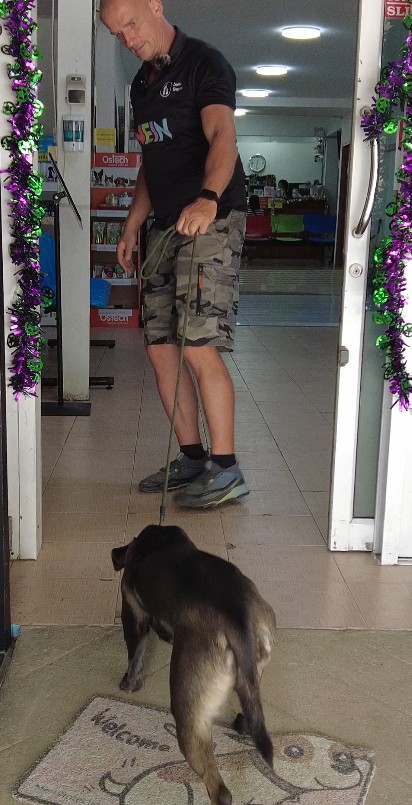
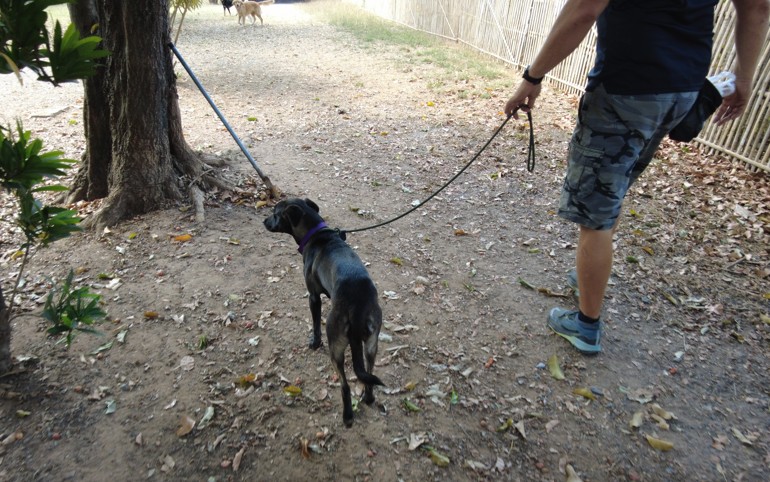
A shared language. In domestication, these coping cues became communication. Your dog’s “out-of-place” scratch or shake-off isn’t random—it’s a subtle message: “I’m uneasy, help me out.” 🐾
Practical Applications: Using This Knowledge to Help Your Dog
Early Recognition and Intervention
Learning to spot displacement behaviors transforms your ability to support your dog. Instead of waiting for obvious signs of stress like trembling or trying to flee, you can recognize these early warning signals and adjust accordingly. When you see your dog suddenly fascinated by sniffing during a training session, it’s time to ask yourself: “Is this too challenging? Do we need a break?”
Creating a displacement behavior inventory for your dog:
- Observe your dog in various situations over a week
- Note which specific behaviors appear in which contexts
- Track duration and intensity
- Identify patterns and triggers
- Use this knowledge to predict and prevent escalation
This observational approach aligns with trauma-informed care principles, recognizing that seemingly odd behaviors often have logical explanations rooted in your dog’s experience and current emotional state.
Training Approaches That Address the Root
Traditional training might focus on eliminating unwanted behaviors, but understanding displacement behaviors calls for a different approach. Relational training methods like Invisible Leash or NeuroBond principles focus on addressing underlying emotional states rather than surface behaviors.
Strategies that reduce displacement behaviors naturally:
- Provide predictability: Clear routines and consistent responses help reduce uncertainty
- Offer choice and control: Allow your dog to influence outcomes when possible
- Build confidence gradually: Break challenging tasks into smaller, manageable steps
- Create safe spaces: Ensure your dog always has an escape route or quiet retreat
- Use positive interruption: Redirect to a calming activity before displacement behaviors escalate
When you see displacement behaviors during training, try this: instead of pushing through, take a step back. Make the task easier, reward more generously, or simply take a break. You’re not “giving in”—you’re acknowledging your dog’s emotional state and building trust. 🧡
Environmental Modifications
Understanding displacement behaviors guides environmental design. If your dog shows excessive displacement behaviors in certain areas of your home, consider what might be creating uncertainty there. Is it near a window where unexpected stimuli appear? Is it a high-traffic area where your dog can’t predict who might walk through?
Environmental strategies to reduce displacement triggers:
- Provide visual barriers in overwhelming spaces
- Create predictable pathways through your home
- Establish “safe zones” where your dog won’t be disturbed
- Use calming pheromone diffusers in high-stress areas
- Ensure access to comfortable resting spots with good vantage points
Social Support Systems
Remember the shelter study showing dramatically reduced displacement behaviors in dogs housed with companions? This principle applies to your home too. Dogs are social creatures, and appropriate social support—whether from humans, other dogs, or even other species—can significantly reduce the need for displacement behaviors.
This doesn’t mean every dog needs a canine sibling, but it does mean considering your dog’s social needs. Regular, positive interactions with compatible dogs, consistent quality time with family members, and even structured activities like group training classes can provide the social scaffolding that reduces overall stress and displacement behaviors.
Welfare Assessment and Professional Applications
Integrating Displacement Behaviors into Welfare Protocols
Professional assessment tools like the Animal Welfare Assessment Grid (AWAG) are beginning to recognize displacement behaviors as valuable welfare indicators. For veterinarians, trainers, and shelter workers, systematically observing and quantifying these behaviors provides non-invasive insights into a dog’s emotional state.
A dog showing frequent, intense displacement behaviors during a veterinary exam isn’t just “nervous”—they’re demonstrating measurable indicators of their stress level. This information can guide decisions about handling techniques, the need for pre-visit medications, or whether to schedule longer appointments to allow for decompression breaks.
The Communication Bridge
For dog professionals, teaching clients about displacement behaviors creates a powerful communication bridge. When an owner understands that their dog’s sudden scratching during greetings isn’t rudeness but uncertainty, they become more empathetic and responsive partners in their dog’s care.
Key points for client education:
- Displacement behaviors are normal and adaptive
- They’re communication, not defiance
- Recognizing them early prevents escalation
- Addressing underlying emotions is more effective than suppressing behaviors
- Every dog has their own unique displacement “vocabulary”
Building a Displacement-Aware Relationship
Daily Life Applications
Incorporating displacement behavior awareness into daily life doesn’t mean constantly analyzing your dog’s every move. Instead, it means developing a gentle awareness that informs your interactions. During your morning walk, you might notice your dog stops to sniff intensely when approaching the house where the reactive dog lives. Instead of hurrying them along, you recognize this as their way of managing anticipatory stress and allow them this coping strategy.
At the dog park, you see your dog yawning repeatedly while being sniffed by an enthusiastic puppy. You understand this isn’t tiredness but mild social stress, and you create space by calling your dog for a water break. These small, informed responses build trust and reduce overall stress levels over time.
The Long-Term Perspective
As you become fluent in reading displacement behaviors, you’ll notice patterns that reveal your dog’s emotional development. Perhaps behaviors that once appeared during all new encounters now only emerge with specific types of dogs. Maybe the intense ground-sniffing during training has evolved into a brief nose-lick before attempting difficult tasks. These changes reflect your dog’s growing confidence and improved coping skills.
This awareness also helps you recognize when something isn’t right. A sudden increase in displacement behaviors in familiar situations might indicate pain, illness, or sensory changes requiring veterinary attention. You become not just an observer but an informed advocate for your dog’s wellbeing.
Creating a Supportive Environment
Understanding displacement behaviors transforms how you structure your dog’s world. You might adjust your training schedule to include more breaks, recognizing that pushing through when displacement behaviors appear often backfires. You might change your walking route to avoid overwhelming stimulus clusters, or add predictable “sniff breaks” where your dog can engage in calming, exploratory behavior.
The goal isn’t to eliminate all displacement behaviors—they’re a normal, healthy part of canine communication. Instead, aim to create an environment where these behaviors remain mild and brief, successfully helping your dog navigate daily challenges without becoming overwhelmed.
The Bigger Picture: Displacement Behaviors as Windows to Canine Consciousness
Evolutionary Wisdom
These behaviors represent millions of years of evolutionary wisdom—sophisticated strategies for managing complex social and environmental challenges without resorting to fight or flight. When your dog engages in displacement behaviors, they’re demonstrating remarkable emotional intelligence, choosing a middle path that maintains social harmony while managing internal tension.
This evolutionary perspective helps us appreciate displacement behaviors not as problems to solve but as elegant solutions dogs have developed. They’re proof of our dogs’ complex inner lives and their capacity for nuanced emotional regulation.
The Human-Canine Connection
Perhaps most remarkably, dogs have adapted these ancient mechanisms to include us in their communication network. The displacement behaviors your dog shows aren’t just reflexive responses—they’re often calibrated to their specific relationship with you. Dogs show different patterns with familiar versus unfamiliar humans, suggesting they’ve learned to use these signals as part of their interspecific communication repertoire.
This represents a profound evolutionary achievement: two species, separated by millions of years of evolution, have developed a shared language of subtle signals and responses. Every time you recognize and respond appropriately to your dog’s displacement behavior, you’re participating in this remarkable cross-species dialogue.
Conclusion: Is Your Dog Trying to Tell You Something?
Understanding displacement behaviors fundamentally changes how we see our dogs. That repetitive yawning during your training session isn’t disrespect—it’s communication. The sudden fascination with grooming during a tense greeting isn’t random—it’s regulation. These behaviors are your dog’s way of saying, “I’m working through something here.”
As you develop fluency in recognizing these signals, you’ll find yourself responding more intuitively to your dog’s emotional needs. You’ll prevent problems before they escalate, build trust through understanding, and create an environment where your dog feels heard and supported. This isn’t just about reducing stress—it’s about honoring the full complexity of your dog’s emotional experience.
Next steps for your journey:
- Start a displacement behavior journal for your dog
- Practice observing without immediately intervening
- Share this knowledge with other dog owners
- Consider how your dog’s unique history influences their patterns
- Celebrate the small victories when you successfully read and respond to these signals
Remember, every dog speaks this language slightly differently. Your job isn’t to eliminate these behaviors but to understand what your particular dog is saying through them. In doing so, you join a conversation that’s been happening for thousands of years—one quiet signal at a time.
Did you know that understanding these subtle behaviors could transform your relationship with your dog? Next time you see that telltale yawn or sudden scratch, you’ll know exactly what your furry friend is trying to tell you. And that understanding? That’s where the magic of the human-canine bond truly lives. 🐾










