
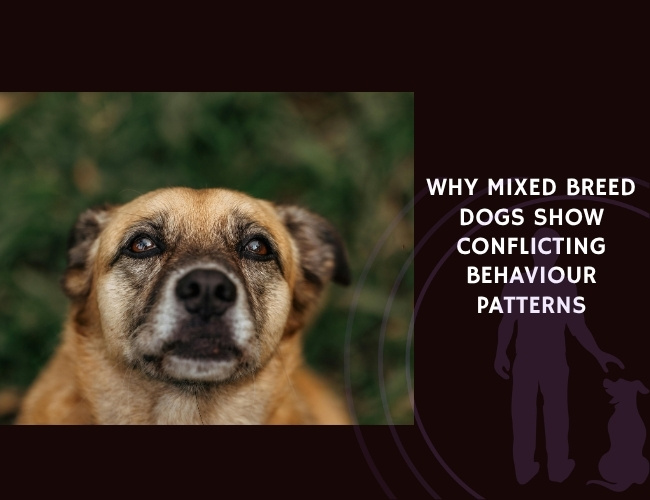
If you have ever looked at your mixed breed dog and thought, I have absolutely no idea what you are going to do next — you are not alone. Owners, trainers, and even veterinary professionals frequently describe mixed breed dogs as “unpredictable,” “inconsistent,” or simply “hard to read.” One moment your dog is melting into the couch beside you, warm and bonded and completely at ease. The next, out on a walk, they are alert, reactive, spinning between drives you barely recognise. What happened to that calm dog you left the house with?
The answer is not that your dog is broken. It is not that your training has failed. What you are witnessing is one of the most fascinating and most misunderstood phenomena in applied animal behaviour — and once you understand what is actually happening beneath the surface, everything changes.
This article draws on behavioural genetics, affective neuroscience, motivational systems theory, and executive function research to give you a comprehensive, scientifically grounded picture of why your mixed breed dog behaves the way they do. More importantly, it will show you how to work with that complexity rather than against it. By the end, you will understand:
- Why your mixed breed dog behaves differently in different environments
- How inherited drives compete within a single nervous system
- What the six core drive types look like in daily behaviour
- Why adolescence and social maturity bring surprising behavioural shifts
- How to build a daily management structure that keeps your dog below threshold
- When apparent inconsistency becomes a genuine safety concern — and what to do about it🧠
What Is Behavioural Incoherence — and Why Mixed Breeds Experience It
Let us start with the central argument, because it reframes everything that follows.
Behavioural inconsistency in mixed breed dogs is not primarily a training failure. It is not a temperament defect. And it is certainly not evidence of a dog that cannot be helped. In most cases, it is the entirely predictable output of multiple inherited motivational systems competing for expression within a single individual — modulated by reinforcement history, filtered through executive capacity, and triggered by environmental context.
That is a mouthful. But what it means in lived experience is this: your dog is not confused or unpredictable. Your dog is multiply motivated — and those motivations were not designed to coexist.
To understand why, we need to look at how purebred and mixed breed dogs differ at the level of behavioural architecture.
In purebred dogs, centuries of selective breeding have aligned motivational systems toward a unified functional purpose. A Border Collie’s herding drive, its exquisite sensitivity to movement, its capacity for sustained eye-stalk behaviour — these are not three separate traits bolted together. They are components of a single coherent system, selected over generations to work as one. The dog’s neurological architecture, physical build, and motivational priorities are all oriented toward the same goal.
Mixed breed dogs do not have that alignment. Your dog may carry high prey drive from a terrier lineage, strong social bonding from a companion breed, territorial vigilance from a guarding heritage, and extraordinary physical energy from a working background. Each of those tendencies is, in isolation, a coherent and functional behavioural system. The problem arises when they share one nervous system — because they were not selected to coexist. They were each selected to dominate.
A single mixed breed dog might carry any combination of these inherited priorities simultaneously:
- High prey drive (terrier, sighthound, sporting lineages)
- Territorial vigilance (guarding, livestock protection lineages)
- Movement-control compulsion (herding lineages)
- Deep social bonding and handler focus (companion lineages)
- Physical stamina and task persistence (working lineages)
- Heightened environmental sensitivity and FEAR reactivity (defensive lineages)
When multiple dominant systems are present simultaneously, they compete for expression. And that competition is what you observe as inconsistency.
The Science Behind Competing Drives
How Genetics Shape Motivational Architecture
Behaviour in dogs does not emerge from a single gene. It emerges from the interaction between multiple inherited trait systems, each shaped by different ancestral pressures across different functional lineages.
Research on German Shepherd dogs has demonstrated that there is substantial additive genetic variation in behaviour traits, that heritability estimates for behavioural traits are meaningful and measurable, and that litter effects play a larger role than maternal effects in shaping personality. What this means practically is that genetic contributions to behaviour are real, heritable, and consequential — and when multiple genetic lineages combine without a unifying selective pressure, the resulting behavioural profile reflects that combination in ways that are not always internally consistent.
In mixed breed dogs, this means the individual may carry motivational systems from two, three, or more ancestral lineages, each encoding different arousal thresholds, different social orientations, different responses to environmental stimuli, and different priorities in moments of decision. The result is a behavioural architecture that is pluralistic rather than unified — and that pluralism is the engine of the inconsistency you observe.
Seven Emotional Systems Running in Parallel
Jaak Panksepp’s foundational work in affective neuroscience identified seven primary emotional-motivational systems in mammals. These systems are neurobiologically distinct, subcortically organised, and — critically — capable of operating simultaneously:
- SEEKING — exploration, curiosity, anticipatory engagement with novelty
- RAGE — frustration-triggered arousal, resource defence
- FEAR — amygdala-mediated threat detection and avoidance
- LUST — reproductive motivation
- CARE — nurturing, social bonding, affiliative behaviour
- PANIC/GRIEF — separation distress, social loss
- PLAY — social motor play, joyful engagement
In a dog whose genetic heritage includes both a high-SEEKING herding lineage and a high-FEAR guarding lineage, the simultaneous activation of these systems in a novel environment is not confusion. It is the predictable output of two competing motivational architectures operating within the same nervous system. The dog does not need to “pick one” the way a decision tree might suggest. Both systems can fire at once, and when they do, the behaviour you observe will reflect that internal competition.
This is why the classic “approach-avoidance” dog — the one that comes toward a stranger with apparent curiosity, then suddenly retreats or snaps — is so common in mixed breeds. The dog was simultaneously motivated to approach and to avoid. The balance between those competing motivations shifted as the stimulus changed. There was no sudden personality change. There was a threshold crossing.
The Executive Filter — and Why It Gets Overwhelmed
Between the dog’s motivational drives and its observable behaviour sits what neuroscience calls executive function — the set of cognitive processes responsible for filtering competing internal signals, prioritising responses, inhibiting inappropriate impulses, and maintaining goal-directed behaviour in the face of distraction.
Research on impulse control has demonstrated that genetic variation in dopamine-regulating systems significantly affects executive capacity. In mixed breed dogs, the executive filtering system must manage a wider range of competing internal signals than in a dog with more uniformly aligned motivational systems. This places greater demands on executive capacity — and increases the likelihood of response variability, not because the dog lacks intelligence, but because the filtering task is genuinely more complex.
When arousal rises, executive capacity drops. This is consistent with human research on working memory and cognitive load: increased demands reduce the capacity for inhibitory control. For a mixed breed dog already managing multiple competing drives, a high-stimulation environment does not merely excite them. It overwhelms the system designed to keep those competing drives from expressing simultaneously.
The result is behavioural switching, simultaneous drive expression, or what owners describe as “snapping without warning” — which, as we will see, is rarely without warning at all. 🐾
The Most Challenging Drive Combinations
Not all genetic combinations create equal levels of behavioural incoherence. Some trait pairings are particularly prone to conflict because the underlying motivational systems they encode are functionally antagonistic — they produce opposing behavioural tendencies in response to the same stimulus.
Herding + Guarding
Imagine a dog carrying both herding and guarding genetics encountering a child who runs across the garden. The herding impulse activates: chase, control movement, use eye contact to regulate the child’s behaviour. Simultaneously, the guarding impulse activates: assess potential threat, take a territorial stance, vocalise or escalate.
These are not the same behaviour. They emerge from different motivational systems, produce different physical expressions, and require different management strategies. When both are activated by the same stimulus, the dog may oscillate between them, producing behaviour that appears erratic — but is in fact the output of two competing coherent systems responding to one trigger.
Hunting + Companion
A dog with strong hunting genetics and strong companion genetics may be the most devoted, responsive dog you have ever met — in calm conditions. The moment prey drive is activated, that same dog may become completely unresponsive to your cues. Not out of defiance. Not out of a failure to love you. But because one motivational system has achieved dominance over the other under specific conditions, and the companion drive simply cannot compete.
Both drives are genuine. Both are heritable. Both are functional. They simply cannot both be expressed simultaneously — and which one wins depends on arousal level, context, and the specific stimuli present.
High SEEKING + High FEAR
Perhaps the most clinically significant combination is the co-presence of high SEEKING drive — approach motivation, exploration, curiosity, dopaminergic engagement with novelty — and high FEAR reactivity — amygdala-mediated avoidance, threat assessment, defensive behaviour.
These two systems are neurobiologically antagonistic. SEEKING pulls the dog toward the novel stimulus with genuine interest. FEAR reads that same stimulus as a potential threat and generates the impulse to withdraw or defend. The dog that “seemed fine, then suddenly reacted” was not fine — it was in a state of sustained motivational conflict, and a small change in the stimulus tipped the balance from approach to avoidance.
This is the dog most frequently labelled as “unpredictable.” It is, in reality, the most predictably complex dog you can own. 😄
How to Read Your Dog’s Drive Profile
Understanding that your mixed breed dog carries multiple inherited drives is one thing. Being able to identify which drives are active in your specific dog — and recognise them in the moment — is where that understanding becomes genuinely useful.
You do not need a DNA test to begin mapping your dog’s drive profile. Drives express themselves through observable behaviour, body language, and environmental responsiveness. What follows is a practical guide to the six most clinically significant drive types and the signals that indicate their presence.
Prey Drive — The Hunter in Your Dog
Prey drive is one of the most commonly present and most commonly misread drives in mixed breed dogs. It is not about aggression. It is about the neurobiological reward of the chase sequence — orient, stalk, chase, grab, dissect — and the dopaminergic activation that sequence produces.
Observable signals of active prey drive include:
- Intense, fixed visual focus on moving objects — the “locked on” stare
- Low, forward body posture with weight shifting toward the front
- Sudden, explosive acceleration toward moving targets such as joggers, cyclists, squirrels, or blowing leaves
- Difficulty disengaging once the chase sequence has initiated
- A glazed or “switched off” quality to the eyes during activation
- Trembling or whining at threshold when movement is visible but the dog cannot pursue
You might notice this drive is highly context-dependent. A dog with strong prey drive may be entirely calm in a still environment and completely unreachable in an environment with rapid movement. The drive is not always on — but when it activates, executive filtering capacity drops sharply.
Herding Drive — The Controller
Herding drive is often mistaken for aggression, hyperactivity, or obsessive behaviour — when in reality it is one of the most sophisticated motivational systems in domestic dogs. It is characterised by a compulsion to influence the movement of other individuals, whether those individuals are sheep, children, other dogs, or passing cars.
Observable signals include:
- Circling behaviour around moving targets — people, other dogs, children
- Eye contact used as a control mechanism rather than a social gesture
- Nipping at heels or ankles, particularly of runners or children
- Intense visual tracking of movement patterns across a space
- Inability to relax when individuals in the environment are moving unpredictably
- Barking that appears designed to redirect or stop movement rather than alert
A dog with herding drive is not trying to dominate. It is trying to create order in a disordered environment — because its nervous system is wired to find that deeply satisfying. The challenge in mixed breeds is when herding drive is paired with guarding vigilance, as explored earlier, creating a dog that simultaneously wants to control and defend. 🐾

Guarding Drive — The Sentinel
Guarding drive encodes the motivational imperative to monitor, protect, and if necessary defend a defined territory or social group. In mixed breeds carrying guarding genetics, this drive can activate with remarkable speed and intensity — often in situations that owners find puzzling, because the perceived threat was not obvious.
Observable signals include:
- Heightened alertness to sounds and movement at the periphery of the environment
- Territorial behaviour around thresholds — doors, gates, car entrances, garden boundaries
- Alarm barking that is deeper and more sustained than play or attention barking
- A stiff, upright body posture with tail held high during threat assessment
- Resource guarding extending beyond food to include spaces, furniture, and specific people
- A marked and consistent difference in behaviour toward strangers versus known individuals
Guarding drive is often more pronounced in adolescence and early social maturity, which is one of the reasons mixed breed dogs with guarding heritage frequently appear to “change personality” between twelve and thirty months. The drive was always present — the developmental window simply opened it.
Companion Drive — The Bonder
Companion drive — sometimes called social drive or affiliative drive — is the motivational engine behind deep human-dog bonding, trainability, and the dog’s capacity to use the handler as a regulatory anchor in challenging environments. It is the drive that makes your dog check back in, seek your proximity, and prioritise your presence over competing stimuli.
Observable signals include:
- Frequent, voluntary eye contact initiated by the dog — checking in without being prompted
- Physical proximity seeking in both rest and activity
- Responsiveness to handler emotional state — the dog that unsettles when you are stressed
- Sensitivity to absences and transitions, including subtle changes in routine
- High motivation to engage in social play and interactive activity
- The capacity to self-regulate in challenging environments when the handler is present and calm
Strong companion drive is an enormous asset in training — but in mixed breeds, it exists in competition with other drives. A dog with high companion drive and high prey drive will be the most bonded, responsive dog you have ever met until prey drive activates — at which point the companion system may be temporarily inaccessible. Understanding this is not discouraging. It is clarifying.
SEEKING Drive — The Explorer
SEEKING drive, in Panksepp’s framework, is the primary motivational engine for exploration, curiosity, anticipation, and engagement with novelty. It is the neurobiological substrate of the dog that is always investigating, always engaged, always interested in what is around the next corner. It is driven by dopaminergic reward circuitry and is associated with positive anticipatory states.
Observable signals include:
- Persistent, active investigation of novel stimuli through sniffing, pawing, and visual inspection
- Difficulty settling in novel environments — the dog that cannot rest until every corner is mapped
- High engagement with puzzle feeders, scent-based tasks, and problem-solving activities
- A forward, curious body posture when encountering new stimuli
- Low threshold for boredom in low-stimulation environments
- Rapid learning in positive reinforcement contexts due to high reward sensitivity
SEEKING drive is a profound asset in training when channelled appropriately. The challenge in mixed breeds arises when it is paired with high FEAR reactivity — creating the approach-avoidance conflict described earlier — or when the environment consistently fails to provide adequate stimulation for the drive to be satisfied. An under-stimulated SEEKING drive does not simply go quiet. It redirects into destructive behaviour, hyperarousal, or compulsive patterns. 🧡
FEAR Drive — The Protector
FEAR drive is perhaps the most consequential drive to identify accurately, because its misreading produces more training errors than almost any other system. FEAR is not weakness. It is an amygdala-mediated survival system that has been under intense selective pressure across millions of years of mammalian evolution. In dogs carrying guarding or defensive genetics, it may be calibrated at a particularly sensitive threshold.
Observable signals include:
- Avoidance of novel stimuli after initial investigation — the retreat that follows the approach
- A low body posture with tail tucked or carried low during threat assessment
- Yawning, lip-licking, and blinking as calming signals in moderately activating contexts
- Scanning behaviour in environments with unpredictable or unfamiliar stimuli
- Hypervigilance following a startling event, with slow return to baseline
- Displacement behaviours such as sudden sniffing or scratching when threat cannot be resolved
- The classic freeze-assess-flight-fight escalation sequence when the drive exceeds threshold
Critically, FEAR drive in mixed breeds frequently co-presents with other drives — particularly SEEKING and companion drives — creating dogs whose behaviour in threat contexts appears contradictory. They approach and retreat. They bark and back away. They growl and wag simultaneously. Each of these expressions is coherent from within the motivational system producing it. The incoherence exists only from the outside. 🧠
Puppy and Adolescent Development in Mixed Breed Dogs
One of the most common experiences reported by owners of mixed breed dogs is the dog that “changed at around fourteen months.” The playful, manageable puppy became reactive, intense, difficult to redirect, and suddenly seemed to be carrying drives that were not visible before. This is not a training failure. It is not a sign that something went wrong. It is the entirely predictable output of normal developmental neurobiology — amplified by the genetic pluralism of the mixed breed.
The Four Developmental Windows That Matter
Early Socialisation: 3 to 14 Weeks
The early socialisation window is the period during which the puppy’s nervous system is most receptive to environmental input. Experiences during this window do not merely teach the puppy what is safe — they calibrate the baseline thresholds of multiple motivational systems, including FEAR reactivity, social drive, and SEEKING engagement.
For mixed breed puppies, this window is particularly consequential because the calibration happening during these weeks will determine the initial relative dominance of each inherited drive system. A puppy with strong guarding genetics who receives rich, positive social exposure during this window may develop measurably lower FEAR thresholds than a littermate from the same parents who receives less exposure. The genetic predisposition is the same. The calibration differs.
This does not mean that inadequate early socialisation is permanently damaging — but it does mean that gaps in this window require more systematic work later to achieve equivalent results.
Juvenile Period: 3 to 6 Months
The juvenile period is characterised by high SEEKING drive engagement, rapid learning, and the consolidation of early relational patterns. Mixed breed dogs in this period are often described as highly trainable, adaptable, and responsive — because the competing drives that will later create complexity are not yet fully expressed.
This is the window in which foundational relational habits are formed. The quality of the NeuroBond established in this period — the predictability of the handler’s guidance, the consistency of the relational experience — will function as a regulatory resource during the more turbulent periods ahead. Investment here pays compound interest.
Adolescence: 6 to 18 Months
Adolescence is the developmental period that generates the most owner distress in mixed breed dogs, and with good reason. The neurobiological changes of adolescence — including elevated dopaminergic activity, reduced prefrontal inhibitory control, and heightened sensitivity to peer and environmental stimuli — are present in all dogs. In mixed breeds, they interact with a more complex motivational architecture.
During adolescence, drives that were latent in puppyhood begin to express with increasing intensity. The herding impulse that looked like playful nipping at six months becomes purposeful and harder to interrupt at twelve months. The guarding vigilance that seemed like alertness at eight months becomes territorial reactivity at fifteen months. The prey drive that was triggered only by squirrels now activates for joggers, cyclists, and children on scooters.
Owners who do not understand this developmental framework frequently interpret adolescent drive emergence as regression — “all our training has gone backwards” — or as a sign that the dog’s personality has fundamentally changed. Neither is accurate. The training foundation is intact. The drives have simply arrived.
The practical implication is that adolescence in a mixed breed dog requires a recalibration of management strategy, not a reboot of training. The task is not to suppress the emerging drives but to begin the integration work described in the previous section — creating structured outlets, managing threshold, and building the relational predictability that will allow the adolescent dog to navigate its own complexity.
Social Maturity: 18 to 36 Months
Social maturity is the second major emergence window, and it is often more surprising to owners than adolescence because the dog may have appeared to stabilise during the late adolescent period. Between eighteen and thirty-six months, the social and territorial architecture of the dog reaches its adult configuration.
In mixed breeds with guarding, herding, or territorial genetics, this window frequently brings the most significant behavioural shifts. A dog that was friendly with strangers may become selectively guarded. A dog that played well with all other dogs may develop preferences and aversions. A dog that walked calmly may begin to scan, alert, and react to stimuli that previously registered as irrelevant.
These shifts are not pathological. They are the completion of a developmental trajectory that was always encoded in the genetic architecture. The dog is not becoming a different dog. It is becoming its full adult self. Understanding which drives are emerging in this window allows owners and handlers to respond with targeted integration work rather than reactive crisis management.
Why “The Dog Changed” Is Almost Never the Whole Story
When owners say their mixed breed dog changed, what they are most often describing is the activation of a latent drive that was always present but not yet expressed. The genetic blueprint was written at conception. The developmental windows determine when each chapter is read aloud.
The most common triggers for latent drive activation include:
- Developmental transitions — adolescence (6–18 months) or social maturity (18–36 months)
- Environmental changes — moving house, new household members, loss of a companion animal
- Specific sensory stimuli — particular movement patterns, sounds, or scent profiles
- Arousal escalation — stimulus stacking or prolonged exposure to activating environments
- Social context shifts — changes in household hierarchy or daily routine
- Health events — illness, pain, or hormonal changes that alter baseline arousal
This reframe is not merely reassuring — it is practically useful, because it directs attention to the right question. Rather than “what happened to my dog?” the question becomes “which drive has activated, what conditions triggered the activation, and how do I begin the integration work?” That question has answers. The first question rarely does.
Competing. Layered. Contextual.
Multiple Drives Collide Mixed breed dogs carry parallel motivational systems that were never selected to integrate creating behavioural outputs that shift depending on which system dominates in the moment.
Thresholds Shape Behaviour Simultaneous activation of emotional systems like seeking and fear produces rapid transitions not confusion but dynamic internal competition influenced by environment and arousal.

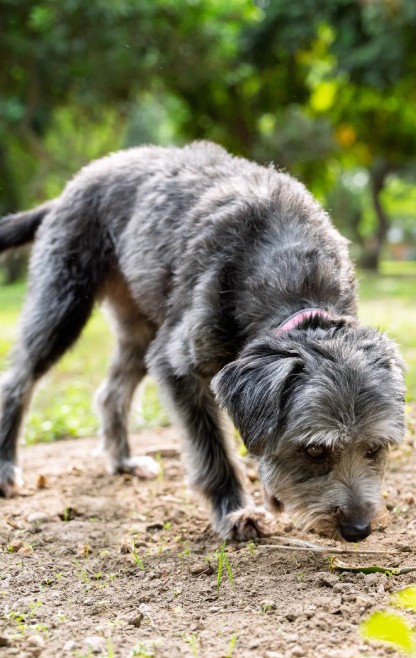
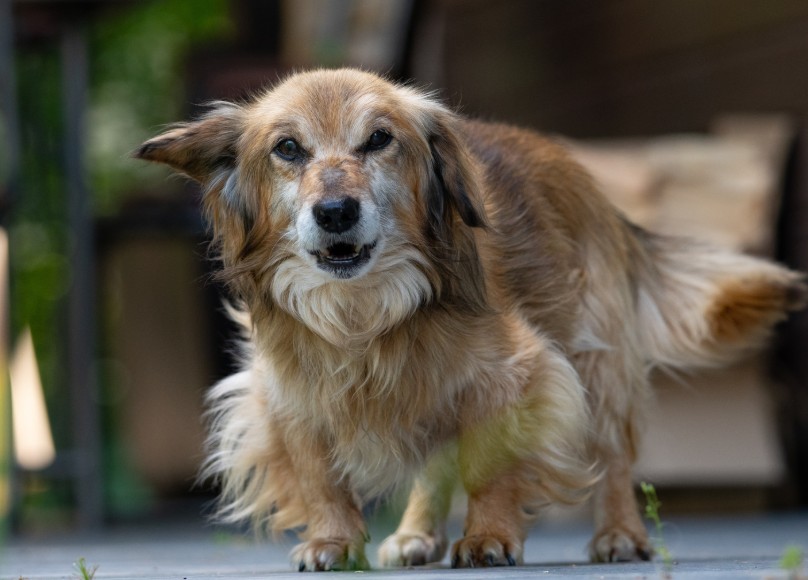
Alignment Creates Coherence Through structured guidance consistent signals and NeuroBond aligned interaction competing drives can stabilise allowing behaviour to become readable predictable and adaptive.
A Daily Management Framework for the Mixed Breed Dog
The sections above have provided a comprehensive understanding of why your mixed breed dog behaves as they do. This section translates that understanding into a practical daily structure. Because the threshold is dynamic — fluctuating with arousal level, cumulative stress, sleep quality, and relational context — daily management is not merely about training sessions. It is about managing the dog’s overall arousal architecture across the entire day.
Think of it this way: every interaction, every walk, every period of rest, every feeding, and every transition either adds to or draws down from the dog’s arousal and stress reserves. A well-structured day does not just give the dog exercise. It manages the balance between activation and recovery across all drive systems — keeping the dog below threshold, expanding the threshold over time, and building the habitual calm that makes training possible in challenging contexts.
A well-designed day for a mixed breed dog typically moves through five distinct phases:
- Morning — calm orientation and low-arousal drive discharge before the day escalates
- Mid-morning walk — threshold-aware movement in a managed environment
- Midday — genuine neurological decompression, not just physical rest
- Afternoon — targeted cognitive engagement and drive channelling through structured activity
- Evening — predictable wind-down that signals the shift from activation to rest
Morning: Discharge and Orientation
For most mixed breed dogs carrying working, herding, prey, or SEEKING drives, the morning represents a period of naturally elevated arousal. Sleep has restored executive capacity, and the motivational systems are primed. The temptation is to begin the day with a high-stimulation walk — which for a dog with multiple competing drives can actually generate more arousal than it discharges, particularly if the environment is unpredictable.
A more effective morning structure begins with a brief, calm orientation before any physical activity. This might be five minutes of structured sniffing in the garden, a short leash walk in a familiar, low-stimulation environment, or a simple engagement exercise that activates SEEKING drive without spiking arousal. The goal is not to tire the dog. The goal is to establish a calm, oriented baseline before the day’s demands begin.
If your dog carries high SEEKING or prey drive, a short scent-based activity in the morning satisfies the exploratory drive with low arousal cost, creating a naturally calmer state for the structured walk that follows. Effective low-arousal morning activities include:
- Hiding small food portions in the garden for a brief find-it exercise
- A snuffle mat or lick mat before the main walk
- A slow, sniff-led exploration of a familiar, quiet patch of outdoor space
- A short nose work warm-up using a known hide
🧬 Why Mixed Breed Dogs Show Conflicting Behaviour
A science-backed guide to genetic drives, motivational conflict, and what your dog is really telling you 🐾
Phase 1: The Architecture of Behavioural Incoherence
Understanding why your dog isn’t broken — just multiply motivatedBehavioural inconsistency in mixed breed dogs is not a training failure or temperament defect. It is the predictable output of multiple inherited motivational systems competing for expression within a single individual. Purebred dogs carry behaviourally coherent systems — mixed breeds carry plural, competing ones.
A single mixed breed dog may carry all of these inherited priorities simultaneously:
• High prey drive (terrier, sighthound lineages)
• Territorial vigilance (guarding, livestock protection)
• Movement-control compulsion (herding lineages)
• Deep social bonding (companion lineages)
• Heightened FEAR reactivity (defensive lineages)
Your dog is not confused or unpredictable. Your dog is multiply motivated — and those motivations were not designed to coexist. Every apparent inconsistency is the logical output of competing biological systems doing exactly what they were built to do.
Phase 2: The Six Core Drive Types
Reading your dog’s motivational profile from observable signalsDriven by the dopaminergic reward of the chase sequence. Key signals: intense fixed visual focus on movement, low forward body posture, explosive acceleration, difficulty disengaging, glazed eyes during activation. This drive does not respond to commands above threshold — it overrides them.
• Herding: Circling, heel-nipping, eye control, inability to relax around unpredictable movement
• Guarding: Threshold vigilance, alarm barking, resource guarding beyond food, stark difference toward strangers vs known people
These two drives in combination produce the most visibly erratic behaviour patterns.
• Companion: Voluntary eye contact, proximity seeking, handler-state sensitivity, social motivation
• SEEKING: Active investigation, difficulty settling, high reward sensitivity, boredom-driven destruction
• FEAR: Avoidance after approach, calming signals (yawning, lip-licking), freeze-assess-flight-fight escalation
Phase 3: Competing Drives & The Threshold Model
Why your dog “snaps without warning” — and why that’s never the whole storyMultiple motivational systems can fire simultaneously. A dog isn’t confused — it is genuinely activated toward incompatible responses at the same time. The approach-avoidance dog that “seemed fine, then suddenly reacted” was in sustained motivational conflict the entire time. A small stimulus shift tipped the balance.
Each individual trigger may be manageable — but when stacked in close succession, cumulative arousal exceeds executive filtering capacity. The dog reacts to the last stimulus with the force of all preceding ones. You saw the final trigger. You did not see the loading. This is why tracking cumulative arousal matters more than tracking individual events.
The threshold fluctuates daily based on: sleep quality, cumulative stress load, current motivational state, physical health, relational security, and environmental predictability. When training “stops working,” the threshold has shifted — not the learning. Ask: what has changed in this dog’s overall state today?
Phase 4: Developmental Windows
Why “the dog changed at 14 months” is almost never a personality changeSocialisation (3–14 weeks): Calibrates baseline thresholds across all inherited drive systems. Gaps here require more systematic work later — but are not permanent damage.
Juvenile period (3–6 months): High SEEKING engagement, rapid learning, competing drives not yet fully expressed. The window to build relational foundations that will regulate everything that follows.
Drives that were latent in puppyhood begin expressing with increasing intensity. Herding nipping becomes purposeful. Guarding vigilance becomes territorial reactivity. Prey drive expands its trigger set. This is not regression — the training foundation is intact. The drives have simply arrived. The task is integration, not reboot.
Often more surprising than adolescence. Social and territorial architecture reaches adult configuration. A dog friendly with strangers may become selectively guarded. A dog that played with all dogs may develop preferences. These shifts are the completion of a trajectory always encoded in the genetic blueprint — not pathology. Respond with targeted integration work, not crisis management.
Phase 5: The Daily Management Framework
Managing arousal architecture across the whole day — not just training sessionsMorning: Begin with low-arousal orientation before any stimulating walk. Snuffle mat, quiet sniff session, familiar route. The goal is a calm baseline — not tired legs.
Walk: Use route selection, pace variation, frequent directional changes, and engagement breaks to stay below threshold. The Invisible Leash is active here — awareness and attunement, not tension.
Genuine neurological recovery — not just physical rest. A low-stimulation environment with no demands, no training, no social interaction for a defined period. For FEAR-reactive or guarding dogs, this allows cortisol from morning exposure to return to baseline, directly lowering the afternoon threshold. Decompression is maintenance, not luxury.
Afternoon: Targeted drive channelling — tug for prey drive, nose work for SEEKING, fetch with pause for herding drive. Integration in action.
Evening: Gradual reduction in stimulation 30–60 min before rest. Predictable, calm routine. For guarding and FEAR dogs especially, an unpredictable evening prevents the neurological recovery needed for genuine sleep.
Phase 6: Integration vs. Suppression
The most consequential strategic choice in training a complex dogSuppression creates four predictable failure modes:
• Drive displacement — energy redirects, not disappears
• Suppression-induced frustration — arousal builds, threshold drops
• Context-dependency — behaviour returns without the punishing stimulus present
• Signal elimination — warning growls disappear; the bite does not. Never punish growling.
Integration asks: how can this drive be expressed safely? The four mechanisms:
• Drive channelling — structured outlets that satisfy the need
• Counter-conditioning — restructuring the emotional valence of triggers
• Differential reinforcement — rewarding an incompatible behaviour that meets the same drive
• Threshold management — learning only happens below threshold
A dog with a secure, predictable handler shows lower baseline arousal, higher frustration tolerance, and greater inhibitory capacity. Two handlers using identical techniques will produce different results because the relational context determines whether the dog’s executive architecture is available for learning — or occupied managing the relationship itself.
Phase 7: When Incoherence Becomes a Safety Risk
Distinguishing drive conflict, trauma-based reactivity, and genuine aggressionClear escalation signals before the response. Highly context-dependent — appears in specific triggers, absent in others. Rapid recovery when stimulus is removed. Dog remains orientable to handler between incidents. Addressable with the integration framework in this article.
Stronger FEAR signature in body language. More uniform across contexts once trigger is identified. Slower recovery. Handler connection may be strained during recovery. Responds to systematic desensitisation and counter-conditioning — but requires patience, precision, and often professional support. Working above threshold produces more trauma, not learning.
Seek urgent professional support if you observe:
• Aggression without observable escalation signals
• Responses disproportionate to the trigger in intensity or duration
• Aggression toward family members, especially children
• Predatory sequences toward humans or small animals completing beyond the chase phase
• Any bite that breaks skin
🔍 Drive Profile Comparison: What Each Drive Looks Like
Activated by: Movement, small animals, joggers, cyclists
Looks like: Fixed stare, forward lean, explosive chase
Channel with: Tug, tracking, flirt pole, fetch
Activated by: Unpredictable movement, groups, children running
Looks like: Circling, eye pressure, heel-nipping
Channel with: Controlled fetch, directional games, boundary work
Activated by: Strangers, thresholds, novel approaches
Looks like: Alarm bark, stiff posture, resource guarding
Channel with: Place training, structured role, predictable introductions
Activated by: Handler presence, social engagement
Looks like: Check-ins, proximity seeking, handler sensitivity
Channel with: Cooperative training, trick sequences, shared activity
Activated by: Novelty, stimulation gaps, scent trails
Looks like: Persistent investigation, boredom behaviour, high reward sensitivity
Channel with: Nose work, food puzzles, sniff-led walks
Activated by: Novel stimuli, unpredictability, prior aversive experience
Looks like: Calming signals, avoidance, freeze-flight-fight
Channel with: Systematic desensitisation, below-threshold exposure, counter-conditioning
Behaviour = Genetics × Motivational State × Learning History × Context × Executive Capacity × Relational Quality
• Not unpredictable — multiply motivated with competing activation triggers
• Not regressing — latent drives activating on their developmental schedule
• Not dominant or anxious — two competing systems expressing simultaneously
• Not broken by training — threshold has shifted; the learning is still there
• Every behaviour is communication — decode it before you intervene
• Never suppress growling — remove the warning, not the motivational state behind it
Understanding the mixed breed dog through this lens is not just a training strategy — it is a shift in relationship. Through the NeuroBond approach, emotional clarity and structured guidance create the conditions in which competing drives can be managed rather than suppressed — where the dog learns to trust the relational container enough to yield its inner conflict to the handler’s calm.
The Invisible Leash is not about tension. It is about the dog knowing, without being pulled, that you are navigating the environment together — and that your presence is the most reliable anchor in any activation storm. Moments of Soul Recall — those quiet check-ins amid competing drives — are not accidents. They are the product of a relational foundation strong enough to compete with the loudest biological impulse.
Your mixed breed dog is not a lesser version of a purebred. It is a behaviourally pluralistic individual of extraordinary depth. Meet that complexity with curiosity, and you will discover a dog whose behaviour — once truly read — is not unpredictable at all.
© Zoeta Dogsoul — Where neuroscience meets soul in dog training
Mid-Morning Walk: Threshold Awareness in Motion
The structured walk is where the daily management framework is most visibly applied — and where most threshold crossings occur. Before you leave the house, take thirty seconds to assess your dog’s current arousal baseline. Is the dog calm and orientable at the door, or already at the limit of manageable arousal before you have even stepped outside?
A dog that is already highly aroused before the walk begins is a dog whose threshold will be crossed earlier and more dramatically during the walk. In this case, a shorter, calmer route is more therapeutic than a longer, more stimulating one.
During the walk itself, the practical goal is to keep the dog operating below threshold. The key tools for threshold management on the walk include:
- Route selection — choosing environments with predictable, manageable stimulation levels
- Pace variation — slowing pace when arousal rises, speeding up to redirect focus
- Directional changes — frequent turns that require the dog to orient to you rather than the environment
- Engagement breaks — brief, known behaviours reinforced with calm praise or a food reward
- Distance management — increasing distance from triggers before threshold is crossed, not after
These engagement breaks serve a neurobiological function: they reactivate the relational and SEEKING systems, drawing the dog’s executive attention away from activating environmental stimuli and back into the cooperative relational context.
You might notice that dogs walking with this kind of structured attentiveness — frequent check-ins, calm handler energy, predictable pace — show lower overall arousal than dogs walking freely at the end of a loose lead. The Invisible Leash is not about tension. It is about the dog knowing, without being pulled, that you are there and that the environment is being navigated together.
Midday: Decompression and Drive Recovery
The midday period is one of the most underused resources in daily canine management. After a morning of environmental engagement and drive activation, most mixed breed dogs benefit profoundly from a structured decompression period — not merely physical rest, but genuine neurological recovery.
Decompression looks different from simply putting the dog in their bed. It is the active provision of a low-stimulation environment in which no demands are placed on the dog and no activating stimuli are present. This might mean a quiet room with the dog’s bed, a white noise source to reduce environmental reactivity, and the absence of requests, training, or social interaction for a defined period.
Research on stress physiology consistently shows that the recovery of inhibitory control systems requires genuine rest — not just the absence of exercise. For mixed breed dogs managing the ongoing executive load of competing drives, midday decompression is not a luxury. It is maintenance.
If your dog carries high FEAR reactivity or guarding drive, a structured midday decompression period also provides time for the cortisol and adrenaline elevated by morning environmental exposure to return toward baseline — directly lowering the threshold for the afternoon’s interactions.
Afternoon: Cognitive Engagement and Drive Channelling
The afternoon is the ideal window for structured cognitive work and targeted drive channelling — activities that satisfy motivational drives at manageable arousal levels, build executive capacity through practiced inhibitory control, and strengthen the relational foundation through cooperative engagement.
Matching the activity to the dominant drive produces the most satisfying and neurologically effective outlet:
- Prey drive — structured tug with clear start and stop rules; flirt pole sessions; tracking exercises
- Herding drive — controlled fetch with a reinforced pause before the next throw; directional targeting games
- SEEKING drive — nose work hides; food puzzles; sniff-led exploration in a novel but manageable environment
- Guarding drive — place training that gives the dog a defined, valued role; boundary work that channels vigilance into a structured task
- Companion drive — cooperative trick training; hand targeting sequences; anything requiring synchronised engagement between dog and handler
The principle underlying all of these activities is integration rather than suppression. The drive is not being prevented. It is being given a structured, predictable channel — and the dog is learning that it can satisfy the motivational need through the relational context rather than despite it.
Evening: Predictability and Wind-Down
The evening is not simply the end of the day. For dogs with competitive drive systems, it is a critical regulatory window. The transition from the day’s activity to rest is a neurobiological process that benefits from structure and predictability.
An effective evening wind-down begins thirty to sixty minutes before the dog’s sleep period with a gradual reduction in stimulation. This means avoiding high-arousal play in the final hour, managing environmental stimuli such as television, visitor arrivals, and child activity that can spike arousal late in the day, and incorporating a brief, calm interaction — gentle grooming, quiet proximity, a slow exploratory sniff outside — that signals the shift from active engagement to rest.
Predictability in the evening routine is particularly important for dogs carrying FEAR or guarding drives. An unpredictable evening environment — variable schedules, irregular sounds, unexpected visitors — maintains a low-level vigilance activation that prevents the neurological recovery needed for genuine rest. Consistent evening structure is one of the most undervalued tools in the management of reactive mixed breed dogs.
When Behavioural Incoherence Escalates to Safety Risk
This is the section most articles on mixed breed behaviour avoid writing. It is also one of the most important.
The vast majority of the behaviours described throughout this article — drive switching, threshold crossings, stimulus stacking responses, approach-avoidance conflict — are not dangerous. They are challenging, confusing, and sometimes distressing. But they are the normal expressions of a complex motivational architecture navigating a world it was not designed to find simple. With accurate understanding and appropriate management, they are addressable.
However, some mixed breed dogs do present genuine safety risks — and distinguishing between drive conflict behaviour, trauma-based reactivity, and genuine aggression is one of the most consequential assessments an owner or trainer can make. Getting this distinction right determines not only the training approach but the welfare decisions that may follow.
Drive Conflict Behaviour — Complex, Not Dangerous
Drive conflict behaviour is what the majority of this article describes. It is the behaviour produced when multiple motivational systems are simultaneously active, competing for expression, and inadequately filtered by executive capacity. It can look alarming — snapping, lunging, growling, stiffening, intense reactive barking — but it carries a specific set of characteristics that distinguish it from genuine aggression.
Drive conflict behaviour typically shows clear escalation signals before the response — the dog communicates through calming signals, displacement behaviours, and postural changes before reaching the reactive expression. It is highly context-dependent, appearing reliably in specific triggering contexts and absent in others. Recovery is relatively rapid once the triggering stimulus is removed or the dog drops below threshold. The dog is orientable to the handler between incidents, and the relational connection remains intact.
This is the dog that barks and lunges on lead but is fine off lead in familiar company. The dog that guards the front door but settles readily when the visitor is introduced. The dog that reacts to other dogs on walks but plays appropriately in structured social contexts. The pattern is consistent with competing drive activation, and the management framework described throughout this article directly addresses it.
Trauma-Based Reactivity — Fear at the Root
Trauma-based reactivity differs from drive conflict behaviour in its emotional substrate. Where drive conflict behaviour emerges from competing motivational systems, trauma-based reactivity emerges from a nervous system that has been conditioned to associate specific stimuli with threat — whether through a single significant aversive experience, chronic stress exposure, inadequate early socialisation, or a history of punitive training that eliminated warning signals without addressing the underlying fear.
Observable differences from drive conflict behaviour include a stronger FEAR signature in the body language — low posture, tail tucked, ears flat, whites of eyes visible — rather than the mixed signals of drive competition. The reactive response tends to be more uniform across contexts once the trigger is identified, rather than context-dependent in the way drive conflict behaviour is. Recovery is typically slower, and the dog may remain in an elevated state long after the triggering stimulus has been removed. The relational connection to the handler may be strained during recovery, with the dog showing difficulty orienting even to familiar, trusted individuals.
Trauma-based reactivity responds well to systematic desensitisation and counter-conditioning when conducted carefully, below threshold, and with consistent handler regulation. It is addressable — but it requires patience, precision, and sometimes professional support, because working above threshold in a traumatised dog does not produce learning. It produces more trauma.

Genuine Aggression — When Professional Assessment Is Essential
Genuine aggression — in the clinical sense of behaviour that presents a reliable, serious safety risk regardless of management and training context — is far less common than the labels suggest. Much of what is called aggression in mixed breed dogs is drive conflict behaviour or trauma-based reactivity that has been mismanaged into escalation. But it does exist, and when it does, accurate identification is a welfare and safety imperative.
Warning indicators that warrant urgent professional assessment include:
- Aggression that occurs without observable escalation signals — biting without preceding warning behaviour, suggesting earlier signals have been suppressed
- Responses that are disproportionate to the triggering stimulus in their intensity or duration
- Aggression directed toward family members, particularly children, in contexts where no prior concern was present
- Predatory sequences directed toward humans or small animals that complete beyond the chase phase
- Any instance of a bite that breaks skin, regardless of context
It is important to be clear: none of these indicators are automatically a welfare death sentence. Many dogs presenting with serious aggression histories have been successfully rehabilitated with appropriate professional support. But they do indicate that the self-managed training framework described in this article has reached its limit, and that a certified applied animal behaviourist or veterinary behaviourist should be involved in assessment and planning.
The Signal Elimination Risk — Why Punishment of Warning Behaviours Is Dangerous
One of the most important safety messages in this entire article is this: never punish growling.
Growling, stiffening, lip-lifting, and snapping are communicative warning signals. They are the dog’s way of expressing that a motivational threshold has been approached and that the situation needs to change. When these signals are punished into suppression, the motivational state that generated them does not disappear. The warning disappears. The result is a dog that bites without what owners experience as warning — not because the dog is more dangerous by nature, but because the escalation ladder has been shortened without the owner’s knowledge.
If your dog is growling in contexts where it previously did not, that is information. It is not insubordination. It is not dominance. It is the dog telling you, in the clearest language available to it, that something in its environment is exceeding its threshold. The correct response is not suppression. It is curiosity — followed by the kind of systematic, integration-based management this article has been building toward. 🧡
One of the most common descriptions owners use for their mixed breed dogs is “Jekyll and Hyde.” Calm and gentle at home. Reactive and difficult outside. Friendly with family, suspicious of strangers. You may have wondered whether you are doing something wrong — whether the training that works so beautifully in your living room should be transferring to the park.
Here is what is actually happening.
Home vs. Outdoors — Two Completely Different Activation Profiles
The home environment, for most dogs, is characterised by familiar stimuli, predictable social interactions, established reinforcement patterns, and low arousal demands. These conditions favour the expression of companion and social drives — the motivational systems most compatible with calm, predictable social interaction. The herding, guarding, hunting, and territorial drives remain present, encoded in the genetic architecture, but they are not activated by the familiar, low-stimulation environment.
The outdoor environment activates an entirely different suite of drives. Novel stimuli, unpredictable social interactions, high arousal demands, and variable reinforcement patterns all trigger vigilance, territorial, prey, and exploration systems. The companion drive does not disappear — but it may be outcompeted by drives better suited to navigating a complex, unpredictable world.
Your dog is not being inconsistent. Your dog is being contextually appropriate in a way that reflects its full genetic heritage. The expectation that a well-adjusted dog should behave identically in all contexts is reasonable for a dog with a single dominant motivational system. It is unreasonable for a dog carrying multiple competing systems with different environmental activation triggers.
Latent Traits and the Delayed Emergence Problem
Many inherited behavioural tendencies in mixed breed dogs are latent — present in the genetic architecture but dormant until specific environmental conditions activate them. Latent traits may remain unexpressed for months or years, only emerging when the right trigger appears.
Common activation triggers include developmental transitions such as adolescence or social maturity between eighteen and thirty-six months, environmental changes like moving house or welcoming new family members, specific stimuli like particular movement patterns or sounds, arousal escalation through stimulus stacking, and shifts in social context.
When territorial aggression suddenly appears in a previously friendly dog, or prey drive emerges in a dog that seemed calm for two years, owners frequently interpret this as a personality change or a sign of pathology. In most cases, it is the activation of a previously dormant inherited tendency — entirely consistent with the dog’s genetic blueprint, simply waiting for the right conditions.
Stimulus Stacking — Why the “Last Straw” Is Never the Whole Story
Here is a scenario that will likely feel familiar. Your dog tolerated the stranger passing on the opposite pavement. Your dog tolerated the child running in the distance. Your dog tolerated the sudden noise from a nearby car. Then your dog reacted — and you saw only the final trigger.
What you witnessed was stimulus stacking. Each individual stimulus was insufficient to activate a competing drive. But the combined arousal effect exceeded the executive filtering capacity, and the dog crossed threshold — responding to the last trigger with the full force of cumulative activation.
This is why mixed breed dogs so often appear to “snap without warning.” The warnings were distributed across multiple stimuli that, individually, seemed manageable. The behaviour was not without warning. The warnings simply required a different interpretive framework to read.
When you begin to track not just the triggering event but the cumulative arousal architecture that preceded it, your dog becomes far more readable. 🧡
Why We Misread Our Mixed Breed Dogs
The Labelling Problem
One of the most significant barriers to effective management of mixed breed dogs is the systematic misinterpretation of adaptive flexibility as unpredictability or instability. Labels like “dominant,” “unpredictable,” “unstable,” “anxious,” and “aggressive” are applied with the best of intentions — but they map human interpretive categories onto a biological reality that operates by different rules.
These labels are not merely inaccurate. They are actively harmful, because they lead to interventions that address the wrong problem. A dog labelled as “dominant” may be subjected to force-based training that increases stress and reduces executive filtering capacity, making the competing drive problem measurably worse. A dog labelled as “anxious” may be managed with avoidance strategies that prevent the graduated exposure needed to reduce the activation threshold of the vigilance drive.
When a dog growls during resource guarding, the handler may interpret this as spite, dominance, or aggression — and each label triggers a different training response. The handler who reads it as spite may respond punitively. The handler who recognises it as a fear-based resource-guarding response will use systematic desensitisation. The behaviour is identical. The label determines the intervention. The intervention determines the outcome.
This labelling problem mirrors challenges documented in human educational research, where the framing of a student’s behaviour shapes the pedagogical response — and practitioners equipped with structured interpretive frameworks consistently produce better outcomes than those relying on intuitive labelling alone.
Anthropomorphism and Mechanomorphism — Two Equal Errors
Two opposing interpretive errors bracket the labelling problem, and both lead to distorted training decisions.
Anthropomorphism attributes human emotional complexity, moral reasoning, or intentionality to the dog. “He knows he did wrong.” “She’s trying to manipulate me.” This leads handlers to apply social punishments — withdrawal of affection, verbal scolding for “guilt” — that are temporally misaligned with the behaviour and therefore behaviourally ineffective. The dog cannot connect the scolding to the behaviour that occurred minutes ago. It connects the scolding to whatever is happening now.
Mechanomorphism reduces the dog to a stimulus-response machine with no internal states, emotions, or subjective experience. This leads handlers to ignore genuine emotional states — anxiety, frustration, motivational conflict — that are causally upstream of the behaviour and must be addressed for lasting change.
The scientifically defensible position is an ethological middle ground. Dogs possess genuine emotional states, motivational drives, and learning histories that shape behaviour. But those states are not equivalent to human conscious deliberation or moral reasoning. A framework built on accurate ethological understanding produces more effective training than either extreme.
Integration vs. Suppression — The Most Consequential Choice in Training
What Suppression Does (and Doesn’t Do)
When a dog exhibits an unwanted behaviour, the instinctive response is often to suppress it — through punishment, aversive conditioning, or management that simply prevents the behaviour from occurring. And suppression can appear to work, at least initially. The dog stops performing the unwanted behaviour. The handler concludes the problem is solved.
But suppression without integration creates predictable failure modes that are worth understanding clearly:
- Drive displacement — suppressed motivational energy redirects into a new, often equally unwanted behaviour
- Suppression-induced frustration — blocked motivation accumulates as arousal, lowering inhibitory thresholds and increasing impulsivity
- Context-dependency — suppressed behaviour returns the moment the punishing stimulus is absent, often with greater intensity
- Signal elimination — communicative warning behaviours are silenced without resolving the motivational state behind them, shortening the escalation ladder without the handler’s awareness
Drive displacement occurs because the motivational energy generating the suppressed behaviour does not dissipate — it redirects. A dog whose predatory chase behaviour is suppressed through punishment may redirect that drive into destructive chewing, hyperarousal, or redirected aggression. The drive is conserved. Only its expression has changed.
Suppression-induced frustration accumulates when a motivated behaviour is blocked without an alternative outlet. Frustration is itself a motivational state that increases arousal, lowers inhibitory thresholds, and increases the probability of impulsive or aggressive responses. Suppression can therefore paradoxically increase the very behaviours it was designed to eliminate.
Context-dependency means that behaviours suppressed through punishment are typically suppressed only in the presence of the punishing stimulus. Remove the handler, the training environment, the specific context, and the behaviour resurfaces — often with increased intensity. This is the well-documented rebound effect, and it is not a failure of the dog’s learning. It is a predictable consequence of fear-based inhibition.
Perhaps most critically, signal elimination occurs when communicative behaviours such as growling, stiffening, or lip-lifting are suppressed. These are warning signals that precede more dangerous behaviours. Suppressing the signal does not eliminate the motivational state that generated it. It eliminates the warning. A dog trained not to growl before biting is not a safer dog. It is a dog whose escalation ladder has been shortened without the handler’s awareness.
What Integration Looks Like in Practice
Integration-based training accepts the motivational drive as a given and asks a different question: how can this drive be expressed in a way that is safe, appropriate, and compatible with the dog’s social environment? The four primary integration mechanisms are:
- Drive channelling — providing structured outlets that satisfy the motivational need through safe, directed expression
- Counter-conditioning — systematically restructuring the emotional valence of triggering stimuli through positive pairing
- Differential reinforcement — reinforcing an incompatible or alternative behaviour that satisfies the same motivational need
- Threshold management — working consistently below the arousal threshold so that the inhibitory architecture remains engaged during learning — tracking, tug games, scent work — that satisfy the motivational need without producing dangerous or destructive behaviour. The drive is not eliminated. It is directed. The dog’s internal motivational architecture remains intact; only the expression is restructured.
Counter-conditioning restructures the emotional valence of a triggering stimulus through systematic pairing with positive outcomes. A dog that guards resources out of anxiety learns, through repeated experience, that the approach of a human predicts the addition of resources rather than their removal. The motivational state — anxiety — is directly addressed, not merely its behavioural output.
Differential reinforcement reinforces an incompatible or alternative behaviour that satisfies the same motivational need, rather than punishing the unwanted behaviour. A dog that jumps for social contact is reinforced for sitting to receive that contact. The social drive is preserved and satisfied. Only its expression is redirected.
Threshold management is perhaps the most important practical principle. Integration training works only when the dog is operating below its arousal threshold — the point at which motivational drives overwhelm executive inhibition. Above threshold, the dog cannot learn. It can only react. Effective integration training systematically expands the threshold through graduated exposure, ensuring that the inhibitory architecture is always engaged during the learning process.
Through the NeuroBond approach, emotional clarity and structured guidance become the foundation of this threshold work — creating the relational predictability that allows competing drives to be managed rather than expressed uncontrollably.
The Training Relationship as a Regulatory System
One of the most underappreciated insights from the integrated framework is that the training relationship itself functions as a regulatory context for the dog’s motivational system.
A dog with a secure, predictable relationship with its handler shows lower baseline arousal, higher frustration tolerance, and greater capacity for inhibitory control than a dog in an unpredictable or aversive relationship. This mirrors findings from community and educational research, where the quality of the practitioner-client relationship modulates outcomes beyond the specific content of any intervention.
The relationship is not merely the vehicle for delivering training. It is itself a regulatory variable.
This is why two handlers using identical techniques will often produce dramatically different results. The technique is only part of the system. The relational context in which that technique is applied determines whether the dog’s executive architecture is available to support learning or whether it is occupied managing the relationship itself.
The Invisible Leash — that subtle channel of awareness, attunement, and calm leadership that guides without controlling — is not a metaphor. It describes a neurobiological reality: a regulated handler creates a regulated dog, and that regulation is transmitted through the quality of every interaction, not just the formal training sessions.
A Unified Model for Understanding Your Mixed Breed Dog
Drawing together everything we have explored, we can now articulate a unified model of canine behaviour that integrates genetic, neurobiological, motivational, learning-historical, contextual, and relational variables into a coherent explanatory framework.
Behaviour, understood through this lens, is the product of genetic predisposition multiplied by current motivational state, filtered through learning history and executive capacity, shaped by context, and modulated by the relational quality between dog and handler. Each variable interacts with the others. A dog with high genetic reactivity, in a high-arousal state, in a triggering environment, with a strained handler relationship, will produce reactive behaviour with near certainty. Modify any single variable and the probability shifts. Modify several simultaneously and the change can be transformative.
The Dynamic Threshold
The threshold — the point at which motivational drives overwhelm executive inhibition — is not a fixed property of the dog. It fluctuates daily as a function of multiple interacting variables:
- Current motivational state — hunger, frustration, arousal level going into the situation
- Cumulative stress load — how much the dog’s system has been taxed in the preceding hours or days
- Sleep quality and quantity — inhibitory control systems are directly dependent on adequate rest
- Physical health — pain, illness, or discomfort consistently lower the threshold
- Relational security — a dog in a stable, predictable relationship with its handler shows higher tolerance
- Environmental predictability — familiar environments extend the threshold; novel or chaotic ones compress it
- Recent learning history — successful below-threshold experiences build threshold over time
This is why a training protocol that works brilliantly when your dog is rested and familiar with the environment may fail completely when your dog is fatigued, hungry, or in a novel context. The learning has not been lost. The threshold has shifted, and the executive architecture that enabled the learning is temporarily less available.
Understanding threshold as dynamic rather than fixed is one of the most practically important shifts a handler can make. It replaces “the training stopped working” with “what has changed in this dog’s overall state today?” — and that question is always answerable.
Behaviour as Communication
The unified model reframes unwanted behaviour not as a problem to be eliminated, but as information to be decoded. Every behaviour, however unwanted, is the dog’s best available response to its current internal state and external context. The behaviour communicates the active motivational drive, the current arousal level, the adequacy of the environment in meeting the dog’s needs, and the effectiveness of the current training approach.
Trainers and owners who adopt this communicative frame become more effective not because they are more permissive, but because they are more diagnostic. They use the behaviour as data to refine their understanding of the dog’s internal architecture — and they use that understanding to design more precisely targeted responses.
Moments of Soul Recall — those quiet spaces where a dog checks back in, makes eye contact, and re-establishes connection amid competing drives — are not accidents. They are the product of a relational foundation strong enough to compete with environmental activation. They can be cultivated, trained, and deepened.
Practical Steps: What This Means for You and Your Dog
Assess Before You Intervene
The most important practical principle from the unified model is that any training intervention should be preceded by a thorough assessment of all relevant variables. Before intervening, work through this assessment:
- Genetic and breed history — what drives and motivational tendencies are likely present at elevated intensity?
- Medical status — is there a physical substrate such as pain, hormonal imbalance, or neurological condition contributing to the behaviour?
- Learning history — has this behaviour been reinforced, punished, or inconsistently treated? What has the dog already learned about it?
- Motivational profile — which drives appear most active? What is the dog’s typical arousal baseline?
- Environmental audit — what triggers are reliably present? What motivational needs are currently unmet?
- Relational assessment — is the handler-dog relationship functioning as a regulatory resource, or as an additional source of stress?
Intervening without this assessment is analogous to prescribing medication without diagnosis. The intervention may accidentally help, but it cannot reliably do so — and in complex cases, it may make things worse by targeting the wrong level of the system.
Design Multi-Level Interventions
Because behaviour is multiply determined, effective interventions address multiple levels of the behavioural architecture simultaneously. At the biological level, this means ensuring that breed-appropriate exercise provides adequate physical outlet for the drives present. At the motivational level, this means creating structured outlets that satisfy each active drive system. At the learning history level, this means counter-conditioning emotional responses to key triggers. At the environmental level, this means auditing and managing the stimuli that reliably produce threshold-crossing. At the relational level, this means investing consistently in the predictability and positive quality of the handler-dog relationship.
No single-level intervention reliably produces durable change in a complex, multiply motivated dog. The most effective training programmes address the whole system.
Measure Progress Accurately
Progress in a mixed breed dog should not be measured solely by the frequency of the unwanted behaviour. The more meaningful metrics are:
- Threshold expansion — is the dog able to remain below threshold in increasingly challenging contexts?
- Recovery speed — when the dog does cross threshold, how quickly does it return to baseline?
- Behavioural flexibility — is the dog developing a broader repertoire of responses to triggering stimuli?
- Generalisation — is learning transferring across contexts, handlers, and environments?
- Welfare indicators — improved sleep quality, appetite, play behaviour, and social engagement all signal genuine systemic progress
These metrics capture the actual direction of travel far more accurately than simple behaviour frequency counts.
The Handler Is a Variable
Handler education is not supplementary to training. It is central to it. The handler’s interpretive framework, emotional regulation, consistency of communication, and relational quality are all causally relevant to behavioural outcomes. Training the dog without training the handler addresses, at best, half the system.
This mirrors findings from educational research, where the professional development of teachers — not merely the curriculum delivered to students — is identified as a primary determinant of student outcomes. The quality of the educator shapes the quality of the learning environment, which shapes the quality of the learner’s development. The same principle applies here: the quality of the handler shapes the quality of the training environment, and the training environment shapes the quality of the dog’s behavioural development.
Is a Mixed Breed Dog Right for You?
Understanding this framework does not make mixed breed dogs harder to love — it makes them infinitely more comprehensible, and therefore more trainable, more manageable, and more genuinely connected to.
The mixed breed dog is not a lesser version of a purebred. It is a behaviourally pluralistic individual, carrying the encoded wisdom of multiple ancestral lineages, navigating a world that its nervous system was not designed to resolve simply. That complexity is not a flaw. It is a depth.
The owner or handler who meets that complexity with curiosity rather than frustration, with diagnostic thinking rather than reflexive labelling, and with a relational investment that provides the regulatory foundation those competing drives need — that owner will discover something remarkable. Beneath the apparent inconsistency is a dog of extraordinary sensitivity, flexibility, and intelligence. A dog whose behaviour, once read accurately, is not unpredictable at all.
You might notice that the moment your dog begins to feel genuinely understood — through clearer structure, more accurate reading, and a relationship built on predictable warmth rather than reactive correction — something shifts in the quality of their presence. The switching slows. The recovery quickens. The check-ins become more frequent and more trusting.
That is not a training outcome. That is a relationship.
That balance between science and soul, between understanding the mechanism and honouring the individual behind it — that is the essence of Zoeta Dogsoul.










