

Have you ever wondered if you could predict what your dog is about to do before they do it? The fascinating world of canine behavioral prediction combines cutting-edge neuroscience with practical observation skills that you can develop at home. Let us guide you through the remarkable ways dogs communicate their intentions and how you can learn to read these signals, creating a deeper bond built on mutual understanding and trust.
Introduction: The Science of Reading Your Dog’s Mind
Your dog’s behavior isn’t random—it follows predictable patterns rooted in millions of years of evolution and thousands of years of domestication. When you understand the subtle cues that precede specific behaviors, you transform from a reactive owner to a proactive partner in your dog’s emotional journey. This knowledge doesn’t just prevent problems; it opens a window into your dog’s inner world, revealing their thoughts, feelings, and intentions before they fully manifest.
Modern research in canine cognition has revealed that dogs possess sophisticated neural circuits similar to humans, processing emotions and making decisions through complex brain networks. These discoveries mean that behavioral prediction isn’t just guesswork—it’s a science you can learn and apply. By combining observable behavioral markers with an understanding of your dog’s emotional state and environmental context, you’ll develop an almost intuitive sense of what comes next in any given situation.
Observable Precursors: The Silent Language Before Action
Micro-expressions and Body Language Tells
Your dog communicates volumes through tiny shifts in facial expression and body positioning that occur seconds before major behavioral changes. Watch for the subtle tightening around the eyes that signals increasing stress, or the almost imperceptible weight shift that precedes a lunge or retreat. These micro-expressions function as your dog’s emotional telegraph, broadcasting their internal state to anyone fluent in their language.
The tension patterns in your dog’s body create a readable map of their emotional landscape. Notice how the muscles along their spine might ripple with anticipation, or how their tail base stiffens before reactive behavior. Research shows that dogs exhibiting specific personality traits—what scientists call “behavioral syndromes”—display consistent patterns in these physical precursors, making their actions increasingly predictable once you know their individual style.
Displacement Behaviors: When Emotions Overflow
Displacement behaviors reveal your dog’s internal conflict before it resolves into action. You might notice excessive yawning when your dog isn’t tired, sudden scratching when nothing itches, or unexpected sniffing of the ground during tense moments. These behaviors serve as pressure valves, releasing emotional energy when your dog feels conflicted about how to respond to a situation.
Understanding displacement behaviors helps you intervene before emotional overflow leads to problematic responses. When you see your normally focused dog suddenly become fascinated with a blade of grass during training, they’re telling you something important about their stress level. These signals give you precious seconds to adjust your approach, preventing frustration or fear from escalating into aggression or shutdown.
Gaze Patterns: Windows to Intention
The direction, duration, and quality of your dog’s gaze provides crucial predictive information about their next move. A hard, direct stare often precedes aggressive behavior, while averted eyes might signal submission or the desire to de-escalate. The soft, blinking gaze your dog offers during calm moments indicates emotional availability and social engagement.
Scientists studying canine cognition have discovered that dogs use sophisticated gaze patterns to communicate with humans in ways unique among domesticated animals. When your dog alternates their gaze between you and an object, they’re demonstrating referential communication—essentially pointing with their eyes. This behavior often precedes request behaviors, giving you advance notice of what your dog wants or needs 🐾
Cognitive Bias and Emotional States: Your Dog’s Worldview
The Pessimist-Optimist Spectrum in Dogs
Just like humans, dogs view the world through the lens of their emotional state, creating what researchers call cognitive bias. When your dog approaches ambiguous situations with hesitation or avoidance, they’re demonstrating a pessimistic bias often linked to anxiety or past negative experiences. Conversely, the dog who bounds toward novel stimuli with enthusiasm shows an optimistic bias associated with positive emotional states.
Research with dogs experiencing separation anxiety reveals how profoundly these cognitive biases affect behavior. Before treatment, anxious dogs responded negatively to ambiguous stimuli, moving slowly and showing hesitation. After successful intervention combining medication and behavior modification, these same dogs showed responses similar to emotionally healthy controls, demonstrating how cognitive bias both predicts and responds to emotional wellness.
Affective State Testing: Measuring Emotional Weather
Your dog’s affective state—their overall emotional climate—influences every decision they make. Scientists now use sophisticated testing protocols to measure these states, revealing patterns that predict future behavior with remarkable accuracy. Dogs experiencing chronic stress show consistently different responses to ambiguous stimuli compared to emotionally balanced dogs, and these differences manifest before obvious behavioral problems appear.
The practical application of this research means you can assess your dog’s emotional baseline through simple observations. Notice how your dog responds to mild surprises or novel objects. Do they investigate with curiosity or retreat with caution? These responses reveal their current emotional weather and help predict how they’ll handle upcoming challenges.
Training Methods and Emotional Outcomes
The way you train profoundly impacts your dog’s cognitive bias and behavioral predictability. Studies show that dogs trained with partial reward schedules—where not every correct behavior earns a treat—develop more pessimistic cognitive biases than those receiving consistent rewards. This pessimistic shift doesn’t affect learning speed but does influence emotional well-being, potentially increasing reactivity and decreasing behavioral predictability.
Understanding this connection empowers you to make training choices that support your dog’s emotional health. While variable reinforcement has its place in maintaining established behaviors, consistent positive reinforcement during initial learning creates more emotionally stable, predictable dogs. Your training approach literally shapes how your dog sees the world, influencing whether they approach life with confidence or caution.
The Neurobiology of Prediction: Inside Your Dog’s Decision-Making Brain
The Amygdala: Your Dog’s Alarm System
Deep within your dog’s brain, the amygdala functions as an emotional smoke detector, constantly scanning for threats and opportunities. This almond-shaped structure processes fear, excitement, and social salience faster than conscious thought, triggering behavioral responses before your dog even realizes why they’re reacting. When the amygdala identifies a potential threat, it initiates a cascade of physiological and behavioral changes that you can learn to recognize and predict.
The amygdala’s hypersensitivity in some dogs creates a hair-trigger response system, where neutral stimuli become interpreted as threats. Understanding this helps explain why your anxious dog might react to harmless shadows or distant sounds—their amygdala is set to high alert, creating predictable overreactions. Through careful observation, you can identify your dog’s specific amygdala triggers and implement desensitization protocols before these reactions become entrenched.
Research into canine jealousy reveals the amygdala’s role in complex social emotions, suggesting dogs process social threats to important relationships through similar neural pathways as humans. When your dog pushes between you and another pet or person, their amygdala is evaluating social dynamics and triggering protective behaviors. These patterns become highly predictable once you understand the underlying neurobiology.
Prefrontal Cortex: The Executive Decision Maker
Your dog’s prefrontal cortex serves as the CEO of their brain, evaluating options, inhibiting impulses, and making executive decisions about behavior. This region develops more slowly than emotional centers, explaining why puppies and adolescent dogs struggle with impulse control despite understanding basic commands. The prefrontal cortex integrates information from multiple brain regions to generate appropriate responses, but this process takes time—creating a predictable delay between stimulus and thoughtful response.
The strength of your dog’s prefrontal control directly influences their behavioral predictability. Dogs with robust prefrontal function show better emotional regulation, more consistent responses to cues, and greater resistance to environmental distractions. You can actually strengthen your dog’s prefrontal cortex through training exercises that require impulse control, delayed gratification, and problem-solving, literally building a more predictable dog through targeted mental exercise.
The Dance of Neurotransmitters
Within this neural architecture, chemical messengers orchestrate your dog’s behavioral responses. Dopamine drives motivation and reward-seeking, serotonin regulates mood and impulse control, while stress hormones like cortisol influence reactivity thresholds. The balance between these neurotransmitters creates predictable behavioral patterns you can learn to read.
When dopamine levels spike in anticipation of rewards, you’ll notice increased focus, faster movements, and heightened arousal—all predictable precursors to enthusiastic behavior. Conversely, chronically elevated cortisol creates a stressed dog prone to reactive responses, with predictable signs like excessive panting, inability to settle, and hypervigilance. Understanding these chemical influences helps you predict not just what your dog might do, but why they’re driven to do it 🧠
Environmental and Social Context: The Stage for Behavior
Location-Specific Behavioral Patterns
Your dog’s behavior changes predictably based on location, creating what behaviorists call context-dependent responses. The dog who walks perfectly at home might pull frantically in new environments, not from disobedience but because different locations activate different behavioral programs. These location-specific patterns become highly predictable once you map your dog’s responses to various environments.
Understanding environmental triggers allows you to prepare for predictable changes in your dog’s behavior. That corner where your dog always barks? There’s likely a specific trigger—perhaps a lingering scent mark from other dogs or an acoustic anomaly that amplifies sounds. By identifying these location-specific patterns, you can implement management strategies before problematic behaviors occur.
Time-Based Behavioral Rhythms
Your dog’s internal clock influences behavior in predictable cycles throughout the day. Most dogs show increased activity during crepuscular hours (dawn and dusk), reflecting their ancestral hunting patterns. Knowing your dog’s temporal rhythms helps predict when they’ll be most receptive to training, most likely to need exercise, or most prone to anxiety-driven behaviors.
These circadian patterns interact with learned schedules to create highly predictable behavioral sequences. The anticipatory excitement before regular walk times, the settling behavior as evening approaches, or the restlessness when meals are delayed all follow predictable temporal patterns. By aligning your interactions with your dog’s natural rhythms, you create harmony that enhances behavioral predictability.
Social Dynamics and Behavioral Cascades
The presence of other animals or people creates predictable changes in your dog’s behavioral repertoire. Some dogs become more confident in groups, while others show increased anxiety or resource guarding. These social modulations follow consistent patterns unique to each dog, allowing you to predict how your dog will behave in various social configurations.
Your own emotional state profoundly influences your dog’s behavior in predictable ways. Research demonstrates that dogs synchronize with their owners’ stress levels, heart rates, and even movement patterns. When you’re anxious, your dog becomes more vigilant; when you’re calm, they relax. This emotional contagion means your internal state becomes a powerful predictor of your dog’s behavior.
The Human Factor: Bi-directional Prediction
Perhaps most remarkably, dogs develop sophisticated models of human behavior, predicting your actions and adjusting their behavior accordingly. Your dog learns your routines, reads your emotional states, and anticipates your responses with remarkable accuracy. This bi-directional prediction creates a dance of mutual anticipation, where both species continuously adjust based on predictions about the other.
When you reach for your keys, your dog predicts departure and may show anticipatory anxiety or excitement. When they bring you a toy, they’re predicting your likely response based on past interactions. This predictive capacity demonstrates your dog’s sophisticated social intelligence and creates opportunities for enhancing communication through consistent, predictable responses to their behavioral offerings.
Perceptive. Predictable. Connected.
Behavior follows rhythm, not randomness. Every shift in muscle, gaze, or breath reveals intention before action. Learning to read these micro-signals turns guesswork into fluent understanding.
Emotions surface before movement. Displacement yawns, sudden scratches, or exaggerated sniffing expose internal conflict. Recognising these tells gives you precious moments to guide calm instead of chaos.


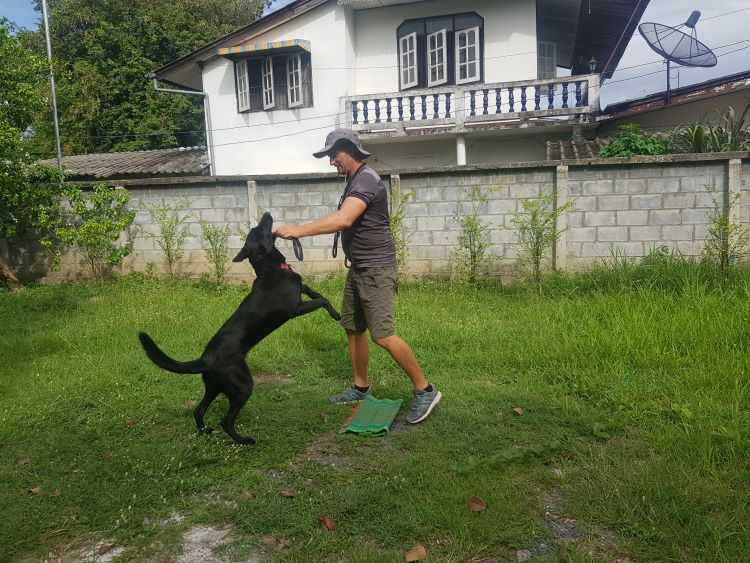
Gaze bridges thought to trust. The eyes reveal curiosity, tension, and desire long before the body moves. When you attune to this silent dialogue, connection becomes anticipation—communication before command.
Applied Prediction Technology: The Future of Canine Behavior
Wearable Sensors and Real-Time Monitoring
Advanced technology now enables continuous monitoring of your dog’s physiological state through wearable sensors that track heart rate variability, activity levels, and even stress hormones. These devices provide objective data about your dog’s internal state, often detecting stress or arousal before visible behavioral changes occur. Imagine receiving an alert that your dog’s stress levels are rising, allowing intervention before anxiety escalates into destructive behavior.
Current research combines these physiological measurements with artificial intelligence to create predictive models unique to each dog. Machine learning algorithms identify patterns in your dog’s biomarkers that precede specific behaviors, providing increasingly accurate predictions over time. This technology doesn’t replace your intuition but enhances it with objective data, creating a comprehensive understanding of your dog’s behavioral patterns.
Behavioral Tracking Applications
Modern apps transform your smartphone into a sophisticated behavioral tracking system, recording patterns that might escape casual observation. By logging behaviors, triggers, and outcomes, these applications reveal hidden patterns in your dog’s behavior. You might discover that your dog’s reactivity correlates with barometric pressure changes, or that their appetite fluctuates with subtle environmental factors you hadn’t noticed.
The real power of these applications lies in their predictive analytics. By analyzing historical data, they can forecast likely behavioral challenges and suggest proactive interventions. For instance, if the app identifies that your dog typically shows increased anxiety three days after grooming appointments, you can implement calming protocols during this vulnerable period.
Integration of AI and Predictive Modeling
Artificial intelligence revolutionizes behavioral prediction by identifying complex patterns impossible for humans to detect. Neural networks trained on thousands of dogs can recognize subtle behavioral signatures that precede aggression, fear, or medical issues. These systems continuously learn and refine their predictions, becoming more accurate with each interaction.
The integration of computer vision technology enables automatic behavior recognition through simple cameras. These systems can detect early signs of separation anxiety, identify pain-related movement changes, or recognize stereotypical behaviors indicative of stress. This continuous monitoring provides unprecedented insight into your dog’s behavioral patterns, especially during your absence 🧡
Training and Intervention: From Prediction to Prevention
Proactive Environmental Management
Armed with predictive knowledge, you can modify your dog’s environment to prevent problems before they occur. If you know your dog becomes reactive when surprised by sudden appearances, you can create visual barriers or controlled sight lines that allow gradual visual access to stimuli. This environmental engineering uses prediction to create success rather than waiting for failures to correct.
Strategic environmental modifications based on behavioral predictions might include installing baby gates before your dog develops barrier frustration, providing appropriate chewing outlets before destructive chewing begins, or creating safe spaces before anxiety manifests. Each modification responds to predicted needs rather than existing problems, fostering positive behavioral development.
Anticipatory Counterconditioning
Traditional counterconditioning waits for problematic behaviors to occur before intervention. Anticipatory counterconditioning uses behavioral prediction to begin positive association training before triggers reach threshold levels. When you notice early warning signs of anxiety or reactivity, you immediately begin pairing the distant trigger with high-value rewards, preventing the emotional cascade that leads to explosive behaviors.
This approach requires recognizing the subtle precursors to problematic behaviors—the slight tension that precedes barking, the focused stare that precedes lunging, or the stillness that precedes flight. By intervening during these predictive moments, you reshape your dog’s emotional response before it fully forms, creating new behavioral pathways that bypass problematic reactions.
Building Behavioral Resilience
Predictive awareness allows you to systematically build your dog’s coping skills before they face challenging situations. If you predict your dog will struggle with upcoming changes—a move, new baby, or schedule shift—you can implement preparatory training that builds relevant skills. This might include impulse control exercises, relaxation protocols, or graduated exposure to relevant stimuli.
The goal isn’t to eliminate all challenges but to prepare your dog with the tools they need to navigate predictable stressors. By building these skills proactively, you create a resilient dog capable of adapting to life’s inevitable changes. This approach transforms potentially traumatic experiences into manageable challenges your dog can successfully navigate.
Ethical Considerations: The Responsibility of Prediction
Welfare-Centered Prediction Models
As our ability to predict canine behavior improves, we must ensure these capabilities serve dogs’ welfare rather than simply human convenience. Prediction should inform interventions that reduce stress, prevent suffering, and enhance quality of life. When predictive technology focuses solely on performance or compliance without considering emotional well-being, it crosses ethical boundaries from support to manipulation.
Ethical prediction prioritizes understanding how your dog feels, not just what they’ll do. This means using predictive insights to identify and address sources of stress, fear, or discomfort rather than simply suppressing unwanted behaviors. A welfare-centered approach asks not “how can I stop this behavior?” but “what need is driving this behavior, and how can I address it?”
Respecting Canine Autonomy
While prediction enhances our ability to influence behavior, it shouldn’t eliminate your dog’s agency or natural behavioral expression. Dogs need opportunities to make choices, express preferences, and engage in species-typical behaviors. Prediction should inform management that expands positive choices rather than restricting all options to prevent any possibility of undesired behavior.
The ethical use of prediction recognizes that some degree of unpredictability is healthy and necessary. Your dog’s spontaneous play, unexpected preferences, and novel problem-solving approaches reflect their individuality and cognitive flexibility. Prediction should enhance understanding and communication, not create behavioral robots programmed to meet human expectations.
Trust-Based Relationships Through Predictive Understanding
When used ethically, behavioral prediction strengthens the human-dog bond by fostering mutual understanding and trust. Your dog learns to trust that you’ll recognize and respond to their needs before they escalate into desperate communication attempts. You trust your dog’s behavioral patterns, reducing anxiety about unexpected reactions and enabling greater freedom and enrichment opportunities.
This trust-based approach uses prediction to prevent the need for punishment or coercion. When you can predict and prevent problematic behaviors through environmental management and proactive training, punishment becomes unnecessary. Your dog experiences a world where their needs are anticipated and met, creating psychological safety that enhances well-being and strengthens your relationship 🐾
Senior Dogs and Predictive Changes
Age-Related Behavioral Shifts
As your dog ages, their behavioral patterns undergo predictable changes that require adjusted expectations and management strategies. Cognitive decline might manifest as increased anxiety, disrupted sleep patterns, or confusion about familiar routines. Recognizing these age-related changes as predictable developmental stages rather than behavioral problems allows for compassionate, appropriate interventions.
Physical changes also create predictable behavioral modifications. Arthritis might cause previously friendly dogs to show defensive behaviors when approached, while hearing loss might result in startle responses to unexpected touch. Understanding these predictable changes helps you modify interactions to maintain your senior dog’s comfort and dignity.
Adapting Prediction Models for Senior Dogs
The behavioral prediction models developed for your adult dog require recalibration as they age. Responses that were consistent for years might suddenly change as sensory, cognitive, or physical capabilities shift. This doesn’t mean prediction becomes impossible—rather, it requires incorporating age-related factors into your behavioral expectations.
Senior dogs often show increased behavioral variability as they navigate good days and bad days. Your predictive awareness must become more nuanced, recognizing that today’s capabilities might differ from tomorrow’s. This flexible approach to prediction maintains your dog’s quality of life while acknowledging their changing needs.
Conclusion: Is Behavioral Prediction Right for You and Your Dog?
Developing predictive awareness transforms your relationship with your dog from reactive management to proactive partnership. You’ll find yourself preventing problems rather than solving them, addressing needs before they become demands, and creating an environment where your dog thrives. This journey requires patience, observation, and a willingness to see the world through your dog’s eyes.
The combination of scientific understanding, technological tools, and compassionate observation creates unprecedented opportunities for enhancing canine welfare. Whether you use simple observation techniques or advanced wearable technology, the goal remains the same: understanding your dog’s inner world to create a life filled with security, enrichment, and joy.
Remember that perfect prediction isn’t the goal—understanding and connection are. Every dog is unique, with individual patterns, preferences, and peculiarities that make them special. Behavioral prediction simply provides a framework for deeper understanding, allowing you to become the advocate, translator, and partner your dog deserves.
As you develop your predictive skills, you’ll discover that reading your dog’s behavior becomes second nature. Those subtle signals that once seemed mysterious will become clear communications. The anxiety about unexpected reactions will fade as patterns emerge. Most importantly, your dog will experience the profound security that comes from being truly understood.
Ready to begin this journey? Start with simple observation. Notice the small behaviors that precede the big ones. Track patterns across different contexts. Celebrate the moments when you successfully predict and prevent problems. With time and practice, you’ll develop an intuitive understanding that strengthens your bond and enhances both your lives.
The science of behavioral prediction offers a window into your dog’s mind, but it’s your love, patience, and commitment that transform this knowledge into a thriving partnership. Your dog is already telling you everything you need to know—behavioral prediction simply teaches you how to listen 🧡










