

When your furry friend suddenly turns away from a visitor, freezes at the sound of thunder, or retreats to their safe space without warning, they’re communicating something profound. Avoidance behaviour in dogs is far more than simple dislike or stubbornness—it’s a complex survival mechanism deeply rooted in biology, emotion, and experience. Understanding these behaviours is essential to building a trusting relationship with your companion and helping them navigate the world with confidence rather than fear.
Avoidance can range from subtle shifts in gaze and body posture to overt escape or complete freezing. While these responses are fundamental to an animal’s survival, allowing them to evade potential dangers or discomfort, chronic or exaggerated avoidance can significantly impair your dog’s quality of life. When avoidance becomes the default response, it leads to chronic stress, diminished learning capacity, and reduced social engagement—ultimately affecting the joyful bond you share.
In this guide, we’ll explore the biological, cognitive, and environmental mechanisms that drive avoidance behaviours. You’ll discover how fear, pain, and learned experiences contribute to behavioural withdrawal, and learn to distinguish between adaptive avoidance—a healthy self-protective mechanism—and maladaptive avoidance, which manifests as generalized fear or complete shutdown. Most importantly, you’ll gain evidence-based insights to help restore confidence and promote resilience in dogs exhibiting problematic avoidance patterns.
The Science Behind Withdrawal: Understanding Your Dog’s Emotional Brain
To truly understand why your dog chooses withdrawal over engagement, we need to explore the remarkable neuroscience underlying these behaviours. Your dog’s brain contains sophisticated emotional systems that have evolved over millions of years, and understanding these systems helps us respond with compassion rather than frustration.
Affective Neuroscience: The Emotional Systems at Play
Jaak Panksepp’s groundbreaking work in Affective Neuroscience reveals that all mammals, including your dog, possess several primary emotional systems hardwired into their brains. These aren’t learned responses—they’re fundamental survival mechanisms that operate at a deep, instinctive level.
The FEAR System: Your Dog’s Internal Alarm
When your dog perceives a threat, whether real or imagined, their FEAR system activates instantly. This ancient circuit triggers defensive behaviours like freezing, flight, or fight. In the context of avoidance, this system drives your dog to withdraw from perceived danger. You might notice your dog’s pupils dilate, their body tense, and their weight shift backward—all signs that their internal alarm is sounding.
What makes this particularly challenging is that the FEAR system doesn’t always distinguish between genuine threats and false alarms. A dog who has been startled by a loud noise near a doorway might develop a generalized fear of all doorways, even though the actual threat is long gone.
The PANIC/GRIEF System: Separation and Social Loss
This emotional system governs separation distress and social bonding. When chronically activated, it leads to anxiety and a powerful drive to avoid situations that might trigger feelings of isolation or abandonment. Dogs with overactive PANIC/GRIEF systems may follow you from room to room, become distressed when left alone, or avoid situations where they fear separation.
The Suppression Effect: When Fear Steals Joy
Here’s where avoidance becomes particularly problematic. Panksepp’s research shows that overactivation of the FEAR and PANIC systems actively suppresses other vital emotional systems—specifically the SEEKING drive (motivation, exploration, anticipation of reward) and the PLAY drive (joy, social bonding). When your dog exists in a constant state of fear or anxiety, their natural inclination to explore, learn, and engage in playful interactions is inhibited. Through the NeuroBond approach, we recognize that trust becomes the foundation for reactivating these suppressed systems, allowing curiosity and joy to resurface.
This suppression creates a self-perpetuating cycle. The more a dog avoids, the less they experience positive outcomes, which reinforces their belief that avoidance is the safest strategy. Breaking this cycle requires patience, understanding, and strategic intervention.
How Avoidance Becomes Learned: The Two-Factor Theory
Avoidance isn’t always an instinctive response—often, it’s something dogs learn through experience. Avoidance learning is a form of operant conditioning maintained by negative reinforcement, and understanding this process helps explain why these behaviours can become so persistent.
Stage One: Classical Conditioning and Fear Acquisition
Initially, a neutral stimulus (like a specific sound, person, or location) becomes associated with an aversive experience. Perhaps your dog heard a loud bang while walking past a construction site, or they experienced pain at the veterinary clinic. Through classical conditioning, that previously neutral stimulus now triggers a conditioned fear response—anxiety, tension, increased heart rate.
Stage Two: Operant Conditioning and Avoidance Maintenance
Once the fear association is established, your dog learns that performing certain behaviours (running away, hiding, refusing to walk forward) successfully removes them from the fear-inducing situation. The relief they experience—the reduction in anxiety—acts as a powerful negative reinforcer. This is why avoidance behaviours are notoriously resistant to extinction. Every time your dog successfully avoids the feared stimulus, the behaviour is strengthened.
You might notice this when your dog pulls away on walks near a particular house where a dog once barked aggressively. Each time they successfully avoid that house, they feel relief, which reinforces the avoidance behaviour. The challenge is that they never get the opportunity to learn that the situation might actually be safe now.
Learned Helplessness: When Coping Mechanisms Fail
Perhaps one of the most heartbreaking forms of avoidance comes from learned helplessness—a state where your dog has learned that nothing they do makes a difference. Developed by Martin Seligman, this model explains what happens when dogs are repeatedly exposed to uncontrollable aversive situations.
The Experimental Foundation
Seligman’s initial research involved dogs subjected to inescapable aversive stimuli. When later placed in situations where escape was possible, these dogs often made no attempt to escape, instead passively enduring discomfort. They had learned that their actions were ineffective, leading to a generalized expectation of helplessness.
Three Deficits of Learned Helplessness
Dogs experiencing learned helplessness exhibit three interconnected deficits:
- Motivational Deficit: Reduced initiation of voluntary responses. Your dog simply doesn’t try anymore because past attempts proved futile.
- Cognitive Deficit: Difficulty learning that responses can be effective in new situations. Even when opportunities for positive outcomes arise, they don’t recognize them.
- Emotional Deficit: Manifestations of depression, anxiety, and apathy. Your dog may appear flat, unresponsive, or emotionally withdrawn.
Real-World Applications
Learned helplessness develops when dogs face unpredictable or inescapable punishment, chronic pain, or environments where their attempts to cope are consistently thwarted. Examples include being confined with an aggressive dog, constant scolding for natural behaviours, or living in environments where normal attempts at communication are ignored or punished.
This profound behavioural inhibition manifests as shutdown responses and a generalized reluctance to engage with the environment. These dogs need more than training—they need therapeutic intervention that rebuilds their sense of agency and control. 🧡
The Polyvagal Perspective: Three Levels of Response
Stephen Porges’ Polyvagal Theory provides a sophisticated framework for understanding how your dog’s nervous system responds to perceived safety or threat. This theory proposes a hierarchical organization of three neural circuits that dictate physiological and behavioural responses.
The Ventral Vagal Complex: Social Engagement and Safety
This is the most evolutionarily recent circuit, associated with calm, connection, and social engagement. When your dog feels safe, this system is active, allowing for flexible, adaptive responses. You’ll see a relaxed body, soft eyes, and an openness to interaction. The Invisible Leash reminds us that this state of calm awareness—not tension or control—creates the foundation for genuine connection.
The Sympathetic Nervous System: Fight or Flight
When the ventral vagal system is overwhelmed by perceived danger, the sympathetic nervous system activates, leading to mobilization responses. Your dog may flee, become reactive, or display hypervigilance. This is active avoidance—your dog is trying to escape the threat.
The Dorsal Vagal Complex: Shutdown and Freeze
When threat becomes extreme or inescapable, the most ancient circuit activates, leading to freeze, shutdown, or immobilization responses. This dissociative state conserves energy and minimizes pain but results in profound behavioural withdrawal. Your dog may appear to “check out,” becoming unresponsive to cues that would normally engage them.
Understanding this hierarchy helps explain why some dogs freeze while others flee, and why simply trying to “train through” shutdown responses can actually worsen the problem. A dog in dorsal vagal shutdown isn’t being stubborn—they’re in a state of neurological overwhelm that requires gentle, patient restoration of safety.
The Brain Architecture of Fear: Neural Pathways in Avoidance
To truly understand why avoidance behaviours become so deeply ingrained, we need to explore the specific brain structures that regulate fear learning and memory. Your dog’s brain contains an intricate network of regions that work together—or sometimes against each other—to process threat and safety.
The Amygdala: Your Dog’s Threat Detection System
Think of the amygdala as your dog’s internal alarm system. This almond-shaped structure deep in the brain serves as the fear center, constantly scanning for potential threats. The amygdala is remarkably efficient at its job, which explains why fear learning happens so quickly:
- Rapid Fear Acquisition: The amygdala can form associations between neutral stimuli and aversive events almost instantly. A single frightening experience at the vet’s office can create a lasting fear association.
- Fear Expression: When the amygdala detects a threat (real or remembered), it triggers the cascade of physiological responses you observe—increased heart rate, muscle tension, withdrawal, freezing.
- Emotional Memory Storage: The amygdala doesn’t just react to current threats; it stores emotional memories of past frightening experiences. This is why your dog might suddenly become fearful in a situation that seems completely new to you—their amygdala has detected a similarity to a past threat.
The amygdala’s activity heightens when your dog anticipates an aversive stimulus. This anticipatory fear is what drives avoidance behaviour—your dog isn’t avoiding the actual threat, but rather the possibility of encountering it.
The Hippocampus: Context and Memory Integration
Located adjacent to the amygdala, the hippocampus serves as your dog’s contextual memory system. While the amygdala asks “Is this dangerous?”, the hippocampus asks “Where and when did this happen?”
- Spatial Memory: The hippocampus encodes the physical location of fearful experiences. This is why your dog might avoid a specific park bench where they were startled, but feel comfortable on other benches.
- Temporal Context: It helps your dog remember the sequence of events leading to a frightening experience, allowing them to predict when danger might occur.
- Contextual Discrimination: A healthy hippocampus helps your dog distinguish between similar but different situations. This prevents fear from generalizing to every remotely similar context.
The hippocampus modulates the amygdala’s response based on contextual information. However, when chronic stress damages the hippocampus (which we’ll discuss shortly), this contextual discrimination breaks down, leading to overgeneralized fear and avoidance.
The Prefrontal Cortex: The Rational Regulator
If the amygdala is the alarm system, the prefrontal cortex (PFC) is the calm, rational voice trying to assess whether the alarm is warranted. This region, particularly the ventromedial prefrontal cortex (vmPFC), serves critical functions:
- Executive Control: The PFC helps your dog plan, make decisions, and control impulses rather than simply reacting to every perceived threat.
- Emotional Regulation: It actively inhibits amygdala activity when threats aren’t present, allowing your dog to remain calm in situations that might trigger their alarm system.
- Fear Extinction: The PFC is essential for learning that a previously feared stimulus is no longer dangerous. When you successfully desensitize your dog to something they fear, you’re strengthening PFC activity.
- Flexible Response Selection: Rather than defaulting to avoidance, a well-functioning PFC allows your dog to choose from multiple behavioural options based on current context.
In dogs with chronic fear or trauma, the PFC’s ability to regulate the amygdala becomes compromised. The rational voice gets drowned out by the alarm, leading to generalized and inflexible avoidance patterns.
Supporting Players: Other Critical Structures
Several additional brain regions contribute to the avoidance response:
- Thalamus: Acts as a relay station, routing sensory information to both the amygdala (for rapid threat detection) and the cortex (for more detailed processing). The amygdala often receives information faster than conscious processing occurs, which is why fear responses can happen before your dog seems to “realize” what they’re reacting to.
- Periaqueductal Gray (PAG): This midbrain structure organizes defensive behaviours. Different regions of the PAG control different defensive strategies—one area triggers freezing, another initiates flight, and yet another generates defensive aggression. The PAG is why your dog’s avoidance might look different in different situations.
- Basal Ganglia: These structures are involved in habit formation and motor control. When avoidance behaviours are repeated frequently, the basal ganglia encode them as automatic habits. This is why long-standing avoidance patterns can feel “reflexive”—they’ve literally become habitual motor programs that activate without conscious decision-making.
The Neural Network in Action
These structures don’t operate in isolation—they form an interconnected network:
- Initial Threat Detection: Sensory information reaches the thalamus, which simultaneously sends signals to both the amygdala (fast, emotional route) and the sensory cortex (slower, detailed route).
- Emotional Evaluation: The amygdala rapidly evaluates threat level and, if danger is detected, activates fear responses and retrieves relevant fear memories.
- Contextual Assessment: The hippocampus provides context—”Where are we? When did this happen before? Is this situation truly the same as that previous threat?”
- Rational Evaluation: The prefrontal cortex receives all this information and attempts to modulate the response—”Is this threat real or false alarm? What’s the most adaptive response?”
- Behavioural Output: Based on this neural conversation, the PAG and basal ganglia organize the specific behavioural response—freeze, flee, or approach with caution.
When this system functions well, your dog can respond flexibly to their environment. But when chronic stress disrupts this delicate balance—which we’ll explore next—avoidance becomes the default, inflexible response. 🧠

The Chronic Stress Cascade: When Biology Reinforces Avoidance
Understanding the neural structures is only part of the picture. We must also understand what happens when these systems are chronically activated—when your dog lives in a constant state of perceived threat. Chronic stress creates a biological environment that not only maintains but actively reinforces avoidance behaviours.
The HPA Axis: Your Dog’s Stress Response System
The Hypothalamic-Pituitary-Adrenal (HPA) axis is your dog’s central stress response system. When your dog perceives a threat, the hypothalamus triggers a cascade that ultimately results in cortisol release from the adrenal glands. In acute, short-term stress, this system is adaptive—it mobilizes resources to deal with threats.
However, chronic activation of the HPA axis leads to sustained elevation of cortisol, which has profound and damaging effects on the very brain structures we just discussed.
Cortisol’s Impact on the Fear Network
Chronically elevated cortisol doesn’t just signal stress—it actively remodels your dog’s brain in ways that perpetuate fear and avoidance:
Hippocampal Atrophy and Memory Disruption
- Structural Damage: Prolonged cortisol exposure can cause the hippocampus to shrink and lose neurons, particularly in areas responsible for contextual memory.
- Functional Consequences: With a damaged hippocampus, your dog loses the ability to accurately distinguish between threatening and safe contexts. Fear becomes overgeneralized—if one vet clinic was frightening, now all buildings with similar characteristics feel dangerous.
- Impaired Fear Extinction: The hippocampus plays a role in learning that previously feared situations are now safe. When it’s compromised, your dog can’t effectively “unlearn” old fears, making behaviour modification much more challenging.
Amygdala Hyperactivity and Threat Sensitivity
- Increased Excitability: Chronic stress makes the amygdala more reactive, lowering the threshold for what triggers a fear response.
- Enhanced Fear Learning: An overactive amygdala forms fear associations more quickly and more strongly. Your dog becomes increasingly sensitive, developing fear responses to stimuli that previously wouldn’t have bothered them.
- Persistent Activation: The amygdala stays “turned on,” maintaining a constant state of vigilance and threat detection. Your dog can’t truly relax, even in objectively safe situations.
Prefrontal Cortex Dysfunction and Lost Regulation
- Weakened Inhibitory Control: Chronic cortisol impairs the PFC’s ability to regulate and inhibit the amygdala. The rational voice becomes quieter while the alarm system grows louder.
- Rigid Response Patterns: With compromised executive function, your dog loses the ability to respond flexibly. They default to the same avoidance strategy regardless of whether it’s appropriate for the current situation.
- Impaired Learning: The PFC is essential for learning new, adaptive coping strategies. When it’s not functioning optimally, behaviour modification becomes more difficult—your dog struggles to learn that alternative responses might be more effective than avoidance.
The Self-Perpetuating Cycle
Here’s the devastating reality: these brain changes create a self-perpetuating cycle. Chronic stress damages the very structures needed to regulate stress, making the dog more vulnerable to stress, which causes more damage, which increases vulnerability further. Breaking this cycle requires intervention that addresses both the environmental stressors and the neurological consequences.
Sympathetic Nervous System Overactivation: Living in Constant Alert
Alongside cortisol elevation, chronic stress involves sustained activation of the sympathetic nervous system—the “fight or flight” system. Your dog’s body remains in a constant state of mobilization:
Physical Manifestations of Chronic SNS Activation
- Elevated Heart Rate and Blood Pressure: Your dog’s cardiovascular system operates as if constantly preparing for escape or defense.
- Persistent Muscle Tension: Muscles remain tight and ready for action, which can lead to physical discomfort and pain that further contributes to avoidance.
- Heightened Startle Response: Minor stimuli trigger exaggerated reactions. A door closing, a leaf blowing past—anything unexpected can provoke intense responses.
- Digestive Disruption: Chronic SNS activation interferes with normal digestion, potentially causing gastrointestinal issues that create additional discomfort and anxiety.
Behavioural Consequences
- Lowered Threshold for Avoidance: Because your dog’s system is already primed for threat response, even minor stressors trigger full avoidance behaviours. What might cause a slight pause in a relaxed dog sends an anxious dog into immediate withdrawal.
- Hypervigilance: Your dog constantly scans the environment for potential threats, unable to settle or focus on positive experiences. This hypervigilant state is exhausting and leaves no energy for exploration or play.
- Increased Stimulus Generalization: In this heightened state of arousal, the brain perceives more stimuli as threatening. The category of “dangerous things” expands to include increasingly benign situations.
- Reduced Learning Capacity: A nervous system in constant activation struggles to process new information. This is why trying to train a chronically stressed dog often proves frustrating—their brain literally isn’t in a state where learning can occur effectively.
Why Understanding This Matters for Intervention
Recognizing the biological cascade of chronic stress fundamentally changes how we approach avoidance behaviours. You can’t simply “train away” neurological changes caused by sustained cortisol elevation and sympathetic overactivation. Instead, intervention must focus on:
- Reducing Environmental Stressors: Minimizing triggers allows the HPA axis to down-regulate and cortisol levels to normalize.
- Building in Recovery Time: The brain needs time to heal. Neuroplasticity can reverse some stress-induced changes, but only when the stressors are removed or significantly reduced.
- Supporting Physiological Regulation: Techniques that calm the nervous system (appropriate exercise, massage, calming music, predictable routines) help shift from sympathetic dominance toward parasympathetic restoration.
- Medication When Necessary: For severely affected dogs, pharmaceutical support may be necessary to break the cycle of chronic stress activation, creating a neurological window where behaviour modification can be effective.
The goal isn’t just to change behaviour—it’s to change the underlying biology that drives the behaviour. When you help your dog’s nervous system shift from chronic activation to regulation, avoidance naturally begins to decrease because the brain is no longer constantly detecting threats. Through the NeuroBond approach, we recognize that true behavioural change requires addressing both the emotional relationship and the neurophysiological foundation beneath it. 🧡
Recognizing Avoidance: What Your Dog’s Body Is Telling You
Avoidance behaviours exist on a spectrum, from subtle signals that most people miss to obvious withdrawal that demands attention. Learning to recognize these signs early allows for intervention before patterns become deeply ingrained.
Subtle Avoidance Signals: The Early Warnings
Your dog often communicates discomfort long before they flee or freeze. These subtle signals are their attempt to create distance without confrontation:
- Gaze Aversion: Looking away from a person, object, or situation. This isn’t disinterest—it’s a polite request for space.
- Head Turning: Rotating the head away while the body remains relatively stationary. This is often accompanied by lip licking or nose licking.
- Sniffing the Ground: Suddenly becoming intensely interested in smells on the ground, especially in situations that were previously engaging. This displacement activity helps your dog self-soothe.
- Yawning: Not the tired yawn you see before sleep, but a stress yawn—wider, more exaggerated, and occurring in contexts where your dog isn’t sleepy.
- Lip Licking: Quick, repeated tongue flicks that aren’t related to food or water. This is a calming signal indicating mild stress.
- Body Curving: Creating a curved path rather than approaching directly. Dogs feeling uncertain will approach people or objects in an arc rather than head-on.
These subtle signals represent your dog’s attempt to communicate discomfort while maintaining social harmony. When we ignore these early warnings, dogs are forced to escalate to more overt avoidance behaviours.
Moderate Avoidance Behaviours: Clear Communication
When subtle signals are ignored or the stress level increases, your dog will display more obvious avoidance:
- Slow Movement or Hesitation: Moving forward reluctantly, with frequent stops and starts. Each pause is your dog assessing whether to continue or withdraw completely.
- Backing Away: Creating physical distance by moving backward, often while keeping eyes on the source of concern.
- Hiding Behind Objects or People: Seeking the protection of something familiar. A dog hiding behind your legs is asking you to be their social buffer.
- Tucked Tail: A tail held tight against the body or tucked between the legs signals fear and a desire to appear smaller and less threatening.
- Lowered Body Posture: Crouching, lowering the head and shoulders, or making the body appear smaller. This is submissive signaling combined with preparation for retreat.
- Ears Pinned Back: Ears held flat against the head indicate anxiety and readiness to withdraw.
These behaviours are your dog’s clear statement that they’re uncomfortable and seeking distance. Respecting these signals builds trust; ignoring them erodes it.
Overt Avoidance and Shutdown: Crisis-Level Responses
When all other attempts to create safety fail, dogs resort to extreme avoidance:
- Active Escape: Running away, pulling hard on the leash to leave, or bolting through doors. This is panic-driven flight.
- Freezing: Complete immobilization, becoming statue-like. This isn’t compliance—it’s overwhelm. The dog’s nervous system has entered dorsal vagal shutdown.
- Hiding: Seeking confined spaces like under beds, in closets, or behind furniture. These dogs are trying to make themselves invisible.
- Complete Shutdown: Unresponsive to normal cues, appearing detached or “absent.” The dog may be physically present but emotionally unavailable, having dissociated from the overwhelming situation.
- Refusal to Move: Planting all four paws and refusing forward movement, regardless of leash pressure or encouragement. This is sometimes called “acting like a statue.”
- Escape Attempts: Scratching at doors, jumping fences, or other desperate attempts to leave the environment entirely.
Dogs displaying these crisis-level responses require immediate intervention, but not through force or coercion. These behaviours signal that your dog’s nervous system is overwhelmed and their coping mechanisms have been exhausted. Moments of Soul Recall reveal how deeply emotional memory and past trauma intertwine in these extreme avoidance patterns.
The Biological Roots: When Body and Mind Drive Avoidance
Avoidance isn’t always purely psychological—physical factors play a crucial role in withdrawal behaviours. Understanding the biological underpinnings helps us address the root causes rather than merely managing symptoms.
Pain and Physical Discomfort: The Hidden Drivers
Chronic pain is one of the most overlooked causes of avoidance behaviour. Your dog can’t tell you in words that their hips ache or their teeth hurt, so they communicate through behaviour changes.
How Pain Manifests as Avoidance
Dogs experiencing pain often avoid activities or interactions that might exacerbate their discomfort:
- Activity Avoidance: Reluctance to climb stairs, jump onto furniture, or engage in previously enjoyed physical activities. An aging dog avoiding your morning jog might be experiencing joint pain rather than laziness.
- Touch Avoidance: Flinching, moving away, or showing signs of stress when touched in specific areas. A dog who once loved belly rubs but now walks away might be experiencing abdominal discomfort.
- Social Withdrawal: Avoiding interaction with other dogs or people because physical contact has become associated with pain. This is particularly common in dogs with arthritis who avoid being bumped or jostled.
- Changes in Posture: Hunched back, reluctance to fully extend the body, or careful, stilted movement patterns all indicate physical discomfort driving behavioural changes.
Common Pain-Related Conditions
Several health issues commonly drive avoidance through pain or discomfort:
- Arthritis and Joint Disease: Degenerative conditions causing chronic pain that worsens with movement or pressure.
- Dental Disease: Painful teeth or gums leading to avoidance of hard foods, chew toys, or even petting near the face.
- Gastrointestinal Issues: Chronic digestive problems causing a dog to associate eating or certain foods with discomfort.
- Injuries: Both obvious injuries and subtle strains that make certain movements or positions uncomfortable.
- Neurological Conditions: Issues affecting nerve function can cause pain, numbness, or unusual sensations that prompt avoidance of specific activities or body positions.
Sensory Sensitivities: When the World Is Too Much
Some dogs experience the world with heightened intensity. What seems like a normal environment to us might feel overwhelming to a dog with sensory sensitivities.
Auditory Sensitivities
Dogs hear frequencies and volumes humans cannot perceive. Sound-sensitive dogs may avoid:
- Environmental Noises: Thunder, fireworks, construction sounds, or traffic noise. These dogs might refuse walks on busy streets or hide during storms.
- Household Sounds: Vacuum cleaners, blenders, smoke alarms, or television sounds. You might notice your dog leaving the room when certain appliances are used.
- Human Voices: Loud talking, shouting, or arguments. Dogs can become hypervigilant to voice tone, avoiding interactions during any vocal tension.
Visual Sensitivities
Sudden movements, bright lights, or unfamiliar objects can trigger avoidance in visually sensitive dogs. These dogs might:
- Avoid environments with flickering lights or strong shadows
- React strongly to unexpected visual stimuli like reflections, sudden appearances, or things that move unpredictably
- Hesitate or refuse to walk through doorways or under objects that create visual uncertainty
Tactile Sensitivities
Some dogs are hypersensitive to touch, texture, or physical contact. This manifests as avoidance of:
- Being petted or groomed, especially in specific areas
- Walking on certain surfaces (wet grass, metal grates, slippery floors)
- Wearing collars, harnesses, or clothing
- Physical restraint or confinement, even gentle forms
Understanding sensory sensitivities helps us create environments that don’t constantly trigger avoidance responses. For these dogs, what looks like “misbehaviour” is actually sensory overwhelm. 🧠
Breed-Specific Predispositions: Genetics Matter
While every dog is an individual, breed characteristics can influence avoidance tendencies. Understanding your dog’s genetic background provides context for their behavioural patterns.
Herding Breeds
Border Collies, Australian Shepherds, and German Shepherds often exhibit heightened sensitivity and vigilance. Their genetic programming for alertness can make them more prone to:
- Noise sensitivity and reactivity to sudden sounds
- Anxiety in chaotic or unpredictable environments
- Avoidance of overwhelming social situations
- Hypervigilance that prevents relaxation
Sight Hounds
Greyhounds, Whippets, and Salukis can display more pronounced startle responses and avoidance of novel stimuli. Their genetics prioritize visual acuity and flight responses, contributing to:
- Strong flight instincts when startled
- Cautious approach to new people, objects, or environments
- Sensitivity to sudden movements
- Preference for predictable, calm environments
Toy and Companion Breeds
Chihuahuas, Yorkshire Terriers, and Maltese can be prone to anxiety and fear-based avoidance despite their size. These breeds may show:
- Wariness of strangers and novel situations
- Strong attachment to primary caregivers with corresponding separation anxiety
- Defensive behaviours when feeling threatened
- Avoidance of rough play or overwhelming social situations
Working and Guardian Breeds
Rottweilers, Dobermans, and Mastiffs, while confident in their roles, can develop avoidance if not properly socialized. Their natural protective instincts can manifest as:
- Wariness of unfamiliar people or dogs
- Avoidance in situations where they feel responsible for “protecting” but uncertain how to respond
- Anxiety when unable to fulfill their perceived guardian role
Understanding breed tendencies doesn’t excuse problematic behaviour, but it provides context for why certain dogs might be more prone to avoidance and helps us set realistic expectations for intervention.
The Sensory World: Environmental Triggers You Might Be Missing
Your dog experiences the physical environment with senses far more acute than yours. What seems like a comfortable, normal space to you might feel overwhelming, uncomfortable, or even frightening to your dog. Understanding these sensory triggers is essential because they’re often the hidden drivers of seemingly inexplicable avoidance behaviours.
Flooring: The Foundation of Confidence
The surface beneath your dog’s paws has a more significant impact on their confidence than most people realize. Flooring issues are among the most common yet overlooked triggers for avoidance behaviour.
Why Slippery Floors Terrify Some Dogs:
- Loss of Traction Control: Dogs rely on their ability to grip the ground for movement, balance, and quick escape if needed. Slippery surfaces (hardwood, tile, laminate) create uncertainty about movement, which triggers anxiety.
- Physical Pain Association: For dogs with orthopedic issues like hip dysplasia, arthritis, or cruciate ligament problems, slipping can cause acute pain. One painful slip creates a lasting association between that flooring type and discomfort.
- Vulnerability Perception: When your dog can’t maintain stable footing, they feel vulnerable—unable to flee if threatened or defend themselves if necessary. This perception of vulnerability triggers avoidance.
- Age-Related Concerns: Puppies with developing joints and senior dogs with declining strength are particularly vulnerable to flooring fears. Their reduced physical stability makes slippery surfaces genuinely dangerous.
Practical Flooring Solutions:
- Provide Traction: Use non-slip rugs, yoga mats, or carpet runners to create “safe pathways” through slippery areas. Many dogs will use these paths exclusively.
- Paw Grip Products: Dog booties with rubber soles, paw wax, or traction-enhancing sprays can help dogs feel more secure.
- Nail Maintenance: Keep nails properly trimmed. Overgrown nails reduce traction and can cause slipping on smooth surfaces.
- Gradual Desensitization: If your dog avoids certain floors, work on building positive associations gradually, always respecting their comfort level.
- Consider Permanent Changes: For dogs with severe flooring phobias or mobility issues, transitioning to carpet or adding permanent non-slip treatments to existing floors may be necessary.
Other Flooring Considerations:
- Texture Sensitivity: Some dogs avoid rough surfaces that feel uncomfortable on paw pads, or are fearful of grated surfaces where they can see through to the ground below.
- Temperature: Hot pavement in summer or ice-cold tile in winter can create avoidance of outdoor walks or specific rooms.
- Sound: Certain flooring makes noise when walked on (clicking nails on hardwood), which can startle noise-sensitive dogs and create a feedback loop of anxiety.
Lighting: The Overlooked Sensory Stressor
Light profoundly affects your dog’s perception of safety and comfort, yet it’s rarely considered when addressing avoidance behaviours.
How Lighting Affects Behaviour:
- Harsh Fluorescent Lights: The flicker (often imperceptible to humans) can be distressing to dogs. Some dogs actively avoid rooms with fluorescent lighting, appearing to have “room-specific” anxiety that’s actually light-related.
- Sudden Light Changes: Automatic lights that turn on suddenly, or moving from bright outdoor sun to dim indoor spaces, can be disorienting and trigger startle responses.
- Shadows and Movement: Light creating moving shadows (from fans, trees outside windows, passing cars) can trigger prey drive or appear threatening to anxious dogs.
- Bright Direct Light: Intense sunlight streaming through windows or bright spotlights can be uncomfortable for some dogs, causing them to avoid those areas.
- Darkness and Visual Uncertainty: Dogs with vision impairments, senior dogs with declining vision, or naturally cautious dogs may avoid poorly lit areas where they can’t fully assess their environment.
Lighting Solutions for Anxious Dogs:
- Soft, Consistent Lighting: Replace fluorescent bulbs with LED or incandescent options that don’t flicker. Use dimmer switches to control intensity.
- Night Lights: For dogs anxious in darkness, strategically placed night lights create security without overwhelming brightness.
- Window Management: Use curtains or blinds to control moving shadows and reduce visual overstimulation from outdoor activity.
- Gradual Transitions: When possible, allow gradual light transitions rather than sudden changes from bright to dark or vice versa.
Subtle Environmental Stressors: The Chronic Low-Level Triggers
Many dogs live with constant, low-level sensory discomfort from sources their owners never notice. These subtle stressors don’t cause acute fear, but they create chronic anxiety that manifests as generalized avoidance or anxiety.
Auditory Irritants You Might Miss:
- Electronic Device Sounds: High-frequency whines from televisions, computers, chargers, and appliances that humans can’t hear but dogs find irritating
- HVAC Systems: Humming, rattling, or whistling from heating and cooling systems
- Refrigerator Compressors: The sudden click and hum when refrigerators cycle on
- Electrical Interference: Buzzing from dimmer switches or old wiring
- Neighbor Noise: Sounds from adjacent apartments or houses that you’ve habituated to but your dog finds unpredictable and stressful
Visual Overstimulation:
- Television/Screen Activity: Fast-moving images, sudden scene changes, or specific types of content that trigger arousal
- Window Views: Constant visual stimulation from busy streets, wildlife, or other dogs passing by
- Reflective Surfaces: Mirrors or reflective windows that create confusing visual information
Olfactory Concerns:
- Cleaning Products: Strong chemical smells from cleaning supplies, air fresheners, or scented candles can be overwhelming
- Other Animals: Scent marking from other pets or wildlife near your home creating territorial stress
- Human Products: Perfumes, colognes, or other scented personal care products
Temperature and Air Quality:
- Poor Ventilation: Stuffy air or inadequate airflow creating discomfort
- Temperature Extremes: Rooms that are too hot or too cold, making your dog avoid those spaces
- Humidity Levels: Very dry or very humid air affecting comfort, particularly for brachycephalic breeds
- Air Pollution: In urban environments, poor air quality affecting sensitive dogs
Assessing Your Dog’s Sensory Environment:
To identify hidden sensory triggers:
- Observe Patterns: Note exactly which rooms or areas your dog avoids. Is there a common sensory feature?
- Time-Based Analysis: Does avoidance occur at specific times of day? This might indicate time-dependent triggers (sunlight position, neighbor activities, appliance cycles).
- Process of Elimination: Temporarily modify one environmental factor at a time to identify culprits.
- Sensitivity Testing: If you suspect subtle sounds, try using white noise machines or calming music to mask potential irritants and see if behaviour improves.
- Professional Assessment: For persistent unexplained avoidance, consider having a veterinary behaviourist or certified dog behaviour consultant assess your home environment.
Creating a sensory-friendly environment isn’t about eliminating all stimulation—it’s about reducing chronic low-level stressors that keep your dog’s nervous system in a state of constant mild activation. When the sensory environment supports rather than challenges your dog, you create the foundation for confident engagement rather than withdrawal. 🐾
Environmental and Social Influences: Context Shapes Behaviour
Your dog doesn’t exist in a vacuum—their environment profoundly influences whether they approach life with confidence or withdraw in uncertainty. The physical, social, and emotional contexts you create can either exacerbate avoidance or provide the foundation for courage.
Multi-Dog Households: Social Dynamics at Play
Living with other dogs creates a complex social environment that can either support confidence or drive avoidance.
How Multiple Dogs Can Exacerbate Avoidance
Not all multi-dog dynamics are positive. In some households, the presence of other dogs creates additional stress:
- Resource Guarding: When dogs compete for food, toys, sleeping spaces, or human attention, anxiety increases. A less confident dog might avoid the feeding area entirely to prevent confrontation.
- Social Conflict: Ongoing tension between household dogs creates chronic stress. The subordinate or more sensitive dog may withdraw from shared spaces, limit their movement through the house, or avoid interactions that might trigger conflict.
- Bullying or Harassment: Sometimes one dog persistently bothers, blocks, or harasses another. The targeted dog develops avoidance patterns to prevent these negative interactions.
- Competitive Attention-Seeking: In households where dogs compete for human attention, a more reserved dog might give up entirely, avoiding situations where attention is being distributed.
How Multiple Dogs Can Suppress Avoidance
Conversely, positive multi-dog dynamics can actually reduce avoidance behaviours:
- Social Support: A confident, well-adjusted resident dog can act as a social buffer or role model. Your fearful dog might gain courage by observing the calm behaviour of their companion, learning that certain situations are actually safe.
- Play and Engagement: Positive interactions with other dogs build confidence and provide healthy outlets for stress, reducing the need for avoidance.
- Shared Exploration: Some dogs feel braver exploring new environments when accompanied by a confident canine friend. The presence of a trusted companion can override initial avoidance impulses.
The key is ensuring that multi-dog relationships are genuinely positive, not just non-violent. Watch for subtle signs of tension, ensure each dog has their own resources, and provide individual attention to prevent competition-driven anxiety.
Chaotic Human Environments: When Unpredictability Breeds Anxiety
The emotional and practical stability of your household directly influences your dog’s confidence. Chaos creates uncertainty, and uncertainty triggers avoidance.
Factors That Increase Avoidance
Several household characteristics can push dogs toward chronic avoidance:
- Inconsistent Routines: Unpredictable schedules for feeding, walks, and interactions create constant uncertainty. Dogs thrive on routine because predictability provides security. When they can’t anticipate what happens next, anxiety increases, and avoidance becomes a default coping strategy.
- Loud Noises and Frequent Arguments: Constant shouting, loud music, or frequent human conflicts create a chronically stressful auditory environment. Dogs living in these conditions often become hypervigilant, withdrawing to avoid the unpredictable emotional storms.
- Inconsistent Communication and Training: When humans are inconsistent in their cues, expectations, or emotional responses, dogs struggle to understand what’s expected. This confusion leads to anxiety and a tendency to avoid interaction to prevent making “mistakes.” If “sit” means different things depending on who’s asking or the situation, your dog learns that engagement is risky.
- Lack of Personal Space: Children or adults who constantly bother or over-handle a dog without respecting boundaries can lead to complete avoidance of human interaction. Dogs need the autonomy to choose when and how to engage.
- High Arousal Levels: Environments with constant high energy, excitement, or human stress can be overwhelming for sensitive dogs, prompting them to seek quiet, isolated spaces where they can regulate their nervous system.
Creating Environments That Support Confidence
The antidote to chaos is thoughtful structure and emotional regulation:
- Consistent Routines: Predictable schedules for feeding, walks, training, and rest reduce anxiety and provide a sense of security. When your dog knows what to expect, they’re less likely to feel defensive or withdrawn.
- Clear Communication: Consistent cues and positive reinforcement-based training build trust and understanding, empowering your dog to engage rather than withdraw. When the rules are clear and fair, participation feels safe.
- Emotional Regulation: Calm, emotionally stable human caregivers can co-regulate your dog’s emotional state, providing a sense of safety and reducing reliance on avoidance. This is the essence of the NeuroBond framework—creating emotional attunement between human and dog.
- Designated Safe Spaces: Providing a quiet, private retreat (like a comfortable crate or specific room) allows your dog to self-regulate and retreat when needed without developing generalized avoidance. This gives them agency and control over their environment.
- Respect for Boundaries: Teaching family members (especially children) to recognize and respect your dog’s signals for space creates an environment where your dog doesn’t need to hide to feel safe.
The Power of Human Emotions: How Your State Shapes Their World
Dogs are exquisitely attuned to human emotions. Your emotional state—particularly frustration, anxiety, and tension—profoundly influences your dog’s decision to approach or withdraw.
Dogs as Emotional Mirrors
Your furry friend is an expert at reading subtle cues: facial expressions, body posture, muscle tension, vocal tone, and even physiological changes like increased heart rate or cortisol levels. They don’t just observe these signals—they respond to them, often mirroring or reacting to your emotional state.
Frustration: When Your Stress Creates Distance
An owner’s frustration during training, dealing with challenging situations, or simply having a difficult day manifests as tense body language, sharp vocal tones, or abrupt movements. Your dog perceives frustration as a potential threat or signal of impending punishment. They may become hesitant, offer appeasement signals (lip licking, yawning, sniffing the ground), or actively create distance.
If your frustration is unpredictable or perceived as a precursor to punishment, your dog learns to avoid you or the situation entirely. Every time they successfully avoid your frustrated state, the relief they experience reinforces the avoidance behaviour. This creates a challenging cycle: your frustration about your dog’s behaviour causes them to avoid more, which increases your frustration.
Anxiety and Tension: The Contagious Nature of Worry
When you’re anxious or tense—whether about your dog’s behaviour, life stresses, or anticipated challenges—your dog picks up on subtle cues like shallow breathing, increased heart rate, rigid posture, or worried facial expressions. Research shows dogs can even synchronize their breathing patterns with humans, indicating profound emotional attunement.
Your dog’s response to your anxiety typically falls into one of two patterns:
- Withdrawal Response: Your dog interprets your anxiety as a signal that the environment is unsafe or that you’re unable to provide protection. This leads them to become anxious themselves, choosing to withdraw, hide, or become hypervigilant. Dogs whose owners exhibit higher levels of hostility, interpersonal sensitivity, or anxiety may show greater difficulty overcoming their own fear-based behaviours.
- Reassurance-Seeking Response: Some dogs, particularly those with secure attachments, approach anxious owners seeking reassurance or comfort. However, if you’re too overwhelmed by your own anxiety to provide effective comfort, this can exacerbate your dog’s distress. The cycle continues when the dog realizes their bid for comfort goes unmet, leading to eventual withdrawal.
The Impact on Your Relationship
Your emotional state is intrinsically linked to the quality of your bond with your dog. Chronic exposure to negative human emotions undermines your dog’s sense of security, leading to increased anxiety and greater propensity for avoidance as a coping mechanism.
This doesn’t mean you need to be perfectly calm at all times—that’s unrealistic. Instead, awareness of how your emotional state affects your dog allows you to:
- Take a pause when you’re feeling frustrated during training
- Recognize when your anxiety might be contributing to your dog’s withdrawal
- Practice co-regulation by consciously calming yourself before interacting with your dog
- Seek support when your own emotional challenges are consistently impacting your relationship
That balance between acknowledging your own humanity and recognizing your influence on your dog’s emotional world—that’s the essence of Zoeta Dogsoul. 🧡
Rebuilding Confidence: Evidence-Based Approaches to Reducing Avoidance
Understanding the mechanisms behind avoidance is essential, but the ultimate question is: how do we help dogs move from chronic withdrawal to confident engagement? The following approaches represent evidence-based strategies for restoring your dog’s sense of safety and capability.
Creating Safety: The Foundation of All Intervention
Before any training or behaviour modification can be effective, your dog must feel fundamentally safe. This isn’t about coddling or enabling avoidance—it’s about establishing the neurological foundation from which learning and growth become possible.
Environmental Safety Measures
Start by assessing and modifying your dog’s physical environment:
- Provide Reliable Safe Spaces: Designate specific areas where your dog can retreat without interruption. This might be a crate, a quiet room, or a specific corner. The key is that these spaces are inviolable—no one bothers your dog there.
- Reduce Triggering Stimuli: Identify what specifically triggers avoidance and temporarily reduce exposure while building coping skills. If your dog is sound-sensitive, use white noise machines or calming music to buffer environmental noise.
- Create Predictable Routines: Establish consistent schedules for feeding, walks, training, and rest. Predictability reduces anxiety by allowing your dog to anticipate what comes next.
- Manage Social Interactions: Control who interacts with your dog and how. No forced greetings, no overwhelming situations. Let your dog set the pace for social engagement.
Emotional Safety: The Human Component
Your emotional regulation directly impacts your dog’s sense of safety:
- Practice Calm Presence: Before interacting with your dog, take several deep breaths and consciously relax your body. Dogs immediately detect tension.
- Avoid Punishment-Based Approaches: Fear and avoidance cannot be “corrected” through punishment. This only confirms your dog’s belief that the world is unsafe.
- Provide Unconditional Positive Regard: Your dog needs to know that your affection isn’t contingent on their behaviour. Love them through their fear, not despite it.
- Respect Their Communication: When your dog signals discomfort, honor it. Forcing interaction teaches them their communication is meaningless, which increases helplessness.
Quiet. Guarded. Honest.
Avoidance is communication. When your dog turns away or freezes, they’re not ignoring you—they’re showing vulnerability. Withdrawal is their language for “I don’t feel safe.”
Fear steals curiosity. Chronic activation of the FEAR and PANIC systems silences the SEEKING and PLAY circuits. What once was exploration becomes hesitation, and joy gives way to self-protection.
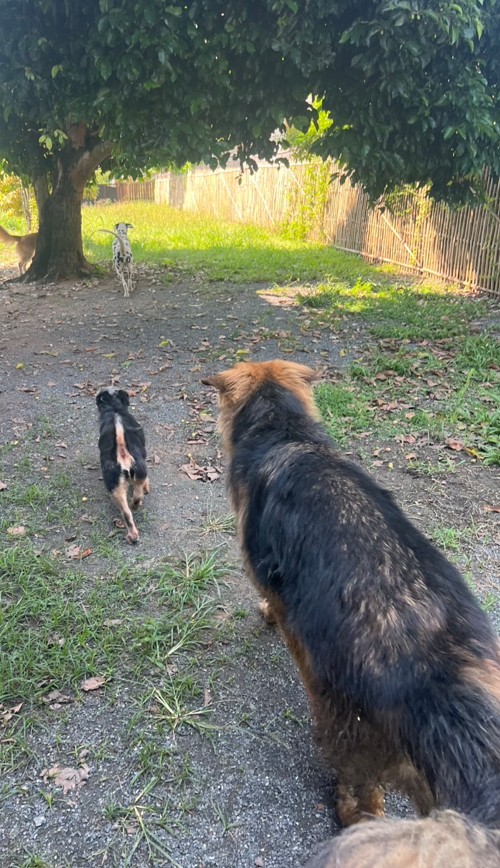
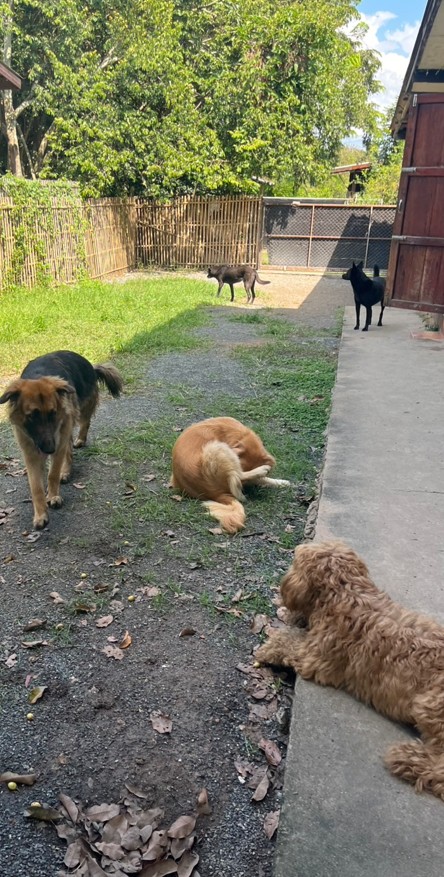
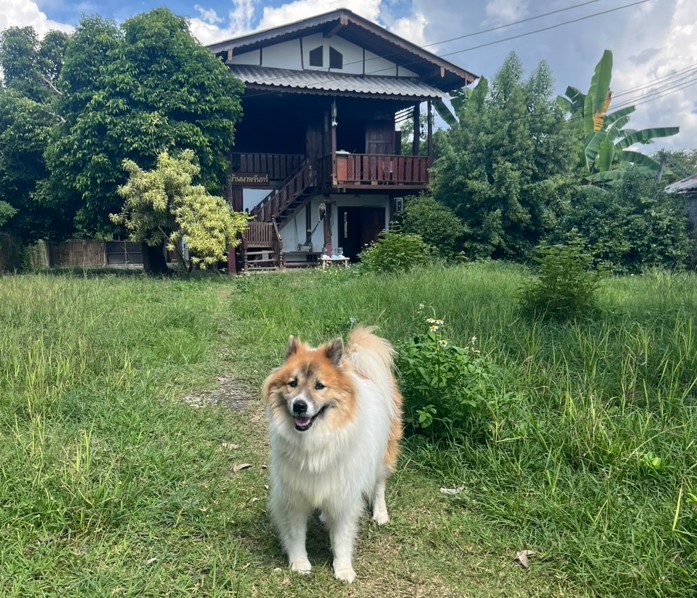
Safety rekindles engagement. Through steady trust and gentle exposure, avoidance transforms into confidence. When fear subsides, curiosity returns—and your dog learns the world is safe to approach again.
Systematic Desensitization: Gradual Exposure Done Right
Systematic desensitization is a cornerstone of behaviour modification for avoidance. The principle is simple: expose your dog to fear-inducing stimuli at intensities so low they don’t trigger avoidance, then gradually increase intensity as confidence builds.
The Process
- Identify the Trigger: Clearly define what your dog is avoiding. Is it specific people, sounds, objects, or environments?
- Create a Hierarchy: List variations of the trigger from least to most intense. For example, if your dog fears strangers:
- Person visible from 50 feet away
- Person visible from 30 feet away
- Person walking parallel to you
- Person approaching directly from 20 feet
- Person extending hand toward dog
- Person touching dog
- Begin at Sub-Threshold Levels: Start with the lowest-intensity version where your dog notices the stimulus but shows no avoidance behaviour. This is critical—if your dog is avoiding, you’ve started too high.
- Pair with Positive Experiences: While your dog observes the low-intensity trigger, provide something they love—high-value treats, favorite toys, or calm praise. Create a positive emotional association.
- Progress Gradually: Only move to the next level when your dog shows relaxed, confident behaviour at the current level. This might take days or weeks per level. Patience prevents setbacks.
- Watch for Stress Signals: If your dog shows any avoidance signals, you’ve progressed too quickly. Return to the previous level and spend more time building confidence there.
Common Mistakes to Avoid
- Flooding: Forcing your dog into overwhelming situations hoping they’ll “get over it.” This typically worsens fear and can cause complete shutdown.
- Moving Too Quickly: Advancing through the hierarchy based on your timeline rather than your dog’s readiness.
- Inconsistent Practice: Sporadic sessions are less effective than regular, shorter sessions.
- Missing Subtle Stress: Failing to recognize early avoidance signals and continuing the exposure anyway.
🧠 Understanding Canine Avoidance Behavior 🐾
A comprehensive guide to recognizing, understanding, and transforming withdrawal patterns in dogs
Phase 1: Early Recognition
Learning to read the subtle signals
Avoidance begins with subtle communication long before dogs flee or freeze. These early signals are your dog’s polite request for space: gaze aversion, head turning, sudden ground sniffing, stress yawning, and body curving. Recognizing these whispers prevents the need for your dog to shout.
• Quick tongue flicks unrelated to food
• Looking away when approached directly
• Sudden intense interest in smells on the ground
• Creating curved paths rather than straight approaches
• Slow, hesitant movement with frequent pauses
Ignoring subtle signals forces dogs to escalate. When we dismiss lip licking or head turning, we teach our dogs that polite communication doesn’t work—they must freeze, hide, or eventually use aggression to create the distance they need.
Phase 2: The Brain Behind Avoidance
Neural pathways that drive withdrawal
Amygdala (the alarm system) detects threats and triggers immediate fear responses. Hippocampus (the context keeper) remembers where and when frightening events occurred. Prefrontal Cortex (the rational voice) tries to regulate fear and assess actual danger. When these three structures work in harmony, dogs respond flexibly. When chronic stress disrupts this balance, avoidance becomes the default.
Prolonged cortisol elevation literally reshapes your dog’s brain: the hippocampus shrinks (losing contextual discrimination), the amygdala becomes hyperactive (detecting threats everywhere), and the prefrontal cortex weakens (unable to regulate fear). This creates a self-perpetuating cycle where stress damages the structures needed to manage stress.
Through the NeuroBond approach, we recognize that healing these neural pathways requires more than training—it requires emotional attunement. Your calm, regulated nervous system can co-regulate your dog’s overactive fear circuits, creating the neurological foundation where learning becomes possible again.
Phase 3: Root Cause Assessment
Distinguishing biological from behavioral drivers
Before assuming behavioral issues, rule out pain. Dogs experiencing chronic discomfort often avoid activities that exacerbate their condition: reluctance to climb stairs (joint pain), flinching when touched (dental disease), avoiding play with other dogs (fear of being bumped). A veterinary examination should always be your first step when avoidance emerges suddenly.
• Auditory: Fireworks, thunderstorms, vacuum cleaners, electronic device hums
• Visual: Flickering lights, sudden movements, unfamiliar objects
• Tactile: Slippery floors, certain textures, grooming procedures
• Environmental: Temperature extremes, poor air quality, confined spaces
Map your home through your dog’s senses. Lie on the floor to see what they see. Listen for electronic hums. Check for slippery surfaces. Note temperature variations. Identify escape routes. This sensory audit often reveals hidden triggers that simple environmental modifications can address immediately.
Phase 4: Understanding Memory & Spread
Why fears become hardwired and spread
Fear memories form rapidly and last indefinitely. A single traumatic event—one dog attack, one painful vet visit—can create an avoidance pattern that persists for years. Stress hormones released during frightening experiences actively strengthen memory consolidation, which is why prevention is always easier than cure.
Initial fear: Fireworks on New Year’s → First spread: All sudden loud bangs → Further spread: Any unexpected sounds → Extreme: Avoidance of outdoor spaces. This is how a specific fear becomes a generalized anxiety that limits your dog’s entire world.
Early intervention is crucial. Address emerging fears immediately before they generalize. Work with very specific versions of feared stimuli and gradually introduce variation only as confidence builds. If fear is already spreading, professional help can contain the generalization before it encompasses your dog’s entire environment.
Even after successful behavior modification, original fears can resurface—especially after stressful life events or long periods without exposure. This isn’t failure; it’s neurobiology. Fear memories aren’t erased, they’re suppressed. Occasional tune-ups may be necessary throughout your dog’s life.
Phase 5: Establishing Safety First
The non-negotiable foundation for change
Before any training begins, create reliably safe spaces where your dog can retreat without interruption. Establish predictable daily routines. Reduce triggering stimuli. Control social interactions. Ensure escape routes remain open. Safety isn’t coddling—it’s the neurological foundation that allows the prefrontal cortex to re-engage and learning to become possible.
Dogs are emotional mirrors, particularly sensitive to frustration, anxiety, and tension. Your emotional state directly influences your dog’s sense of safety. Before each interaction, take deep breaths and consciously relax your body. Practice calm presence. This isn’t just beneficial—it’s essential for your dog’s nervous system regulation.
True leadership isn’t about control—it’s about creating such clear communication and trust that your dog chooses to follow. The Invisible Leash reminds us that awareness, not tension, guides the path. When your dog feels fundamentally safe with you, avoidance naturally decreases.
Phase 6: Gradual Exposure Protocol
Building confidence through measured steps
Create a detailed hierarchy from least to most intense versions of the trigger. Start where your dog notices the stimulus but shows no avoidance—this is sub-threshold work. Progress gradually: if your dog shows any stress signals, you’ve moved too fast. This might mean spending weeks at each level. Patience prevents setbacks and builds genuine confidence.
Pair the feared stimulus with something your dog absolutely loves. The sequence matters: trigger appears → reward immediately follows. Your dog begins to anticipate: “Scary thing appears = amazing food appears.” The emotional response shifts from fear to positive anticipation. Success looks like your dog looking to you expectantly when the trigger appears, anticipating the reward.
• Week 1-2: Establish sub-threshold distance, pair with high-value rewards
• Week 3-6: Gradually decrease distance in small increments
• Week 7-12: Introduce mild variations of the trigger
• Ongoing: Maintain exposure, celebrate small victories, adjust pace to your dog’s comfort
Never force your dog into overwhelming situations hoping they’ll “get over it.” Flooding typically worsens fear, can cause complete shutdown, and damages trust. If you’re unsure whether exposure is too intense, err on the side of caution—slower is always better than faster.
Phase 7: Restoring Choice & Control
Empowering your dog through agency
Learned helplessness develops when dogs believe their actions don’t matter. The antidote? Restore agency. Use consent-based handling: extend your hand and wait—if your dog approaches, proceed; if they move away, respect that choice. Create opt-in training where choosing to engage leads to rewards. Let them set the pace of exploration.
• Place a mat on the floor; reward every voluntary choice to lie on it
• Present simple problems (treat under a cup); celebrate their solutions
• Walk alongside rather than dragging through new environments
• Allow investigation of novel objects at their pace
• Respect “no” signals without pressure or disappointment
Through moments of Soul Recall—those deep intuitive responses to past trauma—we witness how emotional memory shapes behavior. By giving dogs choices, we create new positive memories that compete with old fear memories. Each successful choice rebuilds their belief that they can affect outcomes, gradually transforming helplessness into confidence.
Phase 8: Realistic Recovery Expectations
Understanding the marathon, not sprint
Mild avoidance: 1-6 months with consistent work. Moderate avoidance: 4-12 months of focused intervention. Severe, long-standing avoidance: 12+ months, possibly lifelong management. Progress isn’t linear—expect plateaus, occasional setbacks, and breakthrough moments followed by more plateaus.
“Recovery” rarely means complete elimination of fear. Instead, it means improved coping, faster recovery after stress, increased resilience, functional living, and reduced baseline anxiety. Your dog may always notice triggers but recover faster, show lower intensity reactions, and have alternative behaviors besides pure avoidance.
Early wins (Weeks 1-4): One step closer to trigger, accepting treats near feared stimulus. Medium-term (Months 2-4): Threshold distance decreased, longer calm duration. Long-term (Months 6-12+): Handling mild stress without avoidance, quick recovery from setbacks, spontaneous confidence in daily life.
🔄 Avoidance Patterns Across Different Contexts
Herding breeds (Border Collies, Aussies) show heightened vigilance, noise sensitivity, and anxiety in chaotic environments. They may develop compulsive behaviors when anxious. Companion breeds (Chihuahuas, Maltese) show wariness of strangers, strong attachment-related anxiety, and defensive behaviors when feeling threatened despite their size.
Puppies (3-14 weeks) have a critical socialization window; fears formed here are particularly resistant. Adults (2-7 years) have established patterns requiring consistent intervention. Seniors (7+ years) may develop new avoidance due to pain, declining senses, or cognitive changes—always rule out medical causes first.
Acute avoidance (recent, specific trigger) responds well to systematic desensitization, often resolving in 1-3 months. Chronic avoidance (years of reinforcement) reflects deep fear memory consolidation, requiring 6-12+ months and possibly permanent management strategies. Early intervention dramatically improves prognosis.
Pain-based avoidance resolves when underlying physical condition is treated; behaviors are context-specific to painful activities. Fear-based avoidance persists even after original threat is removed; shows generalization to similar situations; requires behavior modification in addition to any medical treatment.
Single traumatic event creates focal, intense fear memory that can sometimes be addressed relatively quickly with proper counter-conditioning. Chronic stress exposure causes neurological changes (hippocampal atrophy, amygdala hyperactivity) requiring extensive nervous system down-regulation before behavior modification can be effective.
Genetic predisposition (temperamental fearfulness, breed tendencies) may require lifelong management; responds to intervention but baseline anxiety may remain. Learned avoidance (from specific experiences) generally has better prognosis with proper behavior modification; original confident temperament can often be restored.
Safety First: Reduce stressors + Create predictable routines + Provide escape options = Foundation for learning
Sub-Threshold Rule: Start where dog notices trigger but shows no stress + Pair with high-value reward + Progress only when relaxed = Sustainable confidence building
Progress Timeline: (Duration of avoidance × Severity) ÷ Consistency of intervention = Expected recovery time
Generalization Prevention: Early intervention + Specific stimulus control + Varied positive experiences = Contained fear category
Agency Restoration: Respect “no” signals + Provide choices + Celebrate voluntary engagement = Confidence & trust
🧡 The Zoeta Dogsoul Approach to Avoidance
Avoidance isn’t defiance or weakness—it’s communication from a nervous system in distress. Through the NeuroBond framework, we recognize that healing avoidance requires more than technique; it demands emotional attunement between human and dog. Your regulated nervous system becomes the anchor that helps your dog’s overactive fear circuits find calm.
The Invisible Leash philosophy teaches us that true leadership isn’t about control but about creating such profound trust that your dog chooses engagement over withdrawal. When awareness replaces tension, connection replaces force, and patience replaces pressure, transformation becomes possible.
As we work with moments of Soul Recall—those deep emotional memories that trigger avoidance—we honor the wisdom in your dog’s fear while gently building new memories of safety and capability. The goal isn’t to erase the past but to create a future where positive experiences outnumber frightening ones, where confidence gradually outweighs caution.
That balance between understanding the neuroscience and honoring the soul, between respecting the fear and building the courage, between patience with the process and celebration of progress—that’s the essence of Zoeta Dogsoul.
© Zoeta Dogsoul – Where neuroscience meets soul in dog training
Counter-Conditioning: Changing the Emotional Response
While desensitization reduces the intensity of fear, counter-conditioning actively changes the emotional association from negative to positive. The goal is for your dog to anticipate something wonderful when they encounter a former trigger.
How It Works
Counter-conditioning leverages classical conditioning: pair the previously feared stimulus with something that naturally elicits a positive emotional response. The trigger becomes a predictor of good things rather than bad things.
Practical Application
Let’s say your dog avoids visitors to your home:
- Establish the Positive Stimulus: Identify something your dog absolutely loves that you rarely provide otherwise—perhaps small pieces of chicken, cheese, or their absolute favorite treat.
- Create the Association: The instant a visitor appears (even at a distance or through a window), deliver the high-value reward. The sequence is crucial: trigger appears → reward immediately follows. This must happen before your dog has a chance to rehearse avoidance behaviour.
- Consistency is Key: Every single time the trigger appears, the reward follows. Your dog begins to anticipate: “Visitor appears = amazing food appears.” The emotional response shifts from fear to positive anticipation.
- Combine with Desensitization: Counter-conditioning works best when paired with systematic desensitization. Start at low intensities where your dog can still accept food (below their fear threshold) and gradually increase intensity as the positive association strengthens.
Signs of Success
You’ll know counter-conditioning is working when:
- Your dog begins looking to you expectantly when the trigger appears, anticipating the reward
- Body language shifts from tense and withdrawn to alert but relaxed
- Your dog voluntarily moves toward the trigger rather than away from it
- The trigger elicits tail wags or other signs of positive emotion rather than stress signals
Building Agency: Empowering Your Dog Through Choice
One of the most powerful antidotes to avoidance, particularly in cases of learned helplessness, is restoring your dog’s sense of agency—the belief that their actions can influence outcomes.
Choice-Based Training Approaches
Rather than always directing your dog’s behaviour, create opportunities for them to make choices and experience positive consequences:
- Consent-Based Handling: Before grooming, veterinary care, or handling, ask permission. Extend your hand and wait. If your dog approaches and investigates, proceed. If they move away, respect that choice. Over time, they learn their communication matters and will become more willing to participate.
- Opt-In Training: Instead of commanding behaviour, create situations where choosing to engage leads to rewards. Place a mat on the floor and reward your dog every time they choose to lie on it. This builds confidence because they’re making the successful choice, not just following directions.
- Parallel Exploration: When introducing new environments, walk alongside your dog rather than dragging them through. Let them set the pace of exploration. When they choose to investigate something new, celebrate that choice with praise and rewards.
- Empowered Problem-Solving: Present simple problems (treat under a cup, food puzzle toys) and let your dog work through solutions. Each successful problem-solving experience rebuilds their belief that they can affect outcomes.
The Invisible Leash Principle
True leadership isn’t about control—it’s about creating such clear communication and trust that your dog chooses to follow your guidance. When avoidance patterns have formed, forcing compliance only reinforces helplessness. Instead, cultivate a relationship where your dog willingly engages because they trust that engagement leads to positive outcomes. This is the Invisible Leash: awareness, not tension, guides the path.

Medication and Supplements: Supporting Neurological Change
While behaviour modification is essential, some dogs benefit from pharmaceutical or nutritional support to reduce the neurological reactivity that maintains avoidance patterns. This isn’t about masking symptoms—it’s about reducing anxiety to a level where learning becomes possible.
When to Consider Medication
Veterinary behavioural medication might be appropriate when:
- Your dog shows extreme fear responses that prevent any progress with behaviour modification
- Anxiety is so severe that your dog’s quality of life is significantly impaired
- You’ve implemented environmental and training interventions without adequate improvement
- Your dog displays self-injurious behaviours or other crisis-level responses
Common Medications
Several medication classes can help reduce anxiety and fear:
- SSRIs (Selective Serotonin Reuptake Inhibitors): Fluoxetine, sertraline, and paroxetine help regulate mood by increasing serotonin availability. These are typically used for chronic anxiety and require several weeks to reach full effectiveness.
- Tricyclic Antidepressants: Clomipramine affects multiple neurotransmitter systems and can be effective for anxiety disorders, including separation anxiety and generalized fear.
- Anxiolytics: Medications like alprazolam or trazodone provide shorter-term anxiety relief and can be used situationally (before thunderstorms, vet visits, or other predictable triggers).
Nutritional and Supplement Support
Several supplements show promise for supporting calmer emotional states:
- L-Theanine: An amino acid found in green tea that promotes relaxation without sedation
- Alpha-Casozepine: A milk protein with calming properties
- Omega-3 Fatty Acids: Support brain health and may reduce inflammation-related anxiety
- Probiotics: Emerging research suggests gut health significantly influences emotional regulation through the gut-brain axis
Important Considerations
- Always work with a veterinarian experienced in behavioural medicine
- Medication works best when combined with behaviour modification, not as a standalone solution
- Finding the right medication and dosage may require patience and adjustment
- Never abruptly discontinue behavioural medications without veterinary guidance
The Role of Touch: Massage, TTouch, and Bodywork
Physical touch, when done correctly and consensually, can help reduce arousal, build trust, and support nervous system regulation in dogs exhibiting avoidance.
Therapeutic Massage
Gentle massage can help release physical tension that accompanies chronic fear and anxiety:
- Start with areas your dog already tolerates being touched
- Use slow, deliberate strokes rather than fast petting
- Pay attention to your dog’s responses—if they lean in, continue; if they move away, respect that
- Focus on major muscle groups that tend to hold tension: neck, shoulders, hindquarters
TTouch Method
Developed by Linda Tellington-Jones, TTouch uses specific touches, lifts, and movements to influence the nervous system:
- Small circular touches on the skin help interrupt habitual patterns and promote relaxation
- Ear work can be particularly calming, as the ear contains numerous acupressure points
- Body wraps provide gentle, constant pressure that many dogs find calming, similar to swaddling
Body Awareness and Balance Work
Sometimes avoidance stems partly from poor body awareness or physical imbalance:
- Cavaletti work (walking over raised poles) increases body awareness and confidence
- Balance disc exercises build proprioception and create positive problem-solving experiences
- Stretching and range-of-motion exercises can identify and address physical restrictions
All bodywork should be introduced gradually, with the dog having full freedom to opt out at any time. The goal is to build positive associations with touch, not force compliance. 🧡
Why Avoidance Becomes “Hardwired”: Fear Memory Consolidation
One of the most challenging aspects of working with avoidant dogs is understanding why these behaviours persist long after the original threat has disappeared. The answer lies in how the brain consolidates and stores fear memories—a process that can make avoidance remarkably resistant to change.
The Fear Memory Formation Process
When your dog experiences a frightening event, the amygdala doesn’t just react in the moment—it creates a lasting neurological record:
Initial Encoding (Seconds to Minutes)
- The amygdala rapidly processes the frightening experience, encoding sensory details: what your dog saw, heard, smelled, and felt
- Stress hormones (epinephrine and norepinephrine) are released, which actually enhance memory formation—nature’s way of ensuring we remember threats
- The more intense the fear or pain, the stronger and faster the memory forms
Consolidation (Hours to Days)
- Over the following hours and days, the fear memory undergoes consolidation—a process where short-term memories are converted into long-term storage
- During sleep, the brain replays and strengthens these fear associations
- The hippocampus integrates contextual information (where and when the event occurred) with the emotional memory from the amygdala
- Protein synthesis in brain cells physically changes neural connections, literally “wiring in” the fear memory
Long-Term Storage (Permanent)
- Once consolidated, fear memories can last a lifetime
- These memories are stored not just in one location but distributed across multiple brain regions, making them incredibly stable and difficult to erase
- The basal ganglia may encode the avoidance behaviour itself as a habitual response, creating automatic reactions that don’t require conscious thought
The Role of Stress Hormones in Memory Strength
Here’s a critical point: the very hormones released during frightening experiences (cortisol, epinephrine) actively strengthen fear memory consolidation. This is why:
- Single Traumatic Events Can Create Lasting Avoidance: One terrifying experience—being attacked by another dog, being hit by a car, severe pain during a vet procedure—can create an avoidance pattern that persists for years. The intensity of the stress response ensures the memory is deeply encoded.
- Repeated Stressful Events Create Stronger Memories: Each time your dog experiences a similar frightening situation, the memory is reconsolidated and strengthened. This is why it’s so important to prevent repeated exposure to overwhelming situations.
- Chronic Stress Makes Everything More Memorable: Dogs living in chronically stressful environments (where cortisol is constantly elevated) form fear memories more easily. Even moderately unpleasant experiences can create lasting avoidance patterns because the neurochemical environment favors strong memory formation.
Why Fear Memories Are So Difficult to Change
Several factors make fear memories particularly resistant to modification:
Memories Aren’t Erased, They’re Suppressed
- When we successfully work through a fear (through desensitization or counter-conditioning), we’re not deleting the original fear memory
- Instead, we’re creating new memories that compete with or inhibit the original fear memory
- The prefrontal cortex learns to suppress the amygdala’s fear response, but the original memory remains intact
Spontaneous Recovery: When Fears Return
- Even after successful behaviour modification, the original fear can spontaneously resurface, especially:
- After a period of time without exposure to the trigger (the new “safety memory” weakens)
- Following a stressful life event (stress hormones can reactivate old fear memories)
- In a different context (the new safety learning was context-specific, but the fear memory generalizes)
- This doesn’t mean your work was wasted—it means fear memories are persistent and may need periodic reinforcement of the new safety learning
State-Dependent Memory
- Memories are more easily accessed when your dog is in a similar physiological state to when the memory was formed
- A dog who learned fear while in a highly aroused state will more readily access that fear when aroused again
- This is why managing your dog’s overall stress and arousal levels is crucial for behaviour modification success
What This Means for Your Approach
Understanding fear memory consolidation changes how we approach avoidance:
- Prevention Is Paramount: Because fear memories form quickly and last indefinitely, preventing frightening experiences is far easier than trying to modify behaviour after the fact. This is especially critical during sensitive developmental periods.
- Early Intervention Matters: The sooner you address emerging avoidance patterns, the less consolidated those fear memories become. Fresh fears are easier to work with than deeply entrenched ones.
- Medication Can Help: Anti-anxiety medications don’t just reduce symptoms—they can actually interfere with fear memory consolidation and reconsolidation. When used appropriately alongside behaviour modification, they may help prevent the strengthening of fear memories.
- Patience With Setbacks: Spontaneous recovery of fear isn’t failure—it’s neurobiology. When old fears resurface, view it as an opportunity to reinforce safety learning rather than as regression.
- Lifetime Management May Be Necessary: For dogs with deeply consolidated fear memories, especially from single traumatic events, complete elimination of avoidance may not be realistic. Management and coping strategies may be lifelong necessities.
The goal isn’t to erase fear memories—it’s to create new, stronger memories of safety and competence that guide behaviour more often than the old fear memories do. 🧠
How Fear Spreads: Understanding Avoidance Generalization
Fear rarely stays neatly contained to the original trigger. Through a process called generalization, your dog’s fear can spread to similar situations, objects, or contexts—sometimes creating avoidance patterns that seem to have no clear origin. Understanding this process helps explain why your dog’s fears may appear to be growing rather than shrinking.
The Mechanism of Generalization
Generalization is an adaptive feature of learning—it allows animals to apply knowledge from one situation to similar situations without needing to learn everything from scratch. However, when it comes to fear, this adaptive mechanism can become maladaptive:
Stimulus Similarity: The Spreading Effect
- The brain evaluates new stimuli based on their similarity to previously feared stimuli
- The more similar a new stimulus is to the original threat, the more likely it is to trigger fear and avoidance
- Similarity can be based on any sensory feature: visual appearance, sounds, smells, textures, or even temporal patterns
Common Generalization Pathways
Let’s explore how fear can spread through different pathways:
Auditory Generalization:
- Initial Fear: Fireworks on New Year’s Eve
- First Generalization: All sudden loud bangs (car backfires, construction sounds)
- Further Generalization: Any unexpected sounds, including distant thunder
- Extreme Generalization: Avoidance of outdoor spaces where unpredictable sounds might occur
Visual Generalization:
- Initial Fear: Large black dog that acted aggressively
- First Generalization: All large black dogs
- Further Generalization: All large dogs regardless of color
- Extreme Generalization: All dogs, even small ones; eventually any four-legged animal
Contextual Generalization:
- Initial Fear: Pain during vaccination at specific vet clinic
- First Generalization: That particular vet clinic building
- Further Generalization: All buildings with similar architecture, smells, or sounds
- Extreme Generalization: Car rides (which lead to vet visits), even being approached with a leash
Social Generalization:
- Initial Fear: Rough handling by person wearing a hat
- First Generalization: All people wearing hats
- Further Generalization: All strangers, especially men
- Extreme Generalization: Avoiding all human approach except from primary caregiver
Why Some Dogs Generalize More Than Others
Not all dogs show equal tendency toward fear generalization. Several factors influence how broadly fear spreads:
Sensory Sensitivity as a Predisposing Factor
Dogs with heightened sensory sensitivity are significantly more prone to avoidance generalization:
- Lower Threshold for Aversion: Their sensory systems are more easily overwhelmed, meaning a wider array of stimuli crosses their threshold for being perceived as threatening
- Increased Fear Learning: Each instance of sensory overload contributes to fear learning, with the hyperreactive amygdala forming fear associations more readily
- Difficulty with Discrimination: When overwhelmed, the brain struggles to make fine distinctions between stimuli, leading to broader categorization of “things to avoid”
- Chronic Stress State: Living with heightened sensitivity often means living in chronic mild stress, which (as we’ve discussed) impairs the hippocampus and prefrontal cortex—the very structures needed to prevent overgeneralization
Genetic and Breed Predispositions:
- Some breeds and individual dogs have genetic tendencies toward fearfulness and broader generalization
- Herding breeds with heightened vigilance may generalize more quickly
- Dogs with anxious temperaments form broader fear categories
Early Life Experiences:
- Poor socialization during critical periods can lead to broader fear generalization in adulthood
- Multiple frightening experiences create a general expectation that the world is dangerous
- Lack of varied positive experiences means the dog has fewer “safety categories” to balance against “danger categories”
Current Stress Levels:
- Dogs under chronic stress show broader generalization patterns
- The impaired hippocampal function (from chronic cortisol) reduces the ability to discriminate between contexts
- Amygdala hyperactivity causes more stimuli to be flagged as threatening
Preventing and Limiting Generalization
Understanding generalization allows us to take strategic action to prevent fear from spreading:
1. Early Intervention:
- Address emerging fears immediately before they have a chance to generalize
- The narrower the fear category when you begin intervention, the easier it is to manage
2. Systematic Desensitization with Careful Stimulus Control:
- Work with very specific versions of the feared stimulus
- Gradually introduce variation only as your dog becomes comfortable
- This teaches discrimination—helping your dog learn that “this specific thing” was dangerous, but similar things are not
3. Positive Exposure to Variations:
- If your dog fears large black dogs, create positive experiences with dogs of different sizes and colors
- This builds categories of “safe” that compete with the “unsafe” category
- The more varied positive experiences your dog has, the less likely fear will spread broadly
4. Address Chronic Stress:
- Reducing overall anxiety and cortisol levels improves hippocampal and PFC function
- Better discrimination abilities mean less overgeneralization
- Create an environment where your dog’s nervous system can down-regulate
5. Build Confidence Through Success:
- Each time your dog successfully approaches something similar to (but not exactly) their fear trigger, they learn discrimination
- Celebrate these moments—they’re building cognitive flexibility that prevents generalization
6. Recognize Warning Signs:
- If your dog’s avoidance is spreading to include more and more situations, this signals that their fear is generalizing
- This is a red flag that professional intervention is needed before the generalization becomes more extensive
The Silver Lining of Understanding Generalization
While generalization can seem discouraging—watching your dog’s fears multiply—understanding the mechanism provides hope. If fear can generalize, so can safety. When you create many positive experiences across varied contexts, you’re building generalized expectations of safety that can compete with generalized expectations of threat.
The goal is to tip the balance: more experiences that confirm “the world is generally safe” than experiences that confirm “the world is generally dangerous.” This is the essence of building resilience—not the absence of fear, but the presence of enough positive experiences to maintain confidence even when frightening things occasionally occur. 🧡
Confinement and Space: When Boundaries Become Barriers
Confinement-related avoidance is one of the most common yet frequently misunderstood triggers. While some dogs find enclosed spaces comforting, others experience confinement as a trigger for panic, creating avoidance patterns that can affect everything from crate training to car travel to veterinary care.
The Psychology of Confinement Anxiety
Confinement triggers anxiety through several psychological mechanisms:
Loss of Agency and Control
- Confined dogs cannot escape if they perceive a threat
- The inability to execute natural flight responses creates helplessness
- This directly relates to the learned helplessness model—when escape is impossible, passive coping (shutdown) or panic may develop
Claustrophobia in Dogs: A Real Phenomenon
- Some dogs genuinely experience claustrophobic fear in small spaces
- This may have genetic components or develop from early negative experiences
- Signs include panting, pacing, attempting to escape, panic, and sometimes self-injury from escape attempts
Isolation Distress
- For social animals, being separated from their social group (you) while confined amplifies anxiety
- The confinement prevents seeking comfort through proximity
- This is different from separation anxiety but often occurs together
Previous Negative Associations
- Dogs who experienced trauma while confined (being trapped during a frightening event, punishment-based crate training, abandonment) develop strong negative associations
- Even one severely frightening experience can create lasting confinement avoidance
Common Confinement Scenarios That Trigger Avoidance
Understanding specific situations helps target intervention:
Crate or Kennel Avoidance:
- Refusing to enter a crate voluntarily
- Panic behaviors when confined (drooling, panting, attempting to escape)
- Elimination in the crate due to panic
- Self-injury from attempting to escape (broken teeth, damaged nails, torn paw pads)
Vehicle Avoidance:
- Refusing to enter cars
- Panic during car rides
- Car sickness triggered by anxiety rather than motion alone
- Association between confinement in vehicles and unpleasant destinations (vet, groomer)
Small Room or Confined Space Avoidance:
- Refusing to enter bathrooms, laundry rooms, or other small spaces
- Panic when doors close while they’re in a room
- Need to maintain visual or physical access to exits
Veterinary Restraint Avoidance:
- Extreme resistance to examination tables or restraint
- Escalation to aggression when escape is prevented
- Shutdown responses when held or restrained
How Confinement Relates to Learned Helplessness
Confinement situations are particularly prone to creating learned helplessness because they embody the core feature of helplessness paradigms: the inability to escape or control outcomes.
- Inescapability: The defining feature of confinement is that escape is impossible
- Unpredictability: If confinement is inconsistently associated with negative experiences, the dog can’t predict when it will be safe
- Lack of Control: The dog has no influence over when confinement begins or ends
- Repeated Exposure: If confinement regularly occurs despite the dog’s distress, helplessness becomes learned
Dogs experiencing confinement-related learned helplessness may progress from panic and escape attempts to passive acceptance and shutdown—they stop trying because they’ve learned trying doesn’t help.
Proper Crate Training: Preventing Confinement Avoidance
Since crates are commonly used in dog training and management, it’s essential to introduce them properly:
Foundation Principles:
- Never Force Entry: The dog should always choose to enter. Forced confinement creates lasting negative associations.
- Build Positive Associations: Use high-value treats, meals, and favorite toys exclusively in the crate initially.
- Go Slowly: The timeline is determined by your dog’s comfort, not your schedule. Some dogs are comfortable within days; others need weeks or months.
- Start with Open Doors: Let your dog explore and use the crate with the door always open initially.
- Very Gradual Door Closure: Close the door for one second, then open. Gradually increase duration only as your dog remains relaxed.
Progressive Crate Training Steps:
- Phase 1: Introduction
- Place crate in common area with door removed or tied open
- Scatter treats inside; praise when dog investigates
- Feed meals near, then progressively inside the crate
- Never close door during this phase
- Phase 2: Building Positive Association
- Give high-value chews or food puzzles exclusively in the crate
- Maintain open door policy
- Dog should be voluntarily spending time in crate daily
- Phase 3: Door Introduction
- Close door for 1 second while dog is eating or chewing, immediately open
- Gradually increase to 3 seconds, 5 seconds, 10 seconds over multiple sessions
- Watch carefully for any stress signals; if they appear, you’re progressing too fast
- Phase 4: Brief Confinement
- Close door for 30 seconds to 1 minute while you’re visible
- Gradually increase duration
- Vary duration to prevent predictable patterns
- Phase 5: Leaving the Room
- Only after your dog is completely comfortable with several minutes of crate time with you present
- Start with 30 seconds out of sight
- Gradually build duration
- Phase 6: Real-World Use
- Begin using for actual confinement needs only after dog shows no stress during practice sessions
- Initially, only confine when dog is naturally tired
- Provide appropriate chews or enrichment
Signs You’re Moving Too Fast:
- Reluctance to enter crate
- Panting, pacing, or whining when door closes
- Attempts to escape
- Refusing treats or food in crate
- Stress postures (ears back, tail tucked, tense body)
The Importance of Escape Routes and Open Spaces
For dogs prone to confinement anxiety, environmental management can significantly reduce stress:
Create Physical Escape Options:
- Leave internal doors open when possible so your dog can move freely between rooms
- Provide multiple resting areas so your dog isn’t forced into one space
- Avoid cornering or blocking your dog’s exit paths
- During training or interaction, position yourself so you’re not between your dog and their exit route
Visual Access:
- Use baby gates instead of closed doors when safely possible, allowing visual connection
- For crate-trained dogs, position crates where they can see family activity
- Windows or visual access to outdoor spaces can reduce feelings of confinement
Space Gradients:
- Provide options ranging from open areas to more enclosed “den-like” spaces
- Let your dog choose their preferred level of enclosure
- Some dogs seek enclosed spaces for comfort but need to make that choice themselves
When Professional Help Is Essential
Seek immediate professional support for confinement issues when:
- Your dog is self-injuring attempting to escape
- Panic is severe (excessive drooling, loss of bowel control, injury risk)
- Confinement is necessary for safety but triggers extreme distress
- Previous training attempts have failed or worsened the problem
- Confinement avoidance is preventing necessary veterinary care
Confinement-related avoidance is manageable, but it requires patience and respect for your dog’s genuine distress. The goal isn’t to force acceptance of confinement but to build a positive association so powerful that voluntary confinement becomes your dog’s choice—a safe haven rather than a trap. 🐾
Moving Forward: From Avoidance to Engagement
The journey from chronic avoidance to confident engagement isn’t linear. There will be setbacks, plateau periods, and moments when progress seems impossible. Understanding this reality helps you maintain patience and perspective throughout the process.
Celebrating Small Victories
When working with avoidant dogs, progress often comes in increments so small they’re easy to miss. Train yourself to notice and celebrate:
- Your dog taking one step closer to a trigger than they did yesterday
- A reduction in the intensity of stress signals, even if avoidance still occurs
- Faster recovery time after a stressful event
- Your dog seeking you out for comfort rather than hiding alone
- Moments of play, exploration, or curiosity, even if brief
These small victories represent genuine neurological and emotional change. Acknowledging them sustains your motivation and reinforces your dog’s growing confidence.
When to Seek Professional Help
While many avoidance behaviours can be addressed through educated implementation of these principles, some situations require professional expertise:
- Severe or Worsening Avoidance: If your dog’s withdrawal is becoming more extreme or generalized despite your efforts
- Aggression: When fear-based avoidance escalates to defensive aggression
- Complete Shutdown: When your dog enters dorsal vagal shutdown and becomes completely unresponsive
- Impact on Quality of Life: When avoidance prevents your dog from engaging in essential activities like eating, drinking, or eliminating appropriately
- Owner Overwhelm: When you feel consistently frustrated, hopeless, or angry about your dog’s behaviour
Seek professionals with specific credentials in behaviour modification: veterinary behaviourists (DACVB), certified applied animal behaviourists (CAAB), or certified professional dog trainers with extensive behaviour modification experience (CPDT-KA with specialization in fear and anxiety).
Understanding Your Role: Patient Guardian and Guide
Your role in your dog’s journey from avoidance to engagement is profound. You are not simply a trainer teaching commands—you are the architect of emotional safety, the provider of consistent security, and the patient witness to gradual transformation.
This requires:
- Patience Without Expectation: Allowing progress to unfold at your dog’s pace, not your desired timeline
- Consistency Without Rigidity: Maintaining stable routines and responses while remaining flexible when your dog needs accommodation
- Compassion Without Enabling: Supporting your dog through fear without reinforcing avoidance as the only coping strategy
- Hope Without Pressure: Maintaining optimism about improvement without making your dog feel responsible for your emotional state
The deepest interventions happen not through technique alone but through the quality of relationship you cultivate. When your dog experiences you as a reliable, calm, predictable source of safety, their nervous system begins to recalibrate. Trust becomes the foundation of learning. This is the heart of the NeuroBond approach—understanding that emotional connection and nervous system co-regulation create the conditions in which behaviour change becomes possible.
The Canine-Specific Context: Why Dogs Are Different
While the neuroscience of fear applies across many mammalian species, dogs possess unique characteristics that influence their avoidance behaviours. Understanding these species-specific factors helps us tailor our approach to their particular needs and vulnerabilities.
The Legacy of Domestication
Dogs have been shaped by thousands of years of selective breeding for cooperation with humans, which has profoundly influenced their stress responses and social behaviors:
Heightened Social Attunement
- Dogs have evolved exceptional ability to read human emotional states, far exceeding that of wolves or other canids
- This heightened social awareness makes them particularly vulnerable to human emotional states
- Your anxiety, frustration, or tension has a more profound impact on your dog than it would on less domesticated species
- This is why the NeuroBond framework’s emphasis on human emotional regulation is so critical—dogs don’t just observe our emotions, they physiologically respond to them
Extended Juvenile Characteristics (Neoteny)
- Domestic dogs retain many puppy-like traits throughout life, including social flexibility and dependency
- This means adult dogs remain emotionally vulnerable in ways that wild canids outgrow
- The flip side: this retained plasticity also means adult dogs can still learn and adapt, even after traumatic experiences
Variable Stress Resilience Through Breeding
- Different breeds have been selected for different temperaments, creating enormous variation in stress responses
- Working breeds bred for confidence and low reactivity (livestock guardians, police dogs) may show different fear patterns than companion breeds selected for human attachment
- Understanding your dog’s breeding history provides context for their particular vulnerabilities
Canine-Specific Fear Learning Characteristics
Dogs show several unique features in how they acquire and express fear:
Rapid One-Trial Learning
- Dogs can develop lasting fear associations from single experiences, particularly during sensitive periods
- This rapid learning was adaptive for ancestral dogs but can be challenging in modern environments full of novel stimuli
Social Learning from Humans
- Dogs don’t just learn fear from direct experience—they can acquire fears by observing human reactions
- If you react with fear or anxiety to something, your dog may adopt that fear even without personal negative experience
- This makes your own emotional regulation a crucial factor in prevention
Separation as a Unique Stressor
- Unlike most other species, dogs have been selected to form intense attachment bonds with humans
- Separation from their human family members is a uniquely powerful stressor for dogs
- This is why avoidance behaviors often intertwine with separation-related concerns
Communication Challenges
- Dogs rely heavily on body language and subtle signals, but many humans miss these communications
- When early warning signals are consistently ignored, dogs are forced to escalate to more obvious avoidance or even aggression
- Teaching owners to recognize and respect canine communication is essential for prevention
Breed-Specific Vulnerabilities in Detail
Beyond the breed overviews provided earlier, certain breeds show specific fear and avoidance patterns:
Herding Breeds (Border Collies, Australian Shepherds, Belgian Malinois)
- Genetically programmed for high vigilance and reactivity to movement
- Prone to noise sensitivity and motion-triggered anxiety
- May develop compulsive behaviors as outlets for anxiety
- Require significant mental stimulation; under-stimulation increases anxiety
- Often overly sensitive to handler frustration or disappointment
Sighthounds (Greyhounds, Whippets, Salukis, Borzoi)
- Characterized by strong startle responses and flight tendencies
- Often cautious with novel stimuli, preferring to observe from distance
- May have been raised in kennel environments with limited socialization
- Can be particularly sensitive to touch and handling
- Generally benefit from calm, quiet environments
Nordic Breeds (Huskies, Malamutes, Samoyeds)
- Independent temperament can make them seem “aloof” but they can develop anxiety
- May show increased sensitivity to confinement due to history as working dogs with freedom
- Some lines prone to separation-related behaviors
Toy/Companion Breeds (Chihuahuas, Pomeranians, Maltese)
- Often overlooked for fear issues due to small size
- Actually quite prone to anxiety disorders and fear-based behaviors
- May develop “small dog syndrome” when their fear signals are dismissed
- Physical vulnerability heightens legitimate caution around larger dogs and people
- Often carried or sheltered from experiences, limiting healthy exposure
Brachycephalic Breeds (Bulldogs, Pugs, French Bulldogs)
- Breathing difficulties can increase baseline stress
- May avoid physical exertion or situations that compromise breathing
- Can experience increased anxiety in hot weather or stressful situations
Giant Breeds (Great Danes, Mastiffs, Irish Wolfhounds)
- Despite size, often sensitive and emotionally reactive
- Slow maturation means prolonged vulnerability during development
- Orthopedic concerns can contribute to movement-related anxiety
- Often unintentionally reinforced for gentle behavior, making them less confident
Understanding these breed-specific tendencies doesn’t mean your individual dog will follow the pattern, but it provides valuable context for their behaviors and helps set realistic expectations. 🧠
Prevention: Building Resilience from the Start
While this article focuses primarily on addressing existing avoidance behaviors, prevention is far more effective than intervention. Understanding how to build confidence and resilience from puppyhood can prevent many avoidance patterns from ever developing.
The Critical Socialization Period: A Narrow Window
The most important period for preventing future fear and avoidance issues occurs between approximately 3 and 14 weeks of age—the critical socialization period.
Why This Period Is So Important:
- The puppy’s brain is in a developmental stage where new experiences are easily accepted
- After this window closes, novel stimuli are more likely to trigger fear responses
- Fear associations formed during this period are particularly resistant to modification
- The quality of experiences during this time fundamentally shapes adult temperament
What Needs to Happen During Socialization:
Exposure to Varied People
- Different ages (babies, children, teenagers, adults, elderly)
- Different appearances (various body sizes, wearing hats, glasses, uniforms)
- Different movement patterns (people using canes, wheelchairs, carrying objects)
- Different interaction styles (gentle, energetic, quiet)
Exposure to Other Animals
- Well-socialized, vaccinated dogs of various sizes and play styles
- Other species if your dog will encounter them (cats, livestock, small animals)
- Always ensure these interactions are positive and never overwhelming
Environmental Variety
- Different surfaces (grass, concrete, gravel, metal grates, stairs)
- Various locations (urban streets, parks, parking lots, indoor spaces)
- Different weather conditions
- Varied sounds (traffic, construction, crowds, household noises)
Handling and Husbandry
- Gentle touching of all body parts (paws, ears, mouth, tail)
- Grooming procedures (brushing, nail care)
- Restraint practice for veterinary care
- Collar/harness handling
Novel Objects and Situations
- Moving objects (bikes, skateboards, strollers)
- Large or unusual objects
- Objects that make noise
- Situations involving waiting, confinement, or separation
The Quality Paradox: More Isn’t Always Better
Here’s the critical point many people miss: socialization isn’t about maximum exposure—it’s about positive exposure.
Principles of Quality Socialization:
- Go at the Puppy’s Pace: Watch your puppy’s body language carefully. If they show stress signals, the experience is too intense.
- Keep It Positive: Every new experience should be paired with something wonderful (treats, play, calm praise). Never force interaction.
- Short and Sweet: Multiple brief, positive experiences are better than fewer long ones. End while your puppy is still enjoying themselves.
- Provide Choice: Allow your puppy to approach novel things rather than forcing them. Puppies who can control the pace of exposure build more confidence.
- Build Gradually: Start with less intense versions of experiences and gradually increase intensity as confidence builds.
Red Flags During Socialization:
If you observe these signs, you’re moving too fast:
- Freezing or reluctance to move
- Attempting to hide or escape
- Excessive panting or drooling
- Tucked tail or pinned ears
- Refusing high-value treats
- Lack of recovery after initial startle
Socialization After the Critical Period
If you’ve adopted an older dog or missed the critical socialization window, don’t despair. While it requires more time and patience, adult dogs can still learn to accept novel experiences:
- Use the same principles but progress even more slowly
- Expect longer timelines for confidence building
- Accept that some fears may require lifelong management rather than complete resolution
- Focus on teaching coping skills and building trust
Building General Resilience
Beyond specific socialization, certain practices build overall confidence and emotional resilience:
Predictable Routines
- Consistent daily schedules reduce uncertainty
- Dogs thrive when they can predict what happens next
Age-Appropriate Challenges
- Problem-solving games and puzzles
- Learning new behaviors (training builds confidence)
- Gradually increasing difficulty of tasks as your dog succeeds
Safe Exploration
- Allow your dog to investigate novel things at their own pace
- Celebrate curiosity and brave exploration
- Provide support but not excessive coddling
Positive Training Methods
- Force-free, reward-based training builds trust
- Punishment-based methods can create anxiety and avoidance
- Training should be fun and engaging, not stressful
Recognizing Early Warning Signs
Even with excellent prevention efforts, some dogs will show early signs of developing avoidance patterns. Catching these early allows for intervention before behaviors become entrenched:
Early Warning Indicators:
- Increased startle responses
- Hesitation in previously comfortable situations
- Decreased play or exploration
- Increased proximity-seeking (clinginess)
- Subtle avoidance signals becoming more frequent
- Changes in appetite or sleep patterns
- Increased vocalization or restlessness
When you notice these early signs, immediately assess for:
- Recent frightening experiences
- Changes in household routine or environment
- Health issues causing discomfort
- Increased overall stress levels
Early intervention at this stage—adjusting environment, adding positive experiences, consulting with professionals—can prevent progression to severe avoidance behaviors. Prevention is always easier than remediation. 🐾
When Avoidance Coexists: Understanding Co-Occurring Conditions
Avoidance behaviors rarely exist in isolation. They frequently occur alongside other behavioral concerns, and understanding these relationships is essential for effective intervention. Treating only the avoidance without addressing co-occurring issues often leads to limited progress or unexpected behavioral shifts.
Avoidance and Separation Anxiety: Intertwined Fears
Separation anxiety and avoidance behaviors share common neurological substrates and frequently occur together:
The Connection:
- Both involve overactivity of the PANIC/GRIEF and FEAR systems (Panksepp’s framework)
- Dogs with generalized anxiety often show both separation distress and avoidance of novel situations
- Avoidant dogs may become increasingly dependent on their primary caregiver, developing secondary separation issues
- The insecurity driving avoidance makes the safety of the caregiver’s presence even more critical
What This Looks Like:
- A dog who avoids novel situations and also cannot tolerate being left alone
- Extreme distress during separation combined with reluctance to engage with the environment when the owner is present
- Using the owner as a “safe base” but showing excessive anxiety when that base is removed
Treatment Implications:
- Both conditions require building overall confidence and security
- Separation work and avoidance work can support each other—as general confidence increases, both improve
- However, pushing too hard on separation before addressing general anxiety can worsen avoidance
- Consider treating the broader anxiety picture rather than just separation or avoidance in isolation
Avoidance and Resource Guarding: Fear-Based Protection
Resource guarding and avoidance might seem opposite (one approach, one withdrawal), but they often stem from the same root insecurity:
The Connection:
- Both reflect a belief that the world is threatening and resources (including space) are scarce
- Dogs who feel generally insecure may guard resources more intensely
- Avoidant dogs may guard their safe spaces (beds, crates, areas under furniture)
- Fear of resource loss can drive both guarding behavior and spatial avoidance
What This Looks Like:
- A dog who avoids interaction but guards food, toys, or resting spaces
- Defensive aggression when approached in certain locations (guarding their safe space)
- Avoidance of certain family members but resource guarding toward those same individuals
Treatment Implications:
- Address the underlying insecurity driving both behaviors
- Ensure the dog has guaranteed access to resources, reducing the need to guard
- Provide inviolable safe spaces where the dog is never disturbed
- Build trust through predictable, positive interactions
- Never punish either the guarding or the avoidance—both are fear-based
Avoidance and Compulsive Behaviors: Anxiety Outlets
Compulsive behaviors (repetitive actions like spinning, tail chasing, shadow chasing, excessive licking) often develop in dogs experiencing chronic anxiety:
The Connection:
- Both compulsions and avoidance can be anxiety-driven coping mechanisms
- Compulsive behaviors may develop as an outlet when avoidance isn’t possible (can’t escape, so engage in repetitive behavior to self-soothe)
- The chronic stress underlying avoidance can manifest as compulsions
- Some breeds prone to anxiety (herding breeds particularly) show higher rates of both
What This Looks Like:
- A dog who avoids certain situations and also engages in repetitive behaviors when stressed
- Compulsive behaviors intensifying in situations the dog cannot avoid
- Both behaviors serving as anxiety management strategies
Treatment Implications:
- Addressing the underlying anxiety often reduces both avoidance and compulsions
- Environmental enrichment and mental stimulation help
- Medication may be particularly helpful when both are present, as they suggest significant anxiety
- Provide appropriate outlets for stress (exercise, enrichment, chewing opportunities)
- Never punish compulsive behaviors—they’re serving a psychological function
Avoidance and Aggression: The Fear-Aggression Continuum
This is perhaps the most important co-occurring condition to understand: avoidance and aggression are not opposites—they’re points on a continuum of fear-based responses.
The Connection:
- When avoidance is blocked (dog cannot escape), defensive aggression often follows
- Many aggressive dogs have extensive histories of avoidance behaviors that were ignored
- Both are fear-driven defensive strategies
- The dog who freezes or hides (avoidance) may bite if that strategy fails
The Progression:
- Stage 1: Subtle avoidance signals (look away, lean back, freeze)
- Stage 2: Active avoidance (move away, hide, refuse to approach)
- Stage 3: More obvious stress signals (growling, showing teeth)
- Stage 4: Defensive aggression (snapping, biting) when avoidance is prevented
What This Looks Like:
- A dog who typically avoids children but bit when a child cornered them
- Aggression toward veterinary staff when restraint prevents escape
- Defensive snapping when approached in hiding spots
- “Sudden” aggression that was actually preceded by ignored avoidance signals
Treatment Implications:
- Never punish avoidance signals—they’re your dog’s way of trying to avoid needing to use aggression
- Respect avoidance behavior; it’s keeping everyone safer
- If aggression has occurred, there’s always a history of ignored avoidance signals—learn to recognize them
- Work with qualified professionals experienced in fear-based aggression
- Management is critical: prevent situations where avoidance is impossible until confidence is built
- The goal is to help your dog feel safe enough that defensive behavior isn’t necessary
Multiple Co-Occurring Conditions
Some dogs present with several interrelated behavioral concerns. This complexity suggests:
- Significant underlying anxiety or fear
- Possible genetic predisposition to anxiety disorders
- Potentially traumatic experiences or chronic stress
- Need for comprehensive treatment addressing the core anxiety rather than individual symptoms
Treatment Principles for Co-Occurring Conditions:
- Treat the Root, Not Just Symptoms: Address the underlying fear and insecurity driving all behaviors
- Comprehensive Assessment: Work with professionals who evaluate the whole behavioral picture
- Medication Consideration: Multiple co-occurring anxiety-related behaviors often respond well to anti-anxiety medication combined with behavior modification
- Holistic Environment Management: Create an environment that reduces all forms of stress, not just specific triggers
- Patience with Complexity: Dogs with multiple conditions will progress more slowly and may require ongoing management
Understanding co-occurring conditions prevents the frustration of “whack-a-mole” treatment, where addressing one behavior causes another to emerge. By addressing the underlying emotional state, all fear-based behaviors often improve together. 🧡
Recovery Timeline: Setting Realistic Expectations
One of the most important gifts you can give yourself and your dog is realistic expectations about the timeline for behavior change. Understanding what to expect helps prevent discouragement and allows you to celebrate progress appropriately.
Why Recovery Isn’t Linear
First, release any expectation of steady, consistent progress. Behavior modification follows a pattern of:
- Forward progress
- Plateau periods (no apparent change)
- Occasional setbacks
- Breakthrough moments
- More plateaus
- Gradual overall improvement
This isn’t failure—it’s how learning and neurological change actually work.
Factors Influencing Recovery Timeline
Several variables dramatically affect how long behavior change takes:
Severity and Duration of Avoidance
- Mild, recent avoidance (weeks to months old): 1-3 months of focused work
- Moderate avoidance (several months to a year old): 3-6 months of consistent intervention
- Severe, long-standing avoidance (years of reinforcement): 6-12+ months, possibly ongoing management
Age of the Dog
- Young dogs (under 2 years): Generally faster progress, more behavioral plasticity
- Adult dogs (2-7 years): Moderate timeline, well-established patterns take time to shift
- Senior dogs (7+ years): Slower progress, decades of reinforcement to overcome, but still possible
Underlying Causes
- Single traumatic event: Can sometimes resolve relatively quickly (3-6 months) with proper desensitization
- Chronic stress or multiple traumas: Longer timeline (6-12+ months) as you’re rebuilding fundamental sense of safety
- Genetic/temperamental fearfulness: May require lifelong management rather than “cure”
Consistency and Quality of Intervention
- Daily, consistent work: Fastest progress
- Sporadic, inconsistent efforts: Minimal progress, potentially regression
- Professional guidance: Generally faster progress than working alone
- Owner compliance and emotional regulation: Critical factor in speed of change
Environmental Factors
- Stable, low-stress environment: Supports faster recovery
- Ongoing stressors in the environment: Significantly slows or prevents progress
- Ability to control exposure to triggers: Dramatically affects timeline
Typical Timeline by Severity
Mild Avoidance (Recent, specific, limited generalization)
- Week 1-2: Establishing baseline, beginning very gradual exposure
- Week 3-6: Noticing first small improvements in specific contexts
- Week 7-12: Consistent improvement, reduced avoidance in target situations
- Month 4-6: Behavior largely resolved in most contexts, occasional maintenance needed
Moderate Avoidance (Several months old, some generalization)
- Month 1: Assessment, environmental management, establishing safety protocols
- Month 2-3: Beginning desensitization, very gradual progress
- Month 4-6: Noticeable improvement, but still significant avoidance in challenging situations
- Month 7-12: Continued steady improvement, management needed for difficult scenarios
- Beyond 1 year: May need ongoing low-level intervention, occasional tune-ups
Severe Avoidance (Years old, widespread generalization, significant impact)
- Month 1-3: Focus on creating safety, stabilizing environment, possibly beginning medication
- Month 4-6: Very small incremental improvements, frequent plateaus
- Month 7-12: Gradual accumulation of progress, but still significant challenges
- Year 2: Continued steady work, accepting that some level of management may be permanent
- Long-term: Ongoing management, periodic professional support, acceptance of “good enough” rather than “perfect”
What “Recovery” Actually Looks Like
It’s crucial to understand that for many dogs with significant avoidance patterns, “recovery” doesn’t mean complete elimination of fear—it means:
Improved Coping
- Your dog still notices triggers but recovers faster
- They show lower intensity reactions
- They have alternative behaviors besides pure avoidance
Increased Resilience
- Bounce-back time after stressful events is shorter
- Generalization is contained rather than spreading
- Good days outnumber difficult days
Functional Living
- Your dog can participate in necessary activities (vet visits, grooming, walks) even if not perfectly comfortable
- Quality of life is improved even if some anxiety remains
- The avoidance doesn’t prevent normal activities or damage your relationship
Reduced Overall Stress
- Lower baseline anxiety levels
- Better sleep and eating patterns
- More moments of play, curiosity, and relaxation
When to Adjust Expectations
Consider adjusting from “cure” to “management” mindset when:
- You’ve worked consistently for 6-12 months with professional guidance and progress has plateaued
- Your dog has severe genetic or temperamental fearfulness
- Multiple traumatic experiences have created deeply consolidated fear memories
- Your dog functions well with current management strategies
“Management” isn’t failure—it’s accepting your individual dog’s needs and providing appropriate support rather than pursuing an unrealistic goal of “normal” behavior.
Celebrating Appropriate Progress
Train yourself to notice and celebrate these genuine victories:
Early Wins (Weeks 1-4):
- Your dog takes one step closer to a trigger
- They accept a high-value treat in a previously frightening situation
- Recovery time after stress decreases from 30 minutes to 20 minutes
- They voluntarily investigate something new, even briefly
Medium-Term Progress (Months 2-4):
- Threshold distance for triggers has noticeably decreased
- Your dog can maintain calm for longer durations around mild versions of triggers
- They seek you for comfort rather than hiding alone
- Play or curiosity emerges in previously stressful contexts
Long-Term Success (Months 6-12+):
- Your dog can handle mildly stressful situations without avoidance
- They generalize safety learning to new situations
- Setbacks are brief and recovery is quick
- Your dog shows initiative and confidence in daily life
The Marathon Mindset
Behavior modification for significant avoidance is a marathon, not a sprint. Dogs who took months or years to develop these patterns won’t overcome them in weeks. The nervous system requires time to recalibrate, fear memories need new safety memories to compete with them, and trust must be rebuilt gradually.
Your patience isn’t passive waiting—it’s active, compassionate support while neurological and emotional change unfolds at its own pace. Every day you provide safety, every successful tiny exposure, every moment of nervous system co-regulation contributes to the cumulative change that eventually transforms your dog’s relationship with their world.
That steady, patient commitment—measured in months and years rather than days and weeks—that’s the essence of Zoeta Dogsoul. We honor the time healing requires. 🧡
Conclusion: The Journey Toward Wholeness
Avoidance behaviour in dogs represents far more than simple fearfulness or stubbornness. It’s a complex interplay of neurobiology, learned experience, physical sensation, and environmental influence—a window into your dog’s inner world and their desperate attempts to find safety in a world that sometimes feels overwhelming.
By understanding the sophisticated emotional systems at work, recognizing the many forms avoidance can take, addressing biological contributors like pain and sensory sensitivity, and creating environments that support confidence rather than fear, you give your dog the opportunity to move from chronic withdrawal toward genuine engagement with life.
This journey requires patience, consistency, and profound respect for your dog’s individual experience. It demands that you meet your dog where they are rather than where you wish they would be. It asks you to recognize that every small step forward represents courage on your dog’s part—a willingness to risk feeling vulnerable in exchange for the possibility of connection.
The path from avoidance to engagement isn’t about eliminating fear entirely—that would be neither possible nor adaptive. Fear serves an important protective function. Instead, the goal is helping your dog develop a flexible behavioural repertoire, where avoidance remains an option but isn’t the only option. Where curiosity can coexist with caution. Where trust gradually outweighs suspicion. Where moments of Soul Recall—those deep intuitive responses to past trauma—become less frequent and less intense as new, positive emotional memories form.
As you walk this path alongside your furry friend, remember that the work you’re doing extends beyond behaviour modification. You’re participating in a profound process of healing, building a relationship where your dog learns that the world can be safe, that their communication matters, and that engagement leads not to danger but to connection, joy, and love.
That balance between understanding the science and honoring the soul—that’s the essence of Zoeta Dogsoul. 🧡










