
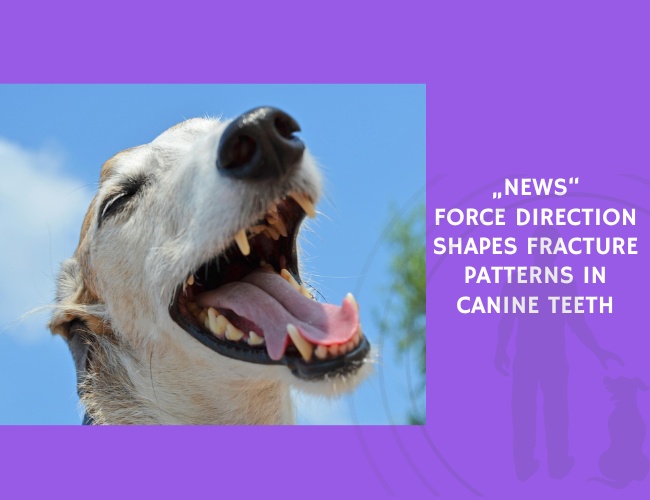
Published in the Journal of Veterinary Dentistry, Stephanie L. Goldschmidt, Catherine Zimmerman, C. Collins, S. Hetzel, H. Ploeg, and J. Soukup addressed a gap in veterinary biomechanics by examining how direction of applied force affects the structural failure of canine teeth. Despite the functional importance of elongated canine teeth, their mechanical properties have been relatively understudied.
The objective of the study was to evaluate the influence of force direction on fracture resistance and fracture pattern using an ex vivo dog cadaver model. A total of 45 extracted canine teeth from laboratory beagle dogs were standardized by hard tissue volume and randomly assigned to three force direction groups.
Each tooth was secured in a universal testing machine, and load was applied in a controlled manner according to the assigned force direction. For each specimen, researchers recorded the maximum force required to induce fracture as well as the resulting fracture pattern.
After correcting for hard tissue cross-sectional area using multivariate analysis, the results showed no significant differences in fracture resistance among the different force direction groups. This indicates that the amount of force required to fracture a canine tooth is relatively consistent regardless of the direction in which the force is applied.
In contrast, fracture pattern was significantly influenced by force direction. Different loading directions produced distinct fracture configurations, suggesting that how a force is applied plays a critical role in determining the clinical presentation of tooth fractures.
The authors conclude that understanding the relationship between force direction and fracture pattern has practical implications for veterinary dentistry. These findings may help clinicians educate dog owners about behaviors—such as chewing on hard objects or applying abnormal forces—that contribute to specific fracture types, ultimately supporting prevention and improved dental care in dogs.
Goldschmidt, S. L., Zimmerman, C., Collins, C., Hetzel, S., Ploeg, H., & Soukup, J. (2017). The Influence of Force Direction on the Fracture Pattern and Fracture Resistance of Canine Teeth in Dogs. Journal of Veterinary Dentistry, published March 1, 2017.










