
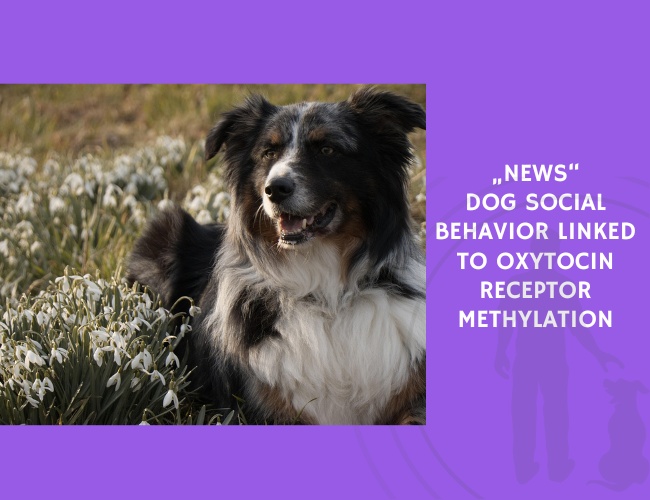
Published in Frontiers in Psychology, Giulia Cimarelli, Zsófia Virányi, Boglárka Turcsán, Zsófia Rónai, Márta Sasvári-Székely, and Zoltán Bánlaki investigated how epigenetic variation in the oxytocin receptor (OXTR) gene relates to social behavior in domestic dogs. Oxytocin is a key modulator of emotional processing and social cognition, yet environmental influences on OXTR methylation in dogs had not previously been examined.
The researchers hypothesized that dogs’ close social relationships with their owners might influence epigenetic regulation of the OXTR gene. To test this, they conducted a two-part study using buccal epithelial cell samples to measure DNA methylation within the OXTR promoter region.
In Study 1, pyrosequencing techniques were applied to a heterogeneous sample of dogs and wolves of different ages and living conditions to identify differentially methylated CpG sites. Four CpG positions (−727, −751, −1371, and −1383 from the transcription start site) showed more than 10% variation in methylation and were selected for further analysis.
In Study 2, these CpG sites were measured in triplicate in 217 pet Border Collies previously tested in an adverse social situation involving approach by a threatening human. Behavioral outcomes were compared with both OXTR methylation levels and documented owner interaction styles.
The results revealed that CpG methylation was significantly associated with dogs’ behavior, particularly the likelihood of hiding behind the owner or remaining passive during the threatening approach. In contrast, methylation levels were not associated with owners’ interaction styles but showed a relationship with dog sex at one CpG position (−1371).
The authors conclude that these findings underscore the complex interplay between epigenetics and canine behavior. By demonstrating that peripheral OXTR methylation is linked to social responses, the study highlights the importance of incorporating epigenetic methods into research on dog behavioral development and calls for further investigation into the environmental factors shaping epigenetic variation in companion animals.
Cimarelli, G., Virányi, Z., Turcsán, B., Rónai, Z., Sasvári-Székely, M., & Bánlaki, Z. (2017). Social Behavior of Pet Dogs Is Associated with Peripheral OXTR Methylation. Frontiers in Psychology, published April 10, 2017.










