
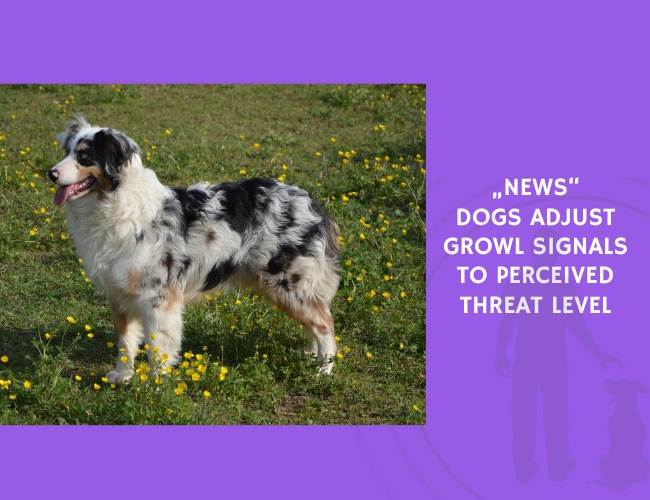
Body size is a critical determinant of fighting ability across animal species, yet vocal signals that convey size are typically constrained by anatomy. In most mammals, features such as fundamental frequency and formant dispersion are closely tied to vocal tract length and cannot be flexibly adjusted. This study provides the first experimental evidence that dogs can dynamically manipulate these acoustic cues in response to varying levels of perceived threat.
The researchers tested whether dogs alter growl acoustics depending on the fighting potential of a human antagonist. In a within-subject design, 64 family dogs of various breeds were exposed to two threateningly approaching unfamiliar humans who differed in gender and body stature. Each dog encountered either two men, two women, or a mixed-gender pair with matched or mismatched height.
Acoustic analyses focused on the Pitch–Formant component of growls, which conveys information about body size. Dogs exposed to threatening men produced growls with lower fundamental frequency and reduced formant dispersion, acoustic features associated with a larger apparent body size. This effect was especially pronounced in dogs owned by women or living in households with both male and female caretakers.
Importantly, these vocal adjustments were not random. Instead, they reflected a context-dependent signaling strategy, where dogs exaggerated size-related acoustic cues when the perceived danger was higher. This suggests dogs assess both the physical characteristics of a potential threat and their social environment when deciding how to vocalize.
The findings challenge the long-held assumption that indexical vocal cues are fixed and inflexible in non-human animals. Rather than relying solely on static anatomical constraints, dogs appear capable of adaptive vocal modulation, fine-tuning their signals to maximize deterrence during agonistic encounters.
These results have broader implications for understanding canine emotion, aggression, and communication. They indicate that dog growls are not simple reflexive responses but strategic signals shaped by perception, experience, and social context. This flexibility may be a product of domestication, where dogs evolved heightened sensitivity to human characteristics and behavior.
Source: Bálint, A., Faragó, T., Miklósi, Á., & Pongrácz, P. (2016). Threat-level-dependent manipulation of signaled body size: dog growls’ indexical cues depend on the different levels of potential danger. :contentReference[oaicite:1]{index=1}.










