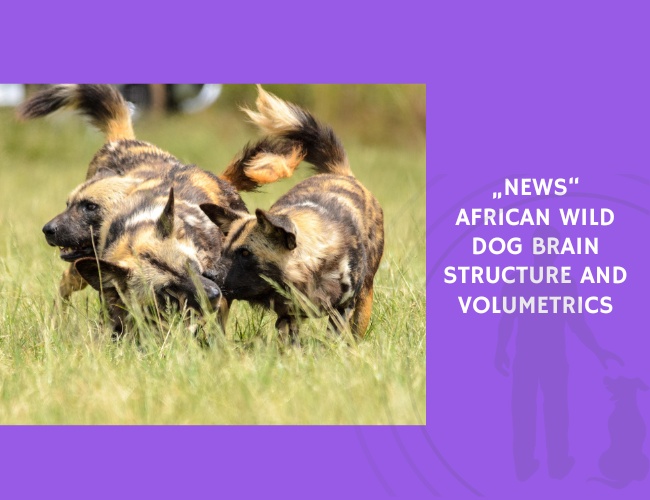
The African wild dog (Lycaon pictus) is renowned for its cooperative pack structure, coordinated hunting strategies, and complex vocal communication. Despite these advanced social behaviors, little was previously known about whether its brain shows distinctive anatomical specializations when compared with other canids or carnivorans.
Using gross anatomical dissection, magnetic resonance imaging, and classical neuroanatomical staining techniques, the researchers examined overall brain organization and quantified the size and structure of key regions. The mean brain mass was 154.08 g, corresponding to an encephalization quotient of 1.73, indicating a relatively large brain size for body mass.
Volumetric and structural analyses focused on the corpus callosum, ventricular system, hippocampus, amygdala, cerebellum, and overall gyrification index. Across all measures, the African wild dog brain was found to be broadly similar to that of other mammals and especially comparable to other carnivorans, including domestic dogs and related canids.
No striking neuroanatomical specializations were identified at this level of analysis, aside from overall brain size. In particular, regions commonly associated with emotion, memory, and motor coordination did not show unusual enlargement or reorganization that would clearly explain the species’ advanced social cooperation.
The authors emphasize that the absence of obvious gross specializations does not rule out more subtle neural adaptations. They propose that future work should focus on specific neural systems, particularly those involved in sensorimotor integration, social cognition, and communication, which may reveal fine-scale features unique to African wild dogs or shared across the Canidae.
Overall, the study establishes a critical anatomical baseline, supporting the view that complex social behavior in canids does not necessarily require dramatic changes in overall brain organization, but may instead arise from more nuanced circuit-level or functional adaptations.
Source: Chengetanai, S., Tenley, J. D., Spocter, M. A., et al. Brain of the African wild dog. I. Anatomy, architecture, and volumetrics. The Journal of Comparative Neurology, published February 4, 2020.