
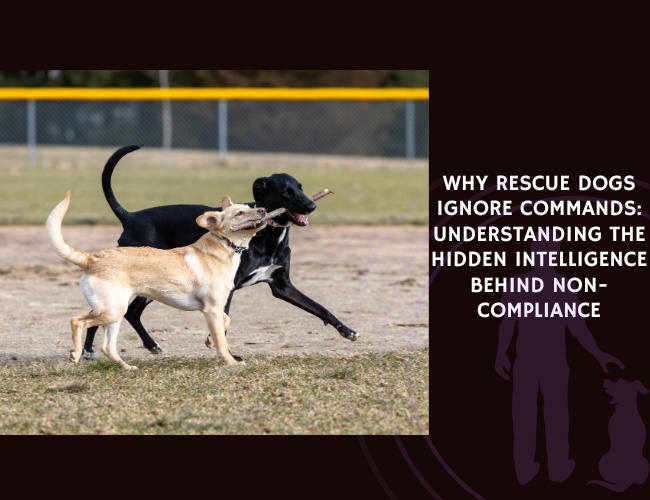
When you call your rescue dog and they look right through you—when you ask them to sit and they seem to consider it merely a suggestion—you might wonder if they’re being stubborn, defiant, or simply not very bright. But what if the truth is far more complex and, perhaps surprisingly, far more intelligent?
Your rescue dog isn’t ignoring you out of spite or confusion. They’re making rational decisions based on a learning history that taught them something most of us never consider: that human commands are unreliable predictors of what happens next. And in a world where uncertainty meant danger, learning to evaluate rather than obey may have been the smartest survival strategy they could develop.
Let us guide you through the fascinating neuroscience and behavioral psychology behind why rescue dogs “ignore” commands—and more importantly, how to rebuild the communication bridge that inconsistency has eroded. This isn’t about fixing a broken dog. It’s about understanding an adapted one.
The Intelligence Hidden in Non-Compliance
When Ignoring Becomes Rational
You might notice your rescue dog responding beautifully in your quiet living room but seeming deaf to the same commands at the park. This isn’t defiance—it’s decision-making under uncertainty.
Research in canine cognition reveals that dogs process human cues through sophisticated predictive models. They don’t simply respond to words; they evaluate whether those words reliably predict specific outcomes. For rescue dogs who’ve experienced multiple homes, shelter environments, or inconsistent training, this predictive model has been systematically degraded.
Think of it this way: if someone told you “come here” and sometimes that meant a hug, sometimes a slap, and usually nothing at all, would you trust that command? Your rescue dog has learned exactly this lesson. The cue “come” might have meant:
- Praise and treats in one home
- Being grabbed for nail trimming in the shelter
- Punishment for something they did earlier in another home
- Absolutely nothing in countless other instances
When a cue has been paired with positive outcomes only 30% of the time, negative outcomes 20% of the time, and no consequence at all 50% of the time, that cue loses what behaviorists call “predictive power.” The rational response isn’t to obey—it’s to treat the cue as background noise requiring no action.
This is where the NeuroBond approach becomes essential. Before we can rebuild reliable communication, we must understand that trust and predictability form the neurological foundation for learning itself.
Selective Hearing or Strategic Thinking?
Your rescue dog doesn’t have selective hearing. They have selective responding—and there’s a crucial difference.
Dogs with stable, consistent training histories develop what we call “low response thresholds.” A quiet word is enough to trigger action because the cue reliably predicts a known outcome. Rescue dogs, however, often develop elevated response thresholds. They require:
- Higher certainty of positive outcomes before complying
- Clearer environmental safety signals
- More salient cues (yes, sometimes louder or more emphatic commands)
- Multiple repetitions before they commit to action
This elevation isn’t stubbornness—it’s intelligent risk management. When past experience has taught that compliance can be dangerous or meaningless, waiting for more information before acting is the smarter choice.
You’ve probably noticed this when your dog finally responds after the third or fourth command. That delay? It’s not slow processing. It’s active evaluation time. Your dog is assessing your emotional state, evaluating environmental safety, calculating expected outcomes, and determining whether compliance is worth the potential risk. 🧠
What Commands Actually Mean to Your Rescue Dog
Signal Versus Noise: The Communication Challenge
Did you know that your rescue dog must constantly filter human vocalizations into categories? Every word you speak gets mentally sorted into one of four types:
Reliable signal — A predictor of specific, consistent outcomes that requires response
Background noise — Sound that requires no action
Optional suggestion — A cue that may or may not be followed through
Potential threat — A vocalization requiring defensive evaluation
For dogs raised in stable environments, most commands fall into the first category. For rescue dogs with fragmented histories, commands often scatter across all four categories—and the dog has no reliable way to know which category today’s “sit” belongs to.
This creates what communication theorists call “signal degradation.” The dog hears the word, processes its meaning, but cannot confidently predict what follows. And when prediction breaks down, so does reliable responding.
The Meta-Rule That Changes Everything
Here’s something critical that many trainers miss: rescue dogs don’t just learn individual command associations. They learn meta-rules about the reliability of human communication itself.
If your dog experiences that:
- “Sit” sometimes requires compliance, sometimes doesn’t
- “Come” sometimes is enforced, sometimes ignored
- “Stay” sometimes is followed through, sometimes forgotten
They develop an overarching principle: “Human commands are unreliable predictors of required action.” This meta-rule then generalizes across all cues, not just specific commands that were inconsistently reinforced.
This is why you can’t simply retrain one command at a time. You must rebuild the entire predictive framework—the foundational belief that your words mean something consistent and trustworthy.
Is It “Can’t” or “Won’t”? Practical Diagnostic Tools
How to Tell If Your Dog Understands But Won’t Comply
Before you can address non-compliance, you need to understand what you’re actually dealing with. Is your rescue dog confused about what you’re asking, or do they understand perfectly but choose not to respond? The distinction matters enormously because each requires a completely different approach.
Here’s a simple diagnostic test you can perform at home:
The Quiet Room Test: Choose a time when your dog is calm and relaxed. Take them to a familiar, distraction-free room—your bedroom or a quiet corner of the house. Using a gentle, calm voice and no pressure, give the command you believe they’re “ignoring.” Watch carefully.
If your dog responds correctly in this low-arousal, familiar context, you don’t have a training deficit. You have adaptive non-compliance driven by environmental factors, arousal levels, or trust concerns.
If your dog still doesn’t respond even in ideal conditions, then you may genuinely need to teach or re-teach the behavior from scratch.
Observable Indicators of Adaptive Non-Compliance
Watch for these specific patterns that reveal your dog understands but is making strategic decisions:
Context-dependent responding — They sit perfectly at home but act deaf at the park. This isn’t inconsistency; it’s context-specific learning that commands only work in certain environments.
Increased response latency with visible evaluation — That long pause before they finally comply, during which they’re clearly looking at you, assessing the environment, maybe even taking a step toward you before stopping. This is active decision-making, not processing difficulty.
Selective cue responding — They respond immediately to “dinner” or “walk” but ignore “come” or “stay.” This tells you their hearing is fine and they can process verbal cues—they’ve simply learned which ones reliably predict good outcomes.
Stress signals during or after compliance — Whale eye (showing whites of eyes), lip licking, yawning, looking away, or moving away immediately after complying. These signals indicate your dog is responding out of pressure or fear, not cooperation.
Performance deterioration under observation — They respond well when you’re relaxed but “forget” everything when you’re frustrated or when other people are watching. This reveals they’re reading your emotional state and environmental pressure, not experiencing memory loss.
Understanding these patterns empowers you to address the actual issue rather than drilling commands that your dog already understands. The problem isn’t in their head—it’s in the relationship and environmental context. 🧠
The Fragmented Learning History: Understanding Where It All Broke Down
Multiple Homes, Multiple Realities
Consider the journey many rescue dogs travel. Each transition brings:
Different command vocabulary — “Down” in one home meant lie down. In another, it meant get off the furniture. In the shelter, it meant both or neither.
Different performance criteria — One handler accepted a sloppy sit. Another demanded perfect position. A third didn’t care at all.
Different reinforcement schedules — Sometimes every correct behavior earned a treat. Sometimes nothing. Sometimes punishment for the same behavior that previously earned praise.
Different emotional contexts — Calm delivery from one person, frustrated shouting from another, anxious pleading from a third.
Your rescue dog didn’t learn unreliable behavior. They learned from an unreliable world. And they adapted to it brilliantly by becoming students of context rather than followers of commands.
The Shelter Effect on Learning
Research on shelter dogs reveals something profound: high-stress environments fundamentally reduce learning capacity. The constant cortisol elevation that comes from:
- Unpredictable routines
- Frequent environmental changes
- Inconsistent human interactions
- Limited individual attention
- Sensory overload
This doesn’t just make learning harder—it actively disrupts previously learned associations. A dog who knew “sit” reliably in a previous home may lose that association entirely during prolonged shelter stress. The neural pathways that connected cue to behavior literally become less accessible under sustained arousal.
Then you adopt them, expecting the training to still be there, wondering why this “previously trained” dog seems to have forgotten everything. They haven’t forgotten. The neural access to those memories has been compromised by chronic stress. 🧡
Learned Selectivity: The Adaptive Middle Ground
There’s an important distinction to understand here. You might have heard of learned helplessness—when an animal stops trying altogether because nothing they do matters. But most rescue dogs don’t show learned helplessness. They show something more sophisticated: learned selectivity.
Learned selectivity means the dog can respond but chooses not to when uncertainty is high. They haven’t given up on all behavior—they’ve become strategic about which behaviors to offer and when.
This is actually a sign of cognitive health, not damage. It shows your dog is actively evaluating their environment and making decisions rather than shutting down entirely. The challenge is helping them learn that in your home, with you, predictability has been restored.
Context, Arousal, and Why Your Living Room Works But the Park Doesn’t
The Stimulus Stacking Effect
Let me introduce you to a concept that explains so much frustration: stimulus stacking. This occurs when multiple arousing stimuli accumulate without sufficient recovery time, progressively reducing your dog’s ability to process and respond to cues.
For rescue dogs, this looks like:
Baseline arousal already elevated — Living with environmental uncertainty keeps stress hormones slightly elevated even in calm moments
Novel stimuli adding layers — New sounds, unfamiliar people, other dogs, traffic, children playing
Command delivery at peak load — You ask for “sit” exactly when your dog’s cognitive bandwidth is completely saturated
The result? Your command gets processed as low-priority information, filtered out beneath the more urgent work of environmental threat assessment.
You might notice this particularly during walks. Your dog who sits perfectly at home seems to not even hear you outside. That’s because in that moment, their neurological priority hierarchy looks like this:
- Threat detection (highest priority)
- Resource acquisition (food, interesting smells)
- Social navigation (other dogs, people)
- Human command compliance (lowest priority)
This isn’t about training quality. It’s about survival neurology that hasn’t yet learned your neighborhood is safe.
Context-Dependent Learning: Not Inconsistency, But Intelligence
Your rescue dog complies reliably in quiet, familiar environments. They ignore you completely in novel, high-distraction settings. This isn’t inconsistency—it’s context-dependent learning.
Dogs are brilliant at contextual discrimination. They learn that certain cues are reliable predictors only in specific contexts. If most of their positive training happened in controlled indoor environments, but outdoor experiences were chaotic and unpredictable, they’ve learned: “Commands work inside, not outside.”
The Invisible Leash concept addresses this beautifully. True connection isn’t about forcing compliance everywhere—it’s about building a relationship where awareness flows between you regardless of context, where the bond itself becomes the guiding structure rather than external pressure.
To generalize compliance across contexts, you must explicitly teach in each new context, building reliability layer by layer, environment by environment. You cannot expect automatic transfer. The neural pathways for “sit in the living room” are literally different from “sit at the park.”
When Environmental Scanning Overrides Commands
Here’s something most training manuals won’t tell you: for rescue dogs, monitoring for threats is more critical to survival than responding to human cues. This creates a biological hierarchy that overrides training.
In unstable environments, your dog learned that missing a threat could be catastrophic. Missing a command? Usually no big deal. So their nervous system prioritizes environmental assessment over human instruction. This is adaptive intelligence, not defiance.
You might see this when your dog seems frozen, staring at something you can’t identify as threatening. They’re not ignoring you—they’re engaged in critical safety work that their nervous system has deemed more important than your request to heel.
The path forward isn’t forcing attention. It’s gradually building enough safety and predictability that environmental scanning can relax, freeing up cognitive resources for human interaction.
The Cost-Benefit Analysis Your Dog Is Running
Active Decision-Making Under Uncertainty
Your rescue dog isn’t passively receiving commands. They’re actively running cost-benefit analyses—and they’re remarkably sophisticated about it.
When you call “come,” your dog rapidly evaluates:
Potential costs of compliance:
- Loss of environmental monitoring time while approaching you
- Approach to a human whose emotional state may be unpredictable
- Interruption of current self-soothing behavior (sniffing, distance-keeping)
- Exposure to potential punishment if their performance is somehow “wrong”
Potential benefits of compliance:
- Possible reward (if you follow through this time)
- Avoidance of escalation (if you become more insistent)
- Social approval (if they value the relationship enough to risk it)
Potential costs of non-compliance:
- Possible punishment (if you enforce this time)
- Escalating pressure (repeated commands, physical manipulation)
- Relationship damage (though they may not value it highly yet)
Potential benefits of non-compliance:
- Continued environmental monitoring
- Avoidance of uncertain interaction
- Maintenance of current comfortable state
When outcomes are unpredictable, non-compliance becomes the mathematically lower-risk strategy. It avoids committing to action with unknown consequences, maintains behavioral flexibility, and preserves energy for higher-priority responses.
When outcomes are predictable and positive, compliance becomes rational because expected value is clear, risk is calculable, and relationship trust supports cooperation. 🧡
Why Waiting Makes Sense
That frustrating delay between your command and their response? That’s not processing lag. That’s decision latency—active evaluation time.
Your dog is assessing:
- Your body language for threat signals
- Your tone for emotional state
- The environment for safety
- Their past experience with this cue in this context
- Whether compliance is worth the energetic and emotional cost
This cognitive work takes time. Expecting instant obedience from a dog with an unstable learning history is like expecting someone who’s been lied to repeatedly to trust immediately. The hesitation is healthy skepticism, not defiance.
As you build reliability, this latency decreases. But early in your relationship, that pause is your dog being thoughtful, not stubborn. Respect it.

Arousal, Stress, and the Neuroscience of “Can’t” Versus “Won’t”
When the Brain Can’t Access What It Knows
Here’s something crucial: under high arousal, even perfectly learned behaviors become neurologically inaccessible. This isn’t about motivation—it’s about brain chemistry.
When your dog’s arousal spikes due to fear, anxiety, or excitement, several things happen simultaneously:
Prefrontal cortex function decreases — This is the brain region responsible for executive control, decision-making, and accessing learned responses. Arousal suppresses it.
Hippocampal access becomes impaired — The hippocampus stores memories. Under stress, the brain struggles to retrieve them. Your dog literally cannot remember what “sit” means.
Amygdala activity dominates — The amygdala handles threat detection and emotional processing. It hijacks attention away from everything else.
Dopaminergic signaling changes — The reward processing system that usually motivates compliance gets disrupted.
The result? What looks like “ignoring you” is actually neurobiological incapacity. Your dog doesn’t have access to the learned response in that moment. They’re not refusing—they can’t retrieve it.
This is the difference between “won’t” and “can’t.” Most people assume won’t. The reality is often can’t. And no amount of repetition, volume, or frustration will overcome a neurological state that has made learning temporarily inaccessible.
The Narrowed Window of Attention
Under stress, your dog’s attention narrows dramatically. They focus on:
- Immediate threats in the environment
- Escape routes and safety options
- High-salience stimuli (other dogs, loud noises)
Your verbal command? It’s outside that narrowed window. They’re not choosing to ignore it—they’re literally not processing it as important information.
This is where Soul Recall becomes relevant. The deepest connections transcend verbal commands—they’re felt at an emotional, almost instinctive level. When stress narrows attention, words fail, but relational bonds can still reach through.
Building that depth takes time and cannot be rushed. But once established, it provides access even when arousal has closed other channels.
Reading Communication Beyond Words
Here’s where many well-intentioned owners create additional confusion. Your dog processes communication through multiple channels simultaneously:
Verbal content — The actual words you say
Vocal tone — The emotional quality of your voice
Body language — Your posture, approach angle, hand positions
Facial expression — Especially eye contact and tension
Environmental context — What’s happening around you both
When these channels conflict—when you say “come” in a cheerful voice while your body language screams frustration, or when you say “it’s okay” while tensing up—your dog experiences communication noise. They don’t know which channel to trust.
Research shows that when verbal and non-verbal cues conflict, dogs overwhelmingly trust the non-verbal signals. So if your words say “friendly invitation” but your body says “I’m annoyed,” your dog reads annoyance and responds accordingly (usually by creating distance).
For rescue dogs who’ve learned that humans can be unpredictable or dangerous, non-verbal threat cues carry even more weight. A slight stiffening, direct stare, or looming approach can completely override friendly words.
The solution is developing what the NeuroBond framework calls “communication alignment”—ensuring all your channels carry the same message. When verbal, vocal, visual, and emotional signals align, clarity emerges. And with clarity, trust begins to build.
Why Hand Signals Often Work Better Than Words
The Neurological Advantage of Visual Cues
You might have noticed something surprising: your rescue dog who ignores “sit” will drop into position the moment you raise your hand. This isn’t random—it reflects how canine brains process information under stress.
Visual cues offer several neurological advantages over verbal commands:
Higher salience — Visual signals naturally capture attention more effectively than sounds, especially in distracting environments. A hand raised in peripheral vision triggers automatic orientation, while words can blend into environmental noise.
Simpler processing — Visual cues require less cognitive work than verbal commands. Your dog doesn’t need to discriminate between similar-sounding words (“sit” vs. “stay”), associate sound patterns with meaning, or maintain auditory attention while managing arousal.
Stress resistance — When arousal climbs and auditory processing becomes impaired, visual processing remains more accessible. This is why emergency hand signals work when nothing else does.
Less ambiguity — A raised palm means one thing. The word “down” might mean lie down, get off the furniture, or reduce intensity depending on context. Visual signals carry clearer meaning.
Practical Implementation: Pairing Visual and Verbal Cues
The most effective approach combines both channels, building dual pathways to the same behavior:
Start with the visual — Introduce the hand signal first when teaching or re-teaching a behavior. Get reliable responding to the visual cue before adding the verbal component.
Add verbal gradually — Once your dog responds consistently to the hand signal, begin saying the word just before you give the visual cue. The sequence becomes: word → (brief pause) → hand signal → behavior → reward.
Fade the visual slowly — Over time, increase the pause between word and hand signal until your dog begins responding to the word alone. But keep the hand signal as backup for high-stress situations.
Example pairings:
- “Sit” + palm raised upward from waist
- “Down” + palm pressed downward toward ground
- “Come” + arm sweep toward your body
- “Stay” + palm extended forward like a stop signal
This dual-channel approach gives your rescue dog multiple ways to succeed, reducing the cognitive load during stressful moments when verbal processing fails. 🧡
The Emotional Incongruence Problem: When Your Words and Feelings Don’t Match
Why “Good Dog” in a Frustrated Tone Fails
Here’s a scenario that happens constantly: Your dog finally comes after the fifth call. You’re irritated by the delay, but you know you’re “supposed” to reward them for eventually complying. So you say “good dog” in a tone that unmistakably communicates frustration.
Your rescue dog isn’t fooled. They hear the words but feel the emotion—and they trust the emotion.
Research on canine cognition reveals that dogs are remarkably skilled at detecting emotional incongruence between verbal content and affective tone. For rescue dogs with unstable histories, this skill is even more developed. They learned to monitor human emotional states closely as a survival strategy, detecting subtle mismatches that predict unpredictable behavior.
How Rescue Dogs Process Mixed Messages
When faced with emotional incongruence, your dog follows a clear hierarchy:
Emotional tone receives highest priority — The frustration in your voice registers as the primary signal. This makes sense evolutionarily; emotions predict behavior more reliably than words.
Body language confirms or contradicts — Your dog cross-references tone with your physical state. Tense shoulders, rigid posture, or direct staring confirm the emotional message.
Verbal content becomes suspect — When tone and words conflict, the words lose credibility. Your “good dog” gets mentally categorized as unreliable information.
Response follows emotional read — Your dog responds to what they believe you’re actually communicating (frustration) rather than what you’re saying (praise). This might look like approach-avoidance conflict, stress signals, or moving away immediately after compliance.
Maintaining Emotional Congruence: Practical Examples
The solution isn’t faking enthusiasm when you don’t feel it—dogs detect false emotion as another form of incongruence. Instead, manage the situation to keep your emotions aligned with your intentions:
When you’re genuinely frustrated:
- Take a deep breath before calling your dog
- If you can’t access calm emotion, don’t practice recalls
- Use neutral acknowledgment (“thank you”) rather than enthusiastic praise you don’t feel
- Give yourself permission to end the session and try again when you’re calmer
When rewarding delayed compliance:
- Separate your frustration about the delay from your appreciation for eventual compliance
- Focus on feeling genuine gladness that they came, even if slowly
- If you can’t access that feeling, reward mechanically (treat delivery) without verbal praise
- Practice in lower-stakes situations where delays don’t trigger frustration
When teaching new behaviors:
- Train only when you’re genuinely patient and curious
- If you notice frustration rising, end the session immediately
- Your emotional state during learning creates associations that persist
- One session in genuine calm is worth five sessions in suppressed irritation
The goal is simple: say only what you genuinely feel, and feel what you want to communicate. This authenticity creates the emotional clarity that allows trust to form. Your rescue dog has been lied to enough through incongruent communication. Your honesty—even when it means acknowledging you’re too frustrated to train effectively—builds more trust than false cheerfulness ever could.
Adaptive. Evaluative. Intelligent.
Commands Lost Meaning Rescue dogs learn to ignore cues when past outcomes were inconsistent unpredictable or unsafe making non compliance a rational response rather than defiance.
Selective Response Strategy Elevated response thresholds reflect intelligent risk assessment where the dog waits for emotional clarity safety signals and reliable prediction before acting.

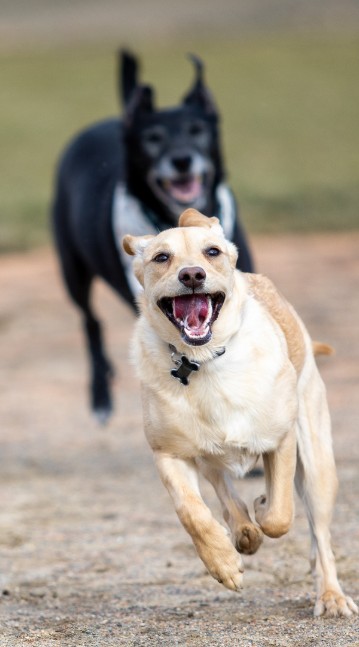
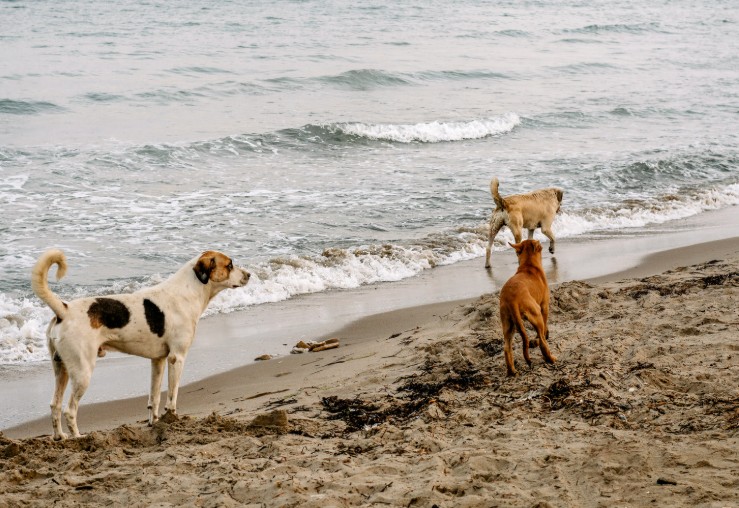
Predictability Restores Dialogue When cues regain consistent outcomes through calm presence and NeuroBond aligned communication obedience transforms into voluntary cooperation grounded in trust.
Rebuilding Predictability: The Foundation of Reliable Response
The Trust-First Principle
Here’s the paradigm shift that changes everything: trust must precede obedience, not follow it.
Traditional training often pressures for compliance first, assuming trust will develop through successful interactions. But for rescue dogs, this sequence is backward. Without trust, every command feels like a risk. With trust, compliance becomes collaboration.
Building trust looks like:
Predictable daily routines — Same feeding times, same walk patterns, same interaction sequences. Predictability is neurologically soothing.
Low-pressure interactions — Allow your dog to choose engagement rather than forcing it. Reward voluntary proximity and attention.
Reliable positive outcomes — Ensure that interactions consistently feel good. No bait-and-switch tactics (calling your dog for nail trims), no punishment for coming when called, no forced handling.
Emotional consistency — Be a stable emotional presence. Dogs read mood shifts as unpredictability. The more consistent your emotional state, the safer they feel.
This trust foundation typically takes four to eight weeks minimum. You might feel impatient, wanting to “start training.” But this is training—arguably the most important kind. You’re training your dog’s nervous system that you are predictable, safe, and trustworthy. Everything else builds on this. 🧠
🧠 Why Rescue Dogs Ignore Commands
Understanding the Intelligence Behind Non-Compliance & Building Trust-Based Communication
Phase 1: Diagnostic Assessment
Weeks 1-2 • Understanding What You’re Actually Dealing With
Neurological Reality
Your rescue dog’s brain is operating in chronic low-level arousal. Cortisol levels remain elevated from environmental uncertainty. The hippocampus (memory center) and prefrontal cortex (decision-making) are compromised. This isn’t stubbornness—it’s adaptive neurobiology protecting them from unpredictable outcomes.
What You’ll Observe
• Lots of sleep (recovery requires rest)
• Minimal command responsiveness in all contexts
• Environmental scanning taking priority over your cues
• Possible “shutdown” or withdrawal behavior
• The Quiet Room Test reveals: can they respond in ideal conditions?
Your Training Focus
Zero command demands. Allow decompression. Observe patterns without judgment. Document: Does the dog respond in quiet, familiar spaces? If yes, it’s adaptive non-compliance. If no, you may need to teach from scratch. Establish predictable routines for feeding, walking, and rest.
Phase 2: Trust Foundation Building
Weeks 3-6 • Creating Predictability Before Demanding Compliance
The NeuroBond Principle
Trust forms the neurological foundation for learning. When the amygdala perceives safety, the prefrontal cortex can engage. When cortisol decreases, hippocampal function improves. You’re not wasting time—you’re allowing neurological recovery that makes all subsequent learning possible.
Progress Indicators
• Voluntary proximity—choosing to be near you
• First tail wags that look genuinely relaxed
• Brief moments of eye contact without stress
• Response to name, even inconsistently
• Anticipation of routine events (feeding, walks)
Implementation Strategy
Maintain identical daily patterns. Same feeding times, same walk routes, same interaction sequences. Reward all voluntary engagement—approach, eye contact, proximity. No command demands yet. Focus on being a predictable, emotionally consistent presence. Allow choice in all interactions.
Critical Warning
Avoid bait-and-switch patterns. Never call your dog to initiate something unpleasant (nail trimming, medication, ending playtime). This destroys cue reliability faster than anything else. One violation can undo weeks of trust-building.
Phase 3: Building Communication Clarity
Weeks 5-8 • Visual Cues & Emotional Alignment
Why Visual Cues Work Better
Under stress, visual processing remains more accessible than auditory processing. Hand signals require less cognitive bandwidth, carry higher salience, and offer less ambiguity. Your rescue dog who ignores “sit” will often drop immediately when you raise your hand—this reveals the issue is processing capacity, not defiance.
Dual-Channel Training Protocol
• Start with hand signal only (palm up for sit, palm down for down)
• Build reliability with visual cue first
• Add verbal cue just before hand signal: “Sit” → (pause) → hand signal
• Gradually increase pause between word and gesture
• Keep visual as backup for high-stress situations
The Emotional Congruence Challenge
Saying “good dog” in a frustrated tone fails completely. Your rescue dog detects the incongruence and trusts the emotion over the words. They respond to your frustration (with avoidance) rather than your praise (with approach). Solution: Only train when genuinely calm. If frustrated, end the session—one calm interaction beats five frustrated ones.
Phase 4: Embedding Commands in Routines
Weeks 7-12 • Pattern Recognition Over Isolated Drills
Why Routines Outperform Drills
Commands embedded in predictable sequences reduce decision fatigue, build pattern recognition, and provide context clarity. The dog learns “sit during doorway sequence always leads to walk” rather than “sit might mean anything.” This transforms commands from unpredictable demands into expected sequence components.
Power Routines to Implement
Doorway Sequence: Leash pickup → sit → door opens → “let’s go” → walk begins
Feeding Routine: Bowl prep → automatic sit → bowl down → “okay” → eating
Car Sequence: Approach car → sit at door → door opens → “up” → entry
Return Home: Enter → shoes off → wait at spot → “release” → greeting
Critical Success Factor
Absolute consistency. Every household member follows identical sequences. No exceptions for 3-4 weeks minimum. The predictability itself becomes neurologically soothing. Behaviors within sequences become automatic, then transfer to non-routine contexts far more effectively than isolated drill practice.
Phase 5: Systematic Cue Reliability Building
Weeks 9-16 • One Cue, One Behavior, One Outcome
The Predictive Value Equation
Your dog’s brain calculates: Does this cue reliably predict a specific outcome? Previous experience taught them “sometimes yes, sometimes no, usually nothing.” Now you’re rebuilding: This cue ALWAYS means this behavior ALWAYS produces this positive outcome. 100% reinforcement initially creates the neural pathway.
Protocol Implementation
• Train below arousal threshold (quiet, familiar environments)
• One cue, one chance rule (no repetition)
• Reward every correct response initially
• If no response within 3-5 seconds, help them succeed, then reward
• Maintain 70-90% reinforcement rate even after “reliability”
Avoid These Reliability Destroyers
• Repeating commands without follow-through (“Sit. Sit. SIT!”)
• Training when arousal is high (they neurologically can’t learn)
• Reducing rewards too quickly (degrades predictive value)
• Expecting generalization without teaching it in each context
Phase 6: Context Generalization
Weeks 13-20 • Teaching Reliability Across Environments
Context-Dependent Learning Reality
Your dog doesn’t automatically transfer “sit” from living room to park. Each environment is a separate learning context. The neural pathway for “sit at home” is literally different from “sit outside.” This isn’t failure—it’s how canine learning works. You must explicitly teach in each new context.
Layer-by-Layer Building
Start in new environment with zero distractions. High reward rate. Build reliability. Add one mild distraction. Rebuild reliability. Add another element. Progress looks like: Backyard → quiet street → busier street → park edge → park interior. Each step might take days or weeks. Rushing creates failure and frustration.
Managing Stimulus Stacking
Multiple arousing stimuli accumulate without recovery time, saturating cognitive bandwidth. Novel environment + other dogs + traffic + stranger approaching = zero capacity for command processing. Reduce environmental load systematically. Your dog’s “disobedience” is neurological overwhelm, not defiance.
Phase 7: Environmental Enrichment & Arousal Reduction
Ongoing • Building Cognitive Capacity Through Calm
The Arousal-Learning Connection
Elevated baseline arousal consumes cognitive bandwidth. A dog in chronic low-level stress has fewer mental resources for processing commands. As arousal decreases through environmental management, command responsiveness increases without additional training. You’re not creating calm to train—you’re creating calm that allows learning.
Practical Enrichment Strategies
Decompression walks: Long leash, dog-directed pace, pure sniffing freedom
Predictable safe spaces: Never disturbed, never demanded from
Sniff enrichment: Scatter feeding, snuffle mats, box shredding
Strategic rest: Enforced downtime in safe spaces
Reduced complexity: Fewer toys, quieter environment during recovery
Signs Arousal Is Too High for Learning
Panting, inability to take treats gently, hypervigilance, excessive movement, dilated pupils, whale eye, inability to settle. When you see these, stop training. Manage arousal first. No amount of repetition overcomes a neurological state that has made learning temporarily inaccessible.
Phase 8: The Invisible Leash – Voluntary Cooperation
Months 6+ • Connection Over Control
Beyond Obedience to Partnership
True connection transcends commands. The Invisible Leash isn’t about control—it’s about mutual awareness and respect. Your dog chooses cooperation because they trust you deeply, not because they fear consequences. Commands become invitations. Compliance becomes collaboration. This is where Soul Recall manifests—intuitive response rooted in deep relational bonding.
Characteristics of True Cooperation
• Voluntary check-ins during walks without cues
• Delayed response still counts as success
• Approximate compliance accepted with appreciation
• Respect for dog’s emotional state (no demands during stress)
• Relationship quality prioritized over perfect performance
• Flexibility becomes the framework
Celebrating the Journey
Your rescue dog who once “ignored” everything now chooses partnership. The response latency has decreased. The stress signals have faded. The trust account is full. This didn’t happen through pressure—it happened through consistent proof that your world is predictable, safe, and worthy of cooperation.
🔄 Understanding Different Non-Compliance Patterns
Training Deficit
Pattern: No response even in ideal, low-arousal conditions
Cause: Genuinely doesn’t understand the cue
Solution: Teach behavior from scratch with clear association building
Adaptive Non-Compliance
Pattern: Responds at home, ignores in public or under stress
Cause: Intelligent risk management under uncertainty
Solution: Rebuild predictability and trust, reduce arousal, generalize systematically
Fear-Based Compliance
Pattern: Perfect performance with stress signals present
Cause: Pressure-driven obedience, not cooperation
Solution: Reduce all pressure, rebuild from Phase 1, allow choice
Stimulus Overload
Pattern: Responds sometimes, but “forgets” when arousal spikes
Cause: Cognitive bandwidth saturated by environmental stimuli
Solution: Reduce environmental complexity, manage arousal, train below threshold
Degraded Cue Reliability
Pattern: Increased response latency, evaluative pause before acting
Cause: Command historically predicted inconsistent outcomes
Solution: 100% consistency, high reinforcement rate, one cue-one outcome protocol
Communication Mismatch
Pattern: Ignores verbal cues but responds to gestures or routines
Cause: Verbal processing impaired under stress; visual more accessible
Solution: Implement dual-channel training, pair verbal with visual cues
⚡ Quick Reference: Timeline & Success Metrics
Weeks 1-2: Pure decompression • Expect minimal responsiveness • Success = voluntary approach
Weeks 3-6: Trust building • No command pressure • Success = relaxed body language
Weeks 7-12: Routine embedding • Consistent patterns • Success = automatic sequence behaviors
Weeks 13-20: Reliability building • 100% reinforcement • Success = consistent home responses
Months 6+: Generalization • Layer-by-layer contexts • Success = voluntary cooperation
Critical Formula: Trust + Predictability + Communication Clarity = Voluntary Cooperation
Remember: Response latency ≠ defiance • It’s active evaluation • Respect the pause
🧡 The Zoeta Dogsoul Perspective
Your rescue dog who “ignores commands” isn’t broken—they’re brilliantly adapted to an unpredictable world. Through the NeuroBond approach, we recognize that trust forms the neurological foundation for all learning. The Invisible Leash reminds us that true connection flows through awareness and mutual respect, not pressure and control. And in those moments when your dog finally chooses cooperation freely—that’s Soul Recall manifesting, the deep relational bonding that transcends commands.
This journey isn’t about forcing obedience. It’s about rebuilding predictability, one consistent interaction at a time. It’s about respecting their intelligence enough to understand that non-compliance is often the smartest response to an uncertain world. And it’s about becoming the steady, trustworthy presence they’ve been waiting for—where science meets soul, where patience meets understanding, and where connection becomes the foundation for everything else.
That balance between neuroscience and emotional intelligence—that’s the essence of Zoeta Dogsoul.
© Zoeta Dogsoul – Where neuroscience meets soul in dog training
Reconstructing Cue Reliability
Once trust begins forming, you can start rebuilding individual cue reliability. The key is absolute consistency:
One cue, one behavior, one outcome — “Sit” always means the same thing and always produces the same response. No variations until reliability is rock solid.
100% reinforcement initially — Every single correct response earns reinforcement. This isn’t spoiling—it’s building the neural pathway that connects cue to behavior to positive outcome.
Train below arousal threshold — Work in quiet environments where your dog can actually learn. Expecting learning during excitement or stress is neurologically unrealistic.
Gradual generalization — Once reliable in one context, slowly introduce new locations, mild distractions, and varied situations. Build reliability layer by layer.
This process is slower than traditional training. It requires patience. But it creates genuine understanding rather than pressured compliance. And for rescue dogs, this approach respects their intelligence and their need for predictability.
The Power of Routine-Based Learning
Here’s something most training books won’t tell you: for rescue dogs, commands embedded in predictable routines are far more reliable than commands drilled in isolation.
When you practice “sit” repeatedly in random moments throughout the day, each instance requires your dog to make a fresh decision under uncertainty. But when “sit” becomes part of a predictable sequence, it transforms from a demand into an expected component of a known pattern.
Why routine-based learning works:
Reduces decision fatigue — Your dog doesn’t evaluate whether to comply each time. The behavior becomes part of an automatic sequence.
Builds pattern recognition — Dogs excel at learning behavioral chains. When A reliably leads to B leads to C, the entire sequence becomes a single learned unit.
Provides context clarity — Instead of “sit might mean anything,” it becomes “sit during dinner routine always leads to food bowl touching ground.”
Creates emotional predictability — The entire sequence carries emotional safety. Your dog knows exactly what happens next.
Practical routine examples to implement today:
The Doorway Sequence — Leash pickup → sit → door opens → “let’s go” → walk begins. Every. Single. Time. No variations until this becomes completely automatic (usually 2-3 weeks).
The Feeding Routine — Food bowl preparation → dog automatically sits (no command needed eventually) → bowl touches ground → “okay” release word → eating begins. The reliability of this sequence makes the sit almost involuntary.
The Return Home Sequence — Enter house → shoes off → dog waits at designated spot → “release” → greeting begins. This teaches that patience in routines leads to good outcomes.
The Car Sequence — Approach car → sit at door → door opens → “up” command → entry → door closes → drive begins. This builds reliability in a context where excitement often destroys responding.
The Greeting Sequence — Visitor knocking → dog goes to designated spot → sits → visitor enters → after visitor settles → release word → greeting allowed. This is advanced but incredibly powerful for dogs who struggle with excitement-based non-compliance.
The key is absolute consistency. Everyone in the household follows the exact same sequence. No exceptions for weeks. The predictability itself becomes soothing, and the behaviors within the sequence become automatic.
You’ll notice something remarkable: commands practiced in routines transfer to non-routine situations far more effectively than commands drilled in isolation. The confidence and clarity built through routine practice generalizes because your dog has learned that your patterns are trustworthy.
Reducing Communication Noise
Remember those conflicting channels creating confusion? Here’s how to align them:
Pair verbal with visual — Combine voice commands with clear hand signals. Visual signals are more salient under stress and reduce ambiguity.
Match tone to intent — Use calm, neutral tone for commands. Save enthusiasm for rewards. Keep frustration completely out of your voice.
Monitor body language — Avoid looming over your dog or approaching directly head-on. Use inviting postures, crouch to their level, and respect their distance preferences.
Time your cues precisely — Deliver commands only when your dog can actually respond. Not during high arousal, not when distracted by something more important, not when physically unable to comply.
When all channels align, your communication becomes crystal clear. And clarity is what rescue dogs desperately need.
Practical Application: The NeuroBond Model for Rescue Dogs
Phase 1: Trust Foundation (Weeks 1-4)
During this initial phase, forget about commands entirely. Focus on:
No demand pressure — Don’t ask for sits, downs, or comes. Let your dog simply exist without performance expectations.
Predictable routines — Establish and maintain consistent daily patterns. Feed at the same times, walk the same routes, follow the same evening sequence.
Reward voluntary engagement — When your dog looks at you, approaches you, or shows interest in interaction, reward it. You’re teaching that choosing to engage with you feels good.
Build positive association with presence — Exist near your dog without demanding anything. Read a book, work on your laptop, just be present and peaceful. You’re teaching that your presence equals safety.
You might worry you’re “wasting time” not training. But you’re doing the most important work—building the neural foundation for everything else. Think of it as pouring the foundation before building the house. Without it, everything you build will be unstable. 🧡
Phase 2: Cue Introduction (Weeks 5-8)
Now you can begin introducing specific cues, but still with minimal pressure:
Low-arousal contexts only — Training happens when your dog is calm, in familiar environments, with no distractions.
High reinforcement rate — Every correct response gets rewarded. Build that cue-to-outcome pathway with absolute clarity.
No pressure for compliance — If your dog doesn’t respond, it simply means the cue isn’t clear yet or the arousal is too high. Don’t repeat or escalate. Just try again later in a better moment.
Celebrate small successes — A slight hip drop toward sitting? Reward it! Approximations count. Perfection doesn’t matter yet.
During this phase, you’re teaching individual cues but more importantly, you’re teaching the meta-rule: “When this human says something, it means something specific and good things follow.”
Phase 3: Reliability Building (Weeks 9-16)
With trust established and cues introduced, now you solidify:
Consistent contingencies — The same cue always means the same thing and always produces the same outcome. Zero variation.
Gradual generalization — Introduce new locations one at a time. Add mild distractions systematically. Build reliability in each new context before adding complexity.
Maintain high reinforcement — Don’t reduce rewards too quickly. Keep the expected value high.
Monitor stress signals constantly — Whale eye, lip licking, yawning, looking away—these signals tell you arousal is climbing. Reduce difficulty immediately.
This phase is where consistency truly pays off. Your dog begins understanding that these communication patterns are reliable across contexts. The predictability you’ve built starts transferring.
Phase 4: Voluntary Cooperation (Ongoing)
This is the destination—a relationship where commands function as communication rather than demands:
Respect emotional state — If your dog is stressed, aroused, or engaged in important environmental scanning, don’t demand compliance. Wait for a better moment.
Flexibility in expectations — Perfect obedience matters less than mutual understanding. A delayed response is still a response. Approximate compliance is often enough.
Relationship maintenance over performance — Prioritize connection over correctness. A dog who trusts you deeply but sits slightly crooked is better than a dog who sits perfectly but fears you.
Commands as invitations — Frame requests as opportunities to cooperate rather than demands to obey. This might seem like semantics, but it fundamentally shifts the energetic dynamic.
This is where the Invisible Leash concept fully manifests. You’re not controlling your dog through pressure or tools—you’re guiding them through awareness, connection, and mutual respect. That’s the essence of Zoeta Dogsoul.
Red Flags: When Obedience Without Trust Is Happening
Recognizing Compliance Driven by Fear, Not Cooperation
Not all obedience is created equal. Your dog might be following commands perfectly while experiencing significant stress, and this compliance-without-trust creates fragile, unsustainable results that eventually break down.
Here’s what compliance based on pressure rather than cooperation looks like:
During the behavior:
- Whale eye — Whites of the eyes showing, head turned toward you but eyes tracking escape routes
- Lip licking and yawning — Stress-reduction behaviors that appear during or immediately after compliance
- Slow, hesitant movements — The behavior happens but with visible reluctance, as if moving through resistance
- Low body posture — Hunched shoulders, lowered head, tail tucked or low even during “successful” compliance
- Freezing before responding — Complete stillness while they evaluate whether compliance is safe, different from the active evaluation of adaptive non-compliance
After the behavior:
- Immediate distance creation — They comply then immediately move away from you, even after receiving reward
- Avoidance of eye contact — Won’t look at you after performing the behavior, even when praised
- Continued stress signals — Panting, pacing, inability to settle even after the interaction ends
- Decreased voluntary engagement — Over time, they initiate interaction with you less frequently
- Environmental scanning intensifies — Rather than relaxing after compliance, they become more vigilant
Context patterns:
- Performs perfectly under pressure but “forgets” when relaxed — This seems backward but reveals that pressure triggers a compliance mode that isn’t based on understanding
- Different behavior quality depending on who’s watching — Perfect performance when the “demanding” person is present, but ignored commands or stress signals when trained by a gentler household member
- Improvement in obedience corresponds with decline in relationship quality — Commands are followed but voluntary affection, play initiation, and relaxation around you all decrease

Why Compliance-Based Obedience Breaks Down
This type of obedience is fundamentally unstable because:
It requires constant enforcement — The moment pressure is absent, compliance disappears. Your dog obeys only when they believe consequences are imminent.
It’s highly context-dependent — Works only in specific situations with specific people. Cannot generalize because it’s based on fear of consequences, not understanding of communication.
It suppresses rather than resolves underlying issues — The behaviors that led to non-compliance (fear, uncertainty, lack of trust) remain unchanged. They’re just buried under a layer of pressure-induced compliance.
It damages the relationship progressively — Each pressured interaction deposits into a growing account of negative associations with you and with training generally.
It cannot survive stress — When something truly arousing or frightening appears, the pressure-based compliance evaporates instantly because it was never rooted in trust or understanding.
Shifting from Forced Compliance to Voluntary Cooperation
If you recognize these patterns in your relationship with your rescue dog, here’s how to rebuild:
Immediately reduce pressure — Stop demanding perfect compliance. Accept approximations and delayed responses without frustration.
Rebuild from Phase 1 — Return to the trust foundation work even if it feels like “going backward.” You’re not losing progress; you’re building actual foundation that was missing.
Increase reward rate dramatically — Every small voluntary behavior gets celebrated. Shift the ratio from mostly pressure/occasionally reward to mostly reward/no pressure.
Allow choice — Give your dog the option to not comply without consequences. This might feel terrifying, but it’s essential. Real cooperation requires the freedom to decline.
Monitor your emotional state — If you feel frustrated when your dog doesn’t comply, that frustration is creating the pressure that drives fear-based compliance. Work on your own emotional regulation first.
Celebrate voluntary engagement over perfect performance — Your dog approaching you voluntarily is more valuable than a perfect sit performed under pressure. Prioritize accordingly.
The path forward requires patience and often feels like you’re “letting them get away with” non-compliance. But you’re not. You’re teaching that compliance is a choice they can make safely, not a demand they must meet under threat. That’s the difference between obedience and cooperation. 🧠
Environmental Enrichment: Building Cognitive Capacity Through Reduced Arousal
Why a Calmer Dog Learns Better
Remember that elevated arousal impairs learning by reducing prefrontal cortex function and hippocampal access? This means your rescue dog’s baseline arousal level directly affects their capacity to process commands and learn new behaviors.
Many rescue dogs live in a state of chronic low-level arousal—not panicked, but never fully relaxed either. This persistent activation consumes cognitive bandwidth that could otherwise be available for learning and responding to cues.
The solution isn’t more training. It’s creating an environment and lifestyle that allows their nervous system to downregulate, freeing up mental resources for everything else.
Practical Environmental Management Strategies
Decompression walks — These aren’t training opportunities or exercise sessions. They’re sensory buffets where your dog dictates the pace and direction. Long leash, no commands, no destination. Just sniffing, exploring, and processing the world at their own pace. Twenty minutes of true decompression reduces baseline arousal more effectively than an hour of structured walking.
Predictable safe spaces — Designate specific areas where your dog will never be disturbed, touched, or asked to do anything. A crate with the door always open, a specific corner, a room they can retreat to. The reliability of this safety creates neurological rest that generalizes throughout the day.
Sniff enrichment at home — Scatter feeding, snuffle mats, hiding treats in cardboard boxes to shred—these activities activate the parasympathetic nervous system (rest and digest) while providing mental engagement. Sniffing is neurologically calming; it literally cannot happen during high arousal.
Routine predictability — We’ve discussed this for training, but it’s equally important for arousal management. When the daily pattern is predictable, the nervous system can relax. Unpredictability requires constant vigilance.
Strategic rest — Most rescue dogs are under-rested, not under-exercised. Forced rest periods (in a safe space, not as punishment) teach the nervous system that downtime is safe and normal. Start with short periods and build gradually.
Reduced environmental complexity — Fewer toys available at once, quieter household environment, limited exposure to triggering stimuli (doorbells, delivery people, neighborhood dogs) while the nervous system is recovering. This isn’t forever—it’s strategic simplification during the rebuilding phase.
The arousal-learning connection in practice:
If you’re training and your dog isn’t responding, before repeating the command or escalating pressure, ask: “Is their arousal too high for learning right now?” The answer is often yes. And if it is, the solution is managing arousal (taking a break, changing locations, reducing environmental stimulation), not drilling the behavior.
You’ll notice that as baseline arousal decreases over weeks and months, command responsiveness increases without additional training. This isn’t magic—it’s neurobiology. A calmer nervous system has more resources available for processing communication, retrieving learned responses, and choosing cooperation.
The environmental enrichment work you do isn’t separate from training—it’s the foundation that makes training possible. 🧡
What This Means for You and Your Rescue Dog
Reframing the Narrative
Your rescue dog who “ignores commands” isn’t stubborn, defiant, poorly trained, or damaged. They’re intelligent, adaptive, and remarkably skilled at uncertainty management.
They learned from a fragmented world that human communication cannot be trusted. They developed elevated response thresholds to protect themselves from unpredictable outcomes. They prioritize environmental safety over human instruction because their survival once depended on it.
These are signs of resilience, not brokenness. Your job isn’t to fix them—it’s to provide the consistency and predictability they need to relax those protective strategies.
Setting Realistic Expectations
Recovery timelines vary enormously based on:
- Length of time in unstable environments
- Number of home transitions
- Severity of previous inconsistency or trauma
- Individual temperament and resilience
- Quality and consistency of current environment
Some dogs show dramatic improvement within weeks. Others need months or years to rebuild trust fully. Both timelines are normal and valid.
The critical factor is your consistency. Every time you follow through, you deposit into their trust account. Every time you’re unpredictable, you make a withdrawal. The account builds slowly through hundreds of small, reliable interactions.
When to Seek Professional Support
Sometimes professional guidance accelerates the process. Consider working with a qualified trainer or behavioral consultant if:
- Your dog shows signs of severe fear or aggression
- Progress has stalled despite consistent application of these principles
- You’re feeling overwhelmed or frustrated
- Your dog has specific behavioral challenges beyond command non-compliance
Look for professionals who:
- Use positive reinforcement methods
- Understand trauma-informed training approaches
- Prioritize trust-building over quick compliance
- Can explain the neuroscience behind their recommendations
The right professional sees your dog as an intelligent being adapting to past inconsistency, not a problem to be dominated into submission.
Timeline Expectations: What Progress Actually Looks Like
Week-by-Week Realistic Progression
One of the most common sources of frustration is unrealistic timeline expectations. Traditional training often promises results in days or weeks. Rescue dog rehabilitation measures progress differently.
Weeks 1-2: Assessment and Decompression
What’s happening neurologically: Cortisol levels are beginning to drop. Your dog is learning the basic patterns of your household.
What you might see:
- Lots of sleeping (this is good—recovery requires rest)
- Cautious exploration of the environment
- Minimal command responsiveness (this is normal and expected)
- Possible “shutdown” behavior (withdrawal, low activity)
What to look for as progress:
- Voluntary approach even once
- Eating consistently
- Accepting treats from your hand
- Any moment of relaxed body language
Weeks 3-4: Pattern Recognition Emerging
What’s happening neurologically: The hippocampus is forming new environmental associations. Basic routine recognition is developing.
What you might see:
- Anticipation of feeding time or walks
- Slightly increased activity level
- First instances of play or curiosity
- Possible regression (this is normal—healing isn’t linear)
What to look for as progress:
- Voluntary proximity (choosing to be near you)
- Tail wags that don’t look fearful
- Brief moments of eye contact
- Response to their name, even inconsistently
Weeks 5-8: Trust Foundation Building
What’s happening neurologically: Prefrontal cortex begins engaging more reliably. The amygdala’s hypervigilance starts decreasing.
What you might see:
- More consistent responses in familiar, low-arousal contexts
- Initiating interaction sometimes
- Playfulness emerging
- Possible “testing” behaviors (seeing what boundaries exist)
What to look for as progress:
- Reduced response latency in the home environment
- Relaxed body language for longer periods
- Checking in with you voluntarily during walks
- First instances of choosing to comply without pressure
Weeks 9-16: Reliability in Familiar Contexts
What’s happening neurologically: Neural pathways for cue-behavior-reward are solidifying. Context-dependent learning is well-established in familiar environments.
What you might see:
- Consistent responding at home
- Still significant challenges in novel or high-distraction environments
- Personality emerging more fully
- Clear preferences and opinions being expressed
What to look for as progress:
- Faster response times in practiced contexts
- Ability to recover more quickly from arousal spikes
- Voluntary cooperation becoming more frequent
- Problem-solving attempts rather than just avoidance
Months 4-6: Beginning Generalization
What’s happening neurologically: Learning is beginning to transfer across contexts. The meta-rule “this person is predictable” is solidifying.
What you might see:
- Occasional responses in public or novel environments
- Increased confidence overall
- More flexible behavior (able to adapt to minor changes)
- Possible increase in reactivity as confidence grows
What to look for as progress:
- Any command compliance outside the home
- Choosing to stay near you in mildly distracting environments
- Reduced stress signals during training
- Active engagement with learning (offering behaviors)
Months 6-12: Consolidation and Expansion
What’s happening neurologically: Neuroplasticity has created robust new pathways. The rescue dog’s previous learning history is being increasingly overwritten by new, positive associations.
What you might see:
- Reliable responding in multiple contexts
- Clear communication of needs and preferences
- Deep relaxation possible
- Distinct personality fully visible
What to look for as progress:
- Generalization happening without specific training
- Recovery from setbacks becoming faster
- Voluntary cooperation as the default
- Evidence of secure attachment forming
Individual Variation: When Your Dog’s Timeline Is Different
These timelines are averages. Your dog might progress faster or slower based on:
Previous history factors:
- Length of time in unstable environments (longer = slower recovery)
- Severity of inconsistency or trauma (more severe = longer timeline)
- Number of home transitions (more = more disrupted learning)
- Age when instability began (earlier = deeper impact)
Current environment factors:
- Consistency of all household members (higher = faster progress)
- Environmental stress level (lower = faster progress)
- Other pets in home (can help or hinder depending on dynamics)
- Your own stress level and consistency (directly impacts their recovery)
Individual temperament factors:
- Some dogs are more resilient by nature
- Some are more sensitive to environmental changes
- Some have stronger social orientation toward humans
- Some require more repetitions to form new associations
When to Be Patient vs. When to Be Concerned
Normal variations that don’t indicate problems:
- Progress happens then plateaus for weeks before next leap
- Sudden regression after stressful event or environmental change
- Inconsistent responding day-to-day during early months
- Slower progress than you hoped based on training articles
Situations that might warrant professional consultation:
- Zero progress after 8-12 weeks of consistent application
- Increasing fearfulness or aggression over time
- Stress signals intensifying rather than decreasing
- Complete inability to relax even in safe, familiar spaces
- Self-injurious behaviors or extreme distress
The most important thing to remember: you’re not training a dog. You’re helping a nervous system recover from chronic unpredictability. That takes the time it takes, and rushing it creates setbacks. 🧠
Common Mistakes That Degrade Progress
Pitfalls That Undo Your Hard Work
Even with the best intentions, certain patterns can systematically damage the trust and predictability you’re working to build. Recognizing these common mistakes helps you avoid them—and recover when they happen anyway.
Inconsistency Between Household Members
The mistake: One person follows the trust-building approach while another demands immediate compliance. Or different family members use different commands for the same behavior, follow different routines, or have different tolerance for the dog’s behavior.
Why it damages progress: Your dog cannot build a reliable predictive model when the rules change based on which human is present. This recreates exactly the fragmented contingency history that caused the problem initially.
The specific harm: The dog must maintain elevated vigilance to determine which version of reality is currently active. This sustained arousal prevents the nervous system relaxation that allows learning.
How to recover: Call a household meeting. Everyone must commit to identical approaches for at least 8-12 weeks. Write down the exact routines, commands, and responses. No variations. If someone cannot commit to consistency, they should minimize interaction with the dog during the rebuilding phase rather than creating conflicting patterns.
The Bait-and-Switch Pattern
The mistake: Using recall or approach cues to initiate things the dog dislikes. Classic examples: calling your dog to give medication, trim nails, end playtime, or leave the dog park. Or saying “it’s okay” right before doing something uncomfortable.
Why it damages progress: You’re actively teaching that compliance leads to negative outcomes. This destroys the cue’s reliability faster than almost anything else.
The specific harm: The dog learns that your most important cues (“come,” “it’s okay”) are actually warnings that something unpleasant is imminent. They begin avoiding you preventatively, and recall—already challenging for rescue dogs—becomes nearly impossible.
How to recover: Never again use these cues before unpleasant necessities. Instead, approach your dog calmly (don’t call them), give a different, honest cue (“time for medicine”), deliver the necessary care, then immediately provide something genuinely positive. Rebuild the compromised cue from scratch using only positive associations for weeks or months before using it in normal contexts again.
Training When Arousal Is High
The mistake: Attempting to teach or demand behaviors when your dog is excited, anxious, overstimulated, or otherwise aroused. This includes trying to “proof” behaviors in high-distraction environments before they’re solid in calm environments.
Why it damages progress: Elevated arousal impairs learning capacity. Your dog neurologically cannot process new information or reliably access learned responses. Demanding compliance during these states teaches nothing except that your commands don’t account for their actual state.
The specific harm: You create repeated experiences of failure. The cue is given, the dog cannot respond, frustration escalates. This pattern degrades cue reliability and increases the dog’s stress response to training generally.
How to recover: Become vigilant about recognizing arousal signs (panting, inability to take treats gently, hypervigilance, excessive movement). When you notice elevated arousal, stop all training. Wait for calm or change the environment to reduce arousal. Build your timing skills for working only in the “learning zone” where arousal is moderate enough for cognitive processing.
Repeating Commands Without Consequences
The mistake: Asking for a behavior multiple times with no follow-through. “Sit. Sit. Sit. SIT. SIT!” until the dog either eventually responds or you give up.
Why it damages progress: You’re actively teaching that the first few instances of the cue are meaningless noise. The dog learns to wait for escalation before responding, or that commands can simply be ignored if they wait long enough.
The specific harm: You’re degrading the cue’s predictive power yourself. The cue stops meaning “this specific behavior should happen now” and starts meaning “eventually this human will escalate, and I’ll evaluate responding then.”
How to recover: Use the “one cue, one chance” rule. Give the cue once. If your dog responds within 3-5 seconds, reward. If not, either help them succeed (lure them into position, then reward), or calmly change the situation without repeating. This teaches that the cue is meaningful the first time it appears. If you find yourself needing to help constantly, the behavior isn’t reliable enough for that context yet—train in easier environments first.
Expecting Generalization Without Teaching It
The mistake: Assuming that because your dog sits reliably at home, they should sit at the park, in the vet’s office, or when guests arrive. Getting frustrated when they “forget” everything in new contexts.
Why it damages progress: Dogs don’t automatically generalize learning across contexts, and rescue dogs generalize even less than stable-history dogs. Each environment is a separate learning context requiring specific practice.
The specific harm: Your frustration about “failure” in new contexts creates negative associations with those environments and with training in those contexts. The dog learns that training in novel places is unpredictable and frustrating.
How to recover: Explicitly teach in each new context as if starting fresh. Begin with the easiest version of the behavior (highly rewarded, low distraction, familiar person) in each new environment. Build reliability layer by layer. Celebrate any response in a new context as a major success, regardless of how “basic” it seems compared to their home performance.
Withdrawing Rewards Too Quickly
The mistake: Once a behavior seems reliable, dramatically reducing or eliminating reinforcement. Moving from rewarding every response to rarely rewarding, assuming the behavior is “trained.”
Why it damages progress: You’re degrading the predictive value of the cue yourself. The behavior is maintained by reinforcement; when you remove it, you’re teaching that compliance may or may not produce positive outcomes—the exact uncertainty that created the problem.
The specific harm: Response latency increases, reliability decreases, and your dog returns to the evaluation mode (“is it worth it this time?”) that you worked so hard to eliminate.
How to recover: Maintain high reinforcement rates much longer than traditional training suggests. Even for “well-established” behaviors, reward at least 50-70% of responses indefinitely for rescue dogs. Use variable rewards (sometimes treats, sometimes play, sometimes praise) but keep the total rate high. For critical behaviors like recall, consider rewarding 90-100% of responses for the dog’s lifetime.
The Recovery Process When Mistakes Happen
Because mistakes will happen—you’re human—knowing how to recover is essential:
Acknowledge without dwelling: “I just made that mistake we’ve been trying to avoid” is enough. Don’t spiral into guilt.
Repair immediately if possible: If you caught yourself repeating a command, give a different cue they know well and reward generously. If you called them for nail trimming, immediately follow with something genuinely positive.
Return to the previous phase temporarily: If a pattern of mistakes has degraded progress, move back to simpler contexts and higher reward rates until reliability rebuilds.
Increase consistency going forward: Use the mistake as information about where your system needs strengthening (reminders, written protocols, household agreements).
Don’t catastrophize: One mistake doesn’t erase weeks of progress. Patterns of mistakes do damage, but isolated incidents are just bumps in the road.
The goal isn’t perfection. It’s maintaining enough consistency that your dog’s overall experience is one of predictability and trust, even with occasional human error mixed in. 🧡
The Science Supporting This Approach
Predictive Processing Research
Emerging research in canine cognition confirms that dogs operate on predictive models. They’re constantly generating predictions about what happens next based on available cues, then updating those predictions based on outcomes.
When cues consistently predict specific outcomes, the predictive model strengthens, and responses become faster and more reliable. When cues predict inconsistent outcomes, the model degrades, and responding becomes cautious or stops entirely.
Your rescue dog’s non-compliance reflects an accurately degraded predictive model based on their actual experience. You’re not fighting bad training—you’re updating a model that previously reflected reality accurately.
Stress Neurobiology
Research on stress and learning confirms that elevated cortisol impairs hippocampal function, reducing access to learned memories. Chronic stress actually changes brain structure, reducing neuroplasticity and learning capacity.
The shelter environment produces chronic stress for most dogs. The adoption transition adds acute stress. Your rescue dog’s nervous system needs time to downregulate before robust learning becomes neurologically possible.
This is why the trust-building phase is essential. You’re not wasting time—you’re allowing neurological recovery that makes all subsequent learning possible.
Contingency Learning
Decades of behavioral research demonstrate that inconsistent contingencies (same behavior sometimes rewarded, sometimes punished, sometimes ignored) produce:
- Increased response latency
- Selective responding based on contextual safety signals
- Behavioral suppression under uncertainty
- Difficulty discriminating which contexts are “safe” for behavior
Your rescue dog exhibits exactly what learning theory predicts given their history. They’re not broken—they learned correctly from incorrect teaching.
Moving Forward Together
The Path Ahead
Rebuilding reliable communication with your rescue dog is a journey measured in weeks and months, not days. But every consistent interaction brings you closer. Every moment of predictability deposits into their trust account. Every aligned communication strengthens the bond.
You might still have days where your dog seems to have forgotten everything. That’s normal. Stress, environmental changes, and unpredictable events can temporarily disrupt learning. When it happens, return to basics: reduce demands, increase predictability, rebuild safety.
The goal isn’t perfect obedience. It’s mutual understanding—a relationship where your dog chooses cooperation because they trust you, where commands are invitations rather than demands, where connection runs deeper than control.
Celebrating Small Victories
Notice and celebrate when your dog:
- Makes eye contact voluntarily
- Approaches you without being called
- Responds even with a slight delay
- Shows relaxation in previously stressful contexts
- Chooses to check in with you during walks
These moments reveal trust building. They’re more important than perfect sits or instant recalls. They show your dog learning that you are predictable, safe, and worthy of partnership.
The Deeper Understanding
When we reframe “ignoring commands” as “adaptive uncertainty management,” we fundamentally shift our relationship with rescue dogs. We stop seeing them as defiant and start seeing them as intelligent. We stop pressuring for compliance and start building for trust.
This shift—from viewing the dog as the problem to viewing the communication system as the problem—opens pathways that force and pressure never can. It recognizes that non-compliance may be the most intelligent response to an unpredictable environment.
Your rescue dog is waiting for one thing: consistent proof that your world is different from the fragmented, unpredictable worlds they’ve known. Give them that proof through hundreds of small, reliable moments. Build the foundation before demanding the structure. Let trust precede obedience.
That balance between science and soul, between understanding their neurology and honoring their emotional experience—that’s the essence of Zoeta Dogsoul. It’s recognizing that the most profound training happens not through commands but through connection, not through pressure but through predictability, not through dominance but through deep, resonant understanding.
Your rescue dog isn’t ignoring you. They’re waiting to learn that this time, finally, the words you speak will mean what they say—consistently, predictably, safely. Show them through your actions, not your demands. Build the bridge through reliability, not volume.
And watch as “ignoring” transforms into the voluntary cooperation that emerges when intelligent beings finally learn to trust. 🧡










