
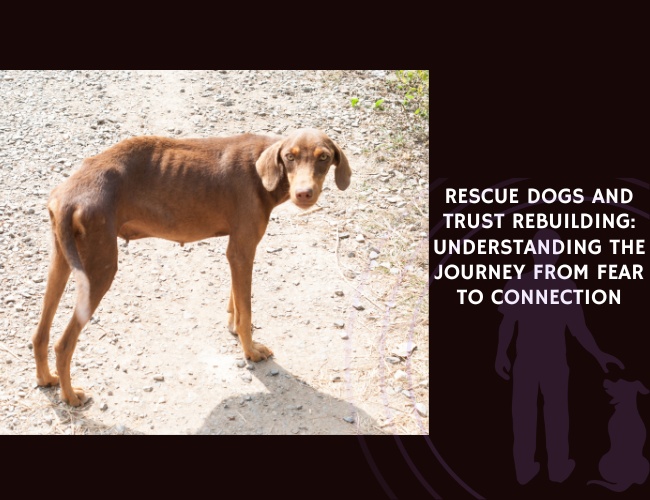
When you welcome a rescue dog into your home, you’re not just opening your door—you’re stepping into a profound journey of rebuilding something precious that was broken. Trust. Yet what does trust truly mean for a dog who has learned that humans are unpredictable, that safety is temporary, and that connection often ends in abandonment?
Let us guide you through the science and soul of trust rebuilding, where neuroscience meets emotional wisdom, and where patience becomes the most powerful tool you possess. This isn’t about quick fixes or forced bonding. This is about understanding how your rescue dog’s brain works, what their behavior truly signals, and how predictability—not passion—becomes the foundation of genuine connection.
Did you know that for rescue dogs, consistency might matter more than affection? That calm neutrality can be more reassuring than enthusiastic love? That giving your dog choice is often more powerful than giving commands? Through the lens of behavioral science and the Zoeta Dogsoul philosophy, we’ll explore how trust isn’t just rebuilt—it’s reconstructed, one predictable moment at a time.
Understanding Trust: What It Really Means for Your Rescue Dog
Trust Beyond Proximity: The Deeper Reality
When your rescue dog stays close to you, is it trust or something else? This question sits at the heart of understanding authentic connection. Trust isn’t simply about physical closeness—it’s a complex cognitive and emotional construct that operates on several levels simultaneously.
What genuine trust looks like in your rescue dog:
Predictability of outcomes: Your dog develops the ability to anticipate your behavior with reasonable accuracy. They learn your patterns, your rhythms, the reliable sequence of your daily routine. This predictability reduces the cognitive burden of constantly wondering “what will happen next?”
Safety expectation: In your presence, threat anticipation decreases. Your dog’s nervous system begins to recognize that when you’re around, the world becomes more manageable. This isn’t about dependence—it’s about reliable safety signals that allow their guard to gradually lower.
Outcome reliability: Your dog experiences consistent contingency between their behavior and your response. When they approach, you remain calm. When they retreat, you respect their boundary. This consistency creates a stable prediction model their brain can rely on.
Reduced uncertainty: The cognitive load involved in predicting social interactions decreases. Your dog doesn’t need to expend enormous mental energy analyzing every micro-signal you send, because your signals have become clear, consistent, and trustworthy.
Research on psychological safety in human relationships teaches us that safety emerges when individuals can express themselves without fear of negative consequences. This principle translates directly to your relationship with your rescue dog. Trust develops when your dog can engage in natural behaviors—sniffing, exploring, resting, even withdrawing—without anticipating punishment, abandonment, or unpredictable reactions.
What trust allows your dog to do naturally:
- Explore their environment without constant vigilance
- Rest deeply without monitoring for threats
- Communicate needs through behavior without fear of punishment
- Make choices about proximity and engagement
- Express discomfort or uncertainty without negative consequences
- Initiate interaction based on their own motivation
- Withdraw when overwhelmed without experiencing abandonment
Distinguishing True Trust from Other Behaviors
Here’s where understanding becomes critical. Not all proximity equals trust. Your rescue dog might stay close for reasons that have nothing to do with genuine connection:
Fear-based attachment occurs when your dog remains near you not because they trust you, but because they perceive threats everywhere else. They’re choosing the least threatening option, not seeking genuine connection.
Resource dependency drives proximity when your dog associates you primarily with food, shelter, or other survival needs. They’re near you for what you provide, not for who you are.
Learned helplessness can manifest as passive acceptance rather than active trust. Your dog may comply because they’ve learned that resistance is futile, not because they feel safe.
Appeasement behavior presents as compliance designed to avoid negative outcomes. Your dog performs behaviors to prevent something bad from happening, not because they willingly cooperate.
How to recognize false proximity patterns:
- Dog stays close but body remains tense and vigilant
- Proximity increases only when other options are removed
- Dog follows but maintains maximum possible distance
- Physical closeness accompanied by stress signals (panting, lip licking)
- Dog positions themselves for quick escape even when close
- Interaction feels one-sided—you engage, they tolerate
- Relaxation never occurs even during extended proximity
True trust manifests as voluntary cooperation rather than mere compliance. It shows in relaxed proximity rather than vigilant monitoring. Your dog chooses to be near you and can relax in your presence—soft eyes, loose body, the ability to truly rest. 🧡
The Impact of Your Dog’s Past: Understanding Relational History
How Abandonment Shapes Social Expectations
Your rescue dog arrives with a history written in their nervous system. Every experience with humans has taught them something about what to expect from people. For many rescue dogs, that education has been painful and inconsistent.
The forms of relational disruption rescue dogs experience include:
Abandonment: The sudden, unexplained loss of a primary attachment figure. One day their person is there, and the next day, they’re gone. No explanation, no gradual transition—just absence where connection used to be.
Multiple caregivers: Serial rehoming creates unstable attachment patterns. Each new person brings different rules, different responses, different emotional signatures. Just when your dog begins to map one person’s behavior, everything changes again.
Inconsistent handling: The same behavior receives different responses. Sometimes approaching gets pets, sometimes it gets punishment. Sometimes vocalizing brings comfort, sometimes it triggers anger. This unpredictability may be more damaging than consistently negative treatment because it prevents the formation of stable predictive models.
Neglect: The absence of responsive caregiving teaches your dog that their needs don’t influence outcomes. They learn helplessness—that their signals don’t matter, that they’re invisible.
Abuse: Active harm creates threat associations with specific human behaviors, body language patterns, or situational contexts.
Common relational disruption patterns in rescue backgrounds:
- Owner surrender due to lifestyle changes (moving, divorce, financial hardship)
- Found as stray after escaping or being abandoned
- Removed from hoarding situations with minimal human interaction
- Transferred between multiple foster homes before adoption
- Rehomed repeatedly due to behavioral issues rooted in earlier trauma
- Separated from littermates and mother too early
- Kept in isolation (backyard, kennel, basement) without social engagement
- Experienced punishment-based training creating fear of human interaction
Research on unpredictability in stressful environments reveals something crucial: inconsistency often creates more stress than consistently negative conditions. Why? Because inconsistency prevents adaptation. Your dog cannot develop a coherent strategy when the rules keep changing. Their prediction system cannot stabilize.
How Your Dog’s Brain Recalibrates After Trauma
When dogs experience relational breakdown, their brains don’t break—they adapt. Understanding these cognitive adjustments helps you recognize that your rescue dog’s cautious behavior isn’t a fixed personality trait. It’s an intelligent response to unreliable information.
Increased vigilance: Your dog heightens their monitoring of human behavior. They watch more carefully, attend to subtler cues, maintain awareness even when appearing relaxed. This hypervigilance consumes enormous cognitive resources but feels necessary for survival.
Conservative prediction: Your dog assumes worst-case scenarios to minimize surprise. When in doubt, they predict threat. This bias toward negative outcomes reduces the possibility of being caught off-guard by danger, even though it also prevents them from fully experiencing safety.
Generalized distrust: Caution learned from one human extends to all humans. Your dog’s brain generalizes the pattern “humans are unpredictable” rather than distinguishing between different types of people. This overgeneralization protects them but also makes connection more difficult.
Hypervigilance to micro-signals: Your dog becomes exquisitely sensitive to subtle behavioral cues—a slight tension in your jaw, a micro-expression of frustration, a half-second delay in your response. They read you at a level most humans don’t read each other.
Delayed response patterns: Your dog waits longer before engaging, creating time to assess safety before committing to interaction. What looks like hesitancy is actually strategic information gathering.
How cognitive recalibration appears in daily life:
- Dog watches doorways even during peaceful moments
- Startles at sounds that didn’t previously trigger fear
- Takes longer to settle after any disruption to routine
- Checks in visually with you constantly during activities
- Hesitates before accepting treats or engaging in play
- Requires repeated exposure before accepting new people or situations as safe
- Shows improved behavior that suddenly regresses without apparent cause
- Maintains awareness of all exit routes in any environment
This recalibration represents adaptation, not damage. Your dog’s prediction system learned that humans are unreliable, and it adjusted accordingly. Through the NeuroBond approach, you’ll help your dog’s nervous system discover that predictability is possible again—but it requires time and consistency.
The Challenge of Micro-Inconsistencies
Rescue dogs often demonstrate extraordinary sensitivity to subtle inconsistencies in human behavior. These micro-inconsistencies matter more than you might imagine:
Tone shifts mid-interaction: You start speaking softly but frustration creeps into your voice. Your dog notices immediately.
Delayed responses to familiar cues: Usually you respond to their approach within two seconds, but today you’re distracted and take five seconds. That variation registers as potential threat.
Mixed signals: Your words say “it’s okay” but your body language says “I’m tense.” Your dog prioritizes the body language every time.
Inconsistent spatial boundaries: Sometimes you welcome them on the couch, sometimes you don’t. The uncertainty creates anxiety around previously neutral furniture.
Variable emotional availability: Some days you’re fully present, other days you’re mentally elsewhere. Your dog experiences this as relational unpredictability.
Additional micro-inconsistencies that undermine trust:
- Using different verbal cues for the same command on different days
- Petting with different pressure or duration unpredictably
- Sometimes making eye contact during greetings, sometimes avoiding it
- Varying your walking pace or route without pattern
- Responding to whining sometimes but not others without clear criteria
- Having different rules when guests are present versus when alone
- Changing feeding location or bowl placement irregularly
- Being playful one moment then withdrawing without clear transition
Research on safety culture in high-risk industries shows that small inconsistencies in procedures undermine trust more than major failures. Why? Because small inconsistencies create chronic uncertainty. They prevent the formation of stable expectation patterns. For your rescue dog, these micro-inconsistencies matter enormously. They’re the difference between a nervous system that can relax and one that must remain perpetually alert. 🐾
Predictability: The Foundation of Trust Rebuilding
Why Consistency Matters More Than Rewards
Here’s a finding that reshapes how we think about trust building: predictability may be more important than reward magnitude. Research on predictable feeding patterns demonstrates that consistent timing increases exploratory behavior even when the amount of food remains constant. What does this tell us?
Your rescue dog’s brain prioritizes being able to predict what happens next over experiencing maximally positive outcomes. A predictable, neutral human feels safer than an unpredictably enthusiastic one. This principle transforms everything about how you approach trust building.
Consistent timing: Regular interaction schedules reduce anticipatory anxiety. When your dog knows that walks happen at 7am and 6pm every day, their nervous system doesn’t need to maintain constant readiness. Predictable timing creates islands of certainty in an uncertain world.
Response reliability: The same behavior consistently produces the same outcome. When your dog approaches, you always remain calm. When they retreat, you always respect that boundary. This reliability allows them to test the relationship safely.
Signal clarity: Unambiguous communication reduces interpretation errors. Clear, simple signals require less cognitive processing and create less opportunity for misunderstanding. Your dog doesn’t need to be a detective—they can simply respond.
Outcome transparency: Clear cause-effect relationships eliminate confusion. Your dog understands why things happen, which reduces the anxiety of trying to control uncontrollable variables.
Practical ways to build predictability into your daily routine:
- Feed at the exact same times every day, even on weekends
- Follow the same sequence when preparing for walks (leash, then shoes, then door)
- Use identical verbal cues and hand signals every time
- Maintain consistent bedtime and wake-up routines
- Keep furniture arrangement stable—avoid frequent rearranging
- Establish specific locations for specific activities (feeding spot, play area, rest area)
- Create a predictable arrival-home sequence (keys down, coat off, greeting)
- Use the same walking routes initially before introducing variation
- Maintain consistent rules about furniture, sleeping locations, and boundaries
For your rescue dog, this means a human who consistently responds in predictable ways builds trust faster than one who provides larger but unpredictable rewards. Consistency beats intensity. Reliability trumps enthusiasm.
Building Clear Contingency Structures
Trust rebuilding requires establishing what behavioral scientists call contingency structures—reliable if-then patterns your dog can depend on:
If-then clarity: “If I approach, then human remains calm.” Your dog learns they can test proximity without triggering unpredictable reactions. This predictable response to approach behavior becomes a cornerstone of trust.
Boundary consistency: “If I retreat, then human respects distance.” When your dog needs space and you consistently honor that need, they learn that withdrawal is safe. This paradoxically makes approach more likely because they know retreat remains available.
Signal reliability: “If human uses this tone, then this outcome follows.” Your voice becomes a reliable predictor. Soft tone means calm interaction. Specific word means specific action. No exceptions, no variations.
Temporal consistency: “If human arrives home, then routine sequence begins.” Predictable routines reduce the cognitive load of constantly assessing “what happens next?” Your dog can anticipate the pattern: arrival, shoes off, coat hung up, greeting, then food preparation. The reliability soothes.
Research on trust formation in complex networks demonstrates that trust emerges from consistent behavioral patterns that allow accurate prediction of future actions. Your rescue dog is constantly running prediction algorithms about your behavior. When those predictions prove accurate repeatedly, trust begins to form. Through the Invisible Leash philosophy, you learn that control comes not from tension but from this kind of predictable, reliable presence.
Can Neutral Consistency Build Trust?
This question challenges common assumptions: does trust require positive interaction, or is consistent neutrality sufficient? The evidence suggests something surprising.
Neutral consistency may be highly effective because:
Reduced cognitive load: Your dog doesn’t need to interpret complex emotional signals. Neutral presence is simpler to process than enthusiasm, disappointment, excitement, or affection. This simplicity allows their nervous system to relax.
Minimized uncertainty: Predictable non-engagement is less threatening than unpredictable engagement. Your dog knows exactly what to expect: you’ll be calm, present, but not demanding. This creates safety through reliability.
Self-paced approach: Your dog controls all interaction timing. There’s no pressure to reciprocate, no expectation to perform. They can choose when to approach, how close to come, how long to stay.
Prevention of overwhelm: No pressure to reciprocate emotional intensity exists. Many rescue dogs find human emotional expressiveness overwhelming, particularly in early stages. Neutral consistency allows them to acclimate gradually.
What neutral consistency looks like in practice:
- Maintaining calm body language regardless of your dog’s behavior
- Speaking in even, moderate tones without dramatic variation
- Allowing your dog to initiate all physical contact
- Being present in the same room without staring or following
- Responding to approaches with gentle acknowledgment, not excitement
- Keeping your energy level steady throughout the day
- Not taking your dog’s avoidance personally or trying to “fix” it
- Providing reliability without demanding reciprocation
This aligns with findings that psychological safety emerges from predictable environments rather than necessarily positive ones. For your rescue dog, a consistently neutral human may be far less threatening than an enthusiastically positive but unpredictable one. Calm becomes the canvas on which trust is painted. 🧠
Emotional Consistency and Signal Clarity
The Power of Emotional Steadiness
Your emotional state matters more than you realize. Not because your dog needs you to be happy, but because they need you to be steady. Emotional consistency in human behavior plays a crucial role in trust rebuilding:
Low variance: Minimal emotional fluctuation across contexts. Your dog experiences you as fundamentally stable regardless of external circumstances. Bad day at work? You remain emotionally steady with them. Exciting news? You remain calm in their presence.
Predictable affect: Consistent emotional tone becomes a reliable feature of the environment. Your dog doesn’t need to constantly monitor your emotional state because it doesn’t dramatically shift. This frees cognitive resources for other things—like gradually relaxing.
Calm baseline: The absence of high-arousal states creates a foundation of safety. Your dog’s mirror neurons aren’t constantly activated by your stress. They can exist in your space without absorbing emotional turbulence.
Stable presence: Reliable emotional availability means your dog can depend on you being psychologically present. You’re not sometimes distant, sometimes clingy, sometimes irritated, sometimes delighted. You’re steadily, calmly there.
How to cultivate emotional steadiness around your rescue dog:
- Take a few deep breaths before interactions if you’re stressed
- Maintain the same gentle tone whether pleased or frustrated
- Process your own emotions before engaging with your dog
- Create a mental transition ritual when arriving home
- Avoid using your dog as an emotional outlet for excitement or stress
- Keep your body language relaxed even when your dog is anxious
- Practice observing your dog’s behavior without immediately reacting
- Develop awareness of your own emotional patterns and triggers
Research on safety culture consistently emphasizes that behavioral consistency reduces uncertainty and enhances trust. For your rescue dog, your emotional steadiness provides a stable reference point for social prediction. They don’t need to be constantly ready for your mood to shift.
Why Emotional Over-Engagement Backfires
Here’s the paradox that catches many well-meaning people: excessive reassurance or emotional intensity may increase rather than decrease uncertainty for your rescue dog.
Problems with emotional over-engagement include:
Signal noise: High emotional variance creates interpretation challenges. Your dog must work harder to distinguish meaningful signals from emotional static. What matters? What’s just you being expressive? The effort exhausts them.
Unpredictable intensity: Your dog cannot predict your emotional level from moment to moment. Will you be slightly pleased or ecstatically thrilled? Mildly annoyed or deeply frustrated? This unpredictability requires constant monitoring.
Pressure to reciprocate: Creates performance anxiety. Your enthusiasm signals expectation. Your dog feels they should match your energy, but they don’t know how, and the pressure intensifies stress.
Attention overload: Excessive focus increases vigilance. When you’re constantly watching your dog, talking to them, engaging them, they cannot truly relax. Your attention becomes something to monitor rather than something to enjoy.
Inconsistent baseline: It’s difficult to establish what “normal” looks like. If your emotional range is wide, your dog struggles to identify the baseline safe state. Every interaction requires fresh assessment.
Signs your emotional engagement is overwhelming your dog:
- Dog moves away when you become animated or excited
- Stress signals (lip licking, yawning) increase during enthusiastic praise
- Dog performs behaviors but looks worried while doing so
- Your dog seems more relaxed when you’re calm than when you’re happy
- Physical contact is tolerated but body remains tense
- Dog seeks distance after intense interaction sessions
- Play stops when your energy level rises
- Your dog watches you more than they engage with activities
This suggests that calm, low-variance emotional signaling may be more effective than expressive bonding attempts, particularly in early trust-building phases. Your rescue dog doesn’t need your passion—they need your predictability.
Signal Clarity Over Emotional Intensity
Trust rebuilding benefits from clear, unambiguous signals rather than emotionally intense ones:
Effective signal characteristics:
Consistency: The same signal always means the same thing. Your gesture for “come” looks identical every time. Your tone for “stay” never varies. This consistency eliminates interpretation effort.
Simplicity: Minimal components to interpret. Simple signals process faster and more reliably than complex ones. One clear gesture beats a complicated sequence every time.
Distinctiveness: Clearly different from other signals. Each signal occupies unique communicative space. Your dog never confuses one signal with another because they’re distinctly different.
Reliability: Signal always followed by predicted outcome. When you signal “walk time,” walk time always follows. When you signal “rest,” you always allow rest. Zero exceptions build complete reliability.
Low ambiguity: Minimal room for misinterpretation. Clear signals don’t require your dog to guess, interpret, or decode. The meaning is immediately, obviously apparent.
Research on reliable communication systems demonstrates that clear, consistent protocols enhance system reliability far more than expressive variation. Your communication with your rescue dog functions the same way. Clarity builds trust. Ambiguity maintains uncertainty. That balance between structure and connection—that’s the essence of Zoeta Dogsoul.
Agency, Choice, and Voluntary Cooperation
Why Giving Your Dog Choice Changes Everything
Allowing your rescue dog agency in interaction significantly impacts trust rebuilding. This isn’t permissiveness—it’s respect for their autonomy as a sentient being capable of making choices about their own comfort and safety.
Agency-preserving practices include:
Approach-withdrawal freedom: Your dog chooses their proximity level at every moment. You never force approach or prevent retreat. They determine the distance that feels safe, and that distance changes as trust develops.
Pause options: Your dog can disengage from any interaction without consequence. Mid-pet, mid-play, mid-training—they can simply walk away, and you honor that choice. This freedom paradoxically increases engagement because safety is guaranteed.
Initiation control: Your dog determines when interaction begins. You make yourself available, but they decide when to engage. This shifts the power dynamic from you imposing yourself to them choosing you.
Boundary respect: You honor your dog’s spatial preferences consistently. If they move away, you don’t follow. If they choose a specific resting spot, you don’t invade it. Their boundaries matter.
Choice architecture: Multiple acceptable response options exist in every situation. Your dog isn’t trapped in binary compliance—they can choose from several ways to successfully navigate each moment.
Practical ways to give your rescue dog agency:
- Offer treats with open palm and let them choose to take it
- Pause petting every few seconds and let them choose to lean in for more
- Provide multiple resting spots so they can select preferred locations
- Allow them to exit rooms freely rather than confining them
- Let them decide whether to greet visitors or retreat
- Offer choices in activities (two different toys, different walking routes)
- Never corner your dog or block their exit paths
- Allow them to self-regulate their distance during training
- Respect their decision to end play sessions
- Let them choose whether to engage with other dogs
Research on autonomy and psychological wellbeing demonstrates that perceived control significantly impacts stress levels. For your rescue dog, agency over social interactions reduces threat perception and facilitates trust development. When they control whether, when, and how interaction happens, the interaction itself becomes safe.
Predictable. Safe. Relational.
Trust Is Predictability Rescue dogs rebuild trust when human behaviour becomes consistent readable and emotionally neutral reducing uncertainty and cognitive load rather than demanding closeness or affection.
Safety Lowers Vigilance Genuine trust allows the nervous system to release constant threat monitoring enabling relaxed proximity voluntary cooperation and the ability to rest without guarding.


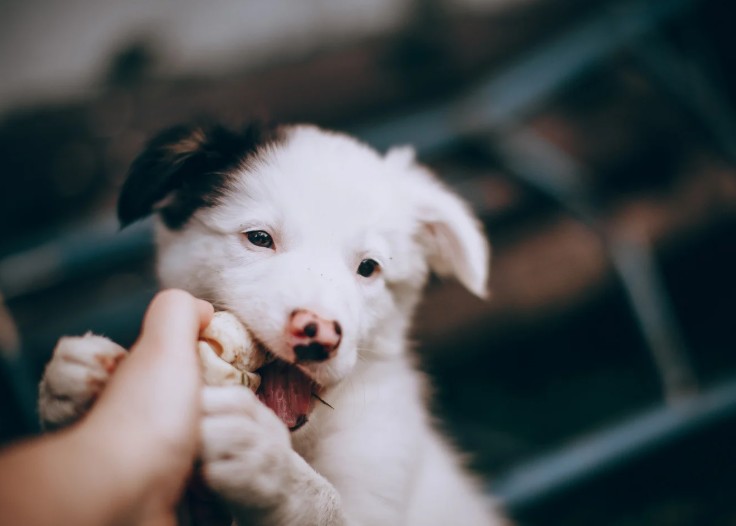
Choice Builds Connection When dogs are free to approach withdraw and engage without consequence trust shifts from fear based proximity to authentic connection grounded in reliability and respect.
Voluntary Engagement Versus Compliance
A critical distinction exists between voluntary cooperation and compliance-driven behavior. Learning to recognize the difference transforms how you assess trust rebuilding progress.
Voluntary engagement indicators:
Relaxed body language: Soft eyes, loose posture, wiggly movement. Your dog’s body expresses comfort, not just obedience. Their tail wag involves their whole body, not just the tail. Their mouth is soft, possibly open and panting gently.
Self-initiated approach: Your dog moves toward you without cuing, prompting, or calling. They choose proximity because proximity feels good, not because you commanded it.
Exploratory behavior: Your dog investigates their environment while near you. They sniff, investigate, explore—behaviors that require feeling safe enough to shift attention away from threat monitoring.
Play initiation: Your dog invites interaction spontaneously. They bring toys, perform play bows, make playful vocalizations. Play only emerges when fear has substantially decreased.
Proximity without vigilance: Your dog rests near you without constantly monitoring. They can lie down, close their eyes, even sleep deeply. This represents profound trust—they’re vulnerable yet feel safe.
Compliance-driven proximity indicators:
Tense body language: Tight muscles, hard eyes, slow careful movements. Your dog is obeying but not relaxed. They’re managing the situation, not enjoying it.
Response only to commands: Your dog approaches only when called, never spontaneously. All proximity is command-driven rather than preference-driven.
Constant monitoring: Even when near you, your dog maintains vigilance. Their eyes track your movements. Their body remains ready to react. They’re present but not relaxed.
Minimal spontaneous behavior: Your dog shows little initiative. They wait for directions, instructions, permissions. Their behavior is reactive rather than proactive.
Escape readiness: Your dog positions themselves for quick retreat. They maintain optimal exit routes, never fully commit to proximity, stay ready to flee.
Understanding this distinction is crucial. Compliance tells you your dog has learned to obey. Voluntary engagement tells you your dog has learned to trust. These are profoundly different accomplishments. 🐾
🐾 The Journey from Fear to Trust 🧡
Understanding the 8 Phases of Trust Rebuilding in Rescue Dogs
Phase 1: Understanding Your Dog’s History
Weeks 1-2: Recognition & Assessment
What’s Happening Neurologically
Your rescue dog’s amygdala is in hypersensitive mode. Past trauma has recalibrated their prediction system to assume worst-case scenarios. Their brain prioritizes survival over connection, constantly scanning for threats and inconsistencies in your behavior.
What You’ll Observe
• Constant vigilance and environmental monitoring
• Maintaining safe distance from you
• Stress signals like lip licking, yawning, averted gaze
• Hesitation before approaching or accepting treats
• Preference for corners or areas with clear exit routes
Your Action Steps
Focus on observation, not interaction. Document specific behaviors without interpretation. Establish a completely predictable routine—same feeding times, same walk schedule, same calm presence. Avoid forcing any contact. Your consistency is building the foundation for their neural recalibration.
Phase 2: Building Predictable Patterns
Weeks 3-6: Consistency as Safety
The Neuroscience of Predictability
Your dog’s brain is running constant prediction algorithms. Each time your behavior matches their prediction, prediction errors decrease. This reduction in cognitive uncertainty allows their nervous system to gradually downregulate from constant high alert. Predictability matters more than positivity.
Signs of Progress
• Dog begins anticipating your routine (waiting by door at walk time)
• Slightly reduced startle responses to normal household sounds
• Brief moments of soft eye contact
• Accepting treats more readily, though still cautious
• First instances of approaching within 3-4 feet
Your Focus This Phase
Maintain robotic consistency in your routines. Same sequences, same timing, same calm emotional baseline. Eliminate micro-inconsistencies—use identical verbal cues, maintain steady tone, respond to behaviors with zero variation. Through the Invisible Leash approach, your calm presence becomes the guidance system.
Phase 3: The Power of Calm Neutrality
Weeks 7-10: Emotional Steadiness
Why Neutral Beats Enthusiastic
High emotional variance creates signal noise your dog must constantly interpret. Neutral consistency reduces cognitive load—your dog doesn’t need to decode complex emotional states or feel pressure to reciprocate. Calm steadiness provides the stable baseline their nervous system craves.
Behavioral Shifts You’ll Notice
• Dog can rest in same room while you’re present
• First voluntary approaches without prompting
• Reduced constant monitoring of your movements
• Occasional soft body language—loose posture, gentle eyes
• May begin settling near you (within 5-6 feet)
Critical Mistake to Avoid
Don’t mistake these tentative signs for readiness for intensive bonding. Over-engagement now—excessive enthusiasm, forced interaction, emotional intensity—will trigger regression. Your dog is testing the waters. Honor their pace. Let them control all interaction timing and intensity.
Phase 4: Offering Autonomy
Weeks 11-16: Choice as Trust Builder
Agency Reduces Threat Perception
When your dog controls whether, when, and how interaction happens, the interaction itself becomes safe. Perceived autonomy significantly impacts stress levels. Dogs who can choose approach and retreat freely experience interactions as voluntary cooperation rather than forced compliance.
Practical Agency-Building
• Offer treats with open palm, let them choose to take
• Pause petting every few seconds, let them lean in for more
• Provide multiple resting spots, let them select location
• Never block exit paths or corner your dog
• Allow them to end interactions by walking away
• Respect all retreat signals immediately
Trust Markers Emerging
First self-initiated physical contact—brief nose touches, leaning against your leg. Dog may bring a toy near you. Tail wagging begins involving more of the body. You might see the first play bow or hear the first contented sigh near you. These are precious moments of genuine trust.
Phase 5: The Testing Period
Weeks 17-24: Validating Your Reliability
Why Dogs Test
Your dog’s brain needs to verify that your predictability holds across contexts and conditions. Testing isn’t defiance—it’s intelligent validation. They’re checking: “Are you still safe when I’m vulnerable? When circumstances change? When I show stress?”
What Testing Looks Like
• Approach closer than usual, then retreat to assess your response
• Brief moments of trust followed by renewed caution
• Testing boundaries in new environments
• Checking if rules remain consistent at different times
• Offering vulnerable behavior (belly exposure) then quickly withdrawing
• Gradual proximity increases with periodic regression
How to Pass the Tests
Maintain absolute consistency. When they retreat, you remain calm. When they approach, you stay steady. When they test boundaries, boundaries hold. When they show stress, you give space. Every consistent response builds their confidence that you are genuinely reliable—not just temporarily.
Phase 6: Trust Deepening
Months 6-9: From FEAR to CARE
Emotional System Transitions
Your dog’s FEAR system has downregulated enough for other emotional systems to emerge. The SEEKING system activates—curiosity replaces constant vigilance. PLAY becomes possible—incompatible with fear. Finally, the CARE system engages, facilitating genuine affiliative bonding. Through Soul Recall, emotional memory begins rewriting itself.
Observable Transformation
• Spontaneous play sessions with full-body wiggle
• Deep REM sleep in your presence—twitching, dream-running
• Seeking you for comfort during stress, not just avoiding threat
• Confident exploration knowing you’re their safe base
• Soft, prolonged eye contact without stress
• Initiating physical affection—head on lap, leaning into pets
Nurturing This Phase
Continue your consistency while allowing more natural responsiveness. You can begin matching their energy in play. Celebrate their joy without overwhelming it. Provide enrichment activities. Gradually introduce new experiences with you as their secure base. Trust is now resilient enough to handle small variations.
Phase 7: Trust Across Contexts
Months 9-12: Building Resilience
Neural Pattern Generalization
Your dog’s brain has built strong prediction models about your reliability at home. Now these patterns begin generalizing to new contexts. The neural pathways associated with safety-with-you strengthen across environments. Trust becomes context-invariant—you’re safe everywhere, not just in familiar spaces.
Expanding the Safe Zone
• Confidence in new environments with you present
• Checking in with you during uncertain situations
• Recovering faster from stressful events
• Generalizing trust to similar contexts (new parks, routes, spaces)
• Showing relaxed body language in previously stressful situations
• Seeking your guidance rather than defaulting to fear
Supporting Generalization
Gradually introduce new contexts while maintaining your emotional steadiness. Same calm presence, different location. Let your dog set the pace for exploration. Be their secure base—they venture out, check in, venture further. Your consistency across environments teaches them you’re reliably safe everywhere.
Phase 8: The Authentic Partnership
Beyond Year One: Genuine Connection
Trust as Baseline
Trust has shifted from hopeful exception to baseline expectation. Your dog’s nervous system has accumulated overwhelming evidence of your reliability. Their prediction models about you are stable, accurate, and positive. The relationship feels effortless because it’s built on genuine mutual understanding through the NeuroBond framework.
The Fully Emerged Dog
• Authentic personality fully expressed without fear overlay
• Initiates complex communication and interaction
• Deep, seamless connection—you read each other effortlessly
• Trust resilient to occasional inconsistencies
• Joyful engagement in life—play, exploration, rest
• You as primary attachment figure and secure base
• Natural, voluntary cooperation without compliance pressure
Maintaining the Bond
Continue honoring the principles that built this trust. Consistency remains important even when trust is strong. Respect their communication. Preserve their agency. Your dog has learned that you are reliably safe—continue being that person. The relationship continues deepening as your shared history grows.
🔄 Trust vs. Compliance: Key Distinctions
Genuine Trust Indicators
• Soft, relaxed eyes and loose body
• Self-initiated contact and approach
• Deep sleep in your presence
• Voluntary cooperation without commands
• Play initiation and full-body wiggles
Compliance/Appeasement
• Averted gaze and hard eyes
• Response only to commands
• Constant monitoring with vigilance
• Obedience with tension
• Proximity with escape readiness
Fast Trust Builders
• Absolute consistency in routines
• Emotional steadiness across situations
• Respecting agency and choice
• Clear signal clarity
• Non-transactional time together
Trust Destroyers
• Forcing interaction or contact
• Inconsistent responses to behaviors
• Emotional over-engagement
• Ignoring stress signals
• Impatience with the timeline
Early Phase Focus (0-3 months)
• Observation over interaction
• Neutral consistency preferred
• Predictability over rewards
• Space more valuable than contact
• Routine as safety foundation
Late Phase Evolution (9-12+ months)
• Genuine connection and bonding
• Natural responsiveness emerges
• Context generalization occurs
• Resilient trust handles variation
• Partnership replaces hierarchy
⚡ The Trust Rebuilding Formula
Predictability + Consistency + Agency + Time = Trust
Remember: Consistency beats intensity. Calm beats enthusiastic. Patience beats pressure. Your dog’s timeline is their timeline. Every predictable interaction is a brick in the foundation you’re building together. Trust cannot be forced—it can only be invited through reliable, patient, consistent presence.
🧡 The Zoeta Dogsoul Perspective
Trust rebuilding isn’t about training techniques or behavioral modification—it’s about creating the conditions where a traumatized nervous system can recalibrate. Through the NeuroBond approach, we understand that genuine connection emerges from emotional clarity and predictable leadership, not control or intensity. The Invisible Leash reminds us that true guidance flows from calm awareness and consistent presence, requiring no physical restraint when trust exists. And through Soul Recall, we recognize that emotional memory runs deep—that your patient, steady consistency rewrites not just behavior patterns but the fundamental expectations your dog holds about relationship itself. That balance between neuroscience and soul, between structure and compassion, between patience and presence—that’s the essence of Zoeta Dogsoul. Your rescue dog is not broken. They are intelligently adapted to an unreliable world. Your work is to become reliably safe, predictably kind, consistently present. In that reliability, trust finds room to grow again.
© Zoeta Dogsoul – Where neuroscience meets soul in dog training
Reading Your Dog’s Signals: Trust Versus Appeasement
Understanding the Amygdala and Fear Response
Your rescue dog’s brain contains an almond-shaped structure called the amygdala—the fear and threat detection center. In dogs with trauma history, the amygdala often operates in a heightened state we call hypersensitivity.
Amygdala hypersensitivity characteristics:
Lower threat threshold: Stimuli that wouldn’t trigger fear response in well-adjusted dogs activate fear circuits in your rescue dog. Ordinary events—footsteps, raised voices, sudden movements—register as potential threats.
Faster activation: The fear response triggers more quickly, with less information. Your dog’s nervous system makes split-second decisions to prioritize survival over accuracy.
Slower deactivation: Once activated, the fear response persists longer. Your dog may remain physiologically aroused—elevated heart rate, stress hormones circulating—long after the triggering event has passed.
Generalized sensitization: The amygdala becomes reactive to broader categories of stimuli. If one person caused harm, all people become potentially dangerous. If one location was frightening, similar locations trigger caution.
Situations that commonly trigger amygdala activation in rescue dogs:
- Sudden loud noises (door slams, dropped objects, backfiring cars)
- People wearing hats, sunglasses, or unusual clothing
- Raised arms or hands moving quickly toward them
- Men with deep voices or heavy footsteps
- Tight spaces or enclosed areas
- Being approached while resting or eating
- Other dogs approaching directly at speed
- Veterinary or grooming environments
- Anything resembling past trauma triggers (specific tools, locations, situations)
This hypersensitivity isn’t permanent, but it requires patient, consistent work to recalibrate. Through the Soul Recall approach, we recognize that emotional memory runs deep—that your dog’s nervous system remembers what their conscious mind may not. Healing happens through new experiences that gradually teach the amygdala to revise its threat assessment.
How Stress Manifests in Behavior
Stress in your rescue dog manifests through specific, observable behaviors. Learning to recognize these signs allows you to respond appropriately—usually by reducing demands and giving space.
Observable stress indicators:
Lip licking or tongue flicking: Brief, repetitive licking of the lips when no food is present. This displacement behavior indicates discomfort or uncertainty.
Yawning: Particularly when not tired. Stress yawning looks different from tiredness—it’s often more pronounced, sometimes with vocalization.
Panting: When temperature doesn’t justify it. Stress panting tends to be shallower and faster than temperature-regulation panting.
Trembling or shaking: Body tremors, particularly in the hind legs or overall body. This indicates high arousal and stress.
Excessive shedding: Sudden increase in hair loss during stressful situations. You might notice tufts of fur coming out during vet visits or other high-stress events.
Dilated pupils: Eyes appear darker because pupils are enlarged. This indicates high arousal and sympathetic nervous system activation.
Pacing or restlessness: Inability to settle, constant movement, repetitive route-walking. Your dog’s nervous system can’t downregulate enough to rest.
Avoidance behaviors: Turning away, hiding, seeking distance from the stressor. This is your dog’s attempt to create safety through space.
Additional subtle stress signals easy to miss:
- Whale eye (showing whites of eyes while looking away)
- Ears pinned back or constantly swiveling
- Tail tucked tightly between legs
- Stiff, slow movements instead of fluid motion
- Refusing food or treats in situations where they’d normally accept
- Excessive scratching or grooming
- Drooling when not around food
- Frozen body posture with minimal breathing
- Curved body position when standing (avoiding straight confident stance)
- Piloerection (raised hackles) along spine
Understanding these signals allows you to respond with compassion rather than confusion. Your rescue dog isn’t being stubborn or difficult—they’re communicating stress in the only language they have.
Distinguishing Trust from Appeasement
This distinction is fundamental to accurately assessing your progress in trust rebuilding:
Trust indicators:
Soft, relaxed eyes: The eyes appear gentle, with no hardness or tension. The whites of the eyes aren’t showing (unless that’s normal for the breed). The gaze is soft, not fixed or staring.
Loose, wiggly body: The entire body participates in movement. There’s a flowing quality to motion, with no stiffness or bracing. The body appears comfortable in space.
Tail wagging with full body movement: The tail wag involves the whole rear end, sometimes the entire body. This is the “helicopter tail” or “whole body wiggle” that communicates genuine pleasure.
Spontaneous play bows: The classic front-down, rear-up position offered without prompting. Play bows signal safety—they only emerge when fear has sufficiently decreased.
Seeking proximity for comfort: Your dog approaches you when frightened, stressed, or uncertain—not just for food or play. You’ve become a source of security.
Deep sleep near you: Your dog enters REM sleep cycles in your presence. Deep sleep represents ultimate vulnerability, offered only when safety is assured.
Exploratory behavior in your presence: Your dog investigates new objects, smells, or environments while you’re nearby. They feel safe enough to shift attention from vigilance to curiosity.
Voluntary physical contact: Your dog initiates touch—leans against you, places head on your lap, presses into your side. This contact is chosen, not commanded.
Additional trust indicators:
- Soft, open mouth with relaxed jaw
- Belly exposure in relaxed contexts
- Bringing toys to you spontaneously
- Making soft eye contact without stress
- Sighing or groaning contentedly near you
- Eating or drinking comfortably in your presence
- Rolling over for belly rubs
- Following you room to room out of preference, not anxiety
Appeasement indicators:
Averted gaze: Your dog looks away, avoiding direct eye contact. This submissive signal says “I’m not a threat” rather than “I trust you.”
Lip licking: Repetitive, rapid lip licking indicates stress and a desire to deescalate potential conflict.
Yawning: Displacement yawning signals discomfort and uncertainty in the interaction.
Low body posture: Body held low to the ground, minimizing visible size. This submissive posture aims to avoid triggering aggression.
Tail tucked or low wagging: Tail held low or tucked between legs. Low wagging signals appeasement, not happiness.
Freezing: Body becomes completely still. Freezing is a fear response—hoping to avoid detection or attack.
Slow, deliberate movements: Exaggeratedly careful movement designed to appear non-threatening. Your dog is managing you, not relaxing with you.
Proximity with escape readiness: Your dog stays near but maintains tension, ready to flee instantly. They’re complying but not comfortable.
Additional appeasement signals:
- Ears pinned flat against head
- Head lowered or turned away
- Curved body avoiding direct orientation toward you
- Paw lifting in uncertainty
- Submissive grin (teeth showing while body is tense)
- Approaching in circular or sideways path rather than directly
- Rolling over while showing tension (different from relaxed belly exposure)
- Staying low when approaching
Understanding these distinctions is critical for accurate assessment of trust rebuilding progress. Appeasement tells you your dog has learned to manage threat. Trust tells you your dog no longer perceives you as threat. These represent entirely different relationship states. 🧡
The NeuroBond Model: Integration of Science and Soul
How Predictive Processing Explains Trust Formation
Modern neuroscience teaches us that brains function as prediction machines. Your dog’s brain constantly generates predictions about sensory input and updates those predictions based on prediction errors—the difference between what was expected and what actually occurred.
For your rescue dog, trust emerges when:
Prediction errors decrease: Your behavior becomes increasingly predictable. Your dog’s brain generates expectations about your behavior, and those expectations prove accurate. Each successful prediction slightly increases confidence.
Uncertainty reduces: Confidence in predictions increases across contexts. Your dog begins to generalize: “This human is predictable in the home, at the park, during feeding, during walks.” Predictability becomes a stable trait they associate with you.
Cognitive load decreases: Less mental effort is required for social prediction. Your dog’s brain can allocate resources to other functions—play, exploration, rest—because prediction about you has become automatic and reliable.
Safety signals strengthen: Reliable indicators of non-threat accumulate. Your dog develops a catalog of safety cues associated with you: your scent, your footstep pattern, your arrival routine, your voice. These signals trigger parasympathetic nervous system activation—the rest and digest response.
How you know prediction errors are decreasing:
- Your dog stops startling when you move normally around the house
- They begin to anticipate your routine actions (preparing for walks before you get the leash)
- Relaxation happens faster after brief separations
- Your dog returns to baseline calm more quickly after disruptions
- They correctly “read” your intentions from minimal cues
- Stress responses decrease in previously challenging situations
- Your dog can rest while you’re active nearby
- They develop confident expectations about daily sequences
This framework explains why consistency is more important than positivity in early trust building. Consistent behavior reduces prediction errors regardless of emotional valence. A predictably neutral person generates fewer prediction errors than an unpredictably enthusiastic one. Your rescue dog’s brain prioritizes predictability over reward intensity.
Attachment Repair Through Expectation Repair
Attachment theory suggests that trust rebuilding depends on expectation repair rather than affection intensity. This reframes everything about how you approach your rescue dog.
The expectation repair process:
Acknowledge disruption: Recognize that your dog’s expectations about human behavior were violated, often repeatedly. Their prediction models about humans are based on unreliability. You cannot ignore this foundation.
Establish new baseline: Create predictable interaction patterns that provide new data points. Each consistent interaction teaches your dog that you are different from previous humans.
Maintain consistency: Sustain these patterns over extended time. One week of consistency doesn’t override months or years of inconsistency. You’re rebuilding neural pathways through repetition.
Allow testing: Permit your dog to test the reliability of your behavior. They will test—approaching then retreating, offering trust then withdrawing it, checking whether you remain predictable under various conditions. This testing is healthy and necessary.
Demonstrate stability: Prove consistency across contexts, emotional states, and situations. Your dog needs evidence that you’re predictable when you’re happy, stressed, tired, excited, frustrated. Context-invariant predictability is the goal.
What healthy testing behavior looks like:
- Dog approaches closer than usual, then retreats to assess your response
- Brief moments of trust followed by renewed caution
- Testing whether rules remain consistent across different times of day
- Checking if boundaries are respected in new environments
- Offering vulnerable behavior (belly exposure) then quickly withdrawing to see if you respect the withdrawal
- Approaching with a toy to see if play is safe, then moving away with it
- Testing whether you remain calm when they show stress signals
- Gradually increasing proximity over days/weeks, with occasional regression
Research on maternal sensitivity in high-risk dyads demonstrates that consistent, responsive caregiving repairs attachment disruptions. The same principles apply to your relationship with your rescue dog. Consistency, responsiveness, and time heal expectation violations.
Social Learning and Contingency Theory
Trust develops through your dog learning specific contingencies—reliable relationships between their behavior and your response, between environmental cues and outcomes:
Behavioral contingencies: Your dog’s actions reliably predict your response. Approach behavior → calm acknowledgment. Retreat behavior → respected space. Vocalization → consistent reaction. These contingencies create a stable social world.
Temporal contingencies: Time of day reliably predicts routine events. Morning → walk. Evening → feeding. Night → settling down. This temporal structure reduces constant uncertainty about “what happens next?”
Spatial contingencies: Location reliably predicts expected interactions. Kitchen → food preparation. Door → exits and entries. Your bed → nighttime. Spatial associations become reliable prediction cues.
Social contingencies: Your dog’s internal state influences your adaptation. Stress signals → reduced demands. Playful signals → engagement. Fatigue signals → allowed rest. Your dog learns that communicating their state influences outcomes.
Research on trust formation in complex networks demonstrates that reliable contingencies form the foundation of trust. These contingencies teach your dog that their world is comprehensible, navigable, and responsive to their signals. Through the Invisible Leash, you learn that connection doesn’t require physical restraint—it emerges from these reliable contingencies that bind you together through understanding rather than force.
From FEAR to CARE: The Neuroscience of Emotional Systems
Jaak Panksepp’s affective neuroscience framework identifies seven primary emotional systems in mammalian brains. For your rescue dog, the journey from trauma to trust involves a specific sequence of emotional system transitions:
The trust rebuilding sequence:
FEAR reduction: The first essential step is decreasing threat perception. Your dog’s FEAR system must deactivate enough to allow other systems to emerge. This happens through consistent safety signals that teach the amygdala to revise threat assessments.
SEEKING activation: Once fear decreases sufficiently, the SEEKING system can engage. This is the exploratory, curious system that motivates investigation of environment and possibility. Your dog begins to approach rather than only avoid.
PLAY emergence: The PLAY system only activates when safety is substantially established. Play is incompatible with fear—your dog cannot simultaneously be frightened and playful. Spontaneous play signals significant trust development.
CARE engagement: Finally, the CARE system facilitates affiliative bonding. This is the system underlying attachment, nurturing, and deep social connection. It emerges last because it requires the most safety.
Research on stress response systems demonstrates that reducing fear responses enables adaptive coping and positive emotional engagement. You cannot force your rescue dog to skip the FEAR reduction phase. Trust building must follow this sequence. Through the Soul Recall framework, we understand that emotional memory runs deep—that your dog’s journey from FEAR to CARE rewrites their fundamental expectations about relationship itself.
The NeuroBond Model: Core Principles
The NeuroBond Model synthesizes these frameworks into an integrated approach to trust rebuilding:
Emotional clarity: Low-noise, consistent emotional signaling. Your dog doesn’t need to decode complex emotional states. Your baseline is calm, steady, reliable.
Predictable leadership: Reliable, non-threatening guidance. You establish clear patterns without intimidation. Leadership means creating structure that your dog can depend on.
Safety through consistency: Trust emerges from predictability rather than intensity. Your consistent behavior teaches your dog’s nervous system that you are safe.
Agency preservation: Voluntary cooperation strengthens bonds more than forced compliance. Your dog’s choice to engage creates genuine connection.
Time without demand: Non-transactional time facilitates trust. Simply existing together without agenda allows your dog to experience your presence as safe rather than demanding.
How to embody the NeuroBond principles daily:
- Begin each day with a predictable morning routine your dog can anticipate
- Offer choices rather than commands whenever possible
- Spend 15-20 minutes daily simply being present without training or interaction demands
- Maintain the same calm energy regardless of your dog’s behavior
- Create clear, simple communication signals and use them identically every time
- Respect your dog’s communication even when it means backing off
- Build structure through routine rather than through control
- Allow your dog to approach you rather than always initiating contact
- Practice patience when your dog needs more time to feel safe
- Celebrate small moments of voluntary engagement without overwhelming enthusiasm
This model emphasizes that trust reconstruction occurs through safety and predictability rather than control or intensive bonding efforts. You cannot force trust—you can only create the conditions where trust can naturally emerge. That’s the essence of Zoeta Dogsoul. 🐾
Practical Wisdom: Implementing Trust Rebuilding
Assessment: What to Actually Observe
Effective trust rebuilding requires accurate assessment. Here’s what to monitor:
Behavioral observation: Document specific behaviors, not interpretations. Write “dog approached within two feet and maintained loose body” rather than “dog seemed happy.” Specific observations create reliable data.
Context variation: Assess across multiple contexts. Your dog might show trust at home but not outdoors, or comfort during feeding but not during grooming. Trust develops unevenly across contexts.
Time-series analysis: Track changes over weeks and months, not days. Trust rebuilding operates on a timeline of months, sometimes years. Daily variations matter less than monthly trends.
Physiological measures: Where possible, consider objective measures. Veterinarians can assess heart rate variability and stress hormone levels. These provide data beyond what behavior alone reveals.
Voluntary cooperation tests: Assess self-initiated behaviors. How often does your dog approach without being called? Do they initiate play? Do they seek comfort from you? These voluntary behaviors indicate genuine trust.
Creating a simple assessment tracking system:
- Keep a weekly log of voluntary approach behaviors (frequency and duration)
- Note contexts where relaxation occurs versus contexts where tension persists
- Track sleep quality (restless versus deep sleep, location preferences)
- Record play initiation instances
- Document stress signal frequency in standard situations
- Monitor eating behavior comfort levels
- Note physical contact patterns (initiated by dog versus tolerated)
- Track recovery time after stressful events (how quickly they return to baseline)
- Photograph body language weekly to visually track subtle changes
- Record first occurrences of new trust behaviors (first deep sleep, first play bow, etc.)
Research on reliable measurement demonstrates that objective tools enhance assessment accuracy. Your subjective impressions matter, but specific behavioral documentation provides clearer progress indicators.
Intervention Strategies That Actually Work
Evidence-based interventions for trust rebuilding:
Establish predictable routines: Consistent daily schedules reduce chronic uncertainty. Same walk times, same feeding times, same bedtime routine. This predictability allows your dog’s nervous system to relax.
Maintain emotional steadiness: Low-variance emotional presentation across situations. Your dog experiences you as fundamentally stable regardless of external stressors.
Respect agency: Allow choice in all interactions. Your dog can approach or retreat, engage or disengage, without consequence.
Provide non-transactional time: Spend time together without training, feeding, or other agenda. Simply coexist. This teaches your dog that your presence isn’t always demanding.
Use clear signals: Unambiguous communication reduces interpretation effort. Simple, consistent signals your dog can easily understand.
Avoid over-engagement: Resist the urge to force bonding. Let connection develop naturally at your dog’s pace.
Practice patience: Allow the natural timeline for trust development. Rushing creates pressure that undermines safety.
Specific daily practices that build trust:
- Morning: Feed at exact same time, same location, same routine
- Mid-morning: Quiet coexistence time while you read or work
- Midday: Predictable walk same route, same pace initially
- Afternoon: Offer choice between toys or rest, respect their selection
- Evening: Second walk or backyard time at consistent hour
- Pre-bedtime: Calming routine signaling day’s end
- Throughout day: Respond to approaches with gentle acknowledgment
- Throughout day: Honor retreat signals immediately
- Weekly: Maintain exact same pattern seven days per week initially
- Monthly: Gradually introduce small variations only after baseline trust establishes
Common Pitfalls That Delay Progress
Mistakes that interfere with trust rebuilding:
Forcing interaction: Overriding your dog’s withdrawal signals teaches them that their communication doesn’t matter. This undermines trust profoundly.
Inconsistent responses: Variable reactions to the same behaviors prevent predictability. Your dog cannot learn reliable patterns from unreliable responses.
Emotional intensity: Overwhelming your dog with enthusiasm creates stress, not connection. Calm beats excited in trust building.
Transactional focus: Only interacting during training or feeding makes you a resource dispenser rather than a trusted companion.
Impatience: Expecting rapid progress creates pressure that your dog feels. Trust has its own timeline—you cannot speed it through willpower.
Misinterpreting compliance: Assuming obedience equals trust leads to false assessment of progress. Learn to distinguish compliance from genuine connection.
Ignoring micro-signals: Missing subtle stress indicators means you don’t adjust when your dog needs you to. Attention to detail matters enormously.
Additional mistakes that delay trust rebuilding:
- Punishing fearful behavior instead of addressing the underlying fear
- Comparing your dog’s progress to other dogs’ timelines
- Flooding (forced exposure to feared stimuli)
- Using treats to lure your dog past their comfort threshold
- Inviting guests over before your dog is ready for social exposure
- Changing multiple variables simultaneously (new home, new routine, new rules)
- Assuming setbacks mean failure rather than normal fluctuation
- Seeking quick fixes through gadgets or shortcuts
- Prioritizing obedience training over relationship building
- Talking incessantly to your dog instead of providing calm quiet
- Interpreting every behavior as progress or regression rather than information
Moving Forward: The Journey Continues
What Success Actually Looks Like
Trust rebuilding success doesn’t mean your rescue dog becomes a different dog. It means they become themselves—relaxed, authentic, capable of genuine connection without the overlay of fear.
You’ll know trust is developing when:
Your dog seeks your proximity for comfort, not just resources. When they’re startled, they come to you. When they’re uncertain, they check in with you. You’ve become their safe harbor.
Deep sleep happens in your presence. Your dog enters REM sleep cycles—twitching, dream-running, fully vulnerable. This represents profound trust.
Play emerges spontaneously. Your dog initiates games, brings toys, performs play bows. Play requires safety—it’s incompatible with fear.
Exploratory behavior increases. Your dog investigates new objects, approaches novel situations, expands their comfort zone. Curiosity replaces vigilance.
Body language softens across contexts. Loose, wiggly movement becomes the norm rather than the exception. Your dog’s default state is relaxed rather than braced.
Additional signs of genuine trust development:
- Your dog greets you with enthusiasm rather than caution
- Recovery from startling events happens within minutes instead of hours
- Your dog can focus on activities (eating, playing) without constant environmental monitoring
- Physical relaxation—muscles loose, breathing even, jaw soft
- Your dog initiates contact by bringing you toys, leaning against you, or seeking petting
- Confident body language in previously stressful situations
- Ability to rest while you move around the house
- Making choices that prioritize comfort over hypervigilance
- Showing you their belly in genuinely relaxed moments
- Following you because they want to, not because they’re anxious about being alone
The Timeline of Trust
Trust rebuilding operates on its own schedule. You cannot rush it, but you can support it:
Weeks 1-4: Safety foundation. Your dog is assessing whether you’re predictable. Consistency matters more than connection during this phase.
Months 2-3: Tentative trust emerges. You’ll see moments of relaxation, brief episodes of play, occasional voluntary proximity. These moments are precious—acknowledge them without overwhelming.
Months 4-6: Trust deepens and generalizes. What worked at home begins working in other contexts. Trust becomes more stable, less fragile.
Months 6-12: Genuine bond forms. Your dog’s nervous system has accumulated enough evidence that you’re reliable. Trust becomes their baseline expectation rather than hopeful exception.
Beyond year one: Continued deepening. Trust doesn’t plateau—it continues developing as your shared history accumulates.
Some dogs move faster. Some take longer. The timeline matters less than the direction. Are you seeing gradual progress? That’s what counts.
What to expect during each phase:
Phase 1 (Weeks 1-4):
- Dog maintains distance, observes from safe locations
- Accepts food but may not eat in your presence
- Minimal eye contact, averted gaze common
- Startle responses to normal household sounds
- Following at distance to monitor your location
- Little to no voluntary approach behavior
Phase 2 (Months 2-3):
- Brief moments of soft body language
- First instances of approaching within arm’s reach
- May take treats from hand hesitantly
- Occasional tail wag when you enter room
- Begins to settle in same room as you
- First play bow or toy interaction might occur
Phase 3 (Months 4-6):
- Consistent soft eyes during interactions
- Seeks proximity more regularly
- Play becomes more frequent and sustained
- Physical contact initiated by dog occasionally
- Stress recovery happens noticeably faster
- Beginning to generalize trust to new environments
Phase 4 (Months 6-12):
- Deep sleep in your presence becomes regular
- Dog actively seeks you for comfort during stress
- Play is enthusiastic and complex
- Physical affection freely given and received
- Confidence in unfamiliar situations with you present
- Trust becomes stable across contexts
Beyond Year One:
- Profound bond evident in seamless communication
- Dog’s personality fully emerges
- Trust withstands occasional inconsistencies
- Relationship feels natural, effortless
- Your dog has integrated you as primary attachment figure 🧡
Your Role in This Journey
You are not fixing your rescue dog. You are creating the conditions where their nervous system can recalibrate, where their prediction models can update, where their capacity for trust can re-emerge.
This requires:
Patience beyond what you thought you possessed. Your dog’s timeline is not your timeline. Their healing follows its own rhythm.
Consistency that never wavers. Your predictability is their safety. This consistency is your gift to them.
Humility about what you can control. You can control your behavior. You cannot control your dog’s readiness to trust. This distinction matters.
Attention to subtle signals. Your dog is always communicating. Learning their language deepens connection.
Compassion for their history. Every cautious behavior makes sense when you understand their past. Context transforms interpretation.
Essential qualities for successful trust rebuilding:
- Observational skills to notice subtle behavioral changes
- Emotional regulation to maintain steady presence
- Realistic expectations about timelines and progress
- Willingness to prioritize relationship over obedience
- Capacity to celebrate small victories without overwhelming
- Ability to distinguish your needs from your dog’s needs
- Commitment to consistency even when it’s inconvenient
- Flexibility to adjust approaches based on your dog’s feedback
- Self-awareness about your own triggers and reactions
- Understanding that setbacks are information, not failure
- Patience to allow your dog to be the teacher about what they need
Through the NeuroBond approach, you learn that connection builds through understanding, not control. Through the Invisible Leash philosophy, you discover that relationship requires no physical restraint when emotional clarity exists. Through Soul Recall, you recognize that healing emotional memory takes time, but that time genuinely heals when consistency provides new evidence.
That balance between science and soul, between structure and flexibility, between patience and presence—that’s the essence of Zoeta Dogsoul.
Your rescue dog is not broken. They are intelligently adapted to an unreliable world. Your work is to become reliably safe, predictably kind, consistently present. In that reliability, trust finds room to grow again.
The journey from fear to connection is not a straight line. It includes setbacks, plateaus, unexpected breakthroughs, and quiet moments of deepening trust. Every moment of consistency you offer is a brick in the foundation you’re building together.
Welcome to the journey. Your dog is worth every patient, consistent, compassionate moment you invest. 🐾










