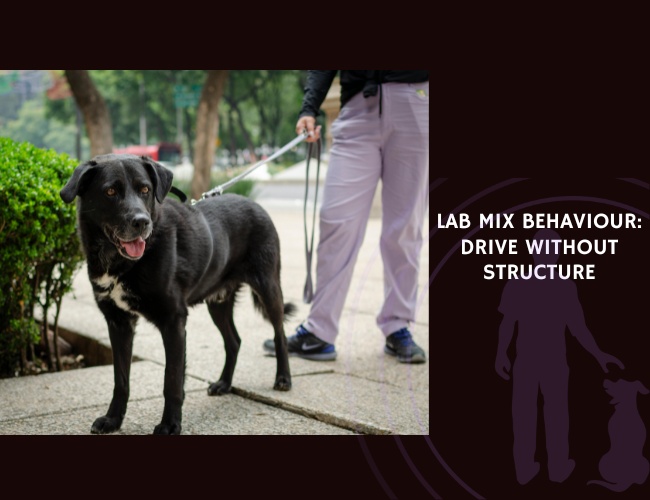
Have you ever watched your Lab mix bolt through the house with endless enthusiasm, only to seem completely unable to settle moments later? You’re witnessing something fascinating: a dog with intense working drive but without the built-in structure to channel it. Let us guide you through understanding this unique behavioral pattern and, more importantly, how to transform that chaotic energy into purposeful cooperation.
The Lab Mix Paradox: When Motivation Meets Mystery
Your Lab mix isn’t broken, hyperactive, or deliberately disobedient. What you’re seeing is something more nuanced: a dog carrying powerful genetic programming for work, play, and food motivation, but without the complete behavioral blueprint that guides purebred working Labradors. It’s like having a high-performance engine without a steering system.
This phenomenon appears across thousands of Lab mix households. Your furry friend might display intense excitement about everything—food, toys, walks, visitors—yet struggle to follow through on tasks or calm down when asked. They initiate behavior with remarkable energy but show inconsistent self-control. One moment they’re laser-focused on a toy; the next, they’ve abandoned it for something else entirely.
Common signs your Lab mix has drive without structure:
- Explosive bursts of energy followed by difficulty settling
- Starts behaviors intensely but abandons them quickly
- Pulls strongly on leash toward anything interesting
- Jumps on people despite repeated corrections
- Counter-surfs and steals food even when well-fed
- Brings toys persistently but won’t play coherently
- Destroys items when left alone despite adequate exercise
- Shows inconsistent recall—perfect sometimes, deaf to you other times
- Becomes over-aroused during training sessions
- Struggles to maintain focus for more than brief moments
🧠 Did you know? This isn’t a sign of limited intelligence. Many Lab mixes are exceptionally smart, which actually makes the inconsistency more frustrating for both of you. The issue lies not in their cognitive capacity but in how their motivational systems are wired and whether they have structured outlets for that incredible drive.
What Makes This Different
Before we dive deeper, let’s clarify what we’re not talking about. Your Lab mix’s behavior differs fundamentally from:
Low-drive breeds who naturally operate at lower arousal levels and seem content with minimal stimulation. These dogs aren’t fighting internal pressure to do something—anything—all the time.
Purpose-bred working Labradors from field trial or hunting lines who inherit not just motivation but also the regulatory mechanisms that allow them to channel drive into focused tasks. They have the complete package.
Anxiety-based behaviors rooted in fear, insecurity, or trauma. While some Lab mixes do experience anxiety, the drive-without-structure pattern exists independently and often gets misdiagnosed.
True behavioral disorders requiring veterinary intervention. If you notice aggression, extreme fearfulness, or compulsive behaviors, consult your veterinarian. What we’re addressing here is the manageable challenge of high motivation meeting insufficient structure.
Genetic Inheritance: The Mixed Blessing
Understanding your Lab mix’s behavior starts with genetics. Labrador Retrievers were meticulously bred over generations for specific working traits: sustained retrieving motivation, intense food drive for training responsiveness, social cooperation with human handlers, and moderate arousal regulation for endurance during field work. These traits made them exceptional hunting companions.
Here’s the crucial part: these characteristics evolved within a structured working context. Purebred working Labs had clear task objectives—retrieve the bird, hold it gently, deliver it to hand. They experienced predictable reinforcement schedules, faced challenges that balanced physical and cognitive demands, and benefited from handler-directed regulation throughout their work.
What working Labradors received that many Lab mixes lack:
- Clear task objectives with defined start and finish points
- Predictable reinforcement schedules creating learning stability
- Physical challenges matched to cognitive demands
- Handler-directed regulation teaching when to activate and deactivate drive
- Consistent daily routines around work activities
- Social cooperation requirements built into every task
- Purposeful exhaustion from meaningful work, not just exercise
- Generational selection for balanced drive and inhibition together
When Genetics Get Shuffled
When Labrador genes combine with other breeds through mixed breeding, something interesting happens. Your Lab mix might inherit the Labrador’s high motivation—that intense drive to retrieve, please, and engage—but receive different regulatory profiles from their non-retriever parent. The result? Mismatched drive systems that don’t always work in harmony.
Think of it this way: imagine inheriting a professional sprinter’s explosive energy but a marathon runner’s pacing instincts. The two systems might conflict rather than complement each other. Your Lab mix might have retrieved drive plus herding instinct, or food motivation plus terrier independence. These combinations can create what researchers call “incomplete working architecture”—motivation without task clarity.
This genetic shuffling often occurs because Lab mixes typically result from unplanned breeding rather than careful temperament matching. Unlike purpose-bred working dogs where both parents are selected for compatible behavioral traits, Lab mixes may come from parents chosen based on appearance, availability, or accident. There’s no systematic behavioral screening ensuring the puppies will inherit balanced drive and regulation together.
🧡 Remember, this isn’t about “designer dogs” versus “mutts” or any judgment about your dog’s worth. Every dog deserves understanding and appropriate support. We’re simply recognizing that mixed inheritance can separate traits that work best together.
The Coherence Loss
Here’s the critical insight: the problem isn’t mixed breeding itself. It’s the potential loss of integrated behavioral systems. Purebred working dogs possess co-evolved trait clusters where drive, inhibition, and task focus developed together over many generations. These systems support each other, creating dogs who can activate intense motivation when needed and regulate it when appropriate.
Mixed breeding can decouple these systems. High motivation might get inherited without the corresponding regulatory mechanisms. What you end up with is drive without structure—and that creates behavioral chaos. Your Lab mix wants desperately to do something but lacks the internal framework to organize that impulse into productive action.
Common Breed Combination Patterns
While every Lab mix is unique, certain breed combinations create predictable behavioral patterns. Understanding your dog’s likely genetic makeup helps you anticipate challenges and tailor your approach accordingly.
Lab + Pit Bull Mix: When Tenacity Meets Drive
This incredibly common combination brings together two powerful trait sets: the Labrador’s intense motivation and social cooperation with the Pit Bull’s legendary tenacity and physical determination. What you often see:
Amplified persistence: Both breeds were selected for not giving up easily—Labs for repeated retrieving, Pit Bulls for holding and gripping behaviors. Your Lab/Pit mix might display extraordinary persistence in pursuing goals, making redirection particularly challenging once they’ve fixated on something.
High pain tolerance complicating corrections: Pit Bulls have remarkable physical resilience. Traditional correction-based training often fails because your dog simply doesn’t find the correction aversive enough to change behavior. This trait necessitates reward-based, structured approaches rather than punishment methods.
Intense social bonding with handler fixation: Both breeds are deeply people-oriented. Your Lab/Pit mix likely forms extremely strong attachments, which can manifest as separation distress, velcro-dog behavior, or intense excitement during reunions. This powerful bonding drive becomes an asset when channeled into cooperative activities.
Physical power requiring early structure: This combination typically produces strong, muscular dogs with considerable pulling power. Leash training and impulse control become absolutely critical in the first year, as an untrained adult Lab/Pit mix can be physically overwhelming.
Play intensity needing careful management: Play drive from both breeds can create very rough, persistent play styles that other dogs may find excessive. Your Lab/Pit mix needs careful socialization with appropriate play partners and consistent monitoring for arousal overflow.
Key training priorities for Lab/Pit mixes:
- Early leash training before they reach full strength
- Impulse control foundations starting in puppyhood
- Consistent boundaries enforced by all family members
- Appropriate play partners who can handle intensity
- Bite inhibition training beyond typical puppy mouthing work
- Structured outlets for tenacity (tug with rules, flirt pole protocols)
- Calm settling practice to counter natural intensity
- Socialization emphasizing calm greetings, not excitement
Optimal outlets: Weight pulling, spring pole work (supervised), advanced retrieving with resistance, flirt pole training with strict impulse control protocols, and any activities providing both physical challenge and clear task completion criteria.
Lab + German Shepherd Mix: Double Working Drive, Heightened Alertness
Combining two premier working breeds creates a dog with exceptional capabilities but also significant needs:
Dual working systems competing: Labs bring retrieving motivation and social cooperation; German Shepherds contribute guarding instincts and territorial awareness. Your dog might struggle between wanting to retrieve versus wanting to monitor and protect, creating internal conflict that manifests as inconsistent behavior.
Heightened environmental vigilance: German Shepherds were bred for alertness and threat assessment. Your Lab/GSD mix likely notices everything—every sound, movement, person approaching. This hypervigilance can make settling difficult as they feel constantly on-duty.
Strong handler orientation with independence: While Labs aim to please, German Shepherds think independently and assess situations themselves. Your mix might comply beautifully one moment, then make their own decision the next, especially if they perceive a protective need.
Stranger wariness versus social approach: Labs typically love everyone; German Shepherds are more discriminating. Your Lab/GSD mix might display confusing social behavior—friendly with some strangers, suspicious of others, or conflicted about approach versus avoidance.
High cognitive demand: Both breeds are intelligent problem-solvers. Under-challenged Lab/GSD mixes often create their own “jobs”—which usually means problem behaviors like excessive barking, barrier frustration, or destructive investigation of their environment.
Sensitivity to handler emotion: German Shepherds are particularly attuned to human emotional states. Your mix likely reads your stress, frustration, or anxiety and responds by escalating their own arousal. Calm, confident handling becomes essential.
Management strategies specific to Lab/GSD mixes:
- Establish clear “on duty” vs “off duty” periods to prevent constant vigilance
- Teach a reliable “settle” cue for when alertness isn’t needed
- Provide appropriate outlets for both retrieving and guarding instincts
- Practice calm exposure to strangers rather than forced friendliness
- Create predictable routines reducing uncertainty-driven alertness
- Exercise emotional regulation yourself—your dog mirrors your state
- Give them purposeful “jobs” preventing self-assigned problematic ones
- Balance social exposure with adequate downtime
Optimal outlets: Nosework and scent detection, advanced obedience with purpose (utility work), protection sports (with qualified instruction), agility requiring focus and handler partnership, property patrol routines with clear start/end signals, and any activities satisfying both retrieving and guarding instincts through structured channels.
Lab + Hound Mix: When Scent Drive Conflicts with Retrieving Drive
This combination brings together two hunting traditions with very different operational styles:
Nose versus eyes: Labs hunt cooperatively with handlers using visual marking of downed birds. Hounds hunt independently following scent trails. Your Lab/Hound mix experiences competing instincts—should they watch you for direction or follow their nose wherever it leads?
Independence versus cooperation: Hounds were bred to make autonomous decisions while following scent across miles. Labs were bred for close cooperation with handlers. This creates frustrating inconsistency where your dog sometimes checks in beautifully, other times seems utterly deaf to your cues when a scent captures their attention.
Baying and vocalization: Many hounds vocalize while tracking or when excited. Combined with Lab enthusiasm, your mix might display significant barking, howling, or baying—particularly when aroused or frustrated. This can create neighborhood challenges and requires specific management.
Scent fixation intensity: When your Lab/Hound mix catches an interesting scent, the world disappears. The hound genetics create powerful scent-following drive that can completely override training, recall, and even food motivation in the moment.
Variable recall reliability: Labs typically have good natural recall; hounds famously do not. Your mix might be perfectly reliable in low-distraction environments but completely unreliable when interesting scents appear. This inconsistency frustrates owners who don’t understand the neurological pull of scent drive.
Endurance mismatched with household expectations: Hounds were bred to track for hours. Combined with Lab stamina, your mix might need significantly more exercise than you anticipate—and not just physical, but specifically scent-based mental work.
Recall training essentials for Lab/Hound mixes:
- Never punish your dog for eventually coming when called, even if late
- Practice recall in gradually increasing scent-distraction environments
- Use long lines (20-30 feet) instead of trusting off-leash in unfenced areas
- Reward handsomely for checking in, not just formal recall
- Accept that scent drive may override training—manage accordingly
- Build strong “find it” and tracking games using scent motivation
- Create recall games that incorporate scenting rather than fighting it
- Consider GPS tracking collars for safety during off-leash time
Optimal outlets: Tracking and trailing training, barn hunt or earthdog activities (if appropriately sized), long-line hiking allowing scent exploration with safety, hide-and-seek games using scent, food puzzle trails, and any activities that satisfy both retrieving and scenting instincts in structured ways. The key is giving the nose work to do within boundaries you’ve established.
Lab + Herding Breed Mix: Multiple Drive Systems Competing
Mixing retrieving drive with herding instincts creates fascinating complexity:
Motion reactivity amplified: Herding breeds were selected for intense response to movement. Combined with Lab chase drive, your mix might react explosively to anything moving—joggers, bicycles, cars, children running, other animals. This reactivity stems from drive, not aggression, but requires management.
Nipping and mouthing behaviors: Herding breeds use their mouths to move stock. Your Lab/Herding mix might display persistent mouthing, especially during excitement or play. Unlike typical puppy mouthing that fades with maturity, this can persist as an adult behavior if not channeled appropriately.
Eye stalk and stare: Border Collies, Australian Shepherds, and other herding breeds use intense eye contact to control stock. Your mix might stare fixedly at moving objects, drop into stalking posture, or show other predatory sequences that alarm people who don’t understand these are herding behaviors, not aggression.
Spatial control behaviors: Herding dogs naturally control space and movement. Your Lab/Herding mix might block doorways, circle family members, or position themselves to control traffic flow. This reflects herding instinct seeking expression.
Sensitivity and reactivity: Many herding breeds are environmentally sensitive with quick startle responses. Combined with Lab social confidence, you might see a dog who’s simultaneously bold and reactive—confident with people but jumpy about novel stimuli or sudden changes.
Obsessive toy focus: Both Labs and herding breeds can develop intense toy fixation, but when combined, this might manifest as ball obsession, frisbee addiction, or other compulsive play patterns that actually indicate dysregulated drive expression rather than healthy play.
High arousal baseline: Herding breeds often run at higher baseline arousal than Labs. Your mix might seem perpetually “on,” unable to truly settle, always monitoring for something that needs herding, retrieving, or managing.
Arousal management essentials for Lab/Herding mixes:
- Teach explicit “work time” vs “rest time” discrimination
- Provide multiple daily opportunities for controlled chase and movement
- Practice impulse control specifically around moving objects
- Redirect staring and stalking into appropriate games
- Create settle rituals that signal arousal downshift
- Avoid over-using fetch or other repetitive arousal-building activities
- Monitor for obsessive tendencies and intervene early
- Ensure adequate mental fatigue alongside physical exercise
Optimal outlets: Treibball (herding exercise balls), agility emphasizing control and precision, disc dog with structured protocols, trick training requiring focus and creativity, urban herding (navigating obstacles and controlling movement in controlled settings), and activities providing both chase outlet and impulse control demands. The goal is satisfying both systems while teaching that you control when drive activates and deactivates.
🧠 Understanding your specific mix helps you stop fighting their genetics and start working with their inherent capabilities. Your dog’s breed combination isn’t a limitation—it’s a roadmap for meeting their needs effectively.
How Your Lab Mix’s Brain Experiences the World
Let’s explore what’s happening inside your dog’s remarkable brain when they exhibit that characteristic Lab mix intensity. Understanding the neuroscience helps explain behaviors that might otherwise seem random or frustrating.
The Always-On Seeking System
Neuroscientist Jaak Panksepp identified what he called the SEEKING system—a fundamental brain network driving exploration, goal pursuit, and anticipatory motivation. This system, powered by dopamine pathways, creates the urge to search, investigate, and engage with the environment. It’s what makes animals explore, hunt, and work toward goals.
In Lab mixes, this system often operates at elevated baseline activation. While most dogs can toggle their SEEKING system up or down based on context, your Lab mix might run theirs at high idle constantly. This manifests as:
Signs your Lab mix’s SEEKING system is running at high idle:
- Constantly scanning the environment even during “calm” moments
- Ears swiveling and head turning toward every small stimulus
- Inability to relax even after significant exercise
- Bringing you toys, objects, or found items repeatedly
- Pacing or circling when no specific activity is happening
- Whining or vocalizing when understimulated
- Rapid switching between potential activities or interests
- Getting intensely excited about routine events
- Sleeping lightly and waking at slight disturbances
- Seeming perpetually ready for “something” to happen
Constant environmental scanning where your dog seems perpetually alert to everything happening around them. They notice the slightest movement, sound, or change. Nothing escapes their awareness because their brain is primed to detect potential opportunities.
Rapid attention shifting that looks like distractibility but actually reflects an overactive orientation response. Your Lab mix isn’t choosing to ignore you; their brain is constantly redirecting to new stimuli because the SEEKING system keeps highlighting things as potentially important.
Persistent initiation attempts where they repeatedly try to engage with objects, people, or activities. They bring you toys, nudge your hand, paw at doors, or push into your space. Their brain is generating motivation faster than they can satisfy it.
Low frustration tolerance when goals are blocked. Because their SEEKING system runs hot, the gap between wanting something and getting it feels amplified. What might be minor disappointment for another dog becomes significant frustration for your Lab mix.
Difficulty settling without external structure. When there’s nothing specific to do, that elevated SEEKING activation doesn’t simply turn off. Your dog experiences restlessness, an internal pressure to do something, even if they don’t know what.
Food Drive Amplification
Labradors were specifically selected for intense food motivation because it facilitated training in hunting contexts. Handlers could use food rewards to shape precise retrieving behaviors, and dogs who were highly food-motivated learned faster. In your Lab mix, this genetic legacy can manifest dramatically:
You’ve probably noticed the opportunistic foraging—counter-surfing, garbage raiding, floor vacuuming, and the uncanny ability to locate dropped food from three rooms away. This isn’t mere greediness or poor training. Your dog’s brain assigns food extremely high motivational value, making it nearly irresistible.
The attention-demanding behavior around food contexts reveals how deeply food motivation runs. Meal preparation time might trigger intense excitement, with your dog unable to contain their anticipation. They’ve learned every sound associated with feeding—cabinet doors, can openers, treat bag crinkles—and these cues activate powerful approach behaviors.
Many Lab mix owners report that their dogs always seem hungry, displaying reduced satiety signaling even after adequate meals. Research suggests this may reflect both genetic predisposition and learned behavior, where the pleasure of eating outweighs internal fullness cues.
Ways to manage intense food drive constructively:
- Use meals as enrichment opportunities rather than bowl feeding
- Scatter feed in the yard engaging foraging instincts
- Rotate puzzle feeders maintaining novelty and challenge
- Practice “leave it” and “wait” around food daily
- Never feed from the table or during meal preparation
- Keep counters completely clear—consistency prevents hoping
- Use food for training but gradually introduce life rewards
- Teach your dog that calm behavior earns food access
- Consider feeding smaller, more frequent meals reducing anticipation
- Ensure adequate nutrition so biological hunger isn’t driving behavior
🧠 This intense food drive, properly channeled, becomes one of your greatest training assets. The challenge is preventing it from overwhelming everything else.
When Drive Lacks Direction: The Chaos Pattern
Understanding what happens when high motivation meets low structure helps explain much of what you observe daily. Let’s walk through the typical progression:
Intense initiation: Your Lab mix sees something interesting—a squirrel outside, another dog approaching, a toy across the room. Their SEEKING system activates powerfully, generating immediate approach behavior. They lunge, pull, or bolt toward the stimulus with impressive speed and strength.
Lack of task clarity: Here’s where things diverge from working dogs. A purpose-bred retriever sees a bird and knows exactly what to do: remain steady until released, run out to retrieve, pick it up gently, return directly, and deliver to hand. Each step is clear. Your Lab mix has the motivation but not the complete behavioral sequence. They know they want that thing but don’t have an innate program telling them what to do next.
Arousal escalation: Without a clear task pathway, frustration builds. The gap between wanting and achieving creates stress. Your dog’s arousal climbs but has nowhere productive to go. They might start barking, jumping, spinning, or displaying other displacement behaviors.
Body language indicating arousal is escalating:
- Tense, rigid body posture replacing fluid movement
- Rapid, shallow panting even without heat or exercise
- Dilated pupils creating “hard” eye expression
- Ears pinned forward or rapidly shifting position
- Tail held high and stiff rather than loose wagging
- Mouth closed tightly or showing tension in jaw
- Jumping or spinning movements becoming frantic
- Increased vocalizations—barking, whining, or demand sounds
- Mouthing or grabbing becoming harder and less inhibited
- Inability to respond to familiar cues they normally know well
Behavioral fragmentation: Unable to complete a satisfying behavioral sequence, your Lab mix rapidly switches between different activities. They jump, then bark, then grab something, then run in circles. Each behavior starts intensely but abandons quickly because none successfully resolves the underlying motivation.
Reinforcement confusion: Through this chaotic process, your dog receives inconsistent feedback. Sometimes their behavior gets attention (even negative attention counts as reinforcement). Sometimes it gets ignored. Sometimes it gets punished. The inconsistency prevents clear learning about what actually works, so the pattern repeats.
Real-Life Example
Picture this common scenario: You’re walking your Lab mix through the neighborhood. They spot a squirrel and immediately fixate. Their entire body tenses with SEEKING system activation. They lunge forward with remarkable force, pulling against the leash. You pull back, trying to regain control. Unable to reach the squirrel but still flooded with motivation, your dog redirects that energy into jumping at you, barking repeatedly, and pulling even harder in different directions.
The walk continues with your dog in an elevated arousal state, now hypersensitive to every stimulus. Another dog appears a block away—instant reaction. A leaf blows past—reaction. Someone jogging by—major reaction. By the time you return home, both of you are exhausted and frustrated.
This isn’t willful disobedience. Your dog experienced a motivational cascade without resolution. The drive activated but couldn’t complete its natural sequence, leaving them in a chronically aroused state that made every subsequent stimulus trigger intense responses. Through the NeuroBond approach, trust becomes the foundation of learning how to manage these moments differently.
The Play System Challenge
Beyond general drive, Lab mixes often display what researchers call PLAY system dysregulation. Play is controlled by specific brain circuits distinct from SEEKING, and it requires sophisticated social signaling and self-modulation.
Your Lab mix might initiate play with tremendous enthusiasm, approaching other dogs or people with intense, bouncy energy. However, they may struggle reading social cues during play—missing signals when their play partner feels overwhelmed or wants a break. This often leads to the other dog or person attempting to disengage while your Lab mix intensifies their efforts.
Arousal overflow commonly occurs, where play excitement spills into mouthing, jumping, and roughness that crosses boundaries. What started as appropriate play degrades into behavior that others find uncomfortable or even aggressive-seeming, though your dog intends playfulness.
Play persistence beyond partner tolerance creates social friction. Other dogs may correct your Lab mix more sharply than necessary because gentler signals didn’t register. People might avoid interactions because previous play sessions became overwhelming.
This pattern doesn’t reflect poor socialization alone—it reflects PLAY system activation without sufficient inhibitory balance. When working drive lacks appropriate outlets, play becomes one of the few available discharge mechanisms, leading to overuse and poor modulation.
Executive Function: The Self-Control Challenge
Let’s talk about your Lab mix’s brain’s control center—the executive functions that govern self-regulation. These include inhibitory control (suppressing automatic responses), working memory (holding instructions in mind), cognitive flexibility (adapting to changing situations), and decision latency (pausing before acting).
Delayed Inhibitory Development
Many Lab mix owners notice a troubling pattern: juvenile impulsivity that persists well into adulthood. While most dogs mature into better self-control by 18-24 months, some Lab mixes continue displaying puppy-like impulsiveness at three, four, or even five years old.
This reflects slow maturation of prefrontal regulatory circuits—the brain regions responsible for evaluating consequences and inhibiting impulses. These areas develop gradually, influenced by both genetics and experience. Environmental stress further degrades whatever control exists, meaning a dog who shows decent impulse control at home might completely lose it in exciting or unpredictable situations.
The Decision-Making Deficit
Research on impulsivity reveals that individuals with poor inhibitory control—whether human or canine—exhibit rapid responding without cost-benefit evaluation. They act immediately on impulse rather than pausing to consider outcomes.
In your Lab mix, this manifests as:
Common impulse control failures you might recognize:
- Lunging out doorways the instant they open
- Bolting from the car before getting release permission
- Snatching treats from your hand rather than taking gently
- Jumping on visitors even mid-correction for jumping
- Stealing food despite being caught repeatedly
- Pulling relentlessly on leash despite choking themselves
- Interrupting constantly when you’re on phone or talking
- Barking demandingly for attention, food, or play
- Mounting other dogs or people during excitement
- Unable to wait even briefly for desired objects or activities
Grabbing food despite knowing consequences—they’ve been corrected for counter-surfing repeatedly, yet when opportunity presents, they take it instantly. The immediate reward outweighs memory of past consequences.
Pulling on leash despite discomfort—forward momentum and the desire to reach interesting stimuli override the physical feedback of collar pressure or harness restriction.
Repeating behaviors that previously failed—trying the same approach repeatedly even when it doesn’t work, showing persistence without learning from outcomes.
These aren’t signs of stupidity or deliberate defiance. They reveal executive regulation insufficiency—the neural brakes aren’t strong enough to override the motivational accelerator.
Frustration Tolerance
The gap between initiation and completion creates frequent frustration for high-drive dogs. When your Lab mix wants something and encounters any obstacle—even small ones—they may display rapid task abandonment if success isn’t immediate. Rather than persisting through challenge, they give up and redirect elsewhere.
This low frustration tolerance creates emotional volatility during training sessions. One moment they’re engaged and trying; the next, they’re spinning away in frustration or displacing into zoomies. Over time, repeated failure experiences can lead to avoidance learning, where your dog simply stops attempting tasks that previously proved difficult.
🧡 Understanding this pattern with compassion changes everything. Your dog isn’t being difficult—they’re struggling with neurological challenges that make self-regulation genuinely hard.
The Reinforcement Puzzle
How you’ve trained your Lab mix—and how the environment has reinforced their behaviors—profoundly shapes what you see today. Let’s examine some common patterns that amplify drive without building regulation.
Food Training Double-Edged Sword
Lab mixes are typically trained using high-frequency food reinforcement precisely because their food drive makes them so responsive. However, this approach creates some complications:
Arousal amplification: Reward anticipation increases dopaminergic activity, meaning the very act of expecting treats elevates arousal. During training sessions, your dog isn’t just learning behaviors—they’re practicing high-arousal states. This expectation pressure elevates baseline arousal over time, making calmness harder to achieve.
Context conditioning: Specific cues and contexts become powerfully excitatory. The sight of the treat bag, sounds in the kitchen, your movements toward the training area—all of these predict food availability and trigger intense arousal. Eventually, entire environments become so food-associated that your dog cannot regulate themselves whenever food might be present.
Generalization failure: Behaviors trained heavily with food rewards often fail to generalize when food isn’t available. Your Lab mix sits beautifully at home with treats but completely ignores the cue at the park where you don’t have food accessible. They’ve learned to respond to the food cue more than the verbal cue.
Inconsistent Reinforcement Creates Chaos
Research on motivation and planned behavior demonstrates that inconsistent reinforcement can increase persistence of unwanted behaviors through what’s called the intermittent reinforcement effect. When a behavior sometimes gets rewarded and sometimes doesn’t, it becomes incredibly resistant to extinction.
Common owner errors create this pattern:
Recognize these inconsistent reinforcement patterns:
- Allowing couch access when wearing old clothes but not good clothes
- Permitting jumping when you’re happy but punishing when stressed
- Feeding table scraps occasionally “just this once”
- Enforcing “no begging” rules only when guests are over
- Letting them pull on walks when you’re in a hurry
- Giving attention to barking sometimes to make it stop
- Playing tug one day but punishing mouth contact the next
- Inconsistent family members creating competing rule sets
- Relaxing boundaries when feeling guilty about being gone
- Variable wake times, meal times, or walk schedules
Variable boundary enforcement: Sometimes you allow your Lab mix on the couch; sometimes you don’t. The inconsistency makes the behavior more persistent because they’re essentially gambling—and occasionally winning reinforces trying repeatedly.
Attention for demanding behavior “just this once”: When your dog barks, paws, or jumps demanding attention, you usually ignore it. But occasionally—when you’re tired, distracted, or feeling guilty—you give in. That occasional payoff strengthens the behavior more powerfully than consistent reinforcement would.
Inconsistent meal timing: Feeding at irregular times creates chronic anticipatory arousal. Your dog doesn’t know when food will appear, so they remain vigilant and reactive around all potential feeding times—which essentially becomes all the time.
Emotional reinforcement: You might intend to ignore attention-seeking behavior, but your emotional reactions—frustration, laughter, even scolding—provide the social engagement your Lab mix craves. They’ve learned that certain behaviors reliably produce human interaction, even if that interaction seems negative from your perspective.
Driven. Energetic. Unstructured.
High Drive Without Direction Lab mix dogs often carry strong motivational systems for movement food and engagement without the inherited regulatory structure that channels this energy into sustained focus or calm cooperation.
Fast Starts No Finish Behaviour initiates with intensity but lacks follow through leading to impulsive shifts abandoned tasks over arousal and difficulty settling despite high intelligence and willingness.
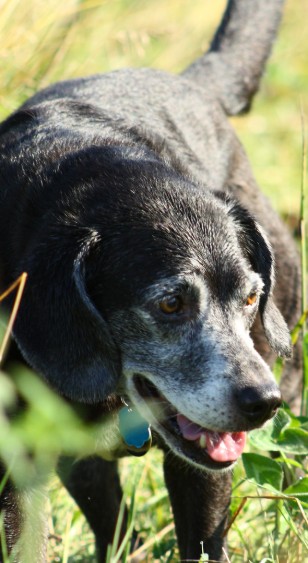

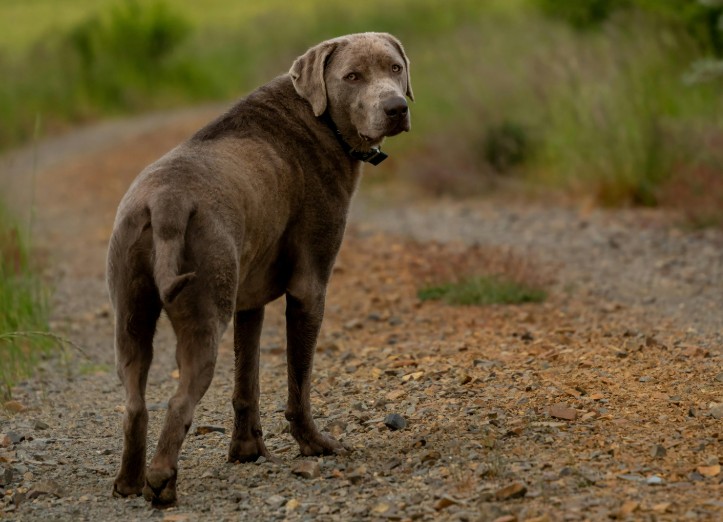
Structure Creates Channel When clear guidance rhythm and relational alignment are introduced through a NeuroBond approach drive transforms from chaotic output into purposeful responsive and stable behaviour.
Environmental Factors: Context Shapes Everything
Your Lab mix’s behavior doesn’t exist in a vacuum. Physical environment, daily routines, activity levels, and social context dramatically influence how drive expresses itself.
The Under-Exercised Working Dog
One of the most common factors in Lab mix behavioral challenges is simple: insufficient structured activity. Notice we don’t just say “exercise”—your dog might get plenty of physical activity but still display problematic behaviors because activity alone doesn’t satisfy working drive.
Physical exercise without cognitive challenge leaves mental drive unaddressed. A two-hour off-leash run in the park provides physical exhaustion but no task completion satisfaction. Your dog’s body is tired but their mind still feels unsatisfied.
Repetitive, unstructured activity like endless ball-throwing can actually amplify drive without building regulation. Each throw triggers the SEEKING system without teaching inhibitory control. Your dog learns arousal ramp-up but not arousal management.
Inconsistent activity scheduling creates background anxiety. Dogs are creatures of pattern and routine. When they don’t know when the next meaningful activity will occur, they remain in a state of anticipatory tension.
🐕 Lab Mix Behavior: Understanding Drive Without Structure
Transform Chaotic Energy into Purposeful Partnership Through 8 Strategic Phases
Phase 1: Recognition & Assessment
Understanding What You’re Actually Seeing
Core Insight
Your Lab mix isn’t broken or hyperactive. They possess intense working drive inherited from Labrador genetics but lack the complete behavioral architecture to channel it productively. This creates the paradox: high-performance engine without a steering system.
What to Observe
• Explosive energy bursts followed by difficulty settling
• Intense behavior initiation with rapid abandonment
• Inconsistent recall despite clear intelligence
• Counter-surfing and food obsession even when well-fed
• Over-arousal during training sessions
First Action Steps
Begin tracking baseline behaviors—frequency of jumping, pulling intensity, settling duration, and reactivity triggers. Create a simple log for one week before implementing changes. This data reveals patterns and measures future progress.
Phase 2: Genetic Blueprint Analysis
Identifying Your Specific Mix Challenges
Why Genetics Matter
Different breed combinations create predictable behavioral patterns. Lab + Pit Bull brings amplified tenacity. Lab + German Shepherd creates dual working systems. Lab + Hound generates scent drive conflicts. Understanding your mix’s genetic contributors guides training strategy.
Common Mix Patterns
• Lab/Pit: Extraordinary persistence requiring early impulse control
• Lab/GSD: Heightened vigilance needing on/off duty protocols
• Lab/Hound: Scent fixation demanding long-line management
• Lab/Herding: Motion reactivity requiring arousal management
Tailored Approach
Research your mix’s likely breed contributors. Identify which drives are competing or amplifying. Select activities that satisfy both genetic systems—this prevents internal conflict and channels drive constructively.
Phase 3: Health & Environment Optimization
Ruling Out Medical Contributors
Critical Health Checks
Before attributing everything to behavior, rule out thyroid dysfunction, chronic pain, and gastrointestinal issues. These conditions amplify arousal, reduce impulse control, and mimic behavioral problems. Schedule comprehensive veterinary assessment.
Nutrition as Behavior Foundation
Diet composition directly impacts arousal regulation. Complex carbohydrates stabilize blood sugar, quality protein supports neurotransmitter production, and omega-3 fatty acids improve cognitive function. Avoid simple carbs creating energy spikes and crashes.
Environmental Setup
Create designated zones for rest, play, and training. Remove trigger items from view. Establish consistent meal times, walk schedules, and bedtime routines. Predictability itself reduces background arousal by 30-40% in high-drive dogs.
Phase 4: Foundation Building
Weeks 1-4: Essential Regulation Skills
Core Training Focus
• Implement place training (30 seconds → 5 minutes progression)
• Practice “wait” before all meals and doorways
• Begin puzzle feeders and scatter feeding
• Reduce food treats by 25%, add life rewards
• Establish fixed daily schedule (same times daily)
What to Expect
Weeks 2-3 often bring temporary behavior worsening (extinction burst) as your dog tries harder with old patterns. This is normal and indicates the approach is working. Consistency through this phase is critical—don’t give up.
NeuroBond Foundation
Through the NeuroBond approach, trust becomes the foundation of learning. Every consistent response you provide builds neural pathways supporting self-regulation. Your calm, predictable leadership teaches your dog that arousal isn’t necessary—you’ve got this handled.
Phase 5: Drive Channeling
Weeks 5-12: Structured Outlets for Working Drive
Task-Based Activities
• Scent work: 10-min sessions 3x weekly teaching focused searching
• Structured retrieving: Complete sequences with wait, retrieve, deliver, release
• Problem-solving: Progressive puzzle feeders building confidence
• Cooperative games: Treibball, trick chains, or agility foundations
Work-Rest Cycles
Teach arousal regulation through clear activity boundaries. Work sessions: intense but brief (5-10 minutes). Immediately followed by structured settle time on place mat. This rhythm teaches your dog’s nervous system to activate and deactivate drive on cue.
Progress Indicators
By week 8, expect: consistent place training response, reduced pulling intensity, engagement with puzzles without frustration, fewer counter-surfing attempts, improved focus during training, and occasional self-initiated settling without cues.
Phase 6: Impulse Control Mastery
Weeks 13-20: Building Executive Function
Advanced Control Games
Progress to Level 3-4 challenges: food balanced on paws, stay while toy is tossed (wait for release), walking past high-value distractions maintaining heel position, and remaining settled during genuinely exciting contexts like meal prep or visitor arrivals.
Invisible Leash Development
The Invisible Leash reminds us that awareness, not tension, guides the path. During this phase, your dog begins demonstrating self-regulation without external management. They check in voluntarily, pause before impulsive actions, and recover faster from arousal spikes.
Generalization Training
Practice skills in progressively challenging environments: quiet park corners before busy areas, low-distraction training before high-traffic contexts. Each successful generalization strengthens neural pathways supporting impulse control across all situations.
Phase 7: Real-World Integration
Weeks 21-30: Taking Skills into Daily Life
Fading External Structure
As internal regulation develops, gradually reduce external management tools. Your dog demonstrates consistent self-control with decreasing prompting. They settle without place training cues, wait without verbal reminders, and modulate arousal independently.
Maintaining Working Outlets
This isn’t temporary intervention—Lab mixes need ongoing purposeful activity throughout their lives. Establish sustainable routines: scent work twice weekly, structured retrieving sessions, puzzle feeders for meals, and cooperative activities providing both mental and physical challenge.
Expected Outcomes
By week 30: calm greetings consistently, generalized impulse control, reduced reactivity to triggers, clear work/rest discrimination, independent problem-solving, visible excitement about structured activities, and your relationship feeling like partnership rather than constant management.
Phase 8: Long-Term Maintenance
Month 8+: Sustainable Partnership
Lifelong Learning
Continue introducing novel challenges maintaining cognitive engagement. Rotate activities preventing boredom while honoring your dog’s genetic drives. Advanced scent work, new trick chains, different cooperative sports—variety sustains motivation without creating regression.
Soul Recall in Action
Moments of Soul Recall reveal how memory and emotion intertwine in behaviour. Your dog now carries thousands of positive emotional memories—successful task completions, satisfying problem-solving, calm cooperation, and trust-based interactions. These memories become the foundation of their behavioral stability.
Monitoring & Adjusting
Stay observant of arousal patterns. Life changes (moving, schedule shifts, health changes) may temporarily challenge regulation. Return to earlier phase protocols during transitions, then progress forward again once stability returns.
🐕 Common Lab Mix Combinations: Quick Comparison
Lab + Pit Bull Mix
Primary Challenge: Amplified tenacity and persistence
Key Focus: Early impulse control, bite inhibition
Best Outlets: Weight pulling, flirt pole with strict protocols
Lab + German Shepherd Mix
Primary Challenge: Dual working systems competing
Key Focus: On/off duty discrimination, vigilance management
Best Outlets: Nosework, protection sports, agility
Lab + Hound Mix
Primary Challenge: Scent drive overriding cooperation
Key Focus: Long-line training, recall with scent integration
Best Outlets: Tracking, barn hunt, scent trails
Lab + Herding Breed Mix
Primary Challenge: Motion reactivity and nipping
Key Focus: Arousal management around movement
Best Outlets: Treibball, disc dog, controlled agility
Adolescent Lab Mix (6-18mo)
Expect: Behavioral regression, boundary testing
Priority: Consistent structure through hormonal changes
Timeline: Executive function matures by 18-24 months
Adult Lab Mix (2-7 years)
Strengths: Peak learning capacity, physical capability
Focus: Advanced task training, complex chains
Goal: Establish sustainable long-term routines
⚡ Quick Reference Formulas
Daily Structure = 3-4 fixed meal times + 2-3 training sessions (10min each) + 1 task-based activity + designated settle periods
Arousal Recovery Time = 2-3x the duration of exciting event (10min play = 20-30min settle time needed)
Food Motivation Balance = 60% puzzles/scatter feeding + 30% training rewards + 10% bowl feeding
Impulse Control Progression = Foundation (3 sec wait) → Building (30 sec) → Applied (real-world) → Advanced (high distraction)
Weekly Activity Minimum = 3x scent work + 2x structured retrieve + Daily puzzle feeders + 5-7x place training practice
🧡 The Zoeta Dogsoul Transformation
Your Lab mix’s journey from chaotic drive to purposeful partnership embodies the essence of Zoeta Dogsoul. Through the NeuroBond approach, you’ve built trust as the foundation for every behavior change. The Invisible Leash developed between you represents awareness replacing tension—your dog now self-regulates because they’ve internalized your calm guidance. Soul Recall ensures that thousands of positive emotional memories anchor their behavioral stability, even during challenging moments.
This transformation honors both the neuroscience of canine learning and the profound emotional connection that makes training meaningful. Your Lab mix isn’t just better behaved—they’re genuinely happier, fulfilled by purposeful work, and secure in cooperative partnership with you.
That balance between science and soul—that’s where lasting transformation lives. That’s the essence of Zoeta Dogsoul.
© Zoeta Dogsoul – Where neuroscience meets soul in dog training
Social Environment Stress
Lab mixes are inherently social, bred for cooperation with human handlers. The quality of social relationships and household dynamics profoundly impacts behavior:
Leadership vacuum: When dogs don’t perceive clear, calm leadership, they experience uncertainty about behavioral expectations. This ambiguity creates anxiety and impulsive decision-making as they try to navigate situations without guidance.
Conflicting household rules: Different family members enforcing different standards creates confusion. If one person allows counter-surfing while another punishes it, your Lab mix cannot develop clear behavioral guidelines.
Social isolation: Long periods alone, especially for adolescent Lab mixes, creates pent-up social motivation that explodes into overwhelming greeting behavior, attention-demanding, and difficulty settling when people are home.
Overstimulating social contexts: Conversely, chaotic households with frequent visitors, young children, and high activity levels can keep your dog in perpetual arousal without opportunities to practice calmness.
Environmental Complexity Mismatch
Modern domestic environments often fail to provide the complexity working breeds need:
Sensory monotony: The same visual scenes, sounds, and smells daily provide insufficient novelty to satisfy the SEEKING system’s need for environmental exploration.
Lack of problem-solving opportunities: Easy access to food, water, comfort, and attention means your dog rarely exercises cognitive abilities through natural problem-solving challenges.
Restricted movement: Confined spaces without varied terrain, textures, and exploration opportunities leave physical and sensory needs unmet.
Environmental modifications supporting better regulation:
- Designate separate zones for rest, play, and training activities
- Remove trigger items from view when not supervised
- Provide elevated resting spots offering environmental perspective
- Create “decompression spaces” where your dog can retreat
- Use baby gates strategically managing access and preventing rehearsal
- Rotate toys maintaining novelty without overwhelming choice
- Ensure adequate natural light supporting circadian rhythms
- Provide varied textures, surfaces, and sensory experiences
- Minimize chaotic visual stimulation from windows in rest areas
- Consider white noise or calming music during alone time
The Invisible Leash reminds us that awareness, not tension, guides the path—even in how we structure the environments where our dogs spend their lives.
Health Influences on Behavior
Before attributing everything to drive and training, consider potential health factors that can amplify behavioral challenges:
Thyroid Function
Hypothyroidism, relatively common in Labrador Retrievers and their mixes, can produce behavioral changes including:
Behavioral changes suggesting potential thyroid issues:
- Sudden onset of reactivity or irritability without clear trigger
- Unexplained lethargy despite previously good energy levels
- Weight gain on unchanged diet and exercise routine
- Skin problems—dryness, hair loss, or recurrent infections
- Reduced stress tolerance compared to baseline
- Cognitive changes—confusion, disorientation, or learning difficulties
- Increased fearfulness or anxiety appearing in adulthood
- Changes in social behavior with familiar people or dogs
If your Lab mix shows behavioral changes alongside physical symptoms like skin problems, weight changes, or lethargy, ask your veterinarian about thyroid testing.
Pain and Discomfort
Chronic pain from joint issues, injuries, or developing conditions can create irritability, reactivity, and apparent behavioral regression. A dog experiencing discomfort may:
Behavioral indicators your dog might be experiencing pain:
- Reluctance to jump into car, onto furniture, or up stairs
- Stiffness after rest that improves with movement
- Licking, chewing, or favoring specific body areas
- Reduced play duration or avoiding favorite activities
- Increased irritability when touched in certain areas
- Changes in gait—limping, bunny-hopping, or careful movement
- Difficulty settling into comfortable positions
- Restlessness or frequent position changes when resting
- Regression in house training due to mobility challenges
- Decreased appetite if eating requires uncomfortable positioning
Lab mixes are prone to hip dysplasia, elbow dysplasia, and other orthopedic issues. Regular veterinary assessment ensures you’re not misattributing pain responses as behavioral problems.
Gastrointestinal Issues
Food sensitivities, inflammatory bowel conditions, or other GI problems can affect behavior through:
- Physical discomfort creating general stress
- Nutritional deficiencies impacting brain function
- Hunger dysregulation amplifying food motivation
- Sleep disruption from digestive discomfort
The intense food drive typical of Lab mixes can mask GI issues—they’ll eat enthusiastically even when food causes discomfort. Work with your veterinarian if you notice stool changes, vomiting, or abdominal sensitivity.
🧠 Never assume challenging behavior is purely training-related without ruling out medical contributors.
Nutrition’s Role in Behavior: Fueling Regulation
What you feed your Lab mix—and how you feed them—profoundly influences arousal, focus, impulse control, and overall behavioral regulation. Diet composition and feeding protocols become powerful tools in your behavior management strategy.
How Diet Composition Affects Arousal and Focus
The macronutrient balance in your dog’s diet directly impacts neurotransmitter production, blood sugar stability, and cognitive function:
Protein quality and quantity: High-quality animal protein provides amino acids essential for neurotransmitter synthesis. Tryptophan, for instance, is a precursor to serotonin, which supports impulse control and emotional regulation. However, excessive protein—particularly in already high-drive dogs—can sometimes amplify arousal. Most Lab mixes thrive on moderate to moderately-high protein levels (22-28% for adults) from quality sources like chicken, fish, or beef.
Quality protein sources supporting brain function:
- Chicken and turkey—lean, highly digestible, amino acid-rich
- Fish (salmon, whitefish, herring)—omega-3 fatty acids plus protein
- Beef and bison—iron-rich, particularly palatable for most dogs
- Lamb—alternative protein for dogs sensitive to poultry or beef
- Eggs—complete amino acid profile, highly bioavailable
- Novel proteins (venison, duck, rabbit) for elimination diets
- Avoid plant-based proteins as primary sources for optimal nutrition
Carbohydrate complexity matters: Simple carbohydrates create rapid blood sugar spikes followed by crashes, contributing to energy fluctuations and arousal instability. Your Lab mix might display intense hyperactivity after eating, followed by crashes, then renewed chaos as blood sugar rebounds. Complex carbohydrates from sources like sweet potato, oats, or brown rice provide steadier energy release, supporting more stable arousal throughout the day.
Complex carbohydrates supporting stable blood sugar:
- Sweet potatoes—fiber-rich, nutrient-dense, slowly digested
- Oats—soluble fiber, supports GI health, steady energy
- Brown rice—easily digestible, hypoallergenic, good fiber
- Quinoa—complete amino acids, high fiber content
- Pumpkin—low glycemic index, excellent for digestion
- Barley—slowly absorbed, promotes satiety
- Avoid corn, white rice, and wheat as primary carb sources
Fat for brain function: Omega-3 fatty acids (EPA and DHA) support cognitive function, reduce inflammation, and may help modulate stress responses. Lab mixes benefit from diets containing adequate fat (12-18% for most adults) with emphasis on omega-3 sources like fish oil. Some research suggests omega-3 supplementation may support improved trainability and reduced reactivity in high-drive dogs.
Additives and reactivity: Some dogs show behavioral sensitivity to certain additives, preservatives, or colorings. While research remains mixed, anecdotal evidence suggests that artificial colors, BHA/BHT preservatives, and certain flavor enhancers may increase hyperactivity in sensitive individuals. If your Lab mix shows unexplained arousal spikes or reactivity, consider switching to minimally processed foods without synthetic additives.
Food sensitivities and inflammation: Undiagnosed food sensitivities create chronic low-grade inflammation and physical discomfort. A dog experiencing ongoing GI irritation or systemic inflammation may display increased irritability, reduced frustration tolerance, and apparent behavioral regression. Common culprits include corn, wheat, soy, and certain proteins. An elimination diet trial under veterinary guidance can identify problematic ingredients.
Feeding Protocols That Support Regulation
How you deliver food matters as much as what you feed:
Slow feeders and puzzle feeders: Rather than providing meals in a standard bowl where your Lab mix inhales food in seconds, use slow-feed bowls, puzzle feeders, or food-dispensing toys. This serves multiple purposes:
Puzzle feeder progression from beginner to advanced:
- Level 1 (Beginner): Slow-feed bowls with simple ridges, wobbler toys that dispense easily, snuffle mats with shallow hiding
- Level 2 (Intermediate): Kong Wobbler requiring manipulation, treat balls with adjustable openings, simple sliding puzzles
- Level 3 (Advanced): Multi-step puzzle boards, frozen Kongs requiring extended work, complex sliding mechanisms
- Level 4 (Expert): Nina Ottosson level 3-4 puzzles, DIY challenges you create, combination puzzles requiring sequences
- Start easy and increase difficulty as skills develop—frustration defeats the purpose
- Extends eating duration, providing longer satisfaction and engagement
- Requires problem-solving, exercising cognitive abilities while feeding
- Slows consumption, improving digestion and reducing bloat risk
- Teaches impulse control, as your dog must work methodically rather than gulping
- Reduces post-meal arousal spikes by preventing rapid consumption and blood sugar surges
Start with simple puzzle feeders and gradually increase complexity as your dog develops problem-solving skills. Some Lab mixes benefit from receiving their entire daily food ration through enrichment feeding rather than bowl feeding.
Scatter feeding: Tossing kibble across the yard or floor activates your dog’s natural foraging instincts. This provides:
- Scent work practice as they locate individual pieces
- Extended eating time compared to bowl feeding
- Physical movement as they search
- Mental engagement tracking multiple food pieces
- Calming effect through natural foraging behavior expression
Scatter feeding works particularly well for high-drive dogs who need arousal regulation. The systematic searching and locating provides structured activity while satisfying food motivation.
Snuffle mats and enrichment mats: These fabric mats with strips, pockets, and folds hide kibble, requiring your dog to sniff and search systematically. The repetitive sniffing action has a naturally calming effect on the nervous system, making snuffle mat feeding an excellent pre-bedtime or post-excitement routine.
Food-stuffed toys for crate time: Kong-type toys stuffed with your dog’s meal, perhaps frozen for extended engagement, transform crate time from confinement to enrichment opportunity. Your Lab mix associates the crate with satisfying work rather than restriction, supporting positive crate relationships and providing calming activity during alone time.
Meal-splitting for arousal management: Instead of one or two large meals creating significant arousal events twice daily, consider splitting the same total food volume into three or four smaller meals. This:
- Reduces anticipatory arousal around each meal since the quantity is smaller
- Stabilizes blood sugar throughout the day
- Provides more frequent positive interactions and training opportunities
- Prevents extreme hunger that amplifies food-seeking behaviors
- Creates additional structure points in your daily routine
Treats Selection for Training Without Over-Arousing
The treats you use during training significantly impact your dog’s ability to focus and regulate:
Size matters—smaller is better: Lab mixes often receive treats that are too large, requiring significant chewing time that interrupts training flow and creates arousal around each delivery. Use tiny treats (pea-sized or smaller) that your dog can consume instantly and return focus to you. This maintains training momentum without creating treat-focused arousal.
Value hierarchy understanding: Establish a clear hierarchy of treat values for different training contexts:
Sample treat value hierarchy for training:
Low-value (everyday training, home environment):
- Regular kibble from daily ration
- Basic dog biscuits or training treats
- Cheerios or plain rice cakes
- Carrots or green beans
Medium-value (learning new behaviors, mild distractions):
- String cheese cut into tiny pieces
- Commercial soft training treats
- Cooked chicken or turkey (unseasoned)
- Freeze-dried liver or lung
High-value (major distractions, breakthrough moments only):
- Hot dog pieces (nitrate-free)
- Real bacon (small amounts)
- Steak or premium meat
- Squeeze cheese or peanut butter
- Reserve exclusively for critical training situations
Using high-value treats constantly creates several problems: your dog’s arousal stays elevated, medium and low-value treats become ineffective, and you create dependency on premium rewards for basic cooperation.
Texture and delivery speed: Soft, moist treats that your dog can swallow quickly maintain training flow better than hard, crunchy treats requiring chewing. During rapid-fire training sessions or impulse control work, soft treats prevent the arousal interruption that occurs when your dog must crunch through each reward.
Variety prevents satiation: Using the same treat repeatedly can lead to satiation where your dog loses interest. Maintaining variety—rotating between different proteins, textures, and flavors—keeps treats novel and motivating without requiring constant escalation to higher-value options.
Treat scatter vs. hand delivery: For calm behaviors like settling or waiting, try tossing treats away from you rather than hand-feeding. This prevents your body position and hands from becoming arousing cues themselves. Your dog learns the behavior earns rewards, not that proximity to your hands produces food.
Life rewards over food: Progressively replace some food rewards with access to activities your dog values—permission to sniff, opportunity to play, release to greet someone, or access to a desired location. This reduces food-dependency while maintaining motivation. A well-timed “go sniff” or “okay, play!” can be more powerful than any treat for a dog whose primary drive is exploration or social interaction.
Powerful life rewards to use alongside or instead of food:
- Permission to sniff interesting spots on walks
- Release to greet a friendly person or dog
- Access to favorite play areas or swimming spots
- Opportunity to retrieve a beloved toy
- Opening doors to go outside or explore
- Starting a game of tug or chase
- Permission to get on furniture
- Vehicle rides to exciting destinations
- Social praise and physical affection (for social dogs)
- “Go play” release during training sessions
- Access to another dog for play
- Meal delivery itself as the reward for calm behavior
Meal Timing’s Impact on Behavior Patterns
Strategic meal scheduling supports behavioral regulation:
Sample daily schedule optimizing meal timing for behavior:
6:30 AM – Wake, immediate potty break 7:00 AM – First meal (30% daily ration) after short walk/play 8:00 AM – Training session using kibble from daily ration 10:00 AM – Puzzle feeder enrichment with portion of breakfast 12:00 PM – Small meal/snack (15% daily ration) via scatter feeding 2:00 PM – Activity session (walk, play, training) 5:00 PM – Second main meal (40% daily ration) after exercise 7:00 PM – Frozen Kong or puzzle toy (remaining 15% ration) 9:00 PM – Final potty break 10:00 PM – Settle for night (2-3 hours post final meal)
Adjust timing to your schedule but maintain consistency daily
Consistent timing reduces arousal: Feed at the exact same times daily. Your Lab mix’s body develops rhythms based on feeding schedule. Inconsistent meal times create chronic anticipatory arousal—your dog doesn’t know when food will appear, so they remain vigilant and reactive around all potential feeding times.
Morning meal for energy regulation: A substantial morning meal after your dog’s first outing provides fuel for the day and often supports better focus during morning training sessions. Many trainers find that dogs who’ve eaten show better concentration than dogs training while hungry.
Evening meal timing for sleep: Feed the final meal 2-3 hours before bedtime. This allows digestion to progress before sleep, preventing GI discomfort from disrupting rest. Well-rested dogs show better impulse control and lower baseline arousal than chronically under-slept dogs.
Post-walk feeding prevents bloat risk: For deep-chested Lab mixes at risk for gastric dilatation-volvulus (bloat), avoid feeding immediately before vigorous exercise. Feed after walks when your dog is calm, or allow 30-60 minutes between feeding and intense activity. This timing also creates a useful reward structure—walk first, then meal reward.
Training session timing: For food-motivated training, optimal timing is often 1-2 hours after a meal. Your dog isn’t ravenously hungry (which can create frantic arousal) but is still motivated by treats. Immediately before meals, some dogs become too aroused by hunger to focus; immediately after meals, treat motivation drops significantly.
Fasting days for metabolic flexibility: Some advanced trainers use occasional fasting days (24 hours with water but no food) for adult, healthy dogs. This metabolic variation may support improved self-regulation and reduces food fixation. However, this should only be implemented with veterinary approval and is not appropriate for puppies, seniors, or dogs with health conditions.
Hydration and Behavior
Often overlooked, proper hydration significantly impacts cognitive function and arousal regulation:
Fresh water availability: Ensure constant access to clean water. Dehydration—even mild—impairs cognitive function, increases stress hormone levels, and reduces frustration tolerance. In multi-dog households, provide multiple water stations so resource guarding doesn’t limit access.
Post-exercise hydration: After intense activity, some high-drive dogs are too aroused to drink adequately. Encourage drinking by adding small amounts of low-sodium broth to water, offering ice cubes as treats, or using elevated water bowls that are easier to access when panting.
Monitor urine color: Pale yellow indicates good hydration; dark yellow suggests your dog needs more water. Concentrated urine can indicate dehydration that may be affecting behavior and focus.
Special Dietary Considerations
Grain-free concerns: Recent research has linked some grain-free diets (particularly those using legumes as primary ingredients) to dilated cardiomyopathy (DCM) in certain breeds. While the exact mechanism remains under investigation, Lab mixes should avoid boutique, grain-free, or exotic protein diets unless specifically recommended by your veterinarian for documented food sensitivities.
Raw feeding and behavior: Some owners report behavioral improvements when switching to raw diets. While mechanisms aren’t fully understood, potential factors include elimination of sensitivity-causing ingredients, improved digestibility, and extended feeding time as dogs consume raw meaty bones. However, raw feeding requires careful nutritional balancing and carries food safety considerations. Consult a veterinary nutritionist if pursuing this route.
Prescription diets: If your Lab mix has diagnosed health conditions, prescription diets formulated for those conditions take priority over behavior-optimization feeding. Work with your veterinarian to balance medical needs with behavioral support.
🧡 Remember, nutrition creates the foundation for everything else you’re doing. No training protocol can fully compensate for diet-induced arousal dysregulation or nutritional deficiencies affecting brain function. Your investment in appropriate nutrition pays dividends across every aspect of your Lab mix’s behavior and wellbeing.

Channeling Drive: Practical Solutions
Now for the transformation—moving from understanding to action. These approaches work with your Lab mix’s neurology rather than against it, channeling drive into structure instead of suppressing it.
Task-Based Activity: What Working Breeds Need
The single most impactful change for most Lab mixes is replacing general exercise with task-based activities. This addresses drive at its source by providing purposeful work:
Scent work and nose games: Your dog’s olfactory capabilities are extraordinary. Teaching them to search for specific scents—whether treats hidden around the house, essential oils in containers, or eventually more advanced search tasks—engages their brain intensely while building focus and patience. Scent work naturally teaches inhibitory control because rushing produces false alerts.
Structured retrieving protocols: Unlike mindless ball-throwing, structured retrieving includes:
- Waiting calmly for the release cue
- Retrieving only on command
- Delivering directly to hand
- Holding the object until released
- Returning to sit position after delivery
This complete behavioral sequence satisfies retrieving drive while building self-regulation throughout.
Problem-solving enrichment: Puzzle feeders, treat-dispensing toys, and DIY challenges that require your dog to figure out how to access rewards engage cognitive abilities while teaching persistence through challenge. Start easy and gradually increase difficulty as your dog builds confidence.
DIY enrichment activities requiring minimal investment:
- Muffin tin puzzle—kibble in cups, tennis balls covering them
- Towel roll—treats rolled inside towel requiring unrolling
- Box digging—treats buried in shredded paper in cardboard box
- Bottle spin—treats in plastic bottle on dowel they must spin
- Cup shuffle—treats under cups, dog must find them
- Frozen treats—kibble in water frozen in containers
- Paper bag surprise—treats in crumpled paper bags
- Plastic bottle puzzle—kibble in capped bottle with holes
- Cardboard tube tunnels—treats inside tubes they must extract
- Snuffle mat DIY—fleece strips tied to rubber mat
Cooperative activities: Treibball (herding large balls into goals), dock diving, agility, or even simple tricks-training provide structured outlets where success is clearly defined and achievement brings satisfaction. These activities channel drive into cooperative partnership rather than independent chaos.
Regulation Before Performance
A critical insight: teach arousal management before expecting complex behaviors. Many training programs skip this foundation, jumping straight into obedience or tricks while the dog lacks self-regulation capacity.
Settle protocols: Place training—teaching your dog to go to a designated spot and remain calmly—creates an anchor behavior for arousal management. Start with short durations, gradually building toward your dog choosing to settle there independently when overwhelmed.
Mat work: Similar to place training but portable. Your dog learns that lying on their mat signals relaxation time. The mat becomes a predictable cue for downregulation that you can bring into various contexts.
Impulse control games: “Wait” for meals, toys, or doorways teaches your dog that pausing before getting what they want becomes the pathway to success. “Leave it” progressions build the neural circuitry for inhibiting approach impulses even toward highly desirable objects.
Impulse control games from beginner to advanced:
Level 1 – Foundation:
- Wait 3 seconds before eating placed bowl
- Sit before going through doorways
- Take treats gently from hand
- Eye contact before toy toss
Level 2 – Building Duration:
- Wait 30+ seconds before meal release
- Hold sit-stay while you move around
- Leave kibble on floor until released
- Maintain down-stay during distractions
Level 3 – Real-World Application:
- Wait at car door until released
- Stay while people pass on walks
- Leave dropped food without command
- Resist jumping when greeting people
Level 4 – Advanced Challenges:
- Food balanced on paws or nose
- Stay while toy is tossed, wait for release
- Walk past distractions maintaining heel
- Remain settled during high-arousal contexts
Calm reinforcement: Actively reward stillness, relaxed body postures, and quiet behavior. Many Lab mixes only receive attention when actively doing something, so they learn that arousal and action produce reinforcement. Deliberately noticing and rewarding calmness teaches that settled states also earn attention.
Arousal awareness: Advanced concept: help your dog recognize their own arousal states. When you notice arousal climbing, cue them to your shared “settle” protocol before they reach threshold. Over time, they begin recognizing internal signals that they’re getting wound up and self-regulate earlier.
Environmental Structure
Create predictable frameworks supporting regulation:
Consistent daily routines: Feed at the same times daily. Schedule walks, training sessions, and play periods consistently. Predictability reduces anticipatory anxiety and allows your dog’s nervous system to settle into rhythms rather than remaining on constant alert.
Designated activity zones: Use different areas for different purposes—play area, rest area, work area. Physical spaces become contextual cues that help your dog shift mental states. The bed area signals relaxation; the training area signals focus; the play area signals appropriate arousal expression.
Clear transition rituals: Signal activity changes explicitly. Before shifting from play to calm time, use a consistent ritual—perhaps a specific cue word, brief settling exercise, and then movement to the rest area. These transitions help your dog’s nervous system make intentional state changes rather than abrupt, confusing shifts.
Arousal management tools: Crate training provides a den-like space where your dog can decompress. Place training gives them a “job” (staying on place) that organizes their behavior during high-arousal contexts like meal prep or visitors arriving.
The Zoeta Dogsoul Approach: Integration and Partnership
The NeuroBond Model offers a comprehensive framework specifically suited to Lab mix behavior transformation. This approach recognizes that changing behavior requires addressing the emotional and neurological foundations, not just training surface behaviors.
Emotional Clarity
Calm, confident leadership reduces uncertainty-driven arousal. When you provide clear, predictable responses to your dog’s behaviors, you create learning stability. Your Lab mix stops wondering what will happen next and starts confidently predicting outcomes based on behavioral choices.
This doesn’t mean dominance or harshness—quite the opposite. Emotional clarity comes from regulated calm in yourself that models the state you want in your dog. When your Lab mix looks to you during arousing situations and sees unshakable calm, they learn through observation that the situation doesn’t require intense reaction.
Moments of Soul Recall reveal how memory and emotion intertwine in behaviour. Your dog remembers not just what happened but how they felt during interactions. Creating positive emotional memories during training builds a foundation of trust that supports learning even during challenging moments.
Meaningful Task Direction
Purpose-driven activities satisfy working drive at its source. Instead of generic “exercise,” provide tasks with:
Clear success criteria: Your dog knows when they’ve completed the task correctly—the treat appears in the puzzle, the ball reaches your hand, the search concludes with finding the scent target.
Progressive challenge: As skills build, gradually increase difficulty to maintain engagement without creating frustration. This sweet spot—challenging but achievable—produces optimal learning states.
Intrinsic satisfaction: Well-designed tasks feel rewarding beyond external reinforcement. The act of completing the behavioral sequence itself becomes satisfying, much like solving a puzzle feels good to humans independent of external rewards.
Cooperative Structure
Partnership framework replaces dominance or permissiveness extremes. This balanced approach recognizes:
Mutual regulation: You support your dog’s self-control development while they learn to manage their own arousal. It’s collaborative—you provide structure and guidance as they gradually internalize regulation.
Integrated drive expression: Rather than suppressing drive, channel it into functional cooperation. Your Lab mix’s intense motivation becomes an asset in training, problem-solving, and shared activities when properly directed.
Relationship foundation: Every interaction either builds or erodes trust, clarity, and cooperation. Choosing approaches that honor your dog’s neurology while establishing clear expectations creates a relationship where both partners thrive.
That balance between science and soul—that’s the essence of Zoeta Dogsoul. 🧡
Creating Your Transformation Plan
Ready to implement these insights? Here’s your structured approach:
Phase One: Foundation Building (Weeks 1-4)
Week-by-week foundation checklist:
Week 1 Focus:
- Establish fixed meal times (same time daily)
- Begin basic place training (30-second durations)
- Practice “wait” before one meal daily
- Add one 10-minute enrichment session
- Track baseline behaviors (jumping, pulling, barking frequency)
Week 2 Focus:
- Increase place training to 1-minute durations
- Practice “wait” before all meals
- Add scatter feeding twice weekly
- Introduce one puzzle feeder
- Begin consistent daily walk schedule
Week 3 Focus:
- Extend place training to 3-5 minutes
- Add “wait” at doorways
- Implement designated rest zones
- Reduce treat frequency by 25%
- Introduce one life reward daily
Week 4 Focus:
- Practice place training in different contexts
- Consolidate all impulse control foundations
- Establish clear activity zones in home
- Assess progress and adjust for Phase Two
- Celebrate small wins
Establish consistent daily routine: Same wake time, meal times, walk times, and bedtime. Consistency itself reduces background arousal by making life predictable.
Implement place training: Choose a designated spot (bed, mat, or crate) and begin teaching your dog that going there and settling brings rewards. Start with 30-second durations and build gradually.
Begin impulse control games: “Wait” before meals—your dog must hold a sit-stay while you place their bowl, only eating when released. This single exercise builds remarkable self-control over time.
Reduce food-based training frequency: Gradually shift toward life rewards (access to play, walks, freedom, attention) and intermittent food reinforcement rather than continuous food delivery. This prevents food cues from becoming the sole driver of behavior.
Increase structured physical activity: Add one session daily of purposeful work—scent games, structured retrieving, or problem-solving enrichment—not just exercise but activity with clear tasks and completion criteria.
Phase Two: Drive Channeling (Weeks 5-12)
Sample weekly task-based activity schedule:
Monday:
- AM: 10-min scent work session
- PM: 15-min puzzle feeder + settle practice
Tuesday:
- AM: Structured walk with impulse control practice
- PM: 10-min trick training session
Wednesday:
- AM: 10-min retrieving protocols
- PM: Environmental enrichment (new location exploration)
Thursday:
- AM: 10-min scent work session
- PM: 15-min cooperative games
Friday:
- AM: Free play with rules
- PM: 10-min advanced puzzle work
Saturday:
- AM: 15-min retrieving practice
- PM: Novel activity or longer adventure
Sunday:
- AM: Light activity or rest day
- PM: Review week’s progress, plan adjustments
Adjust based on your schedule and your dog’s response
Introduce task-based activities: Choose 2-3 specific activities your dog finds engaging and establish regular practice. This might be scent work on Mondays and Thursdays, retrieving practice on Wednesdays and Saturdays, and problem-solving puzzles daily.
Develop work-rest cycles: Practice arousal regulation by creating clear beginnings and endings to activities. Work sessions should be intense but brief (5-10 minutes initially), followed by structured settle time where your dog practices downregulation.
Build cooperative engagement: Focus on activities requiring partnership—you and your dog working together toward shared goals rather than you commanding and them complying.
Implement environmental structure: Designate zones for different activities and begin using transition rituals to help your dog shift between mental states smoothly.
Teach arousal awareness: When you notice arousal climbing, interrupt gently with your settle cue before they reach threshold. Reward for responding to this early intervention. Over time, they learn to recognize their own arousal rising and self-regulate earlier.
Phase Three: Integration and Refinement (Weeks 13+)
Generalize skills across contexts: Practice learned behaviors in new environments with gradually increasing distractions. A skill mastered at home needs careful generalization to the real world.
Fade external structure as internal regulation develops: As your dog demonstrates consistent self-control, you can gradually reduce external management while maintaining core routines and outlets.
Maintain working outlets: This isn’t a temporary intervention. Lab mixes need ongoing purposeful activity throughout their lives. Build sustainable routines you can maintain long-term.
Monitor arousal patterns: Stay observant of situations that challenge your dog’s regulation. Adjust activity levels, environmental triggers, or support as needed when you notice slipping patterns.
Celebrate progress: Acknowledge how far you’ve both come. Behavioral transformation is gradual—celebrate small wins along the journey. 🧠
Signs your approach is working—progress indicators:
Week 2-4 improvements:
- Slightly increased settling duration (even 30 more seconds counts)
- Occasional voluntary check-ins during walks
- One successful impulse control moment
- Reduced meal-time chaos intensity
- Brief moments of calm between activities
Week 6-8 improvements:
- Consistent response to “place” or settle cue
- Decreased pulling intensity on walks
- Engagement with puzzle feeders without frustration
- Fewer counter-surfing attempts
- Improved focus during short training sessions
Week 10-12 improvements:
- Self-initiated settling without cue
- Reliable impulse control in low-distraction contexts
- Visible excitement about structured activities
- Reduced overall arousal baseline
- Better recovery time after exciting events
Week 16+ improvements:
- Generalized impulse control across contexts
- Calm greetings becoming consistent
- Independent problem-solving without frustration
- Reduced reactivity to environmental triggers
- Clear discrimination between work time and rest time
- Your relationship feels more partnership than management
Common Challenges and Troubleshooting
“My dog seems worse before better”
This is normal. When you change reinforcement patterns, your dog may initially try harder with old behaviors (extinction burst). Increased jumping, barking, or demanding behavior often appears in weeks 2-3 before improvement. Stay consistent.
“I don’t have time for all this structure”
Start smaller than you think necessary. Even 10 minutes of structured activity daily produces measurable change. Consistency matters more than volume. Brief, regular sessions outperform occasional intensive ones.
“My dog shows no interest in scent work/puzzles/retrieving”
You may need to backtrack to basics. Some dogs need to learn how to engage with enrichment. Start extremely easy—treats barely hidden, puzzles that open with minimal effort—building confidence before increasing difficulty.
“Training works at home but nowhere else”
Classic generalization challenge. Practice in microsteps: front yard before neighborhood walks, quiet park corner before busy dog park. Gradually increase environmental complexity while maintaining high success rates.
“Other training methods worked faster”
Speed isn’t the goal—sustainable behavior change is. Suppression-based methods might create immediate compliance but often fail under stress and can erode the relationship. Building regulation takes time but produces lasting change.
Special Considerations for Different Life Stages
Puppies (8 weeks – 6 months)
Focus heavily on:
- Impulse control foundations
- Positive socialization without overwhelming
- Short, frequent training sessions
- Plenty of rest time (puppies need 18-20 hours sleep daily)
- Appropriate physical exercise without overexertion
Avoid:
- Repetitive high-arousal play (endless fetch)
- Overwhelming social situations
- Expecting sustained focus
- Punishment-based methods during this critical developmental window
Adolescents (6 months – 2 years)
Expect:
- Behavioral regression as hormones surge
- Testing boundaries as independence develops
- Inconsistent responses to known cues
- Increased reactivity and arousal sensitivity
Maintain:
- Consistent structure even when it seems ineffective
- Patient repetition of skills
- Regular structured outlets for building energy
- Realistic expectations about maturity timeline
Adults (2-7 years)
Optimal time for:
- Advanced task training
- Building complex behavioral chains
- Maximum working capacity
- Establishing sustainable long-term routines
Focus on:
- Maintaining what you’ve built
- Preventing regression through inconsistency
- Deepening partnership and cooperation
- Enjoying the fruits of your earlier investment
Seniors (7+ years)
Adjust for:
- Reduced physical capacity
- Possible cognitive changes
- Joint issues affecting activity tolerance
- Shifting motivational priorities
Provide:
- Age-appropriate cognitive enrichment
- Gentle physical activities
- Increased comfort and routine
- Patience with new limitations
Is This Journey Right for You?
Managing a Lab mix with high drive and low structure requires commitment. Before adopting one—or if you’re deciding whether to continue working with your current dog—consider honestly:
Time availability: Can you provide daily structured activity? Not just walks, but purposeful tasks requiring your engagement?
Patience for gradual progress: Behavioral transformation takes months, not weeks. Can you maintain consistency through slow progress?
Physical capability: Lab mixes are strong, energetic dogs requiring confident handling. Do you have the physical ability to manage leash pulling, jumping, and general exuberance during the learning process?
Environmental suitability: Do you have appropriate space for a medium-to-large dog who needs both active play and quiet rest areas?
Family coordination: Can everyone in the household commit to consistent rules and training approaches?
If you answered yes to these questions, you’re well-positioned for success. Lab mixes, when properly understood and managed, become exceptional companions—intelligent, affectionate, enthusiastic, and deeply bonded to their people.
If you’re struggling with these requirements, that’s valuable self-awareness. Reaching out for professional support—a qualified trainer familiar with working breed behavior—isn’t failure; it’s responsible ownership.
The Transformation Awaits
Your Lab mix isn’t broken, defective, or impossible. They’re a dog carrying powerful genetic programming without the complete behavioral architecture to express it functionally. Everything you’ve been experiencing—the chaos, the inconsistency, the frustration—makes perfect sense when viewed through this lens.
Drive without structure creates behavioral problems. Structure without understanding creates suppression. But drive plus structure, built on a foundation of trust and cooperation, creates something remarkable: a partnership where your dog’s intensity becomes an asset rather than a liability.
You’ve now gained deep insight into what drives your Lab mix’s behavior. You understand the genetic foundations, neurological mechanisms, environmental factors, and training approaches that either amplify or resolve the challenges you’ve been facing.
The transformation journey requires commitment, but the destination—a regulated, purposeful, deeply connected relationship with your furry friend—makes every moment of effort worthwhile.
Start small. Choose one area from this article and implement it this week. Maybe that’s establishing consistent meal times. Perhaps it’s introducing a simple settle protocol. It might be dedicating ten minutes to scent games three times weekly.
Small, consistent changes produce transformation. You don’t need to implement everything simultaneously. You need to start somewhere and stay consistent.
Your Lab mix is waiting to discover the structured expression of all that incredible drive they carry. They want to succeed, to satisfy those powerful internal motivations, to build the partnership that feels so elusive right now.
Give them—and yourself—that opportunity. The journey begins with a single intentional step.
Next, we’ll explore specific training protocols for common Lab mix challenges, including detailed how-to guides for scent work foundations, structured retrieving sequences, and arousal management exercises. But for now, you have everything you need to begin the transformation.
Your Lab mix’s potential is waiting to be unlocked. The structure they need exists in your hands. The partnership you both deserve starts today.