
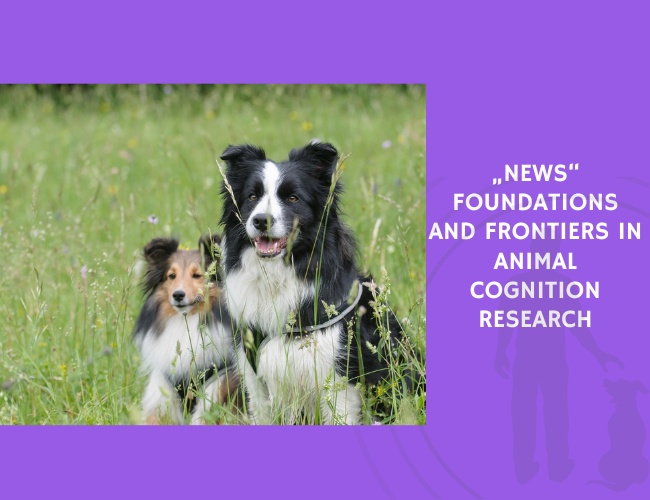
Published in the Oxford Research Encyclopedia of Psychology, this article outlines how the study of animal minds has developed over more than 150 years, beginning with Charles Darwin’s early questions about the mental abilities of nonhuman species. The authors emphasize that animal cognition seeks to understand the mechanisms and processes underlying behavior, integrating approaches from psychology, biology, ethology, and neuroscience.
The article revisits the enduring importance of Nikolaas Tinbergen’s four questions—mechanism, development, function, and evolution—which continue to frame research across species and domains. These core questions provide a structured way to investigate behavior from proximate explanations, such as cognitive mechanisms and learning, to ultimate evolutionary perspectives.
The authors then survey major domains of animal cognition, including concept learning, memory systems, and decision-making processes. Methodological diversity is highlighted, ranging from controlled laboratory experiments to field-based observational studies and cross-species comparative work.
A substantial section focuses on canine cognition, a rapidly expanding area of research driven by dogs’ unique evolutionary relationship with humans. Investigations in this domain explore topics such as social communication, olfactory detection abilities, memory, problem-solving, and the cognitive effects of domestication.
Finally, the authors discuss future directions for a field “rich in tradition and methodological strength,” urging integration across disciplines, continued refinement of comparative methods, and the expansion of cognitive studies to a wider range of species and contexts. These steps, they argue, will deepen our understanding of how diverse animals perceive, learn, and adapt within their environments.
Source: Krichbaum, S., Davila, A., Lazarowski, L., & Katz, J. (2020). Animal Cognition. Oxford Research Encyclopedia of Psychology. Published February 28, 2020.










