
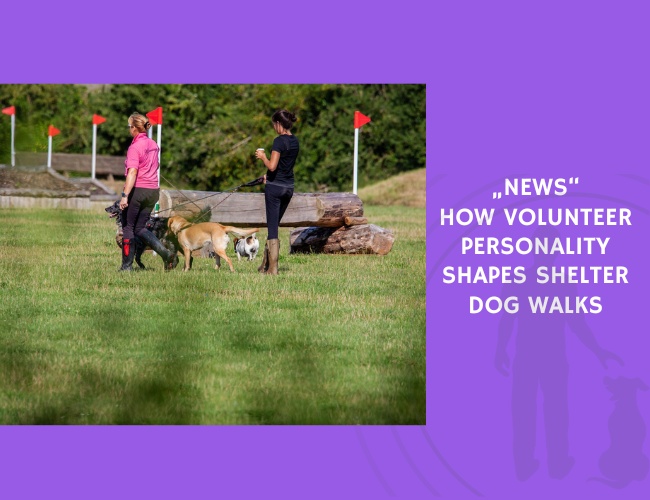
Published in Frontiers in Psychology, this study examined how individual differences among animal shelter volunteers shape their interactions with dogs during on-leash walks. Researchers Hao-Yu Shih, Mandy B. A. Paterson, Fillipe Georgiou, L. Mitchell, N. Pachana, and C. Phillips analyzed volunteer–dog dyads using video recordings and a canine leash tension meter to capture both human and canine contributions to leash pulling.
Volunteers completed the NEO Five-Factor Inventory, assessing neuroticism, extraversion, openness, agreeableness, and conscientiousness. Results showed marked behavioral patterns aligning with personality dimensions:
Neurotic volunteers applied stronger leash pressure and used more body language when interacting with dogs. Dogs walked by these individuals displayed more lip-licking, body shaking, and were often rated as better behaved—possibly reflecting heightened human monitoring or more cautious canine responses.
Extroverted volunteers generated stronger maximal leash tension at both ends, praised dogs more frequently—often using a high-pitched voice—and elicited increased tail-wagging and body shaking. They were also more tolerant of varying dog behaviors.
Those high in openness to experience offered fewer verbal cues, less praise, and minimal high-pitched communication. Dogs walked by these individuals tended to pull more and exhibit more lip-licking but less sniffing, potentially indicating uncertainty or reduced environmental exploration.
Agreeable volunteers often initiated verbal attention-seeking, hand gestures, and physical contact. Dogs in these pairs pulled less and demonstrated more gazing and lip-licking, suggesting enhanced social engagement.
Conscientious volunteers minimized leash pulling and engaged in more physical contact but used fewer verbal cues and avoided high-pitched tones, offering a low-arousal interaction style.
The findings illustrate how human personality traits shape communication style, leash dynamics, and canine stress or affiliative behaviors. This knowledge can inform shelter volunteer training, improving welfare outcomes for walking sessions and enhancing dog–human compatibility.
Source: Shih, H.-Y., Paterson, M. B. A., Georgiou, F., Mitchell, L., Pachana, N., & Phillips, C. (2021). Two Ends of the Leash: Relations Between Personality of Shelter Volunteers and On-leash Walking Behavior With Shelter Dogs. Frontiers in Psychology. Published April 14, 2021.










