
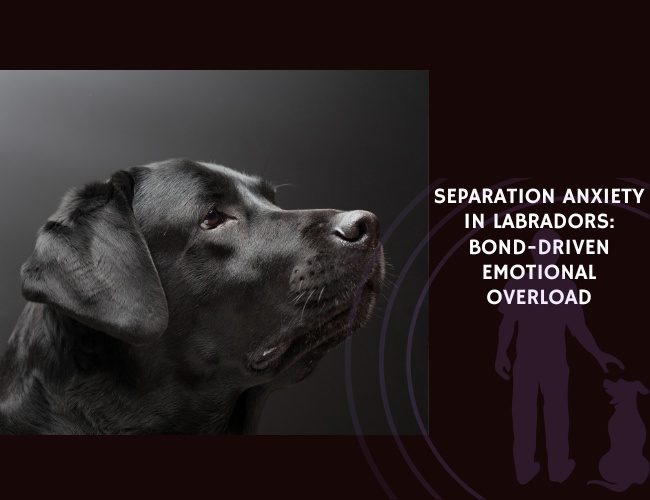
If you’ve ever returned home to find your Labrador trembling at the door, drool pooling beneath their chin, or your furniture transformed into confetti, you might wonder whether your dog simply missed you—or whether something deeper is happening. The truth is, Labradors experience separation differently than many other breeds. Their cooperative heritage, their intense social wiring, and their profound capacity for human connection create both their greatest strength and their most significant vulnerability.
Let us guide you through the science and soul of separation anxiety in Labs—not just what it looks like, but why it happens, how to recognize the difference between genuine distress and simple boredom, and most importantly, how to help your dog build the emotional resilience they need to feel safe when you’re apart.
The Labrador Bond: Wired for Connection, Vulnerable to Loss
Understanding Your Lab’s Cooperative Blueprint
Did you know that your Labrador’s tendency to follow you from room to room isn’t just affection—it’s genetics? Labs were selectively bred for centuries to work in close partnership with handlers during waterfowl retrieval. This wasn’t casual companionship; it was intense, focused cooperation where the dog’s entire attention centered on the human’s movements, commands, and intentions.
This breeding history created dogs with three powerful characteristics:
High affiliative motivation: Your Lab doesn’t just enjoy your company—they’re neurologically wired to seek human proximity and interaction as a primary reward. While an independent breed might check in occasionally, your Lab monitors your location constantly, adjusts their behavior based on your emotional state, and genuinely experiences your presence as essential to their wellbeing.
Key manifestations of high affiliative motivation in Labs:
- Following from room to room throughout the day
- Positioning themselves where they can maintain visual contact
- Seeking physical touch and proximity during rest periods
- Showing distress when physically separated by barriers (closed doors, gates)
- Monitoring your movements and emotional state constantly
- Preferring human interaction over independent activities
Reward sensitivity: Labs respond to social reinforcement more intensely than many breeds. A smile from you, a word of praise, or simply your attention carries profound neurological weight. This sensitivity makes them wonderfully trainable, but it also means that your absence registers as a significant loss of their primary reward source.
Handler focus: That intense gaze your Lab gives you isn’t coincidence—it’s the result of generations of selection for dogs who could read human body language, anticipate needs, and respond to subtle cues. Your Lab doesn’t just see you; they study you.
This genetic architecture makes Labs exceptional family companions, but it also creates a vulnerability. When their deeply wired expectation of human partnership suddenly disappears, the neurological response can be profound. Through the NeuroBond approach, we understand that this isn’t weakness—it’s the natural consequence of breeding dogs for intense cooperation, then asking them to function independently.
The “Velcro Dog” Phenomenon: When Closeness Becomes Dependency
You might notice your Lab following you into the bathroom, waiting outside closed doors, or positioning themselves where they can always see you. Is this normal Lab behavior, or is it a warning sign?
Here’s the distinction that matters:
Healthy bonding looks like a dog who seeks proximity and enjoys your company but can also settle independently. They might choose to lie near you, but they’re equally content in another room if they know where you are. They show calm interest in your location without distress.
Velcro bonding means your dog cannot tolerate even spatial separation within the home. They follow constantly, show visible distress at closed doors, pace or whine when they can’t access you, and seem unable to relax unless they’re touching you or within visual contact.
The critical difference isn’t wanting to be near you—that’s beautifully normal for Labs. The problem emerges when your dog cannot self-regulate without your physical presence. This dependency becomes the foundation for separation anxiety because it means your dog never develops the internal capacity to maintain emotional equilibrium alone.
Adolescence: The Vulnerable Window
If your adolescent Lab suddenly seems more clingy than they were as a puppy, you’re not imagining it. Research confirms that separation-related behaviors increase by 36% during adolescence, specifically around eight months of age. But here’s the hopeful part that many owners don’t realize: these behaviors decrease again by twelve months—in fact, they’re often even lower at twelve months than they were at five months.
This means your adolescent Lab’s separation struggles aren’t permanent personality—they’re a developmental phase that naturally resolves when you maintain consistent support through the window. The clinginess you’re seeing now doesn’t predict lifelong anxiety; it predicts normal brain maturation that will settle as your Lab reaches young adulthood.
For Labradors specifically, this adolescent vulnerability window carries extra weight. Large breeds mature slowly, with adolescence often extending from six months to eighteen months. During this time, your Lab experiences:
Developmental instability: Hormonal changes affect emotional regulation systems in the brain, making your dog more reactive and less able to cope with stress.
Peak social needs: Attachment-seeking behavior intensifies during adolescence. Your Lab may become more demanding of attention, more distressed by brief separations, and more vigilant about your location.
Temporary trainability decrease: That beautifully responsive puppy you had at five months might suddenly seem to have forgotten everything. This isn’t defiance—it’s a normal developmental phase where insecure attachment patterns correlate with decreased trainability.
Understanding this window helps you recognize that your adolescent Lab’s clinginess isn’t permanent personality—it’s developmental vulnerability that requires consistent routines and continued independence training, not abandonment of structure because “they’re going through a phase.” 🧡
Diagnostic Clarity: True Anxiety vs. Under-Stimulation
The Critical Distinction Most Owners Miss
Your neighbor returns home to find their cushions shredded and immediately declares their dog has separation anxiety. But does destruction automatically mean anxiety? Not necessarily—and this misdiagnosis leads to treatment approaches that often make the situation worse.
Let me share the question that changes everything: When does the behavior occur?
True separation anxiety follows a specific temporal pattern. The distress begins within thirty minutes of your departure—often within the first five minutes. If you could watch your dog (and video documentation provides exactly this clarity), you’d see:
Immediate pacing and whining as soon as you leave. Drooling that starts before you’ve even reached your car. Dilated pupils and panting despite normal temperature. Trembling or whole-body tension. Destruction focused specifically at exit points—doors, windows, the barrier between them and following you.
True Separation Anxiety Markers to Watch For:
- Distress behaviors begin within 5-30 minutes of departure
- Drooling, panting, dilated pupils, trembling
- Destruction concentrated at doors, windows, and exit barriers
- Escape attempts that may cause self-injury
- Pre-departure anxiety during preparation rituals (keys, shoes, coat)
- Continuous distress rather than settling at any point
- Physiological stress markers visible on video
Most tellingly, the anxiety begins before you leave. Your Lab starts showing distress during your preparation ritual: when you pick up your keys, put on your work shoes, grab your coat. They’ve learned to predict the departure, and the prediction alone triggers panic.
Under-stimulation or boredom looks entirely different. Your dog settles calmly after you leave. They might nap for an hour or two. Then they wake up, look around, and think “What should I do?” The destruction that follows is exploratory—random object selection, not exit-focused. You might find your trash scattered, your magazines torn, or your remote control chewed, but the front door remains untouched.
Boredom/Under-Stimulation Indicators:
- Delayed onset—dog settles after departure, then becomes active
- Exploratory chewing of random objects (not exit-focused)
- No drooling puddles or physiological stress markers
- Normal breathing patterns throughout
- Calm behavior during your pre-departure routine
- May show playful or investigative behavior on video
- Often settles again after initial activity period
Critically, there are no physiological stress markers. No drooling puddles, normal breathing, no trembling. And during your pre-departure routine? Your dog remains calm, possibly even sleepy.
The Video Documentation Advantage
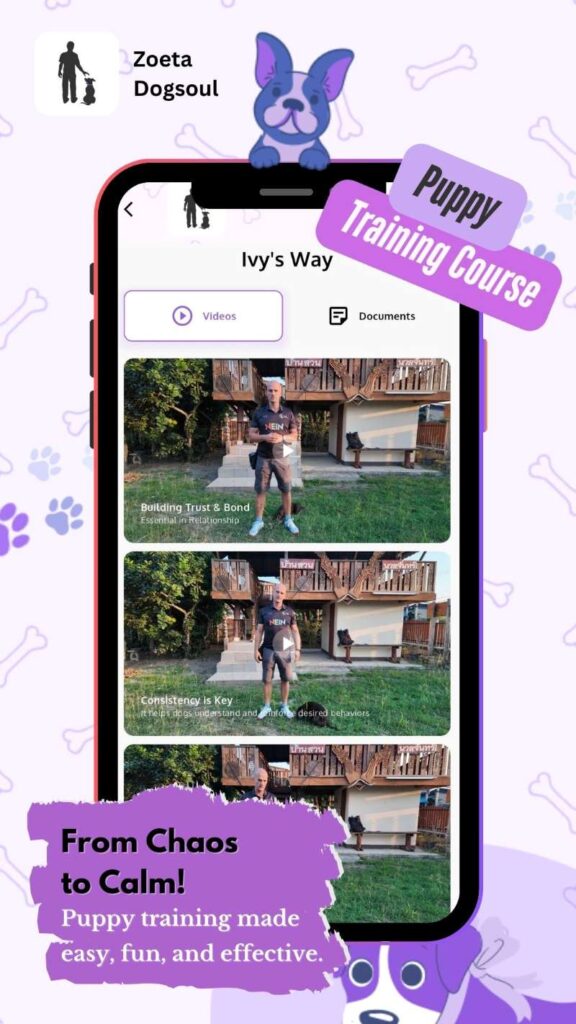
The best way to find out whether constant barking or destruction is just boredom or true anxiety is to video your dog when they’re alone. This single tool eliminates owner bias, captures the actual behavioral sequence and timing, and provides diagnostic clarity that guessing can never achieve.
Set up your phone or a camera where it can capture your dog’s main living area. Leave for thirty minutes. When you review the footage, ask yourself:
Does distress begin immediately or after a delay? Is destruction focused at exits or random exploration? Do you see physiological stress markers (drooling, panting, dilated pupils)? Does your dog ever settle, or is the distress continuous?
These answers determine everything about your treatment approach. True anxiety requires systematic desensitization and possibly medication. Under-stimulation needs increased exercise, mental enrichment, and appropriate outlets for your Lab’s high energy. Treating boredom as anxiety means sedating a dog who simply needs more activity. Treating anxiety as boredom means leaving a genuinely distressed dog to suffer while you increase their exercise—which won’t address the core problem.
Labrador-Specific Diagnostic Challenges
Why are Labs frequently misdiagnosed? Three confounding factors create diagnostic complexity:
Natural mouthing tendency: Labs are oral breeds with soft mouths bred for retrieving. They chew when they’re happy, when they’re bored, when they’re anxious, when they’re teething, and when they’re just being Labs. This means chewing alone tells you almost nothing about emotional state without considering context and timing.
High energy needs: A young Lab needs significant physical and mental exercise. Insufficient activity creates destructive behavior that can look remarkably similar to anxiety-driven destruction. The difference lies in the timing and accompanying physiological markers.
Breed stereotype: “Labs are easy,” “Labs are bombproof,” “Labs love everyone”—these assumptions delay recognition of genuine distress. Owners and even some professionals expect Labs to handle anything, so when a Lab shows anxiety, it’s often minimized as “just needing more exercise” until the problem becomes severe. 🧠
Predictability Loss: The Hidden Core of Separation Distress
Why Routine Disruption Amplifies Anxiety
Here’s something that might surprise you: research indicates that dogs often react more intensely to unpredictability than to the duration of absence itself. Your Lab can often handle being alone for several hours—if they know it’s coming. But fifteen minutes of unexpected separation can trigger panic if it violates their established pattern.
Think about what predictability provides for your dog’s brain:
How Predictability Supports Your Lab’s Nervous System:
- Cognitive scaffolding: Dog knows what to expect and when events will occur
- Emotional regulation: Reduced uncertainty lowers baseline anxiety levels
- Coping preparation: Predictable departures allow mental readiness before stress peaks
- Reduced hypervigilance: No need to constantly monitor for surprise changes
- Trust building: Consistent patterns teach reliability and safety
- Energy conservation: Less mental energy spent on uncertainty management
Cognitive scaffolding: When your Lab knows the routine, they can anticipate what comes next. Morning walk, breakfast, your shower, work departure, your return around 5 PM. This predictability allows their brain to relax because there are no surprises requiring vigilant monitoring.
Emotional regulation: Reduced uncertainty lowers baseline anxiety levels. Your dog isn’t constantly scanning for threats or changes. They can settle because nothing unexpected is happening.
Coping preparation: When departures follow a predictable pattern, your Lab can mentally prepare. They know separation is coming, and they’ve learned through experience that you return. This advance knowledge allows them to engage their coping mechanisms before the stress peaks.
Unpredictability destroys all of this. When your schedule becomes irregular, your Lab must maintain constant hypervigilance, monitoring your movements for departure cues. They experience anticipatory anxiety because they never know when separation might occur. Over time, this learned helplessness develops—a profound sense that they have no control over when separation happens, which intensifies distress when it does.
How Unpredictability Creates Anxiety:
- Hypervigilance: Constant monitoring for departure cues exhausts nervous system
- Anticipatory anxiety: Inability to relax due to uncertainty about when separation occurs
- Learned helplessness: No control over timing creates profound distress
- Elevated cortisol: Chronic uncertainty maintains stress hormone elevation
- Impaired trust: Inconsistency undermines confidence in your reliability
- Increased reactivity: Every change becomes potentially threatening
The Work-From-Home Effect: A Modern Trigger
An abrupt change in schedule in terms of when or how long a dog is left alone can trigger the development of separation anxiety. For example, if you worked from home for months or years and spent all day with your Lab, then suddenly returned to an office requiring six or more hours of daily absence, your dog might develop separation anxiety specifically because of that change—not because they’re incapable of being alone, but because the sudden withdrawal of constant companionship overwhelms their system.
For Labradors specifically, this pattern creates particular vulnerability. Their high social orientation makes constant companionship feel natural—it aligns perfectly with their cooperative breeding. But when that companionship suddenly disappears without gradual preparation, the nervous system response can be profound.
What’s happening neurologically? Extended proximity creates dependency on human presence for emotional regulation—a process called co-regulation. Your Lab learns to maintain a calm nervous system state partly through your presence. When you’re suddenly gone all day, they lack the internal resources to self-regulate. This isn’t weakness; it’s the natural consequence of the system they’ve developed. The Invisible Leash reminds us that connection isn’t just physical proximity—it’s an emotional architecture that requires thoughtful construction.
Building Routine Architecture for Stability
Which predictable patterns actually reduce separation distress? Let’s construct a routine framework that supports your Lab’s nervous system:
Morning structure creates the foundation. Consistent wake time signals the day’s beginning. Predictable feeding schedule provides biological rhythm. A calm pre-departure sequence in the same order with neutral emotion teaches your dog that these activities lead to your departure—and your return.
Departure ritual matters more than most owners realize. A neutral goodbye rather than prolonged affection communicates that leaving is unremarkable. A consistent cue phrase like “I’ll be back” becomes associated with your reliable return. Using the same exit door and similar timing creates pattern recognition that reduces uncertainty.
Return protocol completes the cycle. Calm greeting rather than reinforcing excited behavior teaches that reunions are pleasant but not dramatic. Predictable post-return routine—perhaps a walk, then meal, then settle time—provides structure. When possible, consistent timing strengthens the pattern.
Independence practice builds resilience. Daily brief separations even when you’re home teach your Lab that alone time is normal and temporary. Predictable “alone time” in a safe space becomes routine rather than emergency. Gradual duration increases develop confidence without overwhelming.
This routine architecture doesn’t restrict your life—it creates the framework within which your Lab can relax because they understand the pattern. 🐾
The Human Factor: How Your Emotions Shape Your Dog’s Experience
Owner Emotional Transmission
Did you know that your Lab reads your emotional state with remarkable accuracy? Dogs are exquisitely sensitive to human emotions—particularly socially-oriented breeds bred for close cooperation. And this sensitivity means that your anxiety about leaving your dog can actually amplify their distress.
Consider these transmission pathways:
Pre-departure tension: When you feel guilty or worried about leaving, your body language changes. Your movements become hesitant. Your voice pitch shifts. Your breathing pattern alters. Your Lab reads all of this as danger signals. If you’re anxious, surely something threatening is about to happen?
Prolonged goodbyes: Extended affection before leaving increases departure salience. Instead of communicating “this is normal and unremarkable,” it signals “this is significant and concerning.” Your Lab learns that departures are emotionally loaded events rather than routine transitions.
Return anxiety: Rushing to check on your dog the moment you return validates their concern. If you’re worried about how they handled your absence, maybe they should be worried too?
Here’s what effective owner demeanor looks like instead:
Calm neutrality: Departures and returns are unremarkable events. You leave with the same emotional tone whether you’re gone for five minutes or five hours. No drama, no guilt, no anxiety—just a neutral transition.
Emotional consistency: Your affect remains stable across situations. This steadiness becomes the foundation of security. Your Lab learns that if you’re calm, the situation is safe—even when it involves separation.
Confident leadership: Your composure communicates safety. Dogs look to their humans for information about whether situations are threatening. When you’re calm, you’re telling your Lab that separation isn’t dangerous.
This doesn’t mean being cold or distant. It means being emotionally regulated yourself so your dog can learn that separation is a normal part of life, not a crisis requiring panic. Through Soul Recall, we understand that emotional memory shapes behavior—and the emotional tone you set around departures becomes the foundation of your Lab’s response.
The Guilt Trap
Many Lab owners struggle with intense guilt about leaving their dogs. You’re not alone in this—Labs are so expressive, so attached, that those pleading eyes as you head for the door can feel unbearable. But here’s the truth you need to hear: guilt helps neither you nor your dog.
Your guilt communicates to your Lab that something is wrong. It reinforces their anxiety rather than reducing it. And it often leads to compensatory behaviors—excessive affection, treats to “make up” for leaving, rushed returns—that actually worsen separation anxiety by making departures emotionally significant rather than routine.
Your Lab needs you to be confident that they can handle separation, not guilty that you’re causing them suffering. This confidence becomes their foundation for building independence. When you believe they’re capable of coping, you create the emotional environment where they can develop that capability. 🧡
Stress Accumulation: Why Some Days Are Harder Than Others
Understanding Trigger Stacking in Labs
Have you noticed that your Lab handles separation beautifully some days but falls apart on others—even when your departure routine seems identical? This isn’t inconsistency or manipulation. It’s trigger stacking, and understanding this concept changes how you support your dog through anxiety.
Trigger stacking means that individual stressors your dog could handle alone become overwhelming when accumulated. Think of your Lab’s nervous system as having a capacity threshold—a cup that can hold only so much stress before it overflows. Each stressor throughout the day adds to that cup:
Daily Stressors That Stack to Overwhelm Capacity:
- Excitement and overstimulation at the dog park
- Delivery person ringing doorbell
- Loud construction noise from neighbor’s renovation
- Insufficient rest between high-energy activities
- Visitors overwhelming your Lab with attention
- Disruption of usual walking schedule due to weather
- Unexpected loud noises (thunderstorms, fireworks, sirens)
- Conflict with another household pet
- Changes in household routine or activity
- Your own stress or tension being transmitted
The excitement of the dog park this morning. A delivery person at the door. Loud construction noise from the neighbor’s renovation. Insufficient rest between activities. Your teenage daughter’s friends visiting and overwhelming your Lab with attention. The disruption of your usual walking schedule because of weather.
None of these stressors would trigger separation anxiety on their own. Your Lab has the capacity to handle dog park excitement, or visitor stimulation, or schedule changes. But when these stressors stack throughout a single day, they accumulate. By the time you prepare to leave for work, your Lab’s stress cup is already nearly full. The additional challenge of being alone—which they could typically handle—becomes the drop that causes overflow, resulting in panic that wouldn’t occur with a calm, regulated nervous system.
Labs’ Specific Vulnerability to Overstimulation
For Labradors particularly, their enthusiastic temperament and high social drive create specific trigger stacking patterns:
Labs’ Specific Trigger Stacking Vulnerability Patterns:
- Overstimulation from excessive social interaction: Want to greet everyone and play with every dog without self-regulating
- Arousal accumulation from high-energy play: Intense fetch spikes adrenaline and cortisol that doesn’t dissipate before separation
- Insufficient decompression time: Need deliberate calm between activities but rarely take it voluntarily
- Chronic low-level stress: Persistent stimulation prevents full nervous system recovery
- Food motivation driving overexcitement: Even meal times can elevate arousal
- Enthusiasm preventing rest: Energy level makes quality downtime difficult without structure
Overstimulation from excessive social interaction: Labs want to greet everyone, play with every dog, participate in every activity. Their genetic wiring for cooperation means they rarely self-regulate social engagement. At the dog park, while an independent breed might check out after twenty minutes, your Lab wants to play for an hour. During home visits, while another dog might retreat to rest, your Lab stays engaged until they’re exhausted. This chronic overstimulation elevates baseline cortisol.
Arousal accumulation from high-energy play: That hour of intense fetch you provided this morning felt like good exercise, but it also spiked adrenaline and cortisol. If your Lab didn’t have adequate decompression time before you left, they’re still physiologically aroused when separation occurs—starting from an already elevated stress baseline.
Insufficient decompression time: Labs need deliberate calm between activities. Without this downtime, stress hormones accumulate throughout the day rather than returning to baseline between events.
Chronic low-level stress that reduces coping capacity: When your Lab experiences persistent low-grade stress—from inconsistent routines, ongoing household tension, or continuous environmental stimulation—their nervous system never fully recovers. This depleted state means they have less capacity available to cope with additional challenges like separation.
Separation Anxiety as Nervous System Overflow
Understanding trigger stacking reframes separation anxiety: it’s not that your Lab can’t handle being alone—it’s that on high-stress days, their nervous system capacity is already consumed by accumulated stressors. Separation becomes the final demand that exceeds available resources.
This explains the inconsistency many owners notice. Monday’s separation might be fine because your Lab had a calm weekend with predictable routines and adequate rest. Friday’s separation triggers panic because the week’s accumulated stress—vet visit Tuesday, neighbor’s construction noise Wednesday, your irregular schedule Thursday—has depleted their coping capacity.
Practical Management of Trigger Stacking:
- Recognize high-stress days: When you notice multiple stressors occurring, adjust expectations—your Lab may need shorter separations or additional support
- Provide decompression time: Give at least 30-60 minutes of quiet settling after stimulating activities before departure
- Reduce non-essential stressors: Skip the dog park on days when you’ll need to leave for several hours afterward
- Monitor baseline stress: Watch for difficulty settling, hypervigilance, reduced appetite, disrupted sleep—these indicate capacity depletion
- Create calm islands: Build in mandatory rest periods between activities throughout the day
- Track stress patterns: Note which activities or events consistently precede difficult separations
- Adjust exercise intensity: Choose calming sniffing walks over intense fetch on separation days
- Simplify routines: Reduce overall household stimulation when possible on days requiring separation
The goal isn’t eliminating all stress—that’s neither possible nor beneficial. The goal is managing stress accumulation so your Lab’s nervous system maintains enough capacity to handle normal challenges like separation without overflowing into panic. 🧠
Accidental Reinforcement: How Good Intentions Create Bad Patterns
The Critical Mistakes Most Loving Owners Make
Your intentions are caring and compassionate. You love your Lab and want to reduce their distress. But some of the most common responses to separation anxiety accidentally strengthen the very behaviors you’re trying to eliminate. Understanding these patterns means you can adjust your approach without guilt—you didn’t know, and now you do.
Mistake #1: Returning During Distress
The pattern: Your Lab begins barking or whining shortly after you leave. You hear them through the door, or you return within minutes to check on them because you’re worried. When you open the door, the barking stops. Your Lab seems calmer now that you’re back.
What your Lab learns: Distress vocalizations bring the owner back. Barking and whining are effective strategies for ending separation.
The result: Increased intensity and duration of protest behavior. Your Lab learns to escalate distress displays because they’ve been reinforced. Next time, the barking starts sooner, lasts longer, and may intensify to howling because these behaviors successfully achieved the desired outcome—your return.
The correction strategy: Return only during calm moments. This is incredibly difficult emotionally, but it’s essential. If you must check on your dog, wait until you hear a pause in the distress—even if it’s just a few seconds of silence—then return during that quiet window. This teaches that calm behavior brings you back, while distress does not. Better yet, practice separations short enough that distress doesn’t occur, allowing you to return before anxiety emerges.
Mistake #2: Pre-Departure Guilt Attention
The pattern: You feel terrible about leaving your Lab. To compensate, you provide extended affection before departure—long petting sessions, repeated goodbyes, emotional reassurance, treats to “make up” for abandoning them.
What your Lab learns: Departures are emotionally significant, highly salient events that merit concern. If you’re treating this as a big deal, it must be threatening or important.
The result: Increased anticipatory anxiety. Your Lab begins monitoring for pre-departure cues more vigilantly because these cues now predict emotionally loaded events. The guilt-driven affection doesn’t comfort—it amplifies the importance of your departure, making it loom larger in your dog’s emotional landscape.
The correction strategy: Neutral departures with brief, unemotional goodbyes. Treat leaving the same way you’d treat going to another room—casual, unremarkable, requiring no special ritual. A simple “I’ll be back” in a neutral tone, then exit. This communicates that departures are routine transitions, not emotionally significant events requiring extended preparation.
Mistake #3: Dramatic Returns
The pattern: You return home after being gone, and your Lab is ecstatic—jumping, spinning, vocalizing with joy. You match their energy with enthusiastic greetings, immediate attention, and celebration of the reunion. This feels natural—you missed them, they missed you, the excitement expresses your mutual bond.
What your Lab learns: Returns are high-arousal events worth intense anticipation. The contrast between your absence and your dramatic return increases focus on monitoring for your arrival.
The result: Increased vigilance during separation. Your Lab spends more time and energy focused on your return because returns have become the most rewarding, exciting part of their day. This heightened focus on your absence paradoxically increases separation distress.
The correction strategy: Calm returns where you wait for settling before interaction. When you arrive home, ignore your Lab’s initial excitement. Don’t make eye contact, don’t speak, don’t touch—simply go about putting away your keys, removing your coat, settling your belongings. Wait until your Lab naturally calms—even slightly—then greet them calmly. This teaches that reunions happen after composure, not during chaos. Over time, this reduces the emotional charge around your comings and goings.
The Reinforcement Reversal Pattern
Here’s a pattern that helps many owners: make your departure the rewarding event rather than your return. When you leave, high-value enrichment appears—that special Kong, the puzzle toy they love, the long-lasting chew. When you return, those items disappear. This reverses the typical emotional association, creating positive anticipation of your departure rather than dread.
Your Lab learns: human leaving = good things arriving, human returning = special things leaving. This doesn’t mean they won’t be happy to see you—it means they develop a different emotional relationship with the entire separation cycle, one where your absence itself becomes associated with reward rather than loss. 🐾
Conditioned Triggers: How Ordinary Objects Become Panic Cues
The Classical Conditioning Process
Your keys are just metal on a ring. Your shoes are just footwear. Your briefcase is just a bag. But to your anxious Lab, these objects have become predictors of abandonment. How does this happen?
Classical conditioning follows a simple but powerful pattern:
A neutral cue (keys jingling) gets paired with a meaningful event (your departure). Through repeated pairing, the keys become a conditioned predictor of separation. Eventually, the anxiety response gets triggered by the keys alone—before actual departure occurs.
Common Pre-Departure Triggers That Become Anxiety Cues:
- Keys jingling or being picked up
- Work shoes being put on (vs. casual shoes)
- Coat or jacket being retrieved
- Bag or briefcase being collected
- Specific door opening (front door vs. other doors)
- Shower timing (morning shower before work)
- Coffee routine completion
- Phone/wallet/badge gathering
- Car keys being grabbed specifically
- Laptop bag being packed
- Entire morning routine sequence in predictable order
This means your Lab starts experiencing distress before you even leave. They hear your keys and panic begins. They see you put on work shoes and hypervigilance activates. They watch you pick up your briefcase and their nervous system floods with stress hormones.
Common conditioned triggers include:
Keys jingling. Shoes or coat being put on. Bag or briefcase pickup. Specific door opening. The entire morning routine sequence that reliably leads to departure.
Your dog isn’t being dramatic—they’re experiencing genuine anticipatory anxiety based on learned associations.
Neutralization Protocol: Breaking the Prediction Chain
How can you break these associations so your keys no longer trigger panic? Through systematic desensitization that teaches your dog these cues don’t always predict departure:
Frequency without consequence: Pick up your keys multiple times throughout the day without leaving. Put them in your pocket, walk around, then put them down. Jingle them while you’re cooking dinner. Carry them to the backyard. Do this until your Lab barely notices the sound because it no longer reliably predicts anything.
Randomization of sequence: Change the order of your morning routine. Sometimes shower before coffee. Sometimes put shoes on but don’t leave. Sometimes pick up your briefcase but then sit down to read. Breaking the predictable sequence disrupts your dog’s ability to forecast departure.
Uncoupling behavior from departure: Put on your coat, then watch TV. Pick up your keys, then do laundry. These actions become ordinary rather than alarming because they’re disconnected from leaving.
This process takes time—often weeks for significant triggers—but it fundamentally changes your dog’s emotional response. The goal isn’t to trick your Lab; it’s to teach them that these cues are unreliable predictors, which reduces anticipatory anxiety and gives them fewer minutes of distress before each actual departure. 🧠
Attached. Distressed. Overloaded.
Bond Drives Distress
Labradors are neurologically wired for constant human partnership. Separation disrupts their primary emotional anchor, triggering genuine distress rather than misbehavior.
Cooperation Created Vulnerability
Selective breeding for handler focus and social reward sensitivity made absence feel like loss. Their anxiety reflects connection depth, not fragility.



Resilience Can Be Built
Emotional regulation grows through gradual independence and predictable routines. When safety is internalized, attachment remains strong without overwhelm.
Systematic Desensitization: The Foundation of Recovery
Graduated Exposure Principles
If your Lab panics when you leave for five minutes, leaving them alone for eight hours while you “let them work through it” isn’t training—it’s flooding, and it often makes anxiety worse. Real progress requires systematic desensitization: gradual exposure to separation at levels your dog can handle without panic.
Here’s how this works:
Identify the threshold: Through observation and video documentation, determine the duration your Lab can handle before distress begins. For some dogs, this might be thirty seconds. For others, it could be five minutes. This becomes your starting point.
Sub-threshold practice: Practice separations that are shorter than this threshold. If your Lab can handle two minutes before anxiety emerges, practice ninety-second separations. Success means they remain calm throughout—no pacing, no whining, no physiological stress markers.
Gradual duration increase: Once your dog consistently handles the current duration with calm behavior, increase by small increments. From ninety seconds to two minutes. From two minutes to three minutes. This progression should feel almost imperceptible to your dog.
Variable duration training: Don’t only practice at one duration. Mix shorter and longer separations to prevent your dog from learning to anticipate exact timing. Sometimes leave for one minute, sometimes three minutes, sometimes ninety seconds.
Multiple daily practices: Brief, frequent practice sessions are more effective than long, occasional ones. Five short departures throughout the day teach your dog that alone time is routine and temporary, and that you always return.
🐕 Separation Anxiety in Labradors: A Complete Journey
From Understanding Bond-Driven Distress to Building Independent Confidence
Phase 1: Recognition & Diagnosis
Identifying True Anxiety vs. Boredom
Understanding the Signs
True separation anxiety manifests within 5-30 minutes of departure with physiological stress markers. Your Lab shows drooling, dilated pupils, panting, and destruction focused at exit points—not random exploration. The anxiety begins before you even leave, during your preparation ritual.
What to Watch For
• Distress beginning during key-grabbing or coat-wearing
• Continuous pacing and whining vs. settling after departure
• Door-focused destruction vs. random chewing
• Video documentation reveals the truth—use it
Common Misdiagnosis
Labs are oral breeds who chew when happy, bored, or anxious. Don’t assume destruction equals anxiety—timing and physiological markers distinguish genuine panic from under-stimulation. Boredom shows delayed onset after settling; anxiety shows immediate distress.
Phase 2: Trigger Identification
Understanding Conditioned Cues & Stacking
Pre-Departure Cues
Your keys, work shoes, coat, and morning routine have become anxiety triggers through classical conditioning. Each cue predicts separation, triggering stress before you’ve even left. These neutral objects transformed into panic signals through repeated pairing with your departure.
Trigger Stacking Reality
Monday’s separation succeeds; Friday’s fails—why? Accumulated weekly stress (vet visit, construction noise, irregular schedule) fills your Lab’s capacity cup. Separation becomes the final drop causing overflow. Individual stressors compound when they stack throughout the day.
Managing the Load
• Recognize high-stress days and adjust separation expectations
• Provide 30-60 minute decompression after stimulating activities
• Skip dog park on days requiring long separations
• Monitor baseline stress: hypervigilance, poor sleep, reduced appetite
Phase 3: Cue Neutralization (Weeks 1-2)
Breaking Pre-Departure Anxiety Patterns
Training Protocol
Pick up keys 10-20 times daily without leaving. Put on work shoes, then sit to read. Grab your coat, watch TV for 30 minutes. These actions must occur randomly throughout the day, divorced from actual departure. Goal: keys become as meaningless as opening the refrigerator.
Success Markers
Your Lab barely glances when you jingle keys or put on shoes. No standing anxiously, no pacing, no hypervigilance. The cues that once triggered panic now register as normal household sounds. This foundation enables all subsequent training.
Phase 4: Brief Separations (Weeks 3-6)
Building Duration from Seconds to Minutes
Systematic Progression
• Week 3: 5-10 second absences, 5-10 repetitions daily
• Week 4: 15-30 seconds when prior duration shows consistent calm
• Week 5: 30-60 seconds after 3 consecutive successful days
• Week 6: Build to 1-2 minutes, always sub-threshold
• Mix durations once multiple levels succeed (prevent timing anticipation)
Counter-Conditioning Component
High-value enrichment appears the moment you leave—frozen Kong, special chew, puzzle toy. When you return, these items disappear. Your departure becomes the cue for reward arrival, fundamentally shifting emotional association from loss to gain.
Critical Principle
Never push into panic zone. If distress appears at any duration, immediately return to last successful duration for several more days. Progress measures in weeks, not days—patience now prevents months of regression later.
Phase 5: Duration Building (Weeks 7-12)
Extending to 30+ Minutes of Calm
Extension Protocol
Progress from 2→3→5→7→10→15→20→30 minutes with multiple successful practices at each level. Non-linear mixing prevents timing anticipation: 3 min today, 1 min tomorrow, 5 min next. Video documentation shows calm behavior maintained across full duration.
Independence Skills Integration
Simultaneously teach mat/place training (settling while you move around), active waiting (calm during environmental changes), and stationing (going to designated spot on cue). These skills provide your Lab with concrete behaviors during separation rather than anxious wondering.
Exercise Type Matters
Replace intense fetch with sniffing walks before separation. Arousal-building exercise spikes cortisol; calm decompression activities activate parasympathetic regulation. Swimming, structured training, and enrichment feeding build resilience—frantic play depletes it.
Phase 6: Environmental Optimization
Creating Safe Space Architecture
Strategic Modifications
• Visual barriers prevent window surveillance and exit fixation
• White noise or calm music masks unpredictable environmental sounds
• Appropriate lighting maintains circadian rhythms during alone time
• Designated safe space with comfortable bedding, enrichment access, water
Enrichment Neuroscience
Licking and chewing activate the parasympathetic nervous system through vagus nerve stimulation. Frozen Kongs, lick mats, and appropriate chews create calming feedback loops: oral behavior → vagal tone → reduced anxiety → continued calm engagement. This isn’t distraction—it’s direct nervous system regulation.
Confinement Considerations
Crate only if your Lab views it as den-like security when you’re present. If they show any stress signals when crated with you home, forcing confinement during absence compounds distress. Safe room or house access with restrictions often works better for anxious Labs.
Phase 7: Real-World Integration (Weeks 13+)
Transitioning to Actual Departures
Conservative Approach
If trained to 45 minutes, begin real departures at 30 minutes to maintain sub-threshold approach. Gradually extend: 30→45→60→90→120 minutes over additional weeks or months. Initial real-world separations may show slightly elevated stress—this adjustment is normal.
Progress Measurement
Track quantitative markers (duration tolerance, recovery time, consistency percentage) and qualitative indicators (body language, physiological signs, behavioral flexibility). Video first several real departures to ensure continued calm. Success shows trend improvement over weeks, not perfect performance daily.
Accidental Reinforcement Avoidance
Return only during calm moments—never during distress. Neutral departures without guilt-driven affection. Calm returns where you wait for settling before interaction. These patterns prevent accidentally strengthening anxiety behaviors you’re trying to eliminate.
Phase 8: Long-Term Maintenance & Prevention
Sustaining Success Through Life Changes
Ongoing Practice
Even after reaching needed durations, continue occasional short practice separations. Maintain enrichment habits as normal routine. Monitor for regression during life transitions (moves, schedule changes, family changes) and return to earlier stages briefly if needed—this is normal adjustment, not failure.
Adolescent Vulnerability Window
Separation behaviors increase 36% at 8 months but decrease again by 12 months—often lower than at 5 months. This developmental phase is temporary, not permanent personality. Maintain routines and continue independence training during adolescence rather than abandoning structure.
When to Seek Professional Help
Severe panic with self-injury, no progress after 4-6 weeks of consistent training, complete inability to engage with enrichment, or new anxiety behaviors emerging all warrant veterinary behaviorist consultation. Medication may be necessary for moderate-to-severe cases to enable learning.
🔄 Separation Anxiety Distinctions
True Anxiety vs. Boredom
Anxiety: Distress within 5-30 min, physiological markers (drooling, panting), exit-focused destruction, pre-departure stress
Boredom: Delayed onset after settling, no stress markers, random exploratory chewing, calm pre-departure
Exercise Impact
Arousal-Building: Intense fetch, dog park chaos—spikes cortisol, creates adrenaline dependency, may worsen anxiety
Calm Decompression: Sniffing walks, swimming, structured training—activates parasympathetic system, builds resilience
Puppy vs. Adolescent vs. Adult
Puppy (8-16 weeks): Prevention window—graduated alone time builds foundation
Adolescent (6-18 mo): Vulnerability peak at 8 months, decreases by 12—maintain consistency
Adult: Often life-change triggered—requires systematic desensitization
Owner Response Patterns
Reinforces Anxiety: Returning during distress, pre-departure guilt attention, dramatic reunions, emotional goodbyes
Reduces Anxiety: Return during calm, neutral departures, calm greetings, confident demeanor, consistent routines
Confinement Approaches
Crate: Works if dog views as den when owner present; worsens anxiety if crate-phobic
Safe Room: More space than crate, visual access, works for moderate anxiety
House Access: Maximum freedom for mild anxiety, requires dog-proofing
Enrichment Effectiveness by Severity
Mild Anxiety: Frozen Kongs, puzzles, lick mats highly effective—dog engages readily
Severe Panic: Dog ignores all food—enrichment ineffective until anxiety reduced through desensitization first
⚡ Quick Reference Formula
Treatment Timeline: Weeks 1-2 (Cue Neutralization) → Weeks 3-6 (Brief Separations: seconds to 2 min) → Weeks 7-12 (Duration Building: 2-30+ min) → Weeks 13+ (Real-World Integration)
Success Formula: Video Documentation + Sub-Threshold Training + Counter-Conditioning + Environmental Optimization + Owner Emotional Regulation = Lasting Independence
Red Flag Formula: Increased Destruction + Regression in Mastered Durations + New Anxiety Behaviors = Seek Professional Help
Trigger Stacking Rule: Daily Stress Load ≥ Nervous System Capacity = Separation Overflow (even if dog usually handles alone time)
🧡 The NeuroBond Approach to Separation
Through the NeuroBond framework, we understand that your Lab’s separation anxiety isn’t weakness—it’s the shadow side of their profound capacity for connection. The same genetic wiring that makes them exceptional companions creates vulnerability when that partnership is interrupted. But here’s the transformation: connection doesn’t require constant physical proximity. Through systematic desensitization, you’re not weakening your bond—you’re teaching your Lab that your emotional connection survives physical distance.
The Invisible Leash reminds us that true connection is energetic and emotional, not just spatial. When your Lab learns that calm behavior—not panic—influences outcomes, they discover self-regulation rather than forced compliance. Soul Recall teaches us that emotional memory shapes every behavioral response. The experiences you create during this training—consistent returns, predictable routines, calm presence—become the foundation of trust that carries your Lab through separation.
Your Lab’s journey to security doesn’t require abandoning the profound bond you share. It requires building emotional architecture that supports both deep connection and healthy independence. That balance—where love coexists with capability, where attachment includes resilience—that’s the essence of Zoeta Dogsoul.
© Zoeta Dogsoul – Where neuroscience meets soul in dog training
Implementation Stages: Your Week-by-Week Roadmap
Real separation anxiety treatment requires patience measured in weeks and months, not days. Here’s a realistic timeline with concrete stages you can follow:
Stage 1: Cue Neutralization (Weeks 1-2)
Before addressing actual separations, neutralize the conditioned triggers that cause anticipatory anxiety.
Daily Practice Activities for Cue Neutralization:
- Pick up keys 10-20 times throughout day without leaving
- Put on work shoes, sit down to read, then remove them
- Grab coat, watch TV for 30 minutes, then take it off
- Pick up briefcase, do laundry, put it back down
- Walk to door, open it, close it, return to couch
- Jingle keys while cooking dinner, making coffee, or doing normal activities
- Put shoes on, then play with your dog before removing them
- Grab coat and phone, then work at computer for an hour
- Perform actions in different orders at random times throughout day
- Follow cue practice with positive events (treats, play) or simply normal activity
Daily practice: Pick up your keys 10-20 times throughout the day without leaving. Put on your work shoes, then sit down to read. Grab your coat, then watch TV. These actions should occur in different orders at random times, followed by positive events (treats, play) or simply normal activity—never immediate departure.
Goal: Your Lab barely notices these cues because they no longer reliably predict anything. Keys jingling becomes as meaningful as opening the refrigerator—just a normal household sound.
Progress marker: Your dog shows no stress response when you perform pre-departure actions. They might glance at you, but they don’t stand up anxiously, start pacing, or become hypervigilant.
Stage 2: Brief Separations (Weeks 3-6)
Now begin actual departures at durations well below your dog’s panic threshold.
Progression Steps for Brief Separation Training:
- Week 3: Practice 5-10 second absences, 5-10 repetitions daily
- Week 4: Increase to 15-30 second absences when prior duration shows consistent calm
- Week 5: Progress to 30-60 second separations after 3 consecutive successful days
- Week 6: Build to 1-2 minute separations, always returning before distress appears
- Throughout: Mix durations once multiple levels are successful (30 sec, 1 min, 45 sec randomly)
- Key principle: Provide high-value treat/enrichment as you leave, casual greeting upon return
- Red flag: If distress appears at any duration, immediately return to last successful duration for several more days
- Success marker: Video shows dog lying down or engaging with enrichment within 30 seconds of departure
Initial practice: Start with 5-10 second absences. Walk to the door, step outside, immediately return. Provide high-value treat or enrichment as you leave, casual greeting when you return. Repeat 5-10 times daily.
Gradual progression: Increase to 15 seconds, then 30 seconds, then 45 seconds, then 1 minute. Only move to the next duration when your dog handles the current one calmly for at least 3 consecutive days.
Variable timing: Once you’re working with 1-minute separations, mix durations. One practice might be 30 seconds, the next 1 minute, the next 45 seconds. This prevents anticipatory timing.
Goal: Your Lab settles calmly within seconds of your departure. They engage with enrichment or rest quietly. No distress vocalizations, no pacing, no escape attempts.
Progress marker: Video shows your dog lying down or engaging with enrichment within 30 seconds of your departure. They may watch the door briefly but don’t maintain vigilant monitoring.
Stage 3: Duration Building (Weeks 7-12)
Extend separation duration while maintaining sub-threshold training.
Systematic Duration Extension Protocol:
- Week 7: Progress from 2 to 3 to 5 minutes with multiple successful practices at each level
- Week 8: Build to 7 then 10 minutes, ensuring calm behavior throughout
- Week 9: Extend to 15 then 20 minutes, returning before any distress signals
- Week 10: Reach 30-minute separations with consistent calm settling
- Week 11-12: Continue extending toward 45 minutes to 1 hour as appropriate
- Non-linear mixing: Practice 3 min today, 1 min tomorrow, 5 min next, 10 min after—vary unpredictably
- Multiple daily practices: Continue 3-5 brief successful practices even while building longer durations
- Regression protocol: Any distress requires immediate return to last successful duration for 3+ days before progression
- Success marker: Video shows calm behavior maintained across full duration with only periodic door checks
Systematic extension: Progress from 1 minute to 2, then 3, then 5, then 7, then 10, then 15, then 20, then 30 minutes. Each duration requires multiple successful practices before advancing.
Non-linear progression: Don’t just go 1, 2, 3, 4 minutes. Mix it up: 3 minutes today, 1 minute tomorrow, 5 minutes next, 2 minutes after. This teaches your Lab that separation duration varies but you always return.
Multiple daily practices: Continue 3-5 brief practices daily even as you extend duration. Short successes maintain confidence while longer durations build capacity.
Troubleshooting regression: If your Lab shows distress at any duration, immediately return to the last successful duration for several days before attempting to progress.
Goal: Your Lab handles 30+ minute separations calmly, settling within the first few minutes and remaining relaxed throughout.
Progress marker: Video documentation shows calm behavior maintained across the full duration. Your dog may periodically check the door but spends most of time resting or engaging with enrichment.
Stage 4: Real-World Application (Weeks 13+)
Transition from training separations to actual necessary departures.
Real-World Integration Strategy:
- Start conservatively: If trained to 45 minutes, begin real departures at 30 minutes to maintain sub-threshold approach
- Gradual extension: Slowly increase real departure duration—30 min to 45, then 1 hour, then 1.5 hours, then 2 hours over additional weeks/months
- Maintain practice sessions: Continue occasional short training separations even after reaching needed durations
- Expect adjustment period: Initial real departures may show slightly elevated stress even at trained durations—this is normal
- Flexibility for setbacks: Life changes may require returning to earlier stages briefly—build back up systematically
- Monitor closely: Use video documentation during first several real-world departures to ensure continued calm
- Adjust as needed: If real departures show more stress than training, slow progression or return to shorter durations
- Long-term maintenance: Even after success, periodically practice varied duration separations to maintain skills
Gradual real-life integration: Begin leaving for actual errands at durations you’ve successfully trained. If your Lab handles 45 minutes in training, start with 30-minute real departures to maintain sub-threshold approach.
Continued extension: Slowly increase real departure duration. From 30 minutes to 45, then 1 hour, then 1.5 hours, then 2 hours. This may take additional months depending on your dog’s progress and your actual needs.
Maintenance practice: Even after your Lab handles your necessary departure durations, continue occasional short practice separations. This maintains skills and confidence.
Flexibility for setbacks: Life changes, moves, schedule shifts may require returning to earlier stages briefly. This is normal—build back up systematically rather than pushing through regression.
Goal: Your Lab handles the actual durations you need for work, errands, and normal life activities without distress.
Independence Skills Training: Active Coping Strategies
Beyond passive desensitization, teaching your Lab specific independence skills accelerates progress by giving them concrete behaviors to perform:
Mat/Place Training: Foundation for Spatial Separation
The skill: Your dog settles on a designated mat or bed and remains calmly there while you move around the house.
Mat/Place Training Progression Steps:
- Step 1: Lab settles on mat while you stand next to them—reward heavily with treats
- Step 2: Take one step away, return immediately, reward—repeat until comfortable
- Step 3: Gradually increase distance—two steps, then three, then across room
- Step 4: Move to different areas of room while Lab remains on mat calmly
- Step 5: Step briefly out of sight (doorway), return immediately, reward
- Step 6: Extend out-of-sight duration gradually from seconds to minutes
- Step 7: Move to adjacent rooms, returning frequently to reward calm settling
- Step 8: Build to moving throughout house while Lab remains settled on mat
- Throughout: Always return before any stress appears—build duration incrementally
Training progression:
- Begin with your Lab on their mat while you stand next to them. Reward calm settling with treats.
- Take one step away, return immediately, reward. Gradually increase distance.
- Move to different areas of the room, always returning to reward calm behavior.
- Eventually move to adjacent rooms, out of sight briefly, building duration and distance incrementally.
Benefit for separation: This teaches your Lab that spatial distance from you is safe and rewarding. They learn that remaining calm in their space brings good outcomes, while your movement throughout the house becomes unremarkable.
Integration: Use place training daily during normal activities—cooking, working, showering—so your dog experiences routine separation within the home before external departures.
Active Waiting: Tolerance for Environmental Change
The skill: Your dog remains calm and settled while the environment around them changes—doors opening, people moving, activities happening.
Active Waiting Skill Development:
- Level 1: Lab waits calmly while you open and close doors in same room
- Level 2: Remain settled while you move items, fold laundry, put away groceries
- Level 3: Practice calm behavior while you walk throughout house doing chores
- Level 4: Maintain settling during doorbell recordings at low volume
- Level 5: Stay calm during more stimulating changes like someone coming home
- Level 6: Tolerate window activity (people walking by, cars passing) without reactivity
- Level 7: Remain settled during actual visitors arriving (eventually)
- Throughout: Reward calm responses heavily, remove dog from situation before threshold exceeded
Training progression:
- Ask your Lab to wait calmly while you open and close doors.
- Practice having them wait while you move items, fold laundry, put away groceries.
- Build to having them remain settled during more stimulating changes—someone coming home, doorbell ringing (start with recordings), window activity.
Benefit for separation: Reduces reactivity to environmental changes that might otherwise trigger anxiety. Your Lab learns that changes in their environment don’t require their intervention or emotional response.
Application during separation training: A dog who can remain calm during environmental change is better equipped to handle the specific change of your departure.
Stationing: Predictable Safe Space
The skill: Your dog goes to a specific designated location on cue and settles there.
Training progression:
- Choose a specific mat, bed, or area as your Lab’s station.
- Use a cue word (“station,” “place,” “bed”) and lure your dog to the location with treats.
- Reward heavily for going to the station and settling.
- Practice having your Lab go to their station during various daily activities.
Benefit for separation: Provides your dog with a clear expectation and safe space. Instead of anxiously wondering “what should I do while they’re gone,” your Lab has a concrete behavior: go to station, settle.
Integration with departures: Use stationing as part of your pre-departure routine. Cue your Lab to their station, provide enrichment there, then depart. This creates predictable structure around the separation.
Calm Settling: Self-Regulation Practice
The skill: Your dog transitions from arousal or excitement to calm, relaxed state without your active intervention.
Training throughout daily life:
- After play sessions, reward your Lab for lying down and relaxing rather than continuing to seek engagement.
- After walks, reward settling behavior once you’re home.
- During daily activities, periodically reward calm behavior—just existing peacefully near you without demanding attention.
Benefit for separation: Dogs who practice self-regulation throughout the day develop stronger capacity to regulate during separation. Calm settling becomes a familiar, achievable behavior rather than a foreign concept during alone time.
Critical principle: Reward calm behavior consistently throughout every day, not just during separation training. This teaches your Lab that calm is generally valuable and achievable—a baseline state they can access even during challenging situations.
The Counter-Conditioning Component
Desensitization reduces fear through gradual exposure. Counter-conditioning goes further by changing the emotional association from negative to positive. You’re not just teaching your dog to tolerate separation—you’re teaching them that alone time predicts good things.
High-value rewards appear only during separation: Special treats, engaging puzzle toys, or particularly delicious food stuffers appear when you leave and disappear when you return. Your Lab learns that your departure signals the arrival of something wonderful.
Departure predicts enrichment: Long-lasting chews, frozen Kong toys stuffed with irresistible mixtures, or interactive feeding puzzles create positive anticipation. Instead of dreading your exit, your Lab starts looking forward to it because it means access to special resources.
Return removes the reward: When you come back, the special items disappear. This reverses the typical emotional pattern where your return is the rewarding event. Now your departure becomes the cue for reinforcement, fundamentally shifting your dog’s emotional response.
Timing is critical: The high-value item must appear immediately upon departure and disappear immediately upon return. This clear contingency teaches the association: human leaving = good things arriving.
This dual approach—reducing fear through gradual exposure while building positive associations—creates lasting change in your Lab’s emotional response to separation. You’re not just managing symptoms; you’re reconstructing the underlying emotional architecture. Through the NeuroBond approach, we understand that this emotional transformation requires patience, consistency, and genuine respect for your dog’s capacity to learn new associations. 🐾
The Physical Exercise Paradox: Type Matters More Than Intensity
Does More Exercise Reduce Separation Anxiety?
Here’s a common assumption that needs examination: “If I just tire my dog out enough, they won’t have the energy to be anxious.” Many owners increase exercise hoping to exhaust their Lab into calm. Does this work?
For under-stimulation or boredom-driven destruction, yes—increased exercise addresses the core problem. A mentally and physically tired Lab is less likely to shred your couch out of excess energy.
But for true separation anxiety, exercise alone rarely solves the problem. Anxiety isn’t an energy surplus issue; it’s an emotional regulation problem. You can’t exhaust a dog out of panic any more than you could exercise yourself out of a phobia.
More critically, the type of exercise determines whether it helps or harms. Not all physical activity supports emotional regulation equally—some forms actually increase anxiety vulnerability.
Arousal-Building Exercise: The Hidden Problem
High-intensity, excitement-based activities like frantic fetch, rough play with other dogs, or chase games create physiological arousal that can worsen anxiety in sensitive dogs:
How Arousal-Building Exercise Worsens Anxiety:
- Increases cortisol and adrenaline: Stress hormones spike and may not dissipate before departure
- Creates “adrenaline junkie” pattern: Dependency on intense stimulation for regulation develops
- Elevates baseline arousal: Nervous system learns to operate at higher activation levels
- Impairs calm settling: Makes self-soothing and relaxation more difficult
- Poor pre-departure timing: Leaving while dog is still “high” from exercise starts them dysregulated
- Builds stimulation dependency: Requires increasingly intense activity to feel satisfied
- Masks anxiety temporarily: Exhaustion suppresses behavior without addressing emotional distress
Increases cortisol and adrenaline: Intense exercise elevates stress hormones. While these hormones serve important functions, chronically elevated levels or spikes right before departure start your Lab from an already aroused baseline rather than a calm one.
Creates “adrenaline junkie” pattern: Labs who receive daily high-arousal exercise can become dependent on intense stimulation for regulation. Their baseline arousal increases, requiring more and more excitement to feel satisfied. When left alone without access to this intensity, the contrast feels more dramatic.
May increase baseline anxiety: If your Lab’s primary exercise consistently involves high arousal—dog park chaos, intense fetch sessions, rough wrestling—their nervous system learns to operate at elevated activation. This makes calm settling more difficult, not easier.
Can worsen separation when timed poorly: Exercising intensely right before departure leaves your Lab physiologically aroused when you leave. Elevated heart rate, increased cortisol, and residual excitement mean they’re starting separation from a dysregulated state. If you leave while your dog is still “high” from exercise, they lack the calm baseline needed to manage your absence.
This doesn’t mean you should never play fetch or visit the dog park—these activities can be joyful and appropriate in context. But if your Lab struggles with separation anxiety, examine whether these high-arousal activities dominate their exercise routine and whether timing creates problems.
Calm Decompression Activities: Building Resilience
Low-arousal, cognitively engaging activities support nervous system regulation and build genuine capacity to handle stress:
Calm Decompression Activities That Build Resilience:
- Sniffing walks: Allow Lab to set pace, investigate scents—activates parasympathetic nervous system
- Swimming: Provides physical exercise without high arousal or frantic energy
- Structured training sessions: Mental engagement with calm focus releases dopamine without adrenaline spikes
- Enrichment feeding: Food puzzles, snuffle mats, scatter feeding engage foraging without excitement
- Gentle fetch with sits between throws: Controlled retrieval with built-in calm breaks
- Nosework or scent detection: Focused mental activity that’s naturally calming
- Trick training: Short sessions teaching new behaviors with low physical intensity
- Slow walks with frequent stops: Allows processing and environmental awareness without rushing
Sniffing walks: Allow your Lab to set the pace, stopping frequently to investigate scents. Sniffing activates the parasympathetic nervous system (rest-and-digest), actively calming the nervous system while providing mental enrichment. A twenty-minute sniffing walk where your Lab investigates every bush can be more regulating than an hour of intense fetch.
Swimming: Provides excellent physical exercise without the high arousal of chase games. The resistance of water creates muscle engagement while the activity itself tends to be more meditative and less frantic. Many anxious Labs find swimming particularly calming.
Structured training sessions: Mental engagement with calm focus teaches your Lab that concentration and cooperation feel good. Training releases dopamine (reward chemical) without spiking adrenaline. Short training sessions teaching new skills or reinforcing known behaviors provide cognitive enrichment that supports regulation.
Enrichment feeding: Food puzzles, snuffle mats, or scatter feeding in the yard allows your Lab to engage natural foraging behaviors. This provides satisfaction without excitement, occupying mind and body in calming ways.
The Optimal Exercise Approach for Anxious Labs
Daily Exercise Structure for Separation Anxiety Management:
- Morning calm walk: Sniffing-focused, low-arousal walk to set calm baseline for the day
- Mental enrichment throughout: Food puzzles during meals, brief training sessions, scent games
- Physical exercise with awareness: Swimming or structured play rather than frantic fetch
- Timing matters: Higher-arousal activities occur several hours before departure, with decompression time after
- Pre-departure calm: Ensure Lab is in settled, relaxed state before leaving—not exhausted from intense exercise
- Avoid pre-departure routines: Don’t only exercise before work departures—vary timing to prevent cue conditioning
- Build in rest periods: Mandatory downtime between activities prevents arousal accumulation
- Quality over quantity: 20 minutes of sniffing can be more regulating than 60 minutes of chase
Morning calm walk: Start the day with a sniffing-focused, low-arousal walk. Let your Lab investigate the environment at their pace. This sets a calm baseline for the day rather than spiking arousal first thing.
Mental enrichment throughout the day: Food puzzles during meals, brief training sessions, scent games. These activities engage your Lab’s mind without elevating their nervous system into high arousal.
Physical exercise with awareness: Swimming or structured play rather than frantic fetch. If you do engage in higher-arousal activities, ensure they occur hours before departure, with adequate decompression time afterward.
Pre-departure calm: Aim for your Lab to be in a settled, relaxed state before you leave—not exhausted from intense exercise. A calm nervous system handles separation better than one that’s depleted from overstimulation.
The Enrichment Paradox
Research confirms that the world is full of unemployed dogs that engage in very little activity and spend most of their lives on the couch. Even though most domestic dogs do not work for humans as they once did, their lives can still be enriched with activities to prevent boredom and behavioral issues.
However—and this is critical for anxious Labs—the type of enrichment matters profoundly. Calm, cognitively engaging activities build resilience and support emotional regulation. High-arousal activities may increase anxiety vulnerability by keeping the nervous system in constant elevated activation.
Your Lab needs activity, absolutely. But they need the right kind of activity at the right times, delivered in ways that support their emotional capacity rather than depleting it. 🧡
Confinement Strategy & Environmental Architecture: Creating Safe Space
The Crate Dilemma
Should you crate your anxious Lab when you leave? This question generates intense debate, and the answer depends entirely on your dog’s specific relationship with the crate.
When crating helps: If your Lab views their crate as a den—a safe, comfortable space they choose voluntarily—then crating during departures can reduce anxiety by providing environmental predictability and security. The defined space becomes a known quantity where they can settle. For some dogs, freedom of the house creates overwhelming responsibility to monitor territory, while the crate allows them to relax.
When crating harms: If your Lab is crate-phobic or associates the crate with panic, forcing confinement during separation compounds distress. You’re now asking an already anxious dog to manage both separation anxiety and spatial restriction simultaneously. This often leads to self-injury—broken teeth from bar-biting, damaged paws from escape attempts, even torn dewclaws.
The critical distinction lies in your dog’s emotional state inside the crate when you’re present. Does your Lab enter voluntarily? Do they settle calmly? Can they relax fully? If yes, the crate might be helpful during departures. If they show any stress signals when crated—even with you home—forcing confinement during your absence will worsen anxiety.
Alternative Confinement Strategies
If crating isn’t appropriate, consider these options:
Safe room confinement: A small, dog-proofed room (bathroom, laundry room, bedroom) provides defined space without the close restriction of a crate. Remove anything potentially dangerous or valuable, provide a comfortable bed, and use a baby gate rather than a closed door when possible—visual connection to the rest of the house reduces isolation intensity.
Tether training: A short leash attached to furniture creates limited space while allowing more movement than a crate. This works particularly well if combined with a comfortable bed and chew toys in that designated area.
Entire house access with restrictions: For dogs who manage better with freedom, consider closing off certain rooms while allowing access to main living areas. Remove temptation (shoes, remote controls, food) and provide appropriate entertainment.
Gradual crate reconditioning: If you want to use crate confinement but your Lab currently associates it with stress, dedicate several months to building positive associations. Feed meals in the crate, hide treats inside, toss toys in for retrieval—all while the door remains open and you’re present. Only once your dog chooses to enter and rest there voluntarily should you consider closing the door, and even then, initially only for seconds while you remain visible.
Environmental Modifications That Reduce Distress
The physical environment you create for your Lab’s alone time significantly impacts their anxiety level. Strategic modifications can reduce triggers and support calm settling:
Environmental Modifications That Reduce Separation Distress:
- Visual barriers: Close curtains or use window film to prevent exit fixation and window surveillance
- Sound masking: White noise machines or calm classical music (like “Through a Dog’s Ear”) mask unpredictable environmental sounds
- Owner-scented clothing: May comfort some dogs but increase distress in others—video documentation determines effectiveness
- Comfortable temperature: Ensure space isn’t too hot or cold, affecting physical comfort
- Appropriate lighting: Natural light during day maintains circadian rhythms; leave lights on during darkness departures
- Minimal visual stimulation: Position safe space away from busy streets or high-traffic areas
- Consistent safe space location: Designate one specific area with familiar bedding and comfort items
- Remove stress triggers: Clear away items that might cause reactivity (toys by windows, items that can be destroyed)
Visual barriers to prevent exit fixation: If your Lab spends separation time staring out windows watching for your return or becomes reactive to street activity, blocking visual access can help. Close curtains, use window film, or position furniture to prevent window surveillance. This interrupts the vigilant monitoring pattern that maintains arousal.
Sound masking with white noise or calm music: Environmental sounds—neighbors, traffic, delivery people—can trigger anxiety spikes during separation. White noise machines or calm classical music (specifically designed for dogs, like “Through a Dog’s Ear”) mask unpredictable sounds while providing consistent auditory backdrop. This reduces startle responses and creates acoustic predictability.
Owner-scented clothing: This recommendation requires nuance. Some dogs find an unwashed shirt or recently worn item comforting—your scent provides reassurance without your physical presence. However, other dogs become more distressed because the scent heightens awareness of your absence without providing the actual connection they seek. Video documentation helps determine whether your scented items calm or agitate your specific Lab. If they settle near the item and use it like a comfort object, continue. If they pace around it, mouth it anxiously, or carry it while distressed, remove it.
Consistent safe space architecture: Designate one specific area as your Lab’s alone-time space—whether that’s a crate, a room, or a particular corner of the house. This space should include: a comfortable bed or mat that signals “settle here,” appropriate chew items and enrichment, water access, comfortable temperature (not too hot or cold), and minimal stimulation (not directly facing busy streets or high-traffic areas).
Essential Components of Safe Space Architecture:
- Comfortable bed or mat: Familiar surface that signals settling behavior
- Appropriate chew items: Long-lasting, safe options for oral satisfaction
- Enrichment tools: Frozen Kongs, puzzle toys, lick mats ready for use
- Water access: Fresh water always available in stable bowl
- Temperature control: Not too hot or cold—comfortable resting temperature
- Low stimulation positioning: Away from windows with street activity, not facing main entrances
- Familiar scents: Items that carry household or your scent (if they comfort rather than distress)
- Safety: No hazards, choking risks, or items that could cause injury
Lighting considerations: If your Lab is alone during daylight hours, natural light helps maintain normal circadian rhythms. If departures occur in early morning or evening darkness, leaving lights on provides environmental consistency and can reduce shadows or darkness-related anxiety in some dogs.
The space you choose matters less than ensuring your Lab experiences it as safe rather than restrictive. The goal is providing environmental structure that supports settling, not creating additional stressors during an already difficult situation. 🧠
Enrichment as Emotional Regulation Tool
Beyond Basic Boredom Busters
Enrichment isn’t just entertainment to keep your Lab busy—it’s a neurological tool that supports emotional regulation by activating different brain systems and providing positive focus during your absence.
Cognitive engagement reduces anxiety: When your dog’s brain is engaged in problem-solving, their anxiety system receives less attention. Food puzzles, scent work, or interactive toys activate reward-seeking circuits rather than fear circuits.
Natural behaviors provide regulation: Activities that allow your Lab to engage their breed-specific drives—retrieving, carrying, chewing, scent work—are inherently calming because they’re neurologically rewarding. A Lab working to extract treats from a Kong is engaging the same satisfaction systems that activate during successful retrieves.
Duration-appropriate enrichment: The enrichment you provide needs to last long enough to bridge the initial anxiety peak. If your dog experiences greatest distress in the first thirty minutes after departure, choose activities that take at least that long to complete.
The Parasympathetic Response: Why Licking and Chewing Work
Here’s the neuroscience that makes certain enrichment tools particularly effective: licking and chewing activate the parasympathetic nervous system—the “rest and digest” system that counteracts the “fight or flight” sympathetic response driving anxiety.
When your Lab licks a frozen Kong or chews a long-lasting treat, repetitive oral motor patterns send signals to the vagus nerve, which triggers parasympathetic activation. This physiologically calms their nervous system—lowering heart rate, reducing cortisol, and promoting relaxation. It’s not distraction; it’s direct nervous system regulation through behavior.
This is why lick mats, frozen Kongs, and appropriate chews are more effective than standard toys for anxious dogs. The repetitive licking or chewing creates a calming feedback loop: oral behavior → vagus nerve stimulation → parasympathetic activation → reduced anxiety → continued calm engagement with the enrichment.
Timing recommendations for maximum effectiveness:
Strategic Timing for Enrichment Effectiveness:
- Provide immediately upon departure: Enrichment appears the moment you leave, creating clearest association
- High-value contents initially: Use most preferred foods (real meat, cheese, peanut butter) during learning phase
- Remove upon return: Special enrichment disappears when you come home, reversing typical reward patterns
- Pre-freeze for duration: Kong toys stuffed and frozen overnight last 30-60 minutes vs. minutes when fresh
- Rotate items regularly: Cycle through 3-5 different options to maintain novelty and prevent habituation
- Match difficulty to skill level: Start easier, gradually increase complexity as problem-solving develops
- Time to bridge anxiety peak: Choose enrichment lasting at least as long as your Lab’s highest distress period (usually first 30 minutes)
- Pair with calm: Introduce new enrichment during relaxed times first before using during separations
Provide immediately upon departure: The enrichment should appear the moment you leave, not five minutes before. This creates the clearest association: your absence predicts these calming, rewarding items.
High-value contents for initial training: Use your Lab’s most preferred foods—real meat, cheese, peanut butter—in enrichment toys during the learning phase. Once the positive association is established, you can vary the contents, but initially, make these items irresistible.
Remove upon return: When you come home, the special enrichment disappears. This reversal of typical patterns—where your return is the reward—helps shift emotional associations around the separation cycle.
Pre-freeze for extended duration: Kong toys stuffed and frozen overnight last significantly longer than fresh ones. Layer wet food with dry kibble, seal with a small amount of peanut butter or cream cheese, freeze solid. This provides thirty to sixty minutes of licking engagement.
Rotate items to maintain novelty: Don’t provide the same enrichment every single departure. Rotation prevents habituation and keeps engagement high. Have three to five different options you cycle through.
High-Value Enrichment Options for Labs
Effective Enrichment Tools for Separation Anxiety:
- Frozen Kong protocols: Layer wet food with dry kibble, seal with peanut butter, freeze overnight—provides 30-60 minutes engagement
- Snuffle mats and scent work: Hide treats throughout textured mat or scatter in confined area—activates natural scenting for 20-40 minutes
- Lick mats with spreadable foods: Smear peanut butter, plain yogurt, or pureed pumpkin on textured surface for extended licking
- Size-appropriate long-lasting chews: Bully sticks, appropriately sized raw bones (vet-guided), yak chews, dental chews for oral satisfaction
- Puzzle feeders at varying difficulties: Start easier to build confidence, introduce complexity as skills develop
- Frozen broth or stock blocks: Ice cubes made from chicken/beef broth for extended licking and chewing
- Stuffed marrow bones: Natural bones filled with food mixture and frozen
- Interactive treat-dispensing toys: Wobble toys, rolling puzzles that reward problem-solving
Frozen Kong protocols: Stuffed Kong toys frozen overnight provide extended engagement. Layer wet food with dry kibble, seal with peanut butter, freeze solid. Your Lab must work to access rewards, keeping them occupied and satisfied.
Snuffle mats and scent work: Hide small treats throughout a snuffle mat or scatter them in a confined area. This activates your Lab’s natural scenting abilities and creates a calming, focused activity that can last twenty to forty minutes.
Lick mats with spreadable foods: Smear peanut butter, plain yogurt, or pureed pumpkin on textured lick mats designed to slow consumption. The licking action provides parasympathetic regulation while the duration extends engagement.
Size-appropriate long-lasting chews: Bully sticks, appropriately sized raw bones (under veterinary guidance), yak chews, or dental chews provide both mental engagement and jaw satisfaction for orally-focused Labs. Choose size and hardness appropriate for your dog to prevent choking or tooth damage.
Puzzle feeders at varying difficulty levels: Start with easier puzzles your Lab can solve, building confidence and positive association. Gradually introduce more complex options as their problem-solving skills develop.
When Enrichment Isn’t Enough
Effectiveness depends on anxiety severity: For mild anxiety or boredom, enrichment tools work beautifully as described. For moderate to severe panic, however, dogs may be too distressed to engage with food at all.
If video documentation shows your Lab ignoring high-value treats or enrichment, this indicates anxiety has exceeded their threshold for engagement. In these cases, enrichment becomes useful only after systematic desensitization reduces anxiety to levels where your dog can actually attend to food rewards.
Ignored enrichment can also become another failure signal—a reminder that they’re alone and distressed. Don’t force enrichment on a panicking dog. Instead, focus on reducing anxiety through graduated exposure until your Lab reaches a threshold where they can engage with these calming tools.
Remember that enrichment supports the desensitization process—it doesn’t replace it. These tools help your dog manage the duration you’re gone, but they work best in combination with gradual exposure that teaches your dog they can feel safe alone. That balance between engagement and emotional learning—that’s the essence of Zoeta Dogsoul. 🐾
Measuring Progress: How to Know if Your Approach Is Working
Quantitative Markers: The Numbers That Matter
Separation anxiety treatment requires weeks or months of consistent effort. How do you know whether your approach is actually working, or whether you’re spinning your wheels? Tracking specific quantitative markers provides objective feedback:
Quantitative Progress Markers to Track:
- Duration tolerance: Maximum alone time without distress—track weekly, should show steady increase (30 sec → 2 min → 5 min → 15 min)
- Pre-departure anxiety level: Rate on 1-10 scale (1=calm, 10=panic) during preparation routine—should decrease over weeks
- Recovery time after departure: How quickly dog settles once you leave—should drop from 20 min to 10 to 5 to 2 to immediate
- Consistency percentage: Track daily success rate (e.g., 4 of 5 practices successful = 80%)—should increase from 60% to 75% to 85% to 95%+
- Distress intensity: Even when distress occurs, rate severity—howling and escape attempts vs. mild whining represents progress
- Frequency of setbacks: How often do regressions occur—should decrease over time
- Enrichment engagement time: How long dog engages with toys/treats—should increase as anxiety decreases
Duration tolerance: What’s the maximum alone time your Lab can handle without showing distress? Track this weekly. Successful treatment shows steady increase—from 30 seconds to 2 minutes to 5 minutes to 15 minutes. Progress isn’t always linear (some weeks show plateaus or minor regressions), but the overall trajectory should trend upward.
Pre-departure anxiety level: How does your Lab respond during your preparation routine? Rate their anxiety on a 1-10 scale (1 = completely calm, 10 = panic). Successful treatment shows this number decreasing over weeks as cues become neutralized and confidence builds.
Recovery time after departure: How quickly does your Lab settle once you leave? Initial separation might show 20 minutes of pacing before settling. Improved coping shows this dropping to 10 minutes, then 5, then 2, until your dog settles within seconds.
Consistency percentage: What percentage of separations are successful (your dog remains calm throughout)? Track this daily. If you practice 5 departures and 4 are successful, that’s 80%. Successful treatment shows this percentage increasing—from 60% to 75% to 85% to 95%+.
Distress intensity: Even when distress occurs, is it less intense than before? Moving from howling and escape attempts to mild whining represents significant progress, even if complete calm hasn’t yet been achieved.
Qualitative Markers: Reading Your Dog’s Emotional State
Numbers tell part of the story, but observing your Lab’s body language and behavior provides equally important qualitative data:
Qualitative Progress Indicators:
- Body language during separation: Increasing time in relaxed postures (loose body, soft eyes, normal breathing) vs. tense vigilance (stiff body, rapid breathing, hard staring)
- Physiological signs: Reduced drooling, less panting, pupils returning to normal size rather than staying dilated
- Behavioral flexibility: Ability to engage with enrichment, settle in multiple positions (lying on side vs. only tense sitting), change activities during separation
- Independence confidence at home: Voluntarily choosing to be in different rooms from you even when you’re present
- Sleep quality: Actually sleeping during longer separations vs. maintaining constant vigilance; normal sleep the night after challenging separation days
- Greeting behavior: Calmer, less frantic reunion behavior while still showing happiness
- Interest in environment: Exploring, sniffing, investigating during separation rather than fixating only on exit
- Recovery from startles: Ability to return to calm after environmental sounds rather than sustained arousal
Body language during separation: Video documentation reveals whether your Lab maintains relaxed posture (loose body, normal breathing, soft eyes) or tense vigilance (stiff body, rapid breathing, hard staring at exit points, ears pinned forward or back). Progress shows increasing time spent in relaxed postures.
Physiological signs: Are the puddles of drool decreasing? Is panting less constant? Are pupils returning to normal size rather than remaining dilated? Reduced physiological stress markers indicate your Lab’s nervous system is genuinely calming, not just suppressing behavior.
Behavioral flexibility: Can your Lab engage with enrichment during separation, or do they ignore all toys and treats? Can they settle in multiple positions—lying on their side, curled up—or only sit tensely upright? Can they change activities—moving from the door to their bed to investigate a sound? Greater flexibility indicates improved coping capacity.
Independence confidence within the home: Does your Lab now choose to be in different rooms from you sometimes, even when you’re home? This voluntary spatial separation signals growing security in their ability to be apart from you.
Sleep quality during and after separation: Video might show your Lab actually sleeping during longer separations rather than maintaining constant vigilance. Quality rest indicates nervous system regulation. Similarly, does your Lab sleep normally the night after challenging separation days, or are they restless? Better post-separation sleep suggests improved overall stress management.
Greeting behavior upon return: Is your Lab’s greeting becoming calmer and less frantic? While you want them happy to see you, reduced intensity of reunion behavior often indicates they experienced less distress during separation.
Red Flags Requiring Protocol Adjustment
Certain changes signal that your current approach isn’t working or that anxiety is worsening rather than improving:
Warning Signs That Require Immediate Protocol Changes:
- Increased destruction or escape attempts: More property damage or intense escape behavior than when treatment started
- Regression in previously mastered durations: Dog who handled 10 minutes now shows distress at 5 minutes
- Emergence of new anxiety behaviors: Self-injury, elimination during separation when fully housetrained, aggressive behavior upon return
- Physical self-harm: Broken teeth from crate biting, torn paws from door scratching, injured dewclaws from escape attempts
- Complete inability to engage with enrichment: Won’t touch even highest-value treats during any duration separation after weeks of training
- Owner unsustainability: Unable to maintain consistency—skipping sessions, extending durations too rapidly, experiencing burnout
- Increasing pre-departure anxiety: More agitation during preparation ritual despite cue neutralization efforts
- Generalization to new triggers: Anxiety spreading to situations that previously didn’t cause distress
Increased destruction or escape attempts: If your Lab is damaging more property or showing more intense escape behavior than when you started treatment, anxiety is escalating. This requires immediate protocol reassessment—you may be progressing too quickly or need different strategies.
Regression in previously mastered durations: If your Lab could handle 10-minute separations last week but now shows distress at 5 minutes, something has changed. Consider trigger stacking (accumulated stressors), life changes creating instability, or illness affecting capacity.
Emergence of new anxiety behaviors: Development of behaviors that weren’t present initially—like self-injury, elimination during separation when they’re fully housetrained, or aggressive behavior upon your return—indicates increasing desperation and requires professional consultation.
Physical self-harm: Any behavior causing injury—broken teeth from crate biting, torn paws from scratching at doors, injured dewclaws from escape attempts—demands immediate veterinary and behavioral specialist intervention. Your dog’s physical safety cannot be compromised while addressing psychological needs.
Complete inability to engage with enrichment: If your Lab won’t touch even their highest-value treats during any duration separation after weeks of training, panic level exceeds what behavioral modification alone can address. Medication consultation becomes necessary.
Owner unsustainability: If you find yourself unable to maintain the consistency required—skipping practice sessions, extending durations too rapidly due to life demands, or experiencing burnout—the protocol needs adjustment to fit your realistic capacity, possibly with professional support.
When to Seek Professional Help
Certain situations exceed what conscientious owners can manage alone and require specialist support:
Situations Requiring Veterinary Behaviorist or Professional Trainer:
- Severe panic level: Self-injury, extreme destruction creating dangerous situations, complete inability to eat/drink during separations
- No progress after 4-6 weeks: Absolutely no improvement in any markers despite consistent, proper protocol implementation
- Owner overwhelm: Protocol feels overwhelming, life circumstances prevent consistent implementation, or your own anxiety interferes with execution
- Medical concerns: Suspected underlying health issues (pain, thyroid problems, cognitive dysfunction, neurological conditions) contributing to anxiety
- Diagnostic uncertainty: Unclear whether dealing with separation anxiety, barrier frustration, boredom, medical issues, or combination
- Complex life circumstances: Managing separation anxiety during major transitions, in multi-dog households, or alongside other behavioral issues
- Medication assessment needed: Anxiety level suggests pharmacological support might be necessary
- Regression after initial progress: Made significant improvement but then experienced setback without clear cause
Severe panic level: If your Lab shows self-injury, extreme destruction that creates genuinely dangerous situations, or complete inability to eat or drink during separations, veterinary behaviorist consultation is necessary. These intensity levels typically require medication combined with behavior modification.
No progress after 4-6 weeks of consistent training: If you’ve implemented systematic desensitization with complete consistency for a month or more and see absolutely no improvement in any markers, professional assessment can identify what you’re missing or whether underlying factors complicate treatment.
Owner overwhelm: If you find the protocol overwhelming, if life circumstances prevent consistent implementation, or if your own anxiety about the process is interfering with execution, a veterinary behaviorist or certified separation anxiety trainer can provide structure, coaching, and accountability.
Medical concerns: If you suspect underlying health issues might contribute to anxiety—pain conditions, thyroid problems, cognitive dysfunction in older dogs, neurological conditions—veterinary workup is essential before assuming the issue is purely behavioral.
Diagnostic uncertainty: If you remain uncertain whether you’re dealing with separation anxiety, barrier frustration, boredom, medical issues, or some combination, professional assessment provides clarity. Treating the wrong problem wastes time and may worsen the actual issue.
Complex life circumstances: If you’re managing separation anxiety during major life transitions, in multi-dog households with complicated dynamics, or alongside other behavioral issues, professional guidance helps navigate complexity that general protocols don’t address.
Progress measurement isn’t about perfection—it’s about trend direction. You’re looking for overall improvement over weeks and months, not flawless performance every single day. Your Lab will have good days and challenging days. What matters is that the ratio of good to challenging days increases over time, and that your dog’s capacity to handle separation gradually expands. 🧡
Understanding Medication’s Role
Let me be direct: medication is not a standalone solution for separation anxiety, but it can be essential for moderate-to-severe cases. Medication reduces anxiety enough for learning to occur—it doesn’t teach coping skills. Think of it as lowering the volume on your Lab’s panic response so they can actually engage with behavior modification training.
When Medication Becomes Necessary:
- Panic-level distress: Lab cannot engage with training because extreme anxiety prevents any learning
- Self-injury risk: Escape attempts causing physical harm like broken teeth, damaged paws, torn nails
- Training plateau: Behavioral modification alone proves insufficient after several weeks of consistent implementation
- Owner safety: Severe destruction creates dangerous situations for dog or household members
- Quality of life concerns: Anxiety so severe it impacts dog’s overall wellbeing even outside separation contexts
- Enabling sub-threshold training: Anxiety baseline so high that finding sub-threshold durations is impossible without medication
- Chronic stress impact: Persistent anxiety affecting appetite, sleep, health, or overall functioning
When medication is indicated:
Your Lab experiences panic-level distress where they cannot engage with training because extreme anxiety prevents any learning. Self-injury risk exists—escape attempts causing physical harm like broken teeth, damaged paws, or torn nails. Behavioral modification alone proves insufficient after several weeks of consistent implementation. Severe destruction creates dangerous situations for your dog or household.
Common medication classes:
SSRIs (Selective Serotonin Reuptake Inhibitors): Medications like Fluoxetine (Prozac) or Sertraline (Zoloft) increase serotonin availability and reduce baseline anxiety levels. These require four to six weeks for full effect and are used for long-term management during behavior modification. Your veterinarian may prescribe these if your Lab needs sustained anxiety reduction to make training possible.
Benzodiazepines: Medications like Alprazolam (Xanax) or Diazepam (Valium) provide rapid anxiety reduction with immediate effect. These are useful for short-term crisis management but aren’t appropriate long-term solutions due to tolerance development and dependency risks.
Situational medications: Options like Trazodone or Gabapentin reduce anxiety for specific events. Given one to two hours before departure, these can help during training or unavoidable long absences when you’re still building your dog’s coping skills.
Working With a Veterinary Behaviorist
When should you seek specialist support? Veterinary behaviorist consultation becomes important for:
Diagnostic complexity: Distinguishing separation anxiety from other behavioral conditions, medical issues, or combinations of problems requires specialized assessment.
Severe cases: Panic-level distress, self-injury, or extreme destruction often needs professional evaluation for appropriate medication selection and comprehensive treatment planning.
Medical comorbidities: Possible underlying health issues—thyroid problems, pain conditions, cognitive dysfunction—might contribute to anxiety and require medical workup.
Treatment planning: Medication selection, dosing, and monitoring based on your specific dog’s needs and response.
Progress tracking: Adjusting protocols based on how your Lab responds to interventions, troubleshooting setbacks, and adapting approach as needed.
Veterinary behaviorists provide comprehensive assessment including behavioral history, medical evaluation, and video analysis. They rule out medical causes, develop individualized protocols, manage medications, and coach owners through implementation. This specialized support often makes the difference between struggling alone and achieving meaningful progress. 🧡
Prevention: Building Independence From Puppyhood
The Critical Early Window
Can early training actually prevent separation anxiety from developing? Yes—and the first sixteen weeks represent the most protective opportunity you’ll have. Early independence training creates neural pathways for self-regulation before anxiety patterns become established.
Puppy Prevention Strategies (8-16 Weeks):
- Graduated alone time: Start with 30-second separations, practice multiple times daily, gradually extend duration
- Make alone time unremarkable: No fanfare, no drama, just routine brief separations throughout normal days
- Independence skills from start: Teach settling on mat while you move around, reward calm behavior during daily activities
- Routine establishment early: Create predictable daily schedule, use consistent departure/return rituals, maintain routines whether leaving or staying
- Avoid over-attachment patterns: Don’t allow constant following, encourage independent activities, provide enrichment that doesn’t require human participation
- Positive crate training foundation: Make crate positive space (never punishment), feed meals inside, practice calm crate time while you’re fully present and visible
- Frequent, brief separations: Better than occasional long ones—normalizes the concept that you sometimes leave and always return
- Vary departure cues: Don’t only practice before actual departures—separate getting keys from leaving, prevent cue conditioning
Graduated alone time (8-16 weeks): Start with brief separations of thirty seconds. Leave the room, return immediately, reward calm behavior. Practice multiple times daily, gradually extending duration. Make alone time completely unremarkable—no fanfare, no drama, just routine experience.
Independence skills development: Teach your puppy to settle on a mat while you move around the house. Practice calm behavior during daily activities—cooking, working, reading—where your puppy must entertain themselves. Reward independent play and exploration rather than constant interaction.
Routine establishment: Create a predictable daily schedule from the beginning. Use consistent departure and return rituals even for brief absences. Maintain these routines whether you’re home or planning to leave—this prevents any single activity from becoming a reliable departure predictor.
Avoiding over-attachment patterns: Don’t allow constant following. Encourage independent activities by providing enrichment that doesn’t require your participation. Teach your puppy that you sometimes exist in different spaces, and that’s perfectly normal.
Positive crate training foundation: If planning to use a crate, make it a positive space from the first introduction. Feed meals inside, hide treats for your puppy to discover, toss toys in for retrieval. The crate should be associated with good things, never punishment or forced isolation. Practice calm crate time while you’re fully present and visible before ever closing the door or leaving.
Adolescent Maintenance
Remember that adolescence brings a 36% increase in separation-related behaviors around eight months? This developmental vulnerability means you cannot abandon independence training during this phase—in fact, consistency becomes even more critical.
Maintain established routines despite your adolescent Lab’s testing behavior. Continue regular alone-time practice even when they seem regressed. Manage your expectations by understanding that temporary setbacks are normal, not permanent. Increase enrichment to meet elevated cognitive and physical needs during this growth period.
The adolescent phase passes, often showing reduced separation behaviors by twelve months. But the independence skills you maintain during this challenging window become the foundation for lifelong emotional resilience. 🧠
Life Transitions: Managing Change Without Creating Crisis
High-Risk Transition Periods
Major life changes represent critical vulnerability windows for separation anxiety development. Proactive management during transitions is far more effective than reactive treatment after anxiety is established.
High-Risk Life Transitions for Separation Anxiety:
- Adoption or rehoming: Loss of previous attachment figure plus environmental change simultaneously
- Moving to new home: Environmental disruption, loss of familiar scent markers and territory
- Schedule changes: Return to office after remote work, new job with different hours, school year beginning/ending
- Family changes: New baby demanding attention, household member leaving for college, divorce changing household structure
- Loss of companion animal: Grieving bonded housemate plus loss of social structure during absences
- Owner illness or hospitalization: Temporary separation or care changes disrupting routine
- Seasonal shifts: Daylight changes affecting routine timing, weather preventing usual activities
- Home construction/renovation: Ongoing noise, disruption, strangers in home creating baseline stress
Adoption or rehoming: Your new Lab has experienced loss of their previous attachment figure and environmental change simultaneously. They don’t yet trust that you’ll return, and they don’t understand their new routine.
Moving to a new home: Environmental change disrupts routine and creates uncertainty. Familiar scent markers and territory boundaries disappear, requiring your Lab to reorient completely.
Schedule changes: Returning to office work after extended home presence, new job with different hours, school year beginning or ending—any significant shift in when or how long you’re gone.
Family changes: New baby demanding attention, household member leaving for college or moving out, divorce or separation changing household structure.
Loss of companion animal: If your Lab loses a bonded dog or cat housemate, they’re grieving while also losing the social structure they relied upon during your absences.
Prevention Protocol for Transitions
Before the Transition Begins:
- Build independence skills: Practice alone time before it becomes necessary—don’t wait until schedule change forces it
- Establish core routines: Create predictable patterns for feeding, walking, play that can continue through transition
- Gradual introduction: If schedule change is known, introduce incrementally over weeks rather than suddenly
- Create baseline calm: Ensure dog enters transition from regulated state, not already stressed
- Practice coping skills: Teach mat settling, calm stationing, self-soothing before they’re needed under stress
- Identify potential stressors: Anticipate what will change and plan management strategies
- Increase enrichment exposure: Introduce puzzle toys and calming activities before they’re needed for separation
Before the transition begins: Build independence skills by practicing alone time before it becomes necessary. Establish core routines that can continue through the change. If you know schedule change is coming, introduce it gradually rather than suddenly.
During the Transition:
- Maintain core routines: Keep feeding time, walking schedule, play sessions consistent even as other elements shift
- Increase predictability: Use clear cues and rituals—consistent departure phrases, same preparation sequence
- Monitor stress closely: Watch for early anxiety signs like increased shadowing, elimination changes, sleep disruption, reduced appetite
- Provide extra enrichment: Compensate for disruption and uncertainty with additional mental stimulation and calming activities
- Reduce non-essential stressors: Skip dog park or minimize visitors during the most intense transition period
- Shorter separations initially: Even if eventual need is longer, start with brief durations your dog can handle
- More frequent reassurance: Not emotional dramatics, but consistent calm presence and predictable check-ins
- Track responses: Note which aspects cause most stress to adjust approach
During the transition: Maintain whatever routines you can—feeding time, walking schedule, play sessions—even as other elements shift. Increase predictability through clear cues and rituals. Monitor stress by watching for early anxiety signs like increased shadowing, elimination changes, or sleep disruption. Provide extra enrichment to compensate for the disruption and uncertainty.
After the Transition Stabilizes:
- Gradual normalization: Don’t rush to “final” schedule—continue building duration incrementally
- Continued independence practice: Maintain alone-time training even after transition completes
- Flexibility based on response: Adjust timeline and approach based on your Lab’s actual capacity, not arbitrary schedule
- Reinforce success: Heavily reward calm behavior during and after separations
- Monitor for delayed reactions: Some dogs show stress after transition rather than during—watch for signs weeks later
- Maintain enrichment habits: Continue puzzle toys and calming activities as part of normal routine
- Celebrate progress: Acknowledge improvements even if not yet at final goal
- Be prepared for minor setbacks: Normal during adjustment—return to earlier stages briefly if needed
After the transition stabilizes: Gradually normalize rather than rushing to final schedule. Continue independence training even after the transition completes. Maintain flexibility to adjust based on your Lab’s response—if anxiety emerges, slow the process rather than pushing through.
The key is recognizing that transitions create vulnerability and planning accordingly. Your Lab manages change better when supported through gradual adjustment rather than sudden transformation. The Invisible Leash reminds us that connection isn’t just about proximity—it’s about emotional trust that survives change when we build it thoughtfully. 🐾
The NeuroBond Framework: Transforming Connection Without Creating Dependency
Bond Without Breakdown
Can you maintain deep connection with your Lab while building their independence? Yes—through understanding that attachment security doesn’t require constant physical proximity. The NeuroBond method reduces separation anxiety not by weakening your bond but by transforming its nature from physical dependence to emotional trust.
Movement as communication principle: In leash training, when your Lab pulls, you simply stop moving and stand on the leash with enough slack that they’re not being corrected—just prevented from moving forward. No commands, no corrections, just natural consequence. Your dog learns that tension stops progress while calm enables it.
Applied to separation: Your Lab discovers that panic doesn’t bring you back, but calm settling creates the conditions for your return. They learn self-regulation through experience rather than force. The lesson isn’t “don’t feel anxious”—it’s “my calm behavior influences outcomes.”
Instinct as teacher principle: A Lab pulling toward a scent? Pause, let them process from where they are, then mark and reward when they naturally release tension. You’re working with natural behavior patterns, not against them.
Applied to separation: Use your Lab’s natural checking-in behavior as the foundation. When they choose to disengage from monitoring you and settle independently—even for seconds—that moment becomes the teaching opportunity. You’re not demanding compliance; you’re capturing and reinforcing the behavior they already offer.
Environmental rewards principle: That fascinating smell becomes accessible through maintained connection. The park entrance opens when your dog checks in. The environment itself reinforces desired behavior.
Applied to separation: Calm settling grants access to enrichment. Your return happens when they’re managing calmly. Over time, this creates a self-sustaining system where calm behavior generates its own natural rewards—the treats in the puzzle toy, the comfort of settled nervous system, eventually your predictable return.
The Invisible Connection
Through Soul Recall, we understand that emotional memory shapes behavioral response. Your Lab doesn’t need your constant physical presence—they need the emotional certainty that you’ll return. Building this certainty requires patience, consistency, and genuine respect for your dog’s capacity to develop trust through experience.
This isn’t about making your Lab “tough it out.” It’s about creating the experiences that teach them—at a pace they can handle—that separation is temporary, that you return reliably, and that they possess the internal resources to maintain emotional equilibrium during your absence.
The bond you share with your Lab is profound. Their separation distress isn’t weakness—it’s the shadow side of their capacity for deep connection. Your work isn’t to diminish that connection but to help them carry it even when you’re not physically present. That’s the heart of the NeuroBond approach: building emotional architecture that supports both profound connection and healthy independence. 🧡
Moving Forward: Your Lab’s Journey to Security
If your Labrador struggles with separation anxiety, you’re not facing a permanent condition—you’re navigating a behavioral challenge that responds to patient, systematic intervention. The genetics that make your Lab so wonderfully connected to you also created vulnerability to distress when that connection is interrupted. But vulnerability isn’t destiny.
Your Lab can learn that your departures are temporary, that routines are predictable, and that they possess the capacity to regulate their emotions even when alone. This learning requires time, consistency, and genuine respect for the pace your dog can handle. It requires distinguishing between true anxiety and under-stimulation, between your guilt and your dog’s actual needs, between what looks like progress and what creates lasting change.
Remember that adolescence brings temporary vulnerability. That major life transitions require proactive management. That your own emotional state influences your dog’s response. That medication sometimes becomes necessary for moderate to severe cases. That enrichment supports but doesn’t replace systematic desensitization.
Most importantly, remember that the profound bond you share with your Lab—that genetic heritage of cooperation, that intense social wiring, that capacity for partnership—doesn’t have to create dependency. Through thoughtful training that respects your dog’s emotional experience while building independence skills, you can maintain deep connection while teaching your Lab that they’re safe even when you’re apart.
That balance between science and soul, between emotional awareness and practical intervention, between honoring your dog’s needs and building their capabilities—that’s the essence of Zoeta Dogsoul. Your Lab’s journey to security begins not with forcing independence but with creating the experiences that make independence feel safe. And that journey, supported by patience and understanding, leads to a dog who can both love deeply and stand confidently alone. 🐾










