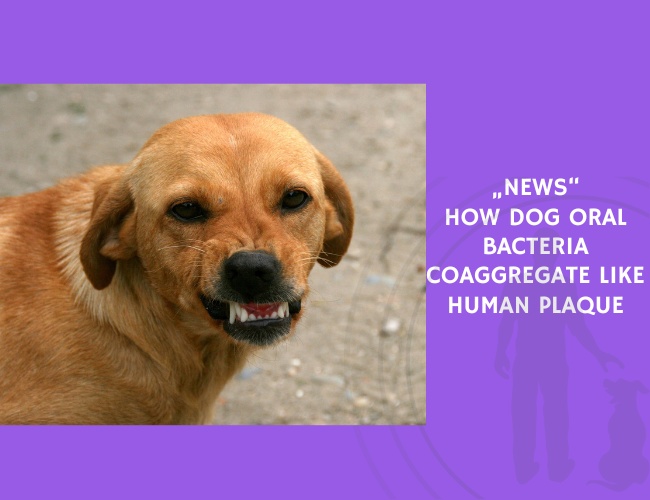
In a study published in Applied and Environmental Microbiology, researchers D. Elliott, Michael T. Wilson, Catherine M. F. Buckley, and D. Spratt investigated how bacteria within canine dental plaque adhere to one another through coaggregation—a key process shaping oral microbial communities.
The team conducted a visual coaggregation assay under conditions designed to mimic the in vivo canine oral environment. They analyzed the entire cultivable plaque microbiota from a single dog, testing 120 bacterial pairings and identifying eight unique coaggregation interactions, representing 6.7% of all tested combinations.
To better understand the mechanisms underlying adhesion, the researchers used transmission electron microscopy to visualize individual bacteria and coaggregated structures. These images revealed surface features that likely facilitate interbacterial binding and community organization within plaque.
One of the key findings was that the prevalence of coaggregating bacterial pairs in dogs closely mirrors what has been reported in human dental plaque studies. Moreover, genera found in both species displayed similar coaggregation behaviors, suggesting shared evolutionary or functional mechanisms in oral biofilm formation.
However, the authors also observed notable differences: autoaggregation—bacteria binding to others of the same species—was more common among canine oral isolates. This tendency may influence plaque structure, stability, and microbial succession uniquely within the canine mouth.
These findings provide important insight into the ecology of canine dental plaque, highlighting both similarities and species-specific differences that shape oral health. Understanding these microbial interactions can inform preventive strategies and improve veterinary dental care.
Source: Elliott, D., Wilson, M. T., Buckley, C. M. F., & Spratt, D. (2006). Aggregative Behavior of Bacteria Isolated from Canine Dental Plaque. Applied and Environmental Microbiology. Published August 1, 2006.