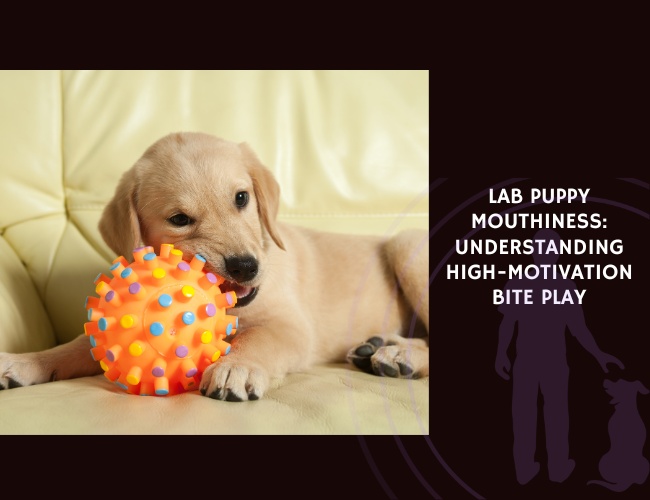
If you’ve welcomed a Labrador puppy into your home, you’ve likely discovered that those adorable bundles of energy come equipped with surprisingly sharp teeth and an apparently insatiable desire to use them. Your hands bear the scratches, your sleeves show the wear, and you might be wondering whether you’ve somehow ended up with a particularly mouthy specimen or if this behavior is simply part of the Labrador experience.
Let us guide you through the fascinating neuroscience, genetics, and developmental psychology behind puppy mouthiness. What you’re experiencing isn’t a behavioral problem requiring correction—it’s a completely natural developmental phase rooted in your Lab’s breeding history, brain maturation, and sensory exploration needs. Understanding why your puppy mouths everything in sight will transform how you respond, helping you guide this behavior toward appropriate outlets while building the foundation for a trusting relationship 🧡
The Retriever Legacy: Why Labradors Are Especially Mouthy
A Heritage Built on Oral Precision
Your Labrador’s ancestors worked alongside fishermen in Newfoundland’s icy waters, retrieving fish and hauling nets through challenging conditions. These weren’t just any working dogs—they were the St. John’s Dog, a breed specifically selected for their exceptional mouth-based skills. This selective breeding created dogs with:
- Enhanced oral sensitivity and control for carrying delicate game without damage
- Strong motivation to hold and carry objects as their primary interaction mode
- Persistent retrieval drive that manifests as sustained oral engagement
- Water-adapted soft mouths requiring constant practice and refinement
When English noblemen discovered these remarkable dogs in the early 1800s, they didn’t simply adopt them—they intensified these traits through deliberate selection. They wanted dogs who would retrieve waterfowl with soft mouths, who could work tirelessly, and who possessed the trainability to respond to subtle guidance. Your puppy isn’t just being difficult when they constantly grab things with their mouth. They’re expressing centuries of genetic programming that says “the mouth is my most important tool.”
The SEEKING System: Understanding Exploration Drive
Modern neuroscience helps us understand what’s happening in your puppy’s brain when they mouth everything. ResearcherJaak Panksepp identified the SEEKING system as one of the brain’s core emotional circuits—the neural network responsible for exploration, investigation, and anticipatory motivation. When your puppy mouths your hand, they’re not expressing aggression or trying to dominate you. They’re engaging their SEEKING system, using their mouth as a sensory organ to understand texture, temperature, and properties of objects in their environment.
For Labradors specifically, oral exploration serves multiple purposes:
- Primary investigative tool similar to how you might use your hands to understand something new
- Play initiation behavior learned from littermate interactions during crucial early weeks
- Genetic fulfillment through carrying and holding objects for object-oriented work
- Sensory satisfaction that goes beyond simple investigation to include pleasure and comfort
Why Labs Depend on Their Mouths More Than Other Breeds
Not all breeds show the same level of oral orientation. Herding breeds might use their eyes and body positioning more, while hounds rely heavily on their noses. Labradors demonstrate heightened oral reliance compared to many breeds because of several converging factors:
- Genetic selection for soft-mouth retrieval requiring constant mouth use and refinement
- High object motivation driving persistent interaction with items—including your hands when toys aren’t available
- Strong food motivation extending to general oral satisfaction-seeking
- Working breed energy levels requiring substantial sensory and motor outlets
This breed-specific tendency means your Labrador puppy naturally relies more heavily on mouth-based interaction than breeds selected for different working roles.
The Developing Brain: Why Puppies Can’t “Just Stop”
Prefrontal Immaturity and the Impulse Control Challenge
One of the most important concepts for Lab puppy owners to understand is this: your puppy’s brain physically cannot consistently inhibit impulses, regardless of how much you train or how clear your expectations are. The prefrontal cortex—the brain region responsible for executive function, decision-making, and impulse inhibition—is fundamentally immature in young puppies. Neural pathways for self-regulation require months to mature and myelinate, the process by which nerve fibers develop the insulation needed for efficient signal transmission.
Think of it this way: asking a 10-week-old puppy to consistently control their mouth is similar to expecting a toddler to sit still through a three-hour lecture. The neural architecture required for that level of self-control simply hasn’t developed yet. Emotional control systems cannot override strong motivational drives when the brain structures responsible for regulation are still under construction. This neurological reality should fundamentally change how you respond to mouthing—it’s not a failure of training or a stubborn puppy, it’s developmental fact.
The Natural Timeline: When Inhibition Actually Develops
Research gives us a clear roadmap of bite inhibition development, and understanding this timeline helps you maintain realistic expectations while providing appropriate guidance.
During early development from 8 to 12 weeks, puppies learn initial bite pressure limits from littermate feedback. When a puppy bites too hard during play, siblings yelp and withdraw, providing immediate and clear consequences. Mother dogs also provide correction for excessive roughness, teaching puppies that there are boundaries to acceptable behavior. This is why responsible breeders keep puppies with their littermates until at least 8 weeks—those early lessons create the foundation for later inhibition. At this stage, puppies are forming a basic understanding of “too hard,” but consistency remains impossible.
The critical period from 3 to 5 months represents when most puppies naturally grow out of intense mouthing. This developmental progression doesn’t happen because of training success alone—neural maturation enables better impulse control as the brain develops. Teething discomfort peaks and then resolves during this window, removing one major driver of oral seeking behavior. This is why patience during these months is so crucial. You’re not waiting passively—you’re providing structure and guidance while the brain does its developmental work.
Adolescence from 6 to 12 months can surprise owners who thought they were past the mouthing phase. Some Labradors retain mouthy habits into adolescence despite earlier improvement, and increased strength and confidence can magnify unresolved inhibition gaps. Arousal-based mouthiness may re-emerge during excitement, particularly in situations the puppy hasn’t encountered before. The NeuroBond approach emphasizes that continued guidance remains necessary through this phase, maintaining consistency while trusting the developmental process 🧠
State-Dependent Control Loss: Why Good Puppies Sometimes Can’t Be Good
Even puppies who are showing progress with bite inhibition lose control under specific conditions. Understanding these state-dependent factors helps you prevent many mouthing incidents before they occur.
Fatigue dramatically affects impulse control. Tired puppies show reduced ability to inhibit behaviors because self-regulation requires cognitive resources that deplete with exhaustion. This is why many owners notice evening “witching hours” where their previously manageable puppy becomes a whirlwind of sharp teeth and wild energy. The solution isn’t more correction—it’s ensuring adequate rest throughout the day so your puppy doesn’t reach that depleted state.
Hunger and physical discomfort override learned inhibition. When your puppy’s basic needs aren’t met, the brain prioritizes survival and comfort over social niceties. Teething pain increases oral seeking behavior as puppies search for relief through pressure and chewing. Discomfort reduces tolerance for frustration, making puppies more reactive and less able to regulate responses.
Overstimulation presents one of the most common scenarios for control loss. High arousal temporarily erases learned bite control as excitement floods the brain’s inhibitory systems. You might notice that your puppy can be gentle during calm interactions but becomes a tornado of teeth during exciting play. This isn’t defiance—it’s neurological reality. Learning to recognize the predictable patterns that precede control loss allows you to interrupt the escalation before it reaches the point of no return.
Arousal Overflow: Understanding When Play Crosses the Line
The Four Stages of Escalation
Playful mouthing doesn’t suddenly transform into frenzied biting. Instead, it follows an identifiable cascade that you can learn to recognize and interrupt. Understanding these stages gives you the power to prevent most intense mouthing before it begins.
Stage 1 represents controlled exploration. Your puppy mouths gently with soft jaw pressure, remaining responsive to redirection. Their body language stays loose and wiggly, and they disengage easily when you offer alternatives like toys. This is healthy, normal puppy behavior that doesn’t require intervention beyond appropriate redirection.
Stage 2 shows increasing excitement. You’ll notice bite pressure intensifying slightly, though not yet painful. The puppy begins targeting moving objects preferentially—your hands become more interesting when they’re gesturing, your clothing more tempting when you’re walking. Vocalizations increase in pitch and frequency, and tail wagging becomes more frantic. This is your warning stage—the moment to slow things down and help your puppy regulate.
Stage 3 marks arousal overflow. Bites become hard without pressure modulation, and your puppy starts grabbing and pulling clothing or skin. They lunge at movement, showing reduced responsiveness to verbal cues. Discrimination between appropriate and inappropriate targets breaks down—everything becomes fair game. Once a puppy reaches this stage, verbal corrections usually fail because the brain regions responsible for processing and responding to language are offline.
Stage 4 represents complete dysregulation. Mouthing becomes frenzied and uncontrolled, with the puppy unable to disengage voluntarily. Despite having no aggressive intent, the puppy can cause accidental injury because they’ve lost all modulation. This stage requires external intervention to help the puppy downshift arousal—you cannot talk or train your way through this moment.
Reading the Warning Signs Before Control Slips
The key to managing mouthiness effectively lies in recognizing impending overflow before your puppy reaches Stages 3 or 4. Physical indicators provide your first clues:
Physical Indicators:
- Rapid, jerky movements replacing smooth motion
- Pupil dilation indicating sympathetic nervous system activation
- Panting or increased respiratory rate unrelated to temperature
- Muscle tension in jaw and shoulders
- Tail position shifting from relaxed to stiff or frantic
Behavioral Markers:
- Decreased response latency to stimuli—reacting instantly without processing
- Reduced ability to settle or hold position
- Increased vocalization through barking or whining
- Preferentially targeting faster-moving objects
- Difficulty disengaging from interaction
Contextual Triggers:
- Human excitement and high-pitched voices
- Fast hand movements and running
- Multiple people or dogs creating simultaneous stimulation
- Transition times (before meals, after confinement, during visitor arrivals)
- Novel or highly stimulating environments
Your Role in the Arousal Equation
One of the most powerful insights about puppy mouthiness is this: human behavior dramatically influences whether a puppy maintains or loses control. High-pitched voices don’t calm puppies—they increase excitement and reduce inhibition. Rapid movements trigger chase and grab responses rooted in predatory play sequences. Animated gestures become irresistible targets, and the emotional intensity you project mirrors back to your puppy, amplifying their arousal.
Research consistently demonstrates that calm, low-motion handlers achieve better bite control than animated, high-energy interactions. This is where the Invisible Leash concept becomes tangible—you’re guiding your puppy’s nervous system state through your own energy and presence, not through physical force or verbal intensity. When you slow your movements, lower your voice, and maintain emotional neutrality, you create an environment where your puppy’s developing inhibition system can actually function.
The Reinforcement Trap: How Good Intentions Strengthen Mouthing
Labrador Reward Sensitivity: A Double-Edged Sword
Labradors are remarkably sensitive to reinforcement, which makes them highly trainable but also vulnerable to inadvertently learning exactly what you don’t want them to learn:
- High social motivation makes your attention profoundly rewarding—even negative attention
- Movement sensitivity means any handler reaction reinforces behavior because movement equals engagement
- Strong food drive extends to a general reward-seeking orientation
- Retriever persistence maintains behavior despite inconsistent outcomes
This reward sensitivity creates a perfect storm for reinforcement traps.
Unintentional Reinforcement Patterns
Most owners unknowingly strengthen mouthing through reactions that seem logical but actually reward the behavior.
Dramatic Reactions That Reinforce:
- Squealing or yelping delivers exciting auditory feedback
- Pulling hands away creates chase-worthy movement
- Pushing the puppy away provides physical interaction—which is a reward
- Verbal scolding offers attention and engagement
From your puppy’s perspective, mouthing your hand triggered an exciting chain of events. Success!
Continued Interaction That Rewards:
- Attempting to play or redirect while puppy is actively mouthing
- Offering treats to stop biting—rewarding the biting behavior itself
- Engaging in “negotiations” that maintain attention
- Physical wrestling that mimics littermate play
Inconsistent Responses That Confuse:
- Sometimes allowing mouthing, sometimes correcting it
- Different family members applying different rules
- Permitting mouthing during some activities but not others
- Tolerating gentle mouthing while correcting hard bites (teaching pressure discrimination rather than inhibition)
The Variable Reinforcement Effect
The most insidious reinforcement trap occurs when mouthing sometimes leads to desired outcomes. Behavioral science shows that intermittent success makes behaviors highly resistant to extinction—this is the same mechanism that makes gambling addictive. When biting sometimes leads to play, it creates unpredictable reward schedules that powerfully maintain behavior. Occasional dramatic reactions provide jackpot reinforcement events that overshadow dozens of neutral responses. Variable handler responses maintain behavior through uncertainty—the puppy never knows which attempt might pay off, so they keep trying.
Breaking this trap requires consistent, calm responses that remove all reinforcement from human-directed mouthing while simultaneously providing abundant reinforcement for appropriate alternatives.
Teething: Understanding the Physical Drive Behind Increased Mouthing
The Teething Timeline and Its Impact
Puppies experience significant oral discomfort during teething, and understanding this timeline helps you provide appropriate support during peak difficulty periods. Primary teeth emerge from birth through about 3 weeks with minimal discomfort. The challenging phase begins from 3 to 6 months when those 28 deciduous teeth loosen and fall out while 42 permanent teeth push through the gums. Peak discomfort during this window drives increased oral seeking as puppies desperately need relief through appropriate chewing and pressure.
Post-teething, from 6 months onward, permanent dentition is complete and oral discomfort resolves. This is when you should see a natural decrease in mouthing—if the behavior has been managed properly and not reinforced as a habit. If mouthiness persists past the teething phase, it has likely transitioned from a physical need to a learned behavior pattern.
Why Chewing Relieves Discomfort
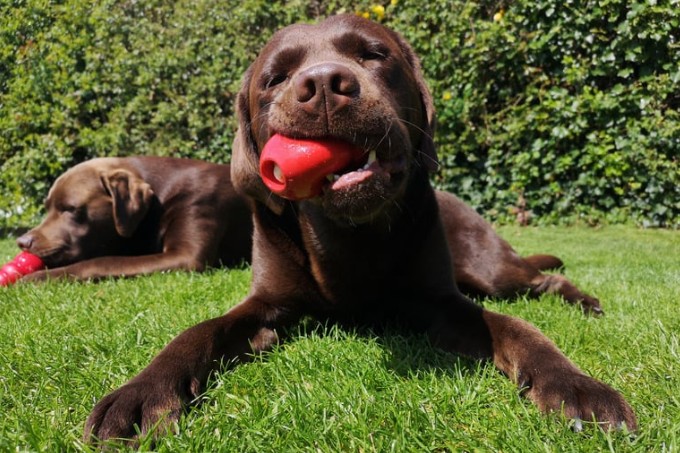
The neurological basis for teething relief through chewing involves counter-stimulation and pressure regulation. Applying pressure to gums temporarily overrides discomfort signals through gate control theory—pressure sensations compete with pain signals for neural pathway access. Chewing releases endorphins through repetitive motor activity, providing natural pain relief. Different textures and temperatures (especially cold items) provide varied sensory input that helps manage discomfort.
This is why your puppy might seem obsessed with chewing during these months—they’re not being destructive, they’re self-medicating. Providing appropriate outlets for this need prevents human-directed mouthing that can become habitual.
Appropriate Teething Relief Options
Your puppy needs variety in texture, temperature, and resistance to effectively manage teething discomfort:
Frozen Items:
- Rope toys soaked in water and frozen
- Wet washcloths twisted and frozen
- Rubber toys filled with frozen treats
- Frozen carrots or other safe vegetables
Varied Texture Options:
- Rubber toys in different firmness levels
- Natural chews (bully sticks, yak chews)
- Rope toys that massage gums
- Textured rubber with bumps and ridges
Key Considerations:
- Size appropriate for your puppy’s mouth
- Supervision required for edible chews
- Rotation to maintain novelty and interest
- Strategic availability during peak discomfort times
Mouthy. Curious. Developing.
Exploration Through Teeth
Labrador puppies use their mouths as primary sensory tools. What feels like biting is investigation, not aggression.
Genetics Drive Mouthing
Retriever heritage selected for constant oral engagement and soft-mouth control. Puppies practice these skills instinctively long before self-regulation matures.


Guidance Shapes Control
Mouthiness fades as the nervous system develops and outlets are provided. Calm redirection builds bite inhibition without suppressing natural behavior.
Social Learning: The Power of Dog-Dog Interaction
Why Littermate Feedback Is Irreplaceable
One of the most valuable insights from canine development research is that dog-dog interaction teaches bite inhibition more effectively than human intervention ever can. Puppies learn through a system of immediate, clear consequences delivered in a language they understand instinctively.
Why Littermate Feedback Works:
- Immediate consequence without delay or confusion when bites are too hard
- Species-specific communication puppies understand instinctively
- Complete play cessation removing the reward when bites exceed acceptable limits
- Multiple daily repetitions providing constant feedback that refines understanding
- Natural calibration teaching precise pressure modulation through trial and error
Mother dogs also provide important teaching, though her role differs from littermate feedback. She offers graduated corrections that match intensity to behavior, models calm but firm boundary-setting, teaches that certain behaviors end positive interaction, demonstrates tolerance for appropriate mouthing while correcting excessive behavior, and provides secure base while establishing clear rules.
🦷 Understanding Lab Puppy Mouthiness 🐕
A Complete Developmental Journey from Needle Teeth to Gentle Companion
Phase 1: The Retriever Heritage
8-12 Weeks: Understanding the Genetic Blueprint
🧠 Genetic Programming
Labradors descend from St. John’s Dogs, bred specifically for soft-mouth retrieval. Their oral orientation isn’t a behavior problem—it’s centuries of genetic selection for mouth-based work. Your puppy’s constant mouthing reflects their heritage as retrievers who carried delicate game without damage.
👀 What to Expect
• Constant exploration with mouth as primary sensory tool
• Higher oral engagement than many other breeds
• Strong motivation to hold and carry objects
• Play initiation through gentle mouthing
✅ Your Foundation Strategy
Honor the retrieving instinct by providing appropriate objects for carrying. Introduce “take it” and “drop it” cues early. Never punish mouthing—redirect to appropriate outlets. Build positive associations with gentle mouth use through structured object engagement.
Phase 2: Neurological Immaturity
8-16 Weeks: The Impulse Control Gap
🧠 Prefrontal Cortex Development
The brain’s executive control center is fundamentally immature. Neural pathways for impulse inhibition require months to myelinate and mature. Your puppy physically cannot consistently control their mouth, regardless of training intensity. This is developmental fact, not behavioral failure.
👀 State-Dependent Control Loss
• Fatigue: Evening “witching hours” show worst mouthing
• Hunger: Physical needs override learned inhibition
• Overstimulation: High arousal temporarily erases control
• Predictable patterns: Watch for early warning signs
✅ Management Strategy
Structure the environment to support immature impulse control. Ensure adequate rest—puppies need 16-20 hours of sleep daily. Manage hunger with regular feeding schedules. Interrupt arousal escalation before control loss occurs. Trust the developmental timeline while providing consistent guidance.
Phase 3: The Arousal Cascade
12-20 Weeks: Understanding Excitement Overflow
🧠 Four Stages of Escalation
Stage 1: Controlled exploration with gentle mouthing
Stage 2: Increasing excitement, targeting movement
Stage 3: Arousal overflow—hard bites, reduced responsiveness
Stage 4: Complete dysregulation requiring external intervention
🚨 Warning Signs to Watch
• Rapid, jerky movements replacing smooth motion
• Pupil dilation and increased panting
• Decreased response latency to stimuli
• Preferentially targeting faster-moving objects
• Difficulty disengaging from interaction
✅ Interrupt Before Stage 3
Learn to recognize Stage 2 signals and interrupt escalation. Use calm, slow movements—your energy regulates theirs. Provide structured breaks during play. Practice arousal up-regulation and down-regulation cycles. The Invisible Leash means guiding through presence, not force.
⚠️ Avoid These Accelerants
High-pitched voices increase excitement. Fast hand movements trigger chase responses. Animated gestures become irresistible targets. Your emotional intensity mirrors back, amplifying arousal. Stay calm to help your puppy stay calm.
Phase 4: The Reinforcement Trap
12-24 Weeks: Understanding Reward Sensitivity
🧠 Lab Reward Sensitivity
Labradors are exceptionally responsive to reinforcement. High social motivation makes attention powerfully rewarding—even negative attention. Movement sensitivity means any reaction reinforces behavior. This creates vulnerability to inadvertently strengthening the exact behavior you want to eliminate.
❌ Reactions That Reinforce Mouthing
• Squealing or yelping (exciting auditory feedback)
• Pulling hands away (creates chase-worthy movement)
• Pushing puppy away (delivers physical interaction)
• Verbal scolding (provides attention and engagement)
• Offering treats to stop biting (rewards the bite itself)
✅ The Neutral Response Protocol
Immediate stillness—stop all movement instantly. Become completely uninteresting. Withdraw social engagement. Wait for release or calm. Then calmly redirect to appropriate toy. Brief disengagement (5-10 seconds) teaches that mouthing ends interaction while calm behavior restores it.
Phase 5: Teething Discomfort
3-6 Months: Managing Peak Oral Discomfort
🧠 The Teething Timeline
28 deciduous teeth fall out while 42 permanent teeth push through inflamed gums. Peak discomfort drives increased oral seeking as puppies desperately need relief through pressure and chewing. This is self-medication, not destructive behavior. Appropriate outlets prevent human-directed mouthing from becoming habitual.
👀 Peak Discomfort Behaviors
• Increased mouthing intensity and frequency
• Seeking hard surfaces and objects for counter-pressure
• Evening “witching hours” with frenzied chewing
• Reduced tolerance for frustration
• Natural decrease after 6 months if managed properly
✅ Relief Strategy
Frozen items: Rope toys, wet washcloths, rubber toys with frozen treats
Varied textures: Different firmness levels, natural chews, textured surfaces
Strategic availability: Keep relief items accessible during peak times
Rotation: Maintain novelty to sustain interest
Phase 6: Dog-Dog Interaction
8-24 Weeks: The Power of Canine Communication
🧠 Why Littermate Feedback Is Irreplaceable
Immediate consequence without delay when bites are too hard. Species-specific communication puppies understand instinctively. Complete play cessation removes the reward. Multiple daily repetitions provide constant feedback. Natural calibration teaches precise pressure modulation through trial and error.
👀 Benefits Beyond Bite Inhibition
• Reading subtle canine body language
• Practicing arousal regulation in exciting contexts
• Building confidence through successful interaction
• Learning recovery from social mistakes
• Generalizing “rules of engagement” across partners
✅ Structured Playgroup Strategy
Age and size-matched puppies at similar developmental stages. 30-45 minute sessions to prevent over-fatigue. Well-supervised by someone who reads play signals. Calm break periods for decompression. Neutral spaces that don’t trigger territorial behavior. These experiences accelerate inhibition learning dramatically.
Phase 7: Play with Brakes
16-32 Weeks: Building Self-Regulation Through Structure
🧠 Arousal Cycling Protocol
Structured tug and retrieve teach arousal up-regulation and down-regulation. Engage in exciting activity for 15-30 seconds, then cue a behavior break (sit/down) to practice regulation. This rhythmic cycling builds neural pathways for self-interruption that generalize to all contexts. Your puppy learns excitement doesn’t have to escalate—they can downshift when needed.
✅ Essential Rules for Structured Play
You always initiate—never allow puppy to grab and start
Release on cue—teach “drop it” from first session
No skin contact—if teeth touch hands, play stops
Moderate arousal—calm movements, steady voice
End on success—while puppy still wants more
🎯 Carry Permission Protocol
Present object with “take it” cue → Puppy takes gently → Praise calm holding → Carry for duration → Cue “drop it” → Immediate reward for gentle release. This transforms grabbing into cooperation while satisfying retrieving instinct appropriately. Over time, toy-seeking becomes preferred over hand-mouthing.
Phase 8: The Calm Leadership Model
Ongoing: Your Nervous System Regulates Theirs
🧠 Emotional Neutrality as Power
Your emotional state transmits directly to your puppy through voice, body language, and energy. Frustration, anger, or anxiety increase puppy arousal and anxiety, creating more mouthing. Emotional neutrality means observing without judgment, responding with predetermined actions rather than reactive emotions, maintaining calm body language and steady breathing. This is the NeuroBond approach—your regulated nervous system provides scaffolding for your puppy’s developing brain.
🎯 Predictability Creates Security
Respond the same way to the same behavior every time. All family members enforce identical rules. Follow through on consequences without negotiation. When responses are predictable, puppies can learn clear patterns. When consequences vary, anxiety increases and mouthing intensifies. Trust builds through reliability.
✅ Your Regulation Practice
Slow, deliberate movements—your calm guides theirs. Low, steady voice tone—never high-pitched during mouthing. Maintain your own regulated state regardless of puppy behavior. Model self-regulation consistently. Create “eye of the storm” presence. This is the Invisible Leash in action—guiding through energy and presence, not force.
📊 Understanding Different Mouthing Contexts
Attention-Seeking Mouthing
Trigger: Learned that biting gets focus
Pattern: Often reinforced through dramatic reactions
Solution: Complete withdrawal of attention when mouthing occurs
Arousal Overflow Mouthing
Trigger: Excitement degrades impulse control
Pattern: During greetings, play, after confinement
Solution: Interrupt before Stage 3, practice arousal cycling
Play Initiation Mouthing
Trigger: Canine play invitation strategy
Pattern: Learned from littermate interactions
Solution: Redirect to toys, teach human play rules differ
Teething Relief Mouthing
Trigger: Physical discomfort, inflamed gums
Pattern: Peaks 3-6 months, seeking counter-pressure
Solution: Provide abundant appropriate chew options
Frustration Mouthing
Trigger: Wants something they can’t have
Pattern: During confinement or restriction
Solution: Address underlying frustration, teach impulse control
State-Dependent Mouthing
Trigger: Fatigue, hunger, overstimulation
Pattern: Evening “witching hours,” transition times
Solution: Proactive management of physical and emotional needs
⚡ Quick Reference: The Developmental Timeline
8-12 weeks: Basic bite pressure learning from littermates • Foundation building
3-5 months: Peak teething discomfort • Natural mouthing decrease begins • Critical socialization period
5-6 months: Teething resolves • Mouthing should significantly decrease if managed properly
6-12 months: Adolescent maintenance • Some Labs retain habits • Continued guidance necessary
Key Formula: Consistent management + Developmental maturation + Appropriate outlets = Gentle adult mouth
🧡 The Zoeta Dogsoul Approach to Mouthiness
Understanding puppy mouthiness through the NeuroBond lens transforms frustration into compassion. Your Lab puppy isn’t being difficult—they’re navigating genetic programming, neurological immaturity, and developmental challenges while learning to live in a human world. The Invisible Leash reminds us that true guidance flows through calm presence and emotional regulation, not force or punishment. Each moment of patient redirection, each structured play session, each calm response to sharp teeth builds Soul Recall—those deep trust patterns that shape your relationship for years to come. Your consistency during these challenging months creates a foundation where your puppy learns that cooperation brings joy, that boundaries bring security, and that your calm leadership provides the scaffolding their developing brain needs to mature into a gentle, confident companion. That balance between honoring genetic drives and building appropriate boundaries, between patient guidance and consistent structure, between neuroscience and emotional connection—that’s the essence of Zoeta Dogsoul.
© Zoeta Dogsoul – Where neuroscience meets soul in dog training
Puppy Socials and Playgroups: Structured Learning Opportunities
Since most puppies leave their littermates by 8-10 weeks, providing ongoing opportunities for appropriate dog-dog interaction becomes crucial for continued bite inhibition development.
Appropriate Playgroup Characteristics:
- Age-matched puppies at similar developmental stages
- Size-matched to prevent injury while allowing robust play
- Temperament-balanced mixing confident and reserved puppies appropriately
- Well-supervised by someone who understands play signals
- 30-45 minute sessions to prevent over-fatigue
- Calm break periods for decompression and regulation
- Neutral spaces that don’t trigger territorial behavior
Benefits Beyond Bite Inhibition:
- Reading subtle canine body language
- Practicing arousal regulation in exciting contexts
- Building confidence through successful interaction
- Learning recovery from social mistakes
- Generalizing “rules of engagement” across multiple play partners
What Humans Can and Cannot Replace
It’s important to be realistic about the limitations of human-only interaction for teaching bite inhibition. Human reactions can never fully replicate the timing, intensity, and clarity of canine communication. Our “yelps” sound different, our withdrawal is less complete, and puppies don’t instinctively understand our signals the way they understand canine ones.
What humans can provide is structure, management, consistency in human-interaction rules, redirection to appropriate outlets, and environmental arrangement that supports success. What humans cannot replace is the immediate, repeated, species-specific feedback that comes from frequent play with appropriate canine companions. The most successful bite inhibition training combines both elements—structured human guidance alongside regular opportunities for dog-dog social learning 🧡
Human-Directed Mouthing: Special Challenges and Solutions
Why Puppies Target Humans Differently Than Dogs
When your Labrador puppy mouths you, different factors are at play compared to when they mouth their canine playmates:
Human-Specific Challenges:
- Movement patterns with hand gestures and reaching that trigger chase responses
- Softer skin more vulnerable than a dog’s thick coat and resilient hide
- Size differential makes us both attractive targets and potentially threatening
- Emotional responses provide unpredictable feedback that often reinforces behavior
- Lack of natural consequences since we don’t fight back with teeth
Understanding these differences helps you approach human-directed mouthing as a distinct training challenge.
Categories of Human-Directed Mouthing
Not all mouthing is the same, and effective intervention requires identifying what’s driving the behavior in each moment:
Attention-Seeking Mouthing:
- Puppy has learned that biting gets your focus
- Often reinforced through dramatic reactions
- Strategy that has successfully gained engagement in the past
Arousal Overflow Mouthing:
- Occurs during excitement when impulse control degrades
- Common during greetings, play, or after confinement
- Nervous system is overwhelmed and regulation has failed
Play Initiation Mouthing:
- How puppy learned to invite interaction with littermates
- Applying canine play invitation with humans
- Not realizing humans have different play rules
Frustration Mouthing:
- Emerges when puppy wants something they can’t have
- Occurs during confinement or restriction
- Requires addressing underlying frustration
Teething Relief Mouthing:
- Driven by physical discomfort
- Need for counter-pressure on inflamed gums
- Hands are conveniently accessible and provide needed resistance
Each category requires slightly different management, though all benefit from calm, consistent responses.
Structured Play: Teaching Self-Regulation Through “Play with Brakes”
Why Structured Tug and Retrieve Build Control
One of the most powerful tools for managing mouthiness is structured object-focused play that teaches arousal regulation while satisfying your Lab’s genetic drives. Through this approach, you honor your dog’s retrieving heritage while building the foundation for excellent impulse control.
Structured tug teaches your puppy to engage and disengage on cue, building the neural pathways for self-interruption that generalize to other contexts. The clear rules—you decide when play starts and stops—establish your role as the regulator of arousal, creating what we call the Invisible Leash, where your calm presence guides the interaction without force. The physical engagement satisfies your puppy’s need for oral satisfaction in an appropriate context, and building duration gradually increases your puppy’s capacity to maintain control during exciting activities.
Structured retrieve naturally incorporates impulse control through the sequence itself. Waiting for the throw teaches patience and delay of gratification. Running after the thrown object provides healthy physical outlet while focusing on appropriate targets. Returning to you builds cooperation and orientation toward the handler. Releasing the object to hand develops reliable “drop it” skills that prevent possessive behavior. Repeating the sequence creates predictable patterns that support regulation.
Rules for Play with Brakes
For tug play to build control rather than excite mouthing, specific rules must be consistently applied:
Essential Rules:
- You always initiate tug—never allow puppy to grab and start pulling on their own
- Puppy must release on cue (“drop it” or “give”) taught from the very first session
- No skin contact ever gets rewarded—if teeth touch hands, play stops immediately
- Keep arousal moderate through calm movements and steady voice tone
- End on success while puppy still wants more, building desire for next session
Session Structure:
- Begin with puppy in relatively calm state
- Engage in 15-30 seconds of moderate intensity tugging
- Cue the release (“drop it”) and reward compliance
- Have puppy perform simple behavior (sit or down) to practice regulation
- Repeat sequence 3-5 times per session
- End with calm praise and perhaps food reward
For retrieve play, begin with very short distances to build success, use toys your puppy already shows interest in rather than forcing unfamiliar objects, reward return and release heavily in early sessions, and gradually increase distance and distraction level as skills develop. Always stop before your puppy loses interest or becomes over-aroused.
Arousal Up-Regulation and Down-Regulation Practice
One of the most valuable skills structured play teaches is the ability to deliberately modulate arousal levels. This capacity—moving fluidly between excited engagement and calm control—underlies excellent impulse control in all contexts.
During play sessions, practice arousal cycling. Engage in exciting tug or throw for 15-30 seconds, elevating your puppy’s arousal. Then cue a behavior break—ask for sit, down, or simply stop all movement and wait for settling. This teaches your puppy that excitement doesn’t have to continue escalating; they can downshift when needed. Reward the calm behavior before re-engaging in play, creating the pattern: excitement → calm → excitement → calm.
This rhythmic cycling builds neural pathways for self-regulation that extend far beyond play sessions. Puppies who learn this pattern show better control during greetings, remain calmer during vet visits, and recover more quickly from startling events. The capacity to regulate arousal becomes a foundational life skill that prevents numerous behavioral problems throughout your dog’s life 🐾
The Calm Leadership Model: Your Nervous System Regulates Theirs
Emotional Neutrality as Your Most Powerful Tool
Understanding the concept of emotional neutrality revolutionizes how you respond to mouthing. This doesn’t mean being cold or disconnected—it means maintaining steady, regulated emotional state regardless of your puppy’s behavior.
When your puppy mouths painfully, your automatic reaction might be frustration, annoyance, or even anger. These emotional states transmit directly to your puppy through your voice, body language, and energy. Rather than teaching your puppy what you want, emotional reactions typically increase arousal and anxiety, creating more mouthing, not less.
Emotional neutrality means observing the behavior without judgment, responding with consistent predetermined actions rather than reactive emotions, maintaining calm body language and steady breathing, using factual assessment rather than emotionally-laden interpretations, and staying grounded in your own regulated state.
This is the essence of the NeuroBond approach—recognizing that your nervous system state directly influences your puppy’s capacity for regulation. When you remain calm, you literally provide the neurobiological scaffolding that allows your puppy’s developing brain to practice regulation in a supported environment.
Predictability Creates Security and Trust
Puppies thrive in environments where responses are predictable and consistent. Erratic responses create anxiety and uncertainty, which often manifest as increased mouthing and other unwanted behaviors.
What Predictability Means:
- Responding the same way to the same behavior every time
- All family members enforcing the same rules with the same responses
- Following through on predetermined consequences without negotiation
- Maintaining consistency regardless of mood, time of day, or frustration level
Relationship Benefits:
- Building trust through reliability
- Reducing anxiety and uncertainty
- Creating secure base for exploration
- Supporting developing regulation capacity
- Strengthening bond through calm leadership
Structured Carry Permission: Honoring the Retriever Spirit
One of the most effective long-term solutions for Labrador mouthiness involves teaching cooperative mouth use rather than trying to eliminate oral engagement entirely. The carry permission protocol transforms grabbing into controlled cooperation while satisfying your Lab’s deep genetic need for object-oriented work.
The protocol begins with presenting an object with a clear “take it” cue, signaling that the puppy has permission to use their mouth. Your puppy gently takes the object, receiving immediate praise for calm holding. They then carry the object for a specified duration while you provide encouragement. When you cue “drop it” or “give,” your puppy releases gently to your hand and receives an immediate reward for cooperation.
Protocol Benefits:
- Transforms random grabbing into controlled cooperation
- Satisfies retrieving instinct appropriately
- Builds impulse control through structured sequence
- Creates positive association with gentle mouth use
- Provides clear job and purpose for oral engagement
Daily Life Integration:
- Carrying toys during walks to prevent lunging at distractions
- Bringing items on request as helpful household member
- Holding objects during grooming or handling
- Participating in household tasks with purpose
- Building pride and confidence through cooperative work
Evidence-Based Management: Practical Strategies That Work
Immediate Response Techniques
When mouthing occurs despite your prevention efforts, your immediate response determines whether the behavior strengthens or weakens:
Immediate Stillness:
- Stop all movement instantly
- Become completely uninteresting
- Withdraw social engagement
- Wait for puppy to release or calm
Neutral Redirection:
- Calmly offer appropriate toy without animation
- Reward engagement with toy enthusiastically
- Resume interaction with object, not hands
- Build habit of toy-seeking
Brief Disengagement:
- Turn away or step behind barrier
- Remove attention for 5-10 seconds
- Return when puppy is calm
- Immediately reward calm behavior
Environmental Management:
- Move to calmer space if over-stimulated
- Reduce stimulation level
- Provide appropriate chew toy
- Allow arousal to decrease naturally
Preventive Strategies
Prevention always proves more effective than correction:
Arousal Management:
- Monitor for early escalation signs
- Interrupt before control is lost
- Provide breaks during extended play
- Ensure adequate rest throughout day
- Manage hunger and physical needs proactively
Environmental Setup:
- Keep toys always accessible
- Have high-value chews ready for teething periods
- Create calm spaces for necessary downtime
- Reduce trigger exposure during vulnerable periods
- Maintain predictable daily routines
Proactive Engagement:
- Schedule structured play sessions teaching regulation
- Provide mental enrichment activities that tire the brain
- Practice training exercises building impulse control
- Ensure appropriate physical exercise for age and energy level
- Include calm bonding time that isn’t always active
Long-Term Development Plan
Building lasting inhibition requires thinking beyond the puppy phase:
Consistent Boundaries:
- No human-directed mouthing ever acceptable
- All family members enforce same rules
- Clear distinction between toys and hands maintained
- Immediate consistent feedback provided every time
- Patient, persistent approach trusting developmental timeline
Skill Development:
- Reliable object engagement through structured play
- Strong impulse control foundation through regular practice
- Arousal regulation capacity through up-regulation and down-regulation cycles
- Cooperative work ethic through carry permission and structured tasks
- Clear communication system where cues reliably predict outcomes
Relationship Building:
- Trust through predictability
- Security through clear leadership
- Joy through appropriate outlets
- Confidence through success
- Partnership through cooperation
When to Seek Professional Help
While most Labrador mouthiness resolves through consistent management and developmental maturation, certain situations warrant professional intervention:
Red Flags Requiring Expert Assessment:
- Persistent hard biting past 5-6 months that hasn’t responded to consistent management
- Aggressive intent indicators like hard stares, stiff body, growling, or snapping outside play contexts
- Escalating behavior despite intervention—worsening rather than improving with age
- Targeting vulnerable individuals like children or elderly family members with special intensity
- Fear-based mouthing occurring when puppy is cornered, restrained, or frightened
- Resource guarding with mouthing when approached during eating, toy play, or while on furniture
- Household inconsistency where family members cannot maintain aligned approach
Professional help doesn’t indicate failure—it demonstrates commitment to addressing challenges effectively.
Conclusions: Embracing the Journey with Patience and Understanding
Labrador puppy mouthiness represents a complex interweaving of genetic heritage, neurobiological development, and learned behavior. Your puppy isn’t being difficult—they’re expressing retrieving instincts refined over centuries, navigating the challenges of an immature nervous system, seeking relief from teething discomfort, and learning about their world through their primary sensory tool.
Key Insights:
- Genetic foundation reflects breed-specific oral orientation, not aggression or behavioral problems
- Natural development means most puppies outgrow intense mouthing between 3-5 months as neural systems mature
- Arousal dynamics show high excitement degrades bite control—calm structure teaches regulation more effectively than punishment
- Reward sensitivity creates vulnerability to inadvertent reinforcement requiring careful attention to responses
- Teething discomfort drives pressure-seeking behavior needing appropriate relief outlets
- Dog-dog interaction accelerates inhibition learning through clear, immediate feedback in canine language
- Human behavior significantly influences mouthing intensity—calm handlers achieve dramatically better results
- Structured play teaches self-regulation while preserving joy and motivation
- Immediate feedback proves most effective when neutral and consistent
- NeuroBond integration transforms mouthing into controlled engagement through calm leadership
As you navigate these challenging months, remember that what feels frustrating and endless is actually temporary. The scratches on your hands represent your puppy’s journey toward maturity, their exploration of their world, and their gradual development of the impulse control that will make them an excellent adult companion. Your consistent, calm guidance provides the scaffolding that supports this development, creating a trusting relationship that extends far beyond the puppy phase.
Every time you pause to regulate your own state before responding, every time you provide an appropriate chew rather than reacting with frustration, every time you recognize early signs of arousal overflow and help your puppy downshift, you’re building neural pathways that will serve your dog throughout their life. You’re teaching regulation, building trust, and honoring the remarkable heritage that makes Labradors such devoted, capable companions.
That balance between honoring genetic drives and building appropriate boundaries, between patient guidance and consistent structure, between joy and discipline—that’s the essence of Zoeta Dogsoul 🐾