
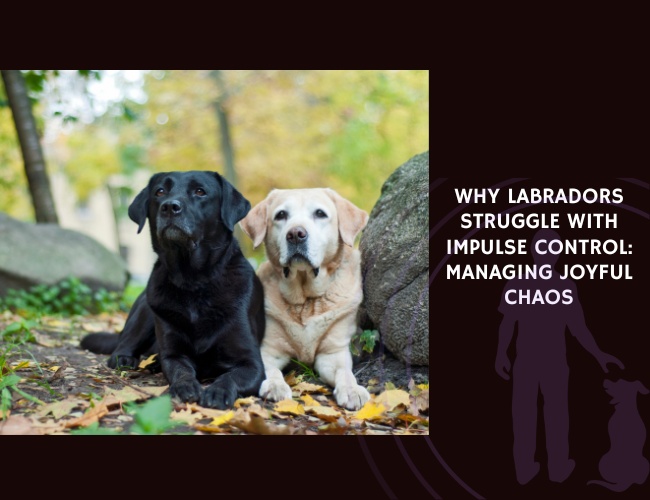
If you share your life with a Labrador, you already know the paradox. Your dog is brilliant during training sessions, yet somehow transforms into a tornado of enthusiasm the moment the doorbell rings. You’ve taught perfect sits, flawless recalls, and elegant heeling—but all of that dissolves when your Lab spots another dog across the park or when visitors arrive at your door.
This isn’t about intelligence. Labradors consistently rank among the most trainable breeds, excelling as service dogs, search-and-rescue partners, and therapy companions. Yet ask any Lab owner about impulse control, and you’ll hear stories of stolen sandwiches, enthusiastic tackle-greetings, and leash-pulling that could rival a sled team.
What’s happening here isn’t disobedience or lack of training. It’s something far more interesting—a fascinating intersection of genetics, neuroscience, and reward psychology that makes the Labrador both wonderfully trainable and challengingly impulsive. Understanding this paradox is the first step toward transforming joyful chaos into structured enthusiasm.
Retriever Origins: The “Joy-First” Heritage
Historical Selection for Approach Behavior
Let’s travel back to the rocky shores of Newfoundland, where Labradors were developed as cooperative hunting companions. These weren’t dogs selected for careful deliberation or cautious assessment. They were bred for one primary quality: the immediate, enthusiastic drive to retrieve fallen game.
Think about what this selection process rewarded. A hunter fires, a bird falls into icy water, and the ideal dog doesn’t pause to consider options or wait for further instruction. The ideal dog explodes forward with focused determination, swims through freezing conditions, secures the bird gently but firmly, and returns with tail-wagging pride. Hesitation meant lost prey. Careful consideration meant the game drifted away. Fast approach behavior was the trait that got passed down through generations.
This heritage created dogs with a temperament fundamentally biased toward immediate engagement rather than thoughtful waiting. Your Lab’s tendency to rush forward isn’t a training failure—it’s hundreds of years of selective breeding telling them that fast approach equals success.
Oral Fixation by Design
Walk into any Labrador owner’s home, and you’ll notice something immediately: strategically placed toys everywhere, careful management of personal items, and probably at least one chewed shoe story. This isn’t random destructiveness. Labradors possess a genetically embedded oral orientation that defines their experience of the world.
They were created to use their jaws like a powerful, sensitive hand. During practically every waking moment, they feel the need to put something in their mouths. This isn’t misbehavior—it’s breed-specific design. While other dogs might investigate new objects through sniffing or visual inspection, your Labrador’s first instinct is mouth-first engagement.
This oral drive serves multiple functions in the modern Labrador. It provides sensory information, offers self-soothing during arousal, creates displacement activity when confused or excited, and maintains connection to their retriever identity. Understanding this helps you recognize that removing every object from reach isn’t the solution—providing appropriate outlets for this innate drive is.
High Reward Responsiveness
The same selection process that created eager retrievers also produced dogs with exceptional sensitivity to both food and social reinforcement. Labradors needed to be highly motivated by rewards to brave freezing water and difficult terrain. This trait makes them wonderfully responsive to positive reinforcement training, but it also creates vulnerability.
When rewards are present or anticipated, your Lab’s arousal system activates powerfully. Their brain floods with dopamine, their focus narrows, and their impulse control systems become temporarily overwhelmed by motivation. This is why your perfectly trained Lab might ignore a known “leave it” cue when they spot dropped food, or why recall fails when they’re racing toward another dog.
The very trait that makes them so trainable also makes them more susceptible to arousal-driven impulsivity. It’s a double-edged sword that requires specific understanding to manage effectively.
Cooperative Engagement Bias
Unlike breeds selected for independent problem-solving, Labradors were bred to work in close cooperation with humans. Research confirms that cooperative dog breeds show higher levels of dependency toward humans in difficult problem-solving tasks and perform more gaze alternations between the reward and nearby humans.
Your Lab doesn’t naturally think “let me figure this out independently.” They think “let me engage with my human to make this happen.” This creates dogs who are deeply attuned to human emotional states, highly responsive to social cues, and strongly motivated by partnership. It also creates dogs who struggle when asked to exercise self-control without support, who become aroused by human excitement, and who view every human encounter as an opportunity for joyful cooperation.
This cooperative bias means your Lab isn’t just responding to the environment—they’re responding to you, constantly reading your emotional state and mirroring your arousal levels. When you become excited or anxious, they amplify. When you maintain calm neutrality, they have regulatory support. 🧡
Impulse Control vs. Arousal Regulation: The Critical Distinction
Not Disobedience—Arousal Overflow
Here’s the most important insight in understanding Labrador impulse control: most “impulsive” behaviors aren’t training failures. They’re arousal regulation failures. Your Lab knows the “sit” cue. They’ve performed it hundreds of times. But in that moment when they’re lunging toward another dog or jumping on a visitor, they’re not choosing to disobey—they’re experiencing a neurological state where executive function is temporarily compromised.
Think of it like trying to do complex math while riding a roller coaster. The knowledge is there, but the physiological state prevents access to it. When your Lab is in arousal overflow, their prefrontal cortex—the brain region responsible for impulse control and decision-making—is essentially offline, overwhelmed by subcortical arousal systems.
The Arousal-Performance Relationship
Research demonstrates that arousal affects impulse control following an inverted U-shaped curve, known as the Yerkes-Dodson law. Dogs perform optimally at moderate arousal levels but show impaired inhibitory control at both very low and very high arousal. This creates a narrow window of optimal performance.
Here’s what makes this challenging for Labradors: different dog populations have different optimal arousal zones. Studies comparing assistance dogs bred for calm temperaments with pet dogs showed something fascinating. Assistance dogs actually improved their performance when arousal was artificially increased from their low baseline. But pet dogs—who naturally operate at higher baseline arousal—were negatively affected when arousal was increased further.
Your Labrador likely operates at a naturally higher baseline arousal than many other breeds. This means their optimal performance window is narrower, and they’re more easily pushed into arousal overflow. The common advice to “tire them out” or “give them more exercise” often backfires because it increases arousal beyond their optimal zone rather than bringing them into it.
Physiological Markers of Arousal Overflow
Learning to read your Lab’s arousal state becomes essential. When you observe these signs, your dog isn’t being stubborn—they’re experiencing arousal that degrades executive function:
Early Warning Signs:
- Rapid tail wagging with stiff body
- Panting despite cool temperatures
- Inability to settle or hold still
- Scanning behavior or heightened vigilance
- Reduced response to known cues
Overflow State:
- Frantic movement patterns
- “Zoomies” or explosive energy release
- Inability to take treats or focus
- Mouthing or grabbing behavior increases
- Complete non-responsiveness to familiar cues
These aren’t signs of disobedience. They’re your dog telling you that their nervous system is overwhelmed and their cognitive control systems are temporarily unavailable. Punishment at this moment doesn’t teach impulse control—it adds stress to an already dysregulated system.
Self-Control Depletion
Research confirms that dogs, like humans, have limited self-control resources that can be depleted through use. In landmark studies, dogs who maintained a sit-stay while a toy moved around them—requiring active self-control—subsequently showed reduced impulse control when exposed to other challenging situations. They approached threats more closely than dogs who hadn’t depleted their self-control reserves.
This has profound practical implications. Your Labrador who has been “good all day” at a family picnic, maintaining calm behavior through hours of excitement, may finally steal food or jump on someone in the evening—not because they’re being defiant, but because their self-control reserves are exhausted.
Similarly, leashed walks require constant self-control. Your Lab sees something interesting and wants to investigate, but the leash prevents free exploration. This creates ongoing self-regulation demand. A dog returning from a leashed walk may actually have less impulse control than before the walk because they’ve spent the entire time depleting regulatory resources.
Multiple training sessions without adequate rest between them can worsen impulse control rather than improve it. Your Lab needs time to restore their self-control capacity, just as athletes need recovery time between intense training sessions. Through the NeuroBond approach, we recognize that building impulse control isn’t about drilling behaviors—it’s about understanding and supporting the dog’s regulatory capacity.
High Reward Sensitivity & Reinforcement Loops
The Slot-Machine Effect
Labradors’ high reward sensitivity makes them particularly vulnerable to intermittent reinforcement schedules—the most powerful and addiction-like form of behavioral strengthening. This is the same principle that makes slot machines so compelling: unpredictable rewards create stronger behavior patterns than predictable ones.
Here’s how this plays out in your daily life. Your Lab jumps on a visitor. Sometimes the visitor pets them (reward). Sometimes they push the dog away while laughing—still attention, still reward. Sometimes you scold—attention again. Sometimes everyone ignores the behavior. This creates a variable ratio schedule where the dog learns “keep trying—it works eventually!”
This type of reinforcement is incredibly resistant to extinction. Your Lab will persist longer and with more determination than if the behavior was consistently rewarded or consistently ignored. The unpredictability creates hope that drives continued effort.
The “Street Play” Trap
One of the most common reinforcement traps occurs during walks. Research identifies that permitting street play—allowing dogs to meet and play with other dogs during walks—teaches dogs to demand visits with every dog they see. This creates multiple problematic patterns:
Expectation-Driven Arousal: Every dog sighting triggers excitement and anticipation. Your Lab’s arousal spikes not from seeing the dog itself, but from the possibility of interaction.
Reinforcement of Pulling: Sometimes pulling successfully results in meeting the other dog. This intermittently reinforces the pulling behavior, making it stronger and more persistent.
Strength-Based Learning: Large dogs like Labradors learn that using their physical strength gets them what they want. This creates a pattern where the dog’s primary strategy becomes overwhelming force rather than calm cooperation.
The solution isn’t to never allow your Lab to meet other dogs—it’s to control when and how those meetings occur, ensuring they’re rewards for calm behavior rather than reinforcements for chaos.
Variable Reinforcement in Social Contexts
The greeting scenario is perhaps the most common reinforcement trap Lab owners face. Picture this familiar scene: Your Labrador jumps on a visitor.
Possible Outcomes:
- Visitor pets the dog enthusiastically (strong reinforcement)
- Visitor pushes dog away while laughing and talking to them (attention = reinforcement)
- You scold the dog (attention = reinforcement)
- Dog is completely ignored (extinction trial)
- Visitor eventually gives in and pets after continued jumping (reinforcement with delay)
Your Lab’s brain interprets this pattern as: “Jumping is a strategy that works sometimes. I should keep trying because I never know when it will pay off!” This is precisely the cognitive pattern that makes gambling addictive—the unpredictable reward schedule creates compulsive behavior.
Societal Pressure & Inconsistent Standards
Here’s a challenge unique to owning friendly breeds: societal pressure to have “the perfect dog” conflicts with the reality of normal Labrador behavior. People expect your Lab to be friendly and social—until they’re too friendly and social. You’re told to socialize your dog extensively, then judged when they want to greet everyone enthusiastically.
This creates internal conflict for owners. Is my dog being friendly or rude? Should I allow greetings or prevent them? The inconsistent enforcement of boundaries that results from this confusion creates the variable reinforcement that strengthens impulsive greeting behavior.
Additionally, you may find yourself punishing very normal behavior—friendliness, enthusiasm, social engagement—because it’s occurring at the wrong time or with too much intensity. Your Lab becomes confused about when their natural temperament is acceptable and when it’s problematic. The Invisible Leash reminds us that control comes from clarity and consistency, not from tension or confusion.
Mouthiness, Carrying & Self-Regulation
Oral Orientation as Breed Characteristic
Let’s address something that causes enormous frustration for many Lab owners: the constant mouthiness. Your dog grabs your hand during greetings, picks up objects off the floor, carries shoes around the house, and seems to need something in their mouth during every exciting moment.
This isn’t a training problem. It’s a breed-defining characteristic. Labrador Retriever dogs were bred to be excellent hunting dogs with the power, stamina, and motivation to chase down fallen game and retrieve it. This created dogs with an innate inner drive to retrieve and an oral orientation that defines how they interact with their world.
The modern disconnect occurs when families acquire a Labrador puppy without researching breed-specific behavior, then view normal retriever behavior as “destructive” or “problematic” and attempt to suppress it through punishment. This creates conflict between the dog’s hardwired drives and the owner’s expectations.
Object-Carrying as Arousal Regulation
When you watch your Lab during high-arousal moments—greeting visitors, preparing for walks, anticipating meals—you’ll often notice they grab an object. This isn’t random. It’s functional arousal regulation.
What Object-Carrying Provides:
Self-Soothing: Oral occupation provides sensory regulation, similar to how humans might chew gum or fidget with objects during stress or excitement.
Displacement Behavior: When arousal is high but the dog can’t act on their primary drive (like greeting the visitor), they redirect that energy into a familiar, comfortable pattern—carrying.
Offering Behavior: Your Lab may be attempting to engage in their “job” (retrieving) as a way to participate appropriately in the exciting moment.
Preventing Jumping: A mouth full of toy makes jumping physically more difficult and provides an incompatible behavior.
Rather than viewing mouthiness as a problem to eliminate, educated Lab owners understand that any object within their dog’s reach is considered fair game. They never scold the dog for such behavior. Instead, they dog-proof the environment, provide appropriate carrying objects, use management during high-arousal periods, and channel the behavior into structured “carry jobs.”
Structured Carrying as Impulse Control Training
Here’s where understanding becomes practical solution. Teaching your Labrador to carry specific objects during predictable arousal moments transforms a “problem behavior” into an impulse control building tool.
Practical Applications:
- Carry a specific toy during visitor greetings
- Hold an object while waiting at doors
- Retrieve and deliver items on cue
- Carry a toy during the first few minutes of walks
This approach honors the breed’s oral orientation while building impulse control. Your Lab can’t jump with a mouth full of toy. The familiar act of carrying provides arousal regulation through predictable, structured activity. The behavior becomes a ritual that creates calmness rather than chaos.
You’re not suppressing their retriever nature—you’re giving it appropriate expression that serves both your management needs and their psychological wellbeing. This is the essence of working with breed characteristics rather than against them. 🧠
Social Over-Confidence & Boundary Weakness
The “Everyone Loves My Lab” Problem
Labradors’ friendly temperament creates a unique training challenge that other breeds don’t face. Their social confidence is constantly reinforced by positive responses from strangers. From puppyhood onward, they learn that approaching humans enthusiastically results in attention, affection, and delight.
The Reinforcement Cycle:
- Puppy approaches stranger enthusiastically
- Stranger responds with delight and attention
- Behavior is strongly reinforced
- Pattern repeats hundreds of times
- Dog develops expectation of universal access
This creates what we might call social entitlement—your Lab assumes everyone wants to interact and becomes frustrated, confused, or aroused when access is denied. They’re not being stubborn. They’re responding to a lifetime of learning that enthusiastic approaches are universally welcomed.
This makes boundary training more challenging for friendly breeds than for reserved ones. A naturally aloof dog doesn’t expect access to every person, so “no greeting” isn’t frustrating. Your socially confident Lab has learned that people are sources of joy, and being prevented from accessing that source creates arousal and frustration.
Overly Overt Greetings: The Hidden Risks
Research identifies serious consequences of unmanaged greeting behavior that many Lab owners don’t anticipate.
Risk 1: Punishment-Based Associations
When dogs are punished repeatedly for very normal behavior—like friendly greetings—that punishment can become associated with the presence of other dogs or people. Your Lab begins to anticipate correction whenever they see potential greeting opportunities. This doesn’t eliminate the greeting drive; it adds anxiety to arousal, creating a more complex emotional state that’s even harder to regulate.
Risk 2: Defensive Aggression Development
High-energy dogs who approach other dogs with overly overt greetings—the full-speed, no-boundaries, in-your-face style—can trigger defensive or corrective responses from other dogs. Many dogs find this approach rude or threatening and may attack to “correct” the behavior. Your over-friendly greeter can then learn defensive behaviors, developing the very aggression that seemed impossible in a friendly Labrador.
Risk 3: Rapid Escalation
When overly friendly greetings evolve into aggressive behaviors, the rehabilitation process becomes significantly longer and more challenging. Prevention through early boundary training is vastly easier than addressing reactive or defensive aggression later.
Teaching Polite Access Without Reducing Friendliness
The goal isn’t to make your Labrador less friendly—that would be suppressing their fundamental nature. The goal is teaching that calmness earns access while chaos delays it. This creates a predictable system where your Lab can still express their warmth but through structured pathways.
Boundary Training Principles:
Predictable Access Rules: Sitting earns greeting privileges; jumping or lunging delays them. This creates a clear cause-and-effect relationship your Lab can understand.
Consistent Enforcement: Every person follows the same protocol. Variable boundaries create the intermittent reinforcement that strengthens impulsive behavior.
Calm Reinforcement: When your Lab does earn access, attention is delivered in a low-arousal manner. Enthusiastic rewards for calm behavior would be counterproductive.
Alternative Behaviors: Carrying a toy, targeting your hand, maintaining four-on-floor position, or sitting for petting all provide structured ways to express friendliness.
This approach doesn’t suppress your Lab’s warmth—it channels enthusiasm through pathways that prevent negative consequences while maintaining their loving nature. Moments of Soul Recall reveal how emotional memory shapes these greeting patterns, reminding us to build new associations thoughtfully.
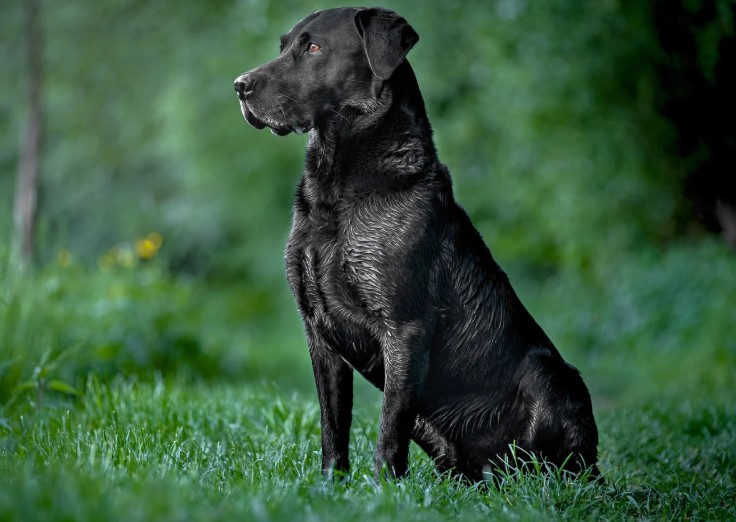
Joyful. Driven. Impulsive.
Approach Comes First
Labradors were bred to move toward rewards immediately rather than pause to assess. Their rush forward reflects inherited success logic, not poor training.
Mouth Leads Experience
Oral engagement is central to how Labradors process excitement and information. Chewing and grabbing are regulation strategies rooted in retriever design.

Arousal Overrides Control
High reward sensitivity floods their system with motivation faster than brakes can engage. Calm structure supports impulse control better than repetition alone.
Adolescence: The Joyful Overdrive Phase
Brain Remodeling & Temporary Regression
If you have an adolescent Labrador—roughly 6 to 18 months—you may be experiencing what feels like catastrophic training failure. Your once-responsive puppy seems to have forgotten everything. Recall is suddenly unreliable. Impulse control has evaporated. Behaviors you thought were solid have disappeared.
You haven’t failed. Your dog hasn’t suddenly become stubborn. You’re experiencing normal adolescent brain remodeling—a neurological process as predictable as human teenage behavior.
During adolescence, the canine brain undergoes significant restructuring. The prefrontal cortex—responsible for impulse control, decision-making, and behavioral inhibition—is literally being rewired. While this remodeling creates a more sophisticated adult brain, it temporarily disrupts existing impulse control systems.
Research shows that adolescent dogs demonstrate reduced responsiveness to familiar cues, increased arousal reactivity, greater risk-taking behavior, and temporary regression in previously learned skills. This isn’t permanent. It’s a developmental stage that resolves with maturity.
🐕 Managing Labrador Impulse Control: From Joyful Chaos to Structured Enthusiasm
A neuroscience-based approach to understanding and training your Lab’s arousal regulation system
Phase 1: Understanding Retriever Heritage
Genetic Foundation of “Act First” Behavior
🧠 Breed-Specific Wiring
Labradors were selectively bred for immediate engagement over careful consideration. Fast approach to fallen game was rewarded for generations. This created dogs biased toward “go forward, engage, carry” rather than thoughtful waiting. Modern expectations for delayed gratification directly conflict with these bred-in tendencies.
⚠️ What You’ll See
• Mouth-first investigation of everything
• Intense reward responsiveness (food and social)
• Cooperative engagement seeking with humans
• Oral fixation as self-regulation tool
✅ Foundation Approach
Work with retriever instincts, not against them. Provide appropriate carrying objects and structure “retrieve jobs” into training. Recognize that oral orientation isn’t misbehavior—it’s breed identity requiring appropriate outlets.
Phase 2: Recognizing Arousal Overflow
The Critical Distinction Between Disobedience and Dysregulation
🧠 The Yerkes-Dodson Curve
Dogs perform optimally at moderate arousal but show impaired impulse control at very high or very low arousal. Labradors naturally operate at higher baseline arousal, making their optimal performance window narrower. More excitement doesn’t help focus—it pushes them into overflow.
⚠️ Overflow Warning Signs
• Rapid tail wagging with stiff body
• Panting despite cool temperatures
• Inability to settle or hold still
• Reduced response to known cues
• Frantic movement or “zoomies”
• Complete non-responsiveness
❌ Common Mistake
Punishment during arousal overflow adds stress to an already dysregulated nervous system. Your Lab isn’t being stubborn—their prefrontal cortex (impulse control center) is temporarily offline, overwhelmed by subcortical arousal.
Phase 3: Breaking Reinforcement Loops
The Slot-Machine Effect That Strengthens Impulsivity
🧠 Variable Reinforcement Science
Intermittent reinforcement creates the strongest, most persistent behavior patterns. When jumping sometimes results in attention (even negative attention), sometimes gets ignored, your Lab learns “keep trying—it works eventually!” This pattern is more resistant to extinction than consistent rewarding or ignoring.
⚠️ Common Trap Scenarios
• Greeting visitors: sometimes petted, sometimes pushed away (both = attention)
• Street play: sometimes pulling reaches other dog (jackpot!)
• Food stealing: occasionally successful creates gambling behavior
• Social entitlement: friendly responses strengthen expectation of universal access
✅ Consistency Protocol
Every person follows the same rules: sitting earns greeting, jumping delays it. Consistent boundaries feel like predictable structure, not punishment. This eliminates variable reinforcement and allows extinction of unwanted patterns.
Phase 4: Managing Self-Control Resources
Understanding Limited Regulatory Capacity
🧠 Depletion Science
Self-control is a limited resource that depletes with use. Research shows dogs who maintain impulse control in one situation show reduced control in subsequent challenges. Your Lab who’s been “good all day” at a picnic may finally steal food because regulatory reserves are exhausted.
⚠️ Depletion Triggers
• Leashed walks (constant inhibition of exploration)
• Long periods maintaining calm in exciting environments
• Multiple training sessions without recovery
• Extended visitors or social events
• Suppressing natural behaviors repeatedly
✅ Recovery Strategy
Build rest into schedule. Enforced quiet time after arousing activities. Adequate sleep (12-14 hours for adolescents). Separate rest from training. Self-control needs restoration just like physical energy. Through the NeuroBond approach, we understand capacity building requires recovery time.
Phase 5: Navigating Adolescence
The Temporary Regression Phase (6-18 Months)
🧠 Brain Under Construction
The prefrontal cortex—responsible for impulse control—is literally being rewired during adolescence. This creates temporary disruption of existing control systems. Your Lab hasn’t forgotten training; their brain is restructuring to create more sophisticated adult processing. This resolves between 18-24 months.
⚠️ Adolescent Behaviors
• Reduced responsiveness to familiar cues
• Increased arousal reactivity
• Greater risk-taking behavior
• Heightened reward sensitivity
• Curiosity-caution shift (more suspicious)
• Temporary regression in solid skills
✅ Management Approach
Increase physical management (leashes, barriers). Reduce expectations temporarily. Maintain consistent boundaries despite regression. Focus on relationship over performance. Be your Lab’s frontal lobe while theirs is under construction. Remember: this is temporary and normal, not training failure.
Phase 6: Rethinking Exercise
Decompression Over Exhaustion
❌ The “Tired Dog” Myth
Intense exercise often increases impulsivity rather than reducing it. Ball chasing, dog park free-play, and high-speed activities push already-aroused Labs past their optimal performance window. They become more reactive, not calmer. Exercise increases arousal—exactly what your aroused Lab doesn’t need.
✅ Decompression Activities
• Sniffing walks with freedom to explore
• Swimming at self-selected pace
• Calm hiking on long line
• Low-intensity scent work
• Gentle retrieving with pauses
• Mental stimulation over physical exhaustion
⚠️ Post-Exercise Protocol
Build calm settling time into activity routine. Use stationing or crate rest after exercise. Avoid immediate stimulation (greetings, meals, play). Allow nervous system recovery. The Invisible Leash teaches us that control comes from regulation, not exhaustion.
Phase 7: Your State = Their State
Bidirectional Arousal Transfer
🧠 Emotional Contagion
Your Lab mirrors your arousal through breathing patterns, muscular tension, vocal tone, and movement. When you’re anxious about their behavior, they detect this and interpret it as confirmation the situation is exciting or threatening. Your anticipatory anxiety becomes their arousal amplifier.
⚠️ The Anxiety Spiral
You worry they’ll jump → Your arousal increases → They detect your tension → Their arousal increases → Impulsivity increases → Your anxiety confirmed → Cycle repeats. You’ve become an arousal amplifier rather than regulatory support.
✅ Emotional Neutrality
Breathe normally during challenging moments. Use matter-of-fact voice tone. Move with calm deliberation. Treat impulse control failures as information, not emergencies. Maintain neutral facial expression. Provide predictable responses. Be the calm anchor your Lab needs to access their own self-control.
Phase 8: Foundation Training Protocol
Building Skills That Transfer
✅ Threshold Training
The gateway skill. Doorways, gates, car exits become daily practice opportunities. Wait for pause before threshold crossing. Gradually increase duration. Natural binary (through vs not through). Builds “pause before accessing desired outcome” neural pathway. Multiple daily repetitions with built-in rewards.
✅ Stationing Protocol
Specific mat or bed becomes calm anchor during arousing events. Provides alternative to jumping during greetings. Creates predictable routine. Practice: doorbell → station, meal prep → station, visitors → station. Transforms arousal from chaos trigger to job opportunity. Your Lab learns excitement means “go to station and wait calmly.”
✅ Progressive Leave-It
Static objects → slow movement → fast movement → unpredictable movement. Builds impulse control under real-world movement triggers. The squirrel running, ball rolling, dog approaching. Generalizes to contexts where prey or play drive is activated. Suppressing approach behavior becomes practiced skill.
📊 Training Timeline Comparison
Weeks 1-4: Foundation
Establish calm baseline. Teach threshold behaviors. Create predictable routines. Build handler-dog rhythm. 3x5min stationing daily, 2x threshold practice, 1x decompression walk.
Weeks 5-8: Arousal Management
Identify arousal triggers. Practice downshift skills. Build frustration tolerance. Monitor arousal during activities. Calm reinforcement delivery. Leave-it under movement.
Weeks 9-12: Generalization
Transfer skills to high-arousal contexts. Build reliability in challenging environments. Real-world greeting practice. Threshold work in novel locations. Sustainable patterns.
Puppy (8-16 weeks)
Fastest learning window. High neuroplasticity. Focus on foundation skills, socialization, and preventing rehearsal of impulsive behaviors. Build habits before arousal systems fully mature.
Adolescent (6-18 months)
Management phase. Brain remodeling causes temporary regression. Increase management, reduce expectations, maintain boundaries. Focus on relationship over perfection. This is temporary.
Adult (18+ months)
Refinement stage. Brain maturation complete. Previous training re-emerges often stronger. Build on foundation with advanced contexts. Maintain consistency to prevent regression.
⚡ Quick Reference: The 5 Core Principles
1. Arousal ≠ Disobedience → Most failures are arousal overflow, not training deficits
2. Consistency Breaks Reinforcement Loops → Variable boundaries strengthen impulsivity
3. Self-Control Depletes → Recovery time is essential, not optional
4. Your State = Their State → Emotional neutrality provides regulatory support
5. Structure Preserves Joy → Boundaries channel enthusiasm, not suppress it
🧡 The Zoeta Dogsoul Approach to Labrador Impulse Control
Understanding Labrador impulse control requires seeing beyond behavior to the arousal systems beneath. The NeuroBond we build with our Labs isn’t about suppressing their joyful nature—it’s about providing the regulatory support their nervous system needs to access self-control. The Invisible Leash operates through emotional neutrality and consistent structure, creating clarity rather than tension. When we honor their retriever heritage while building modern skills, we witness Soul Recall—those moments where training, trust, and instinct harmonize into beautiful cooperation. Your Lab’s struggle with impulse control isn’t a flaw to fix but a feature to understand, channel, and transform into grounded enthusiasm. That balance between science and soul, between structure and freedom—that’s the essence of living successfully with Labradors.
© Zoeta Dogsoul – Where neuroscience meets soul in dog training
The Curiosity-Caution Shift
Adolescence also brings a significant behavioral shift: the decline of puppy curiosity and the emergence of adult caution. Your Lab is simultaneously:
- More aroused by novel stimuli
- More suspicious of unfamiliar situations
- More sensitive to environmental triggers
- Less responsive to familiar controls
This creates a perfect storm for impulse control challenges. The world becomes more stimulating and more threatening simultaneously, while the brain’s regulatory systems are under construction.
Increased Reward Seeking
Adolescent Labradors show heightened reward sensitivity compared to puppies and adults. They’re more motivated by food, more aroused by social interaction, and more driven by environmental rewards. This makes them simultaneously:
- Easier to motivate during training
- More distracted by environmental rewards
- More likely to engage in reward-seeking behaviors
- More vulnerable to arousal overflow
Management Over Perfection
The most important message for owners of adolescent Labs: this is a management phase, not a training failure. Your job isn’t to achieve perfect impulse control during adolescence—it’s to prevent the rehearsal of problematic behaviors while maintaining your relationship and your sanity.
Adolescence Management Strategies:
- Increase physical management (leashes, barriers, crates)
- Reduce expectations temporarily
- Maintain consistent boundaries
- Focus on relationship over performance
- Practice patience and emotional neutrality
- Remember this is temporary
The training you did as a puppy wasn’t wasted. The neural pathways you built are still there, just temporarily disrupted by remodeling. When brain maturation completes—typically between 18-24 months for Labs—those pathways re-emerge, often stronger than before.
Your adolescent Lab needs you to be their frontal lobe while theirs is under construction. Provide structure, maintain boundaries, prevent dangerous choices, but don’t interpret temporary regression as permanent failure. 🧡
Exercise Paradox: When Activity Increases Impulsivity
The “Tired Dog Is a Good Dog” Myth
You’ve heard it countless times: “A tired dog is a good dog.” For Labradors, this advice is often not just ineffective—it’s counterproductive. Many owners discover that intense exercise actually increases their Lab’s impulsivity rather than reducing it.
Here’s why: exercise increases arousal. For a dog already operating at high baseline arousal, adding more stimulation pushes them past their optimal performance window into arousal overflow. They become more reactive, less responsive to cues, and more prone to impulsive behaviors.
Decompression vs. Stimulation
The distinction between decompression activities and stimulating activities is critical for Labrador impulse control.
Stimulating Activities (increase arousal):
- Ball chasing and high-speed fetch
- Running with bikes or skateboards
- Dog park free-play
- Agility with high excitement
- Rough play with other dogs
Decompression Activities (regulate arousal):
- Sniffing walks with freedom to explore
- Swimming at self-selected pace
- Calm hiking on long line
- Scent work at low intensity
- Gentle retrieving games with pauses
Notice that these aren’t necessarily different in physical intensity—the distinction is in arousal generation. A fast-paced fetch session generates far more arousal than a longer but calmer sniffing walk, even though both involve movement.
The Post-Exercise Window
Many owners notice that their Lab’s worst impulse control failures occur after exercise, not before. Your dog returns from the dog park and immediately jumps on family members, grabs objects, or becomes hyperactive. This isn’t because they need more exercise—it’s because the exercise activated their arousal system without providing regulatory support to bring arousal back down.
Creating Post-Activity Regulation:
- Build calm settling time into the activity routine
- Use stationing or crate rest after exercise
- Avoid immediate stimulation (greetings, meals, play)
- Practice relaxation protocols
- Allow nervous system recovery time
The goal isn’t to eliminate vigorous activity—Labs need and enjoy it. The goal is balancing stimulation with regulation, ensuring arousal goes up and comes back down within manageable ranges.
Mental Stimulation vs. Physical Exhaustion
For many Labradors, replacing some physical exercise with mental stimulation improves impulse control more effectively than adding more running. Mental challenges provide engagement without arousal overflow.
Effective Mental Stimulation:
- Scent discrimination games
- Puzzle feeders and food toys
- Basic obedience in novel locations
- Calm trick training
- Environmental exploration
These activities engage your Lab’s mind, satisfy their working dog heritage, and build focus without pushing them into arousal states that compromise impulse control.
Nutritional Factors: The Food-Behavior Connection
Food Reactivity as Breed Characteristic
Labradors’ legendary appetite isn’t just about food motivation—it’s linked to genetic variations that affect satiety signaling. Research has identified specific genetic differences in Labradors that make them less sensitive to feelings of fullness, creating dogs who are genuinely hungrier than other breeds.
This has profound implications for impulse control. Your Lab isn’t being greedy or food-obsessed by choice—their physiology creates stronger food motivation that must be managed through environmental structure rather than suppressed through willpower.
Blood Sugar Stability & Behavior
Blood sugar fluctuations affect impulse control in dogs just as they do in humans. Labradors who experience rapid rises and falls in blood glucose may show:
- Increased arousal and reactivity
- Reduced impulse control
- Greater frustration intolerance
- Moodiness and behavioral variability
Supporting Blood Sugar Stability:
- Multiple small meals rather than one large meal
- Protein-balanced meals with moderate fat
- Avoiding high-glycemic carbohydrate spikes
- Consistent feeding schedule
- Appropriate total calorie intake
Feeding Method as Training Tool
How you feed your Lab affects impulse control development. Free-feeding creates constant food availability, eliminating opportunities to practice waiting and delaying gratification. Puzzle feeders and slow-feeding methods build frustration tolerance and impulse control through structured eating challenges.
Impulse Control Feeding Strategies:
- Hand-feeding portions for calm behavior
- Feeding from puzzle toys
- Multiple-step feeding routines (sit, wait, release)
- Scattering kibble for foraging
- Using meals as training rewards
These approaches transform feeding from a missed training opportunity into a daily impulse control building practice. Your Lab practices self-regulation multiple times per day in a context where their motivation is naturally high.
Supplements & Behavioral Support
While nutrition can’t create impulse control where no foundation exists, certain nutritional supports may help dogs with arousal regulation challenges:
- Omega-3 fatty acids for brain health
- L-theanine for calming support
- Tryptophan for serotonin production
- B-complex vitamins for nervous system health
These should complement, not replace, behavioral training and environmental management. Consult with a veterinarian knowledgeable about behavioral nutrition before adding supplements.
Handler Emotional Contagion: Your State Is Their State
Bidirectional Arousal Transfer
Here’s an uncomfortable truth: your emotional state directly affects your Lab’s impulse control. Research on emotional contagion in dogs shows that they don’t just respond to your commands—they mirror your arousal levels, absorb your anxiety, and amplify your excitement.
When you’re anxious about your Lab’s potential behavior—worried they’ll jump on the visitor, pull toward the dog, or steal food—your arousal increases. Your Lab detects this through multiple channels: your breathing pattern, your muscular tension, your vocal tone, your movement patterns. They interpret this arousal as confirmation that the situation is exciting or threatening, and their own arousal increases in response.
This creates a vicious cycle: your anticipatory anxiety increases their arousal, their increased impulsivity increases your anxiety, and the pattern spirals. You’ve inadvertently become an arousal amplifier rather than a regulatory support.
Emotional Neutrality as Regulatory Support
The most powerful thing you can provide during high-arousal moments isn’t correction, redirection, or even reward—it’s emotional neutrality. When you remain calm and matter-of-fact about your Lab’s behavior, you provide regulatory support that helps them access their own impulse control.
Practicing Emotional Neutrality:
- Breathe normally during challenging moments
- Use matter-of-fact voice tone, not anxious or excited
- Move with calm deliberation, not rushed energy
- Treat impulse control failures as information, not emergencies
- Maintain neutral facial expression
This doesn’t mean being cold or disconnected. It means being a calm anchor in a stimulating environment—the regulatory presence your Lab needs to access their own self-control.
Predictability Reduces Arousal
Dogs find predictability calming and unpredictability arousing. When your responses to situations vary—sometimes calm, sometimes excited, sometimes anxious—your Lab must maintain higher vigilance and arousal to navigate the uncertainty.
Creating predictable patterns in your own behavior provides your Lab with environmental stability that supports impulse control. They know what will happen, what you expect, and how you’ll respond. This frees cognitive resources for self-regulation rather than using them to track your unpredictable emotional states.
Handler Skill Development
Just as your Lab needs to build impulse control skills, you need to build handler skills. These include:
- Reading subtle arousal signals before they escalate
- Maintaining neutral emotional state during excitement
- Timing reinforcement and redirection effectively
- Creating consistent patterns and boundaries
- Managing your own frustration and disappointment
Many impulse control “failures” are really handler skill gaps. Your Lab performs perfectly with one family member but poorly with another—not because they’re being selective, but because different handlers provide different regulatory support and different consistency.
The NeuroBond between you and your Lab functions as a bidirectional system. When you develop your own emotional regulation and consistency, their impulse control improves—not through any specific technique, but through the regulatory stability you provide. 🧠

Building Impulse Control: The Foundation Approach
Threshold Training: The Gateway Skill
If you could only teach one impulse control skill, threshold training would be it. Thresholds—doorways, gates, car exits—are natural boundaries where your Lab must pause before accessing something desired. This creates perfect impulse control building opportunities.
Why Thresholds Matter:
- Natural daily repetition (multiple practice opportunities)
- Clear binary: through threshold vs. not through threshold
- Built-in reward: what’s beyond threshold is naturally reinforcing
- Generalizable: skill transfers to other waiting contexts
- Foundation for more complex impulse control
Threshold Training Protocol:
- Approach threshold with your Lab
- Wait for any pause or attention to you
- Mark and release through threshold
- Gradually increase pause duration
- Add distractions and arousal variables
- Practice at multiple thresholds daily
This isn’t about perfection—it’s about building the neural pathway for “pause before accessing desired outcome.” Every successful repetition strengthens this pathway.
Stationing: Creating Calm Anchors
Stationing teaches your Lab to go to a specific location and remain there calmly during high-arousal moments. This provides both impulse control practice and practical management for daily life.
Station Training Benefits:
- Provides alternative to jumping during greetings
- Creates predictable routine during arousing events
- Builds duration impulse control
- Offers self-regulation opportunity
- Reduces handler stress about managing behavior
Building a Station:
- Choose specific mat or bed as “station”
- Teach “place” cue to send dog to station
- Practice during low-arousal times first
- Gradually introduce distractions
- Use for doorbell, meal prep, visitors
Your Lab learns: “When arousal is high, I have a job—go to my station and wait calmly.” This transforms arousal from chaos trigger to job opportunity.
Leave-It Under Movement
Static leave-it training—where food or toys sit still and your dog practices ignoring them—builds foundational impulse control. But real-world impulse control requires leave-it under movement: the squirrel running, the ball rolling, the other dog approaching.
Progressive Leave-It Training:
- Static objects at distance
- Static objects closer
- Slow-moving objects at distance
- Slow-moving objects closer
- Fast-moving objects at distance
- Fast-moving objects closer
- Unpredictably moving objects
This progression builds impulse control that generalizes to real-world challenges. Your Lab learns to suppress approach behavior even when prey drive or play drive is activated by movement.
Frustration Tolerance Building
Impulse control isn’t just about stopping behavior—it’s about tolerating frustration when desired outcomes are delayed or denied. Building frustration tolerance requires practicing situations where your Lab wants something but must wait longer or work harder to get it.
Frustration Tolerance Exercises:
- Increasing wait duration before meals
- Earning toy access through calm behavior
- Working for high-value rewards with escalating criteria
- Practicing near but not accessing desired objects
- Building duration in exciting environments
Start with mild frustration and gradually increase challenge level. Your Lab builds capacity to experience desire without immediate gratification—the essence of impulse control.
The Structured Approach: Daily Practice Framework
Morning Routine: Setting the Tone
How your Lab begins the day affects their impulse control for hours. A chaotic morning creates arousal momentum that cascades through subsequent situations. A structured morning provides regulatory foundation.
Calm Morning Protocol:
- Threshold wait before exiting crate or bedroom
- Stationing during breakfast preparation
- Calm greeting routine (no excited talk or petting)
- Structured breakfast delivery (not free-feeding)
- Decompression bathroom break (sniffing focus)
This framework isn’t about suppressing your Lab’s morning joy—it’s about channeling it through structured pathways that build self-regulation from the day’s start.
High-Arousal Moment Preparation
Predictable arousal triggers—doorbell, leash appearance, meal preparation—offer daily impulse control building opportunities. Rather than reacting to these moments, prepare for them with structured routines.
Doorbell Protocol:
- Pre-arousal: Dog already on station when visitor expected
- During: Maintain station through greeting
- Post: Release to greet only after visitor settled
- Reinforcement: Calm greeting earns continued access
Walk Preparation Protocol:
- Leash appearance → immediate sit
- Leash attachment → continued calm
- Approach door → threshold wait
- Exit → calm first steps
- Arousal regulation throughout walk
These protocols transform chaos moments into training opportunities. Your Lab practices impulse control when motivation is naturally high—exactly when the skill is most needed.
Rest & Recovery Time
Remember self-control depletion: impulse control is a limited resource that requires restoration. Building rest and recovery into your Lab’s schedule isn’t laziness—it’s essential training support.
Structured Rest:
- Enforced quiet time after arousing activities
- Crate rest or station rest during high-traffic times
- Calm settling protocol after exercise
- Separate rest from training and stimulation
- Adequate sleep (12-14 hours for adolescents)
Many impulse control problems are actually rest deficits. Your Lab is operating on depleted regulatory resources because they haven’t had adequate recovery time between arousal events.
Consistency Across Contexts
The fastest way to undermine impulse control training is inconsistent application. If your Lab must wait at the front door but not the back door, sit before meals but not treats, greet calmly with your guidance but jump freely when alone with family members, they’re receiving variable reinforcement that strengthens impulsive behavior.
Ensuring Consistency:
- All family members follow same protocols
- All contexts apply same rules
- All visitors receive guidance on greeting protocol
- All arousal situations receive structured response
- All days maintain similar patterns
Consistency isn’t rigidity—it’s predictability. Your Lab can relax into structure when they know what to expect, freeing cognitive resources for self-regulation rather than environmental navigation.
The Invisible Leash operates through this consistency—not through tension or control, but through clear patterns that your Lab can anticipate and flow with naturally. 🧡
Creating Joyful Cooperation: The Ultimate Goal
Structure Preserves Joy
The greatest fear many Lab owners have about impulse control training is that it will suppress their dog’s wonderful, enthusiastic nature. They worry that creating boundaries will diminish the warmth, friendliness, and joy that makes their Lab special.
This fear misunderstands the relationship between structure and expression. Structure doesn’t suppress joy—it provides channels through which joy can flow appropriately. A river with banks flows powerfully and beautifully. Water without banks becomes a destructive flood. Your Lab’s enthusiasm needs banks, not elimination.
When you build impulse control thoughtfully, your Lab becomes:
- More confident (clear expectations reduce anxiety)
- More engaged (can participate in more activities safely)
- More socially successful (appropriate behavior earns access)
- More trusted (handlers relax, allowing more freedom)
- More joyful (structure supports rather than suppresses expression)
The goal isn’t a robot who never shows enthusiasm. The goal is a dog who can regulate their enthusiasm, expressing it through appropriate channels at appropriate times—joy with structure.
The Labrador Who Can Say Yes
Here’s the transformative shift: impulse control training doesn’t teach your Lab to suppress desire. It teaches them to say “yes” appropriately rather than chaotically.
Yes to Greetings — through four-on-floor, not jumping Yes to Play — after calm approach, not rushing Yes to Exploration — with handler connection, not pulling Yes to Joy — with structured expression, not overflow
This is cooperation rather than compliance, partnership rather than control, guided enthusiasm rather than suppressed nature. Your Lab maintains their warmth, friendliness, and joy while developing the self-regulation that allows safe, socially appropriate expression.
The Handler Who Can Trust
Simultaneously, impulse control training transforms your experience. You shift from constantly managing, preventing, and redirecting to trusting your Lab to make good choices. You can:
- Answer the door without anxiety
- Walk past dogs without bracing for chaos
- Bring your Lab to events with confidence
- Relax in their presence rather than monitoring constantly
- Enjoy their enthusiasm rather than fearing it
This mutual trust—your Lab trusting your guidance, you trusting their self-regulation—creates the partnership that both species find deeply satisfying. That balance between science and soul, between structure and freedom, between guidance and trust—that’s the essence of Zoeta Dogsoul.
Integration Into Daily Life
Ultimately, impulse control isn’t a separate training program—it’s integrated into every interaction. It becomes the way you and your Lab move through the world together:
- Natural pauses replace forced waits
- Calm becomes default, not achievement
- Structure feels supportive, not restrictive
- Boundaries provide clarity, not conflict
- Enthusiasm flows through appropriate channels
Your Lab greeting visitors with tail-wagging joy while keeping four feet on the floor. Approaching other dogs with friendly interest while maintaining handler connection. Carrying objects with retriever pride at appropriate times and places. Expressing enthusiasm through structured channels rather than chaotic overflow.
This is joy with structure—the transformation of joyful chaos into grounded cooperation.
Practical Implementation Guide
Assessment Protocol
Step 1: Identify Primary Challenge Areas
Rate your Labrador’s impulse control in each context (1-5 scale, where 1 = excellent control, 5 = no control):
- Doorway greetings
- Leash walking near dogs
- Food presence and meal times
- Other dog encounters
- Object carrying and mouthiness
- Recall reliability
- Settling in stimulating environments
Step 2: Determine Arousal Patterns
Track when impulse control fails:
- What time of day does it occur?
- What was your Lab’s activity level before the incident?
- What environmental triggers were present?
- What was your emotional state?
- What was the recent reinforcement history?
Patterns emerge quickly. You might discover your Lab’s worst impulse control occurs after exercise, during evening hours, or specifically when you’re stressed.
Step 3: Assess Developmental Stage
Consider where your Lab is developmentally:
- Age (puppy/adolescent/adult)
- Training history and foundation
- Current exercise routine
- Established reinforcement patterns
- Consistency of boundaries across contexts
This assessment determines realistic expectations and appropriate training intensity.
Training Implementation
Phase 1: Foundation Building (Weeks 1-4)
Goals:
- Establish calm baseline
- Teach threshold behaviors
- Create predictable routines
- Build handler-dog rhythm
Daily Practice:
- Three 5-minute stationing sessions
- Two threshold wait practices
- One decompression walk (sniffing focus)
- Consistent greeting protocol for all interactions
Phase 2: Arousal Management (Weeks 5-8)
Goals:
- Identify individual arousal triggers
- Practice downshift skills
- Build frustration tolerance
- Strengthen impulse control under mild distraction
Daily Practice:
- Arousal monitoring during all activities
- Calm reinforcement delivery (low-energy rewards)
- Leave-it practice under movement
- Controlled exposure to trigger situations
Phase 3: Context Generalization (Weeks 9-12)
Goals:
- Transfer skills to high-arousal contexts
- Build reliability in challenging environments
- Maintain calmness during excitement
- Establish sustainable long-term patterns
Daily Practice:
- Real-world greeting practice with cooperative helpers
- Threshold work in novel locations
- Arousal recovery exercises
- Consistent boundary enforcement across all contexts
Troubleshooting Common Challenges
Challenge: “My Lab is perfect at home but chaos in public”
Analysis: Context collapse due to arousal overflow. Your Lab’s self-control works in low-arousal home environment but fails when environmental arousal increases.
Solution:
- Practice in gradually increasing arousal environments
- Reduce initial exposure intensity
- Increase reinforcement rate in challenging contexts
- Build arousal recovery skills between exposures
Challenge: “Training works until visitors arrive”
Analysis: Doorway arrival creates trigger stacking. Multiple arousal sources (doorbell, new person, anticipation) overwhelm regulatory capacity.
Solution:
- Implement pre-arrival settling routine
- Station training before doorbell rings
- Visitor cooperation with protocol (ignore until calm)
- Calm reinforcement during greeting phase
- Practice with known helpers before real visitors
Challenge: “My Lab pulls worse after exercise”
Analysis: Exercise is increasing arousal rather than reducing it, pushing dog past optimal performance window.
Solution:
- Replace high-intensity exercise with decompression walks
- Add mental stimulation activities
- Increase structured rest periods
- Practice calm settling after activity
- Reduce overall stimulation level
Challenge: “Adolescent regression—lost all training”
Analysis: Normal developmental brain remodeling temporarily disrupts impulse control systems.
Solution:
- Increase physical management (leashes, barriers, crates)
- Reduce expectations temporarily
- Maintain consistent boundaries despite regression
- Focus on relationship preservation over performance
- Remember this is temporary and normal
Conclusion: The Labrador Paradox Resolved
Understanding the Contradiction
Labradors are simultaneously the most trainable and the most impulsively challenging dogs many people will own. This apparent contradiction resolves when we understand that impulse control isn’t about intelligence or trainability—it’s about arousal regulation, reinforcement history, and structured skill-building applied to a breed with specific genetic characteristics.
Your Lab’s retriever heritage created dogs biased toward immediate engagement rather than thoughtful waiting. Their high reward sensitivity makes them vulnerable to arousal overflow and intermittent reinforcement. Their friendly temperament creates social confidence that requires boundary training. Their oral orientation demands appropriate outlets rather than suppression. Their adolescent brain remodeling creates temporary regression that feels like training failure.
None of this is deficiency. It’s breed characteristic requiring breed-appropriate understanding and management.
Key Principles to Remember
Arousal, Not Disobedience: Most Labrador impulse control failures are arousal overflow, not training deficits. Your Lab knows the cue—they’re experiencing a neurological state where executive function is temporarily compromised.
Breed Heritage Matters: Retriever genetics create specific challenges that require breed-appropriate solutions. Working with these characteristics rather than against them creates sustainable success.
Reinforcement Traps Are Real: Accidental intermittent reinforcement powerfully strengthens impulsive behaviors. Consistency isn’t rigidity—it’s the predictability that allows extinction of unwanted patterns.
Adolescence Is Temporary: Brain remodeling creates predictable regression between 6-18 months that resolves with maturity. Management during this phase prevents problem behavior rehearsal.
Structure Preserves Joy: Calm boundaries and predictable routines don’t suppress enthusiasm—they channel it through appropriate pathways, creating cooperation rather than chaos.
Handler Calmness Is Contagious: Emotional neutrality provides regulatory support. Your arousal state directly affects your Lab’s impulse control capacity.
Exercise Isn’t Always the Answer: Decompression and mental stimulation often improve impulse control more effectively than physical exhaustion that increases arousal.
Consistency Is Critical: Variable boundaries and reinforcement create confusion and strengthen impulsivity. Predictable patterns support self-regulation.
The Transformation
The ultimate goal isn’t creating a perfectly controlled dog. It’s creating a Labrador who embodies joyful cooperation:
- Enthusiastic but regulated
- Friendly but polite
- Engaged but focused
- Warm but calm
- Retrievers at heart—with modern manners
This transformation occurs not by suppressing their nature, but by providing structure that allows their joy to flow through appropriate channels. Your Lab learns to say “yes” to greetings, play, exploration, and enthusiasm—through structured pathways that create cooperation rather than chaos.
You transform from constantly managing, preventing, and redirecting to trusting your Lab to make good choices. The relationship shifts from handler-managing-dog to partners-moving-through-world-together.
Final Perspective
The Labrador’s struggle with impulse control isn’t a flaw—it’s a feature of their breeding that requires understanding, appropriate management, and structured skill-building. With this approach, their joyful chaos becomes structured enthusiasm. Their retriever heritage finds appropriate expression. Their friendly nature creates connection rather than conflict.
This is the work worth doing—not creating robotic compliance, but building the framework within which your Lab’s wonderful nature can shine safely, appropriately, and joyfully. The patience, consistency, and understanding you invest creates a partnership defined by mutual trust, clear communication, and the deep satisfaction of true cooperation.
That’s the essence of living successfully with Labradors—embracing their enthusiasm while providing the structure that allows it to flourish. Joyful chaos transformed into grounded, reliable, warm partnership. That’s the journey, and it’s absolutely worth taking. 🧡










