In Dogs: A New Understanding of Canine Origin, Behavior and Evolution, biologists and dog experts Lorna and Raymond Coppinger synthesize over forty years of working with thousands of dogs across diverse contexts. Their framework challenges conventional narratives of domestication, arguing that early wolves were not tamed by humans but instead evolved into village dogs by exploiting a new ecological opportunity: Mesolithic village dumps.
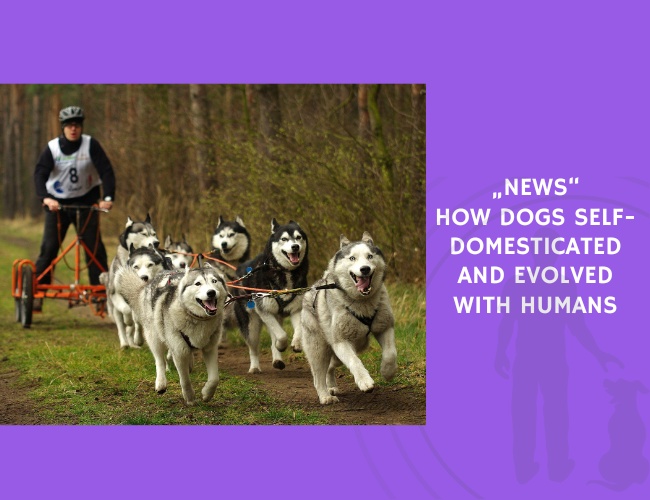
The authors analyze eight types of dogs—household, village, livestock guarding, herding, sled-pulling, pointing, retrieving, and hound—to demonstrate how genetic predispositions interact with environmental conditions to produce distinct behavioral and morphological outcomes. According to the Coppingers, behaviors such as pointing, baying, herding, or guarding are not solely products of selective breeding or training but reflect deeper developmental and ecological determinants.
One of their central insights is that form and function co-evolve. The physical structure of dogs—whether the streamlined bodies of running dogs or the robust stature of livestock guardians—emerges from selective pressures acting on village-dog ancestors and is shaped by the environments in which pups are raised.
The book emphasizes that successful human–dog relationships require a mutual understanding of innate biological needs. For dogs to thrive, humans must appreciate how their behavioral motivations, sensory worlds, and ecological histories guide their interactions with people and environments. Likewise, dogs adapt to human expectations, forming a dynamic co-evolutionary partnership.
By reframing domestication as a process driven by ecological niche exploitation and developmental pathways, the Coppingers offer a foundational perspective that reshapes how we understand dog evolution and practical canine behavior today.
Source: Coppinger, L., & Coppinger, R. (2001). Dogs: A New Understanding of Canine Origin, Behavior and Evolution. Published May 27, 2001.