Introduction: When Bark Becomes Language
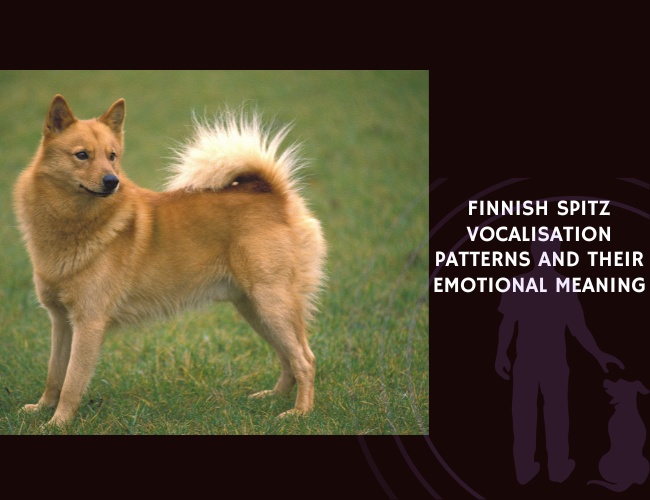
Imagine standing in a Finnish forest centuries ago, watching a fox-red dog work the canopy above. The dog isn’t just barking—they’re communicating. Each vocal pattern tells you something specific: the type of bird, its location, whether it’s moving or stationary, how alert it is to danger. This is the Finnish Spitz, and their voice is not noise. It’s language.
You might notice that your Finnish Spitz has something unique among dog breeds: a vocal repertoire that feels less like alarm and more like conversation. This isn’t your imagination. The Finnish Spitz was deliberately shaped over centuries to develop what researchers now recognize as proto-linguistic communication—structured vocal patterns that carry specific informational content rather than simple emotional discharge.
Understanding this heritage changes everything about how you interpret and respond to your Finnish Spitz’s vocalizations. What seems like excessive barking to neighbours is often sophisticated communication that’s being misunderstood. When we learn to listen properly, we discover that these dogs aren’t being difficult—they’re speaking a language we’ve forgotten how to hear.
This guide will help you decode that language, understand the emotional states behind different bark types, and build a relationship where vocalization becomes cooperation rather than conflict. Through the NeuroBond approach, we recognize that your dog’s voice is an invitation to deeper understanding, not a problem to be suppressed. 🧡
The Vocal Heritage: Why Finnish Spitz Bark Differently
A Breed Built on Sound
The Finnish Spitz, known in their homeland as Suomenpystykorva, developed through a unique evolutionary pressure. Unlike most dog breeds where barking serves primarily as alarm or territorial warning, these dogs were selectively bred for acoustic sophistication. Their job was bark-pointing—locating game birds in dense forest canopy and maintaining vocal contact with hunters working at distance.
This required dogs who could:
- Sustain vocalization for extended periods without voice fatigue — Some Finnish Spitz would bark continuously for hours while tracking a single bird, modulating their patterns as the bird moved through the trees.
- Modulate vocal patterns to indicate different types of information — The rhythm, pitch, and tempo of their barking communicated whether they’d located grouse or capercaillie, whether the bird was stationary or moving, whether it was becoming alert to danger.
- Project sound effectively through complex acoustic environments — Forest canopies absorb and scatter sound unpredictably. Finnish Spitz learned to adjust volume, pitch, and timing to maintain contact with hunters hundreds of meters away.
- Coordinate with human partners through reciprocal communication — The hunting relationship wasn’t one-sided. Dogs responded to human calls, adjusted their positioning based on handler signals, and worked as true partners in a shared task.
This wasn’t simple barking. It was communication that required cognitive sophistication, emotional regulation, and acoustic skill far beyond what most breeds needed to develop.
The Modern Mismatch Problem
Now picture that same dog in a suburban home. The environmental disconnect is profound:
What Finnish Spitz were bred for:
- Open forest environments where sound naturally dampens and disperses
- Distance work maintaining vocal contact across hundreds of meters
- Immediate, meaningful responses from hunting partners who understood their communication
- Clear functional contexts with defined beginnings and endings
What they experience in modern life:
- Sound echoing off buildings and amplifying in enclosed spaces
- Confinement to homes and fenced yards with visual access but physical barriers
- Inconsistent or punitive responses from people who hear only noise
- Chronic low-level stimulation without resolution (squirrels never caught, pedestrians passing endlessly, delivery trucks coming and going)
This creates what behavioural researchers term “communicative frustration cascade.” When functional vocal behaviour is misunderstood and suppressed, it doesn’t simply stop. Instead, it escalates into genuine behavioural problems. The suppression itself becomes an additional stressor, elevating arousal and intensifying the very behaviour owners are trying to reduce.
Understanding this mismatch is the first step toward effective management. Your dog isn’t being stubborn or difficult. They’re trying to do the job they were bred for in an environment that makes that job impossible—and then being punished for the attempt. 🐾
The Distance Dynamics Problem: Why Proximity and Barriers Are So Challenging
One of the most overlooked aspects of Finnish Spitz behaviour is their breed-specific distance preferences—and understanding this transforms how you interpret window barking, fence reactivity, and leash frustration.
The Optimal Communication Range
In traditional Finnish hunting contexts, these dogs worked at 50-200 meters distance from their human partners. This wasn’t random—it was the sweet spot for:
- Acoustic effectiveness — Far enough for sound to project clearly through forest environments without being muddled by proximity
- Visual tracking — Close enough for the hunter to hear directional cues while maintaining independent sight-lines
- Operational independence — Sufficient distance for the dog to work autonomously while maintaining coordination
- Natural comfort — The range at which Finnish Spitz demonstrate most balanced arousal and best decision-making
This distance preference is hardwired through centuries of selective breeding. Your Finnish Spitz’s nervous system is calibrated for observing and reporting from moderate distance—not close confinement or forced proximity.
Why Modern Environments Violate This Preference
Consider what your Finnish Spitz experiences in typical modern contexts:
- Windows and fences — Your dog can see interesting stimuli at optimal working distance (50-200 meters), but physical barriers prevent them from actually working at that range. They’re locked into the perfect distance for tracking instincts to engage with no ability to move, adjust position, or complete the behaviour.
- Leash walking — You’re forcing your dog into close proximity (within 1-2 meters) with triggers they would naturally prefer to observe from 50+ meters. This violates their comfort zone and activates barrier frustration simultaneously with proximity stress.
- Indoor confinement — Your Finnish Spitz is restricted to spaces where they cannot establish their preferred working distance from anything. Every stimulus is either too close (people in the home, sounds from adjacent apartments) or completely inaccessible (outdoor activity they can hear but not see).
What This Looks Like Behaviourally
Understanding distance dynamics explains seemingly “excessive” reactions:
Window barking intensity: Your dog isn’t randomly obsessive—they’re experiencing perfect trigger distance with complete inability to do anything about it. The SEEKING system activates intensely because conditions are optimal for tracking, but the behaviour cannot complete. Imagine being intensely hungry while smelling food you can see but never reach—that’s the emotional experience.
Fence reactivity: Dogs passing on the sidewalk are at exact optimal communication distance. Your Finnish Spitz wants to observe, assess, and potentially interact from their preferred range—but the barrier prevents natural resolution. The frustration isn’t about “dominance” or “aggression”—it’s about spatial preference being violated.
Leash reactivity: When another dog approaches within 10 meters on leash, your Finnish Spitz cannot create their preferred 50+ meter observation distance. Forced proximity combined with movement restriction creates a compound stressor that manifests as intense vocalization.
Management Implications
Recognizing distance preferences changes your approach entirely:
- For windows — Block visual access (removing the trigger) or provide controlled, brief observation periods followed by redirection before arousal escalates
- For fences — Increase distance between fence and triggering pathway, create visual barriers, move outdoor time away from fence line
- For leash walks — Increase distance dramatically (cross the street, turn around, create 50+ meters of space) rather than forcing close proximity
- For training — Begin desensitization at 100+ meters from triggers initially, respecting natural comfort zones before gradually reducing distance
Through the Invisible Leash philosophy, we recognize that forcing proximity creates the tension we’re trying to avoid. Working with your dog’s natural distance preferences, rather than against them, transforms “reactivity” into manageable awareness. 🧡
Understanding the Emotional Systems Behind Vocalization
The Neuroscience of Why Dogs Bark
To truly understand your Finnish Spitz’s vocalizations, we need to look beneath the behaviour to the emotional operating systems that drive it. Neuroscientist Jaak Panksepp identified seven core emotional systems that exist across all mammals. Four of these directly influence Finnish Spitz barking patterns.
The SEEKING System: Exploration and Anticipation
When you see your Finnish Spitz with alert ears, bright eyes, tracking movement with rhythmic, moderate-pitch barking that has consistent tempo—that’s the SEEKING system in action. This is the brain’s exploratory drive, powered by dopaminergic pathways that create positive, anticipatory excitement.
This is your dog doing what they were bred for: locating, tracking, and reporting on movement in their environment. The emotional state is moderate arousal with positive valence—focused attention without distress. You might notice their body is alert but not tense, tail neutral to elevated, completely absorbed in the tracking behaviour.
When SEEKING system barking is acknowledged and redirected appropriately, it satisfies the dog’s need to communicate without escalating into problem behaviour. This is functional communication at its finest.
The PLAY System: Social Invitation
Different entirely is the bouncy, variable-pitch barking interspersed with play bows and wiggly body language. This is PLAY system activation—your Finnish Spitz inviting interaction, expressing excitement about social engagement.
These vocalizations tend to be shorter bouts with flexible, easily redirected energy. The arousal is high but not rigid. Your dog is saying, “Let’s do something together!” with genuine enthusiasm and positive social intent.
PLAY barking usually includes additional sounds: whining, yodeling, or those distinctive Finnish Spitz “talking” noises that sound almost conversational. This system is driven by opioid and dopamine activity that makes social interaction deeply rewarding.
The FEAR System: Defense and Uncertainty
When barking becomes high-pitched, irregular in rhythm, often accompanied by retreat behaviour or freezing—you’re seeing FEAR system activation. The emotional valence has shifted negative. Arousal is high and escalating.
This is your dog communicating threat perception or uncertainty. The amygdala is activated, stress hormones are releasing, and the vocalization serves as both warning and distance-increasing behaviour. You might notice the dog backing up while barking, or barking from behind you, using your body as a safety buffer.
FEAR barking requires a completely different response than SEEKING barking. While SEEKING benefits from acknowledgment and redirection, FEAR needs careful confidence-building and graduated exposure to reduce threat perception over time.
The RAGE/Frustration System: Barrier and Conflict
Perhaps most challenging is the intense, repetitive barking with fixed body posture that indicates RAGE or frustration system activation. This often occurs with barrier frustration—your dog sees something they want to reach but cannot.
The arousal level is very high and difficult to interrupt. The dog may become rigid, laser-focused on the trigger, with vocal patterns that feel almost mechanical in their intensity. This is hypothalamic circuits engaging, cortisol elevating, and the dog entering a state where rational responses become increasingly difficult.
This type of barking escalates fastest when mismanaged. Through the Invisible Leash philosophy, we understand that tension—whether physical or emotional—creates more tension. Fighting against RAGE system activation typically intensifies it. The key is preventing arousal from reaching this threshold in the first place.
Reading Arousal and Valence: The Two Dimensions of Dog Communication
Every vocalization your Finnish Spitz produces encodes two critical pieces of information: arousal level and emotional valence. Learning to distinguish these transforms your ability to respond appropriately.
Arousal: The Intensity Dimension
Arousal tells you how stimulated or activated your dog’s nervous system is. This is conveyed through temporal features of barking:
High arousal shows in rapid tempo, short inter-bark intervals, difficulty stopping, and escalating speed. The dog’s entire system is revving up.
Low arousal appears as slower, more spaced vocalizations with longer pauses between barks and easy interruption.
Research shows that arousal levels can be accurately detected even when other acoustic details are unclear. You can reliably tell if your dog is ramping up or staying calm based on the rhythm and pace of their barking.
Valence: The Emotional Quality
Valence indicates whether the emotion is positive or negative. This comes through in pitch, harmonics, and timbral quality:
Positive valence typically features moderate pitch with rich, full harmonics. The bark sounds clear, almost melodic in quality.
Negative valence appears as extreme pitch variations (very high or very low) with harsh, strained quality. The vocalization may sound forced or uncomfortable.
Here’s what matters practically: you may accurately detect that your dog is highly aroused but misinterpret whether that arousal is positive (excitement) or negative (fear or frustration). This is why SEEKING system barking sometimes gets punished as if it were FEAR barking—the arousal level is similarly high, but the emotional quality is completely different.
When you can distinguish these dimensions, you discover that not all intense barking needs intervention. Some simply needs acknowledgment and appropriate outlets. 🧠
The Arousal Curve: Understanding Your Dog’s Threshold Stages
The Four Phases of Finnish Spitz Arousal
Understanding arousal as a progression rather than an on-off switch transforms your ability to intervene effectively. Finnish Spitz demonstrate a characteristic arousal curve with four distinct phases, each requiring different management approaches.
Phase One: Baseline Alertness (Arousal Level 2-3/10)
This is your dog’s default state when things are calm. You’ll recognize it by minimal, context-appropriate vocalization. Your Finnish Spitz is aware of their environment but not activated by it.
- Responsiveness: High—easily redirected with simple cues or environmental changes
- Vocal behaviour: Quiet observation, perhaps a single alert bark that ends quickly
- Recovery: Rapid return to calm, often within seconds
- What this looks like: Your dog notices a squirrel in the yard, gives one or two barks, looks at you, and settles when you acknowledge them. Their body remains loose, tail in neutral position, no fixation developing.
This is the ideal state for learning and for practicing training exercises. Your dog has cognitive bandwidth available to process information and respond thoughtfully.
Phase Two: Engaged Interest (Arousal Level 4-6/10)
Your dog has noticed something genuinely interesting and their nervous system is activated—but still well within regulatory capacity. This is functional communication territory.
- Responsiveness: Moderate—requires clear, consistent cues but still cognitively available
- Vocal behaviour: Rhythmic tracking barks, moderate intensity, structured patterns
- Recovery: Returns to baseline with a brief pause or redirection, usually within 2-5 minutes
- What this looks like: Your Finnish Spitz sees a cat across the street and begins their tracking bark—steady rhythm, moderate pitch, head oriented toward the stimulus. Their body is alert and forward-focused but not rigid. When you call their name, they can still turn away from the stimulus, though they may glance back.
This is where most successful training interventions happen. Your dog is aroused enough to need guidance, but not so overwhelmed that they can’t process your communication. The Speak-Orient-Settle loop works beautifully at this phase.
Phase Three: High Arousal (Arousal Level 7-8/10)
The nervous system is approaching maximum capacity. Your dog is still technically responsive, but their ability to think clearly is degrading. You’ll notice the quality of their barking changes—less structured, more urgent.
- Responsiveness: Reduced—requires strong, clear cues and may need multiple repetitions
- Vocal behaviour: Rapid tempo, increasing intensity, losing rhythmic structure
- Recovery: Needs 10-20 minutes to downshift to baseline, requires environmental change or significant distraction
- What this looks like: The cat is now moving closer, and your dog’s barking speeds up noticeably. Their body becomes tense, forward-leaning. They may start adding additional behaviours—jumping, pacing, whining between barks. When you call their name, there’s a delay before they respond, and they immediately snap back to fixating on the trigger.
At this phase, prevention is better than intervention. If you can create distance from the trigger or block visual access, do so immediately. Training cues may work, but expect reduced reliability. Your dog isn’t being defiant—they’re cognitively overwhelmed.
Phase Four: Arousal Overload (Arousal Level 9-10/10)
The nervous system has exceeded regulatory capacity. Your dog has crossed threshold into what trainers call “over-threshold”—a state where cognitive control is largely offline.
- Responsiveness: Minimal—your dog may appear “deaf” to cues they know perfectly well
- Vocal behaviour: Compulsive, uncontrolled, may become hoarse or strained
- Recovery: Requires 30+ minutes minimum, often needs complete environmental change and physical distance from all triggers
- What this looks like: Your Finnish Spitz is barking frantically, body rigid and fixated, pupils dilated. They may be lunging, scratching at barriers, or showing displacement behaviours. Their barking sounds almost mechanical—relentless and unchanging. You can call their name, touch them, even physically move them, and they barely register your presence.
This is a neurological state, not a behaviour choice. The prefrontal cortex (responsible for impulse control and decision-making) has essentially gone offline. The limbic system is running the show. Through Soul Recall principles, we understand that what happens in this state creates powerful emotional memories—usually negative ones if handled poorly.
Critical Intervention Points: When to Act
The most effective intervention window is transitioning from Phase One to Phase Two—before significant arousal builds. This requires:
Anticipation: Learning your dog’s triggers and recognizing early signs of interest
Early redirection: Intervening when your dog first notices the stimulus, not after fixation develops
Environmental management: Preventing exposure to Phase Three and Four triggers during training
The least effective intervention point is Phase Four. Once your dog crosses into overload, your best option is creating distance and allowing time for neurological recovery. Attempting to train or correct behaviour in this state typically backfires, adding social conflict to an already overwhelmed nervous system.
Practical Application: Reading Your Dog’s Phase
Watch for these progression markers:
- Phase One → Two: Body tenses slightly, ears prick forward, single bark becomes multiple barks
- Phase Two → Three: Barking tempo increases, body leans forward, glancing back at you decreases
- Phase Three → Four: Barking becomes mechanical, body rigidly fixed, no response to name
Your goal isn’t preventing all arousal—that’s neither possible nor desirable. Your goal is recognizing when your dog is approaching their regulatory threshold and intervening before they cross it. This builds their confidence that you’ll help them manage situations before they become overwhelming. 🧠
The Complete Vocal Taxonomy: What Your Finnish Spitz Is Actually Saying
Functional Communication Barks
Location/Tracking Bark: “I’ve Found Something Interesting”
This is the bark your Finnish Spitz was bred to perform. You’ll recognize it by:
Acoustic profile:
- Rhythmic, consistent tempo (1-2 barks per second)
- Moderate, stable pitch sustained for extended periods
- Clear start-stop structure
Behavioral signs:
- Head oriented toward stimulus (bird, squirrel, distant movement)
- Body alert but not tense
- Tail neutral to slightly elevated
- Focused attention without distress
Emotional state:
- Pure SEEKING system activation
- Moderate arousal, positive valence
- Anticipatory excitement about tracking
How to respond:
- Acknowledge: “I see it”
- Orient toward stimulus briefly together
- Redirect to alternative activity before arousal escalates
- Reward quiet observation
Social Invitation Bark: “Let’s Do Something Together”
Acoustic profile:
- Bouncy, variable-pitch barking with conversational quality
- Distinctive “talking” sounds—yodels, aroos, syllabic patterns
- Shorter bouts (3-5 barks)
- Interspersed with play bows and wiggly movement
Behavioral signs:
- Loose, wiggly body language
- Approach-retreat patterns
- Play signals and social invitation postures
Emotional state:
- PLAY system expression
- High arousal but beautifully flexible
- Positive valence, social excitement
How to respond:
- Engage briefly if timing is appropriate
- Redirect to structured play if needed
- Teach alternative invitation signals (nose touch, toy bringing)
- Acknowledge the social bid while preventing escalation
Alert/Information Bark: “Something Changed—Did You Notice?”
Acoustic profile:
- 1-3 sharp barks with clear beginning and end
- Moderate pitch and volume
- Pauses for assessment between bouts
Behavioral signs:
- Detects novel stimulus, head turns toward it
- Offers brief barks, then checks in with you
- Easily interrupted
- Low to moderate arousal
Emotional state:
- Mild SEEKING activation
- Information-gathering mode
- Neutral to slightly positive valence
How to respond:
- Acknowledge the stimulus
- Provide information: “It’s okay” or “Let’s check”
- Reward quiet assessment
- Build confidence that you’ll respond to communications

Arousal-Driven Vocalizations
Excitement Overflow Bark: “I Can’t Contain This Feeling”
Watch what happens when arousal exceeds your dog’s regulatory capacity. The bark tempo increases, rhythm becomes irregular, pitch rises progressively, and stopping becomes difficult. The vocalization feels out of control because, neurologically, it is.
This isn’t communication—it’s emotional overflow. The dog has crossed the threshold where cognitive control is available. You’ll see this before walks, during visitor arrivals, or when anticipation builds without release.
The body language shows escalating energy: jumping, spinning, inability to settle. The dog isn’t choosing to be loud—they’re physiologically overwhelmed.
Management approach: Prevention is everything. Build arousal regulation skills by requiring calm before rewards. Practice impulse control exercises. Most importantly: interrupt the escalation early, before it reaches overflow threshold. Once a dog is in overflow, cognitive interventions don’t work well—you’re better off providing physical outlet or movement to discharge the energy.
Barrier Frustration Bark: “I Can See It But Can’t Reach It”
This is one of the most challenging patterns. Intense, repetitive, often with fixed posture staring at the barrier (window, fence, gate). The pitch and volume may escalate dramatically. The dog seems almost mechanical—stuck in a loop.
This reflects RAGE/frustration system activation. Goal-directed behaviour is being blocked, creating conflict between motivation and constraint. The arousal is very high, cortisol is elevating, and rational responding becomes increasingly difficult.
You might notice your dog becoming rigid, unresponsive to their name, laser-focused on whatever is beyond the barrier. This is not your dog being stubborn—this is their nervous system in a state that makes flexible responding genuinely difficult.
Management approach: Environmental management is essential. Block visual access to the most triggering areas. Create distance from barriers before arousal builds. Teach orient-and-redirect sequences before the dog reaches fixation threshold. Build tolerance through very gradual, carefully managed exposure. Never force a dog to remain close to barrier frustration triggers—this intensifies rather than resolves the problem.
Attention-Seeking Bark: “You Haven’t Responded to My Other Signals”
This bark emerges through learning. The dog has discovered that barking reliably produces human response—attention, movement, activity changes. The pattern is typically directed at people, moderate to high intensity, and stops when the desired response occurs.
The emotional state may vary—sometimes SEEKING system (wanting play or activity), sometimes mild frustration (wanting something specific), occasionally FEAR (seeking reassurance). What unites these barks is their operant function: they work.
Management approach: Never reinforce with attention. This includes yelling, making eye contact, or showing frustration—all of which are responses that strengthen the behaviour. Instead, reward alternative communication methods. Build clear communication signals (nose touch for attention, sitting at door to go out) and respond to those promptly. The goal is teaching that quiet, polite communication works better than barking.
Separation Distress Bark: “Where Did You Go?”
This is high-pitched, frantic, often includes whining and howling. It begins when the person leaves and may continue for extended periods. The dog is genuinely distressed—this isn’t manipulation.
The emotional foundation is FEAR system activation combined with PANIC (separation distress) system engagement. The dog is experiencing genuine emotional pain from social separation.
Management approach: This requires systematic desensitization to separation, not suppression of the vocalization. Build confidence with very brief absences, reward calm behaviour, provide secure base (crate or safe room), address underlying anxiety. The bark is a symptom—treating the emotional root is essential. This may require professional support for moderate to severe cases.
Stress and Anxiety-Based Vocalizations
Anxiety Bark: “I’m Uncertain and Need Support”
This vocalization is often confused with excitement or attention-seeking, but the emotional foundation is distinctly different. Anxiety barking reflects genuine uncertainty and discomfort.
Acoustic profile:
- High-pitched with whiny or tremulous quality
- Irregular rhythm without structured pattern
- Continuous with only brief pauses
- May include tremolo (rapid pitch oscillation)
Behavioral context:
- Threatening or uncertain situation with no escape
- Body tension with lowered or crouched posture
- Scanning behavior—looking around repeatedly
- Approach-avoidance conflict
- Stress signals: lip licking, yawning, whale eye, panting
Emotional state:
- FEAR system activation (lower intensity than panic)
- High arousal with negative valence
- Seeking safety, reassurance, or clarity
Management approach:
- Remove from situation if possible—never force exposure
- Provide predictable structure and calm reassurance
- Build confidence through gradual, systematic exposure
- Avoid punishment entirely—this increases fear
- Recognize as different from excitement or demand barking
The key distinction: Anxiety barking comes from a place of insecurity and uncertainty, while excitement barking comes from over-arousal with positive anticipation. Your response must match the underlying emotional need. Through NeuroBond understanding, we recognize that anxiety requires confidence-building and safety, not suppression. 🐾
Acoustic Science: Learning to Hear Emotional States
The Sound Signature of Different Emotions
Your ear can become remarkably sophisticated at distinguishing emotional states through acoustic features. Let’s break down what to listen for:
Tempo and Rhythm Patterns
- Fast tempo with short inter-bark intervals — High arousal (whether positive excitement or negative fear/frustration depends on other features)
- Slow, regularly spaced barking — Moderate arousal with good regulatory control; dog is alert but not overwhelmed
- Irregular, chaotic rhythm — Arousal exceeding regulatory capacity; nervous system becoming dysregulated
Pitch Patterns and What They Reveal
- Moderate, stable pitch — Positive valence; SEEKING or PLAY system engagement; emotional quality is secure
- Rising pitch — Increasing arousal or transition toward negative emotional states; hearing arousal escalation in real time
- Very high pitch (consistently) — FEAR system activation; dog feels threatened or uncertain
- Very low, harsh pitch — RAGE system engagement, particularly in barrier frustration or territorial contexts
Harmonic Richness and Timbral Quality
- Rich harmonics with clear, full tone — Positive emotional states or controlled communication; vocalization sounds “clean”
- Harsh, strained quality — Negative valence; bark sounds uncomfortable or forced; appears in frustration or conflict states
- “Synthetic” quality (mechanically repetitive) — Chronic arousal or compulsive patterns; communication has lost its authenticity
Why Suppression Makes Everything Worse
Research on emotional suppression reveals a paradox that applies directly to Finnish Spitz vocalization: attempting to suppress expression typically intensifies the underlying emotional state.
When you punish or forcibly suppress barking, you don’t reduce your dog’s arousal—you add social conflict and uncertainty to whatever was already triggering the vocalization. The dog experiences:
- The original trigger (movement, stimulus, barrier)
- Social conflict (human anger or punishment)
- Confusion (communication being rejected)
- Increased arousal (stress response to punishment)
- Reduced trust (NeuroBond disruption)
This creates a compound stress state. The barking may temporarily suppress through fear, but the underlying arousal continues building. Eventually, the behaviour often returns with greater intensity, or displaces into other problem behaviors (destructiveness, hypervigilance, withdrawal).
Through Soul Recall principles, we recognize that emotional memory doesn’t forget. Dogs remember not just what happened, but how they felt and how you responded. Suppression-based training creates emotional associations that undermine the partnership you’re trying to build.
The alternative is interpretation before intervention—understanding what emotional state drives the vocalization, then addressing that state directly rather than trying to eliminate its expression. 🐾
Common Misinterpretation Patterns: When Owners Misread Their Dogs
The Cognitive Biases That Lead to Training Failure
Even educated, well-intentioned owners systematically misread Finnish Spitz vocalizations. These misinterpretations don’t stem from lack of care—they emerge from predictable cognitive biases and cultural conditioning about what dog barking “means.” Understanding these patterns helps you recognize your own interpretation errors.
Misinterpretation One: Functional Communication Read as “Annoying Noise”
What your dog is actually communicating: “I see something interesting and important that I’ve been bred for centuries to report to you.”
What owners typically interpret: “My dog is making annoying noise that must stop immediately.”
Why this happens: Cultural conditioning treats all barking as nuisance behaviour. Modern living situations where sound bothers neighbours amplify this bias. The functional purpose of Finnish Spitz vocalization gets completely lost.
The consequence: Punishment of appropriate, breed-typical communication. Your dog is doing exactly what they were designed to do, and receiving correction for it. This creates confusion, erodes trust, and often intensifies barking because the communication need remains unmet.
What to do instead: Ask yourself, “What is my dog reporting?” before asking “How do I make this stop?” Acknowledge the communication, then redirect. Your Finnish Spitz needs to know their message was received—then they can move on.
Misinterpretation Two: Excitement Read as “Aggression”
What your dog is actually expressing: High arousal with positive anticipation—PLAY or SEEKING system activation with enthusiasm.
What owners typically interpret: “My dog is out of control, threatening, potentially aggressive.”
Why this happens: High arousal looks similar across emotional valences to untrained eyes. Intense forward momentum, loud vocalization, and fixated attention feel threatening, especially in public settings where onlookers react with alarm.
The consequence: Harsh corrections during positive emotional states. Your dog is excited and happy, and receives punishment for that enthusiasm. This can suppress positive expressiveness entirely, creating a more inhibited, anxious dog. It also damages trust—you’re correcting emotions, not just behaviours.
What to do instead: Learn to distinguish arousal level from emotional valence. Check the pitch (moderate = positive, extreme = negative), body language (loose and bouncy = excitement, rigid = threat), and context (seeing a friend = joy, cornered by stranger = fear). Respond to excitement with arousal regulation, not punishment.
Misinterpretation Three: Anxiety Read as “Disobedience” or “Stubbornness”
What your dog is actually experiencing: Fear, uncertainty, need for support—FEAR system activation seeking safety and clarity.
What owners typically interpret: “My dog is ignoring commands, being stubborn, refusing to listen.”
Why this happens: When dogs are anxious, their cognitive capacity for following commands degrades. This looks like defiance to owners who don’t understand arousal’s impact on learning. The dog appears to “know better” but “choose not to obey.”
The consequence: Increased pressure, louder commands, physical manipulation, or punishment applied to an already frightened dog. This intensifies the fear state, worsens the anxiety, and can create learned helplessness or defensive aggression. You’re demanding compliance from a dog whose nervous system is in a state where compliance is genuinely difficult.
What to do instead: Recognize signs of stress (lip licking, yawning, whale eye, lowered body posture, scanning). Reduce pressure, create distance from the trigger, provide calm support. Address the fear before expecting obedience. Your anxious Finnish Spitz needs confidence-building, not correction.
Misinterpretation Four: Information-Seeking Read as “Demanding Attention”
What your dog is actually requesting: Clarification, guidance, engagement—”I’m not sure what to do here, can you help me understand?”
What owners typically interpret: “My dog is demanding attention, being pushy, trying to control me.”
Why this happens: Cultural emphasis on “dominance” and “not letting the dog be in charge” makes owners interpret all direct communication as attempts at manipulation or control. The dog’s genuine request for information gets reframed as a power struggle.
The consequence: Ignored communication that leaves your dog in a state of uncertainty. Without guidance, arousal builds. Eventually, the dog either gives up trying to communicate (learned helplessness) or escalates to more intense behaviors (frustration). The relationship becomes one of withholding information rather than partnership.
What to do instead: Recognize that communication is not manipulation. When your Finnish Spitz looks to you while barking, they’re asking “What should I do about this?” Provide the answer. Guide them. This builds trust and actually strengthens your leadership more than ignoring their requests ever could.
Vocal. Precise. Purposeful.
Barking Is Language
Finnish Spitz vocalisations carry structured information rather than raw emotion. What sounds excessive is often intentional communication.
Sound Built Partnership
Bark-pointing selected for dogs who coordinated with humans through voice across distance. Their vocal control reflects cognitive skill, not poor inhibition.



Mismatch Creates Frustration
Modern environments block resolution of communicative intent. When vocal purpose is acknowledged and guided, barking becomes cooperative rather than conflicted.
The Naturalness Problem: When Chronic Barking Loses Meaning
Research on emotional prosody reveals something crucial: when vocalization becomes chronic, context-inappropriate, mechanically repetitive, or stress-induced, humans struggle to interpret the underlying emotional state accurately.
This creates a vicious cycle:
- Your dog’s functional communication is ignored or punished
- Barking becomes more frequent and less structured as frustration builds
- The degraded quality makes interpretation even harder
- You dismiss all barking as “just noise” without attempting to decode it
- Your dog’s genuine distress or important communication gets missed
- Even more behavioural problems develop from unmet needs
This is why early, appropriate responses to Finnish Spitz vocalization are so critical. When communication is acknowledged and addressed, it maintains its natural, interpretable quality. When it’s consistently misunderstood, it degrades into the “problem barking” that owners find so impossible to manage.
Through NeuroBond principles, we understand that your dog’s communication quality reflects the quality of partnership you’ve built. Clear, structured barking indicates a dog who trusts their messages will be heard. Chaotic, compulsive barking indicates a dog who has learned their communication doesn’t matter—so they just keep broadcasting hoping something will eventually work. 🐾
🔄 The Three Feedback Loops: How You Create the Problem
Understanding how your responses accidentally train your dog to bark more intensely
The Escalation Cycle
When Ignoring Backfires Spectacularly
How The Cycle Works
1. Your dog barks with functional communication intent (alerting, requesting, tracking)
2. You ignore the barking, hoping it will stop or because you’ve been told “don’t reward with attention”
3. Your dog increases intensity and duration—barking louder, longer, more insistently
4. Eventually, you respond because the escalation becomes intolerable
5. Your dog learns the critical lesson: “Bark louder and longer to get response”
Why This Is So Insidious
You believe you’re not reinforcing barking because you delayed your response. But from your dog’s perspective, escalation worked. They’ve learned that persistence—specifically increased intensity—eventually achieves their goal. The next time a similar situation occurs, your dog starts at a higher baseline intensity because that’s what worked last time.
Breaking the Escalation Cycle
• Respond to initial, quiet communication attempts immediately and consistently
• Establish clear alternative communication signals that you reinforce heavily
• Never allow escalation to “work”—if you must respond, do so before intensity builds
• Teach that calm communication receives instant response while loud persistence is ignored completely
The Punishment Cycle
When Correction Creates Worse Behavior
How The Cycle Works
1. Your dog barks (any type, any reason)
2. You punish—verbally correcting, using aversive tools, physical intimidation
3. Your dog experiences arousal increase from punishment PLUS social conflict PLUS the original trigger
4. Barking temporarily suppresses due to fear, creating the illusion of success
5. Underlying arousal continues building because the emotional state was never addressed
6. Barking returns more intensely because baseline arousal is now elevated from chronic stress
7. You punish harder, believing the first punishment “wasn’t strong enough”
8. Relationship damage accumulates, stress physiology changes, emotional dysregulation worsens
The Devastating Long-Term Impact
This cycle creates dogs who either become hyperreactive (barking more intensely with higher baseline arousal) or who shut down entirely (learned helplessness where the dog stops trying to communicate at all). Neither outcome represents successful training—both represent damaged emotional wellbeing. Through the Invisible Leash understanding, we recognize that force creates resistance, and fear-based suppression doesn’t build the partnership you actually want.
Breaking the Punishment Cycle
• Complete elimination of punishment-based approaches to barking
• Address the underlying emotional state (SEEKING, FEAR, frustration) rather than suppressing the symptom
• Build trust that communication will be heard and responded to appropriately
• Recognize that temporary suppression through fear is not the same as genuine behavioral change
The Inconsistency Cycle
When Variable Responses Create Anxiety
How The Cycle Works
1. Your dog barks
2. Sometimes you ignore it, sometimes you reinforce it (give attention/access), sometimes you punish it
3. Your dog cannot predict which response will occur—there’s no clear pattern
4. This unpredictability creates anxiety and increases overall arousal
5. Your dog barks more frequently, testing different patterns to find what works
6. Your frustration grows as barking increases, making your responses even more inconsistent
7. The cycle intensifies—more barking leads to more frustration leads to more inconsistency
The Slot Machine Effect
Variable ratio reinforcement schedules—the same mechanism that makes slot machines so addictive—create the strongest behavior persistence. When your dog can never predict whether barking will work, they learn to keep trying “just in case.” This is exactly the opposite of what you want. The inconsistency also erodes your dog’s sense of security. Dogs thrive on predictability.
Where Inconsistency Develops
• Different family members respond to barking differently
• Your responses vary based on your mood, time of day, or stress level
• You sometimes “give in” to barking when tired or busy
• The rules change depending on context in ways your dog cannot understand
Breaking the Inconsistency Cycle
• Absolute consistency across all handlers, times, contexts
• Clear decision about what behaviors will be reinforced versus ignored versus redirected
• Family meetings to ensure everyone responds identically
• Recognition that even one inconsistent response can maintain the problem
• Written protocols for common situations so responses remain uniform
🔍 Cycle Recognition: Which One Are You In?
Escalation Sign
Your dog’s barking has gotten progressively louder and longer over weeks/months. They now start at high intensity immediately. You’re in the escalation cycle.
Punishment Sign
Corrections work temporarily but barking returns worse than before. Your dog seems more stressed overall, relationship feels strained. You’re in the punishment cycle.
Inconsistency Sign
Barking is unpredictable—sometimes intense, sometimes not. Family members argue about how to respond. Your dog seems anxious. You’re in the inconsistency cycle.
Multiple Cycles
Many households are trapped in all three simultaneously. This creates maximum persistence and maximum stress for both dog and humans. Breaking even one cycle helps significantly.
⚡ The Core Truth
You cannot accidentally train your Finnish Spitz into better behavior through inconsistent, reactive responses. You can only deliberately shape behavior through thoughtful, consistent patterns that address underlying emotional needs. These three cycles reveal why well-intentioned training approaches fail—not because the dog is stubborn, but because human responses inadvertently strengthen exactly what they’re trying to eliminate.
🧡 The Path Forward
Understanding these cycles is humbling—it reveals that “problem barking” is often a problem we’ve created through our own responses. But this understanding is also empowering. If you created the pattern, you can uncreate it. The Invisible Leash approach recognizes that changing your dog’s behavior begins with changing your own. When you respond with awareness instead of reaction, consistency instead of chaos, and interpretation instead of judgment, everything shifts. You’re not just training your dog—you’re building the partnership where genuine communication becomes possible. That’s where Soul Recall emerges: the deep trust that comes from knowing your responses will be fair, predictable, and emotionally attuned.
© Zoeta Dogsoul – Where neuroscience meets soul in dog training
Learning Theory: How Barking Gets Stronger or Weaker
The Reinforcement Patterns That Shape Vocalization
Your Finnish Spitz’s barking persists or intensifies through multiple learning mechanisms. Understanding these helps you modify your responses strategically.
Operant Conditioning: When Barking Gets Rewarded
Every time your dog barks and something changes in their environment, learning occurs. The challenge is that “reward” doesn’t mean what most people think it means.
Positive reinforcement happens when barking produces something your dog wants: you coming into the room, attention (even if it’s yelling), activity starting, the cat leaving, the delivery person moving away. Each of these strengthens barking.
Negative reinforcement occurs when barking removes something aversive: the door opens and the dog comes inside, the scary stimulus leaves, the pressure to stay calm is relieved. This is equally powerful reinforcement.
Variable ratio schedules create the strongest persistence. When barking sometimes works and sometimes doesn’t—with no predictable pattern—your dog learns to keep trying. This is exactly like slot machine psychology in humans. Inconsistent responses literally train dogs to be more persistent.
Classical Conditioning: When Triggers Become Automatic
Environmental cues become conditioned stimuli through repeated pairing with arousal states:
- Doorbell → Visitor → Excitement → Barking — Eventually, just the doorbell sound triggers the full arousal cascade
- Window view → Movement → Tracking behavior → Extended barking — The window itself becomes arousing
- Evening time → Walk anticipation → Excitement → Pre-walk barking — The time of day triggers anticipatory arousal
These associations are largely unconscious. Your dog isn’t choosing to become aroused at the doorbell—the conditioning has created automatic emotional and vocal responses.
Breaking these patterns requires:
- Systematic desensitization to the conditioned stimulus (practicing doorbell sounds without visitors)
- Counter-conditioning to build new emotional associations (doorbell → calm behaviour → treats)
- Preventing rehearsal of the old pattern during retraining (managing environment so doorbell doesn’t trigger the cascade)
Social Learning: Dogs Watch and Imitate
Finnish Spitz are acute observers who learn from:
- Your emotional responses to their barking — If you become anxious or frustrated, they detect that and may increase their own arousal
- Other dogs’ vocal patterns — Barking can be socially contagious in multi-dog households, with dogs triggering each other’s arousal
- Successful communication strategies — If one approach to getting what they want works, they remember and repeat it
This observational learning means your energy and consistency matter enormously. Dogs don’t just respond to your explicit training—they read your underlying emotional state and behavioral patterns.
The Three Feedback Loop Cycles: How Owner Responses Create Problems
Understanding how your responses shape your dog’s behaviour is critical—because well-intentioned reactions often create the exact problems you’re trying to solve. Three distinct feedback loops explain why barking persists or intensifies despite your best efforts.
The Escalation Cycle: When Ignoring Backfires
This is perhaps the most common pattern owners fall into without realizing it:
- Your dog barks with functional communication intent (alerting to movement, requesting attention, tracking stimulus)
- You ignore the barking, hoping it will stop on its own or because you’ve been told “don’t reward it with attention”
- Your dog increases intensity and duration—barking louder, longer, more insistently—because their communication is being ignored
- Eventually, you respond (let the dog in, check what they’re barking at, tell them to quiet down, give them what they want) because the escalation becomes intolerable
- Your dog learns the critical lesson: “Bark louder and longer to get response”
What makes this cycle so insidious is that you believe you’re not reinforcing barking because you delayed your response. But from your dog’s perspective, escalation worked. They’ve learned that persistence—specifically increased intensity—eventually achieves their goal.
The next time a similar situation occurs, your dog starts at a higher baseline intensity because that’s what worked last time. Over weeks and months, you’ve accidentally trained your Finnish Spitz to be increasingly loud and persistent.
Breaking the escalation cycle requires:
- Responding to initial, quiet communication attempts immediately and consistently
- Establishing clear alternative communication signals that you reinforce heavily
- Never allowing escalation to “work”—if you must respond, do so before intensity builds, not after
- Teaching that calm communication receives instant response while loud persistence is ignored completely
The Punishment Cycle: When Correction Creates Worse Behaviour
This cycle is particularly damaging because it destroys trust while intensifying the very behaviour you’re trying to eliminate:
- Your dog barks (any type, any reason)
- You punish—verbally correcting, using aversive tools, physical intimidation, or harsh “corrections”
- Your dog experiences arousal increase from the punishment itself PLUS social conflict with you PLUS the original trigger
- Barking temporarily suppresses due to fear or confusion, creating the illusion of success
- Underlying arousal continues building because the emotional state driving the barking was never addressed
- Barking returns, often more intensely, because now your dog has elevated baseline arousal from chronic stress
- You punish harder, believing the first punishment “wasn’t strong enough”
- Relationship damage accumulates, your dog’s stress physiology changes, emotional dysregulation worsens
This cycle creates dogs who either become hyperreactive (barking more intensely with higher baseline arousal) or who shut down entirely (learned helplessness where the dog stops trying to communicate at all). Neither outcome represents successful training—both represent damaged emotional wellbeing.
Through the Invisible Leash understanding, we recognize that force creates resistance, and fear-based suppression doesn’t build the partnership you actually want with your Finnish Spitz.
Breaking the punishment cycle requires:
- Complete elimination of punishment-based approaches to barking
- Addressing the underlying emotional state (SEEKING, FEAR, frustration) rather than suppressing the symptom
- Building trust that communication will be heard and responded to appropriately
- Recognizing that temporary suppression through fear is not the same as genuine behavioural change
The Inconsistency Cycle: When Variable Responses Create Anxiety
This is the most psychologically damaging cycle because it creates fundamental uncertainty about how the world works:
- Your dog barks
- Sometimes you ignore it, sometimes you reinforce it (give attention/access), sometimes you punish it
- Your dog cannot predict which response will occur—there’s no clear pattern to learn from
- This unpredictability creates anxiety and increases overall arousal
- Your dog barks more frequently, testing different patterns to find what works
- Your frustration grows as barking increases, making your responses even more inconsistent
- The cycle intensifies—more barking leads to more frustration leads to more inconsistency
This pattern often develops in households where:
- Different family members respond to barking differently
- Your responses vary based on your mood, time of day, or stress level
- You sometimes “give in” to barking when tired or busy
- The rules change depending on context in ways your dog cannot understand
Variable ratio reinforcement schedules—the same mechanism that makes slot machines so addictive—create the strongest behaviour persistence. When your dog can never predict whether barking will work, they learn to keep trying “just in case.” This is exactly the opposite of what you want.
The inconsistency also erodes your dog’s sense of security. Dogs thrive on predictability. When the same behaviour sometimes gets them what they want, sometimes gets them ignored, and sometimes gets them punished, they exist in a state of chronic uncertainty that elevates baseline anxiety.
Breaking the inconsistency cycle requires:
- Absolute consistency across all handlers, times, contexts
- Clear decision about what behaviours will be reinforced versus ignored versus redirected
- Family meetings to ensure everyone responds identically
- Recognition that even one inconsistent response can maintain the problem
- Written protocols for common situations so responses remain uniform
Understanding these three cycles reveals why so many well-intentioned training approaches fail. You cannot accidentally train your Finnish Spitz into better behaviour through inconsistent, reactive responses. You can only deliberately shape behaviour through thoughtful, consistent patterns that address underlying emotional needs. 🧠

The Arousal Accumulation Problem
Modern environments create chronic arousal elevation through what researchers call “trigger stacking”—multiple stressors occurring in succession without adequate recovery time.
Trigger Density in Modern Life
Urban and suburban settings provide constant low-level stimulation:
- Visual movement: Cars passing, pedestrians walking, other dogs visible, wildlife, delivery vehicles, neighbourhood activity
- Auditory complexity: Traffic noise, neighbour sounds, other dogs barking, construction, sirens, unexpected noises
- Olfactory information: Multiple dogs in the area, wildlife scents, human foot traffic, garbage collection, food smells
- Spatial restriction: Fences, leashes, indoor confinement, limited exploration range
Each individual trigger might be manageable. But they accumulate throughout the day, progressively raising baseline arousal without corresponding relief.
What Arousal Accumulation Looks Like
As baseline arousal rises, you’ll notice:
- Lower thresholds for vocal response—your dog reacts to stimuli they previously ignored
- Generalization—more types of stimuli trigger barking
- Reduced discrimination—loss of context-appropriate responding
- Increased intensity—barking becomes louder, longer, harder to interrupt
- Decreased regulatory capacity—difficulty calming down after arousal events
This parallels research on human emotional regulation. When people experience chronic stress, their ability to modulate emotional expression appropriately degrades. The same neural mechanisms apply to dogs.
The Recovery Solution
Preventing arousal accumulation requires strategic recovery periods:
- Mental decompression through sniffy walks in quiet areas
- Physical discharge through appropriate exercise
- Environmental management to reduce trigger exposure
- Regular arousal regulation practice (settle exercises, relaxation protocols)
- Consistent sleep and rest opportunities
Recovery isn’t optional—it’s essential for maintaining your dog’s capacity to regulate their responses. Without it, even excellent training protocols will fail because the dog’s nervous system remains chronically elevated. 🧡
Practical Training: Building the Speak-Orient-Settle Loop
Foundation Skills for Vocal Control
Effective management of Finnish Spitz vocalization isn’t about suppression—it’s about building arousal regulation skills and clear communication patterns. The core framework is what we call the Speak-Orient-Settle loop.
Phase One: Teach “Speak” on Cue
Counterintuitively, teaching your dog to bark on command gives you much more control than trying to suppress barking entirely.
Start by capturing natural barking. When your dog barks for a legitimate reason (doorbell, you returning home), immediately say “Speak” as they bark, then reward. You’re simply adding a verbal label to behaviour they’re already doing.
Practice in low-arousal contexts first. Don’t try to teach this when your dog is already highly activated. Use mild triggers that produce one or two barks, not extended bouts.
The goal is building a conscious association between the word “Speak” and the vocal behaviour. This gives you a tool for redirecting arousal into controlled, brief vocalization rather than uncontrolled escalation.
Phase Two: Build “Orient” Behaviour
This is the bridge between barking and settling. When your dog barks, you want them to:
Bark briefly (1-3 barks)
Orient toward you for information about how to respond
Follow your guidance toward the next behaviour
Teaching this:
When your dog naturally barks and looks at you, immediately mark that moment (“Yes!”) and reward. You’re capturing the check-in behaviour.
Gradually introduce a hand target or eye contact cue that means “Look to me for guidance.”
Practice until orienting toward you becomes the automatic follow-up to barking, rather than continued escalation.
This creates what behaviorists call a “decision point”—a moment where your dog’s arousal can be channeled into cooperation rather than escalation.
Phase Three: Establish “Settle” as the Resolution
“Settle” doesn’t mean instant calm—it means transitioning out of high arousal toward baseline. The criteria depends on your dog’s current state:
If moderately aroused: Settle might mean sitting quietly for 5 seconds
If highly aroused: Settle might mean just stopping active barking
If overflowing: Settle might mean redirecting to calm movement rather than frantic spinning
Build this gradually:
Start with tiny settle increments (3 seconds of quiet)
Heavily reward these initial successes
Gradually increase duration before reward
Practice in progressively more challenging contexts
Eventually, your dog learns: Bark → Orient to human → Receive guidance → Settle into calm = Predictable, rewarding pattern.
This loop respects your dog’s need to communicate while giving you genuine influence over the outcome. Through the Invisible Leash approach, you’re guiding through calm, clear communication rather than forcing through tension or punishment.
Context-Specific Training Protocols
Window Management: The Visual Trigger Challenge
Windows present massive management challenges for Finnish Spitz. Visual access to movement triggers their tracking instincts intensely.
Initial setup:
Block visual access to the most triggering windows completely. Use frosted window film, curtains, or temporary barriers.
Create one supervised viewing station where your dog can look out under your guidance.
Practice the Speak-Orient-Settle loop at this station during low-stimulation times (early morning, late evening).
Reward quiet observation heavily—every few seconds your dog looks out calmly, they get a treat.
Gradual progression:
Slowly increase viewing time before rewarding
Introduce mild movement (one person walking past)
Practice “Watch” (look at stimulus) followed by “Enough” (orient away)
Interrupt before arousal builds—don’t wait until barking starts
Long-term management:
Allow brief barking (1-2 barks) to acknowledge the stimulus
Cue “Enough” to redirect attention
Provide alternative activities when triggers are intense
Accept that some environmental management (closed curtains during high-traffic times) may be permanent
Doorbell and Visitor Protocol: Managing Social Excitement
Visitors trigger multiple emotional systems simultaneously: SEEKING (something interesting), PLAY (potential interaction), and often mild FEAR (uncertainty about strangers).
Foundation work (before real visitors):
Record doorbell sound or use a phone app to practice
Play at very low volume while doing something your dog enjoys
Gradually increase volume as your dog remains calm
Build association: doorbell sound → go to place bed → reward
Use helper friends for practice visits where timing is controlled
Real visitor protocol:
Doorbell rings → allow 1-2 alert barks
Cue “Place” or “Settle” → your dog goes to designated spot
Reward calm waiting while you answer door
Release to greet only after visitor is settled and your dog is calm
Key principle: You acknowledge their alert function (those initial barks serve a purpose) but guide the response before escalation occurs.
Leash Walking: Movement Triggers at Close Range
Walks present intense stimulation: multiple triggers, close proximity, leash restriction creating barrier frustration, and your dog’s natural tracking instincts all converging.
Building foundation skills:
- Start in the lowest-distraction environment available
- Reward attention to you heavily and frequently
- Practice “Let’s go” direction changes to build attentiveness
- Keep initial walks short to prevent arousal accumulation
- Managing actual triggers:
- Anticipate triggers before your dog notices them—this is critical
- Increase distance from triggers when possible
- Redirect attention before barking starts using “Watch me” or direction changes
- Reward every successful quiet passing
If your dog does bark, use calm movement away from trigger rather than stopping to correct
Essential reminder: Your emotional state directly impacts your dog’s arousal. If you tense up when you see another dog approaching, your leash tension and body language tell your Finnish Spitz that something concerning is happening. Your calm confidence provides information that helps them regulate their own responses.
Environmental Management: Setting Your Dog Up for Success
Creating a Lower-Arousal Living Environment
Training alone cannot overcome poor environmental design. Your Finnish Spitz’s living space either supports arousal regulation or constantly undermines it.
Visual Management Strategies
Windows are both enrichment and challenge. Strategic management helps:
Use frosted window film on the lower portion of windows where your dog naturally views. This reduces visual clarity while maintaining light.
Create viewing stations at specific locations where you can supervise and manage responses, rather than allowing unrestricted window access throughout the home.
Position furniture or gates to limit access to the most triggering view corridors during times when you cannot actively manage.
Provide alternative elevated viewing positions (dog ramps to furniture in less stimulating rooms) where your dog can observe calmly.
Acoustic Management
Sound travels differently in different spaces. Consider:
White noise machines or calm background music can mask external sounds that trigger alert barking. Studies show that certain music actually reduces canine stress responses.
Soundproofing measures for particularly problematic sound sources (shared walls with neighbours, street-facing windows).
Creating a “quiet room” where your dog can decompress away from the acoustic complexity of main living areas.
Spatial Design for Arousal Regulation
Your home’s layout impacts arousal patterns:
Ensure your Finnish Spitz has spaces away from main traffic flow where they can settle without constant stimulation.
Create clear distinctions between high-activity zones (where excitement is appropriate) and calm zones (where settling is expected).
Position your dog’s primary resting areas away from windows, doors, and other high-trigger locations.
Use baby gates or exercise pens to create temporary management spaces during peak trigger times.
Exercise and Enrichment: Meeting Breed-Specific Needs
Finnish Spitz were bred for sustained physical activity combined with intense mental focus. Modern companion life rarely provides either adequately.
Physical Exercise That Actually Helps
Not all exercise reduces arousal—some increases it:
Beneficial exercise: Forest walks where your dog can sniff extensively, moderate-pace hiking, swimming, retrieving games with built-in settle breaks
Arousal-increasing exercise: Frantic ball chasing without rest, off-leash dog park chaos, repetitive high-intensity activity without structure
The key is including mental engagement and natural behaviour expression (sniffing, exploring, investigating) rather than just physical exhaustion.
Mental Enrichment That Satisfies Hunting Drive
Your Finnish Spitz’s tracking instincts need appropriate outlets:
Scent work: Hide treats or toys for your dog to locate using their nose. This provides hunting simulation without escalating arousal unmanageably.
Puzzle toys and slow feeders: These engage problem-solving and extend the satisfaction of achieving goals.
Training sessions that build skills: Learning new behaviors provides both mental challenge and structured interaction.
Flirt pole work: Controlled prey-chase simulation where you maintain clear start-stop control.
Decompression Walks: The Essential Pressure Release
Perhaps most valuable is what trainers call “decompression walks”—long, slow walks in quiet natural environments where your dog sets the pace and chooses where to sniff.
These walks aren’t about exercise—they’re about nervous system regulation. The opportunity to investigate the environment at their own pace, process scent information fully, and exist in a low-trigger space reduces chronic arousal measurably.
For Finnish Spitz in urban environments, regular access to forests, parks, or other natural spaces isn’t luxury—it’s behavioural necessity. That balance between structure and freedom is the essence of Zoeta Dogsoul.
Troubleshooting Common Challenges
“My Dog Barks at Everything—Where Do I Even Start?”
When vocalization feels completely overwhelming, systematic prioritization helps:
Step One: Track Patterns for One Week
Note when barking occurs, what triggers it, how long it lasts, and what ends it. You’re looking for patterns: specific times of day, particular trigger types, contexts where barking is worst.
This data tells you where to focus first. Don’t try to address all barking simultaneously—you’ll exhaust yourself and confuse your dog.
Step Two: Identify Your Highest-Impact Target
Which single context, if improved, would make the biggest difference to your daily life? Often this is:
- Morning barking that disrupts household routine
- Window barking during work-from-home hours
- Evening visitor arrivals
- Barrier barking at fence line
Start here. Success in one context builds skills that transfer to others.
Step Three: Implement Full Environmental Management
Before training, change the environment to reduce trigger exposure:
- Block visual access to primary triggers
- Adjust daily routine to avoid peak trigger times
- Provide decompression activities before high-trigger periods
- Create recovery spaces where your dog can fully settle
Often, environmental management alone reduces barking by 40-50%, making training actually workable.
“The Training Worked, Then Stopped Working—What Happened?”
Regression is normal but reveals important information:
Arousal Creep
Training may succeed initially when your dog’s baseline arousal is low, but loses effectiveness as arousal accumulates over days or weeks. The skills are still present—they’re just overwhelmed by elevated nervous system state.
Solution: Intensive recovery periods. Reduce stimulation, increase decompression activities, ensure adequate sleep. Often training “works again” when arousal returns to manageable levels.
Incomplete Generalization
Your dog may learn “Settle” reliably in the living room but not generalize to the window, yard, or walks. Each context requires specific practice.
Solution: Treat each location and trigger type as a separate training context initially. Gradually your dog learns the common principle, but expect to train across multiple scenarios.
Reinforcement Leaks
Small inconsistencies in your responses create variable reinforcement schedules that strengthen persistence. Common leaks include:
- Sometimes responding to barking with attention
- Family members responding differently than you do
- Occasionally allowing extended barking before intervening
Solution: Audit your responses honestly. Identify and eliminate any situations where barking successfully produces desired outcomes.
“My Dog Seems Anxious and Barks When I Leave—Is This Different?”
Yes, profoundly. Separation distress requires different intervention entirely:
Distinguishing Separation Distress from Other Barking
Separation distress includes:
- Vocalization beginning immediately when you leave or prepare to leave
- Signs of genuine distress (panting, pacing, destruction, house soiling)
- Inability to settle even in otherwise calm environments
- Physical stress indicators (dilated pupils, excessive salivation, elevated heart rate)
This isn’t your dog being demanding—it’s genuine emotional pain from social separation.
Appropriate Intervention
This requires systematic desensitization to alone time:
- Practice very brief separations (literally 10 seconds initially)
- Return before distress escalates
- Gradually extend duration as your dog builds confidence
- Provide secure containment (crate or small room) rather than whole-house access
- Consider calming supplements or, in severe cases, anxiety medication during training
Never punish separation distress vocalization—you cannot punish away fear. The behaviour will only worsen as the dog becomes more anxious about both separation and your response.

“Neighbours Are Complaining—I Feel Desperate”
Neighbour conflict adds enormous pressure. Managing this requires both practical intervention and realistic expectations:
Immediate Damage Control
Inform neighbours that you’re actively working on the issue with professional guidance. Most people are more tolerant when they know efforts are being made.
Provide a realistic timeline—behaviour change takes weeks to months, not days.
Consider acoustic management (sound dampening, strategic barrier placement, limiting outdoor time during peak complaint hours) as short-term solutions.
Long-Term Reality
Finnish Spitz are a vocal breed. Training can reduce, manage, and direct vocalization appropriately—but cannot eliminate their fundamental communication style without causing other behavioural problems.
If you live in very close quarters with low tolerance for any barking, honest evaluation is necessary: you may need to consider whether the living situation is appropriate for this breed’s needs, or whether the breed is appropriate for this living situation.
This isn’t failure—it’s honest recognition that breed characteristics and environmental constraints sometimes don’t align, regardless of training quality. 🐾
Adolescent Development: The Critical Vocal Maturation Period
Understanding the 6-18 Month Transformation
If you have an adolescent Finnish Spitz, understanding that you’re navigating a critical developmental period—not dealing with a “problem dog”—changes everything. Adolescence in dogs, like humans, involves profound neurological, hormonal, and behavioural changes that directly impact vocalization patterns.
The Vocal Experimentation Phase (6-10 Months)
During early adolescence, your Finnish Spitz is actively learning what their voice can do and what responses different vocalizations produce. This isn’t manipulation—it’s legitimate developmental exploration.
What you’ll observe:
- Testing different bark types: varying pitch, duration, intensity, rhythm
- Exploring their vocal range: trying howls, yodels, whines, and combinations
- Learning what produces human responses: which barks get attention, cause movement, change environments
- Boundary testing: pushing limits to understand what rules are firm versus flexible
What’s happening neurologically:
- The prefrontal cortex (impulse control center) is still developing and won’t fully mature until 18-24 months
- Dopaminergic pathways are highly active, making novelty and exploration intensely rewarding
- Social learning is particularly strong—your dog is rapidly forming associations between actions and outcomes
Your role during this phase:
- Establish clear, consistent communication patterns now—these become the foundation for adult behaviour
- Reward the vocal behaviours you want to maintain (single alert barks, quiet check-ins)
- Ignore or redirect the patterns you don’t want to strengthen (demand barking, extended bouts)
- Recognize this is learning, not defiance—your dog genuinely doesn’t know the rules yet
Hormonal Changes and Arousal Elevation (8-14 Months)
As your Finnish Spitz reaches sexual maturity, hormonal changes profoundly impact arousal regulation and impulse control.
What you’ll observe:
- Increased baseline arousal: your dog seems more “revved up” in general
- Reduced impulse control: behaviors that were previously manageable become harder to interrupt
- Higher reactivity: smaller triggers produce bigger responses
- More intense vocal responses: barking louder, longer, with less self-regulation
- Increased interest in other dogs, wildlife, and environmental stimuli
What’s happening physiologically:
- Sex hormones (testosterone in males, estrogen in females) elevate arousal systems
- Stress hormone regulation is less stable than in adulthood
- The arousal curve shifts—your dog reaches higher phases faster and recovers more slowly
- Threshold for SEEKING, PLAY, and FEAR system activation temporarily lowers
Your role during this phase:
- Increase management and reduce trigger exposure—your dog’s regulatory capacity is temporarily compromised
- Maintain training consistency but adjust expectations—longer recovery times, more support needed
- Provide extensive physical and mental outlets for the elevated energy
- Consider whether spaying/neutering might help (discuss timing with your vet, as too early can have other developmental consequences)
- Practice arousal regulation exercises daily—these skills are harder to access now but essential to build
Social Negotiation Through Vocalization (10-18 Months)
Adolescence is when dogs actively negotiate their social roles and test the reliability of relationship rules.
What you’ll observe:
- Using vocalization to negotiate rules: barking to see if bedtime is really non-negotiable
- Protest barking when frustrated: vocal objection to things they don’t like
- Attention-seeking increases: more persistent demands for interaction
- Testing handler consistency: “Does the rule still apply if I push harder?”
What’s happening socially and emotionally:
- Your dog is transitioning from puppyhood dependence to adult autonomy
- They’re testing whether the communication patterns learned as puppies still apply
- Inconsistency during this phase teaches them that rules are negotiable
- Harsh responses during this phase can damage trust during a sensitive period
Your role during this phase:
- Remain absolutely consistent—this is when inconsistency most powerfully shapes adult behaviour
- Respond to escalation with calm clarity, not frustration
- Provide clear alternative communication methods and reinforce these heavily
- Recognize protest as communication, not dominance—address the emotional need while maintaining boundaries
The Critical Shaping Window (6-12 Months)
This six-month period represents your strongest opportunity to shape adult vocalization patterns. What you establish now tends to persist.
Key training goals for this window:
- Establish the Speak-Orient-Settle loop as automatic response pattern to triggers
- Teach arousal regulation skills: Duration settling, impulse control, calm in stimulating environments
- Build impulse control foundation: Wait for permission, calm before rewards, self-interruption of excitement
- Create predictable response patterns: Consistent consequences for different vocal behaviors
Risks of poor handling during this period:
- Compulsive barking patterns solidify — What starts as experimentation becomes habitual if reinforced
- Chronic arousal becomes baseline — If elevated arousal is the norm for months, it may persist into adulthood
- Relationship damage — Harsh, inconsistent, or confusing handling during this sensitive period creates lasting trust issues
- Behavioral problems in adulthood — Patterns established during adolescence are remarkably persistent
Practical Guidelines for Adolescent Finnish Spitz
What to increase during adolescence:
- Environmental management and trigger reduction
- Decompression activities and recovery time
- Training session frequency (shorter but more frequent)
- Patience and realistic expectations
- Consistency across all handlers and contexts
What to decrease during adolescence:
- Exposure to high-arousal situations
- Duration of training sessions
- Expectations for perfect responses
- Use of punishment (creates more problems during this sensitive period)
- Your own frustration and emotional reactivity
When to seek professional help:
- If vocalization is escalating despite consistent management
- If your dog shows signs of genuine anxiety or fear
- If you’re considering rehoming due to vocal behaviour
- If family stress is becoming unmanageable
Remember: adolescence is temporary. The Finnish Spitz who seems impossibly vocal at 10 months can become a well-regulated adult at 24 months—if you navigate this period with understanding, consistency, and appropriate support. That challenging adolescent period is building the neural foundations for adult self-regulation. Your patience now pays dividends for the next 10-12 years. 🐾
Case Studies: Real Dogs, Real Solutions
Case Study One: Urban Apartment Window Barking
Background: Milo, a 2-year-old male Finnish Spitz living in a high-rise apartment with busy street views below. Barking at the window 4-6 hours daily. Neighbour complaints mounting. Owner experiencing significant stress and considering rehoming.
Assessment: Primarily SEEKING system activation—Milo was engaging in species-appropriate tracking behaviour but without any outlet or acknowledgment. Secondary barrier frustration developing as barking went unaddressed. Chronic arousal elevation from constant visual stimulation. His functional communication was being completely ignored, leading to escalation.
Intervention Strategy:
Environmental management: Complete visual blockage of windows during the day using frosted film
Structured observation: Three 10-minute “watch sessions” daily where Milo could observe from the window with his owner present, practicing Speak-Orient-Settle
Decompression: Daily forest walks (30 minutes) in a nearby park to provide natural environment where tracking behaviour could be expressed appropriately
Training: Systematic practice of the Speak-Orient-Settle loop, rewarding quiet observation heavily
Enrichment: Scent work games, puzzle feeders, and flirt pole sessions to provide alternative outlets for his hunting drive
Outcomes at 8 Weeks:
80% reduction in barking duration
Reliably responsive to “Enough” cue during supervised window sessions
Noticeably lower baseline arousal—more easily settled throughout the day
Improved neighbour relations as barking became predictable and limited
Owner reported transformed relationship—understanding Milo’s communication shifted perception from “problem dog” to “dog with needs I can meet”
Key Insight: The solution wasn’t eliminating barking—it was understanding its function, providing appropriate outlets, and building clear communication patterns. That NeuroBond between Milo and his owner strengthened through interpretation rather than suppression.
Case Study Two: Adolescent Attention-Seeking Escalation
Background: Luna, a 9-month-old female Finnish Spitz. Increasingly persistent barking for attention. Intense protest barking when crated. Owner’s responses had become inconsistent—sometimes giving attention, sometimes ignoring, sometimes correcting—creating a variable reinforcement schedule.
Assessment: Normal adolescent development involving testing of communication patterns and boundaries. Luna had learned that persistence eventually worked, and the inconsistency was training her to be more persistent, not less. No underlying anxiety—just effective operant learning combined with adolescent boundary testing.
Intervention Strategy:
Consistency protocol: Owner committed to identical responses every single time barking occurred
Impulse control foundation: Requiring calm, quiet behaviour before any reward (food, toys, attention, door opening, leash going on)
Alternative communication: Teaching “touch” (nose to hand) as attention-requesting behaviour, then responding immediately and positively to this
Crate training: Systematic desensitization to crate with high-value items only available in crate, very gradual duration building
Exercise and enrichment: Age-appropriate increase in mental stimulation through training games and scent work
Outcomes at 6 Weeks:
Complete elimination of protest barking in crate
Consistent use of “touch” instead of barking for attention requests
Measurably improved impulse control across all contexts
Stronger, clearer communication between Luna and her owner
Owner reported feeling more confident and less frustrated
Key Insight: Adolescence in dogs, like humans, involves testing boundaries and establishing communication patterns. Consistency and clear alternative behaviours are essential. When Luna learned that quiet communication worked reliably, barking became unnecessary.
The Science Behind Effective Management: Why These Approaches Work
Neurological Mechanisms of Behavioural Change
Understanding why these training approaches work helps maintain consistency when progress feels slow:
Neuroplasticity and New Pattern Building
Every time your Finnish Spitz practices the Speak-Orient-Settle sequence successfully, neural pathways strengthen. The brain is literally rewiring the automatic response pattern from:
Trigger → Sustained barking → Escalation
To:
Trigger → Brief bark → Orient to handler → Settle
This rewiring requires repetition. Early in training, the old pathway remains strong and easily triggered. With consistent practice, the new pathway strengthens until it becomes the automatic response. This is why you see gradual improvement rather than sudden change—you’re building new neurology, not just new behaviour.
Stress Hormone Regulation
Chronic barking states often involve sustained elevated cortisol and catecholamines. When you reduce chronic arousal through environmental management, provide adequate recovery, and build regulation skills, your dog’s stress hormone baseline actually lowers.
This creates a beneficial cycle: Lower baseline arousal → Better impulse control → More successful regulation → Reinforcement of calm states → Further lowering of arousal baseline
The opposite cycle occurs with suppression methods: Punishment → Elevated stress → Worse impulse control → More intense arousal → Harder to control → More punishment → Escalating stress
Emotional Memory and Trust Building
Through Soul Recall understanding, we recognize that dogs remember emotional associations powerfully. When your responses to barking are:
Predictable: Your dog learns what will happen
Fair: The response matches the behaviour appropriately
Relationship-preserving: You remain calm and clear rather than angry or punitive
Your dog builds emotional memories of successful communication and partnership. This trust foundation makes all future training more effective because your dog approaches interaction with confidence rather than anxiety about your response.
Why Timing and Consistency Matter So Profoundly
The Critical Window
Behavioural intervention is most effective during a narrow window:
Too early (before arousal builds): The dog hasn’t yet engaged the behaviour, so there’s nothing to redirect
Perfect timing (as arousal begins escalating but before threshold): The dog can still process information and respond cognitively
Too late (after threshold is crossed): The dog’s nervous system is in a state where rational responding is genuinely difficult
Learning to recognize and intervene during that perfect window—as your dog notices the trigger and arousal just begins building—transforms effectiveness. This requires observation skills and anticipation rather than reaction.
The Consistency Requirement
Your dog’s brain learns from the overall pattern of consequences, not individual instances. A single inconsistent response may not matter much. But patterns of inconsistency create variable ratio reinforcement schedules that strengthen behaviour persistence.
This means:
All family members must respond to barking identically
Your response must be consistent regardless of your mood, time of day, or other stressors
You must maintain consistency across different contexts (home, walks, car, visits)
This sounds demanding because it is. But it’s also the difference between training that works and training that fails. Your dog is learning from every single interaction, whether you’re intentionally training or not.
Building a Long-Term Partnership: Beyond Problem-Solving
Shifting from Management to Communication
As training progresses, something valuable emerges: you begin actually communicating with your Finnish Spitz rather than just managing behaviour. You learn to:
Read your dog’s arousal level before it escalates to barking
Distinguish between different emotional states driving vocalization
Provide information your dog needs before they ask through barking
Anticipate trigger exposure and guide your dog through it proactively
This is the Invisible Leash in action—guidance through awareness and connection rather than physical or emotional force. You’re both learning a shared language.
Accepting and Honoring Breed Characteristics
Part of successful Finnish Spitz partnership involves accepting that this is a vocal breed. Training can shape, direct, and manage vocalization appropriately—but cannot and should not eliminate your dog’s fundamental communication style without causing other problems.
A realistic, healthy goal is a Finnish Spitz who:
Barks briefly to alert or communicate
Responds to “Enough” reliably when asked to settle
Maintains appropriate arousal levels throughout daily life
Expresses their natural tracking and communication instincts in acceptable contexts
Has outlets for their breed-specific drives and needs
This dog may still be more vocal than a Bernese Mountain Dog or Shiba Inu. That’s not a training failure—that’s breed characteristics being expressed healthily within appropriate boundaries.
The Relationship Foundation
Ultimately, vocalization management succeeds or fails based on relationship quality. When your Finnish Spitz trusts that:
You understand their communications
You respond consistently and fairly
You meet their breed-specific needs
You remain a calm, clear leader even when they’re aroused
They have no need to escalate vocalization to be heard. The NeuroBond between you provides the foundation where all training actually works.
This is why suppression-based approaches so often fail long-term. They may achieve temporary quiet through fear or learned helplessness, but they destroy the relationship trust that makes genuine partnership possible. Your dog becomes silent not because they trust you to respond appropriately, but because they’ve learned that communication is dangerous.
The Zoeta Dogsoul philosophy recognizes that behaviour is always communication, and communication requires understanding from both partners. When you invest in interpreting before intervening, you build a relationship where your Finnish Spitz becomes your partner in managing their own vocalization—because they trust you to listen. 🧡
Conclusion: Listening to What They’re Saying
The Finnish Spitz represents something unique in the dog world: a breed where vocalization evolved as sophisticated communication rather than simple alarm. Understanding this transforms how you approach their barking—from problem to partnership, from suppression to interpretation, from frustration to cooperation.
Every bark your Finnish Spitz produces carries information: emotional state, arousal level, environmental assessment, communication attempts. Learning to distinguish SEEKING from FEAR, excitement from frustration, functional communication from arousal overflow gives you the tools to respond appropriately rather than reactively.
The training approaches outlined here work because they:
Honor your dog’s breed-typical needs and drives
Build arousal regulation skills rather than suppressing expression
Create clear communication patterns both you and your dog understand
Address underlying emotional states rather than just surface behaviours
Preserve and strengthen the relationship bond that makes all learning possible
This isn’t quick-fix training. Changing deeply established vocalization patterns takes weeks to months of consistent work. But the investment pays forward into every future interaction, building a partnership where your Finnish Spitz can be fully themselves—vocal, communicative, engaged—while living harmoniously in modern environments.
Your Finnish Spitz isn’t being difficult when they bark. They’re speaking a language their breed has refined over centuries. The question isn’t whether they’ll vocalize—it’s whether you’ll learn to understand what they’re saying, and respond in ways that strengthen rather than strain your connection.
That journey from noise to communication, from control to partnership, from management to understanding—that’s the essence of living successfully with one of the world’s most uniquely vocal breeds. When you learn to listen properly, you discover that your Finnish Spitz has been trying to talk with you all along. 🐾