

The Welsh Terrier stands in your living room with an unmistakable presence. Not demanding, not backing down—simply confident. You might notice how they approach new situations with curiosity rather than caution, how they communicate boundaries with crystal clarity, how they seem to assess each interaction before committing. This isn’t dominance. This isn’t aggression. This is the Welsh Terrier’s signature blend of spirited boldness and social intelligence, a temperament forged through generations of working alongside humans in the rugged Welsh countryside.
Understanding your Welsh Terrier’s assertiveness is perhaps the most critical aspect of building a harmonious relationship with this remarkable breed. Too often, confident initiative gets misinterpreted as problematic behaviour, leading handlers down paths of suppression rather than guidance. The truth is more nuanced—and far more fascinating. Your Welsh Terrier’s assertiveness is a feature, not a flaw, a testament to centuries of careful selection for courage tempered by judgment.
Let us guide you through the behavioural architecture of this spirited breed, exploring how confidence becomes assertiveness, how assertiveness differs fundamentally from aggression, and how you can support your Welsh Terrier in navigating our modern world while honouring their essential nature.
Terrier Origins & Balanced Boldness
Historical Development and Functional Selection
The Welsh Terrier didn’t emerge by accident. In the valleys and farmlands of Wales, a specific type of working dog was needed—one that could pursue foxes and badgers underground, yet return to work cooperatively alongside humans and other dogs on the surface. This dual requirement created something unique in the terrier world: a breed that combined courage with social awareness.
Unlike terrier breeds selected purely for explosive gameness or relentless confrontation, the Welsh Terrier’s working context demanded a more sophisticated behavioural profile.
Key Selection Pressures:
- Courage with judgment – bold enough to face quarry underground, yet discerning enough to avoid unnecessary conflict
- Social cooperation – capacity to work in packs and alongside human handlers without constant friction
- Persistence with flexibility – tenacious pursuit balanced by responsiveness to handler direction
- Environmental adaptability – functioning effectively across varied terrain and social contexts
This wasn’t about suppressing terrier spirit; it was about channelling that spirit intelligently.
Consider what this meant in practical terms. A terrier that fought every dog it encountered couldn’t function in a working pack. A terrier that ignored human direction became a liability rather than an asset. A terrier that lacked the flexibility to assess situations and adjust responses wouldn’t survive long in the varied terrain and unpredictable encounters of working life. The Welsh Terrier that succeeded was persistent yet flexible, tenacious in pursuit but responsive to handler direction, capable of environmental adaptability across varied terrain and social contexts.
This selection pressure created what behavioural specialists describe as “spirited but sensible”—a temperament that approaches challenges with confidence but retains the cognitive flexibility to assess situations and adjust responses. 🧠
Genetic Temperament Architecture
When you watch your Welsh Terrier investigating a new environment, you’re observing the expression of carefully selected emotional systems. Neuroscience research identifies several core emotional circuits in mammals, and the Welsh Terrier’s behavioural profile reflects deliberate selection for particular activations and modulations of these systems.
The Welsh Terrier Emotional Profile:
- Strong SEEKING system activation – high curiosity and engagement drive, creating that characteristic forward interest
- Modulated RAGE responses – assertiveness without hair-trigger aggression, ability to set boundaries while maintaining emotional regulation
- Functional FEAR calibration – confidence without recklessness, appropriately cautious without seeing danger everywhere
- Retained PLAY system – strong activation maintained throughout adulthood, facilitating cooperative interactions and behavioural flexibility
This genetic architecture differs markedly from more volatile terrier types. Through the NeuroBond approach, you begin to recognize these emotional patterns not as fixed traits but as tendencies that can be guided and supported through understanding and appropriate handling.
Working Heritage and Measured Assertiveness
The breed’s historical role favoured measured assertiveness over blind confrontation.
Functional Requirements:
- Underground work – required courage but also strategic retreat capability for survival
- Farm utility – demanded tolerance of livestock and other working animals
- Handler cooperation – necessitated responsiveness despite independent problem-solving
- Multi-dog environments – selected for boundary awareness without constant escalation
Most significantly, Welsh Terriers needed to work alongside other terriers, hounds, and farm dogs. They needed the ability to set boundaries clearly but proportionally, to communicate “this far, no further” without triggering full-scale conflict.
This working context created a breed that approaches challenges with confidence but retains the cognitive flexibility to read situations and adjust responses—a critical distinction from terriers bred purely for “gameness” regardless of context. When you understand this heritage, your Welsh Terrier’s behaviour begins to make perfect sense. They’re not trying to dominate you or other dogs; they’re simply expressing the same balanced boldness that made them exceptional working partners for generations. 🐾
Where Welsh Terriers Stand: The Terrier Spectrum
Understanding the Terrier Breed Continuum
Before diving deeper into your Welsh Terrier’s specific behavioural needs, understanding where they fall on the terrier spectrum helps set realistic expectations and informs your training approach. Not all terriers are created equal—selection pressures created vastly different temperament profiles across the terrier group.
The terrier spectrum ranges from high-intensity, relentlessly driven breeds on one end to moderate, more companion-oriented breeds on the other. Your Welsh Terrier occupies a balanced middle position—confident and driven enough to be engaging and purposeful, but regulated and socially aware enough to be manageable in modern life.
Intensity Comparison: Where Welsh Terriers Fall
Higher Intensity Terriers (More Driven Than Welsh Terriers):
Jack Russell and Parson Russell Terriers represent the upper end of terrier intensity:
- Explosive energy with minimal off-switch capacity
- Intense prey drive with limited interruptibility once activated
- Lower frustration tolerance creating rapid escalation patterns
- High arousal baselines requiring near-constant outlets
- Exceptional handler experience required for successful management
Rat Terriers and American Hairless Terriers, developed for rapid pest elimination:
- Lightning-fast reactions to movement stimuli
- Intense chase instinct that activates quickly
- High arousal sensitivity across multiple contexts
- Remarkable persistence once engaged with prey
- More biddable than Jack Russells but still requiring significant energy management
Patterdale Terriers, still primarily working dogs:
- Serious working drive designed for underground combat
- Intense focus on quarry that overrides other considerations
- Reduced social tolerance compared to show-line terriers
- Significant independence requiring experienced handling
- Specialist working dogs not ideal for typical pet homes
Similar Intensity (Welsh Terrier Peers):
Border Terriers share the Welsh Terrier’s balanced profile—moderate to strong drive that’s highly trainable, good social awareness with other dogs when well-socialized, working heritage with maintained biddability, and confident but not confrontational temperament. Both breeds represent that sweet spot of “enough drive to be interesting, enough regulation to be liveable.”
Lakeland Terriers, close relatives of Welsh Terriers, demonstrate nearly identical temperament profiles—bold but sensible, socially capable, moderately driven, responsive to training. If you understand one breed, you understand the other.
Cairn Terriers and Norwich/Norfolk Terriers sit in this same range, perhaps slightly less intense than Welsh Terriers but sharing the balanced boldness, social capability, and trainability that makes these breeds successful in diverse households.
Lower Intensity (Less Driven Than Welsh Terriers):
Soft-coated Wheaten Terriers represent the companion-oriented end of the terrier spectrum. Bred more for farm companionship than intensive hunting, they show softer temperaments, lower prey drive, higher social tolerance, and reduced intensity overall. They’re still terriers—confident, spirited, opinionated—but with gentler expression.
Kerry Blue Terriers, another Irish breed, demonstrate moderate drive with strong biddability, often softer responses to training pressure, generally good social tolerance, and more adaptable energy levels. They’re versatile dogs that can dial their intensity up or down based on context.
West Highland White Terriers and Scottish Terriers, while possessing terrier confidence and independence, typically show lower overall drive intensity than Welsh Terriers, making them somewhat more suitable for less active households or handlers preferring lower-key temperaments.

What This Means for Your Welsh Terrier
Understanding this spectrum helps you calibrate expectations. Your Welsh Terrier will be more intense than a Wheaten but more manageable than a Jack Russell. They’ll have enough drive to need daily mental and physical stimulation but won’t require the near-constant management of ultra-high-drive breeds.
This middle position means your Welsh Terrier offers:
- Engaging enough to be a true companion in activities, hiking, training, and adventure
- Regulated enough to relax in the house when appropriately exercised
- Sufficient independence to be interesting without being unmanageable
- Enough biddability to be trained effectively with proper techniques
- Sufficient confidence to handle varied situations without excessive nervousness
- Enough social awareness to coexist peacefully with appropriate management
Breed Selection Implications
If you’re considering a Welsh Terrier or trying to understand the one sharing your home, this comparative context matters enormously. Handlers who would struggle with Jack Russell intensity often thrive with Welsh Terriers. Conversely, handlers seeking ultra-low-maintenance companionship might find Welsh Terrier assertiveness and exercise needs challenging.
The Welsh Terrier represents what many consider the ideal terrier balance—enough spirit to be characterful and engaging, enough regulation to be practical. They’re terriers you can actually live with, dogs that bring terrier personality without terrier chaos. But they’re still terriers. That balanced position on the spectrum doesn’t mean “easy.” It means “workable with appropriate understanding and commitment.”
When you recognize that your Welsh Terrier’s behaviour reflects deliberate selection for this specific intensity level—not too much, not too little, but just enough—you can appreciate their temperament rather than fighting against it. They’re not broken Jack Russells who should be calmer. They’re not lazy Wheatens who should be more driven. They’re Welsh Terriers, occupying their own distinct and valuable position on the terrier spectrum. 🐾
Assertiveness vs. Aggression: Critical Distinctions
Behavioural Markers of Confident Assertiveness
Here’s where many handlers get confused, and it’s understandable. Your Welsh Terrier moves forward with confidence, body upright, maybe even stepping ahead of you toward something interesting. Is that aggression? Almost certainly not. But distinguishing healthy assertiveness from genuine aggressive intent requires understanding specific behavioural markers.
Healthy assertiveness in your Welsh Terrier appears as an upright, balanced posture with relaxed muscle tone. Their eyes are soft, making contact but not staring hard. They move forward fluidly, pausing to scan the environment, showing curiosity and engagement rather than fixation. Their breathing remains normal. Most importantly, they retain the capacity for voluntary disengagement—they can choose to look away, move on, redirect their attention.
Signs of Healthy Assertiveness:
- Upright, balanced posture with relaxed muscle tone
- Soft eye contact without hard staring or fixation
- Fluid forward movement with natural pauses to scan environment
- Normal respiratory rate indicating low arousal baseline
- Voluntary disengagement capability – ability to look away and redirect attention
- Quick recovery from stimulation, returning to relaxed state within seconds
- Environmental responsiveness maintaining awareness of surroundings
- Context-appropriate responses adjusting behaviour based on situation
This is emotional regulation in action.
Contrast this with markers of aggressive intent.
Warning Signs of Aggressive Intent:
- Rigid, forward-leaning posture with visible muscle tension
- Hard stare with dilated pupils and sustained fixation
- Stiff, deliberate movement replacing fluid motion
- Raised hackles along spine and shoulders
- Dramatically reduced responsiveness to handler and environment
- Extended recovery time with arousal remaining elevated after trigger disappears
- Loss of cognitive flexibility unable to process environmental feedback
- Escalation patterns intensity increasing rather than moderating
The posture shifts—rigid, forward-leaning, muscles tense, sometimes hackles raised. The stare becomes hard, pupils dilating, fixation replacing scanning. Movement becomes stiff and deliberate rather than fluid. The dog’s responsiveness to you decreases dramatically; they’re no longer processing environmental feedback, they’re locked onto a target. Recovery time extends; even after the trigger disappears, arousal remains elevated.
Research on canine behaviour confirms these distinctions, noting that assertive dogs display “movement towards goals with maintained environmental awareness,” while aggressive responses show “fixation, escalation patterns, and reduced cognitive flexibility.” Your Welsh Terrier’s confident approach, their forward interest, their clear boundary communication—these are signs of healthy assertiveness, not problematic aggression. Understanding this distinction transforms how you respond to your dog’s behaviour. 😊
Frustration-Based Escalation Pathways
Here’s a critical insight that changes everything: Welsh Terriers are far more likely to escalate due to frustration or social pressure than fear. This distinction matters enormously for understanding their behavioural profile and responding appropriately.
Imagine your Welsh Terrier spots another dog across the street. Their initial state is confident approach—they’re interested, engaged, moving forward with that characteristic terrier curiosity. Then you tighten the leash. You’re trying to maintain control, but from your dog’s perspective, a barrier has suddenly appeared between them and their goal. Frustration begins to build. They pull harder. You pull back. The leash tension increases, arousal climbs, and suddenly your previously calm Welsh Terrier is lunging and vocalizing.
This is frustration escalation, and it’s the most common pathway to reactive behaviour in assertive breeds.
The Frustration Escalation Pathway:
- Initial state – confident approach toward goal (greeting, investigation, movement)
- Barrier introduction – physical restraint through leash tension or social blocking by handler
- Frustration response – increased arousal, forward pressure, vocalization begins
- Learned escalation – if barrier persists without resolution, intensity increases
- Potential aggression – frustration recruits defensive aggression when no appropriate outlet exists
The progression is predictable and preventable with proper understanding.
The critical insight? This pathway differs fundamentally from fear-based aggression. Your Welsh Terrier’s assertiveness stems from confidence and goal-directed motivation, not defensive anxiety. When handlers misinterpret this as “dominance” or “aggression,” they often apply suppressive techniques—leash corrections, verbal reprimands, forced submission—that increase frustration rather than teaching appropriate regulation.
The Invisible Leash reminds us that awareness, not tension, guides the path. When you recognize frustration as the driver, you can address the root cause rather than punishing the symptom. 🧡
Restraint and Reactive Conversion
How does a confident, friendly Welsh Terrier puppy become a reactive adolescent? Often, through well-intentioned but counterproductive restraint. Physical and social restraint creates a particularly challenging context for assertive breeds.
How Restraint Creates Reactivity:
- Constant leash tension – signals conflict to your dog, increasing arousal baseline
- Blocked movement – prevents natural investigation and removes disengagement choices
- Handler anxiety transmission – stress transfers through leash, posture, and vocal tension
- Repeated frustration – teaches that forward pressure is necessary to achieve goals
- Loss of agency – removes ability to self-regulate through distance management
- Feedback loop creation – tension creates more tension in escalating cycle
Research on muscle tension and reactivity confirms that “chronic tension affects movement, posture, and mood, creating a feedback loop that maintains reactivity.” For Welsh Terriers, whose natural confidence includes forward investigation, constant restraint without clear communication creates a perfect storm for reactive behaviour development.
The solution isn’t to eliminate boundaries—your Welsh Terrier needs guidance. But it’s about replacing tension with communication, restraint with redirection, suppression with education. When you provide clear information about expectations while maintaining your dog’s sense of agency, assertiveness remains healthy rather than converting to reactivity.

Social Boundaries & Terrier Etiquette
The Welsh Terrier Boundary Code
Your Welsh Terrier operates with what can be described as a clear boundary code—tolerant but not submissive, confident but not reckless. This isn’t aggression; it’s sophisticated social communication. Understanding this code helps you support appropriate interactions rather than suppressing necessary self-advocacy.
The Welsh Terrier Boundary Code:
- Spatial awareness – maintains comfortable social distance while approaching with clear intention
- Polite investigation – interested but not invasive, respecting withdrawal signals from other dogs
- Proportional self-advocacy – communicates discomfort clearly using minimum force necessary
- Flexible tolerance – context-dependent acceptance adjusting based on social situation
- Quick recovery – returns to baseline rapidly after appropriate boundary enforcement
- Discriminating responses – reads social signals and adjusts accordingly
This is emotional intelligence in action. Your Welsh Terrier isn’t randomly reactive; they’re thoughtfully responsive to social cues. Through moments of Soul Recall, you recognize how these boundary communications reflect not just training but deep relational understanding—your Welsh Terrier’s sense of appropriate social behaviour develops through observation, experience, and your guidance.
Responses to Rude Canine Behaviour
Here’s where your Welsh Terrier’s boundary code becomes visible. Not all dogs possess good social skills, and your Welsh Terrier will typically respond to rudeness with clear, proportional communication.
Typical Welsh Terrier Responses to Rude Dog Behaviour:
- Charging greetings → Stiffening and warning vocalization (boundary protection, not fear)
- Mounting attempts → Quick correction followed by immediate disengagement (social rule enforcement)
- Prolonged staring → Direct eye contact and forward posture (confidence display and challenge assessment)
- Space invasion → Body blocking or low growl (clear communication of limits)
- Persistent pestering → Escalating warnings if ignored (frustration with social rudeness)
The critical pattern? Welsh Terriers typically self-advocate early, using clear communication to prevent escalation. This is actually a protective mechanism. When humans support appropriate disengagement at this early stage, serious conflict rarely develops. However, when early warnings are ignored or punished—when you tell your dog “be nice” when they’re communicating legitimate discomfort—the dog learns to either escalate more quickly or suppress communication until reaching a much higher threshold. Neither outcome serves anyone well.
Human Support for Appropriate Boundaries
Your role isn’t to suppress your Welsh Terrier’s boundary communication; it’s to support appropriate self-advocacy while teaching alternative responses when necessary.
Effective Handler Support Strategies:
- Recognize early signals – body stiffening, gaze aversion, slow movement before forceful self-advocacy
- Support proactive disengagement – create space when you see stiffening, before corrections are necessary
- Validate communication – acknowledge legitimate discomfort rather than suppressing it
- Screen interactions carefully – only allow greetings with dogs displaying appropriate social skills
- Don’t force greetings – respect your dog’s social preferences and comfort levels
- Teach alternative responses – structured cues like “let’s go” or “with me” for handler-guided distance creation
This validates their communication while preventing escalation.
Research on canine welfare emphasizes that “dogs require agency in social interactions; forced tolerance creates stress accumulation and eventual defensive responses.” For Welsh Terriers, whose natural confidence includes clear boundary communication, human support for appropriate self-advocacy prevents the development of more serious reactive or aggressive patterns. 🐾
Arousal Management & Emotional Regulation
Arousal Transition Dynamics
Understanding your Welsh Terrier’s arousal profile is essential for proactive management. They demonstrate moderate arousal sensitivity—they transition from neutral to engaged relatively quickly, but not with the explosive intensity of some terrier breeds. This matters because it defines your window for intervention.
Welsh Terrier Arousal Profile:
- Trigger threshold – moderate sensitivity, notices environmental changes without hypervigilance
- Escalation speed – gradual to moderate, building over seconds to minutes rather than exploding instantly
- Peak intensity – can reach high levels but maintains some cognitive function when excited
- Contextual influence – significantly shaped by environment, handler state, and learned patterns
- Natural downshift – better than high-intensity terriers but requires learned skills for optimal regulation
- Handler responsiveness – highly influenced by calm, neutral handler energy
- Routine benefits – predictable patterns and decompression significantly improve baseline stability
- Age factors – adolescents show reduced regulation, mature adults demonstrate improved self-control
Physiological Arousal Indicators
You can read your Welsh Terrier’s arousal state through specific physical signs, allowing proactive intervention before reactivity develops.
Arousal State Recognition Guide:
Baseline Calm:
- Relaxed posture, soft eyes, normal breathing
- Fully responsive to cues and environmental feedback
- Ideal state for training and socialization
- Learning capacity optimal
Engaged Interest:
- Alert posture, focused attention, slightly elevated breathing
- Good responsiveness maintained, curiosity actively engaged
- Excellent state for structured activities and learning
- Impulse control still accessible
Moderate Arousal:
- Tense muscles, quick movements, faster breathing
- Reduced responsiveness to cues and handler
- Impulse control becomes challenging
- Regulation support needed immediately
High Arousal:
- Rigid body, fixation on stimulus, rapid breathing, dilated pupils
- Minimal responsiveness, reactive threshold reached
- Learning impossible at this state
- Prevention or immediate removal necessary
Dysregulated:
- Frantic movement, inability to settle, visible stress signals
- No learning possible, survival mode activated
- Immediate environmental change required
- Recovery time will be extended
Research on canine arousal confirms that “physiologically aroused dogs show elevated heart rate, dilated pupils, and increased respiratory rate, with corresponding reductions in cognitive flexibility.” Learning to read these signs transforms your relationship with your Welsh Terrier, shifting you from reactive crisis management to proactive support.
Stabilizing Routines and Regulation Skills
Your Welsh Terrier thrives on structure that prevents arousal accumulation.
Protective Daily Structures:
Predictable Walk Patterns:
- Consistent routes reducing novelty-based arousal
- Familiar environments allowing relaxed investigation
- Predictable timing preventing anticipatory excitement buildup
- Known “safe zones” for decompression
Decompression Periods:
- 15-30 minutes quiet time after stimulating activities
- Low-arousal activities (sniffing, chewing, resting)
- Prevents arousal accumulation across the day
- Essential for emotional recovery
Calm Play Endings:
- Gradual intensity reduction before stopping completely
- Transition from high-energy play to calm walking, then settling
- Teaches arousal downshifting through stages
- Becomes learned skill generalizing to other contexts
Impulse Control Integration:
- Daily practice of “wait” before doors
- “Leave it” with desired items
- Duration settling on command
- Controlled greetings with familiar people
- Builds self-regulation capacity through neural pathway strengthening
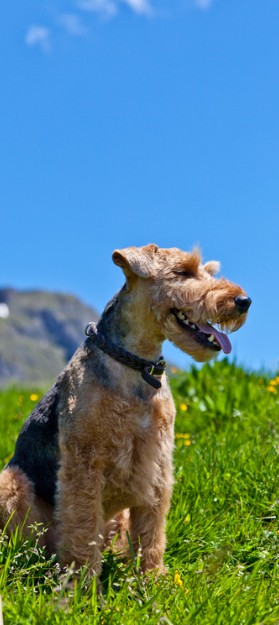
Confident. Assertive. Intelligent.
Initiative Without Conflict
Welsh Terriers move forward with curiosity and clarity rather than force. Their assertiveness reflects self-assured engagement, not aggression.
Boldness Was Balanced
Working demands selected for courage paired with social awareness. This heritage created dogs who act decisively while remaining emotionally regulated.


Guidance Refines Confidence
When their initiative is met with structure, confidence stays cooperative. Clear boundaries allow their intelligence to express itself without friction.
Motivation & Drive Expression: Understanding What Moves Your Welsh Terrier
Prey and Chase Drive Characteristics
Your Welsh Terrier’s prey and chase drive significantly influences their behaviour, training approach, and daily management needs. Understanding this drive—where it sits on the intensity spectrum and how it expresses—transforms your ability to work with rather than against your dog’s natural inclinations.
The Welsh Terrier demonstrates moderate to strong prey drive that’s highly context-dependent.
Welsh Terrier Drive Profile:
- Activation threshold – moderate, responds to movement but not constantly scanning
- Intensity – strong when activated but crucially interruptible with proper training
- Selectivity – more responsive to appropriate prey-sized stimuli than indiscriminate chasing
- Handler influence – significantly modifiable through training and relationship quality
- Context dependency – environmental factors strongly influence drive expression
This interruptibility distinguishes Welsh Terriers from breeds with such intense prey drive that recall becomes impossible once triggered.
Comparing Welsh Terrier Drive to Other Terriers:
Welsh Terriers fall in the middle-to-upper range of terrier prey drive. They’re less intense than Jack Russell Terriers or Rat Terriers, breeds developed for relentless pursuit where prey drive often overrides all other considerations. A Jack Russell activated by prey may become completely unresponsive; a Welsh Terrier activated by prey remains somewhat accessible if foundation training is solid.
They’re more intense than Soft-coated Wheaten Terriers or Kerry Blue Terriers, breeds selected more for companionship where prey drive, while present, sits lower on the priority list. A Wheaten might notice the squirrel and consider pursuing; a Welsh Terrier notices the squirrel and actively decides whether to pursue based on training, context, and handler presence.
Welsh Terriers compare most closely to Lakeland Terriers and Border Terriers—balanced working drive that’s real and requires management, but not so overwhelming that normal pet life becomes impossible. This is the practical sweet spot: enough drive to make training interesting and activities engaging, not so much that you’re constantly battling biological imperatives. 🐾
🐕 Welsh Terrier Assertiveness Journey
From Confident Puppy to Balanced Adult — Understanding the Eight Developmental Phases
Phase 1: Puppy Foundations
2-6 Months: Natural Confidence Emerges
Understanding Early Assertiveness
Your Welsh Terrier puppy displays natural boldness from the start. This isn’t problematic behavior—it’s genetic temperament expressing healthy SEEKING system activation. They investigate confidently, approach new situations with curiosity, and show early signs of boundary awareness with littermates.
What to Expect
• Forward movement toward novel objects and people
• Moderate arousal sensitivity with quick recovery
• Clear communication of comfort and discomfort
• Play-based learning with high engagement
Training Focus
Build the foundation through calm reward delivery and task-based engagement. Avoid excitement-based reinforcement that elevates arousal baselines. Focus on voluntary disengagement skills and teaching that patience produces desired outcomes. The NeuroBond approach starts here—building trust through clear communication.
Phase 2: Early Socialization
4-8 Months: Boundary Code Development
Social Intelligence Emergence
The Welsh Terrier boundary code becomes visible—tolerant but not submissive, confident but not reckless. Your puppy begins discriminating between polite and rude dog behavior, responding with proportional communication. This is sophisticated social awareness developing, not aggression.
Critical Period Behaviors
• Early warning signals (stiffening, low growls) when uncomfortable
• Quick corrections followed by immediate disengagement
• Selective play partner preferences emerging
• Testing boundaries with both dogs and humans
Handler Support Strategies
Support appropriate self-advocacy rather than suppressing communication. Screen dog interactions carefully—only allow greetings with polite dogs. Teach “let’s go” for handler-guided disengagement. Validate legitimate discomfort while providing alternatives to forceful corrections.
Critical Warning
Never punish early boundary communication. Suppressing appropriate warnings teaches your Welsh Terrier to either escalate faster or suppress signals until reaching explosive threshold. Both outcomes create serious long-term problems.
Phase 3: Pre-Adolescence
8-12 Months: Drive Expression Intensifies
Motivation Shift
Moderate to strong prey drive becomes more apparent. Your Welsh Terrier shows increased environmental engagement, stronger responses to movement stimuli, and growing problem-solving initiative. Task-based motivation begins exceeding reward-chasing as primary driver.
Behavioral Changes
• Increased pulling on leash toward areas of interest
• Longer attention span on prey stimuli
• More assertive play style with other dogs
• Growing independence in decision-making
Training Adjustments
Channel increasing drive through structured activities. Scent work, puzzle toys, and cooperative games provide appropriate outlets. Implement Engage-Disengage Protocol for prey stimuli. Build impulse control through wait/release patterns before doors and during feeding. The Invisible Leash concept becomes essential—awareness replaces tension.
Phase 4: Peak Adolescence
12-18 Months: The Challenging Period
Neurobiological Changes
The prefrontal cortex undergoes reorganization, temporarily reducing impulse control. Hormonal surges amplify existing confidence into heightened assertiveness. Your Welsh Terrier’s natural boldness peaks while regulatory capacity temporarily decreases—creating the perfect storm for behavioral challenges.
Peak Adolescent Manifestations
• Frequent boundary testing and rule challenging
• Reduced responsiveness to familiar cues
• Increased leash assertiveness and frustration
• More selective tolerance with other dogs
• Higher baseline arousal with slower recovery
• Greater environmental reactivity
Critical Management
Maintain absolute consistency despite increased testing. Increase structure temporarily—more frequent training with high reinforcement, expanded impulse control practice, clear consequences for violations. Avoid emotional reactions. Provide appropriate outlets matching growing energy levels. This is when relationship investment pays dividends.
Most Critical Period
This phase determines long-term behavioral patterns. Handlers who respond with punishment or surrender during adolescence often create permanent problems. Those who maintain calm authority while supporting developmental needs emerge with mature, stable adults. Seek professional help if challenges exceed your capacity.
Phase 5: Late Adolescence
18-24 Months: Regulation Capacity Returns
Settling Period
The storm begins passing. Neural reorganization completes, executive function improves, emotional regulation strengthens. Your Welsh Terrier starts showing the mature temperament they’ll carry into adulthood—confident but controlled, assertive but appropriate.
Emerging Maturity Signs
• Improved impulse control and frustration tolerance
• More consistent responsiveness to trained cues
• Better arousal regulation with faster recovery
• Stabilized social preferences and boundaries
• Reduced testing frequency
Consolidation Phase
Gradually restore privileges as reliability returns. Continue training but with reduced management intensity. Focus on refining skills rather than constant prevention. Celebrate improvements while maintaining expectations. The work you invested during peak adolescence now pays off.
Phase 6: Young Adult
2-3 Years: Balanced Confidence Achieved
Mature Temperament Expression
Your Welsh Terrier now displays the balanced boldness the breed is known for—spirited but sensible. Assertiveness remains but is appropriately channeled. Boundary communication is clear but proportional. The sophisticated temperament architecture is fully realized.
Adult Characteristics
• Reliable impulse control with learned regulation skills
• Confident but not reckless environmental engagement
• Clear social boundaries without excessive corrections
• Strong task-based motivation and cooperation
• Stable arousal baseline with good recovery capacity
Ongoing Development
Continue training and enrichment throughout adulthood. Mature doesn’t mean finished—your Welsh Terrier benefits from ongoing challenge and engagement. Maintain the relationship investment that brought you here. Through Soul Recall moments, you recognize how deep the bond has become.
Phase 7: Prime Adult Years
3-7 Years: Peak Partnership
Optimal Years
These are the golden years—physical prime combined with emotional maturity. Your Welsh Terrier is confident without being challenging, engaged without being overwhelming, assertive without being aggressive. The relationship you built through earlier phases now fully blossoms.
Prime Adult Capabilities
• Maximum physical fitness and endurance
• Excellent emotional regulation and impulse control
• Sophisticated social discrimination and communication
• Deep handler bond with intuitive responsiveness
• Peak problem-solving and learning capacity
Maximizing Prime Years
Engage fully in activities you both enjoy—hiking, dog sports, advanced training, or simply exploring together. These years offer the richest partnership experience. Maintain physical fitness and mental challenge. The investment you made in foundation and adolescence now provides dividends in the form of a truly exceptional companion.
Phase 8: Mature Adult & Senior
7+ Years: Wisdom Years
Graceful Aging
Your Welsh Terrier’s confidence remains but expression mellows. Physical changes require activity adjustments, yet mental engagement remains important. The assertiveness that defined earlier years softens into assured calmness—they’ve nothing left to prove.
Senior Considerations
• Reduced exercise intensity with maintained mental stimulation
• Potential increased social selectivity—respect preferences
• May show less patience with pushy younger dogs
• Boundary communication remains clear but energy-efficient
• Deeper bond through years of shared experience
Senior Care Approach
Adjust expectations while maintaining engagement. Shorter walks with more sniffing time, gentler play, continued training at appropriate pace. Monitor for pain or discomfort affecting behavior. Honor their preferences—if they’re less social now, that’s acceptable. The relationship you built over years provides the foundation for compassionate senior care.
🔍 Welsh Terrier vs. Other Terriers: Assertiveness Across the Spectrum
Jack Russell Terrier
Higher Intensity: Explosive assertiveness with minimal off-switch. Peak adolescence is extreme, requiring exceptional management. Settles later (3-4 years) with consistent structure.
Border Terrier
Similar Profile: Comparable assertiveness journey with slightly softer expression. Adolescence peaks similarly (12-18 months) but may show better social tolerance overall.
Soft-Coated Wheaten
Lower Intensity: Gentler assertiveness expression throughout life stages. Adolescence less dramatic, social tolerance higher. Matures earlier (18-24 months) with less challenging peaks.
Cairn Terrier
Moderate Spectrum: Assertiveness present but expressed with less intensity than Welsh. Shorter adolescence duration, earlier settling (20-26 months), generally good social adjustment.
Patterdale Terrier
Much Higher Intensity: Working-line intensity exceeding pet suitability. Assertiveness can cross into problematic aggression without expert handling. Extended adolescence (12-30 months).
Lakeland Terrier
Nearly Identical: Close Welsh relatives with matching temperament profiles. Assertiveness journey mirrors Welsh Terriers almost exactly. Same developmental timeline and management needs.
⚡ Quick Reference: Assertiveness Management Formula
Early Prevention (2-12 months): Clear communication + Calm reinforcement + Appropriate outlets = Healthy expression
Peak Adolescence (12-18 months): Absolute consistency + Increased structure + Patience = Successful transition
Adult Maintenance (2+ years): Continued engagement + Respect for boundaries + Relationship investment = Lifelong partnership
Key Principle: Assertiveness + Guidance ≠ Aggression | Assertiveness + Suppression = Reactivity
🧡 The Zoeta Dogsoul Approach to Welsh Terrier Assertiveness
Understanding your Welsh Terrier’s assertiveness journey through the NeuroBond lens transforms how you guide each developmental phase. When you recognize that confident approach isn’t dominance but genetic temperament expressing itself, you can support rather than suppress. The Invisible Leash principle—awareness, not tension, guiding the path—becomes essential during peak adolescence when frustration threatens to convert healthy assertiveness into reactivity.
Through moments of Soul Recall, you recognize how each phase builds upon the last—the puppy confidence that seemed challenging at 6 months becomes the balanced boldness of the mature adult. That balance between understanding biological drives and supporting emotional regulation, between honoring terrier spirit and teaching appropriate expression—that’s the essence of Zoeta Dogsoul. Your Welsh Terrier’s assertiveness isn’t a problem to fix; it’s a temperament to guide, a confidence to channel, a partnership to nurture across every developmental stage.
© Zoeta Dogsoul — Where neuroscience meets soul in dog training
Task-Based Engagement vs. Reward Chasing
Here’s where understanding your Welsh Terrier’s motivation structure becomes practically essential: they respond far better to task-based engagement than pure reward chasing. This isn’t about whether they like food—most do—but about what creates sustainable motivation and cooperation.
Task-Based Motivation Activities:
- Problem-solving – puzzle toys, scent work engaging cognitive capacity
- Cooperative activities – retrieve games, search tasks, agility with clear goals
- Decision-making opportunities – activities requiring initiative and choice
- Structured training – clear success criteria providing mental framework
- Working heritage channeling – tasks that tap into historical purpose
Reward-Chasing Limitations:
- Excessive food-luring – increases frustration when rewards aren’t immediately available
- High-value treats without structure – may increase impulsivity and arousal
- Constant excitement-based reinforcement – elevates baseline arousal levels
- Over-reliance on external motivation – reduces intrinsic cooperation
- Creates dependency – dog becomes focused on reward rather than task
This working heritage means your Welsh Terrier finds satisfaction in completing activities with clear goals—the task itself provides satisfaction, not just the reward at the end.
Training Implications:
Research on impulse control emphasizes that “dogs don’t naturally have emotional self-control; impatient puppies don’t magically mature into patient adults.” For Welsh Terriers, training approaches that build intrinsic motivation through task completion and cooperative success create more stable, confident behaviour than methods relying solely on high-arousal reward delivery.
This means structuring training sessions around problem-solving rather than just repetition. Instead of drilling “sit” twenty times with food lures, create scenarios where sitting solves a problem: sit to open the door, sit to begin the walk, sit to access the toy. The sit becomes purposeful, a tool your Welsh Terrier uses to navigate their world, rather than a trick performed for treats.
It means using life rewards—access to sniffing areas, permission to investigate, opportunity to play—as frequently as food rewards. These rewards are often more powerful because they satisfy your Welsh Terrier’s natural drives. Permission to check out that interesting smell provides genuine satisfaction that a piece of chicken can’t match.
It means building activities around your Welsh Terrier’s working heritage. Scent work isn’t just exercise; it’s fulfilling centuries of selective breeding for tracking and pursuit. Hide-and-seek games with toys or family members tap into search instincts. Even simple obedience becomes more engaging when framed as cooperative challenges rather than compliance exercises. 🧠
Drive Expression and the Pushiness Problem
Does excessive excitement-based reinforcement increase pushiness in Welsh Terriers? Absolutely, and understanding this mechanism helps you avoid creating the very problems you’re trying to prevent.
How Excitement-Based Reinforcement Creates Problems:
Arousal Sensitization:
- Repeated high-arousal reward delivery lowers excitement threshold
- Nervous system learns to jump to high arousal more readily
- Becomes more reactive to environmental stimuli over time
- What once required significant stimulation now triggers with minimal input
Frustration Intolerance:
- Never learns to wait or tolerate delay
- Lacks emotional tools to manage wanting something unavailable
- Cannot handle situations where rewards aren’t immediate
- Develops pushy, demanding behaviour as default response
Demand Behaviour Learning:
- Discovers forward pressure and persistence produce rewards
- Jump on you when excited → get the treat
- Pull toward other dogs → get to greet
- Vocalize insistently → get attention
- Generalizes pushy behaviour beyond training contexts
Reduced Self-Regulation:
- External excitement prevents internal calming skill development
- Never builds neural pathways for self-soothing
- Cannot downshift arousal independently
- Becomes dependent on environmental management rather than self-control
The Alternative Approach:
Calm Reward Delivery:
- Deliver reinforcement in low-arousal state
- Use quiet praise rather than excited encouragement
- Present treats calmly after settling
- Grant access after dog demonstrates calm
- Teaches that calm behaviour produces rewards
Variable Reinforcement Schedules:
- Sometimes yes, sometimes not yet, sometimes different reward type
- Builds resilience and frustration tolerance
- Maintains motivation through unpredictability
- Prevents expectation of immediate reward every time
Life Rewards as Primary Reinforcement:
- Permission to sniff and investigate
- Access to movement and exploration
- Opportunity to engage in natural behaviours
- Environmental access rather than constant food/toy delivery
- Satisfies natural drives without elevating arousal
Task Completion Satisfaction:
- Builds intrinsic motivation through successful problem-solving
- Creates engagement independent of external rewards
- Dog wants to work because work itself is satisfying
- Reduces need for constant external management
This approach aligns perfectly with the Welsh Terrier’s natural temperament—confident, engaged, and cooperative when provided with clear structure and meaningful activities. Through the Invisible Leash principle, you recognize that calm, purposeful engagement creates far more reliable behaviour than constant high-arousal excitement. Your Welsh Terrier learns that controlled drive expression—investigating with permission, pursuing appropriate outlets, engaging thoughtfully rather than frantically—produces the richest life experience.
The goal isn’t to eliminate drive or create a robotic dog. It’s to channel that wonderful Welsh Terrier energy productively, teaching your dog that they can express their natural drives within structures that work for both of you. This prevents the pushiness that emerges when drive has no appropriate outlet and excitement becomes the default state. Instead, you develop a Welsh Terrier who’s engaged but regulated, confident but controlled, spirited but sensible—exactly what generations of careful breeding intended. 🧡

Training Philosophy: Authority Without Dominance
Clear Communication Over Confrontation
Here’s a fundamental truth about training Welsh Terriers: they don’t respond well to confrontation, but they thrive on clear communication. This distinction shapes everything about effective training. Your Welsh Terrier’s confidence means they won’t readily submit to force or intimidation. Attempts to “dominate” them typically create conflict, damage trust, and often backfire spectacularly. But clear, consistent communication? That they respect completely.
Clear communication means your Welsh Terrier understands what’s expected before being asked to perform. You’ve built the behaviour in low-distraction environments, reinforced it consistently, and only gradually increased difficulty. When you give a cue, your dog knows exactly what it means because you’ve invested in education, not just expectation.
Authority in this context doesn’t mean dominance—it means reliability. Your Welsh Terrier trusts that you’ll provide clear information, that consequences are predictable, that guidance is fair. This trust-based authority is far more powerful than any coercive technique because it aligns with your dog’s natural social intelligence.
Through the NeuroBond approach, authority becomes partnership. Your Welsh Terrier follows your guidance not from suppression of their natural assertiveness but from confidence that your direction serves both of you. This is leadership that doesn’t require dominance displays, control that doesn’t demand submission. 🧡
Reinforcement Strategies for Confident Dogs
Training a confident dog like your Welsh Terrier requires understanding what they find genuinely reinforcing.
Effective Reinforcement Options:
- Food rewards – works well for most, use calmly delivered
- Novelty opportunities – new environments and experiences
- Investigation access – permission to explore and sniff
- Play with specific toys – individual preference matters
- Environmental access – doorways, outdoor spaces, movement
- Social interaction – on the dog’s terms, not forced
Critical Reinforcement Principles:
Timing Precision:
- Associations form within half a second
- Late reinforcement teaches wrong lesson
- Dog associates reward with behaviour occurring when it arrives
- Precision builds clarity and accelerates learning
Rate of Reinforcement:
- Early learning requires high frequency (multiple rewards per minute)
- Behaviour strengthens with consistent feedback
- Too-sparse reinforcement causes behaviour extinction
- Gradually reduce frequency as behaviour solidifies
Variety Maintenance:
- Mix food rewards, praise, play, and life rewards
- Unpredictable schedules maintain engagement better than perfect consistency
- Your Welsh Terrier’s intelligent mind needs interest that variety provides
- Match reinforcement type to context and individual preference
Boundaries Without Suppression
Your Welsh Terrier needs boundaries—clear expectations about what’s acceptable and what isn’t. But boundaries don’t require suppression of natural confidence. The goal is channelling assertiveness appropriately, not eliminating it.
Set boundaries through structured teaching rather than punishment. Instead of correcting unwanted behaviour, invest heavily in reinforcing desired alternatives. If your Welsh Terrier demands attention through pawing, teach them to sit politely and wait. If they pull on leash, reward loose-leash walking. If they guard resources, build relaxation around high-value items through systematic desensitization.
When consequences are necessary, they should be immediate, consistent, and proportional. Time-outs for over-arousal, removal of attention for pushy behaviour, gentle redirection for inappropriate choices. Never use physical punishment or intimidation with this breed—it damages trust without teaching alternatives and often increases the very behaviours you’re trying to reduce.
Your Welsh Terrier’s assertiveness is a feature, not a flaw. Boundaries help them understand how to express that confidence in ways that work within human social systems. This is guidance, not suppression; education, not domination.
Leash Walking & Frustration Prevention
The Leash as Communication Tool
Your leash should function as a communication line, not a restraint system. This conceptual shift changes everything about walks with your Welsh Terrier.
The Invisible Leash Principle in Practice:
- Loose leash as default – tension only for directional information
- Body language reading – dog learns to anticipate your movements
- Attention through engagement – maintaining position through focus rather than pressure
- Collaborative navigation – walks become partnership rather than combat
Foundation Building Steps:
- Start in low-distraction environments with high success rate
- Heavily reinforce any moment of loose leash
- Use directional changes and reinforcement placement strategically
- Create self-reinforcing pattern where staying near you provides maximum benefit
- Gradually increase environmental difficulty only after behaviour is solid
- Never progress faster than your dog’s success rate supports
When the leash maintains constant tension, it signals conflict and increases baseline arousal. When it remains loose except for subtle guidance, it becomes a tool for communication.
Preventing Leash Reactivity Development
Leash reactivity in Welsh Terriers almost always stems from frustration rather than fear. Your confident dog wants to investigate, greet, or move toward something interesting. The leash prevents natural approach behaviour. Frustration builds. Arousal increases. Eventually, lunging and vocalization become the habitual response to on-leash triggers.
Prevention Strategies:
Distance Management:
- Maintain sufficient distance that dog remains below reactive threshold
- Cross streets to avoid close dog encounters
- Change routes when necessary to preserve calm state
- Take breaks during walks before arousal accumulates
- Distance provides cognitive space for learning
Alternative Behaviour Teaching:
- “Watch me” or “focus” – gives productive action when triggers appear
- “Let’s go” or “this way” – provides smooth direction changes without conflict
- Engagement games – maintains attention on handler rather than environment
- These are communication tools, not suppression techniques
Threshold Management:
- Work well below reactive threshold always
- If reactivity already developed, systematic desensitization essential
- Pair triggers with high-value reinforcement at distance
- Gradually decrease distance as emotional response shifts from aroused to calm
- Professional guidance often valuable for precision protocols
Building Neutral Passing Skills
Not every dog encounter requires interaction. Teaching your Welsh Terrier to pass other dogs neutrally—acknowledging their presence without engagement—is one of the most valuable skills you can build.
Building Neutral Passing Skills:
Foundation Work:
- Heavily reinforce disengagement in low-distraction environments first
- Mark and reward when dog voluntarily looks away from stimuli
- Build strong pattern before introducing real dog encounters
- Generalize across multiple stimulus types
Real-World Application:
- Start with significant distance between dogs
- Gradually decrease space only as calm passing becomes habitual
- Keep reinforcement rate very high during early practice
- Only progress when success rate exceeds 80%
Greeting Management:
- Screen potential interactions carefully for appropriate social skills
- Only allow greetings with polite, well-mannered dogs
- Keep greetings brief (3-5 seconds maximum)
- Structure all interactions rather than allowing free-for-all
- End before arousal escalates, leaving dog wanting more
Benefits:
- Prevents frustration from blocked greetings
- Reduces arousal accumulation during walks
- Demonstrates that calm disengagement is both possible and rewarding
- Teaches handler makes good decisions about social interactions

Multi-Dog Households & Pack Dynamics
Welsh Terrier as Pack Member
Your Welsh Terrier can thrive in multi-dog households, but success requires understanding their social style. They typically establish clear boundaries with household dogs, communicating expectations through proportional corrections. They’re often willing to defer on low-stakes resources while holding boundaries on high-value items. Remarkably, they frequently play referee roles, intervening when other dogs violate household rules or social norms.
Establishing household harmony requires management during the integration period. Parallel feeding prevents resource guarding, separate rest spaces ensure each dog can decompress, and supervised interactions allow you to intervene before conflicts escalate. Rotating high-value items reduces possession-based tension.
Watch for signs of stress in multi-dog environments: increased vigilance, reduced sleep quality, avoidance behaviours, or escalating corrections. These indicate the social pressure exceeds your Welsh Terrier’s tolerance. Adjusting household management often resolves issues before they become serious problems.
Integrating New Dogs
Adding a new dog to a household with a Welsh Terrier requires thoughtful protocol.
Integration Protocol:
Initial Introductions:
- Conduct in neutral territory, not your home
- Allow sniffing and investigation without forced proximity
- Keep sessions brief initially (5-10 minutes)
- Multiple short sessions work better than one long introduction
- Both dogs should be calm before attempting meeting
First Weeks Management:
- Supervise all interactions without exception
- Provide frequent separation for decompression
- Ensure each dog receives individual attention daily
- Never leave dogs together unsupervised initially
- Watch for stress accumulation in either dog
Resource Management:
- Feed separately to prevent resource guarding
- Provide individual toys rather than shared resources
- Ensure sleeping areas don’t create competition
- Multiple water bowls in different locations
- High-value items distributed individually
Boundary Establishment:
- Your Welsh Terrier will likely establish boundaries relatively quickly
- Support appropriate communication while preventing excessive corrections
- Goal is clear hierarchy without constant enforcement
- Most Welsh Terriers settle into stable dynamics within weeks to months with consistent management
Preventing Sibling Conflicts
Long-term harmony requires ongoing attention to household dynamics.
Preventing Sibling Conflicts:
Resource Management:
- Ensure abundant high-value items so possession becomes less critical
- Avoid creating scarcity situations that trigger competition
- Rotate special toys and treats rather than constant availability
- Multiple access points for valued resources
Attention Distribution:
- Avoid favouritism in attention distribution
- Your Welsh Terrier notices preferential treatment
- May react to perceived unfairness with boundary enforcement
- Equal individual time maintains each dog’s sense of value
Individual Relationships:
- Each dog needs one-on-one time with you
- Maintains individual bond rather than just pack membership
- Separate walks, training sessions, quiet time
- Prevents over-identification as unit rather than individuals
Stress Recognition:
- Monitor for stress accumulation in household
- Increased vigilance, reduced sleep quality, avoidance behaviours
- Escalating corrections indicating tolerance exceeded
- Sometimes dogs need breaks from each other
Compatibility Assessment:
- Some dogs genuinely thrive better as only dogs
- Recognizing this isn’t failure, it’s responsible ownership
- Professional behavioural assessment helps determine if conflicts are manageable
- Fundamental incompatibility requires honest evaluation
Adolescence & Maturation Challenges
The Assertiveness Peak
Welsh Terrier adolescence typically spans 8-24 months, with peak assertiveness appearing around 12-18 months. During this period, you might notice specific changes.
Typical Adolescent Changes:
- Increased boundary enforcement with other dogs
- More frequent testing of household rules and expectations
- Higher arousal with reduced impulse control capacity
- Increased frustration with physical and social constraints
- Greater independence in decision-making and environmental engagement
- Reduced responsiveness to previously reliable cues
- Heightened reactivity to environmental stimuli
- More assertive social interactions with both dogs and people
This isn’t regression; it’s development. Your Welsh Terrier’s brain is reorganizing, establishing adult neural patterns. The prefrontal cortex—responsible for impulse control and emotional regulation—undergoes significant development during adolescence. Simultaneously, hormonal changes influence emotional reactivity and social behaviour. This creates a perfect storm of increased drive with reduced regulatory capacity.
Understanding this as a normal developmental phase transforms your response. Instead of viewing your adolescent Welsh Terrier as suddenly “bad” or “dominant,” you recognize them as navigating complex neurobiological changes while maintaining core training and behavioural expectations.
Maintaining Structure Through Transition
Consistency becomes even more critical during adolescence.
Maintaining Structure Through Transition:
Consistency Essentials:
- Keep rules and expectations unchanged despite increased testing
- Maintain clear boundaries even when compliance requires more effort
- Provide calm, neutral responses to boundary challenges
- Avoid emotional reactions to adolescent behaviour
- Maintain daily routines and predictable patterns
- Never negotiate established rules based on testing intensity
Increased Management:
- More leash time in high-distraction areas
- Fewer off-leash privileges temporarily during peak adolescence
- Increased supervision around known triggers
- Prevents practicing unwanted behaviours while regulation capacity is reduced
- Privileges gradually return as maturity develops
Training Maintenance:
- Continue training throughout adolescence with adjusted expectations
- Maintain existing skills through regular practice
- Introduce new learning at slower pace during peak hormonal changes
- Expect apparent regression in previously solid behaviours (this is normal)
- Patient retraining rebuilds reliability as brain matures
Relationship Investment:
- Increased quality time and positive interactions
- Activities that build cooperation and trust
- Calm leadership providing security during developmental uncertainty
- Recognition that testing reflects developmental needs, not defiance
- Patience and perspective understanding adolescence is temporary
Supporting Maturation Without Suppression
Your adolescent Welsh Terrier needs guidance, not suppression. Their increased assertiveness reflects normal development, not a challenge to your authority. Respond with clear communication rather than confrontation, setting boundaries while respecting their growing independence.
Provide appropriate outlets for increased drive. Adolescent energy needs expression; channelling it productively prevents problematic redirections. Scent work, structured play, training games, and increased exercise all serve this need. Physical maturation creates capacity for sustained activity that your adolescent Welsh Terrier needs to expend.
Maintain connection through adolescent challenges. This period tests handler patience, but your relationship with your Welsh Terrier deepens through successfully navigating these challenges together. Trust that consistent guidance will produce mature stability, seeking professional support when challenges exceed your capacity.
Research emphasizes that “owners who understand adolescent behaviour are less likely to relinquish dogs during this challenging period.” For Welsh Terriers, whose natural confidence manifests as increased assertiveness during adolescence, informed, patient handling prevents long-term behavioural problems. 🧡
Urban Living & Modern Stressors
Challenges of Modern Dog Density
Your Welsh Terrier evolved in rural Welsh environments with extensive space for free movement, infrequent but purposeful dog interactions, natural outlets for prey drive and exploration, and clear work roles. Modern urban living presents fundamentally different challenges.
Urban Environment Stressors:
High-Density Dog Populations:
- Frequent, unavoidable dog encounters on walks
- Close-proximity living (apartments, condos) with neighbouring dogs
- Dog parks with uncontrolled, chaotic interactions
- Constant visual and auditory exposure to other dogs
- No control over quality of dog encounters
Leash-Walking Constraints:
- Restricted movement and investigation opportunities
- Inability to create distance from uncomfortable situations
- Constant decision-making about appropriate responses
- Frustration from blocked natural behaviours
- Forced proximity to triggers without escape options
Restricted Space:
- Limited opportunities for off-leash exercise
- Reduced ability to engage in natural terrier behaviours
- Increased arousal from environmental confinement
- Fewer decompression opportunities
- Constant environmental stimulation without breaks
Tolerance Reduction Through Exposure Frequency
Does constant social exposure reduce tolerance? Yes, through multiple mechanisms. Arousal accumulation occurs when baseline arousal never fully resolves between encounters, recovery time between stimulating situations decreases, sensitization to dog-related stimuli develops, and frustration tolerance diminishes.
Learned reactivity patterns emerge when forward pressure becomes the habitual response to dog sightings, frustration escalates more quickly over time, threshold for reactive behaviour decreases, and recovery from arousal becomes progressively difficult. Your Welsh Terrier essentially learns that every dog encounter requires intense responding.
Boundary violation fatigue develops from constant exposure to rude or inappropriate dog behaviour, reducing tolerance for social pressure, increasing defensive or assertive responses, creating expectation of negative interactions, and diminishing willingness to engage socially. Your Welsh Terrier stops giving other dogs the benefit of the doubt.
Handler stress transmission completes the feedback loop. Urban environments increase your anxiety about dog encounters, which transmits through leash and body language. Your anticipation primes your dog for reactivity, rushed or tense handling increases arousal, and a negative feedback loop develops between you and your Welsh Terrier.
Management Strategies for Urban Stability
Distance Control Implementation:
- Cross streets proactively to avoid close dog encounters
- Use longer routes providing more space options
- Practice in low-traffic areas before high-density environments
- Recognize early arousal signs and create distance immediately
- Teach “let’s go” or “this way” for smooth direction changes
- Prioritize distance over proximity always
Predictable Route Benefits:
- Establish 2-3 regular walking routes for familiarity
- Vary routes periodically to prevent boredom while maintaining general patterns
- Identify “safe zones” where dog can decompress
- Note trigger locations and plan route accordingly
- Build positive associations with regular routes through consistent reinforcement
Neutral Greeting Skills:
- Teach “neutral pass” behaviour (calm walking past other dogs)
- Heavily reinforce disengagement from approaching dogs
- Screen potential interactions ruthlessly—only allow appropriate dogs
- Keep greetings brief (3-5 seconds) and highly structured
- End all interactions before arousal begins escalating
Regular Decompression:
- Weekly visits to quiet, natural areas (trails, fields, beaches)
- Allow extended sniffing and investigation time without structure
- Minimize structured training during decompression walks
- Provide opportunities for natural terrier behaviours
- Balance urban exposure with rural/natural experiences
Proactive Arousal Management:
- Monitor arousal levels continuously throughout walks
- Take breaks when arousal begins elevating
- Use calming activities (sniffing, slow walking) to reduce arousal
- End walks before dog becomes overstimulated
- Provide 15-30 minutes post-walk quiet decompression time 🐾
Nutrition, Health, and Behavioural Stability
Dietary Impact on Arousal and Reactivity
Your Welsh Terrier’s diet influences their behavioural baseline more than most handlers realize. Nutritional composition affects neurotransmitter production, inflammatory processes that impact mood, blood glucose stability throughout the day, and gut microbiome composition linked to emotional regulation.
High-quality protein sources provide amino acid precursors for neurotransmitter synthesis. Tryptophan converts to serotonin, supporting emotional stability. Tyrosine and phenylalanine become dopamine and norepinephrine, influencing arousal and attention. Balanced fat profiles—particularly omega-3 fatty acids—reduce systemic inflammation associated with anxiety and reactivity.
Avoid artificial additives, colours, and preservatives where possible. Some dogs show sensitivity to specific additives, manifesting as increased arousal or behavioural changes. Complex carbohydrates provide steady glucose release, preventing the arousal spikes associated with simple sugars.
Consider meal timing strategically. Feeding before potentially stressful events can increase food-related arousal, while feeding after allows your Welsh Terrier to approach situations on an empty stomach, typically associated with slightly lower arousal. Individual variation exists; observe your dog’s patterns and adjust accordingly.
Health Conditions Affecting Behaviour
Pain and discomfort profoundly impact behaviour. A Welsh Terrier experiencing chronic pain may show increased irritability, reduced tolerance for other dogs, reluctance to engage in previously enjoyed activities, or changes in sleep patterns. Orthopedic issues, dental problems, gastrointestinal discomfort, and dermatological conditions all influence behavioural baselines.
Thyroid dysfunction—particularly hypothyroidism—can manifest as behavioural changes including increased reactivity, reduced frustration tolerance, weight gain with associated mobility challenges, and changes in energy patterns. If your Welsh Terrier shows sudden behavioural changes, thyroid screening should be part of the diagnostic process.
Neurological conditions, while less common, can alter behaviour significantly. Seizure disorders may present with increased irritability between episodes, cognitive dysfunction in older dogs affects responsiveness and emotional regulation, and pain from spinal issues influences interaction patterns.
Regular veterinary assessment provides the foundation for behavioural stability. Don’t assume behavioural changes are “just personality”; rule out medical contributors first. That balance between science and soul—between understanding biological influences and supporting emotional wellbeing—that’s the essence of Zoeta Dogsoul. 🧠
Exercise Requirements and Mental Stimulation
Your Welsh Terrier requires both physical exercise and mental stimulation for optimal behavioural stability. Physical requirements include 60-90 minutes of daily activity combining walking, running, and structured play. Intensity matters—leisurely strolls don’t provide the same benefit as vigorous exercise that genuinely tires your dog.
Mental stimulation often proves even more critical for behavioural stability. Scent work engages your Welsh Terrier’s natural tracking instincts, puzzle toys and food-dispensing items provide problem-solving opportunities, training sessions exercise cognitive capacity, and novel environments offer processing challenges that tire the brain as effectively as physical activity tires the body.
Balance these elements daily. A physically exhausted but mentally understimulated Welsh Terrier often shows continued restlessness and arousal. Conversely, intensive mental work without physical outlets creates frustration. The combination produces the calm, settled dog you’re seeking.
Adjust exercise during adolescence and for senior dogs. Adolescents often need increased activity to manage developmental arousal, while seniors require modified intensity and duration to accommodate changing physical capacity while maintaining mental engagement.
Living Successfully with a Welsh Terrier
Realistic Expectations for New Owners
If you’re considering adding a Welsh Terrier to your life, or you’re in the early stages of living with one, understanding realistic expectations prevents disappointment and supports appropriate handling. This breed isn’t for everyone, and that’s perfectly acceptable.
Welsh Terriers require consistent, engaged training throughout their lives. This isn’t a breed you train once and forget—they need ongoing mental stimulation and clear communication. They thrive with active households that can provide daily exercise and enrichment. They need handlers who appreciate their independence rather than requiring constant obedience-focused compliance.
Social management is necessary. Your Welsh Terrier won’t necessarily love every dog they meet, and that’s normal. You’ll need to screen interactions, support appropriate boundaries, and accept that your dog has preferences and limitations. Urban living requires additional consideration and management to prevent stress accumulation.
Time investment is substantial. Daily exercise, training sessions, mental enrichment activities, and social management all require committed time and attention. If you’re frequently away or unable to provide consistent structure, this breed may struggle in your household.
The Rewarding Reality
But here’s what makes it worthwhile: the Welsh Terrier’s intelligence creates a fascinating partnership. They’re problem-solvers, observers, active participants in household life rather than passive companions. Their confidence is infectious—watching a Welsh Terrier approach life with characteristic boldness often inspires handler confidence as well.
Their loyalty and affection run deep. This isn’t a breed that loves everyone indiscriminately; they form strong attachments to their people, and that selective bonding creates powerful connection. Their humour and personality shine through daily interactions—Welsh Terriers have opinions, preferences, and expressions that continuously entertain.
Their moderate size and manageable coat maintenance make practical aspects relatively straightforward. They’re robust, generally healthy, adaptable to various living situations when their core needs are met. And perhaps most rewarding, successfully guiding a Welsh Terrier through adolescence into mature stability represents genuine achievement—you’ve partnered with an intelligent, confident dog through complex developmental challenges, emerging with a relationship built on mutual trust and respect.
Questions to Ask Yourself
Before committing to a Welsh Terrier, honestly assess:
Essential Self-Assessment Questions:
Daily Commitment:
- Can you provide consistent daily exercise and mental stimulation for the next 12-15 years?
- Is this requirement daily, not occasional—are you prepared for this commitment?
- Do you have backup plans for days when life gets busy or challenging?
Social Management:
- Are you prepared to actively manage social interactions rather than expecting universal dog-friendliness?
- Can you screen interactions, support boundaries, and accept your dog’s social preferences?
- Will you be comfortable advocating for your dog’s needs in social situations?
Adolescence Preparation:
- Can you maintain training and structure throughout adolescence when behaviour becomes more challenging?
- Will you remain patient and consistent during the most testing developmental period?
- Do you have support systems if challenges exceed your capacity?
Training Philosophy:
- Do you appreciate independent thinking in dogs, or do you require immediate compliance?
- Can you work with a dog who thinks before responding rather than automatically obeying?
- Are you comfortable with a partnership approach rather than strict obedience?
Drive Management:
- Can you provide appropriate outlets for prey drive and investigation behaviours?
- Will you channel natural drives productively rather than attempting suppression?
- Do you have access to suitable environments for terrier activities?
Professional Support:
- Are you prepared to seek professional help if challenges arise?
- Will you recognize when you need support and access it promptly?
- Can you invest in professional guidance as part of responsible ownership?
If you can answer yes to these questions, a Welsh Terrier offers a remarkable partnership—spirited, intelligent, loyal, and endlessly engaging. That relationship, built through understanding their natural assertiveness and supporting healthy expression of their terrier heritage, creates connections that last a lifetime.
Final Thoughts: Assertiveness as Gift, Not Problem
Your Welsh Terrier’s assertiveness is precisely what makes them exceptional. That forward confidence, that clear boundary communication, that spirited engagement with life—these aren’t flaws requiring suppression. They’re the very traits that generations of careful selection preserved and enhanced.
Understanding the distinction between healthy assertiveness and problematic aggression changes everything. When you recognize frustration pathways, support appropriate boundary-setting, provide clear communication without confrontation, and honour your Welsh Terrier’s need for agency in their interactions, you create conditions where their natural temperament flourishes appropriately within modern life.
This doesn’t mean Welsh Terriers are easy dogs. They require engaged, informed handling. They need structure, clear expectations, consistent consequences, and appropriate outlets for their considerable energy and intelligence. But when these needs are met, when handlers understand and work with rather than against their natural temperament, Welsh Terriers become exceptional companions—loyal, engaging, endlessly fascinating partners in daily life.
The journey with a Welsh Terrier teaches us about partnership rather than dominance, communication rather than control, guidance rather than suppression. Through the NeuroBond approach, we recognize that training isn’t about overriding natural temperament but channelling it appropriately. The Invisible Leash reminds us that true guidance comes through awareness and connection, not force and restraint. Moments of Soul Recall reveal the deep emotional intelligence underlying your Welsh Terrier’s behaviour—they’re not randomly reactive but thoughtfully responsive, reading situations and adjusting accordingly when given the tools and support to do so.
Is your Welsh Terrier assertive? Absolutely. Is that assertiveness aggressive? In most cases, definitively not. The distinction matters enormously, shaping every aspect of your relationship and your approach to guidance. When you understand, appreciate, and appropriately channel that Welsh Terrier assertiveness, you discover a partnership characterized by mutual respect, clear communication, and genuine connection—the very essence of what makes living with this remarkable breed so deeply rewarding. 🧡🐾










