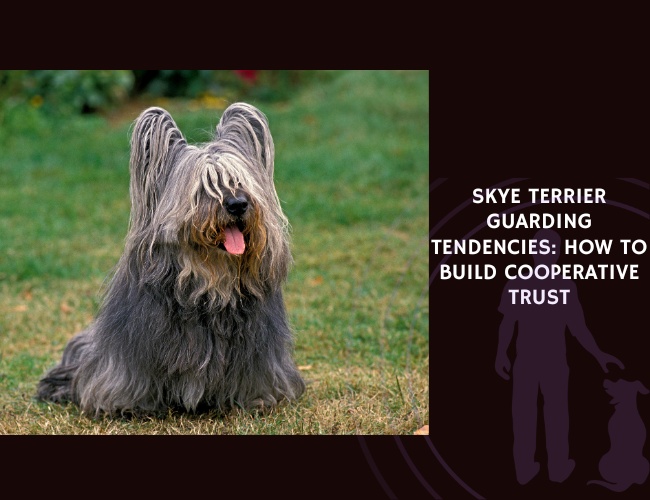
When you welcome a Skye Terrier into your life, you’re not just adopting a dog—you’re entering into a relationship with a breed shaped by centuries of independent thinking, territorial vigilance, and profound loyalty. These elegant, long-coated terriers from the Scottish Highlands carry within them the legacy of estate guardians and fearless vermin hunters. Understanding their guarding tendencies isn’t about suppressing natural instincts but rather about building a framework of cooperative trust that honors both their heritage and your shared life together.
Let us guide you through the intricate world of Skye Terrier behavior, where boldness meets selectivity, and where proper guidance transforms potential challenges into expressions of deep, mutual understanding. 🧡
The Historical Blueprint: Understanding Bred-In Boldness
The Isle of Skye Legacy: Where Guarding Was Survival
Your Skye Terrier’s behavior makes perfect sense when you understand their origins. Developed on the rugged Isle of Skye in Scotland, these terriers weren’t lap dogs or casual companions. They were working professionals with a serious job description: pursue vermin into dark, confined burrows where retreat wasn’t an option, and protect estate boundaries with unwavering vigilance.
This historical role created several distinctive behavioral patterns you’ll recognize in your modern Skye Terrier:
Key Selection Pressures That Shaped Guarding Behavior:
- Persistence Over Retreat: Bred to pursue vermin into confined spaces where escape wasn’t possible, creating low retreat probability when confronted with perceived threats
- Suspicion as Survival: Needed to distinguish between familiar handlers and intruders on large estates, resulting in genetically embedded social selectivity
- Territorial Vigilance: Valued for alertness and protective instincts, producing dogs who naturally assess threats before accepting newcomers
- Independent Decision-Making: Required to work alone in challenging terrain, developing confident judgment that persists today
- Boldness Under Pressure: Selected for courage when facing formidable prey in dark, dangerous spaces, creating dogs who don’t back down easily
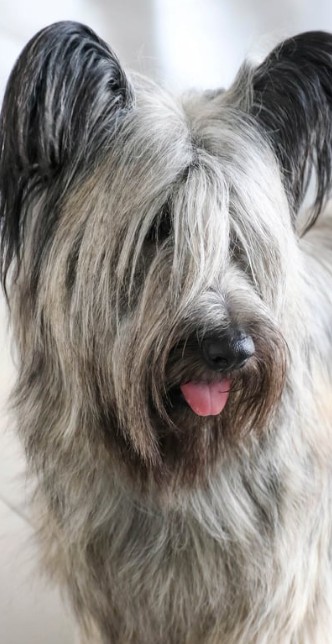
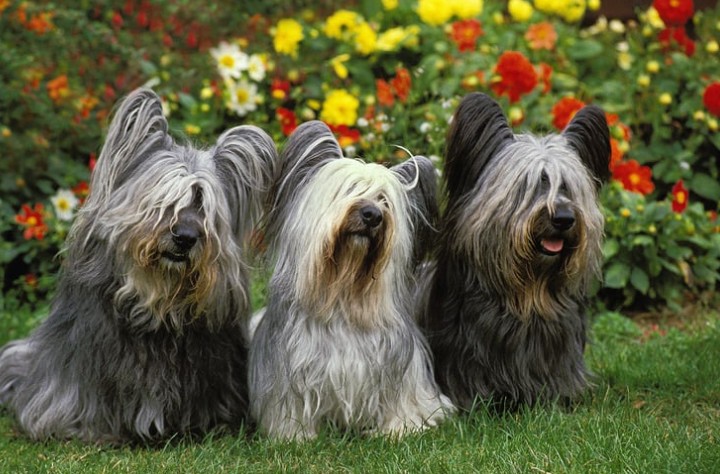
The breed’s territorial vigilance was highly valued. Estate owners needed dogs who could distinguish between familiar handlers and potential intruders, who would alert to boundary crossings, and who possessed the courage to back up their warnings. Your Skye Terrier inherited all of this, compressed into a 25-pound package beneath that flowing coat.
The One-Handler Phenomenon: Deep Bonds and Selective Loyalty
Historical accounts consistently emphasize the Skye Terrier’s profound attachment to one primary person. This isn’t just preference—it’s a fundamental aspect of how the breed experiences relationships and learns about the world.
You might notice your Skye Terrier forms an almost exclusive bond with one family member. This manifests in several distinctive ways:
How the One-Handler Preference Shows Itself:
- Relationship Guarding: More concerned about protecting access to you than guarding food bowls or toys
- Positioning Behavior: Consistently places themselves between you and approaching visitors or family members
- Tension Displays: Shows physical stiffness or stress signals when others get too close to “their person”
- Selective Cooperation: Responds enthusiastically to primary handler’s commands but shows reluctance with others
- Vigilant Monitoring: Constantly tracks your location and movements throughout the house
- Proximity Seeking: Follows you from room to room, even for mundane activities
This attachment pattern influences training significantly. Research indicates Skye Terriers demonstrate greater cooperation with one consistent handler and may be less compliant with others. This isn’t defiance or dominance—it’s attachment-based learning. Your Skye Terrier needs to feel that you are a reliable, calm authority before they’ll relinquish control and trust your judgment about who and what is safe.
Through the NeuroBond approach, this deep attachment becomes the foundation for all learning and behavior modification. When you understand that trust is currency for your Skye Terrier, every interaction takes on new meaning.
What Are They Guarding? Space, Relationships, and Territorial Intelligence
Space Over Objects: The Geographic Mind of a Terrier
Unlike many breeds that fixate on toys or food bowls, Skye Terriers demonstrate a distinctive preference for guarding spaces. This reflects their historical role as estate guardians who monitored boundaries and controlled access points.
Threshold Control Patterns
Your Skye Terrier views doorways, hallways, stairways, and furniture access points as critical control zones. These aren’t random preferences—they’re strategic positions inherited from generations of dogs who survived by managing territory effectively.
Common Strategic Positions Your Skye Terrier Guards:
- Primary Doorways: Front door, back door, garage entry—anywhere outsiders enter the territory
- Hallway Choke Points: Narrow passages that control access between rooms
- Stairway Access: Both top and bottom of stairs, managing vertical territory movement
- Furniture Thresholds: Couch, bed, or chair access—controlling who joins elevated positions
- Room Transitions: Archways and open doorways between main living spaces
- Handler’s Personal Spaces: Bedroom doors, bathroom access when you’re inside, home office entry
You might observe your dog positioning themselves in these locations, controlling who enters and exits rooms, or showing heightened alertness when family members move between spaces.
Elevated Position Preference
Sofas, beds, and chairs hold special significance. These elevated surfaces provide visual advantage and perceived status. Modern behaviorists understand this isn’t about “dominance” in the outdated hierarchical sense, but rather strategic positioning for monitoring the environment. Your Skye Terrier on the couch isn’t trying to become “alpha”—they’re doing exactly what their genetics tell them: secure a vantage point for environmental surveillance.
Den-Like Spaces and Defensive Activation
Confined areas trigger stronger guarding responses because they limit retreat options. When your Skye Terrier is under a table, in a crate, or wedged between furniture, their “stand and defend” instinct activates more readily than in open spaces. This makes perfect sense when you remember their historical role entering burrows and dens where backing up wasn’t possible.
Relationship Guarding: You Are the Most Valuable Resource
While food and toy guarding can occur in any breed, Skye Terriers more commonly exhibit relationship guarding—protecting access to their primary handler from other people or animals.
This possessive attachment stems from that deep, singular bond we discussed earlier. Your Skye Terrier doesn’t just love you; they’ve identified you as their most important resource in the world. Other people approaching you may be perceived as threats to this exclusive relationship, especially if the dog feels the bond is somehow at risk.
The breed’s natural social selectivity creates a binary worldview: individuals are either “inside the circle” (trusted) or “outside the circle” (suspect). This black-and-white thinking intensifies guarding behavior because there’s little middle ground in your dog’s assessment. Understanding this helps you approach training with appropriate strategies rather than fighting against genetic programming.
Social Intelligence: The Circle of Trust
Skye Terriers employ sophisticated social assessment when deciding who deserves trust. They don’t make these decisions lightly or quickly, and pushing them to decide faster often backfires.
Factors Your Dog Evaluates During Social Assessment:
- Approach Speed: How quickly someone moves toward them or their handler
- Body Language: Posture, gestures, whether the person makes themselves large or small
- Voice Tone: Pitch, volume, and emotional quality of speech
- Eye Contact Patterns: Whether strangers stare directly or offer respectful glances away
- Handler’s Emotional Response: Your tension, relaxation, or approval signals
- Scent Information: Chemical signals from the person indicating stress, fear, or calm
- Previous Experience: Whether this person resembles someone from past positive or negative encounters
- Environmental Context: Whether the person appears in familiar or novel locations
Your dog evaluates multiple factors simultaneously. Strangers who “wait for him to make the first move” are far more readily accepted than those who push for immediate interaction. Forcing greetings can actually increase suspicion rather than reduce it, creating negative associations that strengthen over time.
Your Skye Terrier also monitors your emotional state constantly. Calm, neutral handler behavior signals safety to your dog. Tension, anxiety, or excessive reassurance confirms your dog’s suspicion that yes, this stranger is indeed something to worry about. The Invisible Leash reminds us that awareness, not tension, guides the path—your emotional state flows directly into your dog’s threat assessment system.
Loyal Suspicion: The Social Selectivity Paradox
Why They Stay Reserved Despite Proper Socialization
You’ve socialized your Skye Terrier from puppyhood. You’ve introduced them to diverse people, places, and situations. Yet they remain reserved with strangers, and you wonder if you’ve done something wrong. You haven’t.
The breed standard describes Skye Terriers as “friendly, happy, and devoted to his people” but explicitly notes that “strangers who wait for him to make the first move will find he accepts them as well—once he’s decided they aren’t pushy or a threat.” This reserved nature isn’t a training failure; it’s a breed characteristic rooted in genetic predisposition.
Neophobia Versus Sociability
Skye Terriers can be socialized to tolerate novelty without becoming indiscriminately friendly. Their cautious assessment is adaptive, not pathological. In their original working environment, dogs who trusted everyone put themselves and their human families at risk. Dogs who assessed carefully survived and reproduced.
Your goal shouldn’t be creating a Skye Terrier who greets every stranger with enthusiasm. Your goal is creating a dog who can tolerate novel situations without fear while maintaining appropriate caution. This is healthy boundary awareness, not antisocial behavior.
Quality Over Quantity in Socialization
For this breed, socialization should emphasize positive, low-pressure exposures rather than overwhelming quantity. Ten positive encounters where your dog feels safe and in control outweigh fifty forced interactions where they feel pressured and defensive.
Principles of Quality Socialization for Skye Terriers:
- Choice and Control: Let your dog choose whether to approach; never force interaction
- Sub-Threshold Exposure: Keep distance great enough that your dog notices stimuli but remains calm
- Positive Associations: Pair new people and situations with high-value treats and rewards
- Short Duration: Multiple brief, successful encounters beat lengthy stressful ones
- Handler Confidence: Your calm, neutral demeanor signals that situations are safe
- Escape Routes: Always provide your dog a way to retreat if overwhelmed
- Gradual Progression: Increase difficulty slowly, building on previous successes
- Individual Pace: Respect your specific dog’s tolerance, not breed generalities
Consider this: every time you force your Skye Terrier to greet someone when they’re showing hesitation, you teach them that their communication doesn’t matter and that you won’t protect them from uncomfortable situations. This erodes trust and can actually increase guarding behavior as your dog learns they must defend themselves.
The Danger of Forced Greetings: Building Fear Instead of Trust
Repeated forced greetings create a problematic learning pattern that intensifies guarding over time.
Trigger Stacking and Lowered Thresholds
Each uncomfortable interaction adds to your dog’s stress load. When multiple stressors compound—a vet visit in the morning, encountering a reactive dog on a walk, then forced greeting with a stranger in the afternoon—the threshold for guarding drops significantly. What your dog might normally tolerate becomes intolerable when stress has accumulated.
Common Stressors That Stack Throughout the Day:
- Medical Procedures: Vet visits, nail trims, ear cleaning, medication administration
- Social Conflicts: Encountering reactive dogs, forced greetings, crowded environments
- Routine Disruptions: Schedule changes, new furniture placement, household visitors
- Environmental Stress: Loud noises, storms, construction sounds, fireworks
- Physical Discomfort: Pain, hunger, fatigue, heat or cold exposure
- Separation Anxiety: Being left alone longer than usual, owner returning late
- Training Pressure: Difficult training sessions, repeated failures, frustration
- Sensory Overload: Too many new stimuli in a short period, excessive handling
You might notice your dog’s guarding is inconsistent: sometimes they tolerate guests, other times they react intensely. Look at the context. What happened earlier that day? What’s their overall stress level? Understanding trigger stacking helps you predict and prevent problems.
Learned Helplessness or Defensive Escalation
Dogs forced into uncomfortable greetings face an impossible choice: shut down completely (learned helplessness) or escalate defensive behavior to make the interaction stop. Neither outcome serves your relationship or your dog’s wellbeing. A dog who has learned helplessness appears “well-behaved” but is actually suffering internally, unable to advocate for their needs. A dog who escalates may snap or bite, confirming everyone’s fears about “aggressive” Skye Terriers.
The middle path—the healthy path—is teaching your dog that you’ll respect their boundaries while gradually expanding their comfort zone through positive experiences they can control.
Silent Tension: Reading the Terrier’s Subtle Threat Display
The Art of Quiet Guarding
Unlike breeds that bark readily at perceived threats, Skye Terriers often employ remarkably subtle guarding tactics. This makes them more dangerous in some ways because inexperienced handlers may miss the warnings entirely.
Your Skye Terrier’s silent guarding includes freezing and stillness—becoming motionless with muscles tensed and weight shifted forward. This predatory “lock-on” posture comes directly from their hunting heritage. In the wild, predators freeze before attacking. Your dog isn’t planning to attack necessarily, but they’re preparing for that possibility.
The hard eye and body blocking combination is classic Skye Terrier boundary communication. Direct, unblinking stare combined with positioning between you and a perceived threat. This is your dog saying “I see this threat, I’m monitoring it, and I will intervene if necessary.” If ignored, this warning can escalate quickly.
Micro-Signals That Predict Escalation
Learning to read your Skye Terrier’s micro-expressions prevents most guarding situations from escalating to bites. These signals happen in seconds, and your response in those critical moments shapes whether the situation defuses or explodes.
Pre-Escalation Warning Signs to Watch For:
- Head Stillness: Dog stops casual environmental scanning and locks onto a specific trigger
- Weight Shift Forward: Subtle lean toward the threat, loading front legs for action
- Whisker Position: Changes from neutral to forward-pointing during arousal
- Breath Pattern: Shifts to shallow, held breath or rapid panting when not hot
- Tail Position: Stiffens horizontally without wagging; may show tip quivering
- Hard Eye: Direct, unblinking stare with dilated pupils
- Muscle Tension: Visible stiffness through shoulders, neck, and back
- Ear Position: Pricked forward and immobile, focused on the trigger
- Lip Tension: Subtle tightening or pulling back of lips, even without showing teeth
- Body Blocking: Positioning between handler and perceived threat
- Decreased Responsiveness: Ignoring familiar cues or handler attempts to redirect
Tail position stiffens horizontally without wagging. A relaxed tail moves fluidly; a guarding tail becomes rigid, sometimes with just the tip quivering.
Handler Response: Defusing or Confirming the Threat
Your response to these early warning signals dramatically influences whether your dog escalates or de-escalates.
Counterproductive Responses That Make Guarding Worse:
- Sudden Grabbing: Physical restraint increases arousal and confirms threat perception
- Scolding or Yelling: Adds stress without addressing underlying fear or territorial concern
- Verbal Soothing: “It’s okay” or comforting talk validates there’s something to worry about
- Negotiating: Verbal bargaining provides attention and confirms the dog’s concern
- Staring at Dog: Direct eye contact during guarding can trigger escalation
- Tension or Anxiety: Handler nervousness confirms the dog was right to worry
- Hovering: Standing over or leaning toward a guarding dog increases pressure
- Forced Proximity: Pushing dog toward trigger before they’re ready
- Punishment After: Correcting the dog after guarding teaches them to skip warnings next time
These responses feel natural to many handlers but inadvertently reinforce the guarding state by providing attention or confirming that the situation is indeed threatening.
Effective Responses That Preserve Trust:
- Calm Redirection: Use neutral tone with clear cue like “place,” “look at me,” or “let’s go”
- Spatial Management: Create distance from trigger before dog reaches threshold
- Emotional Neutrality: Maintain relaxed body language and calm breathing
- Immediate Reward: Mark and treat calm behavior as soon as dog redirects attention
- Remove Visual Access: Block view of trigger with your body or by changing position
- Environmental Management: Use barriers to create separation when needed
- Acknowledge and Direct: Brief “thank you” followed by clear instruction
- Strategic Retreat: Move away from trigger without drama or urgency
- Alternative Focus: Redirect to a known, easy command that builds success
Calm redirection with a neutral tone and clear cue gives your dog an alternative behavior while demonstrating your confidence that the situation is manageable.
Spatial management means creating distance from the trigger before your dog reaches threshold. Prevention is always easier than intervention. If you see your dog starting to lock on to an approaching person, increase distance immediately rather than waiting to see what happens.
Emotional neutrality might be your most powerful tool. When you remain calm and unbothered, you communicate to your dog that the situation doesn’t warrant concern. This is how the Invisible Leash functions—your emotional state guides your dog’s response through awareness and connection rather than physical control.
Attachment Patterns: The One-Handler Advantage and Challenge
Consistency Creates Cooperation
Skye Terriers thrive with one primary handler who provides predictable routines, clear boundaries, and calm authority. This consistency becomes the foundation for behavior modification because your dog learns to trust your judgment about what’s safe and what requires vigilance.
When different family members enforce different rules or respond unpredictably to the same behavior, your dog perceives leadership as unclear. This ambiguity doesn’t create a “dominance vacuum” (outdated thinking), but it does create anxiety. Anxious dogs become more reactive and more likely to take matters into their own paws through increased guarding.
Multi-Handler Confusion and Escalating Guarding
In households where multiple people interact with the dog but no one person provides consistent guidance, Skye Terriers often increase guarding behavior as an attempt to establish some predictability in an unpredictable environment.
You might observe this pattern: your Skye Terrier guards more intensely when multiple family members are home compared to when alone with one person. This isn’t random. Your dog is managing the increased complexity of multiple social relationships without a clear framework for understanding expectations.
The solution isn’t having only one person interact with your dog, but rather having one person establish the behavioral framework that others then maintain consistently. This primary handler sets the rules; others enforce the same rules using the same responses.
Rehoming Trauma and Security Needs
Skye Terriers are particularly sensitive to changes in primary attachment. Dogs who have been rehomed or who have experienced unstable routines often show intensified guarding as they attempt to secure resources and relationships in an unpredictable environment.
If you’ve adopted an adult Skye Terrier with guarding issues, understand that much of their behavior may stem from attachment insecurity rather than inherent aggression. These dogs need time, patience, and above all, consistency to learn that this time, the relationship is stable.
Moments of Soul Recall reveal how memory and emotion intertwine in behavior. Your rehomed Skye Terrier may respond to situations based on past experiences you know nothing about. Building new, positive emotional memories takes time, but it’s the only sustainable path to behavior change.
Trust-Based Training: Why Dominance Fails Dramatically
The Catastrophic Cost of Confrontation
Dominance-based training methods—alpha rolls, scruff shakes, forced submission, harsh corrections—are particularly harmful for Skye Terriers, and understanding why reveals important truths about how this breed learns.
Why Confrontational Methods Cause Lasting Damage:
- Erodes Trust Foundation: Destroys the attachment-based motivation that makes cooperation possible
- Triggers FEAR System: Activates defensive neurology rather than suppressing problematic behavior
- Teaches Warning Suppression: Dog learns to skip growls and go straight to biting
- Confirms Threat Perception: Validates dog’s belief that the world is dangerous
- Breaks Willingness to Cooperate: Damages the deep bond that enables learning
- Increases Aggression: Research consistently shows confrontational methods escalate defensive behavior
- Creates Handler Avoidance: Dog becomes wary of the person who should be their safe haven
- Generalizes Fear: Dog becomes anxious about situations that might lead to corrections
- Undermines Communication: Punishing warning signals eliminates your early intervention window
Your Skye Terrier’s deep attachment to their primary handler makes betrayal by that handler especially damaging. When you use confrontational methods, you’re not establishing leadership; you’re destroying the trust that makes cooperation possible.
The Respect-Based Alternative
Effective training for Skye Terriers focuses on calm, firm boundaries without emotional escalation. Your dog needs to understand rules exist and violations have consequences, but those consequences should never involve fear or pain.
Predictable Outcomes, Not Punishment
There’s a critical difference between punishment and consistent consequences. Punishment involves adding something aversive (yelling, physical corrections) to suppress behavior. Consistent consequences mean the same rule always produces the same outcome.
For example: “Off the furniture” means you’re gently guided off every single time, without exceptions, anger, or negotiation. After enough repetitions, your dog learns the rule because the outcome is predictable. No drama, no fear, just information about how the world works.
Positive Reinforcement for Desired Behaviors
What you reinforce increases. It’s that simple and that powerful. When your Skye Terrier makes good choices—ignoring a passerby, moving away from the door when asked, allowing you to approach their bed—immediately mark and reward that behavior.
High-value rewards for challenging behaviors communicate clearly: “This is what I want from you, and it’s worth your while to cooperate.” Over time, desired behaviors become habits because they’ve been reinforced thousands of times. 🧠
The Self-Reinforcing Cycle: How Guarding Becomes Automatic
Negative Reinforcement and the Success Loop
Guarding behavior persists and intensifies because, from your dog’s perspective, it works perfectly.
When your Skye Terrier growls and the approaching person backs away, your dog learns that guarding successfully controls access to valued resources. This is negative reinforcement—the removal of something unpleasant (approaching threat) following a behavior (growling) increases the likelihood of that behavior happening again.
Behavioral Rehearsal Strengthens Neural Pathways
Each successful guarding episode makes the behavior more automatic. Neuroscience tells us that repeated behaviors create stronger neural pathways. The more your dog practices guarding—and experiences success—the more hardwired that response becomes.
Your dog begins guarding in new contexts through generalization. If guarding the food bowl works, why not guard the couch? If guarding the couch works, why not guard the doorway? If guarding the doorway works, why not guard the primary handler from all approaching people?
Accidental Reinforcement: How Good Intentions Backfire
Well-meaning handlers often inadvertently strengthen guarding without realizing it.
Common Ways Owners Accidentally Reinforce Guarding:
- Retreating After a Growl: Backing away teaches the dog that growling effectively controls access
- Verbal Negotiation: “It’s okay, I’m just walking by” provides attention and confirms concern
- Soothing and Petting: Comforting a guarding dog reinforces the anxious state
- Giving Up the Resource: Allowing the dog to “win” by keeping the guarded item
- Inconsistent Boundaries: Sometimes enforcing rules, sometimes not, creates confusion
- Attention During Guarding: Any interaction during guarding episodes provides reinforcement
- Removing Triggers: Always accommodating the guarding teaches dog their behavior controls environment
- Delayed Consequences: Correcting too late so dog doesn’t connect consequence to behavior
- Emotional Reactions: Showing frustration, anger, or anxiety validates the dog’s concern
Retreating after a growl teaches your dog that growling is highly effective. From their perspective: “I communicated my boundary, and it worked! I’ll definitely use that again.”
Verbal negotiation and bargaining like “It’s okay, I’m just walking by” provides attention and confirms your dog’s concern that yes, there is something happening that requires discussion and attention. Silence communicates calm; talking communicates concern.
Soothing and comforting your guarding dog feels compassionate but can reinforce the anxious state. You’re essentially rewarding the emotional state your dog is experiencing during guarding, making that state more likely to recur.
Management to Prevent Rehearsal
The most effective approach to breaking the self-reinforcing cycle is preventing rehearsal of the unwanted behavior while building new, incompatible behaviors.
Proactive Management Strategies:
- Physical Barriers: Baby gates, closed doors, or exercise pens to restrict access to guarded areas
- Tether Systems: Keep dog on leash in high-risk situations for immediate control
- Crate Training: Provide a safe, contained space that prevents guarding rehearsal
- Furniture Restriction: Temporarily block access to guarded elevated surfaces
- Visual Barriers: Curtains, frosted film, or furniture placement to reduce trigger visibility
- Predictable Routines: Consistent daily schedules that reduce anxiety
- Resource Management: Control access to high-value items that trigger guarding
- Preemptive Separation: Remove dog before high-risk situations develop
- Alternative Enrichment: Engaging activities incompatible with vigilance behaviors
- Incompatible Behavior Training: Teach “place” or other behaviors that prevent guarding physically
Use baby gates, closed doors, or tethers to prevent your dog from rehearsing guarding in high-risk situations. If your Skye Terrier guards the couch, restrict couch access temporarily while you implement training. If they guard doorways during guest arrivals, use a separate room or crate during arrivals until you’ve built new patterns.
Predictable daily patterns reduce your dog’s perceived need to control resources. When your Skye Terrier knows exactly when meals happen, when walks occur, when guests typically arrive, their baseline anxiety drops. Lower baseline anxiety means higher threshold for guarding triggers.
Your dog cannot simultaneously guard the doorway and be lying on their designated bed across the room. By training a solid “place” command—where your dog goes to a specific location and stays there—you create a behavior incompatible with guarding. This gives you a management tool while addressing the underlying emotional response through desensitization.
Giving Your Skye Terrier a Job: Channeling Watchdog Instincts Constructively
The Problem With Suppression
Here’s a truth many training approaches miss: your Skye Terrier was bred to be vigilant. Attempting to completely suppress their watchdog instinct doesn’t honor their genetic heritage and often creates more anxiety than it resolves. A dog who feels their critical job has been taken away may actually become more reactive as they try harder to fulfill what they perceive as their responsibility.
The solution isn’t elimination—it’s redirection. By giving your Skye Terrier a structured role in household vigilance, you acknowledge their instinct while maintaining control over how it’s expressed.
The “Watch” Then “Release” Protocol
This training framework transforms guarding from an automatic, escalating response into a calm, controlled observation that you direct and conclude.
Complete “Watch” Then “Release” Training Steps:
- Identify Low-Level Triggers: Start with stimuli that capture attention without causing reactivity
- Mark the Behavior: Say “watch” or “look” the moment your dog notices the trigger
- Short Duration Initially: Reward after 2-3 seconds of calm observation
- Gradually Increase Time: Extend to 5, then 10, then 15 seconds of maintained calm
- Maintain Calm Body Language: Dog should be alert without tension, hard eye, or forward lean
- Introduce Release Cue: After designated time, say “release” or “okay”
- Immediate Redirect: Follow release with “let’s go,” “place,” or another movement cue
- Reward Compliance: Treat and praise for following the redirect away from trigger
- Practice Throughout Day: Integrate into normal activities for consistent reinforcement
- Increase Difficulty Gradually: Progress to more challenging triggers as skill builds
Start with low-level triggers when your dog is calm. When your dog notices something worth watching—a person walking past the window, a car pulling into the driveway—immediately mark the behavior with “watch” or “look.” You’re naming what they’re already doing, creating a cue you can later use to direct the behavior.
Deliver a treat after 2-3 seconds of calm observation. You’re rewarding the noticing behavior, not the tension or escalation. Your dog learns that their job is to observe and report, not to defend.
Phase 2: Adding Duration
Gradually extend the time between “watch” and the reward. Your dog maintains calm observation for 5 seconds, then 10, then 15. If they break the watch to bark, lunge, or escalate, you’ve asked for too much duration too soon. Back up to a shorter timeframe they can successfully maintain.
The critical element is that your dog remains in observation mode—alert but not tense, noticing but not reactive. Their body language should show attention without the hard eye, forward weight shift, or muscle tension that predicts escalation.
Phase 3: The “Release” Cue
This is where you take back control of the situation. After your dog has watched calmly for the designated time, give a clear “release” or “okay” cue that signals the observation is complete. Follow immediately with a redirect—”let’s go,” “place,” or any behavior that moves your dog away from the trigger.
You’re teaching your dog that you decide when vigilance begins and when it ends. This shared responsibility model—”you may notice; I decide”—prevents the over-guarding that happens when dogs feel solely responsible for threat assessment.
Selective. Vigilant. Loyal.
Guarding Is Purpose
Skye Terriers protect through assessment, not impulsive reaction. Their vigilance reflects responsibility rather than insecurity.
History Built Selectivity
Estate work and burrow hunting shaped dogs who stood ground and chose allies carefully. This heritage drives their reserved approach to strangers.
Trust Enables Cooperation
They yield control only to calm, consistent leadership. When trust is earned, guarding transforms into quiet, reliable partnership.
Structured Observation Without Escalation
The difference between healthy watchfulness and problematic guarding lies in your dog’s ability to observe without escalating. You want your Skye Terrier to notice triggers, assess them calmly, and then defer to your judgment about whether action is needed.
Training Environmental Observation
Practice this protocol throughout normal daily activities. Your dog watches out the window while you prepare dinner. They observe calmly as you bring in groceries. They notice the mail carrier’s approach without launching into defensive barking.
Each successful repetition strengthens the neural pathway: trigger appears → observe calmly → handler acknowledges → receive reward → disengage. Over hundreds of repetitions, this becomes your dog’s automatic response pattern, replacing the old pattern of trigger → escalate → guard → get stressed.
The Handler’s Role in Direction
Your confidence during the “watch” phase communicates critical information to your dog. When you remain calm and unbothered while your dog watches a trigger, you’re essentially saying “I see it too, and it doesn’t concern me.” Your emotional state becomes part of your dog’s threat assessment process.
Conversely, if you become tense, start rushing the protocol, or show anxiety, you confirm your dog’s suspicion that yes, this trigger is indeed something to worry about. Your Skye Terrier reads your micro-expressions and body tension constantly—use this attunement to your advantage.
🏴 Skye Terrier Guarding Tendencies: The Progressive Trust-Building Journey
From Understanding Heritage to Building Cooperative Relationships Through Science and Soul
Phase 1: Recognizing the Genetic Blueprint
Understanding Why Your Skye Terrier Guards
The Isle of Skye Heritage
Your Skye Terrier was bred for centuries as an estate guardian and fearless vermin hunter. Their persistence over retreat, suspicion as survival, and territorial vigilance aren’t flaws—they’re carefully selected traits that helped them survive in harsh Scottish conditions. Understanding this transforms your perspective from “fixing” behavior to honoring heritage while building cooperation.
What to Expect from Your Dog
• Reserved behavior with strangers despite proper socialization
• Strategic positioning in doorways, hallways, and elevated surfaces
• Deep, exclusive bond with one primary person
• Sophisticated social assessment before accepting newcomers
• Independent decision-making based on attachment-based learning
Your First Training Step
Begin observing and documenting your dog’s guarding patterns. What triggers them? Where do they position themselves? What warning signs precede escalation? This awareness forms the foundation of all behavior modification. The Invisible Leash starts with your awareness, not control.
Phase 2: Learning to Read Micro-Signals
Early Detection Prevents Escalation
The Silent Warning System
Unlike vocal breeds, Skye Terriers employ remarkably subtle guarding tactics. Head stillness, weight shift forward, whisker position changes, and breath pattern shifts occur in seconds. These micro-signals are your intervention window—the critical moments when calm redirection prevents escalation to bites.
Common Handler Mistakes That Worsen Guarding
• Sudden grabbing confirms your dog’s threat perception
• Verbal soothing validates there’s something to worry about
• Scolding adds stress without addressing underlying fear
• Staring directly at your guarding dog triggers escalation
• Your tension confirms your dog was right to be concerned
Effective Response Protocol
When you notice early warning signs: create spatial distance immediately, use calm redirection with neutral tone (“place,” “let’s go”), maintain emotional neutrality in your body language, and reward calm behavior the moment your dog redirects attention. Your emotional state becomes your dog’s guide through the Invisible Leash of awareness.
Phase 3: Strategic Environment Design
Prevention Through Smart Space Management
Visual Barriers Reduce Rehearsal
Baby gates blocking front windows, frosted film on glass doors, and furniture positioned away from high-traffic areas can reduce guarding incidents by 50% or more. Your dog can’t practice guarding triggers they can’t see. This isn’t restriction—it’s management that supports training rather than fighting against it.
The Three Essential Zones
• Greeting Zone: Designated area away from main living space for guest arrivals
• Resting Zone: Sacred space completely off-limits to guests and disruptions
• Neutral Zone: Shared spaces with clear, consistent rules about behavior and access
Implementation Steps
Install baby gates at strategic locations this week. Create your dog’s resting zone with a covered crate or under-furniture area. Disconnect your doorbell and have guests text arrivals instead. These simple modifications prevent hundreds of rehearsal opportunities while you implement systematic training.
Phase 4: The “Watch” Then “Release” Protocol
Channeling Instinct into Structured Role
The Shared Responsibility Model
Rather than suppressing your Skye Terrier’s watchdog instinct, redirect it into controlled observation you direct and conclude. Your dog’s job becomes: notice and report, not defend. You decide when vigilance begins and when it ends. This framework—”you may notice; I decide”—prevents the over-guarding that happens when dogs feel solely responsible for threat assessment.
Training the Protocol
1. Mark your dog’s noticing with “watch” when they observe a trigger
2. Reward after 2-3 seconds of calm observation (not tension)
3. Gradually extend duration to 5, 10, then 15 seconds
4. Give clear “release” cue that signals observation is complete
5. Immediately redirect to another behavior (“let’s go,” “place”)
What Success Looks Like
Over hundreds of repetitions, your dog’s automatic response becomes: trigger appears → observe calmly → handler acknowledges → receive reward → disengage. The obsessive, problematic guarding decreases significantly as the instinct finds appropriate expression within a framework you control.
Phase 5: Progressive Counter-Conditioning
Changing Emotional Responses at the Root
The Sub-Threshold Principle
Desensitization modifies the underlying emotion, not just the behavioral expression. Keep triggers at a distance where your dog notices but remains calm enough to accept treats. If your dog shows any guarding signs, the trigger is too close. Back up immediately. This creates lasting change because you’re building new emotional memories through Soul Recall—positive associations that replace defensive ones.
Space Guarding Protocol
Week 1-2: Restrict access to guarded furniture, heavily reward alternative elevated bed. Week 3-4: Approach furniture from 10 feet while scattering treats near dog, gradually decrease distance. Week 5-6: Touch and use furniture briefly while dog remains calm on floor. Week 7+: Introduce invitation-based access with “up” and “off” cues.
Never Rush the Process
Progress takes weeks to months, not days. Rushing creates setbacks that require restarting from greater distance. Practice 10-20 repetitions at each distance level before advancing. Success means your dog eagerly anticipates your approach, not just tolerates it. Patience builds permanent change.
Phase 6: Addressing Possessive Attachment
When Loyalty Becomes Problematic
Distinguishing Loyalty from Possessiveness
Healthy Loyalty: Clear preference without excluding others, calm when handler interacts with family, can separate without severe distress. Possessiveness: Active prevention of others approaching, visible distress during handler’s interactions with others, escalating exclusion over time, separation panic beyond normal concern.
Building Independent Value
The person your dog guards against must become the primary resource provider. They feed ALL meals for 2-4 weeks, give ALL high-value treats, control access to walks and play. Simultaneously, you (the primary handler) temporarily reduce your provision of resources. This forces your dog to build positive associations with the “threatening” person.
Systematic Approach Work
Start with secondary person 20+ feet from you. Deliver treats as they maintain distance, then they retreat. Practice until your dog shows eager anticipation rather than tension. Decrease distance by 2-3 feet per successful session. This process takes weeks to months—never rush. Through the NeuroBond approach, you’re rebuilding secure attachment patterns.
Phase 7: Doorway and Arrival Management
Preventing Territory Defense Escalation
The Complete Arrival Protocol
1. Exercise dog before expected guests to reduce baseline arousal
2. Prepare designated “place” with high-value chew or puzzle
3. Guest texts instead of ringing doorbell
4. Cue “place” before guest arrives, reward heavily
5. Handler greets guest calmly first while dog remains on place
6. Guest enters without acknowledging dog, moves to seat
7. After 2-3 minutes, assess dog’s arousal level
8. If calm, guest tosses treats without eye contact
Progressive Interaction Over Multiple Visits
Visit 1-2: Guest tosses treats from seated position. Visit 3-4: Guest offers treats from hand while seated. Visit 5-6: Guest stands and offers treats. Visit 7+: Guest moves around room offering treats. Visit 10+: Gentle, brief interaction if dog voluntarily approaches. Never force interaction—dog-initiated contact is worth infinitely more.
Understanding Social Selectivity
Your Skye Terrier will likely remain reserved with strangers even after successful training. This isn’t failure—it’s breed characteristic. The goal is creating a dog who can tolerate novel situations without fear while maintaining appropriate caution. This is healthy boundary awareness, not antisocial behavior.
Phase 8: Maintenance and Realistic Expectations
Lifelong Management and Progress Celebration
Genetics Don’t Disappear
You cannot train away genetic predisposition—you can only manage and modify its expression. Your Skye Terrier will always possess the foundation for wariness with strangers, territorial vigilance, and selective bonding. Training raises thresholds and creates management strategies, but doesn’t eliminate underlying programming. This isn’t failure; it’s reality.
Measuring Meaningful Progress
• Increased distance tolerance with triggers
• Faster recovery time after reactive episodes
• More situations managed successfully
• Reduced intensity of warning signals
• Longer periods between guarding incidents
• Improved responsiveness to redirection
• Handler confidence in predicting and managing behavior
Daily Integration Practice
Maintain skills through normal activities: every doorway reinforces “wait” cues, every meal involves brief command sequences, every guest arrival practices “place,” every walk includes attention and redirection moments. This effortless integration maintains progress without separate training sessions.
🔍 Critical Distinctions: Understanding Your Dog’s Guarding Type
Confident vs. Insecure Guarding
Confident: Clear proportional warnings, relaxes after trigger passes, responds to redirection, maintains social engagement. Insecure: Quick unpredictable escalation, extended tension after trigger, ignores handler cues, clusters with anxiety behaviors.
Healthy Loyalty vs. Possessiveness
Healthy: Clear preference without excluding others, calm when handler interacts with family, can separate without panic. Possessive: Active prevention of approaches, visible distress during interactions, escalating exclusion, separation panic.
Space vs. Relationship Guarding
Space: Guards doorways, furniture, territory boundaries—strategic positioning inherited from estate guardian role. Relationship: Guards primary handler from others—protecting access to most valued resource, stems from one-handler preference.
Trust-Based vs. Dominance Methods
Trust-Based: Builds cooperation through predictable outcomes, positive reinforcement, emotional neutrality—strengthens bond. Dominance: Uses confrontation, physical corrections, punishment—erodes trust, increases fear, worsens guarding.
Prevention vs. Intervention
Prevention: Environmental management, baby gates, structured zones, preventing rehearsal—easier than fixing established patterns. Intervention: Counter-conditioning after guarding develops—necessary but more time-intensive, requires systematic desensitization.
Behavioral vs. Medical Guarding
Behavioral: Learned patterns, genetic predisposition, responds to training and desensitization. Medical: Pain-related, cognitive dysfunction, thyroid issues—requires veterinary assessment, may need medication alongside training.
⚡ Quick Reference: The Essential Rules
Distance = Safety: If your dog shows guarding signs, increase distance immediately.
Sub-Threshold Always: Train at intensity where dog notices trigger but remains calm.
Consistency Over Speed: Same rules, same responses, every single time—no exceptions.
Reward Calm, Not Tension: Reinforce observation without escalation, not the guarding itself.
Management = Training: Preventing rehearsal through barriers is legitimate long-term strategy.
Your Emotion = Their Guide: Handler calm communicates safety; handler tension confirms threat.
Progress Takes Months: Weeks to months is normal; rushing creates setbacks requiring restart.
Genetics Stay: Training modifies expression, doesn’t eliminate underlying predisposition.
🧡 The Zoeta Dogsoul Perspective: Where Science Meets Soul
Throughout this journey of understanding Skye Terrier guarding, we’ve woven together neuroscience, learning theory, and genetics while honoring the profound emotional bond you share with your dog. This balance between science and soul—that’s the essence of Zoeta Dogsoul.
The NeuroBond you build through consistent, patient interaction becomes the foundation for all behavior modification. Your dog’s guarding isn’t a problem to solve through force—it’s communication to understand. The Invisible Leash of emotional awareness guides your responses through calm competence rather than physical control. Every small success, every moment your dog chooses cooperation over defense, creates positive emotional memories through Soul Recall—the deep connection where memory and emotion intertwine in behavior.
When you approach guarding with curiosity rather than frustration, with patience rather than demands, with understanding rather than punishment, you create space for cooperative change. Your Skye Terrier learns that you’re a reliable guide through uncertain situations, that trust leads to safety, and that the bond between you is strong enough to weather challenges.
The journey transforms both of you. That balance of awareness and connection—the invisible thread of understanding between you—turns guarding tendencies from obstacles into opportunities for deepening the remarkable relationship you share with your Skye Terrier.
© Zoeta Dogsoul – Where neuroscience meets soul in dog training
Satisfying the Instinct Constructively
When you give your Skye Terrier a legitimate, structured way to express their watchdog nature, something remarkable happens: the obsessive, problematic guarding often decreases significantly. The instinct doesn’t disappear, but it finds appropriate expression that doesn’t disrupt household peace.
Your dog learns they can fulfill their genetic purpose—being aware, being vigilant, protecting their territory—within a framework you control. They’re not being told “don’t do your job”; they’re being told “here’s how to do your job in a way that works for everyone.”
This approach particularly resonates with Skye Terriers because it respects their intelligence and independence. These aren’t dogs who respond well to “just because I said so” training. They need to understand that you’ve thought through the situation, that you have a plan, and that their cooperation serves a logical purpose. Giving them a structured role makes cooperation make sense to them. 🧡
Visual Barriers and Structured Zones: Environmental Management That Prevents Rehearsal
The Power of Strategic Environment Design
Before we dive into complex training protocols, let’s talk about something that can reduce guarding incidents by 50% or more in some households: thoughtful environmental management. Your Skye Terrier can’t practice guarding triggers they can’t see or access, and strategic use of space creates natural boundaries that support training rather than fighting against it.
Baby Gates and Visual Trigger Reduction
Visual access to triggers creates constant opportunities for vigilance rehearsal. Every person walking past the window, every car pulling into the driveway, every neighbor retrieving mail becomes a trigger your dog practices reacting to. Over time, this constant rehearsal lowers your dog’s threshold and intensifies reactions.
Strategic Gate Placement
Baby gates serve multiple functions in managing guarding behavior.
High-Impact Gate Placement Locations:
- Front Window Blocking: Prevents visual access to passing pedestrians and delivery people
- Entry Hallway Separation: Creates distance from front door arrival activity
- Kitchen Boundaries: Controls access during meal preparation when arousal is high
- Yard Door Management: Blocks monitoring of backyard triggers like neighborhood dogs
- Bedroom Thresholds: Manages guarding of sleeping areas and personal spaces
- Stairway Control: Prevents claiming high-ground vantage points
- Living Room Division: Creates separation zones during guest visits
- Window Perimeter Barriers: Restricts patrol routes along trigger-heavy window lines
Place gates to block visual access to high-trigger areas—the front window, the entry hallway, the door leading to the yard where your dog can see passing pedestrians.
You’re not punishing your dog or restricting them vindictively. You’re managing their environment to prevent the constant low-level arousal that comes from monitoring every potential trigger. Think of it like removing temptation: you can teach yourself not to eat cookies, or you can simply not buy cookies. Both approaches work, but one is significantly easier.
Temporary vs. Permanent Barriers
Some barriers serve temporary training purposes. You might block window access for three months while you work on desensitization to passing pedestrians, then gradually reintroduce access as your dog’s threshold improves.
Other barriers might become permanent features if they simply make life easier for everyone. If blocking access to one particular window eliminates 90% of your dog’s trigger exposure without limiting their quality of life, that’s a win worth maintaining long-term.
Visual Barriers Beyond Gates
Frosted window film, strategically placed curtains, or furniture positioning can reduce trigger visibility without physically restricting your dog. Your Skye Terrier can still be in their favorite room but without the constant visual stimulation that keeps them in vigilance mode.
These visual modifications are particularly effective for dogs who guard windows, displaying territorial behavior toward anything moving in their sightline. By reducing what they can monitor, you reduce their perceived responsibility to defend.
Creating Designated Zones
Rather than allowing your Skye Terrier free access to all spaces at all times, creating structured zones with specific purposes can dramatically reduce guarding incidents.
The Greeting Zone
Designate a specific area—ideally away from main living spaces—where guest arrivals happen. This might be a mudroom, a corner of the kitchen, or an entryway space behind a baby gate. When guests arrive, your dog goes to their “place” in this greeting zone rather than crowding the front door.
This separation serves multiple purposes. First, it prevents your dog from rehearsing doorway blocking behavior. Second, it creates physical distance that keeps your dog under threshold during the high-arousal arrival moment. Third, it establishes a predictable pattern your dog can learn to anticipate and prepare for mentally.
Your greeting zone protocol might look like this: doorbell rings (or guest texts) → dog goes to designated place in greeting zone → guest enters and settles in living room → after guest is calm and seated, dog can be introduced at distance if appropriate.
The Resting Zone
Your Skye Terrier needs a sacred space—a zone that’s completely off-limits to guests, children, and high-activity disturbances. This might be a crate in a quiet bedroom, a corner of your office, or under furniture in a low-traffic area.
The psychological benefit of a guaranteed safe space cannot be overstated. When your dog knows they have somewhere they can retreat that will always be respected, their overall anxiety about maintaining control decreases. They don’t need to guard their person or their resting spots as intensely because they have this sanctuary option.
Make this zone extremely positive through high-value activities: puzzle feeders, long-lasting chews, calm settling rewarded with treats. Your dog should view this space as a privilege, not punishment, so never send your dog to their resting zone as a consequence for misbehavior.
The Neutral Zone
Neutral zones are shared spaces with clear, consistent rules about behavior. The living room might be a neutral zone where your dog can be present but must remain on their designated bed or mat. The kitchen during meal preparation might be a neutral zone where your dog can observe but must stay behind a specific boundary.
These zones teach impulse control and boundary awareness without complete exclusion. Your Skye Terrier learns they can participate in household activities while following rules about space and behavior. This middle ground between complete access and complete restriction often works well for dogs who become more frustrated when entirely separated.
Enforcement Consistency Is Everything
Zones only work if everyone in the household enforces them identically, every single time. If your resting zone is sometimes off-limits to guests and sometimes not, depending on who’s home, your dog can’t trust the rule and will likely increase guarding to maintain control of the ambiguous space.
If your greeting zone protocol gets bypassed because you’re in a hurry, you’ve just taught your dog that sometimes the rules don’t matter, which undermines everything you’re building. Consistency isn’t perfectionism—it’s the foundation of your dog’s sense of security.
Predictable Pathways Through the Home
Dogs are pattern-recognition specialists. Your Skye Terrier notices the routes people typically take through your home, when traffic increases in certain areas, and which movements predict which outcomes. You can use this pattern sensitivity to reduce guarding by creating predictable pathways.
Traffic Flow Management
If your dog guards hallways or doorways, establish consistent traffic patterns where people always move through these spaces the same way, at similar times, following predictable routes. When movement through space becomes routine rather than random, your dog’s vigilance decreases because there’s nothing novel to assess.
For example, if family members always enter through the garage at roughly the same time each evening, following the same path through the kitchen, your dog learns to anticipate this pattern and relaxes about it. Random entries through different doors at unpredictable times keep your dog in heightened vigilance mode.
Threshold Rituals
Create small rituals around moving through guarded thresholds. Before entering a room where your dog is resting, pause at the doorway, say your dog’s name calmly, wait for acknowledgment (ear flick, head turn, anything showing your dog noticed you), then enter. This gives your dog processing time and prevents the startle-and-guard response that can happen with sudden appearances.
These micro-protocols seem trivial but communicate respect for your dog’s need to monitor their environment. The Invisible Leash reminds us that awareness, not tension, guides the path—by being aware of your dog’s need to process entrances, you guide household traffic in ways that reduce defensive responses. 🧠
Distinguishing Confident Guarding From Insecurity: Reading Your Dog’s Underlying State
Why This Distinction Matters Critically
Not all guarding looks the same once you know what to watch for, and the underlying emotional state driving the behavior determines which intervention approach will work. Confident guarding and insecurity-driven guarding can produce similar outward behaviors—growling, blocking, intense vigilance—but they require fundamentally different handling strategies.
Misreading your dog’s emotional state leads to interventions that worsen the problem. Treating confident guarding with excessive reassurance reinforces the behavior. Treating insecure guarding with confrontational methods amplifies the fear. Learning to distinguish between these states is one of the most valuable diagnostic skills you can develop.
Confident Boundary Intelligence: The Healthy Watchdog
Confident guarding stems from your Skye Terrier’s genetic heritage as an estate guardian. This is your dog doing exactly what they were bred to do—monitoring their territory, assessing potential threats, and being prepared to defend if necessary.
Characteristics of Confident Guarding:
- Clear, Proportional Warnings: Response matches perceived threat level without overreaction
- Predictable Escalation Ladder: Can read exactly where dog is in the warning sequence
- Relaxes After Trigger Passes: Body tension releases within seconds to minutes once situation resolves
- Responds to Handler Redirection: Will follow “place,” “let’s go,” or acknowledgment cues
- Maintains Social Engagement: Can still make brief eye contact with handler during vigilance
- Accepts Treats: Can take food rewards even while monitoring a trigger
- Processes Handler Cues: Divided attention between threat and handler communication
- Context-Appropriate: Guards logical triggers like boundary crossings, not benign stimuli
- Recovery After Episodes: Returns to normal behavior quickly, may even seek affection
- Trusts Handler Assessment: Defers to your judgment once you’ve demonstrated handling the situation
The underlying emotional state reflects security in role and relationship. These dogs aren’t guarding because they’re terrified or desperately controlling chaos—they’re performing what they perceive as their job, trusting you’ll back them up if needed or signal if they’re wrong about the threat.
Insecurity-Driven Guarding: When Fear Fuels Defense
Insecurity-driven guarding looks similar on the surface but stems from an entirely different emotional foundation. This is your dog guarding because they feel unsafe, uncertain about their environment, or lacking confidence that anyone will protect them.
Characteristics of Insecurity-Driven Guarding:
- Quick or Unpredictable Escalation: Goes from noticing to full defensive display within seconds
- Inconsistent Responses: Today tolerates trigger, tomorrow reacts intensely to same stimulus
- Extended Tension After Trigger: Remains in high-alert mode long after situation resolves
- Ignores Handler Cues: Too overwhelmed to process familiar commands during episodes
- Tunnel Vision: Cannot split attention between trigger and handler
- Refuses Treats: Too stressed to notice or accept food rewards
- Clusters with Anxiety Behaviors: Pacing, excessive panting, hiding, hypervigilance
- Generalizes Broadly: Guarding expands to increasingly benign triggers over time
- Slow Recovery: Takes extended time to return to baseline after guarding episode
- Avoidance Patterns: May hide or seek isolation rather than seeking comfort
- Body Language Stress: Shows whale eye, lip licking, yawning, or other anxiety signals
The underlying emotional state reflects feeling unsafe and uncertain. These dogs guard because they feel alone in managing threats, that their environment is unpredictable and threatening, and that they lack confident leadership to rely on.
Comparison Guide: Confident vs. Insecure Guarding
Warning Signal Clarity
Confident: Clear progression from alert → stiffening → low growl → louder warning → action if necessary. You can read exactly where your dog is on the escalation ladder.
Insecure: Unpredictable signals, may skip warning stages entirely, or may give constant low-level warnings that don’t match actual threat levels.
Response to Trigger Resolution
Confident: Relaxes within seconds to minutes once trigger is resolved or handler has taken over.
Insecure: Remains tense for extended periods, may continue vigilance behaviors (watching door where guest entered, pacing, unable to settle).
Handler Influence
Confident: Responds to calm redirection, defers to handler’s assessment, can be interrupted and redirected.
Insecure: Difficult to interrupt, may not respond to familiar cues, requires significant distance from trigger before regaining responsiveness.
Body Language Recovery
Confident: Tension releases visibly—muscles soften, breathing normalizes, facial expression relaxes, may even play or seek affection shortly after trigger passes.
Insecure: Body remains tense, may pant or pace, avoids eye contact, seeks isolation, shows displacement behaviors (yawning, lip licking, whale eye).
Generalization Pattern
Confident: Guards specific, logical triggers (intruders, boundary crossings, novel stimuli in territory).
Insecure: Guarding generalizes broadly, may guard against increasingly benign triggers, shows hypervigilance to many stimuli.
Different Intervention Approaches Required
Understanding which type of guarding you’re dealing with completely changes your training strategy.
For Confident Guarding
Focus on redirecting the instinct into structured roles (the “watch” then “release” protocol). Build clear communication about when vigilance is needed versus when you’ve got things handled. Establish consistent boundaries around what’s allowed versus what’s not. Maintain calm, clear leadership without coddling.
These dogs respond well to being given a job, clear rules, and trust that you’re competent to handle threats. They don’t need confidence building as much as they need role clarification.
For Insecure Guarding
Focus on building overall confidence through predictable routines, positive experiences, and successful training sessions in non-triggering contexts. Address the underlying anxiety before expecting guarding modification. Consider veterinary behaviorist consultation for potential medication to reduce baseline anxiety. Work at much greater distances from triggers, moving slower through desensitization.
These dogs need to feel safe before they can modify guarding behavior. Pushing them too fast or being too firm intensifies their insecurity and worsens the guarding. They need patient, incremental confidence building alongside behavior modification. 🐾
Loyalty vs. Possessiveness: Understanding When Devotion Becomes Problematic
The Fine Line Between Breed Characteristic and Behavioral Problem
Your Skye Terrier’s deep, singular attachment to their primary handler is one of the breed’s most cherished characteristics. Historical accounts celebrate their legendary loyalty, their willingness to mourn at their handler’s grave, their devoted companionship. This intense bonding is part of what makes the breed special.
But there’s a point where healthy loyalty crosses into problematic possessiveness, and recognizing that line helps you intervene before patterns become entrenched. Understanding this distinction isn’t about labeling your dog’s love as “bad”—it’s about ensuring their devotion doesn’t create anxiety for them or safety concerns for others.
Healthy Loyalty: Deep Bonds Without Exclusion
Healthy loyalty in a Skye Terrier looks like profound attachment with emotional security. Your dog adores you, chooses to be near you, and clearly prefers your company—but they can also tolerate and even accept your interactions with others.
Characteristics of Healthy Loyalty:
- Clear Preference: Gravitates to primary handler without excluding others entirely
- Calm Observation: Watches when others interact with handler but remains relaxed
- Flexible Attention: Can accept attention from other family members without distress
- Secure Separation: Follows handler but doesn’t panic when in different rooms
- Tolerates Handler’s Relationships: Spouse can hug, children can sit close without intervention
- Maintains Own Identity: Has interests and activities independent of constant handler proximity
- Reads Handler’s Ease: Adopts similar emotional state when handler is comfortable
- Cooperative with Others: Will work with secondary handlers, just with less enthusiasm
- No Physical Blocking: May position near handler but doesn’t actively prevent approaches
- Recovers from Separation: Greets handler happily but settles quickly after reunion
Your dog shows clear preference for you without excluding others entirely. They might gravitate to your side of the couch, follow you from room to room, and light up when you return home—but they can also accept attention from other family members without distress.
They remain calm when you interact with others. Your spouse can hug you, your children can sit next to you, guests can approach you for conversation, and your dog observes this without intervening. They might watch attentively, but their body language stays relaxed. They trust that your attention to others doesn’t threaten their bond with you.
Your dog relaxes when you’re calm. If you’re comfortable with a situation—a friend visiting, a family member approaching, a stranger asking directions—your dog reads your ease and adopts a similar emotional state. Your confidence becomes their confidence because they trust your judgment.
They can be separated from you without severe distress. When you leave the room, they might follow or watch you go, but they don’t panic. When someone else walks them or handles them, they cooperate even if they’re less enthusiastic than with you. The preference is clear, but the flexibility exists.
The Emotional Foundation
Healthy loyalty stems from secure attachment. Your dog feels confident in your bond and doesn’t perceive every interaction you have with others as a threat to that bond. They’ve learned through consistent experience that your relationship with them is stable, that others receiving your attention doesn’t diminish their place in your life.
These dogs have typically experienced predictable routines, consistent handling, and a stable primary relationship throughout their development. They haven’t had to compete desperately for resources or attention, so they don’t view other relationships as zero-sum competition.
Possessiveness: When Anxiety Drives Exclusion
Possessive attachment looks superficially similar to loyalty but carries an emotional quality of desperation and anxiety. Your dog isn’t just bonded—they’re anxiously attached and feel compelled to control your interactions with others.
Characteristics of Possessiveness:
- Active Prevention: Physically blocks, interposes body, or warns others away from handler
- Visible Distress: Panting, pacing, whale eye when handler interacts with others
- Escalating Exclusion: Circle of “acceptable” people progressively shrinks over time
- Physical Intervention: Pushes between handler and others, may escalate to nipping
- Constant Monitoring: Hypervigilant tracking of handler’s interactions and movements
- Attention Seeking: Interrupts handler-other interactions with demands for attention
- Separation Panic: Severe anxiety when handler leaves, beyond normal separation concern
- Controlling Behaviors: May whine, bark, or paw to interrupt handler’s activities
- Rigid Positioning: Maintains physical contact or very close proximity constantly
- Worsening Over Time: Pattern intensifies rather than improving with maturity
Your dog actively prevents others from approaching you. This goes beyond watching or mild vigilance. Your dog body-blocks, positions themselves between you and approaching people, shows tension when others get near, or escalates to growling or snapping to create distance.
They display visible distress when you interact with others. Even when your dog doesn’t physically intervene, their body language shows anxiety: panting, pacing, whale eye, excessive attention-seeking behaviors, or attempts to interrupt the interaction by pushing between you and the other person.
The guarding escalates over time rather than improving. Early on, your dog might have just watched carefully when others approached. Over months, this developed into positioning themselves between, then tension displays, then warnings, then actual defensive behavior. The pattern intensifies as your dog learns that guarding successfully controls access.
They show distress during your absence that goes beyond normal separation concern. Possessive dogs often develop separation anxiety because they’ve come to view their primary person as their only source of security. When you leave, they experience actual panic rather than just preference for your presence.
The Emotional Foundation
Possessiveness stems from insecure attachment and resource scarcity mentality. Your dog has learned—accurately or not—that your attention is limited, that others are competitors for this scarce resource, and that they must actively defend their access to you.
This often develops when dogs have experienced inconsistent relationships, rehoming, competition for handler attention, or unclear household dynamics where they’re uncertain about their place and your commitment to them. It can also emerge when handlers inadvertently reinforce the possessive behavior by comforting the dog during guarding episodes or by actually limiting their interactions with others to avoid triggering the dog.
Red Flags That Demand Attention
Certain patterns signal that loyalty has crossed into possessiveness requiring intervention:
Critical Warning Signs:
- Progressive Exclusion: Circle of acceptable people shrinking over time (strangers → extended family → immediate family → spouse)
- Physical Intervention: Dog uses body or teeth to control access, not just vigilance
- Handler Behavior Changes: You modify your behavior to avoid triggering the dog’s possessiveness
- Social Isolation: Avoiding having people over due to guarding management stress
- Relationship Strain: Dog’s behavior creating conflict between you and family members
- Escalating Force: Warnings becoming more intense or skipping straight to biting
- Anxiety Generalization: Dog shows stress in multiple contexts beyond the guarding
- Quality of Life Impact: Dog’s behavior significantly limits normal household activities
- Bidirectional Resentment: You feel frustrated; dog feels constantly stressed
- Safety Concerns: Worry about potential for bite incidents, especially with children
Perhaps the clearest red flag is when you find yourself modifying your behavior to avoid triggering your dog’s possessiveness. You stop hugging your partner when the dog is present. You ask guests not to approach you. You avoid having people over because managing your dog’s guarding is too stressful.
When your dog’s behavior controls your social interactions, the relationship has become unbalanced in ways that don’t serve either of you. Your dog isn’t happier having this control—they’re more anxious, more vigilant, more responsible for a job they shouldn’t have.
Intervention Strategies: Rebuilding Secure Attachment
Addressing possessiveness requires rebuilding your dog’s sense of security while expanding their circle of trust.
Primary Handler Must Stop Reinforcing
The most critical intervention is that you—the guarded person—must stop inadvertently rewarding possessive behavior. When your dog guards you from others, you cannot comfort them, pet them, talk soothingly to them, or give them attention. These responses feel compassionate but reinforce the anxious state and the guarding behavior.
Instead, remain completely neutral when your dog shows possessiveness. No emotional response at all. The behavior doesn’t get them what they want (your exclusive attention), which begins breaking the reinforcement cycle.
Others Must Become Resource Providers
The person your dog is guarding against needs to become the primary source of everything your dog values. This person feeds all meals, provides all treats, controls access to walks and play, and becomes the gatekeeper of resources.
Simultaneously, you temporarily reduce your provision of resources. You’re still present, still providing affection during neutral times, but you’re not competing with the other person to be the resource provider. This forces your dog to build positive associations with the “threatening” person because that person controls access to good things.
Parallel Relationship Building
Before working on direct approach, build positive experiences where both people are present but not approaching. Walk together with the dog between you. Sit in the same room working on separate activities. Participate together in training exercises where both people reward the dog.
These parallel activities create positive emotional experiences without triggering the possessive guarding response. Your dog learns that both people together predicts good things, reducing the zero-sum competition mindset.
Systematic Desensitization to Approach
Only after building positive associations through resource control and parallel activities do you work on actual approach desensitization. Person starts at distance where dog remains calm → primary handler delivers treats → person maintains distance or moves away. Gradually decrease distance over many sessions.
The critical element is that the primary handler remains emotionally neutral throughout. No reassurance, no tension, just matter-of-fact treat delivery that says “other person near me is no big deal.”
Moments of Soul Recall reveal how memory and emotion intertwine in behavior—your possessive Skye Terrier has built strong emotional memories associating others approaching you with anxiety. Building new, positive emotional memories takes time, but it’s the only sustainable path to changing possessive patterns. 🧡
Veterinary and Medical Considerations in Guarding Behavior
Pain as a Hidden Trigger
Many guarding behaviors that appear sudden or recently worsened have medical origins, particularly pain. Your stoic Skye Terrier may not limp or whine, but chronic discomfort significantly lowers their threshold for defensive behavior.
Pain-Related Signs That May Trigger Guarding:
- Stiff Movement: Difficulty rising, climbing stairs, or jumping onto furniture
- Position Guarding: Intense protection of resting spots where they can’t be bumped
- Touch Sensitivity: Reactive to handling specific body areas (hips, back, neck)
- Sudden Onset: Guarding that appears abruptly in previously tolerant dog
- Worsening with Weather: Increased guarding on cold or damp days
- Reluctance to Move: Hesitation about activities they previously enjoyed
- Changes in Sleeping: Difficulty finding comfortable positions, frequent repositioning
- Guarding During Rest: Heightened defensiveness when lying down or sleeping
- Food Bowl Changes: New guarding around eating if dental pain is present
- Age-Related Emergence: Guarding developing in middle-aged or senior dogs
Orthopedic pain from arthritis, hip dysplasia, or spinal issues makes your dog hypersensitive to being bumped, approached while resting, or touched in certain areas. What looks like territorial guarding may actually be pain-based defensive behavior.
Dental pain can cause food bowl guarding to develop suddenly or worsen dramatically. If your previously non-guarding Skye Terrier suddenly starts growling near their bowl, schedule a dental examination before assuming it’s purely behavioral.
The Pain-Behavior Connection
Pain activates stress systems in the brain, making your dog more reactive to all stimuli. Even triggers they previously ignored may provoke guarding when your dog is experiencing chronic pain. This explains why guarding sometimes seems to appear “out of nowhere” in middle-aged or senior dogs—it’s not out of nowhere; it’s pain-related threshold reduction.
Neurological and Hormonal Factors
Certain medical conditions directly impact behavior by altering neurological function or hormone levels.
Medical Conditions That Can Increase Guarding:
- Hypothyroidism: Low thyroid function causing increased reactivity and irritability
- Cognitive Dysfunction: Canine dementia leading to confusion and defensive behavior
- Chronic Pain Conditions: Arthritis, hip dysplasia, spinal issues lowering threshold
- Dental Disease: Tooth pain causing food bowl guarding
- Vision or Hearing Loss: Sensory deficits making startles more likely
- Reproductive Hormones: Heat cycles or false pregnancies intensifying territorial behavior
- Nutritional Deficiencies: Lack of essential nutrients affecting brain function
- Neurological Disorders: Brain tumors, seizures, or other central nervous system issues
- Endocrine Imbalances: Cushing’s disease, Addison’s disease affecting behavior
- Chronic Ear Infections: Pain causing head-shy behavior mistaken for guarding
Hypothyroidism can cause behavioral changes including increased reactivity and aggression. This condition is relatively common in dogs and easily tested. If your Skye Terrier’s guarding has worsened despite consistent training, request a full thyroid panel including free T4 and TSH.
Cognitive Dysfunction in Senior Dogs
Canine cognitive dysfunction (dog dementia) can cause confusion, disorientation, and increased irritability. Senior Skye Terriers may guard more intensely because they’re confused about their environment or don’t recognize familiar people immediately. This isn’t training failure; it’s a medical condition requiring veterinary management and environmental modifications.
Reproductive Hormones
Intact females may show increased guarding during heat cycles or false pregnancies. Intact males may guard more intensely when detecting nearby females in heat. While spaying and neutering don’t cure guarding behavior, they can reduce hormonally driven components.
Working With Veterinary Behaviorists
Complex guarding cases often benefit from medication combined with behavior modification. This isn’t “drugging your dog” or avoiding training—it’s providing the neurochemical support that allows training to work.
When to Seek Professional Help
Consider consulting a veterinary behaviorist if your Skye Terrier’s guarding includes:
- History of biting or near-bites
- Rapid escalation from warning to bite without intermediate signals
- Guarding behavior that worsens despite consistent training
- Signs of compulsive or obsessive patterns around guarding
- Severe anxiety or fear components
Medication can reduce baseline anxiety, making your dog more able to learn new patterns. Think of it like this: if your dog is constantly at 8/10 arousal, even small triggers push them over threshold. Medication might lower baseline to 4/10, giving you much more working room before triggers become overwhelming.
Nutrition, Exercise, and Environmental Factors
How Diet Influences Reactivity and Guarding
Your Skye Terrier’s diet directly impacts their nervous system function and stress response. While nutrition alone won’t cure guarding, dietary factors can significantly influence threshold and recovery.
Nutritional Factors That Influence Guarding Threshold:
- Protein Quality: High-quality, bioavailable protein provides neurotransmitter precursors
- Amino Acid Balance: Tryptophan (serotonin precursor) and tyrosine (dopamine precursor) ratios
- Omega-3 Fatty Acids: EPA and DHA support brain health and reduce inflammation
- B Vitamins: Essential for nervous system function and stress management
- Magnesium Levels: Calming mineral that supports relaxation
- Blood Sugar Stability: Consistent energy prevents irritability from glucose spikes/crashes
- Food Additives: Artificial colors, preservatives may increase reactivity in sensitive dogs
- Allergens and Sensitivities: Inflammatory responses affecting behavior
- Feeding Schedule: Regular meal times reduce resource scarcity anxiety
- Hydration: Proper water intake essential for brain function
High-quality, bioavailable protein provides amino acids necessary for neurotransmitter production. Tryptophan, for example, is a precursor to serotonin, which regulates mood and impulse control. Diets deficient in certain amino acids can contribute to increased reactivity.
However, some highly reactive dogs benefit from moderate rather than very high protein diets. The individual response varies, so working with a veterinary nutritionist helps optimize your specific dog’s diet.
Omega-3 Fatty Acids and Brain Health
EPA and DHA omega-3 fatty acids support brain health and have anti-inflammatory properties that can reduce neurological irritability. Supplementing with high-quality fish oil may help reduce overall reactivity in some dogs, though effects typically take 6-8 weeks to manifest.
Food Additives and Sensitivities
Some dogs show increased reactivity to certain food dyes, preservatives, or ingredients. While true food allergies affect primarily skin and digestion, food sensitivities can influence behavior. An elimination diet trial may reveal whether dietary factors contribute to guarding intensity.
Exercise, Mental Stimulation, and Threshold Management
Appropriate physical exercise and mental stimulation are essential for managing guarding behavior, but there’s a critical balance to strike.
Recommended Exercise Types for Guarding Dogs:
- Scent Work: Tracking, nosework, or hide-and-seek games engage natural abilities
- Long Walks: Extended, moderate-pace walks for physical and mental satisfaction
- Swimming: Low-impact exercise that tires without arousing competitive drive
- Puzzle Feeders: Mental challenge during meals slows eating and provides enrichment
- Training Sessions: Short, positive sessions building confidence and cooperation
- Sniffing Expeditions: Allowing extensive sniffing time on walks for mental stimulation
- Cooperative Tricks: Teaching fun behaviors that build handler-dog connection
- Calm Massage: Physical contact that promotes bonding and relaxation
- Frozen Enrichment: Frozen Kongs or lick mats for calm, sustained activity
Exercise Types to Avoid or Minimize:
- High-Intensity Fetch: Can increase arousal and competitive drive
- Rough Play: May activate guarding instincts and territorial behavior
- Dog Park Visits: Unpredictable interactions stress guarding-prone dogs
- Tug-of-War: Can encourage resource guarding in susceptible dogs
- Competitive Group Activities: Games involving winning, losing, or resource control
For Skye Terriers with guarding issues, focus on moderate-intensity, longer-duration activities like scent work, tracking, or extended walks rather than high-intensity games like fetch or rough play. The goal is satisfying exercise that promotes relaxation rather than amping up.
Mental Enrichment Activities
Mental stimulation can be even more tiring than physical exercise. Food puzzle toys, scent games, training sessions, and problem-solving activities engage your dog’s brain without triggering competitive or defensive arousal.
For guarding dogs specifically, cooperative games and activities build the trust foundation necessary for behavior modification. Avoid competitive games that involve winning or losing, protecting resources, or territorial elements.
Environmental Modifications That Reduce Guarding Triggers
Strategic environmental management prevents rehearsal while you implement training.
Key Environmental Modifications:
- Visual Barriers: Curtains, frosted window film, furniture blocking sight lines to triggers
- Den Spaces: Covered crates or under-furniture areas for secure retreat
- Sound Masking: White noise machines or calming music to reduce auditory triggers
- Doorbell Disconnection: Remove or silence doorbell; have guests text arrival
- Strategic Furniture Placement: Position elevated surfaces away from high-traffic areas
- Baby Gate Networks: Create separation zones throughout home
- Corner Positioning: Place dog beds in corners with good visual access but low traffic
- Lighting Control: Dim lights in evening to promote calm rather than vigilance
- Scent Management: Use calming pheromone diffusers in key areas
- Predictable Pathways: Establish consistent traffic patterns through home
Reducing visual access to guarding triggers can dramatically decrease reactivity. If your Skye Terrier guards windows or watches the front door obsessively, using curtains, frosted film, or furniture placement to block views reduces opportunities for vigilance and reactive rehearsal.
Providing a den-like safe space—a covered crate or under-furniture area—gives your dog a location where they feel secure and can retreat when overwhelmed. This reduces the perceived need to guard because they have a sanctuary that’s consistently respected.
Sound Management
Doorbell sensitivity contributes to arrival guarding. Disconnecting the doorbell and having guests text instead immediately eliminates one major trigger while you work on systematic desensitization.
White noise machines or calming music can reduce your dog’s auditory vigilance by masking outside sounds that might trigger alert behavior. This is particularly helpful during high-trigger times like trash collection days or neighborhood activity peaks.
Strategic Furniture Placement
If your Skye Terrier guards specific furniture pieces, repositioning them away from high-traffic areas or out of sight lines to doors and windows reduces territorial triggers. Elevated surfaces positioned in corners with good visual access to main rooms satisfy surveillance needs without encouraging doorway blocking.
Progressive Desensitization: Building New Emotional Responses
The Foundation of Counter-Conditioning
Desensitization changes your dog’s emotional response to triggers rather than just suppressing the behavioral manifestation. This creates lasting change because you’re modifying the underlying feeling, not just the outward expression.
Counter-Conditioning Success Principles:
- Sub-Threshold Exposure: Keep triggers at distance/intensity where dog notices but remains calm
- High-Value Rewards: Use treats/rewards dog doesn’t get at other times
- Consistent Pairing: Trigger appearance ALWAYS predicts good things
- Gradual Progression: Increase difficulty in tiny increments over many sessions
- Multiple Repetitions: Practice 10-20 times at each level before advancing
- Success-Based Advancement: Only progress when dog shows eager anticipation
- Varied Triggers: Practice with different people, locations, and contexts
- Handler Neutrality: Remain calm and emotionally neutral throughout
- Session Length: Keep sessions short (5-10 minutes) to prevent fatigue
- Timing Precision: Deliver reward within 1-2 seconds of trigger appearance
- Avoid Flooding: Never force dog to endure overwhelming exposure
- Respect Threshold: If dog guards, increase distance immediately
The basic principle is pairing the trigger with something your dog loves, presented at an intensity low enough that your dog remains below threshold—calm enough to notice and enjoy the good thing.
For example: person approaches from 20 feet away → you deliver your Skye Terrier’s favorite treats → person stops or retreats. Repeated many times, your dog begins to associate approaching people with good things happening rather than threats requiring defense.
The critical element is maintaining sub-threshold exposure. If your dog shows guarding signs (stiffening, hard eye, growl), the trigger is too close or too intense. You must back up to a distance where your dog notices the trigger but can still take treats and remain calm.
Step-by-Step Desensitization for Space Guarding
Let’s work through a specific protocol for furniture guarding, one of the most common Skye Terrier guarding issues.
Furniture Guarding Desensitization Protocol:
Phase 1: Management and Alternative Reinforcement
- Temporarily restrict access to guarded furniture using baby gates or closed doors
- Provide alternative elevated bed dog can freely access
- Heavily reinforce dog choosing alternative location with treats, praise, attention
- Build positive association with new resting spot over 1-2 weeks
Phase 2: Distance Work
- Dog on floor, not on furniture
- Approach furniture (not dog) from 10 feet away
- Scatter treats near dog as you approach
- Walk away immediately
- Repeat until dog’s body language relaxed and eager
- Gradually decrease distance: 8 feet, 6 feet, 4 feet, 2 feet
- Only progress when dog remains calm at current distance
Phase 3: Touching and Using Furniture
- Approach and touch furniture briefly, scatter treats, move away
- Build to sitting on furniture briefly (10 seconds)
- Extend to longer sitting durations (30 seconds, 1 minute, 5 minutes)
- Throughout, dog remains off furniture receiving treats for calm observation
- Practice with different family members
Phase 4: Invitation-Based Furniture Access
- Cue “up” when ready to share space, heavily reward
- Dog learns furniture requires invitation, not automatic access
- Practice “off” command with high-value rewards
- Establish rule: furniture is shared space requiring permission
- Maintain consistency—invitation only, no exceptions
Temporarily restrict access to the guarded furniture using baby gates or closed doors. Provide an alternative elevated bed that your dog can freely access. Heavily reinforce your dog choosing this alternative location with treats, praise, and attention.
Phase 2: Distance Work
Dog is on the floor, not on furniture. You approach furniture (not the dog) from 10 feet away. As you approach, scatter treats near your dog. Walk away. Repeat until your dog’s body language remains relaxed and they eagerly anticipate treats when you move toward furniture.
Gradually decrease distance: 8 feet, 6 feet, 4 feet, until you can walk directly to the furniture without triggering guarding signs.
Phase 3: Touching Furniture
Approach furniture and touch it briefly, scatter treats toward dog, move away. Build to sitting on furniture briefly, then longer durations. Throughout, your dog remains off furniture, receiving treats for calm observation.
Phase 4: Invitation-Based Furniture Access
Once your dog consistently remains calm when you approach and use furniture, you can begin teaching invited access. Cue “up” when you’re ready to share space, cue “off” when it’s time to leave, always rewarded.
The rule becomes: furniture is shared space requiring permission, not defended territory requiring guarding.
Systematic Desensitization for Relationship Guarding
Relationship guarding requires slightly different handling because the trigger is another person’s proximity to the primary handler.
Relationship Guarding Intervention Protocol:
Step 1: Building Independent Value
- Secondary person feeds ALL meals for 2-4 weeks
- Secondary person provides ALL high-value treats
- Secondary person controls access to walks, play, outdoor time
- Primary handler temporarily reduces resource provision
- Goal: Dog associates secondary person with positive resources
Step 2: Parallel Activity Building
- Walk dog together, both people side by side, not approaching each other
- Participate in training sessions together, both rewarding successful behaviors
- Engage in calm parallel activities (reading, watching TV) in same room
- Practice “look at me” with both handlers present
- Gradually reduce distance between handlers during parallel activities
Step 3: Systematic Approach Desensitization
- Secondary person starts at 20+ feet from primary handler
- Primary handler delivers treats as secondary person maintains distance
- Secondary person retreats after 5-10 seconds
- Repeat until dog shows eager anticipation rather than tension
- Decrease distance by 2-3 feet each successful session
- Takes weeks to months—never rush this process
Step 4: Proximity Without Interaction
- Secondary person can be near primary handler without approaching
- Dog remains calm, receiving treats for relaxed body language
- Practice in multiple contexts and locations
- Extend duration of comfortable proximity gradually
Step 5: Gentle Interaction Development
- Secondary person approaches primary handler slowly
- Brief, calm interaction (handshake, brief conversation)
- Dog receives high-value treats throughout
- Increase interaction duration and intensity gradually
Critical Throughout: Primary handler must remain emotionally neutral, avoiding soothing or showing anxiety. Neutral, confident body language communicates “this is fine” to your vigilant Skye Terrier.
The Role of Leadership Without Dominance
Redefining Leadership for Modern Training
Leadership in dog training has been heavily contaminated by outdated dominance theory, creating confusion about what effective leadership actually looks like.
True leadership for your Skye Terrier means being a reliable, predictable source of information about the world—not an adversary to be defeated or submitted to.
Characteristics of Effective Leadership for Skye Terriers:
- Consistency: Rules exist and violations always produce the same consequence
- Emotional Regulation: Remain calm even when dog makes mistakes or tests boundaries
- Clear Communication: Cues are distinct, body language is readable, timing is precise
- Protection and Advocacy: Prevent uncomfortable situations rather than forcing through them
- Predictability: Routines and responses are reliable, building dog’s sense of security
- Patience: Allow dog time to learn without pressure or frustration
- Confidence: Handle situations calmly, demonstrating competence to manage threats
- Fairness: Consequences match the behavior; rules make sense from dog’s perspective
- Respect for Communication: Honor dog’s signals and boundaries while expanding comfort zone
- Follow-Through: Always complete what you start; never give empty commands
Consistency is paramount. Rules exist and violations always have the same consequence. Your dog learns to trust your guidance because your responses are predictable.
Emotional regulation matters enormously. Leaders don’t become angry, frustrated, or anxious when dogs make mistakes. Your calmness teaches your dog that situations are manageable.
Clear communication without ambiguity helps your dog understand expectations. Your cues are distinct, your body language is readable, and your timing is precise.
Protection and advocacy show your dog you’ll prevent uncomfortable situations rather than forcing them through scary experiences. This builds trust that you’ll handle environmental threats, reducing their need to guard.
The Calm Authority Framework
Your Skye Terrier needs to perceive you as competent to handle threats before they’ll relinquish protective vigilance. This competence is demonstrated through calm, confident handling of situations.
Practical Applications
When guests arrive and your dog begins guarding, your calm management of the situation—directing your dog to their place, controlling guest movement, maintaining relaxed body language—teaches them that you’re handling the “threat.” Over hundreds of repetitions, your dog learns to trust your threat assessment.
When encountering triggers on walks, your confident redirection or increasing distance demonstrates your awareness and capability. Your dog observes: “My handler saw that trigger before I reacted, and they’ve already handled it by creating distance.”
This is how the Invisible Leash functions in practice—your awareness and calm competence guide your dog’s responses through emotional connection rather than force. You’re not dominating; you’re demonstrating reliability. 🧡
Guest Arrival Management System
Doorway and arrival guarding requires systematic desensitization combined with alternative behavior training.
Complete Guest Arrival Protocol:
- Pre-Arrival Exercise: Walk or play to reduce baseline arousal before guests expected
- Prepare Place: Set up designated bed/mat with high-value chew or puzzle feeder
- Guest Communication: Have guest text instead of ringing doorbell
- Dog to Place: Cue “place” before guest arrives, reward heavily for compliance
- Handler Greets First: Open door, greet guest calmly while dog remains on place
- Guest Enters Quietly: Guest enters without acknowledging dog, moves to designated seat
- Guest Settles: Allow 2-3 minutes for guest to sit and relax before any dog interaction
- Assess Dog’s State: Check body language—calm enough for interaction or needs more time?
- Initial Treats: If calm, guest tosses treats toward dog without eye contact
- Gradual Progression: Over multiple visits, decrease distance and increase interaction slowly
- Dog-Initiated Contact: Wait for dog to approach voluntarily, never force interaction
- End on Success: Conclude visit while dog is still calm, before threshold is reached
Exercise your dog before expected guests to reduce baseline arousal. Have guests text instead of ringing doorbell. Prepare your dog’s designated “place” with a high-value food puzzle or long-lasting chew.
The Arrival Protocol
Guest texts arrival notification. You cue “place” and your dog goes to designated bed/mat, receives food puzzle or chew. Guest enters, ignoring dog completely. Once guest is seated and settled, evaluate your dog’s arousal level.
If calm, guest can toss treats toward dog without making eye contact or verbal contact. If aroused, leave dog with food puzzle and work on calming before any guest interaction.
Progressive Guest Interaction
Over multiple visits with same guest: guest tosses treats → guest offers treats from seated position → guest stands and offers treats → guest moves around room offering treats → gentle, brief interaction initiated by dog if they approach.
Never force interaction. The dog choosing to approach a guest and being gently rewarded is worth infinitely more than forced greetings that create defensive associations.
Handling Exercise for Veterinary and Grooming Tolerance
Skye Terriers with their long coats require regular grooming, and many develop handling sensitivity that manifests as guarding behavior during care routines.
Cooperative Care Framework
Teach your dog a “start button” behavior—typically chin rest in your hand or on a surface. This behavior communicates “I’m ready to begin.” If your dog lifts their chin or pulls away, you immediately stop whatever you’re doing. This gives your dog control and choice, dramatically reducing defensive responses.
Gradual Desensitization to Handling
Touch paw briefly, immediate treat. Touch paw and lift slightly, immediate treat. Hold paw, immediate treat. Touch with clipper (not cutting), immediate treat. Each step is practiced until your dog remains relaxed and willingly offers the paw rather than tensing or pulling away.
Same progression for body handling, ear touching, tail handling, and mouth examination. Go slowly. Rushing creates defensive responses that become harder to modify later.
The goal is your dog actively participating in their care rather than tolerating care through force or restraint. Participation builds trust; force builds fear.
Advanced Understanding: Affective Neuroscience and Emotional Systems
Panksepp’s Framework Applied to Guarding
Jaak Panksepp’s affective neuroscience research identifies core emotional systems in mammalian brains that drive behavior. Understanding these systems illuminates why certain interventions work and others fail.
The FEAR System
Activated when your dog perceives threat, the FEAR system drives defensive guarding. When your Skye Terrier stiffens at an approaching stranger, their brain’s FEAR system is evaluating danger level and preparing defensive responses.
Interventions targeting the FEAR system use counter-conditioning to change the emotional response from “scary” to “safe” or even “positive.” You’re not suppressing the behavior; you’re changing the underlying emotion that generates the behavior.
The RAGE System
Activated when access to valued resources is blocked or threatened, the RAGE system drives offensive guarding. This system underlies resource guarding of food, toys, space, or relationships.
The RAGE system is different from FEAR—it’s about frustrated access rather than threat perception. Interventions must address the resource scarcity perception by demonstrating that cooperation leads to resource gain, not loss.
The SEEKING System
This positive emotional system drives exploration, anticipation, and learning. By activating the SEEKING system through training games, food puzzles, and positive reinforcement, you can redirect emotional energy away from FEAR and RAGE systems.
When your dog is engaged in the SEEKING system—sniffing, exploring, problem-solving—they cannot simultaneously be in high FEAR or RAGE arousal. This is why enrichment activities help reduce guarding: they activate competing emotional systems.
Stress, Cortisol, and Behavioral Thresholds
Understanding your dog’s stress physiology helps you recognize why guarding varies in intensity and what influences threshold changes.
Cumulative Stress and the Bucket Model
Imagine your dog’s stress tolerance as a bucket. Various stressors—pain, environmental changes, social stress, fear triggers—add water to the bucket. When the bucket overflows, guarding behavior erupts even from triggers that normally wouldn’t cause issues.
This explains why your Skye Terrier might guard intensely one day and barely react another day to the same trigger. What changed wasn’t the trigger—what changed was the baseline stress level before the trigger occurred.
Cortisol Recovery Time
After a stressful event, cortisol (stress hormone) takes hours to return to baseline. A morning vet visit means your dog’s stress system remains elevated all day, making afternoon guarding more likely even though the vet visit is “over.
This knowledge guides training schedules: don’t practice difficult desensitization exercises on days with other stressors. Allow recovery time between challenging experiences. Recognize that some days, your dog simply needs rest and low-stress activities rather than training.
Regular positive experiences, predictable routines, adequate rest, and successful training sessions build stress resilience over time. Your dog’s bucket gets bigger, meaning more stress can be tolerated before overflow and behavioral problems emerge.
This is a long-term process measured in months and years, not days or weeks. Be patient with your dog and with yourself.
When to Seek Professional Help
Recognizing Cases Beyond DIY Management
Most Skye Terrier guarding cases can be successfully managed with knowledge, consistency, and patience. However, certain situations require professional intervention for safety and effectiveness.
When to Seek Professional Help Immediately:
Safety-Critical Indicators:
- Bitten breaking skin or caused injury requiring medical attention
- Escalated from warning to bite without intermediate steps
- Predatory stalking behavior toward people
- Guarding becoming more frequent/intense despite consistent training
- Targeting children or elderly family members
- Multiple bite incidents within short timeframe
Quality of Life Concerns:
- You feel unsafe or anxious around your own dog
- Family members avoid your dog or certain activities
- Dog’s behavior significantly limits normal household activities
- Feeling overwhelmed, frustrated, or hopeless about progress
- Relationship strain between family members over dog management
- Considering rehoming or euthanasia due to behavior
Complex Cases Requiring Expertise:
- Multiple types of guarding (food, space, handling, relationships)
- Guarding combined with other significant behavior problems
- Medical conditions complicating training
- Need for behavioral medication assessment
- Previous professional training attempts failed
- Dog shows signs of severe anxiety or compulsive behaviors
- Rescue dog with unknown history and intense guarding
- Senior dog with new-onset guarding potentially related to cognitive decline
Veterinary behaviorists bring value to cases involving multiple types of guarding, medical conditions complicating training, and need for behavioral medication assessment and management.
- Guarding combined with other significant behavior problems
- Medical conditions complicating training
- Need for behavioral medication assessment and management
Finding Qualified Professionals
Not all dog trainers are qualified to handle aggression cases safely and effectively. Look for:
Professional Credentials to Seek:
- DACVB: Veterinary Behaviorists with residency training, can prescribe medication
- CAAB/ACAAB: Certified Applied Animal Behaviorists with graduate degrees
- CPDT-KA: Certified Professional Dog Trainers-Knowledge Assessed
- KPA CTP: Karen Pryor Academy Certified Training Partner
- CBCC-KA: Certified Behavior Consultant Canine-Knowledge Assessed
- IAABC Members: International Association of Animal Behavior Consultants
- Fear Free Certified: Training focused on reducing fear and stress
- Low Stress Handling Certified: University-backed certification program
Red Flags That Signal Unqualified or Harmful Trainers:
- Talks about “dominance,” “alpha status,” or “pack leader” concepts
- Recommends physical corrections, alpha rolls, or confrontational methods
- Guarantees results or promises quick fixes for aggression
- Doesn’t ask detailed questions about dog’s history, behavior, medical status
- Pressures commitment to long-term packages before assessment
- Uses shock collars, prong collars, or aversive tools for guarding
- Dismisses or minimizes your safety concerns
- Blames you for “letting the dog be dominant”
- Doesn’t provide references or verifiable credentials
- Works only with dog, doesn’t include owner education
Trust your instincts. A good professional should make you feel supported and informed, not intimidated or judged.
Long-Term Management and Realistic Expectations
Understanding That Genetics Don’t Disappear
It’s essential to maintain realistic expectations about what training can and cannot accomplish. You cannot train away genetic predisposition; you can only manage and modify its expression.
Your Skye Terrier will always possess the genetic foundation for wariness with strangers, territorial vigilance, and selective bonding. Training creates management strategies and raises thresholds, but it doesn’t eliminate the underlying genetic programming.
This isn’t failure—it’s reality. A well-trained Skye Terrier with guarding tendencies may always need management during high-risk situations. That’s okay. Management is a legitimate long-term strategy, not a temporary placeholder until “real training” works.
Celebrating Progress, Not Perfection
Progress isn’t linear. You’ll have breakthroughs followed by setbacks. Environmental changes, aging, pain, stress, and countless other factors influence behavior continuously.
Meaningful Progress Indicators to Track:
- Increased Distance Tolerance: Dog can handle triggers at closer proximity than before
- Faster Recovery Time: Returns to baseline more quickly after reactive episodes
- More Successful Encounters: Greater percentage of situations managed without guarding
- Reduced Intensity: Warning signals are softer, less intense than previously
- Longer Periods Between Incidents: More days/weeks between guarding episodes
- Improved Responsiveness: Better able to respond to redirection during early warning signs
- Expanded Comfort Zone: Tolerates situations previously impossible to manage
- Voluntary Disengagement: Chooses to look away from triggers without cueing
- Reduced Generalization: Guarding no longer spreading to new contexts
- Handler Confidence: You feel more capable of managing and predicting behavior
- Quality of Life Improvements: Family can engage in activities previously limited by guarding
- Positive Emotional State: Dog shows more relaxation and less chronic vigilance overall
Celebrate when your dog makes better choices more often, even if not always. Celebrate when thresholds increase and your dog can handle situations that previously triggered guarding. Celebrate when recovery time after triggers decreases.
Maintaining Skills Through Ongoing Practice
Behavior modification isn’t something you do once and finish. Neural pathways that aren’t used weaken over time. Regular practice maintains the skills you’ve built.
Incorporating Training Into Daily Life
Rather than viewing training as separate sessions, integrate practiced behaviors into normal routines:
Daily Integration Opportunities:
- Doorway Passages: Every threshold crossing reinforces “wait” or “through” cues
- Meal Preparation: Brief command sequence (sit, down, wait) before food presented
- Guest Arrivals: Every visit provides “place” command and calm behavior practice
- Walk Encounters: Moments of attention, “look at me,” and redirection with triggers
- Furniture Access: “Invitation only” protocol practiced throughout the day
- Greeting Rituals: Calm sit before receiving attention from arriving family
- Resource Exchanges: Trade protocol during toy play or chew sessions
- Grooming Moments: Brief handling exercises during regular brushing
- Threshold Monitoring: Acknowledge alert behavior with “watch” then “release”
- Rest Time: Rewarding calm settling in designated spaces
- Vehicle Entry/Exit: Wait and release cues before car doors open
- Fetch/Play: Incorporating drop-it and take-it cues during games
This integration maintains skills effortlessly because you’re practicing throughout normal activities rather than scheduling separate training sessions.
The Zoeta Dogsoul Perspective: Science, Soul, and Shared Understanding
Throughout this exploration of Skye Terrier guarding behavior, we’ve woven together scientific understanding with emotional awareness. We’ve examined neuroscience, learning theory, genetics, and behavior modification protocols while honoring the deep emotional bond between you and your dog.
This balance between science and soul—that’s the essence of Zoeta Dogsoul. Your Skye Terrier’s guarding isn’t a problem to be solved through force or dominance. It’s a communication pattern to be understood, a genetic heritage to be respected, and a trust-based relationship to be cultivated.
When you approach guarding behavior with curiosity rather than frustration, with patience rather than demands, with understanding rather than punishment, you create space for cooperative change. Your dog learns that you’re a reliable guide through uncertain situations, that trust leads to safety, and that the bond between you is strong enough to weather challenges.
The journey of modifying guarding behavior teaches both of you profound lessons about communication, trust, and respect. Every small success, every moment when your dog chooses cooperation over defense, deepens the NeuroBond between you—that neural and emotional connection that makes training possible and relationships meaningful.
Is the Skye Terrier Right for You?
After exploring the complexity of Skye Terrier guarding tendencies, you might be wondering if this breed fits your lifestyle and experience level.
Consider a Skye Terrier If You:
- Appreciate independent thinking and don’t require constant eager-to-please behavior
- Understand loyalty develops gradually through consistent, patient interaction
- Can provide stable, predictable routines and consistent handling protocols
- Have time and interest for thoughtful behavior management and training
- Respect boundaries and selective sociability rather than indiscriminate friendliness
- Are comfortable with deep attachments to a small circle of trusted people
- Have experience reading subtle canine body language and communication
- Can maintain emotional neutrality during challenging training moments
- Live in a household with predictable, calm adult energy
- Appreciate a dignified, reserved companion rather than exuberant social butterfly
- Are willing to be an active advocate for your dog in social situations
- Have patience for slow, incremental progress measured in months not weeks
Reconsider If You:
- Have young children with unpredictable movements and boundary-crossing behaviors
- Need a dog for multi-handler situations or frequently changing caregivers
- Seek a low-maintenance companion who automatically accepts all guests
- Want a dog who is friendly and outgoing with everyone immediately
- Have household members who can’t maintain consistent training approaches
- Need a therapy or service dog who must tolerate extensive public handling
- Live in high-traffic environment with constant visitors and activity
- Cannot commit to ongoing, lifelong behavior management
- Want a dog for dog park socialization or group play activities
- Expect training to “fix” the breed’s inherent characteristics permanently
The Skye Terrier’s elegance, loyalty, and dignified presence make them extraordinary companions for the right match. Their guarding tendencies aren’t flaws but rather expressions of their heritage and deep attachment capacity. When you understand and work with these traits rather than against them, you unlock a profoundly rewarding relationship built on mutual trust and respect.
That balance of awareness and connection—the invisible thread of understanding between you—transforms guarding tendencies from obstacles into opportunities for deepening the bond you share with your remarkable Skye Terrier.