
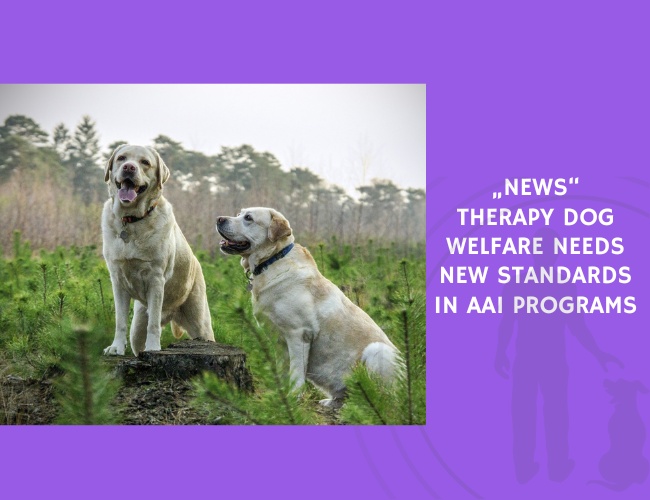
Study Chiang Mai, Thailand, December 23, 2025 – A new review emphasizes the importance of protecting therapy dog welfare in animal-assisted interventions by examining how session design, environment, and human participants may affect canine stress.
Animal-assisted interventions (AAIs) have expanded rapidly as interest grows in the therapeutic value of dogs for improving human well-being. While numerous studies document benefits for people—ranging from reduced anxiety to enhanced social engagement—the experience of the therapy dogs themselves has received far less scientific attention. In a comprehensive review published in 2017, L. Glenk examined what is currently known about therapy dog welfare within AAI contexts.
Existing research has relied on behavioral measures, physiological indicators, and handler reports to assess stress in therapy dogs. Findings suggest that multiple factors modulate canine welfare during sessions, including session frequency and duration, environmental novelty, the dog’s sense of controllability, and the age and familiarity of recipients. These elements may shape how dogs react emotionally and physiologically while performing therapeutic work.
However, the review also underscores significant methodological challenges. Variability across AAI programs, small sample sizes, and inconsistent use of welfare metrics make it difficult to draw universal conclusions. As a result, the field still lacks a clear understanding of how AAIs influence the well-being of the animals involved.
Glenk highlights the urgent need for refined study designs that consider both individual differences among dogs and the complexity of therapeutic environments. Future research must integrate standardized welfare indicators, larger cohorts, and longitudinal approaches to determine how therapy dogs experience their work and how interventions can be structured to minimize stress.
As AAIs continue expanding across healthcare, education, and social service settings, ensuring canine welfare is not only an ethical responsibility but also essential for sustaining safe, effective human–animal partnerships.
Source: Glenk, L. (2017). Current Perspectives on Therapy Dog Welfare in Animal-Assisted Interventions. Animals. No DOI was provided in the supplied text.










