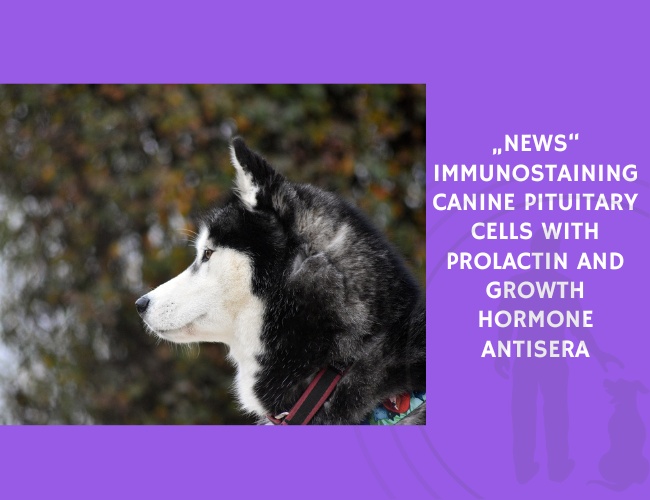
Study Chiang Mai, Thailand, December 23, 2025 – Foundational histochemistry research from 1977 demonstrated that selective antisera can reliably differentiate prolactin- and growth hormone–producing cells in the dog pituitary, enabling precise mapping of canine endocrine function.
The study by Etreby and Bab (1977) used the immunoperoxidase technique to localize two hormone-specific cell types—prolactin (PRL) and growth hormone (GH)—within the pars distalis of the canine pituitary gland. By employing highly purified homologous antisera to canine PRL and canine GH, the researchers achieved clear, selective immunostaining of distinct endocrine cell populations.
Specificity of the antisera was rigorously validated. When each antiserum was pre-absorbed with its corresponding antigen, immunostaining was eliminated; absorption with unrelated antigens produced no reduction in staining intensity. Additional confirmation came from double diffusion immunoprecipitation and competitive radioactive binding assays, reinforcing the precision of the immunologic reactions observed.
A notable contribution of this research was the demonstration that heterologous antisera—specifically those developed against ovine PRL and human GH—were equally effective for identifying the corresponding cell types in dogs. This insight supported broader methodological flexibility at a time when species-specific reagents were limited.
The authors observed that PRL- and GH-producing acidophils could also be distinguished based on tinctorial affinity, morphology, relative abundance, and topographical distribution, with some sex-related differences. Although homologous antisera provided the strongest staining efficiency, the validation of heterologous antisera enhanced the feasibility of canine pituitary research for laboratories without access to canine-specific reagents.
This early work laid essential groundwork for modern endocrine mapping in veterinary and comparative physiology, reinforcing the dog as a valuable model for understanding mammalian pituitary architecture and hormonal regulation.
Source: Etreby, M. F., & Bab, M. (1977). The utility of antisera to canine growth hormone and canine prolactin for immunocytochemical staining of the dog pituitary gland. Histochemistry. No DOI provided in the summary.