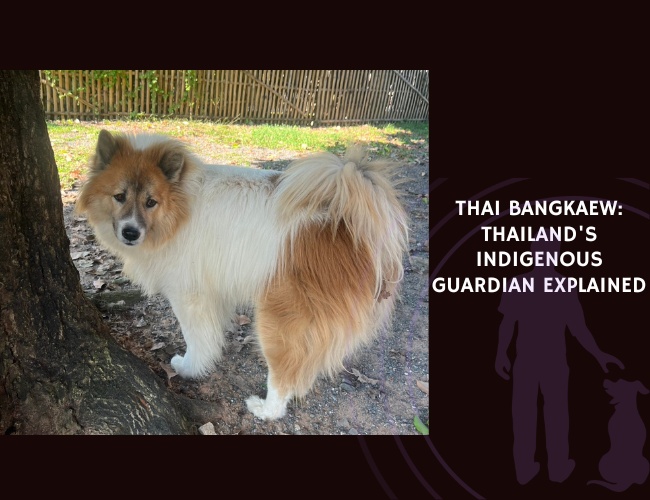
The Thai Bangkaew Dog stands as one of Southeast Asia’s most distinctive indigenous guardian breeds, carrying within its genetic memory centuries of village life, territorial responsibility, and unwavering family devotion. If you’re considering welcoming this remarkable breed into your life, or if you’re already navigating the complexities of living with a Bangkaew, understanding their unique behavioral architecture isn’t just helpful—it’s essential. These dogs don’t simply guard; they define, assess, and control their territory with a clarity and intensity that sets them apart from nearly all other guardian breeds.
What makes the Thai Bangkaew truly exceptional is not their protective instinct alone, but rather how they process their world through a lens of territorial sovereignty. The Bangkaew, as a Guardian Dog, exhibits the strongest territorial behavior of all the Guardian Dogs. Unlike many European guardian breeds that react to threats, the Bangkaew operates proactively and territorially. He doesn’t wait for something to happen—he defines his territory first, establishes his rules, and then enforces them consistently. This fundamental difference shapes every aspect of their behavior, from how they process strangers to how they determine family membership. Let us guide you through the fascinating world of this ancient breed, where science meets centuries of selective breeding, and where understanding their neural architecture becomes the key to harmonious coexistence.
Indigenous Origins & Village Guardian Role
The Thai Bangkaew Dog’s evolution as a rural Thai guardian has profoundly shaped its territorial decision-making and threat assessment in ways that continue to influence their behavior today. Originating from the Bangkaew village in Phitsanulok province, these dogs were historically integral to protecting homes, families, and the community’s periphery. This wasn’t ceremonial work—it was essential survival. Each household depended on their Bangkaew to serve as the first line of defense against genuine threats, whether four-legged or two-legged, and this responsibility fostered a keen sense of boundary awareness that runs deeper than simple training could ever achieve.
Evolution of Territorial Decision-Making and Threat Assessment
As village guardians, Bangkaews developed an innate ability to assess situations within their defined territory with remarkable nuance. Their decision-making was influenced by the predictable patterns of village life, where familiar faces and routines were common, and true threats were distinct and memorable. This environment cultivated what we might call “boundary intelligence”—a nuanced understanding of what constituted an intrusion versus a normal occurrence. The predictability of rural Thai village life allowed these dogs to develop clear mental maps of acceptable versus unacceptable presences, leading to a behavioral profile that prioritizes vigilance and protective action when necessary.
Predisposition to Patrol and Perimeter-Monitor
Based on their historical role, the breed is predisposed to patrol and perimeter-monitor as a default “job.” This involves regular scanning of their environment, marking boundaries, and maintaining an awareness of changes within their perceived territory. You might notice your Bangkaew doesn’t simply rest in one spot—they patrol, they check corners, they position themselves at vantage points. This “seeking” system, as described in Affective Neuroscience, drives their exploratory and investigative behaviors, making them naturally inclined to survey their surroundings for potential anomalies. This isn’t anxiety or insecurity; this is purpose manifesting through action.
Typical Bangkaew patrol behaviors owners observe:
- Regular circuit walking through home checking windows, doors, and access points
- Positioning at elevated locations providing optimal sightlines to boundaries
- Periodic outdoor perimeter walks marking and reinforcing territorial boundaries
- Vigilant observation from window positions during high-activity times of day
- Investigation of novel sounds, smells, or visual changes within territory
- Return to patrol after any disruption or alert to confirm threat has passed
- Pre-sleep territory checks ensuring all boundaries are secure before resting
Village Life vs. Modern Urban Triggers
Here’s where understanding becomes crucial for modern Bangkaew owners. Village life offered a relatively stable environment with a limited number of familiar people and predictable patterns. This allowed Bangkaews to develop a clear understanding of their known territory and its inhabitants. A stranger approaching meant something significant. The daily rhythm was consistent, and novel events were genuinely novel.
In contrast, modern urban environments present a constant barrage of novel stimuli: frequent strangers passing windows, delivery personnel appearing at gates, dense neighbors sharing walls, and unpredictable noises at all hours. These “trigger stacking” events can overwhelm a Bangkaew, potentially lowering their threshold for reactivity and increasing stress if not properly managed. What would have been a once-weekly occurrence in village Thailand becomes a dozen daily events in Bangkok or any modern city. The challenge isn’t that your Bangkaew is overreacting—it’s that their evolved threat assessment system is now processing exponentially more data than it was designed to handle.
Modern triggers that challenge Bangkaew territorial systems:
- Delivery personnel appearing at gates multiple times daily with unpredictable timing
- Neighbors in shared walls creating constant auditory intrusions into perceived territory
- Elevator sounds and hallway foot traffic in apartment buildings triggering patrol responses
- Window-level street activity providing continuous visual stimulation without resolution
- Construction noise and urban renovation creating unpredictable environmental disruptions
- Food delivery apps bringing different strangers to the same boundary point repeatedly
- Maintenance workers requiring regular access to shared spaces or utilities
- Children playing near property boundaries with high-energy, erratic movement patterns 🏘️
Territorial Cognition & Boundary Intelligence
The Thai Bangkaew’s territorial cognition is highly developed, influencing how they perceive and react to their environment in ways that often surprise unprepared owners. Understanding how your Bangkaew defines and manages their perceived territory is crucial to preventing unwanted behaviors and creating a living situation that respects their inherent needs.
Defining Territory
Bangkaews typically define their territory beyond just the immediate house. It often extends to the house and yard, the street edge, and potentially “everything visible” from their patrol points, especially elevated ones like balconies or rooftop access. This expansive view of their domain is a hallmark of self-governing guardian breeds, who take responsibility for a broader area than many other companion dogs. Your Bangkaew isn’t being excessive when they alert to activity two houses down—from their perspective, that’s well within their jurisdiction. They’ve drawn mental property lines that extend as far as they can perceive potential approach routes.
How Bangkaews typically map their territorial zones:
- Primary zone: Interior home space where family members reside (highest protection intensity)
- Secondary zone: Yard, garden, or immediate outdoor areas directly adjacent to dwelling
- Tertiary zone: Street frontage, sidewalk edges, and visible approach paths to property
- Surveillance zone: Everything visible from elevated patrol points including neighbor properties
- Auditory zone: Areas beyond visual range but within hearing where threats can be detected
- Threshold points: Gates, doors, and property boundaries requiring maximum vigilance
Fences, Gates, and Doorways as High-Intensity Trigger Zones
These physical boundaries are often high-intensity trigger zones because they represent the interface between the dog’s perceived safe territory and the unknown outside world. Any movement or presence at these points is interpreted as a direct challenge or potential intrusion, activating their protective instincts immediately. The sudden appearance of a stranger at a gate, for instance, can trigger an immediate and strong response—not because the dog is poorly trained, but because from their perspective, someone has just crossed directly into the threshold zone that requires immediate assessment and response.
See-Through Fencing and Arousal
Did you know that the specific design of your property boundaries can dramatically influence your Bangkaew’s stress levels? See-through fencing can indeed increase arousal by amplifying perceived intrusion frequency. When a Bangkaew can constantly see activity outside its boundary without being able to physically intervene or fully assess the situation, it can lead to chronic hyper-vigilance and frustration. This constant visual stimulation, without the ability to resolve the perceived threat, can contribute to trigger stacking and heightened reactivity. Many experienced Bangkaew owners find that strategic use of privacy screening or solid lower portions on fences dramatically reduces baseline stress and reactive displays.
Fencing solutions that reduce territorial stress:
- Solid lower sections: Privacy barriers from ground to 4-5 feet blocking most visual triggers
- Strategic slat spacing: If see-through required, narrow gaps limiting clear visual tracking
- Bamboo screening: Natural privacy addition to existing chain-link or wire fencing
- Frosted panels: Translucent barriers allowing light while obscuring detailed movement
- Landscaping buffers: Dense shrubs or hedges creating natural visual barriers
- Height considerations: Minimum 6 feet preventing dog from seeing over barriers
- Corner reinforcement: Extra privacy at property corners where sightlines extend furthest
- Gate modifications: Solid gates or covered sections at highest-traffic entry points 🧠
The Architecture of Family Membership: Understanding the Closed Social Unit
Here’s where the Thai Bangkaew reveals its most distinctive and challenging characteristic. It’s important to understand that when we talk about family dogs or family loyalty, we define “family” here as a socially closed unit. This isn’t the open, emotionally expansive concept of family that many companion breeds embrace. For the Bangkaew, family isn’t an emotionally open construct, but a clearly defined system with membership—and that membership is determined early and is remarkably resistant to change.
Territoriality ≠ Protective Instinct
The Bangkaew doesn’t act reactively and protectively like many European Guardian types, but rather proactively and territorially. This distinction is fundamental to understanding them. He doesn’t wait for something to happen before responding. He defines his territory, establishes who belongs within it, and then enforces those determinations consistently. This is not about reacting to threats—this is about maintaining a pre-established order.
The Reality of Family Integration
The experiences the Bangkaew has regarding family membership are more or less negative or irreversible. What does this mean exactly? It means that if more than two people, especially children, live together in a household, one or more people may not have access to the dog, or the dog may not allow access. The more people living in the household, the more likely it is that the dog will not integrate certain individuals into its social or spatial sphere of influence and will actively control or ward them off.
This isn’t dominance or aggression in the traditional sense—it’s the dog’s neural architecture determining who has received “family membership” status and who hasn’t. The dog makes these determinations during critical developmental periods, and once made, these architectural decisions are extraordinarily difficult to reverse.
Experiences Can’t Be Arbitrarily Corrected
With the Bangkaew, we’re not talking about “a lack of socialization that can be made up for later” but rather about an early-established decision-making architecture. If a Bangkaew didn’t integrate a household member during their critical socialization period, simply exposing them more later rarely resolves the issue. The dog has already made an architectural decision about that person’s status, and that structure is remarkably resistant to revision.
Insecure or Ambivalent Individuals Present Unique Challenges
The Bangkaew doesn’t interpret inconsistent internal states as “harmless,” but as a disruptive factor in their territory. If someone in the household is anxious, uncertain, or sends mixed signals, the Bangkaew may permanently categorize them as “unreliable” or “outside the trusted circle.” This creates situations where nervous children or anxious partners may never achieve full acceptance from the dog, not because of what they do, but because of the emotional information they inadvertently broadcast. The dog reads the nervous system architecture of household members and makes determinations based on that data.
Emotional states that compromise family membership acceptance:
- Chronic anxiety or nervous system dysregulation creating inconsistent energy patterns
- Fearful behavior around the dog including hesitation, avoidance, or startle responses
- Conflicting emotional signals such as smiling while feeling tense or afraid
- Unpredictable emotional volatility with mood swings the dog cannot pattern-recognize
- Passive or submissive body language signaling instability in the social hierarchy
- Excessive emotional reactivity to the dog’s alerts or protective displays
- Inconsistent boundary enforcement sending unclear leadership messages 😟
The 18-Month Reality: Doberman vs. Bangkaew
Let’s be direct about what raising a Bangkaew truly requires, especially if you want them to function in modern contexts with any degree of flexibility. The comparison between a Doberman and a Bangkaew illustrates the fundamental difference in how these breeds process their world.
Doberman → Context-Learning
If you take your Doberman to your office, after a week he knows who belongs there and whether he’s allowed in. The Doberman learns contexts. He understands that this person behind this desk is acceptable, these visitors are expected, and these delivery people are routine. The Doberman builds a contextual map: “office = these people = safe.” He can adapt to new environments relatively quickly and learn the patterns specific to each location.
Bangkaew → Territory-Defining
If you take a Bangkaew into the same office, then nobody has any business being in the area where you’re sitting. It doesn’t matter whether they belong there or not. It doesn’t matter if they’ve worked there for years or if they’re your business partner. From the Bangkaew’s perspective, you are here, this is now your space, and everyone else is a potential territorial intrusion until proven otherwise through extended exposure during critical developmental periods.
And there’s no coddling or anything like that; he won’t get used to it if he’s never had this experience from puppyhood.
Key differences between context-learning and territory-defining breeds:
- Doberman approach: “This is a new place with new rules. Let me learn who belongs here.”
- Bangkaew approach: “This is now MY territory. Everyone here is an intrusion by default.”
- Doberman timeline: Accepts new environments within days to weeks with pattern exposure
- Bangkaew timeline: Requires puppyhood exposure or faces permanent management challenges
- Doberman flexibility: Can adapt to multiple contexts with different rules simultaneously
- Bangkaew rigidity: Extends primary territorial rules to all spaces where owner is present
- Doberman strangers: Evaluates individuals based on context-specific role and behavior
- Bangkaew strangers: Evaluates all non-family as territorial intrusions regardless of context
The Full-Time 18-Month Commitment
With focus and an unwavering will to accomplish this, guarding a territory, showing loyalty to its owner. If I want the Bangkaew to become a Doberman—and I would say this is only ever possible to a certain extent, so I won’t turn a Bangkaew into a Doberman—then raising and learning the Bangkaew is a minimum 18-month full-time job.
This figure is realistic—more conservative than exaggerated. And importantly: not training, but structured exposure + guidance + contextual learning.
This dog has to go through all stages of your daily life from puppyhood. And potential situations that might arise, too. Your commute, your workplace, your regular walking routes, your friend’s homes, your family gatherings, your weekend routines. If we deny this reality, problems will almost certainly arise as the dog gets older, when it’s 18 months or 2 years old, and then its environment changes or it’s placed in new surroundings.
Critical exposures required during the 18-month socialization window:
- Daily commute patterns: Car travel, public transport, traffic sounds, parking areas
- Workplace environments: Office spaces, colleagues, equipment sounds, visitor protocols
- Walking routes: Multiple neighborhood paths, various times of day, weather conditions
- Social locations: Friend’s homes, family member residences, regular gathering spots
- Commercial spaces: Veterinary clinics, pet stores, grooming facilities (if used)
- Home visitor protocols: Guests arriving, service providers, delivery interactions
- Household routines: Morning rituals, evening patterns, weekend schedule variations
- Environmental conditions: Rain, heat, storms, darkness, seasonal changes
- Life transitions: Moving furniture, home repairs, vehicle changes, schedule disruptions
The Irreversibility of Late Introduction
Taking a fully grown Bangkaew into new territory and then telling him he has to learn it is realistically not something that can be unlearned, but at best, it can be managed, and even then, only with a high level of expertise.
If you adopt a two-year-old Bangkaew who’s never experienced apartment living, expecting them to accept neighbors walking past your door is setting everyone up for chronic stress and management challenges. The dog’s territorial map is already drawn. You can implement management protocols—visual barriers, strategic positioning, structured routines—but you’re working against established neural architecture rather than building it cooperatively.
This reality shouldn’t discourage prospective owners, but it should create clarity about what this breed requires and respect for why experienced Bangkaew handlers emphasize early and comprehensive socialization so strongly. 🏠

Social Selectivity & Stranger Suspicion
Thai Bangkaews exhibit a distinct social selectivity, a trait deeply rooted in their guardian heritage. Understanding this selectivity requires us to move beyond the optimistic assumptions that work with many other breeds.
Natural Selectivity and Distrust of Strangers
Bangkaews are naturally selective and often distrustful of strangers, even with early and consistent socialization. This is not necessarily a sign of poor socialization but rather an inherent characteristic of a guardian breed whose role was to discern friend from foe. Their initial default is often suspicion, requiring individuals to “prove” themselves non-threatening—and this proving process has strict requirements and limited windows of opportunity.
Signs of natural stranger suspicion in well-socialized Bangkaews:
- Initial freezing or stiff posture when encountering unfamiliar people
- Maintenance of distance with body angled sideways rather than direct approach
- Refusal of treats or attention from strangers even in familiar environments
- Heightened alert state with focused attention on stranger’s movements
- Low rumbling or single warning bark when stranger moves too quickly
- Positioning between stranger and family members without overt aggression
- Extended observation period before any relaxation occurs, if at all
- Return to suspicion if stranger deviates from predictable, calm behavior patterns
The Limitation of “Known Outsiders”
The conventional wisdom suggests that Bangkaews can learn to differentiate “known outsiders” from true strangers through repeated exposure. While there is some truth to this, the reality is far more limited than most owners expect. A delivery person who appears at the same time daily may eventually trigger less intense responses, but this is pattern recognition, not acceptance. The moment that pattern changes—a different time, a different approach angle, a different emotional state—the dog may respond as if to a complete stranger.
More importantly, this pattern-based tolerance doesn’t translate to genuine integration. The mail carrier will never have “family membership” status. They will always be categorized as a managed external element, not an accepted presence.
Controlled Observation vs. Forced Socialization
Controlled observation, where the dog can observe strangers from a safe distance without direct interaction or pressure, is more effective than forced greetings. This allows the Bangkaew to process information at its own pace. However, we must be realistic about what this achieves: it builds tolerance for observation, not acceptance for interaction.
High-volume, uncontrolled exposure is more likely to increase suspicion by reinforcing the idea that strangers are a constant, unpredictable threat. It can lead to chronic stress and hyper-vigilance rather than increased tolerance. Quality over quantity is key—but even quality exposure has its limits with this breed. Through the NeuroBond approach, trust becomes the foundation of learning, but with Bangkaews, that trust is reserved for a select few.
Family Loyalty & Protective Depth
The strong bond a Thai Bangkaew forms with its accepted family members is a cornerstone of its protective behavior, and understanding the nature of this bond helps explain both the extraordinary loyalty and the significant challenges this breed presents.
Guarding People and Relationships
Bangkaews are more likely to guard people and relationships rather than inanimate objects. Their primary loyalty is to their “pack”—their accepted human family—and their protective instincts are deeply tied to the well-being of their loved ones. While they will guard property, it is often an extension of guarding the people within that property. You might notice that your Bangkaew’s intensity escalates dramatically when family members are present versus when the house is empty. They’re not protecting the television; they’re protecting you.
Strong Bonding and Amplified Protective Responses
Strong bonding significantly amplifies protective responses, especially around children, vulnerable family members, or the primary handler. The dog perceives these individuals as part of its core responsibility, leading to heightened vigilance and a quicker, more intense protective reaction if a threat is perceived. This aligns with the “CARE” system in Affective Neuroscience, which drives nurturing and protective behaviors in mammals. When a Bangkaew bonds deeply with a child, for example, they may position themselves between the child and all newcomers, assess every interaction for threat potential, and remain in a state of readiness whenever that child is in view.
Amplified protective behaviors around bonded family members:
- Constant positioning between bonded person and any approaching individuals
- Heightened alert state activating immediately when bonded person interacts with strangers
- Reduced tolerance for rough play or loud interactions involving bonded individual
- Escalated response intensity if bonded person shows any distress signals
- Following bonded person from room to room maintaining protective proximity
- Refusing to leave bonded person’s side during unfamiliar situations
- Lower threshold for intervention when bonded person is vulnerable (sleeping, ill, young)
- Extended recovery time after protective episodes involving bonded individuals
Conflict Within the Home and Perceived Responsibility
Conflict within the home can increase the dog’s perceived responsibility to intervene. Bangkaews, as self-governing guardians, may interpret internal strife as a breakdown in pack order or a threat to family stability, prompting them to try and “restore order” or protect perceived vulnerable members, potentially leading to unwanted interventions. This can lead to the dog intervening during arguments, corrections of children by parents, or even boisterous play that the dog misinterprets as conflict. Through Soul Recall, we understand that moments of emotional memory and protective instinct intertwine deeply in guardian breeds, making their responses both swift and difficult to redirect once triggered. 🧡
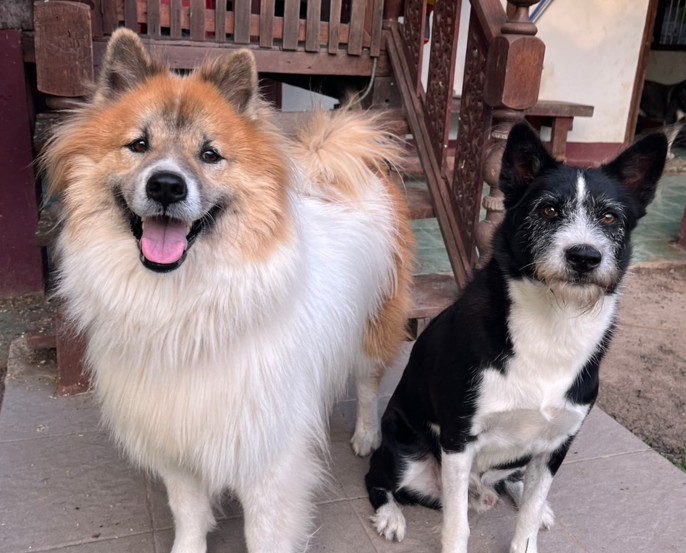
Territorial. Decisive. Vigilant.
Territory Comes First
The Bangkaew defines space before reacting to anything within it. Their guarding begins with ownership, not response.
Village Logic Persists
Centuries of rural protection shaped dogs who assess patterns and enforce boundaries independently. This mindset remains active in modern homes.


Modern Density Overloads
Urban environments multiply perceived intrusions beyond their original design. When boundaries are clarified, their guardianship becomes stable rather than strained.
Arousal, Reactivity & Escalation Style
Understanding the Bangkaew’s escalation style is crucial for effective management, safety, and maintaining the trust-based relationship these dogs need to thrive with their accepted family members.
The Typical Escalation Pattern
When perceiving an intrusion, Bangkaews typically follow a predictable escalation pattern: warning bark → forward posture → blocking → contact. However, the speed and intensity of this escalation can vary dramatically based on individual temperament, past experiences, and the perceived severity of the threat. A stranger approaching slowly during daylight might receive the full escalation sequence with clear warning signs. A stranger appearing suddenly at a gate after dark might trigger a compressed escalation where the dog moves from detection to blocking within seconds.
Understanding the Bangkaew escalation ladder:
- Stage 1 – Detection: Alert posture, ears forward, focused attention on trigger
- Stage 2 – Assessment: Stiff body, tail position change, initial vocal warning
- Stage 3 – Warning: Louder barking, forward weight shift, direct eye contact
- Stage 4 – Advancing: Moving toward trigger, closing distance with deliberate steps
- Stage 5 – Blocking: Physical positioning between trigger and protected territory/person
- Stage 6 – Escalation: Intense barking, showing teeth, hackles raised
- Stage 7 – Contact: Physical intervention including pushing, bumping, or biting
Note: Some Bangkaews compress or skip stages, especially if early warnings were previously ineffective.
Clear Warnings vs. Silent Escalation
While many Bangkaews offer clear warnings through deep barks and growls, some individuals, depending on temperament and learning history, may be prone to “silent escalation.” This means they might skip or minimize early warning signals and move quickly to a more direct form of intervention, making their reactions less predictable to an untrained eye. If a dog has learned that their warnings were previously ignored or overridden, they may economize and skip straight to more forceful responses.
Reading the Micro-Signals
Early micro-signals that predict escalation risk include stiffness in body posture, a high or stiff tail carriage, a fixed gaze (sometimes called “hard eye”), and breath-hold or shallow breathing. These subtle cues indicate a heightened state of arousal and readiness to act, often preceding more overt displays of guarding behavior. You might notice your Bangkaew’s body becomes statue-like, their breathing changes rhythm, and their focus becomes completely locked on the trigger. These are the moments for immediate intervention—not to punish, but to redirect, create distance, or provide alternative guidance before the dog feels compelled to escalate further.
Early warning signs of escalation in Thai Bangkaews:
- Body rigidity: Muscles tense, movement ceases, entire body becomes statue-like
- Tail position: Tail rises high and stiff, or flags slowly with tension rather than loose wag
- Eye contact: Fixed stare or “hard eye” locked onto trigger without blinking
- Breathing changes: Breath-hold, shallow breathing, or sudden shift in respiratory rhythm
- Weight shift: Front weight loading as dog prepares to move forward toward trigger
- Ear position: Ears forward and rigid, or pinned back depending on emotional state
- Lip tension: Mouth closes tightly or lips pull back slightly exposing front teeth
- Vocalization changes: Deep, rumbling growl or sudden silence after initial alert barking
The Invisible Leash reminds us that awareness, not tension, guides the path forward in these critical moments. 🧠
🐕 Thai Bangkaew Dog: The Territory-Defining Guardian 🏛️
Understanding Thailand’s Most Territorial Guardian Through 8 Critical Phases
Phase 1: Recognizing Territory-Defining vs. Reactive Protection
The Fundamental Difference That Changes Everything
Core Behavioral Architecture
The Bangkaew doesn’t react to threats—he defines territory first, then enforces it proactively. Unlike European guardians who wait for intrusions, Bangkaews establish rules and boundaries before anything happens. This is not protective instinct; this is territorial sovereignty.
What This Means For You
Your Bangkaew will patrol, define zones extending beyond your property, and make membership decisions about who belongs. He won’t simply bark when someone approaches—he’s already decided days ago whether that person has territorial access rights.
⚠️ Critical Warning
This breed exhibits the strongest territorial behavior of all guardian dogs. If you expect a dog that will eventually accept friendly strangers, you’re choosing the wrong breed. Territoriality is not a training problem—it’s breed architecture.
Phase 2: Understanding Family as a Closed Social Unit
Membership Determinations Are Architectural, Not Behavioral
The Membership Reality
Family isn’t an emotionally open construct for the Bangkaew—it’s a clearly defined system with limited membership slots. If more than two people live in your household, one or more may never achieve full acceptance. The dog makes these determinations during critical periods, and they’re nearly irreversible.
Signs of Failed Integration
• Dog blocks certain household members from rooms or furniture
• Maintains watchful distance from specific individuals
• Heightened vigilance when “non-member” moves through spaces
• Protective displays escalate when this person interacts with accepted members
Management Protocol
Accept the architecture. Use physical management like separate spaces, controlled interactions, and clear protocols. Don’t attempt to “fix” membership determinations made during critical windows—manage the reality instead.
Phase 3: The 18-Month Full-Time Commitment Window
Not Training—Architectural Development
The Investment Required
If you want any environmental flexibility, raising a Bangkaew requires minimum 18 months of full-time structured exposure, guidance, and contextual learning. This dog must go through all stages of your daily life from puppyhood—commutes, workplace, social locations, routines, potential situations.
What Happens Without This
Problems arise at 18-24 months when environment changes or new surroundings appear. Taking a fully grown Bangkaew into new territory isn’t something that can be unlearned—at best, it’s managed with high expertise. The territorial map is already drawn.
The Hard Truth
You won’t turn a Bangkaew into a context-learning breed like a Doberman. This is accepting breed reality, not admitting failure. Expect to work with territorial architecture, not against it.
Phase 4: Managing Natural Stranger Suspicion
Tolerance vs. Acceptance—Know The Difference
The Selectivity Reality
Even with perfect early socialization, Bangkaews remain naturally distrustful of strangers. This isn’t poor training—it’s guardian breed architecture. They operate on pattern recognition, not emotional acceptance. The mail carrier becomes “tolerated pattern,” not “welcomed friend.”
Controlled Observation Protocol
• Maintain 20+ feet distance initially
• Short exposures (2-5 minutes) preventing overwhelm
• Dog positioned behind handler with clear exit route
• Strangers moving predictably, not approaching directly
• End before threshold is reached, not after
Why High-Volume Socialization Backfires
Each uncontrolled stranger interaction provides data supporting “outsiders are threats.” Overwhelming trigger frequency prevents recovery. More exposure doesn’t equal acceptance—it confirms that the world is exactly as threatening as their instincts suggest.
Phase 5: Essential Environmental Modifications
Working With Territory Processing, Not Against It
Non-Negotiable Requirements
Visual barriers (solid fencing 6+ feet), quiet retreat zones away from traffic, predictable routines preventing chronic hyper-vigilance. These aren’t training failures—they’re environmental accommodations for how this breed processes territory. Without them, even well-raised Bangkaews struggle with chronic stress.
See-Through Fencing Problem
Constant visual access to street activity creates chronic arousal. The dog sees triggers approach and leave repeatedly without resolution. This amplifies perceived intrusion frequency, leading to trigger stacking and reactive displays. Privacy screening isn’t optional.
Critical Modifications
• Privacy fencing blocking street visual access
• Frosted window film preventing constant monitoring
• White noise machines masking trigger sounds
• Strategic landscaping limiting “everything visible” syndrome
• Designated watching posts with controlled views
Phase 6: Calm, Low-Verbal Leadership That Works
What Self-Governing Guardians Respect
Leadership Qualities That Earn Respect
Bangkaews evaluate whether your leadership is worth following. They respect calm, regulated nervous systems, consistent boundary enforcement without emotional reactivity, minimal verbal communication, and clear decision-making. Your energy, consistency, and clarity matter—not your enthusiasm or food offerings.
What Creates Resistance
Endless repetition without purpose, treat-focused manipulation, high-energy excited training, forced social interactions, arbitrary tricks lacking guardian connection, inconsistent rules, pressure-based corrections. These conflict with their self-governing nature.
Purpose-Based Training That Engages
Structured boundary checks, alert-and-release protocols, threshold management, controlled observation posts, handler-led territory confirmation. When training aligns with natural instincts, Bangkaews view it as collaboration, not coercion.
Phase 7: Reading Micro-Signals Before Escalation
Intervene at Signal, Not at Reaction
The Escalation Ladder
Detection → Assessment → Warning → Advancing → Blocking → Escalation → Contact. Speed varies based on threat perception. A slow daylight approach gets full sequence. Sudden gate appearance compresses detection to blocking within seconds. Some Bangkaews skip stages entirely.
Critical Micro-Signals
• Body rigidity—muscles tense, movement ceases
• Tail rises high and stiff
• Fixed “hard eye” stare locked on trigger
• Breath-hold or shallow breathing
• Front weight loading preparing to move forward
• Sudden silence after initial alert barking
Intervention Timing
These micro-signals are your window. Intervene here—not to punish, but to redirect, create distance, or provide alternative guidance. The Invisible Leash principle: awareness guides the path, not tension or force.
Phase 8: Proactive Safety & Risk Management
Prevention Over Correction
Essential Safety Protocols
Muzzle conditioning from early age, secure confinement options before guests arrive, double-leash systems during high-risk situations, advance notice to veterinary clinics, boundary reinforcement preventing fence-line rehearsals. These aren’t admissions of failure—they’re responsible management of a powerful guardian breed.
The Rehearsal Problem
Every time your Bangkaew barks aggressively and the “intruder” leaves, the behavior is reinforced. The dog learns aggressive displays successfully drive away threats. Each successful “defense” strengthens neural pathways exponentially. Prevention is mandatory, not optional.
Shared-Responsibility Guardian Protocol
“You may alert, I decide.” Allow initial warning (2-3 barks), then handler calmly takes over assessment. This acknowledges natural instinct while establishing human leadership. You’re not eliminating guardian nature—you’re channeling it through your authority.
🔄 Comparative Understanding: Bangkaew vs. Other Approaches
Doberman (Context-Learning)
Adaptation: Learns new environments within days/weeks
Approach: “This place has different rules to learn”
Flexibility: Multiple contexts simultaneously
Socialization window: Remains somewhat open
Bangkaew (Territory-Defining)
Adaptation: Requires puppyhood exposure or permanent management
Approach: “This is now MY territory”
Flexibility: Extends primary rules to all spaces
Socialization window: Critical and closing
Curated Socialization
Method: 5-10 calm individuals, repeated exposure
Goal: Specific membership determinations
Result: Tolerance for select individuals
Reality: Not creating social dog, managing guardian
High-Volume Socialization
Method: Maximum exposure to variety
Goal: Broad acceptance
Result: Increased suspicion and stress
Reality: Confirms world is threatening
Urban Living Challenges
Trigger frequency: Dozens daily vs. weekly in villages
Space constraints: Shared walls, hallways, elevators
Visual access: Constant street activity monitoring
Management: Privacy barriers mandatory
Ideal vs. Inadvisable Owners
Ideal: Experienced, stable household, private property, realistic expectations
Inadvisable: First-time owners, frequent visitors, apartment living, life changes expected
⚡ Quick Reference: Bangkaew Fundamentals
Territorial Formula: Define → Enforce → Maintain (not React → Protect → Release)
Socialization Reality: Tolerance ≠ Acceptance | Pattern Recognition ≠ Emotional Bonds
18-Month Rule: Structured Exposure + Guidance + Contextual Learning = Minimal Environmental Flexibility
Membership Equation: Critical Window Determination + Neural Architecture = Nearly Irreversible
Environmental Need: Visual Barriers + Quiet Zones + Predictable Routines = Reduced Chronic Stress
🧡 The Essence of Zoeta Dogsoul with Thai Bangkaews
The Thai Bangkaew teaches us that true leadership isn’t about changing breed architecture—it’s about understanding neural foundations and working within them. Through the NeuroBond approach, we recognize that trust with a territorial guardian isn’t built through forced socialization, but through calm authority that respects their decision-making systems. The Invisible Leash principle becomes essential: your emotional neutrality and spatial clarity communicate to your Bangkaew that you handle boundary assessment, reducing their perceived urgency to escalate. And through Soul Recall, we honor that their protective responses emerge from deep emotional memory—centuries of village guardianship encoded in their being. The question isn’t whether you can make a Bangkaew social; it’s whether you possess the consistency, emotional regulation, and acceptance of breed reality to guide a territory-defining guardian with calm, unwavering authority. That balance between respecting their nature and maintaining ultimate leadership—that’s the essence of Zoeta Dogsoul.
© Zoeta Dogsoul – Where neuroscience meets soul in dog training
Learning Style & Training Compatibility
The Bangkaew’s independent nature influences its learning style and compatibility with various training methods in ways that can frustrate owners accustomed to more biddable breeds.
Responsiveness to Calm, Firm, Low-Verbal Leadership
Bangkaews are generally more responsive to calm, firm, low-verbal leadership than to excited, treat-heavy training styles. Their self-governing nature means they respect clear, consistent boundaries and confident guidance. Excessive verbal cues or over-reliance on treats can be perceived as weakness or an attempt to manipulate, leading to resistance. These dogs evaluate whether your leadership is worth following, and they make that determination based on your energy, consistency, and clarity rather than your enthusiasm or food offerings.
Leadership qualities Bangkaews respect and follow:
- Calm, regulated nervous system showing no anxiety about environmental triggers
- Consistent boundary enforcement without emotional reactivity or anger
- Minimal verbal communication relying on body language and spatial pressure
- Clear decision-making with confident follow-through on all protocols
- Emotional neutrality maintaining same energy regardless of dog’s arousal state
- Predictable routines and rules eliminating ambiguity in expectations
- Spatial clarity claiming doorways, thresholds, and territory assessment roles
- Patient timing allowing dog to process rather than forcing compliance through pressure
Repetition-Heavy Obedience and Resistance
Repetition-heavy obedience training can sometimes create resistance or conflict in a self-governing guardian. Bangkaews are intelligent and purpose-driven; they may find repetitive, seemingly meaningless tasks tedious and question the necessity, leading to defiance or disengagement. They prefer to understand the “why” behind a command. If a Bangkaew doesn’t see the purpose in sitting seventeen times in a row during a training session, they may simply refuse or comply with obvious reluctance.
Training approaches that create resistance in Bangkaews:
- Endless repetition of known commands without functional context or purpose
- Treat-focused training relying on food manipulation rather than respect
- High-energy, excited training sessions mismatched to their calm working style
- Forced social interactions like mandatory greetings with strangers
- Arbitrary tricks lacking connection to guardian or functional work
- Inconsistent rule enforcement where boundaries shift based on handler mood
- Training sessions that continue past the point of mental engagement
- Pressure-based corrections conflicting with their self-governing nature
Purpose-Based Training for Better Cooperation
Purpose-based training, such as boundary routines, calm guarding protocols, and structured patrol walks, can produce better cooperation than arbitrary tricks. When training aligns with their natural instincts and provides a clear role, Bangkaews are more engaged and willing to participate, viewing it as a collaboration rather than coercion. Teaching a Bangkaew a formal boundary check routine, for example, works with their inherent drive to patrol and monitor, making it meaningful work rather than meaningless compliance.
Purpose-based training exercises that engage Bangkaew cooperation:
- Structured boundary checks: Formal patrol routines with handler-led perimeter walks at set times
- Alert and release protocols: Teaching “alert once, then wait for my assessment” rituals
- Threshold management: Door and gate waiting exercises that reinforce spatial control
- Controlled observation posts: Designated watching positions where dog monitors from distance
- Handler-led territory confirmation: You check, then signal “all clear” to dog
- Calm guardian stance: Training relaxed alert posture versus escalated reactive displays
- Spatial negotiation: Teaching the dog to yield space while maintaining awareness

Socialization Strategy: The Limits of Controlled Familiarity
The socialization strategy for a Thai Bangkaew must be carefully tailored to its inherent social selectivity, and more importantly, owners must understand the realistic limits of what socialization can achieve with this breed.
Best Type of Early Socialization
The type of early socialization that best suits Bangkaews is carefully curated familiarity rather than wide, indiscriminate exposure. This involves controlled, positive interactions with a limited number of calm, predictable people and dogs, allowing the Bangkaew to build positive associations without being overwhelmed. However, even this optimal approach has limitations. You’re not creating a dog that will accept all people—you’re creating a dog that has made membership determinations about specific individuals during critical windows.
Curated socialization approach for Bangkaew puppies:
- Select 5-10 calm, predictable individuals for repeated positive exposure
- Schedule regular interactions allowing dog to build recognition and tolerance
- Control all variables including location, approach speed, interaction intensity
- Prioritize quality of exposure over quantity of different people met
- Allow puppy to approach on their terms rather than forcing interaction
- Include people of different ages, genders, appearances in core group
- Maintain same individuals throughout critical socialization period (8-16 weeks)
- Accept that these specific people may be tolerated while others never will be
High-Volume Exposure and Its Dangers
High-volume exposure, especially if uncontrolled or negative, is more likely to increase suspicion by teaching the dog that strangers are a constant, unpredictable threat. It can lead to chronic stress and hyper-vigilance rather than increased tolerance. With Bangkaews, more exposure doesn’t equal more acceptance. It often equals more data points confirming that the world outside the family unit is indeed something to be controlled and managed.
Why high-volume socialization backfires with Bangkaews:
- Each uncontrolled stranger interaction provides data supporting “outsiders are unpredictable threats”
- Overwhelming trigger frequency prevents complete recovery between exposures
- Dog learns reactive displays are necessary since threats never cease
- Pattern recognition becomes impossible when variety exceeds processing capacity
- Chronic cortisol elevation reduces learning ability and increases defensive responses
- Quality assessment time is replaced with constant low-level stress management
- Trust in handler’s judgment erodes when handler keeps presenting “threats”
Owner Behavior and Interpretation of Social Situations
Owner behavior significantly influences the dog’s interpretation of social situations. A calm, confident owner who provides clear guidance and reassurance helps the Bangkaew feel secure. Conversely, an anxious, tense, or conflicting owner can inadvertently signal to the dog that a situation is indeed threatening, amplifying the dog’s protective responses. However, even with perfect handler behavior, the Bangkaew’s fundamental territorial nature means they will always approach new people and situations with their default assessment protocols. 😊
Environment Design & Modern Living Challenges
Modern living environments pose unique challenges for a breed adapted to rural guardian roles, and these challenges often prove insurmountable without significant environmental modifications.
Impact of Modern Living on Stress and Guarding Behavior
Living in condos, dense neighborhoods, or homes with frequent deliveries can significantly increase Bangkaew stress and guarding behavior. The constant proximity to strangers, frequent noises, and limited personal space can lead to chronic hyper-vigilance, frustration, and an increased likelihood of reactive displays. A Bangkaew in a high-rise apartment building is experiencing what amounts to constant territorial violations from their perspective. Every person walking down the hallway, every door closing, every elevator ding is processed as a potential intrusion.
Essential environmental modifications for Bangkaew households:
- Privacy fencing: Solid barriers at least 6 feet high blocking visual access to street activity
- Window treatments: Frosted film or strategic curtains preventing constant street monitoring
- Quiet retreat zones: Designated rooms away from main traffic patterns
- Sound dampening: White noise machines or strategic placement away from shared walls
- Elevated rest positions: Comfortable watching posts at windows with controlled views
- Buffer zones: Physical distance between property boundary and areas where dog spends time
- Predictable access patterns: Consistent entry/exit points for family and approved visitors
- Controlled sightlines: Strategic landscaping or barriers limiting “everything visible” syndrome
Environmental Influences on Arousal and Irritability
Environmental factors such as heat, seasonal storms, and urban noise can influence arousal and irritability. High temperatures can lead to discomfort and reduced tolerance, while loud, unpredictable noises can heighten anxiety and trigger reactive behaviors, especially in a breed already prone to vigilance. Thailand’s climate means that heat management isn’t optional—it’s a critical component of behavioral management. A hot, uncomfortable Bangkaew has a significantly lower threshold for tolerating territorial intrusions.
Environmental stressors that lower Bangkaew tolerance thresholds:
- Heat and humidity: Temperatures above 28°C (82°F) reducing impulse control and patience
- Seasonal storms: Thunder, lightning, and pressure changes triggering heightened alert states
- Urban construction: Jackhammers, machinery, and unpredictable loud noises creating baseline stress
- Fireworks and celebrations: Explosive sounds activating threat assessment systems
- Air quality: Smoke, pollution, or strong odors affecting comfort and respiratory ease
- Lighting changes: Sudden brightness shifts or shadows triggering visual threat responses
- Barometric pressure: Weather changes affecting mood and pain sensitivity
- Crowd noise: Dense population areas with constant human activity and conversation 🌡️

Multi-Dog Dynamics & Resource Control
In multi-dog households, specific dynamics need careful management with Thai Bangkaews, as their territorial nature extends to relationships with other dogs.
Prone to Same-Sex Tension, Resource Guarding, or Status Disputes
Bangkaews can be prone to same-sex tension, resource guarding, or status disputes in multi-dog households, particularly if not properly socialized or if leadership is unclear. Their independent and self-governing nature means they may challenge other dogs for perceived resources or status. This isn’t simple dominance—it’s territorial control extending to other canines within their space.
Limited Space Amplifying Guard Behavior and Conflict
Limited space significantly amplifies guard behavior and conflict. When dogs cannot easily avoid each other or retreat to personal space, competition for resources (even perceived ones) and territorial disputes are more likely to escalate. A Bangkaew who could coexist peacefully with another dog in a large rural property may become intolerant in a smaller urban home where they’re forced into constant proximity.
Management Structures to Reduce Friction
Management structures that reduce friction include clear feeding zones, established movement order such as who goes through doors, and defined resting boundaries like separate beds or crates. These protocols help establish a predictable hierarchy and reduce ambiguity, minimizing potential conflict. With Bangkaews, structure isn’t just helpful—it’s essential for maintaining peace in multi-dog households.
Multi-dog management protocols for Bangkaew households:
- Separate feeding stations: Physical distance and barriers preventing resource competition during meals
- Individual resting spaces: Separate beds or crates with clear boundaries each dog respects
- Sequential attention: Predictable order for greeting, training, or interaction sessions
- Resource control: High-value items given separately in different rooms or at different times
- Space management: Ensuring adequate room for dogs to avoid each other when desired
- Supervised interactions: Active monitoring during play or shared space time
- Clear hierarchy signals: Handler reinforces structure through consistent leadership protocols
Risk Management & Public Safety
Effective risk management is paramount for Bangkaew owners to ensure public safety, the dog’s well-being, and protection from legal liability.
Managing Muzzle Conditioning, Leash Handling, and Guest Protocols
Owners should proactively manage muzzle conditioning by creating positive associations from an early age, practice calm and consistent leash handling, and establish clear guest protocols such as securing the dog before guests arrive and controlling all introductions. These measures prevent rehearsals of unwanted behaviors and ensure safety. Muzzle conditioning isn’t an admission of failure—it’s responsible management of a powerful guardian breed.
Proactive safety protocols for Bangkaew owners:
- Muzzle conditioning: Positive reinforcement training making muzzle wear comfortable and stress-free
- Secure confinement options: Separate room protocols before guests arrive
- Leash redundancy: Double-leash or backup collar systems during high-risk situations
- Guest arrival procedures: Dog secured before doorbell, controlled introductions only after calm
- Boundary reinforcement: Physical management preventing fence-line rehearsals of aggression
- Veterinary protocols: Advance notice to clinic, muzzle use during examinations
- Public space avoidance: Strategic route planning avoiding high-trigger environments
- Emergency recall training: Reliable off-leash recall for genuine emergency situations only
- Liability insurance: Appropriate coverage acknowledging guardian breed ownership risks
Stability with a Predictable “Job” and Clear Rules
Bangkaews are more stable when given a predictable “job” and clear rules for greeting rather than being forced to “be friendly.” Acknowledging their guardian instincts and providing an appropriate outlet for them, such as a designated alert bark followed by owner intervention, can reduce stress and reactivity. Fighting against their nature creates instability; working with it creates structure.
Appropriate “jobs” that stabilize Bangkaew behavior:
- Morning territory check: Structured patrol with handler after waking
- Alert protocols: Permission to give 2-3 warning barks, then handler takes over assessment
- Property monitoring: Designated watching post during high-traffic times with handler present
- Perimeter walks: Regular boundary reinforcement walks at consistent times
- Guardian stance training: Calm, observant positioning versus reactive displays
- Controlled greeting rituals: Specific protocols for approved visitors reducing uncertainty
- Evening secure routine: Final territory check before household settles for night
Preventing Rehearsals of Aggressive Behavior
Owners must actively prevent rehearsals of aggressive behavior at the fence, gate, or balcony. Each time a dog barks aggressively and the “intruder” leaves, the behavior is reinforced—the dog learns that aggressive displays successfully drive away threats. Management strategies like visual barriers, redirection, and structured training are essential to break these patterns before they become deeply ingrained. Every successful “defense” of territory strengthens the neural pathways that drive that behavior.
Breaking the fence-line aggression rehearsal cycle:
- Install visual barriers immediately preventing dog from seeing triggers approach and leave
- Redirect dog away from boundary before arousal escalates to aggressive display
- Reward calm observation from distance rather than reactive displays at fence
- Interrupt pattern by calling dog away at first alert, before full escalation
- Supervise all outdoor time preventing unsupervised rehearsal sessions
- Use white noise or environmental sounds masking approach sounds that trigger alerts
- Create positive associations with boundary by conducting calm training sessions there
- Understand each successful “bark and they leave” sequence strengthens the behavior exponentially
NeuroBond Framework: Calm Authority for a Thai Guardian
The NeuroBond Framework offers a powerful approach to managing the unique behavioral traits of the Thai Bangkaew, working with their nature rather than against it.
Invisible Leash Principles and Boundary Arousal
Invisible Leash principles, which emphasize calm pacing, spatial clarity, and predictable transitions, can significantly reduce boundary arousal and over-guarding. By consistently demonstrating calm leadership and control over the environment, the handler communicates to the Bangkaew that they are in charge of boundary management, reducing the dog’s perceived need to react intensely. When your Bangkaew sees that you consistently handle territorial assessments with calm confidence, they learn to defer to your judgment—but this requires unwavering consistency over time.
Emotional Neutrality from the Handler
Emotional neutrality from the handler lowers the dog’s urgency to “take over” decision-making. Bangkaews are highly attuned to their handler’s emotional state. If the handler is anxious or reactive, the dog will mirror this, believing the situation requires its intervention. A calm, confident, and neutral handler provides a stable emotional anchor, allowing the dog to defer to human leadership. Your nervous system architecture directly influences your Bangkaew’s threat assessment—they’re reading you constantly.
Handler emotional states that escalate Bangkaew reactivity:
- Anxiety or tension when guests arrive signaling to dog that visitors are threats
- Anger or frustration during boundary events confirming situation requires aggression
- Fear or nervousness around other dogs teaching dog that canines are dangerous
- Excitement or overstimulation during greetings creating chaotic energy
- Inconsistent emotional responses where same triggers produce different handler reactions
- Rushing or hurried energy suggesting urgency and lack of control
- Verbal tension including tight voice, fast speech, or volume changes
- Body rigidity and shallow breathing mirroring dog’s own stress signals
Shared-Responsibility Rituals for Calm Guardianship
Shared-responsibility rituals, such as “you may alert, I decide,” can create calm guardianship instead of constant escalation. This involves allowing the Bangkaew to give an initial alert such as a few barks and then the handler calmly stepping in to assess and manage the situation. This acknowledges the dog’s natural instinct while clearly establishing human leadership and control, fostering a confident yet controlled guardian. You’re not eliminating their guardian nature—you’re channeling it through your leadership.
Implementing shared-responsibility guardian protocols:
- Alert acknowledgment: Immediately respond to dog’s initial warning with calm “I hear you”
- Assessment takeover: Move to position between dog and trigger, signaling you’re handling it
- Clear signals: Use consistent body language and verbal cues indicating “I’ve got this”
- Release command: Teach specific cue releasing dog from alert duty once you’ve assessed
- Reinforcement timing: Reward the alert-then-wait behavior, not the continued escalation
- Consistent follow-through: Always investigate what dog alerted to, validating their role
- Energy regulation: Maintain calm, confident energy showing situation is under control
- Space management: Position yourself between dog and trigger, claiming assessment responsibility
That balance between respecting their instincts and maintaining ultimate authority is the essence of Zoeta Dogsoul. 🧡
Is the Thai Bangkaew Right for You?
The Thai Bangkaew Dog, with its rich history as a village guardian, possesses a unique behavioral profile characterized by sharp territorial awareness, profound family loyalty to accepted members, and an inherent suspicion of outsiders. Drawing upon established ethological and psychological frameworks, we understand that their behaviors are not merely reactive but stem from deeply ingrained cognitive and emotional foundations that resist modification.
Who Should Consider This Breed
The Thai Bangkaew is suited for experienced dog owners who understand and respect the limitations of what socialization and training can achieve with a territory-defining breed. Ideal owners have a stable household composition, ideally with no more than two adults, and can commit to an intensive 18-month socialization process if they hope to have any environmental flexibility. They must have appropriate living situations with low foot traffic, adequate space, and the ability to implement visual barriers and environmental controls.
Ideal Bangkaew owner characteristics:
- Experienced with guardian or independent breeds, understanding territorial instincts
- Stable household with minimal composition changes over dog’s lifetime
- Home environment with private property, adequate space, and low neighbor proximity
- Ability to implement environmental modifications including privacy fencing
- Realistic expectations about socialization limitations and ongoing management needs
- Calm, confident leadership style with emotional neutrality under pressure
- Time commitment for 18-month intensive socialization if needed
- Financial resources for professional support, liability insurance, management tools
- Physical capability to handle powerful, reactive dog in high-stress situations
- Acceptance that this dog will never be “social” in conventional terms
Who Should Not Consider This Breed
The Bangkaew is not appropriate for first-time dog owners, households with frequent visitors or changing residents, apartment living without exceptional management, families with young children unless the dog is raised with them from puppyhood, or owners who expect a dog that will eventually accept all friendly people. If you need a dog that can adapt easily to new environments or accept new household members readily, the Bangkaew will disappoint and potentially create dangerous situations.
Situations where Bangkaew ownership is inadvisable:
- First-time dog ownership without guardian breed experience or professional support
- High-traffic households with frequent guests, roommates, or rotating residents
- Apartment or condo living with shared hallways, elevators, and close neighbors
- Households planning major life changes such as marriage, babies, or relocations
- Families with young children who were not present during critical socialization window
- Expectation of dog-friendly cafes, parks, or social outings with the dog
- Rental situations where breed restrictions or liability concerns may arise
- Limited financial resources for environmental modifications, training, insurance
- Owners requiring emotional support or companionship from a socially flexible dog
- Desire for a dog that visitors, pet sitters, or family members can easily handle
The Reality of Commitment
To thrive in modern contexts, Bangkaews require a structured environment, consistent and emotionally neutral leadership, and carefully managed exposure during critical developmental periods. By understanding their inherent needs for clear boundaries, purpose-based engagement, and a calm, authoritative human presence, owners can cultivate a stable, confident guardian rather than an insecure or overly reactive one.
However, we must be honest: even with optimal raising, the Bangkaew will always be a territory-defining breed with limited membership acceptance. You’re not creating a social dog through training—you’re managing a guardian dog through structure. The NeuroBond Framework, with its emphasis on emotional clarity and spatial leadership, offers a pathway to achieving harmonious coexistence, allowing the Thai Bangkaew to fulfill its guardian role with calm authority and safety.
The question isn’t whether the Thai Bangkaew is a good dog—it’s whether you’re the right owner for this remarkable, challenging, and deeply loyal breed.