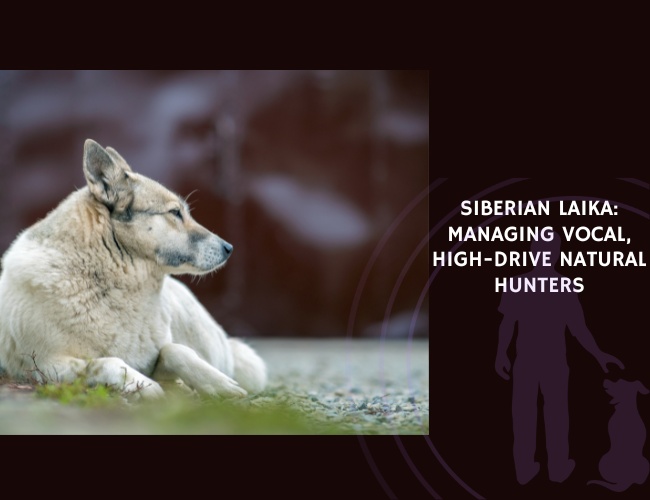
The Siberian Laika stands as one of the most authentic expressions of canine hunting heritage, a breed whose very essence is woven from centuries of independent work in the vast Siberian wilderness. These remarkable dogs carry within them a cognitive blueprint designed not for passive companionship, but for autonomous decision-making, relentless pursuit, and vocal coordination with human partners across endless forest expanses. When you welcome a Siberian Laika into your life, you’re not simply adopting a pet—you’re entering into partnership with a working intelligence shaped by one of the world’s most demanding environments.
Understanding the Siberian Laika means recognizing that their behaviors, often labeled as “problematic” in modern homes, are actually sophisticated hunting tools. Their intense vocalizations, powerful prey drive, and apparent independence are not flaws to be corrected, but natural expressions requiring thoughtful channeling. Through the NeuroBond approach, we can bridge the gap between ancient hunting drives and contemporary life, creating a relationship built on mutual respect and purpose rather than suppression and conflict.
The Northern Hunter’s Heritage: Understanding Laika Cognition
The Siberian Laika’s mind operates on principles fundamentally different from breeds developed for close handler work or companionship. For generations, these dogs worked at the edge of human sight, making complex decisions in pursuit of game across territories that would swallow most modern tracking systems. This heritage created a cognitive architecture optimized for search, persistence, and autonomous problem-solving.
The Search-Driven Mind
When your Laika suddenly fixates on a sound you can’t hear or a scent you can’t detect, you’re witnessing the activation of what neuroscience calls the SEEKING system—a powerful drive that floods the brain with dopamine and narrows attention toward potential discovery. Unlike breeds developed to wait for handler direction, Laikas were selected for dogs who would initiate the hunt, maintain focus through hours of pursuit, and make split-second decisions about prey movement without human input. 🧠
This search-oriented cognition means that traditional obedience training, with its emphasis on passive waiting and handler focus, often feels unrewarding to a Laika’s brain. You might notice your dog appearing “distracted” during training sessions, but what you’re actually observing is a mind constantly scanning for missions worth engaging.
Signs your Laika’s hunting brain is active:
- Sudden fixation on sounds or scents you cannot detect
- Rapid head movements tracking environmental changes
- Intense focus that makes them temporarily “deaf” to commands
- Preference for investigation over passive waiting
- Greater engagement with search-based tasks than repetitive obedience
- Constant environmental scanning even during supposed rest periods
The question isn’t whether your Laika can focus—it’s whether what you’re asking engages their natural goal-directed intelligence.
Decision Autonomy as Survival
In the forests of Siberia, a hunting dog that constantly looked back to the hunter for permission would lose the trail. Laikas were bred to make independent decisions—to determine whether to pursue, when to tree prey, how long to maintain a vocal alert. This autonomy runs deep in their behavioral patterns. When modern owners interpret this independence as stubbornness or disobedience, they miss the fundamental design of the breed.
Your Laika’s apparent unwillingness to comply with certain commands may actually reflect a brain asking, “What’s the purpose of this task?” Without a clear mission structure, their natural inclination is to return to environmental scanning rather than passive obedience. This doesn’t mean Laikas can’t learn handler-focused behaviors, but it does mean that training approaches must engage their inherent drive for purposeful work rather than attempting to override it.
Vocalization: The Hunter’s Beacon
Perhaps no characteristic defines the Siberian Laika experience more than their vocal nature. To understand and manage this behavior, we must first recognize it for what it truly is—a sophisticated communication system developed over centuries of cooperative hunting.
The Work Voice: Functional Communication
When a Laika trees prey in the forest, their sustained barking serves multiple critical functions. It marks the precise location of game for a hunter who may be hundreds of meters away. It maintains focus on the prey, preventing escape. It can coordinate with other dogs in the hunting party. This vocalization is rhythmic, persistent, and purposeful—what we might call their “work voice.”
You might notice this work voice emerging when your Laika spots a squirrel in the backyard, hears unusual sounds outside, or detects movement in the environment. The vocalization is focused, directed at a specific target, accompanied by intense alertness and often a flagging tail. Their entire body language communicates engagement and purpose. This isn’t random noise or anxiety—it’s your dog doing exactly what generations of breeding designed them to do.
Distinguishing Stress from Purpose
Not all Laika vocalization comes from hunting drive. Stress vocalizations sound different and look different. Learning to read these differences helps you respond appropriately rather than treating all barking as the same problem.
Work Voice indicators:
- Rhythmic, persistent barking pattern
- Focused on a specific visible target
- Alert, engaged body language with tail flagging
- Intense eye contact with the trigger
- Forward-oriented ears and body posture
- Appears purposeful and mission-driven
Stress Voice indicators:
- Frantic, high-pitched, or inconsistent patterns
- No clear target or generalized anxiety
- Pacing, panting unrelated to temperature
- Lip-licking, whale eye, or tucked tail
- Body language suggesting distress or overwhelm
- Cannot settle even when trigger is removed
The Invisible Leash principle reminds us that awareness, not tension, guides the path forward. By learning to distinguish your Laika’s vocal communications, you shift from reacting to all barking as problematic to responding appropriately based on the underlying message. Moments of Soul Recall can help you recognize patterns in when your dog vocalizes from stress versus when they’re expressing their natural hunting alert.
The Suppression Trap
Here’s a critical truth that many Laika owners learn the hard way: attempting to completely suppress vocalization in this breed typically escalates other problematic behaviors. When you block an innate functional behavior without providing appropriate outlets, that energy redirects into other expressions.
Behaviors that commonly emerge when vocalization is suppressed:
- Destructive chewing on furniture, walls, or baseboards
- Barrier reactivity and fence fighting
- Escape attempts through digging, climbing, or door dashing
- Redirected aggression toward other household pets
- Obsessive pacing or spinning behaviors
- Increased anxiety and inability to settle
- Self-directed behaviors like excessive licking or chewing
Traditional bark collars or punishment-based approaches often create a dog who is chronically frustrated, their SEEKING system constantly activated but never satisfied, their natural behaviors labeled as “bad.” This internal conflict can activate what neuroscience calls the RAGE system, leading to unpredictable outbursts or volatile arousal shifts. The solution isn’t suppression—it’s channeling. 🐾
Prey Drive and Environmental Sensitivity
The Siberian Laika’s prey drive represents one of the most powerful motivational systems in the canine world. This isn’t simple chase behavior—it’s a complex sequence of hardwired motor patterns that can create an almost trance-like focus when activated.
The Predatory Sequence
When your Laika locks onto moving prey, their brain enters a specialized state. Attention narrows dramatically. Peripheral awareness diminishes. Even their bond with you may temporarily fade as the predatory motor pattern takes over.
The complete predatory sequence:
- Orient: Initial awareness of potential prey stimulus
- Eye: Visual fixation and tracking of the target
- Stalk: Slow, deliberate approach (often minimal in Laikas)
- Chase: High-speed pursuit when prey flees
- Grab-bite: Physical contact and holding
- Kill-bite: Shake and dispatch behaviors
- Dissect: Tearing and manipulating the catch
- Consume: Eating the prey
Not every dog completes this sequence, but hunting breeds like Laikas have been selected for strong expression of these early stages—particularly orient, eye, and chase.
You might notice that during these moments, your normally responsive dog seems deaf to your calls. This isn’t defiance—it’s neurology. The predatory sequence genuinely reduces a dog’s ability to process social cues or recall training. Understanding this helps you develop realistic management strategies rather than feeling frustrated by apparent “disobedience.”
Trigger Stacking in Modern Environments
Modern urban and suburban environments present Laikas with an overwhelming density of potential triggers. When these triggers occur in rapid succession without resolution, a phenomenon called trigger stacking occurs. Each stimulation that doesn’t result in a full chase-capture-consume sequence leaves residual arousal in the nervous system.
Common trigger-stacking culprits:
- Multiple squirrel sightings on a single walk
- Cats darting across the path or visible through windows
- Joggers, cyclists, and skateboarders in quick succession
- Birds taking flight repeatedly
- Other dogs encountered at close proximity
- Children running, screaming, or playing energetically
- Rustling leaves or debris mimicking small animal movement
- Delivery people approaching the property multiple times daily
By the end of a walk through a park with multiple squirrel sightings, your Laika may be in a state of chronic arousal, ready to explode at the next trigger. This accumulated tension then expresses through excessive vocalization, reactivity on leash, or inability to settle at home. The triggers aren’t the only problem—it’s the accumulation without adequate decompression.
Movement as Trigger Amplification
Fast movement intensifies prey drive exponentially. A child running past may trigger chase drive that the same stationary child wouldn’t. A cat fleeing activates hunting behavior that a lounging cat might not. This creates management challenges in environments where rapid movement is common—parks, neighborhoods with outdoor cats, homes with young children.
Your Laika needs help developing impulse control around movement, but this can’t happen during high arousal. Training must occur in low-trigger environments first, gradually building the dog’s ability to maintain focus on you even when their hunting instincts whisper “chase.” This requires patience, environmental management, and realistic expectations about what’s possible given the breed’s heritage.
Understanding Trigger Hierarchy and the Lock-On State
Not all triggers affect your Laika equally. Understanding the hierarchy of stimuli that activate prey drive helps you anticipate reactions and manage environments more effectively.
The Trigger Spectrum
Understanding the hierarchy of triggers helps you anticipate your Laika’s reactions and manage environments more effectively.
Trigger Intensity Ranking (Highest to Lowest):
- Small, fast-moving animals (squirrels, rabbits, mice) – Immediate, intense responses combining size, movement, and sound
- Fluttering movement (birds taking flight, fabric flapping) – Unpredictable erratic motion mimicking escaping prey
- Strong scent trails (deer, fox, rabbit paths) – Persistent tracking drive with continuous reinforcement
- Rustling sounds (bushes, tall grass, underbrush) – Auditory cues activating search-and-investigate response
- Medium-sized animals (cats, chickens, small dogs) – Strong but slightly more manageable than small prey
- Fast-moving objects (bicycles, skateboards) – Movement-triggered without biological component
- Distant movement (animals far away, birds overhead) – Activates interest without full pursuit drive
Small, fast-moving animals represent the apex of Laika triggers. Squirrels darting up trees, rabbits bolting across paths, or mice scurrying through grass create immediate, intense responses. These combine multiple elements—size matching natural prey, rapid movement, and often accompanying sounds—into a perfect storm of predatory activation.
Fluttering movement ranks nearly as high. Birds taking flight, leaves rustling in wind patterns that mimic small animal movement, or fabric flapping can all trigger investigative or chase responses. The unpredictable, erratic quality of fluttering movement mimics prey attempting to escape, activating pursuit instincts even when the actual trigger isn’t biological.
Strong scent trails create a different but equally compelling trigger. While less visually dramatic than chase responses, scent-triggered pursuit can be remarkably persistent. Your Laika may become completely absorbed in following a deer trail, nose to ground, oblivious to everything else. The continuous reinforcement of the scent trail feeds their tracking drive in ways that keep them engaged far longer than visual triggers that disappear from view.
Rustling sounds—movement in bushes, tall grass, or underbrush—activate your Laika’s search-and-investigate response. Even without visual confirmation of prey, these auditory cues suggest the presence of something worth pursuing. You’ll notice your dog’s entire body orienting toward the sound, ears forward, body tense, preparing to investigate or pursue whatever created that sound.
The Lock-On State: When Cognition Narrows
When a powerful trigger appears, your Laika may enter what we call a “lock-on state”—a neurological condition where their cognitive focus narrows dramatically onto the trigger. This isn’t simple distraction; it’s a fundamental shift in brain function driven by the predatory motor pattern sequence.
Behavioral markers of lock-on state:
- Body becomes rigid or intensely focused
- Gaze fixes on trigger with laser-like attention
- Breathing changes (rapid/shallow or momentarily held)
- Ears orient precisely toward the trigger
- Tail flags, freezes, or becomes stiffly raised
- Complete unresponsiveness to name or familiar cues
- No reaction to physical touch or handler movement
- Inability to process food rewards or other distractions
- Muscles visibly tensed, ready to launch into pursuit
During lock-on, you’ll observe these specific markers indicating your dog has entered an altered cognitive state. Most critically, their responsiveness to you collapses—they may genuinely not hear their name, not process familiar cues, not even register your physical presence.
This is not disobedience. The neurological reality is that during intense lock-on, the parts of your Laika’s brain responsible for social connection and learned behaviors temporarily take a back seat to the ancient predatory systems. Asking for recall during peak lock-on is like asking someone absorbed in preventing a car accident to also solve a math problem—the brain simply cannot process both demands simultaneously.
Scent Pursuit vs. Visual Pursuit: Different Challenges
Understanding the distinct nature of scent-triggered versus visual-triggered pursuits helps you develop appropriate management strategies for each.
Scent-Triggered Pursuit Characteristics:
- Methodical, ground-focused tracking with nose down
- Slower, deliberate pace following the trail
- Can persist for extended periods (30+ minutes)
- Difficult to interrupt (cannot see/remove the scent)
- Provides continuous reinforcement with each step
- Prey may never be seen, creating no natural endpoint
- Requires competing neurological reward to disengage
- Best managed with physical barriers (leash, long line)
Visual-Triggered Pursuit Characteristics:
- Explosive, sudden acceleration when triggered
- High-speed, frantic chase behavior
- Typically shorter duration (unless chase succeeds)
- Full predatory sequence often activated
- Constant real-time visual feedback
- May allow slight interruption when trigger disappears
- Requires anticipation and prevention before chase begins
- Pre-chase signs offer brief intervention window
Scent-triggered pursuits typically involve methodical, ground-focused tracking. Your Laika’s nose drops to the ground or air-scents, their pace may slow to a deliberate tracking speed, and they become absorbed in following the scent trail. This type of pursuit can be incredibly persistent because the trail provides continuous reinforcement—each step reveals more information, pulling them forward. The prey itself may be far away or never seen, which means there’s no obvious end point to the pursuit.
Disengagement from scent pursuit proves particularly difficult because you cannot interrupt what your dog is actually focused on—you cannot see or remove the scent trail. Interrupting requires offering something that competes with the neurological reward of tracking itself, which is deeply satisfying to a hunting breed’s brain. Success often requires physical management (leash, long line) combined with pre-trained redirection behaviors practiced extensively in low-distraction environments.
Visual-triggered pursuits explode with sudden, dramatic intensity. Your Laika spots movement—acceleration is immediate and powerful. These pursuits are typically faster, more frantic, and involve the full chase sequence. The visual stimulus provides constant real-time feedback, adjusting the dog’s pursuit path continuously. When the trigger disappears from view—the squirrel reaches a tree, the cat hides under a car—the immediate stimulus removal can sometimes (though not always) allow slight cognitive opening for interruption.
Managing visual pursuits requires anticipation and prevention. Once the chase begins, interruption is extremely difficult. Success comes from recognizing the pre-chase signs and intervening before acceleration begins.
Pre-chase warning signs (your intervention window):
- Sudden stillness or freeze posture
- Head and ears orienting toward movement
- Body tension with weight shifting forward
- Tail raising or flagging
- Intense stare with dilated pupils
- Slight crouch or lowering of the head
- Cessation of all other behaviors (sniffing, walking)
- Breath holding or rapid shallow breathing
This might mean creating distance from the trigger, physically blocking your dog’s line of sight, or immediately engaging them in a high-value alternative behavior you’ve practiced extensively.
When Recall Actually Works vs. When It Collapses
Understanding when recall is neurologically possible versus impossible helps you develop realistic training goals and reduces frustration.
Recall CAN work when:
- Trigger is noticed but lock-on hasn’t fully engaged
- Dog shows interest but remains responsive to environment
- Body language is alert but not rigid
- Dog can still take treats or respond to other cues
- Distance from trigger allows cognitive processing
- You’ve built strong recall foundation with high-value rewards
- Trigger intensity is low to moderate
- No pursuit motion has begun
Recall COLLAPSES when:
- Full lock-on state has been achieved
- Pursuit motion has already begun
- Dog is in middle of intense chase
- Deep scent tracking has captured focus
- Multiple triggers have stacked arousal levels
- Predatory motor pattern has taken control
- Dog shows complete environmental deafness
- Physical intervention is your only option
Recall can work when your Laika notices a trigger but hasn’t yet entered full lock-on or begun pursuit. This is the golden window—they’re interested, perhaps alerted, but their cognition hasn’t narrowed completely. If you’ve built strong recall foundation through extensive positive reinforcement training, this is when your work pays off. Your voice can still register, the reward system associated with returning to you can still compete with investigation drive.
Recall becomes extremely difficult once pursuit motion begins or lock-on reaches peak intensity. At this point, you’re fighting neurological reality rather than training failure. Even dogs with otherwise excellent recall may not respond—their brain is genuinely incapable of processing your cue in that moment.
Recall collapses entirely during the middle of intense chase or deep scent tracking. The predatory motor pattern has full control. Your voice may not register at all. Physical intervention or environmental barriers become your only options. This is why management—long lines, secure fencing, avoiding high-trigger environments during training phases—matters more than perfect obedience. You cannot train your way past neurology, but you can manage environments to reduce how often your dog faces situations where neurology wins.
The practical implication: build recall extensively in gradually increasing distractions, celebrate success in low-to-moderate trigger environments, and accept that perfect recall in peak prey drive moments may never be achievable. Use management rather than punishment when your dog doesn’t respond during genuine lock-on states. They’re not being defiant—they’re being exactly what centuries of breeding designed them to be. 🧠

Arousal Speed and Frustration Management
Understanding how quickly your Laika’s arousal system activates and what happens when drives are blocked helps you prevent escalation before it begins.
Rapid Arousal Transitions
Siberian Laikas can transition from calm to high arousal with shocking speed—often in seconds rather than minutes. This isn’t gradual like many other breeds. One moment your dog might be lying peacefully; the next, they’re at the window barking intensely at a squirrel that just appeared. This rapid-fire activation stems from their SEEKING system’s sensitivity and the immediacy with which their hunting drives engage.
Environmental variables that accelerate arousal shifts:
- Sudden movements in their visual field
- Unexpected sounds that might indicate prey
- Strong scent information appearing suddenly (wind shift)
- Presence of other highly aroused dogs
- Multiple triggers appearing in rapid succession
- Triggers appearing in unexpected contexts
- High-value prey animals (squirrels, rabbits)
- Triggers at close proximity rather than distance
You’ll notice your Laika’s arousal can spike particularly quickly when multiple triggers appear in rapid succession or when triggers appear unexpectedly rather than in predicted contexts.
The biological reality behind this rapid transition involves the activation of the sympathetic nervous system—the fight-or-flight response—combined with breed-specific sensitivity to hunting stimuli. Your Laika’s ancestors needed this hair-trigger responsiveness to successfully catch prey. A dog who took minutes to “wake up” to hunting opportunities wouldn’t survive in the harsh Siberian environment. This trait that was so adaptive in their working context becomes a management challenge in modern life.
Frustration Behaviors: When Drives Are Blocked
When your Laika’s intense pursuit or investigation drive gets blocked—by a leash preventing chase, a fence keeping them from prey, or a recall interrupting tracking—frustration behaviors emerge. Recognizing these helps you understand what your dog is experiencing and respond appropriately.
Common frustration behaviors in blocked Laikas:
- Screaming or high-pitched vocalizations – Desperate, emotional sounds different from normal barking
- Spinning or frantic circling – Redirected motor patterns with nowhere to go
- Jumping repeatedly – Vertical movement expressing blocked forward drive
- Leash biting – Redirecting onto the obstacle preventing access
- Handler nipping – Frustration redirected toward the person controlling the leash
- Fence fighting – Intense barrier reactivity and aggressive display
- Pawing or scratching – Attempting to physically remove the barrier
- Body slamming – Throwing body weight against fence or door
- Rapid pacing – Back-and-forth movement along the barrier
Screaming or high-pitched, frantic vocalizations often appear during blocked pursuit. This isn’t the rhythmic work bark but something more desperate and emotional. Your Laika may produce sounds you’ve never heard from them before—whines that escalate to screams, repetitive high-pitched barking, or a combination that sounds genuinely distressed. This vocalization expresses the internal conflict between powerful drive and physical inability to satisfy that drive.
Spinning, jumping, or frantic circling movements indicate redirected motor patterns. Your dog’s body has prepared for chase—muscles tensed, adrenaline released, movement patterns initiated—but the behavior cannot complete. That physical energy has nowhere to go, so it expresses through frantic, purposeless motion. You might see your Laika spinning at the end of a leash, jumping repeatedly against a fence, or racing in tight circles in obvious frustration.
Leash biting represents a classic frustration redirect. Unable to reach the trigger, your dog redirects onto what’s preventing access—the leash itself, your hand on the leash, or even your clothing or body. This isn’t aggression toward you personally but rather redirected drive that needs an outlet. The leash becomes the target because it’s the most obvious obstacle between your dog and the trigger.
Barrier reactivity intensifies when frustration becomes chronic. A Laika who repeatedly experiences blocked pursuit at a fence may develop intense barrier-related behaviors—running the fence line frantically, barking intensely at anything visible beyond the barrier, digging at the fence base, or even redirecting aggression toward other household dogs near the barrier. The barrier itself becomes a frustration trigger independent of what lies beyond it.
From Frustration to Compulsive Behavior
When frustration becomes chronic—when your Laika repeatedly experiences intense drive activation without resolution—compulsive behaviors can develop. These repetitive, seemingly purposeless behaviors indicate deeper psychological pressure.
Warning signs of developing compulsive behaviors:
- Obsessive pacing – Same path repeatedly without clear purpose
- Compulsive fence running – Racing the perimeter even without triggers
- Constant environmental scanning – Never truly settling or relaxing
- Shadow or light chasing – Fixating on non-biological movement
- Tail chasing or spinning – Self-directed repetitive behaviors
- Excessive licking – Paws, surfaces, or self-grooming to excess
- Barrier obsession – Hours spent at windows or fence lines
- Vocal loops – Barking in repetitive patterns without clear trigger
- Interrupted sleep patterns – Light, fitful rest instead of deep sleep
Obsessive pacing patterns often emerge. Your dog may walk the same path repeatedly—along a fence line, through specific rooms, or in geometric patterns—without apparent purpose. This pacing differs from normal movement because of its repetitive, driven quality. The dog seems compelled to continue the pattern rather than moving purposefully from place to place.
Fence running becomes compulsive when it occurs even without visible triggers. Your Laika races along the fence boundary repeatedly, perhaps barking, perhaps silent, driven by the learned pattern more than by current environmental stimuli. The behavior has become self-reinforcing—the movement and arousal itself create enough stimulation to maintain the pattern.
Constant environmental scanning indicates a dog whose arousal system never fully settles. Even during “rest” times, your Laika’s eyes continuously scan windows, their head turns toward every sound, their body remains tense and alert. They cannot truly relax because their nervous system remains vigilant for potential triggers or opportunities. Sleep becomes lighter and more interrupted. True rest becomes rare.
These compulsive behaviors indicate that your Laika’s welfare is compromised. The chronic arousal and unfulfilled drives create genuine psychological distress. Addressing compulsive behaviors requires not just behavior modification but also fundamental changes in lifestyle—increasing appropriate outlets, reducing trigger exposure during recovery periods, potentially working with a veterinary behaviorist for medication support in severe cases, and rebuilding the dog’s ability to experience genuine calm and rest.
Prevention Through Recognition
The key to managing arousal and frustration lies in recognizing early warning signs before escalation occurs. Learning your individual Laika’s pre-arousal indicators gives you a crucial intervention window.
Pre-arousal indicators to watch for:
- Subtle body tension in muscles
- Increased environmental scanning frequency
- Changes in breathing patterns
- Ears beginning to orient forward
- Tail position shifting higher
- Decreased responsiveness to familiar cues
- Laser focus developing on distant objects
- Reduced interest in food or toys
- Stiffening of gait or movement
When you notice these early signs, you have a window to redirect, create distance from triggers, or engage in alternative behaviors before full arousal hits.
Similarly, recognize the difference between momentary frustration and chronic patterns. A single episode of leash biting after an intense trigger is normal frustration. Daily fence running regardless of trigger presence indicates a chronic problem requiring lifestyle changes. Through the Invisible Leash principle of awareness, you develop the observational skills to distinguish between manageable moments and patterns requiring intervention. 🐾

Containment and Escape Prevention
The Siberian Laika’s combination of intelligence, physical capability, and powerful drive to explore makes them exceptional escape artists. Effective containment requires understanding both the physical security needed and the psychological factors driving escape behavior.
Why Laikas Escape: The Psychology of Boundary Pressure
Your Laika isn’t trying to “run away” from you in the way we typically understand that phrase. They’re running toward something—a perceived hunting opportunity, interesting scents beyond the property, or simply the fulfillment of their range-roaming instincts. In their ancestral role, Laikas would cover vast territories during hunts, ranging far from their human partners. Modern property boundaries conflict fundamentally with this deep-seated drive to patrol large areas.
Insufficient space or lack of appropriate “mission outlets” intensifies boundary obsession. When your Laika’s natural drives for exploration, tracking, and hunting aren’t satisfied through structured activities, the boundary itself becomes the focus of their frustrated energy. They patrol the fence line obsessively, study its weaknesses, test its vulnerabilities. The unfulfilled SEEKING system fixates on what lies beyond the barrier because that represents unexplored territory full of potential interest.
This psychological pressure builds when your dog can see, hear, or smell triggers beyond their boundary but cannot access them. A fence line with squirrels just visible on the other side creates chronic frustration. A property adjacent to woods where deer regularly pass generates constant arousal without resolution. The containment that should provide security instead becomes a source of stress when the environment constantly activates drives without providing outlets.
Physical Containment Strategies
Effective Laika containment requires multiple layers of physical security, because determined dogs will exploit any weakness.
Essential fencing requirements:
- Height: Minimum 6 feet; 6-8 feet recommended for athletic individuals
- Material: Smooth surfaces (vinyl, metal panels) better than chain link
- Dig prevention: L-footers (12-18″ buried wire mesh at 90° angle)
- Alternative dig prevention: Concrete footer or 12-24″ buried fence bottom
- Board spacing: Wooden boards close enough to prevent paw holds
- Climb prevention: Roller bars or coyote rollers on fence tops
- Angled toppers: Inward-facing extensions making climbing nearly impossible
- Gate security: Double gates or airlock systems
- Visual barriers: Solid fencing to reduce trigger visibility
- Regular inspection: Check weekly for developing weaknesses
Fencing must be both tall and dig-proof. Six feet represents an absolute minimum height; many owners find they need six to eight feet to contain athletic Laikas who can climb or jump. The fence material matters—smooth surfaces like vinyl or metal panels discourage climbing better than chain link, which provides easy paw holds. Wooden fences work if boards are close enough together that paws cannot find purchase between them.
Dig prevention requires extending fencing below ground or creating barriers at the fence base. L-footers—wire mesh extending from the fence base outward at a 90-degree angle for 12-18 inches, then buried—prevent digging by creating an obstacle dogs encounter before reaching the fence base. Alternatively, pouring a concrete footer along the fence line or burying the fence bottom 12-24 inches deep creates impenetrable dig barriers.
Some Laikas become climbers, using chain link like a ladder or scrabbling up wooden fences by finding tiny paw holds. Addressing climbing behavior may require adding roller bars or coyote rollers to fence tops—spinning cylinders that prevent dogs from getting purchase to pull themselves over. Angled fence toppers that extend inward make climbing over extremely difficult even for determined dogs.
Double gates or airlock systems prevent escape during entry and exit. The concept is simple: a small fenced area between two gates means that both gates are never open simultaneously. When you enter the yard, you come through the first gate into the airlock, close it behind you, then open the second gate into the main yard. Your Laika cannot door-dash to freedom because there’s always one gate closed between them and the outside world.
Safety Harnessing and Collar Protocols
Even with good fencing, walking and transportation require careful equipment choices because Laikas can be Houdini-level escape artists from collars and harnesses.
Recommended safety equipment:
- Martingale collars: Tighten when pulled, prevent backing out
- Proper fit: Two fingers between collar and neck at tightest point
- Dual-strap harnesses: Both chest and girth straps for security
- Multi-clip harnesses: Both back and front attachment points
- Double-leashing: One leash to collar, one to harness
- Carabiner clips: More secure than standard lobster clasps
- Reflective materials: For visibility during low-light walks
- Regular inspection: Check for wear, fraying, or weakening
- Backup collar: Always wear flat collar with ID even when using harness
- Avoid: Flat buckle collars as primary restraint, loose-fitting harnesses, single-point attachments for escape artists
Martingale collars provide significantly more security than flat buckle collars. These collars tighten slightly when tension is applied, preventing the dog from backing out of the collar—a common Laika escape method. The collar should fit so that at its tightest, you can still fit two fingers between collar and neck, preventing choking while eliminating the slack that allows backing out.
Well-fitted harnesses with both chest and girth straps are even more secure for dogs who have already demonstrated collar-escape skills. The key is proper fit—loose harnesses can be wiggled out of through determined backing and twisting. Many Laika owners prefer harnesses with multiple clip points, allowing them to attach a leash to both a back clip and a front clip simultaneously as redundant security.
For extreme escape artists, double-leashing provides peace of mind. Attach one leash to the collar and another to the harness. If your dog manages to escape one attachment point, the second leash prevents complete freedom. This might seem excessive, but for dogs who have successfully escaped and had dangerous experiences (running into traffic, getting lost), redundant security is worth the minor inconvenience.
Door and Threshold Protocols
Many Laika escapes happen at doors rather than fences. A dog who door-dashes—shooting through any opened door toward freedom—poses serious safety risks.
Building reliable door protocols:
- Start with low-value doors (interior rooms, closets)
- Teach “wait” cue with door completely closed
- Add door cracking open while maintaining wait
- Progress to fully open door with wait holding
- Introduce movement beyond the door (people walking past)
- Practice with exterior doors in low-distraction times
- Add high-value triggers (visitors arriving, delivery people)
- Require consistent enforcement from all family members
- Use management tools (baby gates, leashes at doors)
- Create “place” alternative (go to bed when door opens)
Training solid “wait” or “stay” behaviors at all thresholds becomes critical. Your Laika should learn that doors opening doesn’t mean permission to exit. This training happens gradually—starting with boring doors in low-distraction areas, heavily rewarding the wait behavior, and only gradually progressing to exterior doors with interesting things visible beyond them.
The training requires consistency from everyone in the household. If most people enforce the wait but one person occasionally allows door dashing, the behavior remains. Dogs are brilliant discriminators—they learn which people enforce which rules. Family meetings about house rules for the dog aren’t just helpful; they’re essential for safety.
Physical management during training includes baby gates creating barriers between your dog and exterior doors, keeping leashes near doors for quick control during entries and exits, and teaching your Laika to go to a specific “place” (a bed or mat) when doors open. This place behavior becomes their default—door opens, they automatically go to their designated spot and wait for release or invitation.
Reducing Boundary Pressure Through Mission Fulfillment
The most effective long-term escape prevention isn’t physical barriers alone but rather reducing the psychological pressure driving escape attempts. When your Laika’s natural drives are satisfied through appropriate outlets—structured searches, scent work, adequate exploration in varied environments, pulling or tracking activities—their fixation on what lies beyond property boundaries decreases.
Think of it this way: a Laika who spends an hour engaged in tracking exercises at a new location, satisfying their search drive and experiencing varied scents and terrain, returns home more settled. Their nervous system has experienced the type of activity it craves. The neighbor’s cat wandering past the fence becomes less compelling because the deep itch has been scratched.
Conversely, a Laika confined to a small yard with no mission outlets, seeing squirrels and cats and birds all day but unable to engage their hunting drives appropriately, exists in a state of chronic frustration. Every visible trigger beyond the fence represents the satisfaction they’re not receiving. Escape attempts become inevitable because the drive pressure has nowhere else to go.
Through the NeuroBond framework, we recognize that physical containment must be matched with psychological satisfaction. The strongest fence in the world won’t create a content Laika if their fundamental needs remain unmet. Security measures and lifestyle enrichment work together, each supporting the other to create a dog who chooses to remain within boundaries because their life within those boundaries is genuinely fulfilling. 🧡
Vocal. Driven. Autonomous.
Hunting Fuels Behaviour
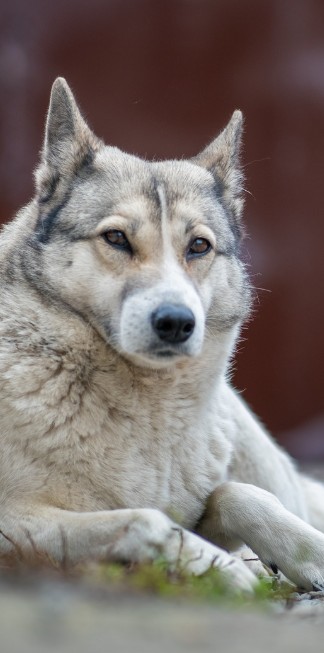
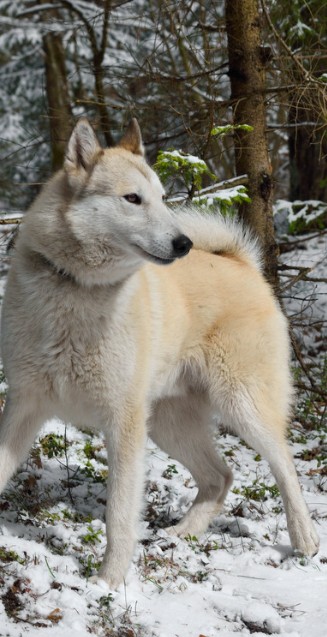
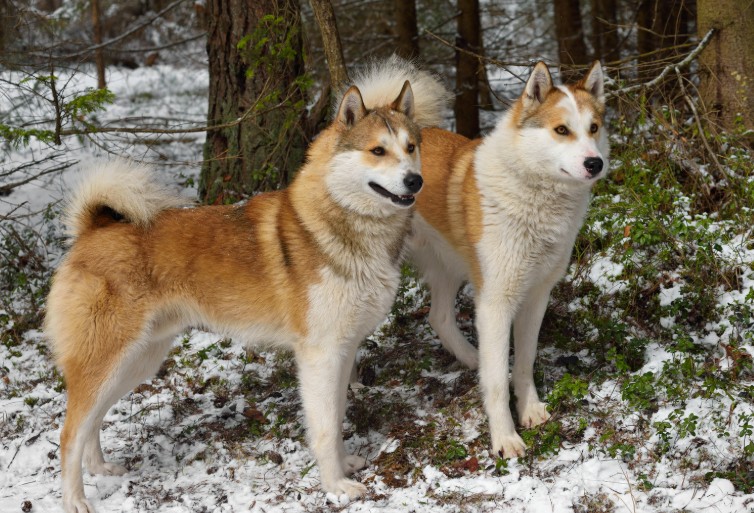
Siberian Laikas act from search-driven intelligence rather than passive compliance. Their vocalisation and fixation signal engagement, not disobedience.
Purpose Sustains Focus
Bred to initiate and maintain hunts independently, their minds seek missions worth pursuing. Without clear purpose, attention naturally returns to environmental scanning.
Guidance Beats Suppression
High drive requires direction instead of restraint. When their instincts are channelled with structure and respect, cooperation replaces conflict.
Urban Life vs. Rural Living: Environment Matters
The Siberian Laika’s adaptation to modern life depends heavily on environmental context. Urban and rural settings present fundamentally different challenges and opportunities for this wilderness-bred breed.
The Urban Mismatch
City environments create a perfect storm of chronic trigger stacking for Laikas. Unlike rural settings where triggers may be intense but intermittent, urban life provides constant low-to-moderate stimulation that never allows the arousal system to fully settle.
Urban trigger-stacking sources:
- Traffic noise: Continuous acceleration sounds mimicking rushing prey
- Motorcycles: Sudden, intense auditory activation
- Sirens: Trigger howling and vocal responses multiple times hourly
- Dense dog populations: Frequent forced encounters at close range
- Crowded sidewalks: Unpredictable human movement constantly
- Running children: High-movement triggers without warning
- Delivery people: Multiple daily property approaches
- Shopping carts/strollers: Visual chaos and unexpected movement
- Outdoor cats: Visible prey animals beyond reach
- Birds: Constant fluttering movement overhead
- Construction sounds: Irregular, intense noises
- Homeless encampments: Unfamiliar scents and unpredictable activity
Traffic creates continuous auditory and visual triggers. Cars accelerating sound like rushing prey. Motorcycles produce sudden, intense noises that activate alert responses. Buses and trucks create both sound and vibration your Laika may find activating. The never-ending stream means your dog’s nervous system never experiences true quiet, never gets the environmental stillness that allows complete psychological rest.
Sirens pose particular challenges because they often trigger howling or reactive vocalization in Laikas. The frequency and pattern of emergency sirens seem to activate their pack vocal response. In urban areas where sirens may sound multiple times hourly, this can create chronic vocal reactivity that frustrates both owners and neighbors.
Dense dog populations in cities mean frequent encounters with unfamiliar dogs, often at closer distances than comfortable for a breed that values personal space. Apartment hallways, sidewalks, and shared spaces force proximity that conflicts with your Laika’s natural preference for distance-based coexistence. Each encounter, even if managed successfully, adds to the day’s arousal accumulation.
Human crowds bring their own stressors—unpredictable movement, children running suddenly, people approaching to pet without permission, shopping carts and strollers creating visual chaos. For a Laika with high environmental awareness and natural wariness, navigating crowds requires constant vigilance and decision-making, creating mental fatigue without providing the satisfying outlet of actual hunting or exploration behavior.
The constant layering of these triggers—one after another without adequate recovery time—creates chronic trigger stacking. By afternoon, your Laika may be operating at heightened baseline arousal, ready to explode at triggers that wouldn’t have bothered them in the morning. This accumulated stress expresses through increased vocal reactivity, escape behaviors, or inability to settle at home even after exercise.
Distance-Based Coexistence vs. Forced Interaction
Understanding your Laika’s natural social preferences helps reduce urban stress significantly. Laikas typically prefer what we call distance-based coexistence—peaceful awareness of other dogs and people without forced direct interaction.
This means your Laika may be perfectly calm with another dog visible across a park but become reactive when that same dog approaches within leash length. They appreciate the ability to observe, assess, and choose whether to engage rather than having interaction imposed upon them. In urban environments where space is limited and close encounters are frequent, this preference conflicts with reality.
Forced greetings—people approaching to pet, dogs pulling toward yours on leash, well-meaning strangers who insist your dog should be “friendly”—create stress and potential reactivity. Each forced interaction where your Laika cannot choose creates small deposits in the stress bank, accumulating toward overflow.
Practical management means advocating for your dog’s space. This includes training a solid “let’s go” or “this way” cue that allows you to create distance quickly, positioning yourself between your dog and approaching triggers, and being willing to politely but firmly tell people that your dog doesn’t greet strangers. Some owners use “in training” vests or patches to discourage unwanted interactions, though these aren’t always respected.
Creating distance when possible transforms city walks. Instead of walking the shortest route where encounters are unavoidable, plan routes that allow maneuvering room. Walk during off-peak hours when sidewalks are less crowded. Use the width of the street to create maximum distance when passing other dogs. These strategies reduce trigger intensity and frequency, making urban life more manageable.
Urban Management Strategies That Work
Successfully keeping a Laika in an urban environment requires creative management and realistic expectations.
Practical urban survival strategies:
- Strategic timing: Early morning or late night walks during quiet hours
- Route planning: Choose paths allowing maximum distance from triggers
- Attention cues: Strong “look at me” behavior heavily rewarded
- Indoor enrichment priority: Extensive scent work and mental challenges
- Transportation to nature: Drive to larger parks or rural areas for main exercise
- Visual barriers at home: Block window access to reduce constant triggering
- White noise machines: Mask outdoor sounds during rest periods
- Decompression protocols: Mandatory after every urban outing
- Frequent breaks: Multiple short, low-key outings vs. one intense walk
- Emergency exits: Always plan escape routes from overwhelming situations
- Professional support: Work with trainer familiar with high-drive breeds in cities
Strategic timing of outdoor activities makes enormous difference. Early morning walks, before the city fully wakes, provide quieter environments with fewer triggers. Late night potty breaks similarly reduce stimulation. The midday rush hours may need to be avoided entirely during your dog’s highest-arousal periods.
Building a strong “look at me” or attention cue gives you a tool for navigating trigger-dense environments. When your Laika can check in with you and receive high-value rewards for maintaining that focus, you create an alternative to fixating on environmental triggers. This requires extensive practice in low-distraction environments before expecting it to work during intense city stimulation.
Indoor enrichment becomes critical when outdoor environments prove consistently overstimulating. Extensive scent work indoors, puzzle feeders, training sessions, and other mental challenges help satisfy drives without adding to arousal accumulation. Some urban Laika owners find that their dogs do better with two shorter outdoor sessions for physical needs plus extensive indoor enrichment than they do with long urban walks that create more stress than satisfaction.
Transportation to less stimulating environments for main exercise sessions helps significantly. If you can drive your Laika to a larger park, forest preserve, or rural area for their primary physical and mental outlet, returning home to the urban environment for routine bathroom breaks only, you reduce daily trigger exposure while still providing necessary satisfaction.
Rural Advantages and Considerations
Rural and suburban environments typically suit Laikas far better, though they’re not without challenges.
Rural living advantages:
- Natural space for roaming within secure boundaries
- Access to varied terrain and genuine wilderness
- Abundant wildlife scents engaging hunting drives appropriately
- Reduced human and dog density
- Fewer forced social encounters
- Genuine quiet periods for arousal system recovery
- Opportunities for off-leash work in safe areas
- Natural seasonal variations and weather experiences
Rural management considerations:
- Higher wildlife density requires more secure fencing
- Sound carries far across open spaces (vocal management still needed)
- Free-roaming rural dogs may approach property creating territorial issues
- Predator threats (coyotes, bears, raptors) require vigilance
- Livestock exposure demands strong boundary training
- Greater escape consequences (more dangerous if dog gets loose)
- Longer emergency vet distances require preparedness
- Seasonal challenges (mud, snow, heat) impact exercise options
The ideal Laika environment provides secure space for patrol and exploration, regular access to varied natural terrain for satisfying their range-roaming and tracking drives, relatively low-density encounters with unfamiliar people and dogs, and understanding neighbors who recognize that some vocalization is normal for this breed. If your current environment doesn’t match this ideal, that doesn’t mean you cannot successfully keep a Laika—but it does mean you’ll need to be more intentional about management, enrichment, and creating appropriate outlets for their drives. 🐾
🐺 Managing the Siberian Laika: From Wild Hunter to Modern Partner
A comprehensive journey through understanding, channeling, and partnering with one of the world’s most authentic hunting breeds
Phase 1: Understanding the Hunter’s Mind
Recognizing autonomous cognition and search-driven intelligence
Siberian Laikas operate on a powerful dopamine-driven SEEKING system that constantly scans for missions worth engaging. Unlike handler-focused breeds, they initiate hunts, make split-second autonomous decisions, and maintain pursuit for hours without human direction. This isn’t distraction—it’s their cognitive design.
• Sudden fixation on sounds or scents you cannot detect
• Rapid transitions from calm to intense focus in seconds
• Preference for investigation over passive waiting
• Greater engagement with search tasks than repetitive obedience
Frame training as missions rather than commands. Instead of “sit because I said so,” think “guard this position during our patrol.” Engage their goal-directed cognition by making every behavior part of a meaningful purpose. Through the NeuroBond approach, we transform their independence into cooperative reliability.
Phase 2: Decoding Vocalization
Understanding functional communication vs. stress signals
When Laikas tree prey in forests, sustained barking serves as an auditory GPS for hunters hundreds of meters away. This functional vocalization is rhythmic, persistent, focused on a specific target, and accompanied by alert body language with tail flagging. It’s not noise—it’s precision communication.
Stress vocalizations sound frantic and high-pitched, without clear targets. Look for pacing, panting unrelated to temperature, lip-licking, or tucked tail. The context reveals everything—are they fixated on something specific, or is the barking generalized and unfocused?
Attempting to completely suppress vocalization typically escalates other problems: destructive chewing, barrier reactivity, escape attempts, redirected aggression, or obsessive behaviors. The drive doesn’t disappear—it simply finds other expressions. Channel, don’t suppress.
Phase 3: Trigger Hierarchy & Lock-On State
Recognizing intensity levels and neurological reality
Highest intensity: Small, fast-moving animals (squirrels, rabbits)
High intensity: Fluttering movement (birds, fabric)
Persistent intensity: Strong scent trails (deer, fox paths)
Moderate intensity: Rustling sounds in bushes
During lock-on, cognition narrows dramatically: body becomes rigid, gaze fixes with laser attention, breathing changes, ears orient precisely, responsiveness to you collapses completely. This is not disobedience—it’s neurology. The predatory motor pattern has taken control.
Recall CAN work before lock-on engages—when your dog notices a trigger but remains responsive. Recall COLLAPSES during peak lock-on or active pursuit. Use environmental management and long lines rather than expecting obedience during neurological override. Success comes from prevention, not intervention.
Phase 4: Arousal Speed & Frustration Cycles
Managing rapid transitions and preventing escalation
Laikas transition from calm to high arousal in seconds, not minutes. One moment peaceful, the next intensely focused at a window. This hair-trigger responsiveness was adaptive in Siberian forests but becomes a management challenge in modern environments with constant trigger exposure.
When pursuit is blocked: screaming or high-pitched vocalizations, frantic spinning, leash biting, barrier reactivity, fence fighting. When frustration becomes chronic: obsessive pacing, compulsive fence running, constant environmental scanning, interrupted sleep patterns.
Watch for pre-arousal indicators: subtle body tension, increased scanning, breathing changes, ears orienting forward. This is your intervention window. Through the Invisible Leash principle of awareness, you develop skills to distinguish manageable moments from patterns requiring lifestyle changes.
Phase 5: Fort Knox Containment
Physical security and psychological pressure reduction
• Height: 6-8 feet minimum (not 4-5 feet)
• Material: Smooth surfaces (vinyl/metal) over chain link
• Dig prevention: L-footers or 12-24″ buried bottom
• Climb prevention: Roller bars or angled toppers
• Gates: Double-gate airlock systems
Laikas aren’t running away FROM you—they’re running TOWARD perceived opportunities: hunting prospects, interesting scents, territory exploration. Insufficient mission outlets intensify boundary obsession. The fence becomes a frustration focus when natural drives go unsatisfied.
Martingale collars prevent backing out. Dual-strap harnesses with multiple clip points provide redundancy. For extreme escape artists: double-leashing (one to collar, one to harness). Door protocols: teach “wait” at all thresholds starting with low-value doors, progressing gradually.
Phase 6: Urban vs. Rural Reality
Matching environment to breed needs
City life creates chronic trigger accumulation: continuous traffic noise, multiple sirens daily, dense dog populations, crowded sidewalks, running children, delivery people. Unlike rural settings where triggers are intense but intermittent, urban environments never allow full arousal system recovery.
• Strategic timing: early morning/late night walks
• Transportation to nature for main exercise
• Indoor enrichment priority (scent work, puzzles)
• Visual barriers at home to reduce window triggering
• Mandatory decompression after every outing
Natural space for roaming, access to varied terrain, abundant wildlife scents engaging drives appropriately, genuine quiet periods for nervous system recovery, opportunities for off-leash work in safe areas. However: higher wildlife density requires more secure fencing, and predator threats (coyotes, bears) require vigilance.
Phase 7: Choosing Satisfying Outlets
Mental stimulation over physical exhaustion
Repetitive fetch creates “empty calories” exercise—physical tiredness without cognitive satisfaction. It engages only chase, missing search, locate, track, and problem-solving elements. Can develop into compulsive behavior. Your Laika seems wired rather than relaxed after extensive ball play.
Scent work: Engages primary hunting sense, creates methodical focus, works in any weather
Tracking: Follows trails like ancestral work, provides deep satisfaction
Pulling activities: Canicross, bikejoring engage forward drive purposefully
Problem-solving: Puzzle feeders, search games engage intelligence
Daily: Scent work (15-30 min) + adequate sniffing time
3-4x weekly: Substantial physical exercise + training with novelty
2-3x weekly: Problem-solving activities
Weekly: Novel environment exposure + social opportunities
Phase 8: Decompression Mastery
Returning to genuine calm and rest
Continued high alertness 30+ minutes after activity, inability to settle or lie down calmly, excessive panting unrelated to temperature, constant environmental scanning, reactivity to normally-ignored sounds, pacing or persistent attention-seeking.
• Quiet chew time (bully sticks, appropriate bones)
• Slow sniffy walks (10-20 min, dog sets pace)
• Gentle massage or calm brushing
• Crate sanctuary with frozen Kong
• White noise to mask external sounds
• Dim lighting and calm companionship
Deeper, regular breathing; relaxed body posture; willingness to lie on side (not sphinx position); decreased environmental reactivity; soft, unfocused eyes; lower tail position; eventual deep sleep. Most dogs need 20-45 minutes after moderate arousal, 45-90 minutes after intense triggers.
🔄 Laika Management: Key Comparisons
Urban: Requires intensive management, strategic timing, transportation to nature, extensive indoor enrichment
Rural: Natural fit with space for roaming, varied terrain access, genuine quiet periods, though predator awareness needed
Scent pursuit: Methodical, ground-focused, extremely persistent, difficult to interrupt (cannot see/remove trail)
Visual pursuit: Explosive acceleration, faster but shorter, slight interruption window when trigger disappears
Work voice: Rhythmic, persistent, focused on target, alert body language, tail flagging
Stress voice: Frantic, high-pitched, no clear target, pacing, panting, tucked tail, generalized anxiety
Ball play: Only engages chase, creates arousal without satisfaction, can become compulsive, produces “wired” state
Scent work: Engages nose and brain, creates methodical focus, naturally tiring, produces genuine settling
Before lock-on: Recall CAN work, dog notices trigger but remains responsive, can still take treats
During lock-on: Recall COLLAPSES, rigid body, fixed gaze, complete environmental deafness, neurology overrides training
Traditional: “Sit because I said so” – passive obedience, handler focus, repetitive drilling
Mission-based: “Guard this position during patrol” – purposeful engagement, cooperative partnership, varied challenges
Arousal transition speed: Seconds, not minutes (be ready!)
Minimum fence height: 6 feet absolute minimum, 6-8 feet recommended
Decompression timing: 20-45 min after moderate arousal, 45-90 min after intense triggers
Daily scent work: 15-30 minutes minimum for mental satisfaction
Recall reality: Works BEFORE lock-on, collapses DURING lock-on
Activity balance: Mental stimulation > Physical exhaustion
The Siberian Laika invites us into a profound partnership that honors both science and soul. Through the NeuroBond framework, we recognize that their hunting drives aren’t problems to eliminate but capacities to channel—building trust and understanding as the foundation of learning rather than suppression and control.
The Invisible Leash principle reminds us that awareness, not tension, guides the path forward. We learn to read pre-arousal signs, distinguish work voice from stress voice, and create clarity through predictable rhythms rather than constant corrections. This is leadership without dominance—guidance through understanding.
Moments of Soul Recall reveal how emotional memory and instinct intertwine in behavior. When we channel rather than suppress, when we provide missions rather than impose arbitrary control, when we honor the authentic hunter while guiding them through modern life—we create something greater than training. We create genuine partnership. That balance between neuroscience and soul, between ancient drives and contemporary needs—that’s the essence of Zoeta Dogsoul.
© Zoeta Dogsoul – Where neuroscience meets soul in dog training
Training the Independent Hunter
Training a Siberian Laika demands a philosophical shift from traditional obedience models. You’re not training a dog to follow commands blindly—you’re building a cooperative partnership with an intelligent predator designed for autonomous work.
Mission-Based Engagement
The most successful Laika training frames every behavior as part of a meaningful mission. Instead of “sit and stay because I said so,” think “we’re tracking this scent trail together” or “help me search this area systematically.” This engages their goal-directed cognition rather than fighting against it.
Reframing commands as missions:
- Recall: “Return to base” after successful patrol vs. arbitrary interruption
- Loose-leash walking: “Controlled territory monitoring” vs. just “don’t pull”
- Stay: “Guard this position” vs. passive waiting
- Down: “Settle for observation” vs. forced submission
- Leave it: “Not our target today” vs. meaningless denial
- Wait at door: “Security protocol” vs. random obedience
- Check-in: “Report back” vs. attention for attention’s sake
- Place/mat work: “Rest station” vs. arbitrary confinement
When you teach recall, frame it as “return to base” after a successful patrol, not as arbitrary interruption of whatever interested them. When teaching loose-leash walking, conceptualize it as controlled territory monitoring rather than just “don’t pull.” These subtle mental reframes help you present training in ways that resonate with your Laika’s natural drives.
The Value of Novelty and Challenge
Laikas excel at tasks requiring problem-solving and environmental navigation. Repetitive drilling on the same simple behaviors in the same locations often produces a disengaged, apparently “stubborn” dog. Their brain asks, “We already mastered this—why are we still doing it?”
Strategies for maintaining engagement:
- Vary locations constantly – Practice in new environments weekly
- Change reward types – Rotate between treats, toys, praise, environmental access
- Add environmental challenges – Wind, rain, distractions, varied terrain
- Increase distance – Work behaviors at progressively greater distances
- Introduce duration – Extend how long behaviors must be held
- Create search scenarios – Hide objects or treats for discovery
- Build scent discrimination – Teach finding specific scents among distractors
- Design obstacle navigation – Challenge physical and mental problem-solving
- Chain behaviors – Combine multiple cues into mission sequences
- Add real-world applications – Practice skills during actual activities
Introduce variation constantly. Change locations. Add complexity. Create scenarios that require them to think and adapt. Hide objects for them to find. Build scent discrimination games. Design obstacle courses that challenge their navigation skills. When training engages their hunting intelligence, you’ll see a transformation in focus and enthusiasm.
Reliability Through Purpose
You might wonder if a mission-based approach can produce reliable behaviors when true emergencies require immediate response. The answer is yes, but it requires different foundations than traditional obedience. Through the NeuroBond framework, reliability emerges from trust and mutual understanding rather than domination.
When your Laika understands that responding to your recall means returning to safety, receiving valuable information, or accessing something rewarding, they make the choice to return. When they’ve experienced that checking in with you during walks leads to interesting discoveries and engagement, they choose to maintain connection. This cooperative reliability often proves more robust than compliance built purely on avoidance of punishment. 🧡

Channeling Hunting Drive: Practical Outlets
Managing a Laika’s hunting drive isn’t about suppression—it’s about providing appropriate outlets that satisfy the same neurological systems.
Nose Work and Scent Games
A Laika’s nose is a sophisticated hunting tool, and scent work engages this capacity beautifully. Even simple games hiding treats around your home activate their search-and-locate drive. More advanced nose work training, where dogs learn to find specific scents, provides mental stimulation that can tire a Laika more effectively than physical exercise alone.
The beauty of scent work is that it allows your dog to use their hunting intelligence in structured, controllable ways. They’re still tracking, still searching, still experiencing the satisfaction of successful discovery—but within parameters you’ve set. This type of engagement helps stabilize the arousal system by providing regular, predictable outlets for the SEEKING drive.
Flirt Pole and Controlled Chase
A flirt pole—essentially a long pole with a lure attached—allows you to simulate prey movement and let your dog engage in chase behavior under your control. You determine when the chase starts, the pattern of movement, and when the “prey” is caught. This satisfies the predatory sequence while keeping you in a leadership role.
Sessions should be relatively short—five to ten minutes—with clear start and stop cues. The goal isn’t to create frantic arousal but to provide a controlled outlet followed by calm decompression. This teaches your Laika that hunting-type behaviors have appropriate times and places, reducing the urge to chase every real squirrel or bicycle.
Forest Walks and Natural Terrain
Nothing replaces the profound satisfaction a Laika experiences navigating natural terrain. If you have access to forests, hills, or wild spaces where they can be safely off-leash or on a long line, these environments provide multisensory engagement that urban parks simply can’t match.
Allow generous time for sniffing. Let them investigate interesting scents thoroughly. Permit them to make route choices within safe parameters. These walks aren’t primarily about physical exercise—they’re about engaging the environmental scanning and decision-making systems that define your dog’s cognitive heritage. Even thirty minutes in natural terrain can provide more satisfaction than an hour of urban leash walking.
Vocal Management: Channeling, Not Suppressing
Effective vocal management in Laikas requires creativity, timing, and a fundamental respect for the functional nature of their communication.
Scheduled Vocal Outlets
One powerful strategy involves giving your Laika specific times and contexts where vocalization is not just permitted but encouraged. Teaching a “speak” cue on command allows them to vocalize when asked, which paradoxically can reduce random barking because the dog has a structured outlet.
Some Laika owners establish “alert time” where the dog is permitted to bark at window activity for a defined period, then given a “quiet” cue that signals alert time is over. Others create group howling sessions if they have multiple dogs or even howl with their Laika themselves—acknowledging the pack vocal behavior that feels natural to the breed. These structured outlets reduce the pressure that might otherwise express as nuisance barking.
The “Thank You” Method
When your Laika alerts to something outside—someone approaching the house, unusual sounds, wildlife in the yard—acknowledge their alert with a phrase like “thank you, I’ve got it” in a calm tone. This communicates that you’ve received their message and are handling the situation. For many Laikas, this acknowledgment satisfies the need to communicate the alert, allowing them to settle more easily than if you simply demanded silence.
This method works because it honors the functional purpose of their vocalization. They weren’t making noise to annoy you—they were doing their job by alerting to potential changes in territory. When you acknowledge that contribution, the pressure to continue vocalizing often dissipates.
Decompression After High Arousal
After any high-arousal activity—a stimulating walk, a training session, play with other dogs, or even just an exciting event in the home—your Laika needs structured decompression time. Without this, residual arousal can express as excessive vocalization, restlessness, or reactivity to minor triggers.
Decompression might include a calm chew session in a quiet space, a slow sniff walk where no other stimulation occurs, gentle massage, or simply time in their crate with a frozen Kong. The goal is to help their nervous system return to baseline rather than maintaining elevated arousal that spills over into other behaviors. This practice of deliberate transitions between arousal states reflects the Invisible Leash principle of creating clarity and predictability in daily rhythms.
Exercise and Mental Stimulation
Physical exercise alone will never tire a Laika adequately. Their endurance was built for all-day hunts through challenging terrain. You can’t simply out-walk the energy of a breed designed for this level of activity.
The Mental Stimulation Priority
Mental challenges—problem-solving, scent work, learning new skills, navigating novel environments—engage your Laika’s brain in ways that create genuine fatigue. Twenty minutes of focused nose work or training can produce more settling effect than an hour of repetitive fetch.
This doesn’t mean physical exercise isn’t important. Laikas need movement, access to varied terrain, and opportunities to run. But the exercise must be coupled with cognitive engagement to truly satisfy their needs. A walk where they’re permitted to sniff extensively, make choices about routes, and investigate their environment provides both physical and mental benefits.
Structured Activity Schedules
Random, unpredictable activity patterns can create a Laika who is perpetually on edge, never sure when the next interesting thing will happen. A structured daily schedule—morning walk, midday training session, afternoon rest period, evening play—creates predictability that actually helps reduce anxiety and arousal.
Your Laika knows what to expect and when to expect it. This allows their nervous system to truly relax during rest periods rather than remaining vigilant for potential activity. The structure doesn’t mean rigidity—you can vary the specific content of activities—but the rhythm provides crucial stability.
Weather and Seasonal Considerations
Siberian Laikas were designed for cold climates. Hot weather can be genuinely dangerous for this breed, limiting exercise options during summer months. You’ll need to adapt schedules to cooler times of day and find indoor mental stimulation alternatives when weather prevents outdoor activity.
Conversely, these dogs often come alive in snow and cold. If you live in a climate with winter weather, you may notice a dramatic increase in your Laika’s happiness and engagement during colder months. This seasonal variation in energy and mood is normal for the breed—understanding and working with these patterns rather than against them creates less frustration for everyone involved. 🐾
Activity Comparison: Choosing Outlets That Satisfy
Not all activities provide equal satisfaction for your Laika’s drives. Understanding which activities truly fulfill hunting instincts versus which create arousal without resolution helps you design effective enrichment strategies.
The Problem with Repetitive Ball Play
“Throw the ball” represents one of the most common but least satisfying activities for Laikas. While it provides physical exercise and can be fun, repetitive fetch primarily engages only the chase component of the predatory sequence without the complex search, locate, track, and problem-solving elements that create genuine satisfaction.
Why repetitive fetch creates problems:
- Engages only chase, not search/locate/track
- Creates arousal without cognitive satisfaction
- No problem-solving component
- Immediate repetition prevents processing
- Missing the “locate hidden prey” phase
- No scent work or tracking element
- Can develop into compulsive behavior
- Produces “wired” state instead of satisfied tiredness
- Leaves deeper cognitive drives unfulfilled
- May increase overall arousal instead of decreasing it
Your Laika chases the ball, catches it (or not), returns (or not), and immediately the cycle repeats. There’s no searching phase where they use their nose to locate hidden prey. No tracking component where they follow a trail to success. No problem-solving where they must figure out how to access the prize. The activity creates arousal through movement and chase but leaves the deeper cognitive drives unsatisfied.
This can lead to what we call “empty calories” exercise—your dog is physically tired but mentally unsatisfied, creating a state where they cannot settle despite physical fatigue. You might notice that after extensive ball play, your Laika seems wired rather than relaxed, unable to transition to rest mode. The arousal generated by repetitive chase hasn’t been balanced by the satisfaction of completing a full hunting sequence.
Some dogs even develop compulsive fetch behavior, where ball play becomes an obsession that increases rather than decreases overall arousal. The dog cannot relax without the ball, nags constantly for throwing, and becomes agitated when ball play isn’t available. This indicates that the activity is creating arousal addiction rather than healthy satisfaction.
Scent Work: Engaging the Hunter’s Primary Tool
Scent work and nose work activities engage your Laika’s primary hunting tool—their nose—in ways that create deep cognitive satisfaction.
Benefits of scent work for Laikas:
- Engages primary hunting sense (nose)
- Creates methodical, focused state
- Provides problem-solving challenges
- Natural self-pacing (can’t rush scent work)
- Works in small spaces
- Weather-independent activity
- Easily adjustable difficulty
- Creates genuine mental fatigue
- More settling than physical exercise
- Satisfies search-and-locate drive
- Can be done daily without physical strain
- Builds confidence and focus
Even basic scent games provide substantial benefits. Hiding treats around your home and encouraging your dog to search engages their tracking drive, requires problem-solving as they work through the space systematically, and provides the satisfaction of successful discovery. The activity naturally paces itself—your dog cannot rush through it, as effective scenting requires methodical work.
More advanced nose work training, where your Laika learns to find specific scent targets (birch, anise, clove in competitive nose work, or other scents for practical purposes), provides structured missions that satisfy their search-and-locate drive beautifully. The mental focus required in scent discrimination work can tire a dog more effectively than an hour of physical exercise.
The beauty of scent work lies in its accessibility. It works in small spaces, can be done regardless of weather, adjusts difficulty easily, and naturally engages the dog’s instincts without creating the frantic arousal of chase games. Many owners report that after a 20-minute nose work session, their Laika settles more completely than after extensive physical exercise.
Tracking: Following the Trail
Tracking activities—where your dog follows a scent trail laid by a person or animal across distance—mimic the working behavior Laikas were bred for. This might involve tracking training for search and rescue or competitive tracking, or simply laying your own trails for your dog to follow in safe areas.
The methodical, ground-focused work of tracking engages your Laika’s persistence and concentration. Unlike the explosive arousal of visual chase, tracking creates focused, controlled engagement. Your dog must use their nose, make decisions about trail direction when they lose the scent, and persist through challenges. The successful completion of a track provides deep satisfaction—they followed the mission through to conclusion.
Even simple backyard tracking games, where you lay a scent trail by dragging a treat-filled cloth along the ground and letting your dog follow it to treasure, engage these drives. The activity scales from very simple to extremely complex, growing with your dog’s skills and providing continued challenge.
Canicross, Bikejoring, and Pulling Activities
Activities where your Laika pulls—whether running while attached to you (canicross), a bike (bikejoring), a scooter (scootering), or a cart or sled—engage their forward drive and endurance in structured, purposeful ways. These activities allow your dog to use their natural strength and stamina while maintaining partnership with you.
The pulling satisfaction seems to resonate deeply with many Laikas. The resistance against the harness, the ability to use full power to move forward, the sense of purpose in the activity—all these elements create engagement different from free running. Your dog isn’t just exercising; they’re working, pulling their partner or a load toward a destination.
These activities require specific equipment for safety—proper pulling harnesses that distribute force correctly, appropriate lines that allow pulling without jerking, and for bikes or scooters, understanding of how to manage a pulling dog safely. But for Laikas who take to pulling work, it becomes a highlight activity that provides both physical outlet and psychological satisfaction.
Structured Search Games and Problem-Solving
Beyond formal scent work, any activity requiring your Laika to search and problem-solve engages their hunting intelligence. This might include puzzle feeders where they must figure out how to access food, interactive toys with multiple steps to reach rewards, or games where you hide their favorite toys in increasingly challenging locations.
The key element is cognitive challenge combined with successful resolution. Your Laika must think, try different approaches, and ultimately succeed through their own intelligence. This mirrors the decision-making required in hunting—assessing the situation, trying strategies, adapting when one approach doesn’t work.
These activities work particularly well for days when weather, injury, or other factors limit physical exercise. Mental challenge creates genuine fatigue. Many owners report that their Laika settles more readily after 30 minutes of varied problem-solving activities than after extensive physical exercise without cognitive engagement.
Balancing Your Activity Portfolio
The most successful enrichment strategies combine multiple activity types throughout the week. Your Laika needs:
Recommended weekly activity balance:
- Daily: Scent work or searching activities (15-30 minutes)
- Daily: Adequate sniffing time on all walks (minimum 20 minutes)
- 3-4x weekly: Substantial physical exercise (hiking, running, pulling)
- 3-4x weekly: Training sessions with novelty and challenge
- 2-3x weekly: Problem-solving activities (puzzles, new games)
- Weekly: Novel environment exposure
- Weekly: Social opportunities with compatible dogs (if dog enjoys)
- As needed: Decompression protocols after all arousing activities
What each activity type addresses:
- Physical outlets (walks, hikes, running, pulling): Endurance and strength drives
- Scent-based activities (nose work, tracking, sniffing): Search and locate instincts
- Problem-solving (puzzles, training, search games): Cognitive engagement and intelligence
- Social opportunities (compatible dogs, positive people interaction): Confidence and social skills
- Novel environments (new trails, different parks): Environmental scanning needs
The ratio depends on your individual dog, but most Laikas benefit from daily scent work or searching activities, 3-4 times weekly substantial physical exercise, regular problem-solving opportunities, and weekly exposure to novel environments or social situations. Through this balanced approach, you address all aspects of your dog’s drives rather than over-focusing on physical exercise while leaving cognitive needs unmet. 🧠
Decompression Protocols: Returning to Calm
Understanding how to help your Laika transition from arousal back to calm is as important as providing appropriate outlets for their drives. Without effective decompression, residual arousal accumulates, creating a dog who exists in chronic elevation and cannot truly rest.
Recognizing the Need for Decompression
Decompression becomes necessary after any activity or event that increases your Laika’s arousal level. This includes obvious situations like intense play, training sessions, or stimulating walks, but also less obvious triggers—visitors to the home, thunderstorms, neighborhood fireworks, or even excitement around feeding time.
Signs your Laika needs decompression:
- Continued high alertness after event ends
- Inability to settle or lie down calmly
- Excessive panting unrelated to temperature
- Continued environmental scanning (watching windows)
- Reactivity to sounds that normally wouldn’t bother them
- Excessive drinking or eating
- Pacing or inability to stay in one spot
- Seeking attention persistently
- Whining or low-level vocalization
- Cannot achieve deep sleep within 30-60 minutes
- Displacement behaviors (excessive licking, yawning)
If your Laika cannot transition to rest within 30-60 minutes after returning home from activity, their nervous system likely needs help downregulating. This is particularly common after urban walks with high trigger density or after social interactions with other dogs.
Effective Decompression Activities
Different decompression strategies work for different dogs and situations. Building a repertoire of options allows you to match the approach to your dog’s current state.
Decompression toolkit:
- Quiet chew time: Long-lasting chews (bully sticks, trachea, appropriate bones) in calm space
- Slow sniffy walks: 10-20 minutes, low-stimulation environment, dog sets pace
- Gentle massage: Slow, rhythmic touch focusing on large muscle groups
- Calm brushing: Repetitive grooming sessions with soft brush
- Pressure wraps: Anxiety vests or gentle constant pressure
- Crate sanctuary: Positive crate time with frozen Kong or lick mat
- Calming music: Species-specific relaxation soundtracks
- Dim lighting: Reduced visual stimulation
- White noise: Masks external sounds
- Snuffle mats: Slow feeding through fabric work
- Frozen treats: Extended consumption items (frozen Kong, ice cubes with treats)
- Quiet companionship: Simply sitting together without interaction
Quiet chew time provides both oral satisfaction and forced slowing. Offering a long-lasting chew—bully stick, beef trachea, appropriate raw bone, or similar—in a calm space away from stimulation gives your dog something to focus on that naturally lowers arousal. The repetitive chewing action has physiologically calming effects. Ensure the chew is appropriate for your dog’s chewing style and safely digestible.
Slow, sniffy decompression walks differ entirely from regular walks. These are short—10 to 20 minutes—conducted in low-stimulation environments (quiet neighborhood streets, empty parking lots, or calm areas you’ve driven to if needed). The entire focus is sniffing. Let your Laika proceed at their own pace, stopping to investigate scents as long as they wish. You’re not going anywhere—the walk itself is the decompression activity. This allows processing of scent information and naturally settles the nervous system.
Calm physical contact helps many Laikas downregulate. This might be gentle massage, slow brushing or grooming, or simply sitting together with your hand on their body providing steady pressure. The physical contact from a trusted person can help trigger parasympathetic nervous system activation—the rest-and-digest response that counters arousal. Some dogs benefit from pressure wraps or anxiety vests providing gentle, constant pressure during decompression periods.
Crate time with a special enrichment item creates a decompression sanctuary. If your Laika is crate-trained and views their crate positively, using it as a calm-down space with a stuffed frozen Kong, lick mat, or other extended-consumption enrichment item provides both activity and boundary. The crate signals “this is rest time,” and the slow feeding activity helps transition to calm.
Signs of successful decompression:
- Deeper, more regular breathing patterns
- Relaxed body posture with loose muscles
- Willingness to lie down (especially on side vs. sphinx position)
- Decreased environmental reactivity
- Soft, unfocused eyes rather than vigilant scanning
- Lower tail position
- Ability to accept gentle touch calmly
- Eventual sleep or genuine rest
- Slower heart rate (if you can feel it)
- Overall “soft” appearance instead of tense readiness
Most dogs need 20-45 minutes of deliberate decompression activity after moderate arousal events, and potentially 45-90 minutes after intense triggers. This might feel like a significant time investment, but the payoff—a dog who can truly rest rather than existing in chronic arousal—is worth it.
Watch for signs of successful decompression: deeper, more regular breathing; relaxed body posture with loose muscles; willingness to lie down in a relaxed position (on their side rather than in a tense sphinx position); decreased environmental reactivity; and eventually, sleep or genuine rest. These indicate your dog’s nervous system has returned toward baseline.
Building Decompression Into Daily Routines
Rather than treating decompression as crisis management, building it into daily routines prevents arousal accumulation. If your Laika has a morning walk, schedule automatic decompression time afterward—perhaps crate time with a chew while you prepare for work. After afternoon training sessions, build in a slow sniff walk before returning to normal household activity.
Weekend activities often create arousal spikes—trips to new locations, extended hikes, interactions with visiting friends. Planning decompression time after these events prevents the “Sunday evening zoomies” phenomenon where accumulated arousal from an exciting weekend erupts into unmanageable energy.
Some Laikas benefit from multiple mini-decompression sessions throughout the day rather than solely after major activities. Brief 5-10 minute calm periods—enforced quiet time in a crate, a quick calming chew, a few minutes of massage—can prevent arousal from accumulating to unmanageable levels in trigger-dense environments.
When Decompression Isn’t Enough
If despite consistent decompression protocols your Laika remains in chronic elevated arousal—unable to settle, constantly vigilant, quick to react to triggers, unable to sleep deeply—this indicates a deeper issue requiring intervention. Consultation with a veterinary behaviorist may be warranted to assess whether anxiety medication could help support your dog while you work on management and training. Some dogs genuinely need pharmaceutical support to break the cycle of chronic arousal.
Environmental changes may also be necessary. If your living situation provides constant trigger exposure that prevents your dog from ever truly decompressing, you may need to make significant adjustments—relocating to a less stimulating environment, creating indoor sanctuaries where outdoor triggers aren’t visible or audible, or fundamentally restructuring daily routines to reduce exposure.
Through the principles of Soul Recall, we recognize that some dogs carry stress in their emotional memory, perhaps from inadequate socialization, traumatic experiences, or simply genetic predisposition toward vigilance. These dogs may require more intensive decompression support, potentially throughout their lives, to help them find moments of genuine peace. This isn’t failure—it’s simply honoring who your dog is and providing what they need to thrive. 🐾
Socialization and Environmental Exposure
The Laika’s natural wariness toward strangers and potential territorial behavior requires thoughtful socialization approaches that respect their heritage while building confidence.
Selective Socialization
Unlike breeds developed for indiscriminate friendliness, Laikas were historically selective about social bonds. They worked closely with their hunting partners but weren’t expected to welcome every stranger. This natural reserve isn’t a flaw—it’s appropriate guardian behavior for a working breed.
Socialization for a Laika doesn’t mean forcing enthusiastic greetings with every person or dog encountered. Instead, focus on building calm neutrality—the ability to be in the presence of various people, animals, and situations without reactivity or fear. Your Laika doesn’t need to love everyone, but they do need to remain under threshold and responsive to you in varied environments.
Gradual Exposure to Urban Stimuli
If you live in an urban or suburban environment, your Laika needs systematic exposure to city stimuli—traffic, crowds, sudden noises, varied surfaces, strange objects. This exposure must occur at a pace that keeps them under threshold, never pushing so hard that they become overwhelmed or reactive.
Start with low-intensity versions of each stimulus at a distance where your dog remains relaxed. Gradually decrease distance or increase intensity over multiple sessions. If your Laika shows stress signals—panting, pacing, inability to take treats, fixation—you’ve pushed too fast. Back up to the previous level and spend more time there before progressing.
Managing Territorial Behavior
Laikas often develop strong territorial awareness, particularly around their home. This can express as intense alerting to anyone approaching the property, reactivity toward people or dogs passing on walks near home, or barrier frustration at windows.
Environmental management becomes crucial. Blocking visual access to street activity through frosted window film or strategic furniture placement reduces constant trigger exposure. Teaching a “place” behavior where your dog goes to a specific location when someone approaches the door creates a predictable ritual. Rewarding calm behavior during low-intensity intrusions (mail delivery, neighbors passing) builds a foundation before working on more challenging scenarios.
Nutritional Considerations for High-Drive Athletes
The Siberian Laika’s energy systems and activity levels create specific nutritional requirements that differ from more sedentary breeds.
Protein and Fat Ratios
Working and active Laikas have specific nutritional needs that differ from sedentary companion breeds.
Nutritional requirements for working Laikas:
- Protein: 25-30% or higher for muscle maintenance
- Fat: 15-20% for dense calorie needs
- Food type: Performance or working dog formulas preferred
- Caloric needs: Often higher than package recommendations
- Meal frequency: 2-3 smaller meals better than one large meal
- Quality ingredients: Meat-based first ingredients
- Joint support: Glucosamine/chondroitin for active dogs
- Omega-3s: Support joint health and coat condition
- Avoid fillers: Minimize corn, wheat, soy as primary ingredients
- Fresh water: Always available, especially after activity
Many Laikas thrive on performance or working dog formulas rather than standard maintenance diets. If your dog participates in hunting, extensive hiking, or other high-intensity activities, their caloric needs may be significantly higher than average. You might notice that amounts recommended on standard food packages leave your working Laika looking too thin.
Meal Timing Around Activity
Feeding immediately before intense exercise can increase risk of bloat, a potentially fatal condition where the stomach twists. For Laikas engaging in vigorous activity, feeding smaller meals multiple times daily rather than one large meal, and ensuring at least an hour between eating and strenuous exercise, reduces this risk.
Some owners find that feeding the largest meal after evening activities helps their Laika settle for the night. The digestive process can have a mildly calming effect, and a dog with a comfortably full stomach often rests more peacefully than one fed early in the day before high-activity periods.
Supplements for Joint Health
Given their activity levels and athletic demands, many Laikas benefit from joint support supplements—glucosamine, chondroitin, omega-3 fatty acids. These aren’t typically necessary in young dogs with no issues, but as your Laika ages or if they participate in intensive activities, preventive joint support can help maintain mobility and comfort.
Always consult with your veterinarian before adding supplements, as some can interact with medications or may not be appropriate for dogs with certain health conditions. Quality matters significantly—not all supplements contain the amounts of active ingredients listed on labels. 🧠
Health Considerations Specific to Working Breeds
While generally hardy, Siberian Laikas have some health vulnerabilities that conscientious owners should monitor.
Hip and Elbow Dysplasia
Like many medium-to-large breeds, Laikas can develop hip or elbow dysplasia—malformation of these joints that can cause pain and arthritis. Responsible breeders screen breeding animals for these conditions, but environmental factors also play a role.
Maintaining appropriate body condition throughout life reduces stress on joints. Avoiding excessive high-impact exercise during the critical growth period (up to 18 months) helps joints develop properly. If your Laika shows signs of joint issues—limping, reluctance to rise, difficulty with stairs—early intervention with veterinary care can significantly improve long-term outcomes.
Eye Conditions
Progressive retinal atrophy (PRA), a degenerative eye disease leading to blindness, occurs in some Laika lines. Responsible breeders test for this condition. While there’s no cure, knowing your dog carries genes for PRA allows you to monitor vision changes and adapt your environment and training as needed if blindness develops.
Cataracts can also occur, though less commonly. Regular veterinary eye examinations, particularly as your dog ages, help catch developing issues early when intervention may be most effective.
Dental Health in Working Dogs
Laikas who engage in hunting or intensive chewing activities may experience more dental wear and damage than typical companion dogs. Regular dental monitoring becomes important to catch fractures, excessive wear, or periodontal disease.
Providing appropriate chewing outlets—durable but not overly hard items—satisfies their need to use their jaws without causing tooth damage. Extremely hard objects like weight-bearing bones, nylon bones, or ice can fracture teeth. Softer alternatives like bully sticks, frozen Kongs, or appropriate rubber toys are safer choices.
Living Situations: Where Laikas Thrive
Not every living situation suits a Siberian Laika’s needs. Understanding their environmental requirements helps ensure success for both dog and owner.
Space and Territory
While Laikas can technically adapt to apartment living if their exercise and mental stimulation needs are meticulously met, they genuinely thrive with access to outdoor space. A securely fenced yard where they can patrol, investigate scents, and engage in natural behaviors significantly reduces the management burden on owners.
That fencing must be secure and tall—Laikas are escape artists with climbing abilities and determination. A fence that contains other breeds may prove inadequate for a motivated Laika. Six-foot fencing represents a minimum; many owners find they need higher barriers or additional top barriers to prevent climbing.
Climate Compatibility
Siberian Laikas were developed for harsh northern climates. They have dense double coats designed for extreme cold. This makes them wonderfully suited to cold-weather regions but potentially challenging in hot climates.
If you live in a warm area, you’ll need to provide cooling options—air-conditioned indoor space, access to water, shaded areas—and adjust activity schedules to cooler times of day. These dogs can overheat quickly in temperatures that wouldn’t bother many other breeds. Summer may require shifting from outdoor to indoor activities to keep your Laika safe.
Noise Tolerance Requirements
The vocal nature of this breed makes them poorly suited to situations with close neighbors who have low noise tolerance or strict quiet requirements. Apartments with thin walls, condos with shared spaces, or neighborhoods with aggressive noise ordinances can create chronic conflict between your Laika’s natural communication and community expectations.
If your living situation has noise constraints, you must be prepared for extensive vocal management work and realistic about the challenges involved. Some individual Laikas prove quieter than breed average, but you cannot count on this when bringing home a puppy or adopting an adult whose vocal patterns aren’t yet established.
The Laika as Family Member
Understanding how Siberian Laikas interact with family members—including children and other pets—helps set realistic expectations and create safe household dynamics.
Interactions with Children
Laikas can form strong bonds with children in their family, often showing protective instincts. However, their high energy, intense play style, and strong prey drive create potential challenges, particularly with young children.
A Laika in full play mode may knock over small children accidentally. Their natural roughness in play—mouthing, body slamming, chasing—can be overwhelming or frightening to kids. The movement and sounds of running, screaming children can trigger prey drive or overwhelm a dog’s arousal system.
Families with children need to establish clear boundaries—teaching both dog and children appropriate interaction, never leaving young children unsupervised with the dog, and recognizing when the dog needs space away from child activity. The Laika who is excellent with calm, older children may struggle with the chaos of toddlers or visiting kids whose behavior they haven’t learned to predict.
Multi-Dog Households
Laikas were sometimes worked in groups, so they can coexist peacefully with other dogs. However, their intense play style and strong prey drive create specific management considerations. They often play roughly—lots of body slamming, chase games, and vocal exchanges that can appear aggressive to uninformed observers but are actually normal Laika play.
Problems arise when household dogs have mismatched play styles. A Laika paired with a gentle, conflict-avoidant breed may stress that dog through persistent, intense play invitations. Conversely, a Laika with poor social skills may trigger conflict by misreading other dogs’ signals during their focused, intense interactions.
Same-sex aggression can occur, particularly between intact adults. Many owners find that opposite-sex pairings or ensuring at least one dog is spayed/neutered reduces household tension. Early and ongoing socialization with other dogs helps Laikas develop appropriate social skills, though their natural intensity may always exceed that of many other breeds.
Cats and Small Pets
The harsh reality: Laikas have intense prey drive specifically selected for over generations. Cats, rabbits, chickens, and other small animals trigger this drive powerfully. While individual Laikas raised from puppyhood with cats can learn to coexist peacefully with those specific animals, this cannot be guaranteed.
Even Laikas who live successfully with household cats may chase or kill unfamiliar cats outside the home. The movement of a fleeing cat triggers predatory sequences that override training. Any small pets in the household must be protected from access to the Laika unless you have absolutely verified peaceful coexistence under supervision over extended time.
Moments of Soul Recall remind us that the emotional memory and bonding with specific family pets can create exceptions to general prey drive, but this requires careful introduction, consistent management, and ongoing vigilance. Never assume that success with one cat or small pet means safety with all—each relationship requires individual assessment. 🧡
Training Challenges and Solutions
Certain behavioral challenges appear so consistently in Siberian Laikas that addressing them deserves specific attention.
Recall Resistance
Perhaps the most frustrating challenge for Laika owners is recall—getting your dog to return when called, especially when something interesting captures their attention. Their breeding for autonomous work at distance directly conflicts with handler-focused recall behavior.
Building reliable recall in a Laika requires making return to you more valuable than continued exploration or pursuit. This means extremely high-value rewards delivered consistently during training, practicing in gradually increasing distraction levels, and never calling your dog when you’re uncertain they’ll respond (which teaches them that recall is optional).
Many owners find that a long line—15 to 30 feet—allows them to give their Laika more freedom while maintaining physical ability to prevent self-rewarding by catching prey or escaping. The long line isn’t used for corrections but simply as a safety measure ensuring the dog can’t practice ignoring recall cues.
Barrier Frustration and Leash Reactivity
Laikas often develop intense reactivity behind barriers—fences, windows, car windows, or at the end of a leash—when they see triggers they cannot reach. This barrier frustration combines their natural prey drive, territorial awareness, and intense goal-directedness into explosive behavior.
Management starts with reducing exposure to triggers during the initial training period. If your Laika becomes reactive at the front window, block visual access until you’ve built foundation skills. If they lunge at other dogs while leashed, increase distance during encounters to keep them under threshold while rewarding calm behavior.
Training focuses on building an alternative behavior to offer when triggers appear—looking at you, performing a simple behavior, or moving away from the trigger rather than lunging toward it. This requires thousands of repetitions at low intensity before it becomes reliable during high arousal.
Destructive Behavior When Understimulated
An understimulated Laika can be genuinely destructive. Chewing baseboards, destroying furniture, digging through walls, shredding bedding—these aren’t spite behaviors but rather the expression of a highly intelligent, physically capable dog with energy and drive and nowhere to direct it.
The solution isn’t punishment but rather ensuring adequate outlets exist before problems develop. Sufficient mental and physical exercise, appropriate chew items, environmental enrichment through puzzle toys and scent games, and structured training sessions all help channel that energy constructively.
If destruction has already become a pattern, management during the retraining period is crucial. Crating when unsupervised, puppy-proofing areas where the dog has access, and providing legal alternatives (a designated digging box, appropriate chew toys) helps prevent continued rehearsal of unwanted behaviors while you address the underlying need.
Escape Artistry
Laikas are notorious escape artists. Climbing fences, digging under barriers, slipping through partially opened doors, pulling out of collars—if there’s a way out, a determined Laika will often find it. This behavior stems from their drive to patrol territory, pursue prey, or simply explore interesting scents beyond their immediate area.
Prevention requires Fort Knox-level security. Fences must be tall, extended below ground to prevent digging, potentially capped to prevent climbing. Collars should be martingale style or harnesses that cannot be backed out of. Doors require vigilance and training—teaching “wait” at thresholds and never assuming your Laika won’t slip past the first time someone creates an opening.
Address the underlying motivation by providing sufficient appropriate outlets for their drives. A Laika whose needs are met through structured activities, varied exploration on walks, and engaging training is less motivated to risk escape than one who is chronically understimulated and frustrated. That balance between science and soul—that’s the essence of Zoeta Dogsoul.
Senior Laika Care: Aging with Grace
As your Siberian Laika ages, their needs evolve. Understanding these changes helps you support their quality of life through their senior years.
Maintaining Mental Engagement
Even as physical capabilities decline, your senior Laika’s sharp mind remains. Continuing mental stimulation through gentler activities—scent work at their pace, problem-solving games that don’t require jumping or running, short training sessions introducing new simple behaviors—keeps their cognitive function strong.
Many owners notice that senior Laikas who remain mentally engaged show less cognitive decline and maintain better quality of life than those whose activities are dramatically reduced. The activities simply need modification to match changing physical abilities.
Managing Arthritis and Mobility Issues
Arthritis becomes increasingly common as Laikas age, particularly in dogs who were very active during their younger years. Signs include stiffness after rest, reluctance to jump or climb stairs, limping, or decreased activity levels.
Veterinary management may include pain medications, anti-inflammatory supplements, or other interventions. Environmental modifications—ramps instead of stairs, orthopedic bedding, keeping nails trimmed short to improve traction—help your senior dog navigate their world more comfortably. Continuing gentle, regular exercise helps maintain muscle tone and joint flexibility better than either inactivity or intense sporadic activity.
Sensory Changes
Vision and hearing often decline in senior dogs. A Laika losing vision may become more cautious in new environments or startle more easily when approached. Hearing loss can make recall even more challenging than it was in their younger years.
Adapt your communication methods. If vision declines, maintain consistent furniture placement to help navigation. If hearing fades, develop hand signals to complement or replace verbal cues. These dogs can adapt remarkably well to sensory changes if their environment remains predictable and their humans patient.
The Gift of Time
Your aging Laika has spent years as your partner, whether in actual hunting work or the adapted missions you’ve created together. As their abilities change, the gift you can offer is patience—allowing them to move at their own pace, engaging in activities they can still enjoy, and making their daily life comfortable and dignified.
The bond you’ve built through years of mutual respect and purposeful partnership means that even as capabilities fade, the emotional connection—that deep NeuroBond—remains strong. Your senior Laika may no longer be able to range for miles, but they can still find joy in a slow sniff walk, a gentle game of find-it, or simply resting near you, content in the knowledge that they remain valued members of your partnership. 🐾
Is the Siberian Laika Right for You?
After exploring the depths of what it means to live with a Siberian Laika, you might be evaluating whether this breed fits your life. This decision deserves careful, honest consideration.
The Right Match
Siberian Laikas thrive with owners who possess specific qualities and resources that align with the breed’s needs.
Ideal Laika owner characteristics:
- Genuinely appreciates hunting drive as feature, not flaw
- Has access to appropriate exercise environments
- Enjoys creative, mission-based training approaches
- Can tolerate and manage vocal communication
- Thrives on active, engaging companionship
- Lives in rural or suburban setting with secure space
- Has time for daily mental and physical enrichment
- Values partnership over dominance
- Comfortable with independent, thinking dogs
- Willing to invest in ongoing training and management
- Can provide varied, natural terrain access
- Understands and accepts breed limitations
Warning Signs This Isn’t Your Breed
Consider other breeds if you have these needs or limitations.
Situations poorly suited for Laikas:
- Want minimal exercise/mental stimulation requirements
- Expect reliable off-leash in unfenced areas
- Need enthusiastic greeting of all strangers
- Live in hot climate without cooling resources
- Cannot provide secure, tall fencing
- Prefer traditional obedience-focused training
- Have close neighbors with strict noise requirements
- Want a dog who is handler-focused at all times
- Expect easy management as first-time dog owner
- Cannot commit to daily enrichment activities
- Live in small apartment without outdoor access
- Need a dog for therapy or service work (usually unsuitable)
- Want a dog who “lives to please” their owner
Laikas need substantial daily engagement—there’s no way around this requirement. Even well-trained Laikas often cannot overcome prey drive when a squirrel or rabbit bolts. The Laika’s natural reserve and selectivity in social bonds means they’ll never be the dog park social butterfly.
The Partnership Potential
When the match is right—when owner capabilities align with Laika needs—something remarkable happens. You’re not just living with a dog; you’re partnering with an intelligent, capable working animal whose drives and yours create something greater than either alone.
Your Laika brings hunting intelligence, environmental awareness, physical capability, and intense loyalty to their chosen people. You bring structure, mission design, safety management, and the ability to navigate the modern world. Together, through the principles of the Invisible Leash—awareness, clarity, and purposeful guidance—you create a functional team.
This partnership demands more than many other breeds require. It asks for creativity in providing outlets, patience in developing communication, and commitment to ongoing engagement. The reward is a relationship with a dog who is fully present, genuinely engaged, and expressing their authentic nature through channels you’ve thoughtfully created together.
The Siberian Laika stands as a bridge between wild hunting heritage and modern companionship. They cannot and should not be molded into something they’re not. Instead, they invite us to expand our understanding of what partnership with a dog can mean—not just obedience, but collaboration. Not just control, but mutual respect. Not just training, but genuine communication between species separated by language but united by purpose.
If this vision resonates with you, if the idea of rising to meet a dog at their full capacity rather than diminishing them to fit easier molds appeals to you, then perhaps the Siberian Laika is exactly the partner you’ve been seeking. Just know that they will demand your best—your patience, your creativity, your consistency, and your commitment to honoring what they are while guiding them toward what you can become together. 🧠