
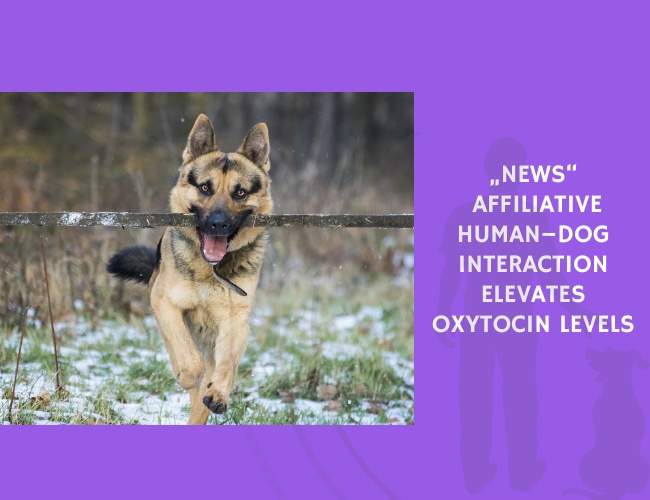
Oxytocin and vasopressin are neuropeptides central to social behavior, emotional regulation, and stress responses. Growing evidence suggests that oxytocin increases during positive human–animal interactions, but most prior studies relied on blood or urine sampling, both invasive and difficult to time precisely. This study explored whether non-invasive salivary measurements of oxytocin (OT) and vasopressin (AVP) dynamically reflect dogs’ responses to affiliative interactions with humans.
The researchers tested Labrador retrievers and Labrador × golden retriever crosses, assigning half to a 10-minute friendly interaction session with a human experimenter and half to a quiet-rest control condition. Blood and saliva samples were collected before and immediately after each condition and analyzed using validated ELISA protocols.
Dogs in the human–animal interaction (HAI) condition showed a 39% increase in salivary OT and a 5.7% increase in plasma OT, whereas no such changes occurred in controls. AVP responses diverged sharply across conditions: salivary AVP increased by 33% in the control group, while plasma AVP decreased by 13% following HAI. These endocrine shifts indicate that direct, friendly engagement with humans reduces stress-linked vasopressin while elevating oxytocin associated with bonding and positive affect.
Importantly, the magnitude of hormonal change corresponded to the degree of affiliative behavior displayed by the dog, reinforcing OT and AVP as dynamic biomarkers of relationship quality. The findings highlight salivary sampling as a practical, flexible method for assessing physiological responses to social interaction in dogs, expanding opportunities for research in real-world environments.
Collectively, this work provides strong evidence that human–dog social engagement produces quantifiable hormonal effects and offers a non-invasive toolkit for studying attachment, welfare, and emotional communication across species.
Source: MacLean, E., Gesquiere, L., Gee, N., Levy, K., Martin, W., & Carter, C. (2017). Effects of Affiliative Human–Animal Interaction on Dog Salivary and Plasma Oxytocin and Vasopressin. Frontiers in Psychology. Published September 20, 2017.










