
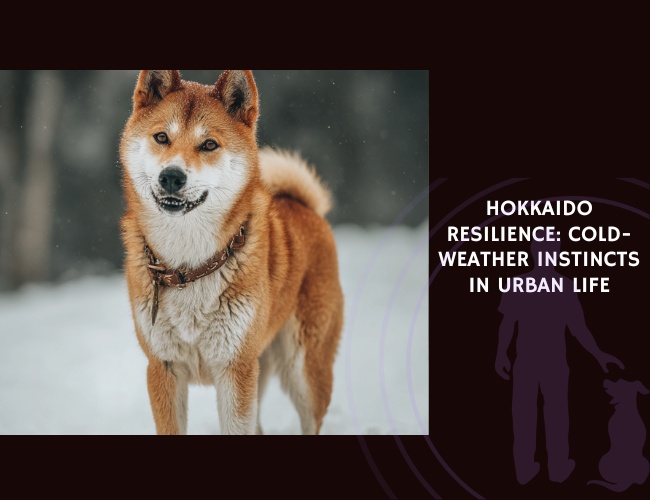
The Hokkaido dog carries within its DNA a story written across centuries of snow, silence, and survival. Born from the unforgiving landscapes of northern Japan, this ancient breed emerged not through deliberate selection for companionship, but through the raw demands of endurance, vigilance, and independent thought. Today, you might encounter these remarkable dogs navigating city streets, apartment buildings, and crowded parks—environments that could not be more different from the wild terrain that shaped their very being.
But here’s what many urban Hokkaido owners discover: resilience in the wilderness doesn’t automatically translate to resilience in the city. What looks like calm adaptation might actually be quiet endurance. What appears as independence could mask internal stress accumulation. Understanding this distinction isn’t just academic curiosity—it’s the difference between a Hokkaido thriving in urban life and one silently struggling beneath a stoic exterior.
Let us guide you through the fascinating complexity of how cold-weather instincts navigate hot, loud, dense modern environments, and how you can support your Hokkaido’s ancient wisdom while honoring the realities of contemporary life.
The Ancient Blueprint: Understanding Hokkaido Heritage
A Breed Forged by Necessity
The Hokkaido dog didn’t emerge from selective breeding programs or royal kennels. This breed was shaped by something far more demanding: survival in one of Japan’s harshest climates. For centuries, these dogs worked alongside the Ainu people in Hokkaido’s northern territories, where winter temperatures plunge well below freezing and snow blankets the landscape for months.
Their role wasn’t decorative. Hokkaidos hunted formidable game including wild boar and bear, tracked through dense forests, and guarded settlements against both predators and intruders. Every aspect of their physiology and temperament reflects these survival demands. You’re not looking at a breed designed to please—you’re looking at a breed designed to think, endure, and decide independently.
This heritage matters profoundly when we consider urban adaptation. The same traits that ensured survival in primitive conditions can create unexpected challenges in modern settings. Your Hokkaido’s vigilant scanning of the environment? That’s not anxiety—that’s a survival system operating exactly as evolution designed it. The question isn’t whether this system should exist, but how we can support it functioning adaptively rather than defensively in contemporary life.
Cold-Climate Physiology Meets Urban Heat
The Hokkaido’s body tells a story of thermal adaptation. That magnificent double coat isn’t just beautiful—it’s an engineering marvel designed for subzero temperatures. Their cold-weather adaptations include:
Physical cold-weather features:
- Dense double coat with insulating undercoat layer that traps warm air close to skin
- Coarse guard hairs that repel moisture, snow, and freezing rain
- Efficient metabolism that maintains core temperature without excessive energy expenditure
- Compact build with moderate surface-to-volume ratio reducing heat loss
- Enhanced pain tolerance preventing minor cold discomfort from interfering with survival activities
- Thick paw pads providing insulation against frozen ground
But here’s where urban life introduces unexpected complications. Modern cities, especially in warmer climates, create what researchers call “urban heat islands”—concentrated areas where concrete, asphalt, and buildings trap and radiate heat. For a breed physiologically optimized for cold, these conditions create chronic low-level stress that rarely manifests as obvious heat distress.
Behavioral signs of heat-related stress:
- Increased irritability during summer walks or hot days
- Decreased tolerance for training sessions in warm weather
- Reduced patience with other dogs when temperatures rise
- Shortened attention span and difficulty focusing
- More reactive responses to typical urban triggers
- Seeking cool surfaces (tile, concrete, shade) consistently
- Reluctance to move or exercise during heat
Instead, you might notice your Hokkaido seems more irritable during summer walks, shows decreased tolerance for training sessions on hot days, or becomes less patient with other dogs when temperatures rise. This isn’t behavioral regression—it’s a cold-adapted system functioning outside its optimal parameters. The physical discomfort of heat doesn’t just affect comfort; it lowers your dog’s overall threshold for managing all the other urban challenges they face.
Primitive Vigilance in Modern Chaos
The Environmental Mapping System
Did you know that your Hokkaido’s brain is constantly creating and updating a three-dimensional map of their environment? This isn’t casual observation—it’s a sophisticated survival mechanism rooted in what neuroscientist Jaak Panksepp termed the SEEKING system. In wild terrain, this system served a clear purpose: map the landscape, identify potential threats, track prey movement, and recognize changes that might signal danger or opportunity.
In natural environments, this mapping system encounters intermittent stimuli. A rustling in undergrowth. Fresh tracks crossing a familiar path. The distant call of prey. Each event is discrete, meaningful, and followed by extended periods of relative quiet where the dog can process information and reset their vigilance system.
Now transport this same neurological setup to a city street. The environmental mapping system designed for occasional significant events suddenly faces hundreds of micro-triggers every single hour:
Common urban micro-triggers:
- People flowing in constant streams, unpredictable movements
- Cars accelerating, braking, door slamming
- Dogs appearing suddenly around corners or from buildings
- Sirens wailing (police, ambulance, fire trucks)
- Bicycles and scooters swooshing past at speed
- Construction noise erupting unpredictably (jackhammers, drilling, machinery)
- Trash trucks, delivery vehicles, buses with air brake releases
- Crowds gathering and dispersing
- Children running, shouting, playing
- Shopping carts, strollers, wheelchairs in motion
- Electronic sounds (crosswalk signals, store alarms, phones)
- Sudden shadows from buildings and passing vehicles
When Resilience Becomes Hyper-Vigilance
Here’s what makes the Hokkaido’s urban experience particularly challenging: their stoic nature means they rarely show obvious stress signals during this overwhelming sensory barrage. A more reactive breed might bark, lunge, or clearly display discomfort—signals that prompt their humans to recognize overload and intervene. The Hokkaido, shaped by centuries of silent hunting and survival where noise could mean danger, simply absorbs it all.
You might see what looks like admirable calm. Your dog walks steadily through crowded streets, doesn’t react to passing dogs, maintains composure amid chaos. But internally, that vigilance system never disengages. The SEEKING system, designed to activate, gather information, and then relax, instead remains in constant activation mode. The FEAR system, meant to trigger defensive responses to genuine threats, begins to dysregulate from chronic micro-activation.
This is where we must distinguish between true adaptive resilience and what’s actually silent hyper-vigilance. Through the NeuroBond approach, we recognize that emotional clarity and internal safety allow natural resilience to function as intended. Without this foundation, what appears as strength might actually be a nervous system compensating under sustained pressure—a state that cannot continue indefinitely without consequences. 🧠
The Autonomy Paradox: Freedom-Minded Dogs in Contained Spaces
Designed for Self-Governance
Understanding the Hokkaido means understanding their relationship with autonomy. Unlike breeds developed for close cooperation with human direction—herding dogs taking constant cues, sporting dogs working within clear human-directed parameters—the Hokkaido evolved for independent judgment. When tracking dangerous game through dense forest, these dogs needed to assess threats, choose approaches, and make split-second decisions without waiting for human input.
This independence reflects sophisticated intelligence, not stubbornness or aloofness. Your Hokkaido doesn’t refuse to comply because they’re dominant or disrespectful. They hesitate because their neurology is wired to evaluate, consider, and decide rather than simply obey. In their ancestral context, this trait saved lives. Dogs that thoughtlessly charged into every situation didn’t survive long enough to pass on their genetics.
Urban Containment and Its Effects
Now consider the typical urban dog’s reality: behind doors most of the day, confined to small yards or no outdoor space, movement on leash through predetermined routes, interaction managed by human schedules rather than natural impulses. For any dog, this represents constraint. For a breed neurologically designed for self-directed movement and decision-making, it creates a fundamental conflict between inherent drives and environmental reality.
When autonomy is chronically restricted, you might observe several response patterns. Some Hokkaidos show quiet resistance—a stiff body posture, slow response to cues, or subtle opposition to direction. Others appear compliant but accumulate internal tension that erupts suddenly when one additional constraint exceeds their tolerance. Still others may withdraw, choosing to opt out of interaction rather than continuously negotiate their lack of agency.
The critical insight here isn’t that Hokkaidos can’t adapt to urban constraints—they absolutely can. But the adaptation requires thoughtful management rather than simple containment. The Invisible Leash reminds us that awareness, not tension, guides the path. When we provide structure that acknowledges your dog’s need for self-governance within safe parameters, cooperation emerges naturally rather than through constant control battles.
Structured Autonomy: The Solution
Creating structured autonomy means offering genuine choices within safe boundaries. In practical terms, this includes:
Practical structured autonomy strategies:
- Long-line exploration (15-30 feet) in safe, open areas allowing free-range movement
- Sniff-focused walks prioritizing scent investigation over distance covered
- Choice-based training where dog selects between acceptable options (left or right path, this toy or that)
- “Find it” games allowing independent problem-solving
- Designated exploration zones where your dog can investigate freely
- Variable walking routes preventing over-predictability
- Allowing your dog to occasionally lead direction changes on walks
- Permission-based engagement: waiting for your dog to initiate interaction rather than forcing constant contact
It includes choice-based engagement in training—presenting options where your dog selects from acceptable alternatives rather than executing single predetermined responses. When you offer your Hokkaido a meaningful choice between sniffing left or right on the trail, investigating a particular area or moving forward, coming to you now or in a moment—these small autonomy opportunities significantly reduce tension while building cooperation.
Think of it as the difference between dictatorship and democracy. Both systems can maintain order, but internal state differs dramatically. The Hokkaido under constant control might comply, but they exist in chronic opposition. The Hokkaido offered structured autonomy within clear boundaries develops trust and willing partnership. 🐾
Social Nature: Selective Bonding in a Social World
Reserved but Intensely Loyal
Your Hokkaido’s social style reflects their primitive heritage. Unlike highly social breeds that form enthusiastic bonds with nearly everyone, Hokkaidos demonstrate selective bonding—choosing one or perhaps two individuals as their trusted inner circle while maintaining polite distance from others. This isn’t antisocial behavior; it’s sophisticated social discrimination rooted in survival logic.
In primitive environments, resource allocation matters. Emotional investment, trust, and cooperation require energy and create vulnerability. Extending these freely to every individual would be inefficient and potentially dangerous. Instead, Hokkaidos form what researchers might call “high-investment, low-distribution” bonds: intensely loyal and reliable with chosen people, professionally civil with others.
This bonding style profoundly influences training and stress resilience. Your Hokkaido’s cooperation, responsiveness, and emotional regulation are often strongest with their primary handler. The same dog who works beautifully for you might show indifference or minimal engagement with others. This isn’t inconsistency—it’s handler-specific cooperation, a characteristic you’ll see across many primitive breeds.
The Urban Social Challenge
Modern urban life, however, operates on completely different social expectations. Cities demand constant social navigation: passing strangers on narrow sidewalks, sharing elevators with unknown people and dogs, encountering off-leash dogs at parks, tolerating approaches from strangers wanting to pet your “beautiful dog.” Each interaction that a socially gregarious breed might handle easily can challenge a selectively social Hokkaido.
Forced greetings create particular stress. When strangers approach insisting on interaction, or when other dogs rush up for nose-to-nose meetings, your Hokkaido experiences what amounts to social boundary violation. Their instinct to assess before engaging gets overridden. Their preference to choose interaction partners gets ignored. The polite distance they naturally maintain gets collapsed into uncomfortable proximity.
These aren’t catastrophic moments individually. But accumulate dozens of these micro-violations daily, and you create chronic social stress that depletes your dog’s tolerance reserves. The result might be a Hokkaido who gradually becomes more defensive about their personal space, or who starts avoiding situations where social control might be lost.
Supporting your Hokkaido’s social wellbeing in urban environments means becoming their social bodyguard. This includes creating physical distance from approaching strangers, blocking intrusive interactions before they occur, and ensuring your dog has the space to assess situations before engagement. It means recognizing that your Hokkaido saying “no” to social interaction isn’t problem behavior—it’s healthy boundary maintenance that should be respected and protected.
Arousal, Startle, and the Hidden Cost of Stoicism
The Memory of Stress
Here’s something crucial about how Hokkaidos process startling events: they might appear to recover quickly, but internal recovery takes far longer than external appearance suggests. When a garbage truck rumbles past creating sudden loud noise, or a skateboard crashes nearby, your Hokkaido might startle but then seem fine moments later. They continue walking, show no ongoing distress signals, and appear to have moved on completely.
But research on stress physiology and behavioral neuroscience suggests something more complex happens internally. The startle response activates the sympathetic nervous system, releasing stress hormones, and creating what might be called an emotional memory trace. While your dog’s external behavior might reset quickly, their internal stress biochemistry takes longer to return to baseline.
More significantly, these internal traces can accumulate. Each startle event that appears individually manageable adds to an internal stress load that your Hokkaido carries forward. This is where the stoic nature of primitive breeds creates a hidden challenge: breeds that show obvious stress through barking, trembling, or hiding essentially externalize their internal state, making it visible and often prompting their humans to intervene or provide comfort. The Hokkaido’s quiet endurance means stress accumulates invisibly.
Reading the Subtle Signals
So how do you recognize when your Hokkaido’s resilience is being exceeded? The signals exist, but they’re micro-expressions rather than obvious displays:
Key micro-signals of stress accumulation:
- Body stiffness during walks—less fluid movement, rigid posture
- Environmental fixation—intense staring at specific areas, people, or dogs with inability to disengage
- Reduced responsiveness to familiar cues—appearing not to hear their name
- Whale eye (showing white sclera) even briefly
- Lip licking or tongue flicks when no food is present
- Micro-freezes mid-movement, even for just a second
- Slow recovery after reactive moments—remaining tense for extended periods
- Panting when not physically exerted or hot
- Increased scanning behavior—head constantly swiveling
- Tucked tail or tail held lower than normal
- Refusal to take treats in situations where they normally would
- Yawning in non-restful contexts
Reduced responsiveness to familiar cues is another key indicator. When your Hokkaido normally responds to their name or basic commands but suddenly seems not to hear you, they’re likely experiencing cognitive overload—their brain’s processing capacity fully occupied by managing environmental stress. Micro-freezes, where your dog pauses mid-movement even briefly, signal internal conflict or overwhelm.
Perhaps most telling is slow recovery after reactive moments. If your Hokkaido lunges at a trigger and remains tense, scanning, and hyper-alert for extended periods afterward rather than settling quickly, this suggests their stress management system is struggling. That balance between science and soul—that’s the essence of Zoeta Dogsoul, helping you read not just what your dog does, but what they’re experiencing internally.
Prevention Through Awareness
Managing arousal and startle recovery isn’t about eliminating all stressful stimuli—that’s impossible in urban environments. Instead, it’s about respecting your Hokkaido’s processing capacity and providing recovery time. This means spacing high-stress exposures, ensuring adequate decompression between challenging events, and recognizing when your dog’s tolerance reserves are depleted.
It means understanding that “toughening up” doesn’t work with primitive breeds like the Hokkaido. Their stoicism already pushes them toward enduring rather than expressing distress. Adding more pressure doesn’t build resilience—it simply accumulates internal stress until something breaks. True resilience emerges from a nervous system that can activate appropriately, then fully deactivate and recover. Supporting that cycle, rather than pushing through it, preserves long-term stability. 🧡
Exercise Needs: Quality Over Quantity
What Hokkaido Cognition Actually Craves
When we talk about exercising a Hokkaido, we’re not simply discussing physical output. Yes, these are athletic dogs with substantial endurance—they were bred to traverse rough terrain for hours while hunting. But understanding their exercise needs requires recognizing what their cognition seeks during movement.
The Hokkaido brain thrives on steady endurance movement through varied terrain where they can engage their environmental mapping system productively:
Optimal exercise activities for Hokkaidos:
- Long hikes through forests or natural trails (1-3 hours)
- Terrain exploration with elevation changes, varied surfaces
- Scent tracking games following interesting odor trails
- Off-trail wilderness walking where safe and legal
- Beach exploration with water wading opportunities
- Mountain or hill climbing at moderate pace
- Cross-country movement through fields or open land
- Structured tracking work or nose work activities
- Long-line exploration in varied natural settings
- Swimming in natural bodies of water
- Snow hiking and cold-weather endurance work
Scent routes deserve particular emphasis. When your Hokkaido follows interesting scents, investigating odor trails, processing complex scent pictures, and gathering environmental information through their remarkable olfactory system, they’re engaging the SEEKING system in exactly the way evolution designed. This isn’t idle sniffing—it’s sophisticated information gathering that provides deep cognitive satisfaction.
The Problem with Repetitive Urban Walking
Now contrast that with typical urban dog exercise: the same streets walked daily, encountering the same triggers in the same sequence, following the same route on a short leash with minimal opportunity for self-directed investigation. Many owners diligently walk their Hokkaidos twice daily for 30-45 minutes, assuming this provides adequate exercise.
But here’s what often happens instead: repetitive urban walking actually increases boredom and hyper-scanning rather than providing decompression. Your dog’s environmental mapping system recognizes the repetition and, lacking novelty or meaningful engagement, either disengages (boredom) or becomes hyper-focused on the minimal variables that do change—like specific dogs behind familiar fences or particular trigger points along the route.
The result is a dog who gets physical exercise but no cognitive satisfaction, and who might even become more reactive over time as they anticipate and fixate on known triggers. It’s the exercise equivalent of watching the same movie on repeat—technically you’re engaging the visual system, but the experience becomes increasingly empty rather than enriching.
Natural Environments and Variable Experiences
Research on both human and animal psychology consistently shows that varied natural environments provide superior stress reduction and cognitive restoration compared to built environments. For Hokkaidos specifically, even less frequent access to truly natural spaces—forests, mountains, undeveloped land—often produces better behavioral outcomes than daily repetitive urban walks.
This doesn’t mean urban walks have no value. But it shifts how we think about exercise planning. Perhaps instead of two 30-minute neighborhood walks daily, your Hokkaido benefits more from one short neighborhood walk plus one longer session at a natural area several times weekly. Or rotating between multiple different urban routes to maintain novelty. Or prioritizing weekend adventures in varied terrain even if weekday exercise remains limited.
The principle is this: exercise that engages your Hokkaido’s natural instincts and provides cognitive enrichment will always outperform exercise that’s merely physically demanding. When you honor their need for environmental variety and sensory engagement, you’re not just exercising their body—you’re nourishing their ancient survival mind.

Behavioral Problems: Mismatch Made Visible
How Hokkaidos Express Environmental Stress
When the urban environment fundamentally clashes with a Hokkaido’s inherent needs, behavioral problems emerge as communication—your dog’s way of expressing that something isn’t working. Understanding this reframes “problem behavior” as valuable feedback rather than defiance or malfunction.
Common urban mismatch behaviors:
- Withdrawal: Becoming less interested in interaction, seeking isolated spaces, emotional distancing
- Leash stiffness: Rigid body posture, pulling or bracing against leash, moving with visible tension
- Reactivity: Lunging, barking, or growling at triggers (people, dogs, vehicles, sounds)
- Resource guarding: Intensified protection of food, toys, resting spots, or even people
- Vocal warnings: Growling or barking to create distance from perceived threats
- Silent intolerance: Showing stress through body language without vocalizing
- Displacement behaviors: Excessive grooming, repetitive pacing, spinning
- Avoidance: Refusing to walk certain routes, hiding when leash appears, resistance to leaving home
- Threshold guarding: Becoming protective around doorways, windows, or property boundaries
The “Late Signal” Challenge
One behavior pattern deserves special attention: Hokkaidos frequently show what trainers call “late signals.” Unlike breeds that provide escalating warnings before defensive action—stiffening, then growling, then air snapping, then biting—Hokkaidos often skip the middle steps. They might go from appearing calm to taking sudden decisive action with minimal observable warning.
This isn’t malicious or aggressive by nature. It’s a consequence of their stoic temperament and survival logic. In their ancestral context, broadcasting intentions through obvious warning signals could compromise hunting success or create vulnerability. Silent assessment followed by sudden action was advantageous. Transferred to modern contexts, this pattern means owners must become exceptional readers of extremely subtle stress signals rather than waiting for obvious warnings.
Trigger Stacking and the Threshold Collapse
Understanding trigger stacking is crucial for preventing behavioral crises in urban Hokkaidos. Each micro-trigger your dog encounters—passing another dog, navigating a crowd, tolerating a siren, managing heat stress—adds to their stress load even when they show no obvious reaction. These stressors don’t simply disappear after the moment passes; they accumulate over hours or days.
Imagine stress tolerance as a bucket. Each trigger adds water to the bucket, and that water drains slowly over time with adequate rest and decompression. But if triggers arrive faster than the bucket drains—multiple challenging events in quick succession, or chronic daily exposure without sufficient recovery—the bucket eventually overflows. This is when you see sudden dramatic reactions to triggers your Hokkaido normally handles, or defensive responses that seem disproportionate to the immediate situation.
Preventing threshold collapse means managing trigger exposure thoughtfully. This includes creating adequate spacing between challenging events, recognizing early signs that your dog’s bucket is filling, and prioritizing decompression activities that accelerate the draining process. It means some days simply avoiding additional challenge when you recognize your Hokkaido is already carrying a high stress load.
Training Approach: Quiet Strength and Clear Communication
Minimalism and Spatial Clarity
Training a Hokkaido requires a fundamentally different approach than you might use with more socially oriented breeds. These dogs respond best to what might be called minimalistic, spatially clear training:
Effective training principles for primitive breeds:
- Minimize verbal noise: Use precise, infrequent verbal cues rather than constant talking
- Emphasize body language: Communicate through posture, positioning, movement patterns
- Create predictable routines: Establish consistent daily patterns that become reliable frameworks
- Use spatial clarity: Position yourself meaningfully relative to your dog and environment
- Reduce emotional intensity: Deliver praise with calm approval rather than effusive excitement
- Build duration slowly: Extend training sessions gradually as focus develops
- Respect processing time: Allow your dog moments to think and decide
- Make training purposeful: Focus on practical skills over entertainment tricks
- Limit repetition: Avoid drilling commands endlessly—Hokkaidos learn quickly but bore easily
- Incorporate real-world application: Practice skills in actual contexts where they’ll be used
This means communicating primarily through body language, positioning, and movement rather than constant verbal instruction. Your Hokkaido reads your posture, gait, and spatial relationship to their environment far more accurately than they process verbal complexity. When you walk with calm confidence, maintain clear spatial boundaries, and use minimal but precise physical cues, you speak their native language.
It means establishing consistent routines that create predictability. Hokkaidos thrive when they can predict patterns, understand expectations, and operate within clear structure. Variable training approaches, constantly changing rules, or inconsistent enforcement create cognitive load and uncertainty that undermines trust and cooperation.
It means reducing verbal noise. Constant talking, repeated commands, or emotional verbal reactions to your dog’s behavior all create auditory clutter that a Hokkaido must filter. Each verbal input requires cognitive processing. Minimize verbal communication to essential, meaningful cues, and you’ll often see responsiveness improve dramatically simply because your dog can actually hear the signal through reduced noise.
The Damage of Harsh Correction
For breeds designed for independent judgment and survival logic, harsh correction represents a fundamental betrayal of their neurological design. When you respond to a Hokkaido’s behavior with physical punishment, harsh verbal reprimands, or intimidating corrections, you’re essentially attacking the decision-making process their evolution optimized.
Remember, your Hokkaido doesn’t act randomly or maliciously. Every behavior reflects their brain’s best assessment of how to navigate their situation based on available information and internal state. When you punish that assessment harshly, you don’t teach better choices—you teach that you’re unpredictable and potentially threatening. The result is often shutdown (learned helplessness where your dog stops offering behavior entirely), increased fear and defensive reactivity, or fractured trust that takes months or years to rebuild.
This doesn’t mean Hokkaidos don’t need boundaries or correction—they absolutely do. But effective correction looks dramatically different than traditional punitive approaches. It looks like calmly interrupting unwanted behavior, redirecting to appropriate alternatives, and removing access to reinforcement. It looks like clear consistent consequences that make sense within your dog’s survival logic rather than random punishments that simply create fear.
Calm Leadership vs. Hyper-Social Training
Modern positive reinforcement training often emphasizes high energy, enthusiastic praise, and constant social engagement. For many breeds, this approach works beautifully. For Hokkaidos, it often creates more problems than it solves. The high-energy emotional intensity that motivates a Labrador can overstimulate and stress a Hokkaido.
What works instead is steady, calm leadership that provides clear boundaries and predictable routine. Think of yourself not as your dog’s cheerleader or best friend, but as their confident guide—someone who understands the terrain, makes sound decisions, and maintains composure regardless of external chaos. This is the emotional neutrality that allows your Hokkaido to relax their vigilance system and trust that you’re managing environmental assessment.
When you encounter city noise—sirens, construction, crowds—your unreactive calm teaches your Hokkaido these stimuli are background rather than threats. When you set boundaries around behavior, your consistent enforcement without emotional intensity clarifies expectations. When you offer choices within structure, your patient guidance builds cooperation based on trust rather than dependence or fear.
Moments of Soul Recall reveal how memory and emotion intertwine in behavior. Your Hokkaido remembers not just what happened, but how you responded. Every calm, clear interaction builds an internal reference library of your trustworthiness, emotional stability, and leadership capability. This accumulated emotional memory ultimately shapes whether your dog views you as a reliable guide worth cooperating with or an unpredictable variable requiring constant monitoring.
Urban Management Strategies: The NeuroBond Framework
Applying Invisible Leash Principles
The Invisible Leash isn’t about achieving off-leash obedience or perfect heel work. It’s a philosophy of guidance that prioritizes awareness and emotional connection over physical control:
Applying Invisible Leash spatial clarity principles:
Calm pacing fundamentals:
- Walk at steady, unhurried rhythm—no rushing or abrupt stops
- Maintain consistent speed allowing your dog to relax into movement
- Use predictable gait pattern your dog can synchronize with
- Avoid sudden direction changes without warning cues
- Breathe deeply and evenly—your dog reads your respiratory rate
Predictable movement patterns:
- Telegraph direction changes with body positioning before executing
- Use consistent spatial positioning (which side of you, how much lead)
- Slow before stops rather than jerking to halt
- Pause at intersections allowing assessment before crossing
- Create “check-in” opportunities at regular intervals
Spatial management techniques:
- Walk between your dog and approaching triggers when possible
- Give wide berth to known stress points (busy corners, reactive dogs behind fences)
- Create physical barriers using your body: step between your dog and intrusion
- Claim space when needed: use “excuse us” firmly but calmly to move through crowds
- Position yourself so dog can see you peripherally without constant eye contact
- Maintain leash slightly loose—tension transmits stress
Environmental interpretation signals:
- Acknowledge triggers calmly: “yes, I see that dog” in neutral tone
- Continue confidently past threats rather than stopping to stare
- Use redirection through movement: “this way” rather than “no”
- Reward attention on you without demanded eye contact
- Model calm assessment: briefly observe trigger, then move on
These practices reduce urban scanning load by demonstrating YOU’RE actively managing threats, allowing your Hokkaido’s vigilance system to relax incrementally.
Emotional Neutrality for City Noise
Your emotional state broadcasts constantly to your Hokkaido, who reads subtle physiological and behavioral cues you might not even recognize you’re producing. When a loud truck rumbles past or construction suddenly erupts, your internal reaction—whether you tense, accelerate your pace, or show any stress response—gets instantly transmitted to your dog.
Emotional neutrality doesn’t mean becoming robotic or uncaring. It means developing the internal regulation to remain genuinely calm amid urban chaos. When sirens wail, you simply acknowledge the sound without alarm. When crowds press close, you navigate smoothly without tension. When unexpected noises occur, you continue forward without startling or changing your demeanor.
This matters profoundly for how your Hokkaido interprets sensory input. Their vigilance system is constantly asking: “Is this stimulus significant? Should I activate defensive responses?” Your reaction provides critical interpretive data. When you remain calm, you essentially communicate: “This noise is background information, not a threat requiring action.” Over time, this consistent emotional neutrality helps recalibrate their FEAR system to more accurately distinguish genuine threats from benign urban background.
Structured Decompression Rituals
Perhaps the most critical element of urban Hokkaido management is implementing structured decompression rituals that prevent internal stress accumulation:
Essential decompression ritual components:
Quiet exits and entrances (5-10 minutes each):
- Wait for mental settling before leaving home—not rushing out door in arousal
- Practice calm sit or down-stay before attaching leash
- Exit at controlled pace, not pulling or surging
- Upon return, remove leash calmly before releasing dog
- Allow several minutes of stillness before transitioning to other activities
- Avoid immediately feeding, playing, or interacting—let nervous system downshift
Slow scent mapping sessions (15-30 minutes, 2-3x weekly):
- Find low-stimulus areas: quiet parks, empty fields, early morning spaces
- Use long line (15-30 feet) allowing free-range investigation
- Let your dog set the pace completely—this is their time
- No destination or time pressure—wandering with purpose
- Minimal handler interaction—you’re just safety tether
- Natural environments strongly preferred over urban settings
Post-walk downshift protocol (20-60 minutes):
- Quiet time in comfortable resting space immediately after walks
- Gentle massage or calm physical contact if your dog finds this soothing
- Slow-feeding enrichment: frozen Kong, lick mat, snuffle mat
- Calming activities: gentle music, white noise, darkened space
- Simply being present together without demands
- No training, play, or high-arousal activities during this window
Weekly reset activities:
- Extended nature exposure (2-4 hours) in truly wild spaces
- Swimming or water activities if available
- Unstructured exploration time in safe areas
- Activities that engage SEEKING system productively
- Complete unplugging from urban triggers
Think of decompression as: The drain mechanism for the stress bucket—without it, the bucket fills faster than it empties, making threshold collapse inevitable.
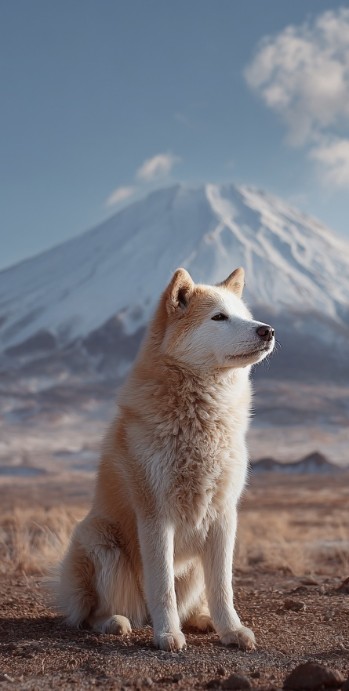
Enduring. Stoic. Strained.
Resilience Masks Load
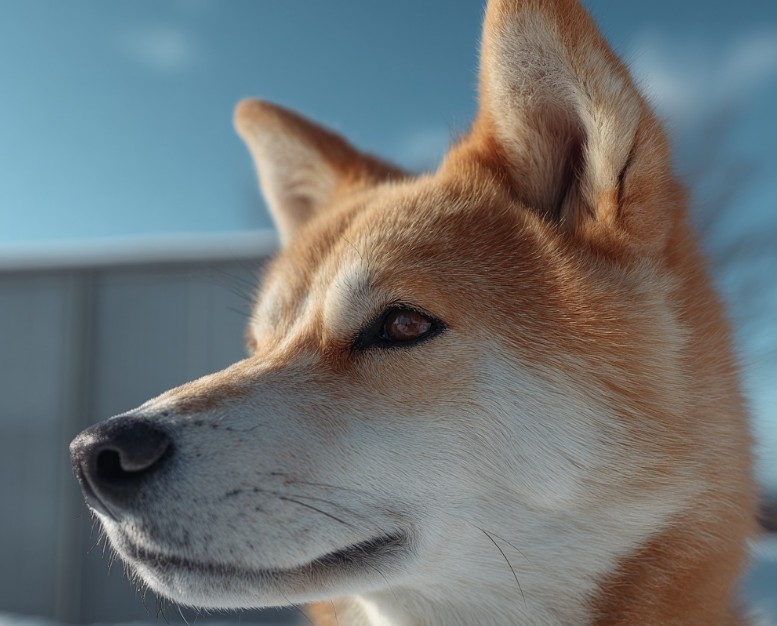
Hokkaidos endure quietly rather than adapt visibly. What looks like calm in urban life can hide accumulating internal stress.
Cold Shaped Systems
Their physiology and vigilance evolved for frozen terrain, not heat and density. Cities challenge survival mechanisms that never learned to switch off.
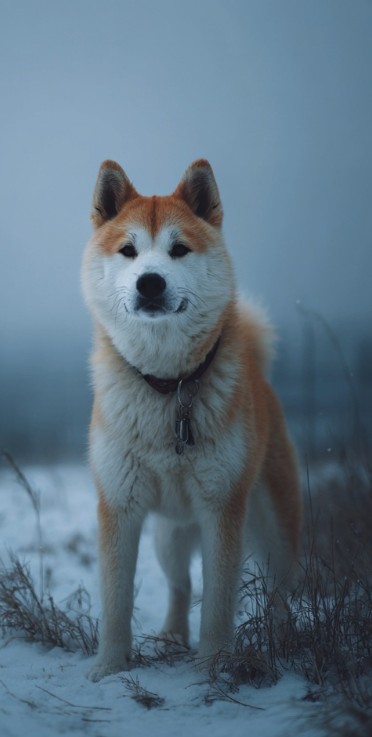
Support Enables Balance
When cold-weather instincts are respected and urban pressures reduced, their strength becomes stable rather than strained.
Climate Considerations: Managing the Temperature Challenge
Recognizing Heat Stress in Cold-Adapted Dogs
One urban challenge that owners often underestimate is the impact of climate mismatch on behavior and stress tolerance. Your Hokkaido’s magnificent cold-weather adaptation becomes a liability in hot urban environments, yet the effects are rarely obvious heat distress. Instead, heat creates subtle but significant changes in temperament and threshold.
Watch for decreased patience during warm weather. Your normally composed Hokkaido might show shorter tolerance for training, reduced willingness to engage, or increased irritability with minor frustrations. These aren’t character flaws—they’re your dog’s nervous system struggling under the additional load of thermal discomfort.
Notice whether behavioral issues intensify during summer months or hot days. Reactivity that’s manageable in cooler weather might escalate when temperatures rise. This isn’t coincidental. Heat stress lowers the threshold for all other stressors, making your dog less capable of managing the constant urban stimulation they normally handle.
Physical signs are subtler than panting and seeking shade—though those matter too. Look for reduced activity levels, less engagement during walks, or choosing to lie on cool surfaces consistently. These behaviors signal your dog is actively managing thermal discomfort and has less cognitive resource available for managing other challenges.
🏔️ Hokkaido Dog Urban Survival Guide ❄️
Navigating Cold-Weather Instincts Through Hot, Loud City Life
Phase 1: Understanding Your Hokkaido’s Heritage
Ancient Survival Systems in Modern Context
Your Hokkaido’s body is engineered for subzero survival—dense double coat, efficient cold-weather metabolism, enhanced pain tolerance. This magnificent thermal adaptation becomes a challenge in urban heat islands where concrete traps warmth and summer temperatures overwhelm their cold-optimized system.
Urban heat doesn’t create obvious distress—instead you’ll notice:
• Increased irritability during summer walks
• Decreased training tolerance on hot days
• Reduced patience with other dogs when temperatures rise
• Your dog seeking cool surfaces constantly
Climate-aware scheduling: Walk before 7 AM or after 8 PM during summer. Prioritize shaded routes, provide cooling opportunities, and recognize that heat lowers your dog’s threshold for managing ALL other urban stressors. On very hot days, substitute outdoor exercise with indoor scent work and mental enrichment.
Phase 2: The Environmental Mapping Challenge
When Survival Instincts Meet Sensory Overload
Your Hokkaido’s brain constantly creates a 3D environmental map—a survival mechanism designed for detecting occasional significant threats in natural terrain. In cities, this system faces hundreds of micro-triggers hourly: people flowing, cars braking, sirens wailing, dogs appearing suddenly, construction erupting unpredictably.
What looks like admirable calm might actually be chronic stress. While reactive breeds bark and lunge (prompting intervention), your Hokkaido silently absorbs overwhelming stimulation. Their stoic nature means stress accumulates invisibly—the vigilance system never fully disengages, creating internal pressure that can’t continue indefinitely.
Watch for subtle stress indicators:
• Body stiffness during walks—less fluid movement
• Environmental fixation—intense staring unable to disengage
• Reduced responsiveness to familiar cues
• Micro-freezes mid-movement
• Slow recovery after reactive moments
Phase 3: Structured Autonomy Solution
Freedom Within Boundaries
Bred for independent decision-making across vast terrain, your Hokkaido experiences urban life as chronic constraint: behind doors most days, confined to small yards, leash-restricted movement, human-scheduled interaction. This creates fundamental conflict between inherent drives and environmental reality.
The Invisible Leash reminds us: awareness, not tension, guides the path.
• Long-line exploration (15-30 feet) in safe areas
• Sniff-focused walks prioritizing scent investigation
• Choice-based training: dog selects between acceptable options
• “Find it” games allowing independent problem-solving
• Variable routes preventing over-predictability
Phase 4: Fueling Resilience From Within
Diet as Behavioral Medicine
High-quality protein provides amino acids for producing serotonin, dopamine, and GABA—neurotransmitters that directly regulate stress response and behavioral stability. Omega-3 fatty acids (EPA/DHA) reduce anxiety-related behaviors and support cognitive function. The gut-brain axis influences emotional regulation through the vagus nerve.
Support cortisol regulation through meal timing:
• Post-exercise feeding: Main meal after morning walk supports rest mode
• Evening timing: Feed 2-3 hours before bed
• Consistent schedule: Same times daily regulates circadian rhythm
• Multiple small meals: For stress-sensitive dogs, 3-4 portions maintain stable blood sugar
Raw or gently cooked whole food diets provide cognitive engagement through natural chewing, superior digestibility reducing metabolic heat, and improved gut microbiome diversity supporting the gut-brain axis. However, they require significant nutritional knowledge and proper food safety protocols.
Phase 5: Navigating the Year’s Rhythms
Seasonal Stress Patterns
Heat stress depletes cognitive reserves, increased outdoor activity multiplies triggers, winter coat becomes burden. This is when you’ll see lowest tolerance thresholds and greatest behavioral sensitivity. Dramatically modify exercise: shorter duration, cooler timing (before 7 AM/after 8 PM), prioritize indoor mental enrichment on very hot days.
Cooling temperatures restore cognitive capacity, coat becomes functional again, reduced outdoor activity decreases triggers. Many owners report their dogs seem transformed—more engaged, tolerant, cooperative. This is optimal season for training, skill-building, and challenging adventures.
Road salt burns paw pads—use protective balms or boots, rinse thoroughly after walks. Icy surfaces create slipping hazards different from natural frozen ground. Reduced daylight forces dark walking—invest in reflective gear and lights. Even cold-adapted dogs have limits in brutal wind chill.
Phase 6: Getting Development Right
Critical Windows for Urban Hokkaidos
Quality calibrated exposure, not maximum exposure. Your Hokkaido puppy needs to experience urban environments from a position of safety and choice—observe before participating, assess before engaging, retreat when overwhelmed. Pushing through protective instincts teaches your puppy their judgment doesn’t matter.
Dramatic changes reveal whether early socialization was adequate:
• Independence surge: Decreased responsiveness (6-12 months)
• Fear periods: Sudden fearfulness (6-8, 12-14 months)
• Social selectivity: Decreasing interest in dog play (8-18 months)
• Territorial awareness: Home boundary guarding (10-16 months)
Generalized fear/shutdown in normal situations, unprovoked aggression toward people or dogs, extreme independence with zero handler orientation, escalating resource guarding, intense object/noise sensitivity that doesn’t improve. Seek professional help immediately—these rarely resolve without expert intervention.
Phase 7: Crisis Management Protocols
When Threshold Collapse Occurs
Priority: Create distance immediately.
• Move between your dog and trigger using your body as barrier
• Back away quickly—don’t pull forward which increases tension
• Get to safe space ASAP
• Do NOT punish, yell, or physically correct
• Focus solely on removing your dog from situation
Get to truly quiet space away from all stimulation. Provide water but don’t force interaction. Allow dog to settle in their own time—stress hormones don’t instantly disappear. Don’t attempt training or “correction” while recovery is happening. Document what happened and identify trigger stacking that contributed.
Aggression toward household members, escalating bite behavior, predatory behavior toward inappropriate targets, generalized fear impairing quality of life, self-injurious behaviors, sudden behavioral changes. If you feel uncertain about safely managing your dog or afraid of your dog, professional help is needed immediately.
Phase 8: Sustainable Daily Practices
The Decompression Framework
Allow 10-15 minutes for dog to fully wake before demands. Brief calm elimination walk (5-10 minutes). Feed after morning activity. Evaluate stress baseline for the day—if already elevated, reduce plans. Reserve challenging activities for times when both you and your dog have more tolerance reserves.
Essential maintenance for cold-weather vigilance systems in hot, chaotic environments:
• Quiet exits/entrances: 5-10 minutes settling before/after walks
• Slow scent mapping: 15-30 minutes in low-stimulus areas, 2-3x weekly
• Post-walk downshift: 20-60 minutes quiet time after stimulation
• Weekly reset: 2-4 hour nature adventures in truly wild spaces
Avoid peak busy times (5-7 PM rush hour) or accept added stress load. Walk at 4 PM or 8 PM for quieter environments. Balance moderate walk with calm indoor enrichment. Last 1-2 hours before bed should be calm—no play, training, or arousing activities. Consistent bedtime routine supports circadian rhythm.
🔍 Japanese Breeds: Urban Adaptability Comparison
Urban Adaptability: Moderate-High
Size: 17-23 lbs
Advantages: Smaller size, higher heat tolerance, more environmental resilience
Challenges: Intense reactivity, famous Shiba scream, potential dog aggression
Best for: Experienced owners in smaller urban spaces
Urban Adaptability: Moderate
Size: 45-65 lbs
Advantages: Loyal, quieter than Shiba, stable with proper management
Challenges: Heat sensitivity, silent stress accumulation, high autonomy needs
Best for: Dedicated owners in moderate climates understanding primitive breeds
Urban Adaptability: Low
Size: 70-130 lbs
Advantages: Calm indoors, minimal barking, dignified presence
Challenges: Intense dog aggression, strong territorial behavior, size constraints
Best for: Expert handlers in suburban/rural settings, not urban beginners
Urban Adaptability: Moderate
Size: 35-55 lbs
Advantages: Athletic, intelligent, slightly more handler-oriented
Challenges: High prey drive, heat sensitivity, substantial exercise needs
Best for: Active owners providing varied terrain and endurance activities
Urban Adaptability: Low
Size: 35-55 lbs
Advantages: Incredible focus and drive for working owners
Challenges: Extreme prey drive, intensity exceeds most owners’ capacity
Best for: Primitive breed experts in rural settings with working purposes
Urban Adaptability: Low-Moderate
Size: 40-60 lbs
Advantages: Less reactive, dignified, quieter than some Japanese breeds
Challenges: Profound independence, rarity limits management resources
Best for: Primitive breed enthusiasts valuing extreme independence with space
Climate Management: Walk before 7 AM or after 8 PM in summer. Temperature × Stress = Exponential threshold reduction.
Decompression Ratio: For every 1 hour of urban stimulation, provide 20-60 minutes of quiet downshift + weekly 2-4 hour nature reset.
Trigger Stacking Formula: Each micro-trigger + inadequate recovery time = Threshold collapse risk. Space challenging events by 24-72 hours minimum.
Autonomy Balance: Structured choices within safe boundaries > Constant control or complete freedom.
Success Definition: Stable temperament + Manageable stress + Good quality of life ≠ Behaving like socially gregarious breeds.
Your Hokkaido’s ancient survival wisdom doesn’t need to be broken or suppressed—it needs to be honored and channeled. Through the NeuroBond approach, we recognize that emotional clarity and internal safety allow natural resilience to function adaptively. When trust becomes the foundation of learning, your dog can relax their defensive vigilance.
The Invisible Leash isn’t about control—it’s about becoming the calm, predictable anchor in unpredictable environments. Your spatial clarity, emotional neutrality, and confident navigation teach your Hokkaido that awareness, not constant tension, guides the path forward.
Moments of Soul Recall reveal how memory and emotion intertwine—every calm interaction, every respected boundary, every successful decompression builds an internal reference library of your trustworthiness. This accumulated emotional memory transforms ancient cold-weather instincts from urban liabilities into adaptive strengths.
That integration of ancient instinct and contemporary management, that commitment to both scientific understanding and emotional connection—that’s where genuine urban resilience emerges. Not from forcing conformity, but from creating conditions where cold-weather minds can navigate hot, loud cities while maintaining their essential nature.
© Zoeta Dogsoul – Where neuroscience meets soul in dog training
Practical Heat Management
Supporting your urban Hokkaido through warm weather requires thoughtful adjustment:
Summer heat management strategies:
- Timing: Schedule walks before 7 AM or after 8 PM when temperatures are coolest
- Route selection: Choose tree-lined streets, parks with canopy cover, or water-adjacent paths
- Duration reduction: Shorten walk length during hot weather rather than maintaining normal distance
- Pavement testing: Check asphalt temperature with your hand before walking—if too hot for 5 seconds, too hot for paws
- Cooling opportunities: Provide access to cool water, damp towels, kiddie pools, or air-conditioned rest periods
- Indoor alternatives: Substitute outdoor exercise with scent work, puzzle feeding, or training games on extremely hot days
- Hydration focus: Carry water for drinking during walks, offer frequent small amounts
- Coat maintenance: Keep coat clean and mat-free to support natural temperature regulation
- Watch for distress: Monitor for excessive panting, drooling, or reluctance to continue—these require immediate cooling
Nutrition & Diet: Fueling Resilience from Within
How Diet Quality Impacts Stress Resilience
Your Hokkaido’s ability to manage urban stress doesn’t exist in a vacuum—it’s profoundly influenced by nutritional foundation. Diet quality affects neurotransmitter production, inflammatory response, gut-brain axis function, and overall physiological resilience. When we talk about supporting your dog’s ancient survival systems in modern environments, we’re talking about providing the biochemical building blocks that allow those systems to function optimally.
High-quality protein sources serve as the foundation. Your Hokkaido’s brain produces neurotransmitters like serotonin, dopamine, and GABA from amino acids derived from dietary protein. These neurotransmitters directly regulate mood, stress response, and behavioral stability. Inadequate or poor-quality protein means inadequate neurotransmitter production, which manifests as decreased stress tolerance, increased reactivity, and reduced cognitive flexibility.
Omega-3 fatty acids, particularly EPA and DHA from marine sources, play crucial roles in brain function and inflammatory modulation. Research consistently shows that omega-3 supplementation can reduce anxiety-related behaviors and support cognitive function. For a breed managing chronic low-level urban stress, anti-inflammatory nutrition isn’t optional—it’s protective medicine.
Key nutrients supporting stress resilience and thermoregulation:
- High-quality complete proteins: Chicken, beef, fish, eggs providing amino acids for neurotransmitter production
- Omega-3 fatty acids (EPA/DHA): Fish oil, salmon, sardines supporting brain function and reducing inflammation
- B-complex vitamins: Supporting energy metabolism and nervous system function
- Antioxidants: Vitamin E, vitamin C, selenium protecting cells from oxidative stress
- Probiotics: Supporting gut health and the gut-brain axis
- Magnesium: Calming mineral supporting stress response regulation
- L-theanine: Amino acid promoting calm focus without sedation
- Electrolytes: Sodium, potassium, chloride maintaining cellular function during temperature stress
- Tryptophan: Precursor to serotonin supporting mood regulation
The gut-brain axis deserves particular attention. Emerging research reveals that gut microbiome composition directly influences behavior, stress response, and emotional regulation through the vagus nerve and immune signaling. Poor diet quality, frequent dietary changes, or gut inflammation can dysregulate this system, essentially compromising your dog’s stress management capacity at the neurological level.
Temperature Regulation Through Nutrition
Here’s something many urban Hokkaido owners don’t realize: diet influences thermoregulation capacity. Your dog’s ability to manage heat stress isn’t purely about coat density—metabolic efficiency, hydration status, and nutritional adequacy all contribute to thermal tolerance.
Diets high in digestible proteins and moderate in fat support efficient metabolism without generating excessive metabolic heat during digestion. In contrast, poor-quality diets require more digestive energy, generate more metabolic waste heat, and potentially increase thermal burden during already stressful hot weather.
Hydration support through diet matters significantly. Moisture-rich foods—whether fresh, raw, or high-quality canned—contribute to overall hydration status in ways dry kibble cannot match. For cold-adapted breeds in warm urban climates, this additional hydration support can make meaningful differences in comfort and stress tolerance during summer months.
Certain nutrients specifically support heat stress resilience. Antioxidants like vitamin E, vitamin C, and selenium help protect cells from oxidative stress that increases during heat exposure. B-vitamins support energy metabolism efficiency. Electrolyte balance—particularly sodium, potassium, and chloride—maintains proper cellular function during temperature challenges.

Feeding Schedules and Cortisol Management
When you feed matters almost as much as what you feed. Cortisol, your dog’s primary stress hormone, follows natural circadian rhythms that feeding schedules can either support or disrupt:
Strategic feeding schedule principles:
- Morning: Small portion if needed, with primary meal reserved for post-activity
- Post-exercise feeding: Provide main meal 20-30 minutes after morning walk when dog naturally enters rest mode
- Evening timing: Feed 2-3 hours before bedtime allowing digestion before sleep
- Avoid pre-walk feeding: Don’t feed large meals immediately before physical activity to prevent discomfort
- Consistent timing: Feed at roughly the same times daily to support circadian rhythm regulation
- Multiple small meals: Consider 3-4 smaller portions for stress-sensitive dogs to maintain stable blood sugar
- Pre-stress buffering: Provide small high-value snack before predictably stressful events (vet visits)
- Post-stress recovery: Offer calming meal after particularly challenging days to support nervous system recovery
Morning feeding before walks might seem logical, but it creates digestive burden during active periods and can increase sluggishness or discomfort. Instead, consider smaller morning portions if needed, with primary feeding after morning activities when your dog naturally enters rest and digest mode. This aligns feeding with parasympathetic nervous system activation—the exact state you want to encourage for stress recovery.
Evening feeding timing influences overnight cortisol patterns and next-day stress resilience. Feeding too late can disrupt sleep quality, while feeding too early might create hunger-related arousal overnight. Most Hokkaidos do well with evening meals provided 2-3 hours before bedtime, allowing digestion to settle before sleep while preventing overnight hunger.
For dogs showing significant stress-related behaviors, some owners find success with more frequent smaller meals—three or even four daily portions instead of traditional twice-daily feeding. This maintains more stable blood sugar, prevents hunger-related stress spikes, and provides more frequent opportunities for the calming effect of eating itself. However, this requires careful portion management to avoid overfeeding.
Primitive Breed Nutrition: Raw and Prey Model Diets
The question of whether raw or prey model diets suit Hokkaidos better than processed foods deserves nuanced consideration. Proponents argue these diets align with ancestral eating patterns, provide superior bioavailability, and support optimal gut health. Skeptics raise safety concerns, nutritional balance questions, and practical challenges.
From a behavioral and stress management perspective, several factors favor whole food diets for primitive breeds:
Potential benefits of whole food/raw diets:
- Enhanced cognitive engagement through natural chewing and processing varied textures
- Superior digestibility reducing digestive burden and metabolic heat
- Reduced processing chemicals and artificial ingredients
- Better nutrient bioavailability in natural food matrix
- Improved gut microbiome diversity supporting gut-brain axis
- Jaw satisfaction from consuming whole foods reducing anxiety-related behaviors
- Lower glycemic load preventing blood sugar spikes and crashes
- Cleaner teeth from mechanical cleaning action
Important considerations and risks:
- Requires significant nutritional knowledge to balance properly
- Bacterial contamination risks (Salmonella, E. coli, parasites)
- Food safety protocols essential in household preparation
- Time and financial investment substantially higher than kibble
- Must be carefully formulated—imbalanced raw diets cause serious deficiencies
- Not suitable for all households (young children, immunocompromised individuals)
- Storage and handling requirements more complex
- Travel and boarding become more complicated
Raw diets typically offer superior digestibility for carnivorous species, meaning less digestive burden, reduced metabolic heat generation, and potentially better nutrient absorption. For cold-adapted breeds in warm climates, these benefits compound. Additionally, the gut microbiome often shows healthier diversity on whole food diets, supporting that crucial gut-brain axis we discussed.
However, raw feeding demands significant knowledge, planning, and food safety awareness. Nutritionally unbalanced raw diets can create serious deficiencies. Bacterial contamination poses real risks, particularly in urban households with children or immunocompromised individuals. The financial and time investment exceeds conventional feeding significantly.
A middle ground worth considering is high-quality commercial raw or gently cooked whole food diets that provide ancestral-style nutrition with professional formulation and safety protocols. These bridge the gap between ancestral eating patterns and modern convenience, offering many benefits of whole food nutrition without the risks of home-prepared raw diets.
The most important principle isn’t raw versus processed—it’s quality, digestibility, and nutritional adequacy. A well-formulated high-quality dry or canned food will serve your Hokkaido better than poorly planned raw feeding. But when properly executed, whole food diets often provide behavioral and physiological benefits that support urban stress resilience in measurable ways. 🧡
Seasonal Transition Management: Navigating the Year’s Rhythms
Understanding Seasonal Stress Patterns
Your Hokkaido doesn’t simply tolerate seasons—they respond to seasonal shifts with neurological and physiological changes that echo their evolutionary heritage:
Seasonal behavioral patterns:
Spring (March-May):
- Increasing energy levels as temperatures moderate
- Major coat shedding (winter to summer coat)
- Heightened environmental interest as wildlife activity increases
- Potential allergy-related irritability
- Good season for building endurance and expanding experiences
Summer (June-August):
- Maximum heat stress and lowest tolerance thresholds
- Decreased exercise tolerance and motivation
- Increased sensitivity to all triggers
- Preference for early morning/late evening activity
- Potential for behavioral regression under heat load
- Most challenging season for urban adaptation
Fall (September-November):
- Behavioral renaissance as temperatures drop
- Growing winter undercoat
- Renewed engagement, focus, and cooperation
- Optimal season for training and skill-building
- Often appears like “different dog” compared to summer
- Excellent time for challenging adventures
Winter (December-February):
- Peak comfort in cold climates
- Maximum physical resilience
- Potential challenges: salt exposure, ice hazards, reduced daylight
- Best exercise weather for the breed
- May show increased territorial awareness in some individuals
- Lower stress reactivity in appropriate climates
Spring brings increasing daylight, rising temperatures, and dramatic environmental changes. Melting snow reveals accumulated winter smells, wildlife activity increases, and urban environments transition from relative quiet to maximum activity. For your Hokkaido, this represents both opportunity and challenge. Their cold-weather comfort zone begins shrinking while environmental stimulation exponentially increases.
Summer creates the maximum mismatch between ancient adaptation and modern reality. Every aspect of urban life becomes more challenging: heat stress depletes cognitive reserves, increased outdoor human activity multiplies triggers, and your dog’s magnificent winter coat becomes a burden rather than asset. This is when you’ll see the most behavioral sensitivity, the lowest tolerance thresholds, and potentially the greatest need for adapted management.
Fall often brings a behavioral renaissance for urban Hokkaidos. Cooling temperatures restore cognitive capacity, that problematic coat becomes functional again, and reduced outdoor human activity decreases trigger exposure. Many owners report their dogs seem like different animals as temperatures drop—more engaged, more tolerant, more willing to cooperate. This isn’t imagination; it’s physiological reality.
Winter presents interesting complexity. While cold-adapted breeds should thrive in winter, urban winter brings unique challenges: salt and chemical ice melt on sidewalks, dangerous frozen surfaces, reduced daylight affecting exercise timing, and potential for extreme weather confining dogs indoors for extended periods.
Coat Care Supporting Thermal Regulation
Your Hokkaido’s double coat is not just fur—it’s a sophisticated thermal regulation system that requires thoughtful management rather than aggressive grooming. Understanding how this system works prevents well-intentioned grooming mistakes that can actually compromise your dog’s temperature management capacity.
The undercoat provides insulation through trapped air layers, while guard hairs repel moisture and protect skin. Together, these layers create a microclimate that insulates against both cold and heat when properly maintained:
Seasonal coat care guidelines:
Spring shed (heaviest shedding period):
- Brush 3-5 times weekly with undercoat rake or deshedding tool
- Focus on removing dead undercoat before it mats
- Increase bathing frequency slightly if needed (every 4-6 weeks)
- Never shave or dramatically thin the coat
- Remove only loose, dead coat—leave living coat intact
Summer maintenance:
- Continue regular brushing 2-3 times weekly
- Keep coat clean to support thermoregulation
- Check for mats under legs, behind ears, around collar area
- Use lukewarm water for bathing, ensuring thorough rinsing
- Avoid excessive bathing that strips natural oils
Fall shed (second major shedding period):
- Resume intensive brushing 3-5 times weekly
- Support winter coat growth by removing summer coat efficiently
- Assess overall coat health before winter
- Address any skin issues discovered
- Consider professional grooming evaluation
Winter coat protection:
- Reduce bathing frequency (every 6-8 weeks unless dirty)
- Brush 1-2 times weekly to maintain coat condition
- Protect paws from salt with balms or boots
- Rinse and dry paws thoroughly after winter walks
- Never shave winter coat—it provides essential insulation
During spring shedding, your Hokkaido’s body naturally releases winter undercoat to reduce thermal load for coming warmth. Supporting this process through regular brushing actually aids temperature adaptation. Use undercoat rakes or deshedding tools several times weekly during heavy shedding periods, removing loose undercoat before it mats or creates unnecessary bulk.
However—and this is crucial—you’re removing dead coat, not cutting or thinning living coat. The distinction matters. Dead undercoat that hasn’t shed naturally adds bulk without function, potentially trapping heat and creating discomfort. Living coat, even if abundant, serves protective purposes you don’t want to compromise.
Summer coat maintenance focuses on keeping the coat clean, free of mats, and properly conditioned. Bathing frequency might increase slightly during hot months—accumulated dirt, oils, and urban pollutants can compromise coat function. Use lukewarm water and high-quality shampoos that don’t strip natural oils. Ensure thorough rinsing; soap residue irritates skin and attracts dirt.
Fall brings another major shed as your Hokkaido grows dense winter undercoat. Again, regular brushing supports this transition by removing summer coat efficiently and allowing new growth to develop unimpeded. This is also prime time for overall coat health assessment—check for any skin issues, unusual thinning, or changes in coat quality that might indicate health concerns.
Never shave your Hokkaido unless medically necessary under veterinary guidance. The coat will not grow back the same, temperature regulation becomes compromised, and sun exposure can damage previously protected skin. Even “light trimming” risks disrupting the coat’s natural protective function.
Adjusting Exercise and Expectations Across Seasons
Seasonal adaptation means recognizing that your Hokkaido’s exercise needs, preferences, and tolerances shift throughout the year. What works in October might be entirely inappropriate in July, and vice versa.
Spring typically allows gradual increase in exercise duration and intensity as temperatures moderate. This is an excellent season for building endurance, exploring new routes, and expanding your dog’s environmental experiences. However, watch for allergies—yes, dogs get seasonal allergies—which can create irritability and reduced tolerance even as weather improves.
Summer demands dramatic exercise modification. Shorter duration, lower intensity, and strategic timing become essential. Early morning walks before 7 AM or evening walks after 8 PM might be the only times temperature and pavement heat remain safe. Consider that even if air temperature seems reasonable, asphalt and concrete can reach dangerous temperatures that burn paw pads and reflect heat upward into your dog’s body.
Water-based activities provide summer gold: shallow streams for wading, dog-friendly beaches, or even kiddie pools in shaded yards. Water offers cooling, environmental enrichment, and physical exercise without the heat burden of pavement walking. Many Hokkaidos enjoy water despite their cold-weather heritage—it engages different muscles and provides sensory variety.
Fall allows ramping back up to more substantial exercise. This is when you can pursue those longer hikes, more challenging terrain, and extended training sessions your Hokkaido couldn’t tolerate during summer. Their renewed energy and engagement often surprise owners who’ve spent months managing a heat-depleted dog.
Winter exercise depends entirely on your specific climate. In moderate winter areas, this might be your Hokkaido’s peak season—comfortable temperatures, engaged behavior, maximum tolerance. In harsh winter urban areas, challenges shift to managing salt exposure, ice safety, and potentially reduced exercise opportunities during extreme weather.
Winter Urban Challenges: When Cold Becomes Complicated
You might assume winter is easy for cold-adapted breeds, but urban winter presents specific challenges that ancestral environments didn’t include:
Winter urban hazards and management:
Road salt and ice melt chemicals:
- Burn paw pads and irritate skin between toes
- Create toxic exposure if dog licks contaminated paws
- Protection: Dog boots (if tolerated), pre-walk paw balms, immediate post-walk paw washing
- Keep lukewarm water and towel by door for paw cleaning routine
Icy surfaces:
- Create slipping hazards causing muscle strains, ligament injuries, fractures
- Urban ice differs from natural frozen ground—much more slippery
- Management: Choose routes carefully, slow pace on questionable surfaces, skip walks on truly dangerous ice days
- Consider traction devices for boots if your dog tolerates them
Reduced daylight:
- Forces walks during dark hours throughout winter for working owners
- Solutions: Reflective gear for both dog and handler, LED collar lights, carry flashlight, choose well-lit routes
- Increases all urban risks: traffic visibility, sudden dog encounters, uncertain footing
Extreme weather:
- Even cold-adapted dogs have limits in brutal wind chill, ice storms, blizzards
- Indoor alternatives needed: scent games, training sessions, food puzzles, indoor fetch
- Mental exercise can partially substitute when weather makes outdoor activity unsafe
Protective measures include dog boots (if your Hokkaido tolerates them—many don’t initially), paw balms applied before walks creating a barrier layer, and thorough paw washing immediately after walks to remove salt residue. Some owners keep a container of lukewarm water and towel at the door specifically for winter paw cleaning.
Icy surfaces pose injury risks that natural frozen ground doesn’t. Smooth ice on sidewalks creates slipping hazards that can cause muscle strains, ligament injuries, or even fractures. Your cold-adapted dog might feel comfortable in freezing temperatures, but their paws aren’t designed for the slick surfaces urban ice creates. Choose routes carefully, slow pace on questionable surfaces, and consider whether some days simply aren’t safe for normal walking.
Reduced daylight affects exercise timing substantially. If your work schedule means walking only during dark hours throughout winter, invest in reflective gear for both you and your dog, carry lights, and choose well-lit routes. Low visibility increases all urban risks—traffic, other dogs appearing suddenly, uncertain footing.
Extreme weather days require indoor alternatives. Even cold-adapted Hokkaidos have limits, and brutal wind chill, ice storms, or blizzard conditions might make outdoor exercise unsafe or impossible. Have backup plans: indoor scent games, training sessions, food puzzles, or even indoor fetch in hallways or garages. Mental exercise can partially substitute for physical when weather demands it. 🐾
Health Monitoring: The Hidden Signals
When Stoicism Masks Physical Issues
The same stoic nature that makes Hokkaidos appear resilient amid stress also means they’re less likely to clearly display pain, discomfort, or illness:
Subtle health warning signs to monitor:
Gait and movement changes:
- Favoring one side slightly even without obvious limping
- Taking stairs differently than usual
- Stiffness after rest periods
- Shortened stride length
- Reluctance to jump up or down
- Slower rising from lying position
Appetite and eating changes:
- Taking longer to finish meals
- Less enthusiasm about food
- Becoming pickier about what they’ll accept
- Leaving portions of previously finished meals
- Changes in eating position or speed
Sleep and rest pattern shifts:
- Restlessness during typically deep sleep periods
- Changing sleeping locations frequently
- Appearing tired despite adequate sleep
- Difficulty settling into comfortable position
- Increased or decreased total sleep time
Behavioral health indicators:
- Sudden onset reactivity after being stable
- Increased withdrawal from normal activities
- Training regression in established behaviors
- Changes in social interaction patterns
- Increased irritability with handling
The Behavior-Health Connection
Never assume behavioral changes are purely behavioral, especially in a stoic breed. Sudden onset reactivity might indicate pain that makes your dog feel more vulnerable and defensive. Increased withdrawal could reflect physical discomfort making social interaction aversive. Even training regression might stem from physical limitations making previously comfortable behaviors painful.
Work closely with a veterinarian who understands primitive breed stoicism. Regular physical examinations, proactive screening for common breed health concerns, and willingness to investigate subtle changes can catch issues before they become severe. When behavioral changes occur, always rule out physical causes before assuming purely behavioral origins.
Socialization Windows & Protocols: Getting It Right from the Start
Critical Periods for Urban Hokkaido Puppies
Understanding socialization windows for primitive breeds requires recognizing that “socialization” means something different for Hokkaidos than for more socially oriented breeds. The traditional advice to maximize exposure, encourage greetings, and create positive associations with everything often backfires spectacularly with this breed.
The primary socialization window—roughly 3 to 14 weeks—represents a narrow developmental period when puppies are neurologically primed to absorb environmental information with relatively low fear response. What happens during this window shapes lifelong behavioral patterns. For urban Hokkaidos specifically, this period must balance exposure with protection in ways that honor their primitive temperament.
The key principle isn’t maximum exposure—it’s quality calibrated exposure. Your Hokkaido puppy needs to experience urban environments, but from a position of safety and choice rather than forced interaction. They need to observe before participating, assess before engaging, and retreat when overwhelmed. Pushing through these natural protective instincts doesn’t build confidence—it teaches your puppy that their judgment doesn’t matter and that you’re not a reliable safety provider.
Secondary socialization continues through adolescence, roughly until 18-24 months. While the primary window’s neuroplasticity has closed, young Hokkaidos still develop social patterns, environmental confidence, and behavioral strategies during this extended period. Many behaviors that appear during adolescence aren’t new developments—they’re expressions of patterns established during early socialization, now manifest as the dog gains physical and mental maturity.
What Proper Socialization Looks Like for This Breed
Proper Hokkaido socialization in urban environments looks radically different from generic puppy class advice:
Appropriate socialization activities for Hokkaido puppies:
Environmental exposure (at puppy’s pace):
- Visiting urban environments from safe distance—observe before participating
- Car rides to varied locations building positive travel associations
- Outdoor cafes or restaurants where puppy can watch from secure spot
- Different surface exposure: grass, gravel, sand, wooden bridges, metal grates
- Varied sounds at controlled volume: recordings of city noise played softly
- Allowing retreat when puppy shows hesitation—never forcing approach
People interaction (quality over quantity):
- Calm interactions with 10-15 carefully selected people, not hundreds of strangers
- Teaching people to ignore puppy initially, allowing puppy-initiated approach
- Rewarding calm observation of people without requiring interaction
- Gentle handling practice with trusted individuals
- Exposure to people of varied appearances: hats, sunglasses, uniforms, mobility aids
- Practicing polite distance maintenance as valid social skill
Dog-dog socialization (controlled, selective):
- Parallel walking with calm adult dogs at safe distance
- Observing dogs from distance to learn canine body language
- Carefully managed play with appropriate partners (other primitive breeds or calm dog-savvy adults)
- Avoiding overwhelming puppy play sessions or dog parks
- Emphasizing impulse control around other dogs, not forced interaction
- Teaching that seeing dogs doesn’t require greeting
Handling and husbandry preparation:
- Daily gentle handling practice: paws, ears, mouth, tail
- Gradual introduction to grooming tools
- Mock veterinary exams with positive associations
- Nail touch desensitization before actual trimming
- Cooperative care training where puppy has some control
Red Flags During Development
Certain warning signs during puppyhood predict adult behavioral challenges if not addressed promptly:
Critical developmental red flags:
Fear and anxiety indicators:
- Generalized fear/shutdown: consistent freezing, refusal to move, panic in normal urban stimuli
- Inability to recover from startle: sustained fear lasting more than a few minutes
- Developing phobias: intense fear of specific objects or sounds that worsens over time
- Social withdrawal: consistently avoiding interaction even in safe contexts
- Noise sensitivity: extreme reactions to everyday sounds (doors closing, dishes clattering)
Aggression warning signs:
- Unprovoked aggression toward people or dogs during socialization window
- Disproportionate responses: intense reactions to minor stimuli
- Resource guarding that escalates quickly to biting
- No bite inhibition: puppy bites cause injuries despite training
- Predatory behavior toward inappropriate targets (children, small pets)
Bonding and engagement concerns:
- Zero handler orientation: never checks in, completely self-directed
- Complete social indifference to all humans
- No response to name or attention cues
- Lack of interest in play, food, or interaction with any person
- Unusual preference for objects over social connection
Neurological or health red flags:
- Coordination issues or balance problems
- Seizure-like episodes
- Extreme lethargy or hyperactivity beyond normal puppy energy
- Repetitive behaviors (spinning, tail chasing, fly snapping) that don’t respond to redirection
- Self-injury through excessive licking, chewing, or head pressing
When to seek immediate professional help: Any red flag that appears suddenly, intensifies quickly, or doesn’t improve with appropriate management within 2-3 weeks warrants professional evaluation.

Adolescent Challenges in Urban Settings
Adolescence—typically 6-18 months—brings dramatic changes that urban Hokkaido owners must navigate thoughtfully:
Normal adolescent patterns in Hokkaidos:
Independence surge (6-12 months):
- Decreased responsiveness to familiar cues—”selective hearing”
- Making independent choices counter to handler direction
- Increased environmental interest over handler focus
- Testing boundaries that were previously accepted
- Longer latency in responding to known commands
- Management: Maintain consistency, use long lines for safety, increase structure without harsh correction
Fear period recurrence (6-8 months, 12-14 months):
- Sudden fear of previously comfortable situations
- Treating familiar environments as novel and threatening
- Heightened startle responses to ordinary stimuli
- Temporary regression in confidence
- Management: Don’t force exposure, maintain calm confidence, provide extra support without coddling, avoid new intense experiences during fear periods
Social selectivity intensification (8-18 months):
- Decreasing interest in dog-dog play that was enjoyed as puppy
- Becoming more discriminating about canine interactions
- Potential tension with unknown dogs
- Reduced tolerance for rude or pushy dogs
- Management: Respect selectivity, stop forcing dog park visits, choose quality interactions over quantity
Territorial awareness development (10-16 months):
- Increased alerting to activity near home
- Potential barrier frustration (fence, window, door)
- Guarding behaviors around property
- More vocal about perceived intrusions
- Management: Prevent rehearsal of barrier reactivity, manage window access, teach alternative behaviors for alerting
Sexual maturity impacts (6-14 months):
- Males: increased marking, heightened awareness of other males
- Females: hormonal cycles affecting mood and behavior
- Both: potential irritability during hormone surges
- Management: Consider timing of spay/neuter carefully, manage exposure to intact dogs of opposite sex, provide extra patience during hormonal periods
The critical adolescent principle is maintaining consistency while showing patience. Your Hokkaido isn’t trying to challenge you—they’re navigating profound developmental changes while still lacking adult impulse control and judgment. Harsh correction during this period damages trust and often creates the very oppositional behavior it’s meant to prevent. Instead, maintain clear boundaries with calm consistency, protect your dog from overwhelming situations they’re not ready to handle, and trust that with proper guidance, they will mature into the stable adult their genetics promise.
Emergency Preparedness: Managing the Critical Moments
Recognizing and Managing Threshold Collapse
Despite your best efforts, you might encounter moments when your Hokkaido reaches absolute threshold—that point where their stress management capacity completely exceeds available resources and defensive behavior erupts. Understanding what threshold collapse looks like and how to respond can prevent injury, reduce trauma, and preserve the possibility of recovery.
Threshold collapse in Hokkaidos often happens with minimal warning due to their stoic nature. You might see rapid escalation from apparent calm to intense reactivity—lunging, snapping, or even biting—seemingly “out of nowhere.”
Immediate threshold collapse response protocol:
Priority 1—Create distance (first 5-10 seconds):
- Physically move between your dog and trigger using your body as barrier
- Back away quickly—don’t pull forward which increases tension
- Use environment to create visual barriers (cars, walls, bushes)
- Get to safe space ASAP—car, building, behind solid object
- Avoid eye contact with trigger or other parties involved
Priority 2—Prevent injury (ongoing):
- Keep leash loose if possible to avoid amplifying tension
- Use calm body blocking rather than leash corrections
- Protect your dog from other dogs or people approaching
- If your dog has made contact, do NOT attempt to pull them off—use loud noise, water, or barrier between
- Ensure your own safety—don’t put yourself at bite risk
Priority 3—Avoid escalation (during and immediately after):
- Do not yell, hit, or physically correct your dog
- Keep your own emotions neutral despite adrenaline
- Don’t engage with other parties—focus solely on removing your dog
- Resist urge to comfort or reassure—stay matter-of-fact
- Move away from scene completely and quickly
Priority 4—Allow physiological recovery (20 minutes to several hours):
- Get to truly quiet space away from all stimulation
- Provide water but don’t force interaction
- Allow dog to settle in their own time
- Don’t attempt training or “correction” while recovery is happening
- Observe for extended stress signals (panting, pacing, inability to settle)
Priority 5—Document and plan (within 24-48 hours):
- Write down exactly what happened including all triggers present
- Note your dog’s behavior throughout the day leading up to incident
- Identify trigger stacking that may have contributed
- Contact professional help if this is repeat incident
- Adjust management to prevent similar situations
Bite Prevention and Liability Considerations
Living with primitive breeds in urban environments requires honest assessment of bite risk and legal liability:
Proactive bite prevention strategies:
Environmental management:
- Avoid high-risk situations entirely (crowded dog parks, busy sidewalks during rush hour)
- Create distance from approaching dogs and people before they’re in trigger range
- Use alternate routes when known triggers are present
- Leave situations before threshold is approached
- Have exit strategies planned for any public outing
Physical management tools:
- Properly fitted basket muzzle (conditioned positively over weeks)
- 6-foot leash for control, not retractable leashes
- Front-clip harness for better steering and reduced pulling
- High-value treats readily accessible for emergency redirection
- Consider double-leash system for security in high-risk situations
Advocacy and boundary setting:
- Verbally advocate: “My dog needs space, please give us room”
- Use body positioning to block approaches
- “Stop” hand signal to oncoming people/dogs
- Wear visible signage: “In Training,” “Needs Space” vest or leash wrap
- Educate friends and family about not allowing approaches
Behavioral preparation:
- Practice emergency U-turns and “Let’s go” cues
- Teach strong recall and engagement cues
- Condition positive association with muzzle
- Build solid “leave it” and attention on handler
- Regular threshold assessment—know your dog’s current capacity
Insurance and legal preparation:
- Carry specialized dog liability insurance ($1-2 million coverage recommended)
- Know local dog bite laws and reporting requirements
- Document all training efforts and professional consultations
- Have emergency contacts for both veterinary and legal support
- Consider umbrella policy in addition to homeowner’s insurance
Most importantly, if your Hokkaido has bitten or shown serious bite risk, seek professional help immediately. This isn’t something to manage alone or minimize. Veterinary behaviorists, certified applied animal behaviorists, or trainers with specific primitive breed and aggression experience can assess risk, develop management protocols, and potentially create rehabilitation programs.
Finding Emergency Behavioral Help
Knowing who to call during behavioral crises is as important as knowing emergency veterinary contacts:
Professional behavioral resources:
Veterinary Behaviorists (Highest Level):
- Credentials: Diplomate of the American College of Veterinary Behaviorists (DACVB)
- Qualifications: Veterinarians with 3+ years additional residency training in behavior
- Can provide: Behavior modification, medication prescriptions, medical differential diagnosis
- Limitations: Limited availability, long waitlists (often 2-6 months), typically not for immediate emergencies
- Find at: dacvb.org
Certified Applied Animal Behaviorists:
- Credentials: CAAB (Certified Applied Animal Behaviorist) or ACAAB (Associate)
- Qualifications: Master’s or doctoral degrees in animal behavior
- Can provide: Comprehensive behavior modification protocols, sophisticated assessment
- Limitations: Cannot prescribe medications, work with veterinarians for medical aspects
- Find at: animalbehaviorsociety.org/caab
Certified Professional Dog Trainers:
- Credentials: CPDT-KA (Knowledge Assessed), CBCC-KA (Behavior Consultant), KPA-CTP (Karen Pryor Academy)
- Look for: Specific experience with Japanese breeds, primitive breeds, or aggression cases
- Can provide: Practical management guidance, training protocols, daily implementation support
- Limitations: Variable expertise—credentials indicate minimum competency, not specialization
- Important: Interview about their specific primitive breed experience
Emergency consultation options:
- Some professionals offer same-day phone or video consultations
- Establish relationships BEFORE crisis occurs
- Ask about emergency availability during initial contact
- Have contact information readily accessible
Online resources (peer support only—not replacement for professionals):
- Nihon Ken Forum (Japanese breed specific)
- Hokkaido breed-specific groups on social media
- Primitive breed communities
- Use for: Experience-sharing, moral support, management ideas
- Don’t use for: Serious aggression cases, medical issues, legal situations
When to Seek Professional Intervention: Clear Criteria
Some behavioral issues require professional intervention regardless of owner dedication or management attempts:
SEEK IMMEDIATE PROFESSIONAL HELP if your Hokkaido shows:
Aggression indicators:
- Unprovoked aggression toward household members, especially children or elderly
- Escalating bite behavior: increasing frequency, intensity, or decreased provocation threshold
- Bites that break skin or cause injury
- Predatory behavior toward inappropriate targets (children, small pets, joggers)
- Aggressive responses to normal handling (grooming, veterinary care, putting on leash)
- Resource guarding that includes aggressive displays or bites
Fear and anxiety indicators:
- Generalized fear impairing quality of life: unable to walk anywhere, panic in home
- Panic attacks with no identifiable trigger
- Chronic stress signals that never resolve despite management
- Fear that worsens over time rather than improving
- Complete shutdown: refusal to engage with life activities
- Self-isolation behaviors intensifying
Self-injurious behaviors:
- Excessive licking creating wounds or lesions
- Tail chasing that causes injury or occurs for hours
- Fly snapping at nothing compulsively
- Self-mutilation of any kind
- Head pressing against walls
- Any behavior causing physical damage to the dog’s body
Sudden behavioral changes:
- Dramatic departure from normal patterns occurring suddenly
- Personality changes following trauma or medical procedure
- New aggression in previously non-aggressive dog
- Loss of house training in adult dog
- Disorientation or confusion behaviors
- Suspected neurological or medical causes
Quality of life concerns:
- You feel afraid of your own dog
- You cannot safely manage your dog in necessary situations
- Your dog appears persistently unhappy, anxious, or shut down
- Daily life has become dominated by managing the dog’s behavior
- Other household members are at risk or feel unsafe
- You’re considering rehoming or euthanasia
The 72-hour rule: If a serious behavioral incident occurs and doesn’t show improvement within 72 hours, or if you feel uncertain about safety, seek professional help immediately rather than waiting to see if it resolves. 🧠
Comparison Framework: Hokkaidos Among Japanese Breeds
Distinguishing Hokkaidos from Other Nihon Ken
Understanding how Hokkaidos compare to other Japanese breeds helps set realistic expectations:
Japanese Breeds Urban Adaptability Comparison:
Shiba Inu:
- Size: 17-23 lbs, smallest of Japanese breeds
- Urban adaptability: MODERATE-HIGH—better than Hokkaido
- Temperament: Independent, bold, more vocally expressive than Hokkaido
- Advantages: Smaller size easier in apartments, somewhat more environmental resilience, higher heat tolerance
- Challenges: Can show intense reactivity and drama (famous Shiba scream), strong prey drive, potential dog-dog aggression
- Best for: Experienced owners in smaller urban spaces who can handle spirited independence
Hokkaido:
- Size: 45-65 lbs, medium build
- Urban adaptability: MODERATE—requires significant management
- Temperament: Reserved, stoic, intensely vigilant, cold-adapted
- Advantages: Loyal to family, quieter than Shiba, stable with proper management
- Challenges: Heat sensitivity, silent stress accumulation, high autonomy needs, primitive vigilance
- Best for: Dedicated owners in moderate climates who understand primitive breeds
Akita (Inu and American):
- Size: 70-130 lbs, largest Japanese breed
- Urban adaptability: LOW—challenging in cities
- Temperament: Dignified, serious, overtly protective, strong-willed
- Advantages: Loyal, calm indoors, minimal barking
- Challenges: Intense dog-dog aggression, strong territorial behavior, requires expert handling, size constraints in urban housing
- Best for: Experienced handlers in suburban/rural settings, not recommended for urban beginners
Kai Ken:
- Size: 35-55 lbs, athletic build
- Urban adaptability: MODERATE—similar challenges to Hokkaido
- Temperament: Reserved, brindle-coated mountain hunter, slightly more handler-oriented than Hokkaido
- Advantages: Athletic, intelligent, somewhat more social than other Japanese breeds
- Challenges: High prey drive, environmental vigilance, heat sensitivity, need for substantial exercise
- Best for: Active owners who can provide varied terrain and endurance activities
Shikoku:
- Size: 35-55 lbs, lean and athletic
- Urban adaptability: LOW—rarely suits urban environments
- Temperament: Most intense and primitive of Japanese breeds, selected for hunting large dangerous game
- Advantages: Incredible focus and drive for working owners
- Challenges: Extreme prey drive, intensity exceeds most owners’ management capacity, requires experienced handling
- Best for: Primitive breed experts in rural settings with specific working purposes
Kishu:
- Size: 40-60 lbs, typically white coat
- Urban adaptability: LOW-MODERATE—uncommon, limited urban data
- Temperament: Extremely independent, quiet, strong prey drive
- Advantages: Less reactive than some Japanese breeds, dignified presence
- Challenges: Profound independence even among primitive breeds, rarity means limited management resources
- Best for: Primitive breed enthusiasts who value extreme independence and can provide space
Urban Success Summary: Shiba > Hokkaido > Kai Ken > Kishu > Akita > Shikoku (from most to least urban-suitable)
Why Generic Spitz Advice Falls Short
Many training resources lump all spitz-type or primitive breeds together, assuming advice for one applies to all:
Major spitz breed category differences:
Northern Sled Dogs (Husky, Malamute, Samoyed):
- Selection for: Pack cooperation, endurance running, human teamwork
- Social nature: Highly gregarious, pack-oriented, friendly with people and dogs
- Independence style: High energy but socially motivated
- Urban challenge: Extreme exercise needs, escape artistry, vocalization
- Training response: Responds well to high-energy social engagement
- Why different from Hokkaido: Fundamentally more social and handler-oriented despite independence
Mediterranean/Middle Eastern Spitz (Canaan Dog, Basenji):
- Selection for: Territory guarding, independent work, survival
- Social nature: Reserved to territorial, selective bonding
- Independence style: Strong territorial instincts, different vocalization patterns
- Urban challenge: Territorial behavior, prey drive, Basenji’s unique vocalizations
- Training response: Requires similar calm approach to Japanese breeds
- Similarity to Hokkaido: Closer in temperament but still distinct in specific behavioral details
Nordic Hunting Spitz (Norwegian Elkhound, Swedish Vallhund):
- Selection for: Independent hunting, vocal communication with hunters
- Social nature: Friendly but independent workers
- Independence style: Vocal, alert, strong prey drive
- Urban challenge: Barking, alerting behaviors, exercise needs
- Training response: Mix of social engagement and independence
- Why different from Hokkaido: More vocally communicative, different handler interaction style
The critical issue: Training approaches emphasizing high social engagement, treat motivation, and effusive praise work well for Northern sled dogs but can overwhelm Japanese breeds who prefer lower-intensity interaction. Territorial management strategies for Canaan Dogs won’t translate directly to Hokkaido vigilance patterns. Exercise protocols for Nordic hunters might under or overwhelm depending on specific activity type.
Generic primitive breed advice provides starting framework but requires breed-specific refinement for optimal outcomes. What works perfectly for a Husky might stress a Hokkaido—and vice versa.
Setting Realistic Expectations vs. Other Urban Success Stories
Understanding that not all breeds adapt equally to urban life helps set realistic expectations:
Breed categories by urban adaptability:
Naturally Urban-Suited Breeds (Easy):
- Examples: Cavalier King Charles Spaniel, French Bulldog, Pug, Havanese
- Selected for: Human companionship, moderate energy, environmental flexibility
- Urban advantages: Small size, low exercise needs, high social tolerance, adaptable temperament
- Typical adjustment: Minimal—most thrive in apartments with basic care
- Owner requirement: Beginner-friendly with standard training
Social-Flexible Sporting Breeds (Moderate-Easy):
- Examples: Labrador Retriever, Golden Retriever, Cocker Spaniel
- Selected for: Human cooperation, biddability, friendly engagement
- Urban advantages: Handler orientation, social buffering against stress, trainability
- Typical adjustment: Good with adequate exercise and mental stimulation
- Owner requirement: Moderate commitment to exercise and training
Working/Herding Breeds (Moderate-Challenging):
- Examples: Border Collie, Australian Shepherd, German Shepherd
- Selected for: Intense handler focus, environmental monitoring, work drive
- Urban challenges: High energy, hypervigilance, needs substantial mental work
- Typical adjustment: Requires dedicated management and structured outlets
- Owner requirement: Experienced with high demands for engagement
Primitive/Independent Breeds (Challenging):
- Examples: Hokkaido, Shiba, Basenji, Husky
- Selected for: Independent survival, self-directed work, environmental adaptation
- Urban challenges: Autonomy needs, selective social nature, primitive instincts mismatched with city living
- Typical adjustment: Requires exceptional management, environmental design, understanding of breed-specific needs
- Owner requirement: Advanced commitment beyond typical urban dog ownership
Giant Guardian Breeds (Very Challenging):
- Examples: Akita, Tibetan Mastiff, Caucasian Shepherd
- Selected for: Territory protection, independent judgment, guarding instincts
- Urban challenges: Size constraints, dog-dog aggression, territorial behavior, liability concerns
- Typical adjustment: Rarely suitable—most need rural/suburban settings
- Owner requirement: Expert handling, often not recommended for urban environments
Realistic Hokkaido urban success definition:
- NOT behaving like a Golden Retriever who loves everyone
- NOT effortlessly adapting to all situations
- NOT requiring only basic management
- BUT maintaining stable temperament under proper management
- BUT showing manageable stress levels with appropriate support
- BUT experiencing good quality of life despite environmental mismatch
Success = A Hokkaido who maintains behavioral stability, expresses limited but genuine enjoyment in life, doesn’t suffer chronically, and whose management demands remain sustainable for the committed owner long-term. 🐾
The Long View: Lifetime Urban Adaptation
Age-Related Considerations
Your Hokkaido’s experience of urban life shifts across their lifespan. Puppies and adolescents possess natural resilience but lack the self-regulation that manages stress appropriately. Young adults might handle urban intensity relatively well if properly managed. Middle age often brings peak stability. Senior years require reconsidering demands as physical capacity and cognitive flexibility decline.
For young Hokkaidos, urban socialization must balance exposure with protection. Under-exposure leaves gaps in environmental literacy, but over-exposure overwhelms an immature nervous system. The goal isn’t maximum stimulation—it’s calibrated exposure that builds confidence without creating trauma or shutdown.
Senior Hokkaidos deserve adapted expectations. The aging dog who once handled crowded streets might now find them depleting. The vigilance system that managed multiple daily walks might need longer recovery periods. Respecting these changes isn’t giving up—it’s honoring your dog’s accumulated experience and legitimate changing needs.
Building Resilience Versus Forcing Tolerance
Perhaps the most important principle in managing Hokkaido urban adaptation is understanding the difference between building genuine resilience and simply forcing tolerance until something breaks. True resilience emerges from a nervous system that can appropriately activate defensive responses when needed, then fully deactivate and recover. Forced tolerance creates a nervous system that suppresses appropriate responses, accumulates stress internally, and eventually fails catastrophically.
Building resilience means:
- Gradual exposure to urban stimuli with adequate recovery time
- Providing tools and skills for managing challenge (decompression rituals, clear guidance, predictable routine)
- Respecting individual limits and adjusting demands accordingly
- Celebrating small improvements rather than pushing toward arbitrary standards
- Recognizing that some Hokkaidos thrive in urban environments while others genuinely need different living situations
Through the NeuroBond approach, trust becomes the foundation of learning. When your Hokkaido trusts your guidance, environmental interpretation, and commitment to their wellbeing, their natural resilience can function adaptively. They don’t need to maintain constant defensive vigilance because your reliability provides the internal safety their ancient survival system requires.
Practical Daily Management: A Realistic Approach
Morning Routine
Start days with calm, predictable structure:
Optimal morning routine for urban Hokkaidos:
- Wake time: Allow 10-15 minutes for dog to fully wake and stretch before demands
- First potty: Brief, calm elimination walk (5-10 minutes), no extended stimulation
- Feeding timing: After morning activity, not before—supports rest/digest mode
- Morning walk (if doing one): Shorter duration (15-20 minutes), focus on decompression not distance
- Route selection: Quieter paths early morning, avoid peak traffic times
- Assessment: Evaluate dog’s stress baseline for the day—adjust plans if already elevated
- Reserve-building: If afternoon brings unavoidable triggers (vet visit, construction), keep morning minimal to preserve stress capacity
- Consistency: Same general schedule daily helps regulate circadian rhythm and reduces anticipatory anxiety
Managing Midday
For Hokkaidos home alone during work hours:
Environmental management for alone time:
- Visual stimulation control: Heavy curtains or window film preventing constant vigilance monitoring street activity
- Auditory masking: White noise machines, calming music, or TV background noise masking startling outdoor sounds
- Comfortable resting areas: Multiple options in different rooms allowing choice of resting location
- Temperature regulation: Air conditioning or fans in summer, avoiding overheating
- Safe confinement if needed: Crate or designated room if dog has separation anxiety or destructive tendencies
- Mental enrichment: Puzzle feeders, frozen Kongs, snuffle mats providing low-arousal engagement
- Outdoor access evaluation: Small urban yards where dog can only watch activity may increase rather than relieve stress—consider limiting access if causing barrier frustration
- Midday check-ins: Dog walker or neighbor letting dog out for brief potty break and stress relief if work hours exceed 6-8 hours
- Camera monitoring: Pet camera allowing you to assess dog’s stress levels and adjust environment accordingly
Evening and High-Activity Periods
Evening management strategies:
- Timing assessment: Evaluate if pushing through peak busy times (5-7 PM) serves your dog or adds unnecessary stress
- Alternative schedules: Consider 4 PM or 8 PM walks avoiding rush hour density
- Balanced activities: Combine moderate walk in quieter areas with calm indoor enrichment rather than extended stimulating walks
- Post-work decompression: Give yourself 15-20 minutes to settle before taking dog out—your stress transmits to them
- Feeding timing: Dinner 2-3 hours before bed, allowing digestion before sleep
- Evening downshift: Last 1-2 hours before bed should be calm—no play, training, or arousing activities
- Consistent bedtime routine: Same sequence nightly (last potty, settle in sleeping area, lights out) supporting circadian rhythm
Weekend Adventures
Optimizing weekend activities for maximum benefit:
- Prioritize nature: Weekend trips to forests, trails, beaches, or mountains over extended urban walking
- Duration: 2-4 hour adventures providing authentic decompression and cognitive satisfaction
- Variety: Rotate locations preventing boredom and maintaining novelty
- Early starts: Begin adventures early morning when trails less crowded and temperatures cooler
- Preparation: Bring water, shade options, first aid, and plan for your dog’s needs
- Recovery: Allow Sunday for rest if Saturday was extremely active
- Doesn’t need to be elaborate: Even 45 minutes in less-developed area provides qualitative difference from daily urban routes
- Document patterns: Track which activities seem to provide best behavioral benefits in following days
When Urban Life Isn’t Working: Honest Assessment
Recognizing Fundamental Mismatch
Sometimes, despite thoughtful management and dedicated effort, urban environments simply don’t suit particular Hokkaidos:
Signs that urban mismatch might be profound rather than manageable:
Behavioral indicators:
- Chronic stress signals persist despite 3-6 months of consistent decompression practices
- Behavioral issues intensify over time rather than improving with training and management
- Threshold collapse incidents occurring weekly or multiple times monthly despite careful trigger management
- Quality of life concerns: dog seems persistently anxious, shutdown, or unhappy most days
- Multiple serious incidents (bites, severe reactivity) despite professional intervention
- Reactivity generalizing to more triggers rather than decreasing
Physical health impacts:
- Digestive issues (chronic diarrhea, vomiting, inflammatory bowel) clearly linked to stress
- Skin problems (excessive licking, hot spots, allergies) worsening in urban environment
- Immune concerns with frequent infections or illness
- Weight loss or poor body condition despite adequate nutrition
- Stress-related conditions diagnosed by veterinarian
Quality of life measures:
- Dog shows no joy in activities that should be enjoyable
- Constant baseline anxiety even in supposedly safe spaces (home)
- Unable to relax enough to sleep deeply
- Avoidance of all outdoor activity
- Shutdown behaviors increasing rather than decreasing
- Owner quality of life severely impacted by management demands
Objective assessment questions:
- Has your dog had any “good days” in the past month?
- Can you identify activities your dog genuinely enjoys?
- Is your dog’s behavior stable or deteriorating over time?
- Have three months of professional guidance produced any improvement?
- Would you describe your dog as suffering?
- Is daily life sustainable long-term for both you and your dog?
If answering “no” to positive questions and “yes” to concerning questions consistently, fundamental mismatch may exist requiring major environmental changes or honest assessment of alternatives.
Alternative Solutions
Before concluding urban life is impossible, ensure you’ve genuinely implemented comprehensive management strategies:
Steps before deciding on major changes:
- Professional assessment: Work with veterinary behaviorist or CAAB for minimum 3-6 months
- Medication trial: If recommended by vet behaviorist, try appropriate behavior modification medications
- Lifestyle audit: Honestly assess if you’ve implemented ALL recommended management strategies consistently
- Environmental modifications: Make all suggested physical environment changes (window blocking, white noise, exercise adjustments)
- Support network: Engage dog walkers, pet sitters, or daycare to reduce alone time
- Work schedule: Explore remote work, flexible hours, or job changes if feasible
- Training investment: Hire professional trainer for in-home support and implementation coaching
If thorough assessment confirms fundamental mismatch, consider:
Environmental changes:
- Suburban relocation: Moving to less dense area with yard access and lower sensory stimulation
- Rural property: Finding truly low-density living with substantial outdoor space
- Ground floor housing: Eliminating stairs, elevator stress, and above/below neighbor noise
- Better climate match: Relocating to cooler climate if heat is primary stressor
- Larger living space: Increasing square footage reducing containment stress
Schedule and support adjustments:
- Career changes: Shifting to remote work or part-time to provide more management
- Household changes: Partner staying home, retired household member providing daytime supervision
- Professional support: Daily dog walker, pet sitter visits, daycare 2-3x weekly
- Co-ownership: Partnering with someone who has suitable living situation for partial custody
Honest assessment about rehoming:
- When appropriate: If dog’s suffering is clear, your capacity truly exhausted, and alternatives aren’t feasible
- Breed rescue: Contact Hokkaido or Japanese breed rescues who understand breed needs
- Careful placement: Screen for rural/suburban environment, experienced primitive breed owners
- Ethical considerations: Providing complete behavioral history and ongoing support to new owner
- Not failure: Recognizing mismatch and acting in dog’s best interest is responsible ownership
These decisions are deeply personal and complex—prioritize your dog’s quality of life and genuine wellbeing over pride or social judgment.
Conclusion: Honoring Ancient Instincts in Modern Life
The Hokkaido dog stands as a living testament to nature’s remarkable capacity for specialized adaptation. Shaped by centuries of survival in some of Japan’s most demanding landscapes, these dogs carry within their being an exquisite blueprint for thriving in cold, open, challenging terrain where independent thought and steady endurance mean the difference between survival and failure.
But resilience designed for one context doesn’t automatically transfer to another. The same cold-weather instincts, primitive vigilance, and independent spirit that ensured survival in ancient Hokkaido can struggle profoundly in modern urban density. What we often mistake for easy adaptation might actually be quiet endurance—stoicism masking accumulated stress, apparent calm concealing dysregulated vigilance systems.
This doesn’t mean Hokkaidos can’t live successfully in cities. Many do, thriving under thoughtful management that honors their ancient needs while acknowledging contemporary reality. But success requires more than standard dog ownership approaches. It requires understanding that your Hokkaido experiences urban environments fundamentally differently than more recently domesticated breeds. It requires recognizing subtle stress signals that stoic temperaments rarely make obvious. It requires commitment to providing decompression, autonomy, and environmental variety that cold-weather survival instincts specifically crave.
The path forward lies in applying frameworks that bridge ancient instinct and modern reality. Through structured autonomy that satisfies self-governance needs within safe urban parameters. Through emotional neutrality that recalibrates dysregulated fear systems. Through varied natural experiences that engage environmental mapping productively. Through calm leadership that provides the security ancient vigilance systems require to relax appropriately.
Daily stress monitoring checklist:
Morning baseline assessment (before first activity):
- Body language: relaxed or tense upon waking?
- Sleep quality: deep and restorative or restless and disturbed?
- Appetite: normal enthusiasm or hesitation about breakfast?
- Responsiveness: usual reaction to name and interaction?
- Environmental scanning: calm awareness or hypervigilant monitoring?
During activities (walks, outings, interactions):
- Gait quality: fluid movement or stiffness and tension?
- Recovery time: quick return to baseline after startle or bounce back within seconds?
- Trigger response: measured assessment or over-reaction to typical stimuli?
- Engagement: maintains connection with you or completely self-absorbed?
- Tolerance: handling typical challenges or showing reduced patience?
Post-activity recovery (20-60 minutes after stimulation):
- Settling ability: can relax and rest or remains vigilant and alert?
- Panting: returns to normal breathing or continues rapid respiration?
- Position changes: finds comfort easily or frequently adjusts and moves?
- Interaction interest: available for calm engagement or avoidant and withdrawn?
- Overall demeanor: appears satisfied or shows continued stress signals?
Evening and bedtime:
- Day’s accumulated effect: more settled than morning or more stressed?
- Sleep approach: settles easily for night or difficulty transitioning to rest?
- Next-day prediction: today’s load manageable or tomorrow needs extra recovery?
Weekly patterns to track:
- Good days vs. difficult days ratio this week
- Any threshold collapse incidents or near-misses?
- Sleep quality trend: improving, stable, or declining?
- Appetite pattern: consistent or fluctuating?
- Behavioral stability: maintaining baseline or showing regression?
- Your stress level: sustainable or feeling overwhelmed?
When to adjust management:
- Three or more concerning observations in single day = reduce demands immediately
- Pattern of declining indicators over week = schedule recovery period or professional consult
- Any threshold collapse = full assessment of trigger stacking and management review
- Physical health concerns = veterinary evaluation before assuming purely behavioral
This systematic monitoring prevents crisis by catching stress accumulation early, allowing proactive management adjustment before threshold collapse occurs.
That balance between honoring your dog’s evolutionary heritage and supporting their adaptation to contemporary life—that’s where genuine urban resilience emerges. Not from forcing conformity to human convenience, but from creating conditions where ancient wisdom can function adaptively. Not from suppressing natural instincts, but from channeling them thoughtfully.
Your Hokkaido doesn’t need to become a different dog to succeed in urban life. They need you to become the guide who understands their cold-weather mind navigating hot, loud, crowded modern environments—and who commits to supporting that ancient survival spirit with the patience, clarity, and environmental wisdom it deserves.
Essential factors for urban Hokkaido success:
Foundation requirements:
- Understanding breed heritage: Accepting primitive instincts as valid, not flaws to eliminate
- Realistic expectations: Defining success as stability with support, not effortless adaptation
- Long-term commitment: Recognizing this is years-long management, not training phase
- Financial capacity: Affording professional help, appropriate housing, quality care
- Time availability: Providing adequate decompression, exercise variety, management attention
Environmental management:
- Climate consideration: Living in or relocating to moderate-cool climates when possible
- Housing selection: Ground floor preferred, outdoor access, lower-density neighborhoods
- Sensory control: Managing visual and auditory stimulation in home environment
- Exercise variety: Access to natural spaces for weekly reset activities
- Temperature mitigation: Air conditioning, cooling strategies, schedule flexibility
Training and relationship:
- Calm leadership style: Providing confident, emotionally neutral guidance
- Respect for autonomy: Offering structured choices within safe boundaries
- Minimalist communication: Clear spatial and body language over verbal noise
- Professional support: Working with primitive breed-experienced trainers/behaviorists
- Patience through development: Managing adolescence and maturation without harsh correction
Daily practices:
- Structured routines: Consistent schedules supporting circadian rhythm and predictability
- Decompression rituals: Daily post-activity downshifts and weekly nature exposure
- Trigger management: Proactive avoidance and strategic exposure planning
- Stress monitoring: Reading micro-signals and adjusting demands accordingly
- Recovery prioritization: Allowing adequate rest between challenging events
Nutritional support:
- High-quality diet: Providing optimal nutrition for stress resilience
- Strategic feeding times: Supporting cortisol regulation through meal scheduling
- Appropriate supplementation: Omega-3s, probiotics, stress-supporting nutrients as needed
- Hydration emphasis: Especially critical in warm climates for cold-adapted breed
Health vigilance:
- Regular veterinary care: Proactive monitoring with breed-understanding vet
- Subtle signal attention: Catching health issues early despite stoic presentation
- Behavioral-health connection: Investigating physical causes for behavioral changes
- Preventive approach: Not waiting for obvious problems to emerge
When these elements align consistently, genuine urban resilience becomes possible—not through suppressing ancient instincts, but through channeling them adaptively within modern constraints.
That integration of ancient instinct and contemporary management, that commitment to both scientific understanding and emotional connection—that’s the essence of Zoeta Dogsoul, and the path toward urban Hokkaido wellbeing. 🐾










