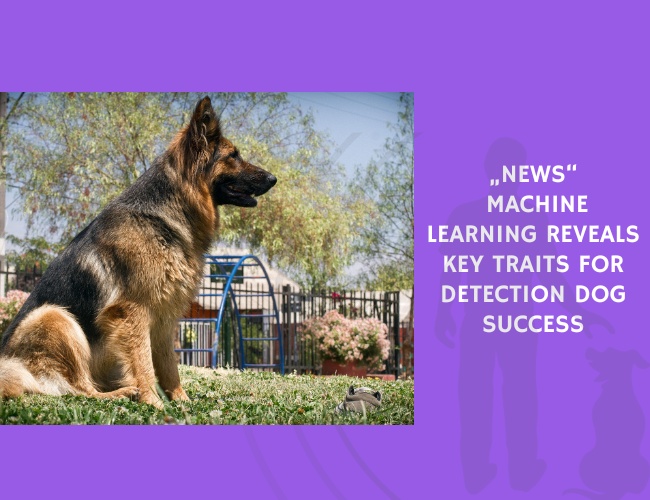
Selection of effective olfactory detection dogs is a complex process influenced by genetics, behavior, environment, and developmental history. This study applied supervised machine learning to a comprehensive dataset of 628 Labrador Retrievers raised within a Transportation Security Administration (TSA) detection dog program. Dogs were evaluated at four time points over a 12-month foster period before either being accepted into formal training or eliminated from the program.
Three machine learning algorithms demonstrated strong ability to predict which dogs would be accepted into training but showed limited ability to classify which dogs would ultimately be eliminated, with only ~25% of the cohort falling into the latter category. Among all testing intervals, the 12-month evaluation provided the most accurate predictions, achieving an AUC of 0.68, indicating meaningful but not definitive separability between successful and unsuccessful candidates.
Using Principal Components Analysis and Recursive Feature Elimination, the authors identified specific traits and environments that contributed most to classification outcomes. For airport terminal search and retrieve tasks, olfaction and possession-related traits played dominant roles, while environmental testing highlighted the importance of possession, confidence, and initiative. These findings underscore the multidimensional nature of detection dog performance.
The study provides evidence that machine learning can help refine selection processes by identifying the most informative behavioral assessments and developmental stages. By highlighting which traits and contexts predict long-term success, the work supports improved efficiency, reduced training costs, and more effective placement of working dogs in high-stakes detection roles. It further suggests that integrating cognitive, emotional, social, and environmental variables may enhance future selection models.
Source: Eyre, A. W., Zapata, I., Hare, E., Serpell, J., Otto, C., & Alvarez, C. E. (2023). Machine learning prediction and classification of behavioral selection in a canine olfactory detection program. Scientific Reports. Published August 1, 2023.