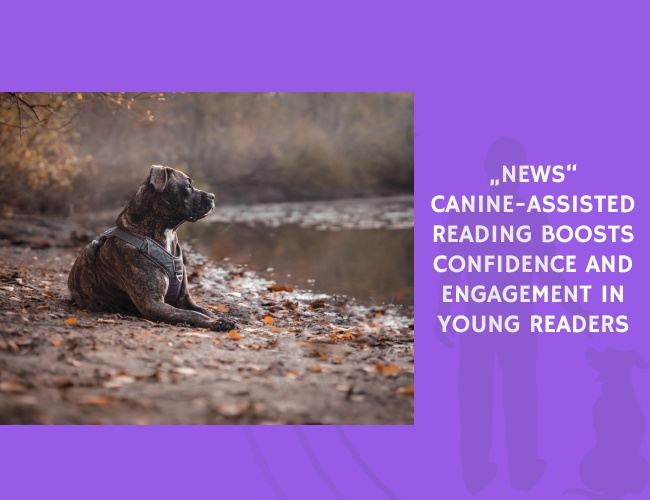
Published in the Early Childhood Education Journal, this multiple case study by Laura Bruneau, B. Timmons, Shauna Ianson, and J. D. Tucker investigates the impact of a short-term canine-assisted literacy program on seven second-grade students identified by their teachers as struggling readers. Each student exhibited low confidence and limited engagement with reading prior to the program.
The intervention took place over one school term and consisted of weekly sessions during which students selected a book of their choice and read aloud to a therapy dog accompanied by a trained handler. This structure aligns with growing evidence suggesting that reading to a calm, nonjudgmental animal can create an emotionally safe environment that supports literacy development.
The researchers collected data through multiple sources: pre- and post-program student interviews, teacher interviews, parental questionnaires, and systematic observations of both reading behaviors and child–animal interactions. A follow-up student interview and parental questionnaire were also conducted four months after program completion to assess lasting effects.
Across the data sources, a clear pattern emerged: participation in the program enhanced reading engagement and provided children with sustained opportunities for meaningful reading practice. Students demonstrated notable gains in self-confidence as readers and often exhibited enthusiasm for reading sessions, perceiving them as enjoyable rather than stressful activities.
Although children interacted with the therapy dog in unique ways—sometimes seeking comfort, sometimes sharing excitement—their responses consistently reflected a positive emotional connection to the animal. These emotional benefits extended beyond the structured sessions, with some parents reporting continued enthusiasm for reading months later.
The study adds to a growing body of research showing that canine-assisted literacy programs can provide motivational and emotional support that strengthens young readers’ skills. The authors highlight the value of integrating therapy dogs into literacy interventions to build confidence, reduce anxiety, and promote positive reading experiences for struggling students.
Source: Bruneau, L., Timmons, B., Ianson, S., & Tucker, J. D. (2022). Understanding Canine-Assisted Literacy Programs: A Multiple Case Study. Early Childhood Education Journal. Published August 10, 2022.