Understanding the Primitive Mind Behind the Brindle Coat
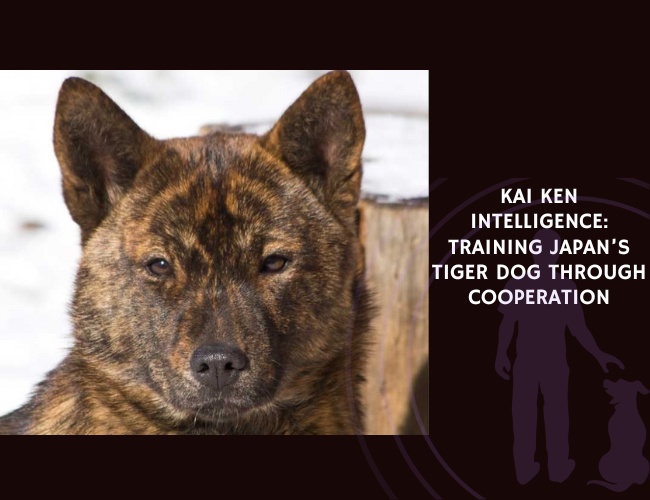
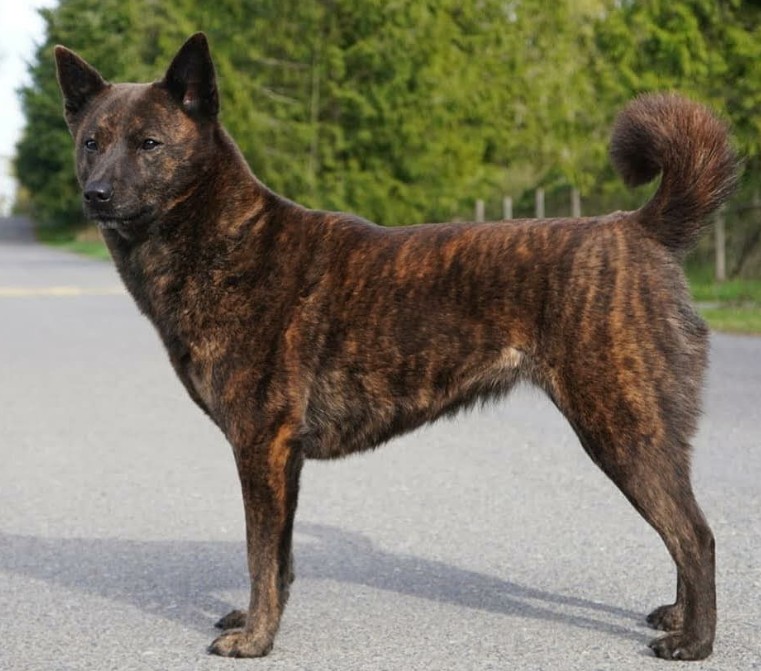
There’s something almost magnetic about the Kai Ken. With their striking brindle coat earning them the nickname “Tiger Dog,” these ancient Japanese hunters carry themselves with a quiet dignity that speaks of mountain mists and centuries of self-reliance. But behind those alert, watchful eyes lies a form of intelligence that challenges everything most dog owners think they know about training and obedience.
If you’ve ever felt frustrated by a Kai Ken who seemed to “ignore” your commands, or wondered why this seemingly intelligent dog won’t perform the simple sits and stays that other breeds master in days, you’re not alone. The truth is, your Kai Ken isn’t being stubborn—they’re being exactly what thousands of years of mountain survival designed them to be: an independent thinker who evaluates every situation on its own merits.
This guide explores the fascinating cognitive architecture of the Kai Ken, revealing why traditional training approaches fall short and how cooperation-based methods aligned with their natural intelligence produce remarkable results. Understanding your Kai Ken’s mind isn’t just about better training—it’s about building a relationship that honors who they truly are.
The Evolutionary Blueprint: How Mountains Shaped Kai Ken Cognition
Terrain as Teacher
To understand how your Kai Ken thinks, you need to imagine the rugged mountainous terrain of Japan’s Yamanashi Prefecture—the landscape that sculpted this breed’s cognitive priorities over millennia. Unlike breeds developed to follow human direction in controlled environments, the Kai Ken evolved to make independent, life-critical decisions in complex, unpredictable terrain where human guidance was often impossible or even counterproductive.
Picture this: A dog navigating steep, rocky slopes while tracking game. The handler can’t see what the dog smells. They can’t assess ground stability from a distance. They can’t predict which way a wild boar will break from cover. In this environment, a dog that waited for human commands died. A dog that assessed and acted independently survived.
This evolutionary pressure created what researchers call “terrain-first cognition”—a cognitive architecture that prioritizes:
- Environmental scanning over social referencing
- Self-preservation through independent assessment
- Adaptive decision-making over pre-programmed responses
Your Kai Ken’s brain is literally wired to read wind patterns, evaluate ground stability, and monitor wildlife movement before looking to you for direction.
Primitive Intelligence vs. Modern Obedience
Here’s a distinction that changes everything about how you approach your Kai Ken: There’s a fundamental difference between primitive intelligence and what we might call “civilized obedience.”
Primitive intelligence encompasses environmental problem-solving, adaptive decision-making, and contextual assessment. It’s the kind of smarts that kept dogs alive in unpredictable wilderness settings. Civilized obedience, by contrast, involves compliance with hierarchical commands, repetitive task execution, and suppression of independent judgment—traits deliberately bred into many modern companion breeds.
Your Kai Ken’s “reluctance” to perform repetitive obedience drills may reflect not stubbornness but cognitive sophistication: the recognition that context-free repetition provides no survival-relevant information. Their tendency to scan the environment before responding to commands demonstrates adaptive caution, not disobedience. When your Kai Ken pauses to check their surroundings before complying with your recall, they’re doing exactly what helped their ancestors survive for thousands of years.
This doesn’t mean Kai Kens can’t learn or won’t cooperate—quite the opposite. It means the path to cooperation runs through understanding and respecting their natural cognitive style, not trying to override it. 🧠
Environmental Nuance: Why Your Kai Ken Reads the World Before Reading You
The Information Hierarchy
Research consistently shows that Kai Kens are more attuned to environmental nuance than human verbal cues—not because they can’t learn commands, but because their cognitive priorities place environmental information higher in the decision-making hierarchy. This manifests in several patterns that, once you understand them, make perfect sense.
Environmental Override occurs when environmental cues conflict with human commands. Wind carrying an unfamiliar scent, unstable ground, movement in peripheral vision—when these signals appear, your Kai Ken will consistently prioritize environmental information. This isn’t disobedience; it’s adaptive risk assessment that kept their ancestors alive.
Context-Dependent Response explains why your Kai Ken might respond immediately to a recall command in your familiar backyard but seem to “ignore” the same command when environmental factors demand their attention. The command hasn’t changed; the information hierarchy has. Novel terrain, wildlife scent, or weather changes all compete for cognitive resources that your Kai Ken has evolved to allocate toward survival-relevant information first.
Spatial Intelligence Dominance shows up in problem-solving situations. Given a physical challenge, your Kai Ken will independently explore multiple approaches before looking to you for guidance—the opposite of breeds selected for social referencing. They’re natural spatial reasoners who excel at navigating complex three-dimensional environments.
Working With the Hierarchy, Not Against It
The training implication here is profound: Rather than trying to force your Kai Ken to prioritize your commands over environmental information, teach them that you also read environmental cues. Show them that you respect their assessments. Demonstrate that cooperation with you is a dialogue, not a monologue. When you acknowledge their environmental awareness rather than fighting it, you open the door to a partnership built on mutual respect.
This is where the NeuroBond approach reveals its power—trust becomes the foundation of learning, not compliance. Your Kai Ken doesn’t need to stop being environmentally aware; they need to learn that awareness and cooperation with you can coexist.
The Independence-Cooperation Spectrum: Where Kai Kens Stand
Among the Japanese Primitives
The Kai Ken occupies a fascinating middle position among Japanese primitive breeds, and understanding this positioning helps you calibrate your expectations appropriately.
- Shiba Inu: Maximum independence, minimal cooperation-seeking, strong territorial boundaries, reserved even with family
- Kai Ken: Moderate independence, selective cooperation within trusted bonds, flexible territorial boundaries, warm with inner circle
- Kishu: Lower independence, higher cooperation-seeking, serious guardian mentality, more handler-focused
Your Kai Ken balances between these poles—independent enough for autonomous mountain hunting, cooperative enough for coordinated pack work, selective enough to maintain strong boundaries. This means they’re neither as aloof as the Shiba nor as naturally biddable as the Kishu. They occupy a middle ground that, when properly understood, offers the best of both worlds.
Conditional Cooperation
The key insight is that Kai Ken cooperation is conditional and relational, not automatic and hierarchical. They cooperate when:
- Trust has been established through consistent, calm interaction
- The task makes environmental and contextual sense
- The handler demonstrates competence and emotional stability
- The relationship feels reciprocal rather than dominance-based
This conditionality isn’t a training problem—it’s sophisticated social intelligence that evaluates whether cooperation serves mutual benefit. Your Kai Ken is constantly asking, “Is this person worth partnering with? Does this request make sense? Am I safe here?” Answer those questions positively, and cooperation flows naturally. 🐾
The Trust Gateway: Understanding Selective Social Bonding
Deep Bonds, Small Circles
Perhaps the most distinctive social-cognitive trait of the Kai Ken is their selective bonding intensity. They form extraordinarily deep attachments to a small circle—typically one to three humans—while remaining cautious or indifferent toward others. This isn’t aloofness; it’s strategic social investment.
From an evolutionary perspective, this makes perfect sense. The Kai Ken’s ancestors worked in small, stable packs with consistent human partners. Deep trust with few individuals was more adaptive than shallow trust with many. In primitive hunting parties, relationships were close and enduring—and the same pattern persists in your Kai Ken today.
This selectivity creates what we might call a “trust gateway” for learning and cooperation, and understanding its stages is essential for successful training.
Stage One: The Assessment Phase
During this phase, which can last weeks to months, your Kai Ken observes your consistency, emotional stability, and competence. Minimal cooperation is offered while maximum environmental focus is maintained. Many handlers mistake this phase for stubbornness or lack of intelligence—a critical error.
The most damaging mistake during this phase is pushing for obedience. Pressure during assessment damages trust formation, potentially closing the gateway permanently. Your job during this phase isn’t to train; it’s to demonstrate that you’re worth trusting.
Stage Two: Trust Emergence
Gradually, your Kai Ken begins offering cooperative gestures:
- Sustained eye contact
- Proximity-seeking behavior
- Engagement with activities you initiate
- Relaxed body posture in your presence
- Voluntary check-ins during exploration
These are relational offerings, not conditioned responses. They’re your Kai Ken’s way of saying, “I’m starting to trust you.”
Your response to these offerings matters enormously. Recognize them. Reciprocate without exploitation. Treat cooperation as the gift it is, not an entitlement. If you respond to emerging trust by immediately ramping up training demands, you signal that trust will be exploited—and your Kai Ken will notice.
Stage Three: Deep Partnership
When trust is fully established, something remarkable happens. Your Kai Ken demonstrates responsiveness that can astonish people who’ve only seen them in the assessment phase. Cooperation becomes fluid, intuitive, and context-sensitive. Handler and dog function as a cooperative unit, not a command-compliance dyad.
But even at this stage, the relationship requires maintenance through continued emotional consistency and respect. Trust, once earned, must be honored. This is the essence of Zoeta Dogsoul—the recognition that the deepest bonds emerge not from control but from mutual understanding. 🧡
When Trust Is Absent: Reading the Warning Signs
The Withdrawal Pattern
When trust is absent or damaged, Kai Ken training engagement collapses in predictable ways. Understanding these signs helps you recognize problems early and adjust before damage becomes severe.
Warning signs of damaged trust:
- Passive resistance: Physical presence without mental engagement—your Kai Ken is there, but not really with you
- Environmental fixation: Increased focus on surroundings, decreased focus on you—tracking every squirrel and leaf because they don’t trust you’re tracking threats
- Selective deafness: Ignoring commands while clearly hearing environmental sounds—they heard your recall but chose not to respond
- Spatial distancing: Maintaining physical distance from you during activities that previously involved closeness
- Stress signals: Yawning, lip-licking, looking away, and body tension revealing internal discomfort
Critically, these are not dominance behaviors or stubbornness. They are protective withdrawal in response to perceived relational threat. Your Kai Ken isn’t refusing to cooperate with training; they’re refusing to cooperate with someone they don’t trust. The solution isn’t more pressure—it’s relationship repair.
Cooperation as Relational Gesture: A Different Training Paradigm
Beyond Conditioned Response
A fundamental misunderstanding in Kai Ken training is treating their cooperation as a conditioned response—behavior produced by reinforcement contingencies—rather than a relational gesture, which is behavior offered within a trusted relationship.
The distinction is critical. In the conditioned response model, behavior is controlled by external contingencies like rewards and punishments. Consistency comes from consistent contingencies, and relationship quality is theoretically irrelevant. This model works well for many domestic breeds.
But the Kai Ken operates on a relational gesture model. Behavior is offered as an expression of relationship. Consistency comes from relationship stability. Contingencies are secondary to relational context. Your Kai Ken will cooperate with mediocre techniques delivered within a strong relationship, but resist excellent techniques delivered within a weak or coercive one.
Evidence in Action
Several observable patterns confirm this relational foundation:
- Context sensitivity: The same command produces different responses depending on relational context—trusted handler versus stranger, calm environment versus stressful situation
- Delayed cooperation: Your Kai Ken “ignores” a command initially, then performs the behavior moments later—suggesting they’re choosing to cooperate rather than being compelled
- Selective performance: Brilliant responsiveness with trusted handler, complete non-compliance with strangers using identical training methods
- Emotional contagion: Your emotional state dramatically affects your Kai Ken—calm handler gets cooperation, anxious handler gets withdrawal
The Invisible Leash reminds us that awareness, not tension, guides the path. Your connection with your Kai Ken operates on channels deeper than verbal commands.
Terrain-Based Intelligence: The Mountain Hunter’s Toolkit
The Cognitive Skills That Made Kai Kens Successful
The Kai Ken’s traditional work—tracking game through mountainous terrain, flushing prey, navigating dangerous slopes—required a specific cognitive toolkit that persists in your companion today:
- Spatial mapping: Creating and updating mental maps of complex three-dimensional terrain—your Kai Ken naturally builds detailed mental models of their environment, which is why they often know where you’re going before you get there
- Risk assessment: Evaluating ground stability, weather changes, and potential threats—a constant background process that never fully switches off
- Predictive modeling: Anticipating movement based on terrain features and environmental cues—watch your Kai Ken during a walk, and you’ll see them predicting where squirrels will run and where other dogs will emerge
- Adaptive strategy: Switching approaches based on real-time feedback rather than rigidly persisting with failed methods
- Independent decision-making: Acting without human guidance when the situation demands it—not defiance, but the heritage of dogs who couldn’t wait for instructions on a mountainside
The Problem-Solving Style
This toolkit produces a distinctive approach to challenges:
- Assessing environmental factors first—space, objects, terrain—before considering social solutions like looking to you for help
- Quickly cycling through alternative strategies rather than repeating failed approaches
- Preferring independent exploration over watching demonstrations
- Applying context-specific solutions rather than generalized responses
This style can appear as “slow learning” in traditional obedience contexts, but it represents sophisticated adaptive intelligence in naturalistic problem-solving. Your Kai Ken isn’t struggling to learn—they’re applying a different kind of intelligence. 🧠

Spatial vs. Rote Learning: Teaching the Terrain-Reading Mind
Why Traditional Obedience Training Falls Flat
Kai Kens evaluate tasks spatially and environmentally rather than through rote repetition. Understanding this has profound training implications.
The traditional obedience approach repeats behavior in standardized contexts until it becomes automatic, then attempts to generalize through practice in multiple locations. The emphasis is on consistency of execution. The problem? Your Kai Ken finds this cognitively meaningless. Endless repetitions of “sit” in your living room provide no survival-relevant information, so their brain simply doesn’t prioritize this learning.
The Terrain-Based Alternative
A terrain-based approach presents behavior as a solution to environmental challenges. Context varies to require adaptive application. The emphasis is on functional purpose over form. This engages your Kai Ken’s natural problem-solving systems.
Consider teaching “down.” The rote method repeats the command with a lure and reward in your living room until it becomes automatic. Your Kai Ken complies slowly, seems unmotivated, and requires many repetitions. The terrain method practices “down” as concealment behavior in varied terrain—behind a log, in tall grass, on a hillside. Your Kai Ken grasps the purpose immediately, generalizes rapidly, and performs enthusiastically.
The difference is cognitive engagement. The rote method asks your Kai Ken to suppress their environmental assessment systems and execute meaningless repetition. The terrain method activates their natural cognitive systems and provides functional context that makes sense to their evolved brain.
When Environment Trumps Handler
Does terrain sensitivity override handler communication in ambiguous situations? Absolutely—and this is adaptive, not problematic.
Common scenarios where environment trumps commands:
- You call your Kai Ken across unstable ground—they refuse and find an alternative route
- You command “heel” while they detect an unfamiliar scent downwind—they maintain alert posture and ignore the command
- You continue a training session while they detect an approaching storm—they become “distracted” and seek shelter
- You encourage approach to a new person while they read threatening body language you missed—they refuse to engage
In each case, the Kai Ken is prioritizing environmental information over human commands—exactly what made them successful mountain hunters. Rather than trying to override this sensitivity, incorporate it into training. Show your Kai Ken that you also read environmental cues. Respect their assessments. Make cooperation a dialogue. 🐾
Low-Noise Communication: Speaking Your Kai Ken’s Language
Why Verbal Overload Backfires
Kai Kens respond poorly to high-verbal, high-repetition training styles. Understanding why requires examining their natural communication systems.
In primitive hunting contexts, communication was “low-noise”—minimal verbal instruction, maximum environmental awareness, and subtle social signaling. Your Kai Ken evolved in communicative environments where verbal commands were rare and meaningful, physical positioning carried primary information, silence was information-rich rather than empty, and emotional state was communicated through subtle body language.
High-verbal training creates several problems:
- Signal degradation: Constant talking becomes background noise, reducing the salience of actual commands
- Cognitive overload: Verbal processing competes with environmental monitoring, forcing your Kai Ken to choose between listening to you and staying aware of surroundings
- Emotional ambiguity: Verbal tone often conflicts with body language, creating confusion
- Relationship distortion: Excessive talking positions you as anxious or uncertain, undermining trust
The result? Kai Kens “tune out” high-verbal handlers not from stubbornness but from cognitive self-protection—filtering noise to maintain environmental awareness.
The Language of Cooperation
Your Kai Ken is highly receptive to:
Calm gestures:
- Slow, deliberate hand signals
- Body positioning that indicates direction
- Spatial blocking and opening that guides movement
- Minimal but meaningful physical contact
Spatial guidance:
- Handler positioning that creates movement channels
- Environmental arrangement that suggests desired behavior
- Terrain use that makes cooperation logical
Structured silence:
- Quiet presence that allows environmental focus
- Pauses that permit processing and decision-making
- Absence of verbal pressure that reduces stress
This communication style aligns with your Kai Ken’s natural systems. Rather than forcing them to process human-centric verbal information, it works with their environmental and spatial processing strengths.
Brindled. Sharp. Self-Led.
Terrain teaches their mind.
Your Kai Ken isn’t hesitating out of stubbornness—they’re following mountain-bred cognition that prioritises environmental reading over automatic obedience.
Primitive logic shapes response.
Independent assessment, context-first decision-making, and survival-driven caution aren’t disobedience; they’re the very intelligence that kept their ancestors alive.


Cooperation unlocks their brilliance.
When you shift from command-pressure to partnership—working with their natural scanning, pacing, and terrain instincts—the Tiger Dog becomes a responsive, reliable companion.
Emotional Neutrality: The Power of Calm Presence
Why Your Emotional State Matters More Than Your Techniques
Perhaps the most critical factor in Kai Ken training is your emotional state. Kai Kens are exquisitely sensitive to human emotions, and your anxiety, frustration, or excitement dramatically impairs their responsiveness.
Why emotional neutrality matters:
- Clarity of communication: A neutral emotional state allows clear, unambiguous signals
- Safety signaling: A calm handler signals environmental safety, allowing your Kai Ken to focus on cooperation rather than threat assessment
- Trust building: Emotional consistency demonstrates reliability—a prerequisite for partnership
- Cognitive space: Calm creates mental room for your Kai Ken to process and make decisions
🐅 Kai Ken Intelligence: The Cooperation Journey 🏔️
Training Japan’s Tiger Dog Through Trust, Not Commands — A 7-Phase Guide to Partnership
Phase 1: Understanding Primitive Cognition
Recognizing the Mountain Hunter’s Mind💡 Key Insight
Your Kai Ken’s brain is wired for “terrain-first cognition”—scanning environments, assessing risks, and making independent decisions. This isn’t stubbornness; it’s survival intelligence refined over millennia in Japan’s mountains.
🔄 What to Expect
• Environmental scanning before responding to commands
• Context-dependent cooperation (varies by situation)
• Independent problem-solving over social referencing
• Adaptive caution that looks like “ignoring” you
Phase 2: The Assessment Phase
Weeks to Months — Your Kai Ken Is Evaluating You💡 What’s Happening
Your Kai Ken is observing your consistency, emotional stability, and competence. Minimal cooperation is offered while they maintain maximum environmental focus. This is the “trust gateway”—and it cannot be rushed.
⚠️ Critical Warning
Pushing for obedience during this phase damages trust formation—potentially permanently. Your job isn’t to train; it’s to demonstrate you’re worth trusting. Patience here determines everything that follows.
✅ Your Approach
• Be boring and predictable in the best way
• Exist together without demands
• Offer food without requiring anything
• Take decompression walks where they lead
Phase 3: Trust Emergence
Recognizing the First Cooperative Gestures💡 Signs of Emerging Trust
• Sustained eye contact
• Proximity-seeking behavior
• Voluntary check-ins during exploration
• Relaxed body posture in your presence
• Engagement with activities you initiate
🔄 How to Respond
These are relational offerings—gifts, not entitlements. Recognize them. Reciprocate without exploitation. If you respond to emerging trust by immediately ramping up training demands, you signal that trust will be exploited.
Phase 4: Low-Noise Communication
Speaking Your Kai Ken’s Language⚠️ Why Verbal Overload Fails
Constant talking becomes background noise. Kai Kens “tune out” high-verbal handlers not from stubbornness but from cognitive self-protection—filtering noise to maintain environmental awareness.
✅ The Invisible Leash Approach
• Calm gestures: Slow hand signals, body positioning
• Spatial guidance: Movement channels, terrain use
• Structured silence: Quiet presence, processing pauses
• Emotional clarity: Consistent, neutral state
Phase 5: Terrain-Based Training
Engaging the Mountain Hunter’s Intelligence❌ Rote Method (Fails)
Repeating “sit” endlessly in your living room provides no survival-relevant information. Your Kai Ken finds this cognitively meaningless, complies slowly, seems unmotivated.
✅ Terrain Method (Works)
Practice “down” as concealment behavior—behind a log, in tall grass, on a hillside. Your Kai Ken grasps the purpose immediately, generalizes rapidly, and performs enthusiastically. Context creates meaning.
💡 Training Activities That Work
• Scent tracking exercises
• Varied terrain navigation
• Problem-solving challenges
• Functional purpose training (not tricks)
Phase 6: Arousal & Decompression
The Narrow Window of Optimal Performance💡 The Arousal Window
• Low arousal: Appears “lazy”—drives not activated
• Optimal (low-medium): Alert, calm, responsive—the sweet spot
• High arousal: “Hyper,” ignores cues—cognitive overload
🕐 Decompression Timelines
• After novel environment: 24-48 hours
• After intense training: 12-24 hours
• After stressful event: 48-72 hours
• After major life change: 1-2 weeks
Phase 7: Deep Partnership
When Cooperation Becomes Fluid✅ What Partnership Looks Like
Cooperation becomes fluid, intuitive, and context-sensitive. Handler and dog function as a cooperative unit, not a command-compliance dyad. Your Kai Ken responds with a depth that astonishes those who only saw them in assessment phase.
🔄 Maintaining the Bond
Even at this stage, the relationship requires maintenance through continued emotional consistency and respect. Trust, once earned, must be honored. Your Kai Ken remembers not just what you taught, but how it felt to learn it with you.
🐕 Japanese Primitive Breeds: Independence Spectrum
🦊 Shiba Inu
Independence: Maximum
Cooperation: Minimal seeking
Bonding: Reserved even with family
Boundaries: Strong, territorial
🐅 Kai Ken (This Breed)
Independence: Moderate
Cooperation: Selective within trust
Bonding: Warm with inner circle
Boundaries: Flexible
⚪ Kishu Ken
Independence: Lower
Cooperation: Higher seeking
Bonding: More handler-focused
Boundaries: Serious guardian
❌ Traditional Training
Focus: Commands & compliance
Goal: Obedience
Relationship: Hierarchical
Result with Kai Ken: Resistance
✅ NeuroBond Approach
Focus: Trust & cooperation
Goal: Partnership
Relationship: Collaborative
Result with Kai Ken: Flourishing
⏱️ Trust Timeline
Assessment: Weeks to months
Trust emergence: Gradual
Deep partnership: 3-6+ months
Trust recovery: Weeks to months
⚡ Quick Reference: The Kai Ken Cooperation Formula
Trust First: No training until the trust gateway opens
Environment Matters: Context-rich training over rote repetition
Less Talking: Calm gestures, spatial guidance, structured silence
Emotional Neutrality: Your calm = their cooperation
Decompression Required: 24-72 hours after novel/stressful experiences
Patience Always: Rushing damages trust; slow builds partnership
🧡 The Essence of Kai Ken Partnership
The Kai Ken offers something rare: a relationship with truly primitive intelligence, a bond with a creature who chooses to cooperate rather than complies because they must. Through the NeuroBond approach, trust becomes the foundation of learning. The Invisible Leash reminds us that awareness, not tension, guides the path. And in moments of Soul Recall, your Kai Ken remembers not just what you taught—but how it felt to learn it with you.
They won’t obey because they’ve been conditioned—they’ll cooperate because they’ve chosen you. That balance between science and soul—that’s the essence of Zoeta Dogsoul.
© Zoeta Dogsoul – Where neuroscience meets soul in dog training
Emotional States That Undermine Training
States to avoid during training:
- Anxiety: Signals danger, triggering your Kai Ken’s environmental scanning—they’re trying to figure out what threat you’ve detected
- Frustration: Perceived as threat, triggering withdrawal—your Kai Ken doesn’t know you’re frustrated with training, just that you’re upset
- Excitement: Creates arousal mismatch and impairs focus—your Kai Ken needs calm to think clearly
- Impatience: Pressures decision-making and damages trust
- Dominance projection: Triggers resistance and blocks cooperation entirely
The training implication is clear: Your emotional regulation is more important than technique mastery. A calm handler with basic techniques will succeed where an anxious handler with advanced techniques will fail. 😌
Caution vs. Stubbornness: The Critical Distinction
Avoiding the Misdiagnosis Trap
One of the most damaging misunderstandings in Kai Ken training is mistaking caution for stubbornness. This misdiagnosis leads to inappropriate training responses that damage trust and impair learning.
True stubbornness (rare in Kai Kens):
- Active resistance to clear, reasonable requests
- Oppositional behavior regardless of context
- Consistency across all handlers and situations
- Motivation by desire for control
Adaptive caution (common in Kai Kens):
- Hesitation in novel or ambiguous situations
- Assessment behavior before action
- Context-dependent variation
- Motivation by risk management
The distinction matters because appropriate responses differ completely. For stubbornness, you might increase structure and consistency. For caution, you provide information, allow assessment time, and build confidence. Applying stubbornness responses to caution creates a catastrophic spiral: Your Kai Ken shows caution, you interpret it as stubbornness, you increase pressure, they perceive threat and increase caution, you increase pressure further, and trust collapses entirely.
Conditions That Trigger Emotional Withdrawal
Kai Kens demonstrate emotional withdrawal under specific conditions:
Environmental uncertainty:
- Novel environments without adequate familiarization time
- Rapidly changing conditions (crowds, weather, activity)
- Ambiguous threat signals (strange dogs, unfamiliar humans)
- Sensory overload (noise, visual complexity, competing stimuli)
Unpredictable humans:
- Inconsistent emotional states
- Sudden movements or loud vocalizations
- Unclear intentions or mixed signals
- Violation of established patterns
Rapid handling movements:
- Quick reaches toward head or body
- Sudden position changes
- Fast-paced training progressions
- Rushed physical manipulation
Relational violations:
- Broken trust through punishment after cooperation
- Ignored boundaries or forced interaction
- Disrespected assessments
- Exploited vulnerability
The withdrawal pattern follows a predictable sequence:
- Initial alert: Increased environmental scanning, decreased handler focus
- Subtle distancing: Small spatial adjustments away from you
- Stress signaling: Yawning, lip-licking, looking away
- Active avoidance: Clear movement away, refusal to engage
- Complete shutdown: Immobility, non-responsiveness, dissociation
Each stage represents an opportunity for you to recognize distress and adjust. Pushing through these signals damages trust and may require weeks or months to repair.
The Cost of Premature Pressure
Premature pressure—obedience drills before trust establishment, forced engagement before relationship formation, dominance framing of natural caution—creates lasting damage.
Short-term effects:
- Immediate compliance collapse
- Increased stress behaviors
- Environmental fixation
- Handler avoidance
- Generalized anxiety
Long-term effects:
- Permanent trust damage with you specifically
- Generalized wariness of training contexts
- Suppressed natural behaviors
- Learned helplessness
- Relationship rupture
The mechanism is straightforward: Premature pressure violates the trust gateway. Your Kai Ken is still assessing whether you’re trustworthy. Pressure during assessment signals “not trustworthy,” and the gateway closes—potentially permanently.
Recovery requires complete cessation of pressure, extended relationship rebuilding over weeks to months, consistent demonstration of trustworthiness, and may never fully restore original trust potential. Prevention is far better: delay formal training until the trust gateway opens, focus the first months on relationship building, allow your Kai Ken to set the cooperation pace, and treat every cooperative gesture as the gift it is.
Rebuilding Trust: The Recovery Timeline
If you’re reading this section because you’ve already made mistakes with your Kai Ken, take a breath. You’re not alone, and repair is possible—though it requires patience and a fundamentally different approach than what caused the damage.
Phase One: Complete Cessation (Week 1-2)
Stop all formal training immediately. No commands, no expectations, no pressure of any kind. This feels counterintuitive—surely doing something is better than nothing? But your Kai Ken needs to experience you as safe before they can experience you as a training partner.
Phase One activities:
- Simply exist together in shared space
- Sit in the same room without demands
- Go on decompression walks where your Kai Ken leads and you follow
- Offer food without requiring anything in return
- Become boring and predictable in the best possible way
Watch for small signs that the pressure has lifted: softer body posture, willingness to be in the same space, occasional glances in your direction. These aren’t invitations to restart training—they’re evidence that the acute stress is beginning to fade.
Phase Two: Presence Without Agenda (Weeks 2-6)
Continue existing together without demands, but begin adding small positive associations. Hand-feed meals if your Kai Ken is comfortable, or simply place high-value food near you and allow them to approach on their own timeline. Engage in parallel activities—you reading while they rest nearby, you gardening while they explore the yard. The goal is shared space without shared pressure.
During this phase, you may notice your Kai Ken beginning to orient toward you more frequently. They might choose to rest closer to you than before. They might make eye contact and hold it for a moment longer. These are trust tentatives—tiny experiments to see if you’ve truly changed. Respond by noticing without reacting. A soft acknowledgment, then back to your own activity. Show them that attention from them doesn’t trigger demands from you.
Phase Three: Invitation, Not Instruction (Weeks 6-12)
As your Kai Ken begins offering more consistent proximity and attention, you can begin offering invitations to engage. Not commands—invitations. The difference is crucial: an invitation can be declined without consequence.
Offer a treat and wait. If they approach, wonderful. If they don’t, put the treat away without comment. Invite them on a walk by picking up the leash and moving toward the door. If they come, great. If they hesitate, put the leash down and try again later. Play with a toy near them without requiring participation. Let them choose to join or not.
What you’re demonstrating is that engagement with you is optional and pleasant, not mandatory and stressful. Every declined invitation that you accept gracefully builds evidence that you can be trusted. Every accepted invitation that ends positively builds the association between you and good experiences.
Phase Four: Cooperative Rebuilding (Months 3-6+)
Only when your Kai Ken is consistently seeking your company, offering relaxed attention, and voluntarily engaging with activities you initiate should you begin reintroducing anything resembling training. And even then, the approach must differ from whatever caused the original damage.
Start with behaviors your Kai Ken already offers naturally—rewarding sits that happen spontaneously, marking moments of eye contact, celebrating recalls that occur without being commanded. You’re not teaching new behaviors; you’re noticing and appreciating behaviors they’re already giving you.
Gradually, you can begin shaping and building on this foundation. But the moment you see stress signals—the yawning, lip-licking, spatial distancing—stop immediately. You haven’t lost all progress, but you’ve found the current edge of your Kai Ken’s comfort zone. Back up, decompress, and proceed more slowly.
What Full Recovery Looks Like
Full recovery doesn’t mean your Kai Ken forgets what happened. Moments of Soul Recall mean they carry the emotional memory of that earlier pressure. What recovery means is that they’ve accumulated enough new, positive experiences with you that the old memories no longer dominate their expectations. They trust you again—not blindly, but based on consistent evidence that you’ve changed.
Some relationships never fully recover to their original potential. A Kai Ken who experienced significant early pressure may always have a slightly longer assessment phase with you, a slightly quicker withdrawal response when stressed. This isn’t failure; it’s realistic acknowledgment that trust, once broken, repairs differently than trust that was never damaged.
The timeline above is approximate. Some Kai Kens recover faster; others take longer. The constant is that recovery cannot be rushed. Every attempt to speed up the process signals to your Kai Ken that you haven’t truly changed—that you’re still prioritizing your timeline over their wellbeing. Patience isn’t just a virtue in trust recovery; it’s the entire methodology. 🧡
Drive Structure: Working With the Hunter’s Motivation System
Understanding Prey Drive and Scenting
Your Kai Ken’s drive structure reflects their hunting heritage and must be understood to train effectively.
Prey drive: Moderate to high, but context-dependent
- Activates strongly in naturalistic contexts (outdoor environments, movement triggers)
- Suppresses in artificial contexts (indoor training, static exercises)
- Serves as powerful motivator when properly channeled
- Can override training focus if not managed
Scenting behavior: Extremely high priority
- Primary information-gathering system
- Competes with visual and auditory focus on handler
- Provides environmental context essential for decision-making
- Cannot be suppressed without psychological cost
Alertness: Sustained environmental monitoring
- Constant background process even during training
- Increases in novel or uncertain environments
- Essential for feeling safe enough to cooperate
- Often misinterpreted as “distraction” or “lack of focus”
Working With Drives, Not Against Them
Principles for drive-compatible training:
- Use prey drive and scenting as training motivators rather than trying to suppress them
- Provide environmental context through training that incorporates natural drives—tracking exercises, terrain work, scent games
- Accept divided attention; your Kai Ken will never give 100% focus while ignoring the environment, and this is adaptive, not deficient
- Channel drives toward training goals rather than demanding drive suppression
The Optimal Arousal Window
Kai Kens demonstrate a narrow optimal arousal window for training performance:
- Low arousal (under-stimulated): Appears unmotivated or “lazy” with slow responses—actually, drive systems aren’t activated
- Optimal arousal (low-medium): Alert but calm, responsive, engaged, maintains environmental awareness—this is the training sweet spot
- High arousal (over-stimulated): Appears “hyper” or “out of control,” ignores cues, fixates on stimuli—cognitive systems overwhelmed
The critical finding is that Kai Ken performance drops sharply when overstimulated, unlike many working breeds that perform better at higher arousal levels.
Arousal management strategies:
- Train in calm, familiar environments initially
- Gradually increase environmental complexity
- Watch for early signs of over-arousal (increased panting, scanning, movement)
- End sessions before arousal peaks
- Allow extended calm periods after stimulating experiences
Decompression Requirements
Kai Kens require longer decompression periods than many breeds after sensory-rich experiences. This isn’t weakness—it’s a feature of their cognitive architecture.
Recommended decompression timelines:
- After a novel environment: 24-48 hours
- After intense training: 12-24 hours
- After a stressful event: 48-72 hours
- After a major life change: 1-2 weeks
Signs of insufficient decompression:
- Increased reactivity
- Decreased training responsiveness
- Stress behaviors (panting, pacing, scanning)
- Avoidance of training contexts
- Relationship strain
Optimal decompression activities:
- Quiet time in familiar environments
- Low-key environmental exploration
- Calm companionship without demands
- Natural behaviors (sniffing, resting, observing)
- Minimal novel stimuli
Boundary Logic: Understanding the Guardian’s Protective Instincts
The Kai Ken’s Boundary System
Kai Kens demonstrate strong boundary instincts rooted in their guardian-hunter heritage:
- Territorial awareness: Clear sense of “home territory” requiring defense
- Social circle definition: Sharp distinction between “inner circle” (trusted) and “outer circle” (monitored)
- Defensive signaling: Proactive communication of boundaries through posture, vocalization, positioning
- Threat assessment: Continuous evaluation of potential challenges to territory or social group
This boundary logic is adaptive and sophisticated, not problematic reactivity. However, it can appear as:
- Barking at approaching strangers
- Positioning between family and unfamiliar people
- Stiffening at novel stimuli
- Reluctance to accept new people into the home
- Protective behavior toward family members
The critical distinction is between defensive signaling—controlled, purposeful communication that escalates predictably and de-escalates when threats withdraw—and aggressive reactivity, which is uncontrolled emotional flooding with unpredictable escalation. Most Kai Ken “reactivity” is actually appropriate defensive signaling misunderstood by handlers expecting friendliness toward all humans.
Urban Challenges
Living in confined or urban spaces creates boundary logic conflicts.
What the Kai Ken’s natural system expects:
- Large territory with clear boundaries
- Infrequent boundary challenges
- Ability to create distance from threats
- Environmental complexity providing monitoring spots
What urban reality offers:
- Small territory with permeable boundaries
- Constant challenges from people walking past
- Inability to create adequate distance
- Environmental simplicity limiting options
Resulting stress behaviors:
- Chronic vigilance
- Escalated signaling
- Stress accumulation
- Generalized reactivity
Management strategies:
- Environmental modification (visual barriers, white noise)
- Boundary redefinition (training new, smaller defendable territories)
- Controlled exposure (systematic desensitization)
- Regular decompression access to larger spaces
- Acceptance that urban living is inherently stressful for this breed
Quiet Non-Compliance and Leadership
A fascinating Kai Ken trait: inconsistent leadership produces quiet non-compliance rather than overt defiance. They don’t rebel against unclear leadership—they simply withdraw cooperation.
Inconsistent leadership patterns include variable emotional states, unpredictable responses to the same behavior, unclear expectations, inconsistent boundary enforcement, and mixed signals. Your Kai Ken responds with confusion, then testing for reliable patterns, then assessment of handler reliability, then withdrawal of cooperation investment, and finally minimal engagement only.
This isn’t dominance or stubbornness—it’s rational risk management. Your Kai Ken is protecting themselves from unreliable partnership. Resolution requires clear, consistent patterns, emotional stability, follow-through on communications, and acceptance that recovery takes time.
When the Body Affects the Mind: Health Considerations That Mimic Behavioral Issues
The Hidden Variable in Kai Ken Behavior
Before attributing any behavioral change to training problems, trust issues, or temperament, you must consider a possibility that’s often overlooked: physical health. Kai Kens are stoic dogs who mask discomfort remarkably well—an adaptive trait for a breed that couldn’t afford to show weakness in mountain wilderness. This stoicism means health issues often manifest as behavioral changes long before obvious physical symptoms appear.
If your Kai Ken suddenly becomes less cooperative, more reactive, or withdrawn, the first question shouldn’t be “What did I do wrong in training?” It should be “Has something changed in their body?”
Pain: The Silent Trust Destroyer
Chronic or acute pain changes behavior in ways that look remarkably like trust issues. A Kai Ken experiencing discomfort may show increased startle responses and reactivity—because pain makes the nervous system more sensitive to all stimuli. They may resist handling or physical contact, not because trust has eroded but because touch hurts or they’re anticipating pain. Reluctance to perform previously reliable behaviors might reflect that those movements now cause discomfort, not that motivation has changed.
Orthopedic issues are particularly relevant for Kai Kens. Hip dysplasia, luxating patellas, and spinal problems can all develop gradually, with behavioral changes preceding obvious lameness. A Kai Ken who stops jumping on the couch isn’t necessarily being “stubborn” about the new rule—they might be avoiding pain. One who no longer wants to hike the trails you used to enjoy together might not be “getting lazy”—they might be hurting.
Dental pain is another hidden culprit. Dogs can’t tell us their teeth hurt, and Kai Kens won’t show it obviously. But a dog with dental disease may become head-shy, refuse hard treats they previously loved, or show general irritability that looks like mood change.
If your Kai Ken’s behavior has changed—especially if the change was relatively sudden or doesn’t respond to relationship-based approaches—a thorough veterinary examination should be your first step, not your last resort.
Thyroid Dysfunction: The Great Mimicker
Hypothyroidism deserves special attention because it’s relatively common in dogs and produces behavioral changes that are frequently misattributed to temperament or training issues.
Low thyroid function can cause lethargy that looks like depression or lack of motivation. It can produce anxiety, fearfulness, and increased reactivity. It can cause cognitive changes including confusion and reduced learning capacity. And it can trigger irritability and shortened tolerance for frustration.
A Kai Ken with undiagnosed hypothyroidism might appear to have “given up” on training, become “suddenly reactive” to triggers they previously tolerated, or seem “mentally checked out” during activities they used to enjoy. Owners often blame themselves for these changes or assume their dog is aging poorly.
The tragedy is that hypothyroidism is easily diagnosed with blood work and highly treatable with inexpensive daily medication. Dogs often show dramatic behavioral improvement within weeks of starting treatment. If your Kai Ken’s behavior has changed and you can’t identify an environmental or relational cause, thyroid testing should be on your list.
Sensory Decline: When the World Becomes Confusing
Kai Kens rely heavily on their senses—vision, hearing, and especially scent—to navigate and assess their environment. When these senses decline, the behavioral changes can be profound and easily misinterpreted.
Hearing loss often produces what looks like selective deafness or stubbornness. Your Kai Ken isn’t ignoring your recall; they literally didn’t hear it. But because hearing loss is usually gradual and partial, the pattern is confusing—they respond sometimes but not others, depending on background noise, the frequency of your voice, and which direction they’re facing. This inconsistency looks like willful non-compliance.
Dogs with hearing loss also startle more easily when approached from behind or touched unexpectedly. This can appear as increased reactivity or fearfulness, when it’s actually a reasonable response to a world that’s become less predictable.
Vision decline affects Kai Kens’ ability to read environmental cues they’ve relied on their entire lives. They may become hesitant in unfamiliar environments, reluctant to navigate stairs or uneven terrain, or reactive to approaching figures they can’t identify until they’re close. A Kai Ken who seems to have developed new fears or increased caution may simply be struggling to see clearly.
Cognitive decline in older Kai Kens can manifest as confusion, anxiety, altered sleep patterns, house training regression, and changes in social behavior. A senior Kai Ken who seems to have “forgotten” their training or become withdrawn may be experiencing canine cognitive dysfunction—the dog equivalent of dementia.
Gut Health and Behavior
Emerging research increasingly links gut health to brain function and behavior—the gut-brain axis is real and significant. A Kai Ken with chronic digestive issues, food sensitivities, or gut inflammation may show behavioral changes including anxiety, irritability, and reduced stress tolerance.
If your Kai Ken has concurrent digestive symptoms—chronic loose stool, excessive gas, frequent stomach upset—and behavioral issues, the two may be connected. Addressing the gut problem sometimes produces unexpected improvements in behavior.
The Diagnostic Approach
When behavioral changes occur, especially changes that don’t fit the patterns described elsewhere in this guide or don’t respond to appropriate interventions, consider this diagnostic approach:
Start with a thorough veterinary examination including blood work. Specifically request thyroid panel testing if behavioral changes include any combination of lethargy, anxiety, reactivity, or cognitive changes. Discuss any physical symptoms you’ve noticed, even if they seem unrelated—the connection might not be obvious to you but might be to your vet. Consider the dog’s age and whether sensory decline could be a factor.
If medical issues are identified and treated, give time for behavioral improvement. Thyroid medication may take several weeks to produce full behavioral effects. Pain management may need adjustment to find the optimal approach. Sensory decline requires environmental modification and adjusted expectations, not medical cure.
Only after medical factors have been addressed or ruled out should you assume a behavioral issue is purely relational or training-based. And even then, keep medical possibilities in mind—health can change, and new symptoms can emerge. The relationship between body and behavior is ongoing, not a one-time assessment. 🩺
The NeuroBond Cooperation Framework: A New Paradigm
From Control to Cooperation
The NeuroBond Cooperation Framework represents a fundamental paradigm shift essential for Kai Ken success.
Traditional control model:
- Handler controls dog through commands and consequences
- Compliance is the goal
- Relationship is hierarchical
- Communication is directive
- Success measured by obedience
NeuroBond cooperation model:
- Handler and dog cooperate toward shared goals
- Partnership is the goal
- Relationship is collaborative
- Communication is dialogic
- Success measured by mutual understanding
Invisible Leash Communication
Core elements of Invisible Leash communication:
- Calm direction: Clear, quiet guidance without pressure
- Emotional clarity: Consistent, neutral emotional state
- Reduced noise: Minimal verbal communication, maximum meaning
- Spatial awareness: Using position and movement to guide
- Responsive adjustment: Adapting to your dog’s state and needs
Your Kai Ken doesn’t need a handler who controls them—they need a partner who understands them. When you approach training as cooperation rather than compliance, something shifts. Moments of Soul Recall reveal how memory and emotion intertwine in behavior—your Kai Ken remembers not just what you taught, but how it felt to learn it with you.
The research on primitive societies is instructive here. These small groups function effectively through cooperative social structures rather than coercion and inequality. Kai Kens respond optimally to training that mirrors these cooperative, low-coercion dynamics.
Red Flags When Acquiring a Kai Ken: Protecting Yourself and the Breed
The Rarity Factor
The Kai Ken is among the rarest breeds you can acquire, even in their native Japan. This rarity creates both opportunity and risk. On one hand, you’re unlikely to encounter puppy mills or high-volume commercial breeding operations producing Kai Kens—the economics simply don’t work. On the other hand, the small breeding population means genetic issues can concentrate, and the demand from people who want a “rare Japanese dog” attracts sellers who may not have the breed’s best interests at heart.
Approaching Kai Ken acquisition with careful discernment protects you from heartbreak and protects the breed from irresponsible breeding practices.
Breeder Red Flags
Warning signs of problematic breeders:
- No health testing documentation: Responsible breeders test for hip dysplasia, luxating patellas, eye conditions, and share OFA or PennHIP documentation willingly
- Unwillingness to discuss breed challenges: Good breeders want you to understand the independence, selective bonding, prey drive, and training challenges
- No questions about your lifestyle: A breeder who won’t ask about your living situation, experience, and daily routine doesn’t care about appropriate placement
- Puppies always available: Wait lists are normal for rare breeds; constant availability suggests overbreeding or misrepresentation
- Pressure to decide quickly: High-pressure tactics like “someone else is interested” indicate sales motivation over puppy welfare
- No contract or return policy: Responsible breeders include spay/neuter requirements and return clauses—breeders without these aren’t invested in lifelong welfare
Signs of Early Trauma or Poor Socialization
Even from a good breeder, individual puppies may have experienced early trauma or inadequate socialization. When meeting a potential Kai Ken—puppy or adult—watch for:
- Extreme fear responses: Cowering, trembling, panic, or escape attempts beyond normal primitive breed caution—a Kai Ken can be reserved without being terrified
- Aggression in puppyhood: Serious aggressive responses to normal handling (not play-biting or startle reactions) suggest poor genetics, socialization, or trauma
- Physical signs of neglect: Poor coat, underweight, parasites, injuries, dirty ears, overgrown nails, or dental issues in a puppy
- Lack of normal curiosity: Healthy puppies explore and engage; a “shut down” puppy showing no interest in surroundings may have experienced overwhelming stress
- Mother’s temperament: Always meet the mother if possible—her fearfulness, aggression, or instability affects both genetics and early modeling
Questions to Ask
Before committing to a Kai Ken, ask potential breeders:
- What health testing have you done on the parents, and can I see documentation?
- What is the coefficient of inbreeding for this litter, and how do you manage genetic diversity?
- What socialization have the puppies received before going to new homes?
- What do you see as the biggest challenges of living with a Kai Ken?
- What happens if I can no longer keep the dog?
- Can I contact previous puppy buyers as references?
- What support do you offer after the puppy goes home?
The answers matter less than the willingness to engage thoughtfully with the questions. A breeder who becomes defensive, dismissive, or evasive is showing you something important about how they’ll respond if you have problems down the road.
Rescue and Rehoming Considerations
Some Kai Kens become available through rescue or rehoming situations. These dogs require special consideration because their history may be unknown or traumatic.
An adult Kai Ken from rescue has already been through significant stress—separation from their bonded person, shelter environment, possibly multiple placements. Their trust gateway will need to open anew with you, and the process may be complicated by whatever experiences preceded your meeting.
Get as much history as possible. Why was the dog surrendered? What behaviors did previous owners report? How has the dog responded to the shelter or foster environment? The answers inform what you’re taking on.
Consider a foster-to-adopt arrangement if possible. This gives both you and the Kai Ken time to assess the match without permanent commitment. Some rescues require this for primitive breeds precisely because the adjustment period is so critical.
Be realistic about your capacity to work through potential baggage. A traumatized Kai Ken can absolutely recover and bond—but it takes time, skill, and emotional resources that not everyone has available. There’s no shame in recognizing that a particular dog’s needs exceed what you can offer. 🐾
When the Match Fails: Recognizing Mismatches and Making Hard Decisions
The Honest Conversation
This is a section many breed guides avoid, but it serves no one to pretend that every Kai Ken placement works out or that every failed placement is due to inadequate owner effort. Sometimes, despite good intentions on all sides, a specific person and a specific Kai Ken are simply not compatible.
Recognizing a fundamental mismatch—rather than endlessly trying to force a relationship that isn’t working—is sometimes the kindest choice for both human and dog. This section is about how to recognize when you’re in that situation and what to do about it.
Signs of Fundamental Mismatch
Indicators that the placement may not be working:
- You dread interacting with your dog: Not occasional frustration, but persistent dread, obligation rather than joy, counting down until the dog is asleep
- Fundamental lifestyle conflict: Long work hours leaving the dog alone constantly, small apartment with no outdoor access causing pacing and reactivity, small children creating constant prey-drive danger
- Deterioration despite appropriate intervention: Trust gateway given time, professionals consulted, health ruled out, approach modified—and still anxious, shut down, or declining over months
- Significant mental health impact: Your anxiety, depression, or functioning has declined significantly with no sign of improvement as the dog settles
- Unresolved safety concerns: Aggression toward family members not improving with professional help, prey drive toward children that cannot be safely managed
What Mismatch Is Not
Mismatch is not the normal challenges of Kai Ken ownership. The long assessment period, the selective cooperation, the environmental focus over handler focus, the independent decision-making—these are breed characteristics, not signs that something is wrong.
Mismatch is not the first six months. Kai Kens take time to settle and bond. Judging the relationship during the acute adjustment period leads to premature decisions.
Mismatch is not training challenges that respond to adjusted approaches. If changing your methods produces improvement, you haven’t found a mismatch—you’ve found the path forward.
Mismatch is not what your dog looks like compared to your expectations. Many people acquire Kai Kens expecting something they’re not—an off-leash adventure buddy, a friendly social dog, an easy companion. The dog not matching expectations doesn’t mean the dog is wrong; it may mean expectations were wrong.
Making the Decision to Rehome
If after genuine, extended effort you conclude that your Kai Ken would be better served by a different home, making that decision ethically matters—both for your own conscience and for the dog’s future.
Consult professionals first. A veterinary behaviorist or experienced trainer can sometimes see solutions you’ve missed. They can also validate when you’ve genuinely done what’s possible.
Contact your breeder. Responsible breeders include contract clauses requiring dogs be returned to them rather than rehomed independently. Honor that agreement. Even without a contract, breeders often have networks and experience placing dogs appropriately.
Be honest about the dog’s history. Whatever challenges you’ve experienced, the next home needs to know. Misrepresenting a dog’s behavior to make rehoming easier sets up the next placement for failure and potentially puts people at risk.
Screen potential homes carefully. Ideally, work with your breeder or a breed-specific rescue who can evaluate adopters appropriately. If rehoming independently, ask the same questions a responsible breeder would ask: experience with primitive breeds, living situation, training philosophy, expectations.
Consider what environment might work. Your Kai Ken might thrive in a different circumstance—single adult with extensive time, rural property with space, experienced primitive breed owner. Identifying what your dog specifically needs helps target appropriate placements.
After Rehoming
Allow yourself to grieve. Loving a dog and recognizing you’re not the right home for them can coexist. The decision to rehome, when made thoughtfully after genuine effort, is not a moral failure—it’s a difficult act of love that prioritizes the dog’s welfare over your ego.
Learn from the experience. What attracted you to Kai Kens? What was different from your expectations? What would you need to be different—in yourself, your circumstances, your approach—before considering this breed again?
Some people learn that primitive breeds aren’t for them, and that’s valuable self-knowledge. Others learn that they needed skills or circumstances they didn’t have at the time, and they successfully own Kai Kens later in life. Both outcomes represent growth from a painful experience.
Is the Kai Ken Right for You?
The Kai Ken offers something rare in the dog world: a relationship with a truly primitive intelligence, a partnership with a dog whose ancestors made life-and-death decisions in mountain wilderness, a bond with a creature who chooses to cooperate rather than complies because they must.
But this gift comes with requirements. You must be willing to earn trust rather than demand obedience. You must value cooperation over compliance. You must provide the emotional consistency, calm leadership, and environmental understanding that allows a Kai Ken to thrive.
If you can offer patience during the assessment phase, respect for their environmental intelligence, low-noise communication, emotional stability, and training approaches that engage rather than suppress their natural cognition, you’ll discover a partnership unlike any other.
The Kai Ken who trusts you will show you a depth of connection and responsiveness that contradicts every reputation for “stubbornness” this breed carries. They won’t obey you because they’ve been conditioned—they’ll cooperate because they’ve chosen you.
That balance between science and soul—that’s the essence of Zoeta Dogsoul. And in the partnership with a Kai Ken, you’ll find it waiting. 🐾