
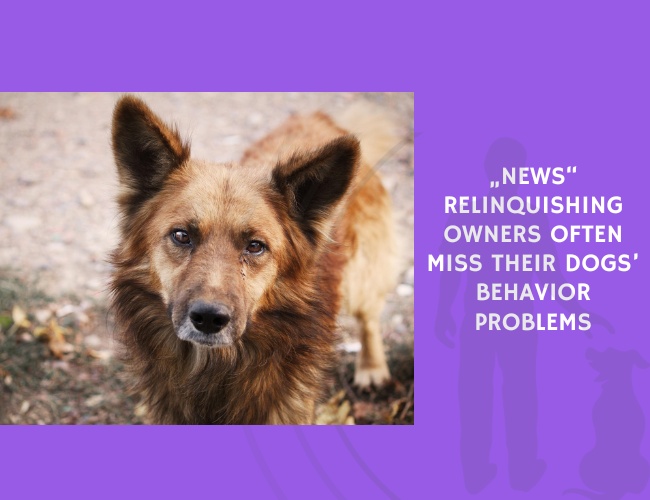
Published in Frontiers in Veterinary Science, the study by Lauren Powell, D. Duffy, Katherine A. Kruger, Brittany Watson, and J. Serpell investigates whether owners surrendering their dogs accurately report behavioral issues. Because undesirable behavior is a leading cause of relinquishment, understanding the reliability of owner reports is essential for improving shelter intake procedures and developing preventive strategies.
The researchers examined 427 relinquished dogs from three animal shelters and compared them with 427 pet dogs matched by sex and breed. Owners of all dogs answered a direct question about whether they were experiencing behavioral problems and completed the mini C-BARQ, a standardized questionnaire measuring the frequency and severity of 42 canine behaviors across a range of contexts.
Results revealed a striking disparity: 69.3% of relinquishing owners stated they had no behavior problems, while only 34.5% of pet dog owners said the same. Yet, across most C-BARQ scales, relinquished dogs received significantly higher and less desirable scores than pet dogs, indicating more severe behavioral issues despite owner denial or lack of recognition.
Importantly, differences in reporting were not explained by deliberate deception. Owners were randomly assigned to conditions that varied response confidentiality, but confidentiality had no measurable effect on reporting (X2 = 1.44, p = 0.97). This suggests that many relinquishing owners may simply lack understanding of dog behavior, failing to identify problematic behavior or to recognize its significance.
The authors argue that shelters can benefit greatly from implementing standardized behavioral questionnaires during relinquishment. Tools like the mini C-BARQ provide more accurate behavior profiles than unstructured owner reports and allow staff to make better-informed decisions regarding placement, intervention, and training needs.
Beyond intake, the findings point to broader opportunities for prevention. By educating owners to recognize, interpret, and manage canine behavior problems early, shelters and animal welfare organizations may help reduce relinquishment rates. Strengthening owner understanding of behavioral cues, normal developmental patterns, and early warning signs could significantly improve canine welfare and long-term human–dog relationships.
Source: Powell, L., Duffy, D., Kruger, K. A., Watson, B., & Serpell, J. (2021). Relinquishing Owners Underestimate Their Dog’s Behavioral Problems: Deception or Lack of Knowledge? Frontiers in Veterinary Science. Published September 10, 2021.










