
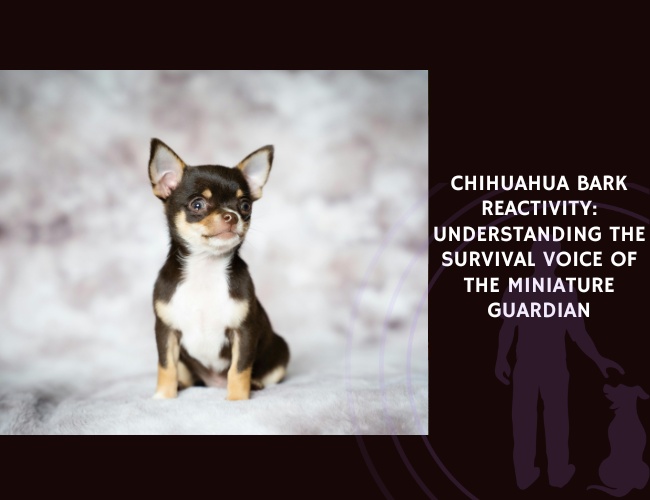
When you hear that familiar, high-pitched bark echoing through your home—sharp, insistent, seemingly triggered by a falling leaf or a distant footstep—you might wonder what drives your tiny companion to such vocal intensity. The truth behind Chihuahua bark reactivity goes far deeper than the dismissive label of “yappy” suggests. What you’re witnessing is a sophisticated survival strategy, a deeply embedded acoustic defense system that evolved to protect an extraordinarily vulnerable body in a world built for giants.
Let us guide you through the fascinating neurological, emotional, and evolutionary landscape that shapes how your Chihuahua perceives threat and why barking becomes their primary language of safety. This isn’t about correcting a behavioral flaw—it’s about understanding a miniature guardian’s attempt to navigate a macro-scale environment where every doorbell, every approaching stranger, every sudden movement represents a potential existential challenge.
Through the NeuroBond approach, you’ll discover that what appears as reactivity is often anticipatory defense, a pre-emptive strategy born from genuine vulnerability rather than aggression. By the time you finish reading, you’ll see your Chihuahua’s vocal outbursts not as irritating habits, but as complex emotional communication worthy of compassionate understanding and thoughtful response.
Miniature Size, Maximum Vulnerability: The Physics of Fear
Have you ever considered what your living room looks like from eight inches above the ground? For your Chihuahua, every piece of furniture looms like a building, every human leg appears as thick as a tree trunk, and every approaching dog—regardless of temperament—represents a creature ten to fifty times their body mass. This isn’t paranoia; this is mathematical reality.
The extreme disparity between a Chihuahua’s size and their human-scale environment creates a baseline perception of threat that most dog owners never fully appreciate. When physical confrontation could mean serious injury or death, and when rapid flight might be impeded by furniture, stairs, or simply the overwhelming speed of larger beings, your Chihuahua’s brain arrives at a logical conclusion: sound becomes the most effective distance-increasing tool available.
This phenomenon aligns with Signal Amplification Theory, which explains how physically disadvantaged animals compensate through acoustic exaggeration. Your Chihuahua’s bark serves to create an auditory illusion—a way to appear larger, more formidable, and more dangerous than their actual body suggests. That persistent, piercing bark isn’t random noise; it’s strategic enlargement, a psychological barrier erected through sound when physical barriers prove impossible.
Chronic size-based vulnerability fosters what researchers call hyper-vigilance, a heightened state of environmental awareness where the nervous system remains perpetually alert to potential dangers. For your Chihuahua, this means their amygdala—the brain’s fear and threat-detection center—operates with a sensitivity dial turned significantly higher than larger, more physically secure breeds. This constant internal assessment of safety creates a lower threshold for vocal responses, making bark reactivity not a character flaw but a predictable outcome of living as a miniature being in a macro world.
Signs Your Chihuahua Experiences Size-Based Vulnerability:
- Barking intensifies when approached by larger dogs, regardless of the other dog’s friendly signals
- Heightened reactivity in open spaces where escape routes feel limited or unclear
- Preference for elevated positions like furniture, laps, or carrier bags where they can observe from height
- Freezing or barking when people bend over or reach down toward them from above
- Increased vocal intensity during greetings when multiple people approach simultaneously
- Reluctance to walk in areas with heavy foot traffic or unpredictable movement patterns
- Tendency to position themselves behind your legs or under furniture when feeling threatened
When you understand this fundamental reality, you begin to see that your Chihuahua’s barking represents survival logic, not stubbornness. They’re not being difficult—they’re managing an environment that genuinely feels overwhelming. 🧠
The Alert Dog Heritage: Bred to Broadcast
While precise historical records vary, evidence strongly suggests that Chihuahuas and similar toy breeds have long served as micro-alert systems in homes and settlements. Their keen senses, combined with their vocal nature, made them effective early-warning devices against intruders, unusual occurrences, or approaching strangers. This functional role wasn’t incidental—it likely shaped selective breeding, favoring individuals who demonstrated heightened sensory perception and rapid vocal responses.
This heritage manifests today in your Chihuahua’s extraordinary sensitivity to subtle environmental cues. You might notice they react to footsteps you haven’t consciously heard yet, detect the sound of a door closing three houses away, or respond to micro-changes in ambient noise that escape your attention entirely. Their auditory and visual processing systems have been refined across generations to identify pattern disruptions, novelty, and potential territorial incursions with remarkable speed.
Environmental Cues That Activate Alert Dog Heritage:
- Footsteps approaching from distances you haven’t consciously registered yet
- The distinctive sound of a vehicle door closing in your driveway or street
- Changes in ambient noise patterns, like sudden silence after consistent background sound
- Shadows moving across windows or underneath doors before visual confirmation of presence
- The specific mechanical sound of your front gate, mailbox, or doorbell mechanism
- Neighbor conversations or activity patterns that deviate from established routines
- Delivery trucks or service vehicles that appear on irregular schedules
- Changes in household member movement patterns that signal departures or arrivals
More significantly, this alert dog background appears to create a neurological bias toward rapid broadcast over quiet assessment. Where a retriever might investigate a sound calmly, or a shepherd might position themselves strategically, your Chihuahua’s brain seems wired to immediately communicate the stimulus to their pack—you—through vocalization. The processing pathway favors speed over analysis, prioritizing immediate alert over delayed evaluation.
This doesn’t make them irrational; it makes them exceptionally good at the job they were historically designed to perform. The challenge arises when modern environments present far more triggers than ancestral homes ever did—delivery trucks, passing pedestrians, neighborhood dogs, lawn equipment, and countless other stimuli that activate your Chihuahua’s ancient alert system dozens of times daily.
Understanding this genetic foundation helps you recognize that asking your Chihuahua to simply “stop barking” contradicts centuries of selective pressure. Instead, the goal becomes teaching them which alerts matter and which don’t, a far more realistic and compassionate approach than expecting silence from a dog bred specifically to make noise.
Fear, Anticipation, or Pre-Emptive Defense? Decoding the Bark
One of the most misunderstood aspects of Chihuahua bark reactivity involves the timing and motivation behind vocal outbursts. Many owners assume their dog barks in direct response to an immediate threat, but research and observation reveal something more psychologically complex: anticipatory defense.
Your Chihuahua often barks not because something scary is happening, but because something scary might happen. This subtle but crucial distinction transforms how you interpret and address their behavior. Through repeated experience, your Chihuahua learns to associate certain cues—a hand reaching toward them, someone bending down, the specific sound of your front door, even particular times of day—with potential discomfort or threat. Rather than waiting for the threat to materialize, they vocalize proactively, attempting to control the situation before it escalates.
This represents a sophisticated form of anxiety management. By barking first, your Chihuahua creates the illusion of control, broadcasting their boundaries before they’re violated and potentially deterring the approach they find threatening. This explains why bark intensity often seems disproportionate to the actual trigger—they’re not responding to what is, but to what they fear might become.
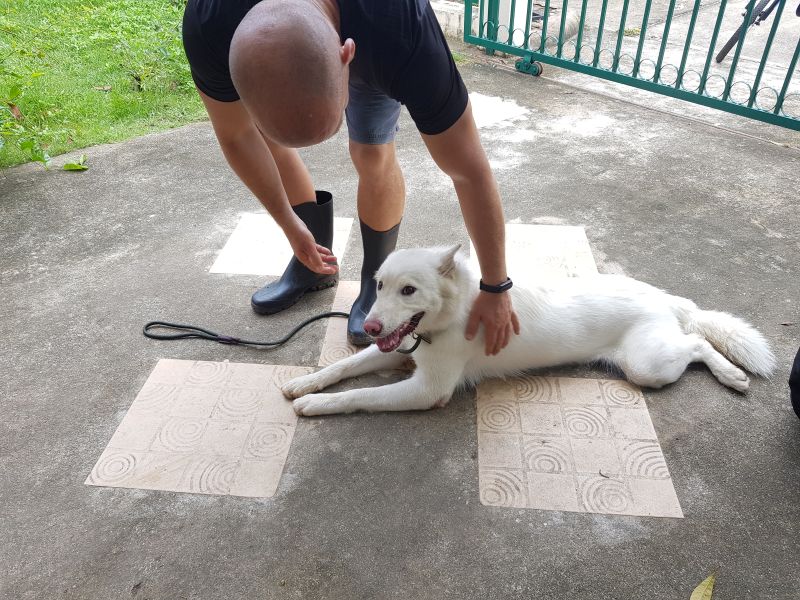
Approach patterns particularly trigger this anticipatory defense. You might notice your Chihuahua barks far more intensely when someone bends over them, looms above, or reaches their hand down compared to when that same person stands at a neutral distance. From a low vantage point, these actions can appear predatory or simply overwhelming, mimicking the visual experience of a threat bearing down. The closer the approach, the louder the bark, as your Chihuahua attempts to halt the perceived invasion of their safety zone.
Approach Patterns That Trigger Anticipatory Barking:
- Direct frontal approaches where someone walks straight toward your Chihuahua
- Bending at the waist to lean over them from above
- Reaching hands downward toward their head or body
- Looming postures where someone’s upper body hovers over them
- Fast-paced approaches that don’t allow time for assessment
- Multiple people approaching simultaneously from different angles
- Children moving unpredictably with sudden direction changes toward your dog
- Strangers making direct eye contact while advancing into personal space
- Hand movements near their face, especially from unfamiliar people
- Approaches that corner them against furniture, walls, or in small spaces
This phenomenon extends to what can be conceptualized as a “sensory shield”—those rapid-fire bark flurries that seem almost compulsive. When your Chihuahua feels overexposed, overwhelmed by environmental stimuli, or lacking control over their space, this cascade of vocalizations serves multiple functions simultaneously. It creates an auditory boundary, attempts to drive away overwhelming stimuli, provides an outlet for intense emotional arousal, and offers a sense of agency in situations where they feel profoundly vulnerable.
The Invisible Leash concept reminds us that true control comes from calm presence, not physical restraint. When you recognize bark reactivity as anticipatory rather than purely responsive, you begin addressing the underlying anxiety rather than just suppressing the symptom. 🧡
Micro-Body in a Macro-Environment: When the World Overwhelms
Imagine processing the sensory information of a busy household, a crowded park, or a neighborhood walk through a nervous system that perceives everything as significantly larger, closer, and more intense than it actually registers for humans. This is your Chihuahua’s daily reality, and it explains why they’re especially prone to sensory overload in noisy, busy, multi-dog, or child-filled settings.
The sheer volume of stimuli in modern environments—sounds layering upon sounds, movements intersecting with other movements, unpredictable interactions occurring simultaneously—can rapidly overwhelm your Chihuahua’s sensory processing capacity. Their hyper-vigilant state means they’re already operating at a higher baseline arousal level than many breeds, so it takes fewer triggers to push them into overload.
Common Sensory Overload Triggers for Chihuahuas:
- Busy parks with multiple dogs playing, running, and vocalizing simultaneously
- Household gatherings where conversations overlap and people move unpredictably
- Urban environments with traffic noise, sirens, construction sounds, and crowd movement
- Veterinary clinics combining unfamiliar scents, other anxious animals, and handling
- Pet stores with bright lights, various animal sounds, and numerous strangers
- Children’s birthday parties with high-pitched voices, sudden movements, and chaotic energy
- Multi-dog households where play escalates quickly and boundaries aren’t respected
- Outdoor cafés with constant pedestrian traffic, food smells, and unpredictable approaching dogs
- Grooming facilities with dryers, clippers, water sounds, and forced proximity to strangers
This is where trigger stacking becomes critically important to understand. Trigger stacking describes the cumulative effect of multiple stressors occurring without adequate recovery time between them. Think of your Chihuahua’s stress tolerance as a bucket—each trigger adds water. Under normal circumstances, the bucket can drain between fillings, but when triggers come rapidly and repeatedly, the bucket fills faster than it can empty. Eventually, even a tiny additional stressor—something that wouldn’t normally cause any reaction—overflows the bucket, resulting in an explosive bark outburst that seems wildly disproportionate to the immediate trigger.
A typical trigger stacking scenario might look like this: You have guests arriving, which elevates baseline stress. The doorbell rings—trigger one. Multiple people enter at once—trigger two. Someone reaches down to pet your Chihuahua—trigger three. A child squeals excitedly—trigger four. Another dog appears outside the window—trigger five. At this point, your Chihuahua explodes into barking, and observers might blame the window dog, when actually the vocal outburst represents accumulated stress from all preceding triggers.
Recognizing Trigger Stacking in Daily Life:
- Morning walk encounters: seeing three different dogs, hearing a motorcycle, then someone jogging past closely
- Holiday gatherings: doorbell ringing repeatedly, unfamiliar coats and bags, children running, food smells intensifying anxiety
- Vet visits: car ride stress, waiting room with other animals, unfamiliar handler, examination table, restraint
- Grooming day: separation from owner, bath water sounds, dryer noise, nail trimming, different handler
- Neighborhood changes: construction sounds starting, followed by mail delivery, then landscaping equipment
- Evening reactivity: accumulated day stimulation, hunger signals, doorbell for delivery, family arriving home
- Weekend errands: car ride, parking lot chaos, pet store stimulation, then encountering neighbor’s dog returning home
- Seasonal triggers: fireworks sounds, thunderstorms approaching, increased neighborhood foot traffic, holiday decorations creating visual changes
The miniature body compounds this vulnerability because your Chihuahua cannot physically remove themselves from overwhelming situations as easily as larger dogs. They can’t create distance through intimidation, can’t rely on physical presence to establish boundaries, and may struggle to find refuge spaces in furniture-filled rooms designed for human scale. Barking becomes both a release valve for accumulated arousal and a desperate attempt to control an environment that feels persistently chaotic.
Recovery time becomes essential. Just as you need quiet decompression after a hectic day, your Chihuahua requires periods of low-stimulation rest between triggering events. Without this recovery opportunity, their baseline arousal remains elevated, making subsequent reactivity increasingly likely. Creating predictable routines, providing safe retreat spaces, and limiting exposure to high-trigger environments helps prevent the chronic stress that amplifies bark reactivity. 😊
Learned Reinforcement: When Barking Works Too Well
Beyond evolutionary and neurological factors, your Chihuahua’s bark reactivity is significantly shaped by learning history. From their perspective, barking isn’t a problem—it’s an incredibly effective solution that consistently produces desired outcomes.
Consider common scenarios: Your Chihuahua barks at a delivery person approaching the door. The person delivers the package and leaves. In your Chihuahua’s perception, their barking drove away the threat. This reinforces the behavior powerfully. Or perhaps they bark for attention, and you—attempting to quiet them—pick them up and soothe them. They’ve just learned that barking produces contact, comfort, and elevation from the threatening ground level.
Common Scenarios That Accidentally Reinforce Barking:
- Delivery people leaving after barking episodes, teaching your dog that barking makes threats disappear
- Picking up your Chihuahua when they bark at triggers, reinforcing that barking produces comfort and rescue
- Verbally responding to barking with “It’s okay” or “Quiet,” which your dog interprets as social engagement
- Rushing to windows when your dog barks, joining their vigil and validating the importance of monitoring
- Offering treats to distract from barking, which can accidentally reward the vocal behavior
- Allowing your dog to “chase away” mail carriers, service workers, or passing pedestrians through window barking
- Escalating your own emotional response when they bark, confirming their suspicion that situations are threatening
- Removing them from situations immediately after barking starts, teaching avoidance rather than coping
- Inconsistent responses where sometimes barking gets attention and sometimes it’s ignored
- Other household pets responding to their barking with their own vocalizations, creating social reinforcement
Even when owners attempt to correct barking, they often inadvertently reinforce it. Yelling “Quiet!” across the house teaches your Chihuahua that barking produces vocal engagement from you, which might be exactly what they’re seeking. Rushing to the window when they bark at passing dogs reinforces the alert behavior, as you’ve essentially joined their vigil, validating the importance of monitoring that particular trigger.
This creates what behaviorists call a self-reinforcing loop. Barking produces outcomes—attention, perceived threat removal, emotional discharge—which makes the behavior more likely to recur. Over months and years, barking becomes deeply ingrained, a default response to discomfort, uncertainty, or stimulation. The neural pathways associated with bark responses become increasingly efficient, meaning the behavior triggers faster, more intensely, and in response to a wider range of stimuli.
Human responses also shape the emotional context of barking. When owners become anxious, frustrated, or tense in anticipation of their Chihuahua’s reactivity, the dog perceives this emotional shift. Your elevated stress might actually confirm their suspicion that the situation is indeed threatening, creating a feedback loop where your anxiety amplifies theirs, which triggers barking, which increases your stress, which reinforces their perception of danger.
Breaking this cycle requires understanding that punishment rarely works with anxiety-based barking. Scolding or punishing a Chihuahua who barks from fear or perceived threat doesn’t reduce their underlying anxiety—it simply adds another layer of stress (fear of your reaction) to an already overwhelming situation. Instead, you need to change their emotional association with triggers, which requires patience, systematic desensitization, and building new neural pathways that associate previously threatening stimuli with safety and calm.
This is where Soul Recall becomes relevant—those moments when your Chihuahua learns to access emotional memory of safety rather than anxiety. Through consistent, calm leadership and positive experiences, you help them develop new associations, gradually replacing reactive patterns with regulated responses. 🧠

Health, Pain, and the Hidden Contributors to Reactivity
One frequently overlooked aspect of Chihuahua bark reactivity involves physical discomfort and health issues. Chronic pain, dental disease, patella luxation, tracheal sensitivity, and other common health challenges in toy breeds can dramatically lower tolerance for interaction and proximity, manifesting as increased irritability and vocal defensiveness.
Health Issues That Amplify Bark Reactivity:
- Dental disease causing mouth pain, making face approaches threatening
- Patella luxation creating unpredictable episodes of sharp knee pain during movement
- Tracheal collapse or sensitivity making barking itself uncomfortable or triggering coughing
- Arthritis affecting joints, making handling or position changes painful
- Ear infections causing head sensitivity and auditory processing discomfort
- Vision problems creating uncertainty and heightened startle responses
- Hypoglycemia episodes affecting mood stability and stress tolerance
- Chronic urinary tract issues creating general discomfort and irritability
- Skin allergies causing constant itching and reducing patience for interaction
- Neurological conditions affecting sensory processing or impulse control
- Age-related cognitive decline increasing confusion and anxiety
- Gastrointestinal discomfort from food sensitivities or digestive issues
Chronic pain fundamentally alters how your Chihuahua experiences the world. When every movement might trigger discomfort, when being touched could cause sharp pain, or when breathing itself feels strained due to tracheal issues, your dog naturally becomes more guarded and defensive. Proximity that would normally feel safe now represents potential pain, and barking serves as a preemptive warning: stay back, don’t touch, I’m vulnerable.
Dental issues are particularly insidious because they’re often invisible until quite advanced. Your Chihuahua can’t tell you their tooth hurts, but they can bark when you approach their face, guard their food bowl aggressively, or react intensely to being picked up in ways that might jostle their jaw. What appears as temperamental behavior might actually be pain-driven defensiveness.
Patella luxation, where the kneecap slides out of place, creates unpredictable moments of sharp pain during movement. Your Chihuahua might be fine one moment, then suddenly bark or snap because a step caused their patella to slip. Over time, anticipatory anxiety develops around movement and handling, as they never know when the next painful episode will occur.
Tracheal sensitivity or tracheal collapse, common in toy breeds, means that barking itself can trigger coughing, discomfort, or respiratory distress. This creates a perverse cycle: your Chihuahua barks defensively, which causes physical discomfort, which increases stress, which lowers their threshold for future barking. They might also learn that certain types of handling (especially around the neck and chest) trigger breathing difficulty, leading to reactive barking when approached in particular ways.
Sudden bark bursts that seem to come from nowhere might be directly pain-related. An accidental touch to a tender area, a movement that stresses an arthritic joint, or even changes in barometric pressure affecting old injuries can produce sharp vocalizations that get misattributed to temperament rather than recognized as pain responses.
Signs Your Chihuahua’s Barking May Be Pain-Related:
- Sudden increase in reactivity without obvious environmental changes
- Barking specifically when being picked up or repositioned
- Vocal responses during grooming, particularly around certain body areas
- Increased reactivity at specific times of day when pain medications wear off
- Barking when jumping down from furniture or during stair navigation
- Guarding specific body parts with growling or snapping when approached
- Reactivity intensifying in cold or damp weather affecting arthritic joints
- Barking during specific activities like eating if dental pain is present
- Changes in sleeping positions accompanied by increased irritability
- Resistance to collar or harness placement if neck or chest areas are sensitive
- Barking more frequently after physical activity that might cause joint discomfort
If your Chihuahua’s bark reactivity has increased suddenly or seems disproportionately intense, a thorough veterinary examination should be your first step before implementing behavioral modification. Addressing underlying pain or medical issues often reduces reactivity significantly, as you’re removing a major stressor that was elevating baseline arousal and lowering tolerance thresholds.
Physiological fragility increases reliance on vocal defense strategies because physical options for self-protection become even more limited when your body is painful or compromised. Understanding this connection helps you approach reactivity with compassion rather than frustration, recognizing that your Chihuahua might be coping with challenges you can’t directly observe. 🧡
Small. Sharp. Strategic.
Vocality is protection.
Your Chihuahua’s bark isn’t overreaction—it’s strategic amplification, a survival tool designed to create distance in a world built for bodies far larger than theirs.
Threat feels bigger.
From inches above the ground, every movement looms, every stranger towers, and every dog becomes a potential danger, making rapid vocal defence the safest option they have.

Confidence grows with safety.
When you shape predictable routines and controlled spaces, their nervous system relaxes, and the bark shifts from urgent survival signal to thoughtful communication.
NeuroBond Reframing: Building Safety Architecture for Your Tiny Guardian
The traditional approach to bark reactivity often focuses on suppression—teaching your Chihuahua to be quiet through commands, corrections, or distraction. While these methods might temporarily reduce noise, they rarely address the underlying emotional need driving the behavior. The NeuroBond approach offers a fundamentally different framework: instead of managing symptoms, you build a foundation of felt safety that reduces your Chihuahua’s perceived need to manage threats through barking.
Core NeuroBond Principles for Reducing Reactivity:
- Emotional clarity: maintaining calm, consistent responses regardless of triggering situations
- Structured proximity: managing distances and interactions to prevent overwhelming your dog
- Calm direction: providing clear guidance that demonstrates reliable leadership
- Predictable routines: creating consistency that allows your dog’s nervous system to relax
- Spatial respect: honoring your dog’s need for personal space and retreat signals
- Gradual exposure: introducing challenges at a pace your dog can successfully handle
- Trust building: demonstrating repeatedly that you manage environmental challenges
- Recovery time: ensuring adequate rest between triggering events for nervous system regulation
- Appropriate protection: showing you’ll intervene when necessary without over-sheltering
- Silent leadership: communicating safety through energy and presence rather than constant verbal reassurance
This starts with emotional clarity—your ability to maintain calm, consistent, predictable emotional responses regardless of environmental triggers. Your Chihuahua is extraordinarily attuned to your emotional state, reading subtle shifts in your breathing, posture, facial tension, and energy. When you remain genuinely calm in situations that previously made you anxious or frustrated, your dog receives powerful information: this situation doesn’t require alarm. Your emotional state becomes an external regulator for their nervous system, helping them down-regulate arousal instead of amplifying it.
Structured proximity involves careful management of distances and interactions to prevent your Chihuahua from feeling overwhelmed or cornered. This means controlling greetings so people don’t loom over or crowd your dog, maintaining predictable personal space boundaries, and teaching your Chihuahua that their retreat signals will be respected. When they learn that you consistently manage their environment to prevent overwhelming situations, their baseline hyper-vigilance decreases because they don’t need to constantly scan for and preemptively defend against potential invasions.
Calm direction provides clear, consistent guidance that allows your Chihuahua to trust you to handle environmental challenges. Instead of leaving them to figure out whether the approaching stranger is friendly or threatening, you position yourself between your dog and the trigger, communicating through your body language and calm energy that you’re managing this situation. This doesn’t mean constantly shielding them from all stimuli—which would increase dependency and prevent healthy adaptation—but rather demonstrating reliable leadership in genuinely challenging moments.
Together, these principles create what we call “quiet safety”—a state where your Chihuahua feels genuinely protected without being over-sheltered. This differs from the all-too-common pattern where owners either ignore their Chihuahua’s distress (expecting them to “deal with it”) or constantly rescue them from every slightly challenging situation (creating learned helplessness and increased dependency).
The goal is regulated observation: your Chihuahua learns to notice environmental stimuli without immediately reacting vocally. They develop the capacity to look to you for guidance rather than defaulting to barking, trusting that if a situation truly requires intervention, you’ll handle it. This shift from reactive broadcasting to calm assessment represents a fundamental change in their relationship with their environment and with you.
Clear spatial leadership plays a crucial role in lowering baseline hyper-vigilance. When you consistently provide predictable distances, avoid sudden crowding, and manage interactions on your Chihuahua’s behalf, their nervous system receives repeated evidence that the world is more manageable than they thought. This doesn’t happen instantly—neural pathways built over years of reactive patterns require time and repetition to reshape—but consistency creates cumulative change.
Signs Your Spatial Leadership Is Reducing Hyper-Vigilance:
- Your Chihuahua looks to you first before barking at triggers
- They show increased willingness to settle and relax in previously stimulating environments
- Recovery time after bark episodes becomes noticeably shorter
- They demonstrate more frequent “check-ins” with you during walks or outings
- Threshold distances for reactivity gradually increase, allowing closer proximity to triggers
- Your dog actively seeks your presence when uncertain rather than immediately barking
- They show reduced startle responses to previously overwhelming stimuli
- Sleep quality and duration improve as baseline arousal decreases
- Interest in food and play remains stable even in mildly triggering situations
- Body language shifts from constant vigilance to more relaxed observation
- Voluntary retreat to safe spaces rather than barking when feeling overwhelmed
You’re not training your Chihuahua to be quiet; you’re teaching them that they can be quiet because you’ve created an environment where constant vocal defense isn’t necessary. That’s the essence of Zoeta Dogsoul—recognizing that behavior change flows from emotional transformation, not from compliance training.
🐕 Understanding Chihuahua Bark Reactivity 🔊
A Comprehensive Journey from Survival Instinct to Regulated Calm
Phase 1: Recognition & Assessment
Understanding the Root Causes
Your Chihuahua’s reactivity stems from genuine vulnerability. In a human-scale world, everything appears larger and more threatening. Their barking represents Signal Amplification Theory in action—using sound to enlarge perceived presence when physical options are limited.
• Heightened alertness to footsteps, doors, and environmental changes
• Barking at approach patterns like bending over or reaching hands
• Anticipatory defense—barking before situations escalate
• Trigger stacking leading to explosive outbursts
Document your Chihuahua’s specific triggers, noting times, locations, and intensity. Look for patterns in size-based vulnerability signs and identify whether reactivity is fear-driven, anticipatory, or learned behavior.
Phase 2: Medical Rule-Out
Eliminating Pain as a Factor
Chronic pain dramatically amplifies reactivity. Dental disease, patella luxation, tracheal sensitivity, and arthritis can all lower tolerance for proximity and interaction, manifesting as increased irritability and defensive barking.
• Reluctance to jump or changes in gait
• Increased reactivity during handling or grooming
• Barking specifically when being picked up
• Guarding specific body areas with defensive responses
Schedule a thorough examination including dental check, joint assessment, and tracheal evaluation. If reactivity increased suddenly, medical issues should be your first investigation before behavioral modification.
Phase 3: Environmental Management
Creating a Supportive Space
Chihuahuas experience sensory overload in busy parks, multi-dog households, and noisy urban environments. Their hyper-vigilant state means fewer triggers are needed to push them into overwhelm compared to larger, more secure breeds.
• Install window films to limit visual access to triggers
• Use white noise machines to buffer ambient sounds
• Create elevated resting spots for psychological security
• Establish clear territory boundaries your dog manages
• Organize spaces to reduce visual clutter and chaos
Designate safe retreat areas where your Chihuahua will never be disturbed. These spaces allow nervous system decompression between triggering events, preventing chronic stress accumulation that amplifies reactivity.
Phase 4: Establishing Emotional Clarity
Building Your Calm Leadership
Through the NeuroBond approach, your emotional state becomes an external regulator for your Chihuahua’s nervous system. When you maintain genuine calm despite environmental triggers, your dog receives powerful information: this situation doesn’t require alarm.
• Deep breathing before entering triggering situations
• Conscious relaxation of facial and shoulder tension
• Maintaining steady energy without anxious anticipation
• Responding to barking with calm redirection, not frustration
• Demonstrating confidence through body language
Your Chihuahua reads your emotional state through subtle shifts in breathing, posture, and energy—not your verbal reassurances. Saying “It’s okay” while feeling anxious actually confirms their suspicion that the situation is threatening.
Phase 5: Structured Proximity & Spatial Leadership
Managing Distances and Interactions
Position yourself between your dog and visitors. Inform guests to ignore your Chihuahua initially, avoiding direct eye contact, reaching, or bending. Allow your dog to initiate approach on their timeline, rewarding calm observation from safe distances.
The Invisible Leash reminds us that true control comes from calm presence and energy awareness, not physical restraint. When you consistently manage spatial boundaries, your Chihuahua learns their environment is predictable and their personal space will be respected.
• Your dog looks to you before barking at triggers
• Threshold distances for reactivity gradually increase
• Recovery time after episodes becomes shorter
• Voluntary retreat to safe spaces instead of barking
• More frequent calm observation of previously scary stimuli
Phase 6: Counter-Conditioning & Gradual Exposure
Changing Emotional Associations
Start at sub-threshold intensity where your dog notices triggers but doesn’t react. Pair trigger presentation with high-value rewards, gradually decreasing distance or increasing intensity only when your dog shows consistent calm responses.
• Keep sessions brief (3-5 minutes) to prevent overwhelm
• Work at your dog’s pace, not arbitrary timelines
• Return to easier levels if stress increases
• Practice in various locations to generalize learning
• Track progress systematically over weeks, not days
Never force your Chihuahua into overwhelming situations hoping they’ll “get used to it.” This flooding approach typically backfires, increasing reactivity and eroding trust. Gradual exposure at manageable intensity builds genuine confidence.
Phase 7: Breaking Reinforcement Patterns
Interrupting the Learning Loop
Your Chihuahua barks at delivery people who then leave—reinforcing that barking drives threats away. You pick them up during reactive episodes—teaching that barking produces comfort. Even yelling “Quiet!” provides the social engagement they seek.
• Redirect attention before barking begins
• Reward quiet observation of triggers
• Remove access to reinforcing scenarios (window watching)
• Provide alternative outlets for arousal
• Maintain consistent responses to prevent confusion
Through Soul Recall, your Chihuahua begins accessing emotional memories of safety rather than anxiety. Each positive experience creates new neural pathways, gradually replacing reactive patterns with regulated responses based on trust rather than fear.
Phase 8: Long-Term Maintenance & Realistic Expectations
Celebrating Progress Over Perfection
Meaningful change requires months, not weeks. Neural pathways built over years need time and repetition to reshape. Setbacks are normal fluctuations, not failures. The trend line matters more than individual data points.
• Looking to you before barking instead of instant reaction
• Recovery time decreasing from five to three minutes
• Accepting treats during mildly triggering situations
• Choosing retreat over barking when overwhelmed
• Sleeping more deeply indicating lower baseline arousal
Success isn’t eliminating all barking—some alerting is healthy. Success is your Chihuahua developing better regulation, appropriate discrimination between threats and neutral stimuli, and deeper trust in your leadership to manage challenging situations.
📊 Reactivity Patterns: Understanding Different Types
Trigger: Perceived threat or vulnerability
Body Language: Tucked tail, low posture, retreat after barking
Goal: Increase distance from scary stimulus
Approach: Build confidence through gradual exposure
Trigger: Cues associated with past discomfort
Body Language: Tense vigilance, forward posture
Goal: Prevent situation from escalating
Approach: Change emotional associations with cues
Trigger: Situations that historically produced attention
Body Language: Relaxed between barks, watching for response
Goal: Gain attention or desired outcome
Approach: Break reinforcement patterns consistently
Trigger: Touch, movement, or handling that causes discomfort
Body Language: Guarding body areas, sudden intensity
Goal: Prevent painful interaction
Approach: Address medical issues first
Trigger: Environmental changes, novel stimuli
Body Language: Focused, ears forward, rapid response
Goal: Communicate potential threats to pack
Approach: Teach discrimination between important and unimportant alerts
Trigger: Accumulated stimulation without recovery
Body Language: Progressive escalation, frantic quality
Goal: Discharge overwhelming arousal
Approach: Prevent trigger stacking, ensure recovery time
Stress Bucket Concept: Each trigger adds “water” to your Chihuahua’s stress bucket. Without recovery time between triggers, the bucket fills faster than it can drain. Even a minor trigger can cause overflow once the bucket is full, resulting in explosive reactivity.
Prevention Formula: Monitor baseline arousal + Identify trigger patterns + Build recovery time = Prevent explosive outbursts
Recovery Ratio: For every 10 minutes of triggering exposure, provide 30-60 minutes of low-stimulation decompression time.
Your Chihuahua’s bark reactivity isn’t a flaw to fix—it’s a survival strategy to transform. Through the NeuroBond approach, you become the foundation of felt safety that allows your tiny guardian to release constant vigilance. The Invisible Leash principle teaches that true control flows from calm presence and energy awareness, not physical restraint or verbal commands. As your Chihuahua experiences moments of Soul Recall—accessing emotional memories of safety rather than anxiety—they discover something profound: they don’t have to manage the overwhelming world alone.
This journey requires patience measured in months, consistency in your emotional presence, and celebration of micro-improvements that reveal nervous system transformation. You’re not training your dog to be quiet; you’re teaching them they can be quiet because you’ve created an environment where constant vocal defense isn’t necessary. That shift from reactive broadcasting to regulated observation represents genuine emotional change—the space where neuroscience meets soul, and where your miniature guardian learns that quiet confidence is the most beautiful sound they can make.
© Zoeta Dogsoul – Where neuroscience meets soul in dog training
Practical Strategies: From Theory to Daily Implementation
Understanding the neuroscience, evolution, and emotion behind bark reactivity is fascinating, but you also need practical tools to implement at home. Here’s how to translate NeuroBond principles into daily practice:
Daily Strategies for Reducing Bark Reactivity:
- Establish consistent wake, meal, walk, and rest times so your dog’s nervous system can predict daily rhythms
- Create designated safe retreat spaces where your Chihuahua will never be disturbed or approached
- Practice calm breathing and conscious relaxation before entering potentially triggering situations
- Position yourself between your dog and approaching triggers to communicate your leadership role
- Build recovery time between stimulating events, avoiding back-to-back triggering activities
- Control greeting scenarios by asking visitors to ignore your dog initially
- Use counter-conditioning at very gradual intensity levels to change emotional associations
- Monitor for subtle pain signs and address health issues before behavioral modification
- Respect your Chihuahua’s signals to retreat rather than forcing interaction
- Celebrate micro-improvements like shorter bark duration or faster recovery times
- Implement visual barriers for chronic window-watching triggers
- Maintain environmental predictability through organized, calm living spaces
- Practice structured walks in low-stimulation environments rather than overwhelming locations
- Record baseline reactivity patterns to accurately track progress over time
- Seek professional support from force-free trainers when feeling stuck or overwhelmed
Create Predictable Routines: Your Chihuahua’s hyper-vigilance decreases when life becomes more predictable. Consistent timing for meals, walks, rest periods, and social interactions helps their nervous system relax, knowing what to expect. Unpredictability elevates stress; predictability creates calm.
Establish Safe Retreat Spaces: Designate areas where your Chihuahua can retreat and will not be disturbed—a crate, a specific bed, or a quiet room. Teach all household members and visitors that when your dog is in their safe space, they’re off-limits for interaction. This provides an essential coping mechanism for managing overstimulation.
Manage Greetings Strategically: When people visit, control the interaction. Ask guests to ignore your Chihuahua initially, allowing them to approach on their terms. Position yourself between your dog and visitors, communicating through calm body language that you’re managing this situation. If your Chihuahua chooses to retreat, respect that decision rather than forcing interaction.
Greeting Management Protocol:
- Inform visitors before entry that your dog needs space and should not be approached directly
- Have guests enter calmly without excited vocalizations or sudden movements
- Position your body between your Chihuahua and visitors as a physical buffer
- Allow your dog to observe from a safe distance without pressure to interact
- Instruct guests to avoid direct eye contact, reaching, or bending toward your dog
- Let your Chihuahua initiate any approach on their timeline, not when guests demand interaction
- Reward your dog’s calm observation or voluntary approach with quiet praise
- Remove your dog to a safe space if they show persistent stress signals
- Keep initial visits brief, ending before your dog reaches overload threshold
- Gradually increase interaction duration and proximity over multiple successful visits
Reduce Trigger Stacking: Identify patterns of accumulated stress and build recovery time between triggering events. If morning walks tend to be overstimulating, ensure afternoon rest. If visitors elevate arousal, avoid scheduling back-to-back social events. Give your Chihuahua’s nervous system time to return to baseline between challenges.
Practice Calm Presence: Before entering potentially triggering situations, take a moment to regulate your own nervous system. Deep breathing, conscious relaxation of facial and shoulder tension, and intentional calm energy create the emotional foundation your Chihuahua needs from you. Remember, your emotional state is contagious.
Use Counter-Conditioning Gradually: Rather than forcing your Chihuahua to tolerate triggers, gradually change their emotional association. If doorbell sounds trigger barking, start by playing the doorbell sound at very low volume while offering favorite treats, gradually increasing intensity over many sessions. You’re building positive associations rather than demanding tolerance.
Counter-Conditioning Implementation Steps:
- Identify your dog’s specific triggers through careful observation and documentation
- Establish baseline threshold distance or intensity where your dog notices but doesn’t react
- Prepare high-value rewards that your Chihuahua finds genuinely motivating
- Present trigger at sub-threshold intensity while immediately providing rewards
- Keep sessions brief, ending before your dog shows stress or disengagement
- Gradually decrease distance or increase intensity only when your dog shows consistent calm
- Work at your dog’s pace, never pushing faster than they can successfully handle
- Practice in various locations and times to generalize the new emotional association
- Maintain realistic expectations about progress speed, measuring in weeks not days
- Return to easier levels if your dog shows increased stress or reactivity
- Pair counter-conditioning with your own calm emotional presence throughout
- Track progress systematically to accurately assess what’s working
Respect Breed Nature: Accept that your Chihuahua will always be more alert and vocal than a laid-back Basset Hound. The goal isn’t to eliminate their natural temperament but to channel it appropriately. Some barking is normal and healthy; the goal is reducing anxiety-driven, compulsive, or distress-based barking while allowing functional alerting.
Monitor for Pain: Watch for subtle signs of discomfort—reluctance to jump, changes in gait, guarding body areas, or increased reactivity during handling. Regular veterinary check-ups, dental care, and proactive pain management prevent health issues from silently amplifying behavioral challenges.
Subtle Pain Indicators to Monitor:
- Reluctance to jump on or off furniture when previously comfortable doing so
- Changes in gait pattern, including stiffness after rest or limping intermittently
- Increased reaction when specific body areas are touched during petting
- Behavioral changes around meal times if dental pain is present
- Decreased enthusiasm for activities or play they previously enjoyed
- Changes in sleeping positions or difficulty settling comfortably
- Excessive licking or attention to specific body areas
- Reduced grooming behaviors or resistance to being groomed
- Vocalization during position changes, especially when being picked up
- Changes in appetite or eating speed potentially indicating mouth pain
- Increased restlessness or inability to maintain comfortable positions
- Protective responses like pulling away or tensing when approached for handling
Build Gradual Confidence: Expose your Chihuahua to controlled, positive experiences that slowly expand their comfort zone. This might mean sitting at the edge of a park rather than in the center, allowing them to observe from a safe distance before gradually decreasing distance over multiple sessions. Confidence can’t be rushed; it accumulates through repeated success.
Celebrate Progress, Not Perfection: Bark reactivity patterns built over years won’t disappear in weeks. Acknowledge small improvements—a shorter bark episode, quicker recovery time, or even one moment of calm observation instead of immediate reactivity. These micro-improvements accumulate into meaningful change when consistently reinforced. 😊
Environmental Modifications That Support Calm
Your home environment significantly influences bark reactivity levels. Strategic modifications can reduce triggers and support your Chihuahua’s nervous system regulation:
Environmental Modifications for Reduced Reactivity:
- Install window films or strategic furniture placement to limit visual access to high-traffic trigger zones
- Use white noise machines or calming music to buffer ambient neighborhood sounds
- Create elevated resting spots like cat trees or designated furniture access for psychological security
- Establish clear territory boundaries your dog knows they’re responsible for monitoring
- Organize living spaces to reduce visual clutter and create calm, predictable pathways
- Provide multiple safe retreat options throughout your home for stress decompression
- Control lighting to avoid harsh shadows or bright lights that create visual overstimulation
- Use baby gates to create buffer zones between your dog and high-activity household areas
- Arrange furniture to create clear sightlines that allow observation without feeling exposed
- Implement consistent door and window management protocols to reduce unpredictable visual triggers
- Designate specific times for window access versus curtain-closed relaxation periods
- Remove or cover mirrors if your dog reacts to their own reflection as a trigger
Visual Barriers: If window watching triggers chronic barking, consider strategic placement of furniture, decorative screens, or window film that limits visual access to high-traffic areas. This doesn’t mean eliminating all environmental stimulation, but rather managing the quantity and intensity of triggers your Chihuahua processes throughout the day.
Sound Management: White noise machines, soft background music, or acoustic dampening can reduce your Chihuahua’s sensitivity to ambient sounds that trigger barking. This creates a buffer layer between your dog and the full intensity of neighborhood noise, lowering overall arousal levels.
Elevated Resting Spots: Provide raised beds or furniture access where your Chihuahua can observe their environment from a height that feels less vulnerable. Many toy breeds find elevated positions psychologically comforting, as it removes the constant low-angle perspective that amplifies perceived threat.
Consistent Territory Management: Establish clear rules about which areas are your Chihuahua’s primary territory. When they know they’re responsible for defending the immediate living areas but not required to alert to every neighborhood event, their vigilance becomes more focused and less exhausting.
Reduce Visual Clutter: Toy breeds can feel overwhelmed in chaotic, cluttered environments. Organized, calm living spaces with clear pathways and predictable layouts help reduce baseline stress and the constant need to track multiple environmental elements.
Strategic Exercise: Physical activity helps regulate the nervous system, but timing and type matter. Gentle walks in low-stimulation environments provide healthy exposure without triggering excessive reactivity. Avoid forcing your Chihuahua into overwhelming situations in the name of “socialization”—this often backfires, increasing rather than decreasing reactivity.
Exercise Strategies for Reactive Chihuahuas:
- Schedule walks during quieter times of day when foot traffic and triggers are minimal
- Choose low-stimulation routes like residential side streets over busy main thoroughfares
- Practice loose-leash walking at your dog’s pace rather than forcing them to keep up
- Allow frequent sniffing breaks which provide mental stimulation and stress relief
- Keep initial outings brief, gradually extending duration as confidence builds
- Carry your dog through particularly overwhelming sections rather than forcing through triggers
- Vary routes to prevent both boredom and over-familiarity with specific trigger locations
- Practice indoor enrichment activities on days when outdoor environments are too stimulating
- Use puzzle feeders, scent work, and gentle play as alternative energy outlets
- Recognize that mental stimulation often exhausts Chihuahuas more effectively than long physical exertion
- Monitor for signs of overstimulation during walks and end sessions before overload occurs
- Create positive ending experiences by finishing walks with calm success rather than pushing to exhaustion
These environmental strategies work synergistically with behavioral approaches, creating a comprehensive support system that addresses bark reactivity from multiple angles simultaneously. 🧠
The Long Game: Patience, Consistency, and Realistic Expectations
Perhaps the most important message about managing Chihuahua bark reactivity is this: meaningful change requires time, consistency, and realistic expectations about what “success” actually means. You’re not aiming to transform your alert, sensitive Chihuahua into a silent, oblivious companion. You’re helping them develop better regulation, more appropriate discrimination between genuine threats and neutral stimuli, and deeper trust in your leadership.
This process involves setbacks. There will be weeks of progress followed by days of intense reactivity triggered by unusual events, hormonal changes, environmental disruptions, or accumulated stress. These setbacks don’t erase progress; they’re normal fluctuations in a long-term behavior modification journey. The trend line matters more than individual data points.
Consistency proves more powerful than intensity. Five minutes of daily, structured calm practice outweighs occasional marathon training sessions. Your Chihuahua’s nervous system needs repeated, predictable experiences to build new neural pathways. Sporadic efforts produce sporadic results; consistent practice creates reliable change.
Celebrate the subtle victories that others might not notice: the moment your Chihuahua looked to you before barking, the slightly shorter recovery time after a bark episode, the instance where they observed a trigger without immediately vocalizing. These micro-improvements reveal nervous system changes occurring beneath the surface, indicating that your efforts are creating genuine transformation even when dramatic external changes aren’t yet visible.
Micro-Improvements Worth Celebrating:
- Looking to you for guidance before barking instead of immediately vocalizing
- Recovery time decreasing from five minutes to three minutes after bark episodes
- Observing a trigger for several seconds before barking rather than instant reaction
- Accepting treats or engaging with you during mildly triggering situations
- Choosing to retreat to safe space instead of barking when overwhelmed
- Maintaining loose body language in situations that previously caused tense posturing
- Showing interest in play or exploration despite nearby low-level triggers
- Sleeping more deeply or for longer durations indicating lower baseline arousal
- Offering voluntary check-ins during walks in previously triggering locations
- Reduced intensity of bark volume even if frequency hasn’t changed yet
- Willingness to approach previously scary objects or areas when you’re present
- Faster return to normal behavior after startle or surprise events
- Demonstrating relaxed body language more frequently throughout the day
- Accepting handling or grooming with less reactivity than before
- Showing curiosity about triggers rather than immediate defensive responses
Remember too that some level of barking serves healthy functions. Your Chihuahua alerting you to someone approaching your door provides useful information. The goal isn’t eliminating all barking but reducing anxiety-driven, compulsive, or excessive reactivity while preserving their natural alertness. You’re refining their response system, not suppressing their essential nature.
Working with a qualified professional—particularly someone who understands fear-based reactivity and works with force-free methods—can provide invaluable support when you feel stuck or overwhelmed. A skilled trainer or veterinary behaviorist can observe subtle patterns you might miss, adjust protocols to your specific situation, and provide encouragement during challenging phases.
When to Seek Professional Support:
- Bark reactivity has escalated to include lunging, snapping, or bite attempts
- Your dog shows signs of severe anxiety like trembling, drooling, or loss of bowel control
- Previous training methods have failed or made reactivity worse
- You feel overwhelmed, frustrated, or unsure about how to proceed safely
- Reactivity is severely limiting your dog’s quality of life or your household functioning
- You need help identifying whether pain or medical issues are contributing factors
- Your dog’s reactivity extends to household members or shows unpredictable patterns
- You’re considering medication but need guidance on behavioral protocols to pair with it
- Reactivity is affecting your relationship with your dog or creating household tension
- You need help developing a structured behavior modification plan tailored to your situation
- Your dog has experienced trauma or significant life changes requiring specialized support
- Multiple triggers or complex patterns make home training overwhelming to implement alone
Most importantly, maintain compassion for your Chihuahua throughout this journey. They’re not barking to irritate you or demonstrate stubbornness. They’re managing a world that genuinely feels overwhelming, using the most effective tool evolution and experience have provided. Your patient guidance helps them discover that quiet observation and trust can replace constant vocal defense, but this discovery happens gradually, through hundreds of small experiences that accumulate into transformation. 🧡
Is the Chihuahua Right for You? Understanding the Commitment
If you’re considering adding a Chihuahua to your life, or if you’re struggling with an existing companion’s bark reactivity, it’s worth reflecting honestly on whether you can provide what this breed needs to thrive. Chihuahuas are not appropriate for everyone, and recognizing this doesn’t diminish their value—it honors their specific requirements.
Ideal Chihuahua Owner Characteristics:
- Patient temperament capable of maintaining calm during intense barking episodes
- Willingness to invest time in understanding canine behavior and emotional needs
- Ability to provide consistent routines and predictable daily structures
- Comfortable with managing environments rather than expecting dog to adapt to chaos
- Realistic expectations about alert breed tendencies and natural vigilance
- Emotional stability to avoid taking reactive behavior personally or becoming frustrated
- Commitment to gradual behavior modification measured in months, not weeks
- Financial resources for veterinary care including dental work and potential pain management
- Living situation that allows control over environmental triggers and visitor management
- Interest in learning about neuroscience, behavior, and relationship-based training
- Ability to advocate for your dog’s needs even when others don’t understand
- Flexibility to adjust household routines to support your dog’s success
- Appreciation for the depth of bond that develops through careful relationship building
- Willingness to prioritize your dog’s emotional wellbeing over social expectations
- Capacity to maintain boundaries with visitors who don’t respect your dog’s needs
Chihuahuas thrive with owners who can provide calm, consistent leadership without becoming frustrated by their intense emotional nature. If you’re seeking a laid-back, easy-going companion who doesn’t require significant emotional management, this probably isn’t the right breed for you. Chihuahuas demand emotional intelligence, patience, and willingness to work within their neurological and physical realities rather than against them.
They do best in relatively calm environments where overwhelming stimulation can be controlled. Households with young children who make unpredictable movements and high-pitched sounds, or extremely chaotic multi-pet homes, often challenge a Chihuahua’s coping capacity. This doesn’t mean Chihuahuas can never succeed in these environments, but it requires exceptional management and realistic expectations about reactivity levels.
Household Situations That Challenge Chihuahuas:
- Young children under age seven with unpredictable movement patterns and loud vocalizations
- Multi-dog households with large breed dogs who play roughly or don’t respect boundaries
- High foot traffic homes with frequent visitors, deliveries, or revolving door social activity
- Open-plan living spaces where your dog can’t retreat from household chaos
- Apartment living with thin walls transmitting constant neighbor sounds and movement
- Households with inconsistent routines or unpredictable daily schedules
- Family members with varying approaches to handling, discipline, or boundary enforcement
- Areas with persistent outdoor noise like busy streets, construction, or neighborhood dogs
- Homes lacking dedicated quiet spaces for your dog to decompress
- Situations requiring frequent travel, boarding, or significant routine disruptions
- Households where all members work long hours leaving dog alone with minimal supervision
- Living situations with landlords or neighbors intolerant of any barking
People who appreciate the bond that develops through careful, patient relationship-building will find Chihuahuas incredibly rewarding. The connection you develop by earning a sensitive, initially suspicious Chihuahua’s trust creates a depth of attachment that many owners describe as uniquely profound. You’re not just training a dog; you’re navigating a complex emotional landscape together.
If you’re committed to understanding behavior from a neurological and emotional perspective rather than viewing training as simple obedience, you’ll find working with a Chihuahua fascinating and fulfilling. These dogs teach you about anxiety, fear, courage, and the transformative power of felt safety. The journey challenges you to become a better leader, more patient person, and more sophisticated observer of subtle emotional shifts.
However, if you’re expecting quick results, want a dog who naturally trusts strangers, or don’t have time and interest for ongoing behavioral management, consider other breeds. Chihuahuas require investment—not necessarily in training classes or equipment, but in emotional presence, environmental management, and patient consistency over months and years.
The reward for this investment is a fiercely loyal companion who forms extraordinarily deep attachments, demonstrates remarkable intelligence, and offers endless opportunities to witness how behavior transformation flows from emotional safety. That balance between science and soul—that’s the essence of Zoeta Dogsoul, and it’s precisely what working with a Chihuahua teaches you to embody. 🐾
Rewards of Successfully Working With a Chihuahua:
- Experiencing the profound trust that develops when a suspicious, fearful dog chooses to believe in you
- Witnessing transformation from constant reactivity to regulated observation and calm confidence
- Developing sophisticated emotional reading skills that transfer to all relationships
- Building patience, empathy, and understanding that extends beyond dog training
- Creating an intensely loyal bond where your dog genuinely sees you as their safety anchor
- Learning to lead through calm presence rather than force or dominance
- Gaining deep insight into fear, anxiety, and how emotional safety creates behavioral change
- Experiencing the satisfaction of earning trust that wasn’t freely given
- Developing problem-solving skills through navigating complex behavioral challenges
- Witnessing your dog’s personality blossom as anxiety decreases and confidence grows
- Becoming an advocate and educator for misunderstood reactive dogs
- Creating a relationship built on mutual respect, understanding, and genuine partnership
- Learning that the greatest achievements come from patient, consistent, compassionate effort
- Understanding how neuroscience, emotion, and behavior interweave in living systems
- Discovering that the most rewarding relationships are often those that challenge us to grow
Looking Forward: The Journey Toward Quiet Safety
Understanding Chihuahua bark reactivity as a sophisticated survival strategy rather than a behavioral flaw fundamentally changes how you approach your relationship with your tiny guardian. Every bark episode becomes an opportunity to ask not “How do I stop this?” but “What does my Chihuahua need to feel safer right now?”
This shift in perspective—from control to support, from suppression to understanding, from frustration to compassion—creates the foundation for genuine transformation. Your Chihuahua’s nervous system begins to shift when they repeatedly experience you as a reliable source of calm guidance, someone who manages overwhelming situations without becoming overwhelmed themselves.
The path forward involves patience with the pace of change, consistency in your emotional presence and environmental management, and realistic celebration of incremental progress. Some days will feel like you’re moving backward; others will reveal surprising breakthroughs. This nonlinear progression is normal, reflecting how nervous systems adapt and neural pathways gradually reshape.
Your commitment to understanding the vulnerability, evolutionary history, and emotional complexity behind your Chihuahua’s reactivity honors their experience while providing the structure they need to develop better regulation. You’re not asking them to be something they’re not; you’re helping them discover they can feel safe enough to be quiet, secure enough to observe without defending, and confident enough to trust your leadership.
This journey transforms both of you. Your Chihuahua develops deeper resilience and broader coping capacity. You become more skilled at reading subtle emotional signals, more patient with processes that can’t be rushed, and more appreciative of the profound connection that develops when you truly see and respond to another being’s vulnerability with compassion rather than frustration.
The moments of quiet observation that eventually emerge—when your Chihuahua watches a trigger without barking, looks to you for guidance instead of immediately vocalizing, or settles into relaxation in situations that previously triggered reactivity—these represent not just behavioral success but emotional transformation. Your tiny guardian has learned something remarkable: the world might be big and overwhelming, but they don’t have to manage it alone. You’ve got this covered.
And that quiet confidence, born from felt safety and earned through countless patient interactions, is the most beautiful sound your Chihuahua will ever make. 😊










