
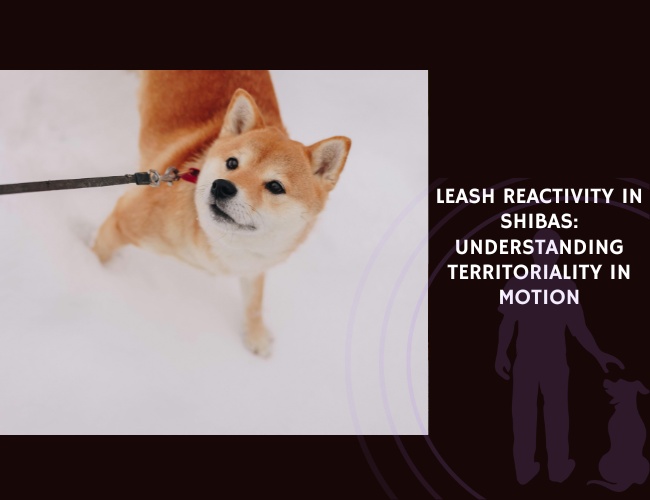
If you’ve ever felt your Shiba Inu transform from a dignified companion into a barking, lunging whirlwind the moment another dog appears during your walk, you’re not alone. This dramatic shift isn’t simple disobedience or poor training. What you’re witnessing is a deeply rooted expression of primitive breed psychology, where your Shiba perceives the world through a lens shaped by centuries of independent hunting heritage. Let us guide you through the fascinating neuroscience and behavioral patterns behind leash reactivity in Shibas, and more importantly, how you can transform your daily walks from battlegrounds into peaceful journeys of connection.
The Primitive Mind: How Shibas See Their World
Understanding Ancient Spatial Logic
Your Shiba’s brain is wired differently from many modern companion breeds. As a primitive hunting dog developed in the mountainous regions of Japan, the Shiba Inu evolved to work independently, make split-second decisions, and maintain strict control over its immediate environment. This heritage doesn’t simply vanish because your furry friend now lives in an urban apartment.
When you observe your Shiba scanning the environment with that characteristic fox-like intensity, you’re watching a sophisticated spatial cognition system at work. Unlike cooperative breeds that naturally look to humans for guidance in uncertain situations, Shibas are predisposed to assess, analyze, and respond to their surroundings autonomously. They’re not being stubborn—they’re being true to their biological design.
The Personal Radius Concept
Did you know that your Shiba likely perceives an invisible radius around their body as “personal territory” requiring active management? This isn’t just about physical space. It’s about psychological boundaries that move with them through the world. Think of it as a protective bubble that travels wherever your Shiba goes, expanding and contracting based on environmental factors and perceived threats.
This mobile territory extends to include you as their handler. When you walk together, your Shiba isn’t just protecting themselves—they’re regulating access to what they perceive as their small pack unit moving through potentially challenging terrain. This territorial-in-motion behavior represents a fundamental difference from breeds that view walks as social opportunities or simple exercise.
Signs Your Shiba Is Managing Their Personal Radius:
- Constant scanning and swiveling of head to monitor surroundings
- Stiffening or slowing when other dogs come into view
- Positioning themselves between you and approaching stimuli
- Increased alertness at narrow passages or crowded areas
- Reluctance to pass through tight spaces with other dogs present
- Strategic positioning to keep maximum distance from perceived threats
Self-Controlled Boundaries Matter
Shibas strongly prefer dictating the terms of interaction. While a Golden Retriever might happily accept another dog bounding into their space, your Shiba wants to approve or deny that access. This preference for self-controlled boundaries versus shared social zones explains why forced greetings or tight urban spaces trigger such intense reactions. You’re not dealing with fear or aggression in the traditional sense—you’re witnessing boundary enforcement. 🐾
When the Leash Becomes a Liability
The Restriction Paradox
Here’s where things get complicated. The very tool meant to keep your Shiba safe—the leash—becomes a source of conflict. When you clip that leash to your Shiba’s collar, you fundamentally alter their perception of control. Suddenly, their natural strategies for managing space (circling, creating distance, strategic avoidance) become impossible.
Through the lens of Affective Neuroscience, we understand that the FEAR system activates when control is removed. Your Shiba isn’t just frustrated—they’re experiencing genuine vulnerability. The leash removes their ability to employ their full behavioral repertoire, leaving them with limited options when perceived threats approach.
Perceived Vulnerability Amplifies Responses
Imagine walking through a narrow hallway and suddenly someone appears around the corner walking straight toward you. Now imagine that same scenario, but you’re in a wheelchair and can’t easily step aside. That second scenario captures something of what your leashed Shiba experiences. The inability to create space, to move in an arc, or to retreat increases their perception of vulnerability exponentially.
This perceived loss of control triggers the RAGE system when frustration builds. What begins as uncertainty can rapidly escalate into explosive defensive displays because your Shiba’s natural de-escalation strategies are blocked. The leash creates a perfect storm: heightened vigilance combined with restricted options equals intensified reactivity.
Natural Coping Mechanisms Blocked
In an off-leash environment with appropriate space, most Shibas would simply create distance from potential threats. They might curve their approach, sniff the ground as a displacement behavior, or politely ignore another dog while maintaining a comfortable buffer zone. These subtle avoidance strategies work beautifully—until a leash makes them impossible.
When your Shiba can’t move freely to implement these time-tested strategies, their arousal increases. The energy that would normally dissipate through movement instead builds internally, often exploding outward in dramatic reactive displays that shock even experienced handlers. 🧠
Natural Strategies Your Leashed Shiba Cannot Use:
- Creating a curved approach path rather than head-on encounters
- Increasing distance by moving away at their own pace
- Circling or positioning to assess threats from multiple angles
- Strategic retreat when feeling overwhelmed
- Full-body avoidance movements and spatial negotiations
- Pausing at safe distances to gather information before proceeding
The Moving Territory Phenomenon
Walks as Dynamic Space Management
This concept changes everything about how we understand Shiba leash reactivity. Your Shiba doesn’t perceive walks as simple transportation from point A to point B. Instead, walks represent continuous territory management—a moving bubble of space that requires constant regulation and defense.
Think of your Shiba as carrying an invisible force field, with the leash radius defining the edges of their defensive zone. Every person, dog, bicycle, and sudden noise represents a potential boundary breach that requires assessment and response. This isn’t paranoia; it’s their primitive spatial cognition doing exactly what evolution designed it to do.
The NeuroBond approach recognizes this moving territory concept as fundamental to addressing reactivity. Rather than fighting against this innate perception, we work with it, providing external structure that reduces your Shiba’s internal pressure to constantly defend their dynamic space.
Threshold Zones and Transitional Spaces
You’ve probably noticed that your Shiba’s reactivity intensifies in certain locations. Doorways, building exits, street corners, narrow pathways—these transitional zones represent points of maximum vulnerability in your Shiba’s moving territory. Why? Because these spaces offer limited visibility and reduced escape options.
A corner is particularly challenging because it creates sudden, unexpected encounters. Your Shiba can’t see what’s approaching until it’s already close, violating their preferred buffer zone before they can respond appropriately. The suddenness triggers a more intense defensive reaction than the same encounter would provoke in open space with clear sightlines.
High-Risk Zones That Amplify Shiba Reactivity:
- Blind corners where visibility is blocked until the last moment
- Narrow sidewalks that eliminate escape routes
- Building entrances where people and dogs emerge suddenly
- Stairwells and elevators in apartment complexes
- Gates and doorways that create natural chokepoints
- Areas with overhanging vegetation that limits sightlines
- Parking lot aisles between rows of cars
- Pedestrian bridges or underpasses with limited width
Boundary Breach Responses
When another dog or person breaches your Shiba’s moving territory too quickly or directly, their response can seem disproportionate to the actual threat level. A friendly dog bounding straight toward you might receive the same explosive reaction as a genuinely threatening situation. Why?
Your Shiba isn’t assessing whether the approaching dog is friendly. They’re responding to the boundary violation itself—the speed, the directness, the lack of proper spatial respect. In Shiba logic, a polite approach involves curves, pauses, and opportunities for assessment. A head-on rush, regardless of intention, violates every rule of proper canine spatial etiquette. Understanding this helps you realize your Shiba isn’t “overreacting”—they’re responding to what they genuinely perceive as aggressive spatial pressure.
Decoding the Motivation: Fear, Frustration, or Guarding?
Three Distinct Pathways
Not all leash reactivity looks the same, and understanding the underlying motivation changes how you respond. Your Shiba’s explosive display might stem from fear, frustration, or territorial guarding—and these different motivations require different approaches.
Fear-based reactivity emerges from uncertainty and the perception of genuine threat. You’ll notice your Shiba trying to increase distance, potentially showing conflict behaviors like lip licking or whale eye before the explosion. Their body language suggests, “I’m not sure about this, and I can’t escape, so I’ll make myself seem dangerous to drive away the scary thing.
Body Language Signals of Fear-Based Reactivity:
- Ears pinned back or constantly swiveling
- Tucked tail or tail held low with tension
- Whale eye (showing whites of eyes)
- Lip licking, yawning, or other stress signals
- Attempts to retreat or back away before explosive display
- Lower body posture with weight shifted backward
- Panting despite cool temperatures
- Dilated pupils and rapid blinking
Frustration-based reactivity, on the other hand, stems from blocked goals or over-arousal. Perhaps your Shiba desperately wants to greet another dog but the leash prevents it. Perhaps the excitement of the walk itself has pushed their arousal to unsustainable levels. The resulting explosion is an overflow of blocked energy rather than defensive behavior.
Indicators of Frustration-Based Reactivity:
- High arousal and excitement before the reactive display
- Pulling toward the trigger rather than away from it
- Whining or excited vocalizations mixed with barking
- Jumping or bouncing movements
- Quick recovery once the trigger passes or goal is achieved
- Play bow or other social signals mixed with reactive behavior
- Spinning or redirected energy onto the leash itself
Territorial Guarding Style
This is where Shibas often differ from other reactive breeds. Territorial-style guarding involves active defense of space, handler, or perceived path. Your Shiba isn’t trying to escape—they’re trying to drive away the intruder. This behavior is less about fear and more about boundary enforcement.
Watch the postural cues carefully. Fear-based reactivity often includes a lower body position, attempts to retreat, or tension that suggests conflict between “fight” and “flight” drives. Territorial guarding, conversely, shows forward-leaning posture, direct eye contact, stiffness that projects challenge rather than uncertainty. Your Shiba is essentially saying, “This is my space, my human, my path—and you need to leave.”
Postural Signs of Territorial Guarding:
- Forward-leaning body weight on front legs
- Stiff, rigid body posture with high tail carriage
- Direct, hard stare at the perceived intruder
- Hackles raised along spine and shoulders
- Mouth closed or showing teeth in a freeze
- Planted stance with no backward movement
- Purposeful forward movement toward the trigger
The Mixed Profile Challenge
Here’s where things get really interesting. Most Shibas don’t fit neatly into one category. You might see fear-based avoidance that escalates into frustration when escape proves impossible, culminating in territorial-style defensive displays. This mixed profile explains why your Shiba’s reactions can seem unpredictable or inconsistent.
One day your Shiba might tolerate another dog passing at ten feet. The next day, the same scenario triggers an explosive reaction. What changed? Likely a combination of factors: accumulated stress from earlier in the walk, differences in how the other dog approached, variations in your own tension level, or simply where you were in the urban environment when the encounter occurred. 🧡
Factors That Influence Reactive Threshold Daily:
- Sleep quality and overall rest the previous night
- Disruptions to routine or unexpected schedule changes
- Weather conditions affecting sensory input and comfort
- Time since last meal and blood sugar levels
- Previous encounters during the current walk (trigger stacking)
- Handler’s emotional state and stress level
- Environmental noise levels and visual chaos
- Recent health issues or physical discomfort
Your Role in the Reactive Equation
Body Position Matters More Than You Think
Where you position yourself relative to your Shiba directly influences their perception of who’s responsible for managing the forward space. If you walk behind your Shiba or maintain inconsistent positioning, you create a leadership vacuum at the front of your moving territory. Your Shiba interprets this as, “I need to handle whatever’s coming because no one else is managing this.”
Conversely, when you consistently lead the walk with calm, predictable movement, you’re communicating, “I’ve got the forward space covered. You can relax.” This doesn’t mean forcefully dragging your Shiba or asserting “dominance” in outdated ways. It means providing clear, consistent spatial guidance through your positioning and movement patterns.
The Invisible Leash principles emphasize this spatial clarity. By maintaining a steady leading position and making pre-emptive decisions about path and pace, you reduce your Shiba’s perceived need to constantly monitor and defend your shared moving territory.
Effective Handler Positioning Strategies:
- Walk slightly ahead of your Shiba, not beside or behind
- Maintain consistent position rather than wandering side to side
- Use your body to create visual barriers when needed
- Lead direction changes confidently without hesitation
- Position yourself between your Shiba and approaching triggers when appropriate
- Keep steady pace that provides rhythm and predictability
The Emotional Geometry of Leash Tension
Your leash isn’t just a physical connection—it’s a communication channel transmitting your emotional state directly to your Shiba. Constant tension signals chronic threat. Unpredictable jerks communicate instability and danger. Retractable leads with inconsistent tension create confusion about boundaries and responsibility.
When you maintain a loose leash with steady, predictable contact, you’re broadcasting calm confidence. Your Shiba’s nervous system receives this information and can regulate accordingly. But when tension spikes every time another dog appears, you’re essentially confirming your Shiba’s suspicion that the approaching dog represents danger worth defending against.
This emotional geometry explains why two handlers can have vastly different experiences walking the same Shiba. One handler’s steady calm creates a completely different neurological and behavioral outcome than another handler’s anxious tension, even when encountering identical triggering situations.
Problematic Leash Tension Patterns to Avoid:
- Constant tight leash that never relaxes
- Jerking or popping the leash as corrections
- Retractable leads that lock unpredictably
- Tension that increases whenever triggers appear
- Sawing motion back and forth on the leash
- Death grip on the handle that transmits hand tremors
- Wrapping leash around hand creating rigid connection
Handler Emotions as Environmental Factors
Your anxiety, frustration, or over-apologetic responses don’t just affect the moment—they shape your Shiba’s entire perceptual framework. Dogs possess remarkable sensitivity to human emotional states, reading micro-expressions, breathing patterns, muscle tension, and hormonal signals we’re not even aware we’re broadcasting.
When you tense up as another dog approaches, your Shiba notices. When you over-correct or jerk the leash in panic, you confirm threat. When you flood the environment with anxious apologies to other handlers, you telegraph instability. None of this is conscious manipulation on your part, but it powerfully influences your Shiba’s behavioral choices.
Developing emotional neutrality doesn’t mean suppressing feelings or becoming robotic. It means processing your own stress proactively so you can maintain steady, calm presence during triggering moments. Your Shiba needs you to be the stable element in their moving territory, the predictable factor that reduces rather than amplifies uncertainty. 🐾
Signs You’re Transmitting Anxiety to Your Shiba:
- Shortening the leash when you spot potential triggers
- Holding your breath or breathing shallowly
- Tightening grip on the leash handle
- Speeding up or slowing down unpredictably
- Talking excessively in a high-pitched voice
- Apologizing profusely to other handlers
- Tensing your shoulders and body
- Looking anxiously between your Shiba and approaching triggers

The Urban Pressure Cooker
Dense Environments Amplify Reactivity
City living presents unique challenges for Shibas. Narrow sidewalks force close encounters. Visual complexity creates constant stimulation. The sheer density of potential triggers overwhelms even well-adjusted dogs. Your Shiba’s reactivity might be relatively manageable in suburban parks but explosive on busy urban streets—and this isn’t inconsistency, it’s logical response to vastly different environmental pressure.
In dense environments, your Shiba’s moving territory gets violated repeatedly. There’s simply not enough physical space to maintain their preferred buffer zones. Every doorway might disgorge a person with a dog. Every corner presents potential sudden encounters. The chronic violation of spatial preferences creates a state of hyper-vigilance that lowers their reactive threshold dramatically.
Urban Environmental Stressors for Shibas:
- Narrow sidewalks forcing close proximity to pedestrians
- Heavy foot traffic with constant movement and noise
- Delivery trucks backing up with beeping sounds
- Construction sites with sudden loud noises
- Multiple dogs being walked in small areas
- Skateboarding, scooters, and bicycles passing close
- Street vendors with unusual smells and sounds
- Garbage collection and other mechanical noise
- Reflective surfaces and windows creating visual confusion
Trigger Stacking: The Cumulative Effect
Here’s a concept that explains so much about “bad walk days.” Trigger stacking describes how multiple small stressors accumulate, lowering your Shiba’s threshold until even minor stimuli provoke major reactions. Each stressor—a car horn, a skateboard passing close, a sudden door slam, strong smells, heat, fatigue—adds to their arousal baseline.
Think of your Shiba’s tolerance as a cup that can only hold so much before overflowing. On a quiet suburban morning with plenty of space, that cup has lots of capacity remaining. But after fifteen minutes in dense urban environment with constant minor stressors, the cup is nearly full. When the next dog appears, even a polite dog at reasonable distance, that’s the drop that causes overflow—and you witness an explosive reaction that seems disproportionate to that specific trigger.
Understanding trigger stacking helps you recognize that your Shiba’s “worst” reactive displays often happen later in walks, not because they’re tired, but because their stress cup has filled throughout the journey. It also suggests that shorter walks in challenging environments might actually be more beneficial than longer walks that push them into chronic arousal states.
Common Triggers That Stack During Walks:
- Sudden loud noises (cars, sirens, construction)
- Dogs barking from behind fences or windows
- People jogging or moving quickly near your Shiba
- Children playing or running unpredictably
- Other dogs on leash approaching from any direction
- Strong or unusual smells (garbage, restaurant exhaust)
- Slippery or unusual walking surfaces
- Wind, rain, or extreme temperature discomfort
- Encounters with vehicles pulling in or out of driveways
- Birds or squirrels creating sudden movement
Chronic Sensory Overload and Hyper-Vigilance
When your Shiba lives in constant sensory overload, their nervous system adapts by becoming hyper-vigilant. This isn’t a conscious choice—it’s neurological adaptation to chronic environmental pressure. In this state, your Shiba’s baseline arousal is already elevated before any walk begins.
This chronic stress state means your Shiba is operating with a significantly lower threshold for defensive behavior. Situations they might have tolerated when calm now trigger immediate, intense reactions. The nervous system essentially stays in a state of heightened alert, constantly scanning for threats, unable to fully relax even during supposedly calm moments.
Breaking this cycle requires more than training techniques. It demands environmental management, strategic route planning, and periods of genuine nervous system recovery where your Shiba can experience safety and predictability without constant boundary challenges. 🧠
Signs of Chronic Sensory Overload in Your Shiba:
- Difficulty settling or relaxing even at home
- Hypervigilance to household sounds and movements
- Reduced appetite or finicky eating patterns
- Sleep disruptions or excessive alertness
- Overgrooming or stress-related behaviors
- Increased reactivity to previously tolerated stimuli
- Shorter fuse and quicker escalation to reactive displays
- Avoidance behaviors like reluctance to go on walks
Territory. Motion. Control.
Space is identity.
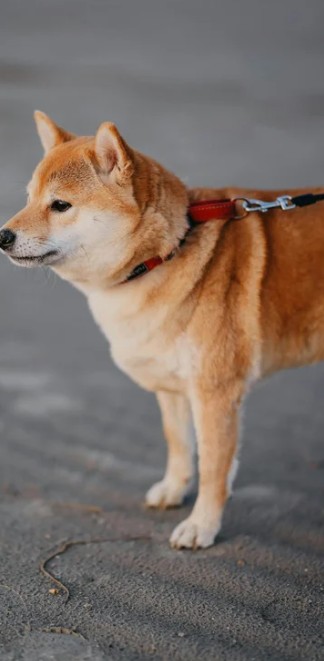
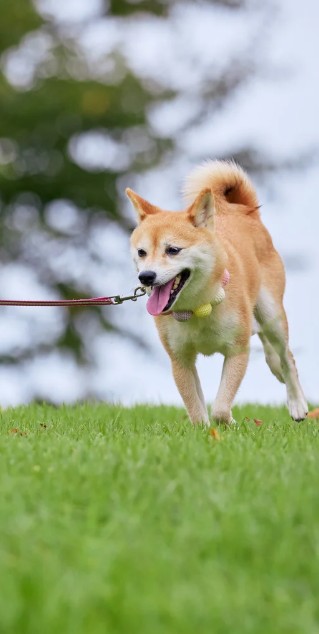
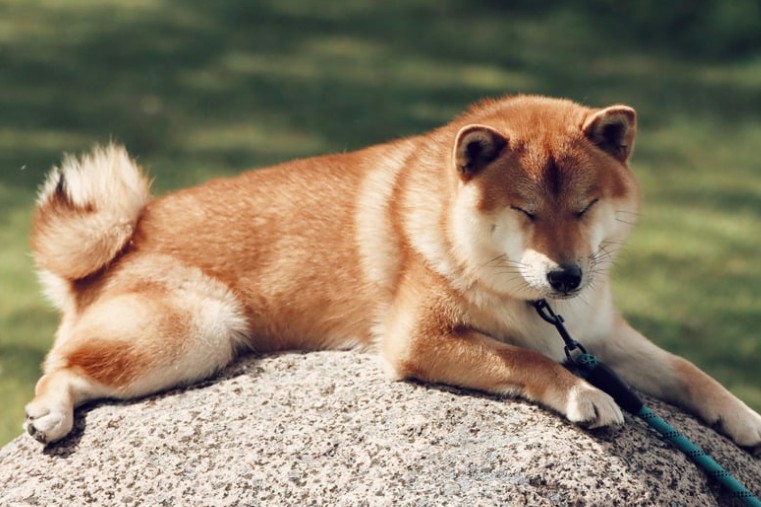
A Shiba doesn’t see a walk as neutral ground—it’s moving territory that must be managed, defended, and regulated with precision. Every step is spatial negotiation.
Restriction creates pressure.
The leash removes escape strategies and forces proximity. What looks like reactivity is often a nervous system protesting lost control, not a dog “acting out.”
Clarity calms instinct.
When you hold the boundary with quiet certainty—setting pace, distance, and direction—the Shiba’s primitive vigilance softens. Authority replaces tension.
When Shibas Shut Down Instead of Explode
Diverse Coping Strategies
Not every reactive Shiba becomes a lunging, barking whirlwind. Some freeze. Others slow dramatically, as if moving through molasses. Many engage in what trainers call “displacement behaviors”—intense sniffing, scratching, yawning—that communicate discomfort without overt aggression.
These shut-down responses deserve equal attention to explosive reactivity because they represent the same underlying stress and boundary discomfort. Your Shiba who freezes on walks isn’t being stubborn—they’re coping with overwhelming environmental pressure through immobility. This is a legitimate stress response, not defiance.
The polite ignoring strategy—where your Shiba intensely sniffs the ground or looks away when another dog approaches—represents sophisticated conflict resolution. Your Shiba is essentially saying, “I acknowledge your presence but I’m choosing not to engage.” This is actually healthy communication when space allows, though it becomes problematic if forced proximity escalates the situation.
Shut-Down and Avoidance Behaviors to Recognize:
- Freezing completely and refusing to move forward
- Intense ground sniffing that seems obsessive
- Turning head away or averting gaze from triggers
- Slowing pace to a crawl when approaching triggers
- Pulling backward or sitting down during walks
- Excessive yawning, lip licking, or shake-offs
- Seeking to hide behind handler’s legs
- Flat ears and low body posture without forward movement
The Progression from Subtle to Overt
Many explosive reactive Shibas started with subtle avoidance signals that went unheeded. Early in their leash-walking experience, they might have offered gentle communication: turning their head away, curving their path slightly, slowing down, or glancing at their handler for guidance.
But if these subtle signals consistently failed to create space or change the situation—perhaps because handlers didn’t recognize them or couldn’t respond appropriately—your Shiba learned that soft communication doesn’t work. The logical next step is escalation. If a head turn doesn’t create space, maybe a growl will. If a growl gets punished, maybe a lunge will work.
This progression explains why harsh corrections often worsen reactivity rather than improving it. When you punish your Shiba’s warning signals, you’re not eliminating the underlying stress or boundary concern—you’re just suppressing communication. Eventually, your Shiba learns to skip warnings entirely and go straight to explosive displays because everything else has proven ineffective.
Early Signals Matter
Learning to recognize and honor your Shiba’s early stress signals can prevent the development of overt reactivity. When your Shiba glances back at you during a walk, they’re potentially asking, “Are you aware of this situation?” When they slow down or shift their path slightly, they’re expressing discomfort with current proximity or trajectory.
Responding to these subtle signals by proactively creating space, changing direction, or providing calm guidance reinforces that gentle communication works. Your Shiba learns they don’t need to escalate to dramatic displays because you’re listening to their quieter messages. This is Soul Recall at work—building trust through consistent, appropriate responses that honor your Shiba’s emotional communication.
Over time, this attunement creates a partnership where you and your Shiba communicate through subtle cues rather than crisis moments. You learn to read their body language before stress escalates, and they learn to trust your spatial decisions rather than feeling sole responsibility for defending your shared territory. 🧡
Early Warning Signals Your Shiba Needs Support:
- Brief glance back at you during walks
- Slight hesitation or slowing of pace
- Subtle shift in walking path or trajectory
- Momentary ear flick or tension in facial muscles
- Quick lip lick or nose lick
- Slight increase in sniffing behavior
- Brief eye contact followed by looking away
- Minor change in tail carriage or position
- Shorter, shallower breathing patterns
- Increased awareness or head turning toward stimulus
🐕 Understanding Shiba Leash Reactivity 🚶
A Step-by-Step Journey Through Territoriality in Motion
Phase 1: Understanding Primitive Spatial Cognition
Recognizing Your Shiba’s Ancient Brain
The Primitive Mind at Work
Your Shiba’s brain evolved over centuries for independent hunting in mountainous terrain. This heritage creates a sophisticated spatial cognition system that prioritizes autonomous decision-making and territory management. Unlike cooperative breeds, Shibas are hardwired to assess and respond to their environment independently.
What You’ll Notice
• Constant environmental scanning with fox-like intensity
• Strong preference for controlling personal space radius
• Immediate response to boundary violations
• Independent assessment rather than looking to you for guidance
Phase 2: The Leash Restriction Paradox
When Safety Tools Become Stressors
The Neuroscience of Restriction
Leash restraint activates the FEAR system in your Shiba’s brain by removing natural control mechanisms. Unable to circle, create distance, or retreat, your Shiba experiences heightened perceived vulnerability. This isn’t disobedience—it’s a neurological response to restricted autonomy.
Blocked Coping Mechanisms
The leash prevents your Shiba from using natural de-escalation strategies: curved approaches, strategic retreats, circling for assessment, and creating comfortable distance. When these options disappear, arousal builds internally and often explodes outward in dramatic reactive displays.
Your First Action Step
Switch to a fixed-length 4-6 foot leash immediately. Avoid retractable leads that create inconsistent tension and place your Shiba in the vulnerable “front guard” position. Consistency in equipment provides the foundation for communication.
Phase 3: Recognizing Moving Territory
Understanding Dynamic Boundary Defense
The Mobile Territory Concept
Your Shiba doesn’t perceive walks as simple movement—they’re managing a moving bubble of defended space. The leash radius defines their defensive zone, and every approaching dog, person, or sudden stimulus represents a potential boundary breach requiring response.
High-Risk Zones to Watch
• Blind corners with limited visibility
• Narrow sidewalks eliminating escape routes
• Building entrances where triggers emerge suddenly
• Transitional spaces like doorways and gates
• Areas with overhanging vegetation blocking sightlines
Phase 4: Decoding Reactivity Types
Fear, Frustration, or Territorial Guarding?
Fear-Based Signals
Watch for tucked tail, whale eye (showing whites), ears pinned back, attempts to retreat, and lower body posture with weight shifted backward. This is uncertainty meeting inability to escape—”I’m scared and trapped.”
Frustration-Based Signals
Look for pulling toward triggers, high arousal, whining mixed with barking, jumping or bouncing, and quick recovery once trigger passes. This is blocked energy seeking release—”I want to reach that but can’t!”
Territorial Guarding Signals
Notice forward-leaning posture, stiff rigid body, direct hard stare, hackles raised, planted stance with no backward movement. This is boundary enforcement—”This is MY space, leave NOW.”
Phase 5: Mastering Handler Influence
Your Position Creates Their Perception
Effective Positioning Strategy
Walk slightly ahead of your Shiba, not beside or behind. This communicates “I’ve got the forward space covered, you can relax.” Maintain consistent position without wandering side to side. Use your body as a visual barrier when needed.
The Emotional Geometry of Tension
Your leash transmits emotional states directly to your Shiba. Constant tension signals chronic threat. Jerking communicates instability. Loose leash with steady contact broadcasts calm confidence. Through the Invisible Leash principles, awareness—not tension—guides the path.
Signs You’re Transmitting Anxiety
• Shortening leash when spotting triggers
• Holding breath or shallow breathing
• Tightening grip on handle
• Speed changes unpredictably
• Excessive high-pitched talking
• Apologizing profusely to other handlers
Phase 6: Managing Environmental Pressure
Understanding Trigger Stacking
The Stress Cup Concept
Imagine your Shiba’s tolerance as a cup. Each stressor—car horns, sudden movements, strong smells, heat, fatigue—adds drops to this cup. In dense urban environments, the cup fills quickly. When the next dog appears, even a polite one at reasonable distance, that’s the drop causing overflow.
Common Triggers That Stack
• Sudden loud noises (sirens, construction)
• Dogs barking from windows or fences
• People jogging or moving quickly
• Strong unusual smells
• Slippery or unfamiliar surfaces
• Weather extremes causing discomfort
Strategic Environmental Management
Choose wide sidewalks with good visibility. Walk during low-traffic times. Incorporate sniff breaks in quiet areas—sniffing activates neurological regulation. Remember: shorter walks in challenging environments beat longer walks that push into chronic arousal.
Phase 7: Implementing Pre-emptive Management
Acting Before Arousal Activates
The Wide Arc Technique
Spot triggers 30-50 feet ahead. Cross the street proactively before your Shiba’s arousal activates. Create wide arcs around other dogs. This isn’t avoidance—it’s intelligent boundary management that honors your Shiba’s spatial needs while preventing reactive overflow.
Using Visual Barriers
Parked cars, hedges, walls, your own body—all serve as strategic visual barriers. Interrupting direct line of sight dramatically reduces territorial response intensity. Your Shiba can detect presence through scent, but lack of visual contact changes everything.
Timing Your Walks
Early morning (5:30-7:00 AM) and late evening (9:00-10:30 PM) offer lower trigger density. Avoid peak dog-walking times (7-9 AM and 5-7 PM). Weekday mornings typically present fewer challenges than weekends.
Phase 8: Building Long-Term Success
Consistency Creates Trust
Realistic Timeline
Week 1-2: Increased awareness of patterns. Week 3-4: Successfully implementing spatial management. Month 2: Noticing lower baseline arousal. Month 3: Fewer explosive reactions. Month 4-6: Faster recovery times. Month 6+: Established trust and reliable communication patterns.
Measuring Progress
Success isn’t about handling close encounters—it’s about increasing mutual understanding. Look for: longer periods between episodes, faster recovery, earlier trigger recognition without reaction, more frequent check-ins with you, increased ability to take treats near triggers.
Maintaining Gains
Continue pre-emptive management even after improvement. Remain vigilant during life transitions. Adjust strategies as your Shiba ages. Maintain emotional neutrality as foundational practice. This is a lifelong partnership, not a problem to solve once and forget.
🔄 Reactivity Profiles: Understanding Different Presentations
The Exploder
Immediate, intense displays when triggers appear. High arousal with loud barking, lunging, pulling forward. Quick trigger but also quick recovery. Often frustration-based with blocked goals.
The Freezer
Complete shutdown when overwhelmed. Immobility response with refusal to move, intense ground sniffing, averting gaze. Fear-based with conflict between fight/flight drives.
The Slow Burner
Gradual arousal build throughout walk. Trigger stacking affects them heavily. Early walk tolerance but late walk explosiveness. Most responsive to sniff breaks and shorter routes.
The Territorial Guard
Primarily boundary enforcement. Forward posture with direct stares, hackles raised, purposeful approach to triggers. Not fear—confident space defense. Most typical Shiba presentation.
The Mixed Responder
Unpredictable patterns mixing fear, frustration, and guarding. Context-dependent reactions based on trigger type, distance, handler state, and accumulated stress. Requires nuanced reading.
The Threshold Sensitive
Extreme responses at specific locations. Transitional zones like corners, doorways trigger intense reactions. Calm in open spaces. Benefits most from route planning and corner management.
⚡ Quick Reference: The 3-30-3 Rule for Shiba Walks
3 Seconds: Time to assess approaching triggers and make spatial decisions
30 Feet: Minimum buffer distance to maintain from triggers during initial training
3 Breaths: Deep breaths you take when your Shiba reacts—your calm anchors their nervous system
Bonus Formula: Reactive distance = (Shiba’s arousal level × trigger intensity) ÷ handler confidence
Lower the numerator or raise the denominator for success!
🧡 The Zoeta Dogsoul Perspective
Through the NeuroBond approach, we recognize that Shiba leash reactivity isn’t a character flaw—it’s primitive spatial cognition meeting modern constraints. When you provide external structure through the Invisible Leash principles, you reduce your Shiba’s internal pressure to defend the moving world alone. Each pre-emptive spatial decision you make builds trust, allowing your Shiba’s nervous system to gradually release its hyper-vigilant defense.
These moments of Soul Recall—when your Shiba glances back at you during walks, trusting your leadership—reveal how emotional memory and behavioral healing intertwine. You’re not suppressing symptoms through force. You’re building a partnership where awareness guides the path, where structure serves connection, where ancient instincts find peace in modern life.
That balance between honoring primitive behavioral logic and providing calm, consistent leadership—that transformation from moving conflict to shared journey—that’s the essence of Zoeta Dogsoul.
© Zoeta Dogsoul – Where neuroscience meets soul in dog training
Reframing the Walk: Structure, Not Suppression
The NeuroBond Approach to Leash Reactivity
Traditional approaches to leash reactivity often focus on suppressing symptoms through corrections, distractions, or counter-conditioning alone. While these tools have their place, they miss the fundamental issue: your Shiba’s perception that they’re responsible for managing an overwhelming dynamic territory with inadequate tools.
The NeuroBond perspective offers a different framework. Instead of fighting against your Shiba’s primitive spatial cognition, we provide external structure that reduces their internal pressure to defend the moving world. This means becoming the predictable, stable element in their environment—the leader who makes spatial decisions calmly and consistently.
This isn’t about dominance or control in the traditional sense. It’s about providing the external architecture your Shiba’s nervous system needs to relax. When you handle spatial management—deciding when to cross the street, how wide an arc to give another dog, whether to pause or proceed—your Shiba can release their hyper-vigilance because someone capable is handling these concerns.
Invisible Leash Principles in Action
The Invisible Leash isn’t about physical restraint—it’s about energetic connection and clear communication. In practice, this means maintaining a calm, rhythmic walking pattern that your Shiba can synchronize with. It means making pre-emptive spatial decisions before your Shiba’s stress activates. It means leading with quiet confidence rather than tension or apology.
When you consistently maintain a leading position with loose leash and steady pace, you’re communicating leadership through action rather than correction. Your Shiba experiences walks as structured movement through space rather than a series of defensive encounters they must individually navigate.
This approach requires you to develop keen environmental awareness. You need to spot potential triggers before your Shiba does, making spatial decisions that honor their need for buffer zones without making a big deal of it. You cross the street early. You take a different path. You use parked cars as visual barriers. Each decision reduces your Shiba’s perception that they must handle these spatial challenges alone.
Core Elements of Invisible Leash Walking:
- Calm, rhythmic pace that provides predictable structure
- Consistent leading position without pulling or tension
- Pre-emptive awareness of environmental triggers
- Smooth direction changes without abrupt movements
- Loose leash maintained even when passing triggers
- Emotional neutrality regardless of surrounding chaos
- Clear spatial decisions made before your Shiba’s arousal spikes
- Quiet confidence that anchors your Shiba’s nervous system
Pre-emptive Spatial Management
Let’s get practical. What does pre-emptive spatial management actually look like during a walk?
You spot another dog approaching three houses ahead. Rather than continuing on your path and hoping for the best, you calmly cross the street, creating comfortable distance before your Shiba’s arousal activates. This isn’t avoidance or defeat—it’s intelligent spatial management that respects your Shiba’s neurological needs.
You approach a corner with limited visibility. Instead of rounding it blindly, you pause, check what’s around the corner, and proceed only when the path is clear. This simple action prevents the sudden, close encounters that trigger the most explosive reactions.
You notice your Shiba’s arousal building during a walk—perhaps they’ve encountered several triggers already. Rather than pushing through, you cut the walk short, take a sniff break in a quiet area, or simply head home before trigger stacking leads to overflow. This demonstrates wisdom, not weakness.
Pre-emptive Management Techniques:
- Crossing the street 30-50 feet before encountering triggers
- Taking alternative routes that avoid high-traffic areas
- Pausing at corners to assess what’s ahead before proceeding
- Using parked cars, bushes, or walls as visual barriers
- Creating wide arcs around other dogs rather than straight approaches
- Timing walks during low-traffic hours
- Cutting walks short when arousal is building
- Taking sniff breaks in quiet areas to regulate nervous system
- Changing direction rather than forcing confrontation
The Emotional Neutrality Challenge
Developing emotional neutrality during reactive moments is perhaps the most challenging aspect of this approach. When your Shiba explodes, every fiber of your being wants to react—with embarrassment, frustration, over-correction, or anxious apology. But each of these reactions amplifies your Shiba’s stress rather than resolving it.
Emotional neutrality means breathing steadily, maintaining loose leash, and calmly creating space without drama. It means not flooding the moment with tense energy, harsh corrections, or anxious talking. Your Shiba needs you to be the emotional anchor, the stable presence that models calm even when their nervous system has gone into defensive mode.
This doesn’t mean ignoring their reactivity or having no response. It means your response is measured, calm, and focused on resolution rather than punishment or panic. You might calmly guide them away, create more distance, or simply stand still until they can settle, all while maintaining steady breathing and loose body language.
Emotional Neutrality Practices During Reactive Episodes:
- Continue breathing deeply and steadily
- Maintain loose shoulders and relaxed jaw
- Keep leash hand soft with minimal tension
- Avoid eye contact with other handlers or apologizing
- Stay silent or use calm, quiet verbal cues only
- Focus on creating distance rather than correcting behavior
- Move with purpose but without rush or panic
- Return to normal walking rhythm as soon as possible
Reframing Success
Traditional thinking measures success by whether your Shiba can “handle” close encounters with triggers. The NeuroBond approach measures success differently: Can you and your Shiba move through the world with increasing mutual understanding? Are walks becoming more peaceful? Is your Shiba’s baseline arousal lowering over time?
This reframing transforms walks from social exposure events to structured movement with selective, safe encounters. You’re not trying to make your Shiba accept every dog they meet. You’re building a pattern of successful, calm navigation through the environment where their boundary needs are respected and their handler is reliably competent at spatial management.
Over time, this external structure becomes internalized. Your Shiba’s nervous system learns that walks are predictable, that space is respected, that you handle the forward territory management. Their need to hyper-vigilantly defend the moving world gradually releases because you’ve proven consistently capable of managing these concerns. That balance between providing external structure and honoring innate behavioral logic—that’s the essence of Zoeta Dogsoul. 🐾
Meaningful Progress Indicators:
- Longer periods between reactive episodes
- Faster recovery after reactive displays
- Earlier recognition of triggers without immediate reaction
- More frequent check-ins with you during walks
- Increased ability to take treats or respond to cues near triggers
- Lower baseline arousal at start of walks
- More relaxed body language in previously challenging areas
- Willingness to follow your lead on direction changes
- Reduced scanning and hypervigilance
- Softer responses to minor environmental changes
Practical Strategies for Daily Walks
Route Planning for Success
Start thinking of your walking routes strategically. Not all paths are equal from your Shiba’s perspective. Wide sidewalks with good visibility reduce reactive triggers. Quiet times of day lower the overall stimulation. Natural barriers like parked cars, walls, or landscaping provide visual blocking that reduces your Shiba’s need for active defense.
Map out several route options with varying challenge levels. On days when your Shiba seems more settled, you might choose a moderate route with some controlled exposure to triggers. On high-stress days—perhaps after a disrupted routine or during particularly busy times—choose your easiest route with maximum space and minimal triggers.
Consider incorporating areas where your Shiba can engage in natural, calming behaviors. Sniffing is neurologically regulating for dogs. A few minutes in a quiet area where your Shiba can explore scents at their own pace helps balance the nervous system, building capacity to handle more challenging portions of the walk.
Ideal Route Characteristics for Reactive Shibas:
- Wide sidewalks or paths allowing comfortable distance from others
- Good visibility with few blind corners
- Natural barriers like hedges or parked cars
- Quiet residential areas with lower foot traffic
- Access to grassy areas for sniffing breaks
- Minimal construction or loud machinery
- Few street-level apartment windows with barking dogs
- Alternative paths available if triggers appear
- Adequate street lighting for evening walks
- Consistent surfaces without sudden changes
The Wide Arc Technique
When you spot a potential trigger, resist the urge to continue straight and hope for the best. Instead, create a wide arc that maintains your Shiba’s preferred buffer zone. This might mean crossing the street, looping around a parking lot, or even turning around and going a different direction.
The wide arc isn’t retreat—it’s intelligent boundary management. You’re honoring your Shiba’s spatial needs while preventing their arousal from climbing into reactive territory. Over time, consistently providing these wide arcs reduces your Shiba’s overall vigilance because they learn you’re reliably managing space appropriately.
As your Shiba’s baseline arousal decreases and trust builds, you may find their acceptable distance from triggers gradually shrinks. But this happens organically through nervous system regulation, not through forced exposure or “facing fears.”
Effective Wide Arc Strategies:
- Begin creating distance at least 30-50 feet before trigger proximity
- Cross to opposite side of street proactively
- Loop through parking lots to increase distance
- Take side streets or alleys rather than continuing on main path
- Turn around completely if necessary without hesitation
- Use buildings or structures as physical barriers
- Increase walking pace slightly to pass triggers more quickly
- Maintain calm, purposeful movement during arcing maneuvers
Strategic Use of Visual Barriers
Your environment is full of visual barriers you can use strategically. A row of parked cars blocks direct sightlines to other dogs. A wall or fence creates a physical boundary. Even positioning yourself between your Shiba and a trigger serves as a living visual barrier.
These barriers work because they interrupt the direct line of sight that often escalates Shiba reactivity. Your Shiba can still detect the presence of another dog through scent or sound, but the lack of direct visual contact dramatically reduces the intensity of their territorial response.
Learn to use your environment creatively. Duck behind buildings momentarily. Use landscaping as cover. Position yourself to block views. These simple spatial tactics can mean the difference between a calm walk and a reactive episode.
Effective Visual Barriers in Your Environment:
- Rows of parked cars along streets
- Hedges, bushes, and landscaping features
- Walls, fences, and building exteriors
- Outdoor furniture and planters
- Dumpsters and utility structures
- Your own body positioned between Shiba and trigger
- Telephone poles and street signs
- Parked delivery trucks or larger vehicles
Timing and Trigger Density
Pay attention to patterns in your neighborhood. When do most people walk their dogs? When are streets busiest? These high-trigger times might best be avoided, especially during your Shiba’s adjustment period.
Early morning or late evening walks often provide lower trigger density. Mid-day weekday walks avoid the rush of before-work and after-work dog walking. Weekend mornings might be worse than weekday mornings if more people are home and walking dogs.
Track these patterns over a week or two. You’ll likely discover optimal walking times when your environment presents fewer challenges, allowing more calm, successful walking experiences that build your Shiba’s confidence and your mutual communication patterns.
Optimal Walking Times to Consider:
- Early morning (5:30-7:00 AM) before most people start their day
- Mid-morning weekdays (9:00-11:00 AM) after morning rush
- Mid-afternoon (1:00-3:00 PM) during work hours
- Late evening (9:00-10:30 PM) when streets are quieter
- Avoid 7:00-9:00 AM and 5:00-7:00 PM (peak dog walking times)
- Weekday mornings typically better than weekends
- Consider weather patterns affecting when others walk dogs
The Sniff Break Strategy
When you notice your Shiba’s arousal climbing—perhaps they’ve been vigilant for several minutes or encountered a couple of minor triggers—proactively offer a sniff break. Find a quiet area, perhaps a side yard or less-trafficked section of sidewalk, and allow your Shiba to engage fully in scent exploration.
Sniffing serves multiple functions. It’s mentally engaging and somewhat self-regulating for the nervous system. It shifts focus from vigilance to exploration. It provides a break from the constant spatial management pressure. Think of sniff breaks as mini-resets during your walk, preventing trigger stacking from reaching overflow levels.
These breaks don’t need to be long—even thirty seconds of focused sniffing can help. The key is offering them proactively before arousal peaks, not reactively after an explosive incident.
Benefits of Strategic Sniff Breaks:
- Activates calming neurological pathways
- Shifts focus from vigilance to exploration
- Provides mental enrichment during walks
- Allows arousal levels to decrease naturally
- Gives handler time to assess environment ahead
- Creates positive associations with potentially stressful routes
- Prevents trigger stacking from reaching overflow
- Offers natural reward for calm behavior
Equipment Considerations
Leash Choice Matters
Retractable leashes create multiple problems for reactive Shibas. The inconsistent tension communicates uncertainty. The sudden locking mechanism can trigger frustration. The extended length places your Shiba far ahead in the “front guard” position, increasing their perceived responsibility for managing space.
A fixed-length leash, typically 4-6 feet, provides consistency and clear communication. Your Shiba learns where their movement boundary lies, and the steady, predictable connection helps regulate their nervous system. Choose materials that feel comfortable in your hand since any tension in your grip telegraphs through the leash.
The leash isn’t just equipment—it’s a communication channel. A quality, properly-fitted harness or collar combined with an appropriate-length leash creates the physical foundation for clear, calm communication during walks.
Recommended Leash Specifications:
- Fixed length of 4-6 feet (avoid retractable)
- Material that feels comfortable in your hand
- Width appropriate to your Shiba’s size (typically 1/2 to 5/8 inch)
- Quality hardware that won’t break under tension
- Comfortable handle with some padding
- No chain sections that jingle or create noise
- Simple design without unnecessary bulk or weight
- Easy to clean and weather-resistant material
Harness vs. Collar Considerations
For reactive Shibas, harnesses often provide better control without triggering tracheal pressure that can increase arousal. A front-clip harness gives you leverage to gently redirect without forceful corrections. Back-clip harnesses work well for Shibas who don’t pull excessively.
Whichever you choose, ensure proper fit. Equipment that rubs, pinches, or restricts natural movement adds unnecessary stress to an already challenging situation. Your Shiba should be comfortable enough in their walking gear that it becomes psychologically invisible, not a constant source of physical irritation.
Some handlers find success with double-clipping—one leash attachment to a front-clip harness and one to a collar, giving options for gentle guidance depending on the situation. Experiment to find what works for your specific Shiba while prioritizing communication clarity over forceful control.
Key Features for Harnesses:
- Proper fit without restricting shoulder movement
- Front-clip option for better directional control
- No rubbing or chafing points
- Easy to put on without head entry if Shiba is sensitive
- Adjustable at multiple points for custom fit
- Reflective elements for safety during low light
- Durable construction with quality stitching
- Easy to clean fabric or material
Environmental Enrichment Tools
Consider carrying a few small, high-value treats for strategic use during walks. These aren’t bribes or distractions in the traditional sense, but tools for marking calm behavior and creating positive associations. When your Shiba glances at a trigger and looks back to you without reacting, that moment deserves acknowledgment.
A treat pouch or pocket system keeps these reinforcers accessible without fumbling. Quick access means you can mark and reward appropriate responses in real-time, strengthening your Shiba’s understanding that calm awareness of triggers (rather than explosive reactivity) leads to good outcomes.
Some handlers also find success with a familiar toy or scent item from home that can provide comfort during particularly challenging moments. These tools aren’t crutches—they’re strategic supports during your Shiba’s learning process. 🧠
Useful Items to Carry on Walks:
- Small, high-value treats in easily accessible pouch
- Clicker or marker for precise timing (optional)
- Collapsible water bowl for longer walks
- Waste bags attached to leash or belt
- Small towel for muddy paws or emergencies
- Familiar scent item from home for comfort
- Flashlight or headlamp for evening walks
- Emergency contact information on collar tag
The Long-Term Journey
Transforming leash reactivity isn’t a quick fix. Your Shiba’s primitive spatial cognition and defensive patterns developed over centuries of breeding and individual experience. Expecting these patterns to shift dramatically in weeks sets you up for frustration.
Instead, measure progress in subtle increments. Is your Shiba’s baseline arousal slightly lower this month than last? Can they notice triggers from further away without immediately reacting? Are recovery times after reactive episodes shortening? These small shifts indicate genuine nervous system regulation, which is the foundation of lasting behavioral change.
Some Shibas will never be comfortable in dense urban environments or with close dog greetings—and that’s okay. Success doesn’t mean your Shiba must behave like a gregarious Labrador. Success means peaceful walks where both you and your Shiba can navigate the world with mutual understanding and appropriate boundary management.
Realistic Milestones to Celebrate:
- Week 1-2: Increased awareness of your own patterns and Shiba’s signals
- Week 3-4: Successfully implementing pre-emptive spatial management
- Month 2: Noticing slightly lower baseline arousal levels
- Month 3: Fewer explosive reactions in previously challenging areas
- Month 4-6: Faster recovery times after reactive episodes
- Month 6+: Established trust patterns and reliable communication
- Long-term: Peaceful coexistence in urban environment without constant crisis
Building Trust Through Consistency
Your most powerful tool is consistency. Each walk where you make competent spatial decisions builds your Shiba’s trust. Each time you notice their subtle stress signals and respond appropriately reinforces that communication works. Each successful navigation of a challenging situation without drama strengthens your partnership.
This consistency must span months, not days. Your Shiba’s nervous system needs repeated, reliable experiences of safe, structured walks before it can truly relax its defensive vigilance. Think of yourself as gradually building a new framework of trust and expectation that replaces the old pattern of constant boundary defense.
Inconsistency, conversely, erodes trust quickly. If you sometimes create appropriate space but other times force close encounters, your Shiba learns they can’t rely on your spatial judgment. If you’re calm one day but tense the next, they learn your emotional state is unpredictable. Consistency doesn’t mean perfection—it means striving for predictable patterns and reliable responses even when situations are challenging.
Building Blocks of Consistent Leadership:
- Same walking routes during initial training phase
- Similar walking times to establish routine
- Predictable response patterns to triggers
- Consistent emotional neutrality regardless of circumstances
- Reliable pre-emptive spatial management
- Regular practice of Invisible Leash principles
- Steady pace and positioning throughout walks
- Dependable decision-making about when to create distance
When to Seek Professional Support
Some reactive Shibas benefit significantly from professional guidance. If your Shiba’s reactivity is worsening despite your best efforts, if they’re showing signs of chronic stress, or if walks have become unsafe, a qualified professional can provide valuable assessment and customized strategies.
Look for trainers or behaviorists who understand primitive breed psychology and favor relationship-based approaches over purely corrective methods. The right professional will work with your Shiba’s natural inclinations rather than against them, helping you develop strategies that honor their neurological needs while building calmer responses.
Red flags include professionals who insist on flooding (forced exposure to overwhelming triggers), heavy punishment, or approaches that don’t consider the underlying spatial cognition and boundary concerns driving the reactive behavior. Your Shiba deserves support that recognizes their reactivity as communication rather than mere disobedience.
Signs You May Need Professional Help:
- Reactivity is worsening despite consistent efforts
- Your Shiba is showing signs of chronic stress at home
- Reactive displays are becoming unsafe for you or others
- Multiple bite attempts or actual bites have occurred
- You feel overwhelmed or unable to manage walks safely
- Your Shiba refuses to walk or shows extreme fear
- Reactivity is affecting your Shiba’s quality of life
- You need guidance on medication consultation with veterinarian
The Ongoing Partnership
Even with significant improvement, managing a reactive Shiba requires ongoing awareness and adjustment. Your Shiba’s needs may shift with age, life changes, or environmental factors. Maintaining the gains you’ve achieved means continuing the spatial management, emotional neutrality, and structured walking patterns that created improvement.
Think of this as a lifelong partnership rather than a problem to be solved and forgotten. Your Shiba will always possess their primitive spatial cognition and preference for boundary control. Your role is providing the external structure and reliable leadership that allows them to relax rather than feeling solely responsible for managing the moving world.
This ongoing commitment deepens your bond in unexpected ways. As you become fluent in your Shiba’s communication, as you learn to read subtle shifts in their arousal before others would notice anything amiss, as you develop almost intuitive spatial decision-making, you’re not just managing reactivity—you’re building profound interspecies understanding. 🧡
Long-Term Maintenance Practices:
- Continue pre-emptive spatial management even after improvement
- Remain vigilant during life transitions or routine changes
- Adjust strategies as your Shiba ages
- Maintain emotional neutrality as foundational practice
- Periodically reassess routes and walking times
- Continue offering sniff breaks and nervous system recovery
- Stay attuned to subtle early warning signals
- Celebrate progress while respecting ongoing needs
- Adapt to seasonal changes affecting trigger density
- Keep building trust through consistent leadership
Conclusion: From Moving Conflict to Shared Journey
Leash reactivity in Shibas represents far more than a training challenge. It’s a window into how these remarkable dogs perceive and navigate their world. Their explosive reactions aren’t failures of character or training—they’re logical expressions of primitive spatial cognition meeting the constraints and pressures of modern life.
Understanding territoriality in motion, recognizing the burden that leash restraint places on dogs designed for autonomous boundary management, and appreciating how urban environments overwhelm their natural coping strategies—this knowledge transforms how you approach walks. You’re no longer fighting against your Shiba’s nature. You’re working with their innate behavioral logic, providing external structure that reduces their internal pressure to defend the dynamic world.
The journey from reactive walks to peaceful movement requires patience, consistency, and a fundamental shift in perspective. You become a spatial leader, making pre-emptive decisions that honor your Shiba’s boundary needs. You develop emotional neutrality that anchors your Shiba’s nervous system rather than amplifying their stress. You learn to read subtle signals, respond proactively, and build trust through countless small, competent interactions.
This isn’t suppression of symptoms through corrections or distractions alone. This is genuine nervous system regulation achieved through appropriate external architecture—the Invisible Leash of calm leadership, the clarity of consistent spatial management, the trust built through honoring your Shiba’s emotional communication. When structure replaces chaos, when your Shiba learns they can rely on your capable navigation of the moving territory, their defensive vigilance gradually softens.
Your walks transform from battlegrounds into shared journeys. The world shifts from endless threat to manageable space. Your Shiba’s rigid defensiveness eases as their nervous system experiences repeated proof that someone capable handles the spatial challenges. This is where behavioral change meets emotional healing, where scientific understanding serves relationship building.
Every reactive Shiba deserves a handler who understands their territorial logic, respects their spatial needs, and provides the structured leadership that allows them to finally relax. You have the knowledge now to become that handler. The path requires commitment, but the destination—peaceful walks with your Shiba, moving through the world together with mutual trust and understanding—is absolutely worth the journey. 🐾
Essential Principles for Success with Reactive Shibas:
- Understand their primitive spatial cognition as natural, not defective
- Recognize territoriality in motion as core to their reactivity
- Provide external structure through Invisible Leash principles
- Practice emotional neutrality as your foundation
- Make pre-emptive spatial decisions before arousal peaks
- Honor their boundary needs rather than forcing exposure
- Build trust through consistency over months, not days
- Celebrate subtle progress in nervous system regulation
- Respect that some environments may never be comfortable
- Remember that your Shiba’s behavior is communication, not defiance
Your journey with your reactive Shiba is unique, but you’re not alone. Thousands of handlers are walking this same path, learning to see the world through their Shiba’s eyes, and discovering that patience, understanding, and structured leadership can transform even the most challenging walks into moments of connection.










