
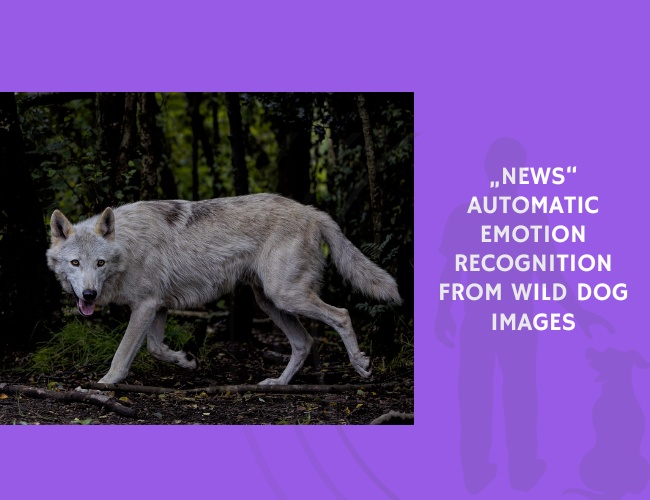
Presented at the International Conference on Animal–Computer Interaction, this work by Fernanda Hernández-Luquin, Hugo Jair Escalante, Luis Villaseñor-Pineda, Verónica Reyes-Meza, Humberto Pérez-Espinosa, and Benjamín Gutiérrez-Serafín responds to the growing need for computational tools that can interpret canine emotional states. Understanding emotions such as aggression, anxiety, contentment, and fear is critical for behavior research, training, welfare assessment, and dog–technology interaction systems.
The authors created a 15,599-image dataset sourced directly from the internet. Each image was manually labeled by multiple taggers through a custom web interface to ensure reliability. Notably, the dataset includes unedited, real-world images—no segmentation, cleaning, or landmarking were applied—making it a realistic and challenging benchmark for automated emotion recognition.
Several state-of-the-art image classification models were tested, including an AutoML approach that achieved the highest performance with a macro-average F1 score of 0.67. This level of accuracy is significant given the complexity of interpreting dog emotions from uncontrolled images that vary in lighting, angle, occlusion, and breed morphology.
The authors emphasize that DEBIw offers a non-invasive, easy-to-instrument, and easily retrainable foundation for future computational systems capable of analyzing dog emotional states. Beyond its practical applications, the dataset enables deeper scientific exploration into how canine emotions manifest visually, enhancing both technological and ethological research.
Source: Hernández-Luquin, F., Escalante, H. J., Villaseñor-Pineda, L., Reyes-Meza, V., Pérez-Espinosa, H., & Gutiérrez-Serafín, B. (2022). Dog emotion recognition from images in the wild: DEBIw dataset and first results. Presented December 5, 2022.










