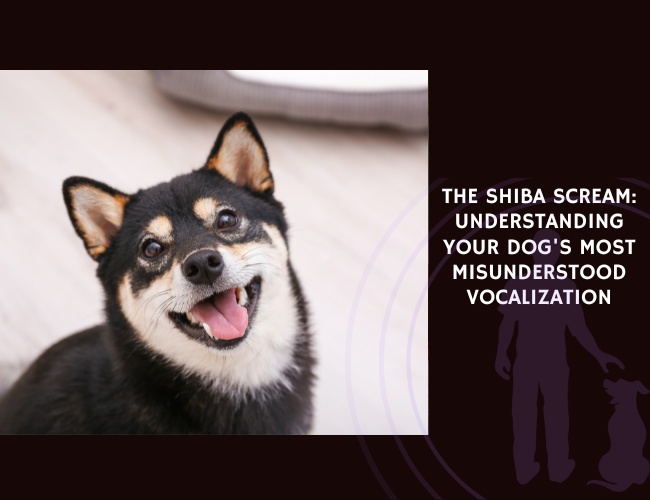
If you share your life with a Shiba Inu, you’ve probably experienced it at least once: that piercing, high-pitched vocalization that sounds like your dog is being mortally wounded—when all you were trying to do was trim a nail or put on a harness. The infamous “Shiba scream” has become something of a cultural phenomenon, spawning countless viral videos and nervous laughter. But beneath the drama lies something far more meaningful: a window into your dog’s emotional world and a signal that deserves our understanding, not our dismissal.
The Shiba Inu, with its fox-like elegance and spirited independence, carries within its DNA the blueprint of primitive breeds—dogs whose genetic makeup remains closer to their wild ancestors than most modern companions. This ancient heritage brings with it a unique emotional architecture, one that processes the world with heightened intensity and expresses distress through vocalizations that can leave even experienced dog lovers startled and confused.
Let us guide you through the science, the sensitivity, and the soul behind this distinctive behaviour. You might discover that what appears to be theatrical overreaction is actually your Shiba’s honest, unfiltered expression of overwhelm—and that understanding this changes everything about how you approach your relationship together.
Character & Emotional Architecture: The Primitive Heart
The Ancient Blueprint
Your Shiba Inu carries a remarkable legacy. Unlike breeds developed through centuries of selective breeding for specific tasks or temperaments, primitive breeds like the Shiba retain neurological and behavioural traits that reflect their wild ancestry. This isn’t merely a matter of appearance—though that fox-like face certainly hints at something older—it’s written into how their brain processes emotion, threat, and social interaction.
Research in affective neuroscience reveals that mammals share fundamental emotional systems rooted in specific brain circuits. In your Shiba, these systems operate with particularly sharp sensitivity:
The FEAR System: Located in the amygdala and hypothalamus, this circuit activates during perceived threats. In primitive breeds, this system tends to fire more readily and intensely, a survival advantage in wild settings that becomes challenging in domestic life. When your Shiba screams during nail trimming, their FEAR system may genuinely be signaling danger—not because the clippers hurt, but because the restraint and unpredictability activate ancient panic responses.
Common FEAR System Triggers in Shibas:
- Sudden restraint or being held firmly
- Unfamiliar people reaching toward them
- Loud or unexpected noises during handling
- Being cornered with no escape route
- Slippery surfaces that compromise balance and control
- Objects approaching their face or head unexpectedly
The PANIC/GRIEF System: This circuit governs separation distress and social connection. Shibas, despite their independent reputation, form deep bonds with their chosen people. When restrained against their will or when autonomy feels violated, this system can trigger intense vocalizations that express genuine emotional distress—not manipulation, but a plea for understanding.
The SEEKING System: This drives exploration, anticipation, and goal-directed behavior. In Shibas, when this system becomes frustrated—when they want to move but are held, want to escape but are confined—the blocked motivation can overflow into dramatic vocal protest. It’s the sound of intense internal conflict seeking resolution.
Primary Emotional Systems and Scream Triggers:
- FEAR System → Perceived threats, restraint, sudden touch, unpredictable handling
- PANIC/GRIEF System → Boundary violations, forced confinement, autonomy restriction, separation from safe person
- SEEKING System → Blocked goals, prevented movement, frustrated escape attempts, denied access to desired outcomes
- PLAY System → Over-arousal during excitement, inability to regulate intense positive emotion
Arousal Thresholds: The Hair-Trigger Reality
You might notice that your Shiba goes from zero to sixty in emotional intensity faster than other dogs you’ve known. This isn’t stubbornness or poor temperament—it’s a characteristic feature of primitive breed neurology. Their emotional states escalate rapidly, with less gradation between calm and intense arousal.
Think of it this way: where a Golden Retriever might have ten steps on their emotional escalator from relaxed to distressed, your Shiba might have three. When something triggers concern, they don’t linger in the middle ranges of mild worry—they spike quickly to high arousal. The scream often represents that moment when arousal crosses a critical threshold, when the internal pressure becomes too intense to contain. 🧠
Signs Your Shiba Is Approaching Threshold:
- Rapid breathing or panting when not hot or exercised
- Body stiffening or freezing in place
- Ears pinning back against the head
- Whale eye (showing whites of eyes)
- Excessive lip licking or yawning
- Attempting to back away or create distance
- Tail tucking or extreme stillness
Through the NeuroBond approach, we recognize this heightened sensitivity not as a flaw but as a fundamental aspect of your dog’s emotional architecture. Understanding this helps us approach our Shibas with the respect and predictability their nervous systems require.
The Scream Decoded: What Your Shiba Is Actually Telling You
Fear vs. Protest: Learning the Difference
Not all Shiba screams are created equal. One of the most important skills you can develop is distinguishing between genuine fear and exaggerated protest—and understanding that both deserve your attention, just in different ways.
Genuine Fear Screaming:
- Occurs during first exposures to frightening stimuli
- Accompanied by intense escape attempts, tucked body posture, dilated pupils
- Continues even when the stimulus stops, with lingering stress signals
- May include trembling, panting, or complete freezing before or after vocalization
- Often happens when the dog feels cornered or unable to escape
Protest Screaming:
- Happens during known, routine procedures the dog has learned to “perform” through
- Body language shows frustration rather than terror—may pull away but without panic
- Stops immediately once the activity ends, often with quick recovery
- Has been reinforced through past success (screaming made the unwanted thing stop)
- May include dramatic flailing that looks more like tantrum than genuine escape attempt
Quick Identification Guide:
- Context familiarity → First time = likely fear; Routine situation = likely protest
- Body language intensity → Extreme terror signals = fear; Frustrated resistance = protest
- Recovery time → Slow recovery with lingering stress = fear; Immediate return to normal = protest
- Consistency → Variable intensity = fear; Predictable performance = protest
- Reinforcement history → No pattern of success = fear; History of escape through screaming = protest
The distinction matters profoundly. Genuine fear requires patient desensitization and removal from the triggering situation. Protest screaming requires calm, consistent follow-through paired with gradual conditioning to build acceptance. Misreading protest as fear can reinforce the behavior, while misreading fear as protest can traumatize your dog.
The Sensory Overload Connection
Did you know that your Shiba processes sensory information with less filtering than many other breeds? Their neurological wiring delivers sensory input with higher intensity and less automatic dampening. What feels like gentle touch to you might register as sudden pressure to them. A room that seems quiet to you might feel like an overwhelming symphony of competing stimuli to your sensitive companion.
This heightened sensitivity means Shibas are particularly vulnerable to sensory congestion—when too much information arrives too quickly, overwhelming their processing capacity. The scream can function as a pressure release valve, an explosive outlet when internal systems become flooded and no other coping mechanism feels available.
Consider these common sensory overload triggers:
- Multiple people reaching for the dog simultaneously
- Grooming sessions with running water, clippers, and restraint all happening at once
- Busy veterinary waiting rooms with unfamiliar dogs, sounds, and smells
- Being touched unexpectedly while absorbed in watching or sniffing something
- Rapid transitions from calm environments to chaotic ones without adjustment time
When you frame the scream as your dog’s overwhelmed nervous system crying “too much, too fast,” it transforms from annoying theatrics into a meaningful communication about their internal experience.
Vocalization & Communication: The Language of Intensity
Beyond Bark and Whine
Your Shiba possesses a vocal range that can surprise even seasoned dog lovers. From the classic “Shiba scream” to mumbling vocalizations, husky-like howls, and distinctive “talking,” these dogs communicate with remarkable variety and intensity. This broad vocal repertoire likely reflects their primitive heritage—less refined, less domesticated, and more direct in emotional expression.
The scream sits at the extreme end of this vocal spectrum. While other vocalizations serve social communication or alert functions, the scream appears to bypass social niceties entirely. It’s raw, unmodulated, and designed to create immediate effect. In wild canids, such vocalizations might signal distress to pack members or startle predators. In your living room, it definitely accomplishes the startling part. 😄
What makes the Shiba scream particularly distinctive is its pitch and duration. The vocalization can reach frequencies that trigger strong emotional responses in humans—we’re biologically primed to find such sounds alarming because they mimic distress calls across many species. Your Shiba isn’t trying to manipulate you with this sound; they’re expressing genuine internal intensity in the only way their emotional system knows how in that moment.
Context Is Everything
Understanding when screaming occurs reveals crucial patterns. Pay attention to these contexts:
Handling and Restraint Scenarios:
- Nail trimming or paw handling
- Veterinary examinations
- Putting on or removing harnesses and collars
- Bathing or grooming procedures
- Being picked up or physically repositioned
- Medication administration
Boundary Violation Moments:
- Being approached when in a preferred resting spot
- Forced physical contact when the dog hasn’t initiated or consented
- Being cornered with no clear escape route
- Having personal space invaded by unfamiliar people or dogs
- Sudden grabbing or restraining when the dog is focused elsewhere
Arousal Overflow Situations:
- Extreme excitement during play that tips into overstimulation
- Frustration when goal-directed behavior is blocked
- Confusion when context signals become ambiguous or contradictory
- Conflicted emotional states (wanting to approach but also fearful)
Notice a pattern? Nearly all these contexts involve either loss of control, perceived boundary violations, or rapid arousal spikes. Your Shiba isn’t randomly dramatic—they’re responding predictably to specific types of internal pressure.
Training & Behavioral Understanding: Working With, Not Against
The Wrong Approach: Why Punishment Fails
Let’s address this directly: punishing a screaming Shiba doesn’t work and often makes the situation dramatically worse. When you understand that the scream represents genuine emotional overwhelm—whether fear, frustration, or sensory flooding—the futility and cruelty of punishment becomes clear.
Imagine experiencing a panic attack and having someone yell at you to stop. The panic doesn’t stop; if anything, it intensifies because now you have an additional threat to process. Your Shiba’s screaming operates similarly. Punishment adds another layer of stress to an already overwhelmed system, teaching your dog that not only is the original trigger frightening, but so is your response.
What Punishment Actually Accomplishes:
- Increases overall anxiety and arousal sensitivity
- Damages trust in your relationship
- May suppress the vocalization while intensifying internal distress (creating a dog who “suddenly” bites without warning because you’ve punished their warning system)
- Teaches your dog that expressing distress leads to more distress
- Can create learned helplessness, where the dog stops communicating altogether
- Strengthens the association between handling and negative outcomes
- Raises baseline stress levels, making future threshold even lower
The Invisible Leash reminds us that awareness, not force, guides the path forward. Your goal isn’t to silence your dog’s communication but to reduce their need to scream by addressing the underlying causes.
Building Acceptance Through Predictability
Through the NeuroBond approach, trust becomes the foundation of learning. The most effective way to reduce screaming is to create such clear, predictable, and respectful interactions that your Shiba’s nervous system never reaches the threshold where screaming feels necessary.
Predictable Movement Protocol: Before any handling procedure, establish a ritual of predictable signals. Always approach from the same angle, use the same gentle verbal marker, and move at consistent speed. Your Shiba’s brain constantly generates predictions about what will happen next. When your behavior matches their predictions, their arousal stays manageable. When you surprise them—even with something ultimately benign—you create prediction errors that spike stress.
Boundary-Respecting Touch: Consent isn’t just for humans. Watch your Shiba’s micro-signals before touching: are their ears forward and body relaxed, or pinned back and tense? Do they lean into your hand or pull away? Teaching “chin rest” or “paw touch” behaviors gives your dog active choice in procedures, transforming passive endurance into active cooperation. When dogs feel they have control, their need to scream diminishes dramatically.
Slow Transitions and Sensory Consideration: Never rush. If you need to move from one activity to another, build in transition time. Before a grooming session, spend five minutes in the grooming space doing nothing—just existing together calmly. This allows your Shiba’s nervous system to adjust to the context change. Keep environmental stimuli minimal: close doors to reduce sound, limit visual distractions, and eliminate competing demands for attention.
Low-Verbal Handling: Talking constantly during procedures might feel comforting to you, but for many Shibas, it adds to sensory overload. Your Shiba processes your body language far more than your words. Replace constant chatter with calm, silent presence and clear physical cues. This reduces cognitive load and allows them to focus on the actual procedure rather than trying to decode your vocal information. 🧡
Systematic Desensitization for Handling
If your Shiba already has established screaming patterns, you’ll need patient, systematic desensitization. This isn’t a quick fix—it’s a reconstruction of their emotional associations with triggering contexts.
Start far below threshold. If nail trimming triggers screaming, don’t start with nail trimming. Start with having clippers visible in the room while feeding treats. Then progress to touching the clippers to surfaces near your dog. Then touching clippers to your own nails. Then touching clippers to the floor near your dog’s paws. Each step might take days or weeks.
Key Desensitization Principles:
- Progress at your dog’s pace, not your convenience timeline
- Each session should end on a positive note, never at threshold
- One scream means you’ve moved too fast—go back several steps
- Duration matters less than maintaining sub-threshold arousal
- Generalize across contexts (different rooms, times of day, people)
- Build in “test” sessions periodically to assess true progress
- Pair every approximation with genuine high-value rewards
- Never skip steps even if your dog seems ready to advance
The golden rule: no screaming during training. If your dog screams, you’ve progressed too quickly. Go back several steps and rebuild more gradually. Every successful session below threshold rewires their brain’s associations. Every session that ends in screaming reinforces the fear or protest pattern.
Pair every approximation with something your Shiba genuinely values—not just treats, but perhaps access to a favored activity, or ending the session so they can return to their preferred spot. You’re teaching a new prediction: these procedures lead to good outcomes and respect my limits.

Performance & Activities: The Arousal Management Challenge
When Exercise Isn’t the Answer
Many frustrated Shiba owners hear this advice: “Just exercise them more and they’ll calm down.” While appropriate physical activity certainly matters for any dog, screaming isn’t fundamentally an energy problem—it’s an arousal regulation and emotional processing problem.
A tired Shiba can still scream if their nervous system is sensitized to particular triggers. In fact, an overly tired dog with depleted coping resources might scream more readily because they lack the cognitive energy to regulate their responses effectively. What matters isn’t exhausting your dog but helping them develop better arousal modulation and frustration tolerance.
Activities That Build Emotional Resilience
The most valuable activities for scream-prone Shibas aren’t necessarily the most physically demanding—they’re the ones that build impulse control, frustration tolerance, and confidence:
Activities That Build Emotional Resilience:
Scent Work and Nose Games: Engaging your Shiba’s extraordinary olfactory abilities requires focus and calm searching rather than high arousal. Start simple—hide treats around a room and let your dog search. Progress to formal scent detection games. The concentrated attention this requires helps build the neural pathways for sustained calm focus rather than rapid arousal spikes.
Pattern Training: Teaching precise, repetitive behaviors with clear markers builds impulse control. Practice position changes (sit to down to stand) with exact criteria. The mental effort and predictability inherent in pattern work helps develop better self-regulation. Your Shiba learns that thinking before reacting leads to rewards.
Settle Training: Actively teaching your dog to settle on a mat or in a designated space, rewarding progressively longer durations of calm behavior, might be the most valuable exercise for scream-prone dogs. This explicitly builds the skill they most lack: the ability to downregulate arousal and remain calm even when something mildly interesting is happening.
Decompression Walks: Rather than structured heel training or high-energy running, provide long, slow sniff walks where your Shiba controls the pace and investigation. This type of walk allows natural stress relief through sensory engagement without pushing arousal into high ranges. The autonomy involved also builds confidence and reduces overall anxiety.
Additional Beneficial Activities:
- Food puzzle toys that require problem-solving patience
- “Find it” games that encourage methodical searching
- Gentle tug with clear start/stop rules for arousal management
- Trick training that builds body awareness and handler focus
- Controlled greeting protocols that teach polite impulse control
- Platform work (standing on elevated surfaces) for confidence and body control
Moments of Soul Recall reveal how memory and emotion intertwine in behaviour—when your Shiba encounters familiar walk routes or activity patterns, they access emotional memories. Make those memories ones of calm exploration rather than high-intensity arousal, and you’ll shape their overall emotional baseline.
Nutritional & Health Considerations: The Body-Mind Connection
When Screaming Signals Physical Distress
While most Shiba screaming relates to emotional and sensory processing, you must rule out physical causes, particularly if screaming is new or has suddenly increased in frequency. Pain, even mild discomfort, significantly lowers the threshold for emotional outbursts.
Health Conditions to Investigate:
- Orthopedic issues, particularly patellar luxation (common in Shibas) that makes handling legs painful
- Skin sensitivities or allergies that make touch uncomfortable
- Ear infections that make head handling distressing
- Dental pain that affects tolerance for having the mouth or face touched
- Vision or hearing changes that increase startle responses
- Thyroid imbalances that affect emotional regulation
Additional Medical Considerations:
- Hip dysplasia or arthritis affecting how the dog moves and responds to positioning
- Neurological issues causing heightened pain sensitivity
- Gastrointestinal discomfort that increases overall irritability
- Autoimmune conditions creating chronic low-grade pain
- Age-related cognitive decline affecting anxiety responses
- Medication side effects that alter arousal or sensitivity levels
Your veterinarian should conduct a thorough examination, with you specifically mentioning the screaming behavior and during which contexts it occurs. Don’t let it be dismissed as “just Shiba drama” without ruling out medical contributors.
Nutritional Impact on Arousal
The relationship between nutrition and behavioral threshold isn’t always obvious, but it’s real. Consider these factors:
Nutritional Factors Affecting Arousal and Reactivity:
Protein Quality and Quantity: While dogs need adequate protein, some individuals become more reactive on very high-protein diets, particularly those using lower-quality protein sources. The amino acid profile affects neurotransmitter production. If your Shiba seems generally more aroused or reactive, consider discussing protein levels with a veterinary nutritionist.
Food Sensitivities: Chronic low-grade inflammation from dietary sensitivities can increase overall nervous system reactivity. You’re essentially dealing with a dog whose system is already running hot, making emotional threshold lower. Elimination diet trials can sometimes produce surprising improvements in handling tolerance.
Micronutrient Support: B vitamins, magnesium, and omega-3 fatty acids all play roles in nervous system function and stress response. While supplements should never replace proper behavior modification, ensuring optimal nutritional status provides the best biological foundation for emotional regulation.
Meal Timing Around Stressful Events: Avoid scheduling grooming or vet visits when your Shiba is hungry or immediately after a large meal. Both hunger and full-stomach discomfort can reduce tolerance for handling. Time these activities for mid-way between meals when blood sugar is stable and digestive activity is minimal.
Other Dietary Considerations:
- Carbohydrate sources and glycemic load affecting energy stability
- Artificial additives or preservatives potentially affecting behavior
- Hydration status influencing overall stress response
- Caloric adequacy—under or overfeeding can affect mood and tolerance
- Feeding schedule consistency supporting predictable routines
The Gut-Brain Axis
Emerging research on the gut-brain axis reveals that intestinal health directly influences emotional regulation through both the vagus nerve and the production of neurotransmitters in the gut. A Shiba with chronic digestive upset or poor gut microbiome health may have compromised emotional resilience completely unrelated to their training or handling experiences.
Probiotics formulated for dogs, particularly those containing strains shown to influence anxiety responses, represent an interesting avenue to explore alongside behavioral work. This doesn’t replace training—but it optimizes your dog’s biological capacity to regulate their responses.
Primitive. Sensitive. Unfiltered.
Expression is survival.
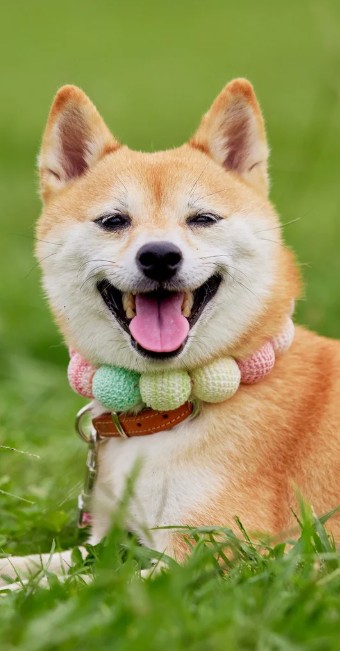
The Shiba scream isn’t theatrics—it’s a primitive nervous system signaling overwhelm with raw honesty. What sounds dramatic is simply ancient wiring speaking loudly.
Fear fires quickly.
Handling, restraint, or unpredictability can activate ancestral defense circuits. The vocal burst is a reflexive alarm, not disobedience or exaggeration.

Autonomy shapes calm.
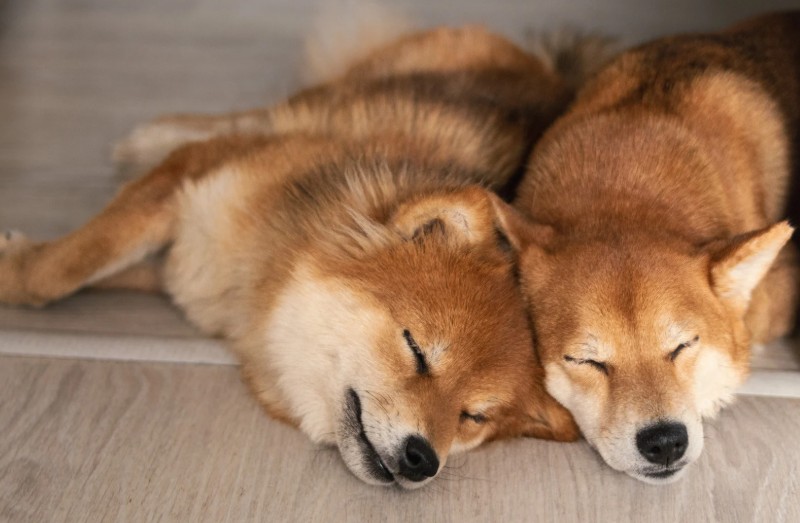
When a Shiba’s need for control is respected, their emotional intensity softens. Trust and predictability quiet the system long before restraint ever will.
Health Concerns: The Long-Term Impact of Chronic Stress
When Drama Becomes Trauma
There’s a critical distinction between occasional context-appropriate screaming (like during a genuinely frightening first veterinary procedure) and chronic, frequent screaming that occurs across many situations. The latter isn’t just annoying—it represents a dog living in a state of recurring emotional overwhelm, which carries real health consequences.
Chronic stress and repeated activation of fear and panic systems affect:
Physical Health Impacts of Chronic Stress:
Immune Function: Stress hormones suppress immune response. A Shiba in constant high alert becomes more vulnerable to infections, slower to heal from injuries, and potentially more susceptible to autoimmune conditions.
Digestive Health: The gut-brain connection works both ways. Chronic anxiety often manifests as digestive issues—intermittent diarrhea, reduced appetite, or food sensitivities. Your screaming Shiba might also be your frequent-upset-stomach Shiba.
Cardiovascular Stress: Repeated activation of the sympathetic nervous system’s fight-or-flight response is hard on the cardiovascular system over time. While a single screaming episode won’t cause lasting harm, years of frequent panic responses create wear and tear.
Behavioral Deterioration: Dogs who remain in high-arousal states tend to become more reactive over time, not less. The screaming might spread to new contexts, and other stress behaviors might emerge—resource guarding, increased reactivity to other dogs, displacement behaviors like excessive licking or pacing.
Additional Long-Term Consequences:
- Chronic muscle tension leading to soreness and reduced mobility
- Sleep disruption affecting recovery and cognitive function
- Hormonal imbalances from persistent cortisol elevation
- Accelerated aging and reduced lifespan quality
- Skin issues including hot spots, excessive shedding, or dull coat
- Increased risk of chronic diseases and metabolic disorders
🔊 Understanding the Shiba Scream: A Phase-by-Phase Guide 🦊
Navigating your Shiba’s most intense vocalization through neuroscience, sensitivity, and trust-based training
Phase 1: Recognition & Assessment
Learning to decode your dog’s vocal distress
Understanding the Two Types
The Shiba scream isn’t random drama. Genuine fear screaming occurs during first exposures with intense escape attempts and lingering stress signals. Protest screaming happens during routine procedures with quick recovery once the activity stops. Distinguishing between these is crucial—fear requires desensitization, protest requires calm consistency.
Watch for These Signals
• Dilated pupils and tucked body posture indicate genuine fear
• Dramatic flailing without actual panic signals learned protest
• Recovery time reveals intensity—slow recovery means real fear
• Context familiarity matters—first time versus routine situation
Phase 2: Identifying Triggers & Patterns
Mapping your Shiba’s emotional architecture
The Primitive Brain Response
Shibas carry ancient neurological wiring that processes threats with heightened intensity. Their FEAR system activates more readily than domesticated breeds, their arousal escalates in sharp spikes rather than gradual increases, and their sensory processing delivers input at higher intensity with less natural filtering.
Common Trigger Contexts
• Restraint scenarios: nail trimming, veterinary exams, harness application
• Boundary violations: cornered positions, forced contact, sudden grabbing
• Sensory overload: multiple stimuli arriving simultaneously
• Context ambiguity: unclear intentions or unpredictable touch patterns
Critical Warning: Punishment Backfires
Never punish screaming. Adding stress to an overwhelmed nervous system increases anxiety, damages trust, and may suppress communication while intensifying internal distress. Your goal isn’t to silence the scream but to reduce the need for it through understanding and environmental changes.
Phase 3: Creating Sanctuary & Predictability
Building the foundation for emotional safety
Establish Sanctuary Space
Your Shiba needs a completely safe zone where handling never occurs. This space must be off-limits to everyone, located away from high-traffic areas, and accessible at all times. When dogs know they can always retreat to genuine safety, their overall anxiety decreases and paradoxically, they become more willing to engage in challenging activities.
Build Routine Architecture
Consistent daily routines allow your Shiba’s brain to run efficient predictions, reducing baseline vigilance. Structure wake times, meals, walks, and quiet periods within 30-minute windows daily. This predictability conserves cognitive resources for genuinely novel situations rather than constant alert mode.
Minimize Sensory Overload
• Keep environments calm during handling procedures
• Limit competing stimuli—close doors, reduce visual distractions
• Use low-verbal handling rather than constant talking
• Allow 30-60 minute decompression after stressful events
Phase 4: Systematic Desensitization
Rebuilding positive associations step by microscopic step
The Golden Rule: Sub-Threshold Training
Start far below the point where screaming occurs. For nail trimming, begin with clippers visible in the room during treat time—not touching your dog, just existing nearby. Progress through weeks: touching clippers to surfaces, to your own nails, to the floor near paws, then gradually to your dog. If screaming occurs, you’ve moved too fast. Go back several steps.
Progressive Approximation Timeline
• Weeks 1-2: Tool exposure during positive moments
• Weeks 3-4: Tool interaction with environment and yourself
• Weeks 5-6: Voluntary paw contact training separate from tools
• Weeks 7-8: Tools approaching body during calm paw holds
• Weeks 9-10: Single brief clip followed by immediate release and reward
Building Consent Through Choice
Teach “chin rest” or “paw touch” behaviors that give your Shiba active participation. When they choose to maintain the position, they’re consenting to the procedure. This transforms passive endurance into cooperative engagement, dramatically reducing the need for extreme vocalizations.
Phase 5: Implementing Invisible Leash Principles
Calm awareness over physical force
Predictable Movement Protocol
Always approach from the same angle, use consistent gentle markers, and move at steady speed. Your Shiba’s brain generates predictions about your behavior. When your actions match their predictions, arousal stays manageable. Surprises—even benign ones—create prediction errors that spike stress and trigger defensive responses.
Boundary-Respecting Touch
Watch micro-signals before touching: ears forward and body relaxed versus pinned back and tense. Wait for your dog to lean into your hand or maintain neutral posture. Approach in predictable arcs rather than direct lines, pause for acknowledgment, then proceed. This spatial clarity prevents the boundary violations that trigger intense protest.
Your Calm Anchors Theirs
Dogs read autonomic nervous system signals. Practice genuine calm—not fake cheerfulness—before procedures. Your regulated emotional state provides an anchor for your Shiba’s nervous system. Model the internal state you want them to achieve, using silent presence and clear physical cues rather than verbal chatter.
Phase 6: Breaking Reinforcement Cycles
Understanding how screaming becomes learned behavior
How You Accidentally Reinforce Screaming
Every time screaming results in immediate release, stopping procedures, backing away, providing comfort, or showing strong reactions, you’ve reinforced the behavior. Your dog learns: “Screaming = control over unwanted situations.” This creates powerful intermittent reinforcement—the hardest pattern to break.
The Correct Response Protocol
For protest screaming: Stay emotionally neutral, continue at the same calm pace, and release only during quiet moments. For fear-based screaming: Immediately stop and back up below threshold—not to reward screaming but because pushing through genuine fear causes trauma. The key is teaching that cooperation, not screaming, leads to relief.
Consistency Across Handlers
All family members must respond identically. Inconsistent handling—where sometimes screaming works and sometimes doesn’t—creates the strongest possible reinforcement. If one person gives in while another holds firm, you’re teaching your Shiba to scream longer and louder to find the weak link.
Phase 7: Building Long-Term Emotional Resilience
Activities that develop arousal regulation
Focus-Building Activities
Scent work and nose games require concentrated attention without high arousal. Teaching precise pattern behaviors builds impulse control. Settle training explicitly develops the ability to downregulate arousal. These activities address the root issue—not energy management but arousal modulation and frustration tolerance.
Daily Handling Maintenance
Practice tiny bits of handling when nothing needs to be done—brief paw touches during TV time, quick body runs during petting sessions. Associate handling with positive moments rather than only procedures they dislike. This normalizes touch and reduces the prediction that handling always leads to something unpleasant.
Decompression Protocols
• Slow sniff walks where your dog controls pace and investigation
• 30-60 minute quiet periods after stressful events
• Weekly “easy days” with minimal handling demands
• Regular assessment of stress indicators to catch building tension early
Phase 8: Medical Assessment & Professional Help
When to seek veterinary or behavioral support
Rule Out Physical Causes
Pain significantly lowers emotional thresholds. Investigate orthopedic issues (patellar luxation is common in Shibas), skin sensitivities, ear infections, dental pain, vision or hearing changes, and thyroid imbalances. Never dismiss screaming as “just drama” without thorough veterinary examination, especially if the behavior is new or increasing.
Nutritional & Gut Health Support
The gut-brain axis directly influences emotional regulation. Food sensitivities create chronic low-grade inflammation that increases reactivity. Consider protein quality, micronutrient support (B vitamins, magnesium, omega-3s), and probiotic supplementation alongside behavioral work. Time meals to avoid handling when hungry or immediately after eating.
When to Seek Professional Support
Contact certified behavior consultants (CCPDT, IAABC) or veterinary behaviorists if: screaming occurs in multiple contexts and is increasing, you’re avoiding necessary care, the relationship feels adversarial, or previous training made things worse. Anxiolytic medication may support behavior modification—this isn’t giving up, it’s providing the biological foundation for learning new patterns.
🔍 Understanding Different Screaming Contexts
Fear-Based Screaming
Trigger: First exposures, genuine threats, inescapable situations
Body Language: Extreme terror signals, dilated pupils, trembling
Recovery: Slow return to baseline, lingering stress
Approach: Patient desensitization, never force through
Protest Screaming
Trigger: Routine procedures, learned responses
Body Language: Frustration signals, dramatic but not panicked
Recovery: Immediate return to normal once stopped
Approach: Calm consistency, don’t reinforce with reactions
Puppy vs. Adult Patterns
Young Shibas: More malleable, respond faster to desensitization
Adult Shibas: Established patterns require longer intervention
Senior Shibas: May increase sensitivity due to pain, cognitive decline
Timeline: Expect months for adults, weeks for puppies
Handling Context Variations
Nail Trimming: Most common trigger, paw sensitivity is evolutionary
Veterinary Exams: Combined stressors—environment, strangers, restraint
Bathing/Grooming: Sensory overload from water, tools, positioning
Harness Application: Often protest after pattern established
Shibas vs. Other Breeds
Primitive Breeds: Higher arousal sensitivity, less domesticated responses
Working Breeds: More handler-focused, naturally more tolerant
Companion Breeds: Bred for biddability, accept handling more readily
Key Difference: Shibas prioritize autonomy over cooperation
Individual Temperament Variations
High Sensitivity: Requires extensive desensitization, longer timelines
Moderate Sensitivity: Responds to standard protocols within months
Touch Traumatized: Needs professional support, possible medication
Confident Shibas: May only protest specific procedures
⚡ Quick Reference Formula
Threshold Management: If your Shiba screams during training, go back 3-5 steps in your desensitization protocol. Success = no vocalization.
Recovery Time Rule: After any screaming episode, allow 20-30 minutes of quiet decompression before attempting additional handling.
Consistency Equation: All family members must respond identically 100% of the time. Inconsistency = intermittent reinforcement = stronger behavior.
Progress Timeline: Young dogs: 6-12 weeks | Adult dogs: 3-6 months | Senior or traumatized dogs: 6-12+ months with professional support
🧡 The Zoeta Dogsoul Perspective
The Shiba scream isn’t theatrical drama—it’s authentic communication from a sensitive, primitive nervous system reaching overwhelm. Through the NeuroBond approach, we recognize that trust becomes the foundation of learning when we respect emotional architecture rather than forcing compliance. The Invisible Leash principles remind us that calm awareness and spatial clarity guide more effectively than physical control ever could. When we honor our Shibas’ need for predictability, autonomy, and boundary respect, moments of Soul Recall—those deep emotional memories of safety and understanding—replace the panic that once necessitated screaming. This is the essence of working with primitive breeds: accepting their authentic sensitivity, building relationships where cooperation feels safer than resistance, and recognizing that the scream is simply their voice when they have no other words. Listen to it, learn from it, and let it guide you beyond the need for it.
© Zoeta Dogsoul – Where neuroscience meets soul in dog training
Recognizing When Professional Help Is Needed
You don’t have to navigate this alone. Seek professional support if:
Signs You Need Professional Behavior Support:
- Screaming occurs in multiple contexts and is increasing in frequency
- Your dog shows other significant anxiety or reactivity behaviors
- You feel afraid to handle your dog or the relationship feels adversarial
- Previous training attempts have made the situation worse
- Your dog’s screaming is preventing necessary medical care or grooming
- You feel overwhelmed, frustrated, or like you’re failing your dog
- The screaming has generalized to contexts it didn’t occur in previously
- Your dog’s quality of life seems significantly impaired by anxiety
- Family members disagree on handling approaches, creating inconsistency
- You’re considering rehoming due to the behavior challenges
What to Look for in a Professional:
- Experience specifically with fear and anxiety cases
- Familiarity with primitive breeds and their unique characteristics
- Force-free, positive reinforcement-based methodology
- Certification through reputable organizations (CCPDT, IAABC, KPA)
- Willingness to work collaboratively with your veterinarian
- Clear explanation of training plans and expected timelines
- Realistic about outcomes—promises of “quick fixes” are red flags
Look for professionals with experience in fear and anxiety, preferably those familiar with primitive breeds and using force-free, systematic desensitization approaches. Certification through organizations like CCPDT (Certified Council for Professional Dog Trainers) or IAABC (International Association of Animal Behavior Consultants) indicates evidence-based training.
In some cases, veterinary behaviorists might recommend anxiolytic medication as a temporary support during behavior modification. This isn’t “giving up” or taking the easy way out—it’s providing your dog’s nervous system the support it needs to learn new patterns. Medication should always accompany training, not replace it, but it can be the difference between progress and spinning your wheels.

Lifestyle & Environment: Creating the Foundation for Calm
The Importance of Sanctuary Space
Your Shiba needs a space that is entirely theirs—a spot where handling doesn’t happen, where they can retreat knowing they won’t be disturbed. This sanctuary principle is fundamental to building security and reducing overall arousal.
Essential Sanctuary Space Requirements:
- Physically comfortable with appropriate bedding suited to your dog’s size and preferences
- Located away from high-traffic areas but not completely isolated where they can’t monitor the household
- Off-limits to other pets and especially to children—everyone must respect this boundary
- Associated only with rest and safety, never with training, grooming, or handling procedures
- Accessible to your dog at all times without barriers or permission needed
- Temperature-controlled and draft-free for physical comfort
- Quiet location away from doorbell, appliances, and other startling sounds
- Elevated or den-like if your Shiba prefers enclosed spaces (many do)
When your Shiba knows they can always access true safety, their generalized anxiety often decreases. Paradoxically, dogs with reliable sanctuary space are often more willing to engage in potentially challenging activities because they know escape is always available if needed.
Routine as Emotional Anchor
Primitive breeds, with their heightened prediction processing, benefit enormously from consistent daily routines. When your Shiba knows what to expect and when, their nervous system can relax. Unpredictability keeps them in a state of vigilance, lowering threshold for reactive responses.
Daily Routine Elements for Emotional Stability:
Structure your day with consistent:
- Wake and sleep times—aim for within 30-minute windows daily
- Meal times—feeding at the same times helps regulate their entire system
- Walk schedules—predictable exercise windows reduce anticipatory anxiety
- Interactive play sessions—scheduled engagement prevents demand behaviors
- Quiet periods—designated downtime teaches settling and reduces overstimulation
- Bathroom breaks—regular opportunities prevent stress from holding
- Training moments—brief, consistent practice sessions build skills gradually
- Social interaction windows—clear times for engagement and times for solitude
This doesn’t mean rigidity—occasional variations are fine—but the underlying framework should be stable. Your Shiba’s brain can then run efficient predictions about daily life, conserving cognitive resources for genuinely novel situations rather than staying in constant alert mode.
Social Environment Considerations
Consider who interacts with your Shiba and how. Some dogs handle multiple family members well; others become more sensitized when too many people attempt handling. There’s no shame in designating one primary person for procedures like nail trimming or medication if that reduces your dog’s stress.
For Shibas living with children, establishing strict rules protects both:
- Children never chase, corner, or grab the dog
- Children learn to recognize and respect “leave me alone” signals
- All grooming and handling is adult-only responsibility
- Children interact with the dog only during designated play times and never in the sanctuary space
Family Rules for Shiba Safety:
- No disturbing the dog while eating, sleeping, or in sanctuary space
- No hugging, kissing, or restraining—teach gentle petting only
- Children must ask permission from both adult and dog before interaction
- Teach children to recognize stress signals: ears back, tail tucked, looking away, lip licking
- Dog always has escape route available—never block them in
- Toys and high-value items are managed by adults only
- Visitors must follow the same rules—no exceptions for guests
- Children participate in training under adult supervision to build relationship
The goal is an environment where your Shiba can accurately predict social interactions, knowing when engagement will happen and when they’ll be left alone. This predictability, again, reduces the sensory and social overload that contributes to screaming thresholds. 🧠
Training Philosophy: The NeuroBond Approach to Sensitive Dogs
Respecting Emotional Architecture
Traditional dog training often assumes that all dogs process the world similarly and respond to similar motivators. The NeuroBond methodology recognizes a fundamental truth: your Shiba’s emotional architecture is unique, shaped by primitive breed genetics and individual sensitivity. Working effectively means adapting your approach to this architecture rather than expecting your dog to conform to methods designed for different temperaments.
Core NeuroBond Principles for Sensitive Dogs:
This means:
Accepting Higher Sensitivity as Fact: Stop waiting for your Shiba to “just get over it” or comparing them to more tolerant breeds. Their sensitivity isn’t something to fix—it’s something to work with. Just as you wouldn’t expect an introvert to enjoy the same social situations as an extrovert, don’t expect your Shiba to process handling the way a Labrador might.
Reading Micro-Signals: Develop your ability to recognize the earliest signs of rising arousal—before it reaches screaming threshold. Watch for: ear position changes, tongue flicks, lip licking, looking away, body stiffening, weight shifts backward, or dilated pupils. These subtle signals are your early warning system. Respect them immediately, and your Shiba learns you’re trustworthy.
Building Trust Through Consistency: Every interaction is a deposit into or withdrawal from your relational bank account. Consistent, predictable handling that respects your dog’s signals makes deposits. Forcing through their resistance or ignoring their communication makes withdrawals. The balance of this account directly affects your dog’s willingness to tolerate handling without screaming.
Key Implementation Strategies:
- Maintain emotional neutrality during stressful procedures—your calm anchors theirs
- Use clear, consistent body language rather than variable verbal commands
- Create predictable approach patterns so your dog can anticipate your movements
- Honor their “no” signals by backing off before arousal escalates
- Celebrate small cooperation more than perfect compliance
- Track patterns to identify specific triggers rather than generalizing
- Adjust expectations based on daily variables (stress, sleep, health)
- Build positive associations systematically rather than forcing exposure
The Invisible Leash in Practice
The Invisible Leash concept—that calm awareness and spatial respect guide more effectively than physical force—transforms how you approach your sensitive Shiba. This isn’t about permissiveness or avoiding necessary procedures. It’s about achieving those goals through clarity and respect rather than confrontation and force.
Invisible Leash Application Strategies:
Spatial Clarity Reduces Conflict: When your Shiba understands exactly what’s expected regarding space and movement—when boundaries are clear and consistently maintained—much of the ambiguity that triggers stress disappears. They know where they can be, where they shouldn’t be, and what your approach means. This clarity prevents the defensive or protest screaming that emerges from confusion.
Calm Presence Over Verbal Commands: Your emotional state influences your dog more than your words. A handler who remains genuinely calm (not fake calm—dogs read autonomic nervous system signals) provides an anchor for the dog’s own nervous system. Practice regulating your own arousal before and during handling procedures. Your Shiba will mirror your internal state more than your external words.
Consent and Agency: Whenever possible, give your Shiba choice. Can they choose which paw gets trimmed first? Can they choose to step into the grooming position rather than being placed there? Can they choose when to end a brief training session? These small choices build a sense of agency and control, which dramatically reduces the need for extreme vocalizations.
Practical Invisible Leash Techniques:
- Approach in predictable arcs rather than direct lines toward your dog
- Pause and wait for your dog to orient to you before touching
- Use body blocks and spatial pressure instead of physical corrections
- Create clear thresholds (doorways, mats) that define behavioral expectations
- Allow your dog to move away and return on their terms during training
- Use your positioning to guide movement rather than pulling or pushing
- Maintain relaxed body language even when directing or redirecting
- Signal intentions clearly through consistent movement patterns
Common Scenarios: Practical Solutions for Real Situations
Scenario: Nail Trimming Terror
You approach with clippers, and before you even touch a paw, the screaming begins. Your Shiba has learned that nail trimming is worth protesting—hard.
The Solution Path:
Week 1-2: Clippers appear during treat time but never approach the dog. They just exist in the environment while good things happen. No touching, no trimming, just positive association with presence.
Week 3-4: Touch clippers to furniture, then to the floor near your dog, then to your own fingers—all while treating. Your dog learns clippers touch things but not them yet.
Week 5-6: Introduce “paw touch” training separately from clippers—asking your dog to rest their paw in your hand voluntarily for treats. Build duration until they’ll keep it there for 10-15 seconds calmly.
Week 7-8: Bring clippers back during paw touch exercises but don’t clip. Just touch clippers to various parts of your dog’s paw while they hold position, treating generously.
Week 9-10: Make one clip on the very tip of one nail, then immediately release and celebrate with their favorite reward. Build from there—never doing so much that arousal rises to screaming threshold.
This process seems long, but it’s far shorter than years of fighting with a screaming dog at every nail trim. You’re rebuilding their entire emotional association with the procedure.
Scenario: Veterinary Visit Meltdown
The waiting room is manageable, but the moment the veterinarian reaches toward your Shiba, the screaming begins—making examination nearly impossible.
The Solution Path:
At Home: Practice “vet visit approximations”—have different people approach and touch your dog briefly in ways that mimic examinations (looking in ears, running hands over body, lifting lips to see teeth). Pair every approximation with high-value rewards. Build a verbal marker like “check time” that predicts these handling moments.
At the Clinic: Ask your veterinarian to work with you on desensitization visits—appointments where nothing happens except positive association building. Arrive, walk through the clinic, get treats, leave. Progress to entering the exam room, treats, leave. Then touching the exam table. Then hopping up. Each step reinforces that this environment is safe.
During Actual Exams: Request the veterinarian work slowly, allowing breaks for your dog to decompress. Give your Shiba a job—maybe holding a target stick or maintaining nose contact with your hand—that provides focus and sense of control. Many veterinary clinics now offer “fear free” approaches aligned with these principles.
Consider House Call Vets: If available in your area, veterinarians who conduct exams in your home eliminate much of the environmental stress. In familiar territory, many Shibas tolerate handling better because the context feels less threatening.
Scenario: The Harness Battle
Every walk begins with drama as you attempt to put on the harness. Your Shiba screams, twists, and acts as if you’re committing violence—yet moments later walks happily once it’s on.
The Solution Path:
Change the Harness Type: Step-in harnesses often create less perceived confinement than overhead styles. Some Shibas also prefer the control of putting their own feet through loops over having something placed over their head and shoulders.
Build Positive Association: The harness becomes the predictor of walks—the thing that makes the best part of your dog’s day happen. Keep the harness near the door and let your dog see it before every walk, building anticipation. Practice touching them with the harness fabric without putting it on, treating heavily.
Teach “Dress Yourself”: For step-in harnesses, teach your dog to place their front feet into the loops on command. This transforms passive endurance into active cooperation. Start by rewarding any movement toward the harness, then stepping near it, then placing one paw in, building the complete behavior gradually.
Make It Brief: Speed matters less than calmness, but once your dog accepts the harness process, don’t linger. Complete the buckling and immediately begin the walk. The faster the transition to the good thing (walk), the easier the preparation becomes to tolerate.
That balance between science and soul—that’s the essence of Zoeta Dogsoul. 🧡
Understanding Breed-Specific Sensitivity: Why Shibas Are Different
The Primitive Brain at Work
Not all breeds experience the world with equal intensity. Your Shiba’s neurological wiring reflects their primitive heritage—these dogs weren’t selectively bred over centuries to be biddable, handler-focused companions. They were bred to hunt independently, make autonomous decisions, and survive in challenging mountain terrain.
Primitive Breed Characteristics Affecting Behavior:
This heritage means:
Independent Decision-Making: Your Shiba’s brain is wired to assess situations and act independently, not to defer to human judgment. When you impose handling they haven’t chosen, it conflicts with their neurological drive for autonomy. This isn’t stubbornness—it’s fundamental breed characteristic.
Acute Sensory Processing: Hunting dogs need excellent sensory awareness. Shibas retained this acute perception, which means they notice and react to subtle stimuli that other breeds might filter out. That “random” screaming when you touched them? They probably detected your approach in their peripheral vision and the sudden contact violated their prediction about your position.
Quick Arousal, Slow Recovery: Primitive breeds tend to experience sharp arousal spikes but also take longer to return to baseline than more domesticated breeds. After a screaming episode, your Shiba might need 20-30 minutes to fully calm down, during which they’re more vulnerable to additional triggers. Understanding this prevents compounding the problem with immediate repeat attempts.
Additional Primitive Traits:
- Strong prey drive that can override training in high-arousal moments
- Tendency toward resource guarding as survival-based behavior
- Wariness of novelty requiring longer socialization periods
- Less inherent motivation to please humans compared to working breeds
- More selective about social bonds—fewer trusted individuals
- Higher baseline vigilance even in safe, familiar environments
- Less tolerance for physical manipulation or confinement
- Stronger flight response when escape seems possible
Touch Sensitivity Patterns
Many Shibas show distinctive patterns in touch sensitivity:
- Paw handling resistance: Likely evolutionary—paws are essential for survival, and protecting them from manipulation is deeply ingrained
- Restraint aversion: Being held or confined activates panic circuits because escape ability is survival-critical
- Head and neck sensitivity: Predators attack the neck; wariness about this vulnerable area makes biological sense
- Sudden touch startle: Without warning, touch feels like potential attack rather than friendly interaction
Knowing these patterns helps you design handling approaches that work with rather than against your Shiba’s wiring. Desensitize the most sensitive areas last, not first. Build comfort with less threatening touch before progressing to more vulnerable areas.
The Learning Process: What Reinforces Screaming?
Accidental Training
Most screaming problems are inadvertently trained by well-meaning owners who simply don’t understand the mechanics of reinforcement. Every time your dog screams and you:
How Human Reactions Reinforce Screaming:
- Immediately release them from restraint → teaches “screaming = freedom”
- Stop the procedure you were attempting → teaches “screaming = escape from discomfort”
- Back away or put distance between you → teaches “screaming = controls human proximity”
- Provide comforting attention → teaches “screaming = gets interaction and soothing”
- Show strong emotional reaction (even concern) → teaches “screaming = creates interesting human behavior”
- Rush to complete the task faster → teaches “screaming = speeds up unpleasant things”
- Offer treats to quiet them → teaches “screaming = earns rewards”
- Engage in verbal soothing or explanations → teaches “screaming = increases social attention”
You’ve just reinforced screaming. Your dog’s brain records: “Screaming made that stop/change.” This creates intermittent reinforcement—sometimes screaming works, sometimes it doesn’t—which is the most powerful reinforcement schedule for maintaining behaviors.
Breaking the Cycle
Breaking this cycle requires consistency that feels counterintuitive:
For Protest Screaming: You must not respond to the scream itself. This doesn’t mean forcing through—it means staying absolutely neutral emotionally, continuing the procedure at the same calm pace you’d use if there were no screaming, and releasing your dog or ending the procedure only during moments of quiet. You’re teaching: “Calm gets you what you want. Screaming changes nothing.”
For Fear-Based Screaming: You do respond—but by immediately stopping and backing up to below threshold, not by providing comfort while the dog is still escalating. You’re teaching: “You’re safe. We won’t push beyond what you can handle. But screaming doesn’t earn escape—choosing to participate earns freedom.”
The distinction is subtle but critical. In both cases, you’re aiming to make cooperation, not screaming, the path to relief.
The Power of Small Wins
Progress happens through accumulation of successful experiences below threshold. Every time your Shiba tolerates a tiny bit of handling without screaming, you’ve created a neural pathway that says “this is manageable.” Stack enough of these experiences, and those pathways become highways. The screaming pathways, unused, begin to fade.
Celebrate small wins enthusiastically—not with excited energy that raises arousal, but with genuine satisfaction your dog can sense. One paw touched without screaming deserves the same reward you’d give for a perfect recall. You’re building something profound: trust in the face of vulnerability.
Senior Shibas: How Age Changes the Pattern
When Sensitivity Increases
As your Shiba ages, you might notice changes in their screaming patterns. Often, senior dogs become more sensitive to handling, not less. This typically reflects:
Age-Related Changes Affecting Screaming Behavior:
Physical Changes: Arthritis makes touch painful in ways your dog might not show until restraint prevents them from moving away. Cognitive decline can increase confusion and anxiety about unexpected handling. Hearing loss means they don’t hear your approach, making touch more startling. Vision changes create similar startle vulnerability.
Reduced Coping Capacity: Older dogs have less cognitive resilience. The mental effort required to tolerate uncomfortable procedures becomes harder. What they managed at five years old might overwhelm them at twelve.
Lifetime Sensitization: Unfortunately, years of forced handling can create progressive sensitization rather than habituation. A senior Shiba might scream more readily than their younger self simply because their cumulative experiences have taught them that screaming is necessary for self-protection.
Additional Senior-Specific Factors:
- Decreased pain tolerance from chronic conditions
- Medication side effects affecting mood or sensitivity
- Sleep disruption leading to irritability and lower threshold
- Muscle atrophy making positioning uncomfortable
- Dental disease causing head and mouth sensitivity
- Decreased mobility making sudden movements painful
- Cognitive dysfunction causing confusion and anxiety
- Sensory decline (smell, taste) reducing environmental predictability
Adapting Your Approach
Senior Shibas need even more careful, accommodating handling:
Senior Shiba Handling Adaptations:
- Schedule procedures during their most alert, comfortable times of day
- Warm arthritic joints before handling with gentle massage or warm compresses
- Allow more breaks during procedures—patience becomes even more critical
- Consider sedation or pain medication for essential but distressing procedures
- Accept that some non-essential grooming might need to be abandoned if it causes significant distress
- Work with your veterinarian on age-appropriate anxiety support if needed
- Use softer surfaces and extra padding during grooming or examinations
- Reduce duration of handling sessions—brief and frequent beats long and thorough
- Monitor for signs of cognitive decline affecting their ability to predict routines
- Adjust lighting to compensate for vision changes—bright, consistent illumination
- Approach more slowly and from their better-seeing or better-hearing side
- Consider house call services to eliminate transportation stress
Your goal shifts from “teaching them to tolerate this” to “making their remaining years as comfortable and dignified as possible.” Sometimes that means letting go of perfect grooming or choosing alternative solutions (like scratch boards for nail maintenance rather than clipping).
The years you’ve spent building trust become especially valuable now. Your senior Shiba, if you’ve worked consistently through their life, might surprise you with their increased willingness to trust you during vulnerability. These moments of Soul Recall—when your dog accesses those accumulated memories of your reliable care—represent the deepest form of bond you can create with a primitive, sensitive breed.
Building Long-Term Success: The Marathon, Not the Sprint
Patience as Practice
Working with a scream-prone Shiba requires a fundamental shift in timeline expectations. Where other breeds might accept handling after a few weeks of desensitization, your Shiba might need months or even years to fully overcome deep-seated patterns. This isn’t failure—it’s reality.
Accept that:
- Progress will be non-linear, with setbacks along the way
- Some triggers might always require management, not complete resolution
- Your dog’s sensitivity is lifelong, requiring ongoing accommodation
- Small improvements matter as much as dramatic transformations
This perspective prevents the frustration that leads handlers to give up or resort to forceful methods that damage trust. You’re not trying to “fix” your Shiba—you’re learning to work within their authentic neurological reality.
The Relationship Foundation
Everything we’ve discussed ultimately serves one purpose: building a relationship where your Shiba feels safe enough, understood enough, and trusting enough that screaming becomes unnecessary. This relationship doesn’t eliminate your dog’s sensitivity, but it provides the emotional foundation that helps them navigate challenges without panic.
Through the NeuroBond approach, trust becomes the foundation of learning. Every interaction either reinforces or undermines this trust. When you:
- Respect their signals about comfort and discomfort
- Move at their pace rather than your convenience
- Maintain consistent, predictable patterns in how you approach and handle them
- Celebrate their willingness to be vulnerable with you
- Accept their limitations without judgment
You create a relational context where cooperation feels safer than resistance. The scream fades not because you’ve suppressed it but because the internal overwhelm that necessitated it has decreased.
Practical Daily Practices
Incorporate these principles into everyday life, not just during formal training:
Daily Relationship-Building Practices:
Morning Routine: Start each day with brief, low-pressure interaction on your Shiba’s terms. Let them initiate contact rather than immediately touching them. This sets a tone of respect and autonomy.
Handling Maintenance: Practice tiny bits of handling daily when nothing actually needs to be done—touch a paw briefly while watching TV, lift a lip to peek at teeth while they’re relaxed on the couch, run your hand over their body during petting. Make handling part of positive moments, not only associated with procedures they dislike.
Calm Exits: Before any potentially arousing activity (walks, meals, visitors arriving), practice a brief settle-and-release. Your Shiba learns to downregulate arousal before engaging, building the neural pathways for better self-control.
Decompression Time: After any moderately stressful event (vet visit, grooming, guests), provide 30-60 minutes of quiet, unpressured time. Let your dog’s nervous system fully recover before expecting normal tolerance for handling or interaction.
Additional Supportive Practices:
- Mid-day check-ins with brief calm interaction reinforcing your bond
- Evening wind-down routines signaling transition to rest
- Weekly “easy days” with minimal demands or handling
- Regular assessment of stress indicators to catch building tension early
- Celebration of small cooperative moments throughout the day
- Consistent use of predictable cues for all routine activities
- Protection of their sanctuary space from all intrusions
- Scheduled alone time ensuring they get needed solitude
When to Consider Professional Support
Seek help from qualified professionals if:
Critical Indicators for Professional Intervention:
- Your own stress about handling your dog is increasing to the point of avoidance
- You’re avoiding necessary care because of screaming (vet visits, grooming, medication)
- The screaming is generalizing to more contexts than when it started
- Your relationship feels more adversarial than cooperative
- You’re considering rehoming or feeling hopeless about improvement
- Family members have conflicting approaches creating inconsistent handling
- Your dog’s screaming prevents medical professionals from providing care
- You notice the screaming is accompanied by aggressive behaviors (snapping, biting)
- Your dog shows signs of chronic stress beyond just the screaming episodes
- Previous attempts at behavior modification have made things worse
- Your dog’s quality of life seems significantly compromised by constant anxiety
- You lack the time or energy to implement systematic desensitization alone
Working with a veterinary behaviorist or certified behavior consultant experienced with primitive breeds can provide personalized strategies and moral support. Sometimes an objective professional can identify patterns you’re too close to see or suggest approaches you hadn’t considered. There’s no shame in asking for help—it demonstrates commitment to your dog’s wellbeing.
Conclusion: Embracing Your Shiba’s True Nature
The Shiba scream, for all its drama and startle factor, is ultimately a window into your dog’s authentic emotional experience. When you understand that this vocalization isn’t manipulation or theatrics but genuine communication of overwhelm, frustration, or fear, your entire approach transforms.
Your Shiba isn’t screaming to annoy you. They’re screaming because in that moment, their sensitive, primitive nervous system has exceeded its coping capacity. The mismatch between their internal prediction model and actual experience, the violation of their autonomy, the sensory flooding of too much input too quickly, the activation of ancient fear circuits—these aren’t things they can control through willpower or training alone.
What they need from you is understanding, predictability, and respect for their emotional architecture. They need handling approaches that work with their sensitivity rather than trying to override it. They need time to build trust that you’ll respect their boundaries and pace. They need you to believe that their distress is real, even when it looks disproportionate to the trigger.
The Invisible Leash reminds us that awareness, not control, creates harmony. When you shift from trying to eliminate the scream through force or suppression to reducing the need for it through environmental design, relationship building, and careful desensitization, everything changes. Your Shiba learns that cooperation feels better than resistance, that vulnerability doesn’t lead to violation, and that you’re a trustworthy guide through challenging experiences.
This is the essence of working with primitive breeds—accepting them as they are, with all their intensity and sensitivity, rather than wishing they were different. Your Shiba’s scream might never disappear completely. There might always be contexts that trigger their ancient panic responses. But through patient, informed, relationship-centered work, you can dramatically reduce the frequency and intensity of these outbursts while building a bond based on mutual respect and genuine understanding.
That balance between science and soul, between understanding the neurology and honoring the individual—that’s what creates transformation. Not forced compliance, but willing cooperation. Not silenced distress, but reduced overwhelm. Not a “fixed” dog, but a supported, understood, and increasingly confident companion.
Your Shiba’s scream is their voice when they have no other words. Listen to it, learn from it, and let it guide you toward a deeper, more authentic relationship. That’s the path forward—not through the scream, but beyond the need for it. 🧡Share
Artifacts
Download all
Article
Document · MD