
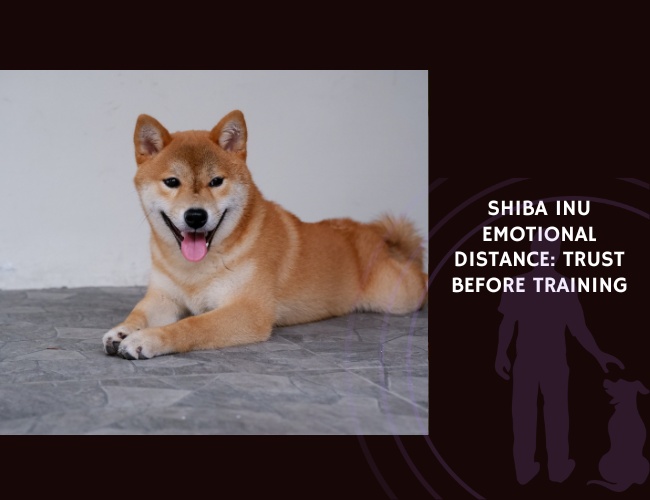
Understanding the Shiba Inu means stepping into a world where emotional sophistication replaces overt affection, where independence is not coldness but discernment, and where trust must be earned rather than demanded. If you’ve ever felt puzzled by your Shiba’s apparent aloofness or wondered why traditional training methods seem to create distance rather than cooperation, you’re about to discover a framework that honors this remarkable breed’s true nature.
The Shiba Inu stands apart from mainstream dog culture, not through stubbornness or difficulty, but through an ancient wisdom that requires us to rethink everything we thought we knew about the human-dog bond. Let us guide you through the emotional landscape of this primitive breed, where patience, respect, and relational clarity become the foundation for genuine partnership.
Primitive Breed Design & Attachment Style
The Ancient Hunter’s Legacy
Your Shiba carries within them the genetic blueprint of ancient Japanese mountain hunters. For centuries, these dogs navigated rugged terrain independently, hunting small game without constant human direction. This heritage shaped not just their physical form but their entire emotional architecture. Unlike modern companion breeds developed to shadow human footsteps, the Shiba evolved to think independently, assess situations carefully, and rely on their own judgment in complex environments.
This is not a breed designed for constant dependency. Their emotional self-reliance is not a flaw to be corrected but a feature to be respected. When you watch your Shiba calmly observe a situation from a distance before engaging, you’re witnessing thousands of years of survival instinct at work. They needed this cautious, analytical approach to thrive in their ancestral role, where hasty decisions could mean the difference between success and failure.
Understanding this primitive breed ethology helps us recognize that their independence serves a functional purpose. These are dogs who think before they act, who evaluate before they commit, who watch before they trust. This careful approach to life extends to every aspect of their behavior, including how they form attachments with humans.
Key Primitive Breed Characteristics:
- Independent decision-making capability developed over centuries of solo hunting
- Heightened observational skills that prioritize assessment over immediate action
- Self-preservation instincts that favor caution and careful evaluation
- Reduced overt dependency on human direction or approval
- Strong sense of personal autonomy and bodily integrity
- Sophisticated environmental awareness and pattern recognition
Narrow Bonds, Deep Connections
You might notice that your Shiba doesn’t warmly greet every visitor or seek attention from strangers. This selective approach to bonding reflects their natural tendency to form narrow, profound attachments rather than broad, socially diffuse connections. A Shiba often chooses one or very few trusted individuals with whom they develop a deep, meaningful relationship that may appear subtle to outside observers.
This selective bonding pattern differs dramatically from breeds developed for wide social engagement. Your Shiba evaluates potential relationships carefully, watching for consistency, safety, and mutual respect before offering their trust. They will spend time observing new people, processing subtle cues about character and intention, gradually deciding if someone deserves their confidence and cooperation 🧠
Signs Your Shiba Has Chosen You:
- Consistent choice to rest in rooms where you’re present, even if not directly beside you
- Relaxed body language specifically in your presence that they don’t show with others
- Following your movements with their eyes, tracking your location throughout the home
- Accepting food, treats, or toys from your hand more readily than from others
- Showing subtle excitement at your return home, even if understated compared to other breeds
- Allowing physical proximity or touch from you that they refuse from other people
- Seeking you out during stressful situations or when feeling unwell
The attachment style of a Shiba might be described as selectively secure or avoidant within attachment theory frameworks. They value autonomy highly while still forming secure bonds with chosen individuals. This isn’t emotional coldness but emotional intelligence, a sophisticated approach to relationships that prioritizes quality over quantity, depth over breadth.
Observational Bonding Over Immediate Engagement
Where many dogs immediately seek interaction with new people or situations, your Shiba takes a different approach. Their ancestry favors cautious, observational bonding over immediate social engagement. This means they need time, space, and predictability before they can relax enough to form genuine connections.
When you bring a Shiba into a new environment or introduce them to new people, their first instinct is to watch, assess, and evaluate. This isn’t fear or insecurity in most cases—it’s intelligent caution. They’re gathering information, reading patterns, determining whether this situation feels safe and whether these people demonstrate the consistency and respect worthy of trust.
Rushing this process by forcing interaction, pushing for immediate affection, or expecting quick obedience can backfire dramatically. Your Shiba needs the space to complete their evaluation on their own timeline. The humans who earn deep Shiba devotion are typically those who respect this observational period, allowing the dog to approach rather than being approached, creating predictable patterns rather than chaotic energy.
What to Avoid During the Observational Period:
- Forced eye contact or staring directly at your Shiba
- Reaching out repeatedly to pet or touch them when they haven’t approached
- Loud, excited voices or sudden movements that create unpredictability
- Following them around the house or pursuing them through spaces
- Insisting they participate in activities or interactions before they’re ready
- Introducing too many new people, animals, or environments simultaneously
- Using training tools or commands before establishing basic trust
Emotional Distance vs. Emotional Sophistication
The Discernment Difference
What many people label as Shiba “distance” or “aloofness” is better understood as emotional discernment. Your Shiba isn’t emotionally unavailable; they’re emotionally selective. Every interaction undergoes careful evaluation: Does this person respect my boundaries? Are they consistent in their behavior? Do they offer safety without pressure?
This discernment represents a sophisticated form of emotional intelligence. While other breeds might enthusiastically engage with anyone offering attention, your Shiba applies nuanced criteria to determine trustworthiness. They process subtle environmental cues, read human body language with remarkable accuracy, and maintain emotional boundaries that protect their sense of autonomy and safety.
Environmental Factors Shibas Evaluate:
- Consistency of routines and daily patterns in the household
- Predictability of human emotional states and responses
- Availability of escape routes and safe spaces in each environment
- Noise levels and sensory stimulation intensity
- Number and behavior of other animals or people present
- Physical space availability and crowding levels
- History of boundary respect or violations in specific contexts
- Overall emotional atmosphere (calm vs. chaotic, peaceful vs. tense)
The difference is profound. A dog lacking emotional sophistication might approach any situation with baseline trust or fear. Your Shiba operates from a place of ongoing assessment, continuously updating their evaluation based on accumulated experiences. This makes them highly attuned to inconsistency, boundary violations, or inauthentic behavior—they notice what other dogs might miss.
Reading the Subtle Language of Connection
Here’s where many Shiba guardians miss the profound connection they’ve actually built: Shibas show their affection and trust through micro-signals that are easily overlooked when we expect enthusiastic tail wags and constant physical contact. Your Shiba’s love language is written in quieter, more nuanced expressions 🧡
Watch for these subtle signals of trust and attachment:
Quiet Proximity: Your Shiba chooses to be in the same room as you, perhaps not directly next to you but within comfortable distance. This shared space represents trust and a desire for connection without intrusion.
The Gentle Lean: A slight, almost imperceptible lean against your leg or body while sitting nearby. This minimal physical contact carries enormous meaning—it’s their way of acknowledging your bond without surrendering their independence.
Soft Eye Contact: Not the hard stare of challenge but the relaxed, soft gaze that lingers for a moment before looking away. This gentle eye contact signals comfort and affection in Shiba language.
Ritualistic Behaviors: Small repeated patterns like a specific morning greeting, a certain pathway they take to check on you, or a particular spot they settle when you’re working. These rituals demonstrate that you’re woven into their daily emotional landscape.
The Calm Presence: Simply choosing to rest near you during quiet moments. No demands for attention, no need for interaction—just the peaceful coexistence that speaks of deep trust.
Additional Micro-Signals Often Missed:
- The “check-in glance” where they briefly look at you during activities to confirm your presence
- Positioning themselves between you and perceived threats or unfamiliar people
- Bringing toys or objects near you without demanding interaction
- Synchronizing sleep-wake cycles with your routine
- The subtle tail wag that happens only when you enter their line of sight
- Choosing to eat their meals more readily when you’re home
- The relaxed sigh or grunt they make when settling near you
Through the NeuroBond approach, we learn to recognize and honor these subtle expressions of connection rather than demanding more overt displays of affection that feel unnatural to the Shiba temperament. These micro-signals are not lesser forms of love; they represent the authentic emotional vocabulary of a breed that values depth over demonstration.
The Cost of Misreading Trust Signals
When humans fail to recognize these subtle trust signals, they often make a critical mistake: pushing harder for the affection they expect. You might see someone repeatedly calling a Shiba for cuddles, forcing physical contact, or expressing frustration at perceived standoffishness. Each of these actions violates the trust the Shiba was quietly building through their more reserved expressions.
Misreading subtle trust signals creates a destructive cycle. The human feels the dog is distant, so they push harder for connection. The Shiba experiences this pushing as boundary violation and pressure, which makes them withdraw further. The human interprets increased withdrawal as rejection and either pushes even harder or gives up emotionally. The Shiba learns that human interaction is unpredictable and unsafe, reinforcing their protective distance.
The Destructive Cycle of Misread Signals:
- Shiba offers subtle connection signal (proximity, soft glance, quiet presence)
- Human doesn’t recognize this as affection and demands more overt displays
- Shiba experiences the demand as pressure and withdraws slightly
- Human interprets withdrawal as aloofness or rejection
- Human increases efforts to force connection (more petting, calling, following)
- Shiba experiences increased pressure as boundary violation
- Shiba withdraws more significantly to protect autonomy
- Human feels frustrated and either escalates further or emotionally disengages
- Shiba learns human interaction is unsafe and maintains protective distance
- Pattern solidifies into permanent emotional distance
This pattern explains why some Shibas appear perpetually aloof with their families. It’s not that they’re incapable of bonding—it’s that their attempts at connection were consistently misunderstood and overridden. Breaking this cycle requires learning to speak Shiba, to value proximity over demands, to honor subtle gestures rather than expecting grand demonstrations.
Trust as a Pre-Condition, Not a Reward
The Foundation Must Come First
Here lies perhaps the most crucial insight for anyone living with or training a Shiba: trust is not something you earn through training sessions. Trust is the prerequisite that makes training possible. This fundamental distinction separates breeds like Shibas from many modern companion dogs who might tolerate training pressure and eventually learn to trust through consistent positive experiences.
Your Shiba requires a baseline of relational safety before they can meaningfully participate in training activities. Their sophisticated emotional discernment means they cannot separate the “how” from the “what” of training. If the relationship doesn’t feel safe, respectful, and reciprocal, the training itself becomes meaningless or even threatening—regardless of treats, praise, or technique.
Trust Prerequisites Before Training:
- Predictable daily routines that create a sense of environmental security
- Consistent human behavior that allows accurate prediction of interactions
- Respected personal boundaries during rest, eating, and retreat times
- Positive associations with human presence without performance demands
- Safe spaces available for self-regulation and emotional decompression
- History of honored communication signals and respected “no” responses
- Calm, neutral energy from humans rather than intensity or frustration
- Adequate time to observe and assess before participation is expected
This is why many Shiba guardians find that standard puppy obedience classes create frustration rather than cooperation. The class structure typically demands immediate compliance before the trust foundation exists. The Shiba experiences this as pressure, violation, and disrespect, which triggers withdrawal rather than engagement. They’re being asked to perform before they’ve been given the relational security needed to participate voluntarily.
When Control Methods Damage Connection
Premature use of control-based methods can severely damage the nascent trust relationship with your Shiba. Techniques that work acceptably with more accommodating breeds can create lasting harm with this primitive breed’s emotional structure:
Heavy Leash Pressure: Using leash corrections, constant tension, or pulling to force compliance. Your Shiba experiences this not as guidance but as physical coercion that violates their autonomy and bodily integrity.
Confrontational Techniques: Alpha rolls, scruff shakes, stare-downs, or any method based on dominance theory. These approaches directly threaten the Shiba’s sense of safety and are interpreted as attacks rather than leadership.
Forced Handling: Restraining for grooming, vet procedures, or nail trims without prior desensitization and consent-building. Each forced restraint teaches your Shiba that human hands bring loss of control and potential threat.
Constant Commands: Verbal pressure through repeated, insistent commands creates a noisy, demanding environment where the Shiba feels under constant evaluation and pressure to perform.
Flooding or Forced Exposure: Pushing the dog into situations that trigger fear or discomfort with the belief they’ll “get over it.” This approach damages trust profoundly, as the Shiba learns you won’t protect them from overwhelming experiences.
Each of these methods might eventually produce behavioral compliance in some dogs, but with your Shiba, they produce something quite different: emotional shutdown, increased distance, and the quiet but firm decision that you cannot be trusted as a safe presence in their life.
Decoding Selective Deafness
That moment when you call your Shiba and they look directly at you, acknowledge your command, and then deliberately choose not to comply—this isn’t dominance or stupidity. This “selective deafness” is often a sophisticated form of communication about the state of your relationship.
What Selective Deafness Actually Communicates:
- “This relationship doesn’t feel safe enough for me to surrender my autonomy right now”
- “Your energy is too intense, demanding, or inconsistent for me to trust your leadership”
- “You’ve violated my boundaries before, so I’m protecting myself by maintaining distance and control”
- “The context doesn’t feel appropriate for compliance—I need more information or security”
- “I don’t understand what you want clearly enough to risk compliance”
- “The reward-to-risk ratio of this request doesn’t make sense to me”
- “I’m not in the right emotional or physical state to engage with this request”
- “Your command delivery feels like pressure rather than partnership”
This selective non-compliance is actually a window into your Shiba’s emotional state and their assessment of your relationship. Rather than viewing it as a behavior problem to be corrected through increased pressure, consider it feedback about the trust foundation. Through the Invisible Leash principles of spatial clarity and calm presence, many Shibas who exhibited chronic “selective deafness” transform into remarkably cooperative partners—not because they were trained harder, but because the relational foundation finally felt secure enough for voluntary participation 🧠
Autonomy, Boundaries & Cooperation
The Internal Criteria for Cooperation
Your Shiba doesn’t refuse cooperation out of spite or dominance. Instead, they apply internal criteria to determine whether a situation warrants their participation. Understanding these criteria helps you create conditions where cooperation becomes the natural choice rather than a forced compliance.
Before a Shiba “signs on” to work with you, they evaluate several factors:
The Shiba’s Internal Cooperation Checklist:
- Safety Assessment: Does this situation feel physically and emotionally safe? Is the environment predictable? Are there escape routes if needed?
- Respect Evaluation: Does this human respect my boundaries? Have they demonstrated consistency in honoring my signals? Do they pressure me or allow me agency?
- Clarity of Expectations: Do I understand what’s being asked? Are the parameters clear? Is this request reasonable within my current capacity?
- Relational Standing: Has this human earned enough trust that I’m willing to surrender some autonomy to cooperate? Do I view them as a benevolent leader or a source of pressure?
- Personal Readiness: Am I in the right emotional and physical state to engage? Do I have the energy and focus needed?
- Environmental Context: Is this setting appropriate for cooperation? Are there too many distractions or stressors present?
- Historical Pattern: What happened last time I cooperated with this request? Did it lead to positive outcomes or negative experiences?
- Autonomy Balance: Will complying with this request compromise my independence more than I’m comfortable with right now?
When these criteria align positively, your Shiba becomes remarkably cooperative. When they don’t, you encounter resistance that no amount of treats or pressure will overcome. The wise Shiba guardian learns to work with these criteria rather than against them.
The Power of Choice and Observation Time
Shibas are significantly more likely to cooperate when they’re allowed choices, given observation time, and engaged through low-intrusive interaction patterns. This means structuring your approach to honor their need for agency and processing time.
Offering choice looks like presenting options rather than demands: “Would you like to come this direction or that direction?” or allowing them to choose when to engage in training rather than insisting on immediate participation. Even simple choices like which toy to work with or where to sit during training creates a sense of partnership rather than coercion.
Practical Ways to Offer Choice:
- Present two equally acceptable walking routes and let them choose direction
- Offer selection between different rewards (treat types, toys, praise styles)
- Allow them to decide whether to participate in a training session now or later
- Let them choose which family member to work with for specific activities
- Provide options for resting locations rather than assigning a single spot
- Ask rather than command: “Want to come outside?” vs. “Outside, now!”
- Respect their choice to disengage from activities without consequence
Observation time is equally crucial. When introducing new activities, equipment, or environments, give your Shiba space to watch and assess before expecting engagement. Let them stand back and observe other dogs performing an activity. Allow them to sniff and investigate new equipment without pressure. This processing time isn’t wasted—it’s essential preparation that makes actual participation far more successful.
Low-intrusive interaction patterns mean avoiding direct, intense focus on your Shiba. Rather than staring at them expectantly, maintain neutral body language. Rather than pursuing them through space, create conditions where they choose to approach you. Rather than constant chatter and commands, offer quiet consistency that feels safe rather than demanding.
Low-Intrusive Interaction Techniques:
- Use peripheral vision rather than direct stares during interactions
- Turn your body slightly to the side rather than facing them head-on
- Sit or kneel at their level rather than looming from above
- Remain still and let them approach rather than reaching toward them
- Speak softly and sparingly, avoiding constant narration of their behavior
- Pause and wait for their initiative rather than constantly directing
- End interactions before they show signs of wanting to leave
- Create parallel activities where you both exist peacefully without interaction demands
Boundary-Respecting Handling
The way you physically interact with your Shiba profoundly influences their willingness to cooperate. Boundary-respecting handling builds trust and openness; boundary-violating handling creates distance and resistance.
Boundary-Respecting Handling Guidelines:
- Avoid Looming: Bending over your Shiba from above creates a threatening posture. Instead, sit beside them, crouch to their level from the side, or allow them to come to your level.
- Let Them Initiate: Rather than reaching for your Shiba repeatedly, create conditions where they choose to approach you for contact. When they do, keep the interaction brief and pleasant, ending before they pull away.
- Respect the No: When your Shiba moves away, turns their head, or otherwise signals they’re done with interaction, honor that immediately. These moments teach them their communication is effective and respected.
- No Forced Cuddling: Restraining a Shiba for prolonged cuddling or holding when they’re trying to leave damages trust. Affection should always be offered, never imposed.
- Predictable Touch: Establish consistent patterns for handling—always approaching from the same angle, using the same touch patterns for specific activities. This predictability reduces stress and builds cooperative acceptance.
- Two-Second Rule: If you initiate touch, limit it to two seconds then pause. If they lean in or stay, continue. If they don’t, respect their preference.
- Safe Zones: Never reach into their crate, bed, or sanctuary spaces to pull them out or pet them while resting.
When your Shiba’s boundaries are consistently respected, they gradually expand what they’re comfortable with. The dog who once tolerated only brief pets may eventually settle against you for longer periods—not because you pushed for it, but because you honored their pace and made consent-based interaction the norm 🧡
Quiet. Selective. Intentional.
Distance is not avoidance.
It is calibration. A Shiba does not step toward what they cannot first map. Their quiet watching isn’t withdrawal—it’s assessment.
Trust is the gateway.
Training without trust feels like intrusion to a primitive breed. When the relationship becomes predictable, steady, and respectful, cooperation emerges without pressure.



Selectivity is their language.
A Shiba bonds narrowly but deeply. They offer connection the way they hunt—intentionally, deliberately, never impulsively.
Stress, Shutdown & Quiet Non-Compliance
The Language of Quiet Resistance
Unlike breeds that might growl, bark, or show obvious stress signals, your Shiba excels at quiet resistance. This subtle communication style makes it easy to miss their distress until it manifests as persistent behavioral issues or, in rare cases, sudden explosive reactions.
Common quiet resistance behaviors include:
Quiet Resistance Behaviors to Recognize:
- Strategic Non-Response: Coming when called—but only after a long delay, moving slowly, or taking a circuitous route. This complies with the letter of the command while communicating reluctance.
- The Look-Away: Making brief eye contact when called, then deliberately turning away and focusing intently on something else. This is conscious acknowledgment followed by intentional refusal.
- Situational Deafness: Responding perfectly in low-pressure contexts but becoming mysteriously “deaf” in situations that feel uncomfortable or when specific people are present.
- Freeze Responses: Simply stopping movement and becoming statue-still when uncomfortable, waiting for the pressure to pass rather than actively fleeing or fighting.
- Micro-Avoidances: Subtle shifts away from reaching hands, slight head turns to avoid direct interaction, or choosing pathways that maintain maximum distance from someone.
- Passive Resistance: Going limp when being moved or handled, making themselves heavy without active struggle.
- Selective Attention: Appearing deeply absorbed in sniffing, grooming, or observing something when asked to engage.
- The Slow Blink: Extended, deliberate eye closing when someone is trying to make eye contact or gain attention.
These behaviors are sophisticated communication—your Shiba is telling you something feels wrong. The challenge is that humans often interpret quiet resistance as “minor” issues not worth addressing, or worse, as willful disobedience requiring correction. In reality, these signals are your early warning system that trust is eroding or was never established.
🐕 Shiba Inu Trust-Building Journey 🧠
Understanding Emotional Distance: The 8-Phase Path from Observation to Partnership
Phase 1: Recognition of Primitive Nature
Understanding the Foundation
Ancient Hunter’s Legacy
Your Shiba carries the genetic blueprint of independent mountain hunters. This isn’t a flaw—it’s sophisticated emotional intelligence shaped by centuries of self-reliant survival. They evaluate before committing, observe before trusting, and think before acting.
What This Means for You
• Expect cautious, observational bonding rather than immediate affection
• Accept narrow, deep attachments with chosen individuals
• Understand that independence is emotional discernment, not coldness
• Recognize their need for personal autonomy and space
First Steps
Begin by simply observing your Shiba’s natural patterns. Notice how they assess new situations, how they choose where to position themselves, and how they react to different energy levels. This observation teaches you their language before you ask them to learn yours.
Phase 2: Learning Subtle Communication
Reading the Quiet Language
Micro-Signals of Connection
Shibas express affection through quiet proximity, soft eye contact, gentle leans, and ritualistic behaviors. These aren’t lesser expressions—they’re the authentic vocabulary of a breed that values depth over demonstration. Missing these signals leads to pushing too hard.
Signs of Trust vs. Distance
• Choosing to be in the same room = trust building
• The “check-in glance” during activities = connection
• Relaxed sighs when settling near you = comfort
• Head turns and avoidance = boundaries being communicated
⚠️ The Destructive Cycle
When you miss subtle trust signals and push for overt affection, Shibas withdraw. This creates a cycle: human pushes harder → Shiba retreats further → human feels rejected → relationship deteriorates. Break this by learning to value what they naturally offer.
Phase 3: Establishing Trust Before Training
Foundation is Non-Negotiable
Trust as Pre-Condition
Unlike many breeds who learn to trust through training, Shibas require baseline relational safety before they can participate meaningfully. Training without trust creates withdrawal, not cooperation. Through NeuroBond principles, we recognize that emotional security must precede performance demands.
Trust-Building Activities
• Maintain absolutely consistent daily routines
• Create inviolable sanctuary spaces they can retreat to
• Share quiet space without interaction demands
• Respond predictably to their communication signals
• Allow them observation time before expecting engagement
⚠️ Control Methods Damage Trust
Heavy leash pressure, confrontational techniques, forced handling, and constant commands all violate the Shiba’s autonomy. Each violation teaches them that you cannot be trusted with their vulnerability. What produces compliance in other breeds produces shutdown in Shibas.
Phase 4: Respecting Autonomy & Boundaries
Choice Creates Cooperation
The Internal Cooperation Checklist
Before cooperating, Shibas evaluate: Does this feel safe? Does this human respect my boundaries? Do I understand what’s being asked? Has this person earned my trust? Am I in the right state to engage? Meeting these criteria makes cooperation the natural choice.
Boundary-Respecting Handling
• Avoid looming over them—sit beside or crouch to their level
• Let them initiate physical contact rather than reaching repeatedly
• Honor their “no” signals immediately without argument
• Never force cuddling or restraint for affection
• Use predictable touch patterns that reduce stress
The Power of Choice
Offer choices within structure: which walking route, which reward, when to take breaks, where to sit. Even simple choices create partnership rather than coercion. Shibas who feel agency are exponentially more willing to cooperate voluntarily.
Phase 5: Managing Stress & Withdrawal
Recognizing Quiet Resistance
Subtle Stress Signals
• Strategic non-response—complying slowly or circuitously
• The look-away after brief eye contact
• Freeze responses instead of active movement
• Micro-avoidances and subtle shifts away from touch
• Selective deafness in uncomfortable contexts
Chronic Micro-Stress Sources
Crowded environments, inconsistent human interaction, unpredictable touch, high-traffic routines, and ambient emotional tension all accumulate. Your Shiba gradually withdraws, spending more time isolated—this isn’t personality, it’s emotional protection against chronic unsafe conditions.
⚠️ The Escalation Path
Ignored subtle signals → escalated communication → learned helplessness → possible explosive reactions. Each stage represents deeper damage. Intervene early by honoring every signal, no matter how small. Through Soul Recall, we understand how emotional memory shapes behavior patterns.
Phase 6: Shifting Expectations
Embracing Authentic Shiba Nature
Common Mismatched Expectations
Expecting constant physical closeness, eager obedience, effusive greetings, or universal friendliness sets you up for disappointment. Your Shiba prefers coexistence over constant contact, evaluates cooperation over automatic compliance, and bonds selectively rather than universally.
Reframing “Cat-Like” Behavior
Your Shiba isn’t cat-like—they’re authentically canine, retaining primitive traits that many modern breeds have had selected away. Their independence, selective bonding, and careful assessment aren’t borrowed from felines; they’re ancient dog characteristics that deserve respect, not correction.
⚠️ Obedience Culture Damage
Early obedience-heavy training undermines crucial relational groundwork. When training precedes trust, Shibas experience pressure before partnership, violation of autonomy, missed bonding windows, and negative associations. Invert the priority: relationship first, training second.
Phase 7: Implementing Calm Coexistence
Foundation-Building Period
The First 3 Months
Weeks 1-4: Pure observation and routine—establish consistent patterns without demands
Weeks 5-8: Gentle interaction—sit nearby, talk softly when they approach, end before stress signals
Weeks 9-12: Communication establishment—respond consistently to their signals, teach them their voice matters
Calm Coexistence Elements
• Predictable daily patterns that create security
• Quiet shared space without interaction demands
• Low verbal noise—your voice carries meaning, not background chatter
• Neutral emotional energy—avoid dramatic reactions
• Inviolable sanctuary spaces for emotional regulation
The Investment Pays Off
This period may last weeks or months, but the result is a Shiba who feels genuinely safe in your presence. A Shiba with foundational trust becomes a different dog—one capable of cooperation, learning, and genuine partnership that wouldn’t be possible without this investment.
Phase 8: Training as Relational Dialogue
Partnership, Not Performance
Invisible Leash Principles
The Invisible Leash emphasizes spatial clarity, calm deliberate movement, and emotional neutrality. Your Shiba responds to your presence and energy rather than physical pressure. Awareness, not tension, guides the path. This builds cooperation through understanding rather than control through force.
Relational Dialogue Training
• Listen as much as you direct—respond to their signals
• Pace to emotional capacity, not arbitrary timelines
• Offer choices within structure to maintain agency
• Celebrate cooperation rather than taking it for granted
• Use soft starts and gentle endings to sessions
• Accept context-appropriate variation in cooperation
The Transformation
When training becomes dialogue, selective deafness often disappears. Your Shiba isn’t protecting themselves from pressure—they’re choosing to participate in a conversation where their input matters. The relationship provides motivation rather than treats or pressure forcing compliance.
🔄 Shiba Trust-Building Approach vs. Traditional Training
Timeline Approach
Shiba-Appropriate: 3+ months relationship building before formal training begins
Traditional: Obedience training starts immediately at 8-12 weeks
Primary Focus
Shiba-Appropriate: Trust foundation, boundary respect, emotional safety first
Traditional: Behavioral compliance, command response, performance metrics
Training Philosophy
Shiba-Appropriate: Partnership through choice, relational dialogue, voluntary cooperation
Traditional: Compliance through consistency, command-control hierarchy
Communication Style
Shiba-Appropriate: Low verbal noise, calm energy, honoring subtle signals
Traditional: Clear verbal commands, consistent repetition, immediate response expectation
Handling Approach
Shiba-Appropriate: Boundary-respecting, consent-based, allowing initiation
Traditional: Handler-initiated contact, consistent touching for desensitization
Success Metrics
Shiba-Appropriate: Voluntary proximity, relaxed body language, chosen cooperation
Traditional: Command response speed, consistency of performance, public demonstration
⚡ Quick Reference: Trust-Building Timeline
Month 1: Pure observation, establish routines, no training demands
Month 2: Gentle interaction, build positive associations with your presence
Month 3: Establish communication, respond to their signals consistently
Month 4+: Begin voluntary training as dialogue, not performance
Golden Rule: If your Shiba shows distance, you’ve likely moved too fast. Step back to the last phase where they felt comfortable and rebuild from there. Trust cannot be rushed—it must be earned at their pace.
🧡 The Essence of Trust-First Training
Understanding Shiba emotional distance as sophisticated discernment rather than aloofness transforms everything. Through NeuroBond, we recognize that emotional connection and trust-based relationships must precede any training demands. The Invisible Leash teaches us that awareness, not tension, guides cooperation—spatial clarity and calm presence build more cooperation than any physical control ever could. And through Soul Recall, we honor how emotional memory shapes every interaction, understanding that each moment of respected boundaries or violated signals creates lasting patterns in your Shiba’s trust assessment.
This isn’t just training methodology—it’s a philosophy of partnership that honors the authentic nature of primitive breeds. When we meet Shibas where they are, speak their subtle language, and build relationship at the pace trust allows, we discover that what seemed like distance was actually an invitation to slow down, observe more carefully, respect more deeply, and ultimately connect more meaningfully than we imagined possible.
That balance between autonomy and connection, between independence and cooperation, between discernment and trust—that’s the essence of Zoeta Dogsoul.
© Zoeta Dogsoul – Where neuroscience meets soul in dog training
Chronic Micro-Stress and Emotional Withdrawal
Your Shiba’s emotional architecture makes them particularly vulnerable to chronic micro-stress—small, repeated stressors that accumulate over time to create profound withdrawal. Unlike dramatic traumatic events, these subtle ongoing pressures often go unrecognized until the emotional damage is significant.
Common sources of chronic micro-stress include:
Environmental and Social Micro-Stressors:
- Crowded Living Environments: Constant presence of multiple people or animals with insufficient quiet space. Your Shiba needs sanctuary areas where they can decompress without social demands.
- Inconsistent Human Interaction: Different family members handling them differently, using different commands, or having vastly different energy levels and expectations. This inconsistency makes the environment unpredictable and unsafe.
- Unpredictable Touch: Being petted or handled at random times without warning, particularly during rest or when focused on other activities. This creates hypervigilance as your Shiba never knows when their space will be invaded.
- High-Traffic Routines: Living in an environment with constant doorbell ringing, visitors, or activity without adequate retreat spaces or downtime.
- Ambient Tension: Living with humans who argue, display high stress, or create chaotic emotional environments. Shibas are remarkably sensitive to emotional atmospheres.
- Insufficient Decompression Time: Being expected to be “on” and socially available throughout the day without extended periods of uninterrupted rest.
- Competing for Resources: Stress from unclear rules about food, toys, or space access, especially in multi-pet households.
- Schedule Unpredictability: Irregular feeding times, varying walk schedules, or inconsistent daily rhythms that prevent pattern recognition.
As these micro-stressors accumulate, your Shiba gradually withdraws emotionally. They spend more time in their bed or separate spaces, become less responsive to interaction attempts, show less interest in activities they once enjoyed, and develop an overall reduced engagement with their environment and family. This isn’t aging or personality—it’s emotional protection against an environment that feels chronically unsafe.
Signs of Chronic Emotional Withdrawal:
- Spending increasing amounts of time in hiding spots or separate rooms
- Reduced interest in walks, play, or previously enjoyed activities
- Eating only when alone or during quiet hours
- Decreased responsiveness to name or familiar cues
- More easily startled by normal household sounds
- Avoiding eye contact even with trusted family members
- Reduced tolerance for any physical interaction
- Seeking isolated outdoor spaces during yard time
- Sleeping more heavily or seeming harder to wake
- Showing less curiosity about environmental changes or new items
When Signals Are Ignored: From Learned Helplessness to Explosive Reactions
The progression from subtle communication to serious behavioral issues follows a predictable pattern when a Shiba’s signals are repeatedly ignored or overridden. Understanding this progression helps you intervene before reaching crisis points.
Stress Escalation Progression:
- Early Stage – Subtle Communication: Your Shiba uses appropriate, subtle signals—lip licks, head turns, slow movement away, body tension, averted gaze. These are polite communication that they’re uncomfortable.
- Middle Stage – Escalated Signaling: When subtle signals are ignored, they escalate slightly—more obvious movement away, freezing, refusing to engage, hiding. They’re communicating more clearly because previous signals didn’t work.
- Learned Helplessness Stage – Communication Shutdown: If signals continue to be overridden, your Shiba may stop communicating altogether. They become passive, accepting handling or situations without protest but also without engagement. This shutdown is often mistaken for acceptance or improved behavior, but it represents profound emotional damage—they’ve learned their communication is ineffective.
- Explosive Reaction Stage – System Overload: In some cases, after prolonged periods of ignored signals and learned helplessness, chronic stress can manifest in sudden, intense reactions. The Shiba who has tolerated repeated violations might suddenly snap, bite, or show intense fear-based aggression. These reactions seem to come “from nowhere” but actually result from accumulated pressure finally overwhelming their coping capacity.
Preventing this progression requires becoming fluent in Shiba’s subtle communication. Every head turn matters. Every freeze response deserves attention. Every quiet refusal is valuable information about what your Shiba needs to feel safe. The moments of Soul Recall reveal how emotional memory shapes behavior—a Shiba remembers every boundary violation, every forced interaction, and every time their signals were honored or ignored.
Human Expectations & Cultural Misfit
When “Dog” Doesn’t Match the Breed
A significant portion of Shiba-related frustration stems from the fundamental mismatch between typical expectations of “how dogs should be” and how Shibas actually are. If you brought home a Shiba expecting constant companionship, eager-to-please trainability, and enthusiastic affection, you likely experienced disappointment—not because your Shiba is defective, but because your expectations were designed for an entirely different type of dog.
Common Expectation vs. Reality Mismatches:
- Expectation: Constant physical closeness and following everywhere. Reality: Your Shiba prefers coexistence in shared spaces with periods of interaction rather than continuous contact.
- Expectation: Eager obedience and immediate compliance with commands. Reality: Your Shiba evaluates requests and chooses cooperation based on trust, context, and reasonableness rather than automatic compliance.
- Expectation: Effusive greetings with jumping and excited vocalizations. Reality: Your Shiba’s greeting is typically more reserved—perhaps a tail wag, brief approach, and return to their activities.
- Expectation: Universal friendliness with all people and animals. Reality: Your Shiba is selective, forming meaningful bonds with chosen individuals rather than surface friendliness with everyone.
- Expectation: Trainability equals intelligence and biddability. Reality: Your Shiba’s intelligence expresses through independent problem-solving and discernment rather than eager compliance.
- Expectation: Demonstrative affection like leaning heavily, licking faces, or seeking constant petting. Reality: Your Shiba shows love through proximity, soft glances, and choosing to be near you without demanding interaction.
- Expectation: Quick bonding and immediate trust with family members. Reality: Your Shiba needs weeks or months to form trust bonds and may never bond equally with all household members.
These mismatched expectations create frustration on both ends. Humans feel their Shiba is difficult, aloof, or stubborn. Shibas feel pressured, disrespected, and unsafe because their natural behavioral patterns are constantly challenged rather than honored.
The Cat-Like Label and What It Reveals
“My Shiba is basically a cat” has become a common refrain among guardians trying to explain their dog’s behavior to others. While there are superficial similarities—independence, selective affection, grooming behaviors—this label actually reveals how deeply we’ve misunderstood what “dog” can mean.
The cat comparison emerges because mainstream dog culture has been shaped primarily by highly biddable breeds developed for close human partnership—retrievers, herding dogs, companion breeds. These dogs’ behavior patterns have become synonymous with “normal dog behavior.” Any deviation gets labeled as either problematic or compared to cats, as if cats represent the opposite end of the companion animal spectrum.
Your Shiba isn’t cat-like—they’re wolf-like in the sense of retaining more ancient canine traits. They’re exhibiting the behavioral patterns of primitive dogs who lived alongside humans but maintained significant autonomy. The independence, selective bonding, and careful assessment aren’t borrowed from feline nature; they’re authentic canine traits that many modern breeds have had selected away.
Reframing your Shiba as a primitive dog rather than a difficult dog or cat-like dog helps you appreciate their authentic nature rather than constantly measuring them against an inappropriate standard. They’re not a failed Golden Retriever; they’re a successful representation of ancient canine temperament.
How Obedience Culture Undermines Relational Groundwork
The prevailing approach to puppy raising emphasizes early, obedience-heavy training. Puppy classes focus on teaching sits, downs, stays, and recalls, often using pressure and repetition. This approach works reasonably well for many modern breeds but can be devastating for Shibas.
Problems When Obedience Precedes Trust:
- Pressure Before Partnership: Your Shiba experiences training as demands from an unfamiliar human rather than cooperative partnership. This creates resistance and withdrawal rather than engagement.
- Violation of Autonomy: Repeated insistence on compliance, particularly through force or pressure, violates the Shiba’s need for respected autonomy. They learn that interaction with you means loss of personal agency.
- Missed Bonding Window: The crucial early period is spent on controlling behavior rather than building relationship. Trust formation is delayed or damaged in pursuit of obedience milestones.
- Negative Associations: Training becomes associated with pressure, discomfort, and violation rather than positive partnership. This colors all future training attempts.
- Shutdown Rather Than Progress: Some Shibas comply through learned helplessness, appearing “trained” while actually experiencing emotional shutdown. Others simply refuse to participate, labeled as stubborn or untrainable.
- Eroded Confidence: Premature training demands can undermine the Shiba’s natural confidence and decision-making abilities.
- Damaged Communication: Early pressure teaches the Shiba that their signals don’t matter, shutting down the two-way communication essential for later cooperation.
The alternative approach inverts the priority: spend the crucial early period building trust, respect, and predictability. Focus on creating a safe, consistent relationship where your Shiba can relax enough to observe you, trust you, and eventually choose to cooperate with you. Training comes later, once the foundation is solid, and proceeds at the pace trust allows rather than the pace a training schedule demands 🧠
NeuroBond: Trust-First, Training-Second Framework
Calm Coexistence as Foundation
The NeuroBond framework begins with a radical proposition for those accustomed to traditional training timelines: do nothing. Well, not nothing exactly—but rather, establish simple, calm coexistence without demands, pressure, or training goals. This foundational period allows your Shiba to observe, assess, and gradually relax into trust without the complication of performance expectations.
Calm coexistence includes:
Elements of Foundation-Building Coexistence:
- Predictable Daily Patterns: Establish consistent routines for feeding, walks, and quiet time. Your Shiba learns to predict the rhythm of life with you, which creates security and reduces anxiety.
- Quiet Shared Space: Simply being in the same room without interaction demands. You work at your desk; your Shiba rests nearby. You watch television; your Shiba observes from their bed. This proximity without pressure builds comfort and familiarity.
- Low Verbal Noise: Minimize constant chatter, repetitive commands, or verbal pressure. Create an environment where your voice, when used, carries meaning rather than becoming background noise that your Shiba learns to tune out.
- Neutral Energy: Maintain calm, moderate emotional energy. Avoid intense excitement, frustration, or dramatic reactions that create unpredictability in the emotional atmosphere.
- Respect for Space: Allow your Shiba access to sanctuary areas where they can retreat without being followed, called, or disturbed. These safe spaces are essential for emotional regulation.
- Parallel Activities: Engage in activities side-by-side without direct interaction—reading while they rest nearby, gardening while they observe, walking without constant commands.
- Consistent Meal Rituals: Feed at exact same times with the same preparation routine, creating reliable positive anchors in their day.
- No Performance Demands: Avoid asking for tricks, obedience, or interaction just to show others what your Shiba can do.
This period might last weeks or months depending on your individual Shiba and their history. The investment pays enormous dividends—a Shiba who feels genuinely safe in your presence becomes a different dog, one capable of cooperation, learning, and genuine partnership that wouldn’t be possible without this foundation.
Invisible Leash: Spatial Clarity and Calm Control
The Invisible Leash principles offer a powerful framework for building the safety and clarity your Shiba needs to cooperate voluntarily. Rather than using physical leash pressure to control movement, this approach emphasizes spatial awareness, calm energy, and clear movement patterns that guide through presence rather than force.
Invisible Leash Principles in Practice:
- Spatial Clarity: Your Shiba understands where you are, where you’re going, and what space belongs to them versus shared space. This clarity reduces anxiety because they can predict and plan their movements in relation to yours.
- Calm, Deliberate Movement: You move through space with intention and consistency rather than erratic, rushed, or aggressive movement patterns. Your Shiba can read and respond to your movement without feeling threatened or pressured.
- Emotional Neutrality: You maintain steady, calm emotional energy rather than intensity, frustration, or dramatic responses to your Shiba’s behavior. This neutrality feels safe because it’s predictable and non-threatening.
- Awareness-Based Guidance: Your Shiba responds to your spatial presence, movement direction, and calm energy rather than physical pressure or verbal commands. They choose to stay connected through awareness rather than being forced through corrections.
- Gentle Boundaries: When spatial boundaries need to exist (like not entering certain rooms or staying out of the kitchen during cooking), they’re maintained through consistent, calm redirection rather than confrontation or punishment.
- Energy as Communication: Your body language and movement pace communicate intent more effectively than words or physical manipulation.
- Connection Through Freedom: Off-leash cooperation emerges from trust and spatial understanding rather than dependency on physical restraint.
The Invisible Leash reminds us that awareness, not tension, guides the path. A Shiba who understands these spatial principles often maintains beautiful proximity and cooperation off-leash because the relationship provides the structure rather than physical restraint providing the control. This transforms walks from tense negotiations into cooperative journeys where both partners are equally engaged in shared movement.
Training as Relational Dialogue
When trust foundation and spatial clarity exist, training transforms from a performance demand into a relational dialogue—a conversation between partners rather than commands from superior to subordinate. This reframing changes everything about how training feels to your Shiba and dramatically increases their willing participation.
Relational Dialogue Training Principles:
- Listening as Much as Directing: Pay attention to your Shiba’s signals about readiness, comfort, and capacity. If they indicate they need a break, honor that. If they show confusion, simplify rather than repeat. Your response to their communication matters as much as their response to yours.
- Pacing to Emotional Capacity: Progress at the speed trust and confidence allow rather than arbitrary timelines. Some days your Shiba will be ready for new challenges; other days, practicing basics or simply being together is appropriate.
- Choice Within Structure: Offer your Shiba choices within training—which activity to work on first, which reward they prefer, when to take breaks. These choices maintain their sense of agency while still accomplishing training goals.
- Celebrating Cooperation: Recognize and appreciate your Shiba’s choice to engage rather than taking cooperation for granted. This acknowledgment reinforces the partnership nature of training.
- Soft Starts and Gentle Endings: Begin and end training sessions calmly rather than with intense energy. Your Shiba should associate training with pleasant, manageable experiences rather than overwhelming intensity.
- Context-Appropriate Expectations: Understand that cooperation may vary based on environment, your Shiba’s emotional state, and relationship quality. Accept this variation rather than demanding consistency regardless of context.
- Two-Way Feedback Loop: Training isn’t just you teaching your Shiba—it’s both of you learning about each other’s communication styles and preferences.
- Quality Over Duration: Short, positive sessions build more trust than lengthy, demanding ones.
When training becomes dialogue, your Shiba’s selective deafness often disappears. They’re no longer protecting themselves from demands and pressure; they’re choosing to participate in a conversation where their input matters. The relationship provides the motivation for cooperation rather than treats or pressure forcing compliance. That balance between respect and guidance—that’s the essence of Zoeta Dogsoul 🧡
Neurological Understanding: The Shiba Brain
Processing Patterns and Predictive Models
Your Shiba’s brain operates on predictive processing—constantly generating predictions about what will happen next based on accumulated experience, then updating those predictions based on actual outcomes. This cognitive framework explains why consistency matters so profoundly for this breed and why inconsistent humans struggle to build trust.
When interactions with you are consistent, your Shiba’s predictions become accurate. They can anticipate how you’ll respond, what your movements mean, and what outcomes they can expect from engagement. This accurate prediction creates a sense of safety and control that allows them to relax and participate more fully.
When interactions are inconsistent—you’re calm one day and frustrated the next, you enforce boundaries sometimes but not others, your body language doesn’t match your intentions—your Shiba’s predictions fail repeatedly. Each failed prediction creates stress, uncertainty, and the need to remain vigilant and guarded. They cannot relax into trust because they cannot predict what you’ll do next.
Signs Your Shiba’s Predictions Are Failing:
- Increased startle responses to normal household activities
- Hypervigilance—constantly watching your movements and facial expressions
- Reluctance to settle or relax even in familiar spaces
- Inconsistent responses to the same cue in similar contexts
- Approach-avoidance behavior—wanting connection but remaining wary
- Stress behaviors (yawning, lip licking, panting) during previously comfortable interactions
- Taking longer to recover from mild stressors
- Generalized anxiety about new situations because familiar ones proved unpredictable
This is why seemingly minor inconsistencies can have disproportionate impacts on trust with Shibas. The human who enforces “no dogs on the couch” one evening but ignores it the next creates profound confusion. The person who pets gently most times but occasionally grabs roughly creates uncertainty about all touch. Your Shiba’s brain desperately wants to predict your behavior accurately, and when it cannot, remaining emotionally distant becomes the safest strategy.
Sensitivity to Boundary Violations
The Shiba brain appears particularly sensitive to autonomy violations and boundary breaches. This sensitivity likely relates to their ancestral need for independent decision-making and self-preservation. When boundaries are violated—forced into positions, restrained against will, personal space invaded—the Shiba’s stress response activates more intensely and memorably than in many other breeds.
This heightened sensitivity means that what seems like minor boundary violations to humans can register as significant threats to your Shiba. Being picked up when trying to walk away, continued petting after showing discomfort signals, or forced proximity during stressful events all create lasting negative memories that shape future willingness to trust and cooperate.
The positive side of this sensitivity is that Shibas also notice and remember when boundaries are respected. The human who consistently honors their signals, respects their space, and allows them agency builds a powerful positive association. Each respected boundary becomes a trust deposit, gradually creating enough relational security that your Shiba voluntarily reduces their emotional distance.
Stress Chemistry and Emotional Memory
When your Shiba experiences stress, their neurochemistry shifts in ways that create lasting emotional memories. Repeated stress from pressure-based training, boundary violations, or inconsistent interactions can alter baseline stress hormone levels, creating a dog who lives in a state of chronic mild anxiety even when no immediate stressor is present.
These stress-associated memories are remarkably durable. A Shiba who had negative experiences with forced restraint for grooming might show anxiety responses to grooming scenarios years later, even if recent experiences have been positive. The amygdala—the brain’s threat-detection center—becomes hypersensitive to contexts associated with previous stress.
This explains why rehabilitation of adult Shibas with trust damage is slow and requires patience. You’re not just teaching new behaviors; you’re working against powerful emotional memories and altered neurochemical patterns. Progress requires creating enough positive, low-stress experiences that the brain gradually updates its threat assessment and allows the stress response to calm.
Understanding this neurological reality helps you appreciate why patience and consistency matter so profoundly. !– /wp:paragraph –>
Practical Implementation: Building Trust Daily
The First Three Months: Foundation Only
If you’re bringing home a new Shiba or repairing a damaged relationship with an existing one, dedicate the first three months to foundation building without formal training goals. This period focuses entirely on establishing patterns that create safety, predictability, and the beginnings of trust.
The Foundation-Building Timeline:
Week 1-4: Pure Observation and Routine
- Allow your Shiba to observe their new environment without pressure or demands
- Establish feeding, walking, and sleep schedules that remain absolutely consistent
- Don’t ask for obedience beyond necessary management (house training, safety)
- Let them watch you, learn your patterns, and gradually relax into the new space
- Maintain emotional neutrality—no intense excitement or frustration
- Provide multiple sanctuary spaces they can retreat to freely
Week 5-8: Introducing Gentle Interaction
- Begin very low-pressure interactions—sitting nearby while they eat, gentle talking when they approach voluntarily
- Offer brief play opportunities if they initiate interest
- Never pursue, force, or insist on interaction
- Every interaction ends before they show any stress signals
- Build positive associations with your presence through calm consistency
- Start recognizing their individual comfort signals and stress indicators
Week 9-12: Establishing Communication
- Begin recognizing and responding to their communication signals consistently
- When they show you something matters to them—desire to go outside, discomfort with interaction, interest in an activity—respond predictably
- Teach them their communication is effective and respected through consistent responses
- Introduce extremely simple, voluntary cooperation opportunities (following you to the door, coming for meals)
- Gradually increase proximity during pleasant activities
- Note which family members they seem most comfortable with and leverage those relationships
By the end of three months, your goal isn’t a trained dog—it’s a dog who feels safe with you, can predict your behavior, and has begun to trust that you respect their autonomy and communication. This foundation makes actual training exponentially easier and more effective.
Reading and Respecting Body Language
Becoming fluent in your Shiba’s body language is essential for building and maintaining trust. Learn to recognize the subtle signals that indicate their emotional state and comfort level, then demonstrate through your responses that their communication matters.
Comfort and Relaxation Signals:
- Soft, slightly squinted eyes
- Relaxed mouth, possibly slightly open
- Loose, wiggly body movement
- Tail in neutral or gently wagging position
- Choosing to approach or remain near you
Mild Stress or Discomfort Signals:
- Lip licking when not around food
- Yawning in non-tired contexts
- Brief body shake-off after interaction
- Slightly lowered tail position
- Slowed movement or hesitation
Significant Stress or Withdrawal Signals:
- Head turns to avoid eye contact or interaction
- Body freezing or stiffening
- Low tail position or tucked tail
- Ears pinned back against head
- Moving away or attempting to leave
- Whale eye (whites of eyes visible)
Critical Boundary Signals:
- Lip lifts or showing teeth
- Direct stare with stiff body
- Growling or low rumbling
- Snapping or air snapping
- Hair raised along back or shoulders
Respond immediately when your Shiba shows stress or boundary signals by removing pressure, increasing distance, or ending the interaction. Never punish these communications—they’re your Shiba trying to prevent escalation by warning you clearly. Honoring these signals teaches them that communication works, which paradoxically reduces how often they need to use strong boundary signals.
Creating Sanctuary Spaces
Your Shiba needs inviolable sanctuary spaces where they can retreat to decompress, process, and regulate emotions without any human interaction or demands. These spaces are essential for emotional health and paradoxically increase overall engagement by providing reliable relief from social pressure.
Creating Effective Sanctuary Spaces:
Physical Characteristics:
- Enclosed or partially enclosed areas like crates (with doors open), beds in quiet corners, or dedicated rooms
- The space should feel protective rather than exposed
- Comfortable bedding or surfaces suited to your Shiba’s preferences
- Appropriate temperature control and ventilation
Location Considerations:
- Away from high-traffic areas and main pathways
- Not in locations where they’ll be stepped over or interrupted
- Quiet areas with minimal noise and household activity
- Multiple options in different rooms for flexibility
Absolute Access Rules:
- No one disturbs your Shiba in their sanctuary for any reason except genuine emergencies
- No calling them out of sanctuary spaces for any purpose
- No petting, touching, or interaction while they’re resting in sanctuary
- No bothering them to show visitors or demonstrate behaviors
- Children must be taught these spaces are completely off-limits
- Other pets should not have access to your Shiba’s designated sanctuaries
Additional Guidelines:
- Never force your Shiba into sanctuary spaces as punishment—these are voluntary retreats, not isolation penalties
- Provide sanctuary spaces in different rooms so your Shiba can choose proximity to family activity or complete separation
- Keep sanctuary spaces consistent; don’t rearrange or relocate them frequently
- Ensure sanctuary spaces remain associated only with positive experiences and safety
When your Shiba learns that certain spaces are genuinely safe and inviolable, they use them to manage their own stress and arousal levels. You’ll notice they retreat when feeling overwhelmed, rest there to process new experiences, and emerge more ready for positive interaction. This self-regulation is a sign of emotional health and trust in the environment you’ve created.
Progressive Exposure and Consent-Based Handling
When you do need to handle your Shiba for necessary care like grooming, vet visits, or nail trims, consent-based approaches dramatically reduce stress and maintain trust. Progressive exposure means breaking handling into tiny steps, building positive associations with each step before progressing, and always honoring your Shiba’s signals about their capacity.
Example: Nail Trim Preparation (may take weeks or months)
Week 1: Touch paws briefly during pleasant interactions, immediately releasing and offering treats. Just establishing that paw touch can predict good things.
Week 2: Hold paws for 1-2 seconds, still during pleasant contexts, releasing before Shiba shows any stress.
Week 3: Introduce clippers by placing them near Shiba during treats, no touching paws yet. Building neutral associations with the tools.
Week 4: Hold paw while clippers are visible but not used. Combining elements gradually.
Week 5: Touch clippers to one nail without cutting. If Shiba remains relaxed, treat and release. If stressed, back up steps.
Week 6+: Begin actual trimming one nail at a time, spread over multiple brief sessions. Never force completion of all nails in one session if Shiba shows stress.
This progressive approach takes more calendar time but dramatically less emotional toll. Your Shiba learns that handling proceeds at their pace, that stress signals are honored, and that cooperation leads to positive outcomes. This maintains trust even during necessary but potentially uncomfortable procedures.
Lifestyle Fit: Is a Shiba Right for You?
Ideal Shiba Guardians
Certain personality types and lifestyle preferences create ideal matches for Shiba temperament. If you recognize yourself in these descriptions, you may be exceptionally well-suited to this remarkable breed:
Characteristics of Ideal Shiba Guardians:
- Patient and Observant: You appreciate subtle communication and find satisfaction in reading body language and respecting boundaries. You don’t need constant interaction to feel connected to your dog.
- Emotionally Calm: You maintain steady energy rather than dramatic emotional swings. You can remain neutral and patient even when frustrated, understanding that pressure damages rather than strengthens the relationship.
- Respectful of Autonomy: You value independence in yourself and others. You don’t need a dog who constantly seeks your approval or direction. You appreciate a partner who thinks independently and makes their own decisions.
- Consistent and Predictable: You naturally maintain routines and patterns. Your behavior is consistent day-to-day, creating the predictability that allows your Shiba to trust and relax.
- Intellectually Engaged: You enjoy the mental puzzle of understanding different communication styles and behavioral patterns. You see relationship-building as an interesting challenge rather than a frustration.
- Long-Term Thinker: You’re comfortable with slow progress and long-term investment. You measure success in months and years rather than days and weeks, appreciating gradual development over quick wins.
- Comfortable with Selective Affection: You don’t need constant physical affection or effusive greetings. You find fulfillment in quiet companionship and small gestures of connection that others might overlook.
- Secure in Yourself: You don’t need external validation from your dog’s behavior to feel successful as a guardian. Your self-worth isn’t dependent on your dog’s performance or public demonstrations of affection.
- Naturally Low-Key: Your baseline energy is calm and moderate. You’re not seeking a high-energy, constantly interactive relationship with your dog.
- Appreciative of Subtlety: You notice and value small moments, quiet gestures, and nuanced communication rather than requiring grand expressions.
If these traits describe you, a Shiba can become a profoundly rewarding companion whose subtle affection and quiet loyalty create a uniquely meaningful bond 🧡
Challenging Matches
Conversely, certain needs and preferences make Shiba guardianship particularly challenging. If these describe your essential requirements in a dog, carefully consider whether this breed will meet your needs:
Characteristics That Create Challenging Matches:
- Constant Companionship Needs: If you need a dog who follows you everywhere, wants to be touching you constantly, or becomes distressed when separated even briefly, a Shiba’s independence may feel like rejection or lack of love.
- Eager-to-Please Expectations: If you envision dog training as giving commands that are immediately, enthusiastically obeyed, a Shiba’s evaluative approach to cooperation will frustrate you repeatedly.
- Universal Friendliness Desires: If you want a dog who greets all visitors warmly, makes friends at the dog park, and can be handled by anyone, a Shiba’s selective bonding may seem antisocial or poorly socialized.
- Quick Results Requirement: If you need to see training progress within weeks and become frustrated with slow advancement, a Shiba’s long timeline for trust-building will test your patience severely.
- High Physical Affection Needs: If you need lots of cuddling, petting, and physical contact to feel bonded with a dog, a Shiba’s more reserved affection style may leave you feeling disconnected and unappreciated.
- Impressive Obedience Performance: If you enjoy showing off your dog’s tricks, reliable off-leash recall, or competition obedience performance, a Shiba is rarely the breed for impressive public demonstrations.
- Low Time Investment Expectations: If you want a dog who naturally adapts to your life without careful relationship tending, a Shiba requires more intentional interaction and boundary awareness than many easier breeds.
- External Validation Seeking: If you need others to comment on how well-behaved or affectionate your dog is to feel successful, a Shiba’s selective cooperation may disappoint you.
- High-Energy Interaction Style: If your natural communication style involves lots of touch, verbal interaction, and intense focus on your dog, a Shiba will likely find this overwhelming.
- Immediate Social Integration: If you want a dog who quickly bonds with all family members and readily participates in all household activities, a Shiba’s careful, selective approach will seem frustratingly slow.
Understanding these potential mismatches doesn’t mean you cannot successfully live with a Shiba despite having some of these preferences, but it does mean you’ll need to adjust expectations significantly and find fulfillment in what Shibas do offer rather than mourning what they don’t.
Living Successfully with Emotional Discernment
Successfully sharing your life with a Shiba means embracing their emotional sophistication rather than trying to change it. This requires shifting perspective from “training a difficult dog” to “partnering with an independent thinker who requires genuine relationship before cooperation.”
The Unique Rewards of Shiba Partnership:
- Developing exceptional observational skills as you learn to read subtle signals that others might miss entirely
- Experiencing the particular satisfaction of earning trust from a being who doesn’t give it easily or indiscriminately
- Learning patience, consistency, and the art of influence through respect rather than control—skills that transfer to all relationships
- Discovering a depth of connection that feels more meaningful because it’s been genuinely earned rather than automatically given
- Developing heightened awareness of body language, energy, and non-verbal communication
- Building confidence in your ability to meet an individual on their terms rather than demanding they meet yours
- Experiencing the profound satisfaction when an independent spirit chooses connection with you specifically
- Learning to value quality of interaction over quantity—brief, meaningful moments over constant contact
- Developing emotional regulation skills as you learn to maintain calm, neutral energy regardless of circumstances
- Discovering that influence and partnership can be far more rewarding than control and compliance
- Building a relationship based on mutual respect rather than hierarchical dominance
- Experiencing the rare gift of a dog who cooperates because they genuinely want to, not because they fear consequences or depend entirely on you
Your Shiba won’t greet you with overwhelming enthusiasm every time you come home, but they might quietly position themselves where they can watch you, their subtle tail wag indicating they noticed and appreciated your return. They won’t constantly seek your attention, but they’ll choose to be in the same room, sharing space in comfortable silence. They won’t obey every command immediately, but when they do cooperate, you’ll know it’s a genuine choice based on trust rather than fear or conditioning.
These quieter expressions of connection, once you learn to recognize and value them, create a relationship of remarkable depth. The Shiba who has learned to trust you offers something precious—the voluntary participation of an independent spirit who could refuse but chooses connection instead. That willing partnership, earned through patience and respect, represents one of the most rewarding experiences in human-animal relationship.
Conclusion: The Path Forward
Understanding Shiba emotional distance as sophisticated discernment rather than aloofness opens pathways for genuine connection that traditional training approaches often close. When you honor their need for trust before training, respect their autonomy, recognize subtle communication, and build relationship through calm consistency rather than pressure and control, your Shiba reveals depths of loyalty and cooperation that might have seemed impossible.
The journey with a Shiba teaches profound lessons about patience, respect, and the art of building trust through consistency rather than demanding it through force. These are dogs who make us better humans—more observant, more patient, more respectful of boundaries, more appreciative of subtle connection.
Core Principles for Shiba Relationships:
- Trust must precede training—relationship is the foundation that makes cooperation possible
- Subtle signals carry profound meaning—learn to recognize and honor quiet expressions of connection
- Autonomy is not opposition—respecting independence strengthens rather than weakens the bond
- Consistency creates safety—predictable patterns allow your Shiba to relax enough to trust
- Pressure damages trust—what works for other breeds often backfires dramatically with Shibas
- Observation before interaction—give them time to evaluate before expecting engagement
- Quality over quantity—brief, respectful interactions build more trust than prolonged forced contact
- Communication is bidirectional—listen to what your Shiba tells you as much as you direct them
- Patience pays dividends—slow progress creates lasting trust that cannot be rushed
- Selectivity is sophistication—their careful bonding reflects intelligence, not coldness
If you’re struggling with your Shiba’s apparent distance, consider that they might not be distant at all—they might be waiting for the safety and respect they need before they can risk genuine connection. Build that foundation first. Honor their signals. Respect their pace. Create predictability. Allow them the autonomy they need to feel secure enough to choose cooperation.
The Shiba who finally decides you’re trustworthy becomes a remarkable partner—not through overt enthusiasm but through quiet loyalty, not through constant attention-seeking but through chosen proximity, not through automatic obedience but through considered cooperation. This partnership, built on mutual respect and earned trust, represents the truest form of human-animal bond.
Your Shiba’s emotional sophistication isn’t a flaw to be overcome but a gift to be honored. When you meet them where they are, speak their language, and build relationship at the pace trust allows, you discover that what seemed like distance was actually an invitation—to slow down, observe more carefully, respect more deeply, and ultimately connect more meaningfully than you might have imagined possible.
That balance between autonomy and connection, between independence and cooperation, between discernment and trust—that’s the essence of life with a Shiba Inu. And for those who embrace this path, the rewards are subtle, profound, and endlessly enriching.










